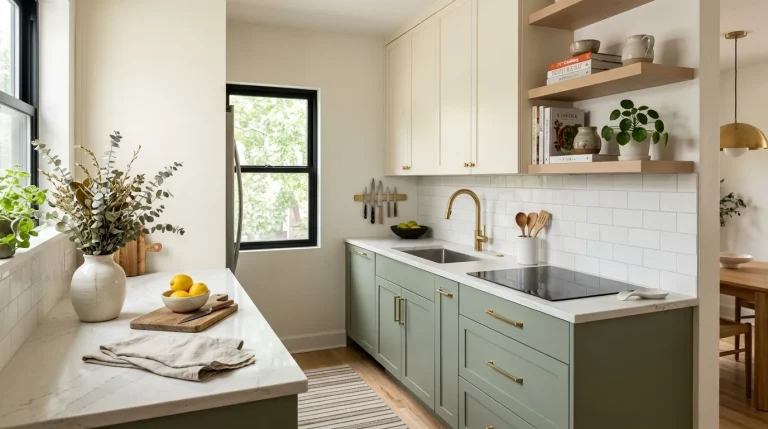
20 Elegant Bold Kitchen Color Ideas for a Luxe Modern Home

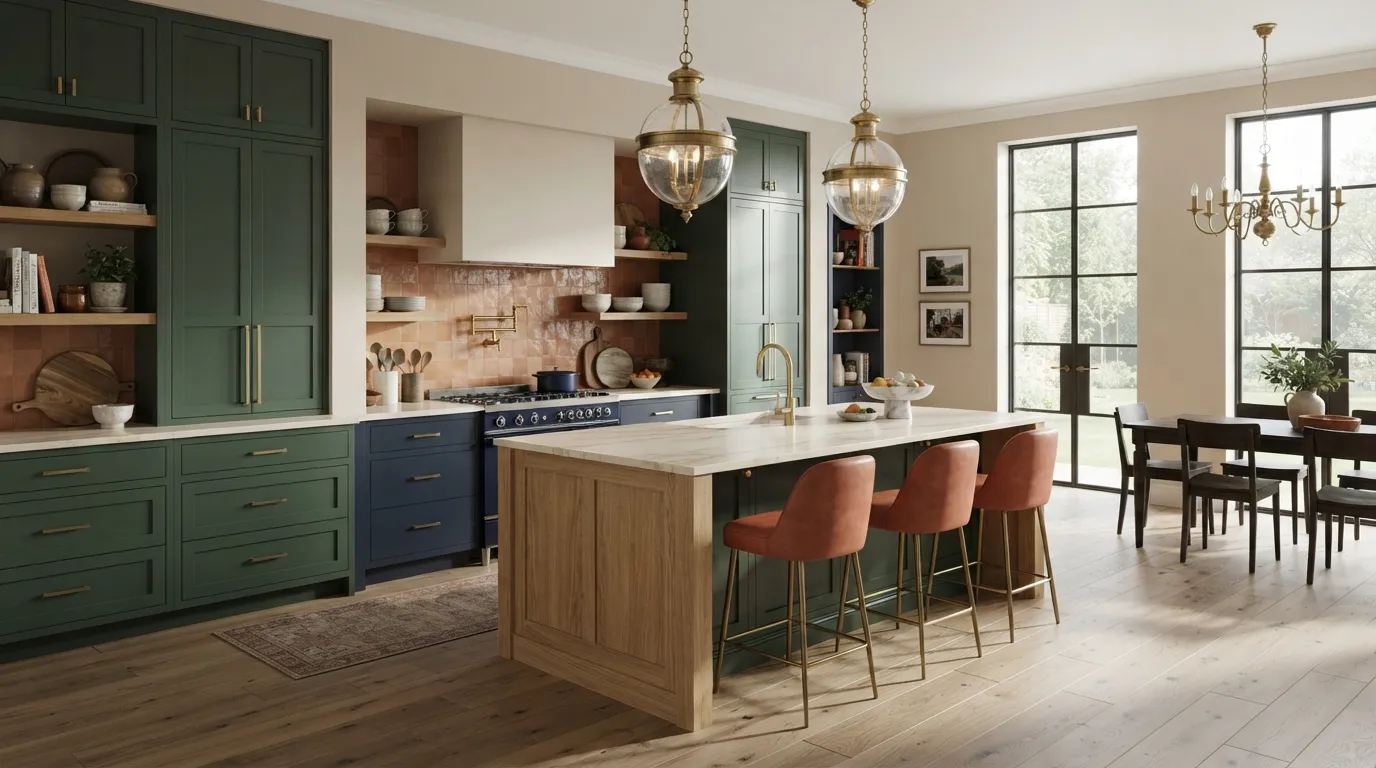
If your kitchen feels flat, color can change the mood fast. These bold kitchen color ideas show how rich paint shades, colorful cabinets, dramatic islands, and warm accents can give a modern kitchen more personality. You don’t need every surface to shout. One strong color can become the star while quieter finishes keep the room polished.
The best kitchen color choices also work with the materials already in your space. Think about cabinet style, countertop tone, flooring, backsplash tile, and natural light before picking a shade. From deep green and moody blue to warm clay and plum, these ideas can help you create a kitchen that feels luxe without looking overdone.
1. Deep Forest Green Cabinets for a Rich Kitchen
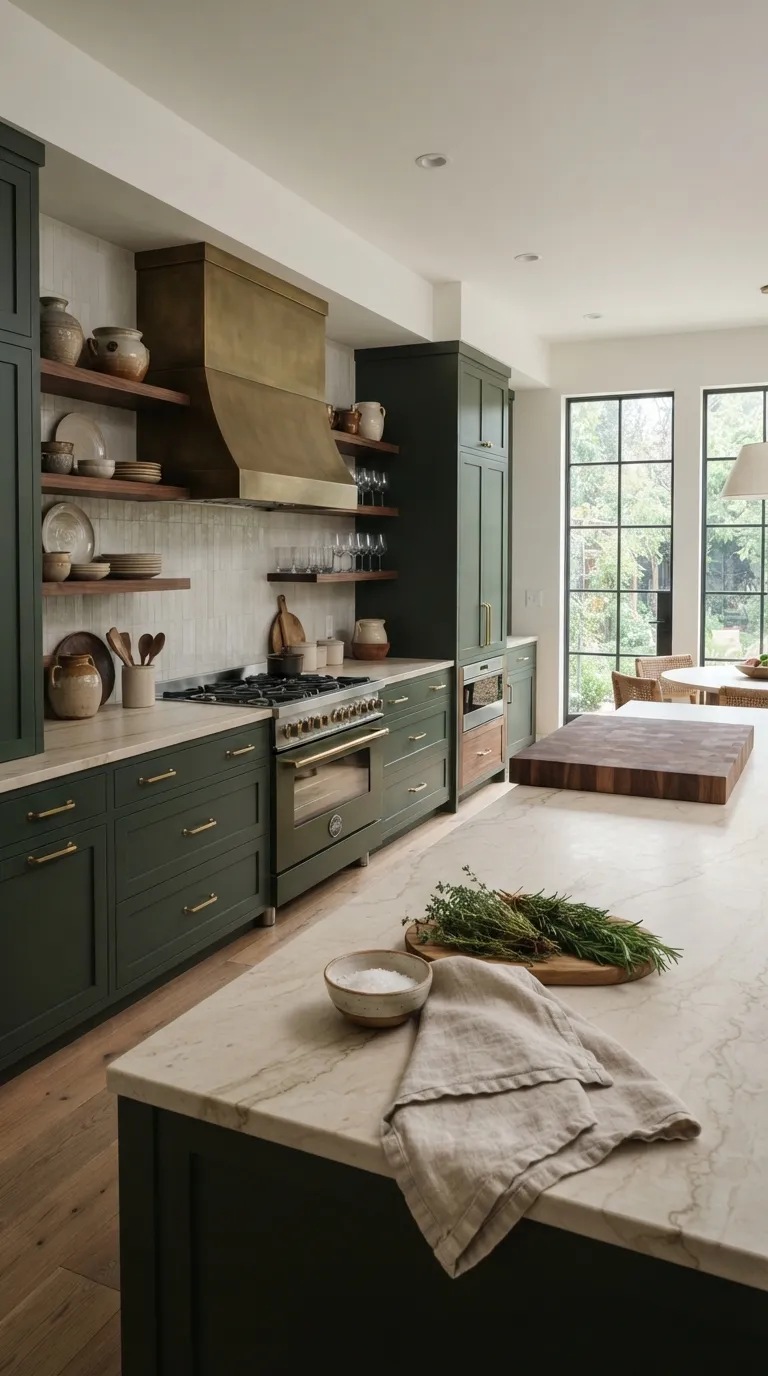
Forest green gives cabinets a strong presence without making the room feel harsh. It pairs beautifully with creamy counters, warm wood, aged brass, and soft white walls, making it a smart choice when you want a dramatic kitchen that still feels comfortable.
Picture a large island painted in the same shade as the perimeter cabinets. The matching color creates a rich, tailored look, while lighter stone and natural wood keep the palette from feeling too heavy. This is one of the bold kitchen color ideas that works especially well in kitchens with good daylight.
2. Navy Blue Cabinets With Warm Brass
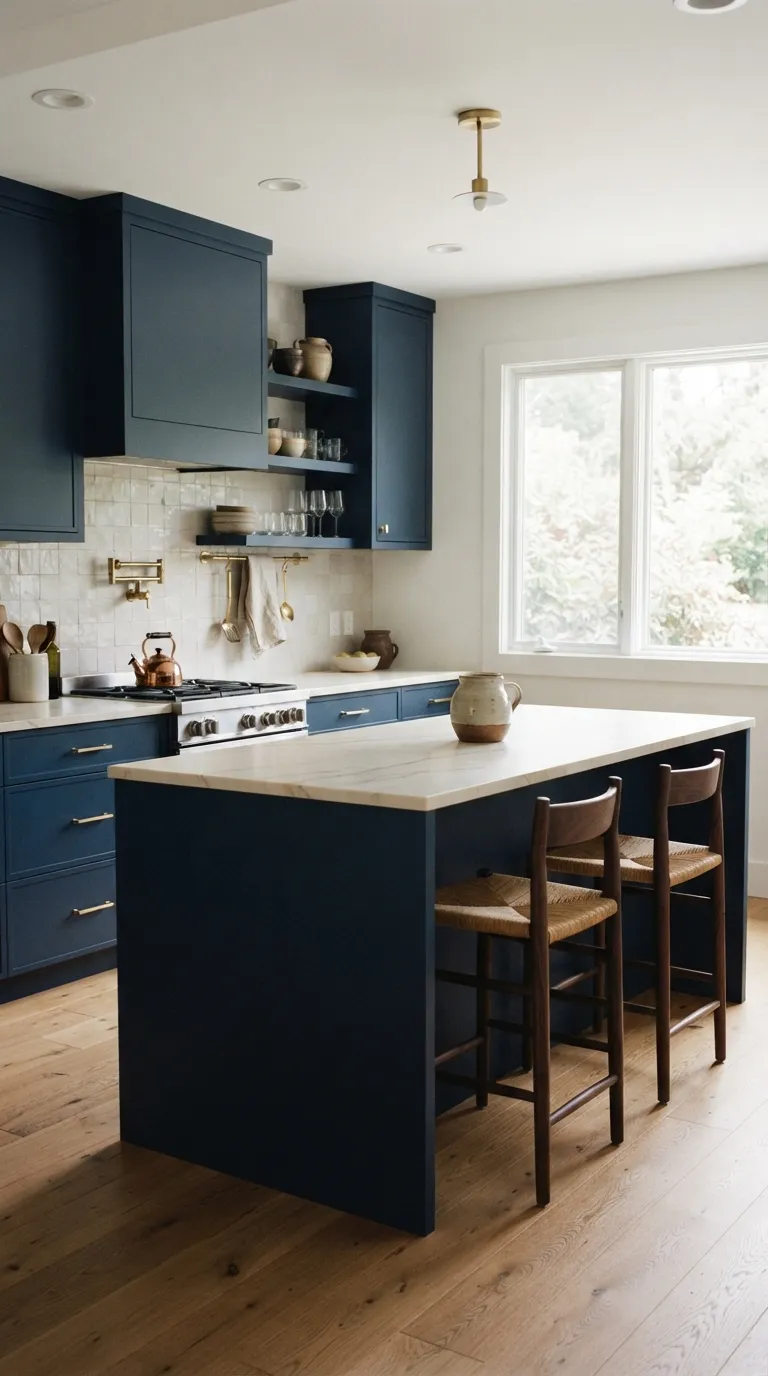
Navy blue brings depth to a kitchen while keeping the color scheme polished. Add warm brass hardware and cream-colored counters, and the result feels tailored rather than cold.
For a modern kitchen, try navy on the lower cabinets with lighter uppers. This approach gives you the drama of a deep shade without covering every wall in dark color. A pale backsplash and warm flooring can also make the room feel open and inviting.
3. Terracotta Kitchen Walls With Cream Cabinets
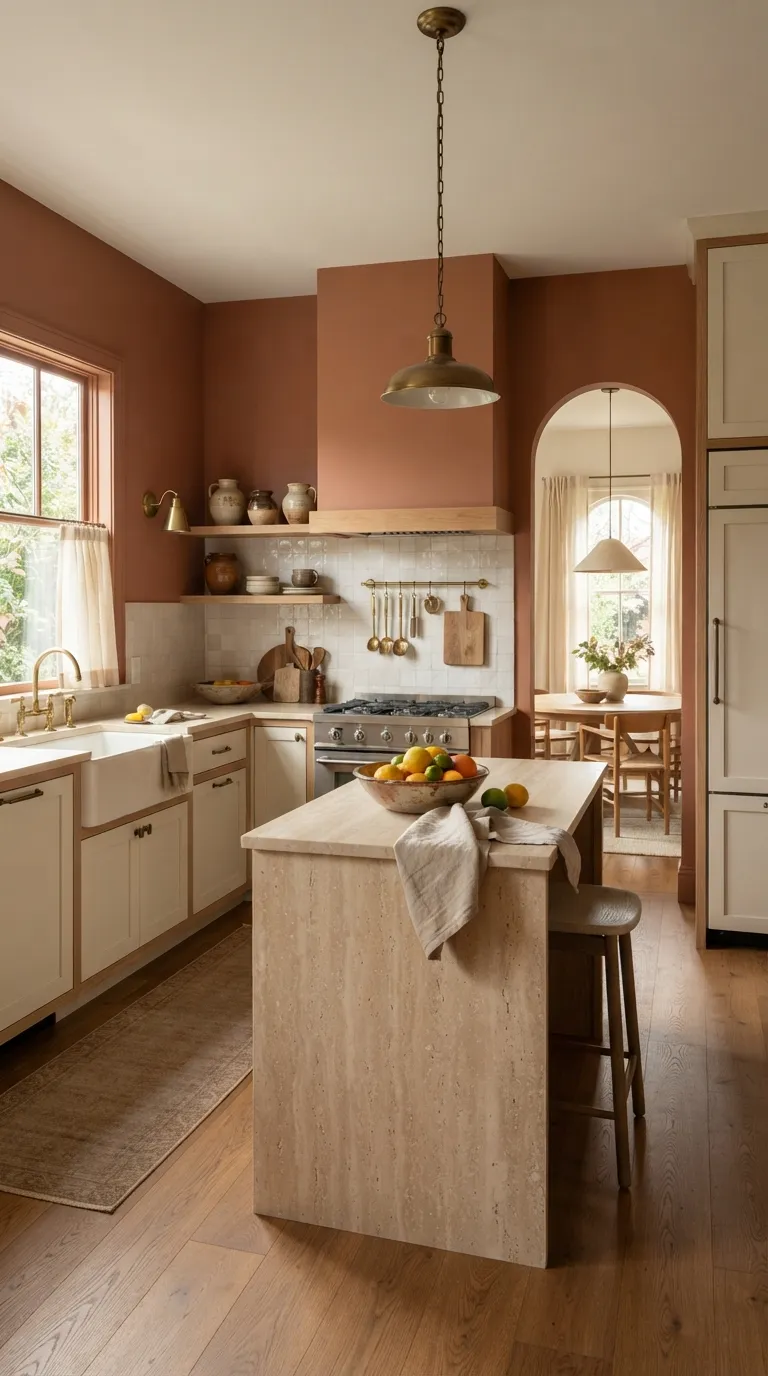
Terracotta works well when you want color on the walls instead of the cabinets. Its earthy warmth pairs naturally with cream cabinetry, beige stone, walnut wood, and aged metal finishes.
Consider this palette in a kitchen with open shelving or an arched doorway. The warm wall color can make those architectural details stand out while the cream cabinets keep the main work areas bright. It’s a practical pick for a kitchen that needs character without a busy mix of colors.
4. Charcoal Gray Cabinets With Marble Counters
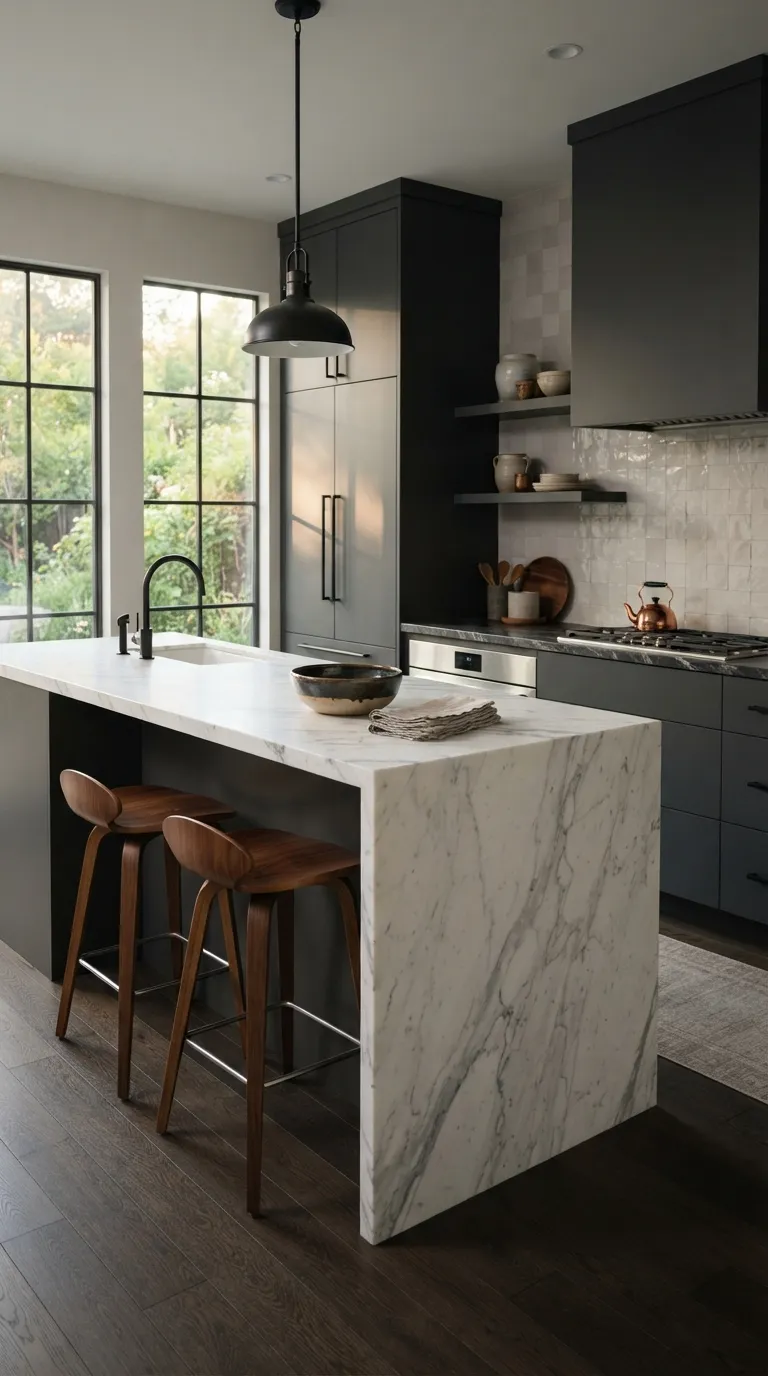
Charcoal gray gives your kitchen a moody look without the sharpness of pure black. It looks especially polished beside white marble, light stone, and warm wood.
Keep the rest of the palette simple when using such a deep cabinet shade. A pale backsplash and natural flooring can soften the contrast, while black or bronze hardware adds a quiet finishing touch.
5. Olive Green Lower Cabinets With Wood Uppers
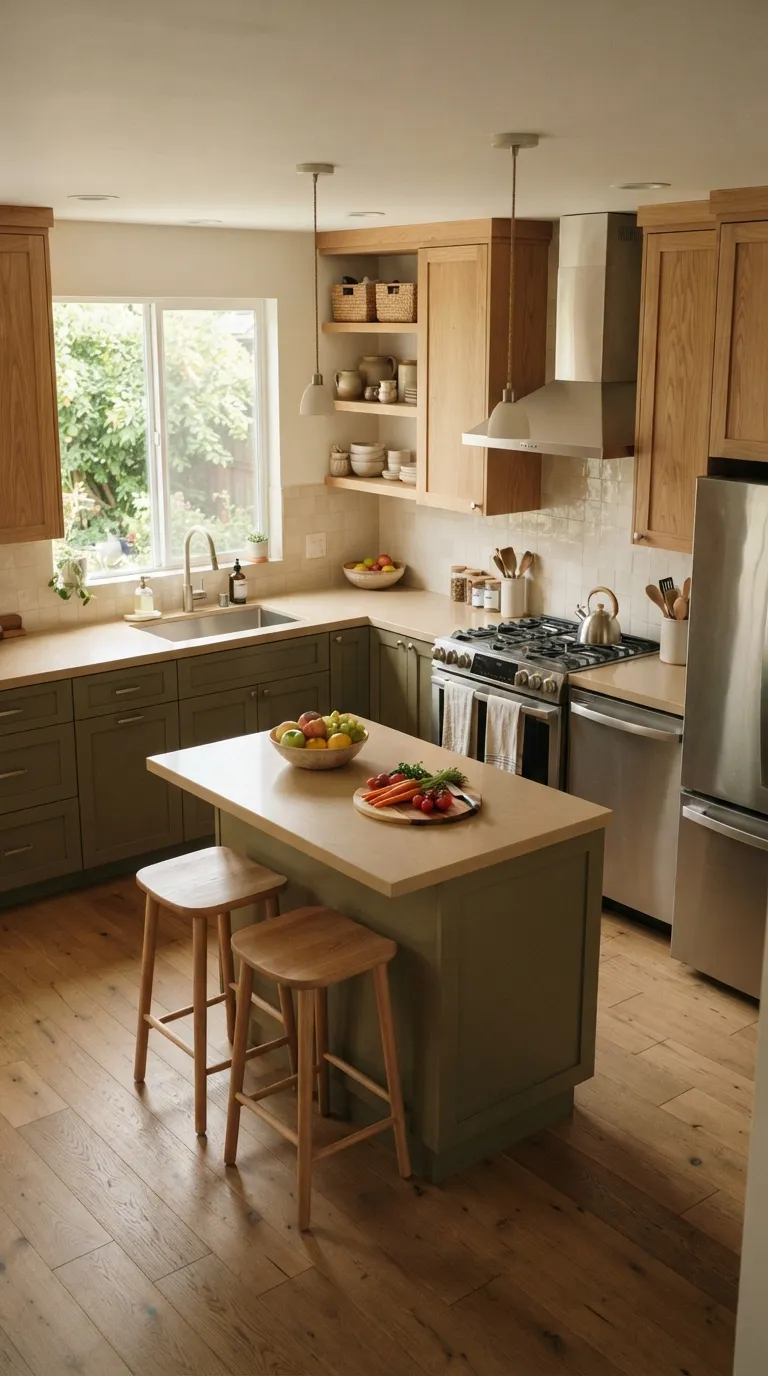
Olive green feels grounded and works beautifully with natural wood. Using the shade on lower cabinets keeps the color focused while oak uppers add warmth and visual balance.
This combination suits kitchens that already have wood flooring or exposed beams. Add cream tile and simple metal hardware, and the palette feels collected rather than overly matched.
If this was useful, Elegant Small Kitchen Color Ideas is worth a look too.
6. Burgundy Island as the Kitchen Focal Point
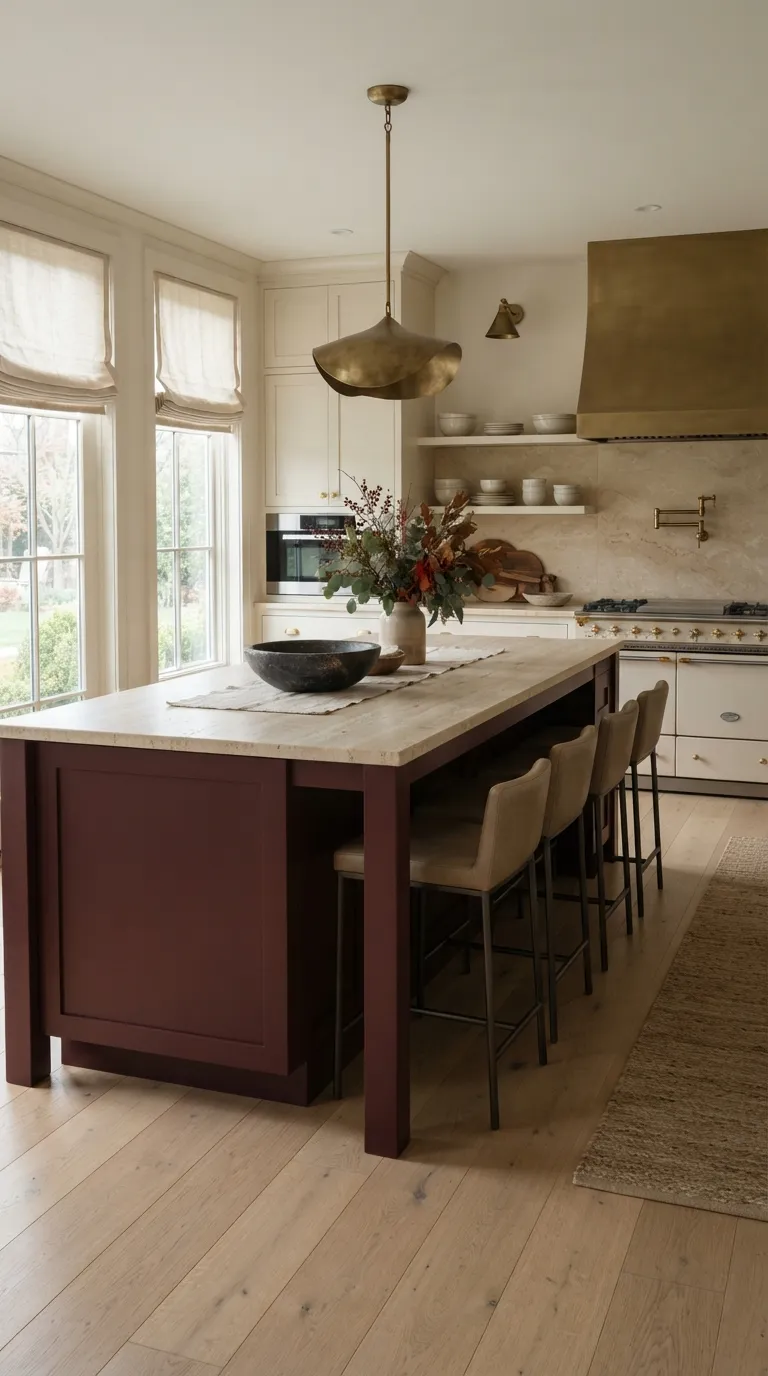
A burgundy island can give a neutral kitchen a rich center point. The deep red tone feels warm and refined, especially beside ivory cabinets, pale stone, and light oak.
You don’t need burgundy throughout the room. A single island can carry the color, leaving the surrounding surfaces calm and easy to live with. If you’re testing bold kitchen color ideas for the first time, this focused approach gives you plenty of impact without covering every cabinet.
7. Cobalt Blue Cabinets for a Fresh Statement
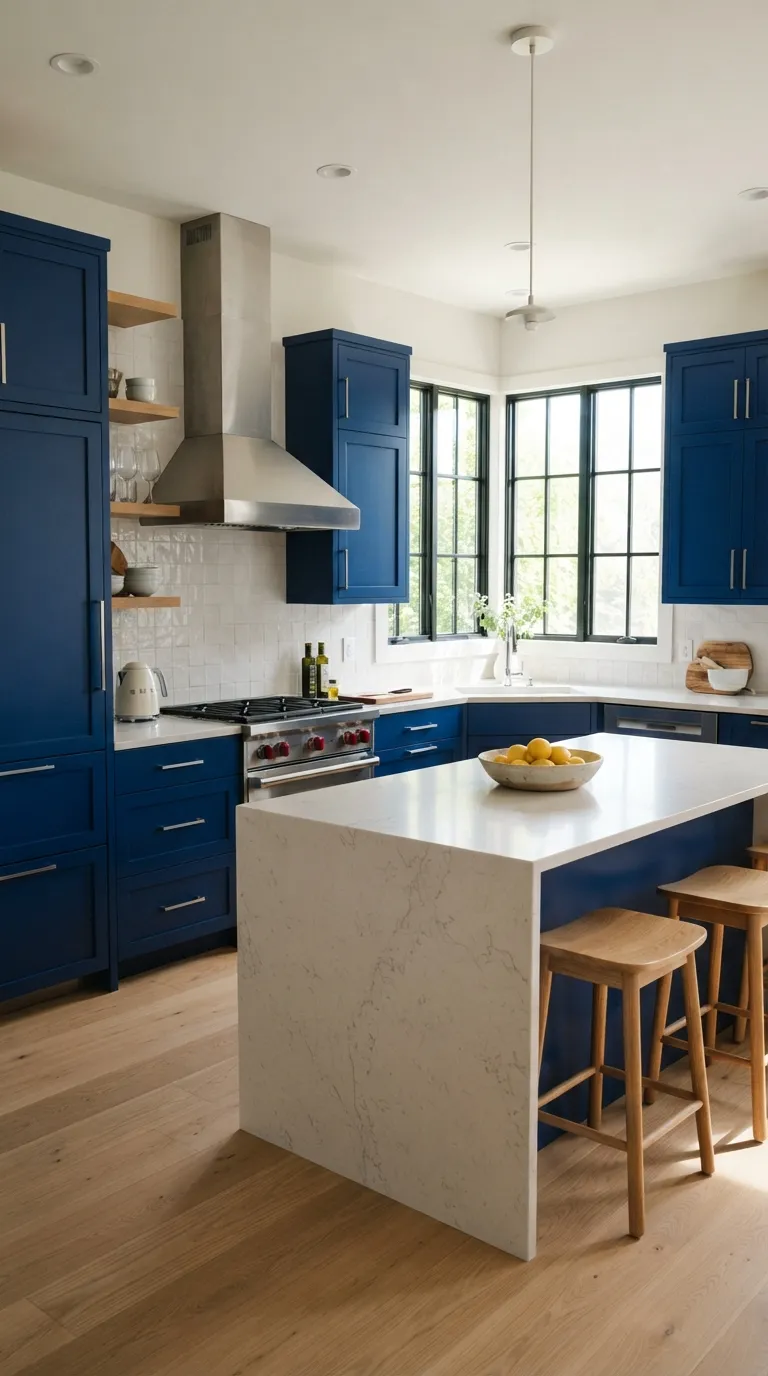
Cobalt blue makes a confident statement while keeping a kitchen crisp and fresh. Pair it with white tile, pale quartz, and light wood so the strong cabinet color stays at the center of attention.
This shade works especially well when your kitchen gets plenty of natural light. Chrome or brushed steel hardware gives cobalt a clean modern look, while warm flooring adds balance and keeps the room from feeling too cool.
8. Warm Black Cabinets With Soft Wood Accents
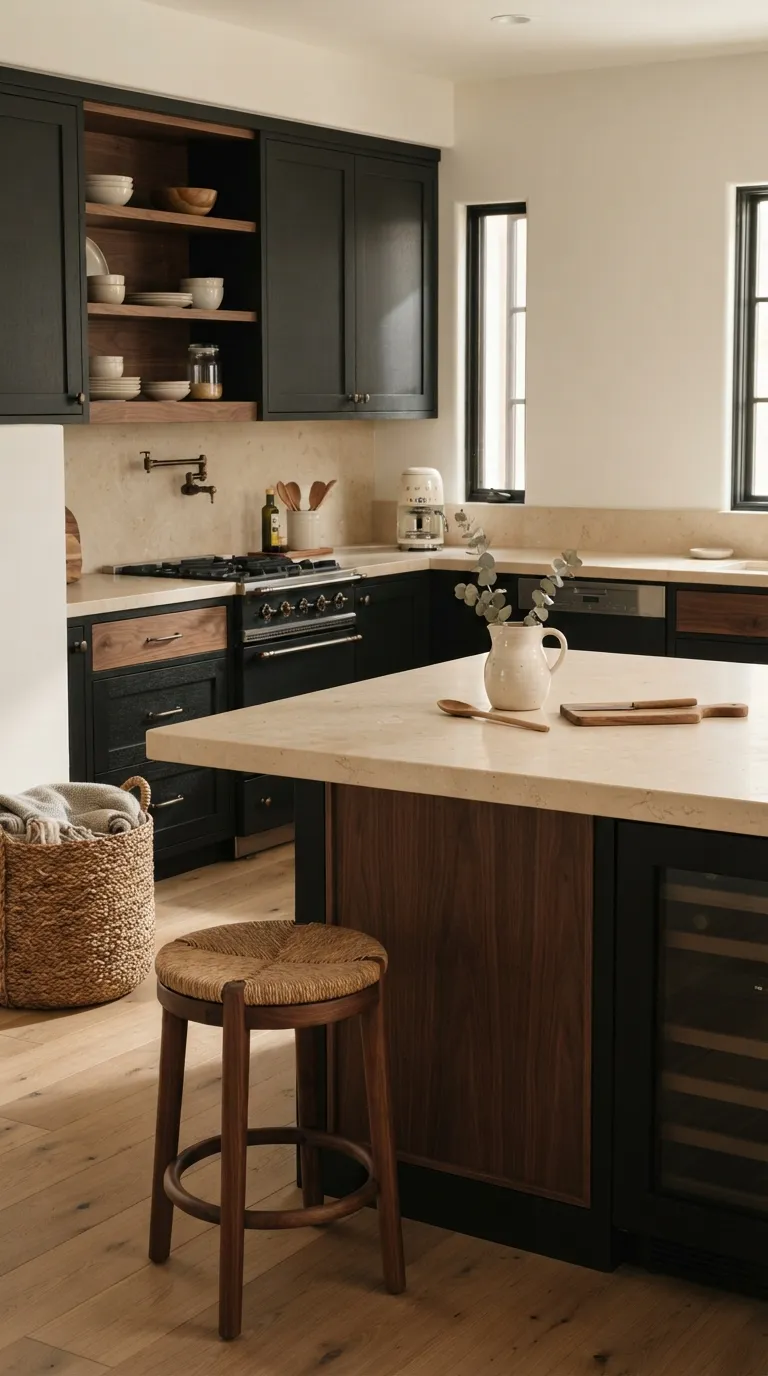
Warm black has a softer look than a flat jet-black palette. When paired with walnut, creamy stone, and bronze hardware, it creates a cozy kitchen with plenty of depth.
Use this color when you want a strong modern foundation without making the room feel stark. Wood accents break up the dark cabinetry, while beige stone and woven details add warmth to the overall kitchen color palette.
9. Dusty Plum Cabinets for a Sophisticated Look
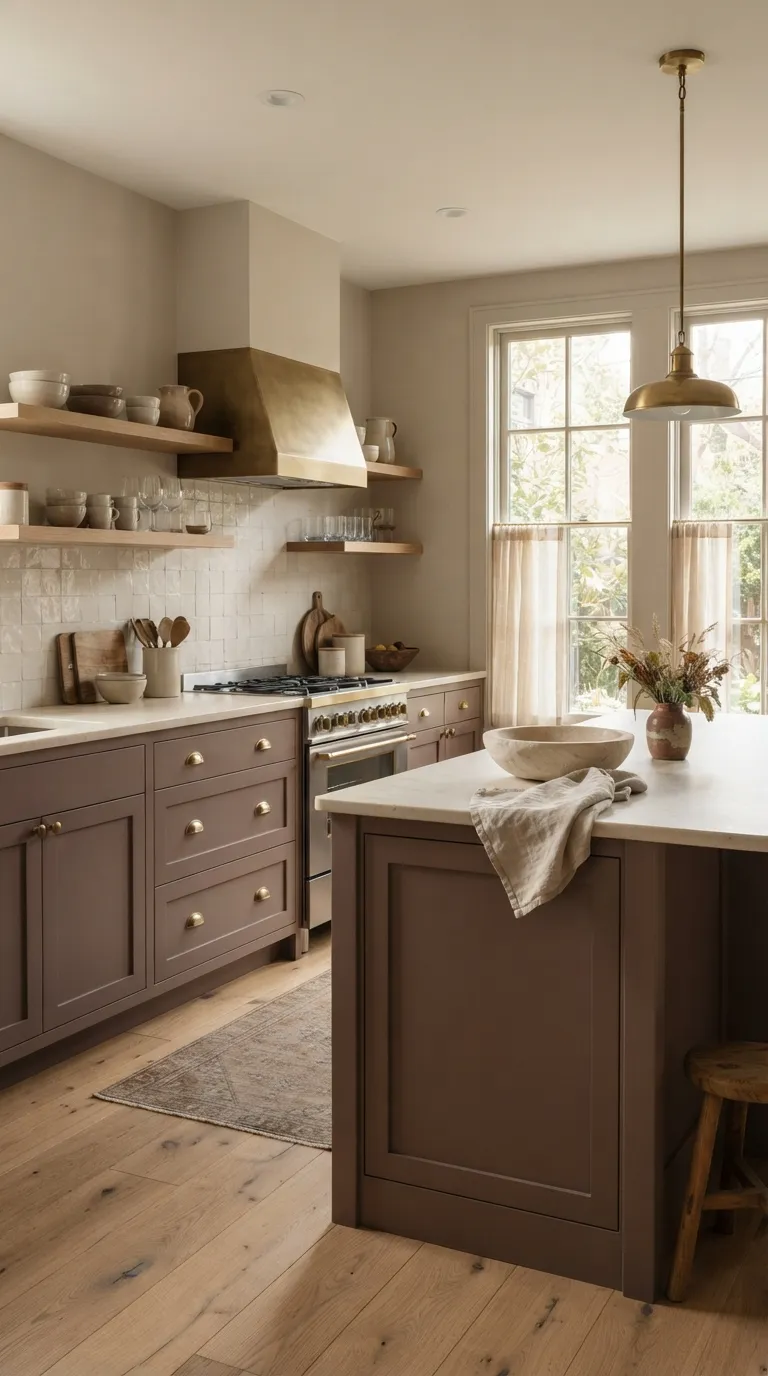
Dusty plum adds personality without looking overly bright. Its muted quality works well with mushroom, ivory, oak, and warm brass for a kitchen palette that feels layered but calm.
If purple feels risky, choose a shade with brown or gray undertones. Those subtle notes make plum easier to pair with natural materials and give your cabinets a grounded, polished appearance.
10. Teal Cabinets With Creamy Stone Surfaces
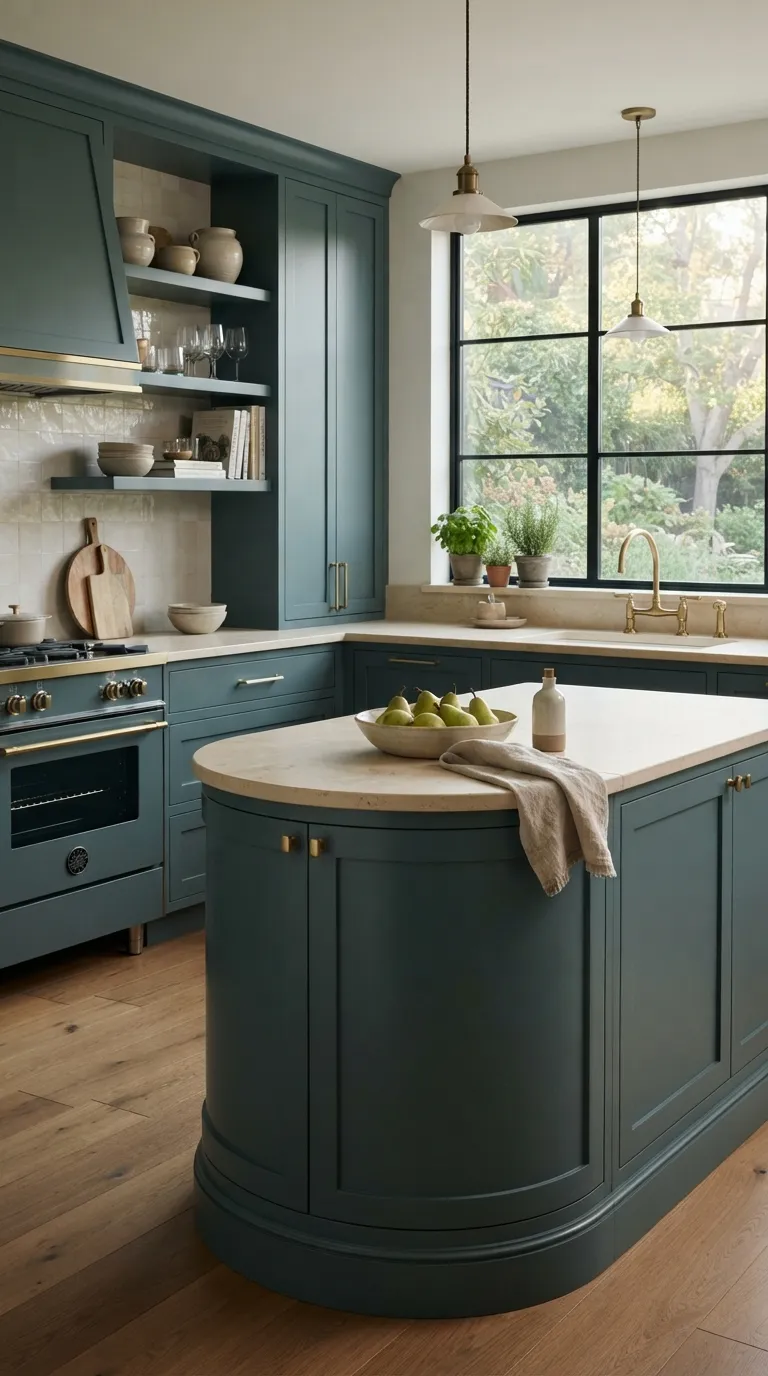
Teal gives you the richness of blue with a softer green note. It looks polished beside creamy stone, warm oak, and brushed brass, making it a strong choice for a modern kitchen with personality.
Try teal across the lower and tall cabinets while keeping the walls light. This creates a clear color anchor without making the whole room feel dark. For smaller kitchens, a muted teal can work especially well when paired with plenty of natural light.
11. Rust Red Cabinets for an Earthy Modern Kitchen
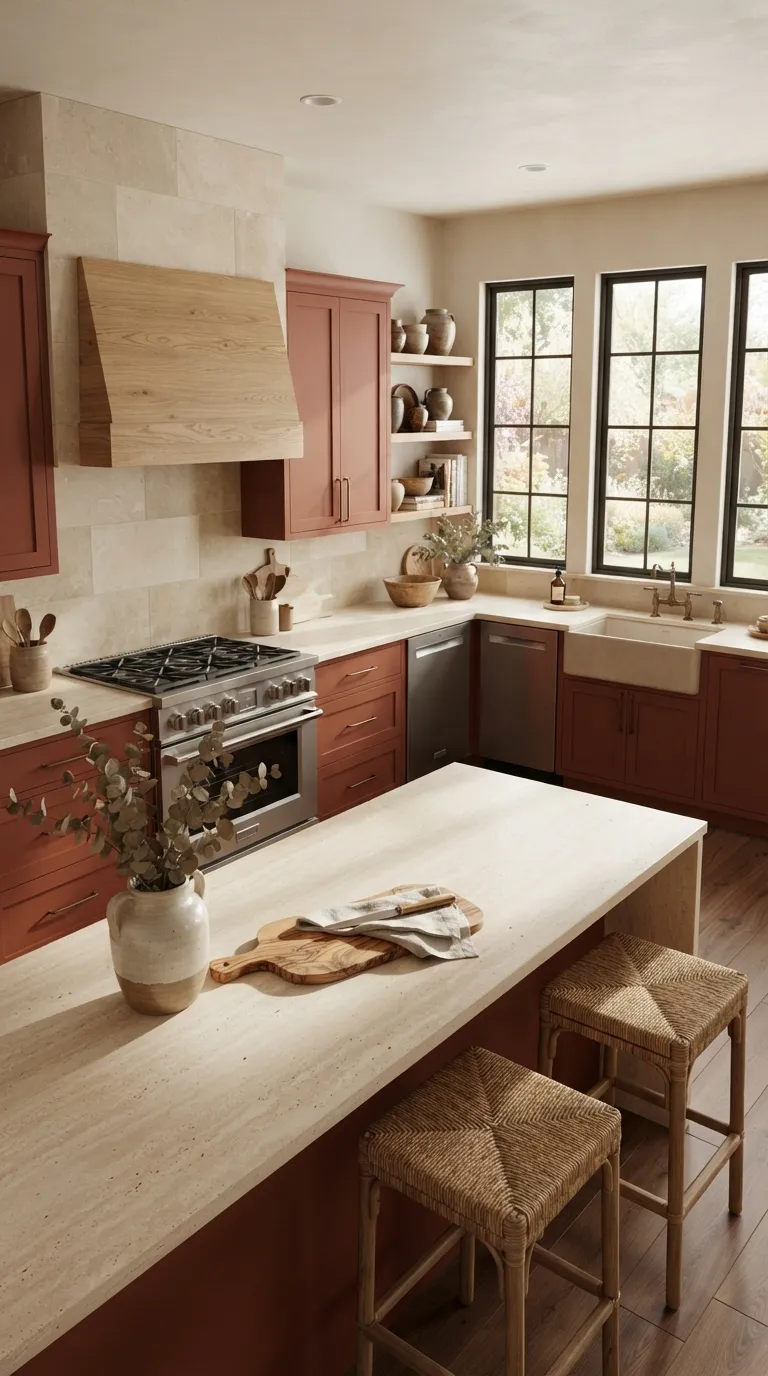
Rust red can make a kitchen feel warm from the moment you walk in. The earthy shade pairs naturally with travertine, walnut, oak, ivory, and bronze, giving the space a rich but approachable palette.
Use rust on cabinetry when you want something stronger than beige but warmer than a traditional red. Keep the backsplash and counters quiet so the cabinet color stays in control. A natural wood hood or island detail can also make the palette feel more connected.
12. Emerald Green Cabinets With Black Details
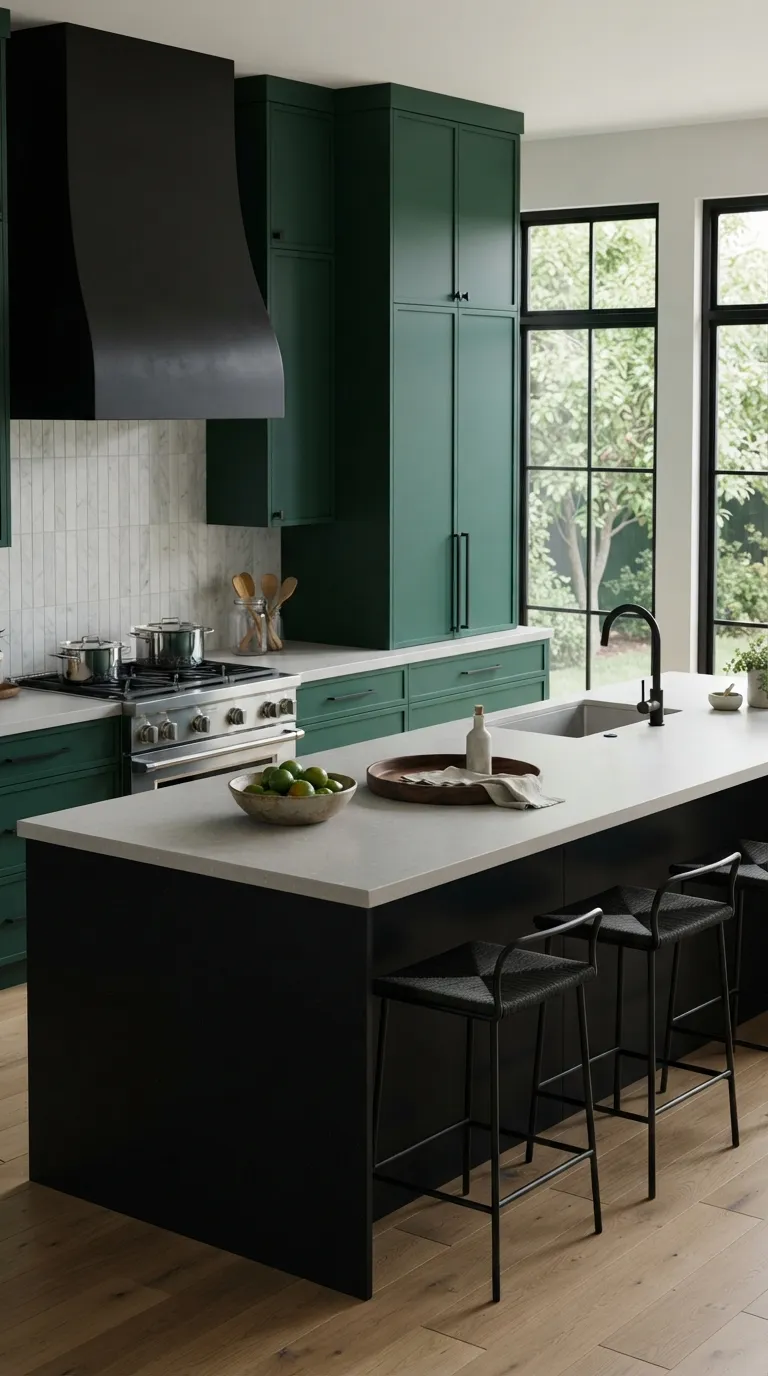
Emerald green brings a jewel-like depth to kitchen cabinets. Black fixtures sharpen the palette, while pale quartz and white stone keep the room from becoming too dark.
This combination suits a kitchen with tall windows or generous ceiling height. If the cabinetry already makes a strong statement, keep decorative pieces simple and let the green and black pairing carry the visual weight.
13. Burnt Orange Accent Wall Behind the Range
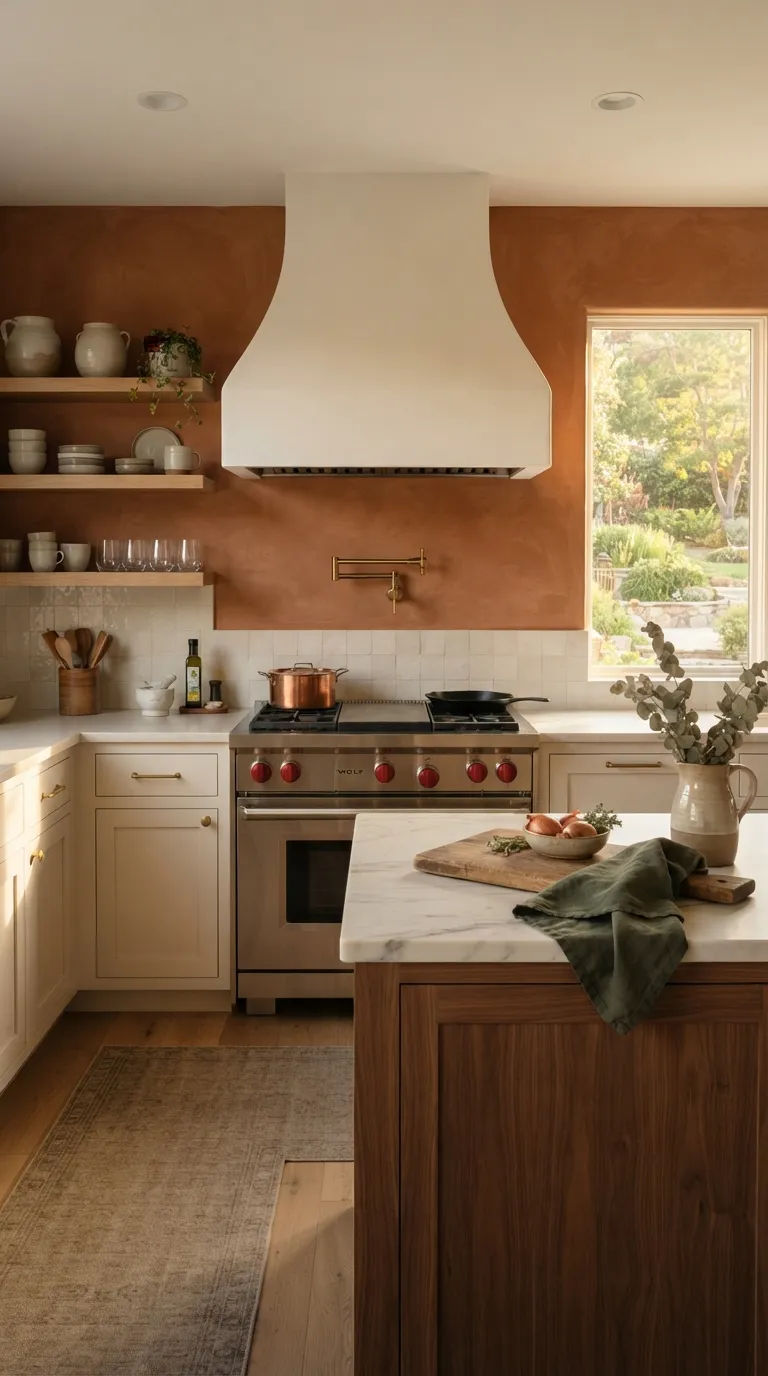
A burnt orange wall can give a neutral kitchen a warm focal point. The shade looks especially rich against warm white cabinets, walnut, pale stone, and aged brass.
Keep the accent wall limited to one area, such as the range wall. This gives you the freedom to use a strong color while keeping the rest of the kitchen easy on the eyes. A textured paint finish can add subtle depth without adding another busy pattern.
14. Deep Aubergine Cabinets With Light Oak
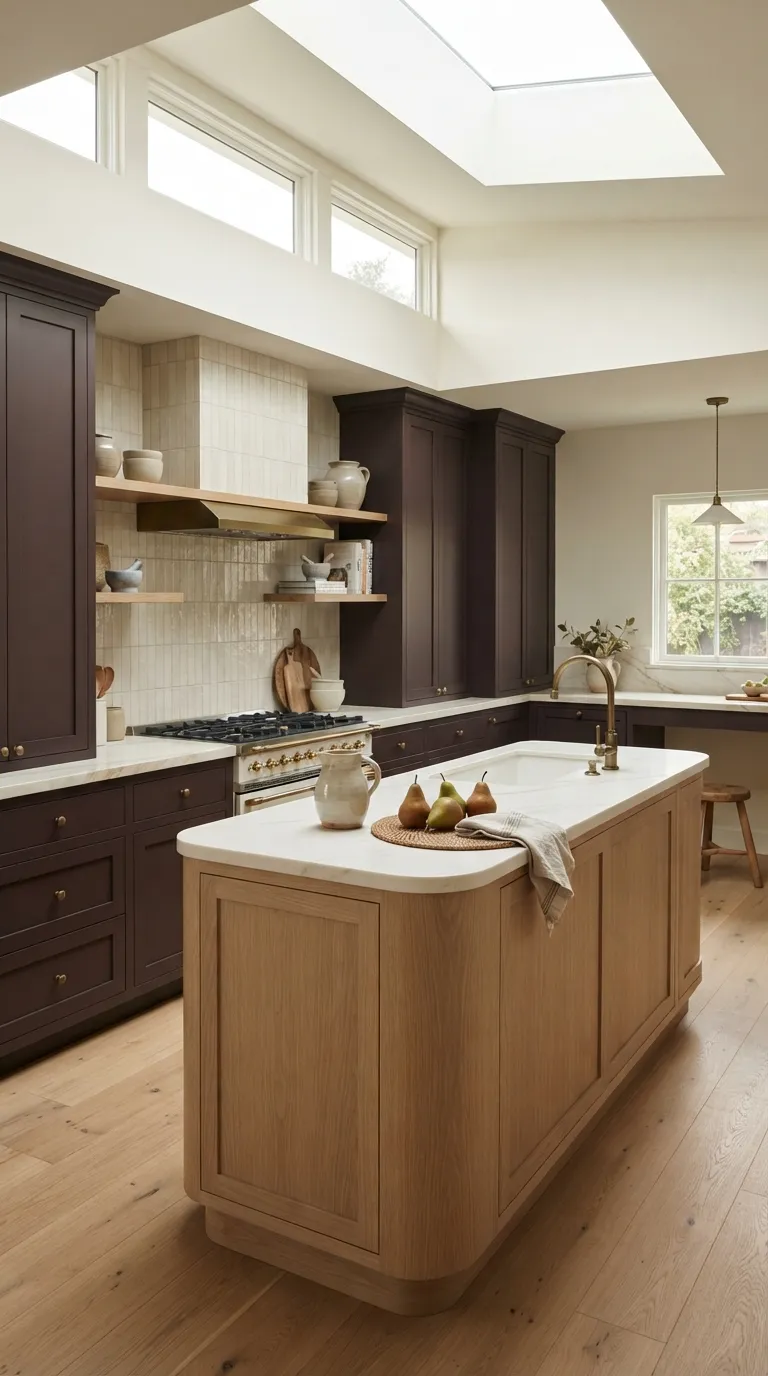
Deep aubergine brings a rich, unexpected note to kitchen cabinetry. Its wine-inspired tone works well with pale oak, creamy counters, and warm metal finishes.
Light wood is the key to keeping this palette balanced. Use oak on the island, shelving, or range hood so the dark cabinet color has a natural counterpoint. Soft ivory walls can also give the room more breathing space.
15. Mustard Yellow Cabinets With White Tile
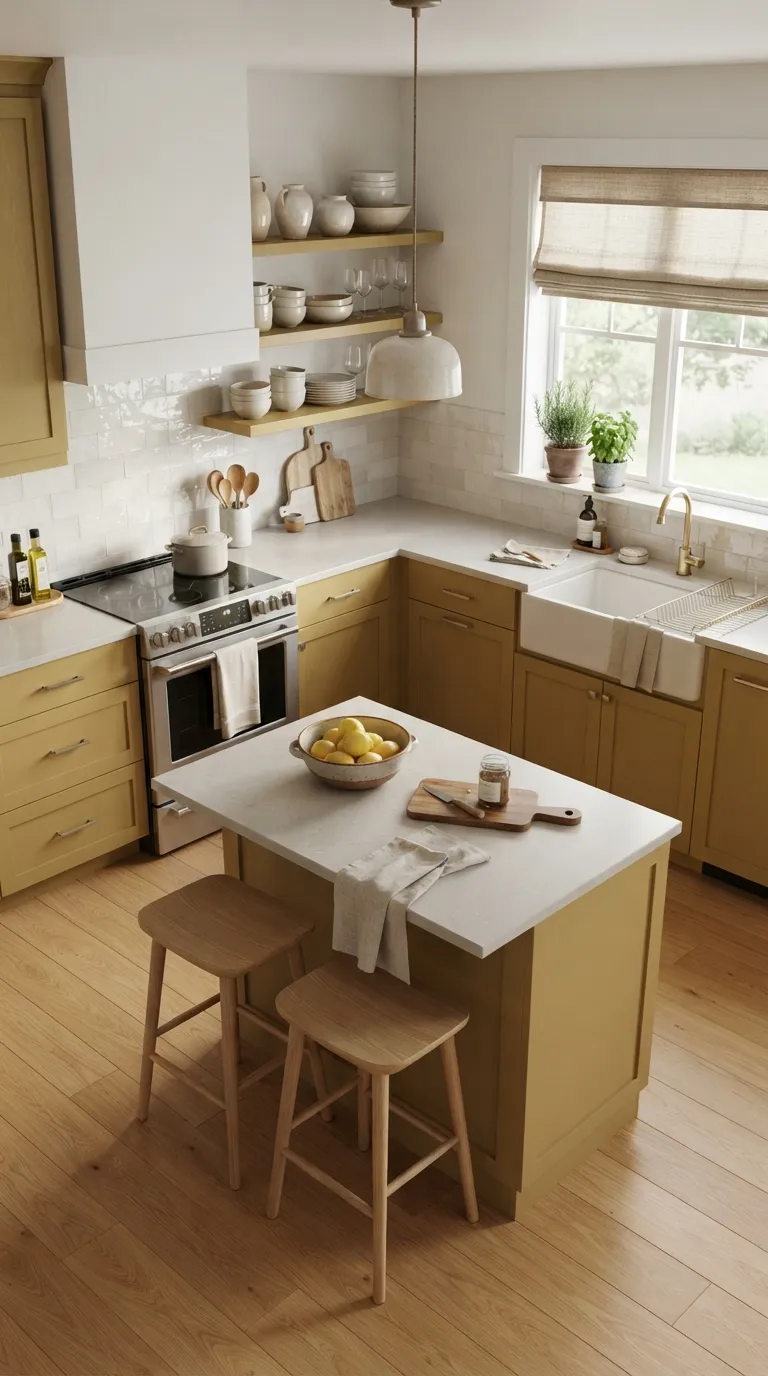
Mustard yellow can make a kitchen feel warm and cheerful without looking childish. Choose a muted ochre version and pair it with white tile, pale stone, and light wood for a more refined palette.
If full yellow cabinetry feels like too much, use the shade on a small island or lower cabinets. White walls and counters will keep the room bright while allowing the warm color to stand out.
16. Slate Blue Cabinets With Natural Walnut
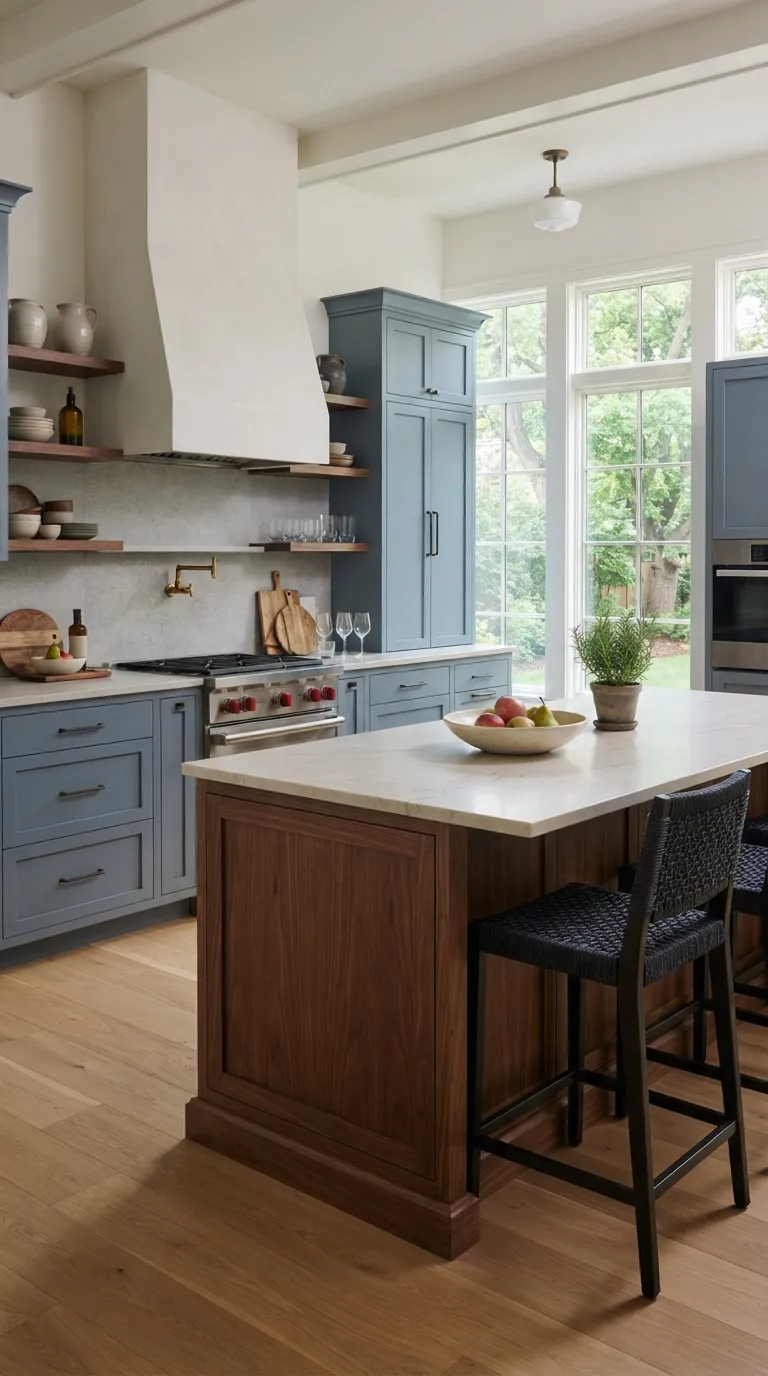
Slate blue has a quieter personality than brighter blue shades, but it still gives cabinets strong color. Walnut adds warmth and keeps the palette from feeling too cool.
This combination suits both contemporary and transitional kitchens. A limestone backsplash can bridge the blue and wood tones, while dark bronze hardware adds a subtle layer of contrast.
17. Deep Teal Island With Neutral Cabinets
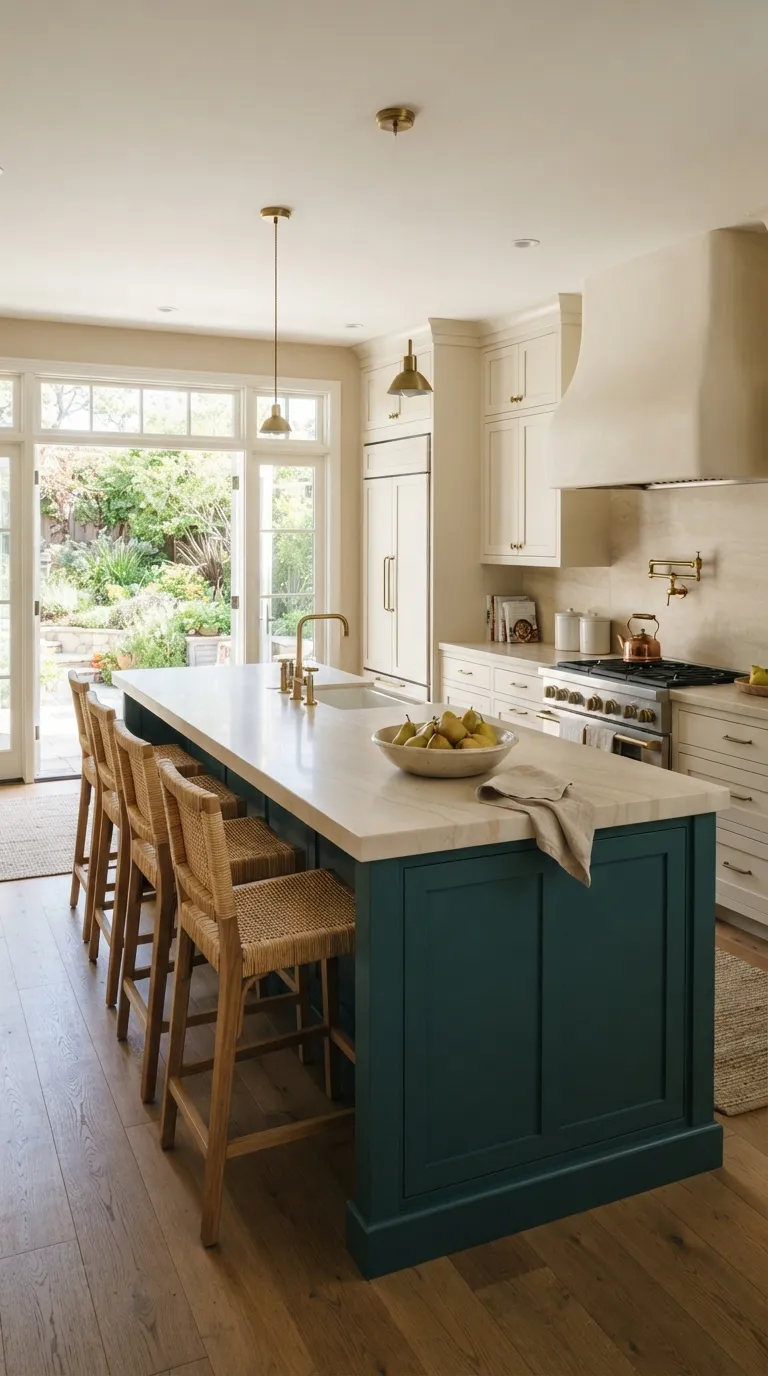
A deep teal island lets you add bold color without repainting every cabinet. Neutral perimeter cabinetry keeps the room light while giving the island a clear visual role.
This idea works well when the kitchen opens into a dining or living area. The island can act like a colorful piece of furniture, while ivory cabinets and pale stone help the whole space feel connected.
18. Chocolate Brown Cabinets for a Cozy Luxe Feel
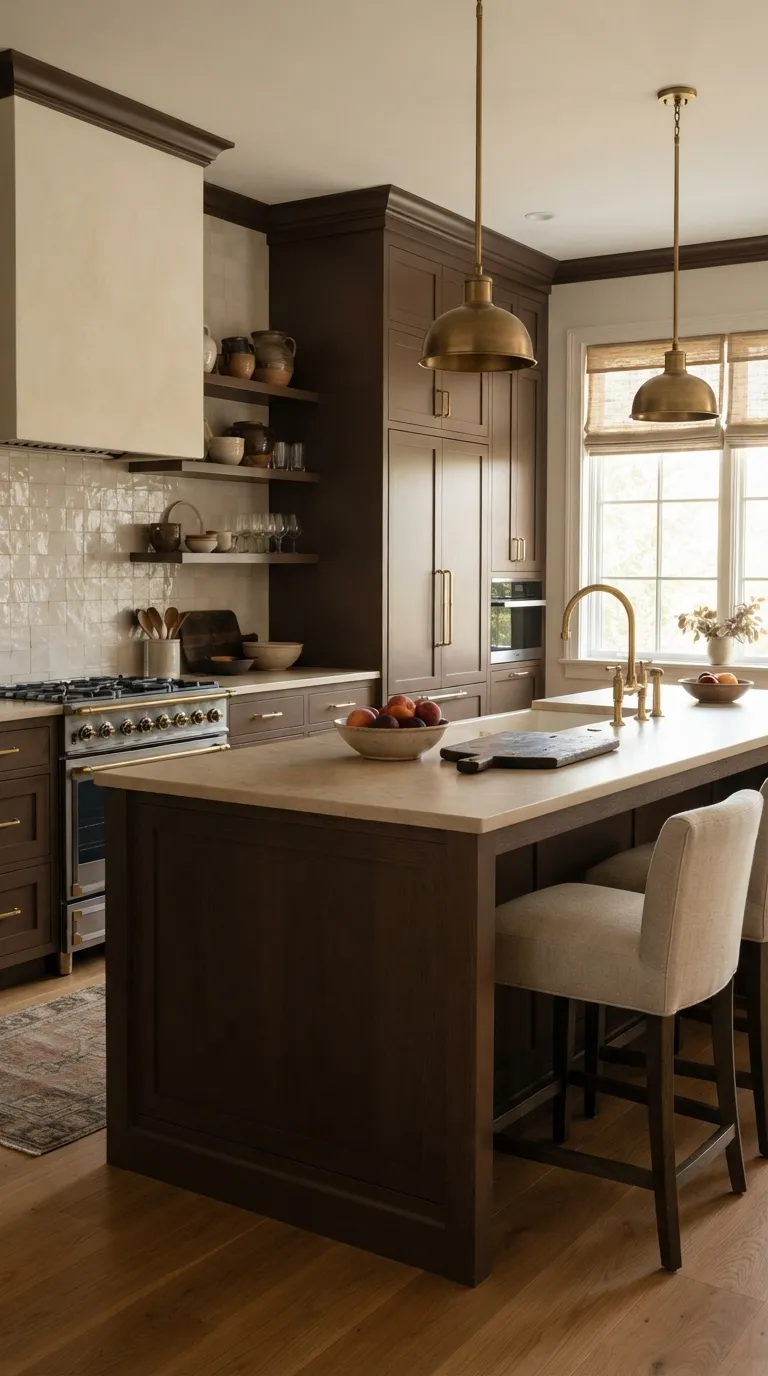
Chocolate brown brings warmth and depth to a modern kitchen. Unlike cooler dark colors, brown can make cabinets feel grounded and inviting, especially beside cream stone and warm metal finishes.
Use this palette when you want a luxe look that still feels relaxed. Oatmeal upholstery, woven shades, natural ceramics, and soft lighting can keep the dark cabinetry from feeling too formal.
19. Two-Tone Red and Cream Kitchen Cabinets
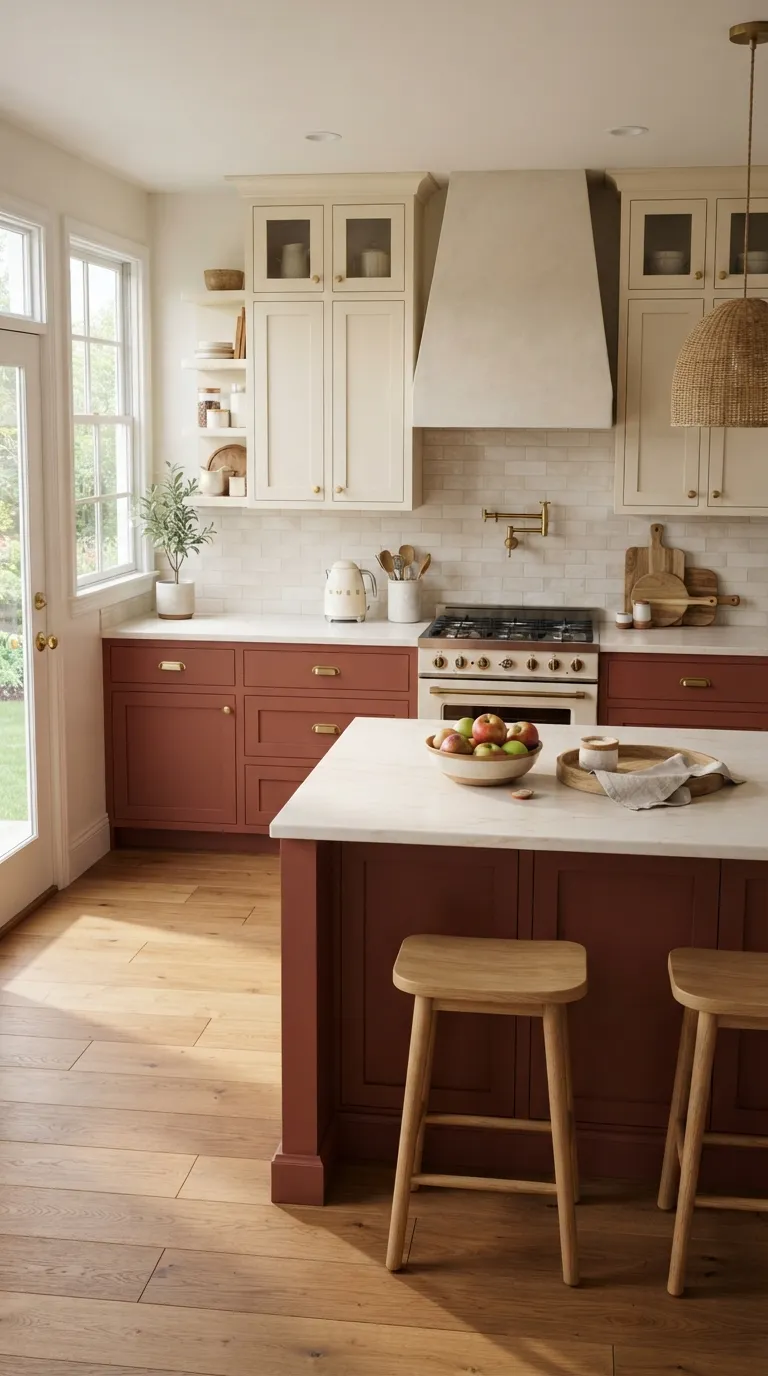
Two-tone cabinets give you room to play with color while keeping part of the kitchen neutral. Brick red on the lower cabinets creates weight, while cream uppers keep the room feeling open.
This approach can work particularly well in kitchens with standard-height ceilings. The lighter upper cabinets draw the eye upward without covering the room in a dark or saturated shade.
20. Royal Blue Island With Warm White Cabinets
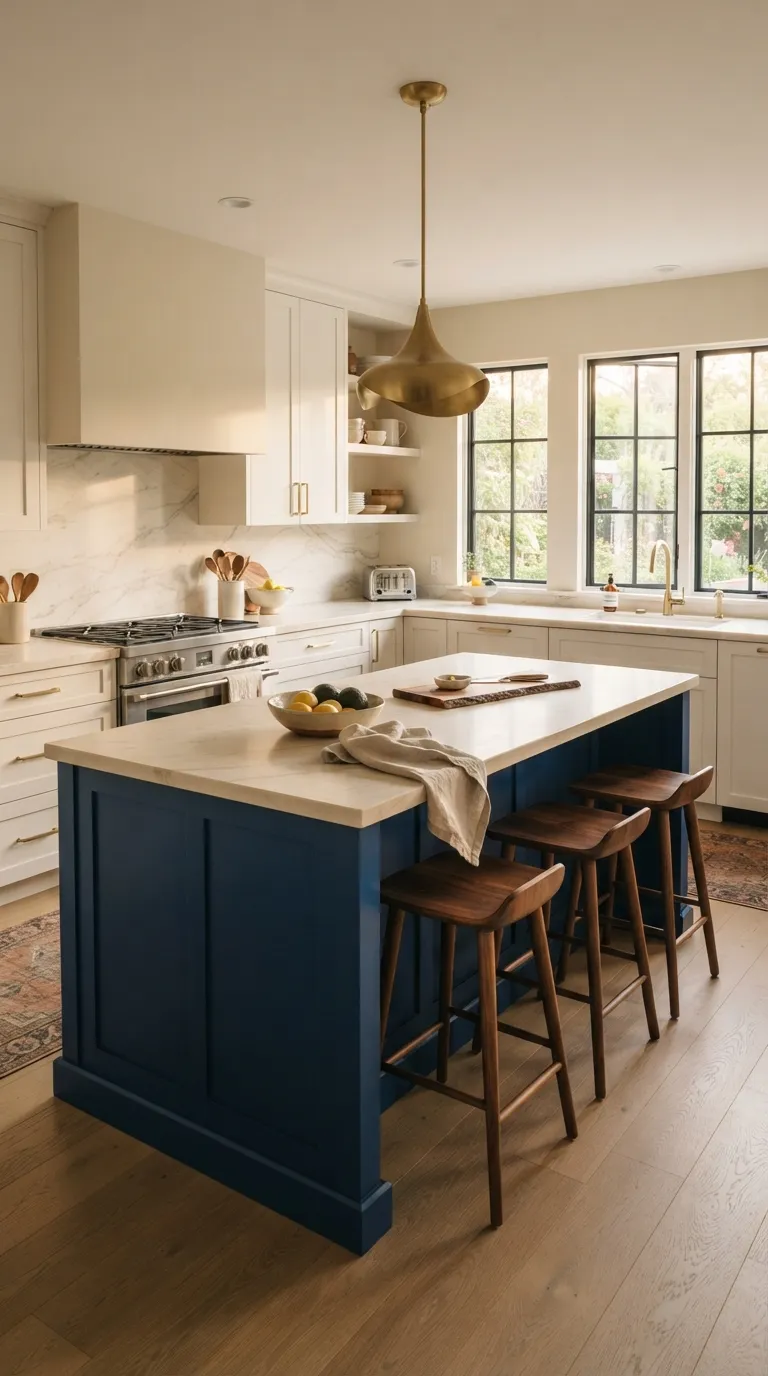
A royal blue island can give a neutral kitchen a clear focal point. Warm white cabinets, ivory marble, walnut stools, and brass lighting create enough contrast to keep the bold blue feeling polished.
If you’re cautious about strong cabinet colors, an island is a practical place to start. It gives you the visual impact of bold kitchen color ideas while leaving the surrounding cabinets simple and flexible.
Wrapping Up
Your kitchen doesn’t need a dozen colors to feel special. Pick one shade you love, then build around it with two or three quieter materials such as natural wood, creamy stone, soft white tile, or warm metal.
Before painting, look at your kitchen throughout the day. Morning light, afternoon shadows, flooring, counters, and nearby rooms can all change how a color appears. Start with a sample, view it beside your existing finishes, and choose the shade that feels right in your actual space.
Emma Williams
Emma Williams is an interior design expert and decor editor at Lady Home Decor. She specializes in modern, cozy, and functional home styling, helping readers discover inspiring decorating ideas that are easy to recreate. Her work focuses on timeless design, practical solutions, and the latest home decor trends.