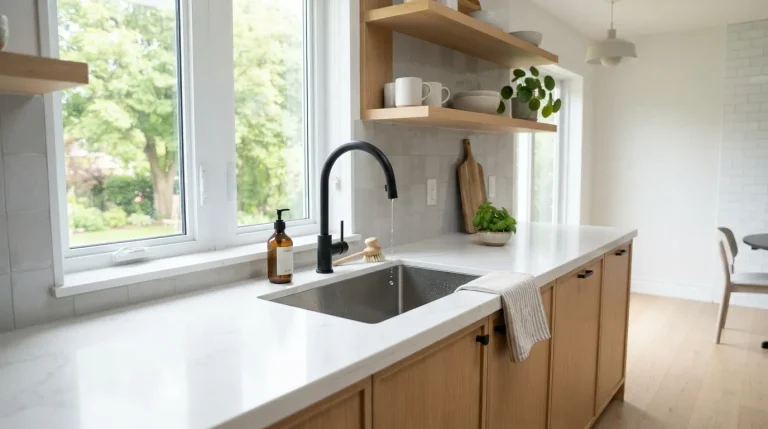
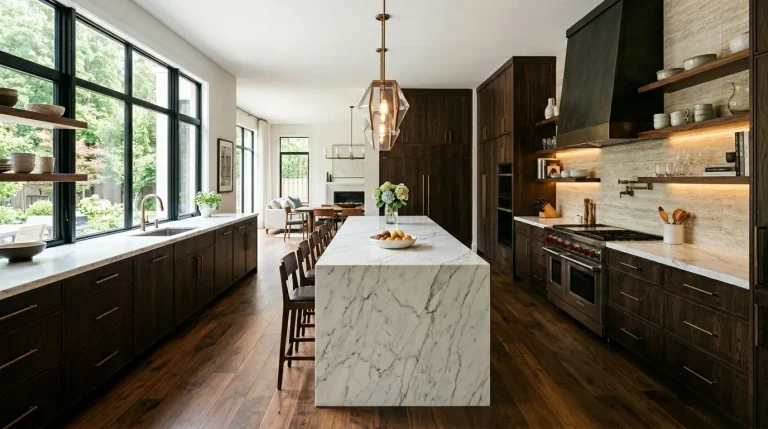
20 Elegant Small Kitchen Color Ideas for a Stylish Makeover

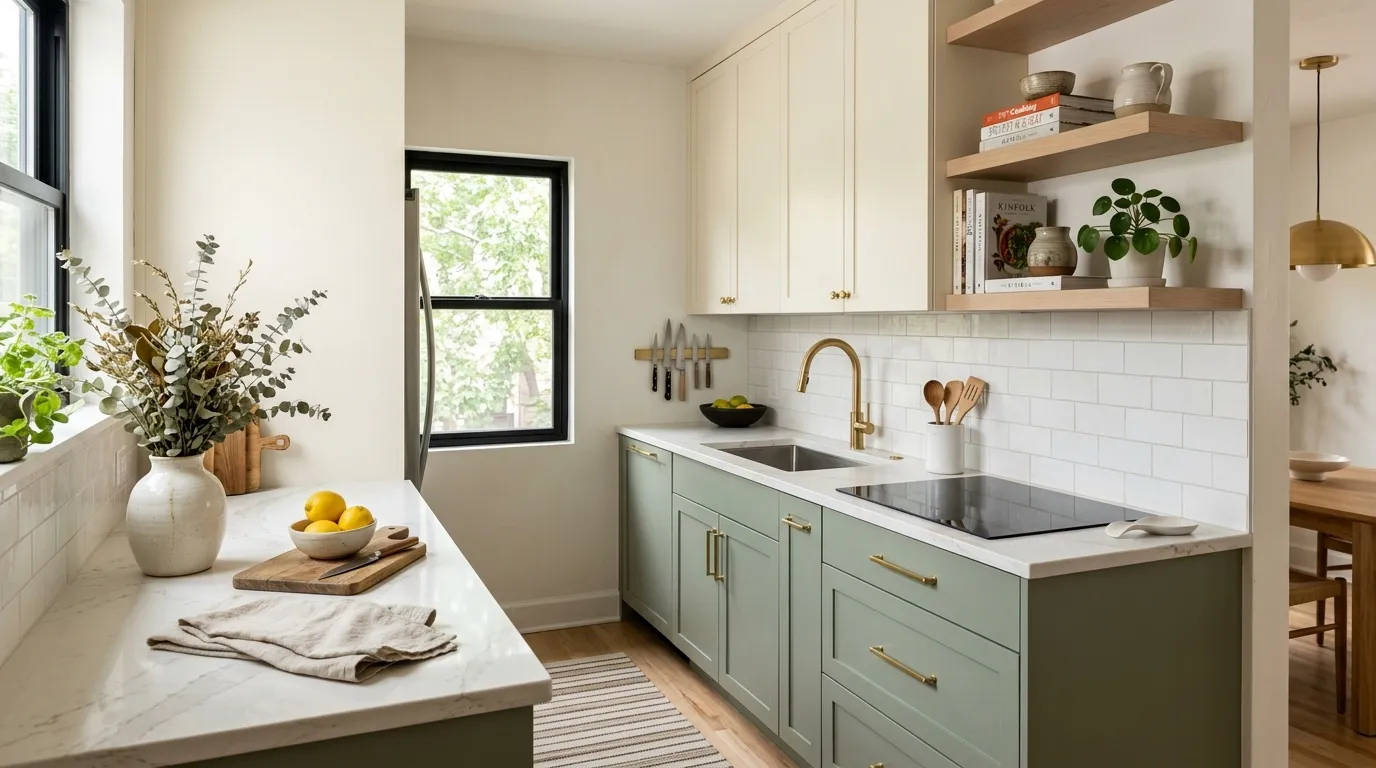
Small kitchens can feel tricky when color enters the picture. The right shade can make tight walls feel lighter, cabinets look more polished, and everyday spaces feel far more inviting. These small kitchen color ideas focus on smart combinations that give a compact room character without making it feel crowded.
You don’t need a full renovation to make a difference. A fresh cabinet color, soft backsplash, painted island, or carefully chosen accent can change the whole mood. From warm neutrals to muted greens and deep blue details, these kitchen color ideas give you practical ways to create a stylish space that still feels comfortable and easy to live with.
Soft Sage Cabinets
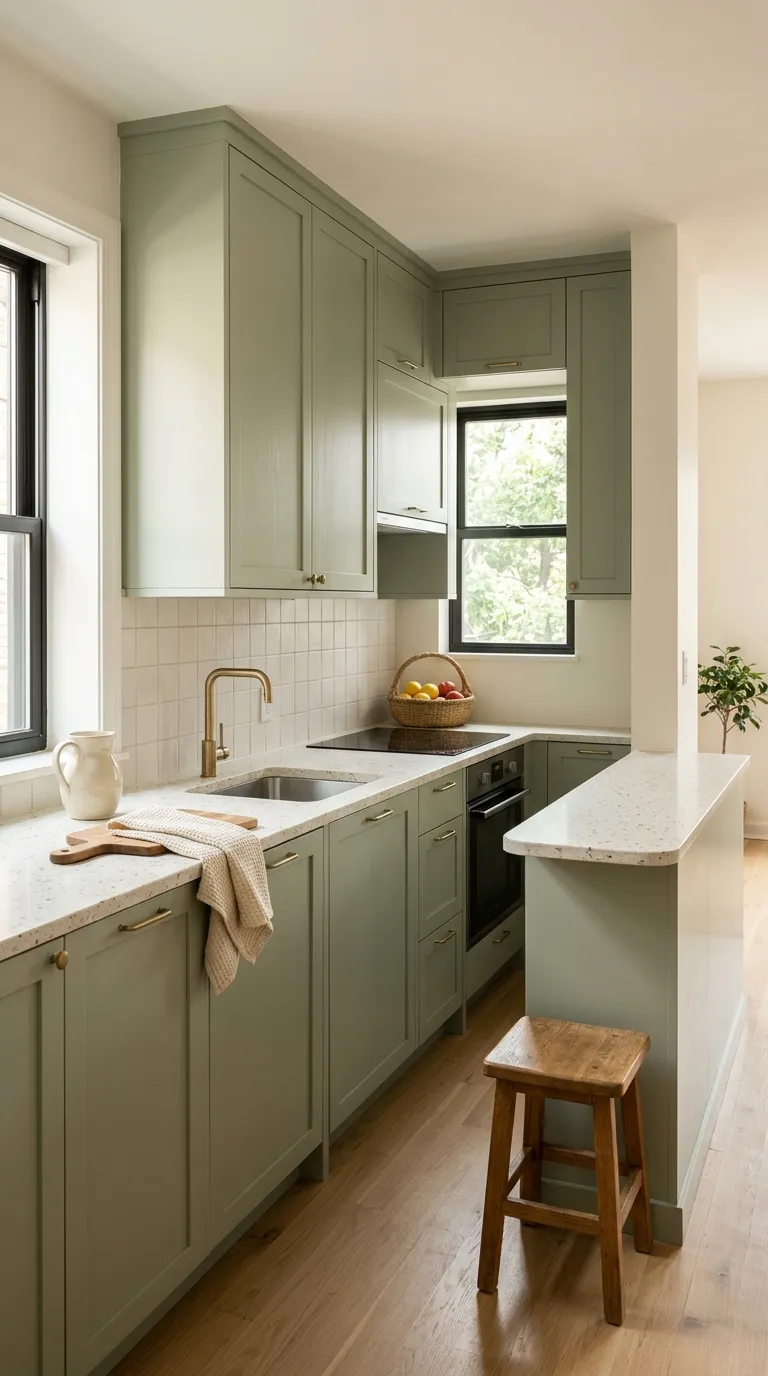
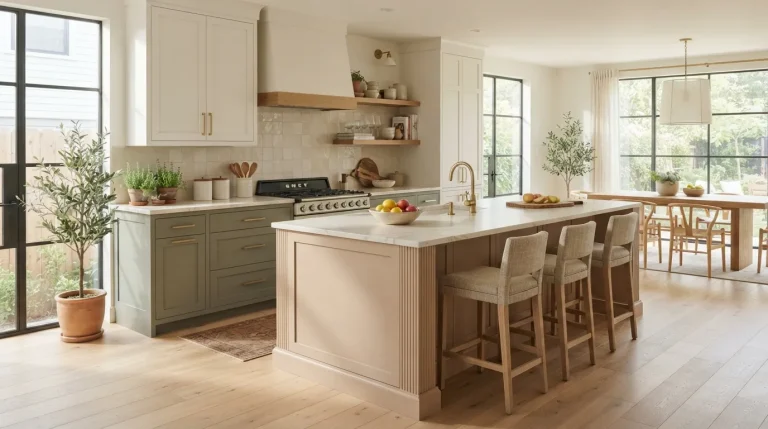
Soft sage works beautifully when you want color without visual heaviness. Its muted green tone adds personality while keeping the room calm, especially when paired with creamy walls and light countertops. This palette suits both modern and farmhouse-inspired kitchens.
Picture a narrow kitchen with sage lower cabinets and open upper shelving. The darker cabinet color anchors the room near the floor, while the lighter upper area keeps your eye moving upward. For small kitchen color ideas, this balance can make a compact layout feel more open.
Warm White Walls
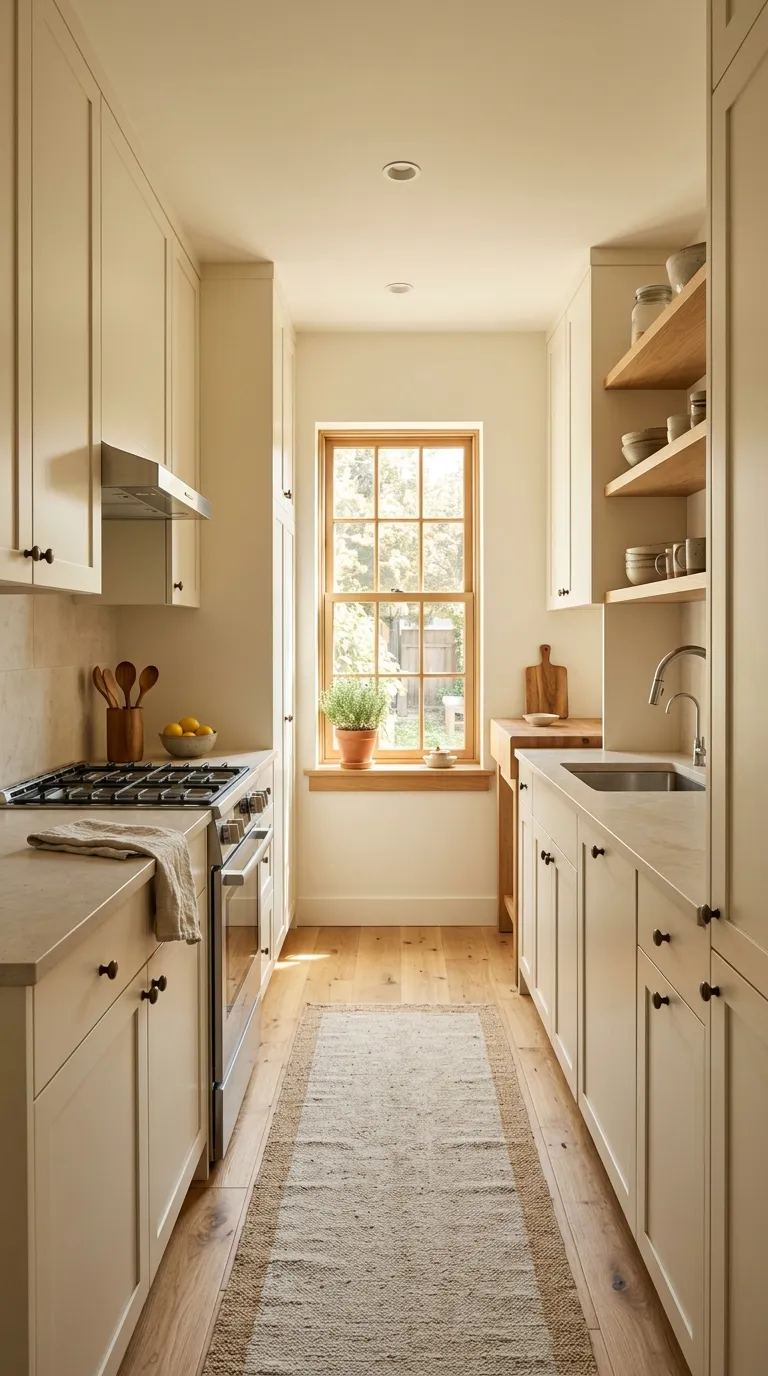
Warm white is a safe starting point when your kitchen lacks natural space. Unlike stark white, a warmer shade adds softness and works well beside wood, stone, brass, or black accents. It also helps cabinets and counters feel connected rather than visually divided.
If your kitchen has limited windows, consider using the same warm white family across the walls and upper cabinets. Then add contrast through flooring, hardware, or a small colorful accent. This approach keeps the background quiet while giving your chosen details room to stand out.
Dusty Blue Details
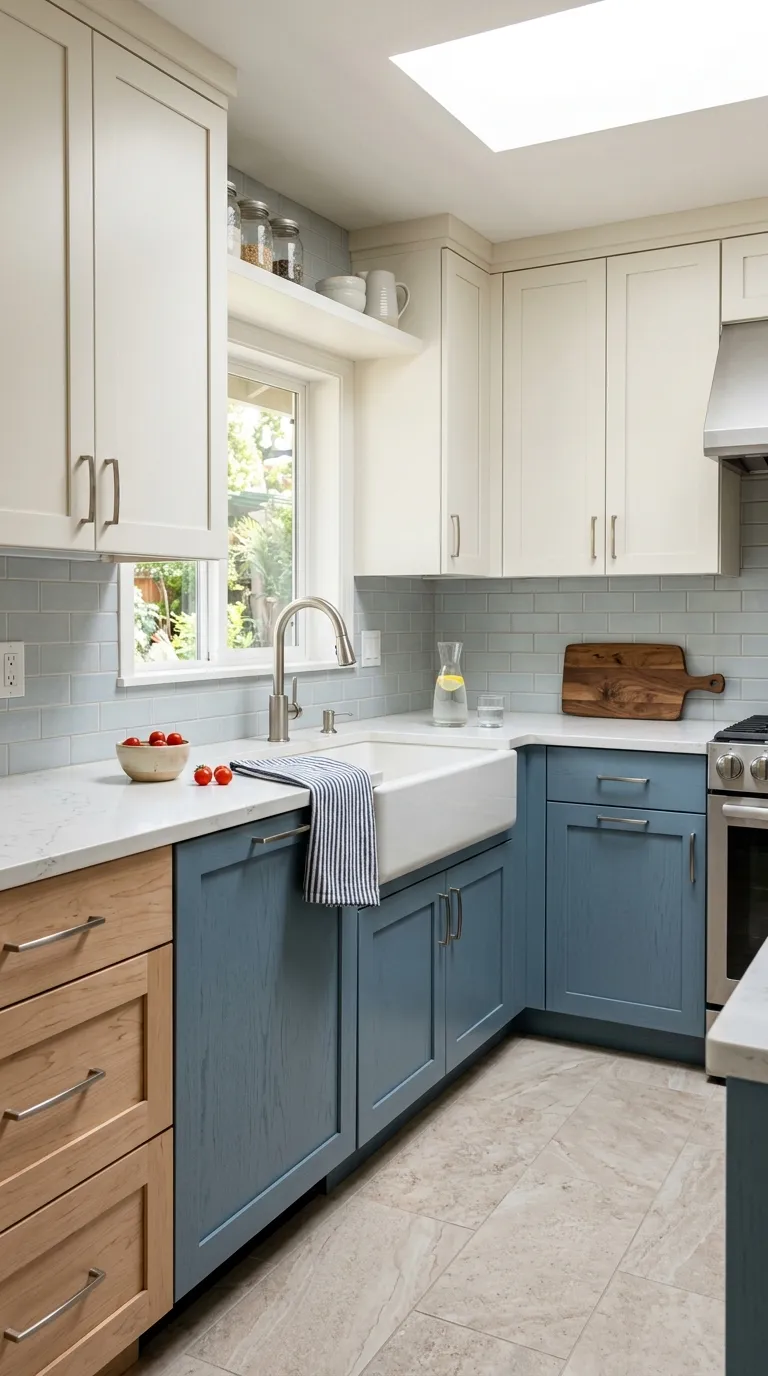
Dusty blue gives a compact kitchen a gentle dose of color without feeling loud. It pairs especially well with ivory, pale wood, soft gray, and brushed metal finishes. Use it on lower cabinets if you want the color to stay grounded.
For a smaller room, you can also use dusty blue in limited areas such as an island base, pantry door, or backsplash. The trick is to let one blue element lead while the rest of the palette stays restrained. That keeps the kitchen feeling collected instead of busy.
Creamy Beige Cabinets
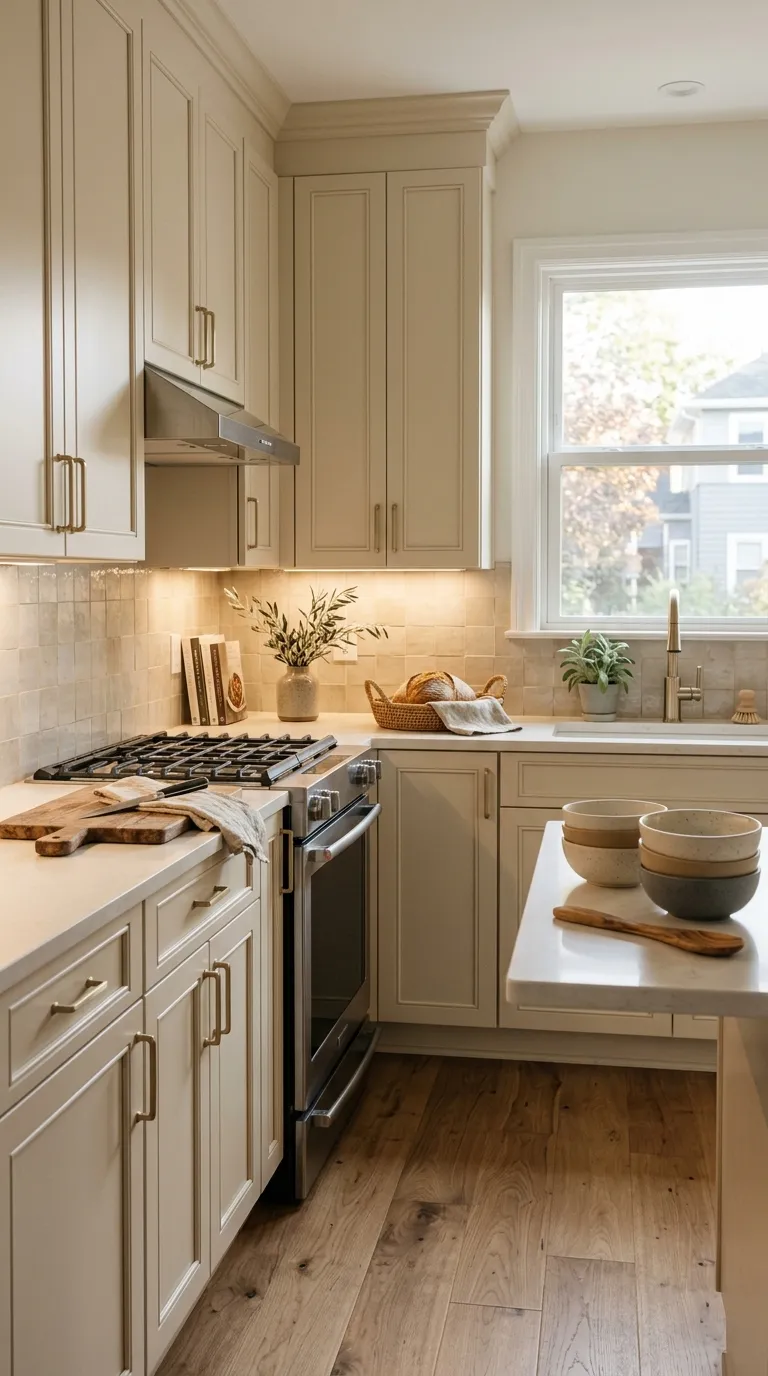
Creamy beige gives your kitchen warmth without the heaviness that some darker shades can bring. It works nicely with walnut, brass, ivory, and natural stone, creating a cozy palette that still feels polished.
Try beige on the cabinets while keeping the backsplash slightly lighter. That small contrast helps each surface stay visible and adds depth to a compact room. Among practical small kitchen color ideas, this combination is easy to live with and simple to decorate around.
Olive Green Accents
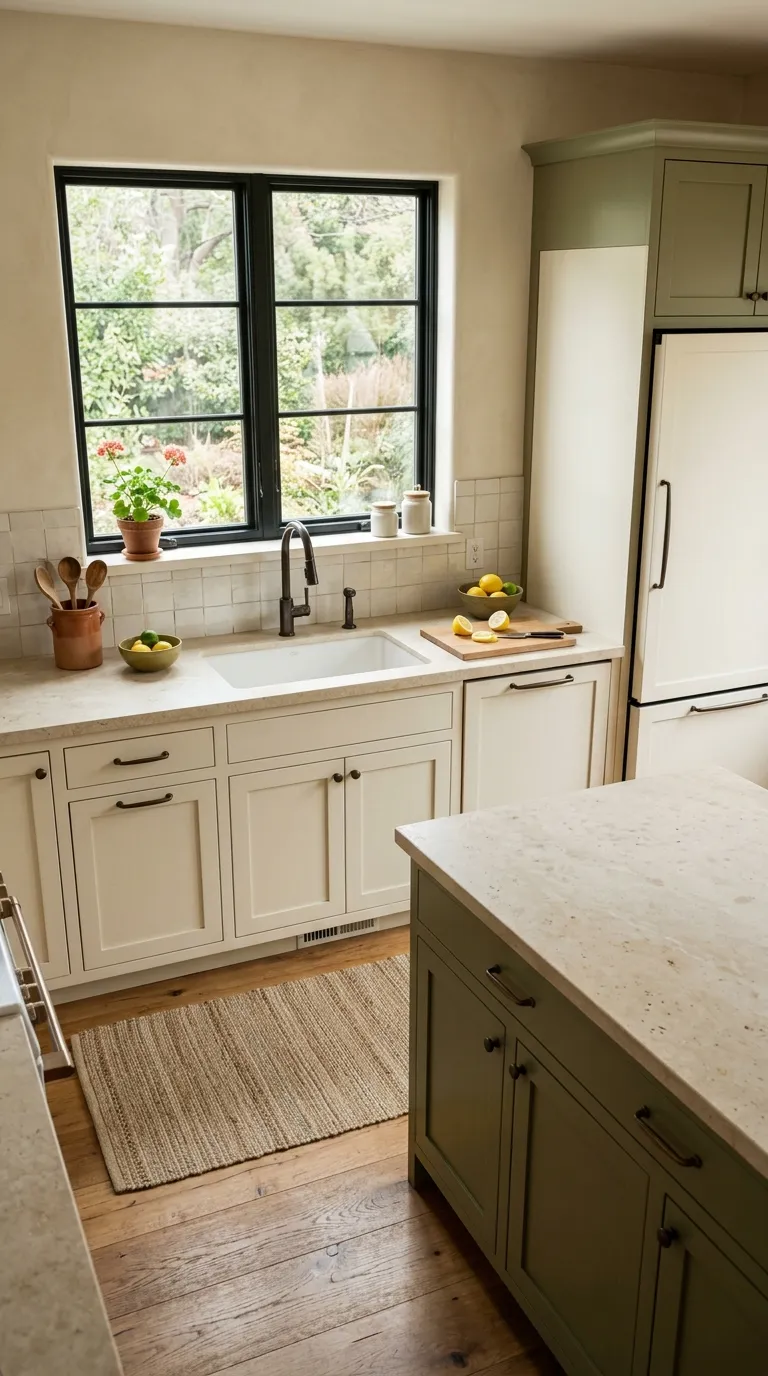
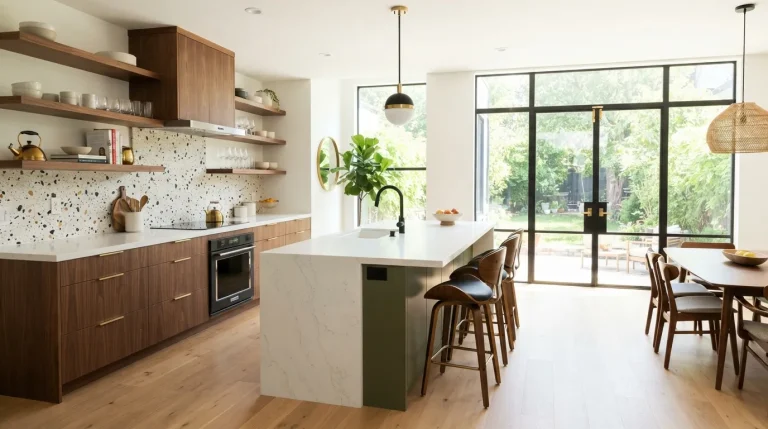
Olive green brings an earthy note that feels especially natural beside cream, stone, and wood. You don’t need to paint every cabinet olive to get the effect. A pantry unit, peninsula, or small bank of drawers can carry the color.
Consider using olive as the visual anchor while keeping the larger surfaces light. This keeps the kitchen from feeling enclosed and gives you an easy color story for towels, ceramics, and small accessories. The result feels relaxed without looking plain.
Pale Gray and Wood
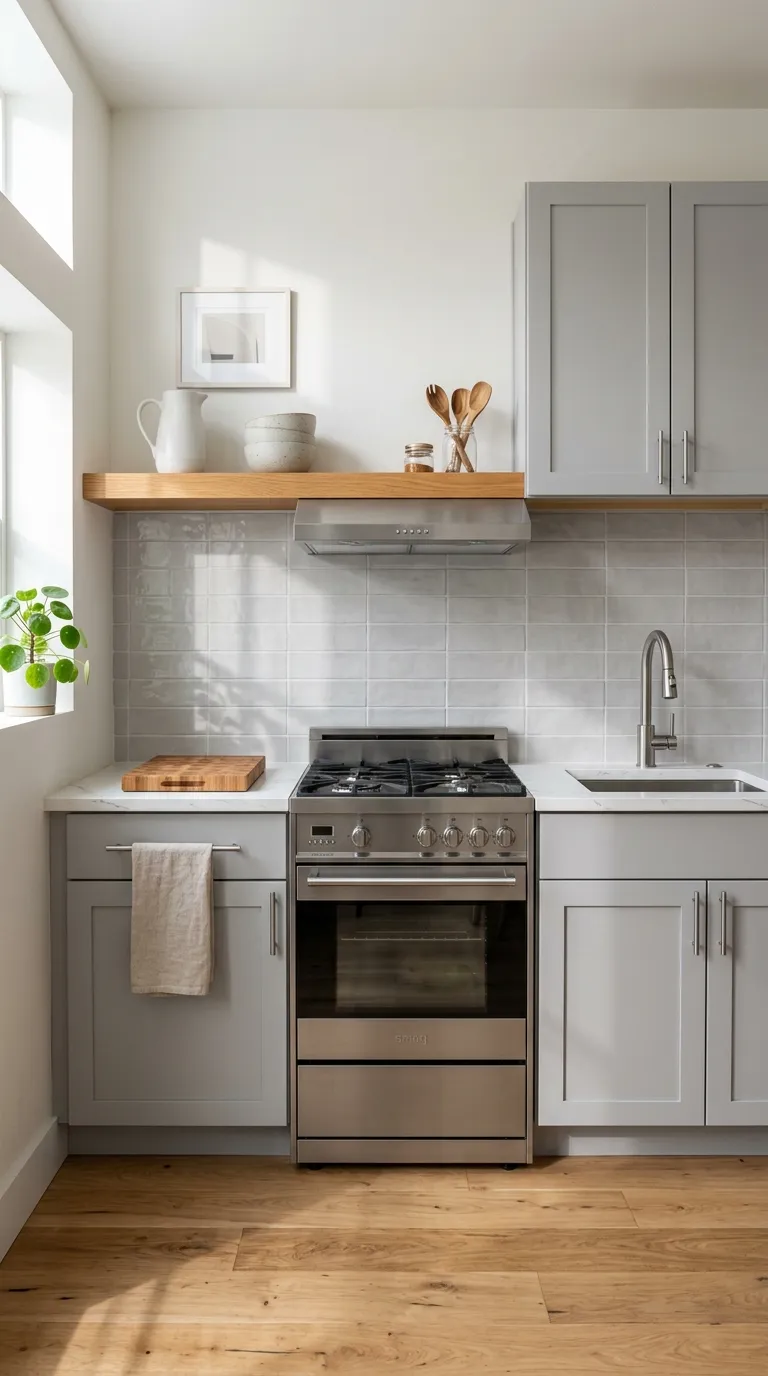
Pale gray can make a compact kitchen feel neat and calm, especially when warm wood keeps the palette from becoming too cool. The combination also gives you plenty of freedom with hardware, lighting, and countertop choices.
For a practical color plan, use gray across the main cabinetry and introduce wood through shelving, flooring, or a small island. The two materials create contrast without adding another strong hue. This works well when you want a modern kitchen color palette that won’t feel dated quickly.
You’ll likely also enjoy Gorgeous Kitchen Color Combination Ideas.
Deep Navy Island
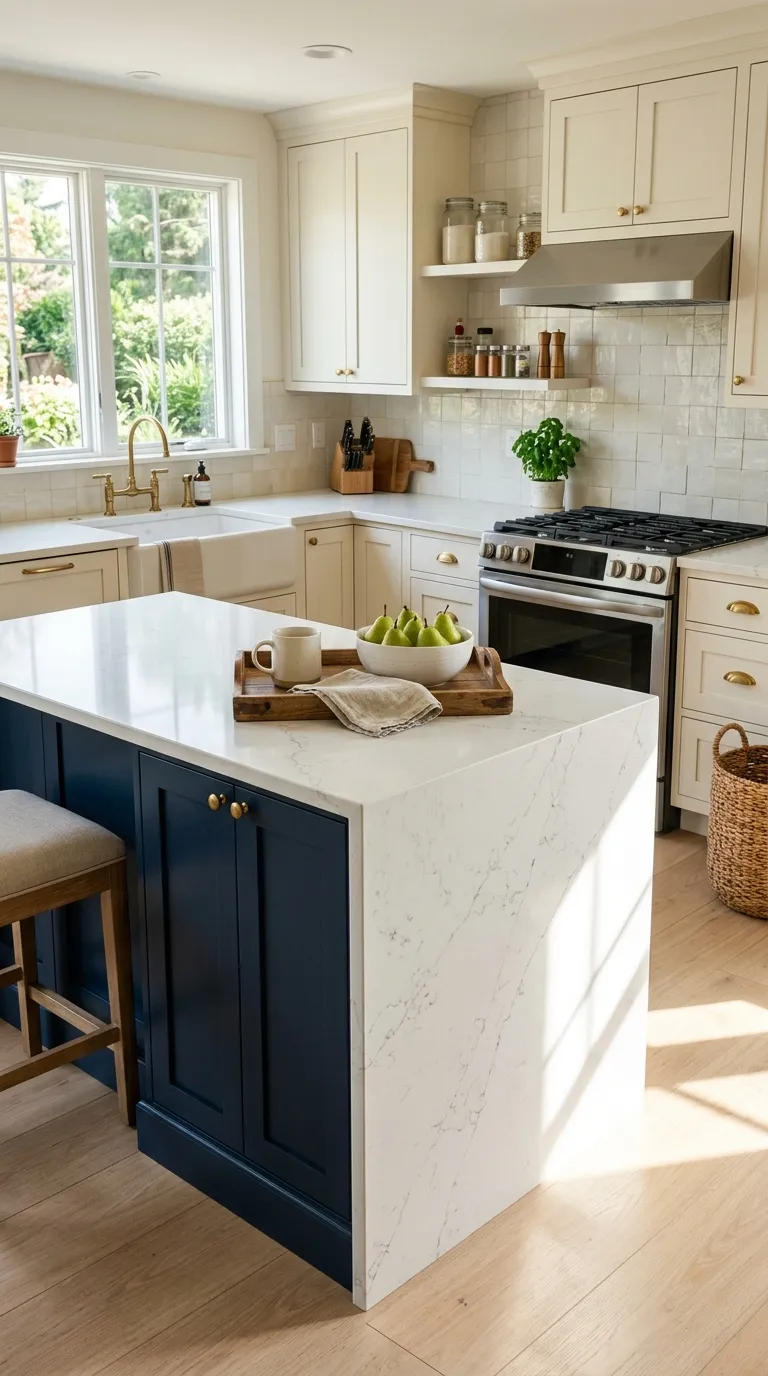
A deep navy island can give a small kitchen a strong focal point without darkening the entire room. Keep the surrounding cabinets light so the navy reads as one intentional feature rather than a heavy block of color.
Pair navy with white quartz, pale oak, and warm metal hardware for a balanced look. If your kitchen has no island, use the same idea on a small peninsula, cabinet section, or freestanding storage piece. It’s a useful way to add depth while keeping the main surfaces bright.
Blush Pink Backsplash
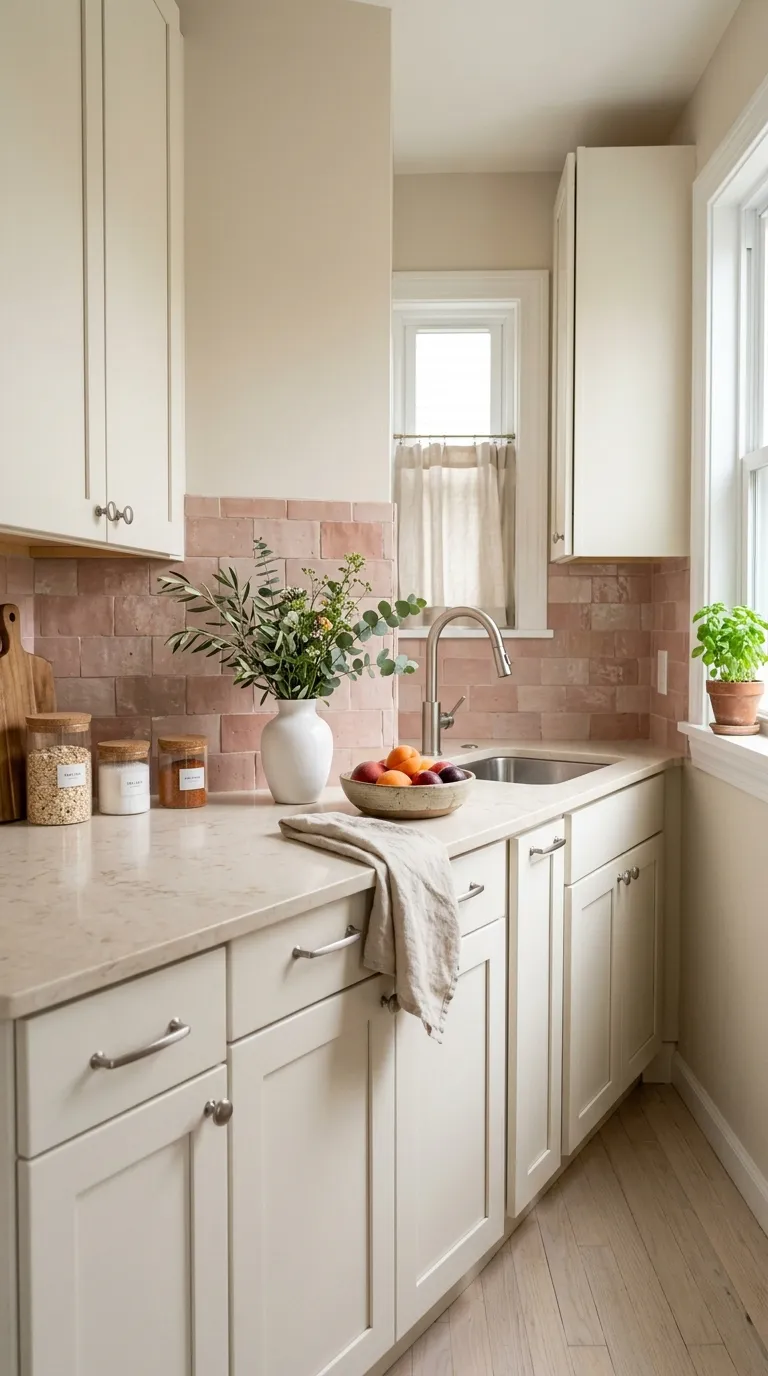
Blush pink adds warmth and personality without taking over the room. A muted pink backsplash works particularly well with ivory cabinets, pale wood, and simple metal hardware.
If you’re cautious about colorful cabinets, the backsplash gives you a smaller area to experiment with. Choose a dusty or muted shade rather than a bright pink so the kitchen stays soft and easy to style. This is one of the more playful small kitchen color ideas for a subtle makeover.
Charcoal Lower Cabinets
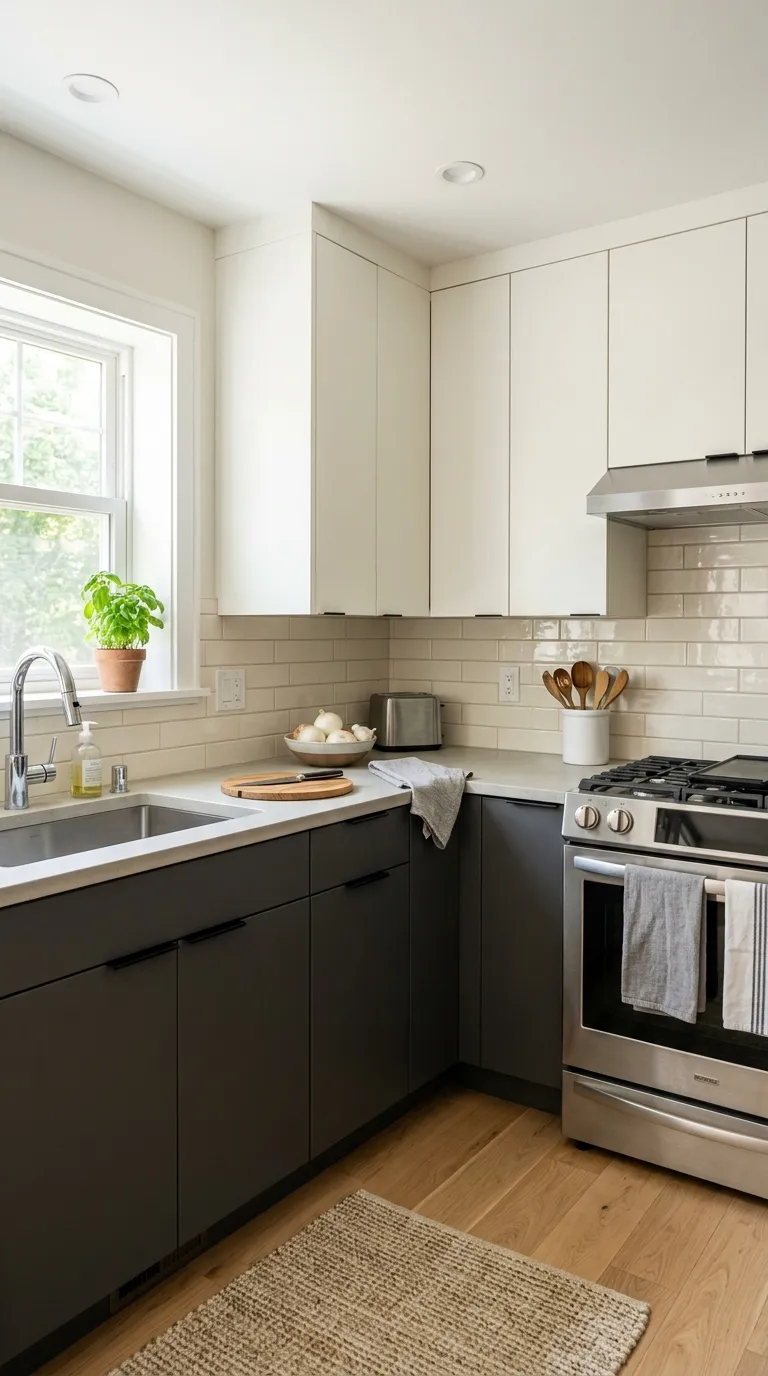
Charcoal cabinets create contrast and make a small kitchen feel grounded. The key is to keep the upper portion of the room light so the darker shade doesn’t visually close in the space.
Try charcoal on the base cabinets while using warm white above. Light flooring and a pale counter can add another layer of brightness. This two-level approach gives your kitchen more definition while keeping the overall palette controlled.
Terracotta Accent Wall
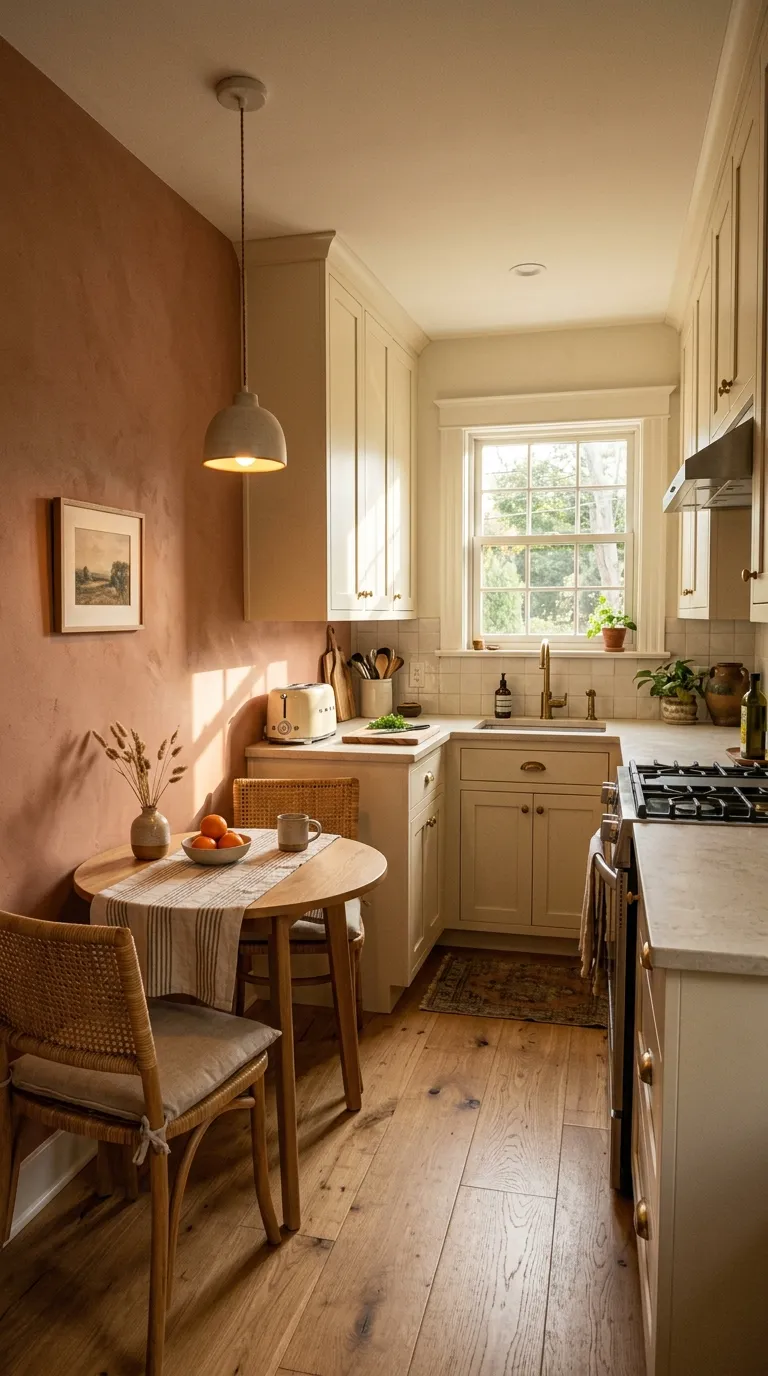
Terracotta brings a warm, earthy note to a compact kitchen. It works especially well when the main cabinetry stays neutral, giving the accent wall space to stand out without competing with storage or appliances.
Use this shade near a breakfast nook, pantry wall, or open shelving area. Pair it with oak, cream, clay ceramics, and aged brass for a cohesive look. A single warm wall can change the room’s mood without requiring a full cabinet repaint.
Muted Teal Cabinets
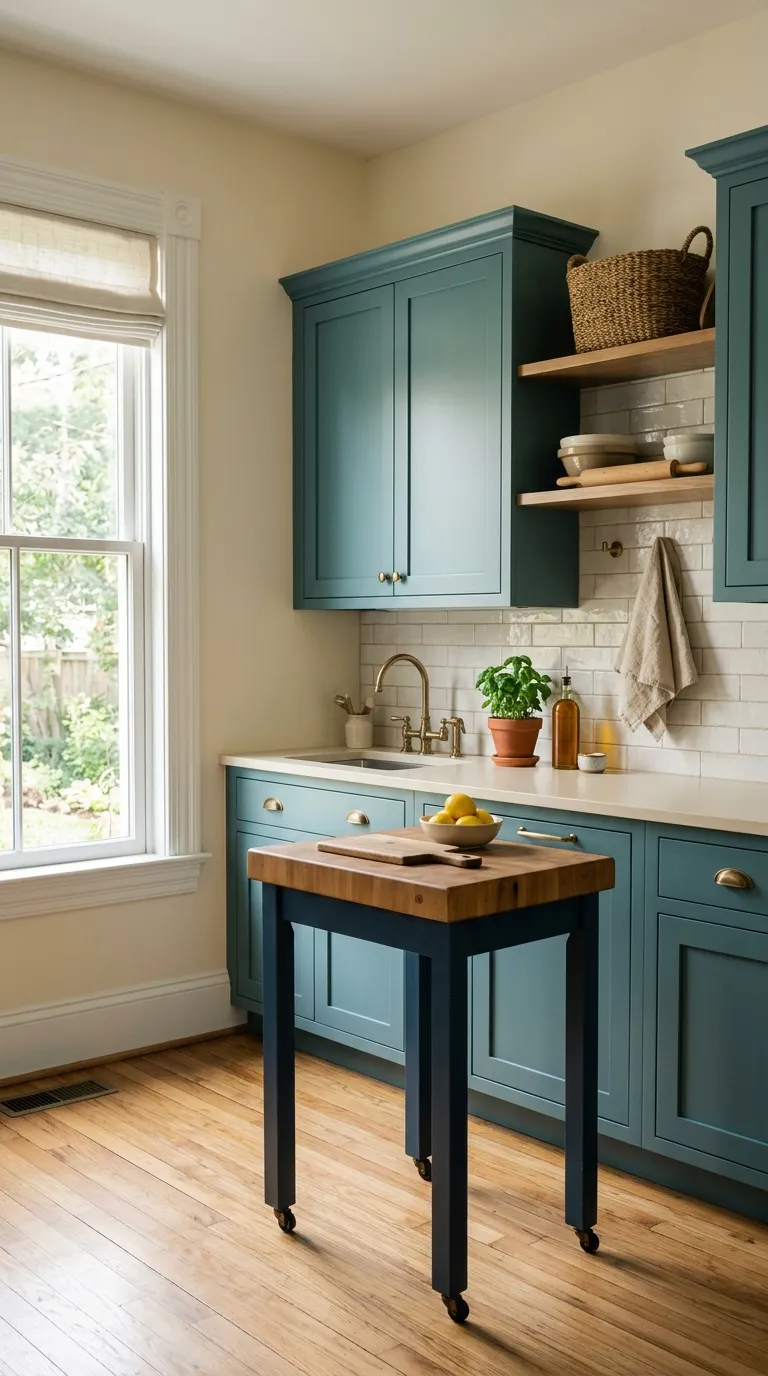
Muted teal sits between blue and green, making it a flexible choice when you want more color than a soft neutral. Its medium depth gives cabinets presence while still leaving room for lighter countertops and walls.
Keep the surrounding finishes simple so the teal remains the star. Cream tile, pale stone, warm wood, and brass can soften the cooler undertone. If your kitchen has limited wall space, colored cabinetry gives you more impact without filling the room with patterned surfaces.
Mushroom Gray Cabinets
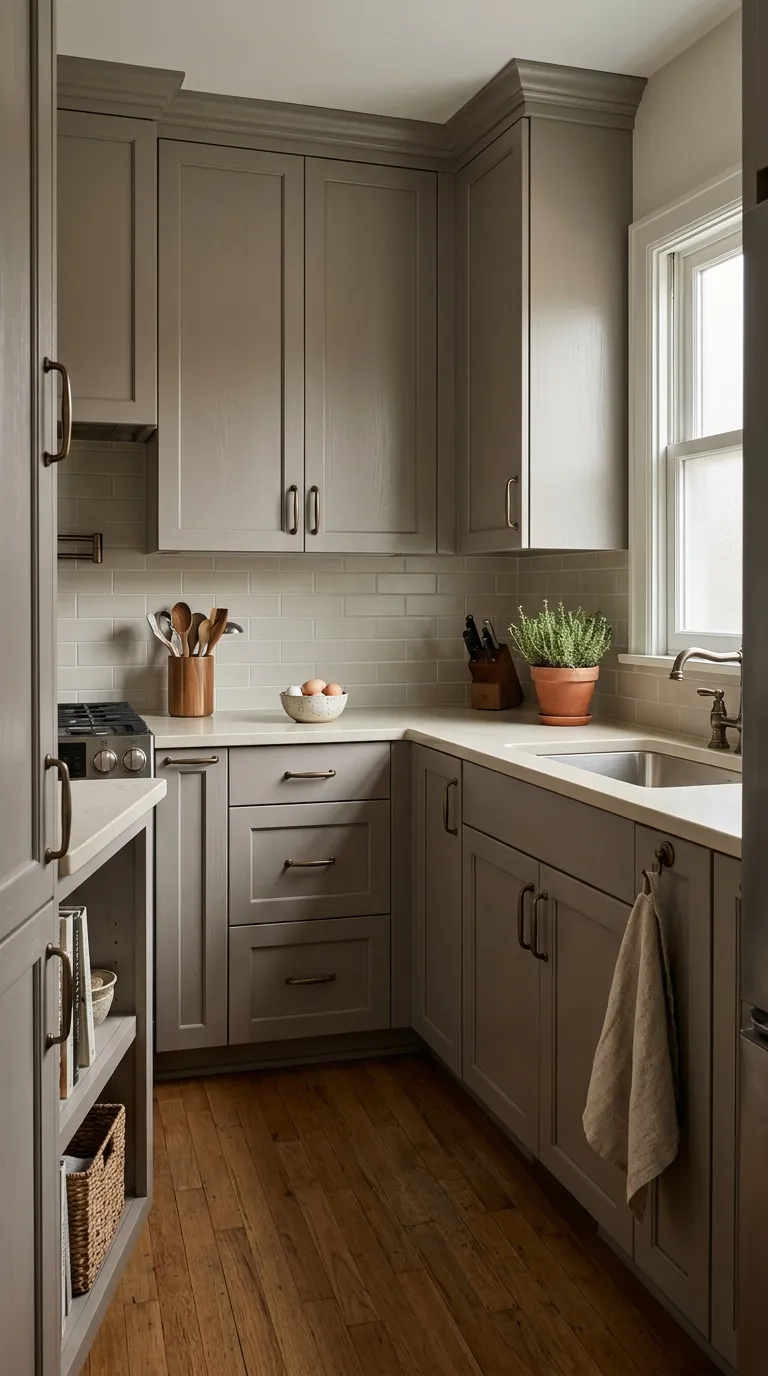
Mushroom gray sits between beige and gray, giving your kitchen a soft neutral base. It has enough depth to make simple cabinet doors interesting while staying light enough for a compact layout.
Pair it with creamy stone, oak, and bronze hardware for a warm finish. If bright white feels too stark for your home, this shade offers a gentler alternative. It also works nicely with seasonal decor because the neutral base won’t compete with changing accents.
Butter Yellow Walls
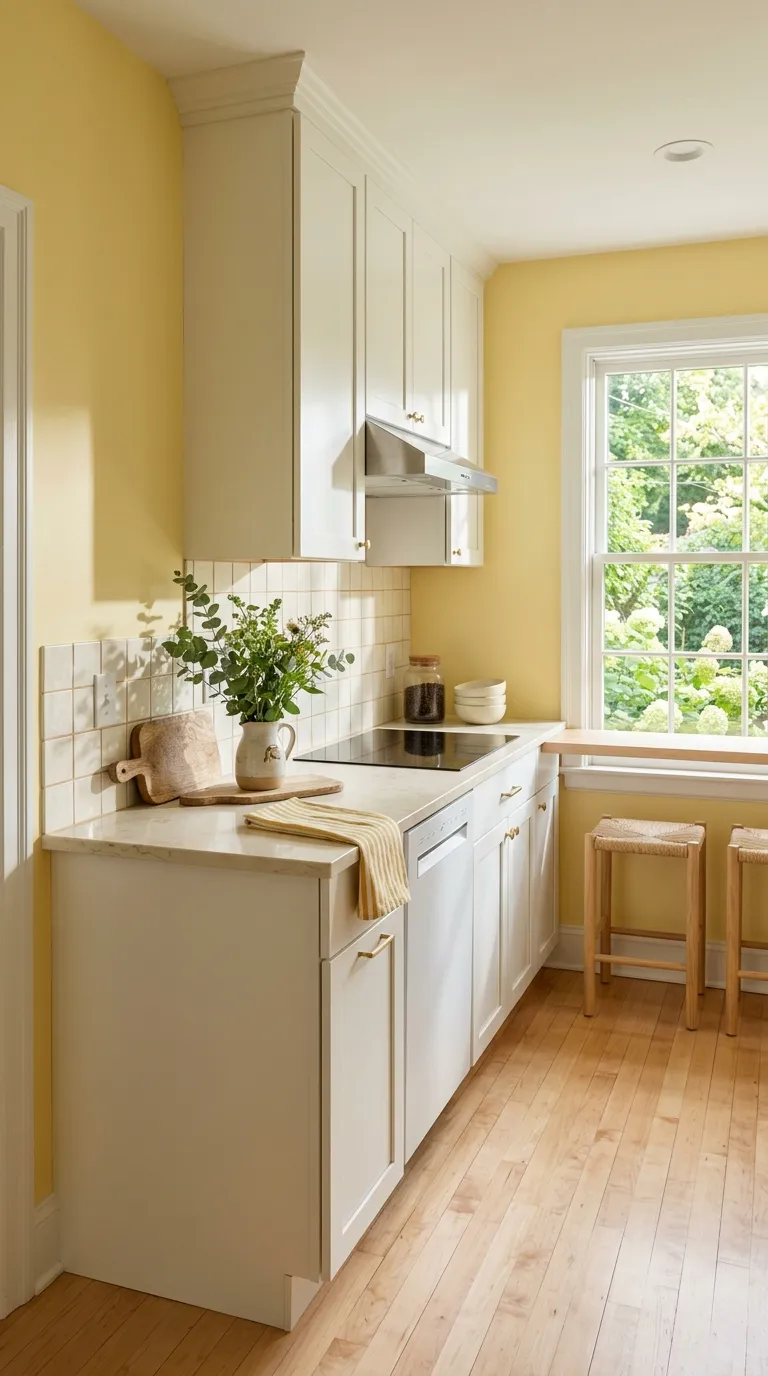
Butter yellow adds warmth without needing a strong saturated color. On walls, it can make a small kitchen feel sunny and welcoming, especially when the cabinets and countertops stay pale.
Choose a soft, creamy yellow rather than a bright primary shade. Pair it with white, light maple, natural ceramics, and simple greenery for a relaxed palette. This option works particularly well in kitchens where natural daylight is limited.
Forest Green Accents
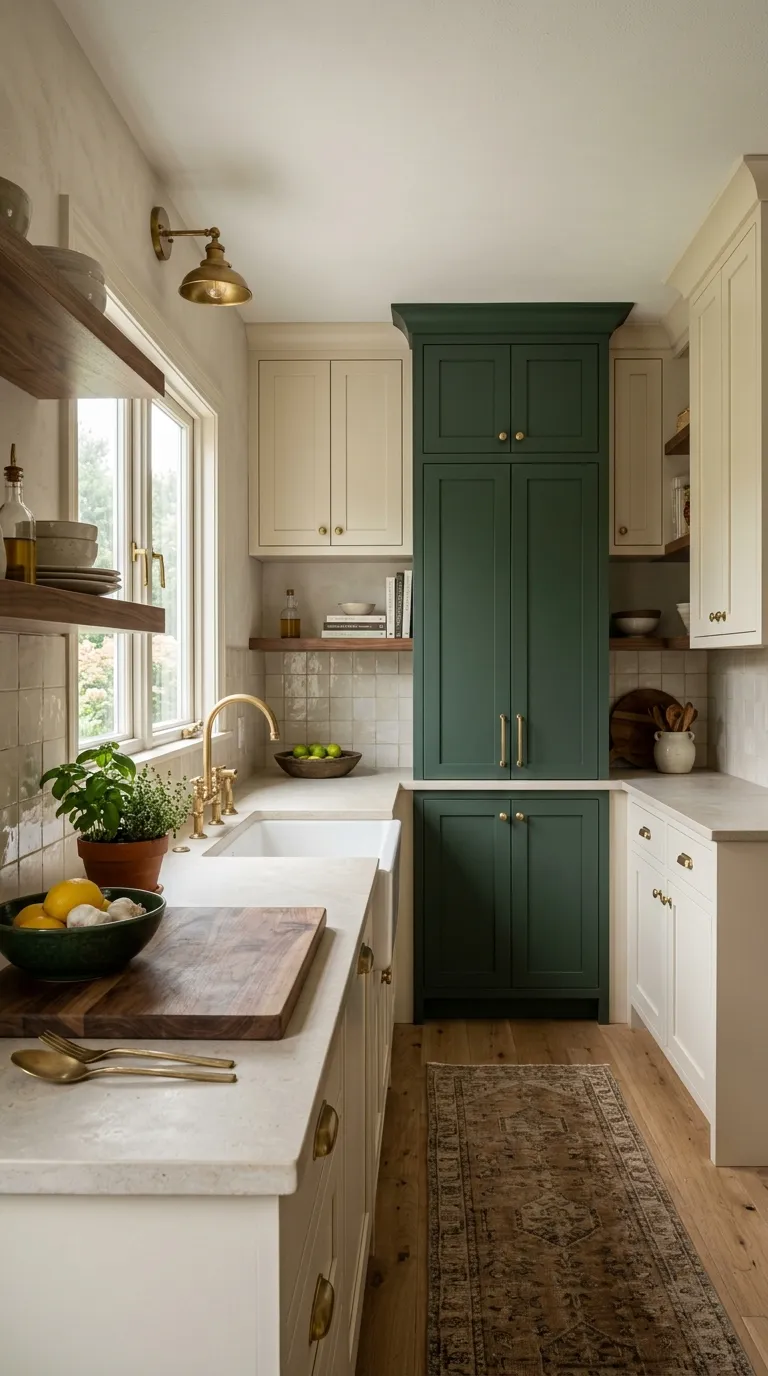
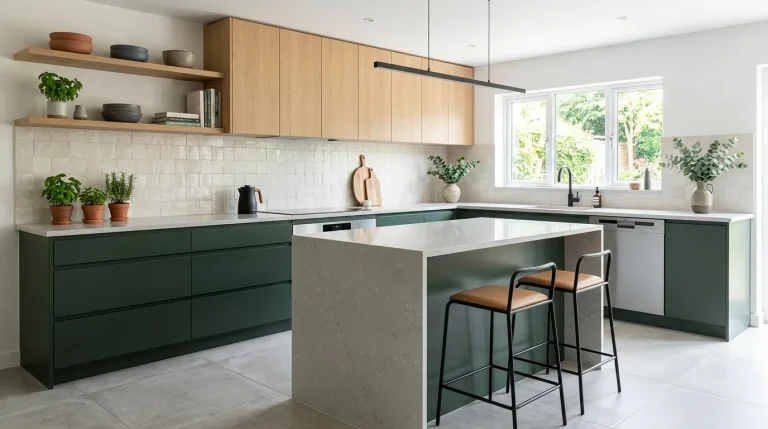
Forest green creates a rich focal point in a small kitchen when you use it in a limited area. A pantry cabinet, tall storage unit, or compact island can carry the darker shade while the rest of the room stays light.
Combine green with cream and walnut for a grounded, natural palette. Brass hardware adds a warm finishing note without adding another strong color. For homeowners who want character without repainting every cabinet, one green feature can be enough.
Warm Greige Palette
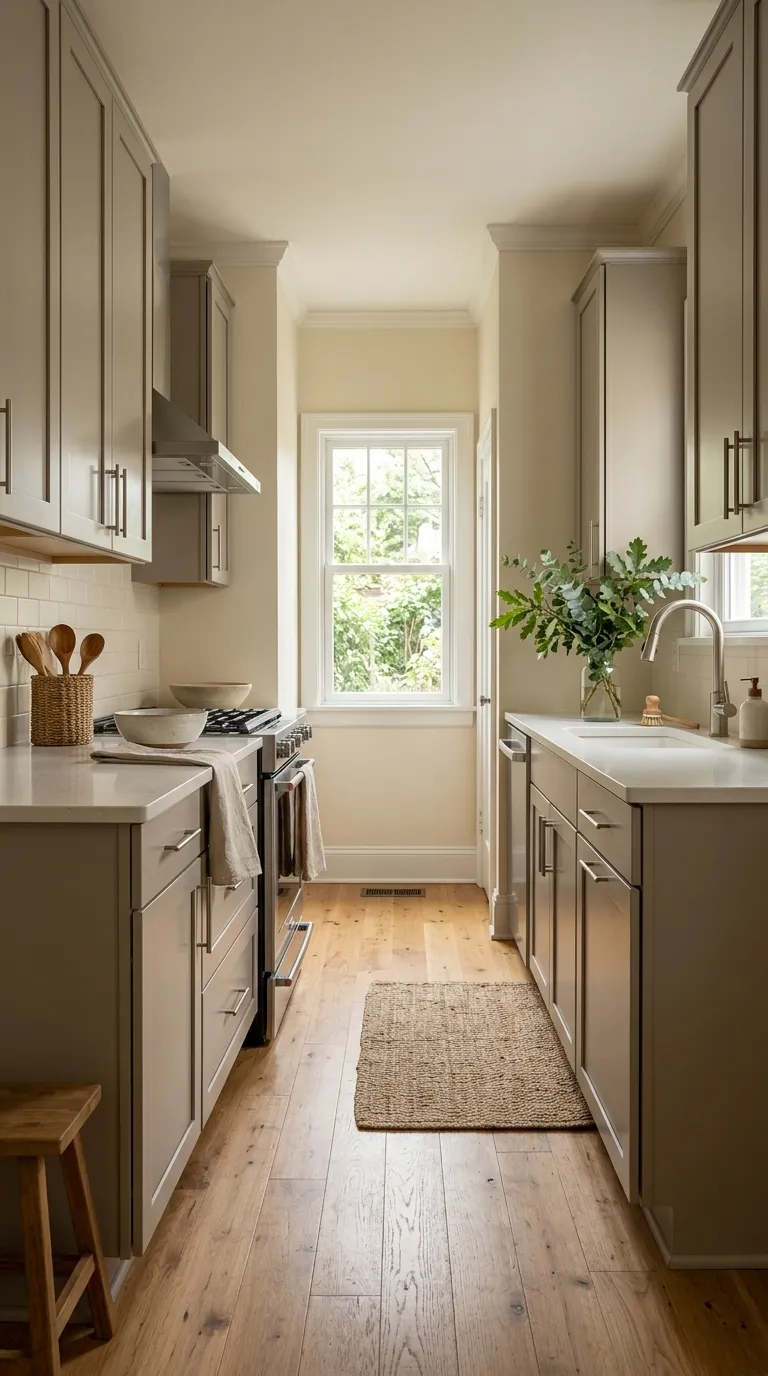
Greige blends gray and beige into one easygoing shade. It gives a small kitchen more warmth than cool gray while keeping the overall look clean and understated.
Use greige across the cabinets or walls, then bring in oak and creamy white for contrast. The palette works especially well when you want a neutral kitchen that still has depth. It also gives you plenty of freedom to change small accessories later.
Soft Black Accents
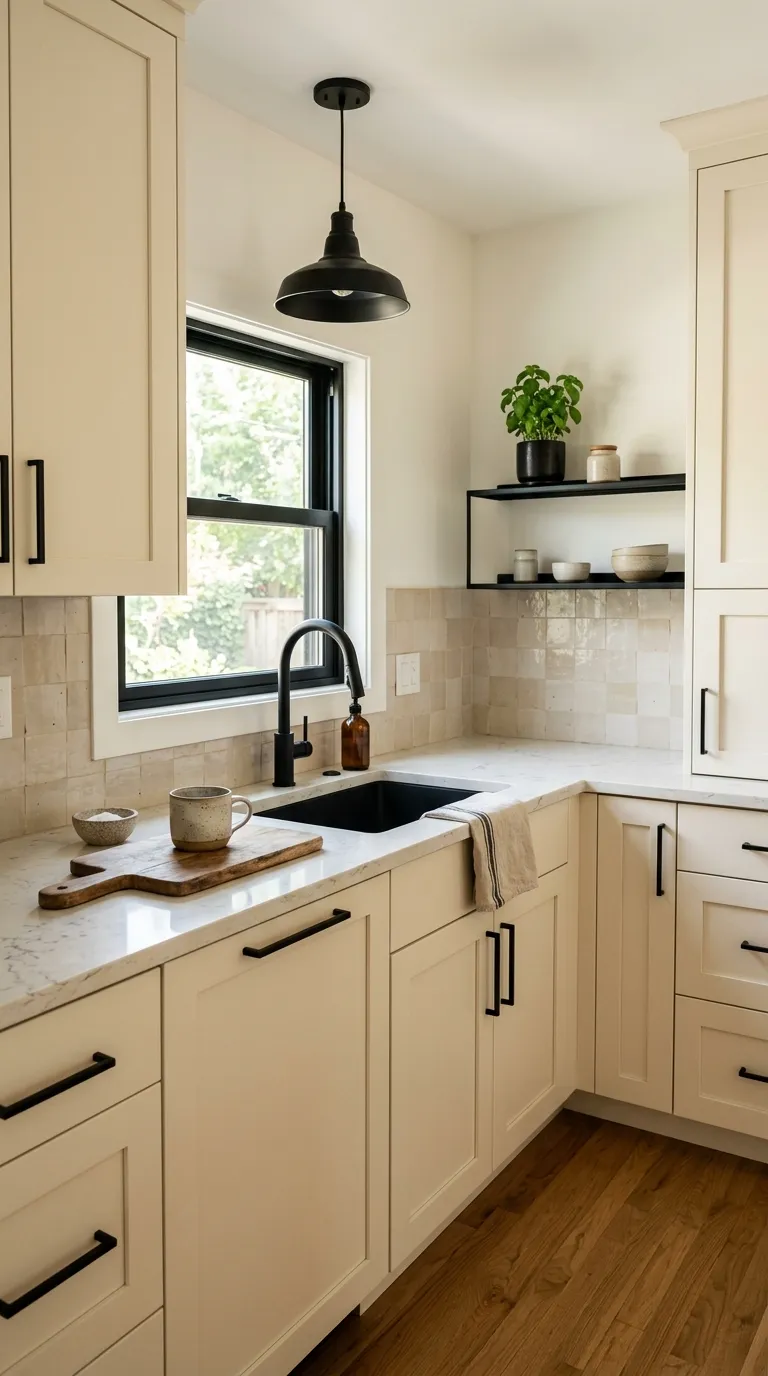
Black can add structure to a light kitchen without covering large surfaces. Instead of painting cabinets black, use the shade on hardware, lighting, window frames, or open shelving.
Keep the main palette creamy and bright so the dark accents feel intentional. A few repeated black details can tie the room together and give simple cabinetry a sharper look. This is a useful choice when you want contrast without making the kitchen feel heavy.
Powder Blue Cabinets
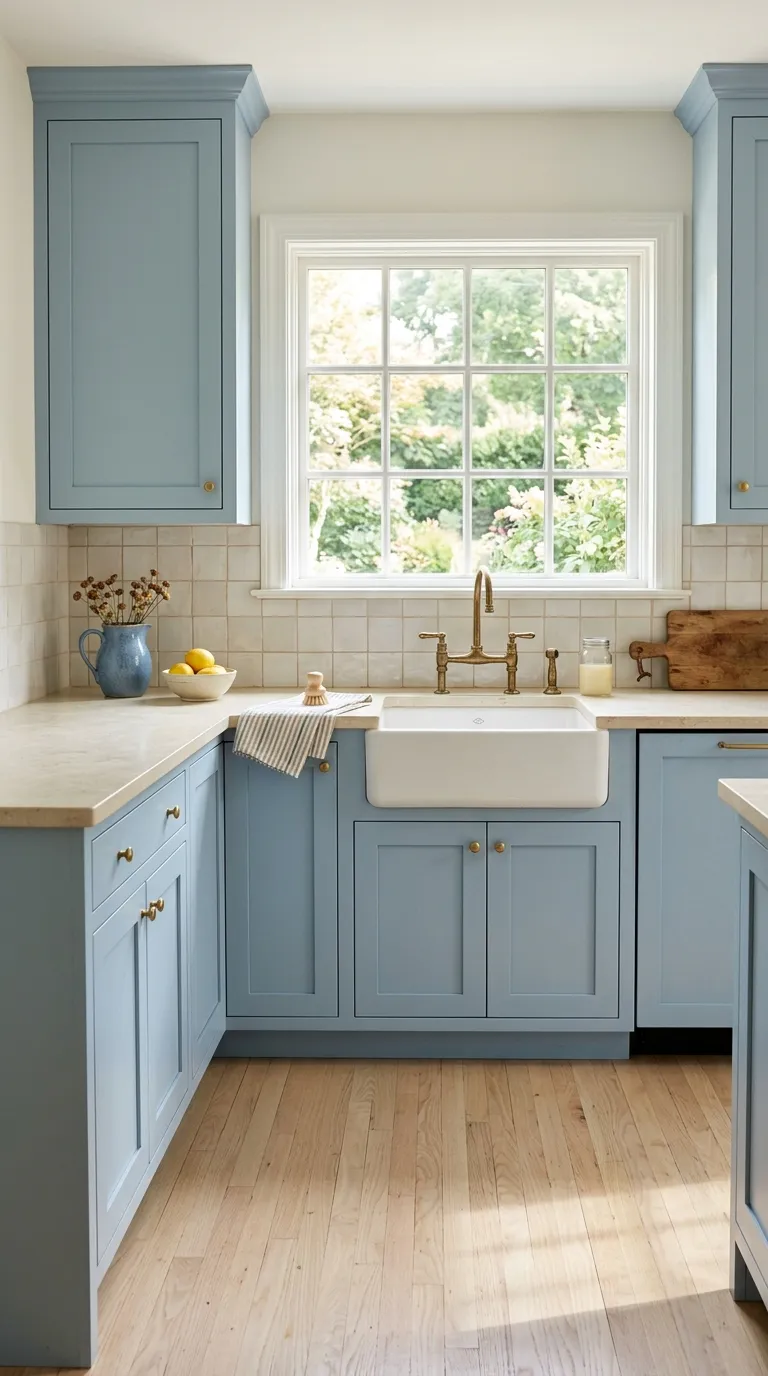
Powder blue keeps a compact kitchen feeling light while giving the cabinets more personality than plain white. Its soft tone pairs naturally with cream, pale wood, and stone surfaces.
If your room has modest natural light, choose a blue with a slightly gray undertone. It will feel calmer than a bright blue and won’t overpower the surrounding finishes. Add one or two matching ceramic pieces to tie the color together without overdoing it.
Taupe and Brass
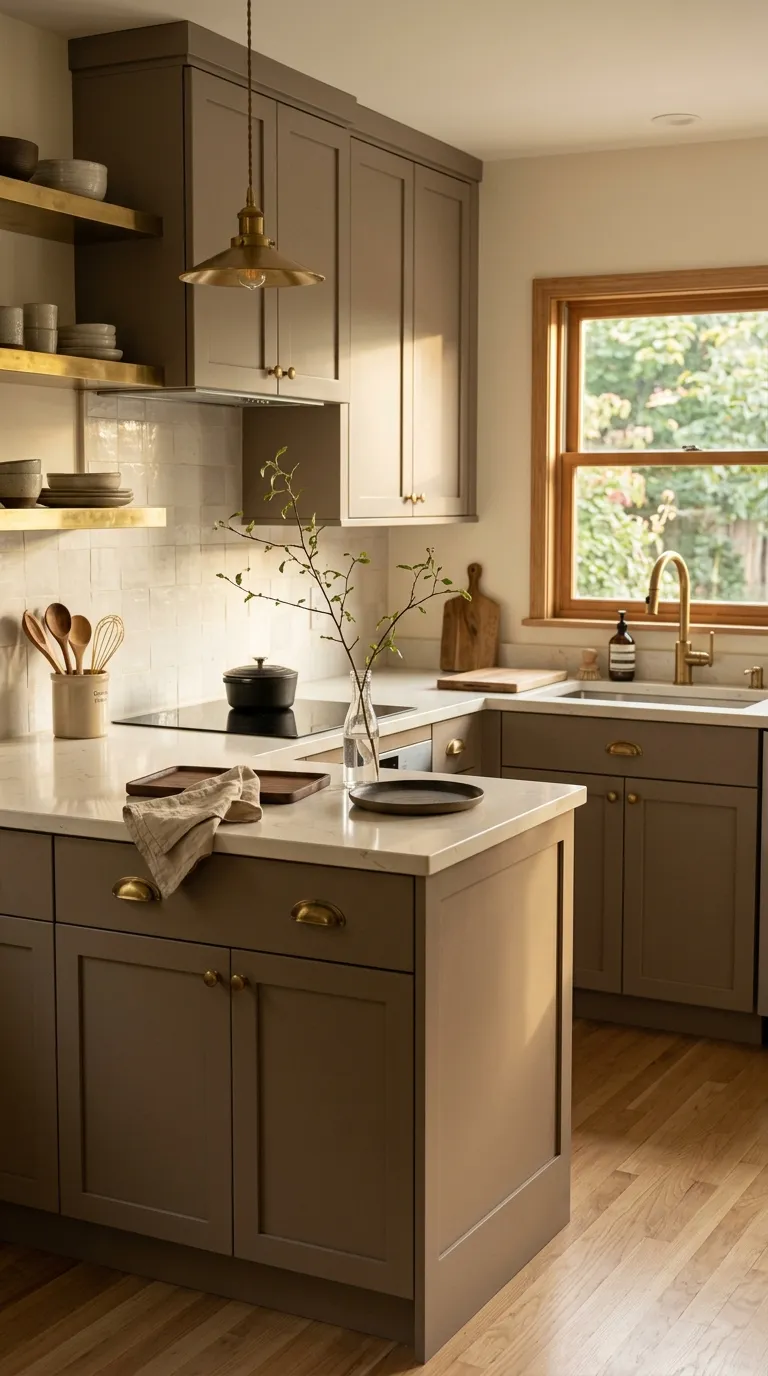
Taupe offers more warmth than many standard gray paints, making it a strong choice for compact kitchens. Add brass hardware to give the neutral cabinets a warm point of contrast.
Keep the counter and backsplash lighter so the taupe doesn’t make the room feel too dense. Pale oak flooring can soften the palette even further. The result is polished, warm, and easy to adapt as your decor changes.
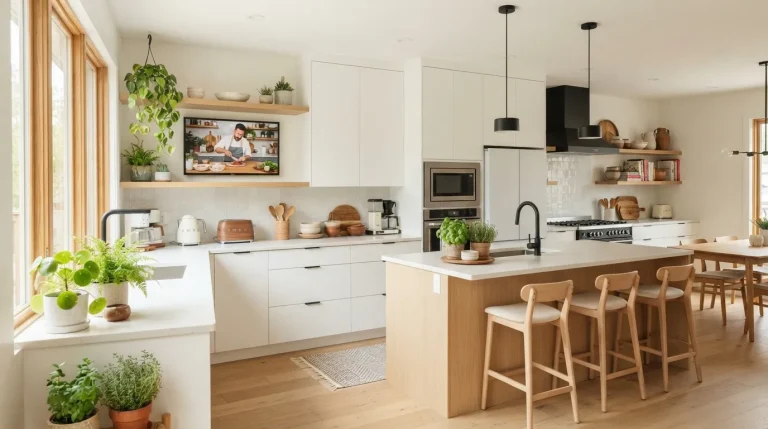
Cream and Natural Wood
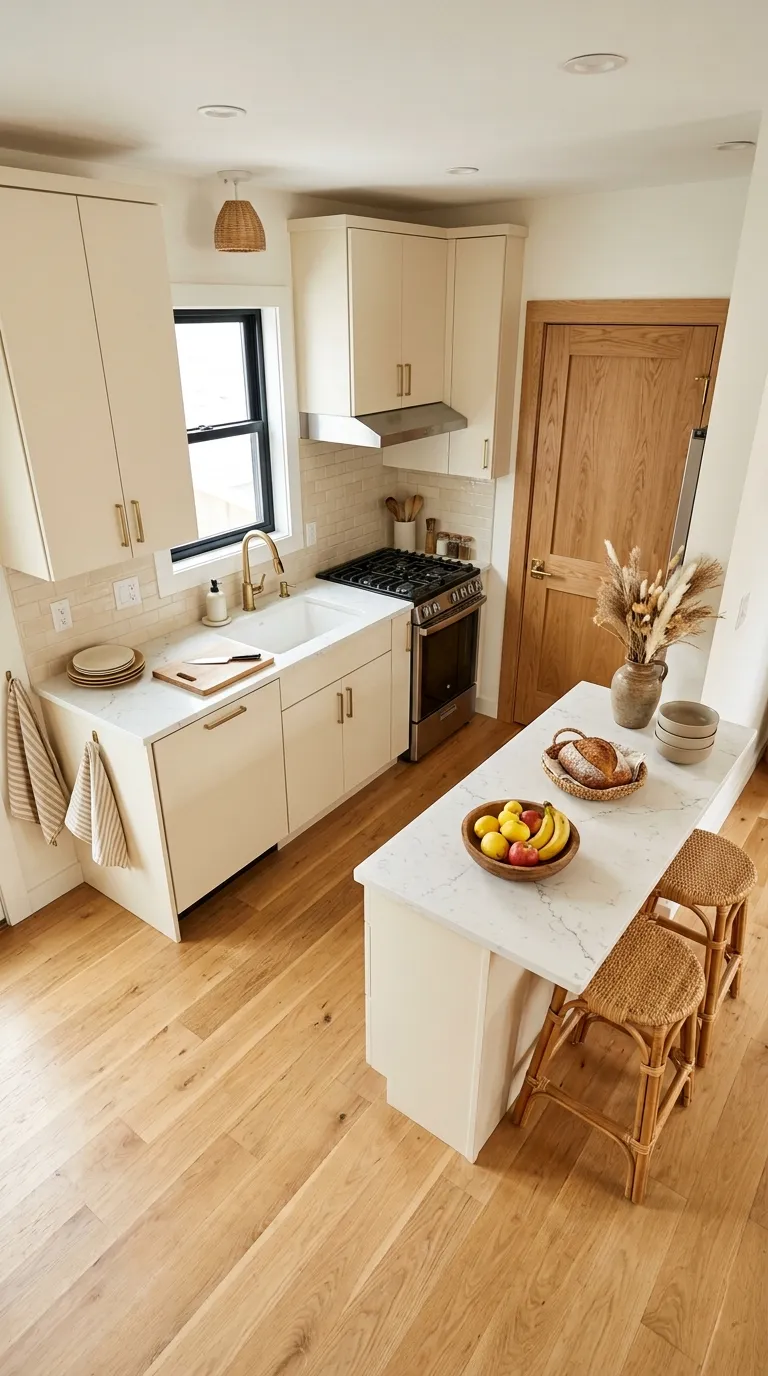
Cream and natural wood create a warm palette that rarely feels crowded. The creamy surfaces keep the kitchen bright, while wood adds texture and a sense of depth.
Use wood selectively if your kitchen is very small. A pantry door, floating shelves, stool, or wood-toned lower cabinet can provide enough contrast without covering every surface. This pairing also works with black, brass, or brushed metal accents.
Moody Plum Accent
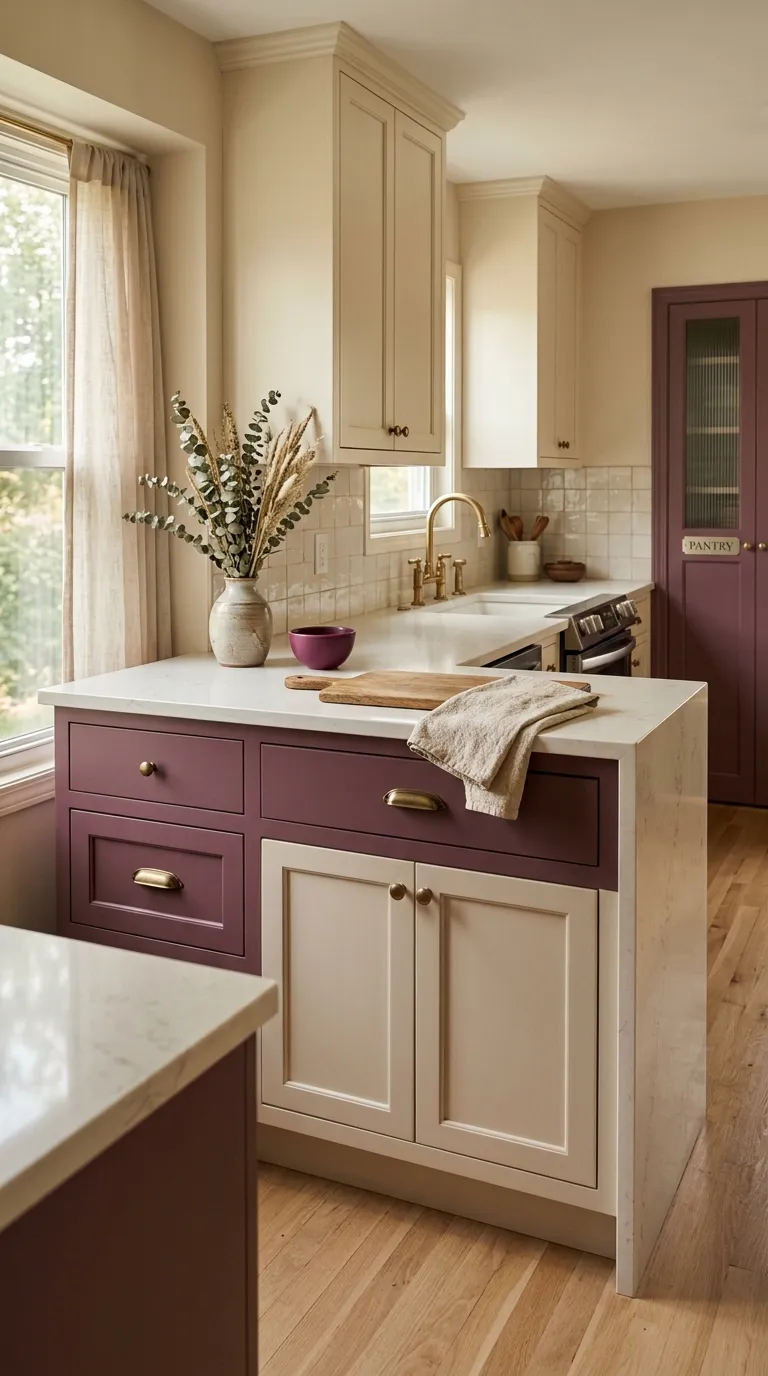
A muted plum accent can give a compact kitchen a deeper, more personal feel. Because the shade is rich, it’s best used on one cabinet group, pantry door, or small island rather than every surface.
Balance plum with cream, pale wood, and soft stone. Warm brass can connect the colors and add a subtle finishing detail. If you want your kitchen to feel distinct without using a large amount of color, a single plum feature can do the job.
Last Words
These small kitchen color ideas show how much you can change with a thoughtful palette. Light creams, soft blues, muted greens, warm taupes, and carefully placed deeper shades can all work when the colors match the room’s size, light, and finishes.
Start with the surface you want to change most. If the cabinets feel dated, try a new paint color; if the room already has good cabinetry, consider a backsplash, accent wall, hardware, or painted peninsula instead. Keep the largest surfaces balanced, then add smaller color notes until the kitchen feels complete.
Olivia Carter
Olivia Carter is the founder of Lady Home Decor and a passionate home decor expert. She shares practical, stylish ideas to help homeowners create beautiful, comfortable, and welcoming spaces. Her expertise covers bedrooms, kitchens, living rooms, bathrooms, and small-space decorating.