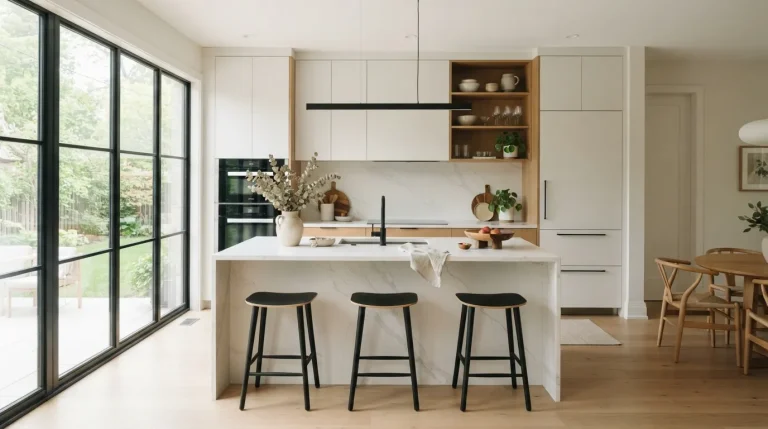
20 Dreamy Kitchen Cabinet Color Combination Ideas for Stylish Decor

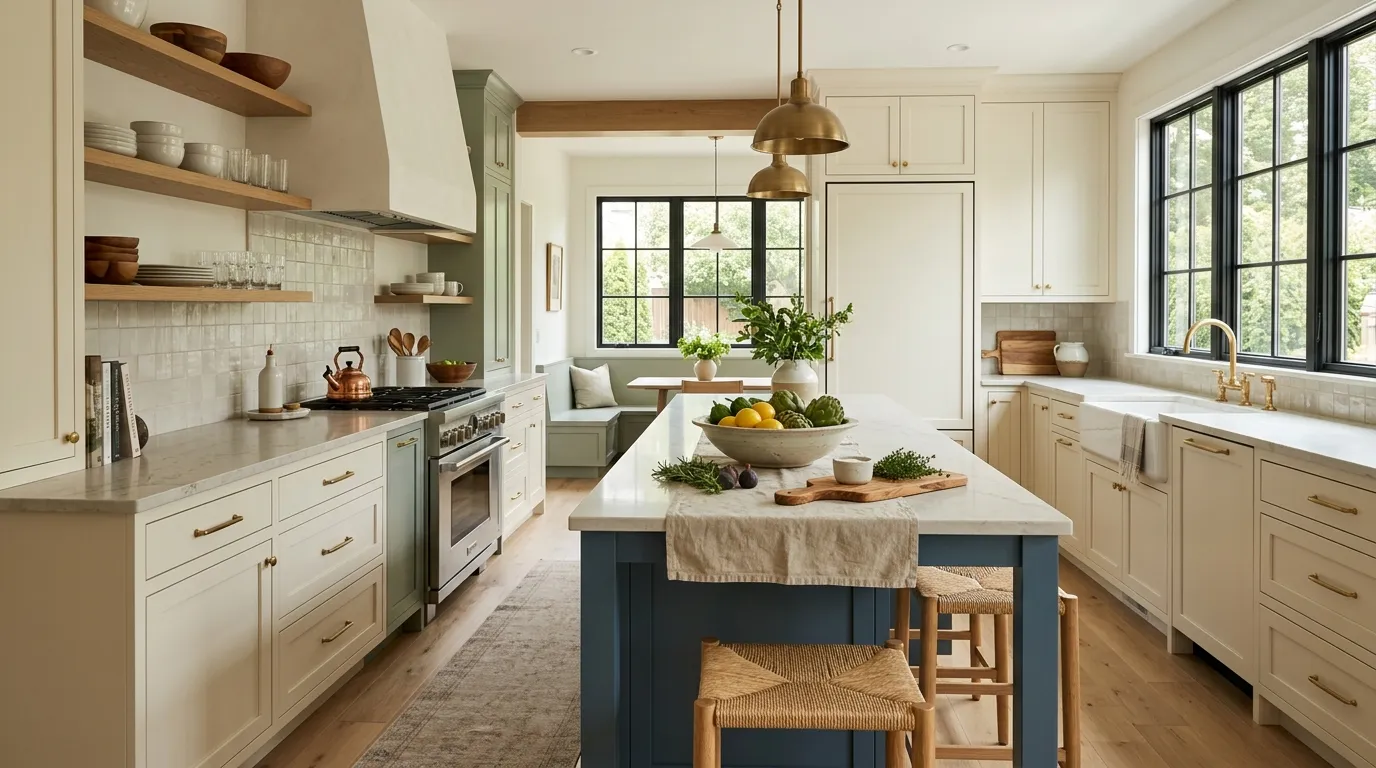
Choosing cabinet colors can change how your kitchen feels from the moment you walk in. These kitchen cabinet color combination ideas can help you pair shades that feel balanced, warm, and easy to live with, whether your room is compact or spacious. From soft neutrals to deeper statement tones, the right pairing can give your cabinets a polished look without making the room feel busy.
Picture a white kitchen with a muted blue island, or warm greige cabinets paired with natural wood. Small color changes can create a big visual difference when the countertops, backsplash, flooring, and hardware work together. These ideas focus on practical color pairings that you can save for your next kitchen refresh.
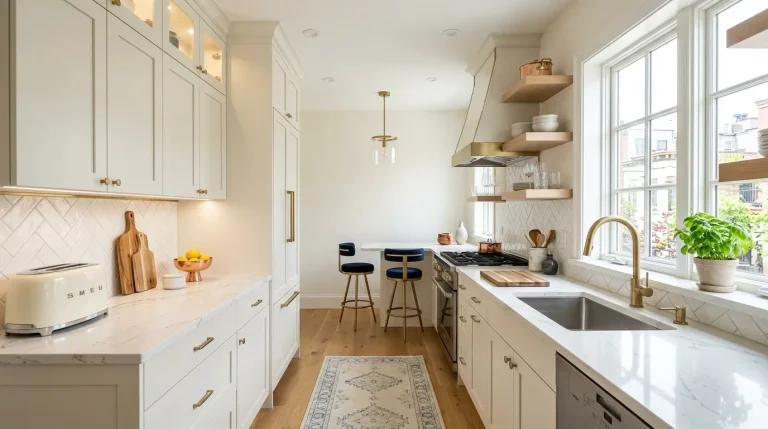
Soft White and Natural Oak
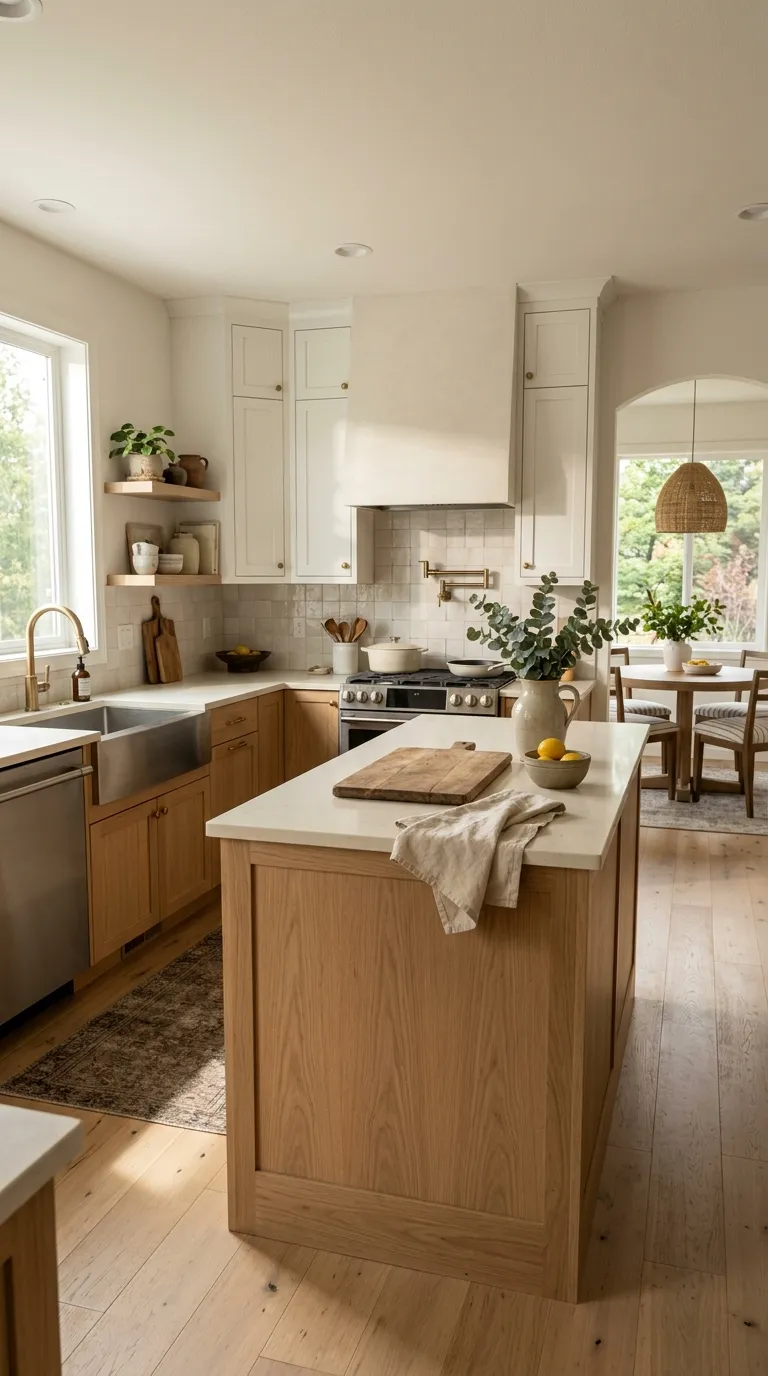
Soft white and natural oak create a calm kitchen without looking flat. The white cabinets keep the room bright, while oak adds warmth through visible grain and earthy texture.
This pairing works well with cream quartz, warm white tile, and brass cabinet hardware. For a small kitchen, keeping the upper cabinets white can make the walls feel open while the wood adds a cozy focal point.
Navy Blue and Warm White
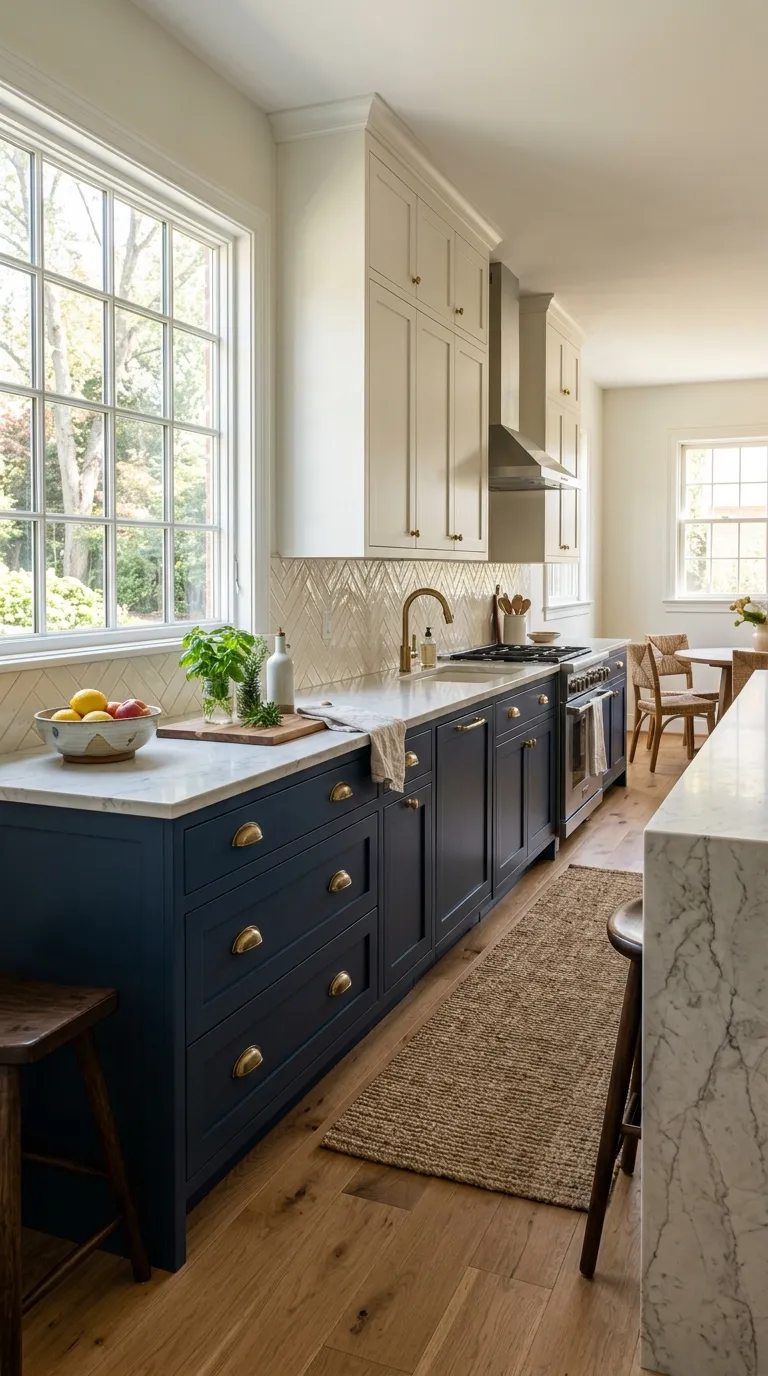
Navy and warm white give a kitchen strong contrast while keeping the overall look classic. The darker base grounds the room, and the lighter upper cabinets stop the color from feeling too heavy.
Try this pairing with pale counters and simple brass hardware. If the kitchen gets plenty of daylight, navy can become a rich focal color without making the space feel closed in.
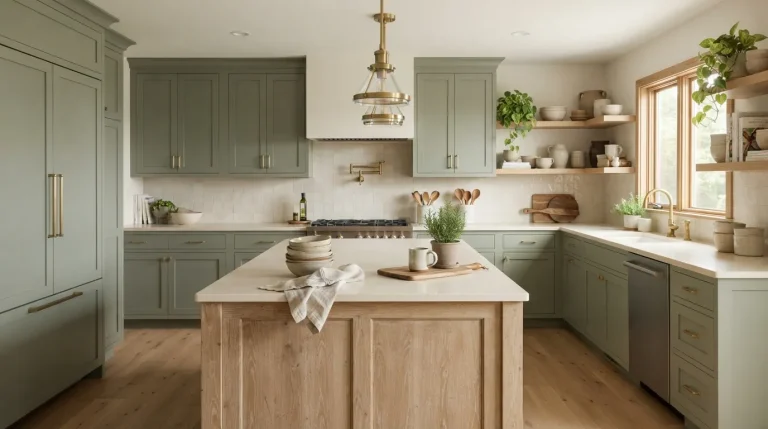
Sage Green and Cream
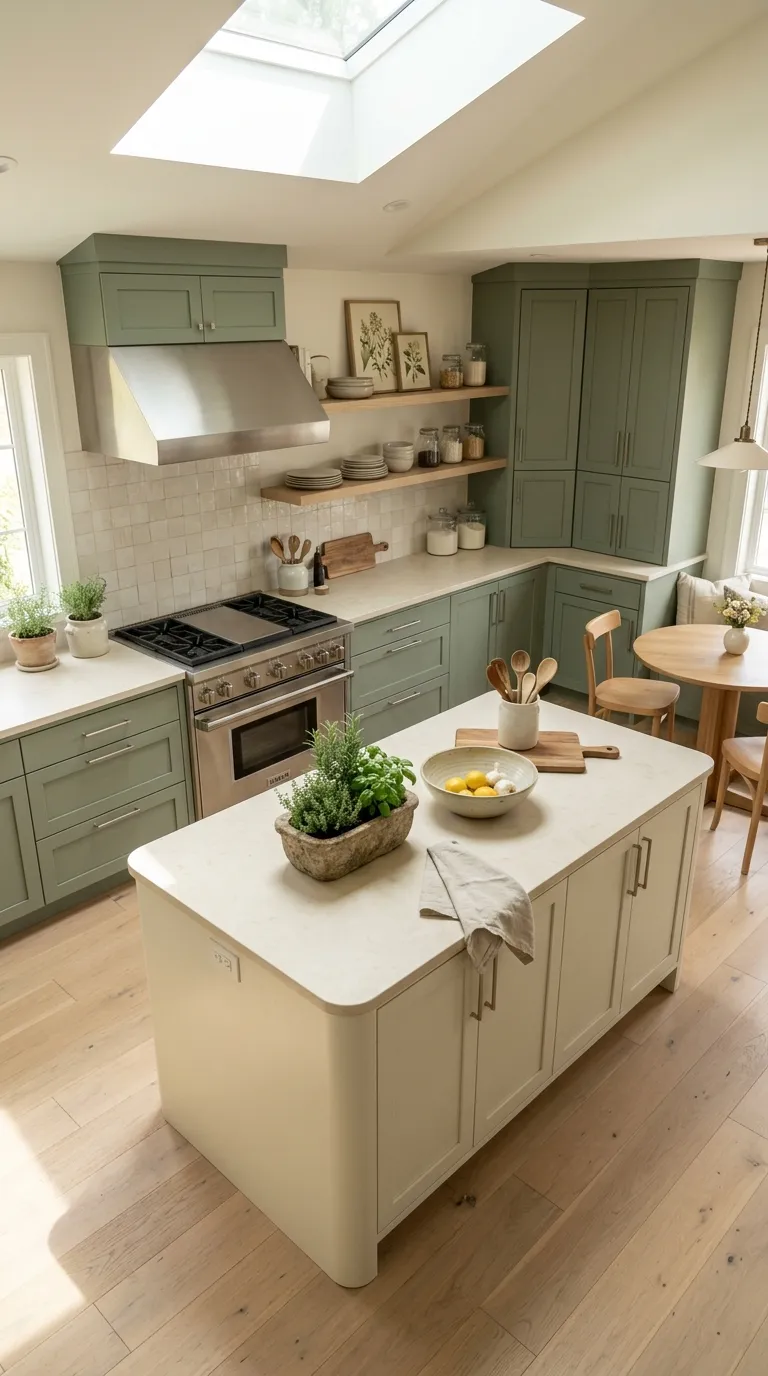
Sage green and cream bring a soft, relaxed mood to the kitchen. The muted green gives the cabinets personality, while cream keeps the palette warm and easy on the eyes.
This combination pairs nicely with pale wood, ivory tile, and brushed metal hardware. For a cottage-inspired space, add open shelves and simple ceramics to keep the color scheme feeling natural.
Charcoal Gray and Light Wood
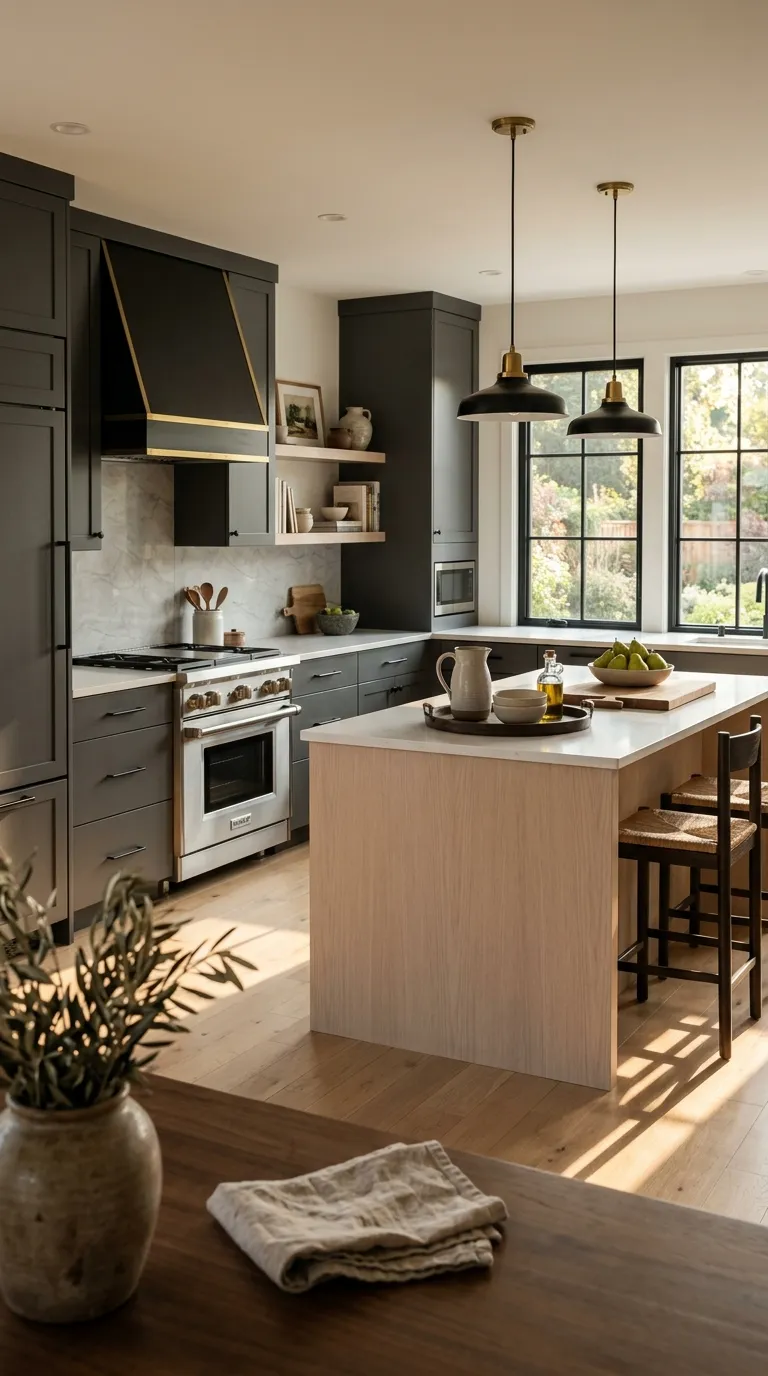
Charcoal gray gives kitchen cabinets a grounded, tailored look. Light wood softens the darker shade and adds warmth without taking away its clean character.
This pairing works especially well with white quartz and pale flooring. If the room feels large and open, charcoal can create a strong anchor while the wood keeps the space welcoming.
Dusty Blue and Cream
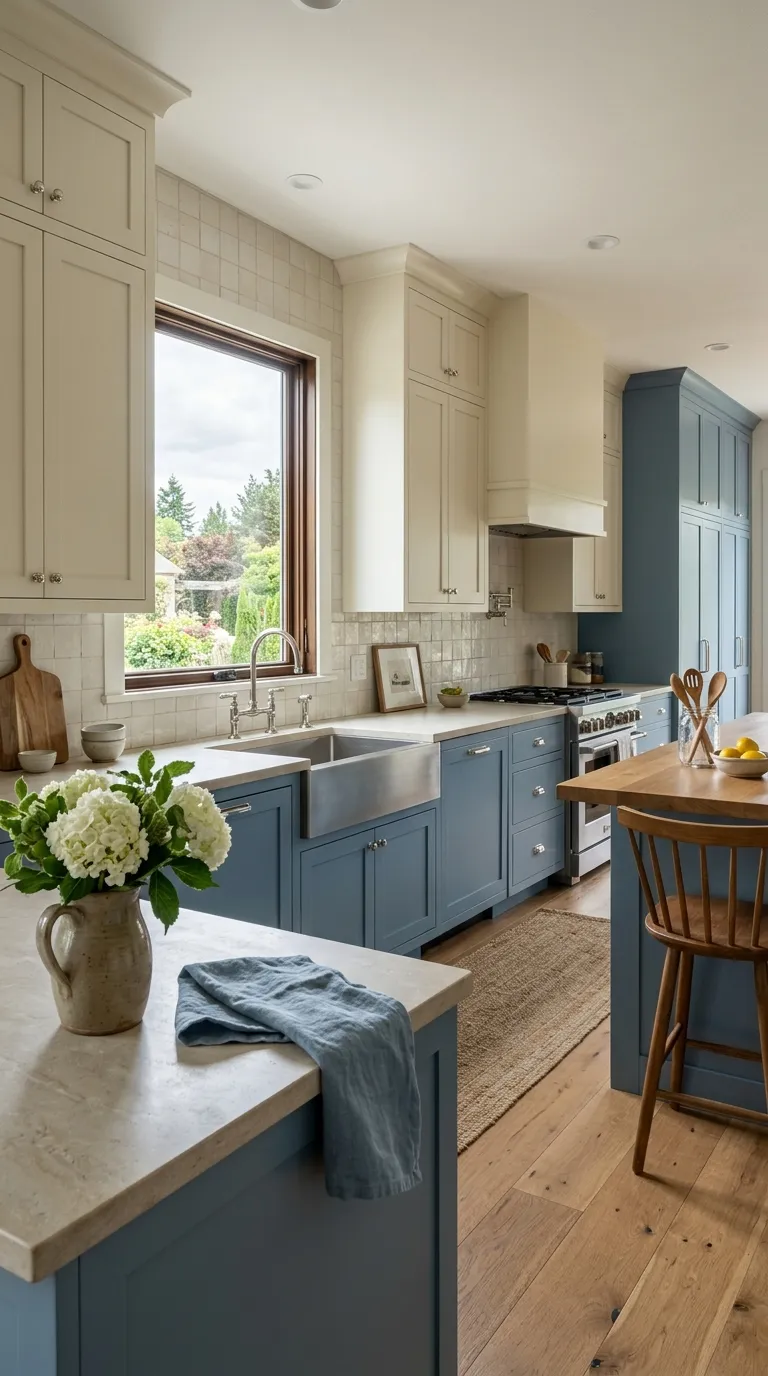
Dusty blue offers color without feeling too bold. Cream balances the cooler cabinet shade and gives the kitchen a softer overall appearance.
Choose this pairing when you want a relaxed kitchen with a little personality. Natural wood accessories, light stone, and nickel hardware can tie the two cabinet colors together with ease.
Black and Warm Beige
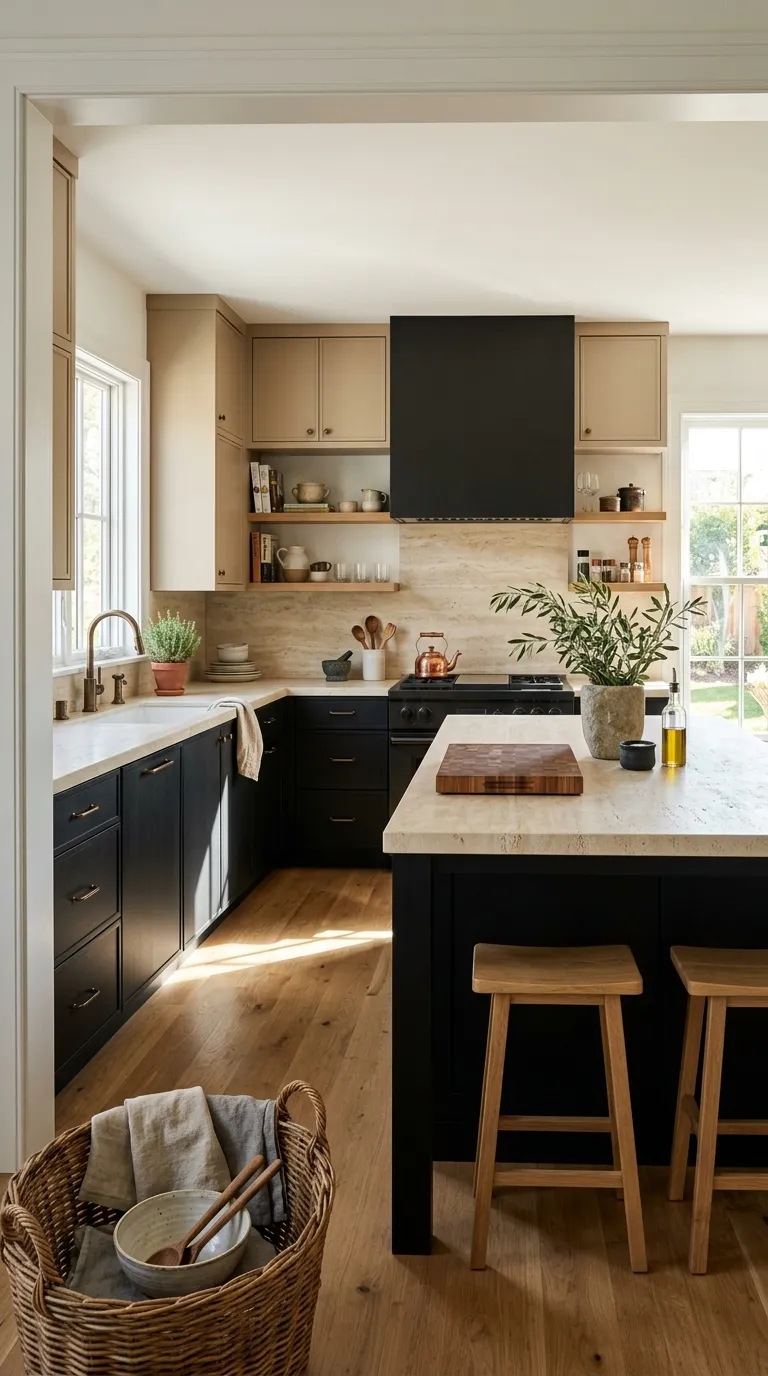
Black and warm beige make a kitchen feel confident yet comfortable. The dark lower cabinets add definition, while beige keeps the upper half of the room light and inviting.
This is a useful choice for kitchens with warm flooring or stone surfaces. Add bronze or aged metal hardware for a cohesive finish, then keep decorative pieces simple so the cabinet colors stay central.
You may also like Gorgeous Kitchen Color Combination Ideas.
Olive Green and Natural Wood
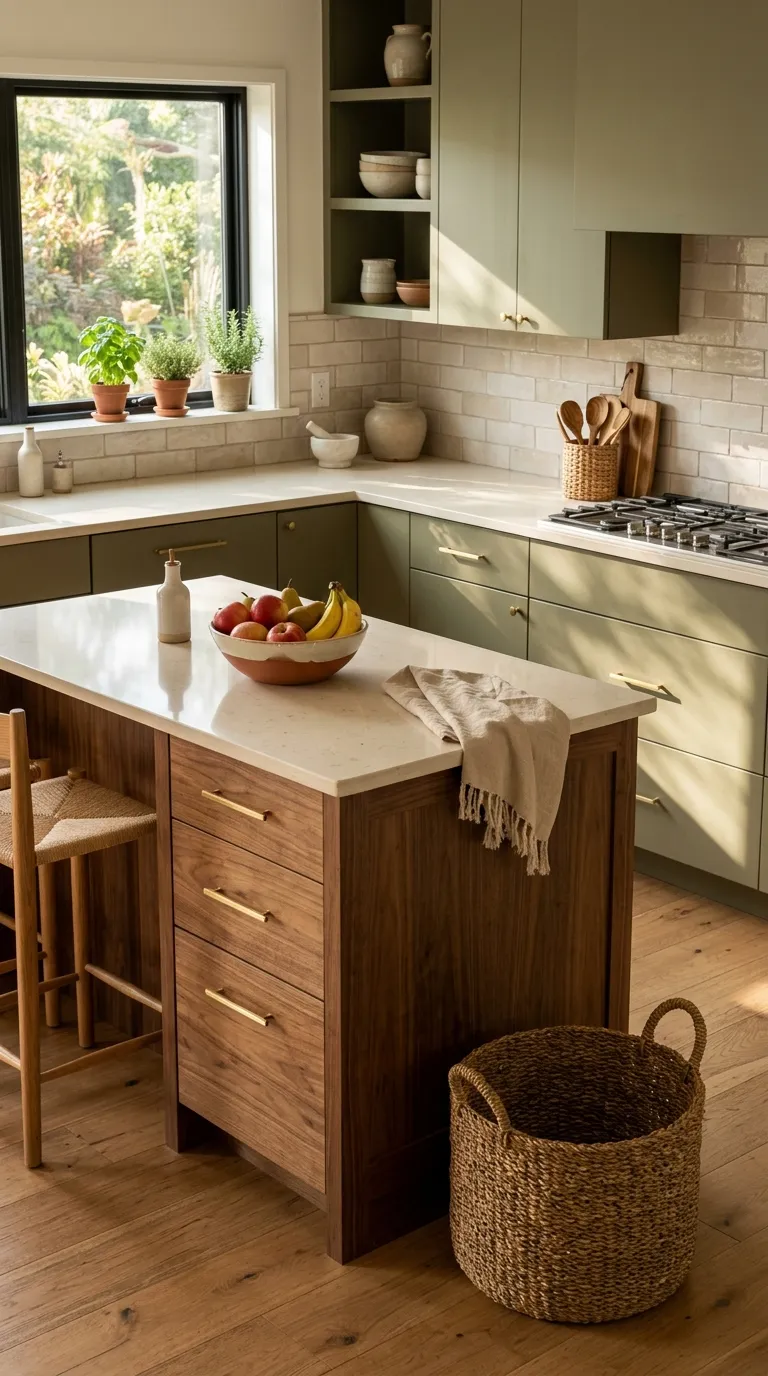
Olive green brings an earthy note to kitchen cabinetry. Natural walnut adds warmth and gives the darker green a richer backdrop.
This pairing suits kitchens with beige tile, cream counters, or warm wood floors. Keep the hardware simple, then add herbs and wooden accessories for a relaxed look.
Greige and White
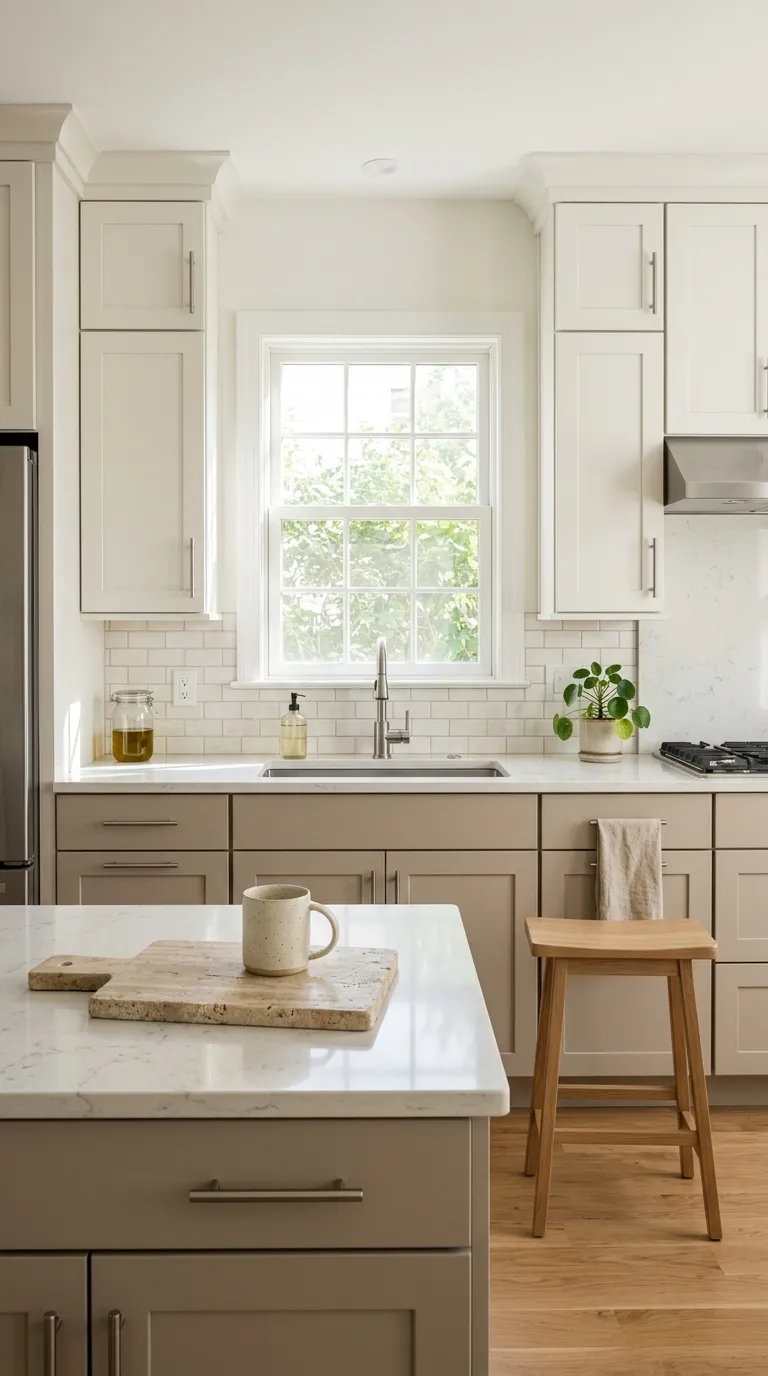
Greige sits between gray and beige, making it a flexible cabinet color. Pairing it with white gives the kitchen definition while keeping the palette light.
This option works well when you want a neutral kitchen that won’t feel stark. Add oak, linen, or woven accents to bring gentle texture into the room.
Forest Green and Brass
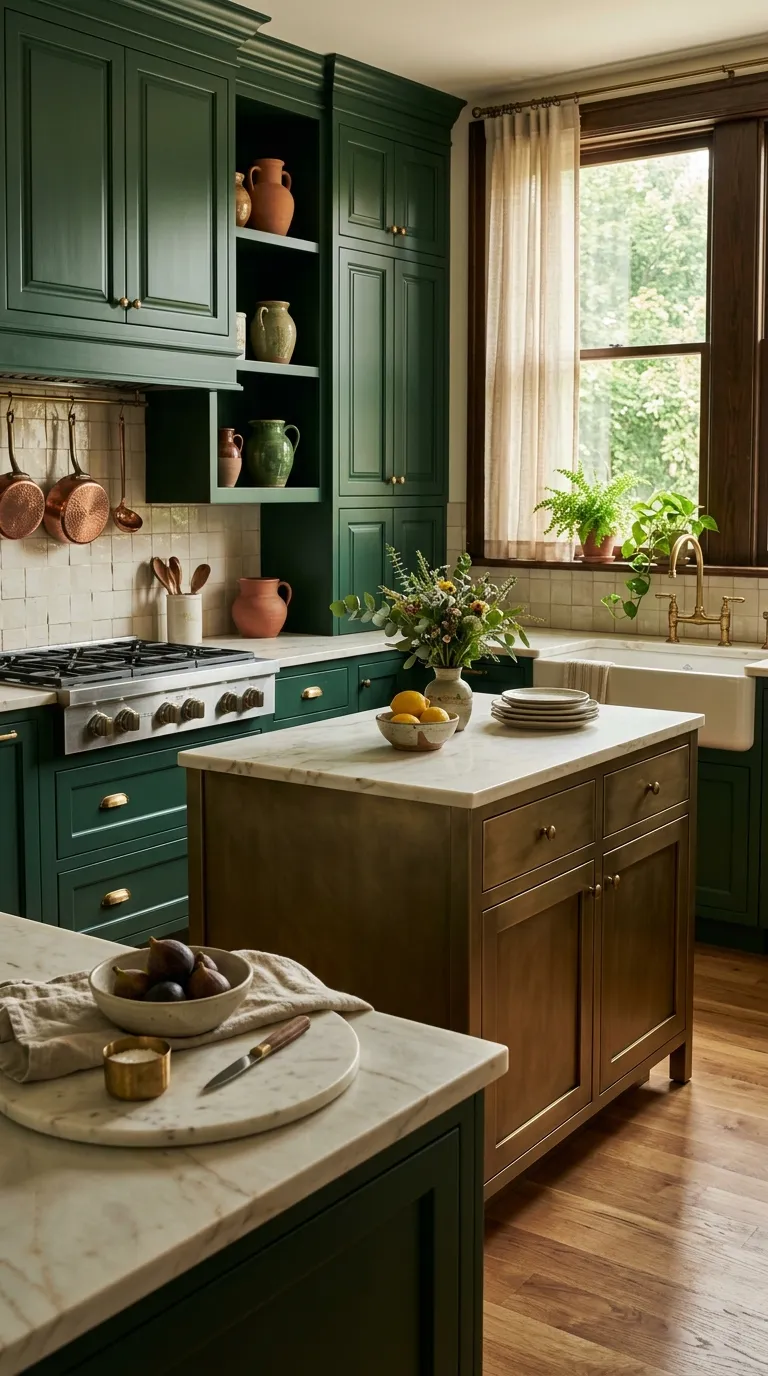
Forest green creates a deep, cozy backdrop for brass details. The warm metal brings light to the darker cabinet shade and works especially well with creamy surfaces.
Use this pairing when you want the kitchen to feel classic with a richer color story. Marble-look counters, handmade tile, and warm wood accents can keep the palette balanced.
Terracotta and Soft White
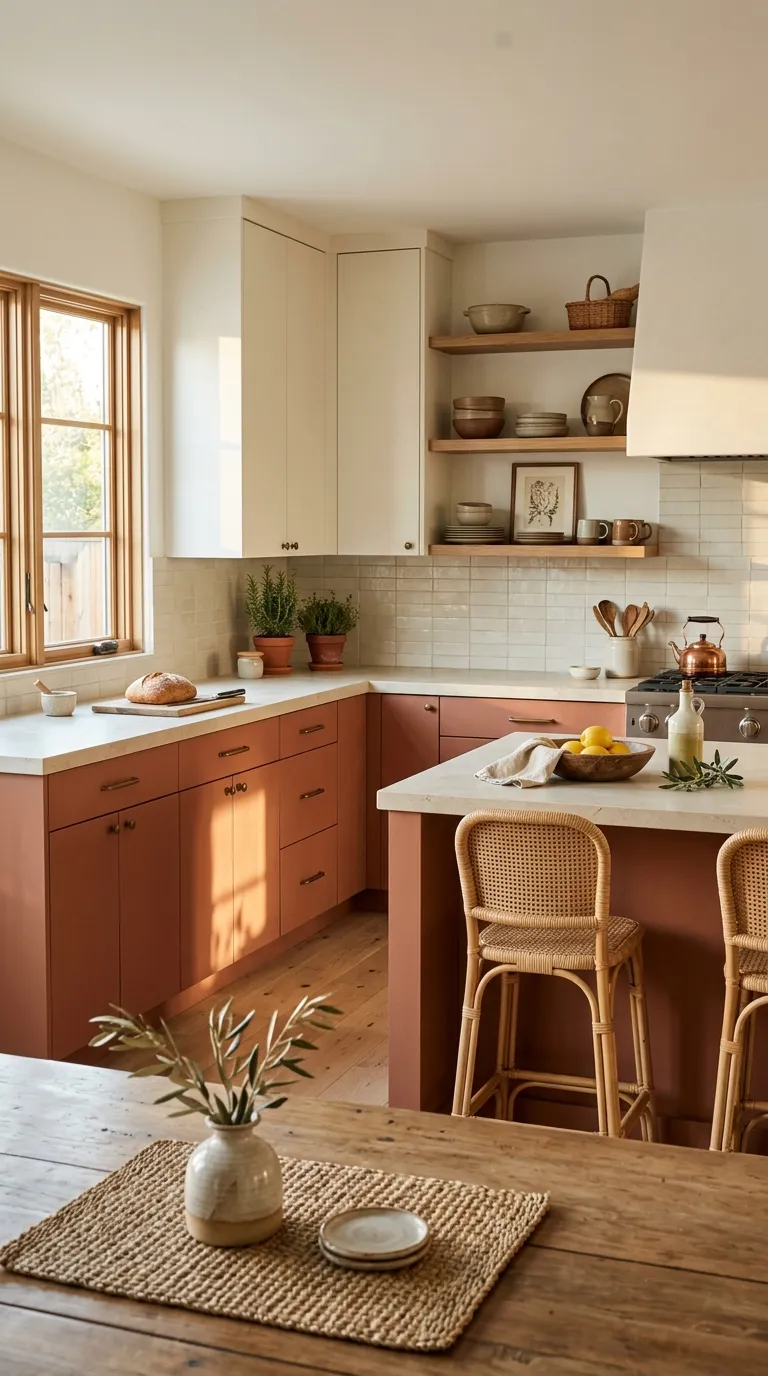
Terracotta gives kitchen cabinets a warm clay-inspired tone. Soft white keeps the stronger color from taking over the room.
This pairing suits kitchens with wood floors, cream counters, and earthy accessories. Keep the decor simple so the terracotta remains the main visual feature.
Powder Blue and Natural Maple
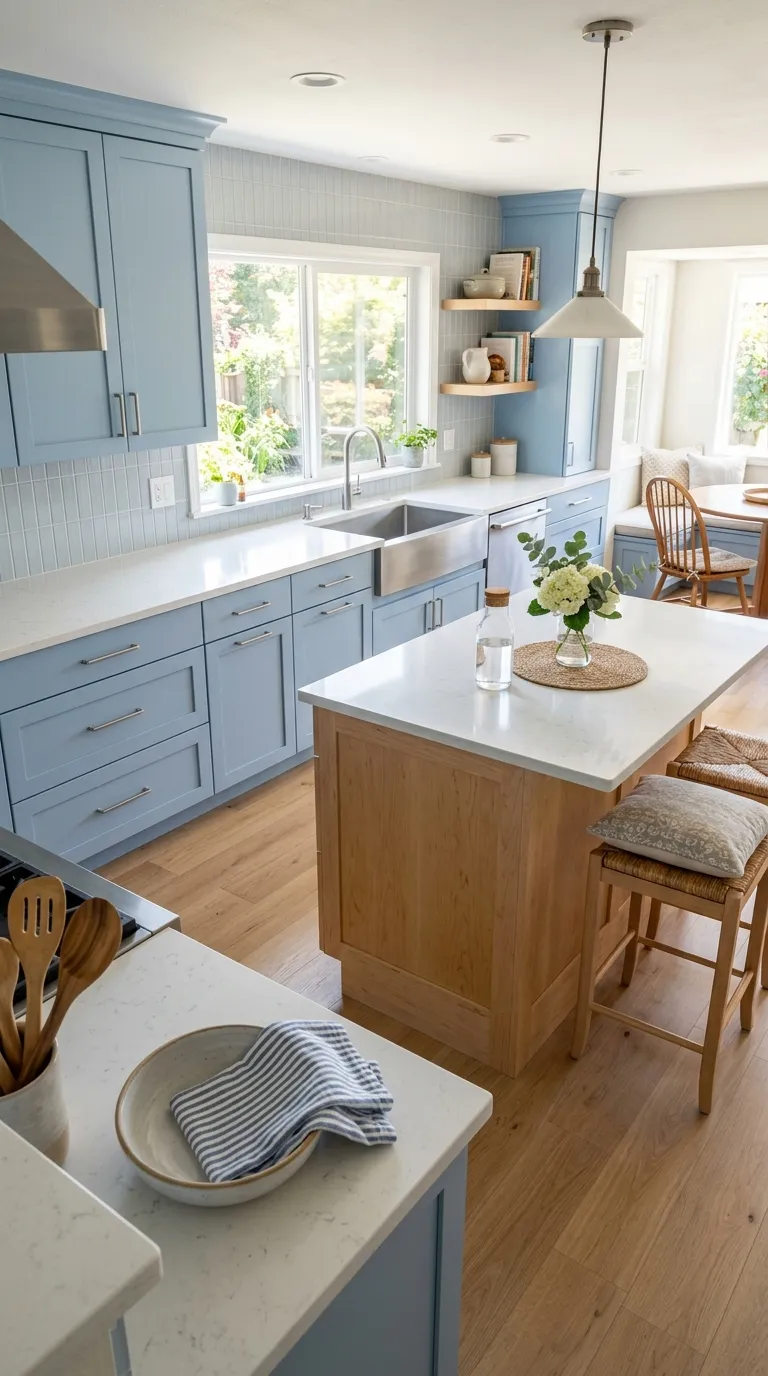
Powder blue makes cabinets feel light and relaxed. Natural maple adds a warm note that keeps the cooler blue from looking too crisp.
This combination works nicely in kitchens with plenty of daylight. Pair it with white counters, pale tile, and simple nickel hardware for a clean everyday look.
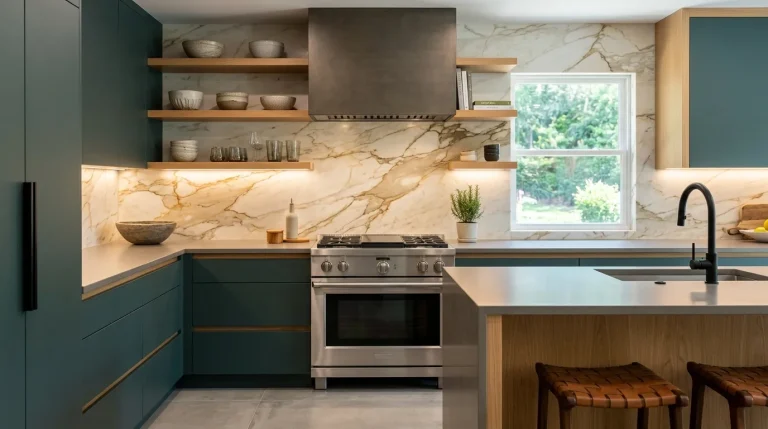
Deep Teal and Warm Ivory
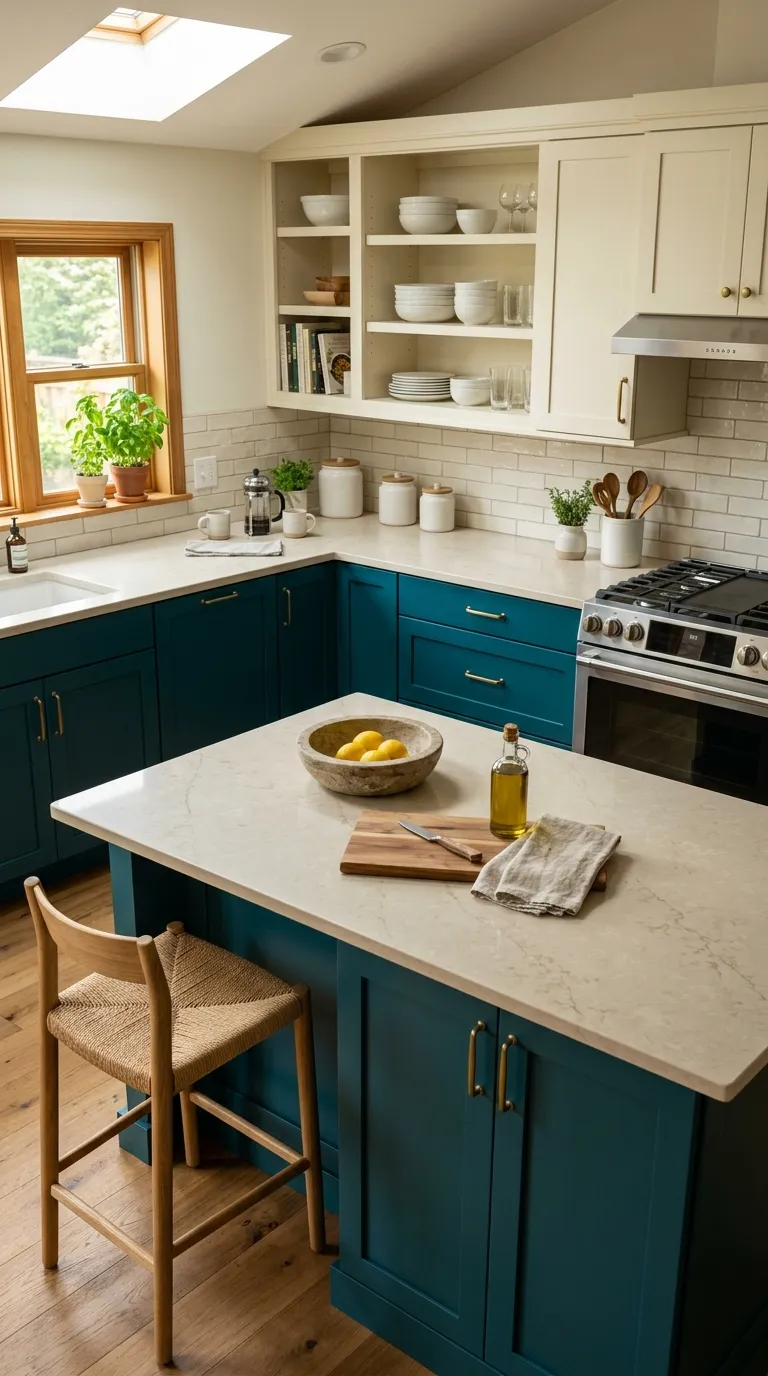
Deep teal brings more color than navy while keeping a refined feel. Warm ivory balances its depth and gives the kitchen a softer backdrop.
Use this pairing with brass pulls and warm stone surfaces for a cozy result. In a compact room, keep the ivory on upper cabinets to give the walls a more open appearance.
Mushroom and Cream
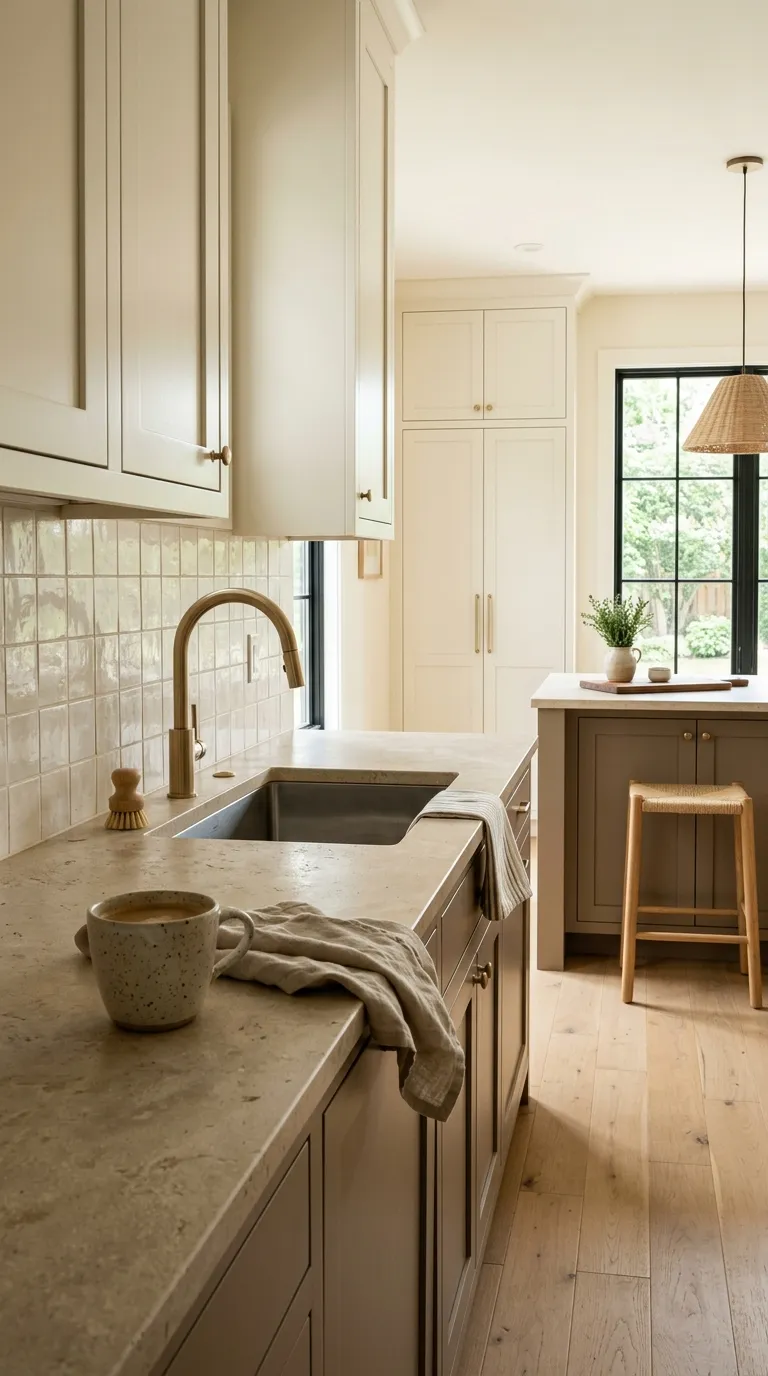
Mushroom and cream create a gentle layered neutral look. The warmer taupe shade adds depth without making the kitchen feel dark.
This pairing fits well with beige stone, pale wood, and soft metallic hardware. It’s a practical choice when you want cabinets that feel warm but still work with changing decor.
Black and Natural Walnut
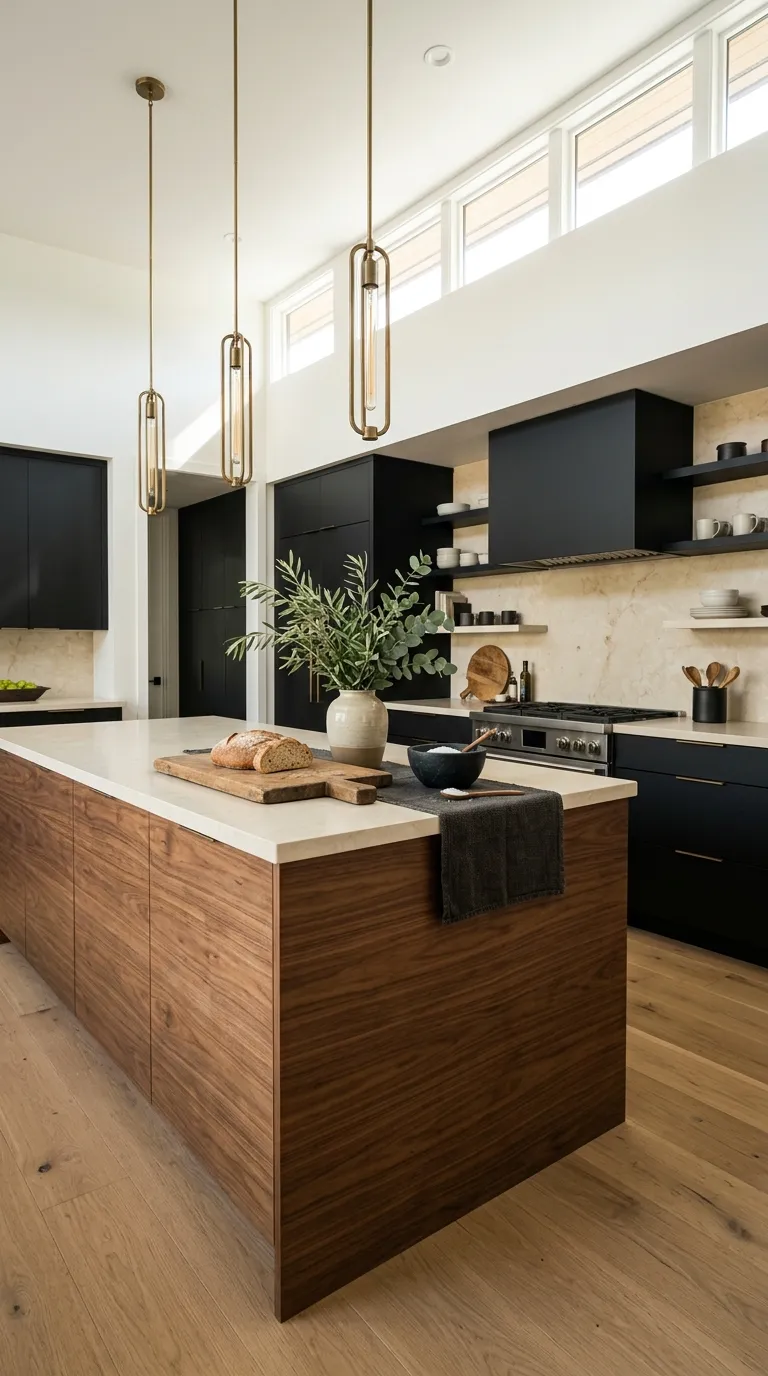
Black and walnut create a strong kitchen palette with plenty of warmth. The dark cabinetry feels sleek, while the wood keeps the room from looking too severe.
Use creamy counters and warm lighting to soften the contrast. This color combination can suit both modern and transitional kitchens, especially when the cabinet hardware stays simple.
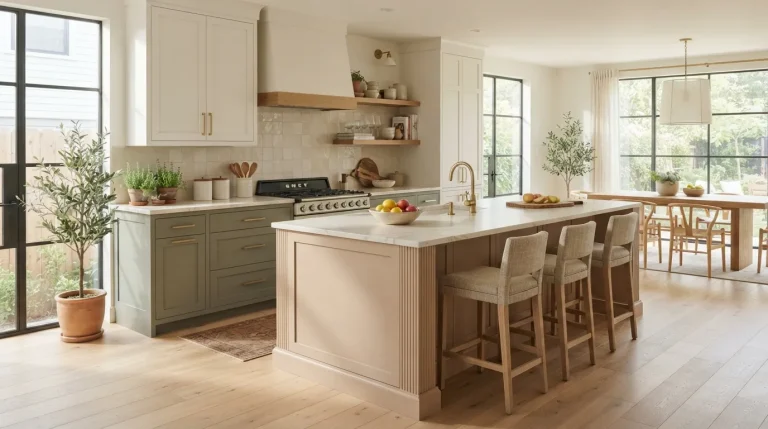
Blush Beige and White
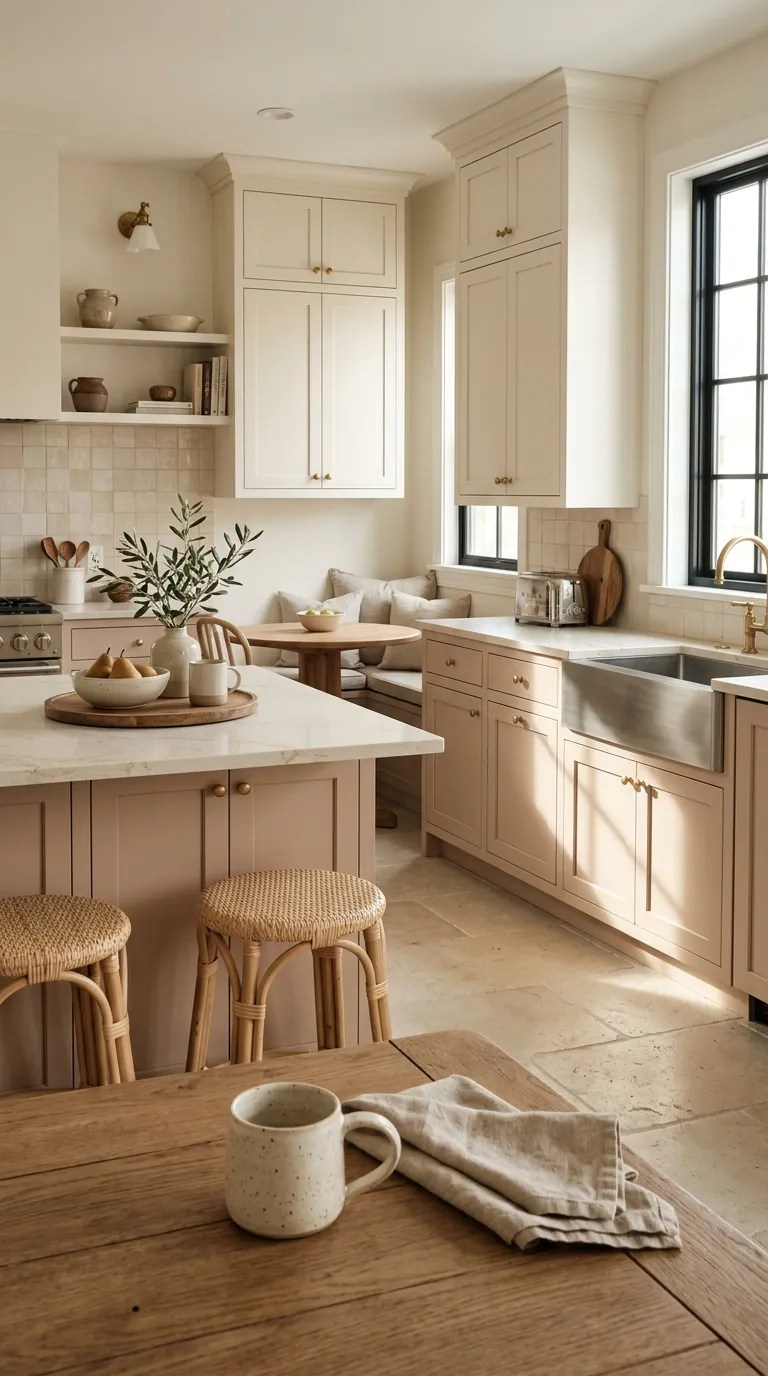
Blush beige adds a gentle hint of warmth without looking overly pink. White cabinets keep the combination fresh and give the softer shade room to breathe.
This palette works well with creamy counters, light wood, and brass details. It’s a good option for a kitchen that needs subtle color rather than strong contrast.
Warm Gray and Dusty Green
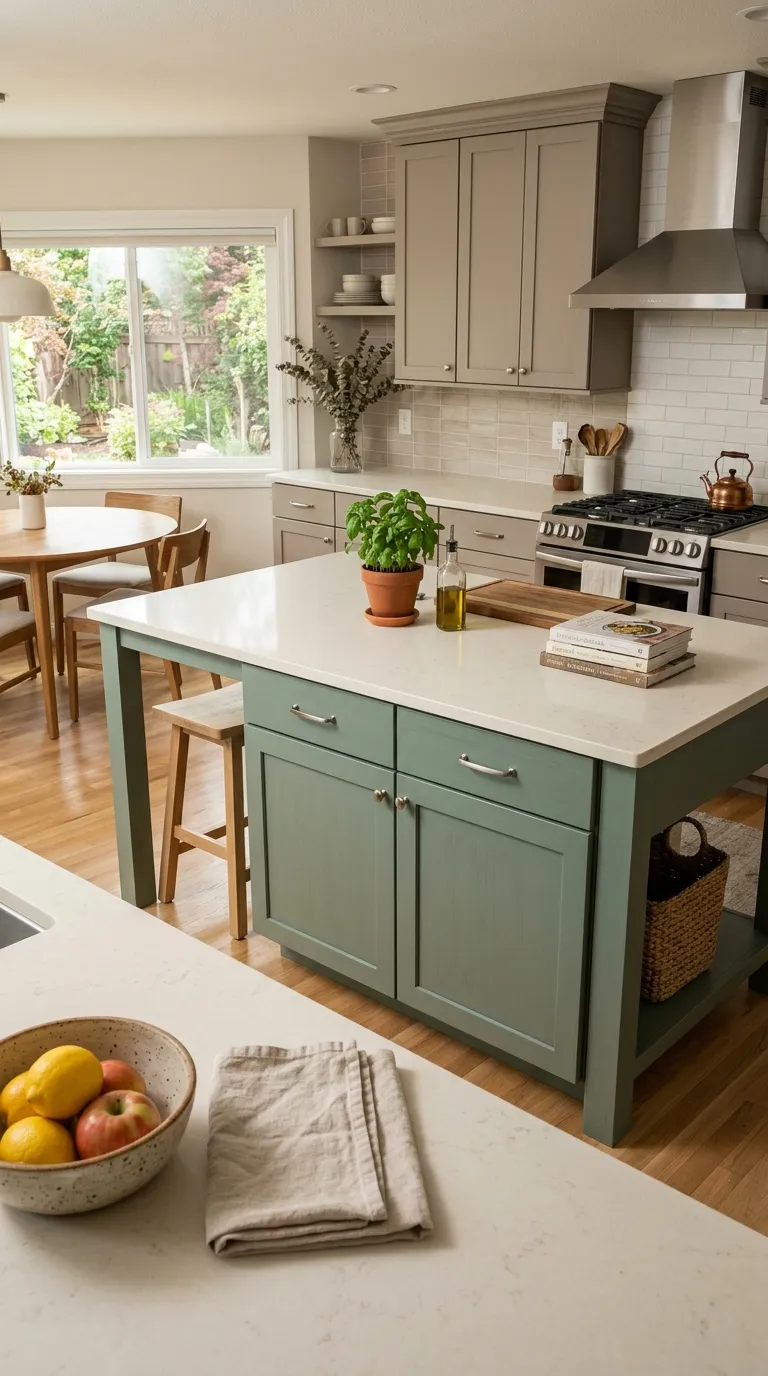
Warm gray gives the kitchen a steady neutral base. Dusty green adds a muted color note without making the room feel too busy.
Try this pairing with cream counters and pale wood accents. It works particularly well when you want a calm palette that still has some visual contrast.
Cream and Light Taupe
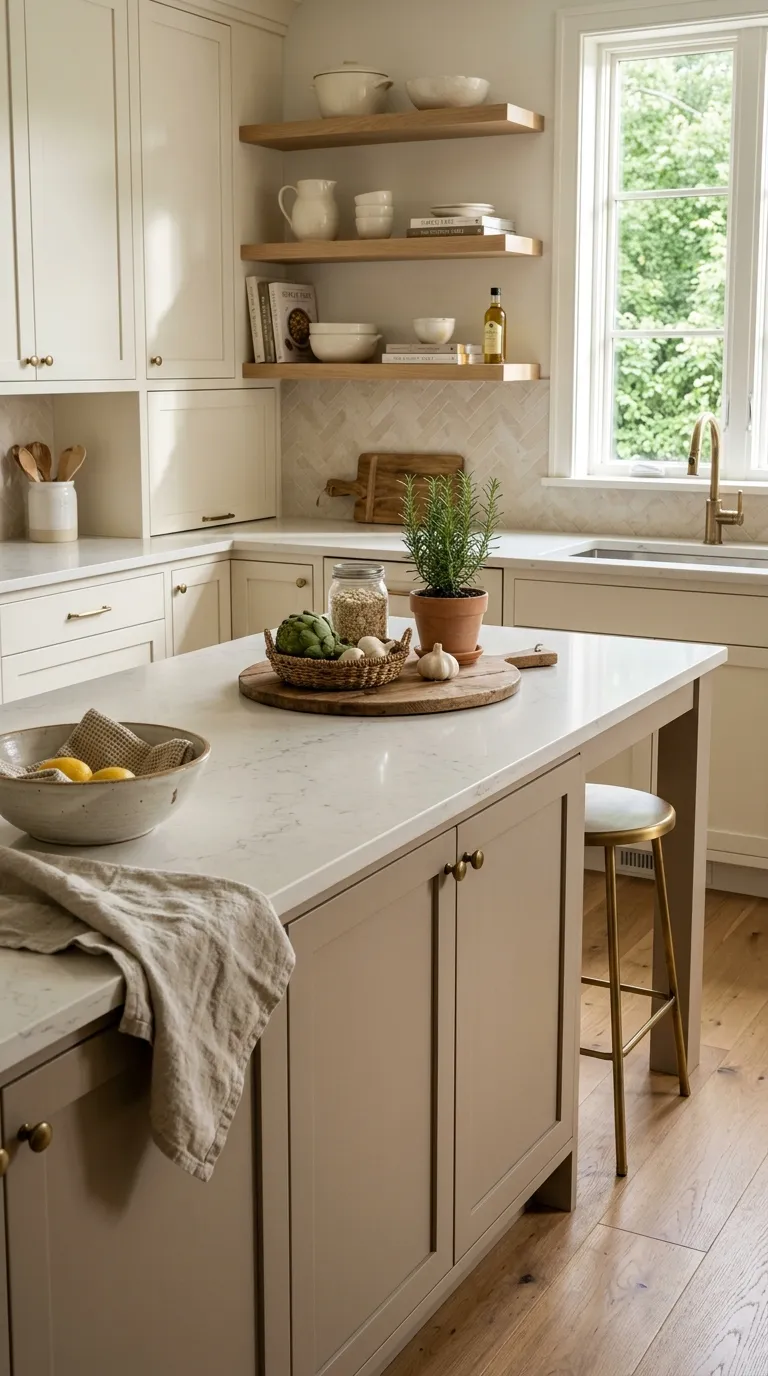
Cream and light taupe create a warm monochromatic kitchen with enough contrast to define each cabinet area. The result feels soft without looking plain.
This palette is easy to pair with natural stone and warm metal hardware. It also gives you room to change stools, textiles, and accessories later without fighting the cabinet colors.
Plum and Warm Ivory
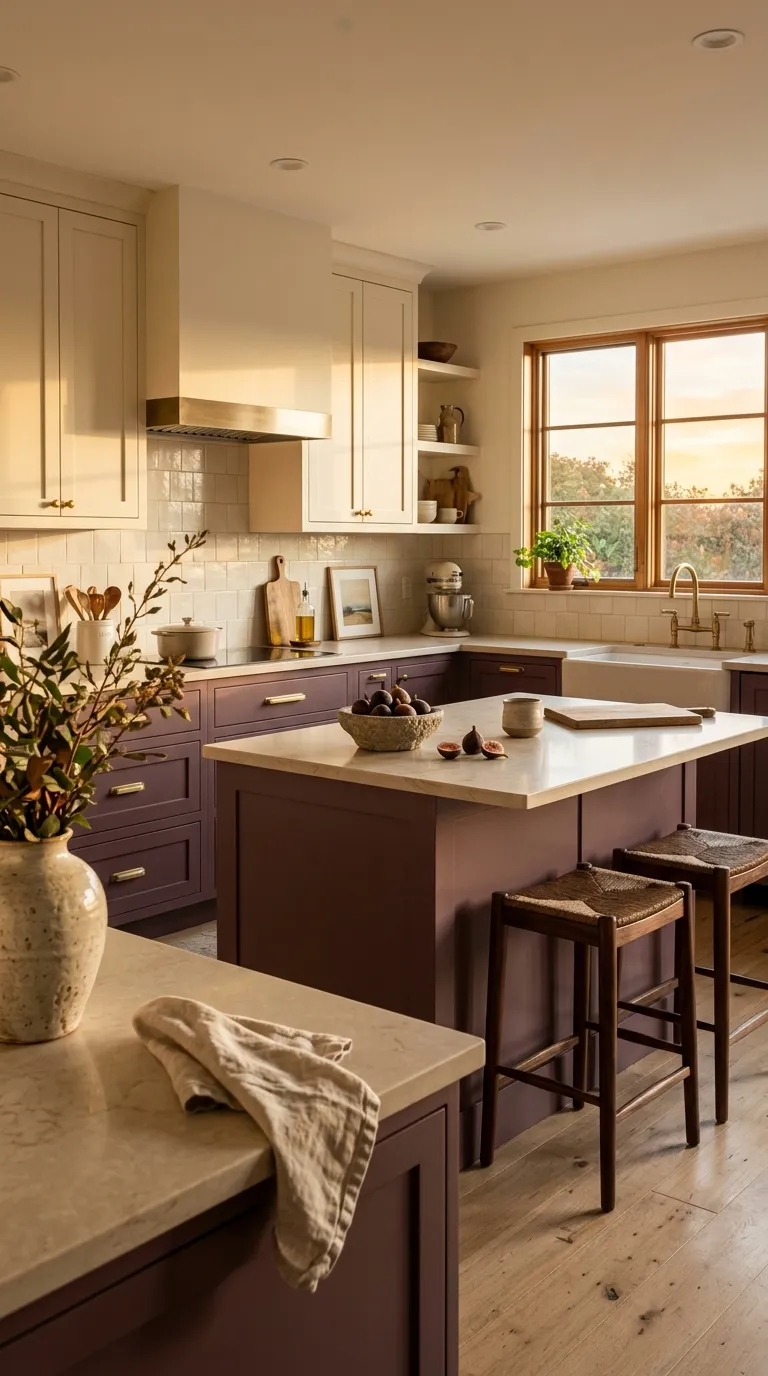
Plum adds a deeper color note for a kitchen that needs more personality. Warm ivory keeps the darker shade from making the space feel too heavy.
Use light counters and warm brass details to connect the two tones. This pairing suits a kitchen where the cabinets are meant to become the main design feature.
Mocha and Soft White
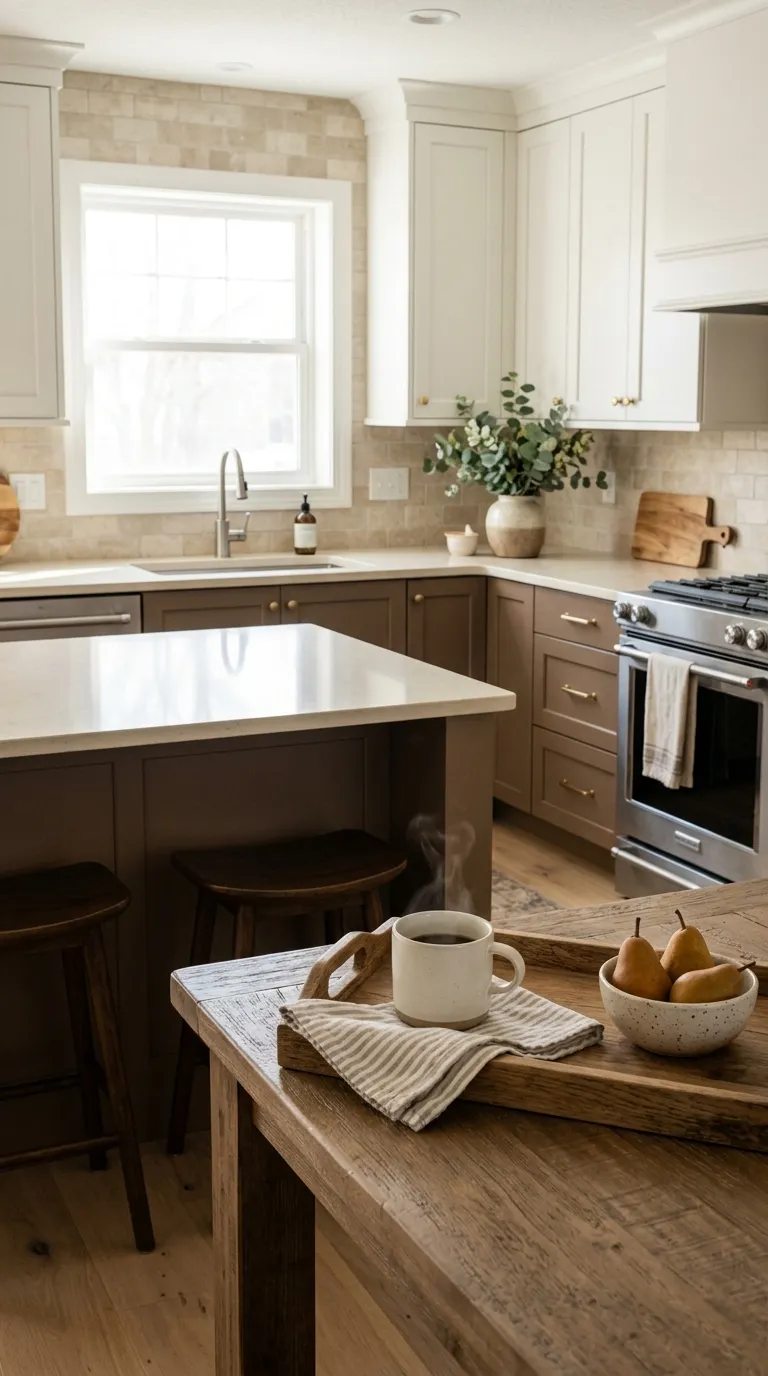
Mocha brown gives cabinets a rich, grounded appearance. Soft white brings enough brightness to keep the darker shade from dominating the kitchen.
This pairing looks especially good with creamy stone, brass hardware, and warm wood details. If you want a cozy kitchen with clear contrast, this color mix gives you a strong starting point.
Pale Gray and Muted Blue
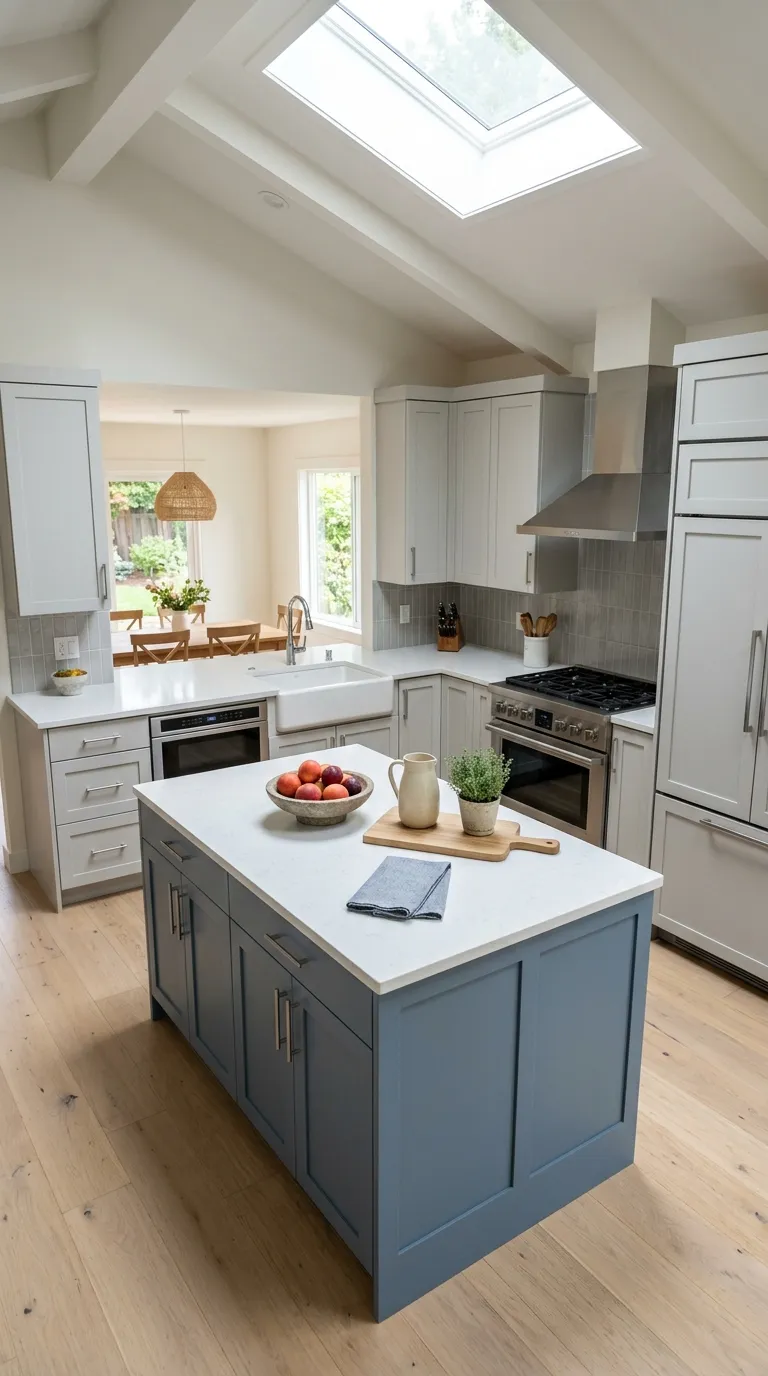
Pale gray creates a clean base for muted blue. The two shades share a cool quality, so the kitchen feels coordinated without looking overly matched.
Choose warm wood accents if the palette feels too cool. White counters, simple metal hardware, and soft textiles can keep the room fresh while giving the cabinet colors room to stand out.
Last Words
Your cabinet colors set the tone for the whole kitchen, so start with the shades you already love. Look at your counters, flooring, backsplash, and natural light before choosing a second cabinet color.
A simple sample board can help you compare paint, wood, stone, and hardware side by side. Test your favorite combinations at different times of day, then choose the pairing that feels right in your actual space.
Olivia Carter
Olivia Carter is the founder of Lady Home Decor and a passionate home decor expert. She shares practical, stylish ideas to help homeowners create beautiful, comfortable, and welcoming spaces. Her expertise covers bedrooms, kitchens, living rooms, bathrooms, and small-space decorating.