22 Beautiful Sage Green Kitchen Color Ideas for a Chic Home

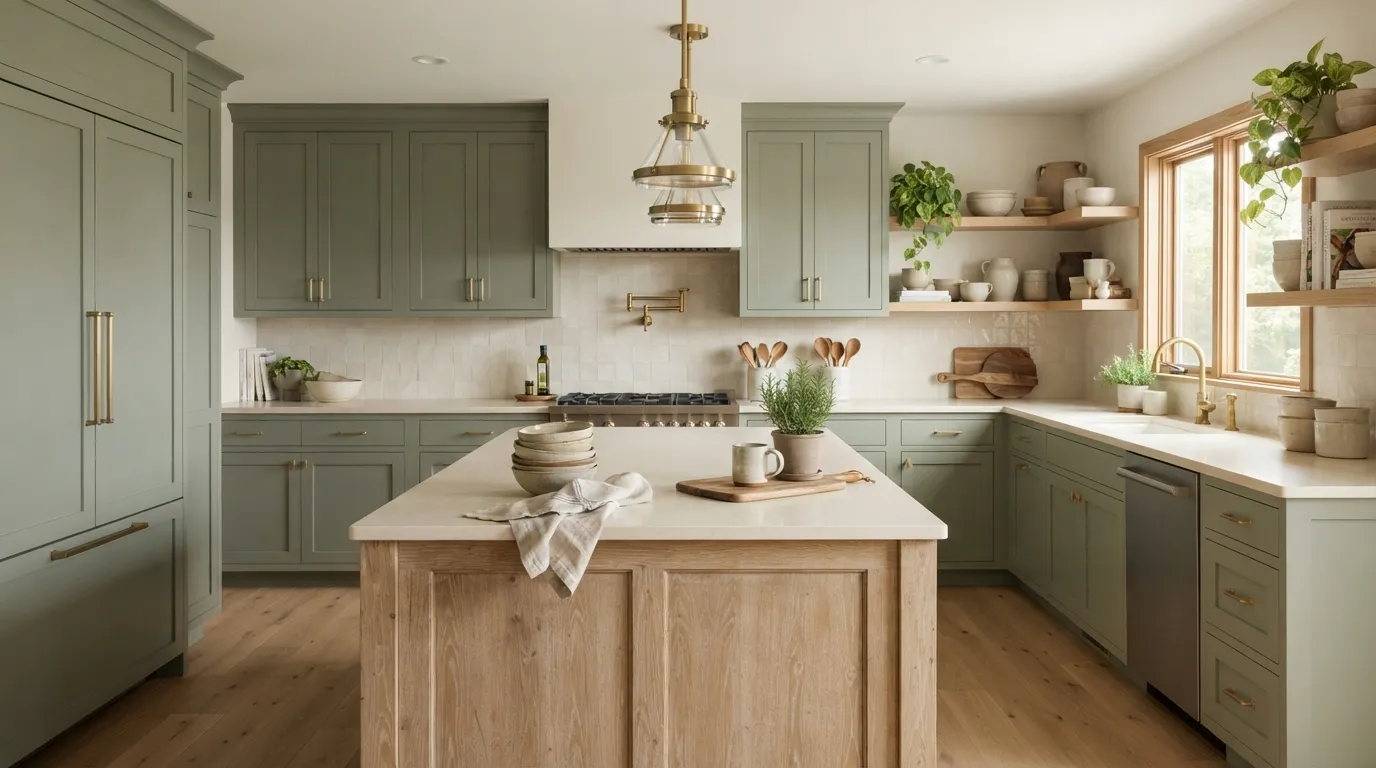
Sage green brings a soft natural note into the kitchen without making the room feel heavy. If you’re planning a fresh color update, these sage green kitchen color ideas can help you choose cabinetry, walls, counters, hardware, and accents that work together.
This muted green pairs beautifully with warm whites, natural wood, cream stone, aged brass, and simple black details. Whether your kitchen is compact or open and spacious, the right sage shade can give it a relaxed look while keeping the space practical and inviting.
Soft Sage Cabinets
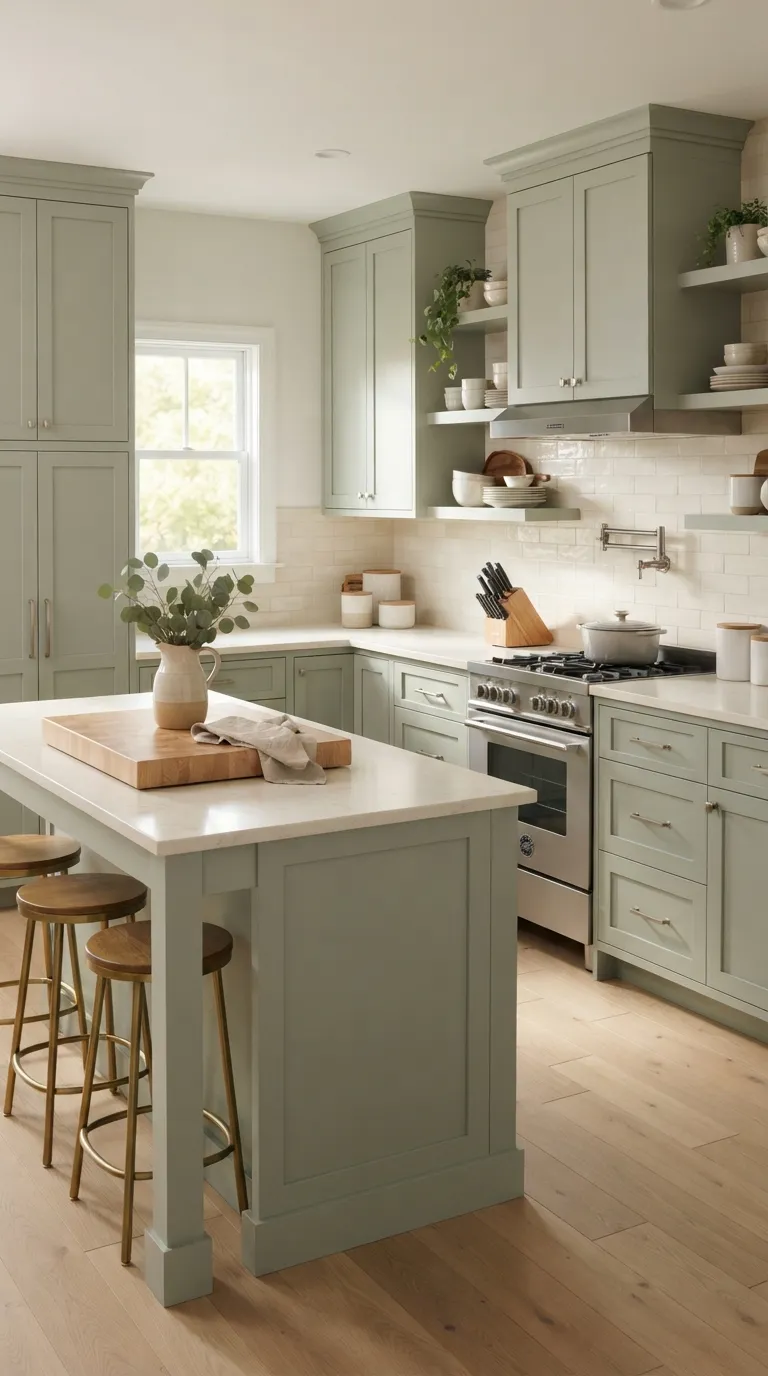
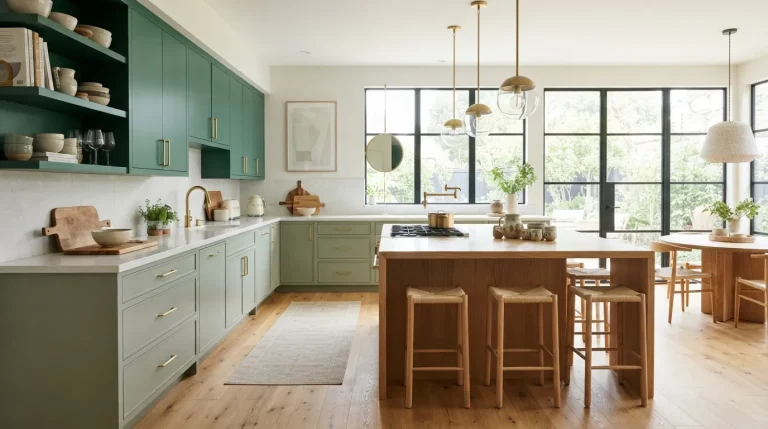
Soft sage cabinets work well when you want color without a strong visual punch. The muted green gives the kitchen personality while leaving plenty of room for neutral counters, warm flooring, and simple decor.
For a balanced finish, pair the cabinets with creamy white rather than a stark cool white. Natural oak stools, woven baskets, and ceramic pieces can add warmth without making the palette feel busy.
Sage and White Pairing
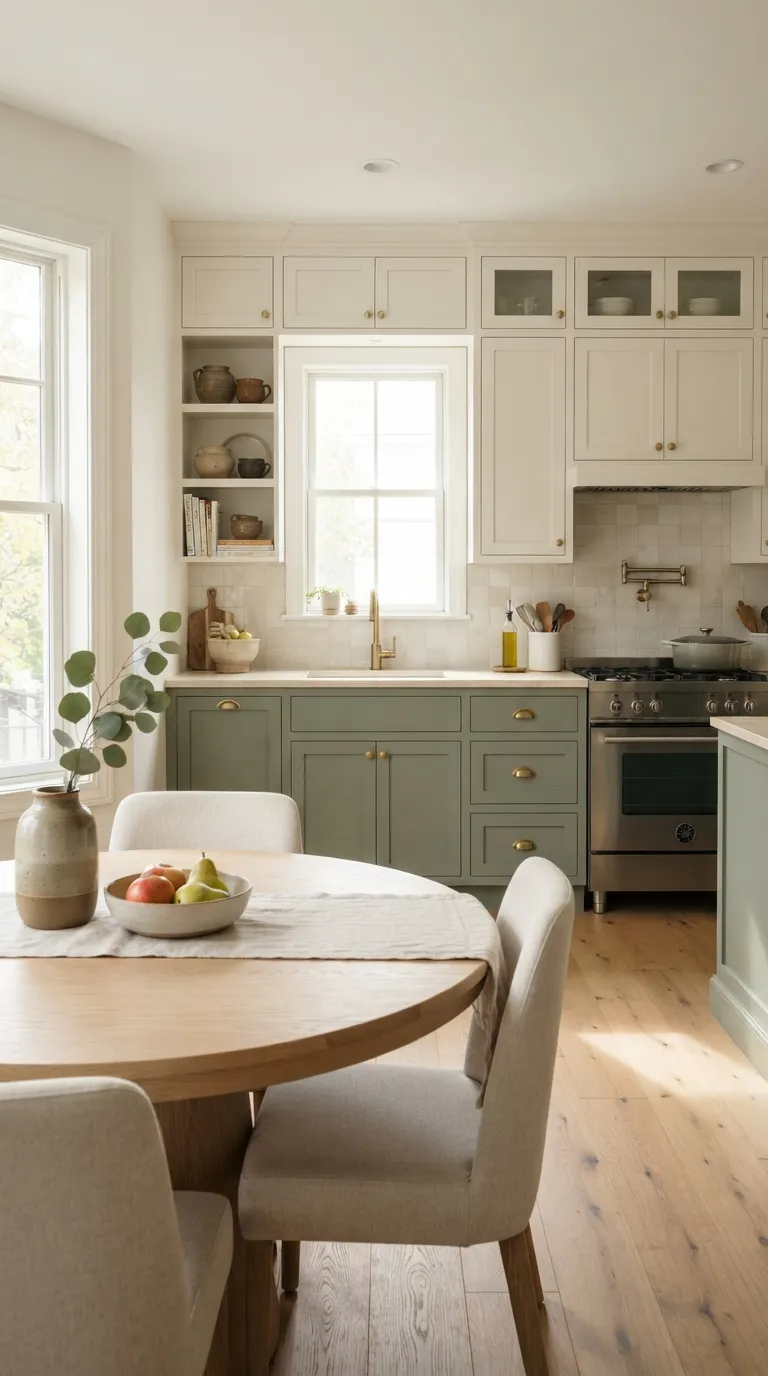
Sage and white make a dependable pair for kitchens that need a light, open feel. Use sage on the lower cabinets and white above to keep the upper half of the room visually quiet.
This combination also suits small kitchens because the lighter upper cabinets help the walls feel less crowded. Add pale wood and warm metal details to keep the room from looking too cold.
Sage Green Island
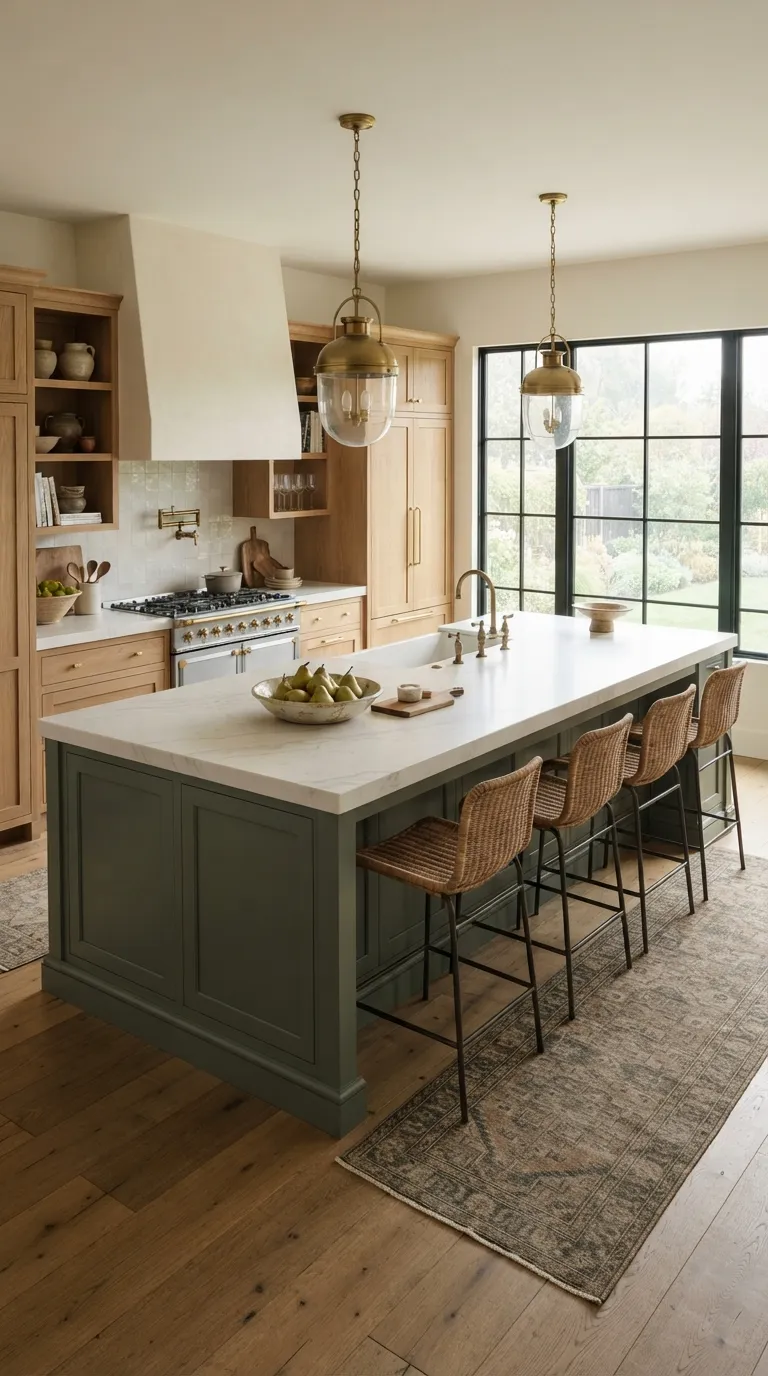
A sage green island gives you a simple way to bring color into the kitchen without painting every cabinet. It can act like a visual anchor, especially when the surrounding cabinets use oak, white, or another quiet neutral.
Choose a slightly deeper sage for the island if you want more contrast. A white stone countertop and woven stools soften the look, while natural wood around the room keeps the green grounded.
Sage and Natural Oak
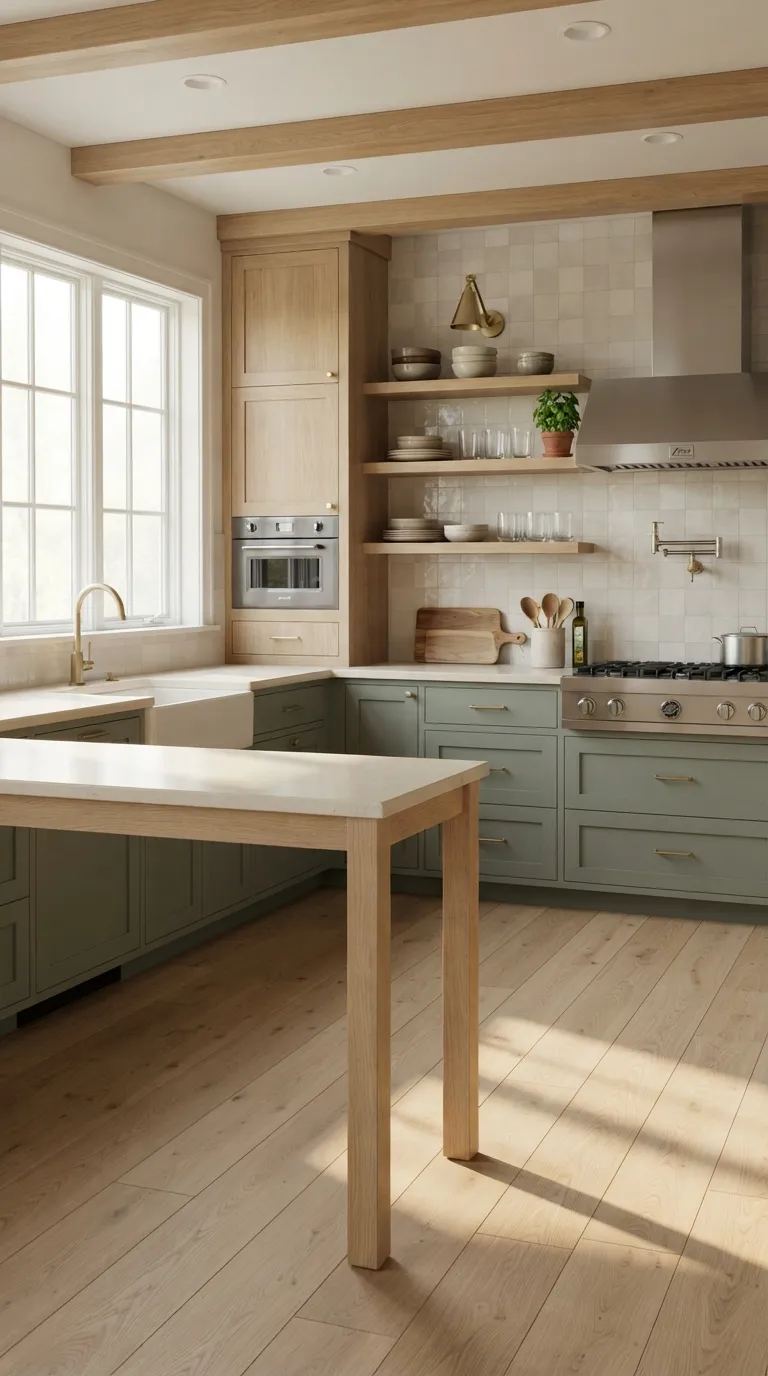
Sage and natural oak create an earthy kitchen palette that feels warm from the first glance. The green adds gentle color, while visible wood grain keeps the room relaxed and grounded.
Try sage base cabinets beside oak pantry units or open shelving. Among practical sage green kitchen color ideas, this pairing works especially well with cream counters and warm white walls.
Sage with Brass Accents
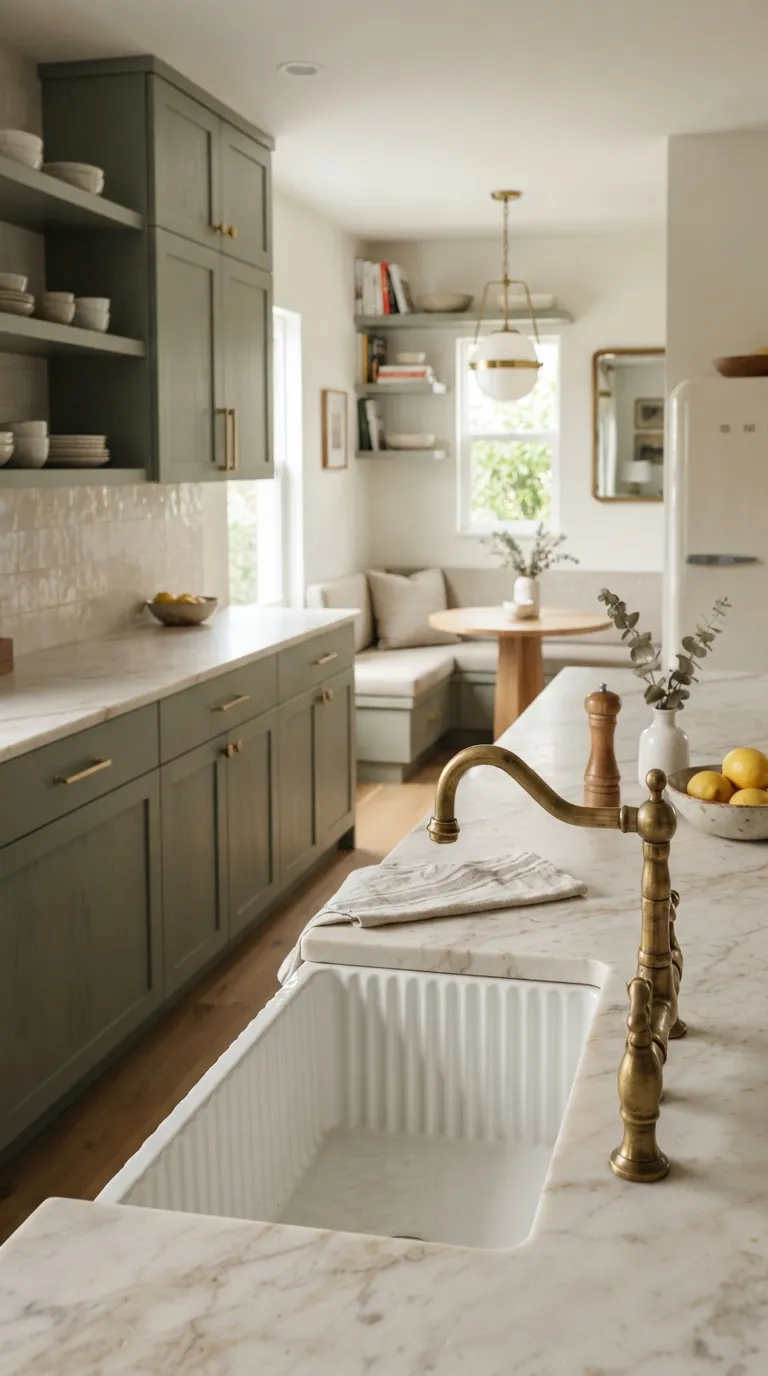
Brass gives sage green a warmer, more polished finish. Cabinet pulls, faucets, and small light fixtures can bring enough golden tone into the room without filling every surface with metal.
Keep the brass finish soft rather than highly reflective for a calmer result. Pair it with pale marble or cream quartz so the sage cabinetry remains the main color in the kitchen.
Sage and Black Details
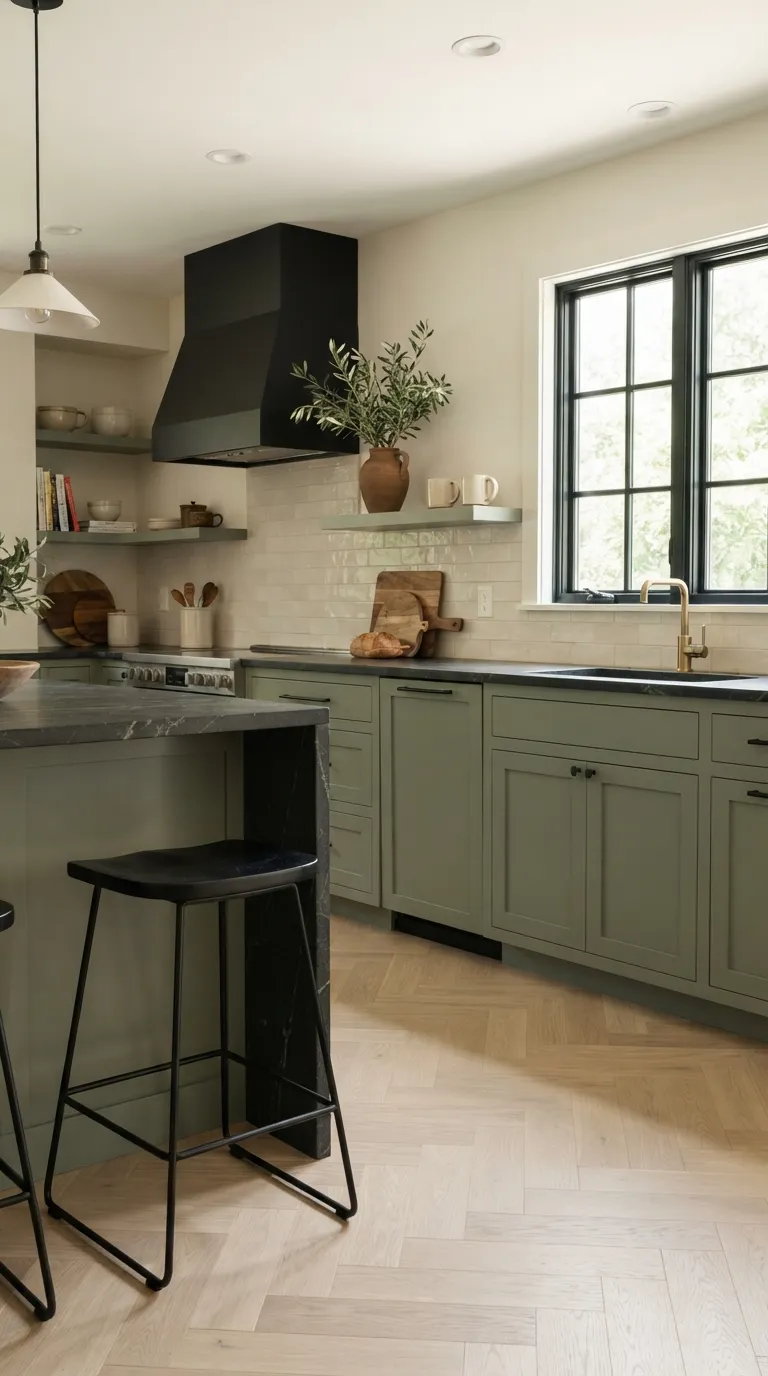
Black accents give soft sage a sharper edge. Use them on cabinet handles, window frames, stools, or a range hood when you want definition without adding another major color.
A little black goes a long way, so leave plenty of warm neutral space around it. Cream walls and pale wood floors can soften the contrast and keep your green kitchen welcoming.
Sage with Cream Stone
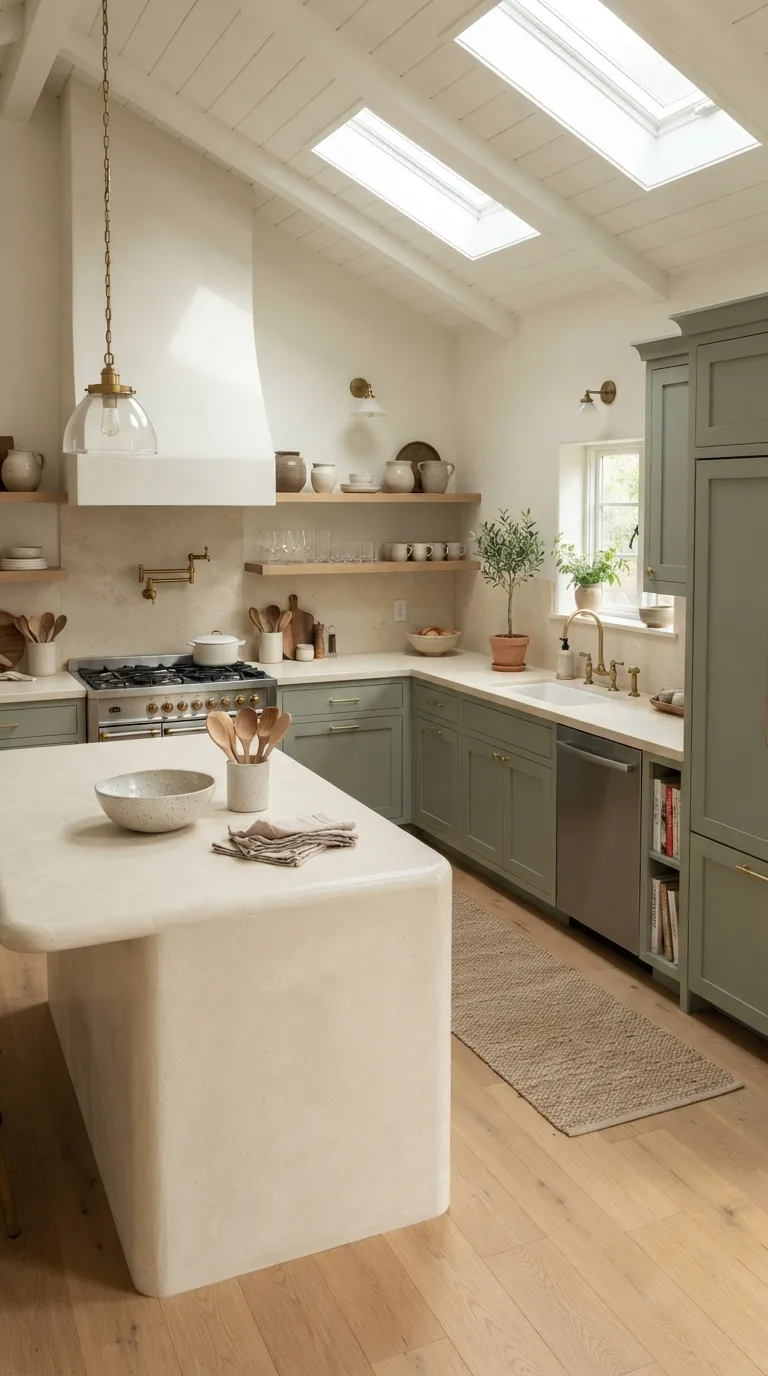
Cream stone brings warmth to sage cabinetry without competing with its muted green tone. Limestone, travertine, or creamy quartz can work well when you want the counters to feel soft and natural.
Keep the backsplash close to the countertop color for a smooth visual flow. A few wooden accessories can add contrast while keeping the overall palette calm.
Two-Tone Sage Cabinets
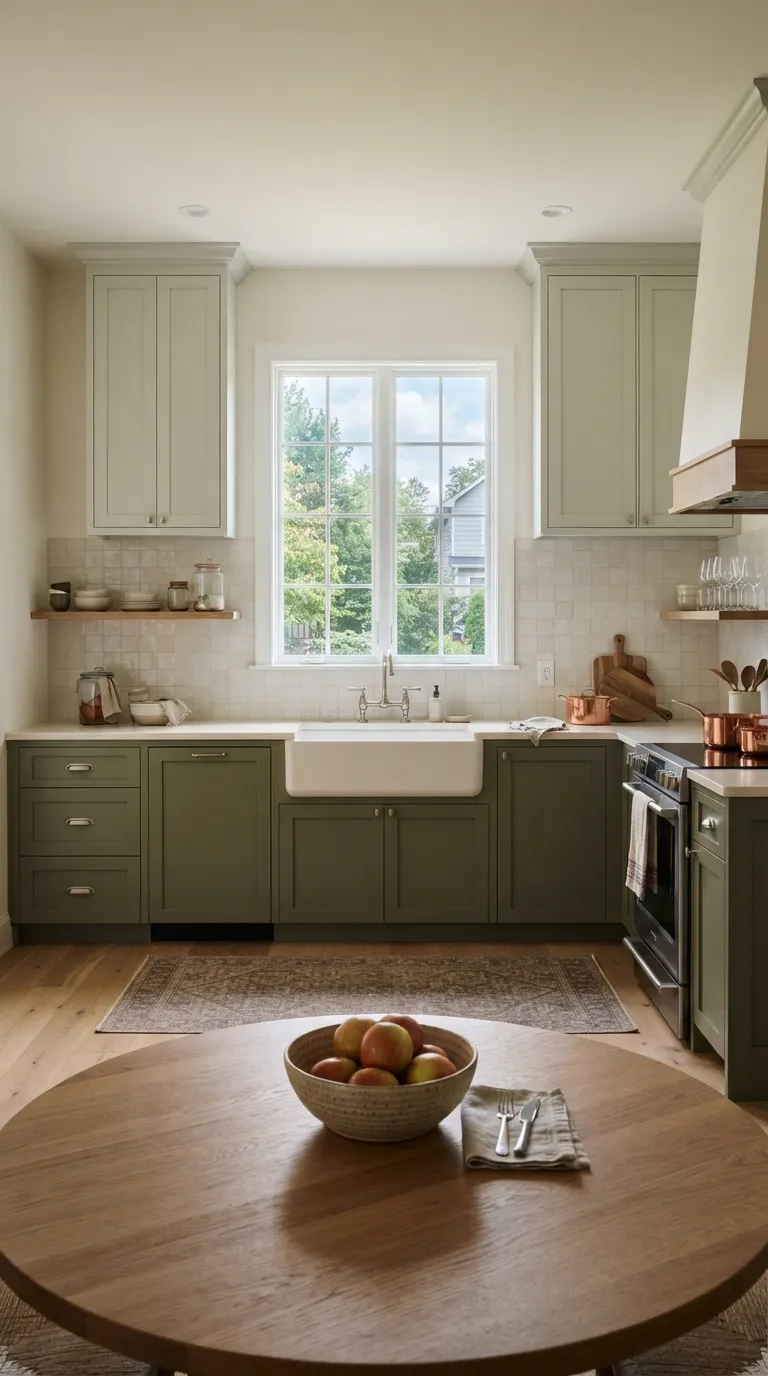
Using two sage shades adds depth while keeping the color story simple. A lighter shade above and a deeper shade below can make the cabinetry feel layered without adding unrelated colors.
This idea works best when the two greens share a similar undertone. Keep the counters and backsplash neutral so the subtle difference between the cabinet shades stays easy to see.
Sage Green Farmhouse Kitchen
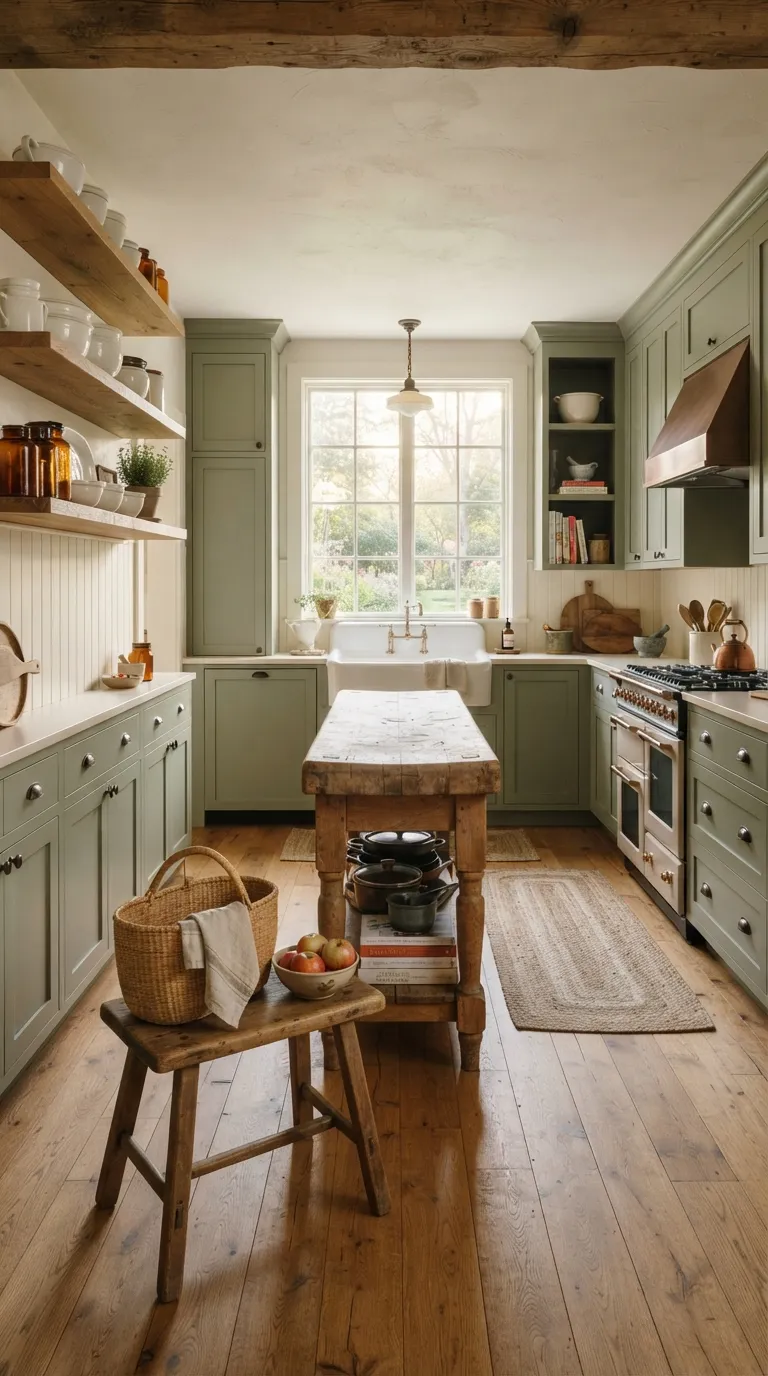
Sage green fits farmhouse kitchens naturally because its muted tone sits comfortably beside wood, ceramic, linen, and aged metal. The color gives classic cabinetry a softer look without losing its traditional character.
For a farmhouse feel, pair sage with an apron-front sink and warm oak details. Open shelves, simple pottery, and woven storage can finish the room without making it look staged.
Sage Green with Marble
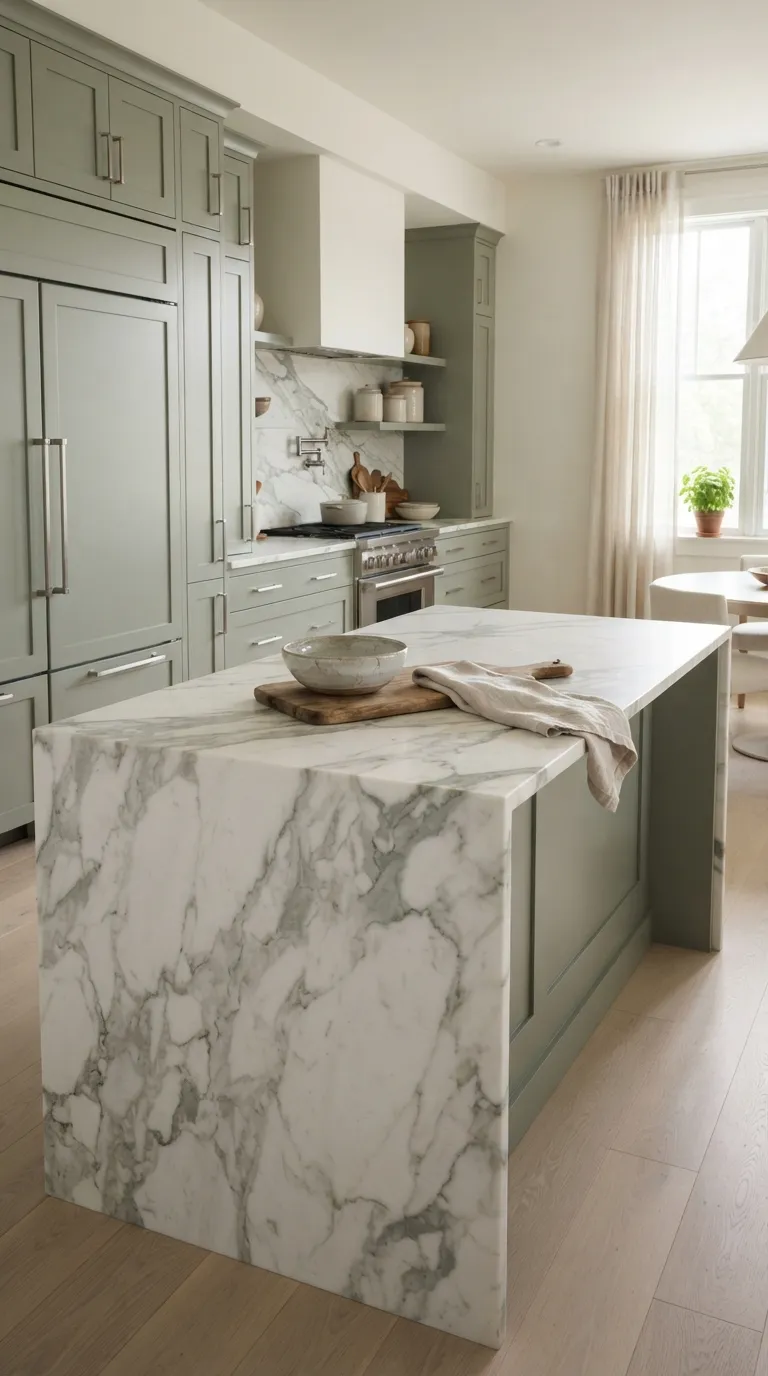
Sage green and marble create a polished kitchen palette without making the room feel too formal. White marble gives the muted green a crisp backdrop, while natural veining adds gentle visual movement.
Choose marble with soft gray or green undertones if you want the colors to connect naturally. Keep the cabinet hardware simple so the stone remains a key feature.
You may also want to try Lovely Neutral Kitchen Color Palette.
Muted Sage and Beige
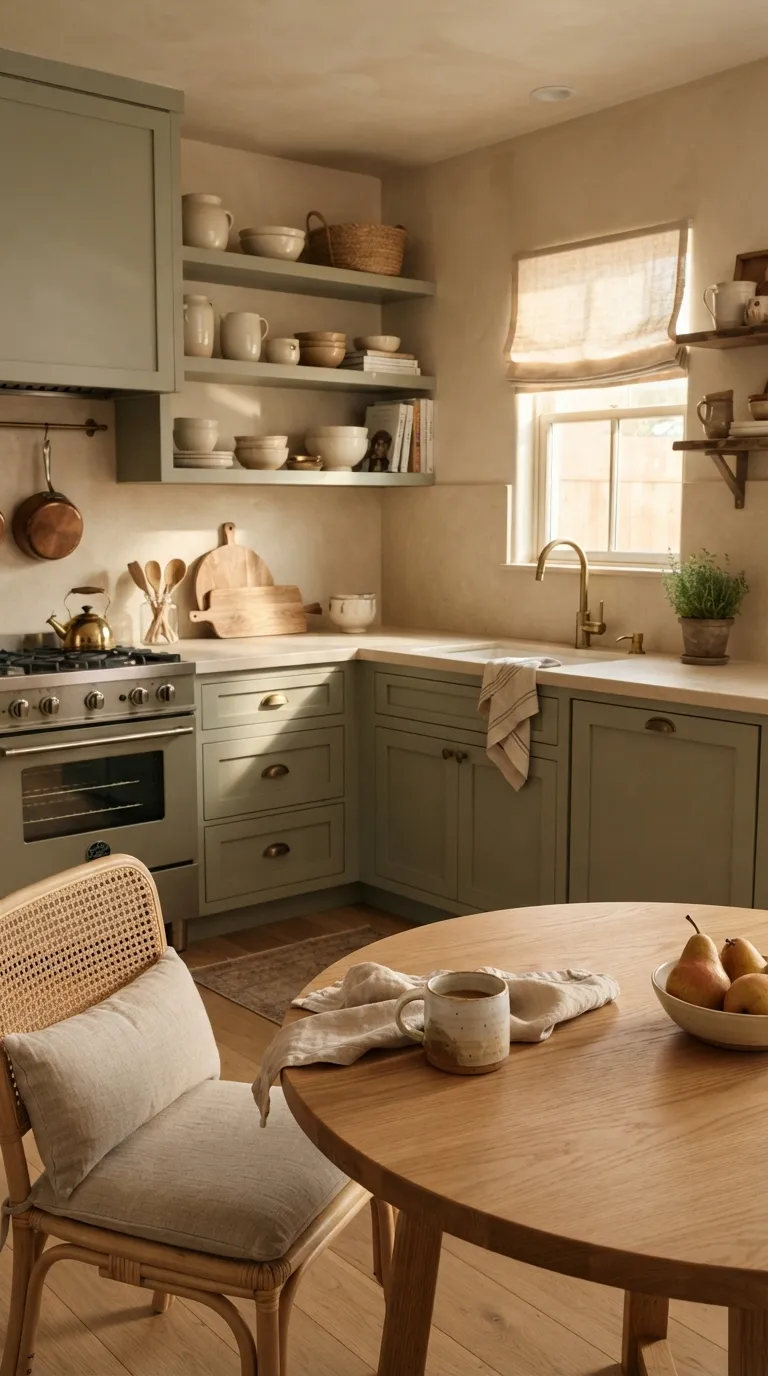
Muted sage and beige create a soft palette that feels especially comfortable in kitchens with warm natural light. Beige walls can make sage cabinetry feel less cool while giving the room a relaxed backdrop.
Add woven baskets, linen textiles, and pale wood for extra texture. This mix suits both traditional and modern kitchens, especially when you prefer subtle color instead of strong contrast.
Sage Green with Terracotta
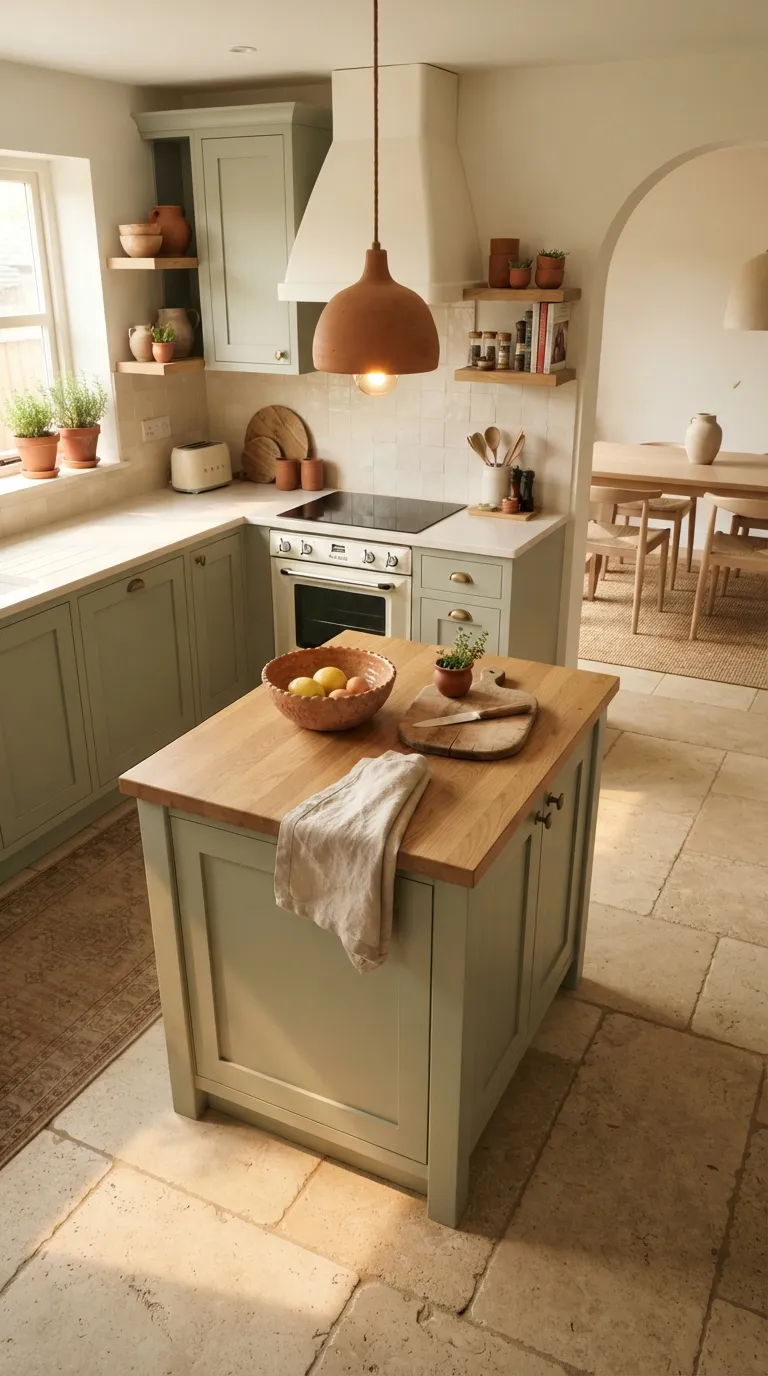
Terracotta adds warmth to sage without taking over the kitchen. A few clay pots, ceramic pieces, or warm-toned textiles can bring out the earthy side of the green.
Keep terracotta limited to small accents when the cabinets already provide strong color. Cream tile, pale stone, and natural wood help the two tones sit comfortably together.
Sage Green and Warm Wood
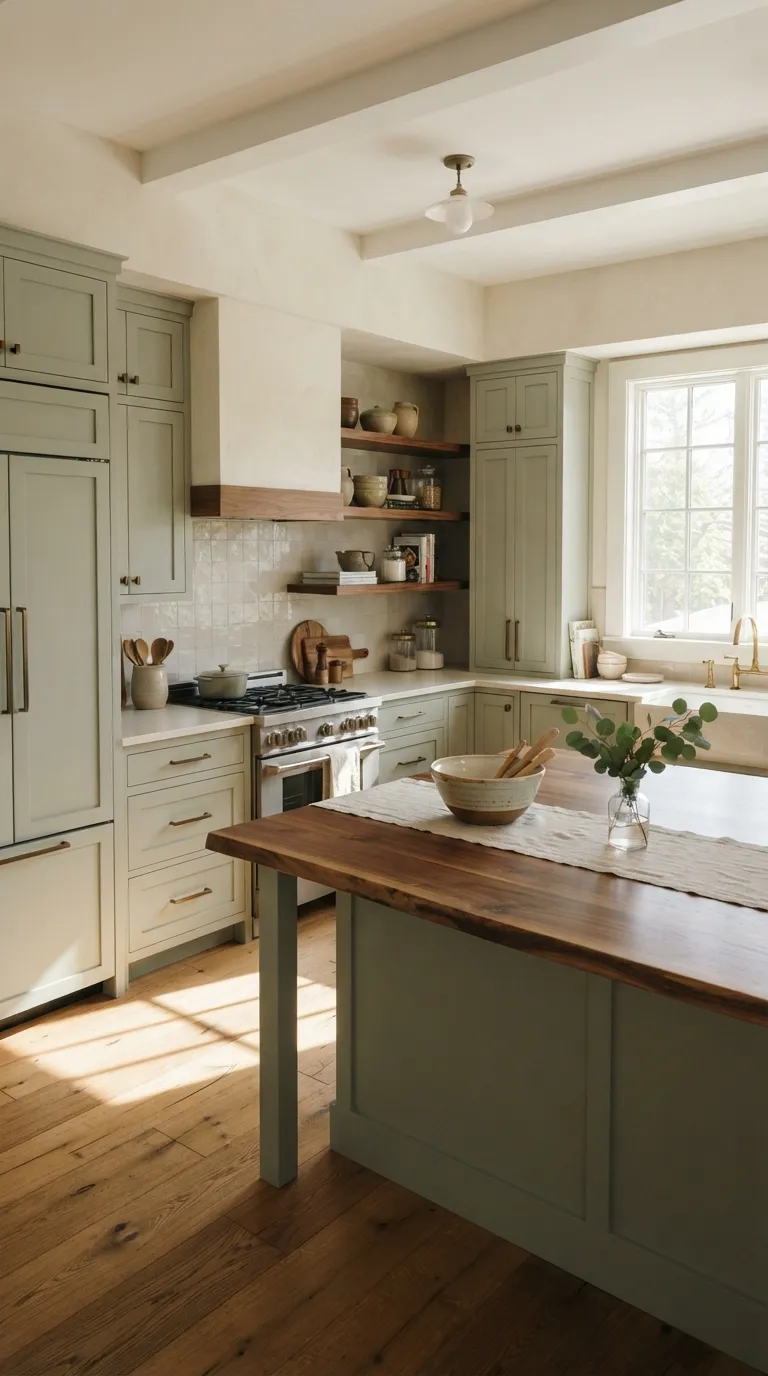
Warm wood gives sage green a richer, more grounded look. Walnut, oak, and other honey-toned woods can add depth while keeping the kitchen connected to natural materials.
Use wood on an island, shelving, stools, or a countertop rather than adding it everywhere. This keeps the sage cabinetry visible and gives the room a cozy balance.
Pale Sage Minimal Kitchen
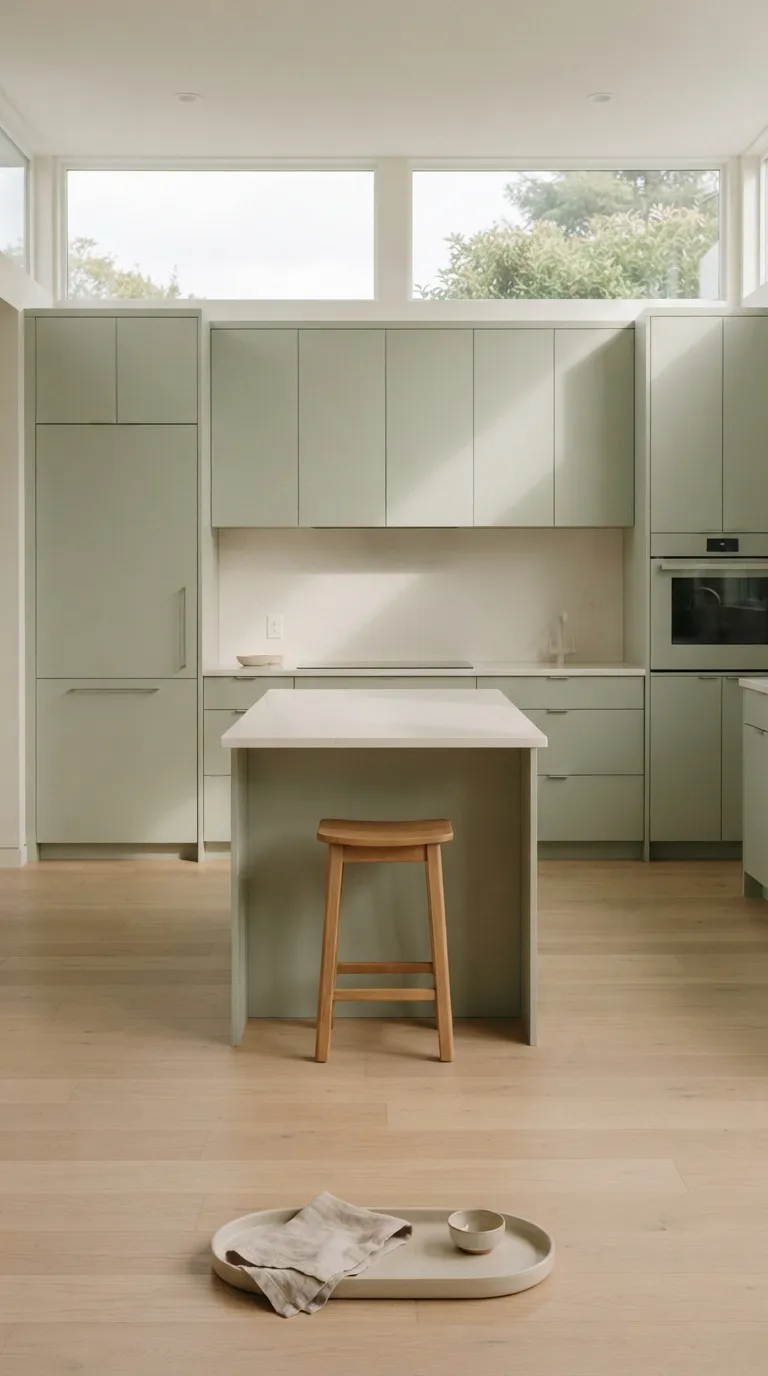
Pale sage is a good choice when you like color but prefer a quiet kitchen. Its soft tone works especially well with flat cabinets, simple hardware, and uncluttered counters.
Keep the rest of the palette restrained with warm white, pale oak, and soft stone. A few carefully chosen ceramics can add character without taking away from the clean design.
Sage Green with Navy
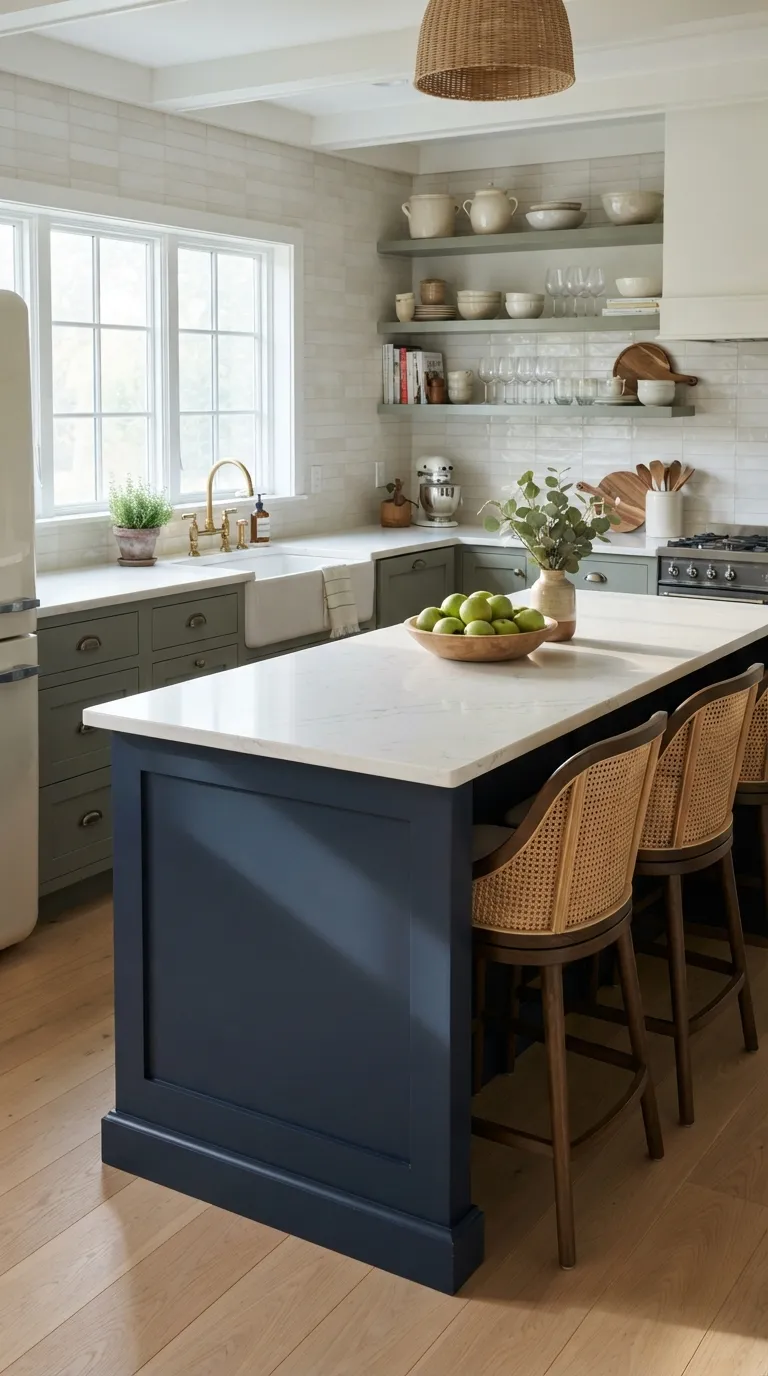
Sage and navy create a deeper color combination while keeping the kitchen approachable. Use sage for the main cabinetry and navy on an island or a smaller cabinet run for controlled contrast.
Warm white counters help separate the two colors and keep the room from feeling too dark. Cane stools, oak flooring, and simple cream pottery add lighter touches around the stronger shades.
Sage Green with Natural Stone
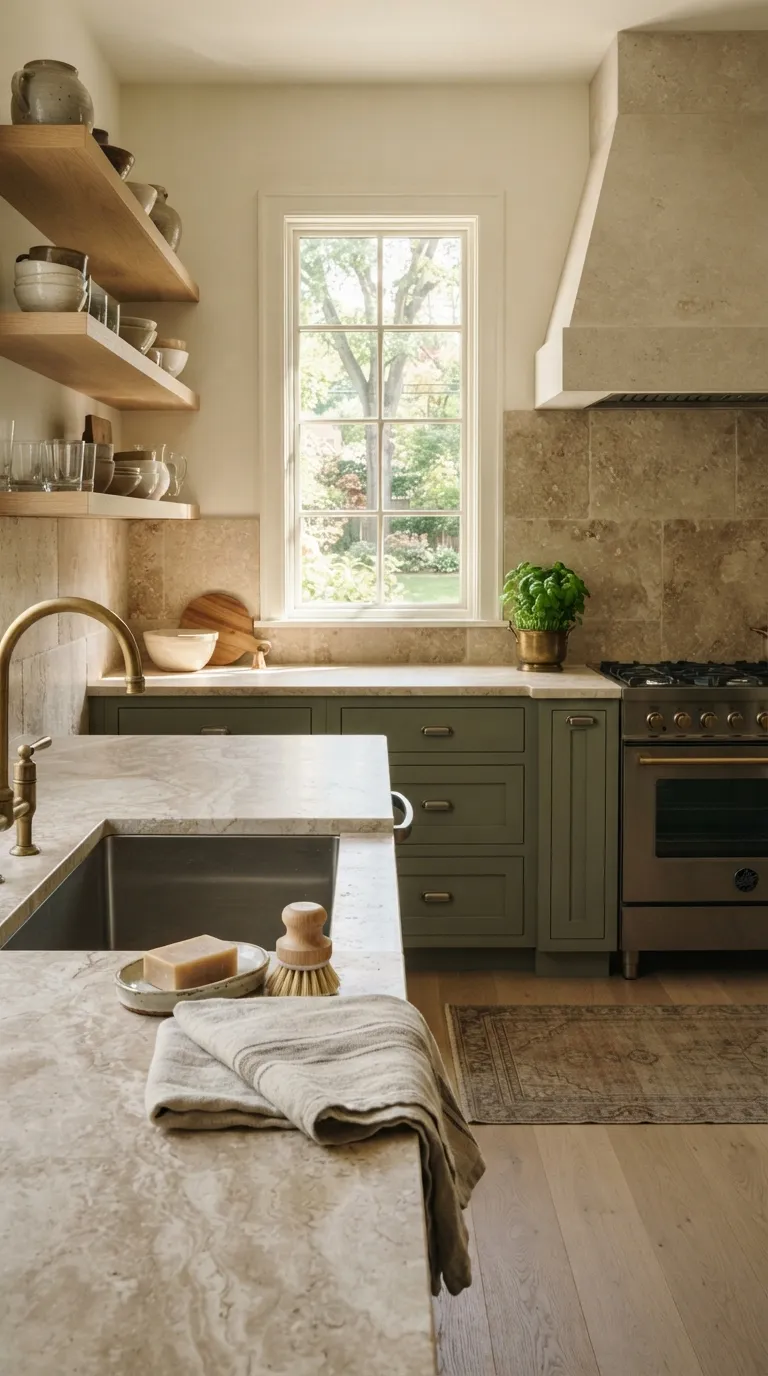
Natural stone brings texture and depth to sage green cabinetry. Limestone, soapstone, and other softly patterned stones can make the kitchen feel connected to earthy materials.
Choose stone with gentle movement if your sage cabinets already have a strong presence. Simple hardware and warm walls will keep the room balanced and easy on the eye.
Sage Green Cottage Style
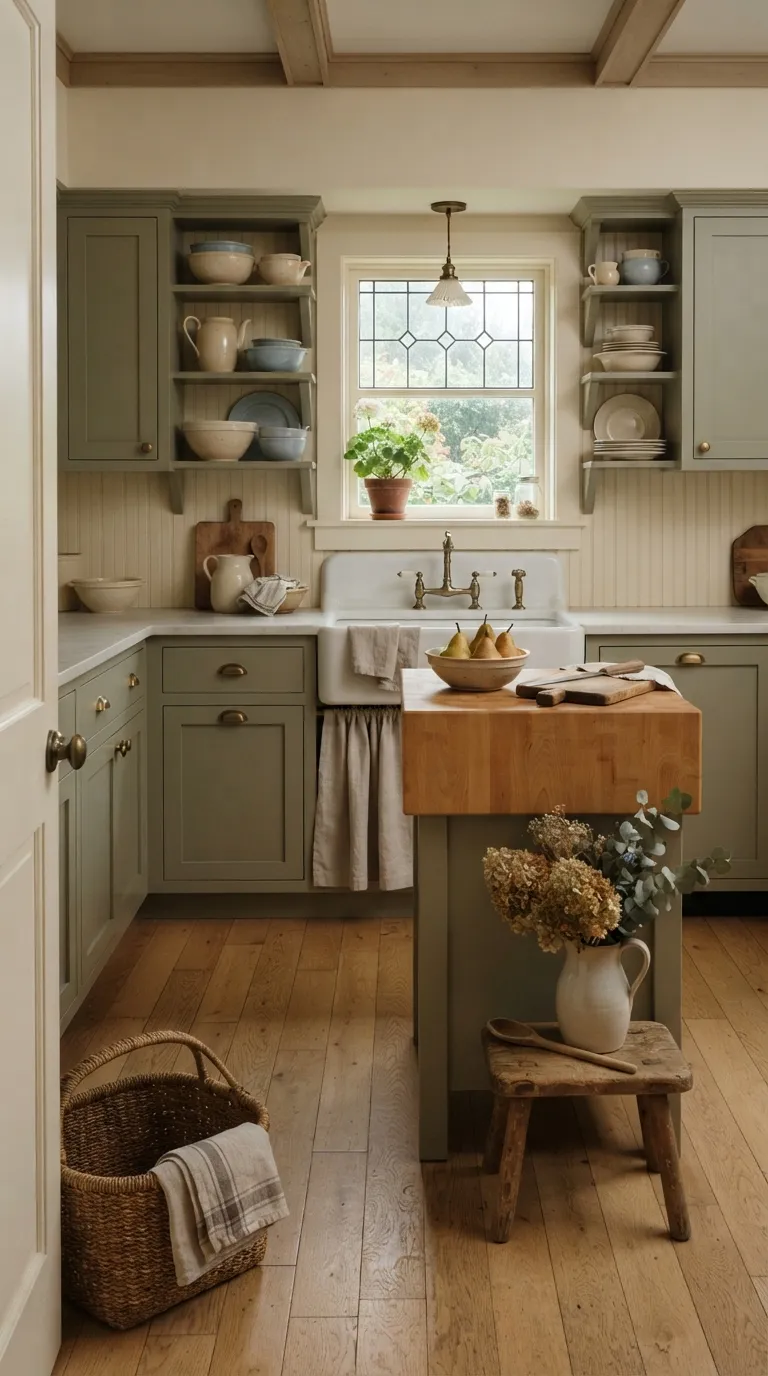
Sage green suits cottage kitchens because it works naturally with painted wood, handmade ceramics, and warm finishes. The color feels relaxed without making the room look dated.
Add beadboard, butcher block, or open shelving if you want more cottage character. Keep the accessories useful and simple so the kitchen still feels like a working space.
Sage Green with Soft Gray
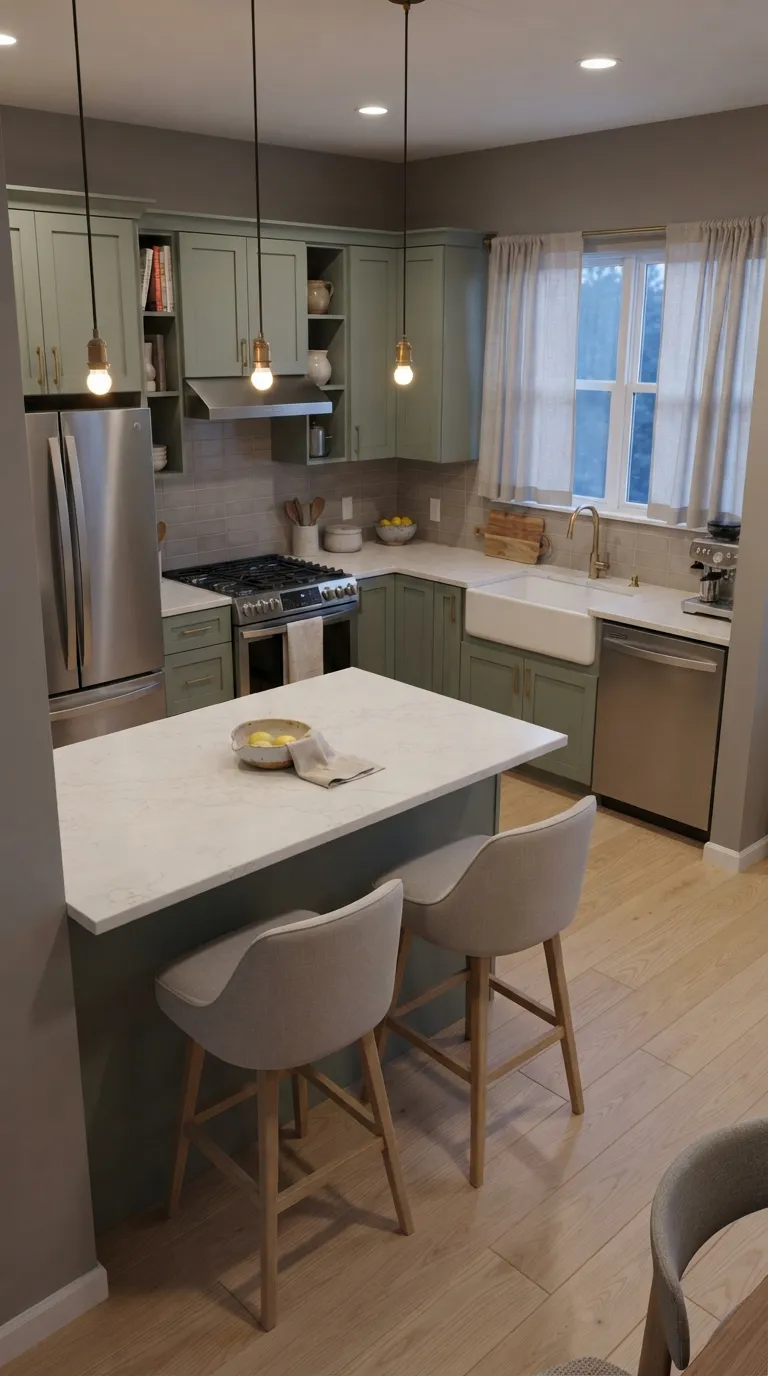
Soft gray gives sage green a clean, modern partner. This pairing works nicely when you prefer cooler neutrals but don’t want the kitchen to feel stark.
Choose a warm gray with a slight beige base if your room gets limited sunlight. Pale quartz, light ash wood, and taupe seating can tie the colors together without adding visual clutter.
Sage Green Accent Wall
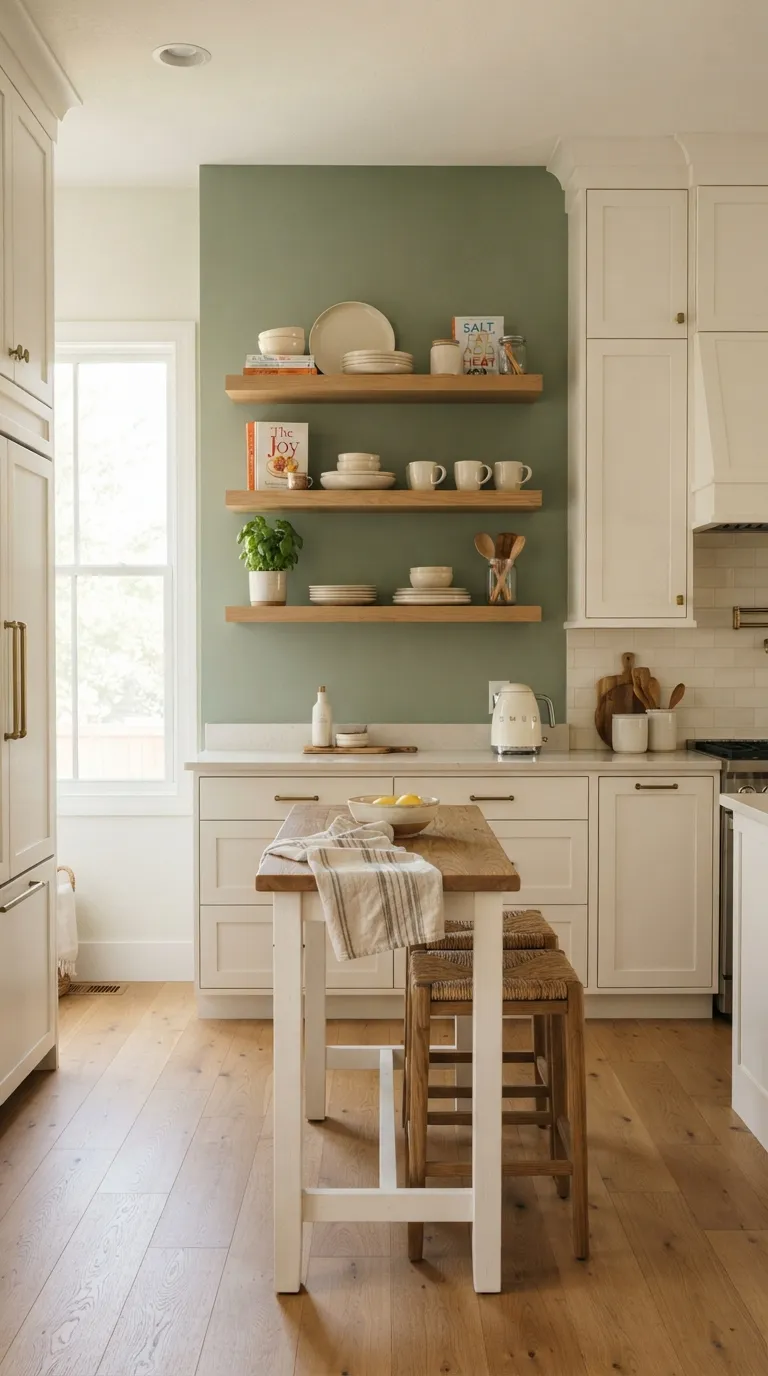
You don’t need sage cabinets to bring this color into the kitchen. A sage accent wall can add personality while leaving your existing white or cream cabinetry untouched.
Use the wall behind open shelves, a breakfast nook, or a dining area for a clear focal point. Warm wood and simple pottery can make the green feel connected to the rest of the room.
Sage Green Lower Cabinets
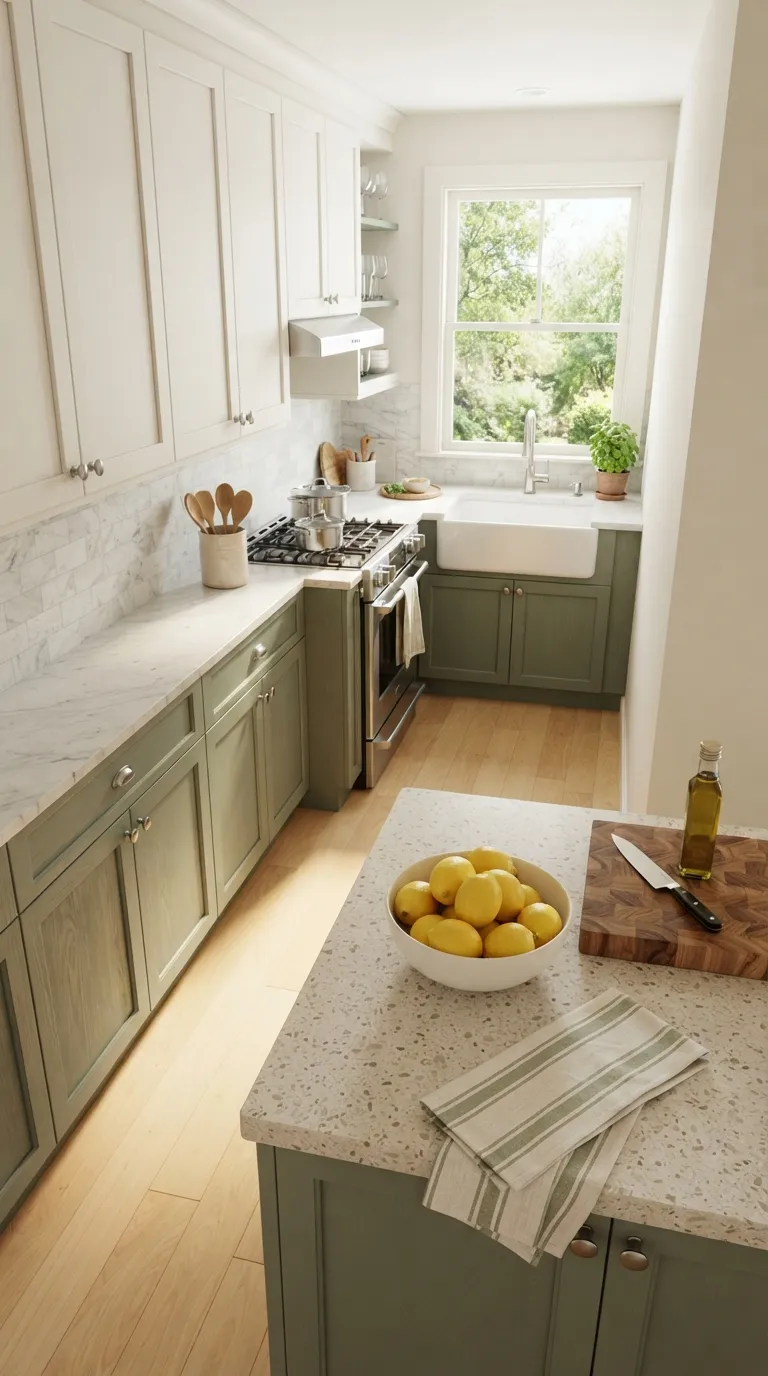
Sage lower cabinets are a smart option when you want color without covering the entire kitchen in green. White upper cabinets keep the walls visually open and help smaller rooms feel airy.
This approach also works well with existing cabinetry. If the upper cabinets are in good shape, painting just the lower section can create a fresh look with less work and cost.
Sage Green with Creamy Tile
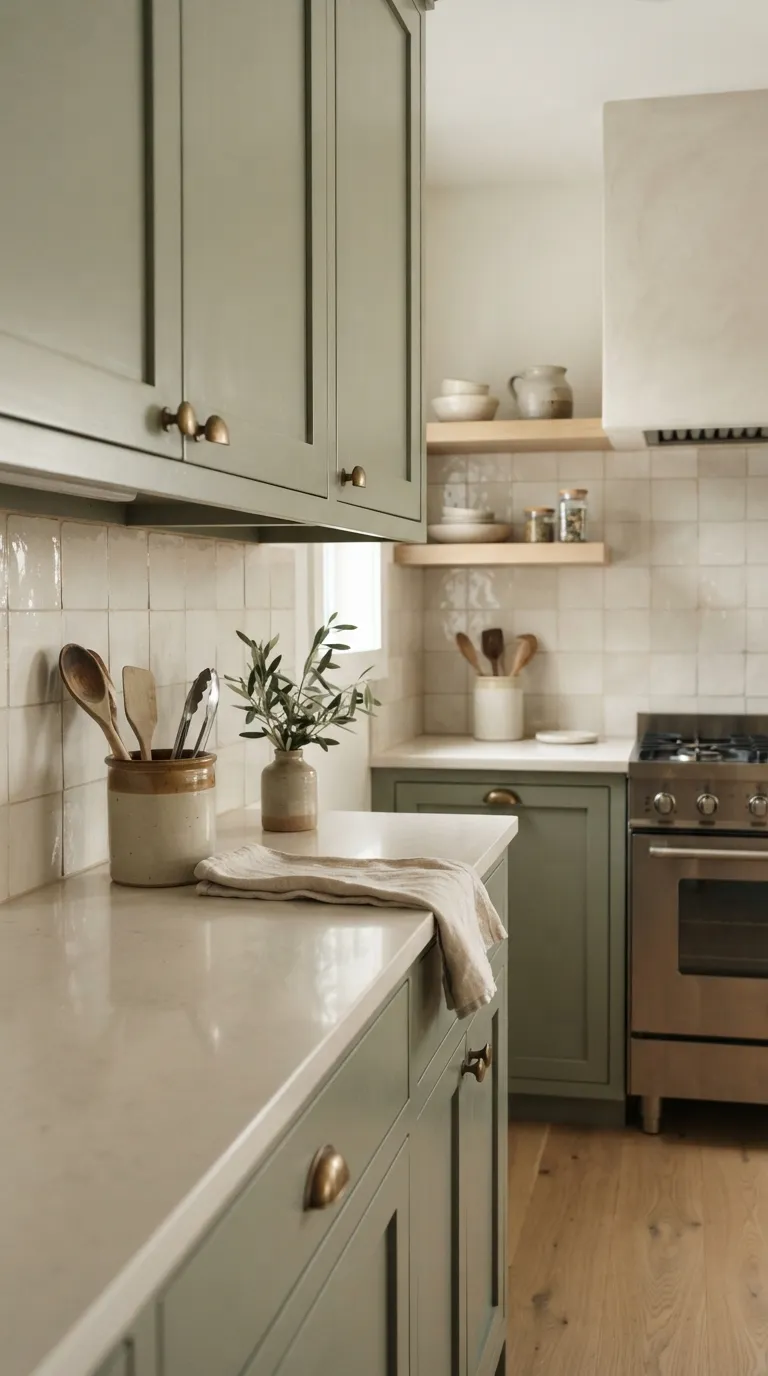
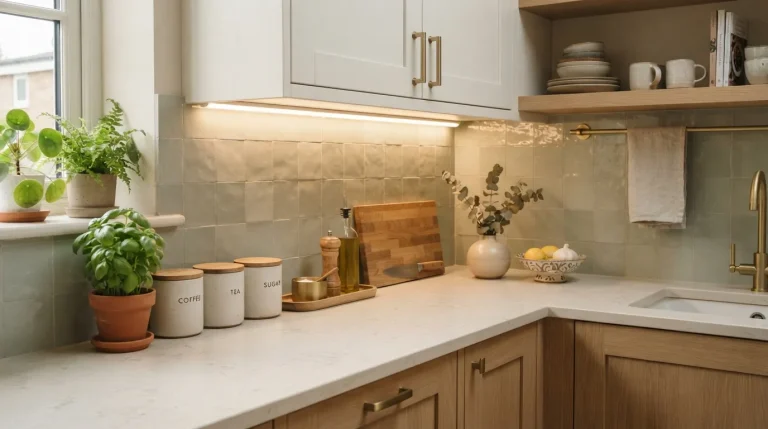
Creamy tile can make sage cabinetry feel softer and more inviting. Handmade tiles are especially useful when you want a backsplash with subtle texture rather than a perfectly uniform surface.
Choose cream instead of bright white if your sage paint has warm undertones. The close color relationship creates a smooth backdrop for wood accessories, brass hardware, and simple ceramic pieces.
Deep Sage Statement Kitchen
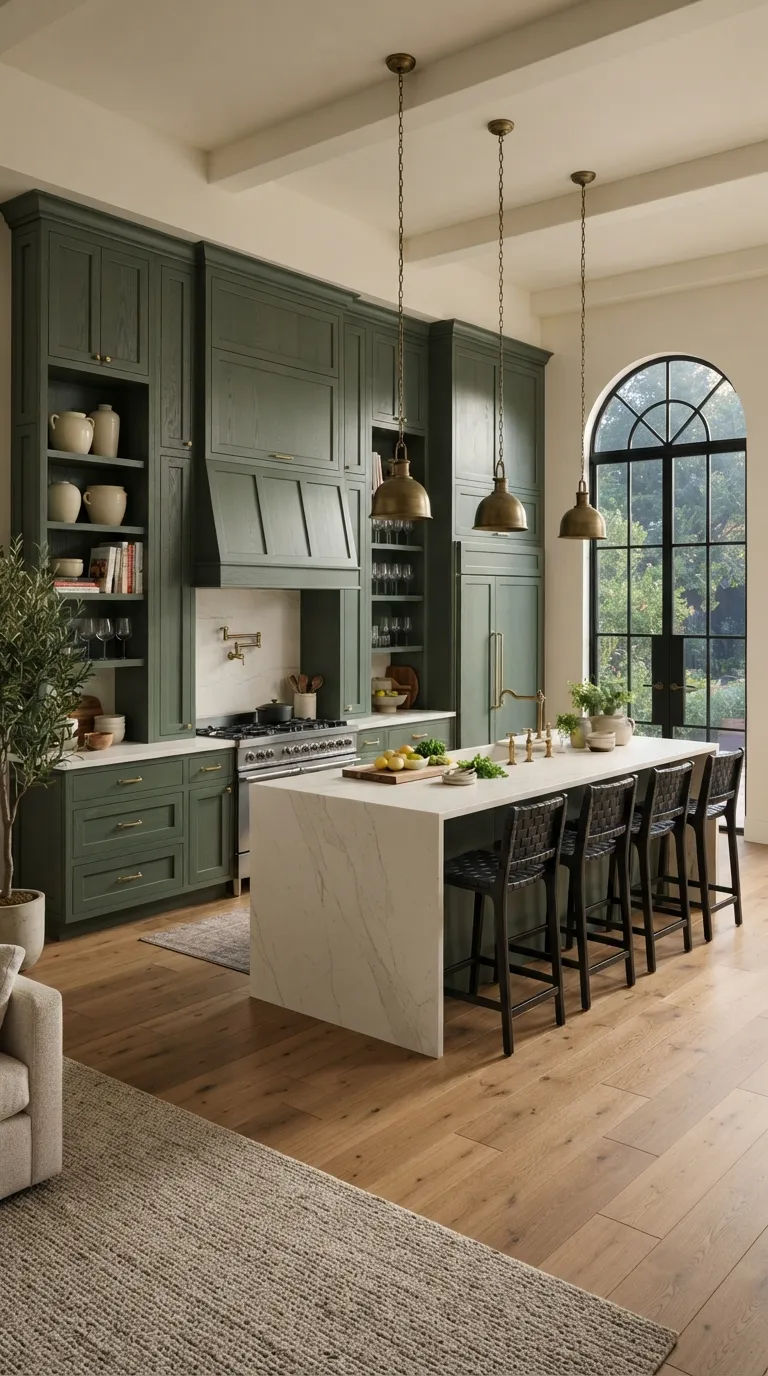
Deep sage can turn cabinetry into the main visual feature of a larger kitchen. The richer shade works best when the room has enough natural light and lighter materials to balance its weight.
Use ivory stone, warm oak, and soft cream details around the cabinets. If you love bold kitchen paint but still want a relaxed feel, deep sage offers a grounded alternative to brighter greens.
Last Words
Sage green gives you plenty of room to create a kitchen that feels personal without relying on loud color. You can use it across every cabinet, limit it to an island, or bring it in through a single painted wall.
Start by checking your kitchen’s natural light and existing finishes. Then choose a sage shade that works with your counters, flooring, backsplash, and hardware so every part of the room feels connected.
Olivia Carter
Olivia Carter is the founder of Lady Home Decor and a passionate home decor expert. She shares practical, stylish ideas to help homeowners create beautiful, comfortable, and welcoming spaces. Her expertise covers bedrooms, kitchens, living rooms, bathrooms, and small-space decorating.