22 Stunning Lantern Centerpiece Ideas for a Dreamy Dining Table

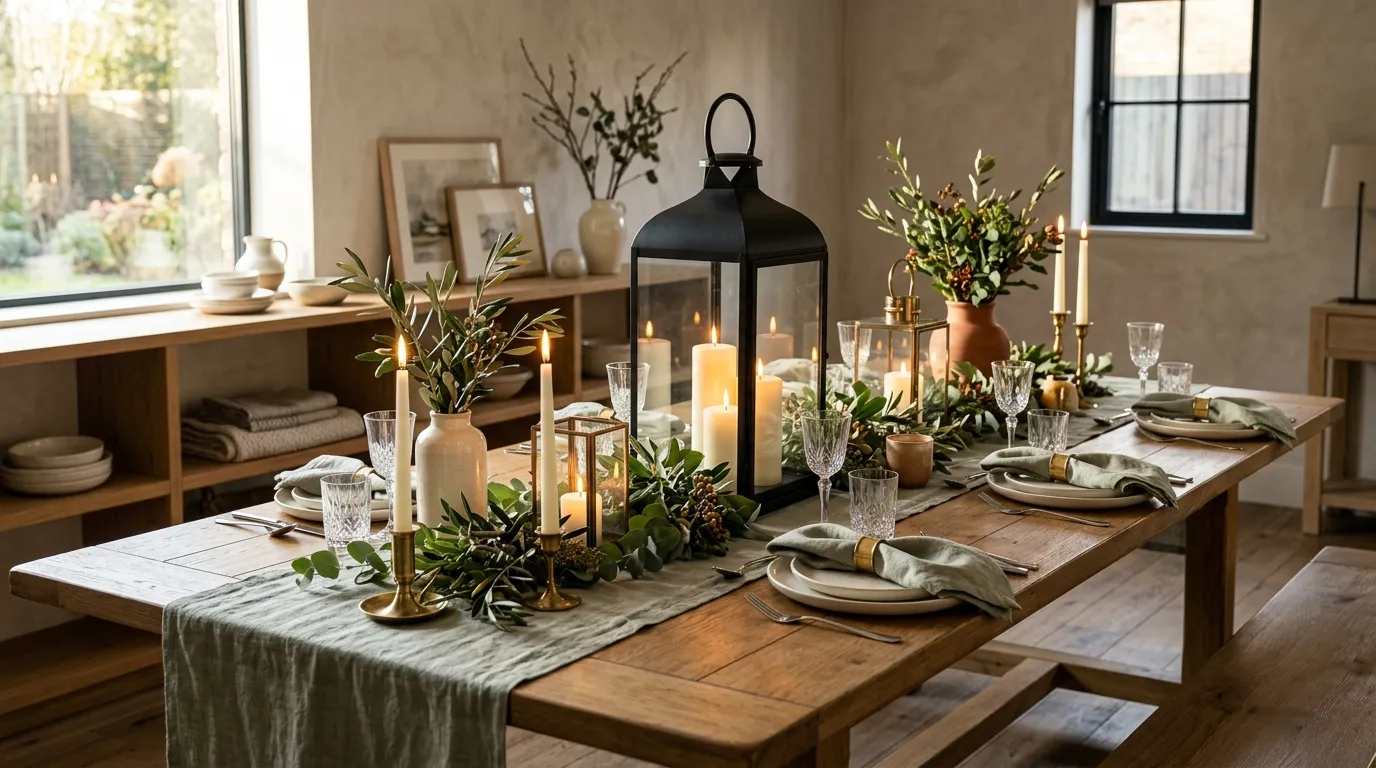
A lantern can turn an ordinary dining table into a warm focal point without making the setting feel crowded. These lantern centerpiece ideas for dining table settings show how candles, greenery, flowers, fruit, and textured table linens can work around one simple feature. Whether your table is rustic wood, sleek glass, or classic painted furniture, the right lantern can anchor the entire arrangement.
The best part is how easy these ideas are to adapt. You can keep things minimal with one large lantern, create a layered display with several sizes, or change the surrounding details for holidays and dinner parties. Think of the lantern as the heart of the table, then build the rest of the decor around it.
1. Create a Warm Candlelit Lantern Focal Point
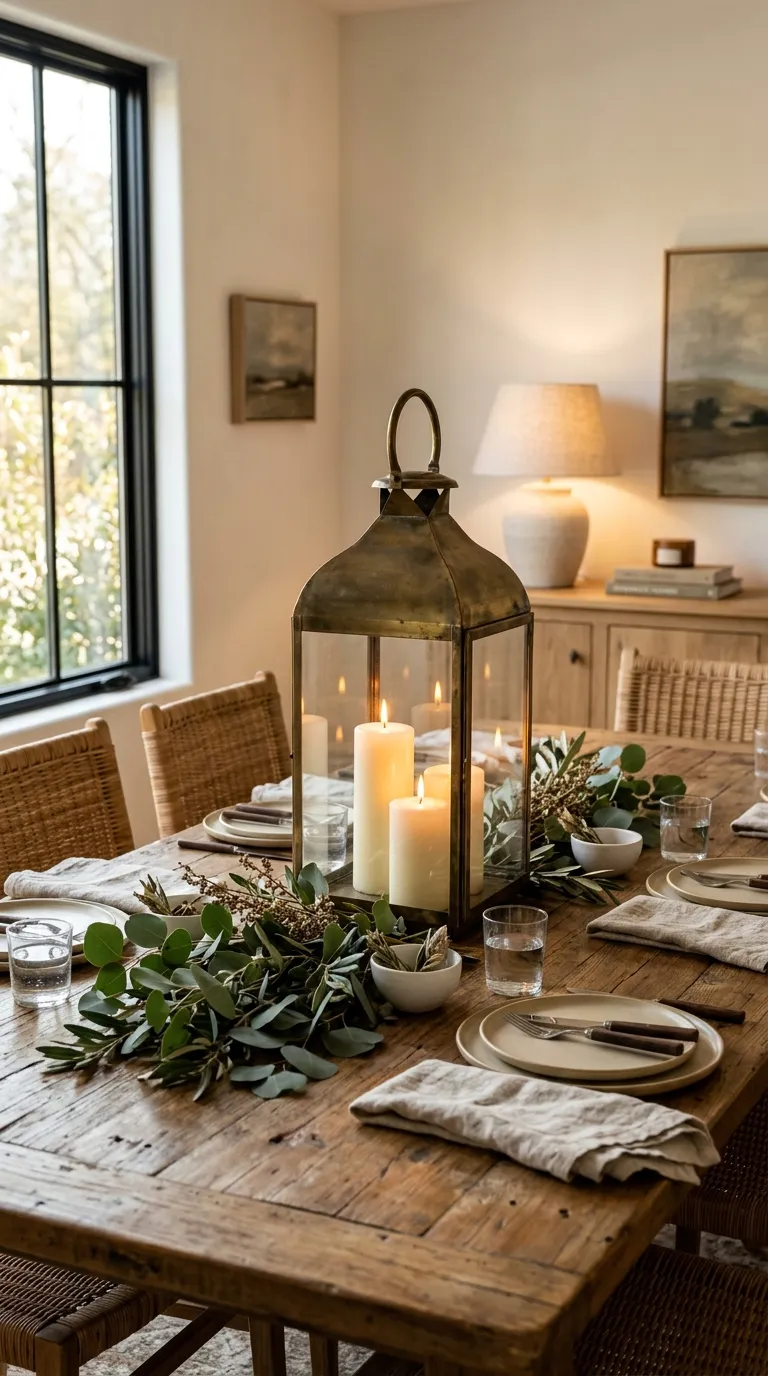
Start with one substantial lantern if your dining table already has plenty of character. A brass or aged-metal frame paired with ivory pillar candles gives the table a clear focal point while leaving enough room for plates and serving dishes.
Keep the surrounding decor low so guests can see across the table. A few leafy stems, ceramic pieces, and soft linen napkins add texture without competing with the candle lantern centerpiece.
2. Pair Lanterns With Fresh Greenery
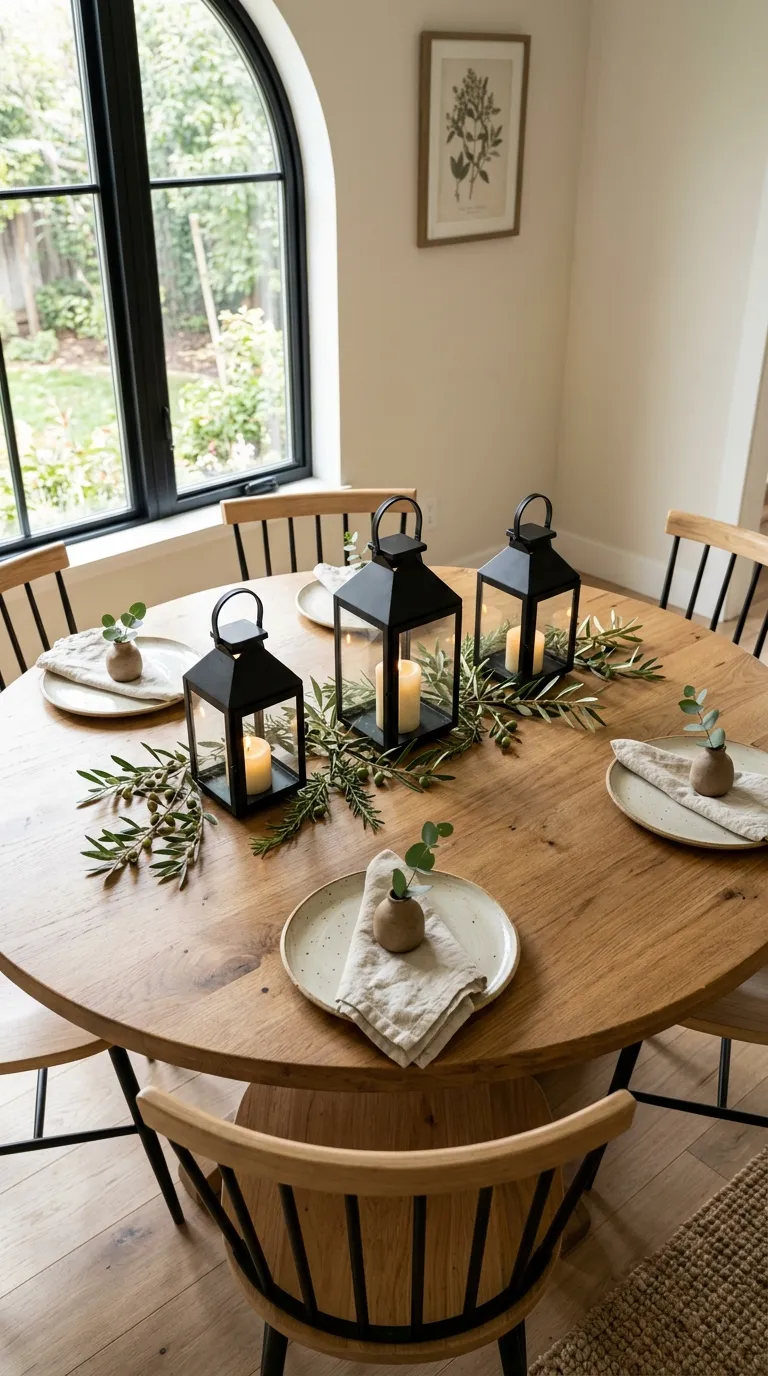
Fresh greenery gives lantern decor a relaxed, organic feel. Place two or three lanterns in different sizes down the center of a long table, then tuck olive branches, eucalyptus, rosemary, or other fresh foliage between them.
For a round table, try a loose cluster instead of a straight line. The greenery can soften the hard edges of metal lanterns while adding a natural touch that works for everyday dining and casual gatherings.
3. Mix Lanterns With Seasonal Flowers
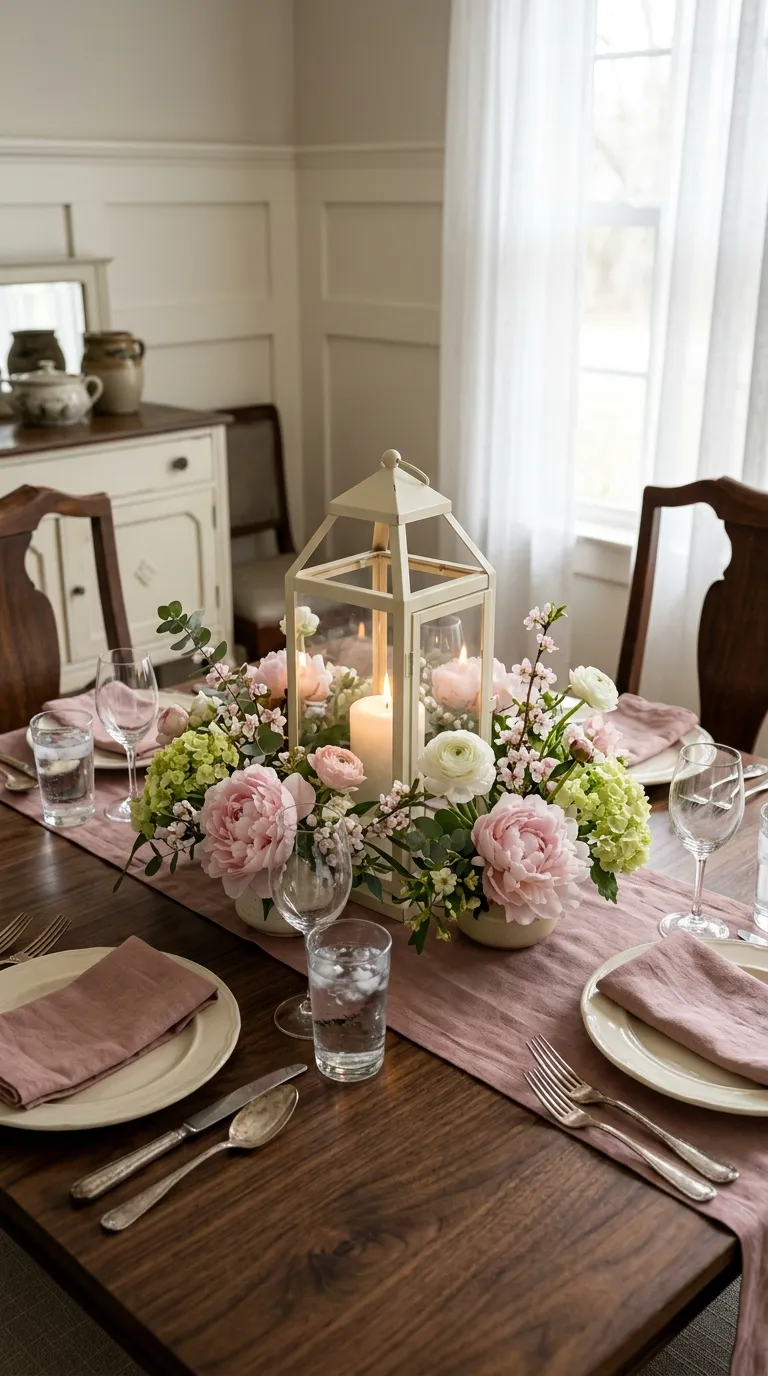
Flowers can make a lantern centerpiece feel ready for a special meal. Choose blooms that match the season, then keep the arrangements low enough to preserve a clear view across the table.
For spring, soft blush and white flowers pair beautifully with cream lanterns. In autumn, swap them for dried grasses, warm-toned blooms, or small branches for a richer dining table centerpiece.
4. Style a Rustic Lantern With Wood Accents
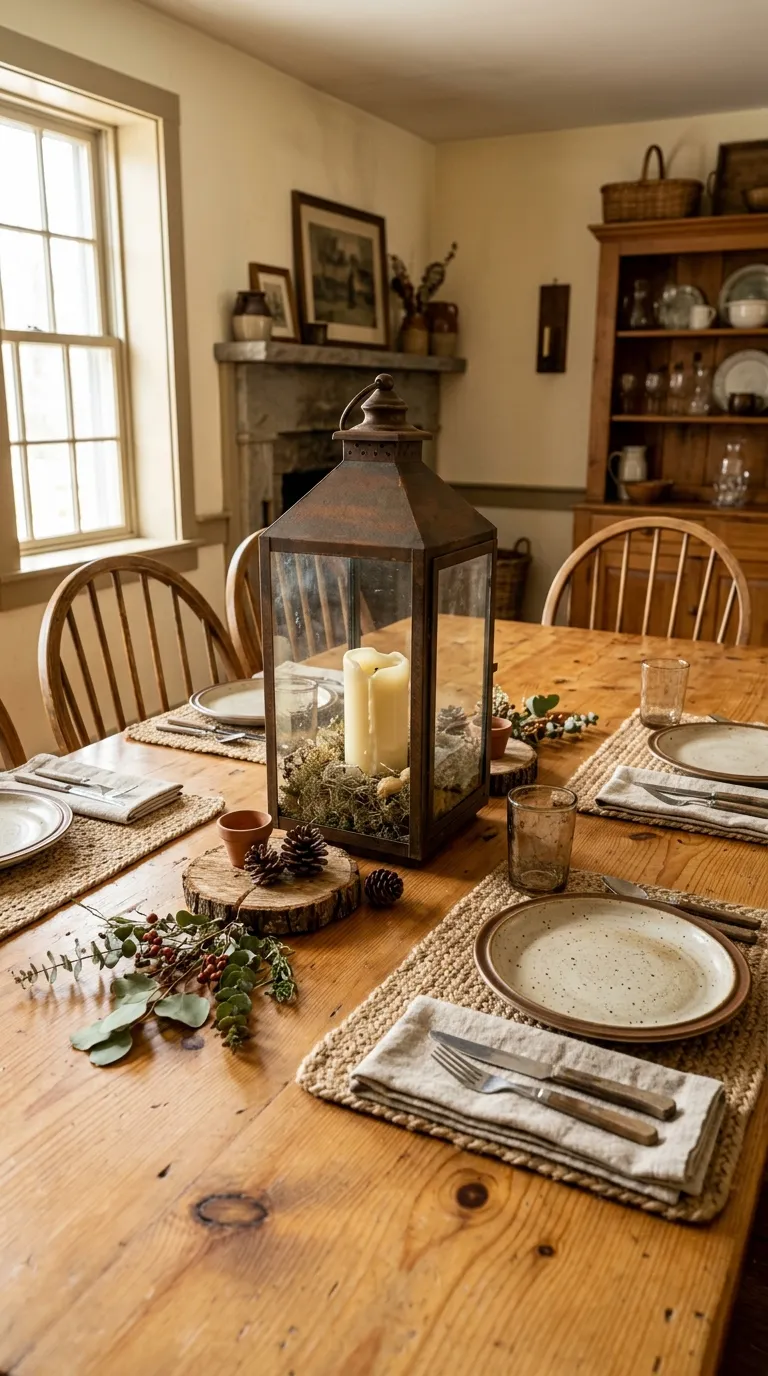
Rustic tables pair naturally with lanterns that have aged finishes and visible texture. Add small wood pieces around the base to create a relaxed arrangement that feels collected rather than overly planned.
Keep the palette grounded with cream, brown, green, and warm metal. This approach works especially well for farmhouse dining rooms where natural materials already play a major role.
5. Use Glass Lanterns for a Light Look
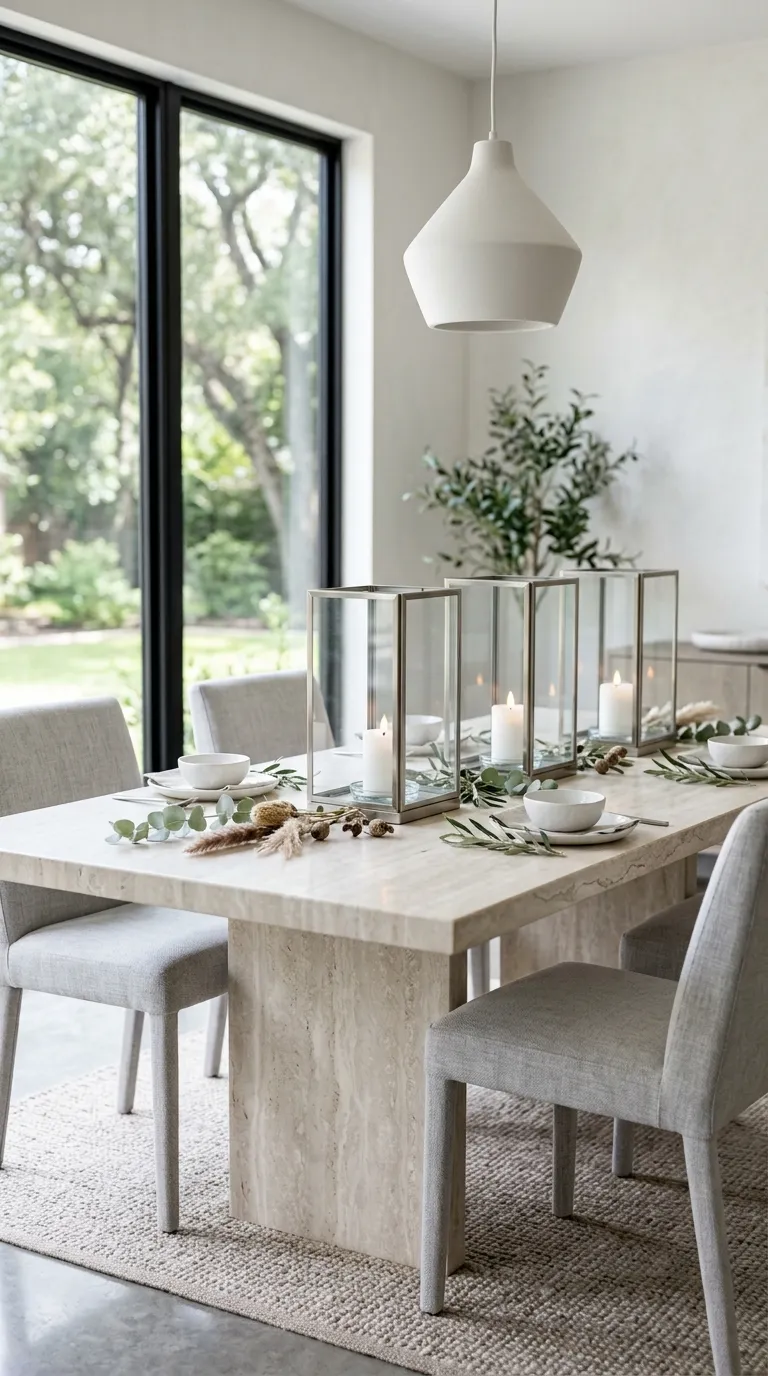
Glass lanterns are a smart choice when you want the centerpiece to feel open and uncluttered. Their transparent panels let light travel across the table while keeping the arrangement visually light.
Choose simple frames in nickel, silver, or another soft metal for a modern dining room. Pair them with pale ceramics and restrained greenery so the clear glass stays central.
6. Build a Cozy Fall Lantern Centerpiece
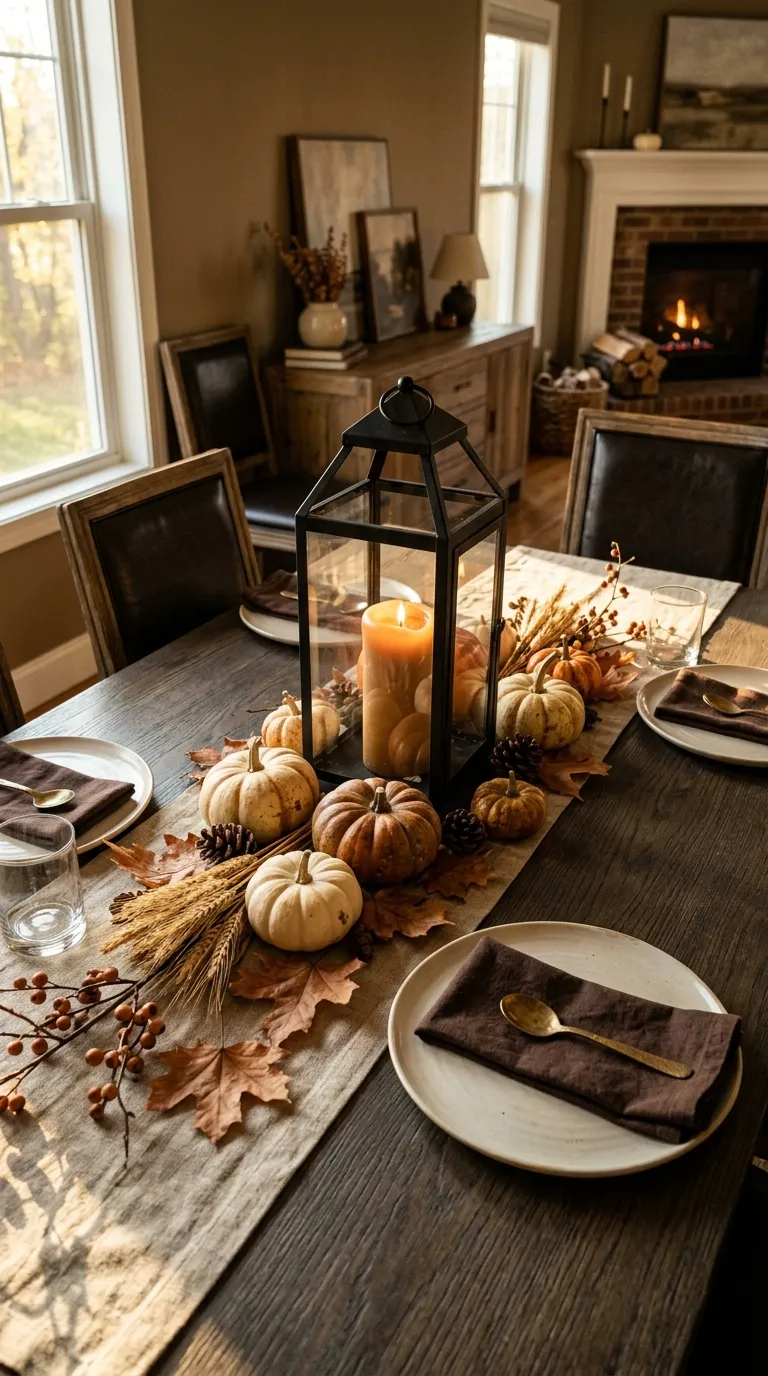
Fall gives you plenty of natural pieces to work with. Place a lantern beside small pumpkins, dried wheat, leaves, or berry branches for a centerpiece that feels warm without needing a large floral arrangement.
Stick with a few autumn shades instead of using every seasonal color. Cream, rust, brown, and muted copper create a cozy table while keeping the lantern easy to spot.
7. Try a Minimalist Single-Lantern Display
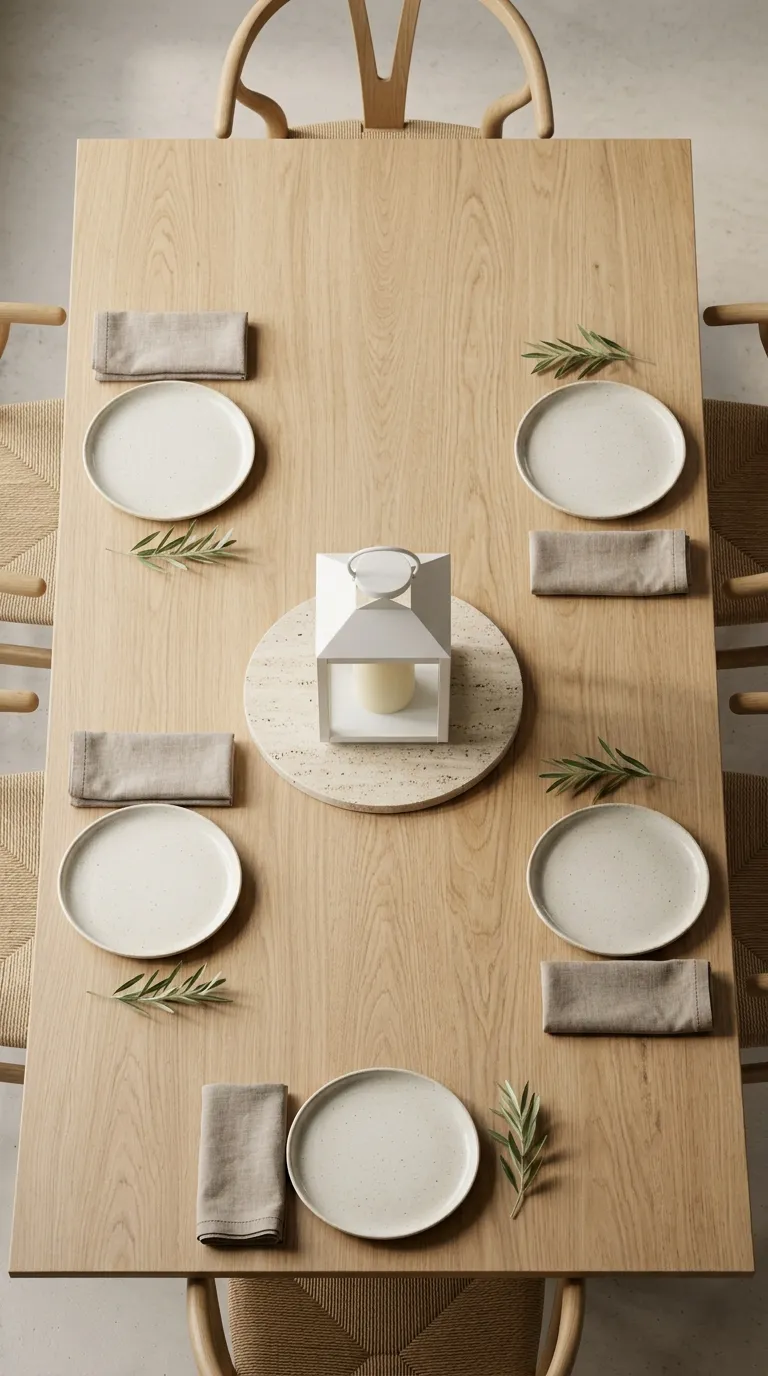
Sometimes one lantern is enough. A clean frame, one candle, and a simple base can give your dining table a polished focal point without adding visual clutter.
This idea suits smaller dining rooms especially well. Leave plenty of open tabletop around the lantern, then repeat one or two materials from the centerpiece at each place setting for a cohesive look.
8. Add Lanterns to a Long Table Runner
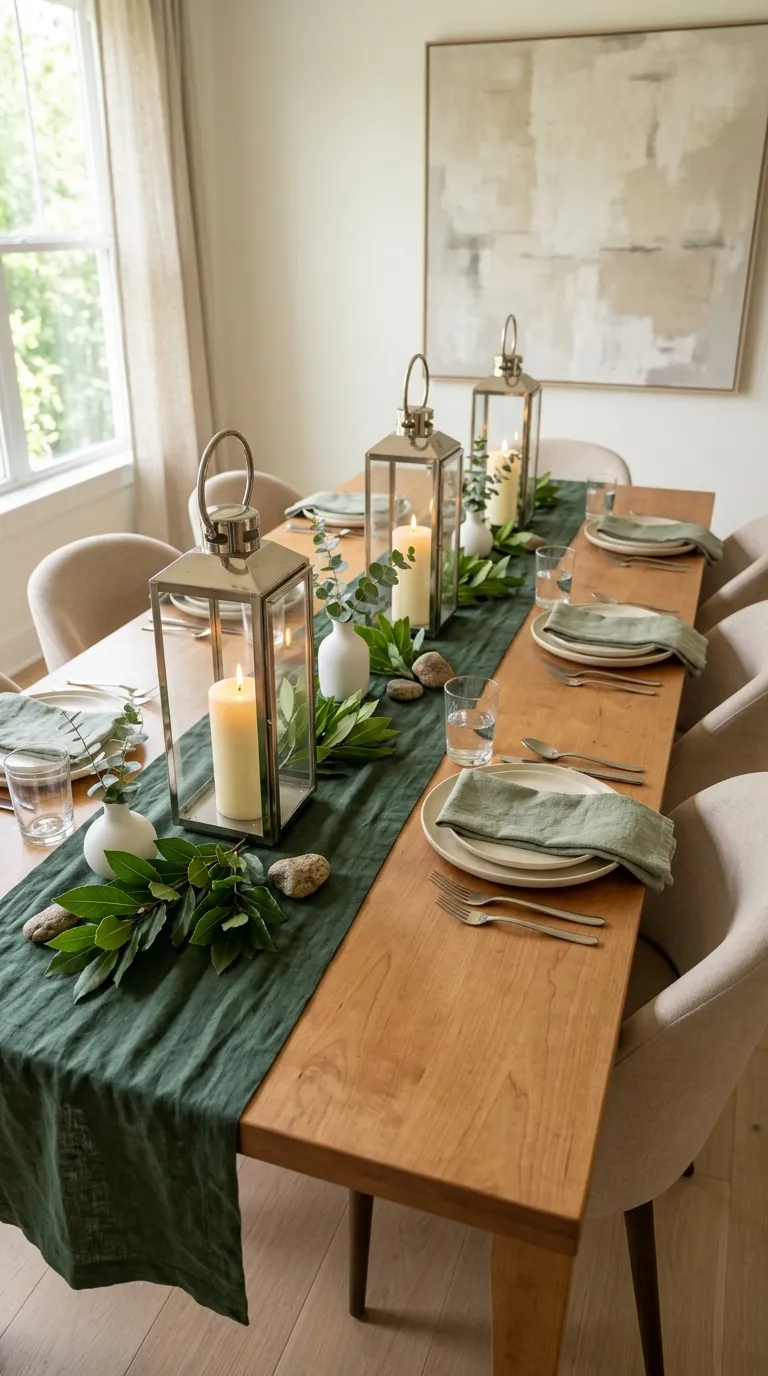
A long table runner gives lanterns a clear path to follow. Place two or three lanterns at different points rather than lining them up perfectly, then fill the gaps with low greenery or small decorative pieces.
This setup works particularly well for rectangular tables. Keep every item within the runner’s width so the centerpiece looks intentional and guests still have comfortable space for plates and serving dishes.
9. Combine Lanterns With Taper Candles
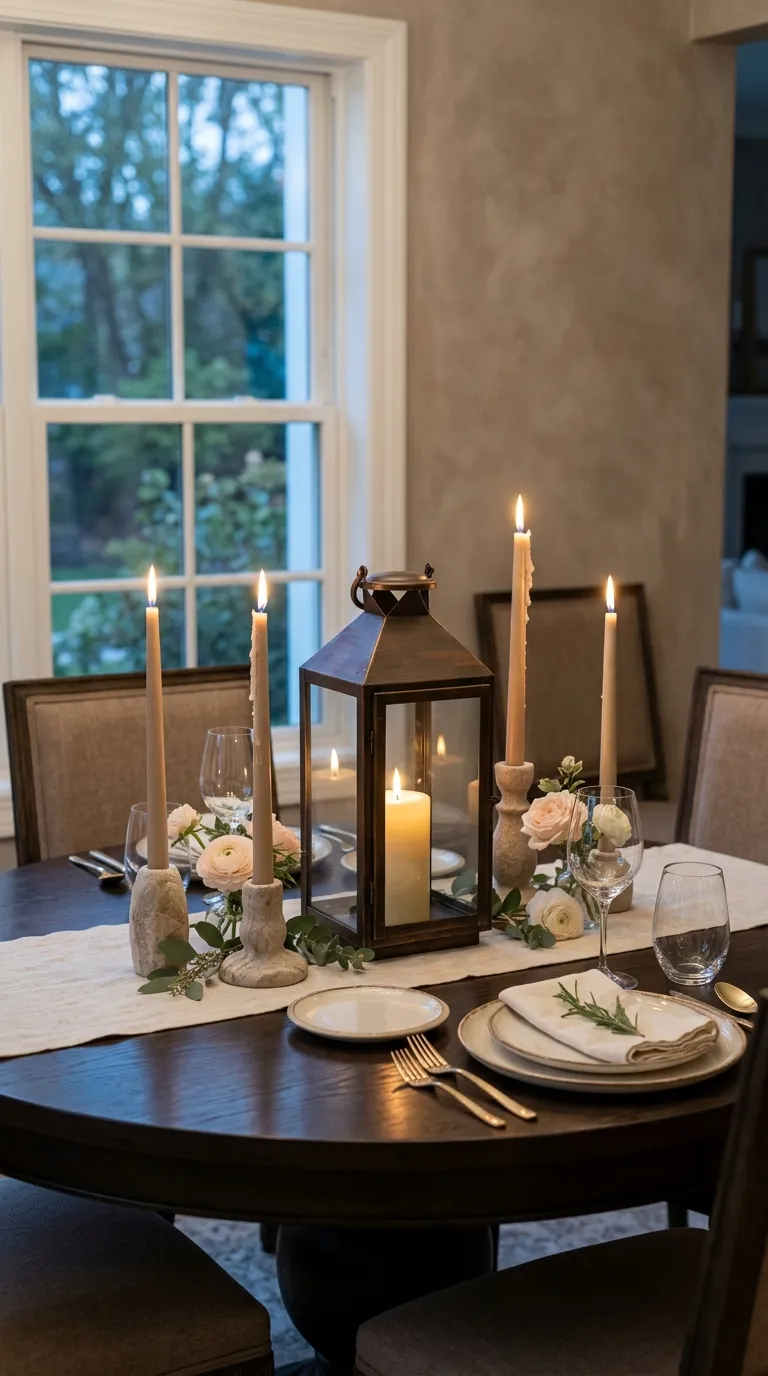
Pairing lanterns with taper candles creates a fuller dining table centerpiece without relying on flowers. Use candleholders that differ slightly in height so the arrangement has natural rhythm.
For a refined table, repeat the lantern’s metal finish in the candleholders or flatware. Leave a little breathing room between each flame so the display feels balanced instead of packed together.
10. Bring in Natural Stone and Ceramics
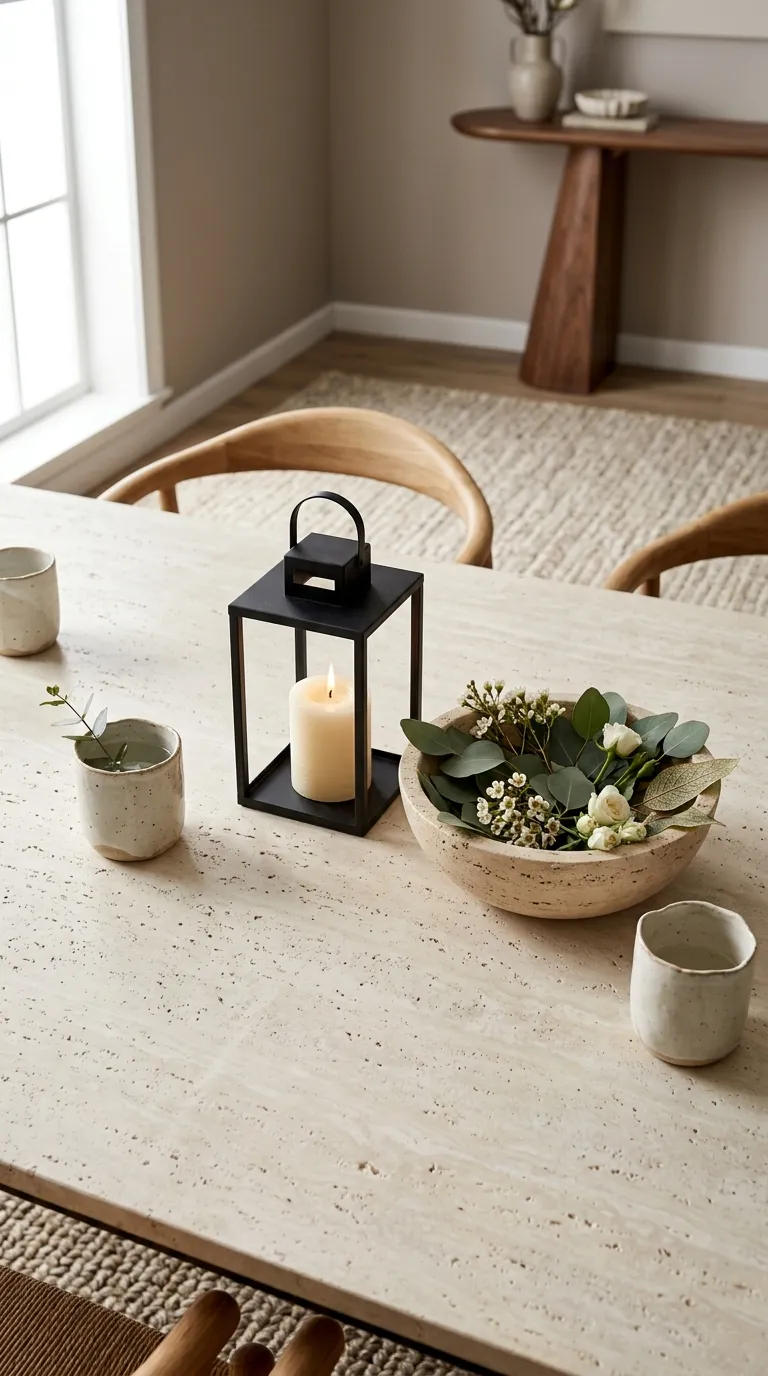
Natural stone adds weight and texture to a lantern centerpiece. A travertine bowl, marble tray, or limestone dish can give the arrangement a solid base while ceramics add softer shapes.
Keep the palette calm with cream, stone, gray, and black. This combination suits modern dining rooms and lets the materials themselves provide most of the visual interest.
11. Decorate a Lantern With Eucalyptus
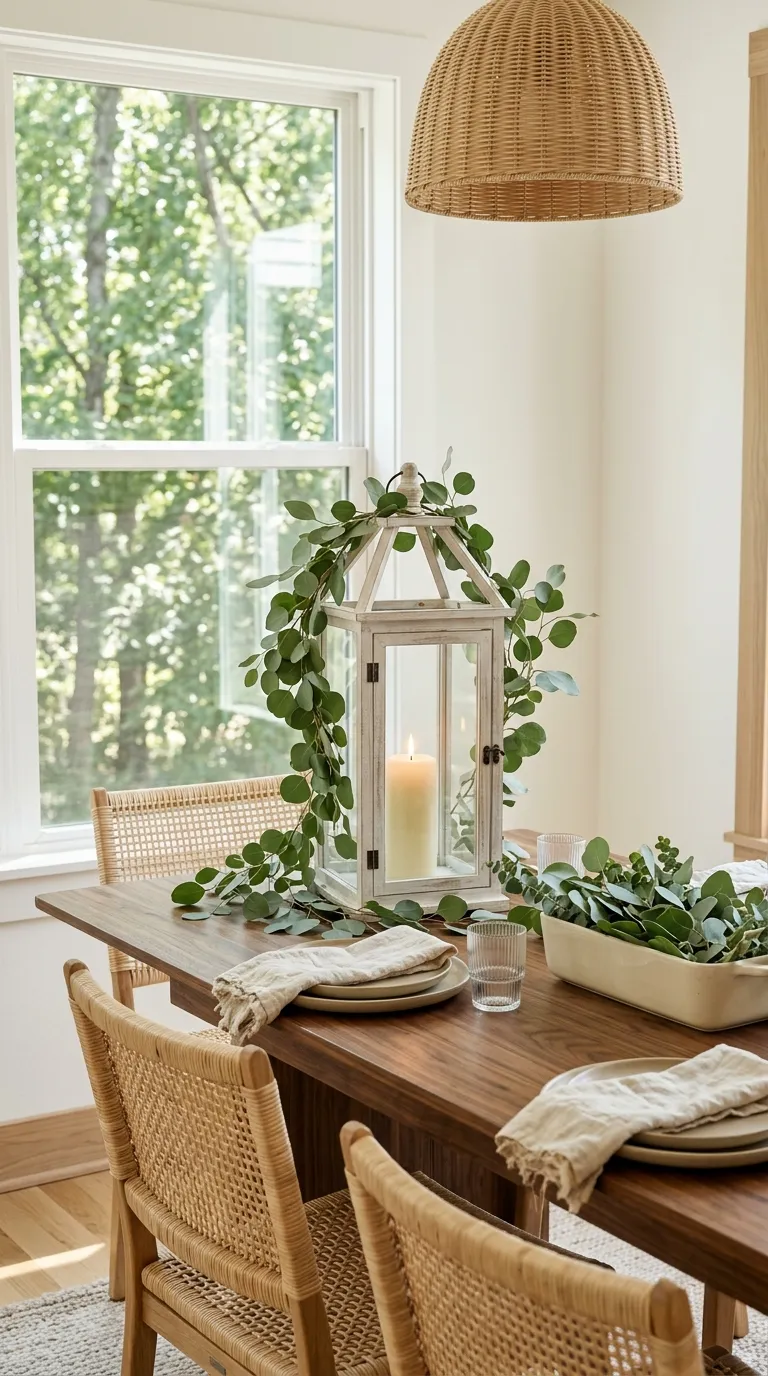
Eucalyptus brings soft greenery to a lantern without creating a bulky arrangement. Let a few stems curve around the base while keeping the lantern’s glass panels clear.
Fresh eucalyptus works for everyday dining, showers, brunches, and dinner parties. If you prefer a longer-lasting display, dried eucalyptus offers a similar shape with less upkeep.
12. Create a Romantic Candle and Rose Display
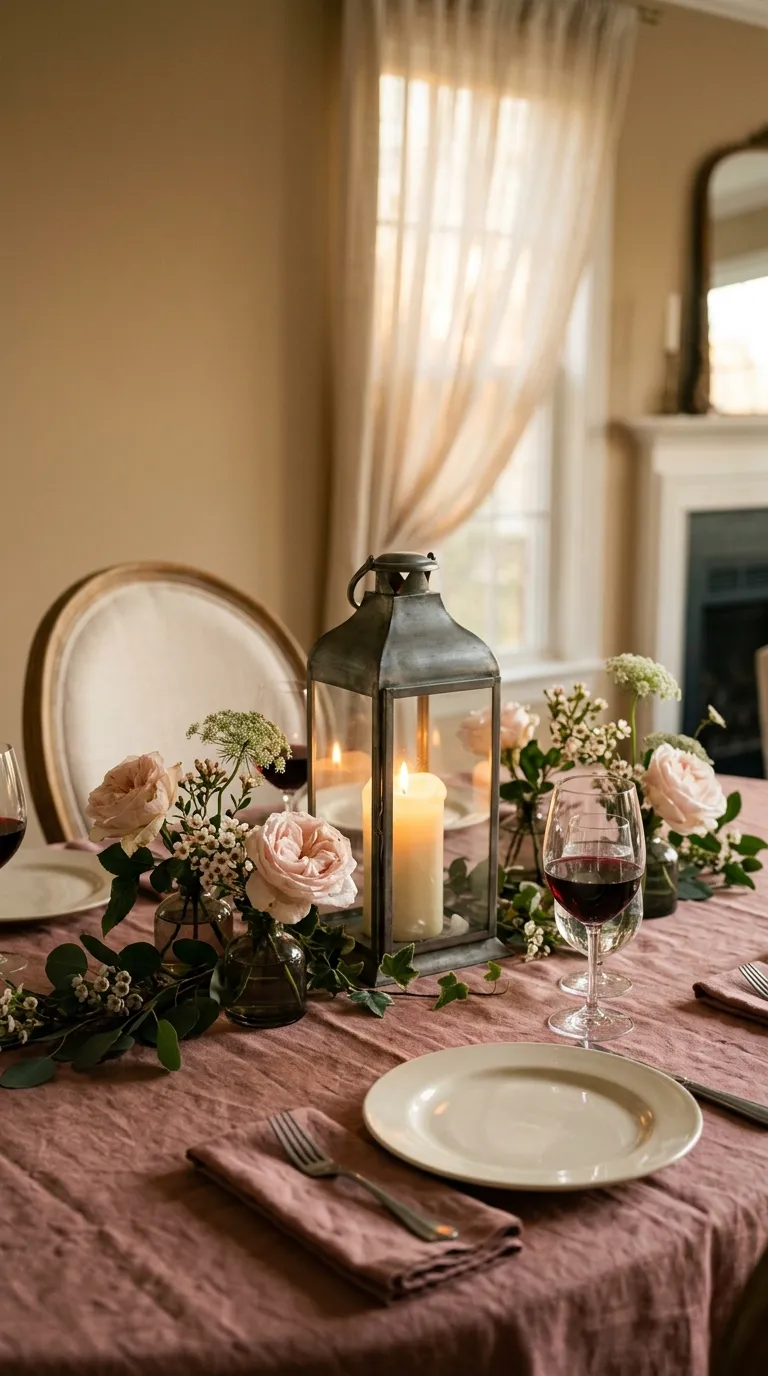
Roses and candlelight create a soft setting for date nights and special dinners. Use low rose arrangements around the lantern so the flowers frame the light instead of hiding it.
Blush, cream, and soft green keep the table romantic without making it feel overly themed. A vintage metal lantern adds just enough character to make the centerpiece feel special.
13. Layer Lanterns With White Pumpkins
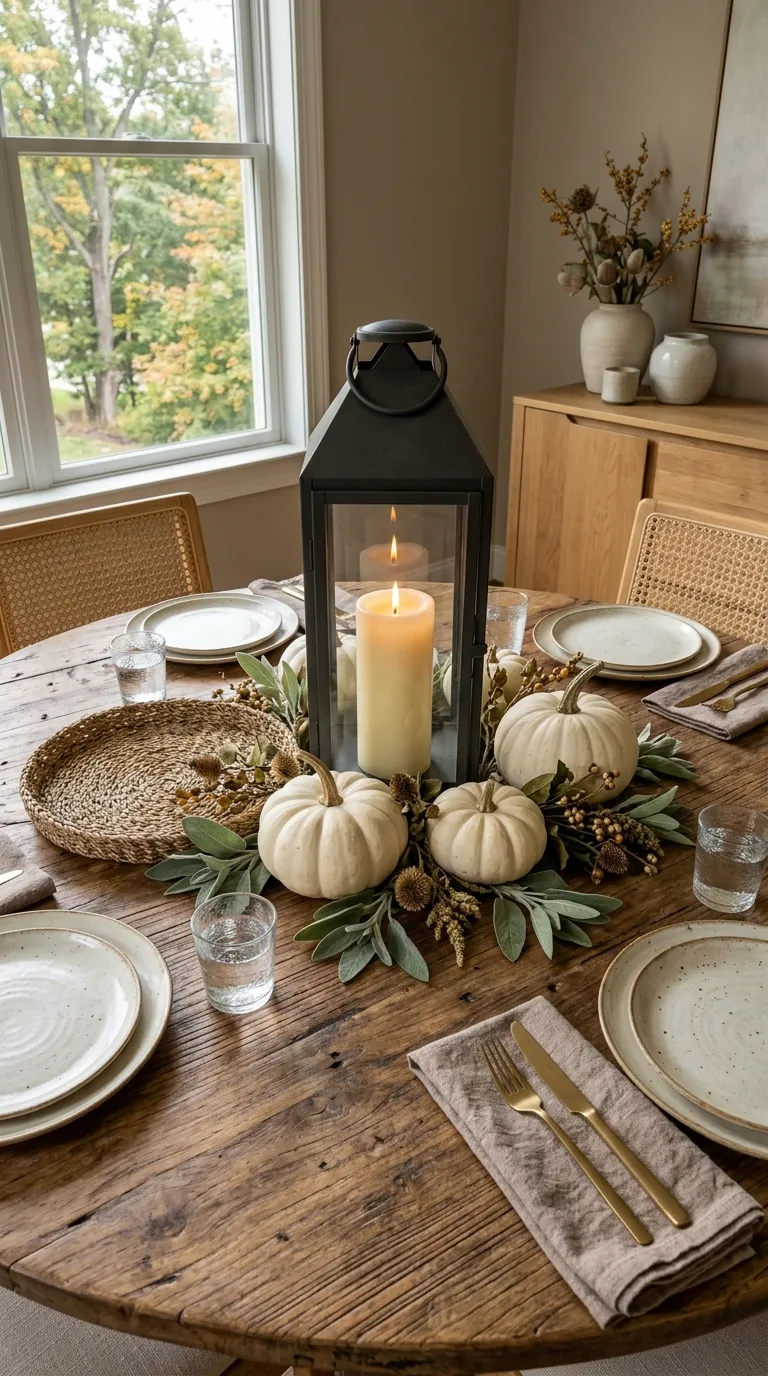
White pumpkins give fall table decor a softer look. Arrange a few small pumpkins around a lantern instead of filling the whole table with seasonal pieces.
Choose pumpkins in different sizes for a relaxed arrangement. Add muted greenery and neutral linens to keep the display useful for everyday meals as well as autumn gatherings.
14. Make a Coastal Lantern Centerpiece
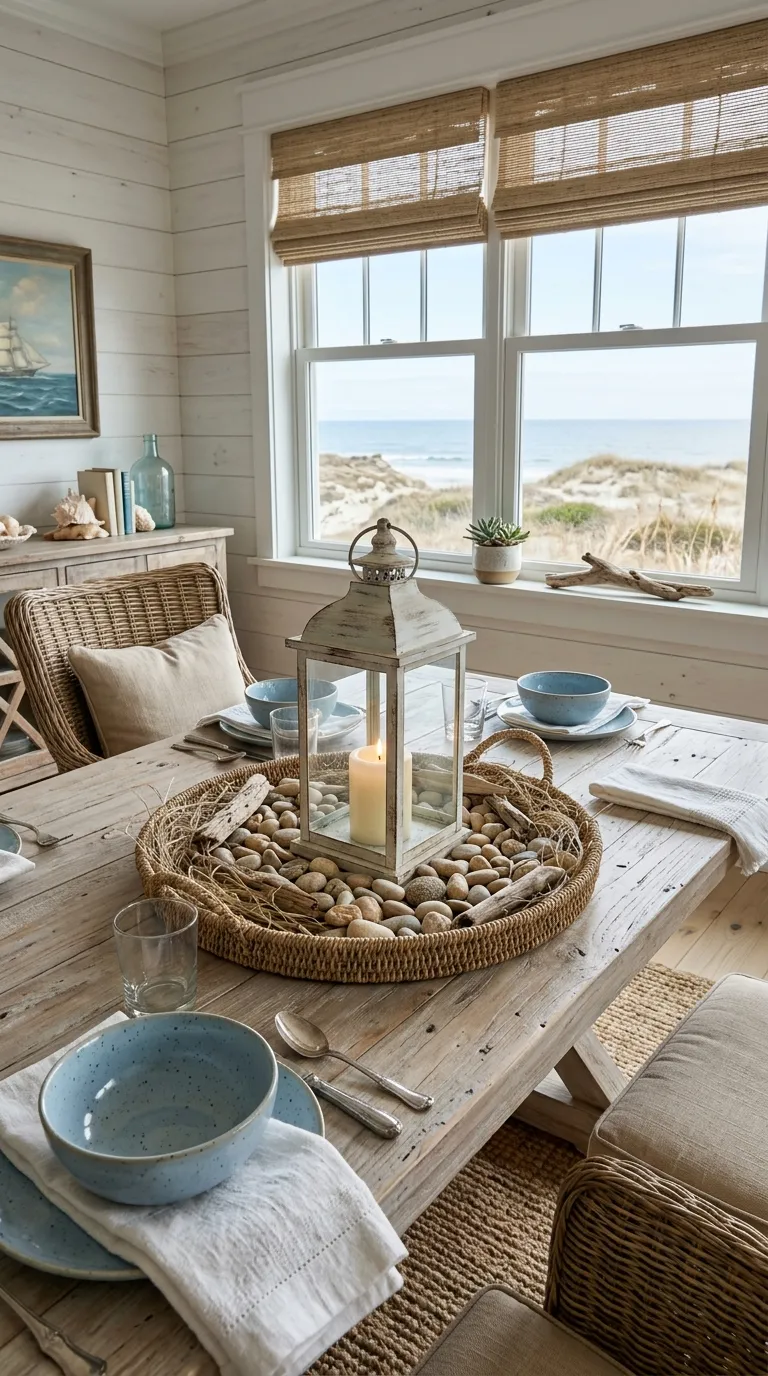
For a coastal dining room, keep the lantern finish light and slightly weathered. Natural pebbles, driftwood, sea grass, and pale blue ceramics can give the table a relaxed seaside feel.
Avoid filling the centerpiece with shells and beach-themed objects. A few natural textures usually look more polished and keep the dining table suitable for daily use.
15. Frame a Lantern With Fruit and Foliage
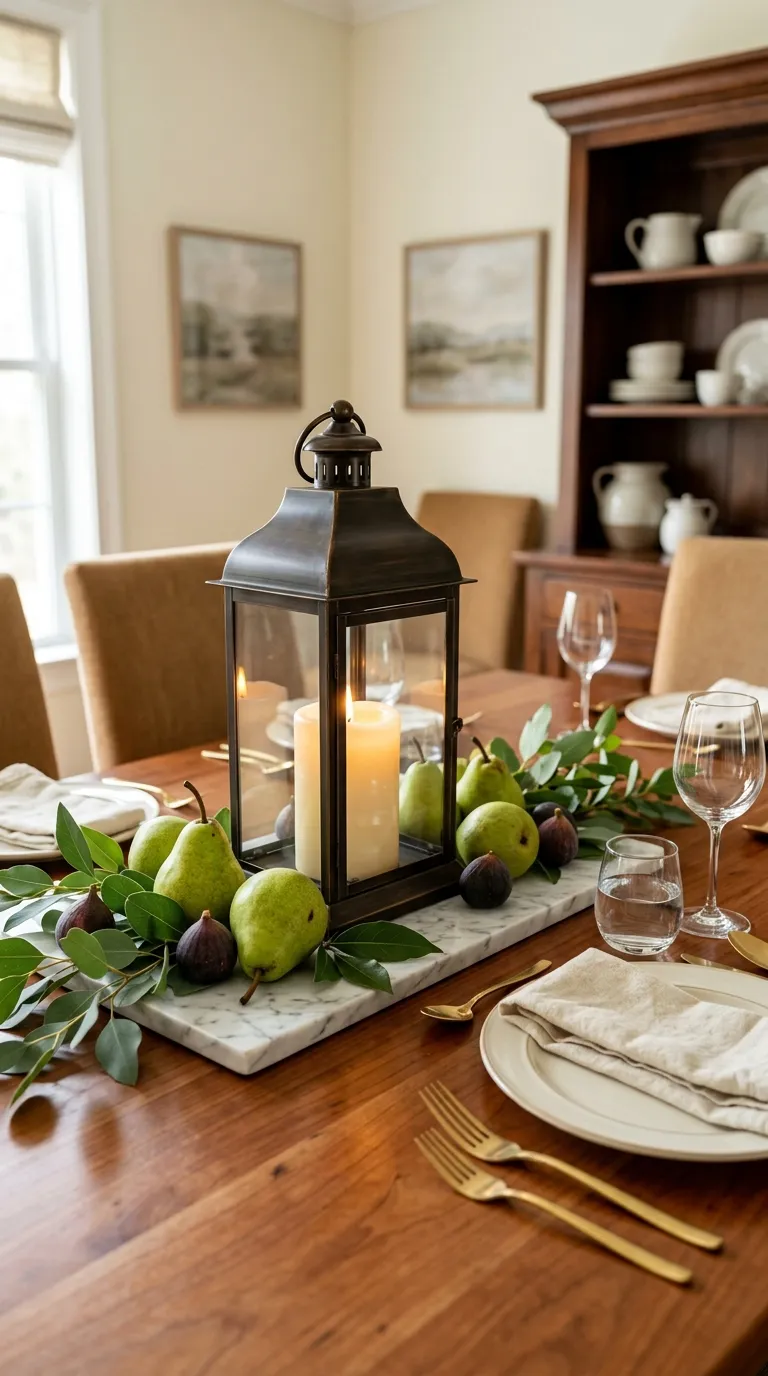
Fresh fruit can give lantern decor a welcoming, collected feel. Green pears, apples, figs, or seasonal citrus work well when placed around the lantern on a tray or board.
Add loose foliage to connect the fruit with the candlelight. This style suits dining tables where you want the centerpiece to feel useful as well as decorative, especially during brunches or casual dinners.
You might also enjoy Stunning Lantern Decor Ideas.
16. Give a Lantern a Christmas Table Setting
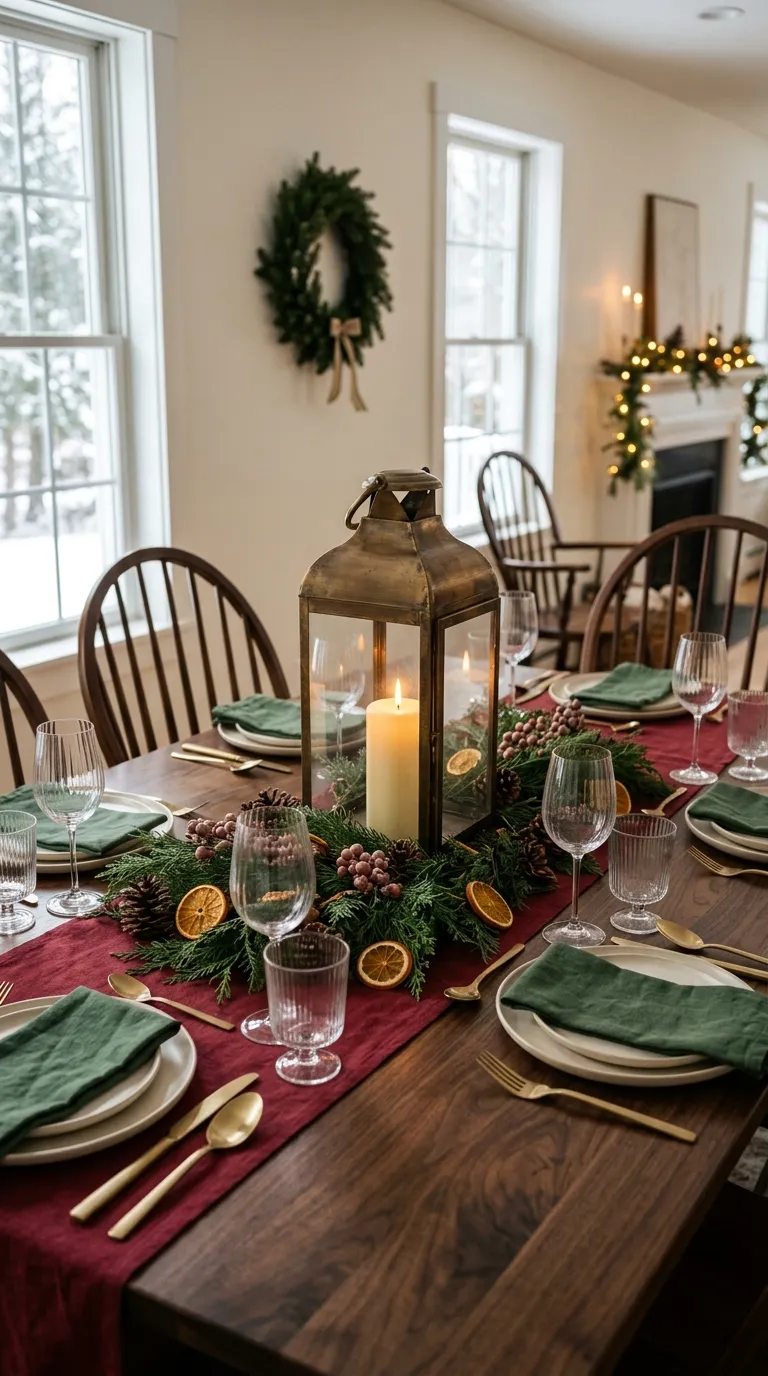
Christmas lantern centerpieces work best when the seasonal pieces stay close to the table. Cedar, pinecones, berries, and dried orange slices can frame the lantern without blocking conversation across the table.
Choose one main holiday color alongside greenery and warm neutrals. Cranberry, forest green, brass, and cream create a festive setting that still feels polished and comfortable.
17. Use Lanterns on a Round Dining Table
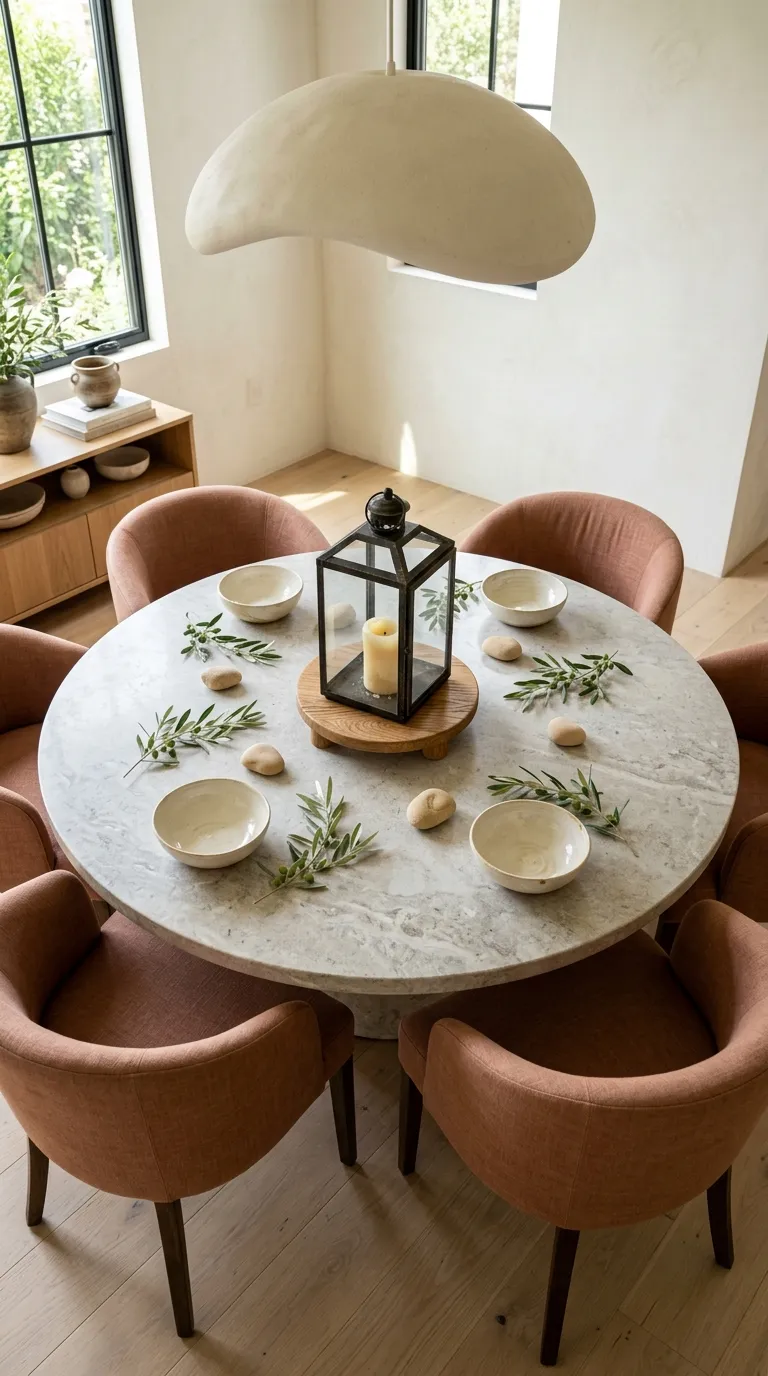
Round tables don’t need a long centerpiece arrangement. One lantern placed near the center can anchor the table while a few small accents create a gentle circle around it.
Leave enough open space for plates and serving bowls. If the lantern is tall, keep the surrounding pieces low so everyone can see comfortably from every seat.
18. Layer Lanterns With Soft Neutral Textiles
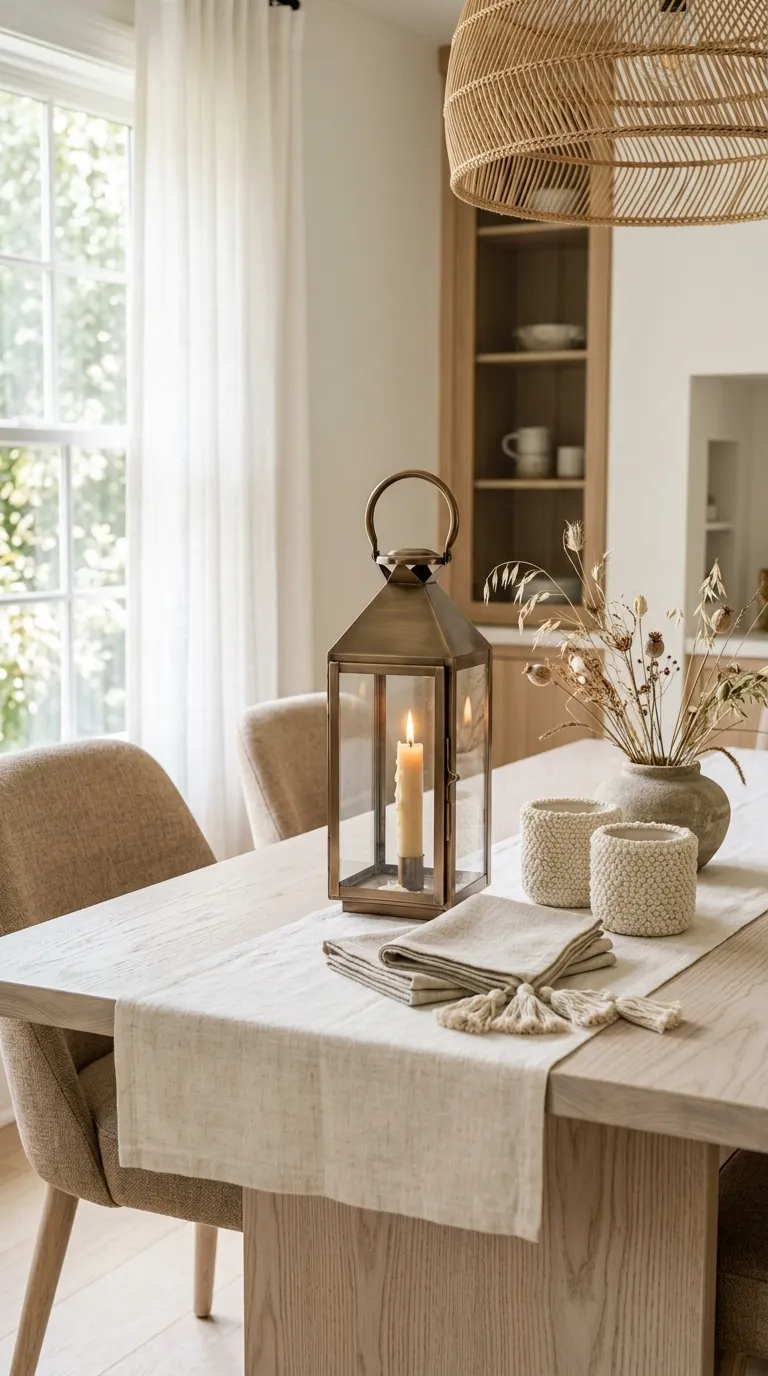
Soft textiles can make a lantern arrangement feel more comfortable and relaxed. Start with a linen runner, then repeat its color in napkins, placemats, or nearby fabric details.
Neutral shades are easy to live with throughout the year. Cream, oatmeal, beige, soft brown, and muted bronze create a calm dining table that works with many room styles.
19. Add a Lantern to a Farmhouse Centerpiece
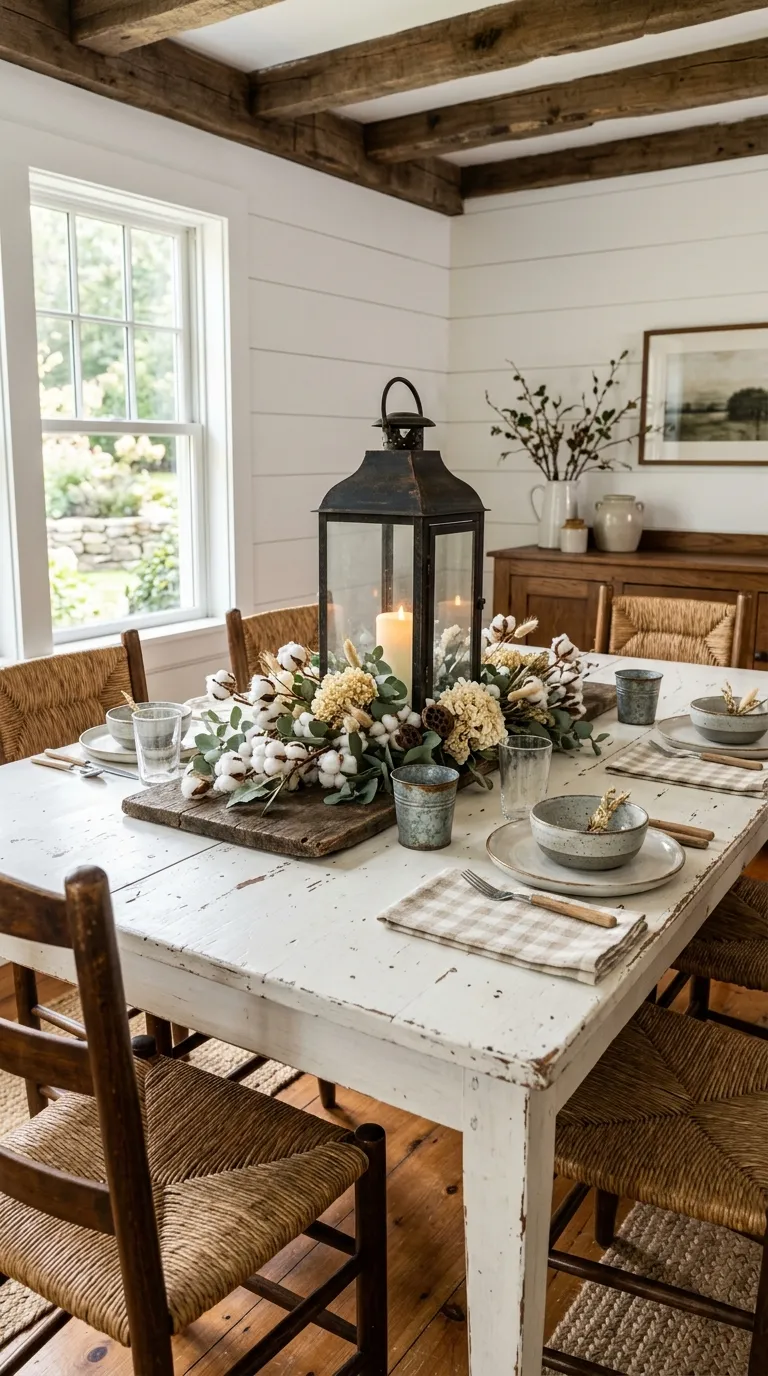
Farmhouse dining rooms pair well with lanterns that have worn metal or painted finishes. Add cotton stems, eucalyptus, dried flowers, or other natural elements to keep the centerpiece casual.
A wooden board underneath the lantern helps group small pieces together. Finish the setting with stoneware, linen, galvanized accents, or woven chairs for a comfortable farmhouse look.
20. Arrange Lanterns With Dried Flowers
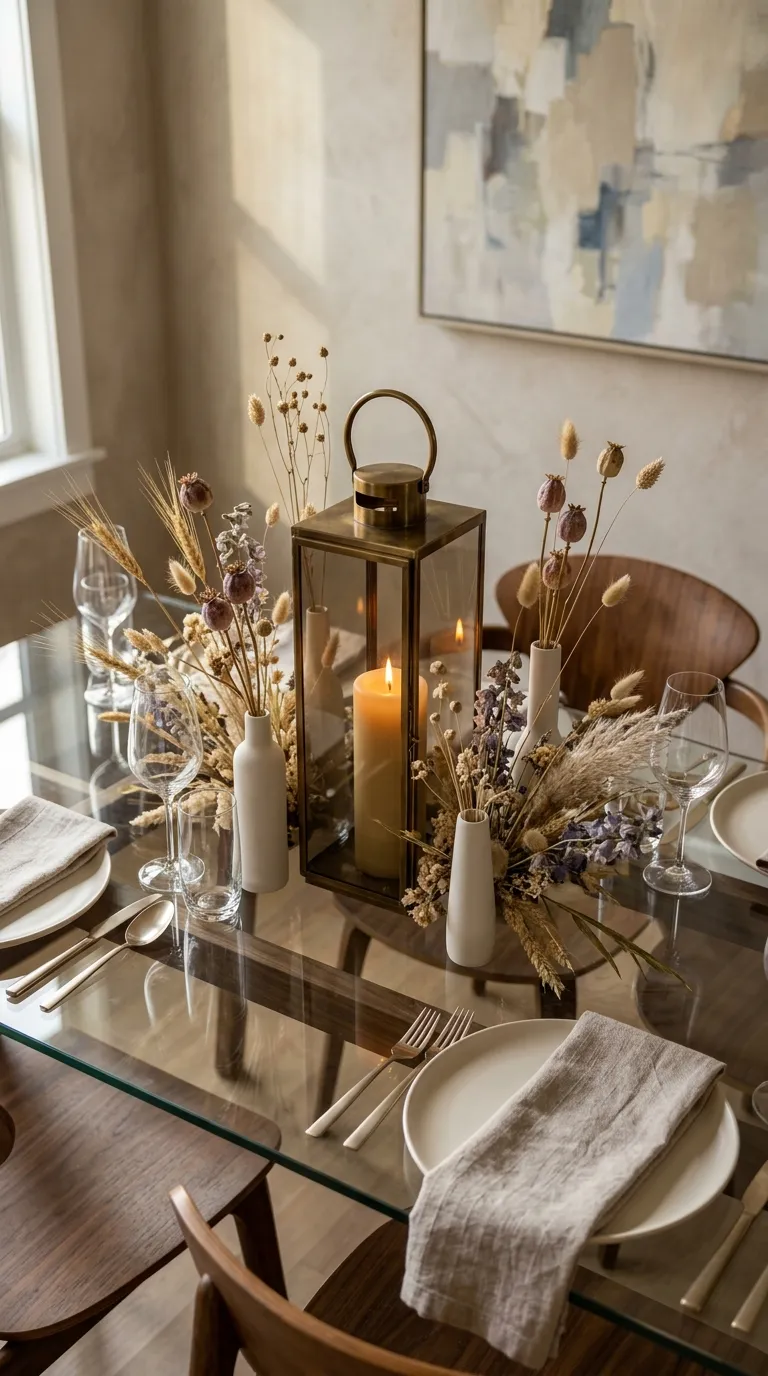
Dried flowers are useful when you want a centerpiece that lasts beyond one dinner. Their muted tones pair easily with metal lanterns and don’t require water or daily care.
Choose a few stem types rather than a crowded bouquet. Let the dried flowers sit around the lantern in loose clusters, keeping the overall arrangement low and easy to move.
21. Create a Simple Summer Lantern Centerpiece
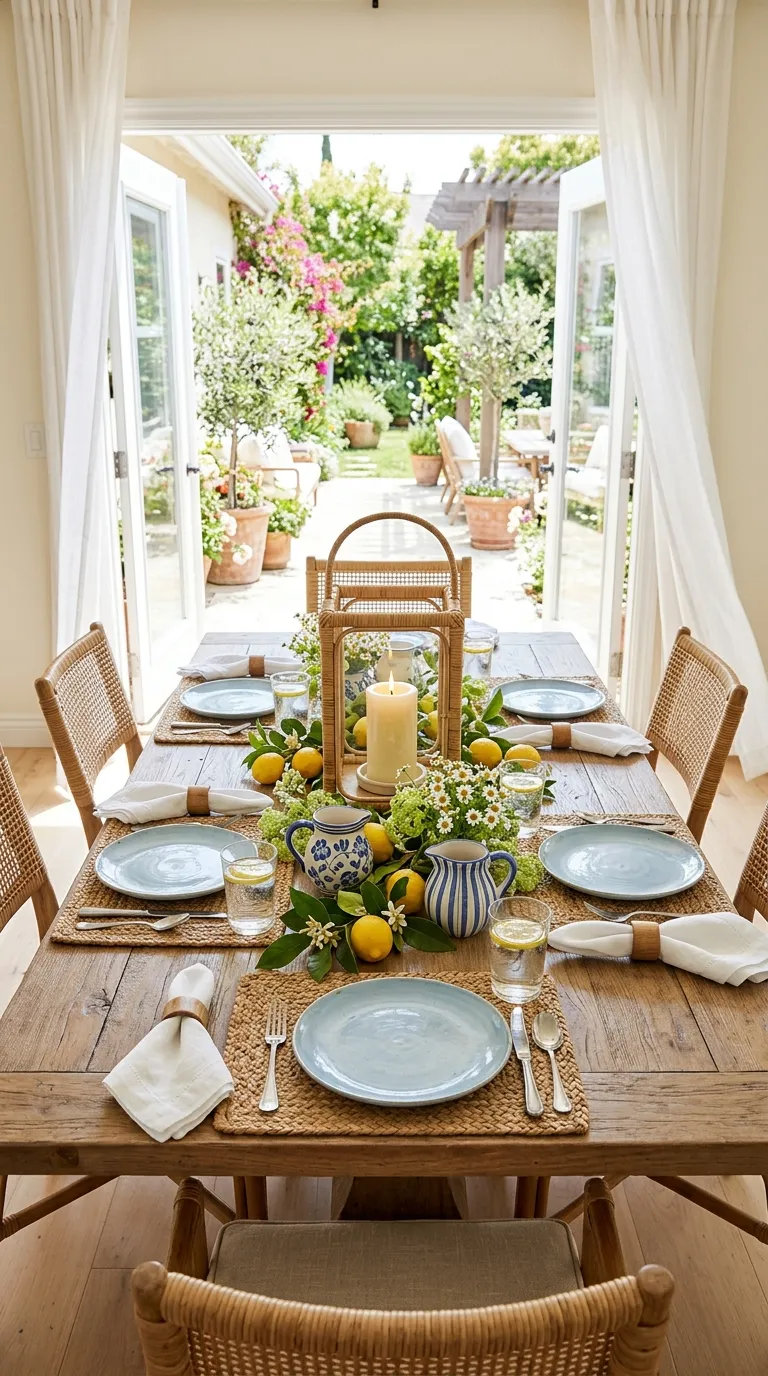
Summer tables call for lighter materials and fresh color. A rattan or pale wood lantern paired with lemons, white flowers, and leafy branches creates a relaxed centerpiece for warm-weather meals.
Keep the arrangement fresh and unfussy. Blue-and-white ceramics, crisp linen, and natural woven textures can make the table feel ready for brunch, lunch, or an evening meal outdoors.
22. Style a Lantern With Fresh Greenery and Candles
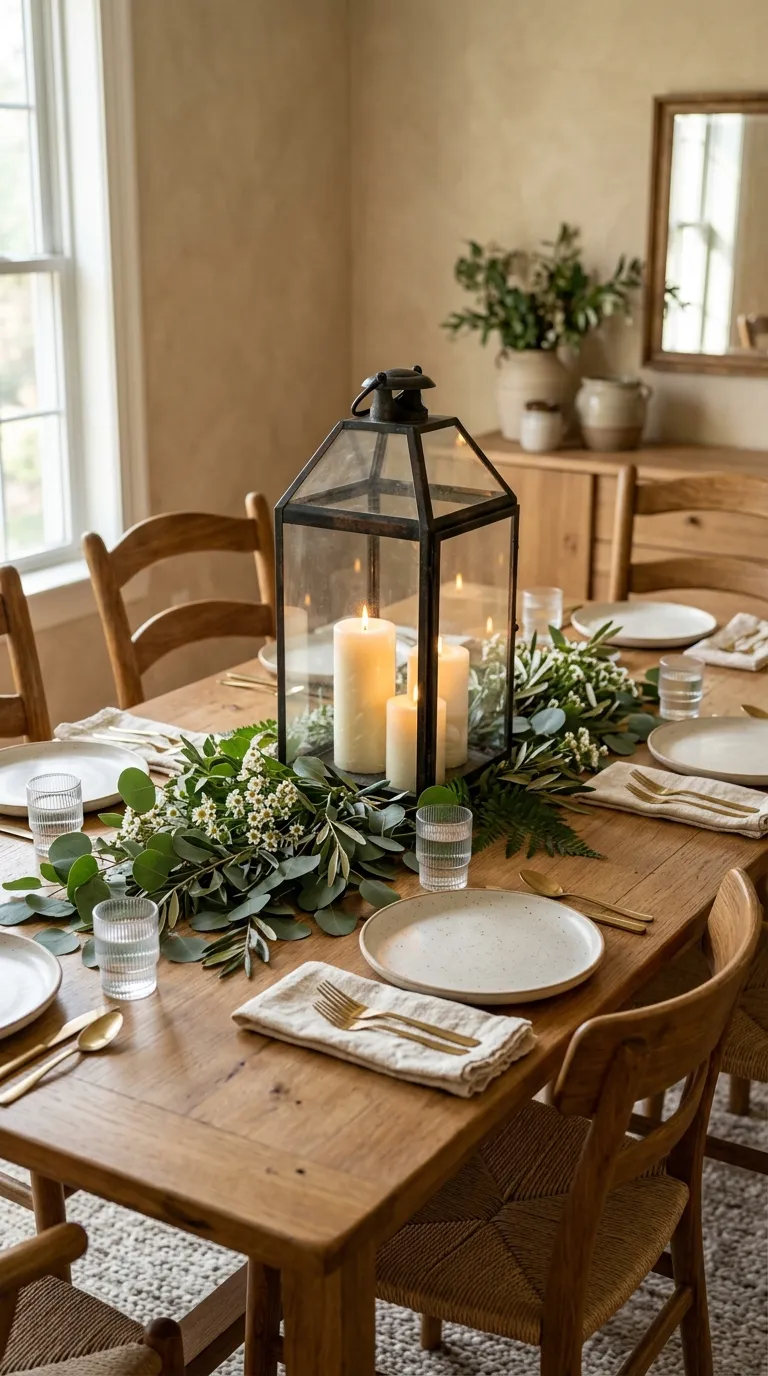
Fresh greenery and candles make a balanced dining table centerpiece. Use one larger lantern as the main feature, then arrange leafy stems around its base so the display feels full without taking over the table.
Choose greenery with different shapes and textures for a natural look. Eucalyptus adds soft volume, olive branches bring graceful lines, and small white flowers add a simple finishing touch around the warm candlelight.
To Sum It Up
The best lantern centerpiece ideas for dining table settings start with the table itself. Look at its size, finish, shape, and the amount of space needed for plates before choosing your lantern and supporting decor.
From fresh greenery and seasonal flowers to pumpkins, fruit, dried stems, and simple candles, small changes can give the same lantern a new look throughout the year. Start with one focal piece, add a few supporting textures, and leave enough open space for comfortable dining.
Olivia Carter
Olivia Carter is the founder of Lady Home Decor and a passionate home decor expert. She shares practical, stylish ideas to help homeowners create beautiful, comfortable, and welcoming spaces. Her expertise covers bedrooms, kitchens, living rooms, bathrooms, and small-space decorating.