25 Genius Dining Room Table Decor Ideas That Feel Effortless

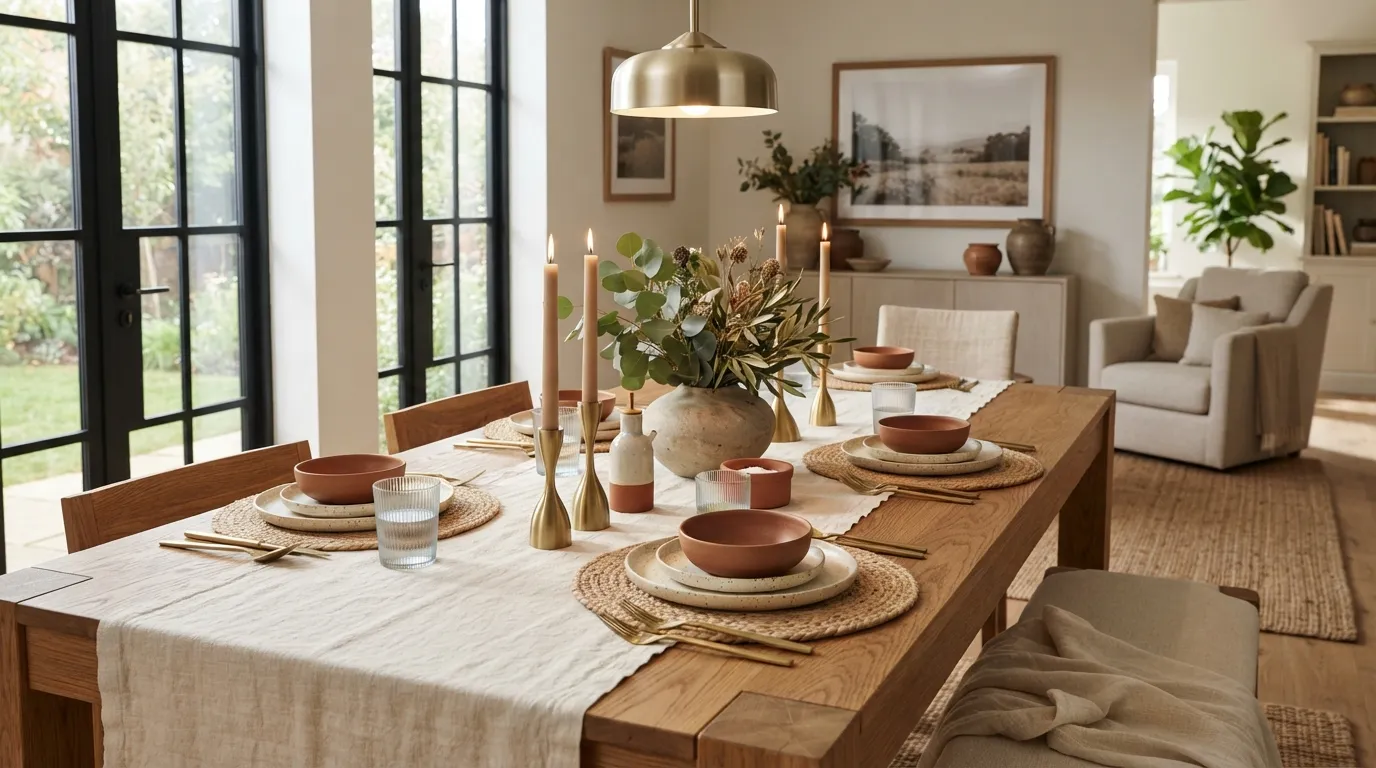
Dining room tables can set the mood before dinner even starts. With the right mix of texture, height, and color, dining room table decor ideas can make an everyday space feel pulled together without making the table hard to use. The secret is choosing pieces that look intentional while leaving enough room for plates, serving dishes, and conversation.
You don’t need a crowded centerpiece or a table full of matching accessories. A single vase, a linen runner, a few candles, or a bowl of seasonal fruit can create a strong focal point. These ideas show how to build an inviting table with simple layers, useful pieces, and finishes that suit both casual meals and special gatherings.
Low Greenery Centerpiece
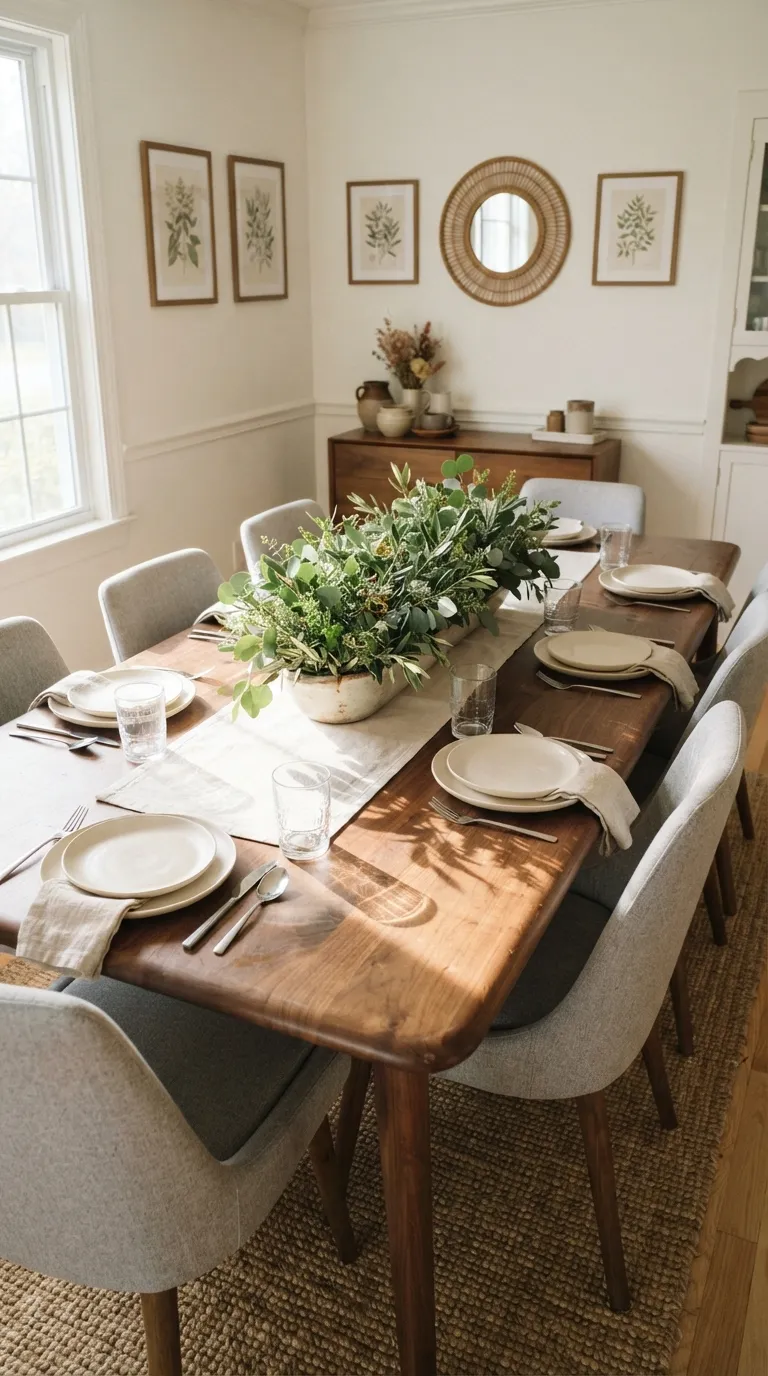
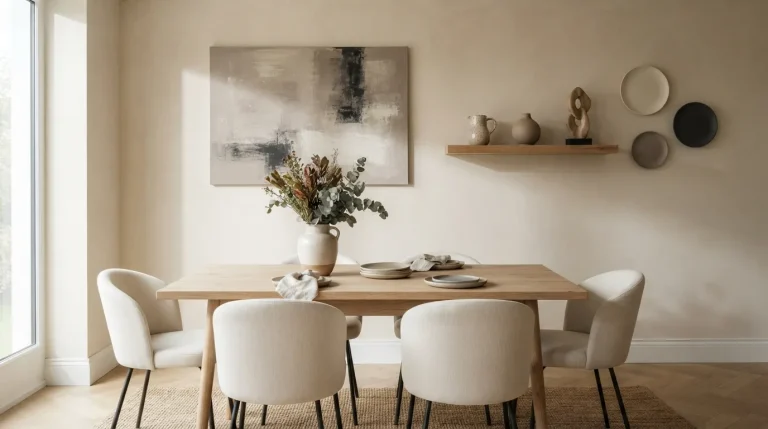
Low greenery works well when you want a centerpiece that doesn’t block the view. Place eucalyptus, olive branches, or another leafy arrangement inside a long ceramic vessel, then keep the shape loose rather than perfectly arranged.
For everyday dining room table decor ideas, this setup is easy to maintain and simple to adjust. Swap a few stems when they dry, or replace the greenery with fresh branches when the season changes.
Layered Linen Runner
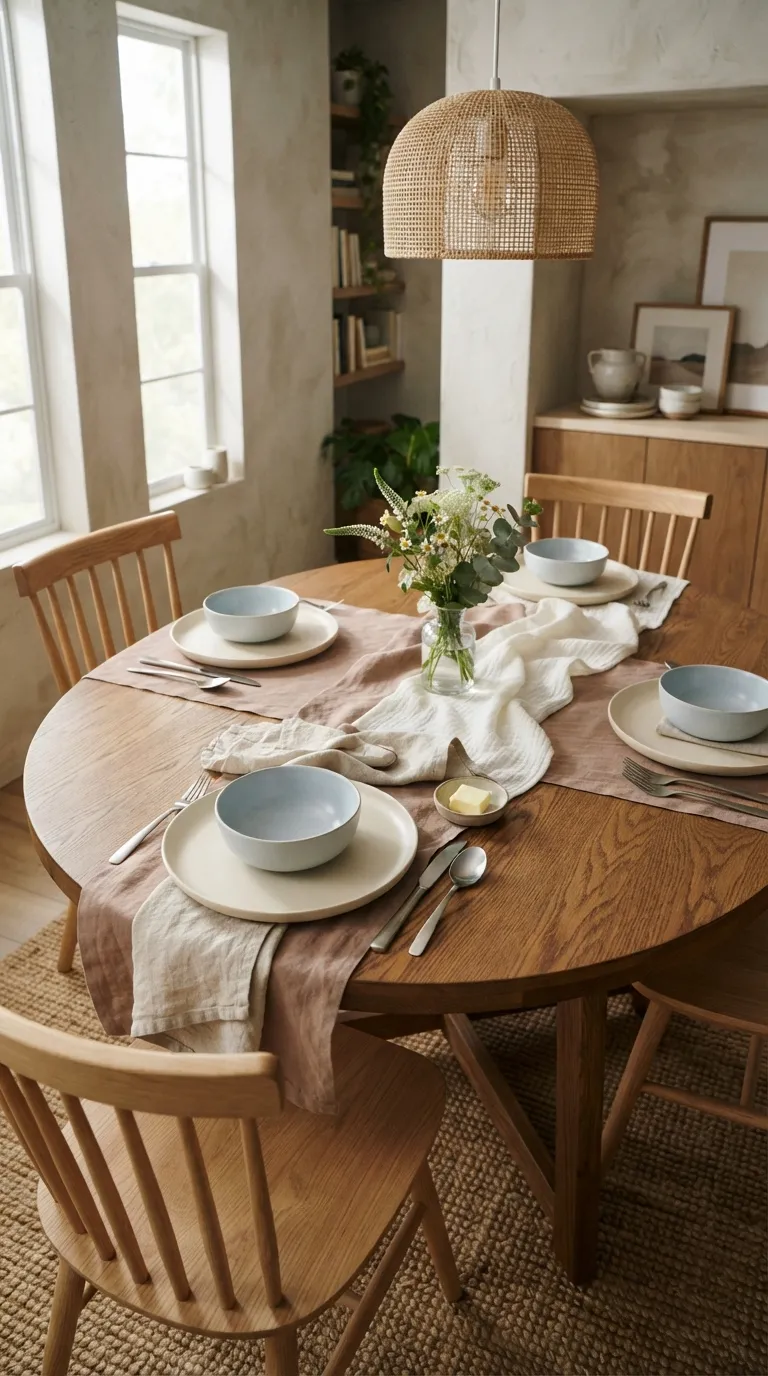
A linen runner gives a table a finished base without covering its entire surface. Try two fabrics with slightly different weights, then let the edges fall naturally instead of creating stiff lines.
This approach suits both casual and formal dining. Choose earthy tones for a cozy setting, or use ivory and pale gray when you want the table to feel lighter and cleaner.
Oversized Ceramic Bowl
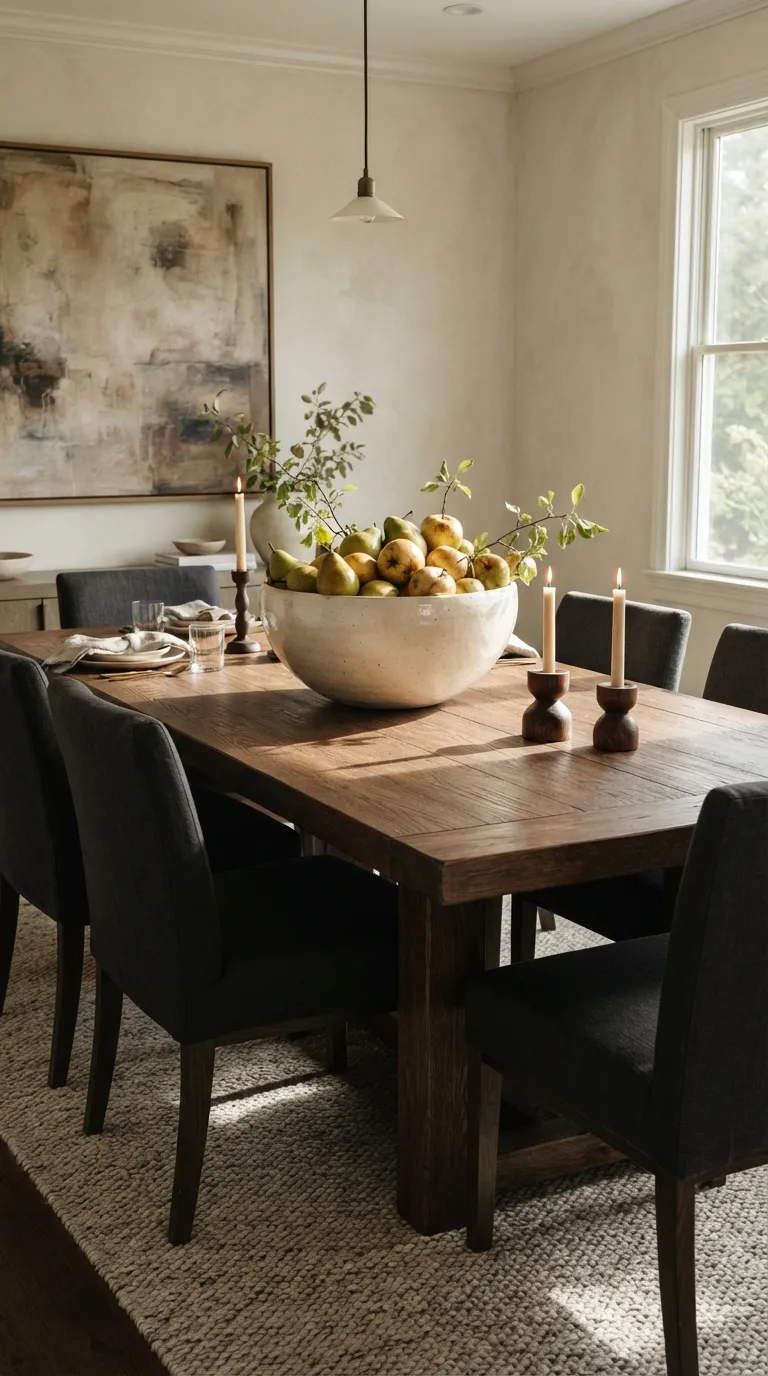
A large bowl can carry the whole centerpiece on its own. Fill it with fruit for daily use, or leave it mostly empty when you prefer a quieter look.
Pick a bowl with visible handmade character. Small glaze variations and uneven edges make the table feel relaxed rather than overly styled.
Brass Candle Trio
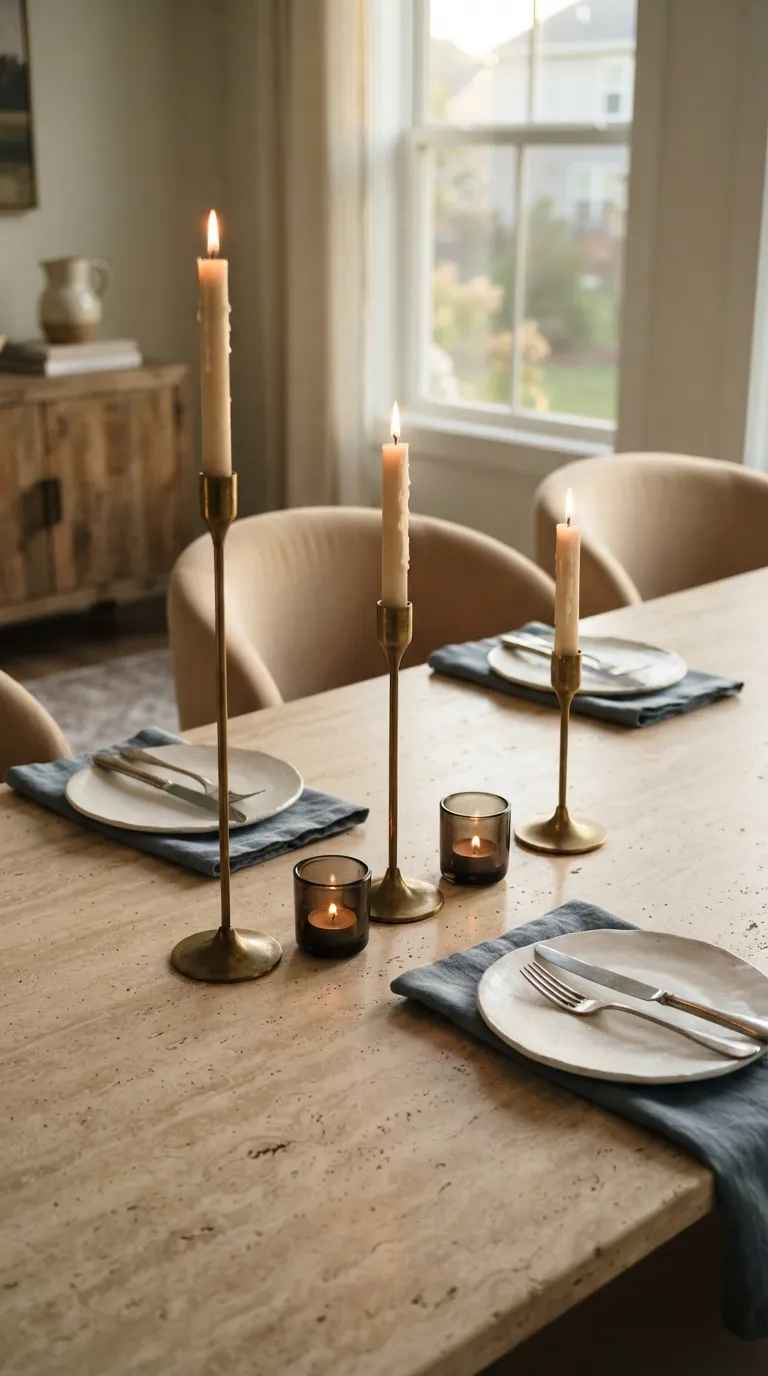
Three candleholders can add height without making the centerpiece complicated. Use different heights and keep the spacing loose so the arrangement feels natural.
Brass pairs especially well with stone, wood, and neutral ceramics. For a softer result, choose matte or aged brass instead of a highly polished finish.
Fresh Fruit Display
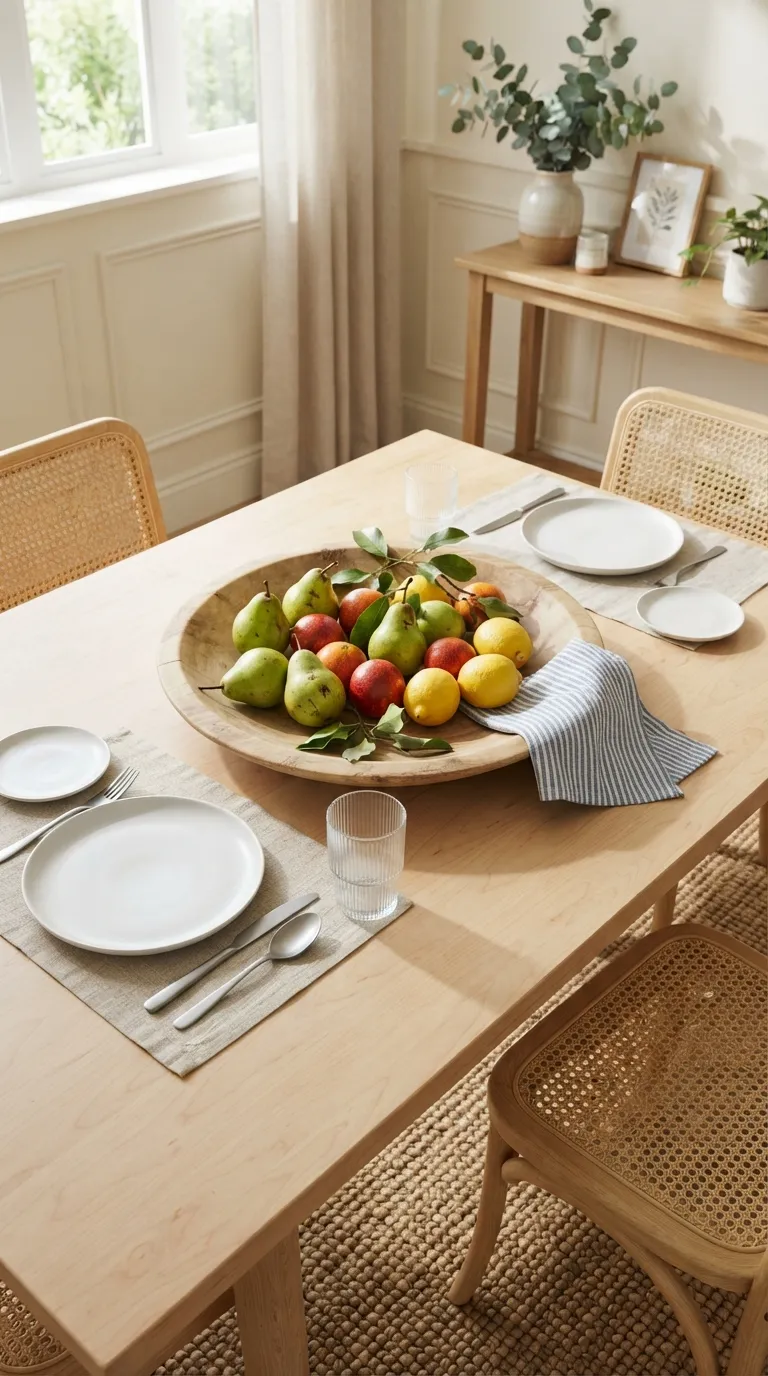
Fresh fruit brings color and function to the dining table. A shallow tray makes the arrangement easy to move when you need more space for serving dishes.
Mix different shapes instead of arranging every piece in a perfect pattern. The small gaps and natural color changes make the display feel ready for real life.
Sculptural Wood Bowl
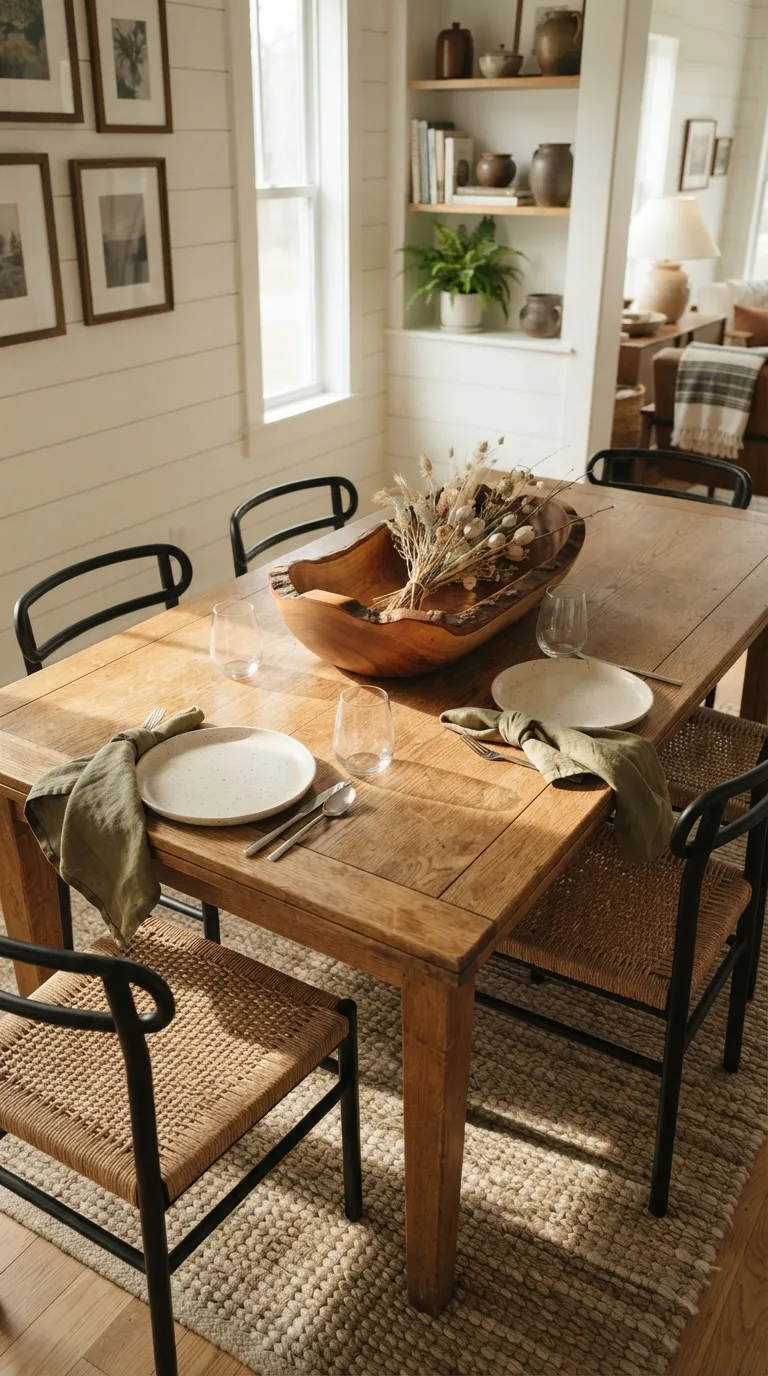
A sculptural bowl adds shape even when it holds very little. Look for carved wood with an irregular rim or visible grain for a piece that feels decorative on its own.
Keep the rest of the table quiet. Cream ceramics and muted linens let the bowl become the visual anchor without making the arrangement feel busy.
Single Statement Vase
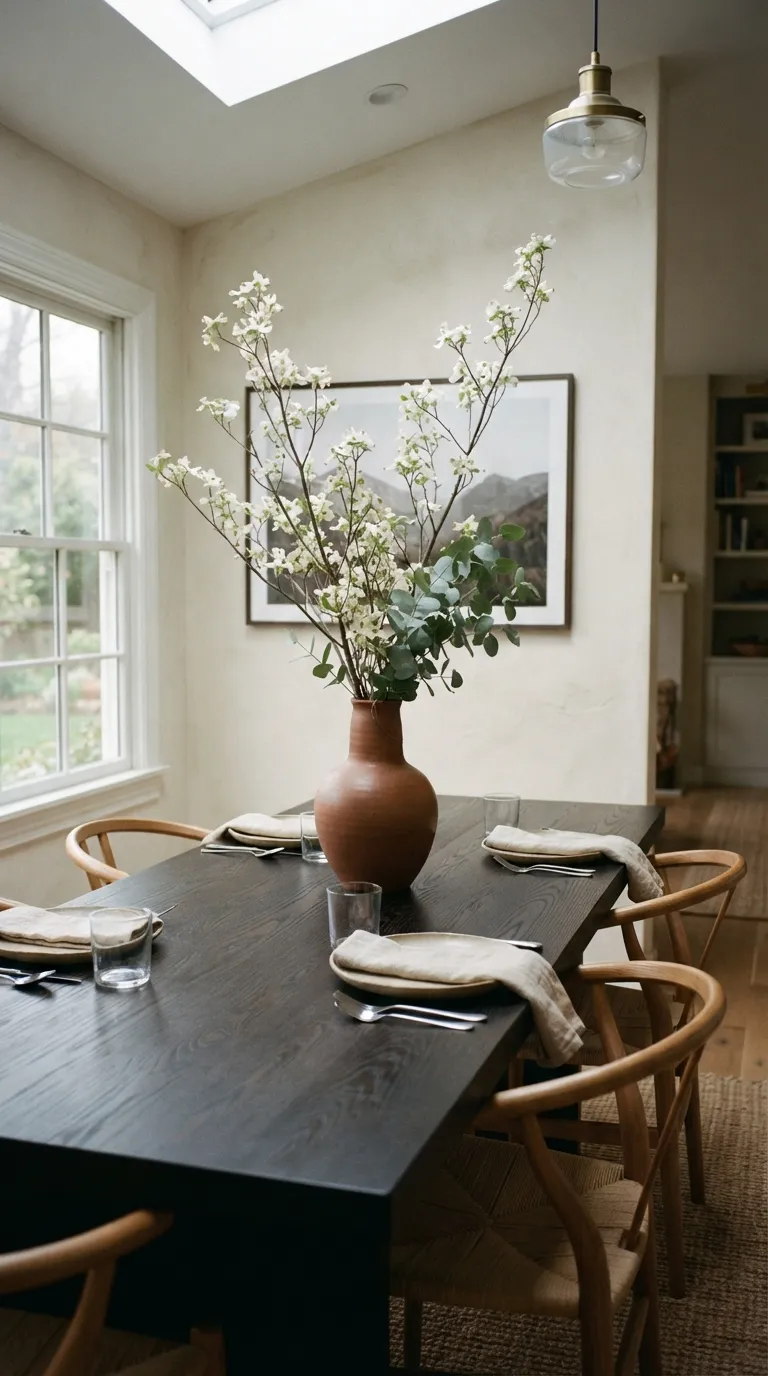
One tall vase can make a strong statement without filling the table. Choose a vessel with a distinctive shape, then use a small number of branches for an airy profile.
Place it slightly off-center when the table is rectangular. That small change creates movement while keeping the setting easy to use.
Stone Tray Arrangement
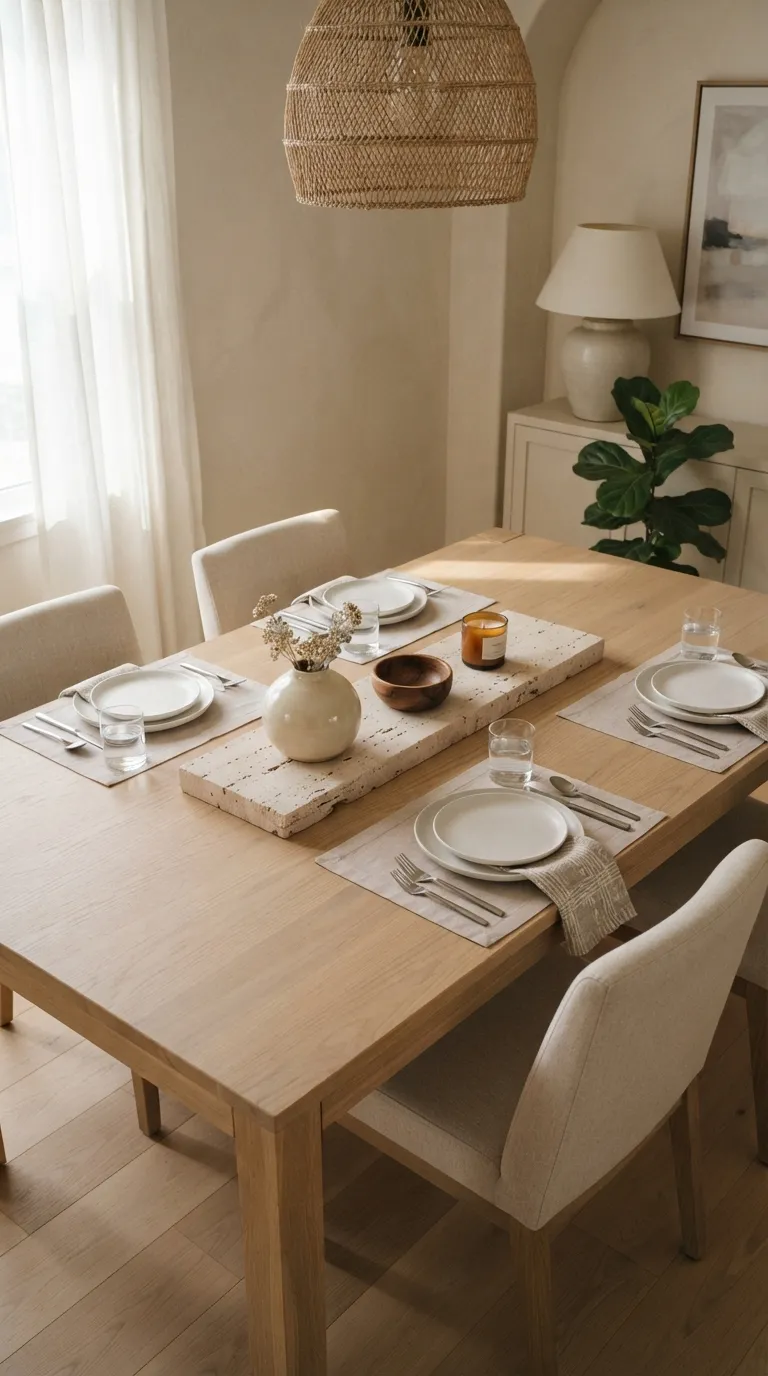
A tray gives small objects a visual home. Grouping pieces on one surface makes the table look tidy while allowing you to move the whole arrangement before dinner.
Stone works particularly well with warm wood. Add one dark object to create contrast, then leave plenty of exposed tabletop around the tray.
Blue Ceramic Collection
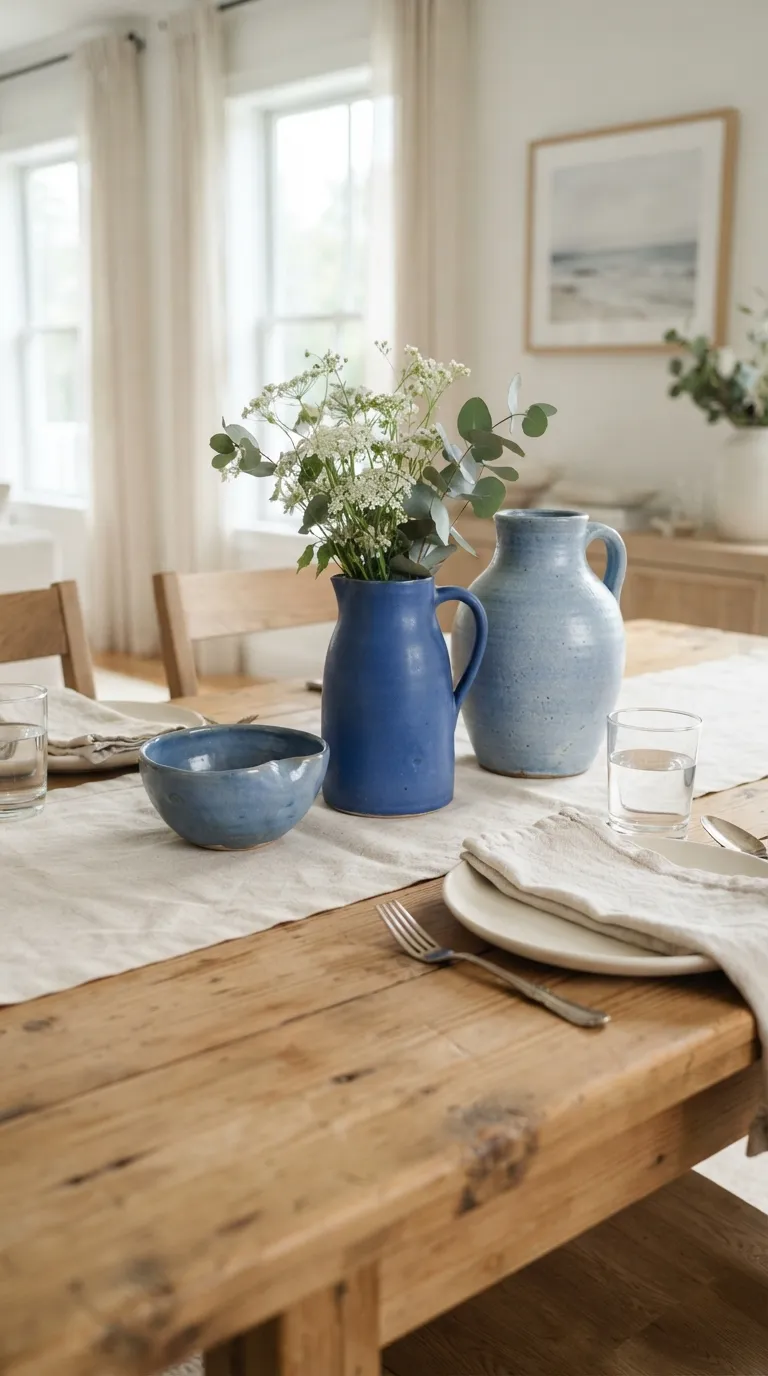
A small ceramic collection can give the table a clear color story. Use three pieces with different heights so the arrangement has shape without needing many accessories.
Blue looks especially fresh against cream and natural wood. Keep the dishes simple so the vessels remain the main visual detail.
Woven Placemats
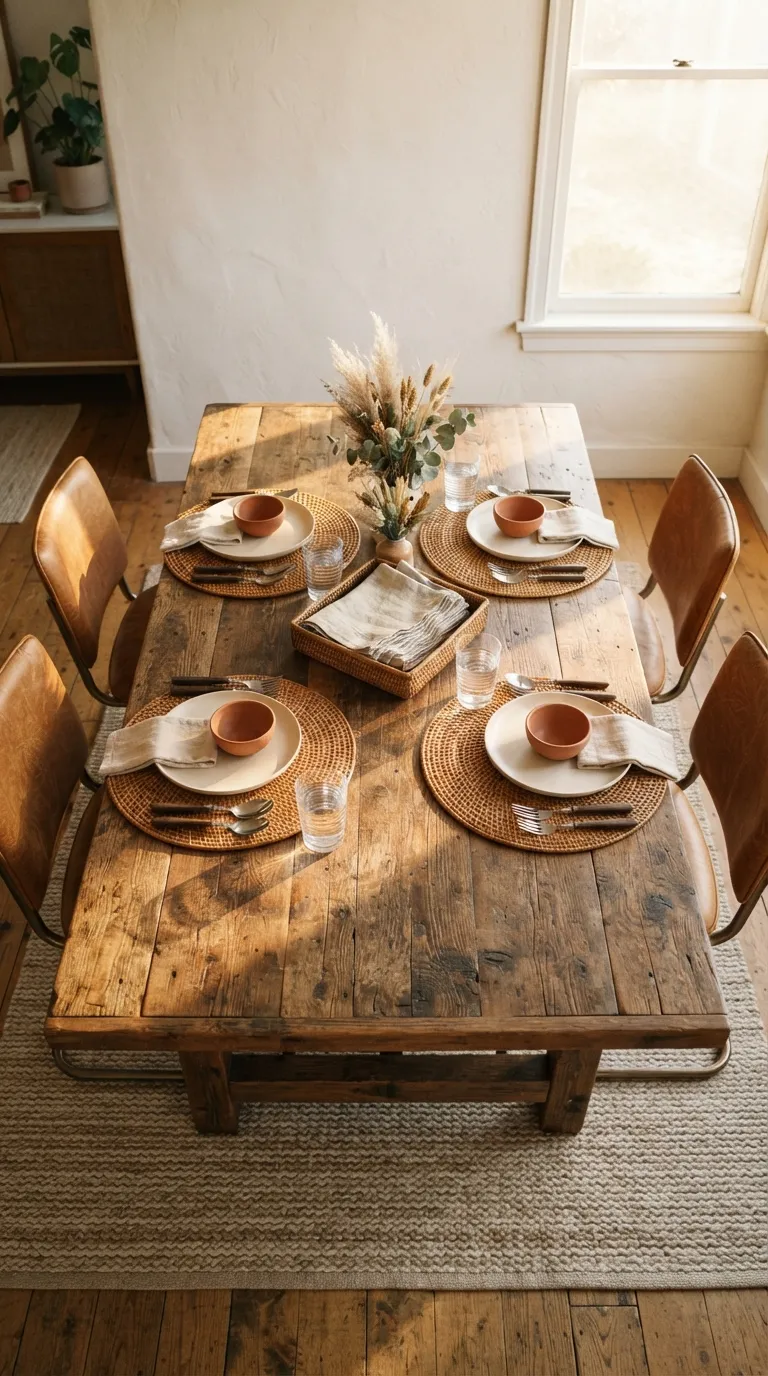
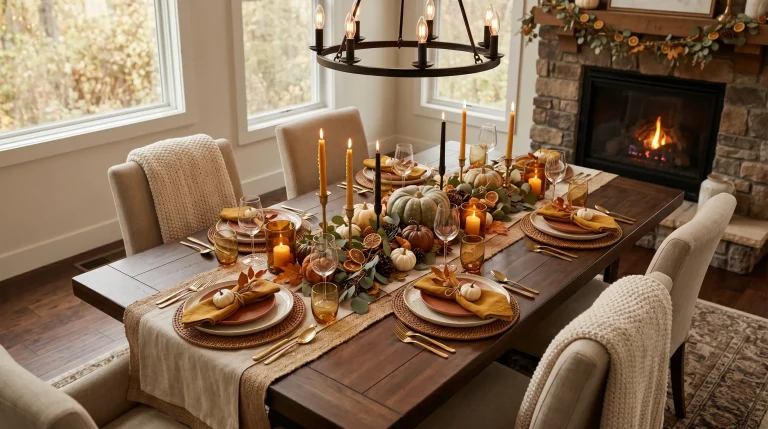
Woven placemats add texture while giving every place setting a clear boundary. Round versions work well on rectangular tables because they soften the straight lines.
Pair them with plain ceramics and natural napkins. The woven surface already brings plenty of visual interest, so the rest can stay simple.
Mini Flower Bud Vases
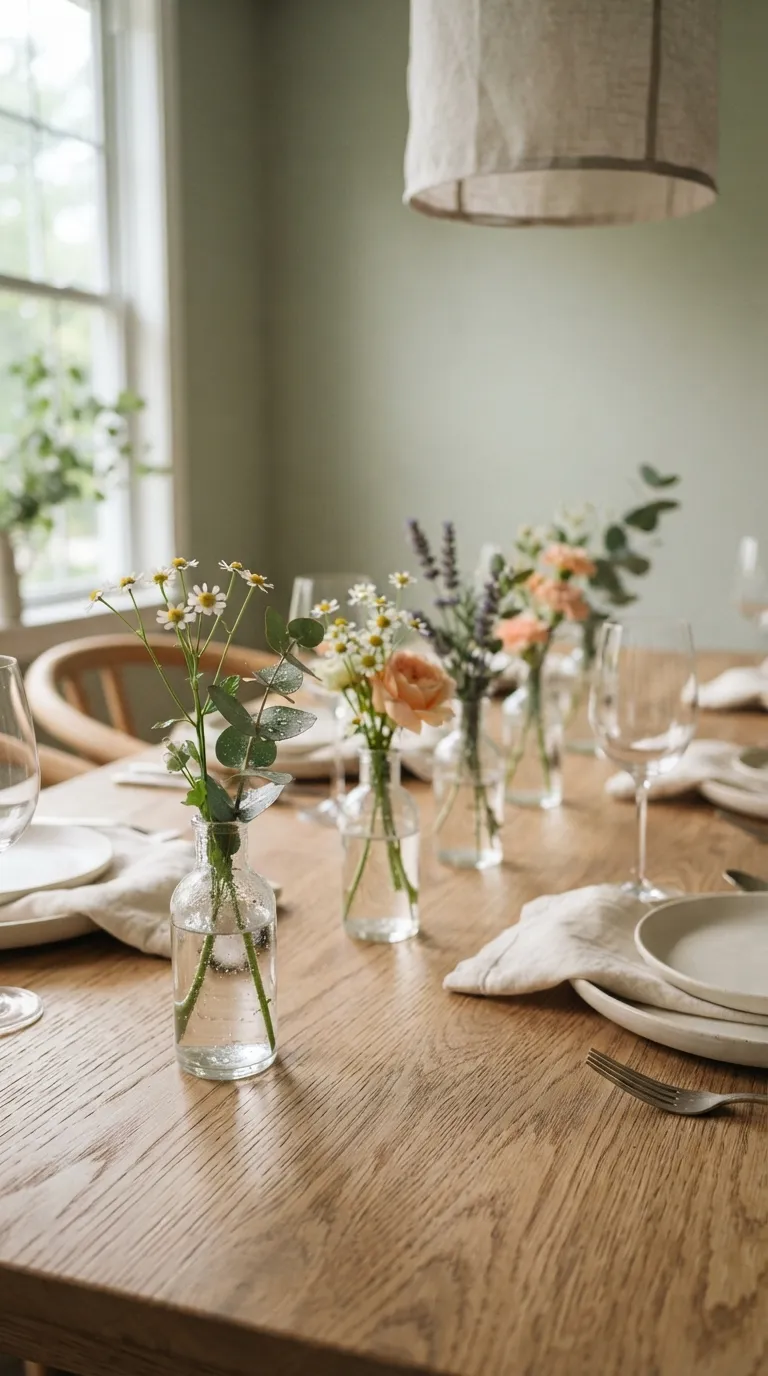
Small bud vases are perfect when you want flowers without one large arrangement. Spread them down the center so each guest gets a little view of the blooms.
Use mismatched vases for a relaxed look. Keeping the flowers in a similar color family will make the mix feel connected.
Neutral Candle Cluster
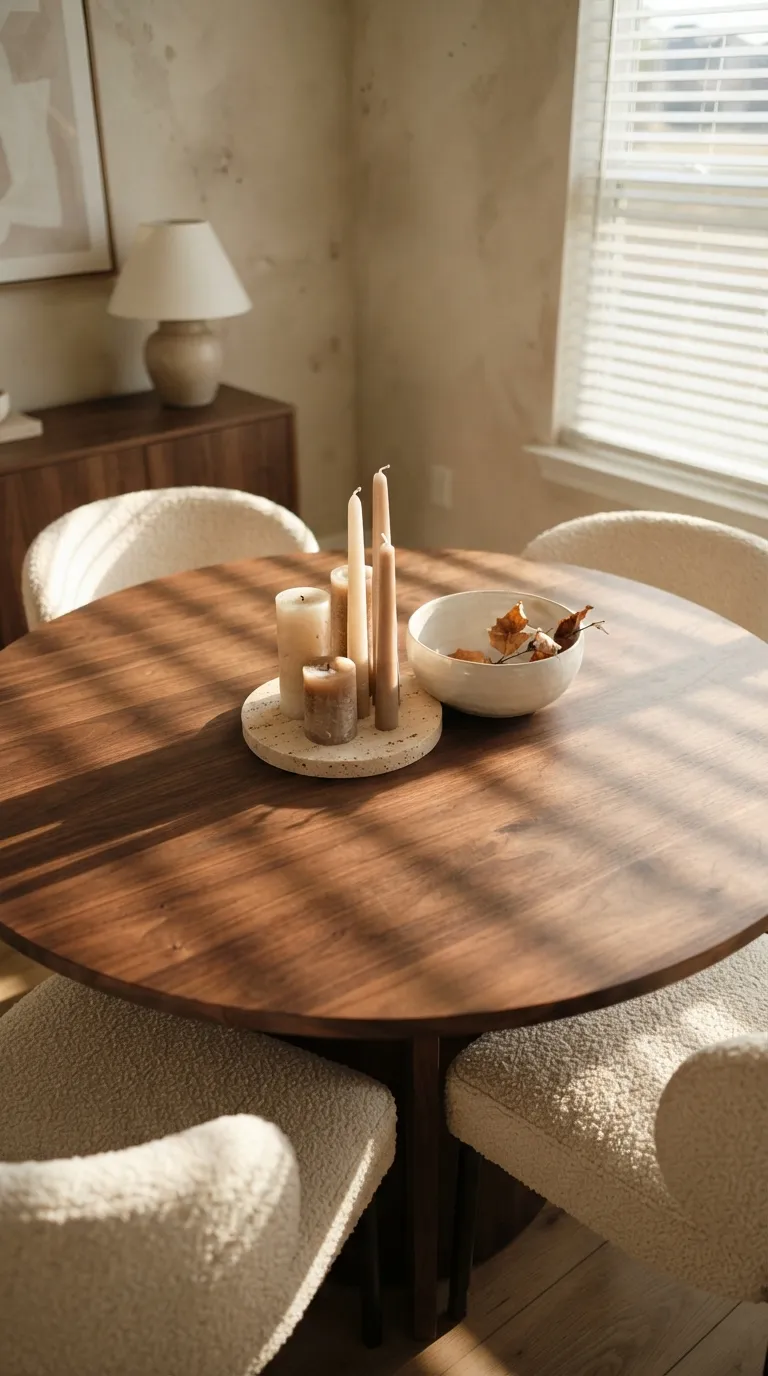
A candle cluster creates warmth with very little effort. Keep the colors close together and vary the heights to avoid a flat arrangement.
A stone base helps contain the group. When dinner starts, you can lift the entire cluster away in one move.
Seasonal Branches
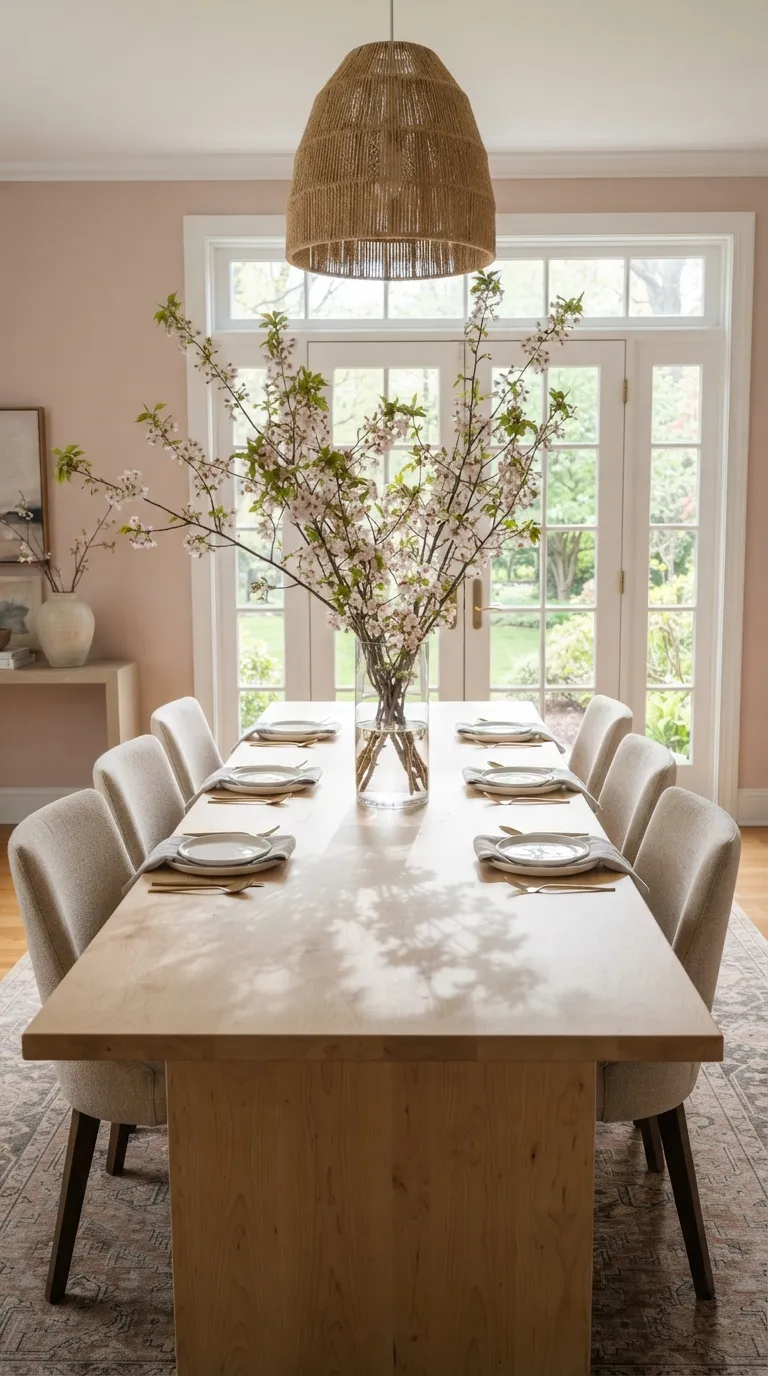
Seasonal branches give your table an easy way to reflect the time of year. Spring blossoms, summer greenery, autumn branches, or winter evergreens can all work in the same basic vessel.
Choose branches with an open shape rather than a dense mass. This keeps the centerpiece graceful and leaves plenty of visual space around it.
Vintage Silver Pieces
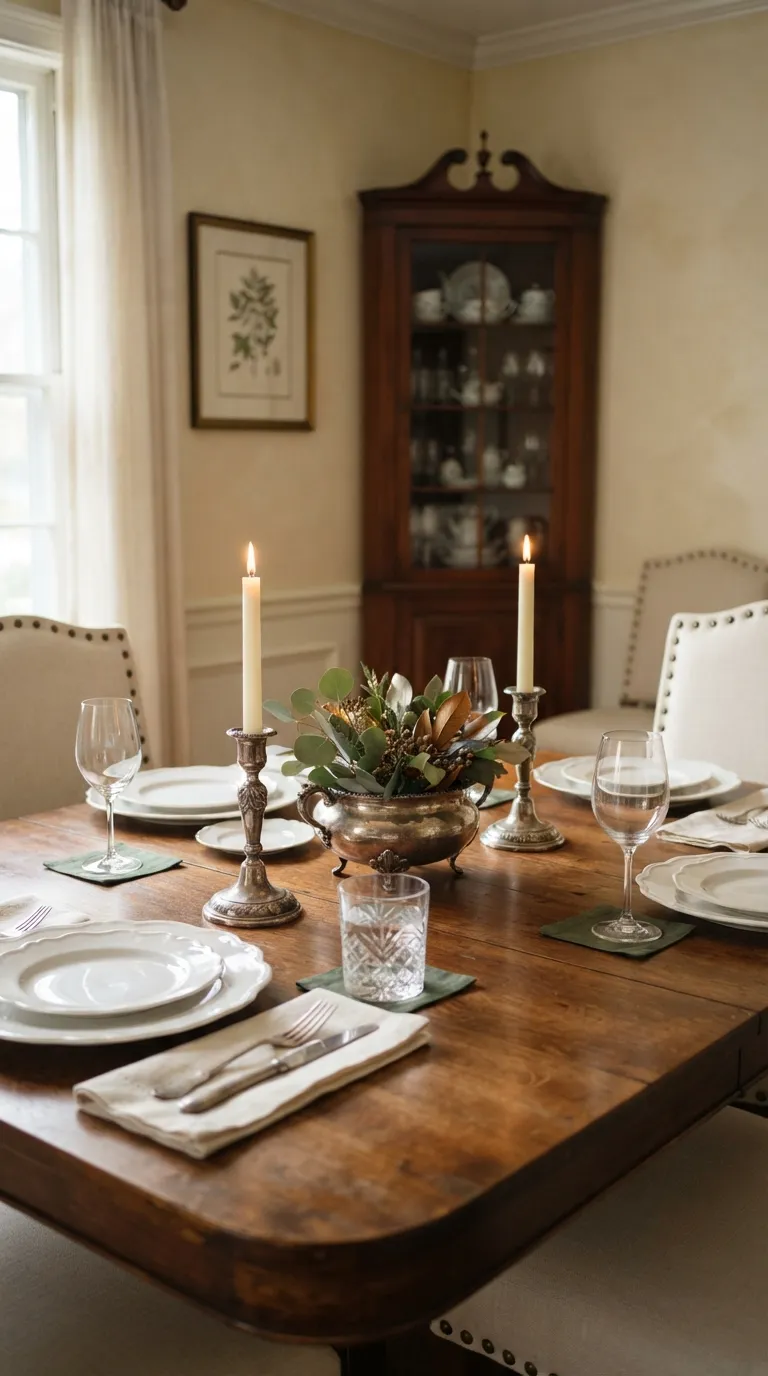
Vintage silver brings character to a formal dining room. You don’t need a matching set; two or three pieces with similar finishes can look naturally collected.
Let some patina show. The small marks and softened surfaces give old pieces warmth while keeping the overall setting polished.
Black And White Contrast
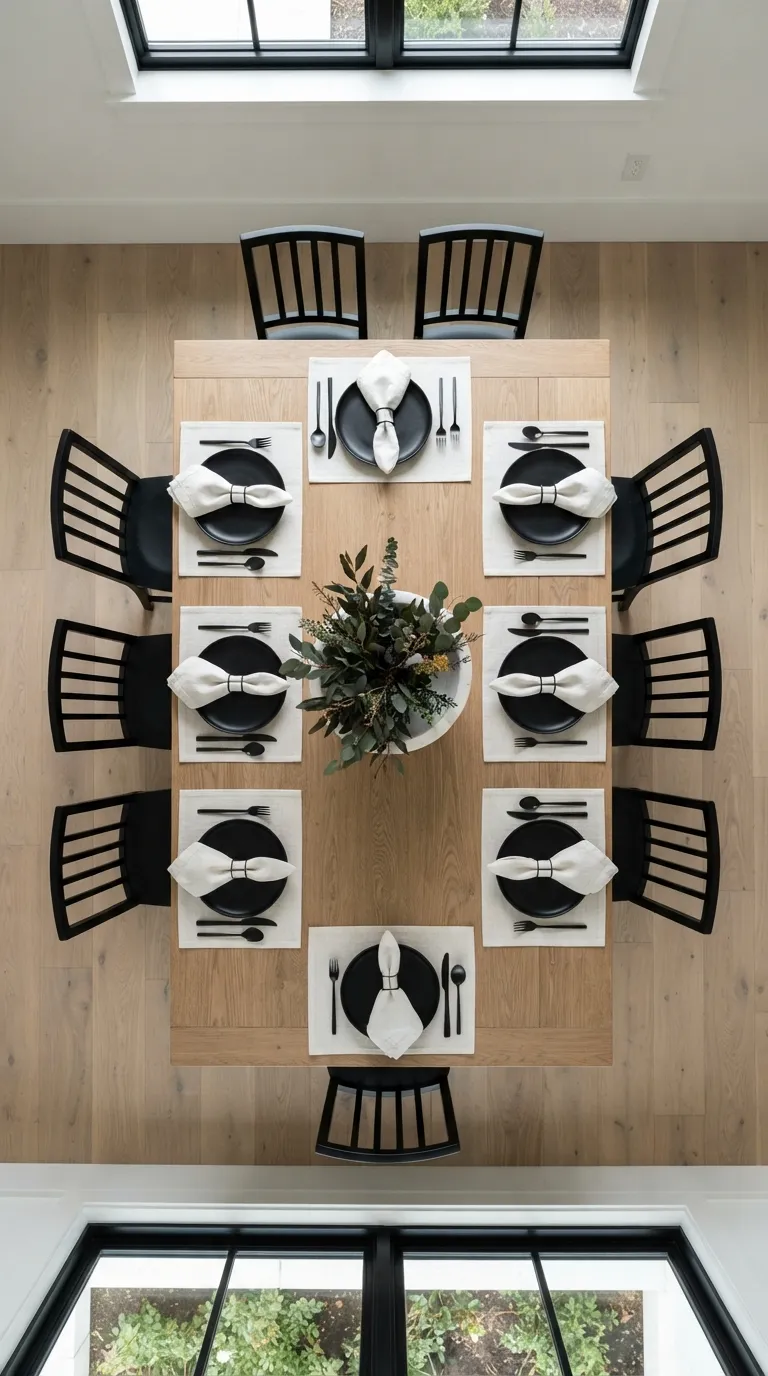
Black and white creates a clear visual contrast. Use black in smaller doses if you want the table to feel modern without becoming too stark.
A natural centerpiece can soften the pairing. Green branches or warm wood details keep the setting from feeling overly graphic.
Terracotta Accent Table
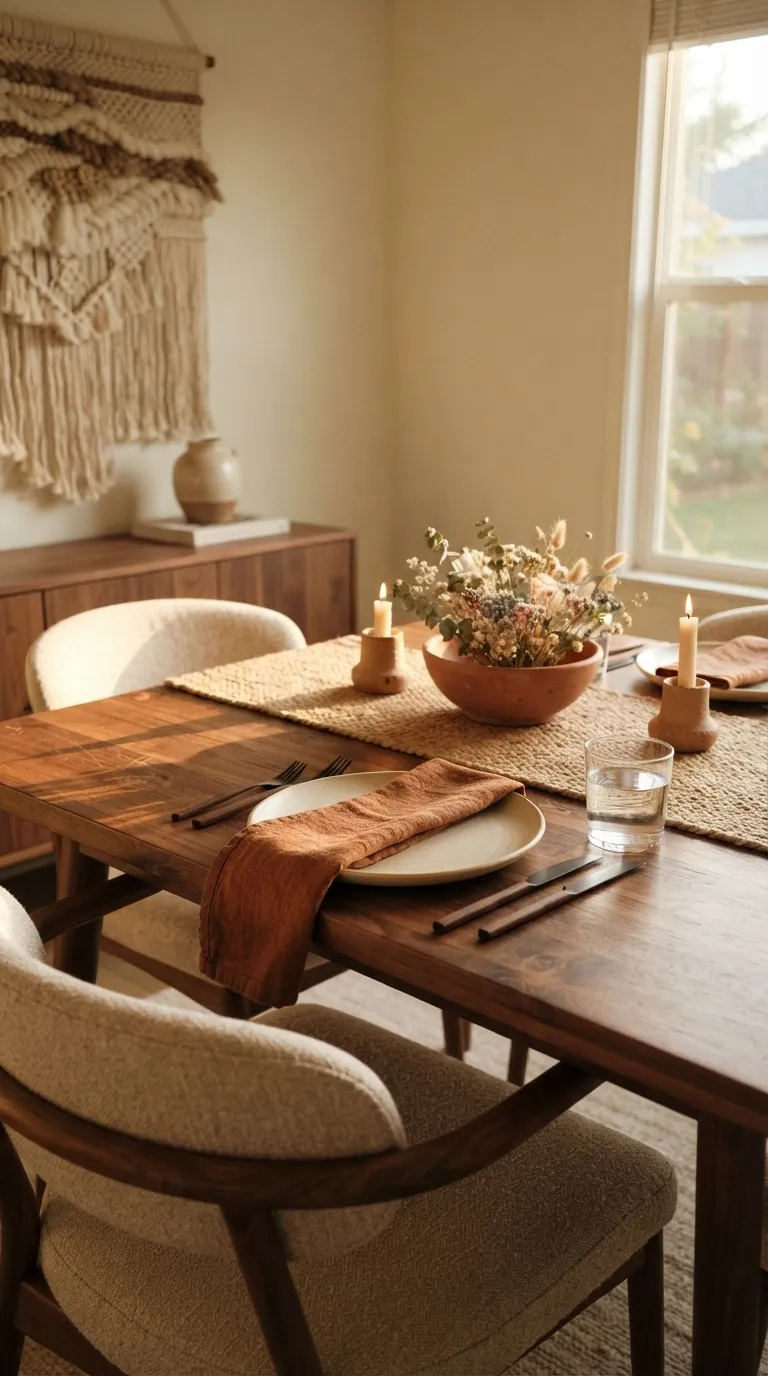
Terracotta adds warmth without needing bright color. Use one or two clay pieces, then repeat the shade through napkins or small serving bowls.
This look suits wood tables especially well. Keep the shapes rounded and organic for a relaxed dining room that feels comfortable every day.
Glass Cloche Display
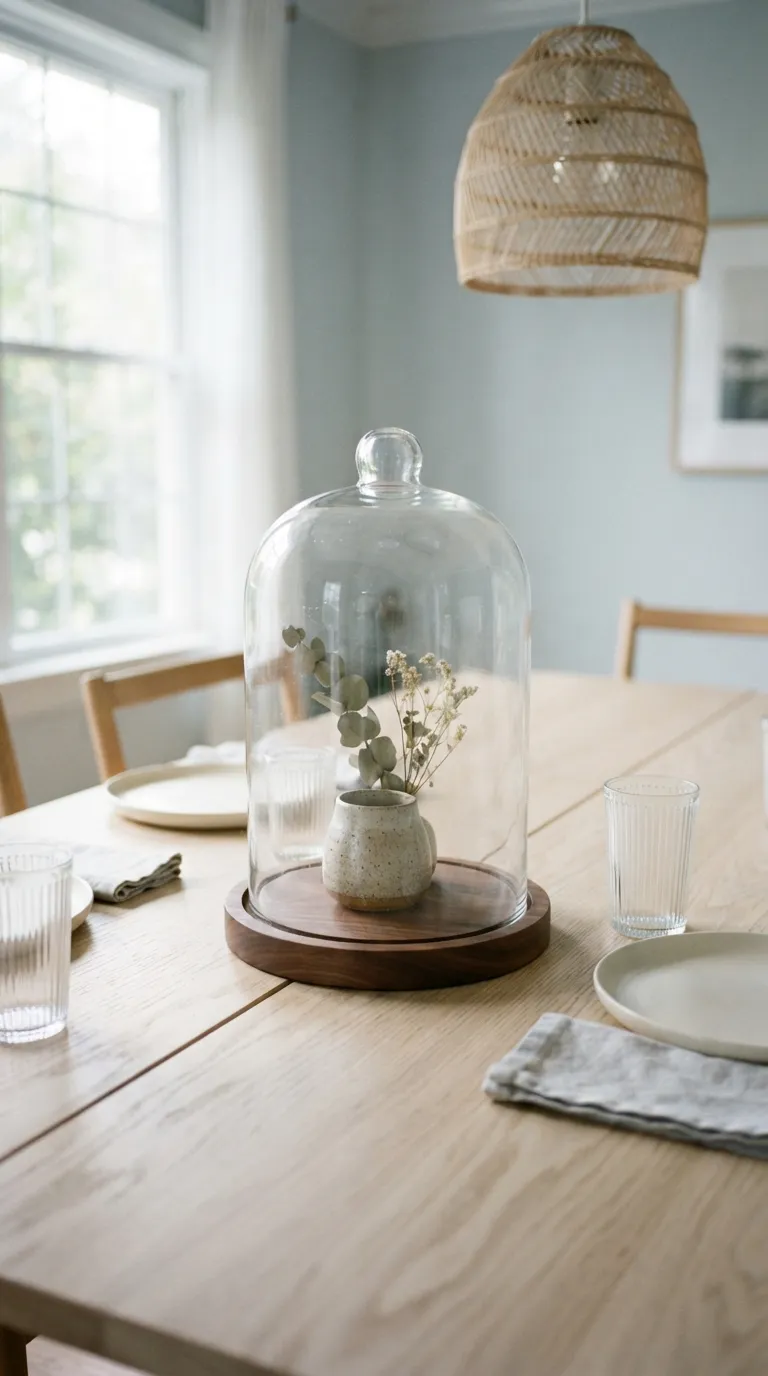
A glass cloche turns a small object into a clear centerpiece. Place something simple underneath, such as dried stems, a small bowl, or a sculptural ceramic piece.
The transparent cover keeps the arrangement visually light. It also gives the table a collected feel without adding many separate accessories.
Natural Fiber Runner
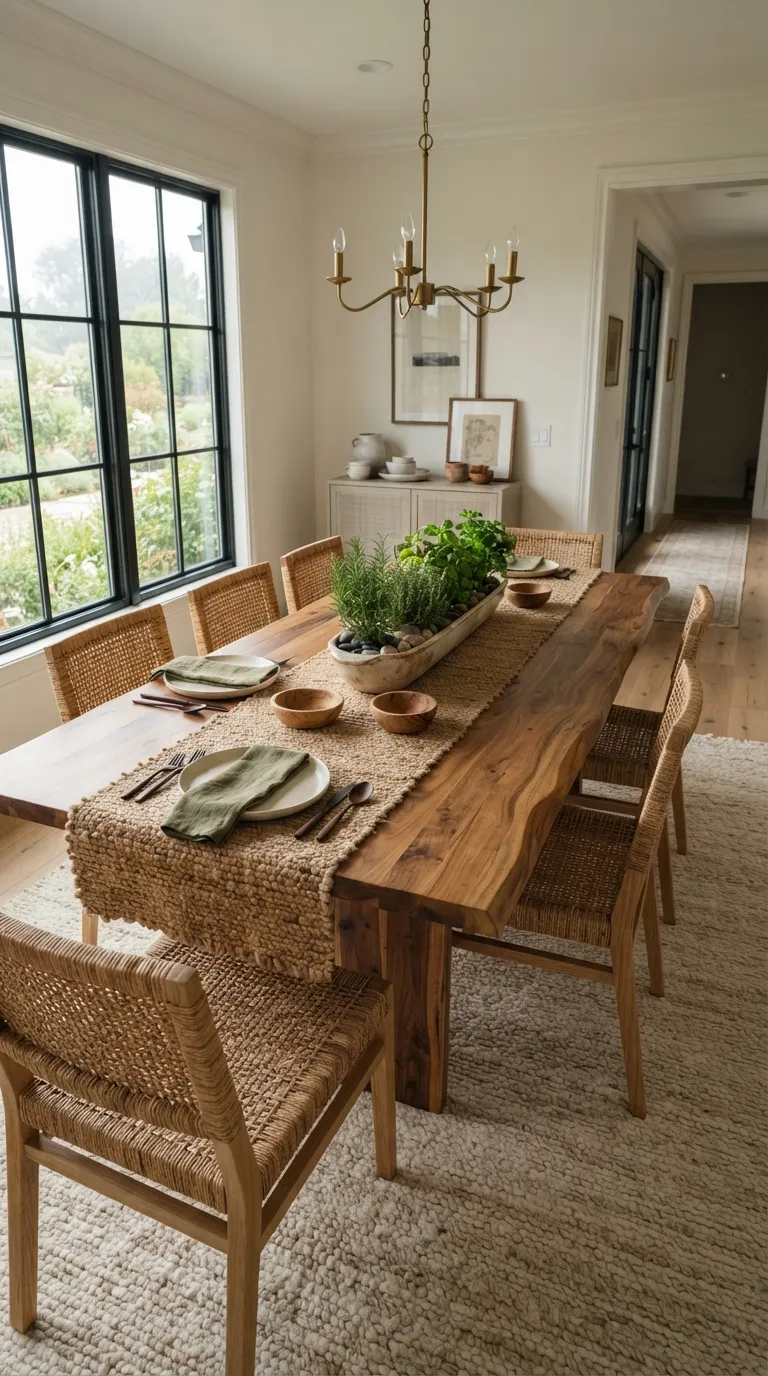
A natural fiber runner brings texture to a plain table. Jute, seagrass, and woven cotton can all create a casual foundation for simple centerpieces.
Balance the rough texture with smooth ceramics or glass. That contrast keeps the table interesting without adding lots of decoration.
Moody Greenery
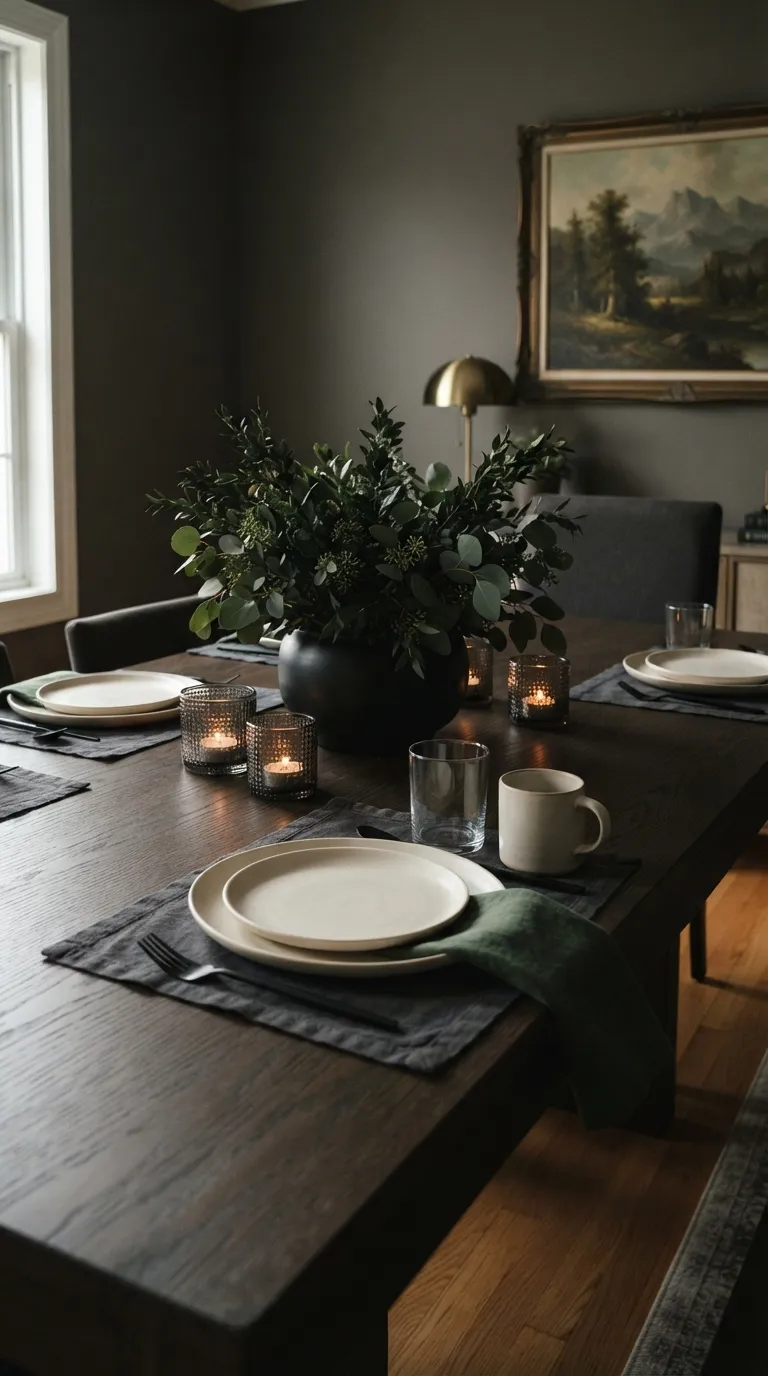
Dark greenery can give a dining room a richer mood. Pair deep foliage with cream dishes so the table doesn’t become too heavy.
Use black ceramics or smoked glass for small accents. Keep the centerpiece low and broad if the table is used often for family meals.
Casual Farmhouse Setting
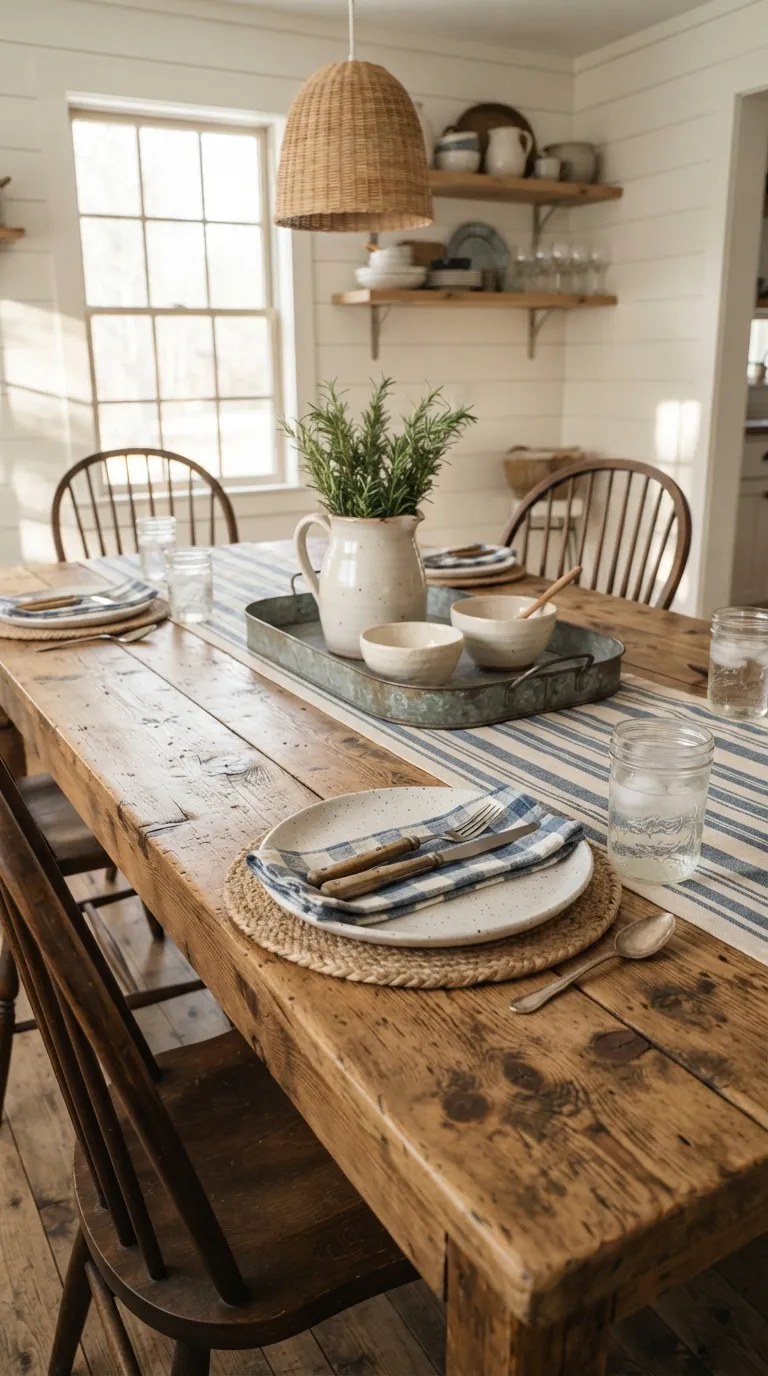
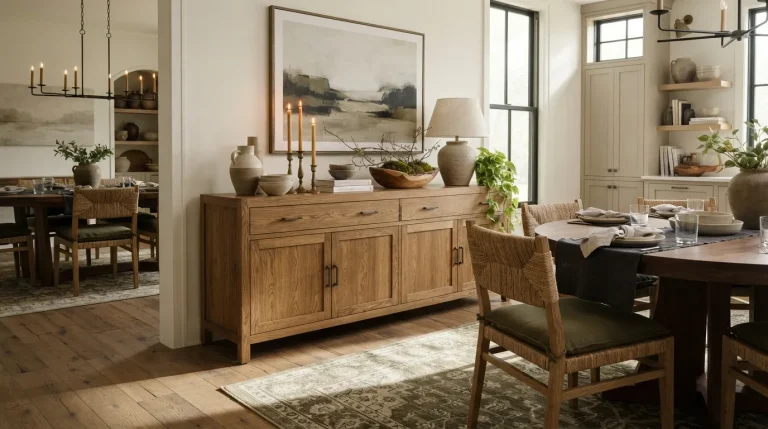
A farmhouse table looks best when useful pieces do double duty. A ceramic pitcher can hold greenery, while a metal tray can carry small items away when dinner starts.
Mix checks, stripes, wood, and aged metal in small amounts. The varied textures give the table a relaxed character without making it look cluttered.
Minimalist White Table
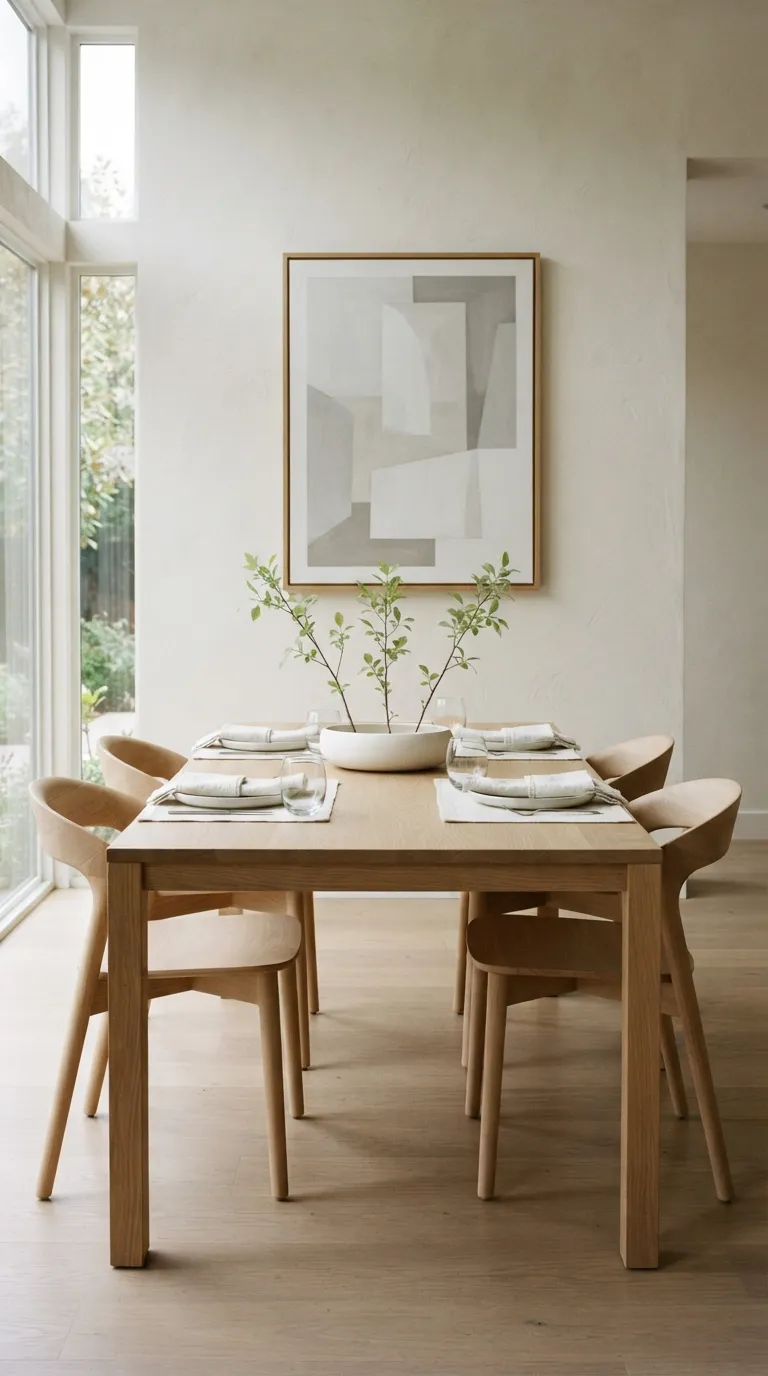
Minimalist tables rely on restraint. Use one centerpiece and repeat a small number of materials across the place settings.
White-on-white doesn’t have to feel flat. Mix matte ceramics, woven linen, smooth glass, and pale wood so each surface adds a little texture.
Warm Wood Tones
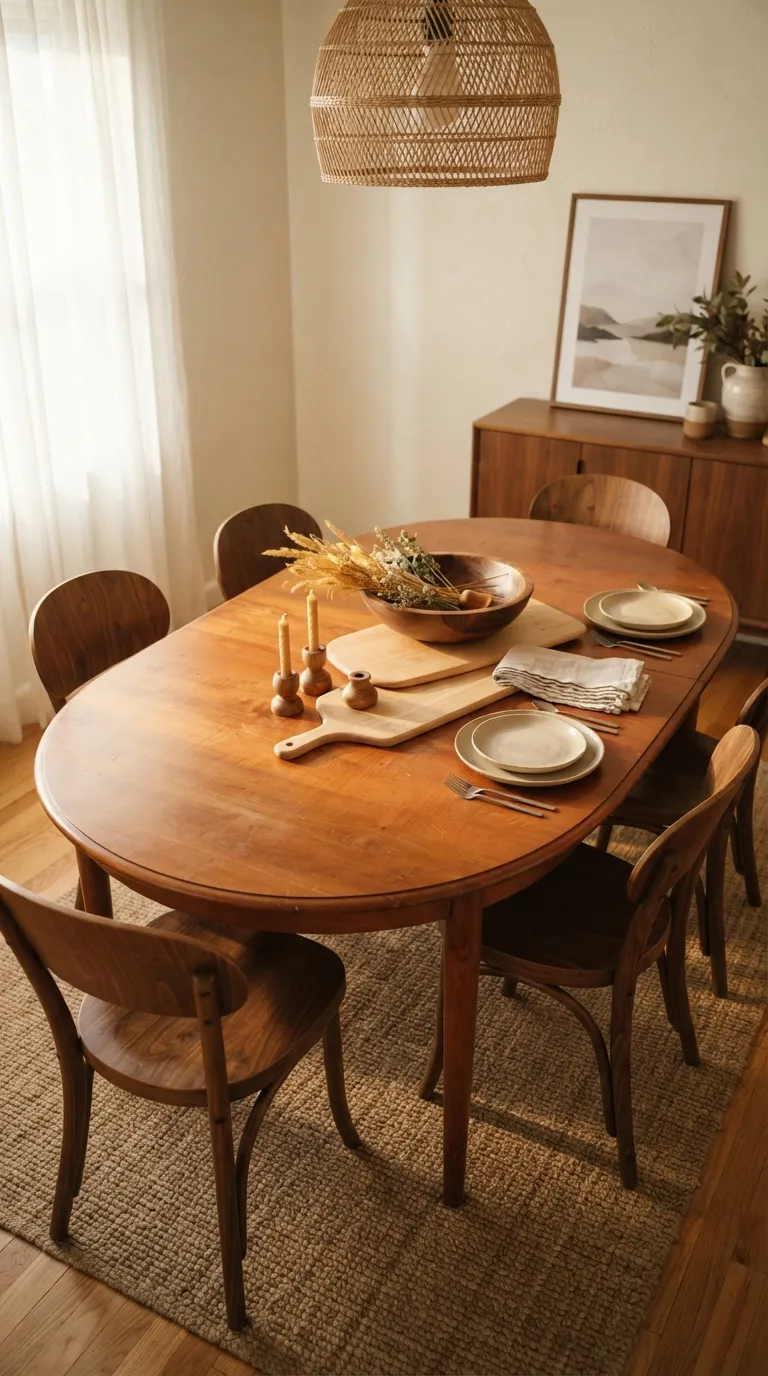
Warm wood accessories can make a dining table feel grounded. Use bowls, boards, candleholders, or trays made from different woods for subtle variation.
Keep the surrounding colors soft. Cream, beige, and warm white let the natural grain stand out without turning the room into a heavy wood-on-wood scheme.
Festive Berry Centerpiece
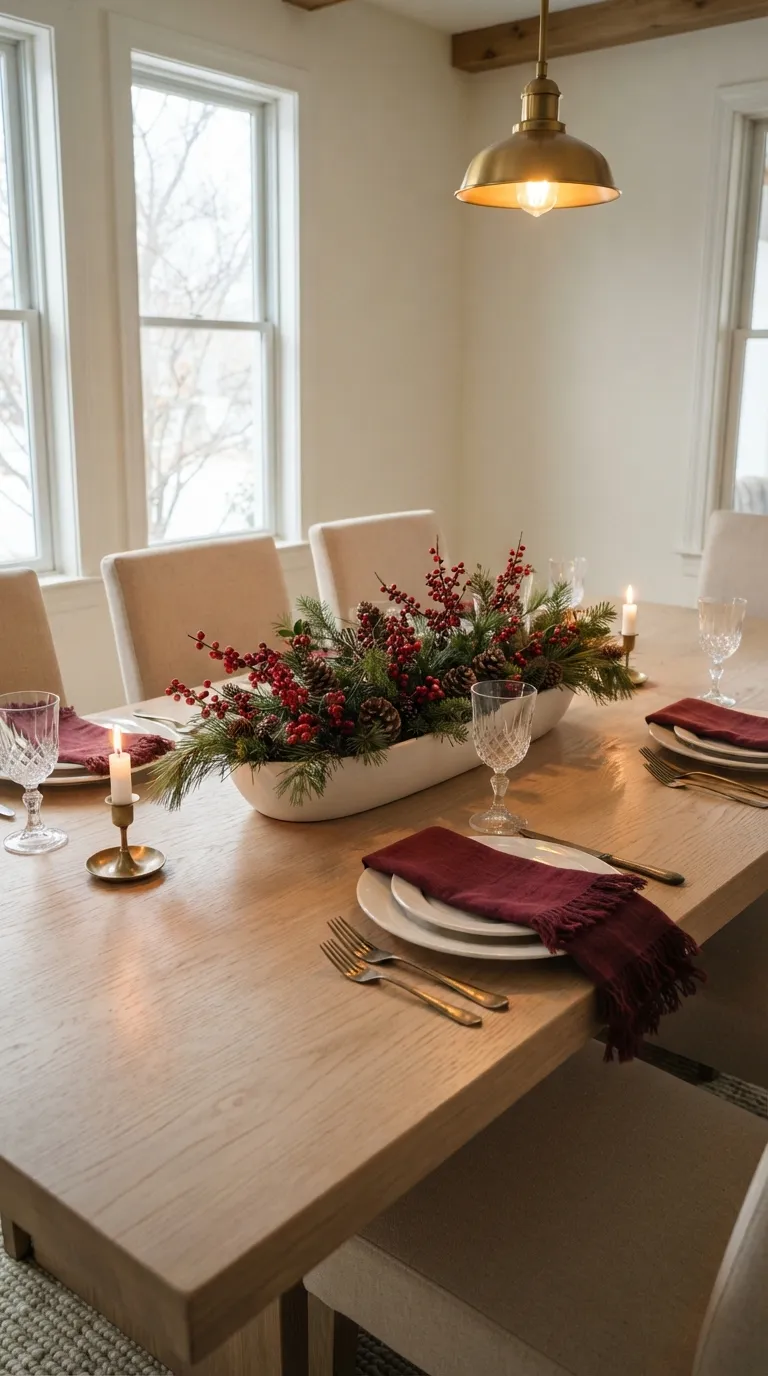
For a festive table, natural elements can carry the theme without taking over the room. Berries, evergreen branches, and pinecones bring seasonal color in a simple arrangement.
Keep the dinnerware neutral so the centerpiece stays focused. Burgundy or deep red napkins can repeat the berry shade without requiring many extra decorations.
Everyday Herb Planters
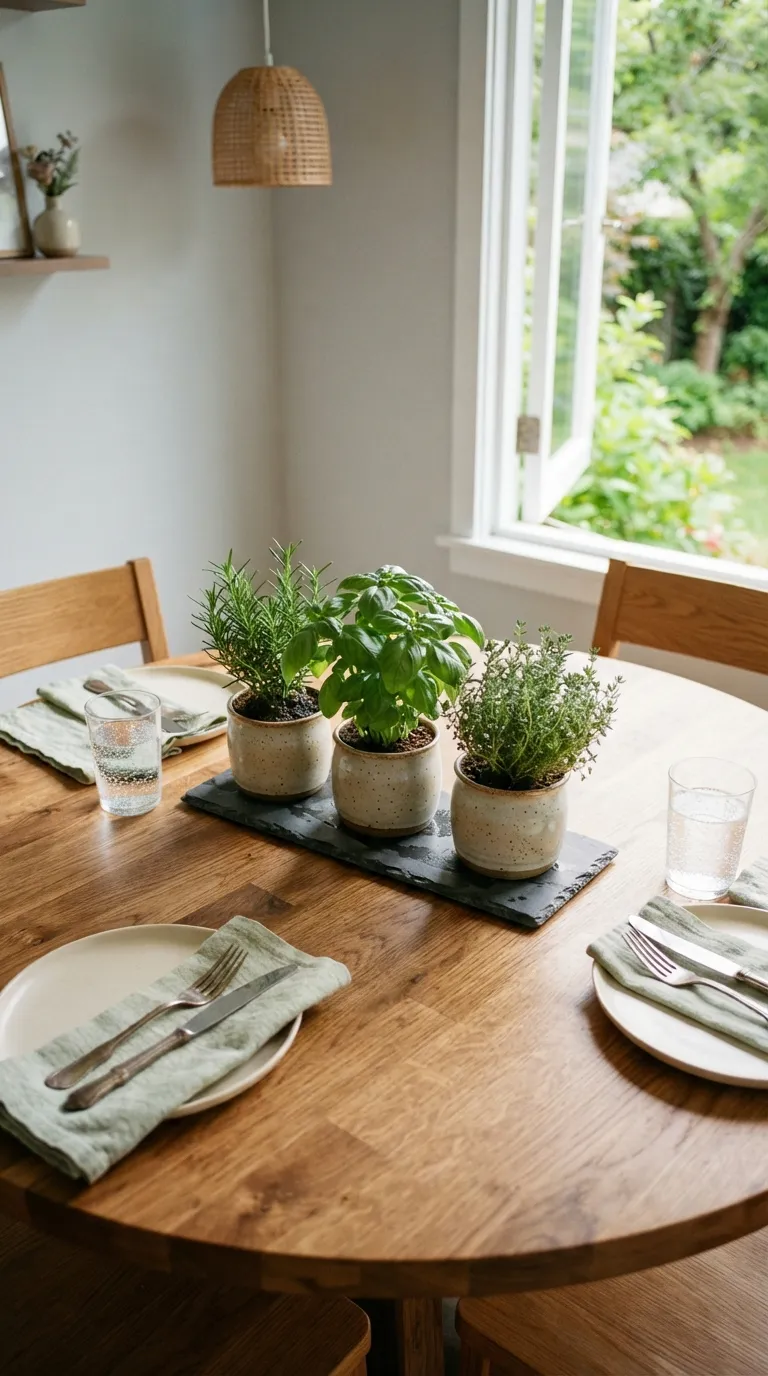
Small herb planters make the centerpiece useful as well as decorative. Rosemary, thyme, and basil add fresh color and can be moved to the kitchen when needed.
Choose matching pots if you want a neat look. A slate or wood tray underneath keeps the group contained and makes cleanup easier.
Effortless Mixed Textures
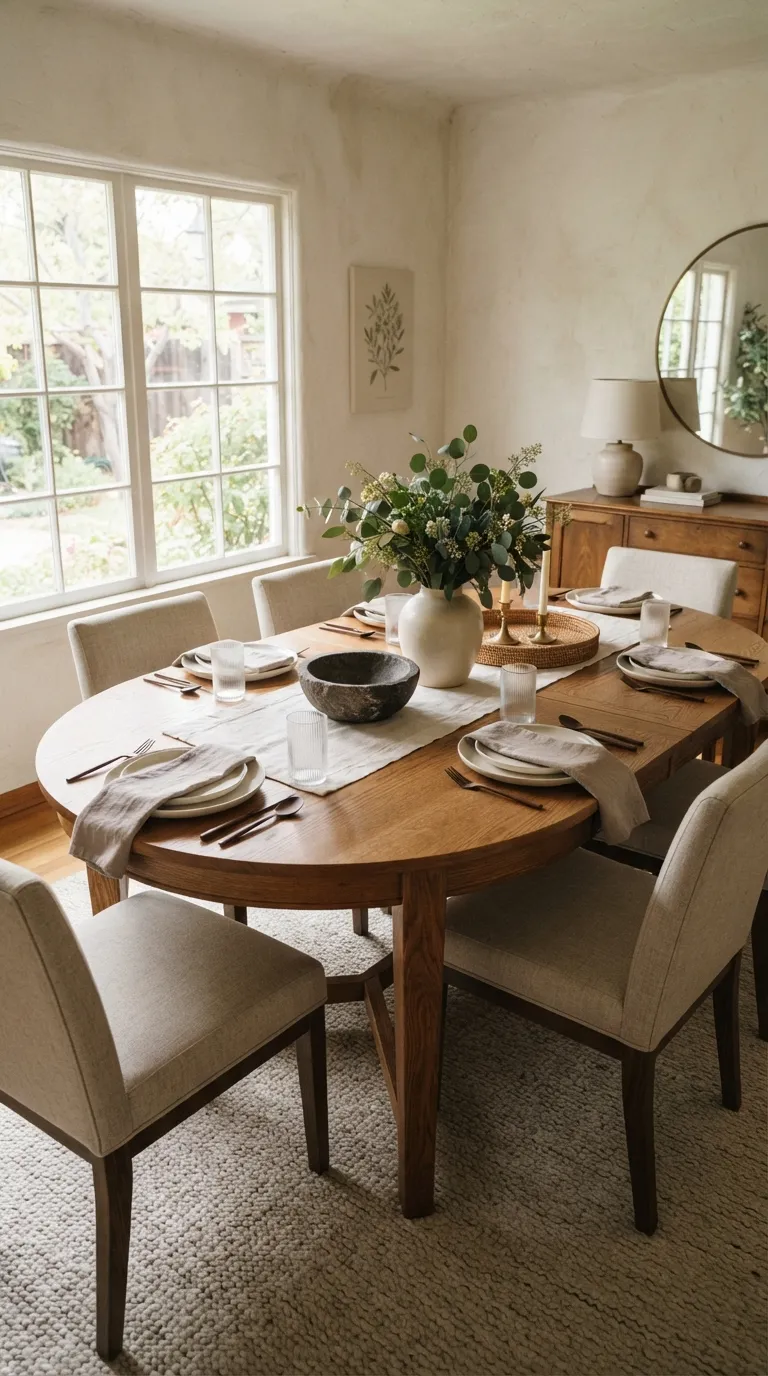
Mixed textures can make a simple table feel layered without adding more objects. Combine smooth ceramic, rough stone, woven fibers, soft linen, natural wood, and a small touch of metal.
The key is balance. Choose one main centerpiece, repeat two or three materials, and leave open tabletop space so the room still feels easy to live with.
In the End
The easiest table styling starts with one clear focal point. From low greenery and fruit bowls to candles, ceramics, and natural fibers, each idea can work on its own or pair with a few quiet supporting pieces.
Start with what you already have, then add one new texture or color at a time. When the table still has room for plates, serving dishes, and conversation, you’ve found the sweet spot between styled and practical.
Olivia Carter
Olivia Carter is the founder of Lady Home Decor and a passionate home decor expert. She shares practical, stylish ideas to help homeowners create beautiful, comfortable, and welcoming spaces. Her expertise covers bedrooms, kitchens, living rooms, bathrooms, and small-space decorating.