20 Elegant Dining Room Wall Decor Minimalist Ideas to Copy

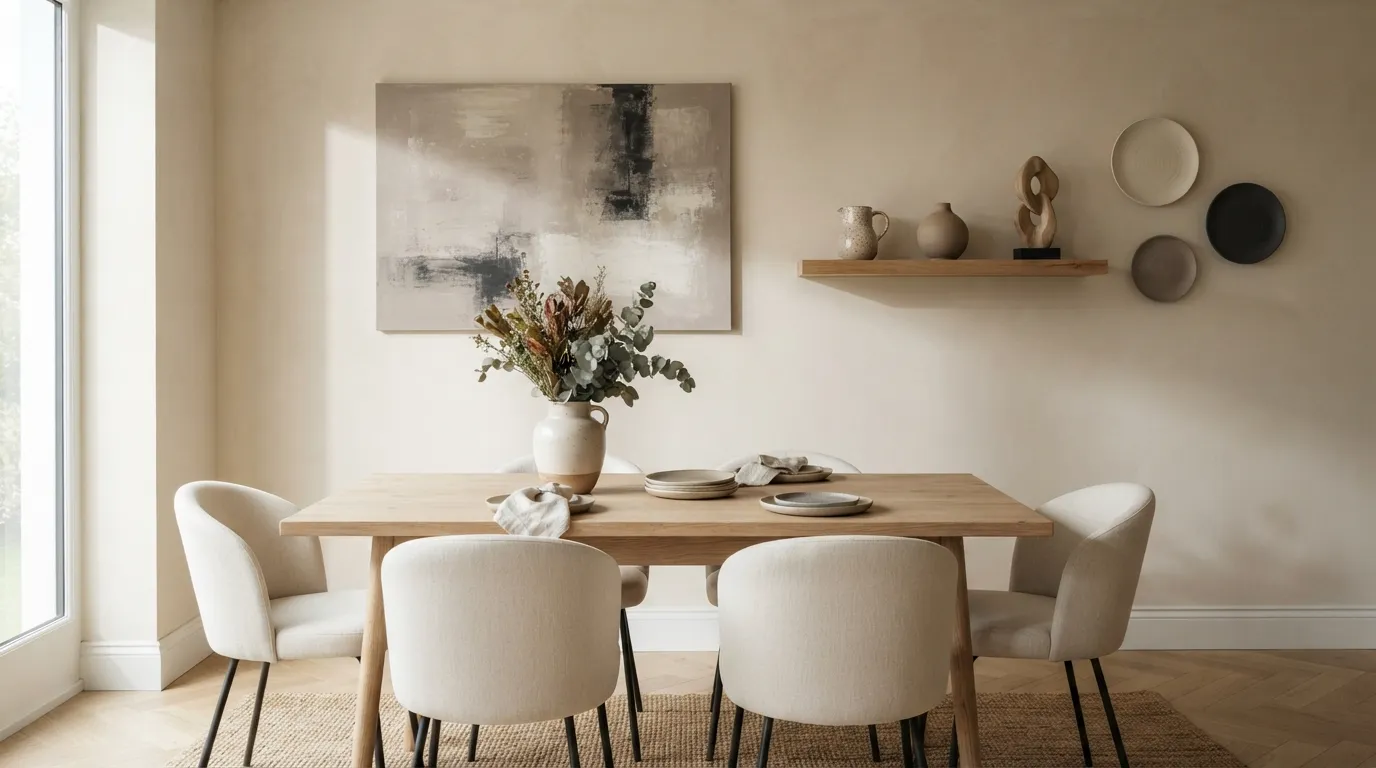
A pared-back dining room can feel polished without filling every wall. The key is choosing a few pieces that give the space character while keeping the eye relaxed. These dining room wall decor minimalist ideas show how artwork, mirrors, shelves, and natural textures can work without creating visual clutter.
You don’t need a gallery wall packed with frames to make your dining area feel finished. A single large print, a quiet mirror, or a small collection of ceramics can create a strong focal point. Think about your wall as a blank canvas, then add just enough detail to support the table, chairs, lighting, and overall mood.
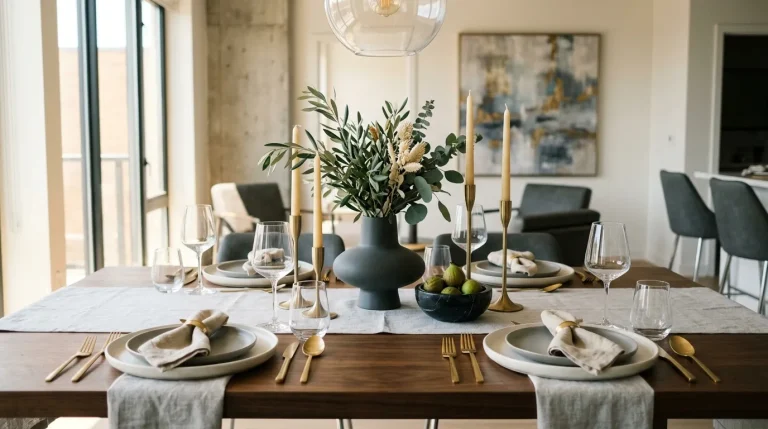
Large Neutral Artwork
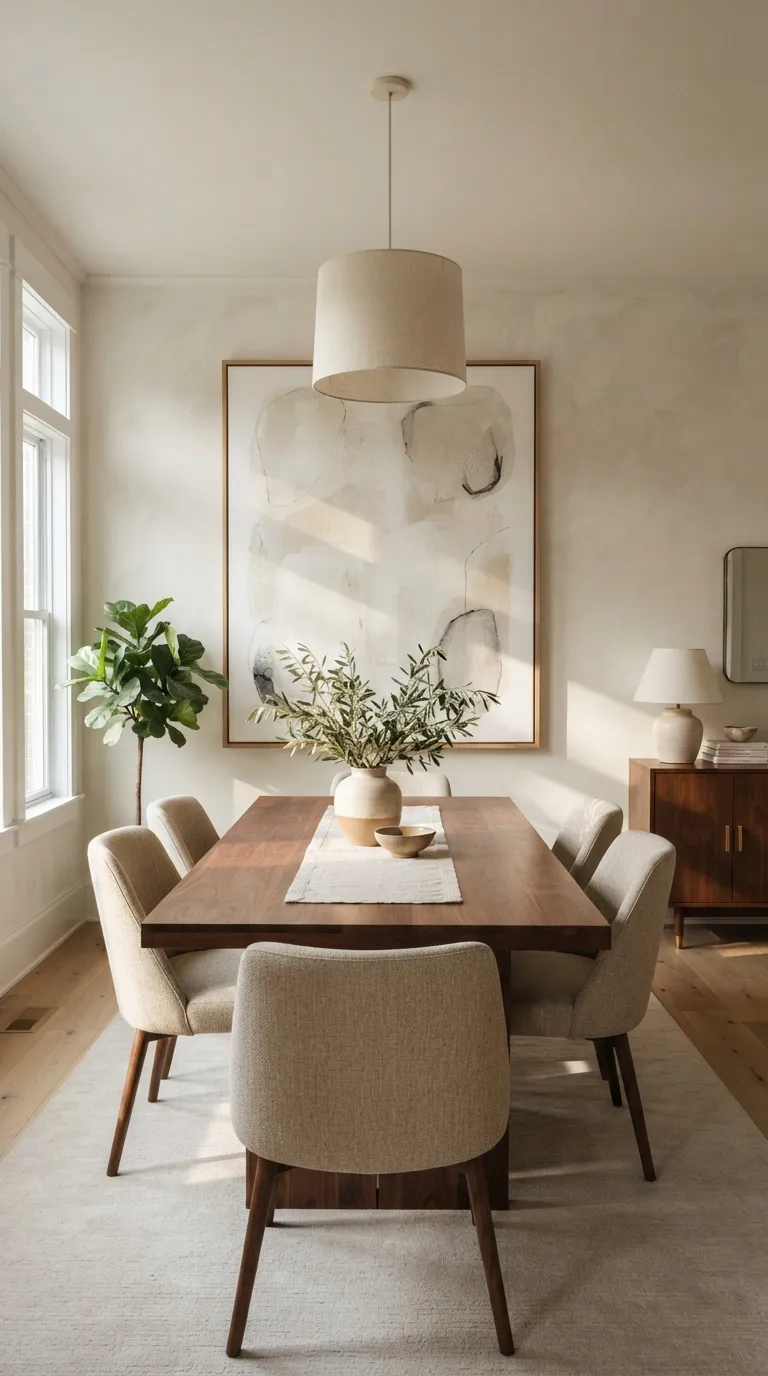
One oversized artwork can give a dining wall a finished look without adding visual noise. Choose a piece with muted tones that connect with your table, rug, or upholstery.
Keep the frame slim and simple for a cleaner effect. If the wall feels broad, center the artwork over the table so both elements read as one balanced focal point.
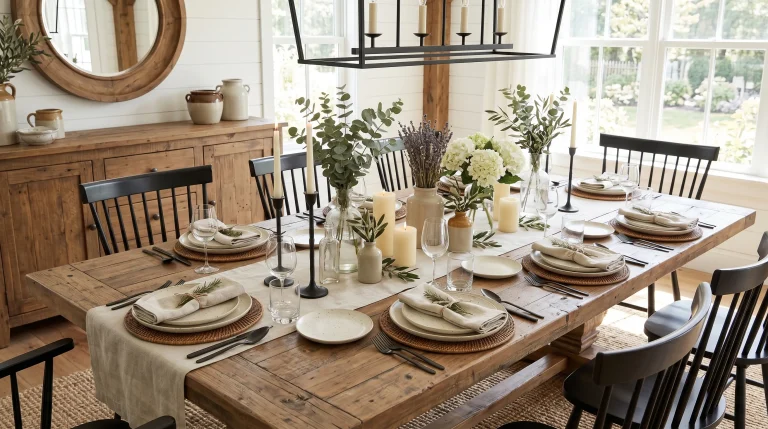
Round Wood Mirror
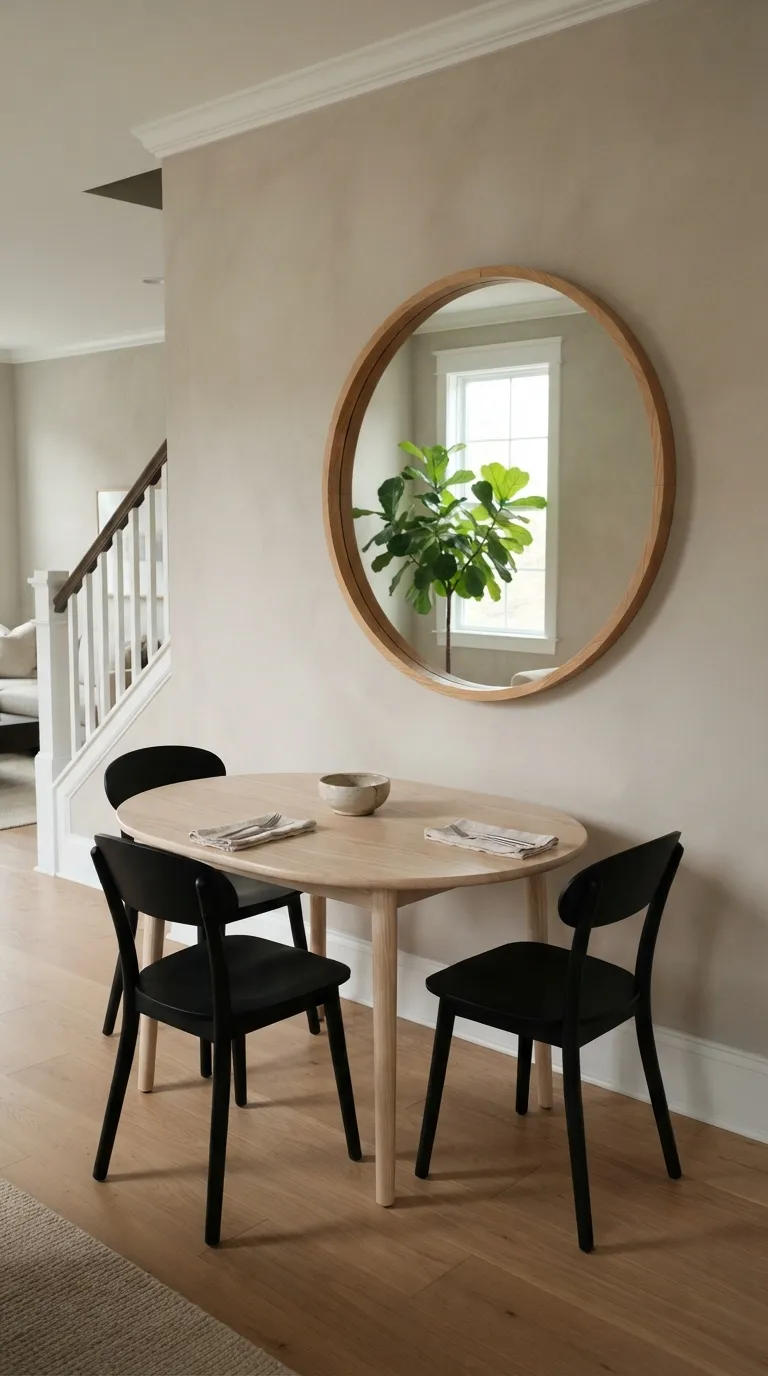
A round mirror softens the straight lines found in many dining rooms. Its curved shape also helps break up a large blank wall while reflecting natural light around the room.
Pick a wood frame when you want warmth and texture. Hang it where it can reflect a window or attractive room feature rather than a busy doorway or storage area.
Minimal Picture Ledge
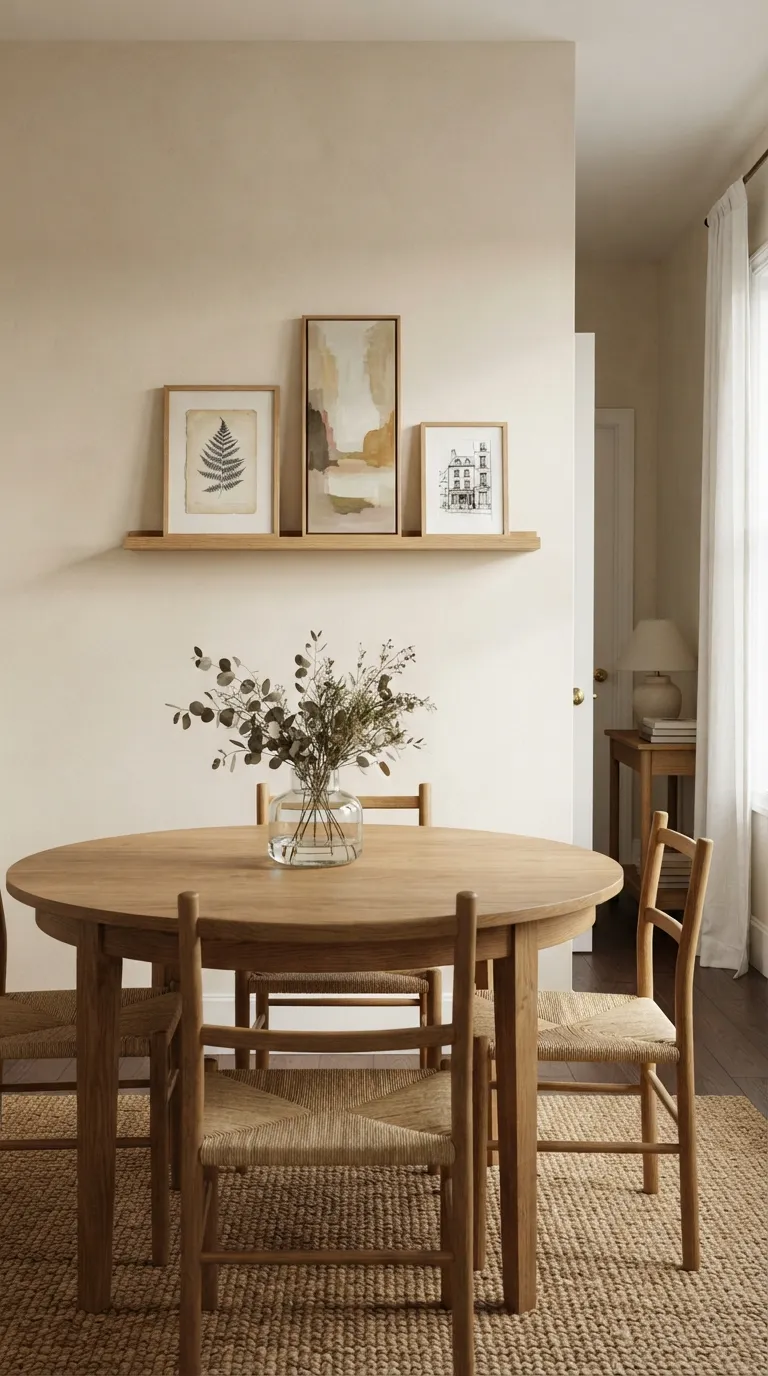
A slim picture ledge gives you flexibility without covering the wall with frames. Three carefully chosen pieces can look intentional while leaving plenty of breathing room around them.
Layer the frames with a little overlap instead of spacing every piece evenly. Keep the artwork in a shared color family, such as cream, clay, black, or soft green, so the display feels calm rather than scattered.
Sculptural Wall Sconces
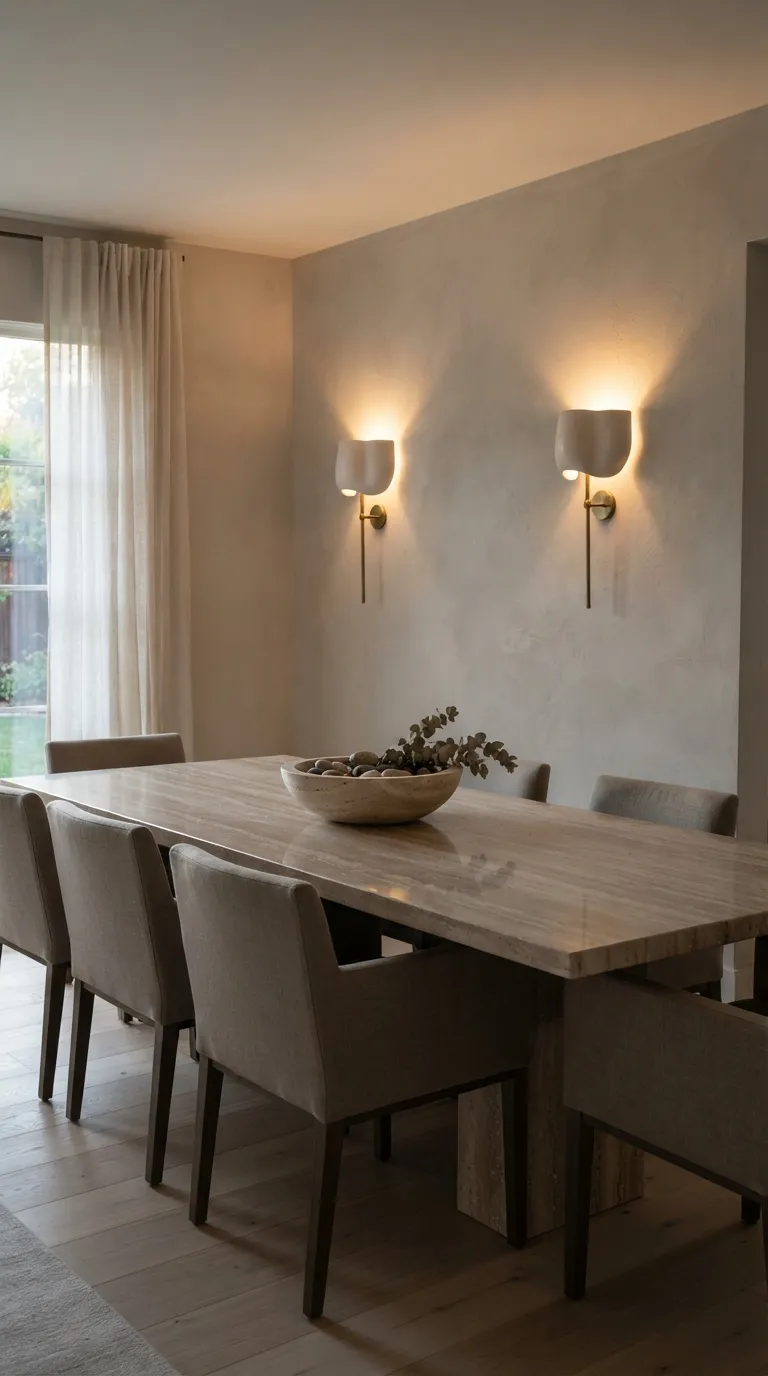
Wall sconces can act as both lighting and decoration. Their shape gives a plain wall some character without requiring artwork or shelves.
Try matching the metal finish to a nearby cabinet handle or pendant. Keeping the rest of the wall bare lets the fixtures do the visual work without making the room feel crowded.
Single Botanical Print
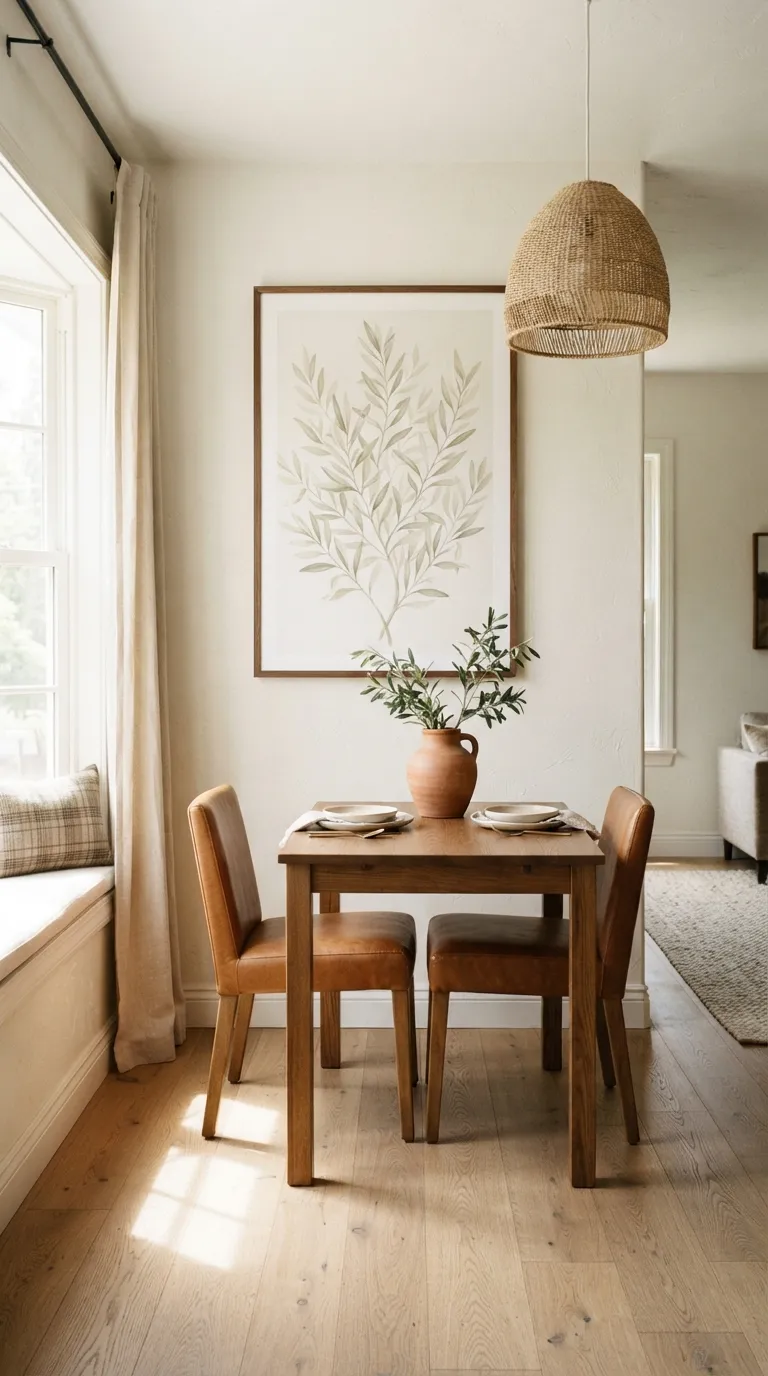
One botanical print brings a natural note to a simple dining space. Choose a tall composition when your wall has more vertical room around the table.
Sage, olive, beige, and soft brown work especially well with wood furniture. A slim frame keeps the print feeling light while still giving the wall a clear focal point.
Floating Oak Shelf
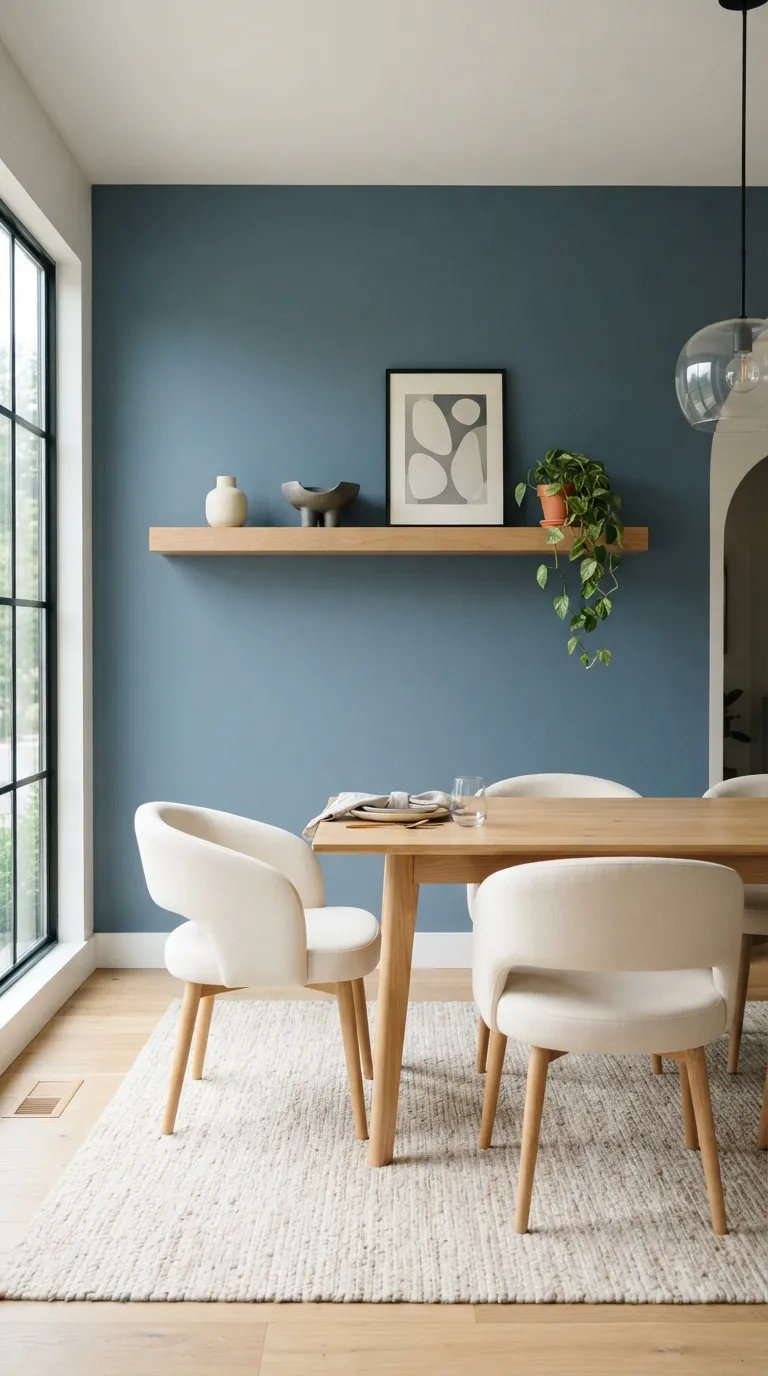
A floating shelf gives you a place for a few meaningful objects without filling the entire wall. The trick is restraint.
Use one shelf rather than several rows. Leave generous gaps between pieces, and vary their heights so the arrangement feels natural instead of tightly packed.
Black Line Art
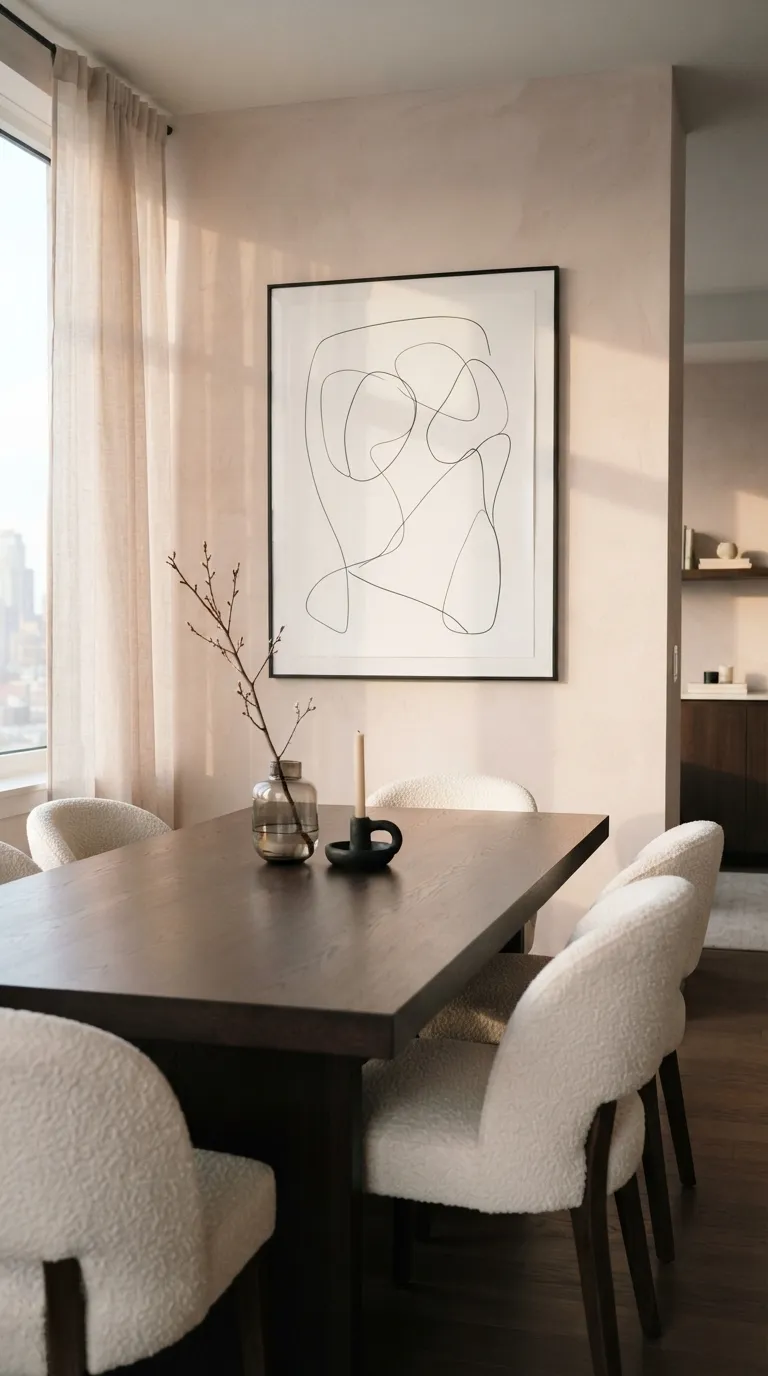
Black line art adds definition without introducing a busy pattern. It works especially well when your dining furniture already has strong shapes.
For a softer room, pair the artwork with blush, cream, or warm beige walls. A thin dark frame creates just enough contrast to anchor the display.
Ceramic Plate Trio
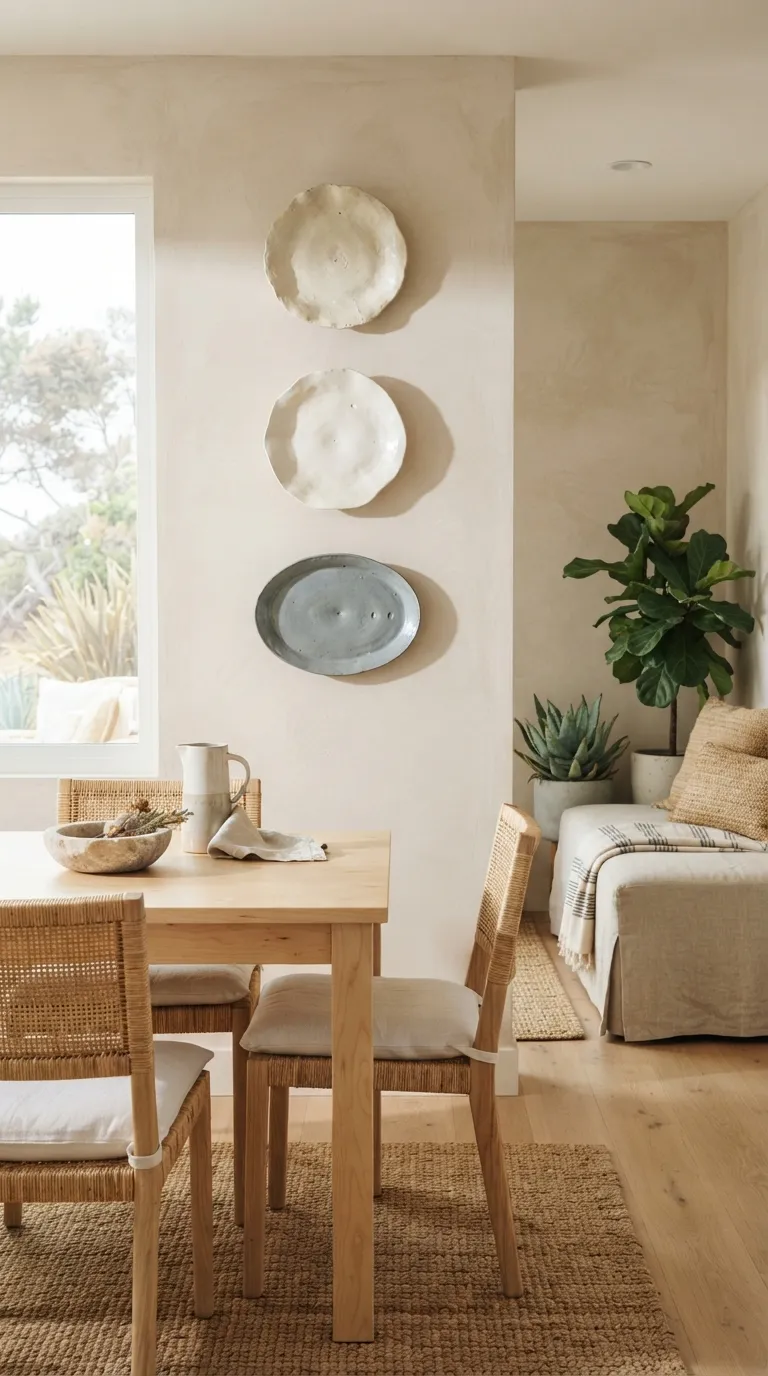
A small plate arrangement can bring handmade texture to an otherwise plain wall. Three pieces are enough to create a pattern without taking over the room.
Choose plates with related finishes but slightly different shapes. Keep their spacing consistent, then leave plenty of empty wall around the group.
Textured Plaster Wall
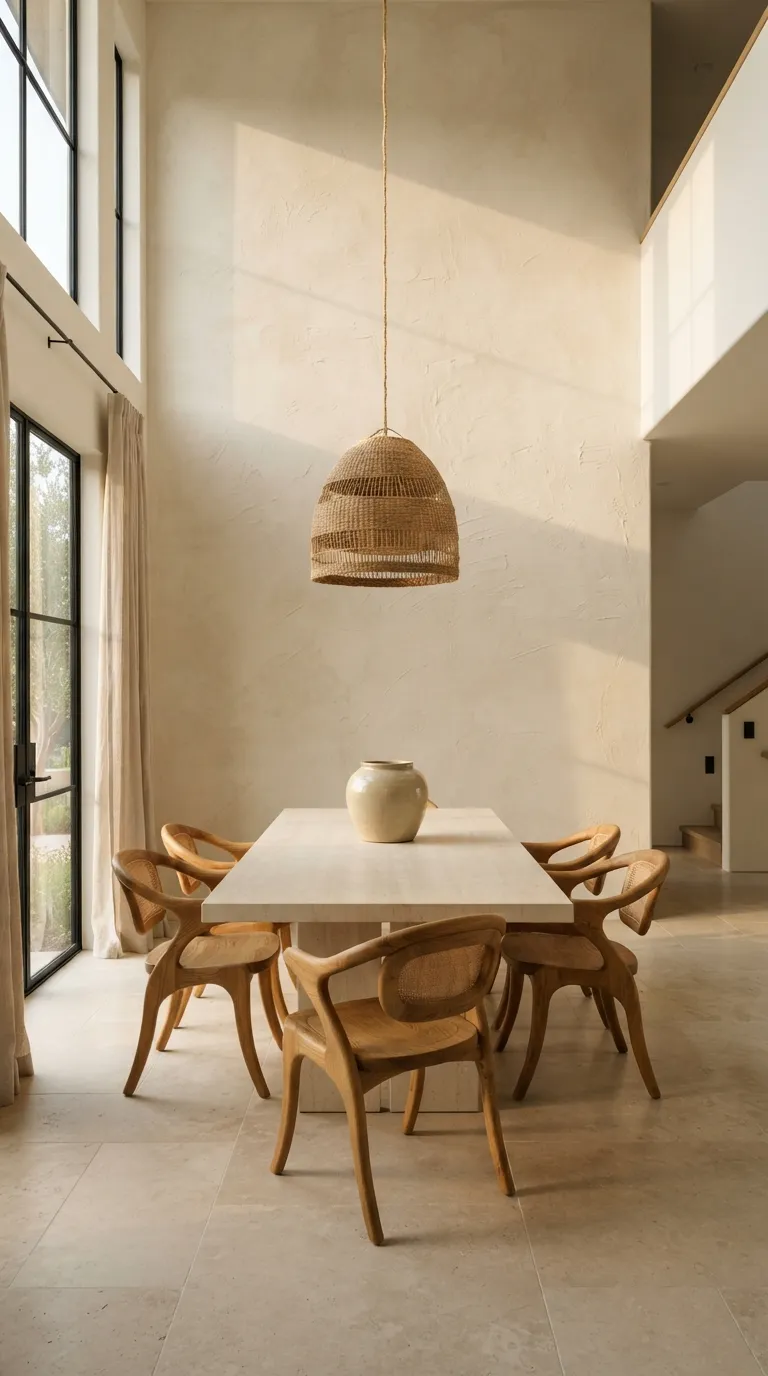
Sometimes the wall itself can serve as decoration. A subtle plaster finish adds depth while keeping the room free from extra objects.
Choose a warm neutral finish if you want a calm backdrop. The surface works best when nearby furniture and accessories have simple silhouettes.
Slim Black Frames
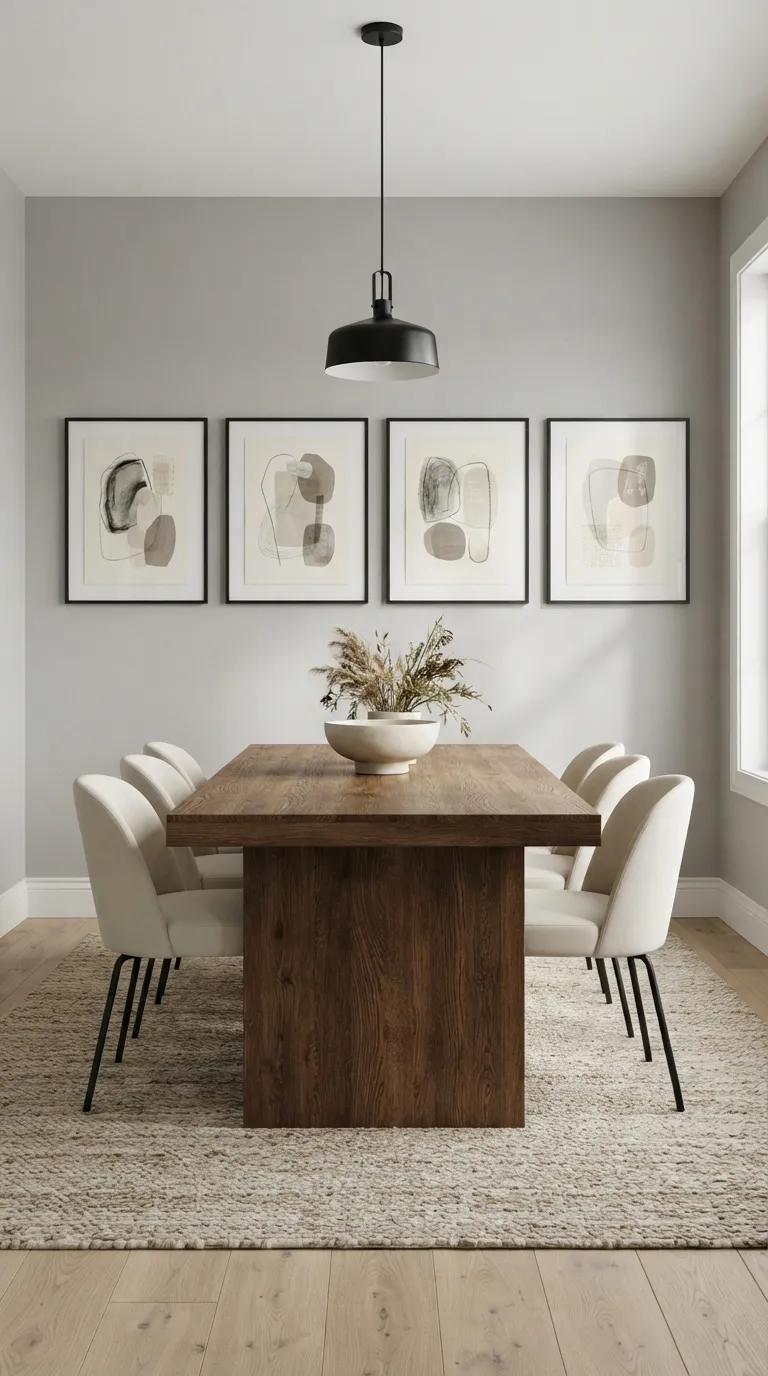
Slim black frames give minimalist dining walls a crisp edge. A row of four can create rhythm without the visual weight of chunky frames.
Use artwork with a shared palette so the arrangement reads as one display. Keep equal gaps between frames for a neat, intentional look.
Soft Arch Mirror
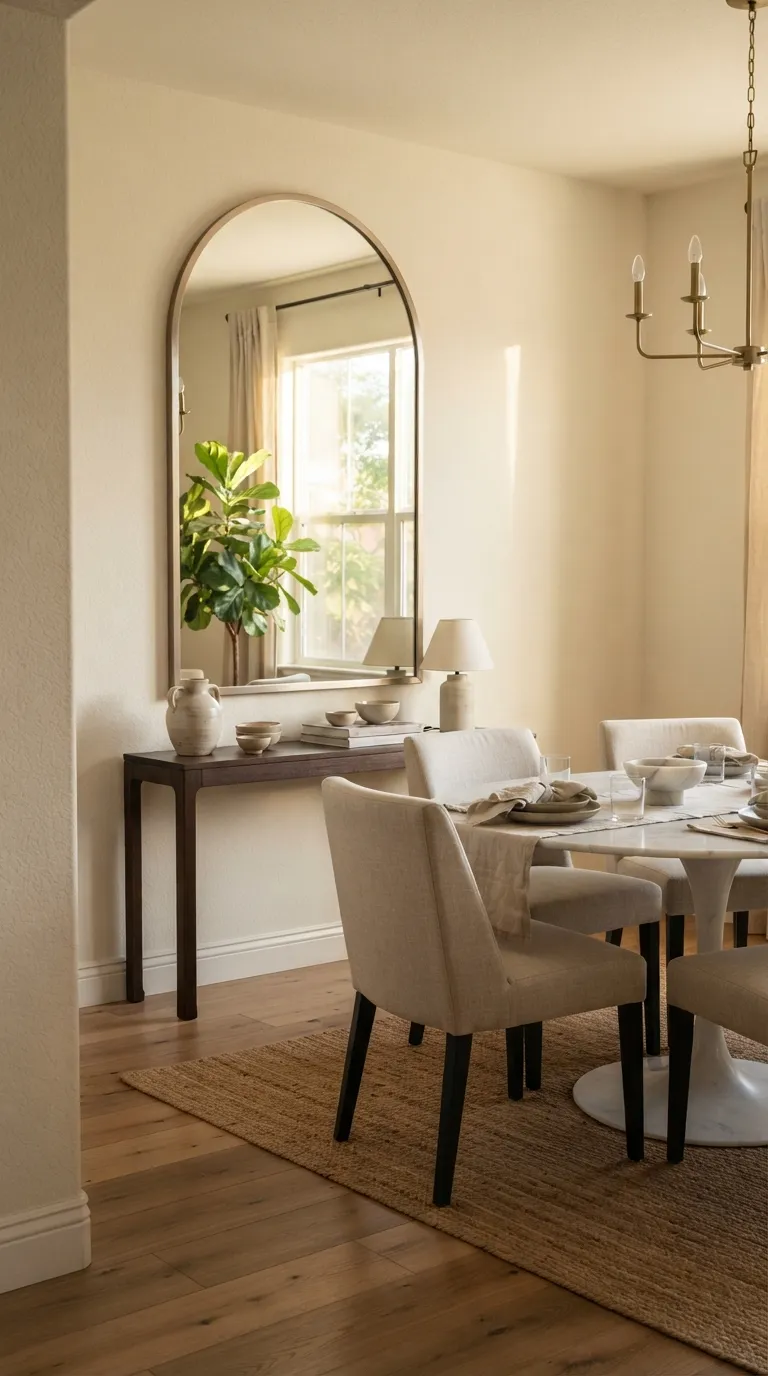
An arched mirror introduces a soft curve to rooms filled with rectangular furniture. It can also make a compact dining area feel more open.
Look for a frame that relates to your lighting hardware. Keep the console beneath it lightly styled so the reflection remains clear and useful.
Tonal Art Pair
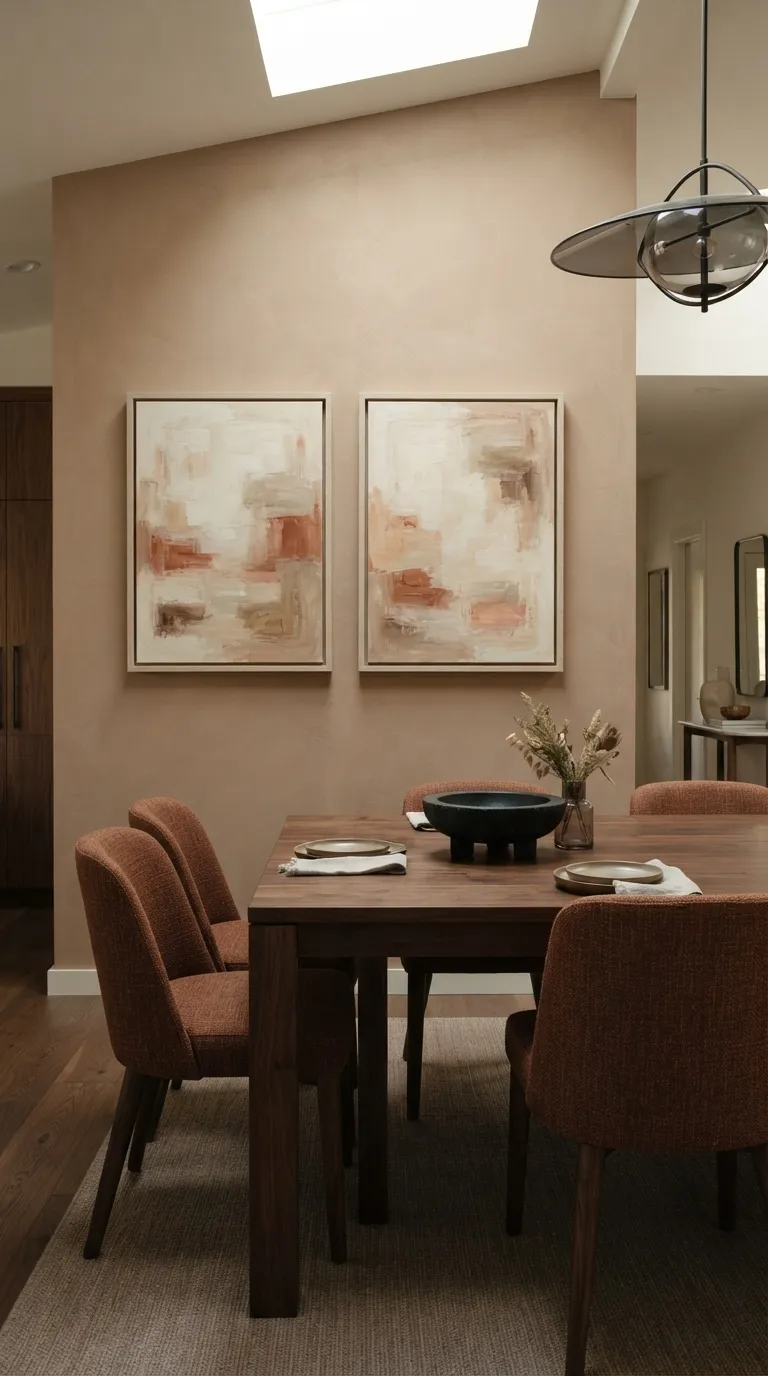
Two related artworks can fill a wider wall while keeping the display controlled. Choose pieces that share colors rather than matching them exactly.
Keep the frames similar in size and finish. The small differences between the paintings will give the arrangement personality without making it feel random.
Vertical Wood Slats
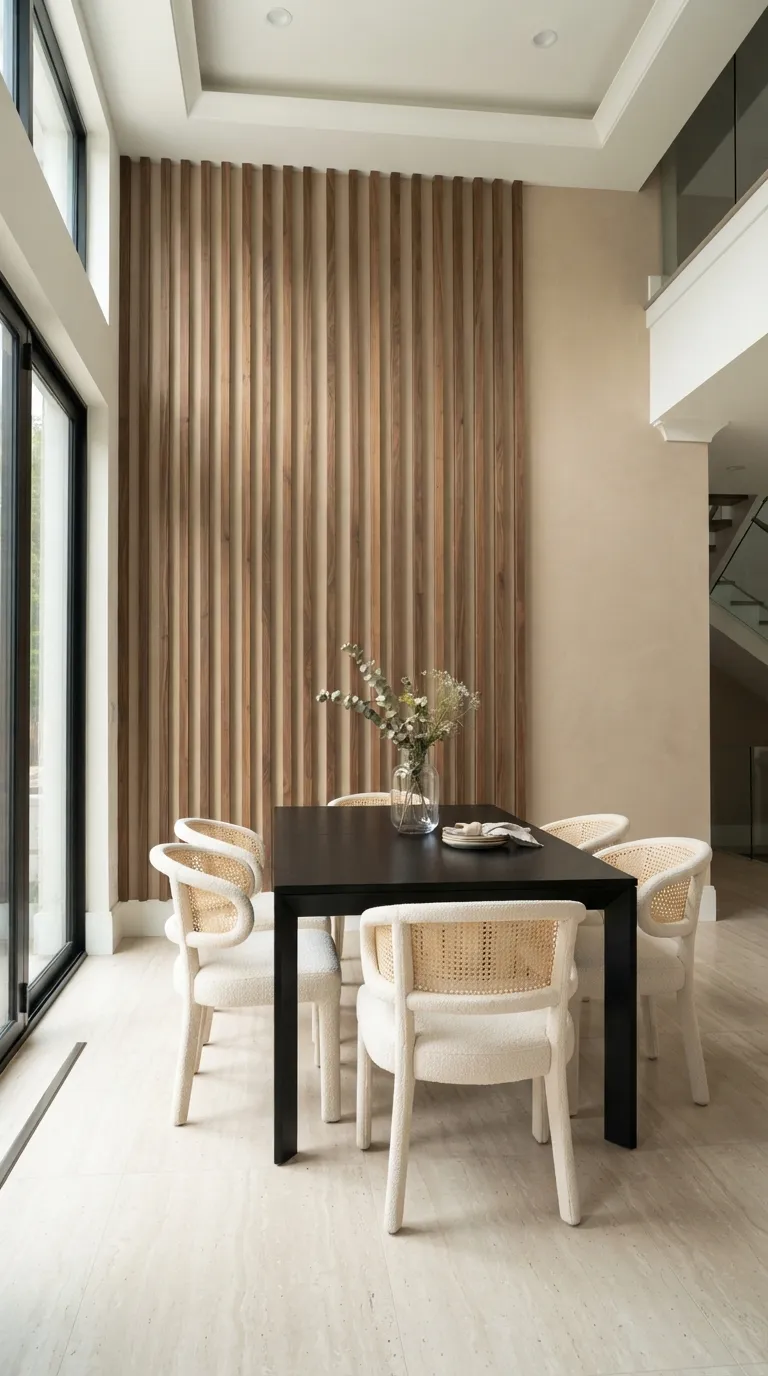
Vertical wood slats bring warmth and architectural texture to a dining wall. They can work especially well when the room has smooth plaster, glass, or metal surfaces nearby.
You don’t need to cover the whole wall. A narrow panel behind a console or beside the dining table can provide enough texture while preserving the clean look.
Minimalist Clock
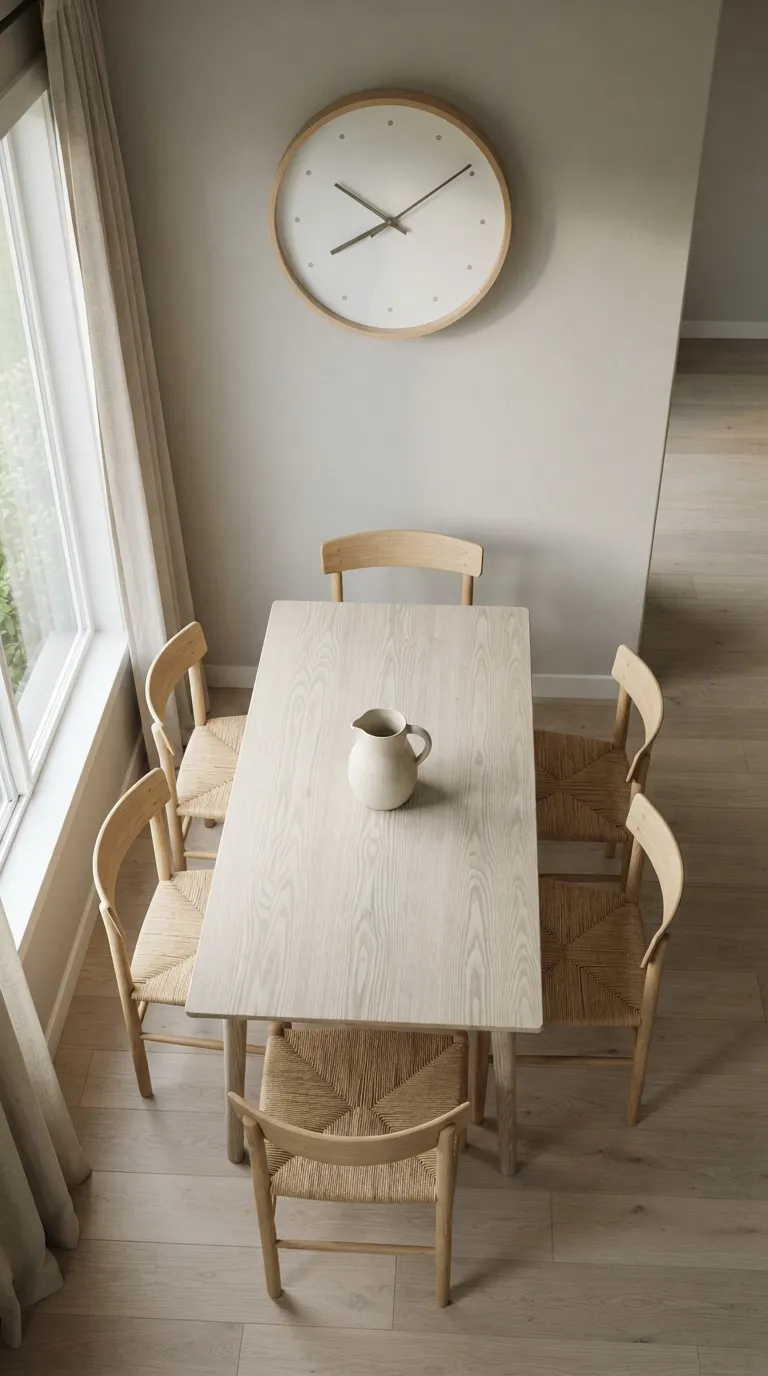
A simple wall clock can add function without looking like office equipment. Choose a clean face with few visual details and a frame that suits your furniture.
Place it where the shape has room to breathe. An oversized clock often works better as a single statement than as part of a crowded wall arrangement.
Organic Stone Art
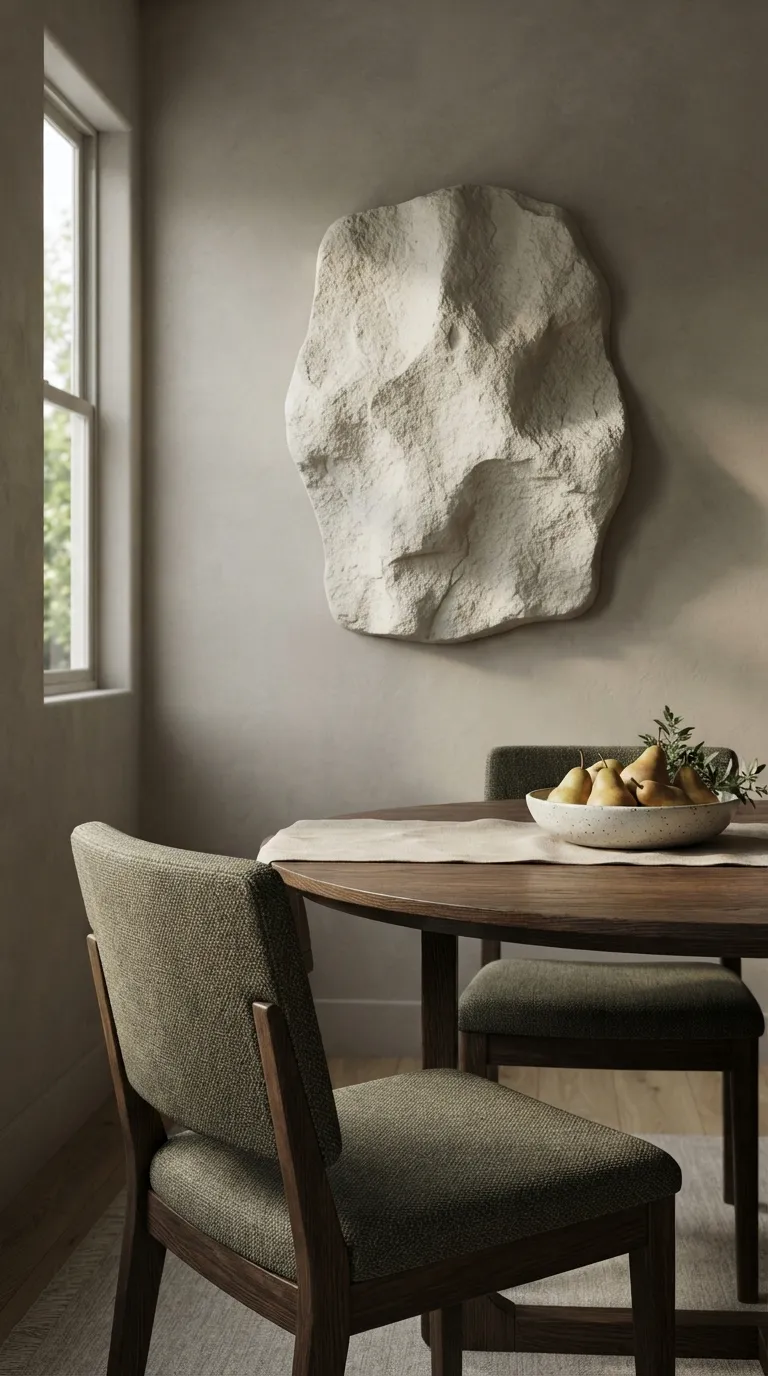
Stone wall art gives a dining room tactile interest without relying on bright color. Its uneven outline also contrasts nicely with a straight dining table.
Look for limestone, travertine, or another natural stone with a restrained finish. One substantial piece can be enough when the surrounding wall remains quiet.
Built-In Display Niche
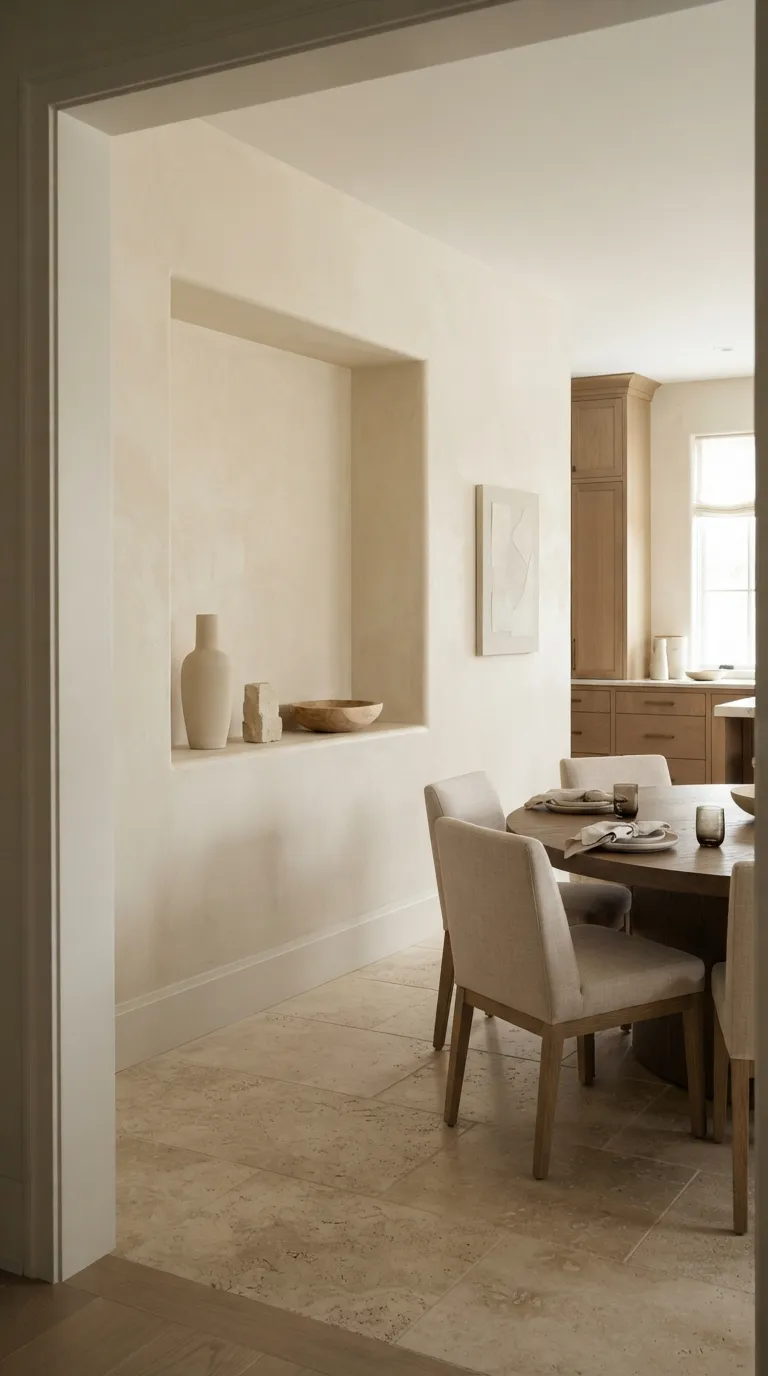
A recessed niche gives you built-in storage for a few decorative objects. It keeps the pieces contained, which helps the wall maintain a clean outline.
Use objects with different heights and similar muted finishes. Three pieces usually create enough interest without making the niche feel like a display cabinet.
Oversized Textile Art
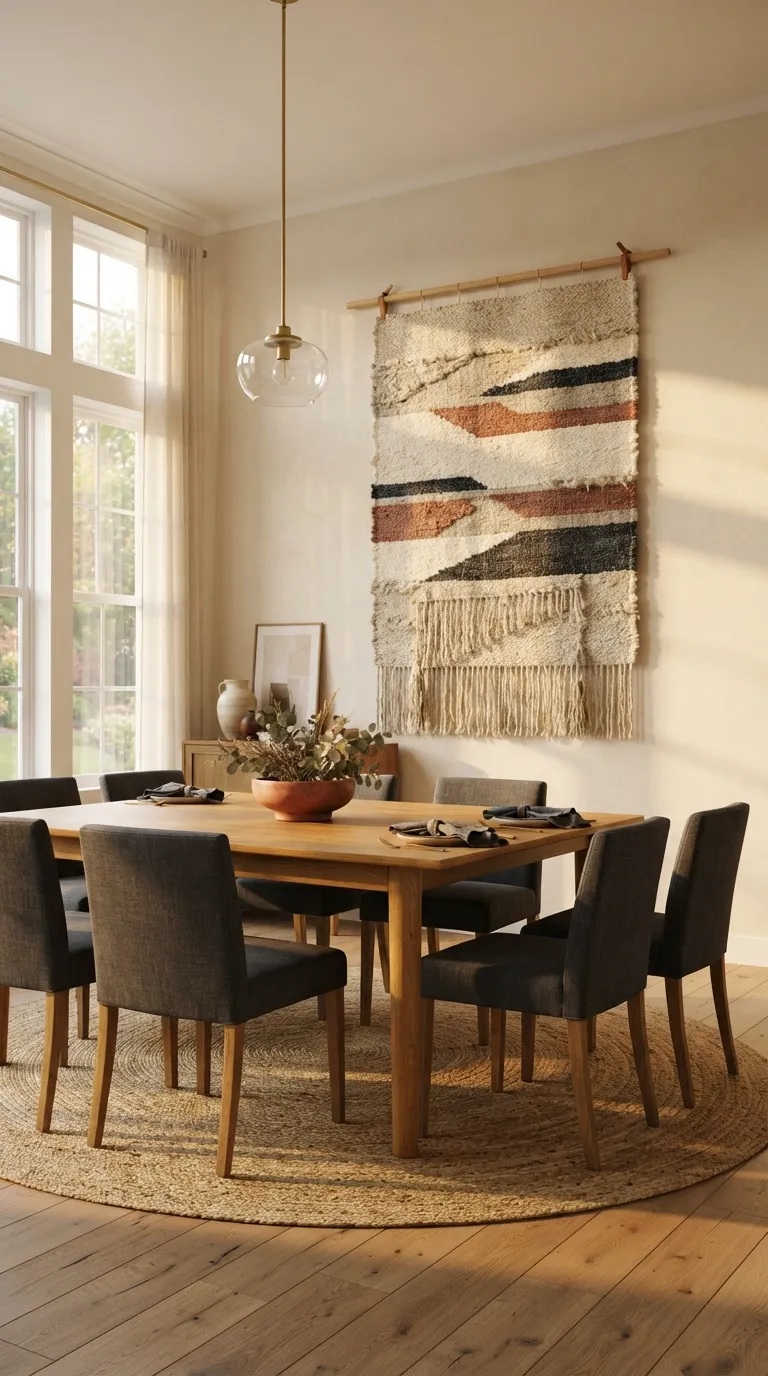
Textile art adds softness where framed artwork might feel too formal. Its woven surface can also bring warmth to rooms with hard flooring and wood furniture.
Pick a piece with a limited color range. Let the natural fibers remain visible, and avoid adding several other textured wall pieces nearby.
Thin Brass Rail
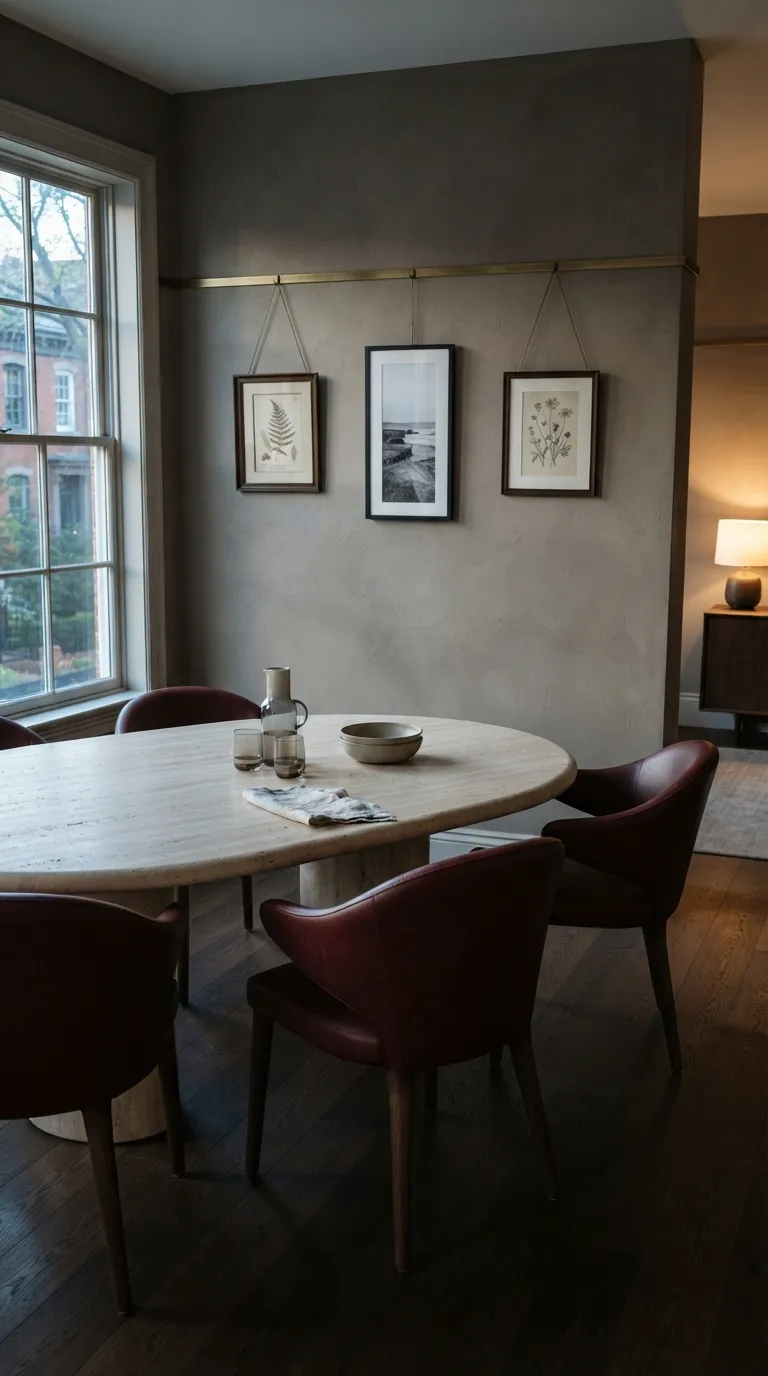
A slim picture rail offers a relaxed alternative to hanging every frame separately. You can change the artwork without creating new holes in the wall.
Use a metal finish that repeats elsewhere in the room. Keep the collection small, with enough space between pieces to preserve the minimalist feel.
Monochrome Photography
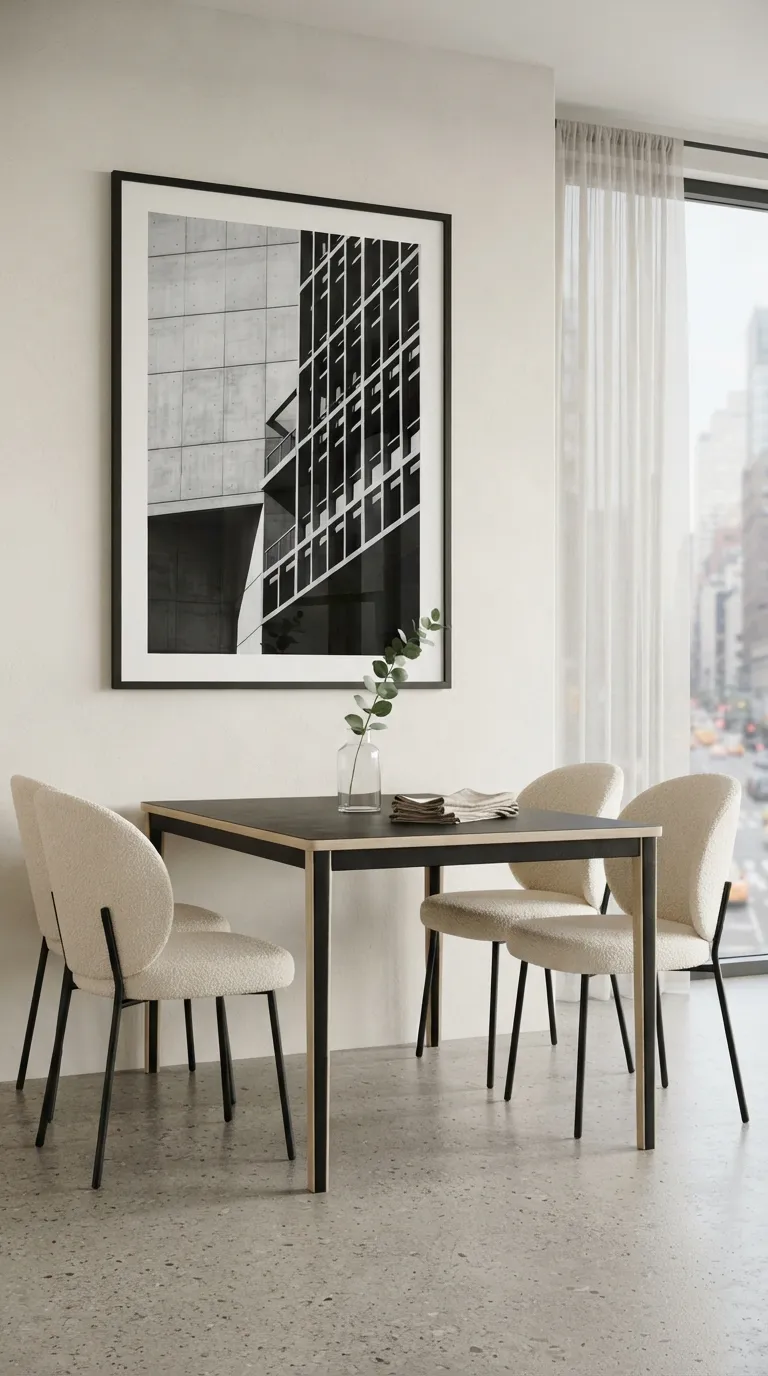
Monochrome photography gives you a strong focal point without adding many colors. Architectural images work particularly well with modern dining furniture.
Choose a photograph with open areas and simple shapes. A matte black frame can give the image structure while keeping the overall display restrained.
Asymmetrical Art Pair
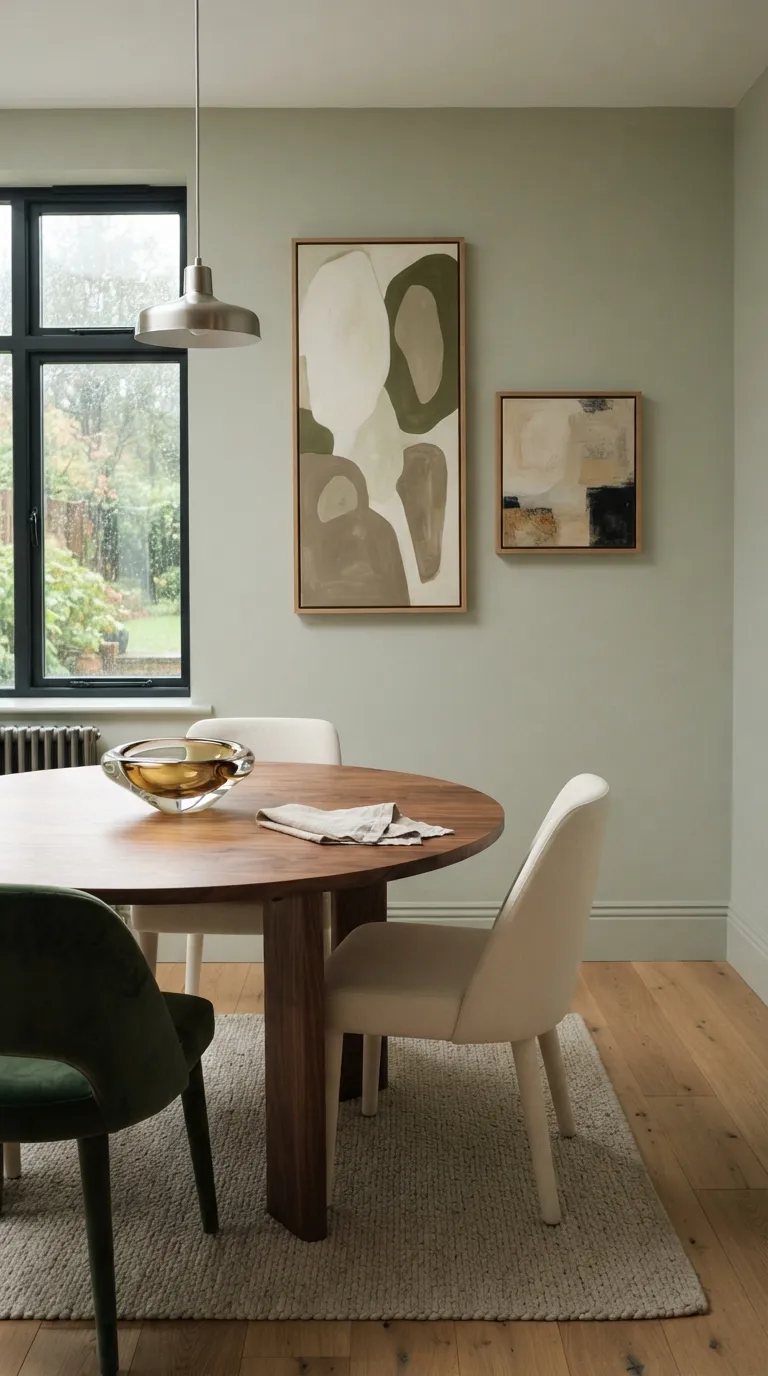
Not every artwork arrangement needs perfect symmetry. An asymmetrical pair can make a dining wall feel relaxed while still looking carefully planned.
Start with the larger piece, then position the smaller one nearby to balance its visual weight. Keep their colors connected so the uneven layout still feels cohesive.
In the End
Your dining wall doesn’t need a collection of objects to feel complete. A single artwork, textured surface, mirror, or carefully spaced display can give the room enough personality while leaving space for the eye to rest.
When choosing dining room wall decor minimalist pieces, start with the furniture already in the room. Match tones, repeat one material, and leave generous empty space around your focal point. The simplest arrangement often works like a well-edited outfit. Every piece has a purpose, and nothing feels out of place.
Olivia Carter
Olivia Carter is the founder of Lady Home Decor and a passionate home decor expert. She shares practical, stylish ideas to help homeowners create beautiful, comfortable, and welcoming spaces. Her expertise covers bedrooms, kitchens, living rooms, bathrooms, and small-space decorating.