24 Inspired Dining Room Wall Decor Ideas Simple That Shine

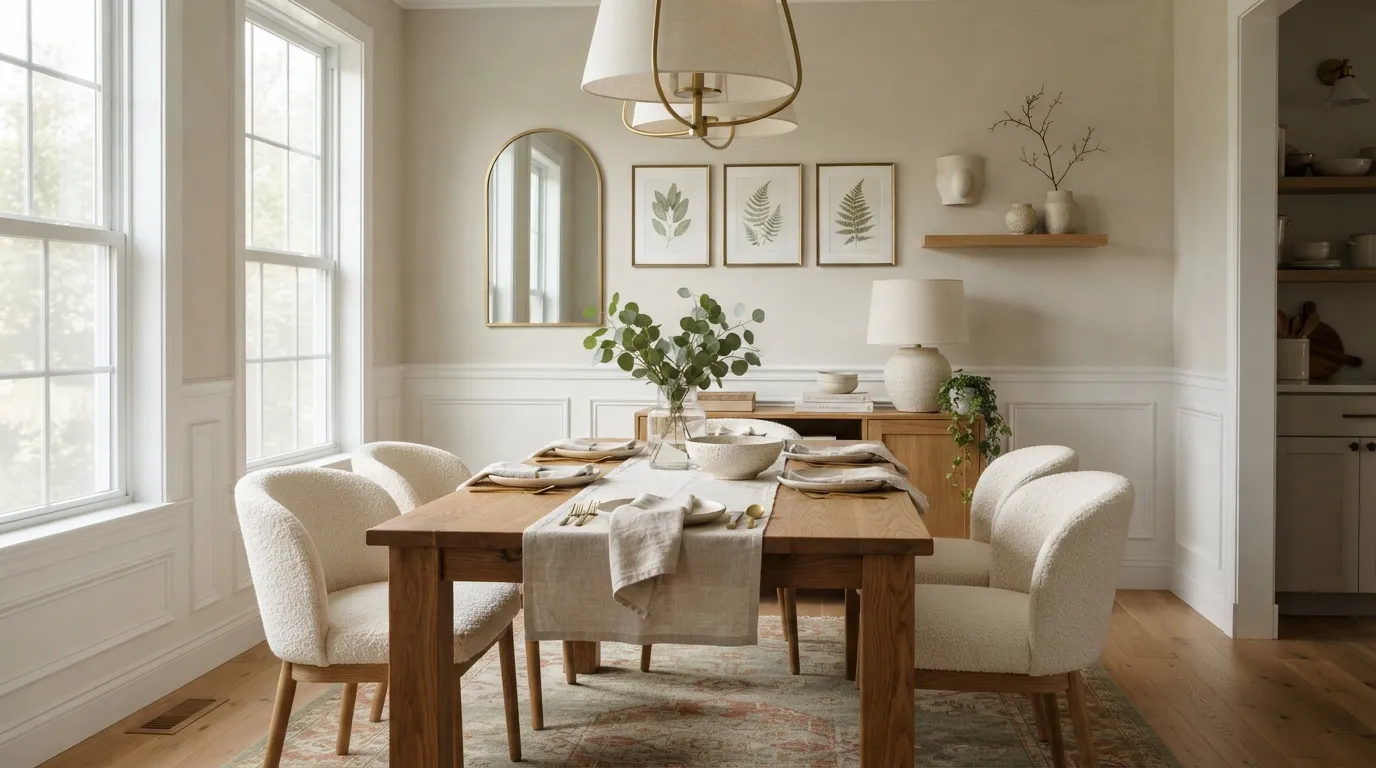
A plain dining wall can feel unfinished, but you don’t need a room full of decor to make it feel complete. These dining room wall decor ideas simple show how a few well-chosen pieces can add character without making the space feel crowded. Think framed art, mirrors, shelves, plates, wood accents, and soft color.
The best part is how easy these ideas are to adapt. Whether your dining area is compact, open-plan, traditional, or modern, a thoughtful wall arrangement can give the room a polished look while keeping the table as the heart of the space. Start with what you already own, then add pieces that support your home’s colors and style.
Framed Botanical Prints
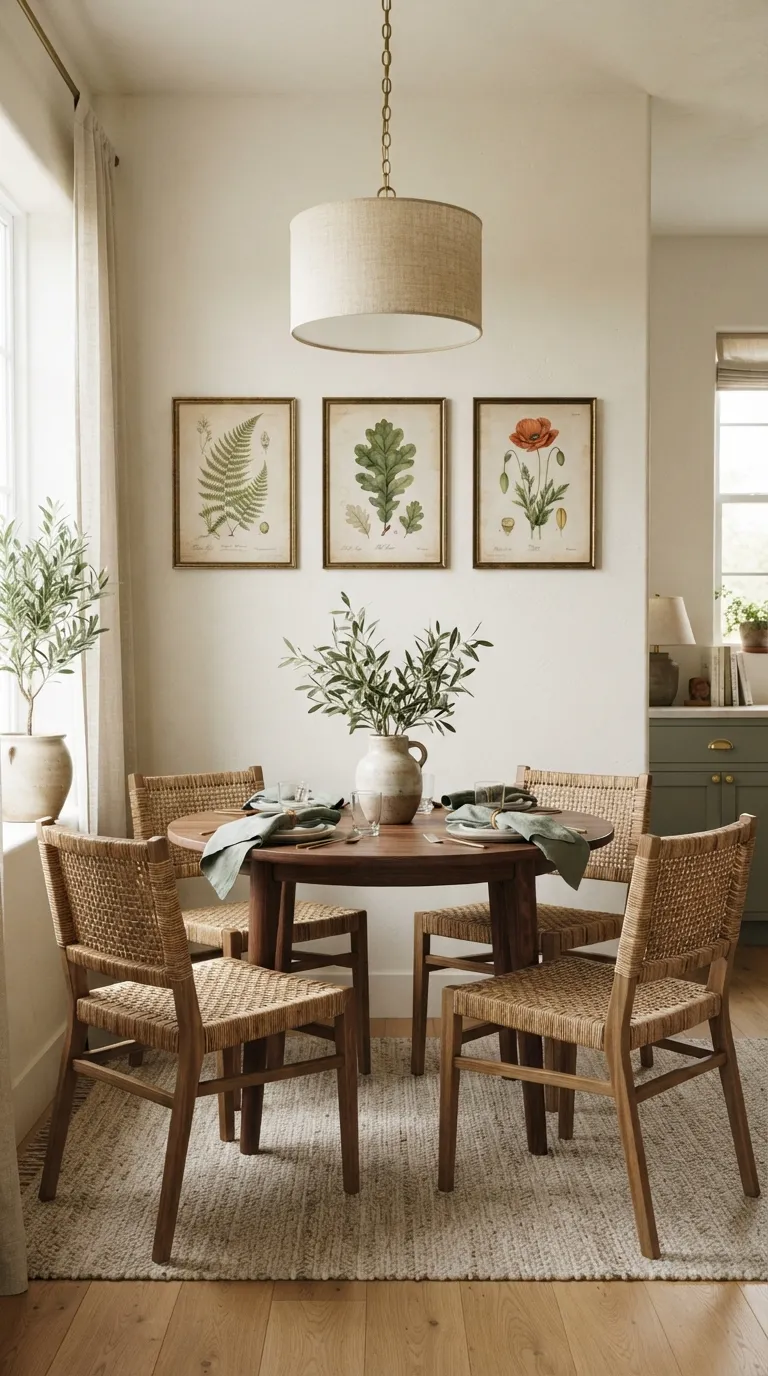
Botanical prints bring a quiet natural touch to the dining area without taking over the wall. Choose two or three related designs and keep the frames similar for a clean, connected look.
For a softer room, try pale green leaves against warm cream backgrounds. In a darker dining space, charcoal botanical artwork can create contrast while still feeling calm. This is one of the easiest dining room wall decor ideas simple to copy because the arrangement works above both large and small tables.
Oversized Round Mirror
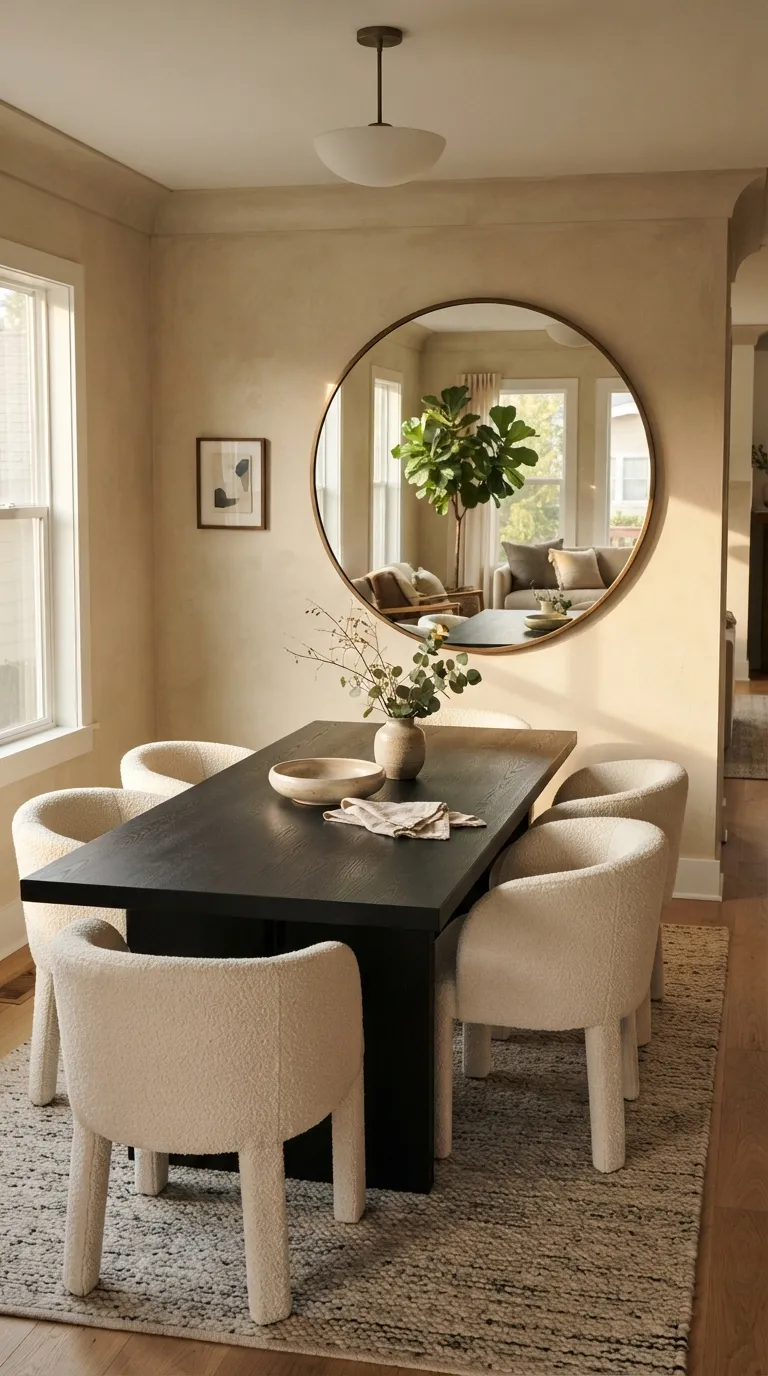
A large round mirror can make a dining wall feel more open while adding a clear focal point. Its curved shape also softens the straight lines of a table, chairs, and rectangular artwork.
Place the mirror where it can reflect natural light or an attractive part of the room. A thin bronze, black, or wood frame can connect it with nearby finishes without making the wall feel busy. Keep the table styling low so the mirror remains the main feature.
Slim Picture Ledge
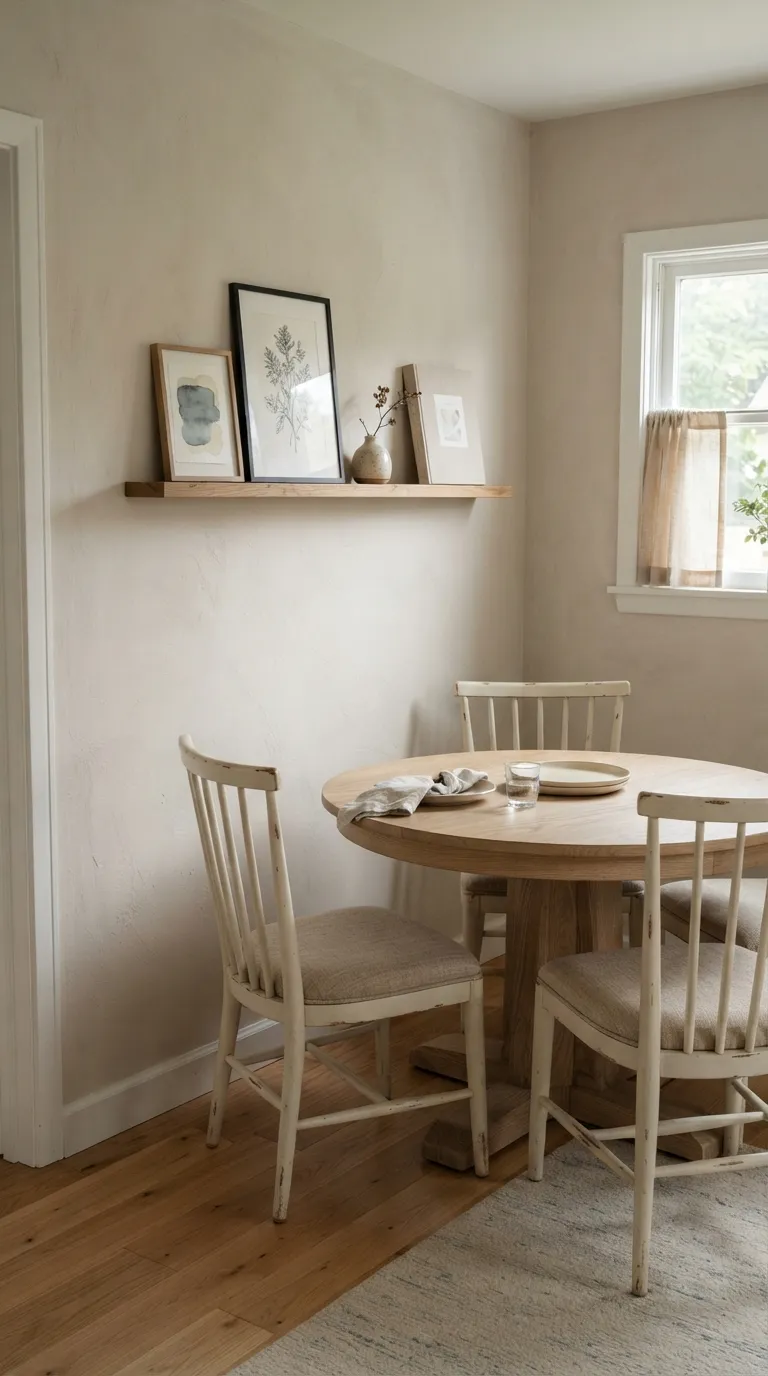
A slim picture ledge gives you room to decorate without committing to a fixed gallery arrangement. Lean a few frames against the wall, then add one or two small objects for texture.
This setup works especially well when you like changing your decor through the seasons. Picture a spring arrangement with soft botanical art, followed by warmer artwork and ceramic pieces in autumn. The ledge keeps everything contained, so the dining wall still feels tidy.
Woven Wall Basket Display
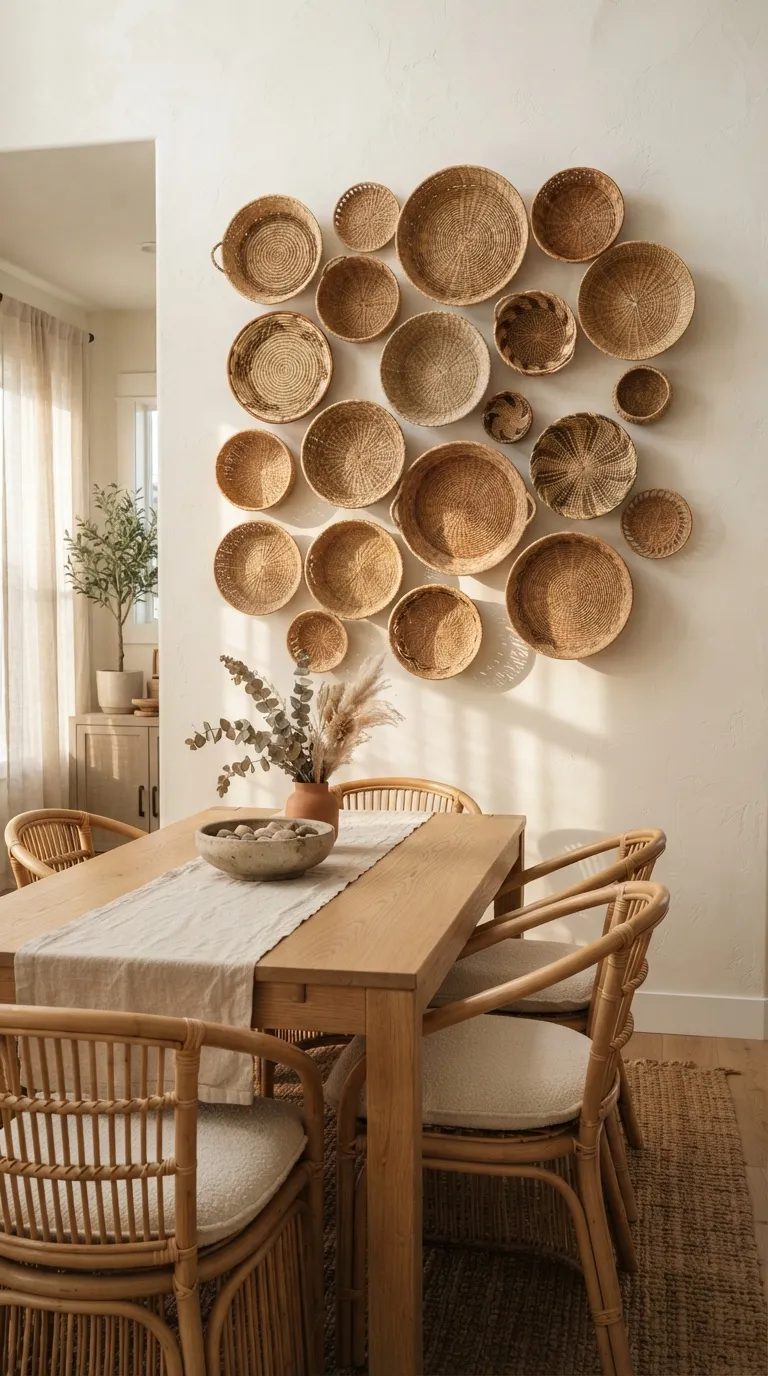
Woven baskets add depth to a blank dining wall without making it feel formal. Mix several shapes, but keep the colors within one natural family for a relaxed finish.
This idea suits farmhouse, coastal, boho, and warm modern rooms. Leave some wall space between the baskets so each piece has breathing room instead of forming one heavy block.
Minimal Black Frames
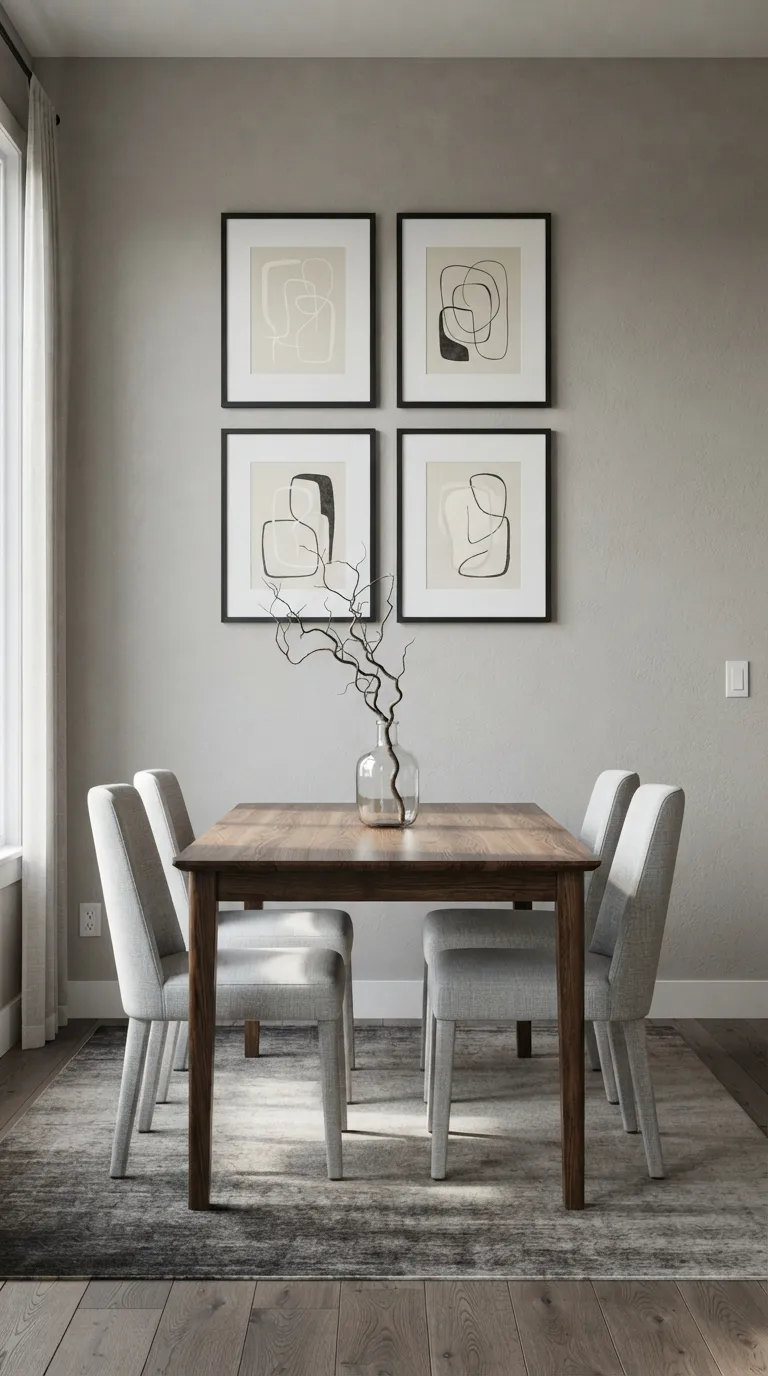
Black frames give a dining wall a neat graphic edge. They work especially well when the room already has black lighting, hardware, or chair details.
Keep the artwork simple if you want a lighter appearance. Four matching frames can create order, while different artwork inside them adds enough personality to keep the wall from looking stiff.
Soft Arched Mirror
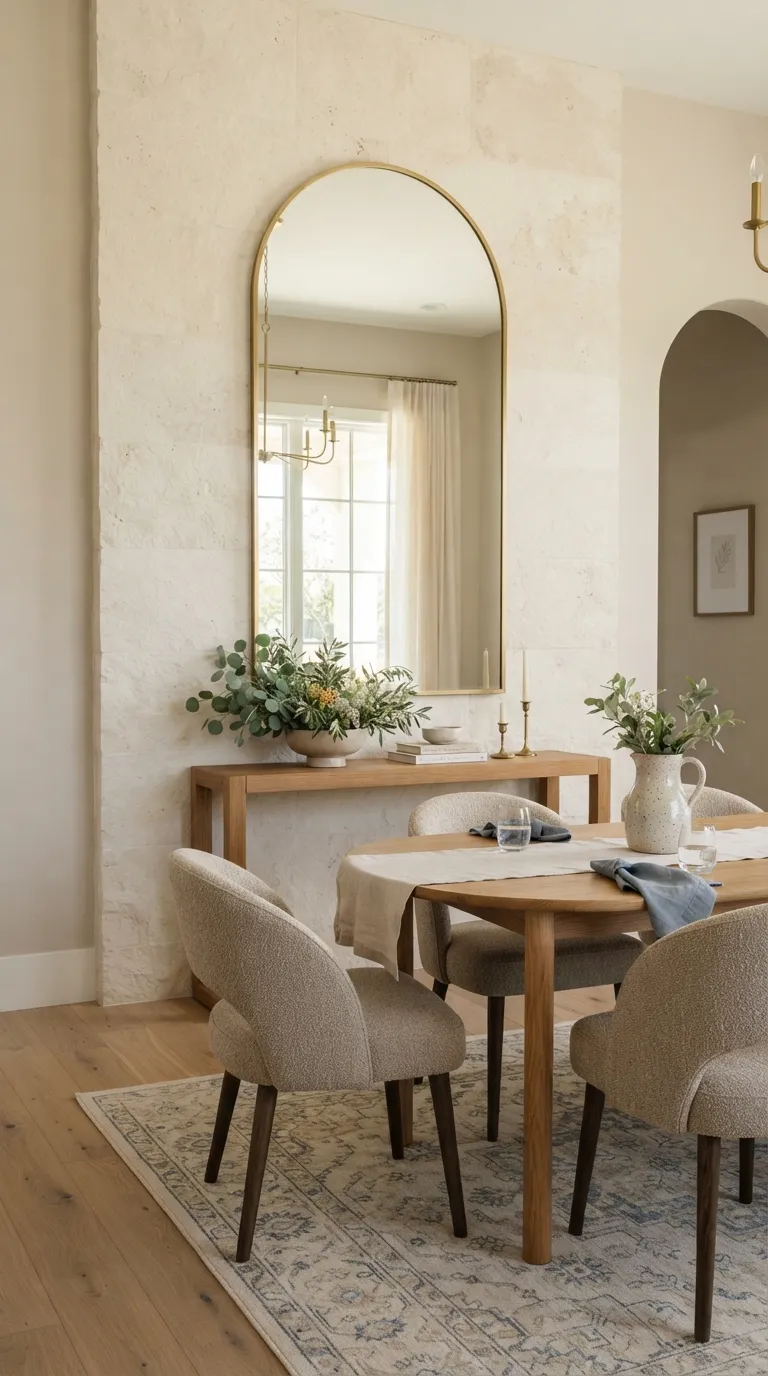
An arched mirror brings a gentle curve to a dining space filled with straight furniture lines. The shape feels decorative even when the wall has just one main piece.
Choose a frame that repeats a finish already found nearby. A brass light fixture or warm metal cabinet handle can make the mirror feel connected to the rest of the room.
Floating Wood Shelves
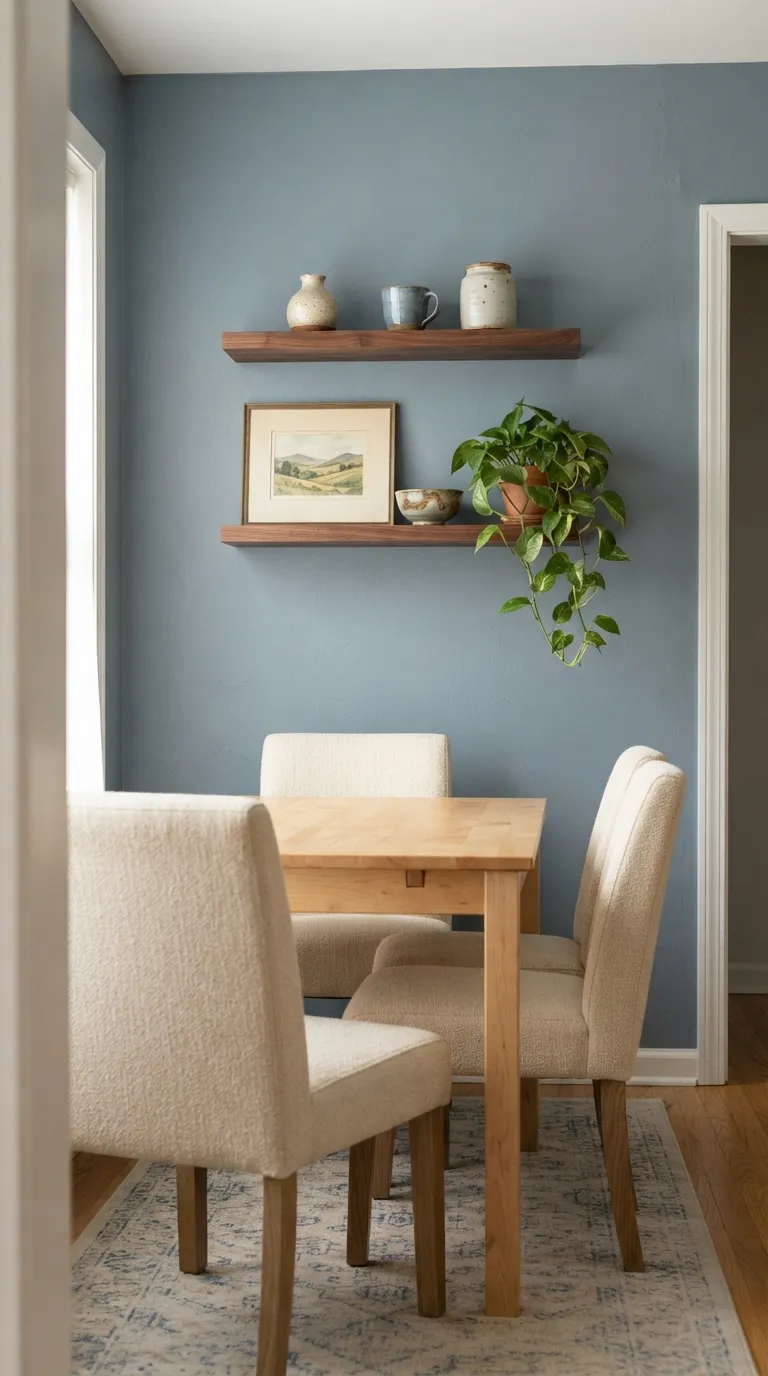
Floating shelves give you useful display space while keeping the wall visually light. Two slim shelves are often enough for a dining area.
Mix practical and decorative objects rather than filling every inch. A small plant, ceramic bowl, and framed print can create a balanced arrangement without making the shelves feel crowded.
Large Abstract Canvas
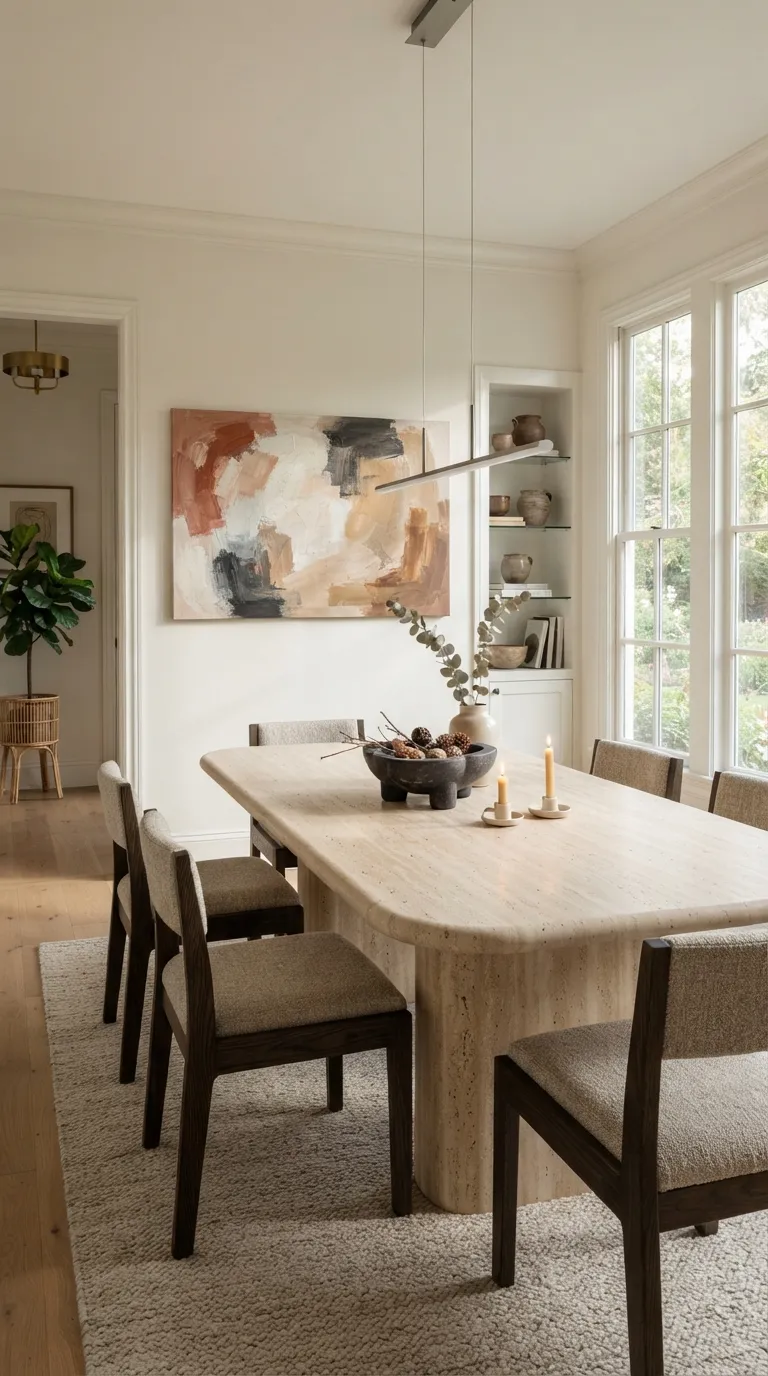
One large canvas can anchor a dining wall without needing several smaller pieces. Pick artwork that pulls together colors already present in your chairs, rug, or table.
Keep the surrounding wall fairly quiet so the artwork has room to stand out. A wide canvas works particularly well above a long table because its shape follows the furniture below.
Vintage Plate Arrangement
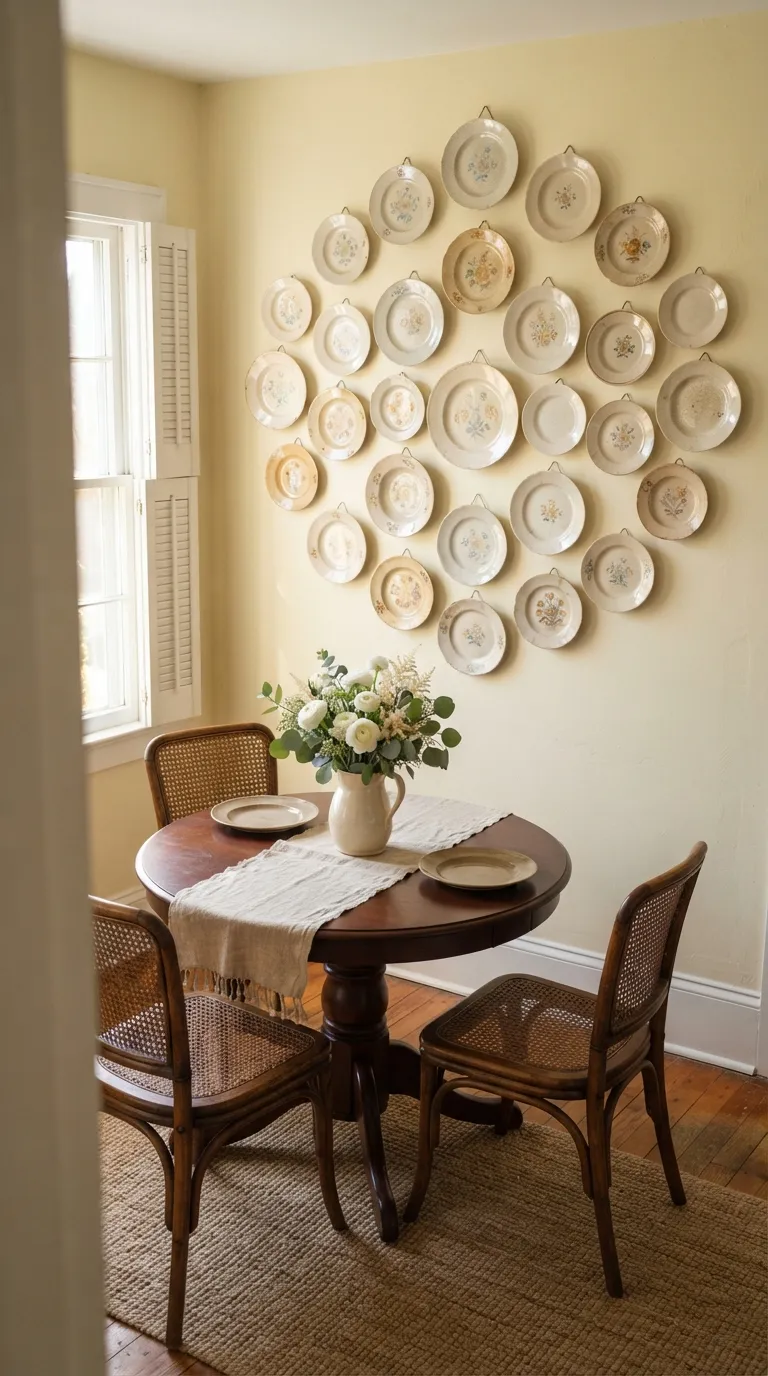
Vintage plates can turn an empty wall into a collected focal point. Look for pieces with related colors rather than trying to make every plate match.
Arrange the largest plates first, then fill small gaps with smaller ones. Keep the overall outline loose and organic for a homey dining room rather than a rigid display.
Simple Wood Panel Accent
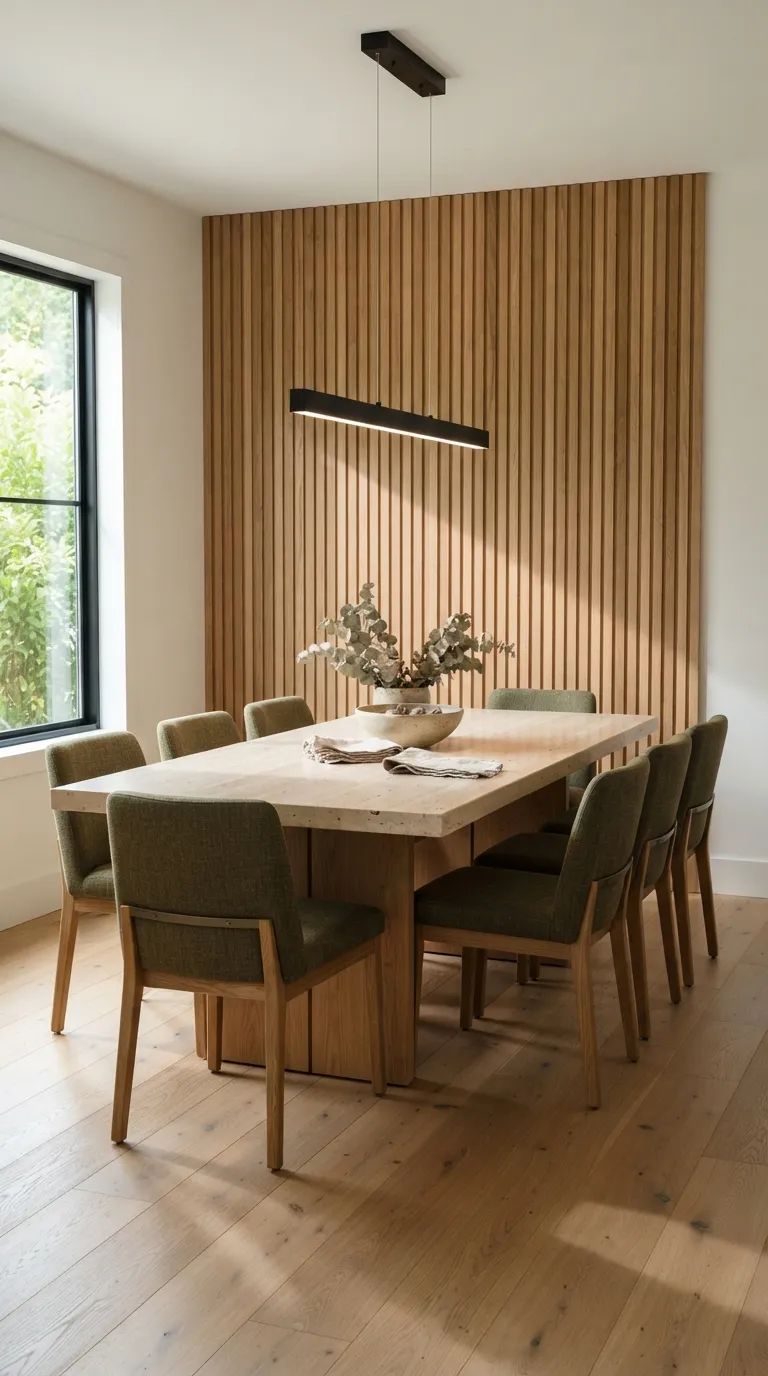
A wood accent wall adds warmth without requiring lots of separate decorations. Narrow vertical slats can also make the dining area feel taller.
You don’t need to cover every wall. A single accent section behind the dining table can provide enough visual interest while keeping the rest of the room calm.
Gallery of Family Photos
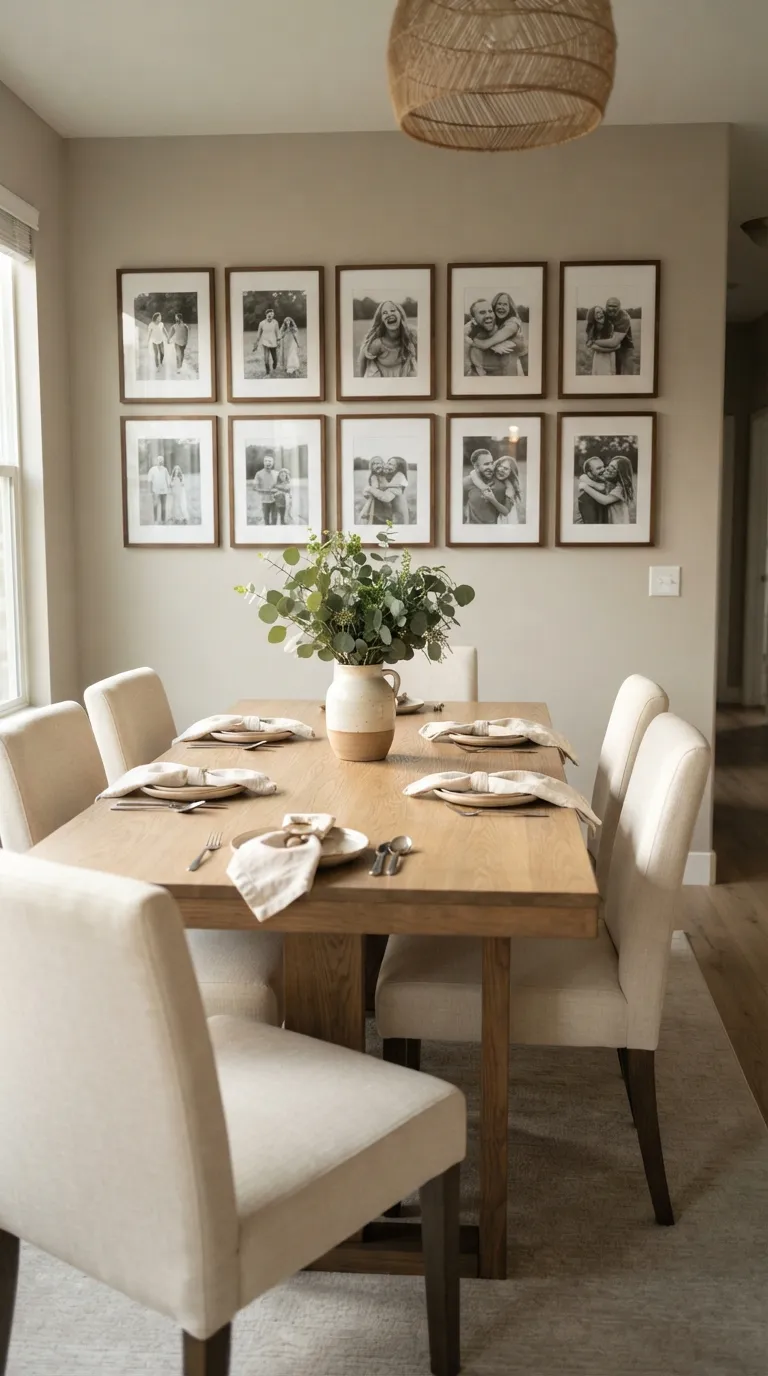
A dining room is a natural place for meaningful photographs because people already gather there. Black-and-white images can keep the display visually calm.
Use frames in one finish for a tidy appearance. Leave equal spacing between the pieces, and keep the gallery centered over the table rather than spreading it too far across the wall.
Textured Plaster Wall
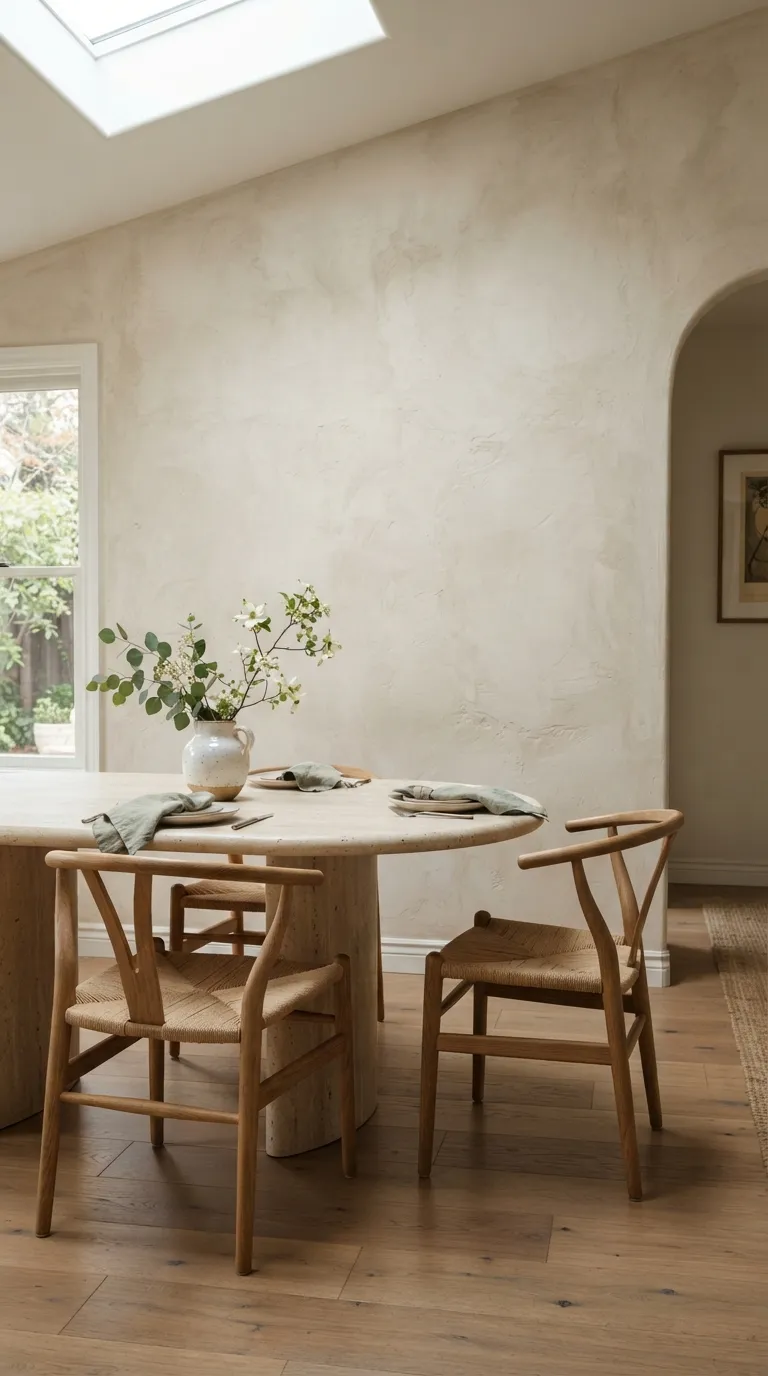
Sometimes the wall itself can do the decorative work. A textured plaster finish adds depth while keeping the room free from extra objects.
This approach suits minimalist dining rooms where visual clutter isn’t welcome. Pair the wall with simple furniture and natural materials so the finish stays at the center.
Narrow Vertical Artwork
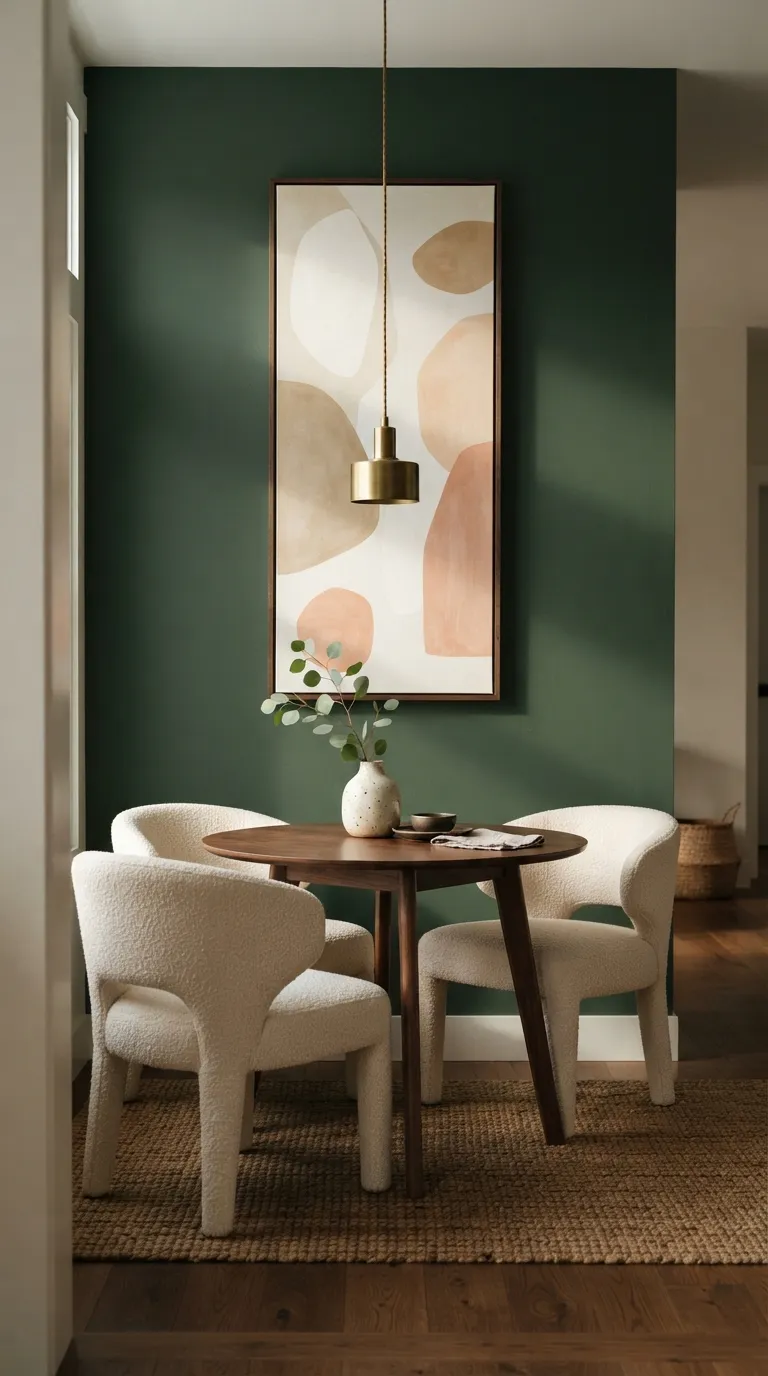
A tall artwork piece works nicely when the dining wall has more height than width. Its vertical shape can balance a compact table underneath.
Choose a print with colors already found in the room. You don’t need an exact match; two shared tones are usually enough to make the pieces feel connected.
Decorative Wall Sconces
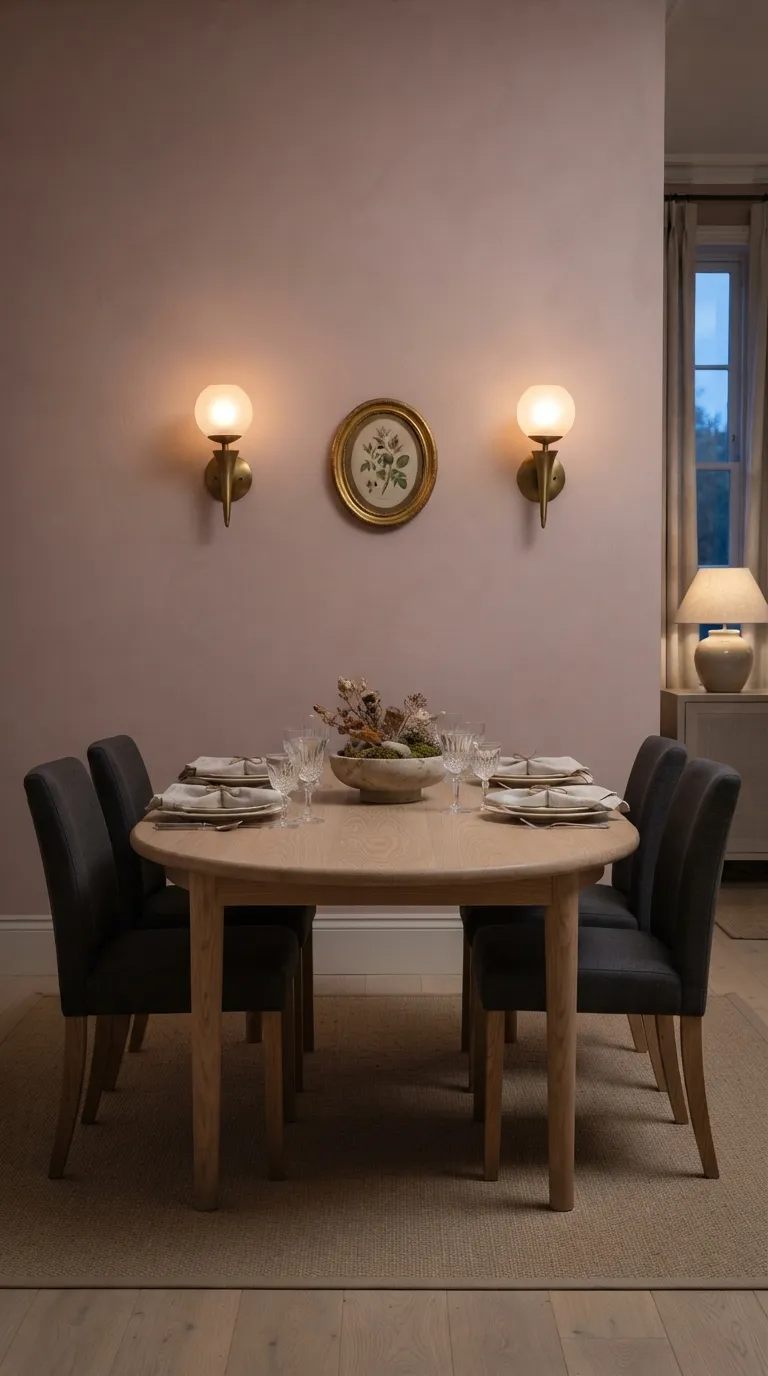
Wall sconces can serve as both lighting and decoration. Place a pair around artwork or a mirror to create a balanced wall composition.
Choose fixtures that fit your dining room’s scale. Slim sconces suit smaller spaces, while larger sculptural fixtures can anchor a wide wall above a long table.
Small Landscape Prints
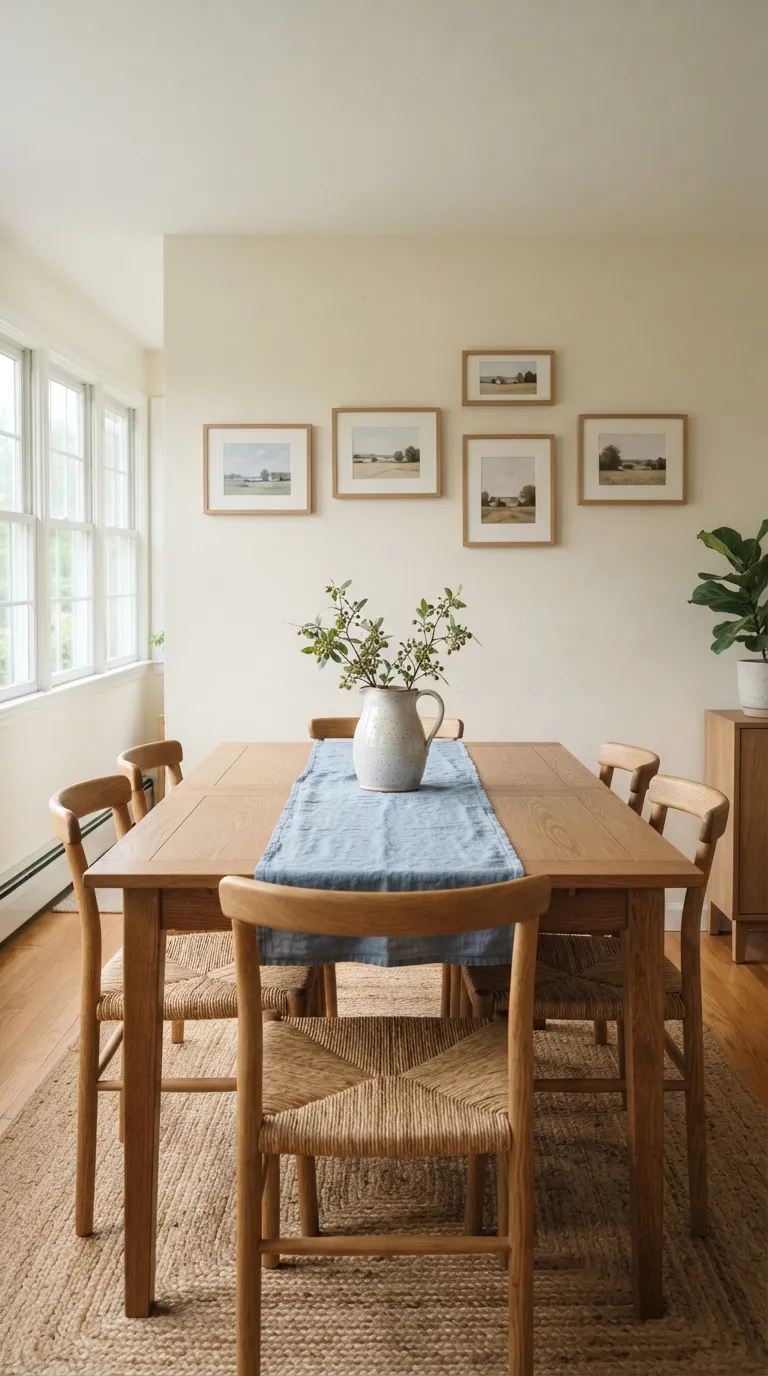
Small landscape prints create a collected look without demanding much wall space. They’re especially useful when you want artwork that feels classic and relaxed.
Keep the frames consistent to make several small pieces read as one display. A soft palette of greens, blues, and earth tones can also connect the wall to plants, rugs, or table linens.
Sculptural Ceramic Wall Art
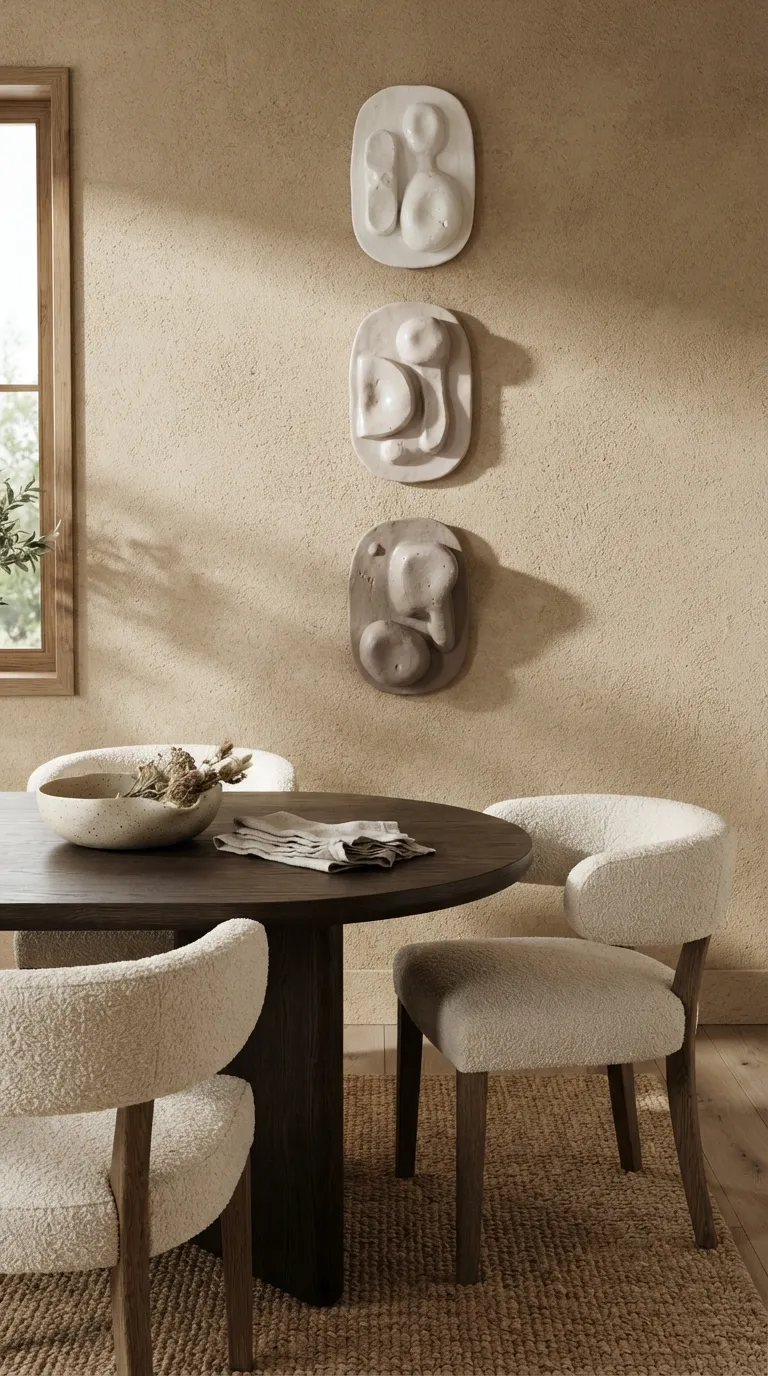
Ceramic wall pieces add shape without relying on framed artwork. Their raised surfaces catch light throughout the day, giving the wall subtle depth.
Choose pieces with similar finishes but slightly different forms. Hang them with enough space around each one so their sculptural quality remains easy to see.
Statement Wallpaper Panel
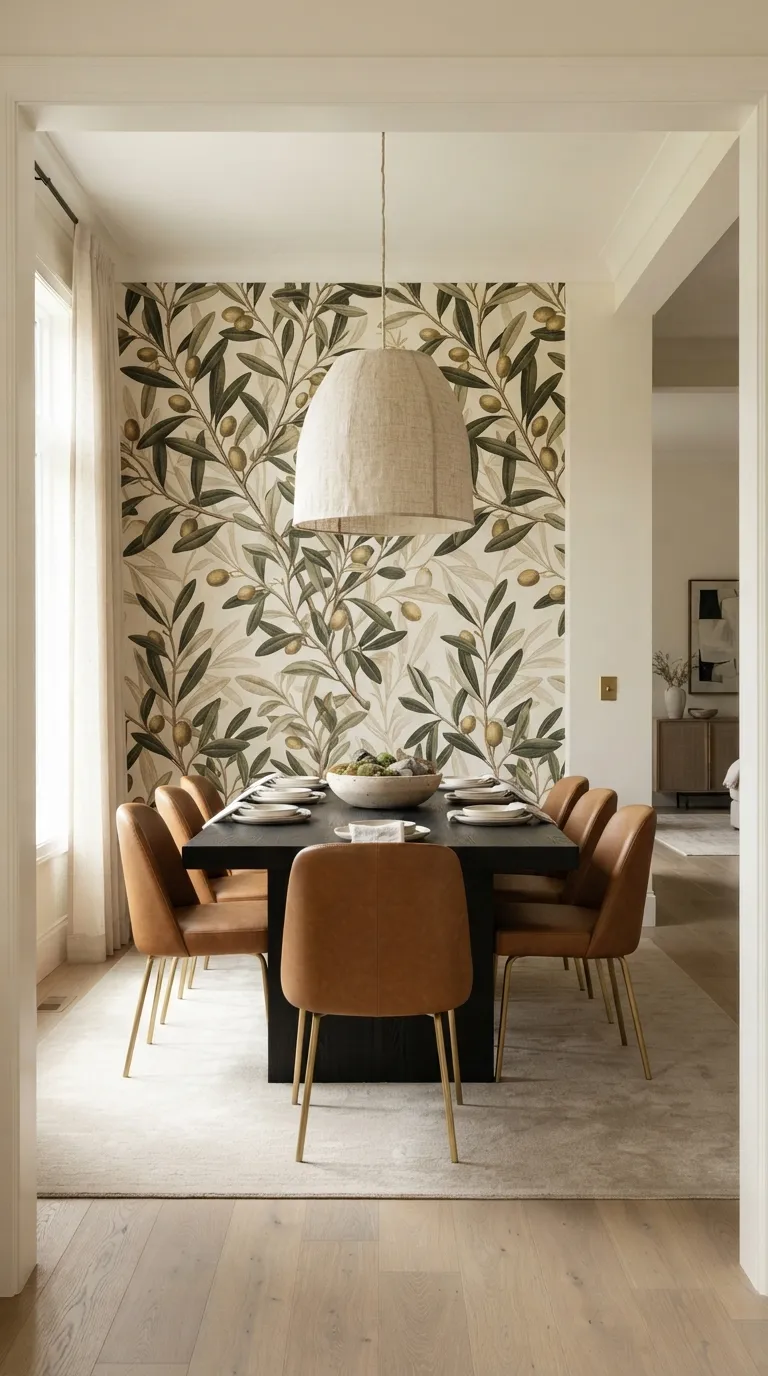
Wallpaper can decorate an entire wall without adding shelves, frames, or objects. A subtle botanical pattern gives the dining area personality while keeping the furniture simple.
If you’re unsure about covering a large area, use wallpaper on one feature wall. Let the table and chairs stay understated so the pattern doesn’t compete with them.
Round Clock Accent
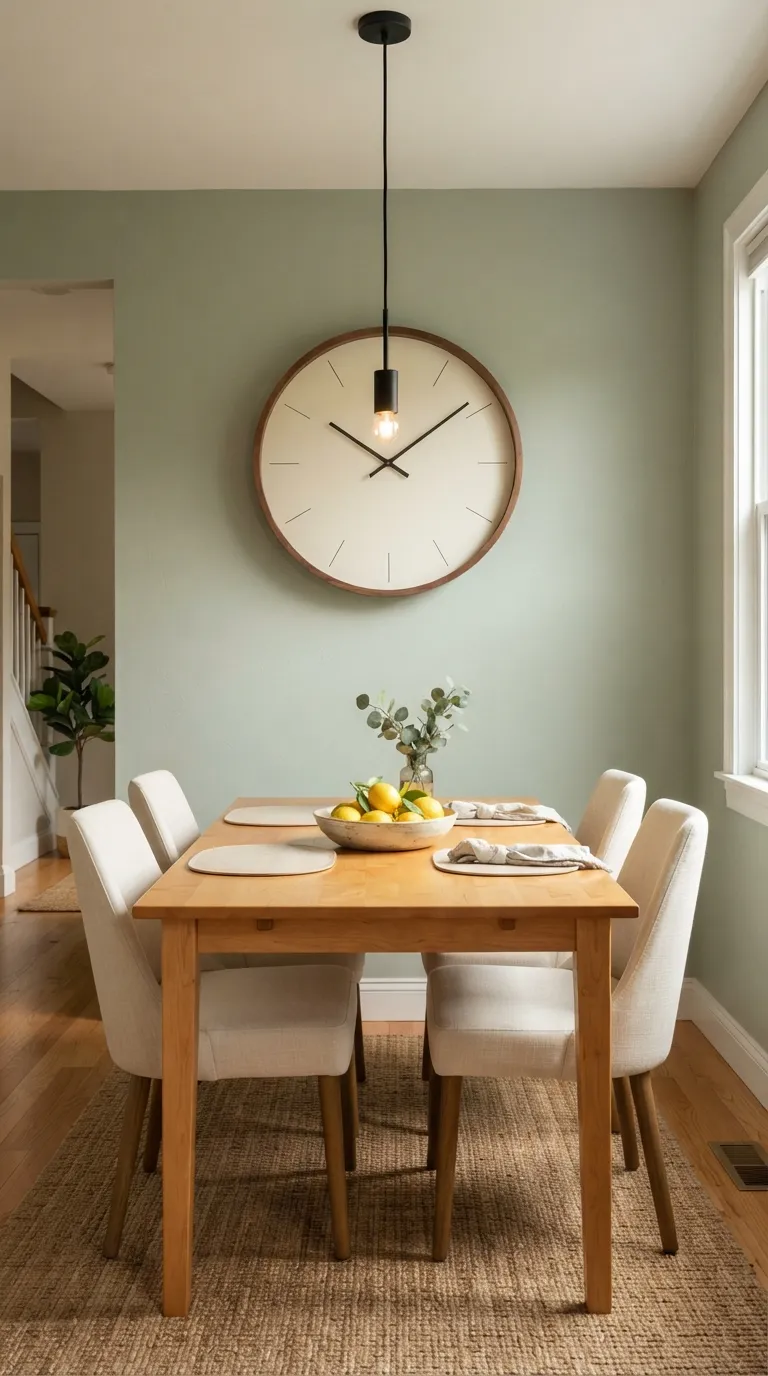
A round clock can fill a dining wall while still serving a practical purpose. Its circular shape works nicely above rectangular tables.
Pick a simple face and a frame that matches your furniture. Avoid overly busy clock designs if the room already has artwork or patterned textiles nearby.
Built-In Display Niche
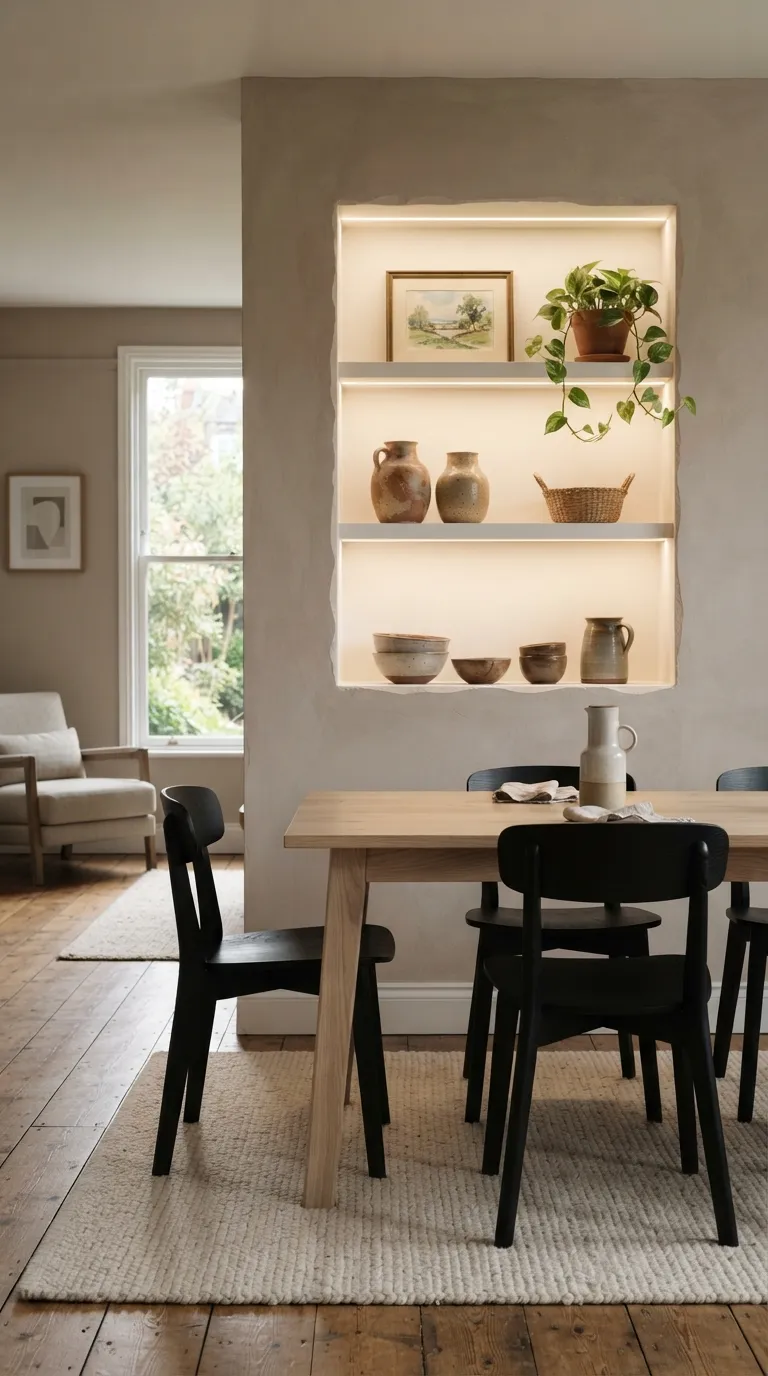
A built-in niche gives the dining wall a permanent display area. It can hold a few favorite pieces without taking floor space.
Keep the shelf styling restrained. Three or four objects per level are often enough, especially when the niche itself has strong architectural detail.
Monochrome Art Trio
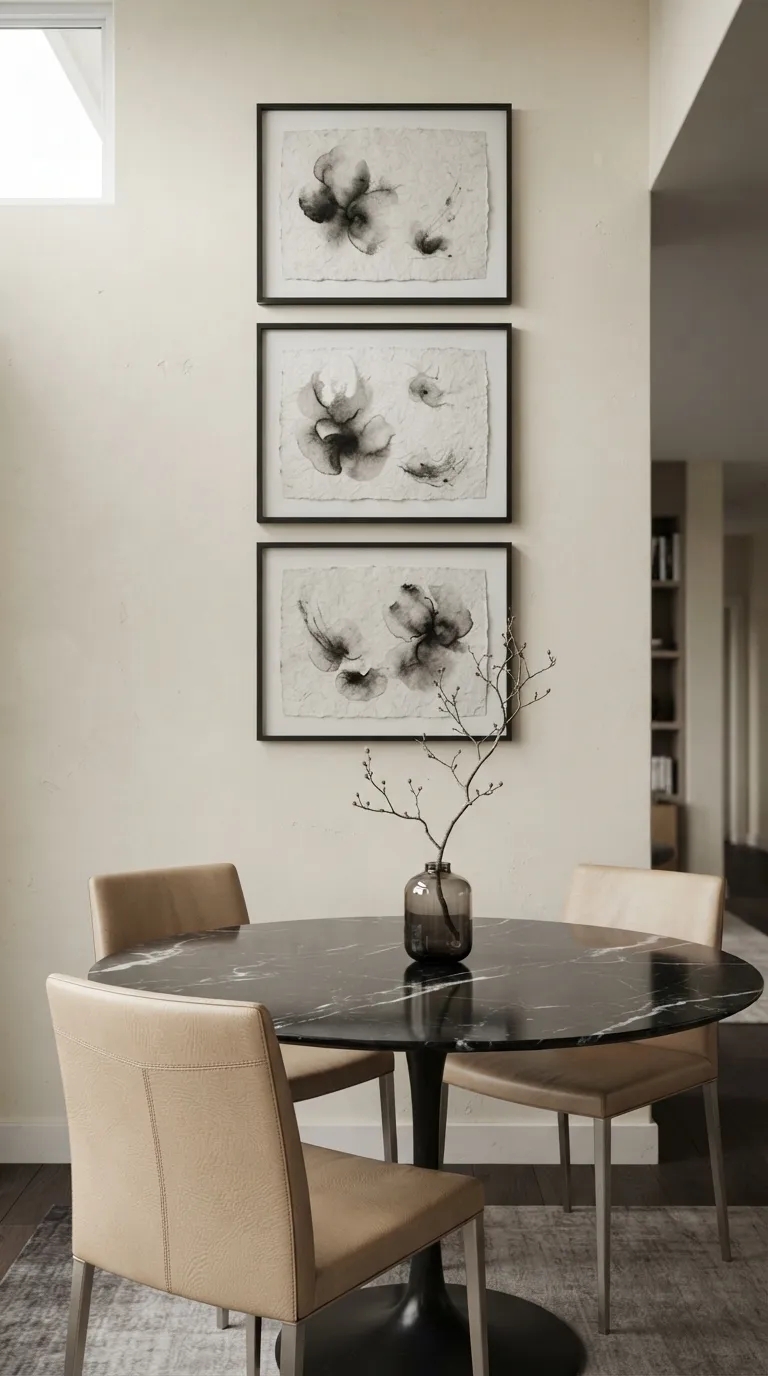
A trio of monochrome prints keeps the dining wall refined without adding many colors. The repeated black and cream tones create a simple visual rhythm.
Hang the pieces with even spacing and keep their outer edges aligned. This makes three separate artworks feel like one intentional wall arrangement.
Rustic Wood Sign Alternative
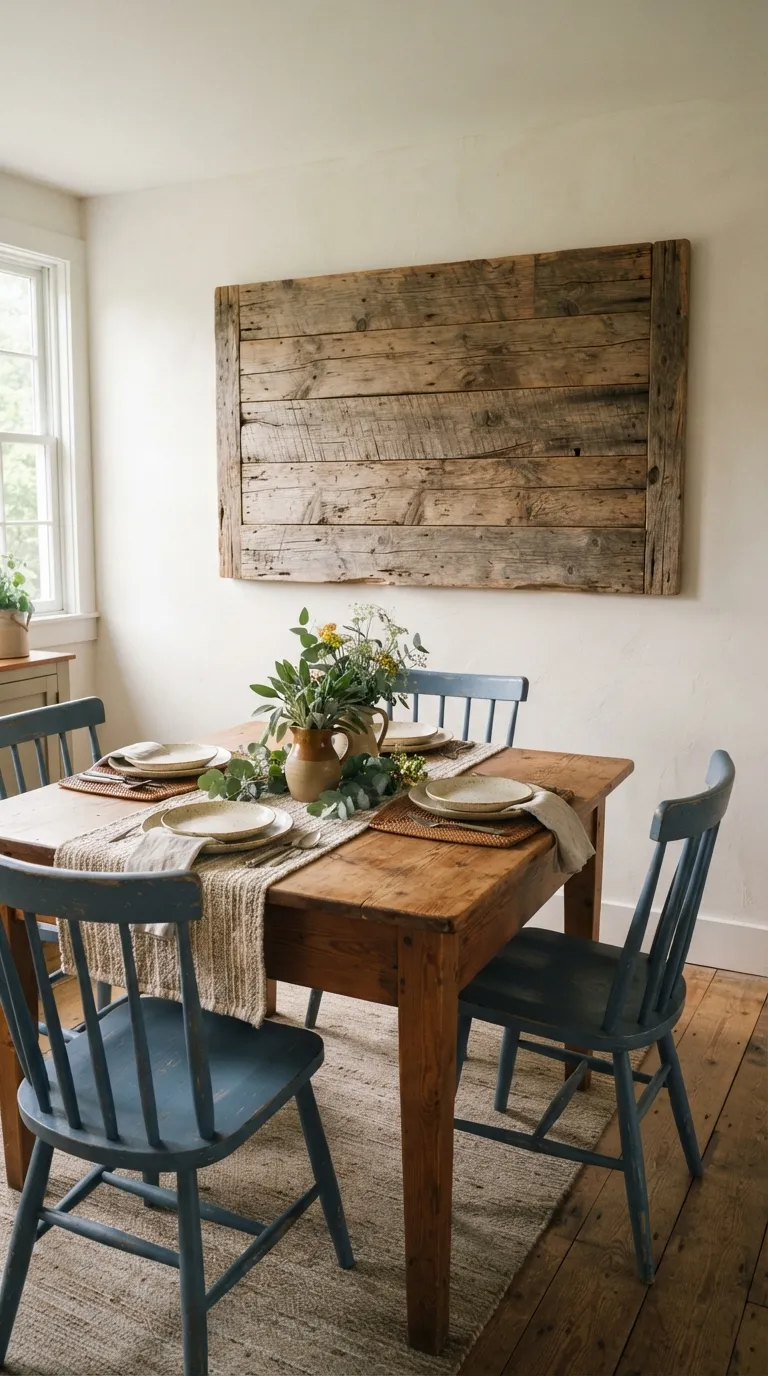
A reclaimed wood panel brings rustic character to the dining wall without needing a collection of small decorations. Its natural grain provides enough visual texture on its own.
Look for aged boards with varied tones and visible knots. Keep nearby accessories simple so the wood remains the main feature.
Soft Fabric Wall Hanging
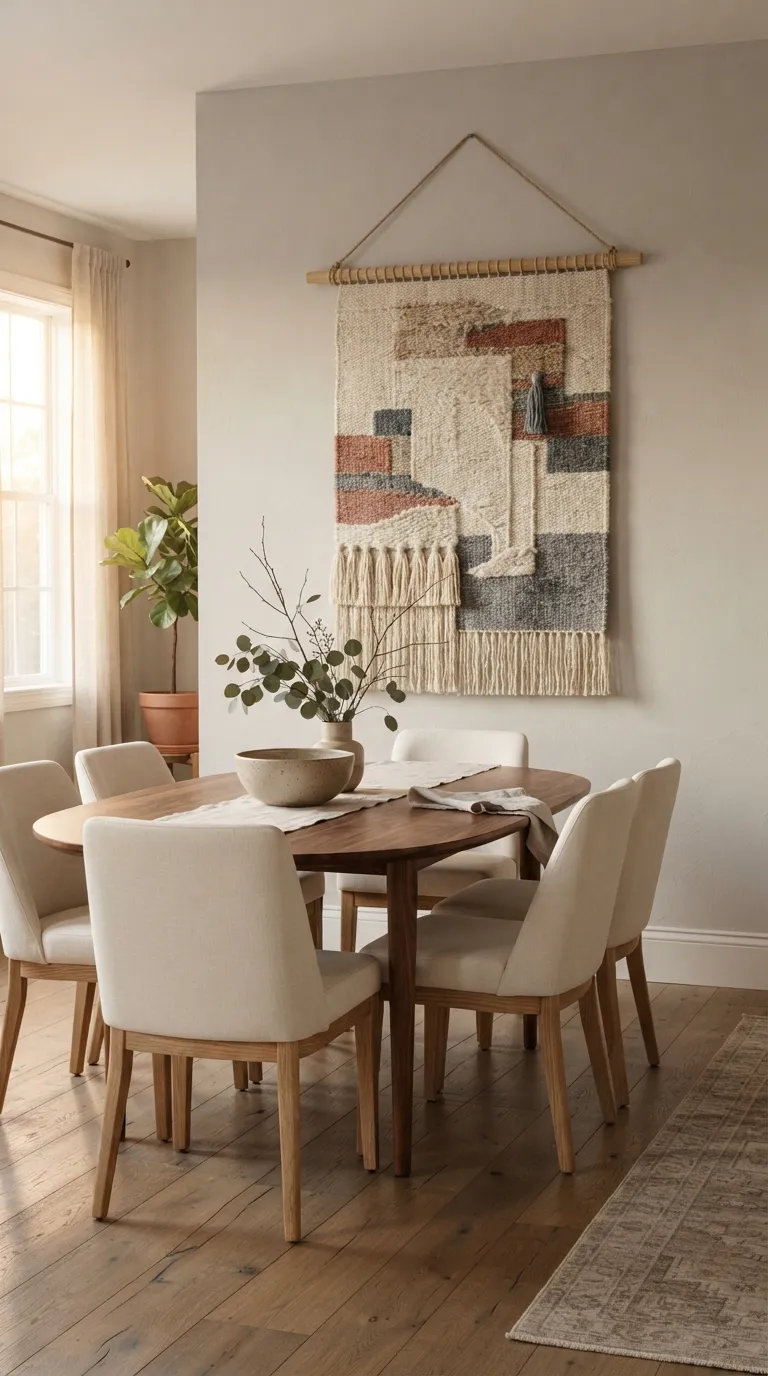
A fabric wall hanging softens a dining room with texture rather than hard surfaces. It’s a good choice when framed art feels too structured.
Choose a textile that repeats one or two colors from the room. A natural wood dowel keeps the display casual and works well with wood dining furniture.
Open Plate Shelf
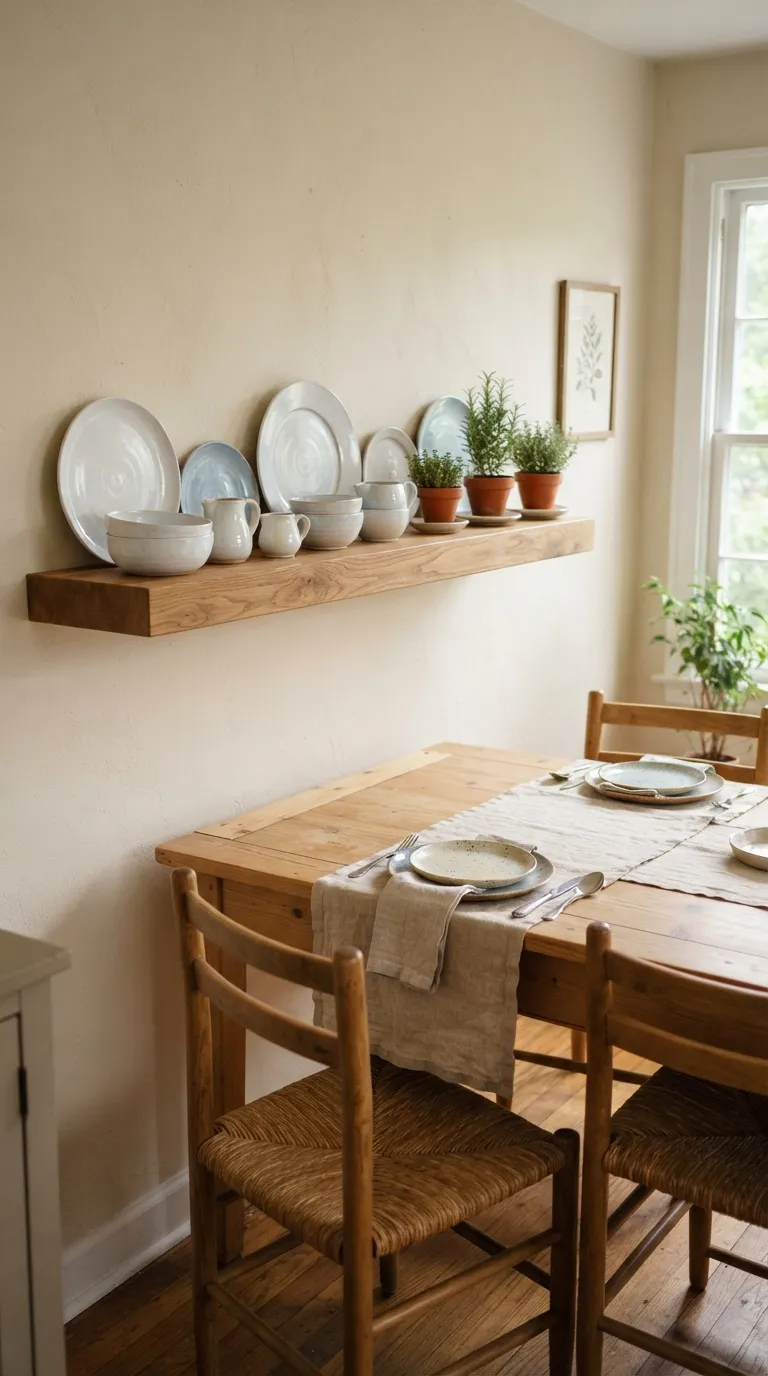
An open plate shelf can make everyday dishes part of the dining room decor. It also gives you a practical spot for pieces you use often.
Choose plates in a limited color range so the shelf looks collected rather than chaotic. Leave small gaps between groups of dishes to keep the arrangement light.
Full-Width Art Ledge
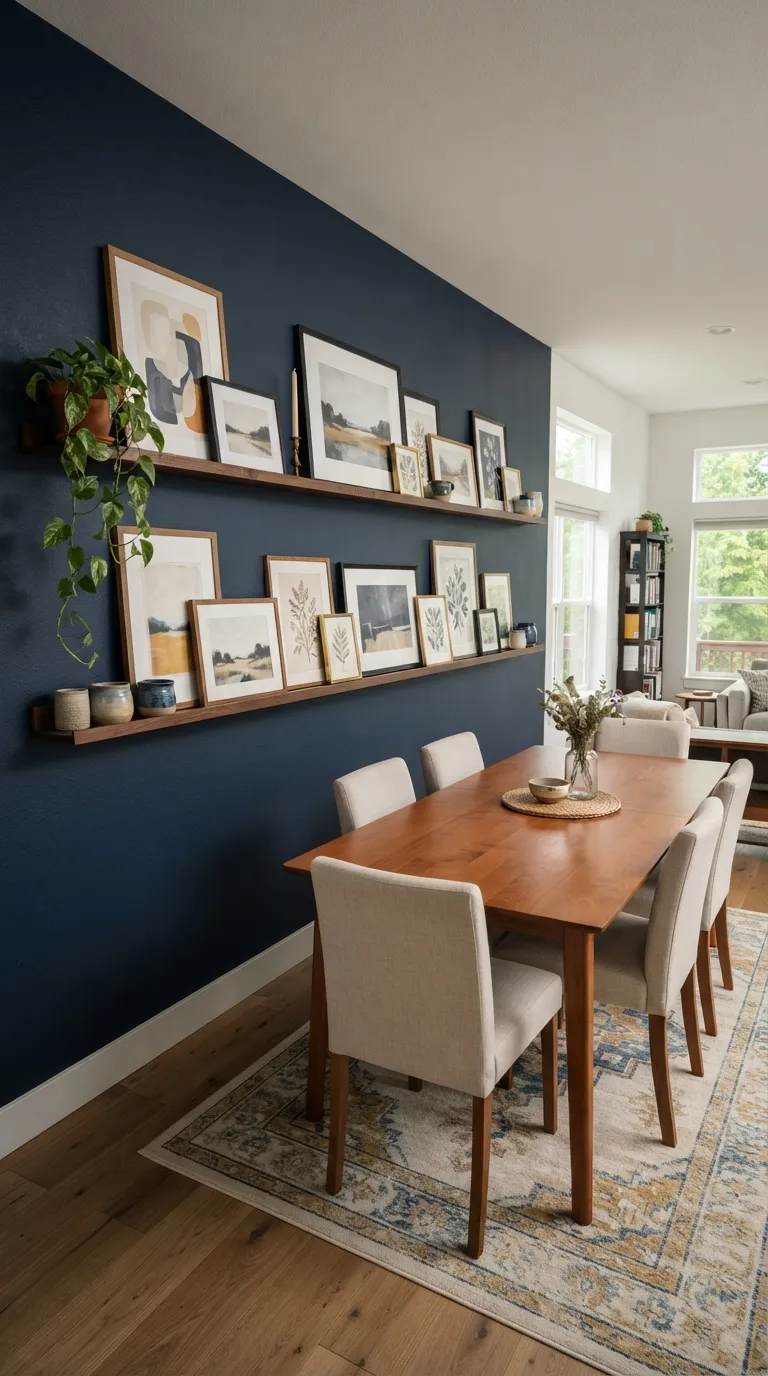
A full-width ledge is useful when your dining wall feels long and empty. It gives you one continuous display area without requiring a complicated gallery layout.
Layer artwork by height, then add a few small objects between the frames. Keep the lower edge of the display clean so the wall still feels intentional.
The Bottom Line
You don’t need dozens of pieces to make a dining wall feel finished. A mirror, a few frames, woven texture, shelves, or one strong artwork piece can give the space a clear focal point while leaving plenty of breathing room.
When choosing among these dining room wall decor ideas simple, start with your wall size and the furniture beneath it. Pick one main feature, repeat a few colors from the room, and leave enough empty space around your decor. That simple formula can turn a plain wall into a warm backdrop for everyday meals, weekend dinners, and everything in between.
Olivia Carter
Olivia Carter is the founder of Lady Home Decor and a passionate home decor expert. She shares practical, stylish ideas to help homeowners create beautiful, comfortable, and welcoming spaces. Her expertise covers bedrooms, kitchens, living rooms, bathrooms, and small-space decorating.