20 Charming Rustic Farmhouse Dining Room Decor Ideas
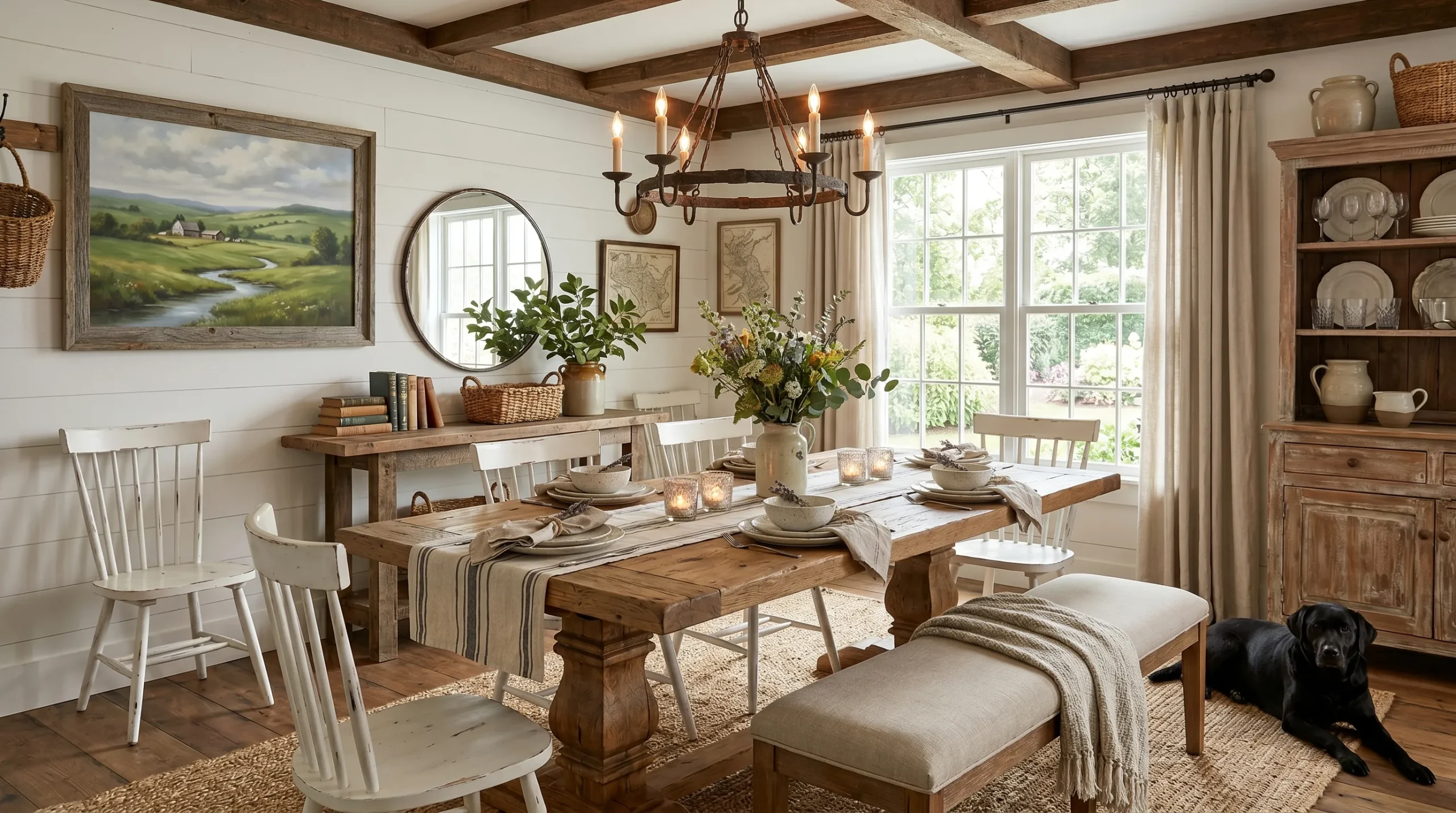
Setting the Scene
Dreaming of a dining space that feels warm, inviting, and effortlessly beautiful? These rustic farmhouse dining room decor ideas are designed to turn everyday meals into cozy, memorable moments. Whether your space feels plain, cluttered, or lacks personality, this guide will help you create a setting that feels both functional and inspiring.
In my experience, small design changes can completely shift how a room feels and how often you enjoy using it. From simple texture updates to thoughtful styling details, each idea in this article focuses on real solutions that work in everyday homes. You’ll discover practical ways to add warmth, improve comfort, and create a space that feels naturally welcoming without overwhelming effort or cost.
If you’ve been scrolling Pinterest looking for ideas that actually feel doable, this is exactly what you need. Each concept is easy to imagine, simple to apply, and designed to help you build a dining space that reflects your style while staying cozy and timeless.
1. Reclaimed Wood Table
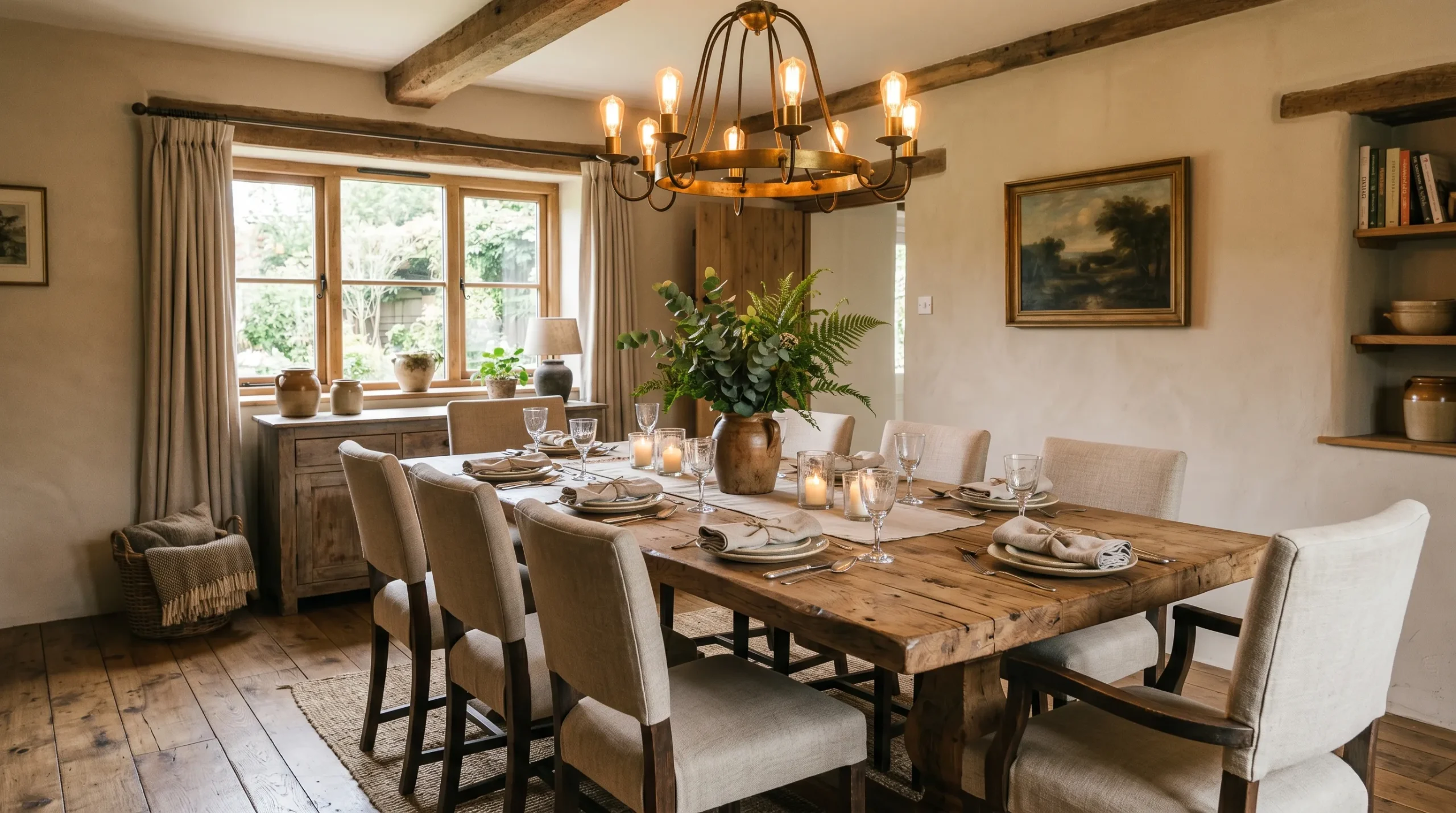
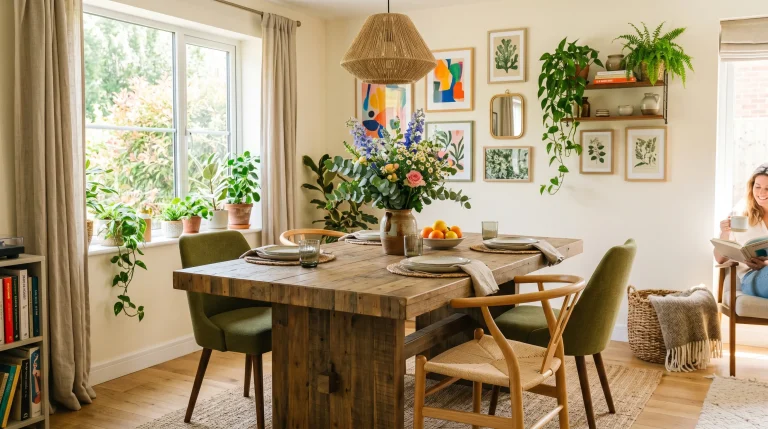
There’s something instantly inviting about a reclaimed wood table that makes the entire space feel grounded and real. The natural imperfections, knots, and grain patterns create character you simply can’t replicate with new materials. In my experience, this type of table becomes the heart of the room, where everyday meals feel more meaningful and gatherings feel more relaxed. It blends effortlessly with different chair styles, making it flexible for evolving decor. This is why it’s often the centerpiece in rustic farmhouse dining room decor that feels both authentic and timeless.
What makes this idea work so well in real homes is its balance between beauty and durability. Reclaimed wood is often stronger due to its age, meaning it holds up well against daily use, spills, and scratches. I’ve noticed that even when it wears over time, it actually looks better, adding more charm instead of looking damaged. Pairing it with soft textiles or light-colored chairs creates contrast and keeps the space from feeling heavy. The result is a dining area that feels warm, practical, and effortlessly styled without trying too hard.
2. Neutral Linen Chairs
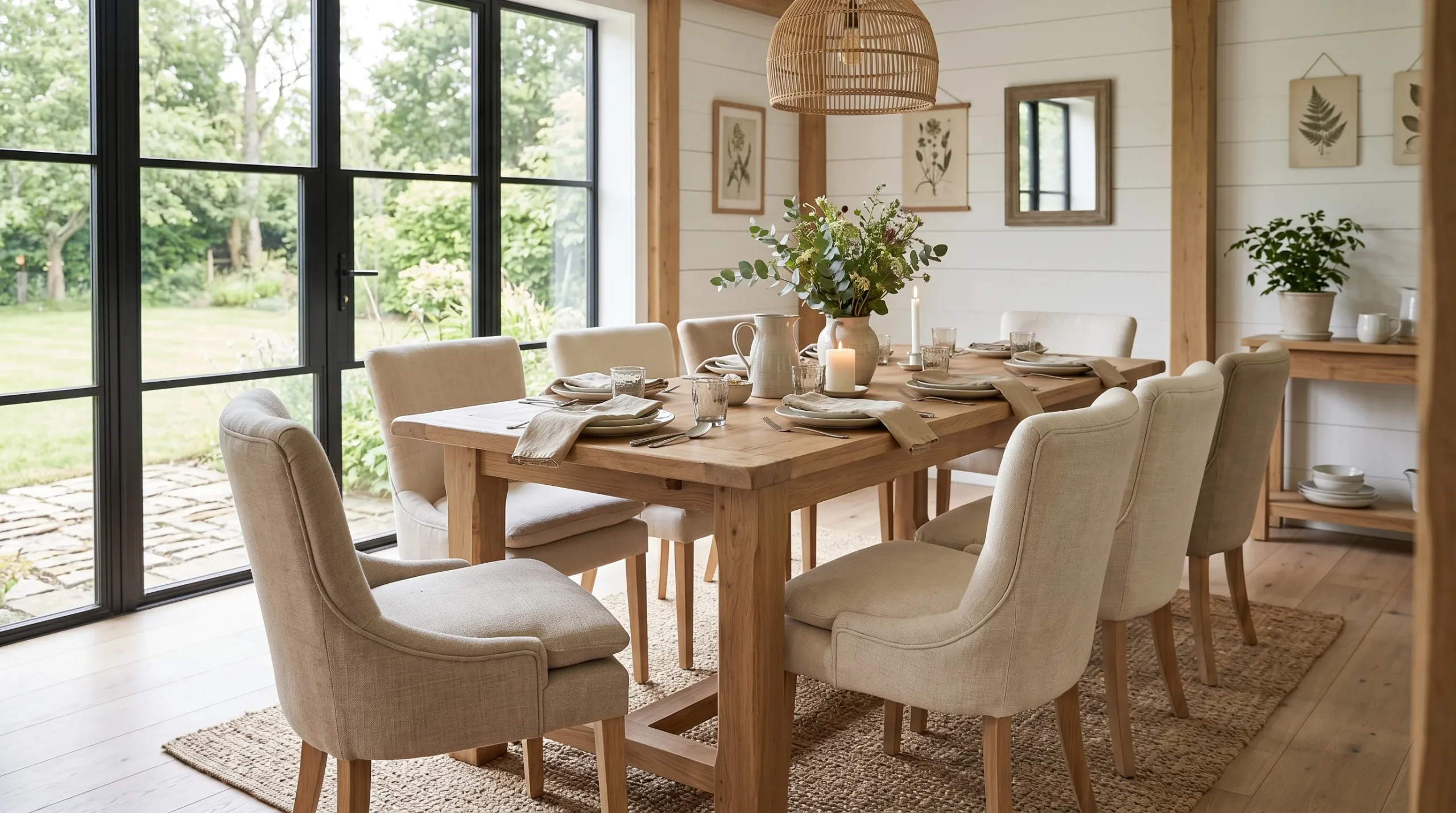
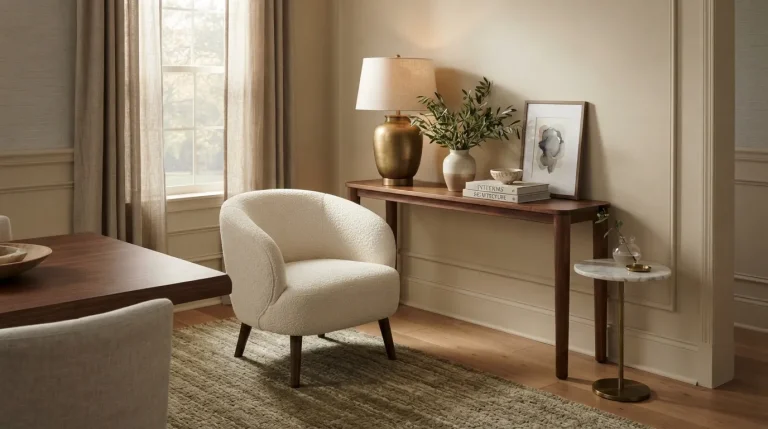
If you want your dining area to feel lighter and more relaxed, neutral linen chairs are a simple but powerful upgrade. The soft fabric instantly balances out heavier wooden elements, creating a more comfortable and welcoming vibe. I’ve seen this work especially well in smaller dining rooms where darker furniture can feel overwhelming. The subtle texture of linen adds depth without making the space look busy. It’s one of those small changes that quietly transforms the entire room into something more breathable and inviting.
Another reason these chairs are so effective is their versatility in everyday use. They pair beautifully with rustic tables, metal accents, or even modern lighting fixtures without clashing. In my experience, choosing removable or washable covers makes them practical for families, especially during frequent meals or gatherings. Light tones also reflect natural light, making the room feel brighter throughout the day. This helps create a space that feels fresh, comfortable, and easy to maintain while still holding onto that cozy farmhouse charm.
3. Vintage Chandelier Lighting
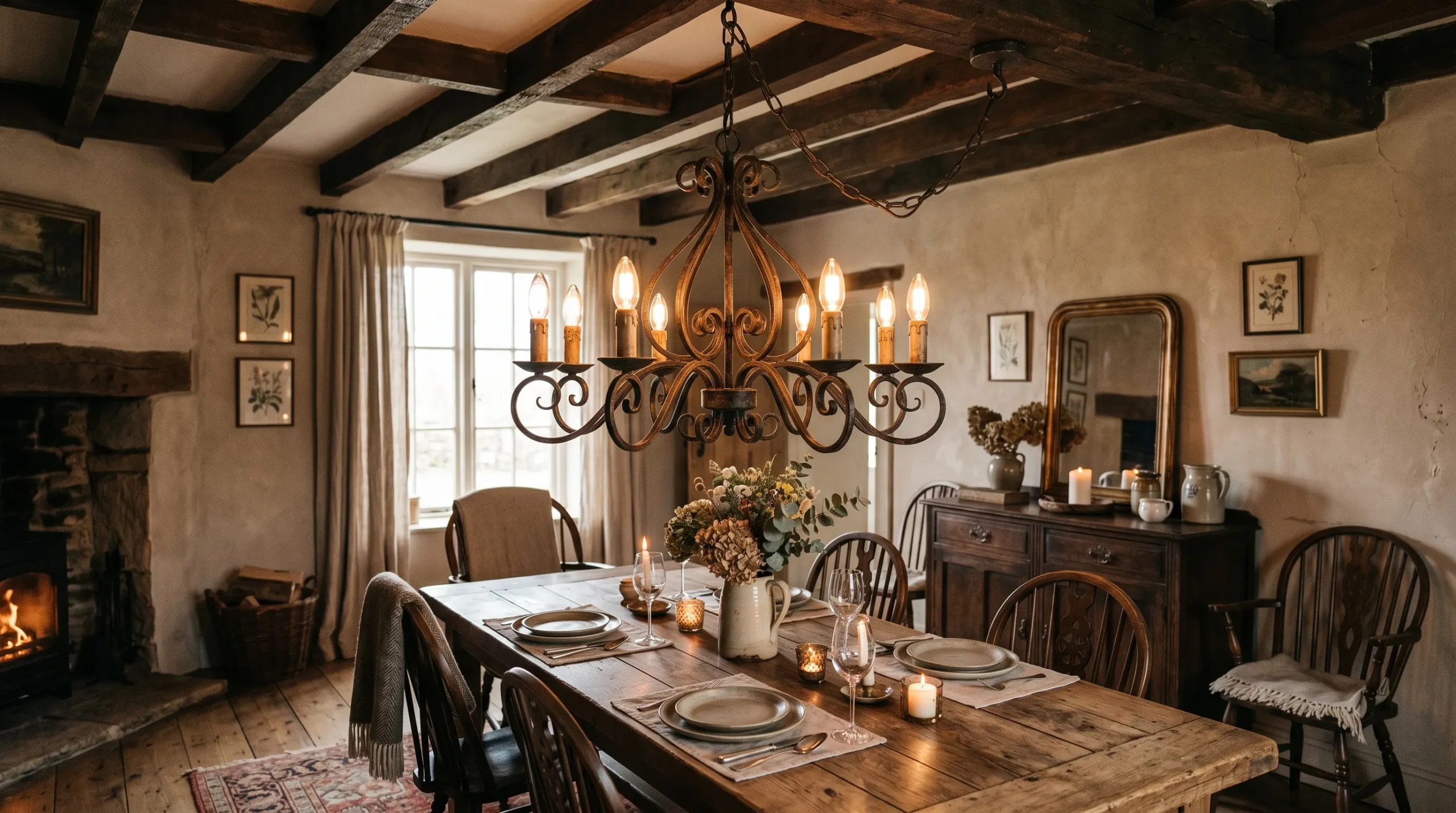
Lighting can completely change how a dining room feels, and a vintage chandelier does this effortlessly. The soft, warm glow creates an intimate atmosphere that makes everyday meals feel special. I’ve noticed that even simple setups look more styled once the right lighting is in place. The aged metal or distressed finish adds character, tying together other rustic elements in the space. It naturally draws the eye upward, making the room feel more layered and thoughtfully designed without needing too many additional decorations.
What makes this idea especially effective is how it balances function and style. A well-placed chandelier provides enough light for dining while still maintaining a cozy mood. In many homes, I’ve seen this become a conversation piece during gatherings, adding personality without overwhelming the room. Pairing it with dimmable bulbs gives you flexibility, allowing the space to shift from bright and functional to soft and relaxed. This simple addition elevates the entire dining experience while keeping the design warm and inviting.
4. Shiplap Accent Wall
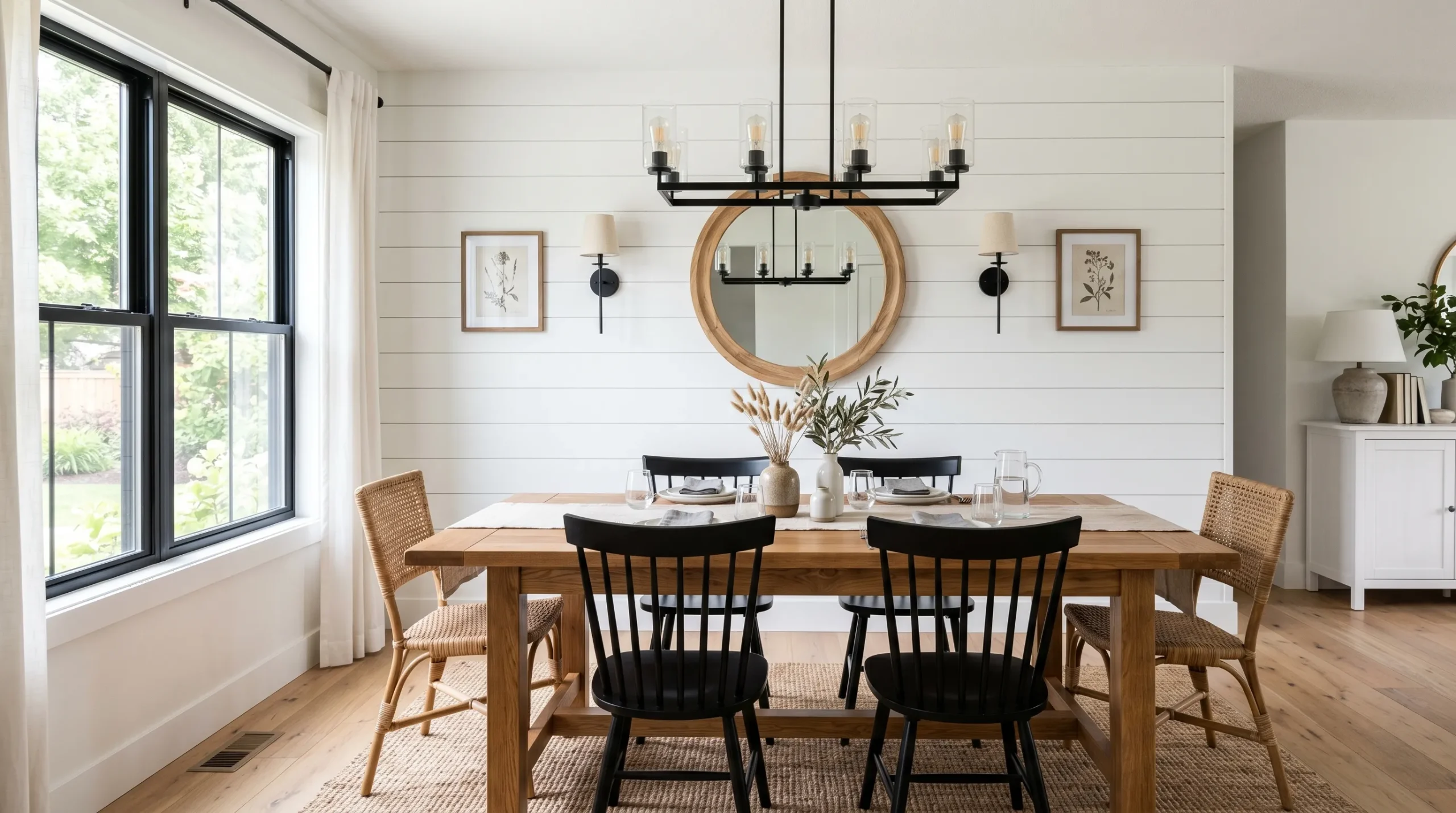
A shiplap accent wall instantly gives structure and character to a dining space without making it feel busy. The horizontal lines create a sense of width, making even smaller rooms feel more open and balanced. I’ve noticed this works especially well behind a dining table, where it naturally frames the area and adds visual interest. The soft texture catches light throughout the day, creating gentle shadows that make the space feel layered. It’s a simple upgrade that brings in farmhouse charm while still keeping the room fresh and uncluttered.
What makes this idea practical is how easily it adapts to different styles and color palettes. Whether painted crisp white or left slightly weathered, it blends seamlessly with rustic wood furniture and soft textiles. In my experience, it also hides minor wall imperfections, which is a bonus in older homes. Adding minimal wall decor like a wreath or framed art keeps the look intentional without overcrowding the space. The result is a dining area that feels thoughtfully styled, bright, and naturally inviting for everyday use.
5. Open Shelf Display
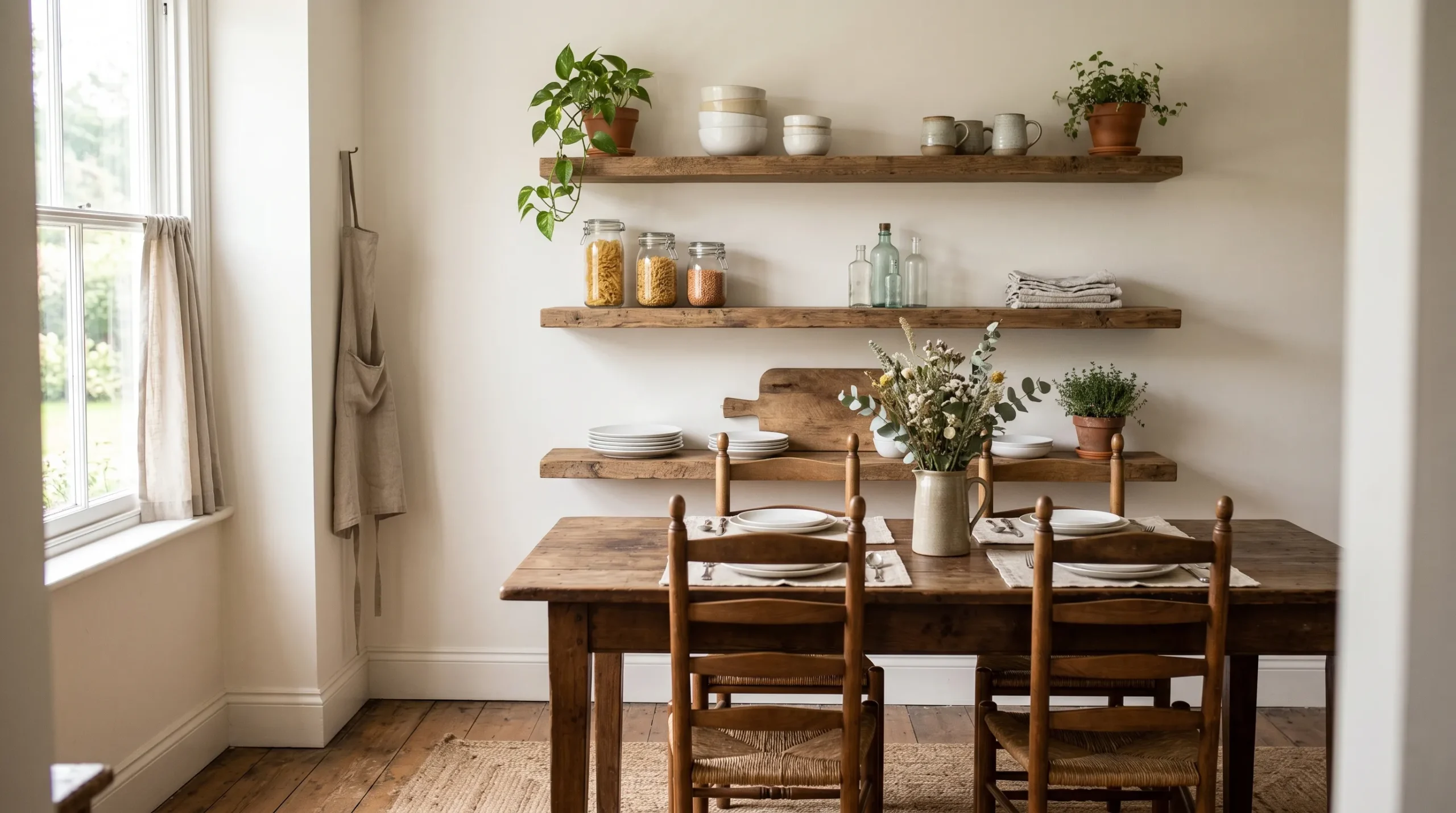
Open shelves bring both beauty and function into a dining area, making them a favorite in farmhouse-inspired spaces. Instead of hiding dishes and decor behind cabinets, everything is visible and styled in a relaxed, approachable way. I’ve seen this make a big difference in how a room feels, especially when simple items like plates or jars become part of the design. It turns everyday objects into decor while keeping them easy to access. This approach adds personality without requiring expensive or complicated styling.
Another reason this works so well is its flexibility over time. You can easily switch out decor for different seasons or moods without needing a full redesign. In my experience, mixing textures like ceramic, wood, and glass creates a balanced look that feels natural rather than staged. Keeping some empty space on the shelves also prevents visual clutter and helps each item stand out. This creates a dining area that feels organized, stylish, and effortlessly personal, which is exactly what makes farmhouse spaces so appealing.
6. Woven Pendant Lights
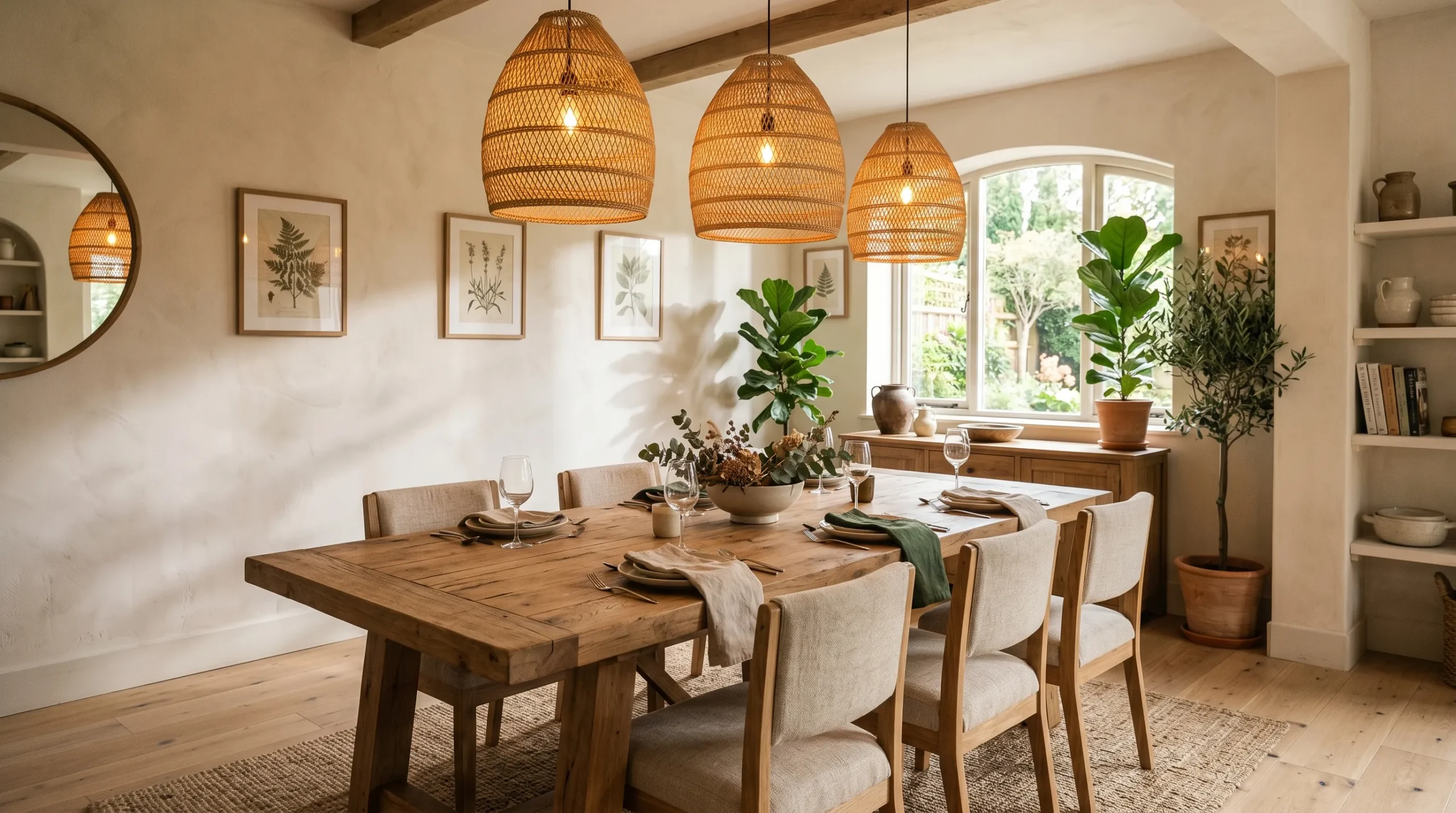
Woven pendant lights bring a relaxed, organic feel that instantly softens a dining room. The natural fibers filter light beautifully, creating subtle patterns that add depth without overwhelming the space. I’ve noticed that this type of lighting works especially well in rooms that need a bit of warmth and texture. It pairs effortlessly with wooden tables and neutral seating, making everything feel more connected. The result is a calm and inviting atmosphere that feels perfect for both everyday meals and casual gatherings.
What makes woven lighting stand out is its ability to feel both stylish and approachable at the same time. Unlike more formal fixtures, these lights create a laid-back mood that encourages people to linger longer at the table. In my experience, they also help balance harder surfaces like wood and metal by adding softness overhead. Choosing the right size and hanging height makes a big difference in achieving the right look. When done well, this idea transforms the dining area into a warm, welcoming space with natural charm.
7. Distressed Wood Sideboard
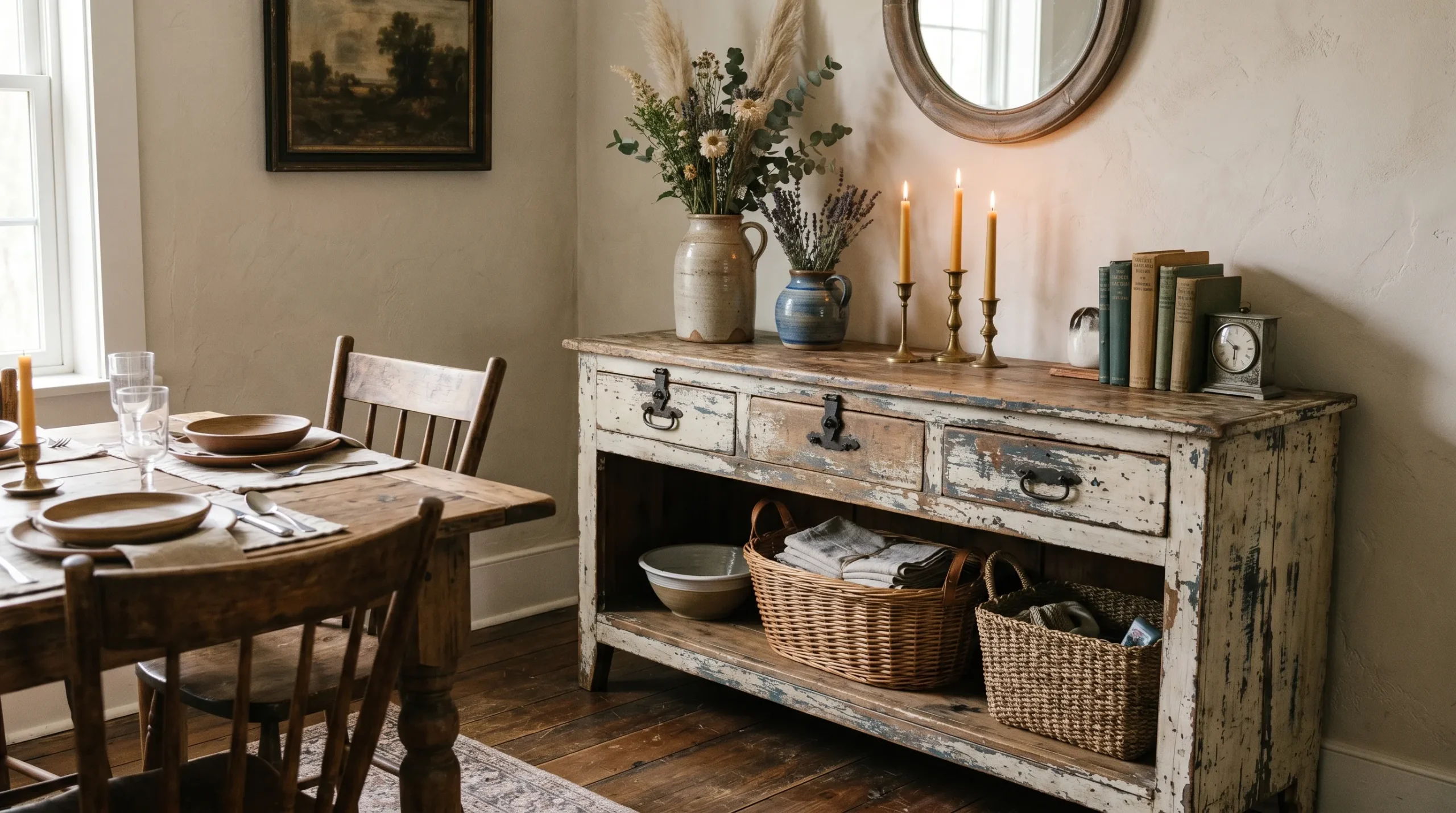
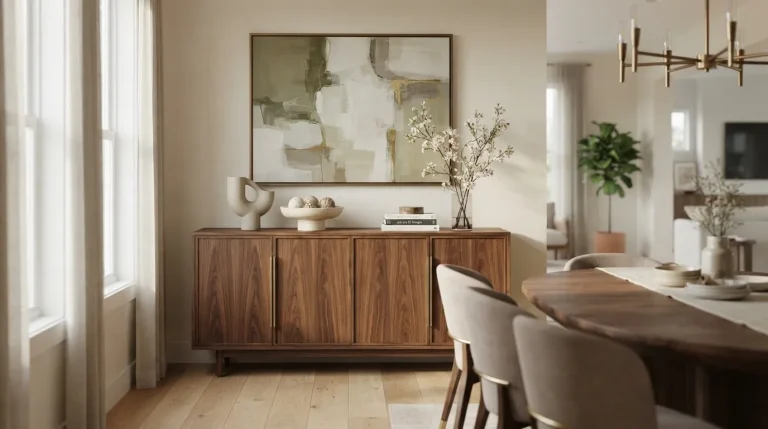
A distressed wood sideboard instantly adds depth and personality to a dining space, making it feel more complete and functional. The worn textures and aged finishes create a sense of history that new furniture often lacks. I’ve seen this piece become a natural focal point, especially when styled with simple decor like vases or candles. It offers the perfect balance between storage and style, allowing you to keep essentials nearby without cluttering the table. This makes the space feel both practical and thoughtfully designed.
What makes this idea especially valuable is its everyday usefulness in real homes. From storing dishes to organizing linens, it keeps everything within easy reach while maintaining a clean look. In my experience, layering a few decorative items on top creates visual interest without overwhelming the surface. Mixing heights and textures helps the display feel natural and relaxed. Over time, the worn finish only adds more charm, making it a piece that evolves beautifully with the space while keeping the overall design warm and inviting.
8. Mason Jar Centerpiece
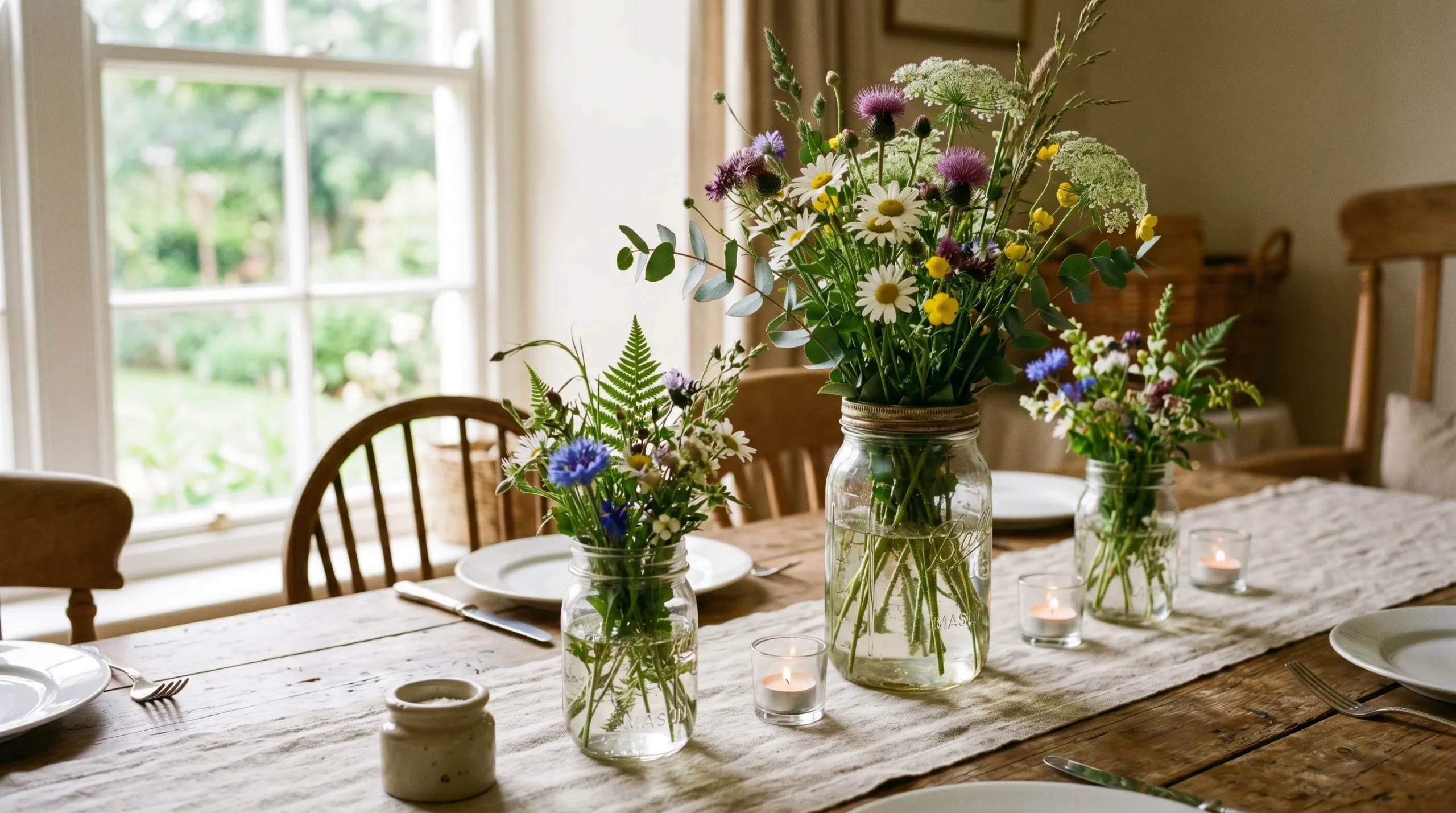
A mason jar centerpiece is one of those small details that can completely change the feel of a dining table. It adds a touch of simplicity and charm that feels authentic rather than styled. I’ve noticed that even a few fresh flowers in clear jars can brighten up the entire space instantly. The transparency of glass keeps the look light, while the natural elements bring in softness. This makes the dining setup feel more welcoming and lived-in without requiring much effort or expense.
Another reason this idea works so well is its flexibility for everyday use. You can easily switch flowers, greenery, or even seasonal fillers to match different moods throughout the year. In my experience, grouping multiple jars at varying heights creates a more dynamic and layered look. It also allows you to adjust the arrangement depending on table size or occasion. This simple addition helps maintain a cozy, inviting atmosphere while keeping the overall design fresh, personal, and easy to update whenever needed.
9. Sliding Barn Door
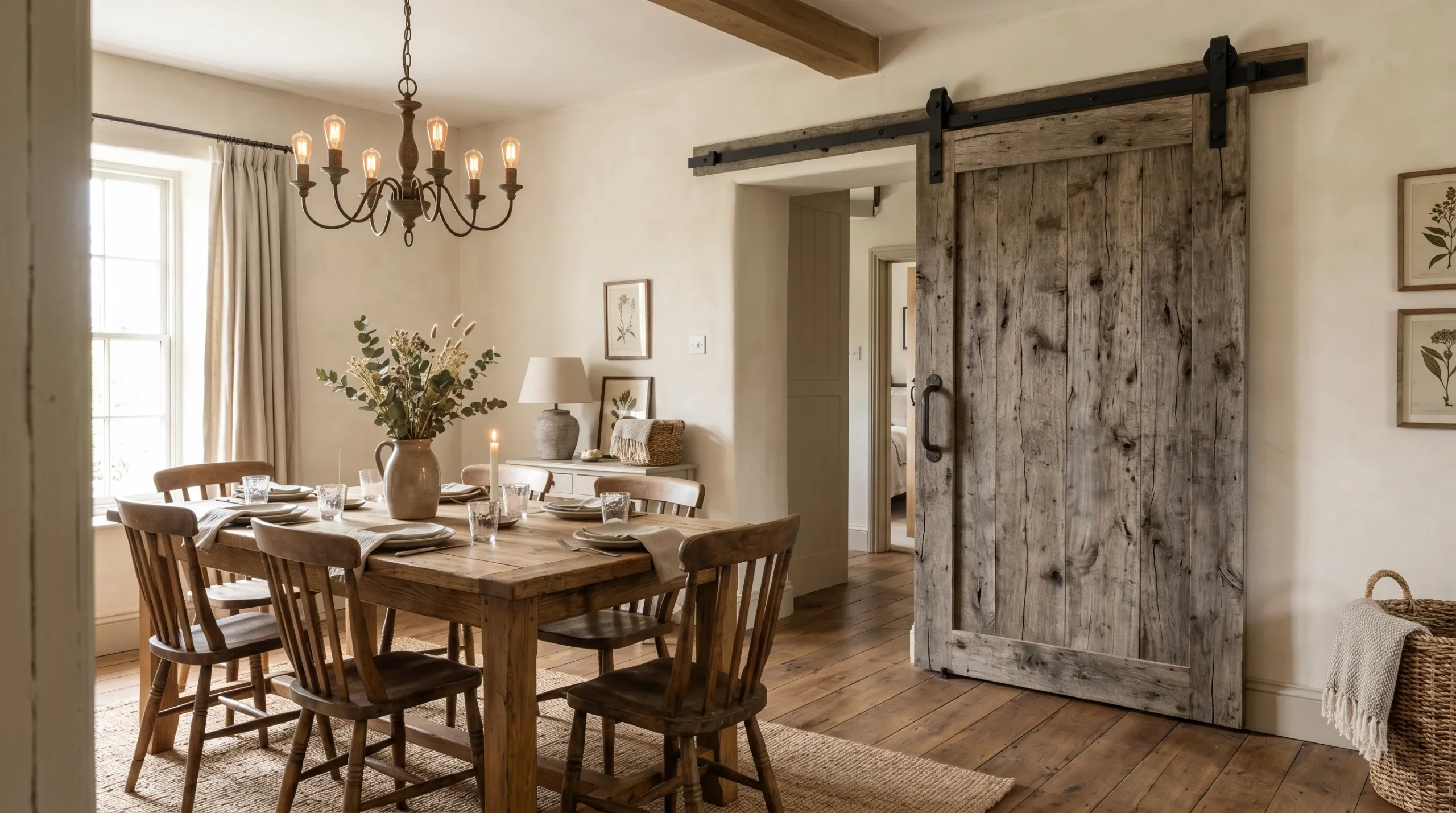
A sliding barn door is more than just a functional element; it becomes a statement feature that defines the entire dining space. The combination of wood and metal hardware adds contrast and texture, making the room feel more dynamic. I’ve seen this work especially well in open layouts where you want to create subtle separation without closing off the space. It draws attention without overwhelming the room, adding a sense of structure while still keeping the design relaxed and cohesive.
What makes this idea practical is how it blends design with everyday convenience. Unlike traditional doors, it doesn’t take up extra space when opened, which is helpful in smaller homes. In my experience, choosing a slightly weathered finish enhances the overall warmth and ties in beautifully with other rustic elements. It also pairs well with both light and dark color palettes, making it versatile for different styles. This addition creates a space that feels thoughtfully designed, functional, and full of character.
10. Farmhouse Bench Seating
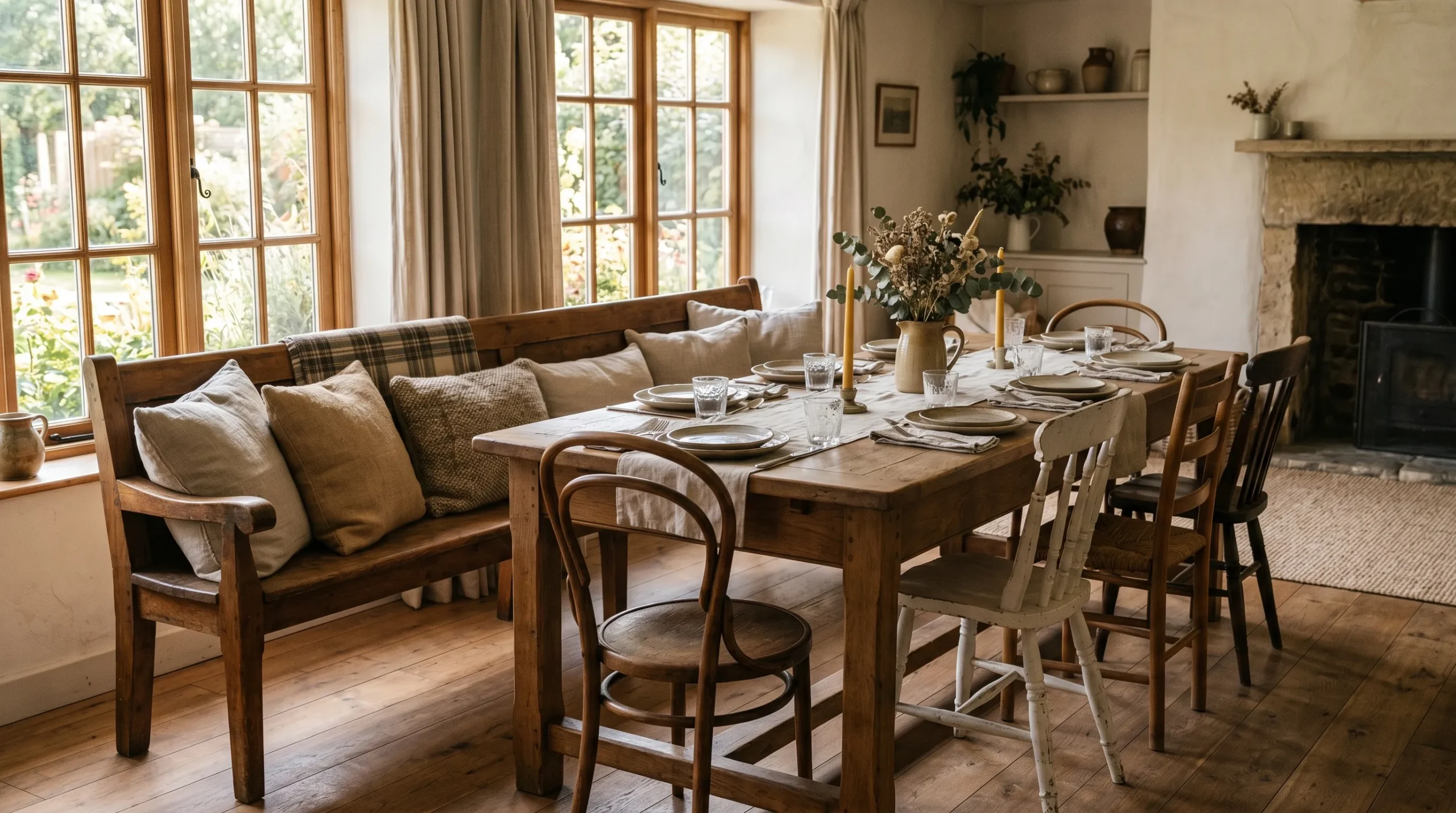
Bench seating instantly makes a dining area feel more relaxed and welcoming, especially for everyday use. Instead of formal chair arrangements, it encourages a more casual and flexible layout that works well for families and gatherings. I’ve noticed that benches make smaller spaces feel less crowded because they tuck neatly under the table when not in use. This simple change creates a more open and breathable environment. It also brings a natural, grounded look that blends beautifully with wood textures and soft textiles.
What makes this idea especially practical is its versatility in real-life situations. A bench can easily accommodate more people when needed, making it perfect for hosting. In my experience, adding a few neutral cushions or a soft throw instantly increases comfort while enhancing the overall look. Pairing a bench with traditional chairs creates balance and visual interest without making the space feel too uniform. This combination results in a dining area that feels functional, stylish, and effortlessly inviting for both daily meals and special occasions.
11. Galvanized Metal Accents
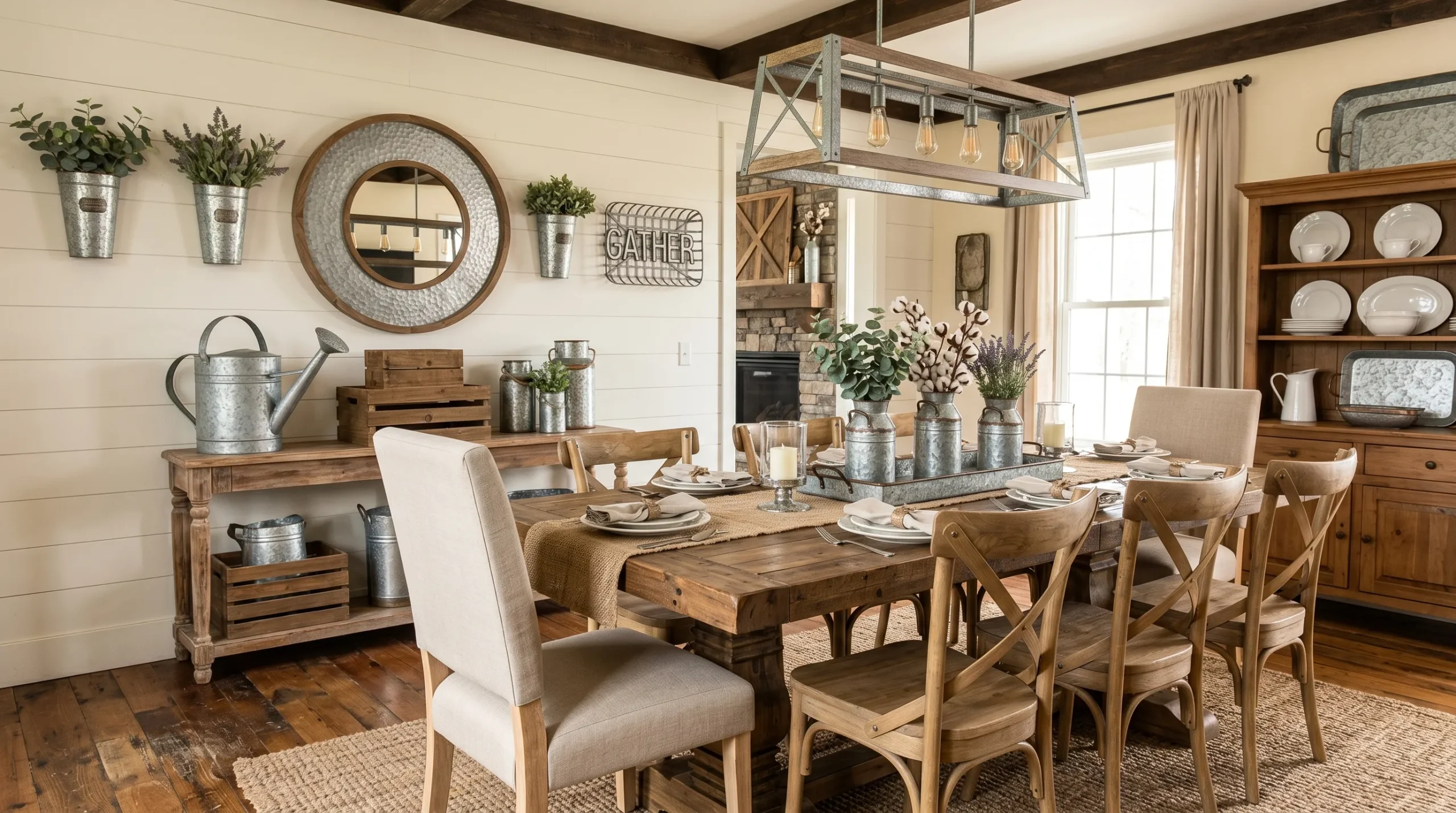
Galvanized metal accents bring a subtle edge that balances out the softness of wood and fabric in a dining space. The slightly worn metallic finish adds texture without feeling too modern or cold. I’ve seen this work especially well in small details like trays, planters, or wall decor, where it quietly enhances the overall design. It reflects just enough light to add dimension, making the room feel more layered. This contrast helps prevent the space from looking too flat or overly uniform.
Another reason this idea is so effective is its ability to blend with different farmhouse styles. Whether your space leans more traditional or slightly modern, these accents fit in naturally. In my experience, using them sparingly creates the best impact, allowing each piece to stand out without overwhelming the room. Pairing metal with natural textures like wood and linen creates a balanced look that feels intentional and cohesive. This combination results in a dining area that feels both warm and visually interesting.
12. Layered Table Textiles
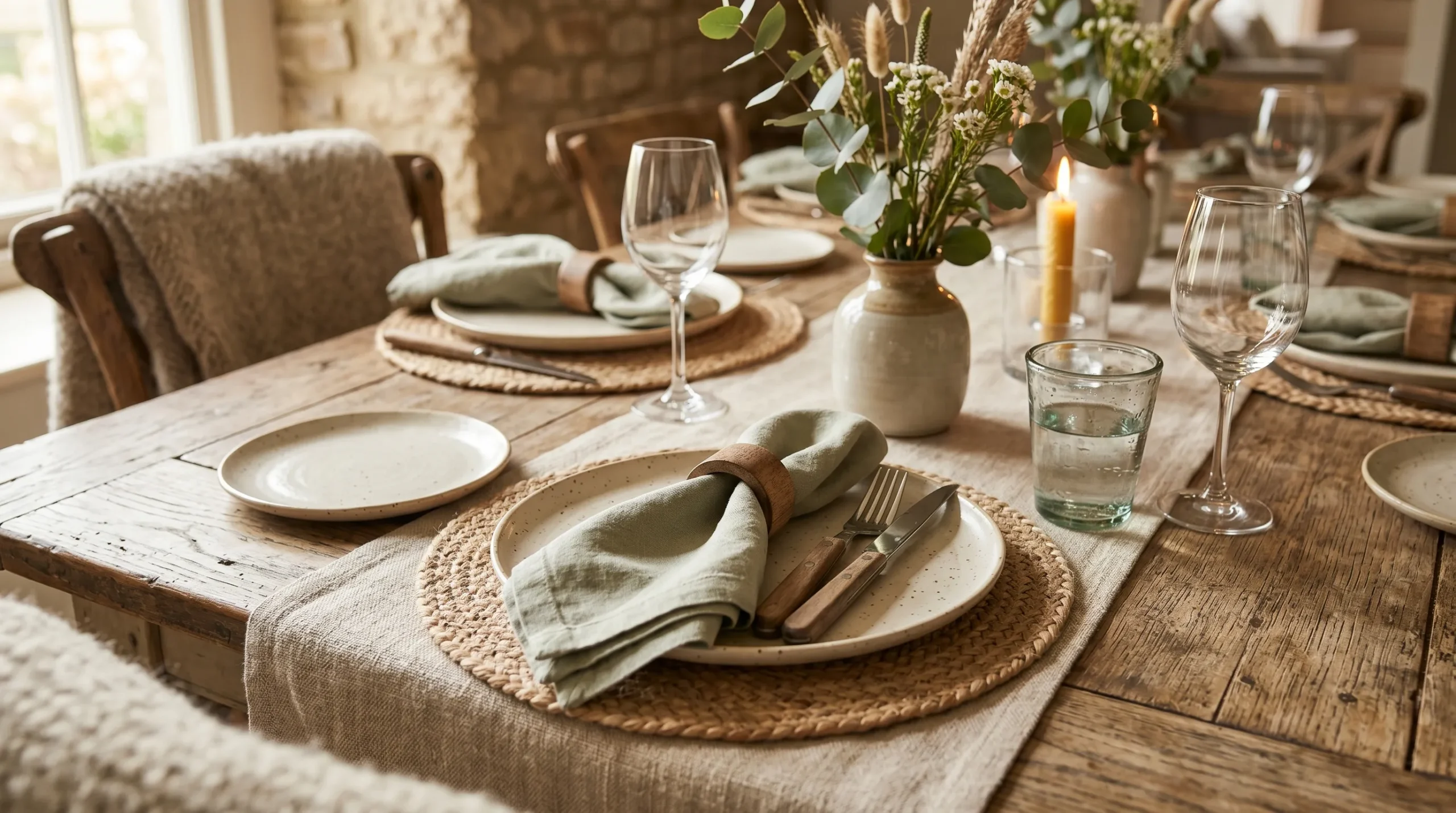
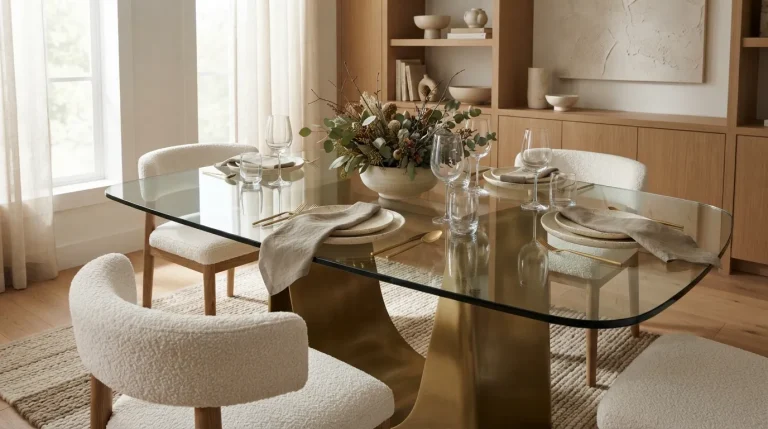
Layering textiles on a dining table is a simple way to make the space feel styled without adding extra decor. A table runner combined with placemats or linen napkins creates subtle layers that add depth and softness. I’ve noticed that this approach works especially well on wooden tables, where the contrast between fabric and wood feels balanced. It helps define each place setting while keeping the overall look relaxed. This small detail can transform even the simplest table into something visually inviting and complete.
What makes this idea practical is how easy it is to adapt throughout the year. You can switch textures, colors, or patterns depending on the season or mood without changing the entire setup. In my experience, sticking to neutral tones keeps the look timeless while still allowing flexibility. Adding just a few layers prevents the table from feeling bare while avoiding unnecessary clutter. This creates a dining space that feels warm, thoughtful, and effortlessly put together for both everyday meals and special gatherings.
13. Rustic Wall Art
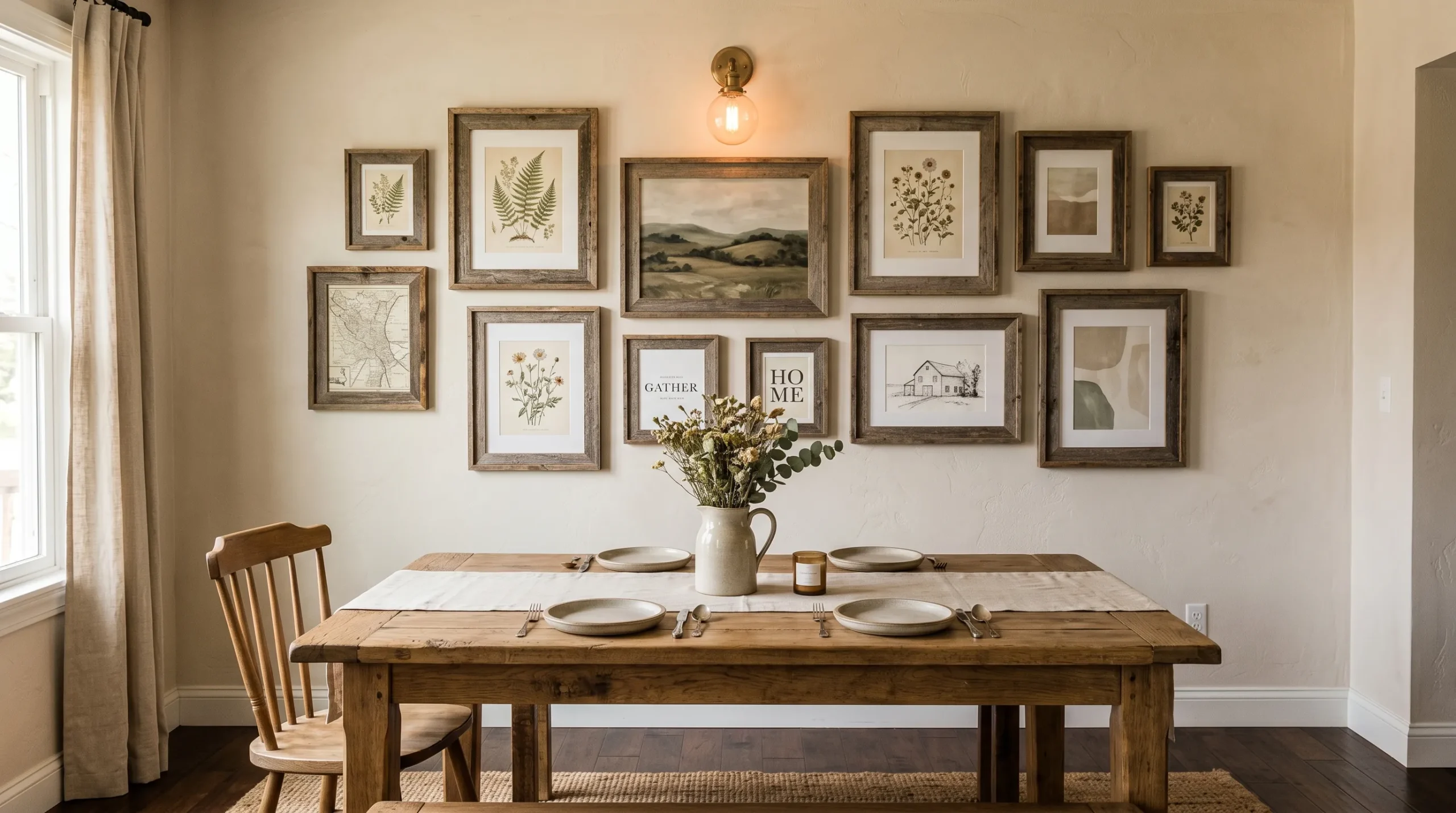
Rustic wall art is one of the easiest ways to bring personality into a dining space without making it feel cluttered. The combination of wood frames and vintage-inspired prints adds warmth while keeping the overall look calm and cohesive. I’ve noticed that even a few well-chosen pieces can completely change how the room feels. It helps connect different elements like furniture and lighting, making the space feel more intentional. This simple addition turns blank walls into a subtle focal point that enhances the entire dining experience.
What makes this idea work so well is its flexibility across different home styles. Whether you prefer minimal decor or a slightly layered look, wall art can be adjusted to match your taste. In my experience, sticking to a consistent color palette keeps everything feeling balanced and avoids visual clutter. Mixing frame sizes or textures adds interest without overwhelming the wall. The result is a dining area that feels warm, thoughtfully styled, and visually complete while still maintaining a relaxed farmhouse charm.
14. Exposed Wood Beams
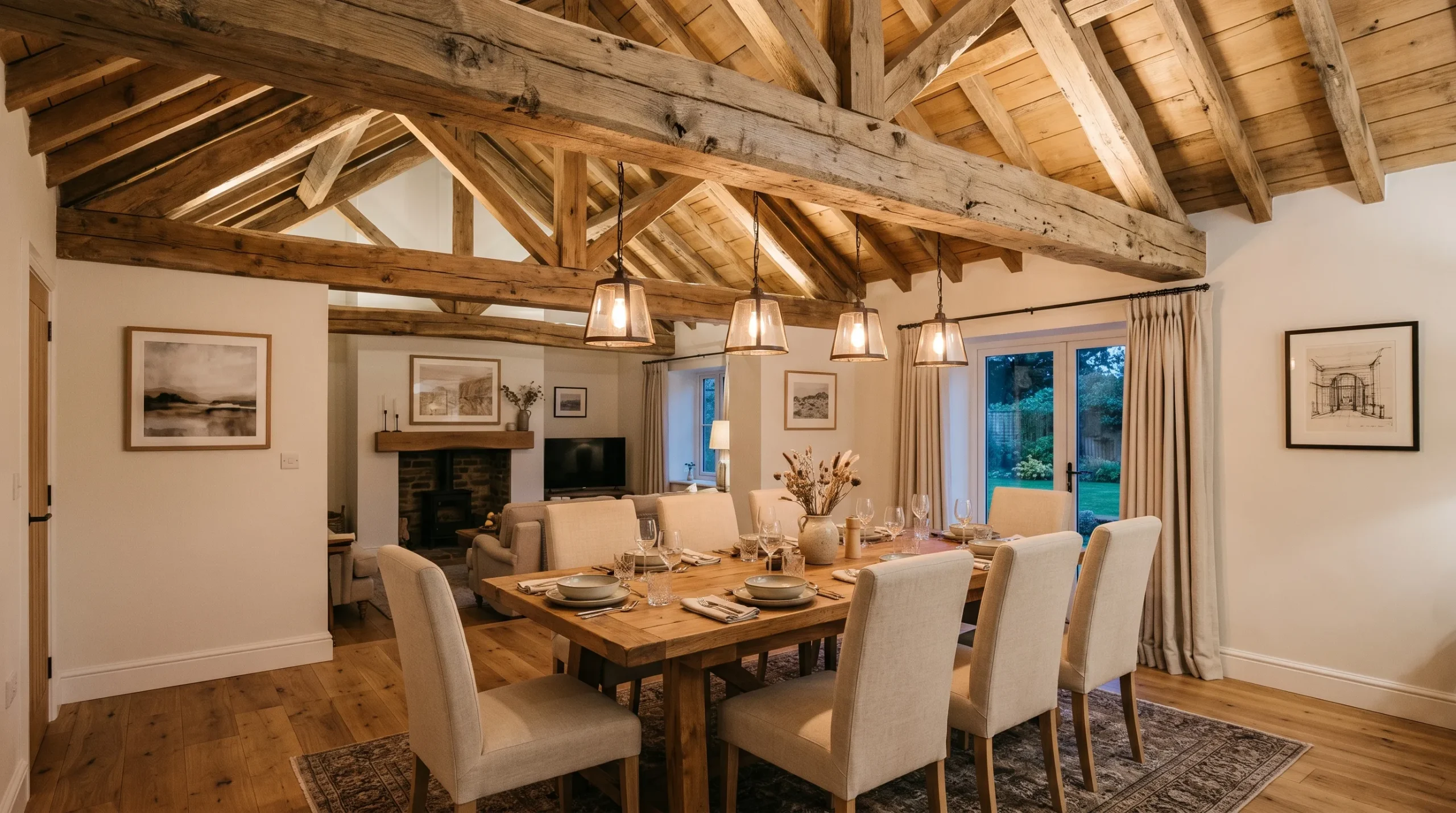
Exposed wood beams instantly elevate a dining room by adding strong architectural presence and natural warmth. They create a sense of depth that makes the space feel more dynamic and visually interesting. I’ve seen this work especially well in rooms with high or flat ceilings, where beams add definition without lowering the space. The natural wood tones also tie in beautifully with furniture and flooring, creating a cohesive look. This feature makes the room feel more rooted and thoughtfully designed without requiring extra decor.
What makes this idea stand out is how it blends structure with style in a very natural way. Even simple dining setups feel more complete when framed by overhead beams. In my experience, keeping the surrounding decor minimal allows the beams to stand out without competing for attention. They also work well with both light and dark color palettes, making them versatile for different interiors. This addition creates a dining space that feels warm, balanced, and rich in character while maintaining a clean, inviting atmosphere.
15. Neutral Color Palette
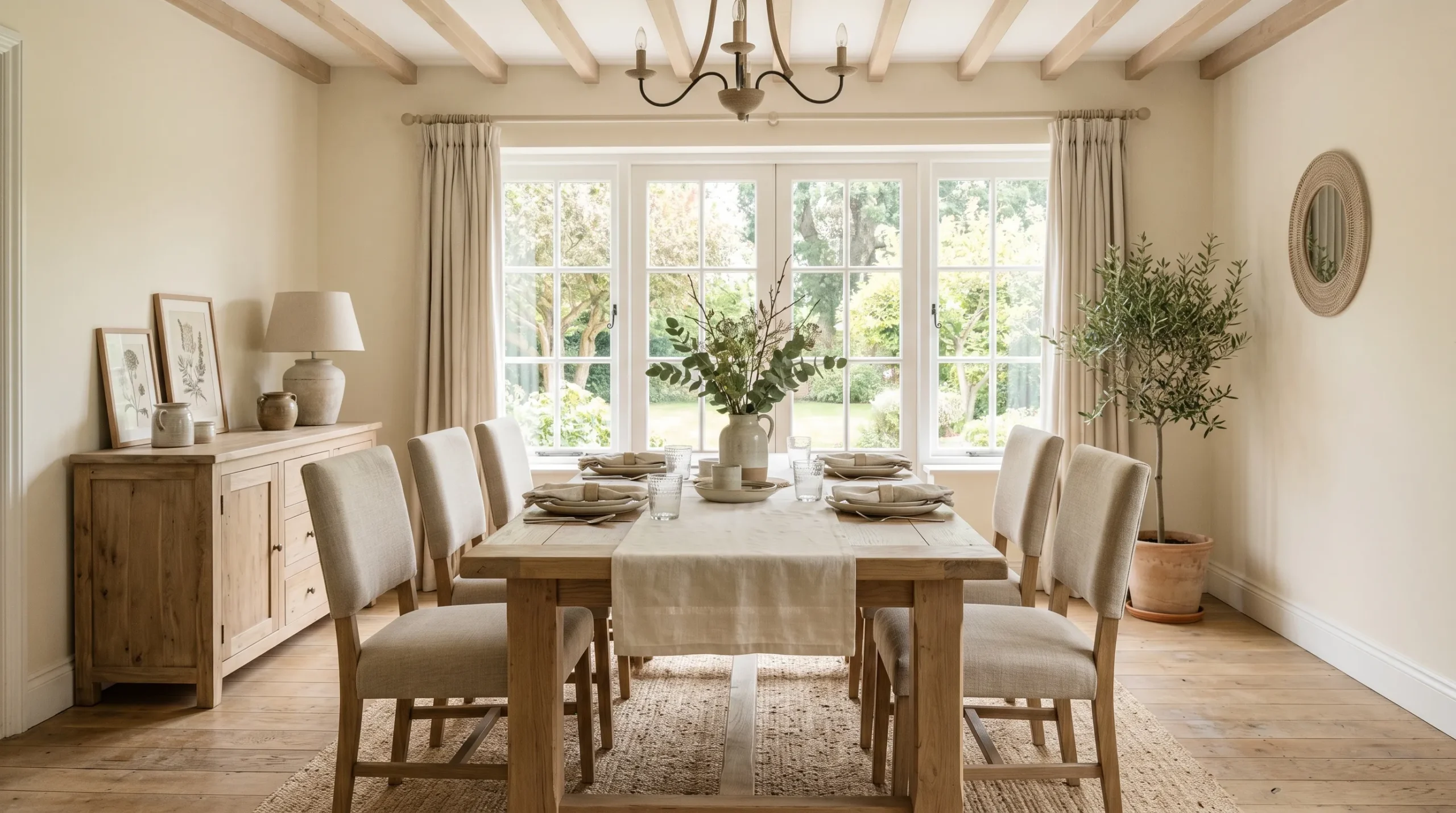
A neutral color palette is the foundation of a calm and inviting dining space that feels effortless and timeless. Soft tones like beige, cream, and light wood create a balanced environment where nothing feels too heavy or overwhelming. I’ve noticed that this approach makes it easier to highlight textures, which is essential in farmhouse-inspired interiors. Instead of relying on bold colors, the focus shifts to materials and subtle contrasts. This creates a space that feels warm, relaxed, and visually pleasing without trying too hard.
What makes neutral tones especially effective is how adaptable they are over time. You can easily update the look with small decor changes without needing a full redesign. In my experience, layering different shades within the same palette adds depth while keeping everything cohesive. This approach also enhances natural light, making the room feel brighter throughout the day. The result is a dining area that feels fresh, flexible, and consistently welcoming, making it perfect for both everyday living and special moments.
16. Vintage Rug Layering
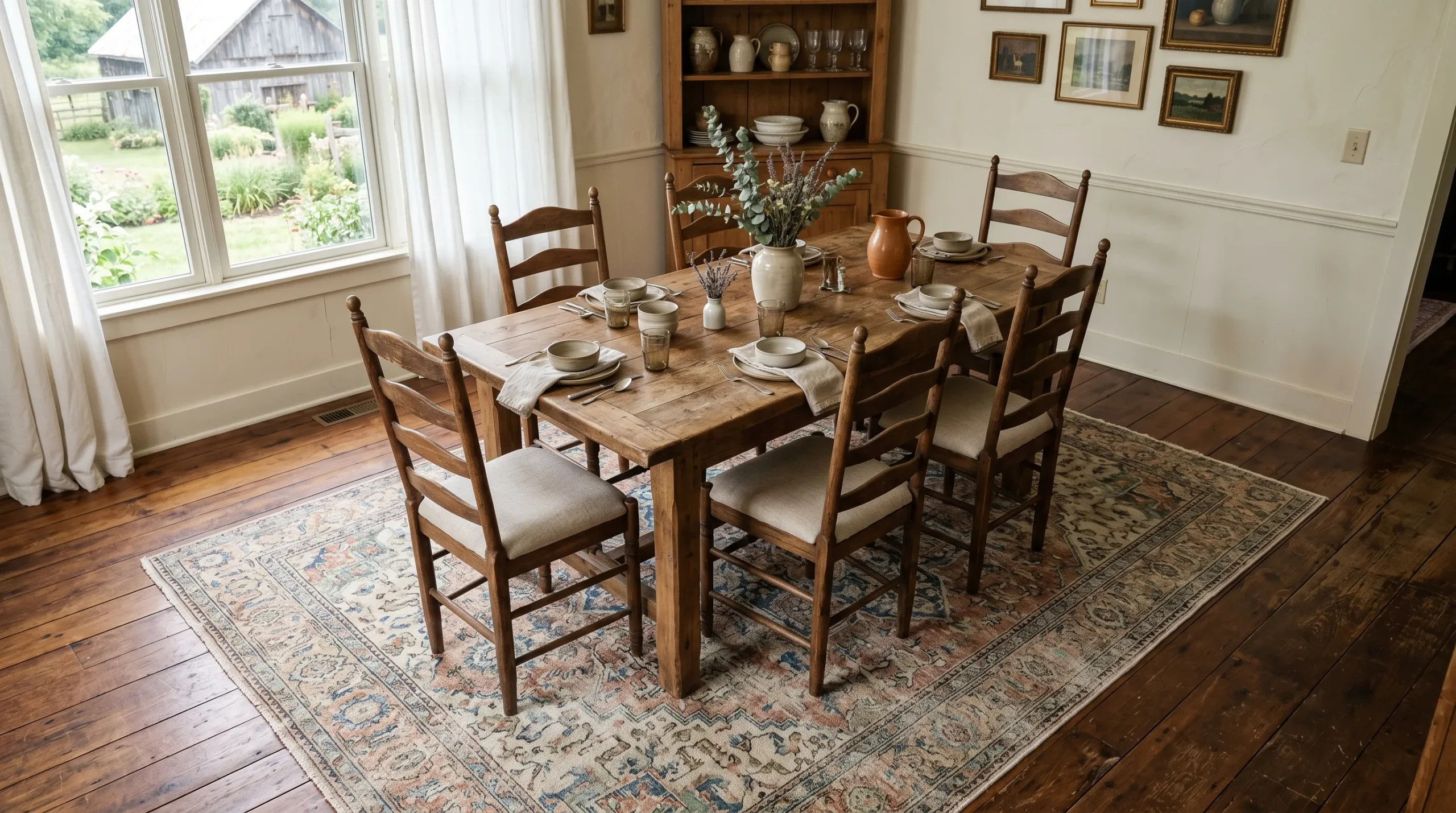
A vintage rug under the dining table instantly grounds the entire space and makes it feel more complete. The subtle patterns and slightly worn textures add character without drawing too much attention. I’ve noticed this works especially well in open layouts, where a rug helps define the dining area without adding walls or barriers. It softens the look of wood and hard surfaces, making the room feel more comfortable and inviting. This small addition can make a big difference in how warm and cohesive the space feels.
What makes this idea practical is how it blends style with everyday functionality. A well-chosen rug can handle foot traffic while still maintaining its charm over time. In my experience, slightly distressed patterns are more forgiving when it comes to spills or wear, which is ideal for dining areas. Choosing the right size ensures the table and chairs sit comfortably within the rug, creating a balanced look. This approach results in a space that feels layered, cozy, and thoughtfully designed without requiring major changes.
17. Simple Greenery Touches
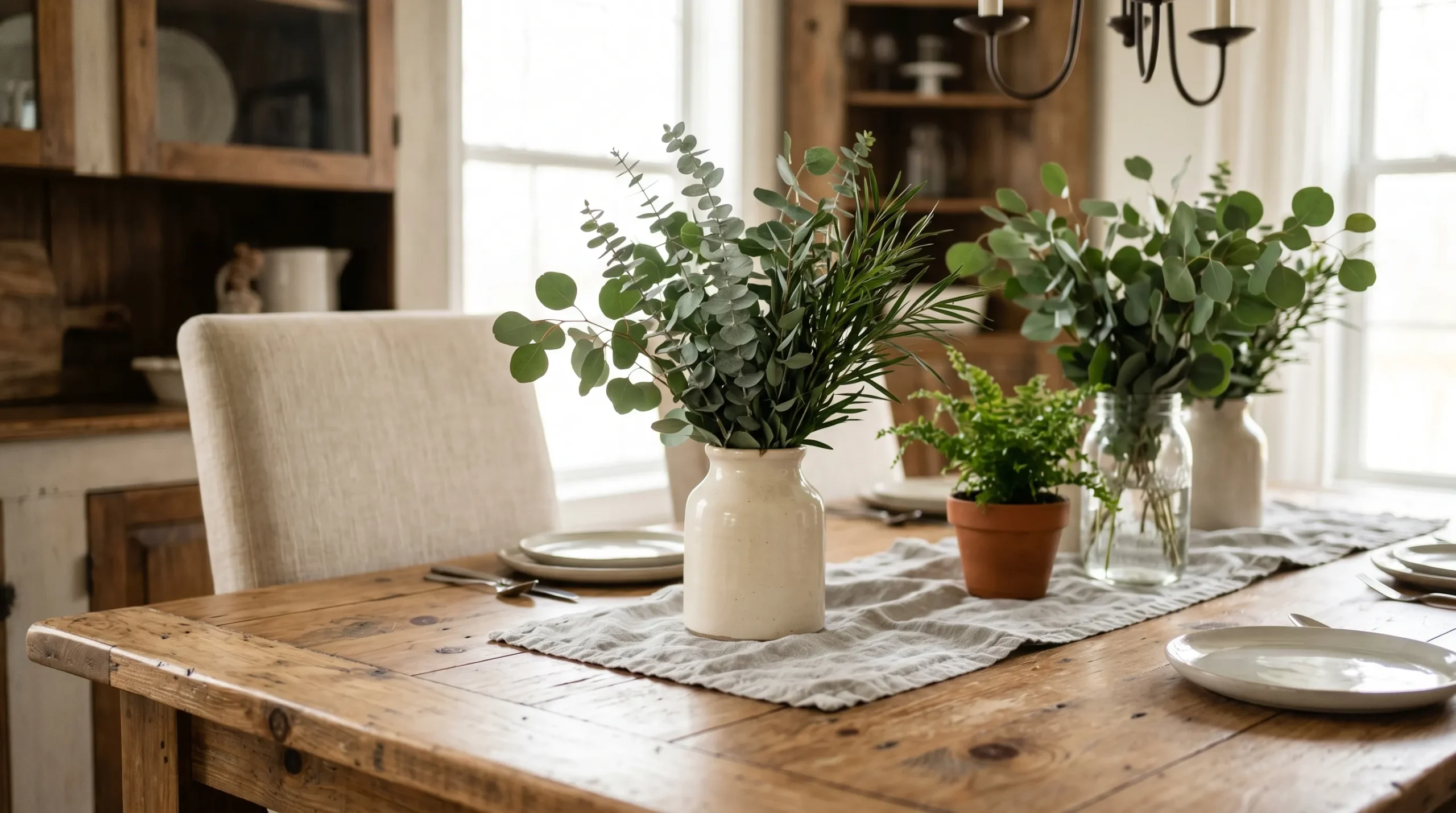
Adding greenery is one of the easiest ways to make a dining space feel alive and welcoming. Even a small plant or a few stems in a vase can instantly brighten the room. I’ve seen this work in almost every type of home, from small apartments to larger dining areas. The natural green tones create a soft contrast against wood and neutral colors, making the space feel more balanced. It’s a simple detail that brings a fresh, relaxed energy without requiring much effort.
What makes greenery especially effective is how versatile and low-maintenance it can be. You can choose fresh plants, dried stems, or even high-quality faux options depending on your lifestyle. In my experience, placing greenery at the center of the table or on nearby surfaces creates a cohesive flow throughout the room. It also pairs beautifully with other natural textures, enhancing the overall farmhouse feel. This small addition makes the dining area feel more inviting, comfortable, and connected to nature.
18. Mixed Chair Styles
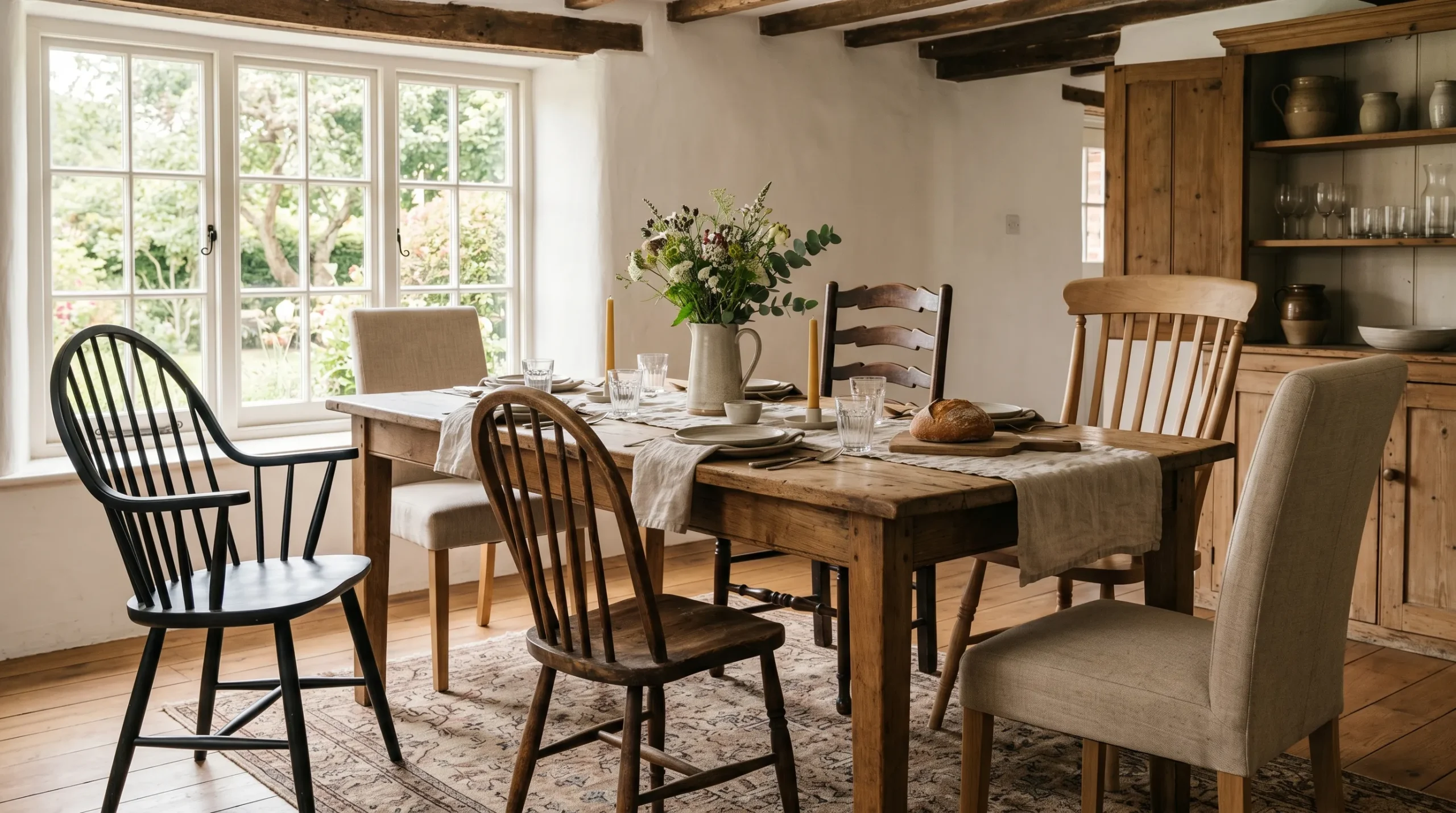
Mixing different chair styles around a dining table creates a relaxed and collected look that feels far more personal than matching sets. The variation in shapes, textures, and finishes adds depth without making the space feel chaotic. I’ve noticed that this approach works especially well in farmhouse interiors, where imperfection is part of the charm. It allows each piece to stand out while still feeling connected. This makes the dining area feel thoughtfully styled but not overly designed or staged.
What makes this idea so practical is its flexibility over time. You don’t need to replace all your chairs at once, which makes it budget-friendly and easy to evolve. In my experience, keeping a consistent color palette helps maintain balance even with different designs. Pairing wood with soft upholstery creates a comfortable and inviting setup that works for everyday use. This combination results in a dining space that feels unique, welcoming, and naturally put together without trying too hard.
19. Antique Tableware Display
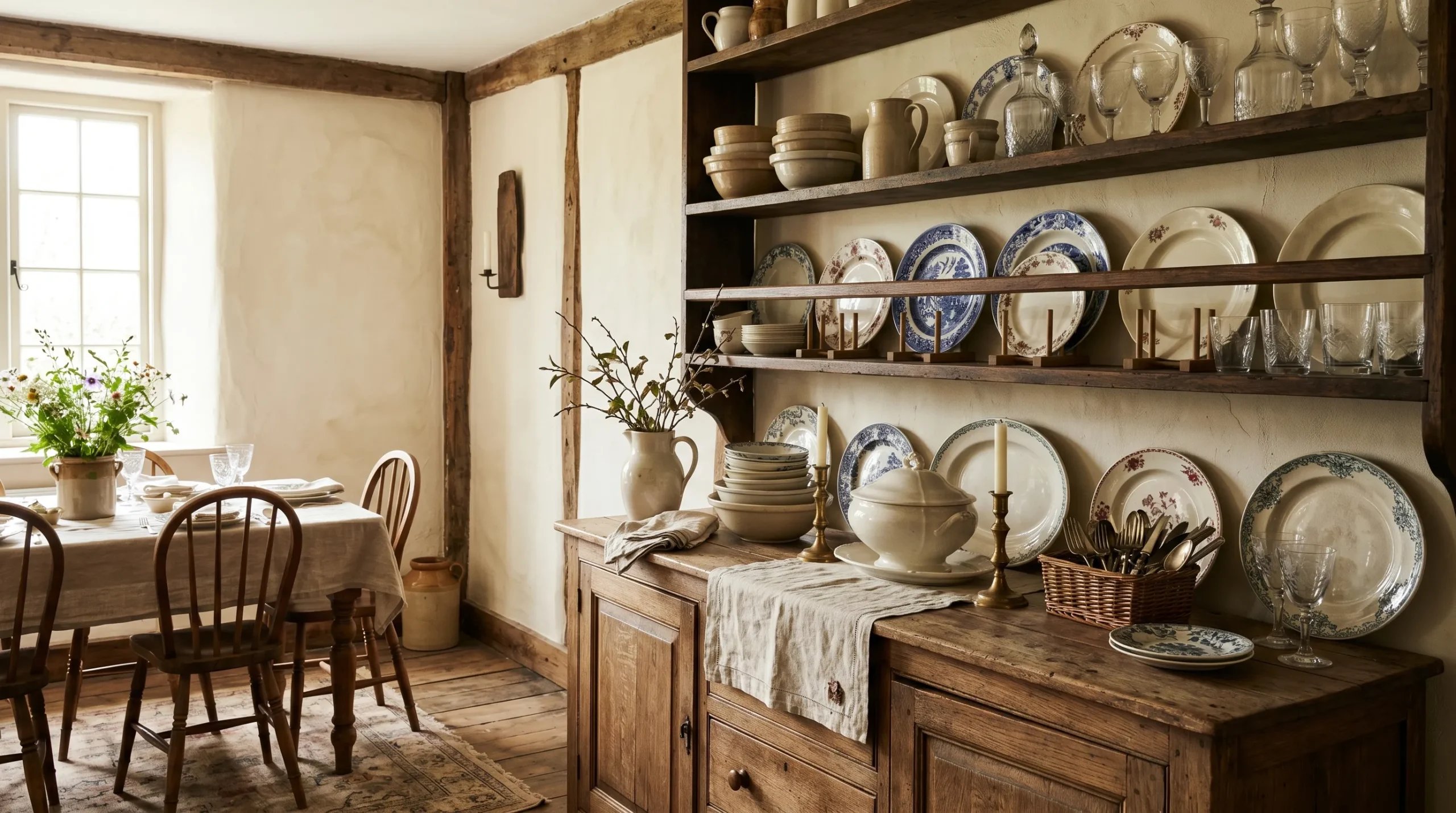
Displaying antique tableware adds a layer of storytelling that makes a dining space feel more personal and meaningful. Instead of keeping these pieces hidden, they become part of the overall design. I’ve noticed that even a small collection of vintage plates or bowls can instantly elevate the room’s character. The aged finishes and subtle imperfections bring warmth and authenticity. This approach creates a space that feels lived-in and thoughtfully curated, rather than overly styled or impersonal.
What makes this idea especially appealing is how it connects design with everyday life. You’re not just decorating; you’re showcasing items that can still be used and enjoyed. In my experience, arranging pieces in small, balanced groups creates a clean and organized look without overwhelming the space. Mixing different materials like ceramic and glass adds depth while keeping things visually interesting. This results in a dining area that feels rich in character, functional, and naturally inviting for both daily use and gatherings.
20. Candlelit Dining Setup
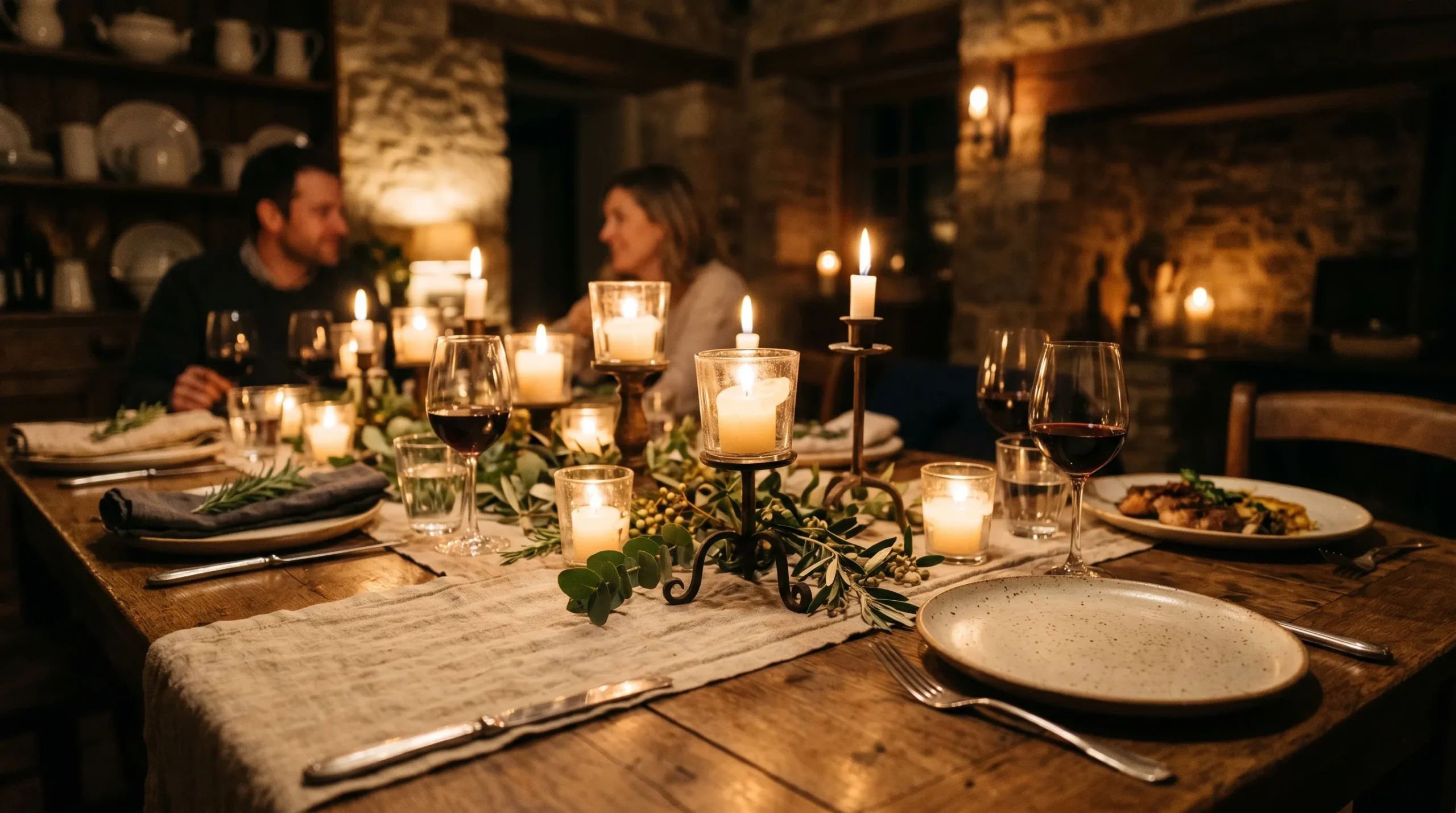
A candlelit setup transforms a dining space into something warm, intimate, and instantly inviting. The soft flicker of light creates a relaxed mood that encourages slower, more meaningful moments at the table. I’ve seen this simple addition completely change how a room feels, especially in the evening. It softens shadows, highlights textures, and brings a gentle glow that feels comforting. This is one of the easiest ways to elevate the ambiance without needing any major decor changes.
What makes this idea so effective is its simplicity and flexibility in real homes. You can use a mix of candle holders to add variation while keeping the look cohesive. In my experience, placing candles at different heights creates a more dynamic and layered effect. It also pairs beautifully with wood, linen, and greenery, enhancing the overall farmhouse aesthetic. This setup works just as well for quiet dinners as it does for gatherings, making the space feel warm, welcoming, and thoughtfully styled.
Closing Thoughts
Creating a dining space you truly enjoy doesn’t require a full makeover just the right ideas applied in a thoughtful way. These rustic farmhouse dining room decor inspirations are all about bringing warmth, comfort, and personality into your home through simple, practical changes. I’ve seen how even small updates like lighting, textures, or seating can completely transform the way a space feels and functions.
Now it’s your turn to take inspiration and make it your own. Save this post on Pinterest so you can revisit your favorite ideas, try one or two updates in your space, and share it with anyone who loves cozy, inviting interiors.

Olivia Carter
Olivia Carter is the founder of Lady Home Decor and a passionate home decor expert. She shares practical, stylish ideas to help homeowners create beautiful, comfortable, and welcoming spaces. Her expertise covers bedrooms, kitchens, living rooms, bathrooms, and small-space decorating.