26 Amazing Blue Kitchen Color Palette Ideas for a Fresh Look

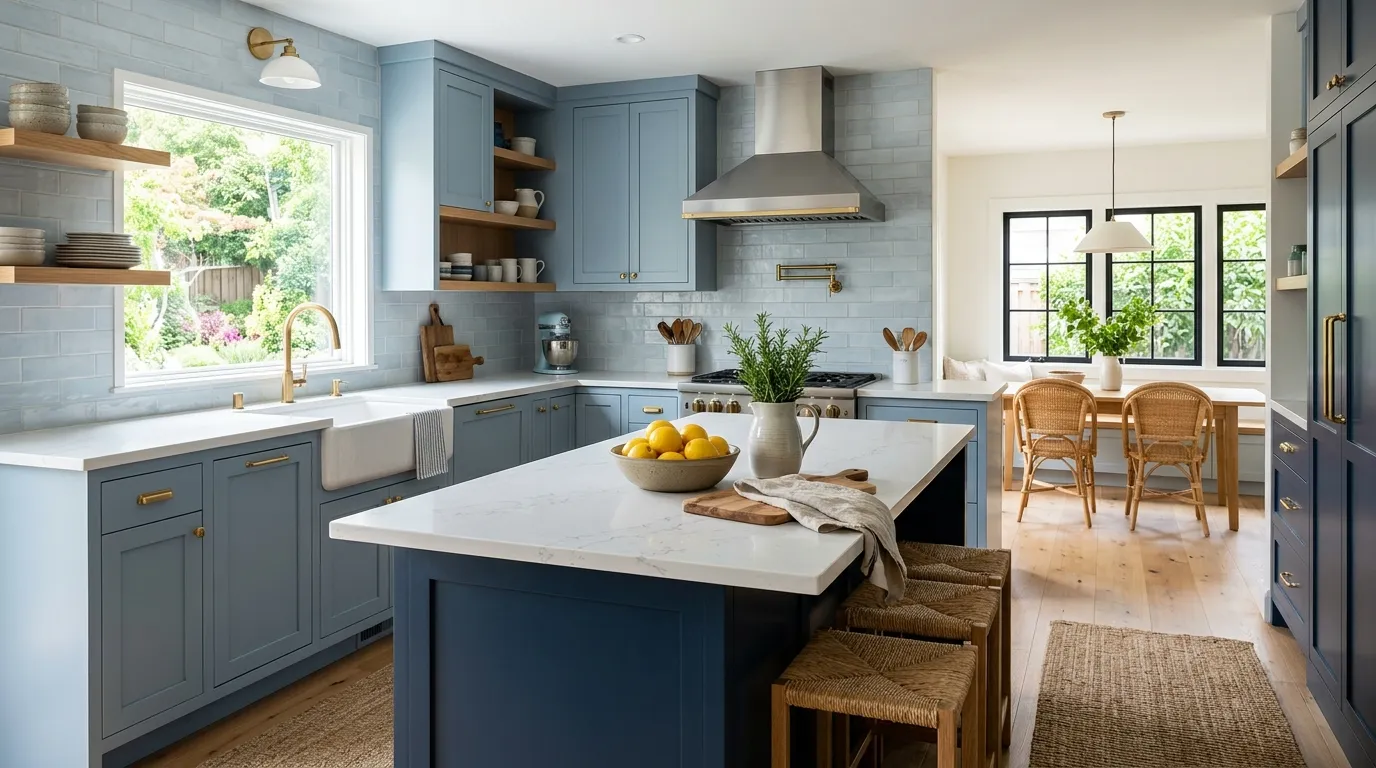
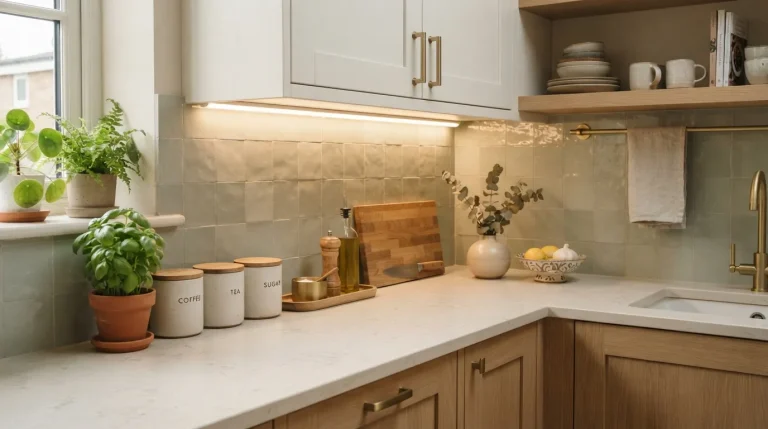
Blue can make a kitchen feel crisp, calm, and full of character without making the room feel cold. The right blue kitchen color palette ideas can range from soft powder blue and creamy white to rich navy with warm wood, giving you plenty of ways to shape the mood. Small kitchens can use pale blue to keep the room airy, while larger spaces can handle deeper shades on cabinets or islands.
The best palette starts with balance. Think about your cabinets, walls, backsplash, counters, flooring, and hardware as pieces of one picture rather than separate choices. These ideas show how different blue shades work with warm neutrals, natural finishes, metallic details, and classic kitchen materials.
Soft Blue and Warm White
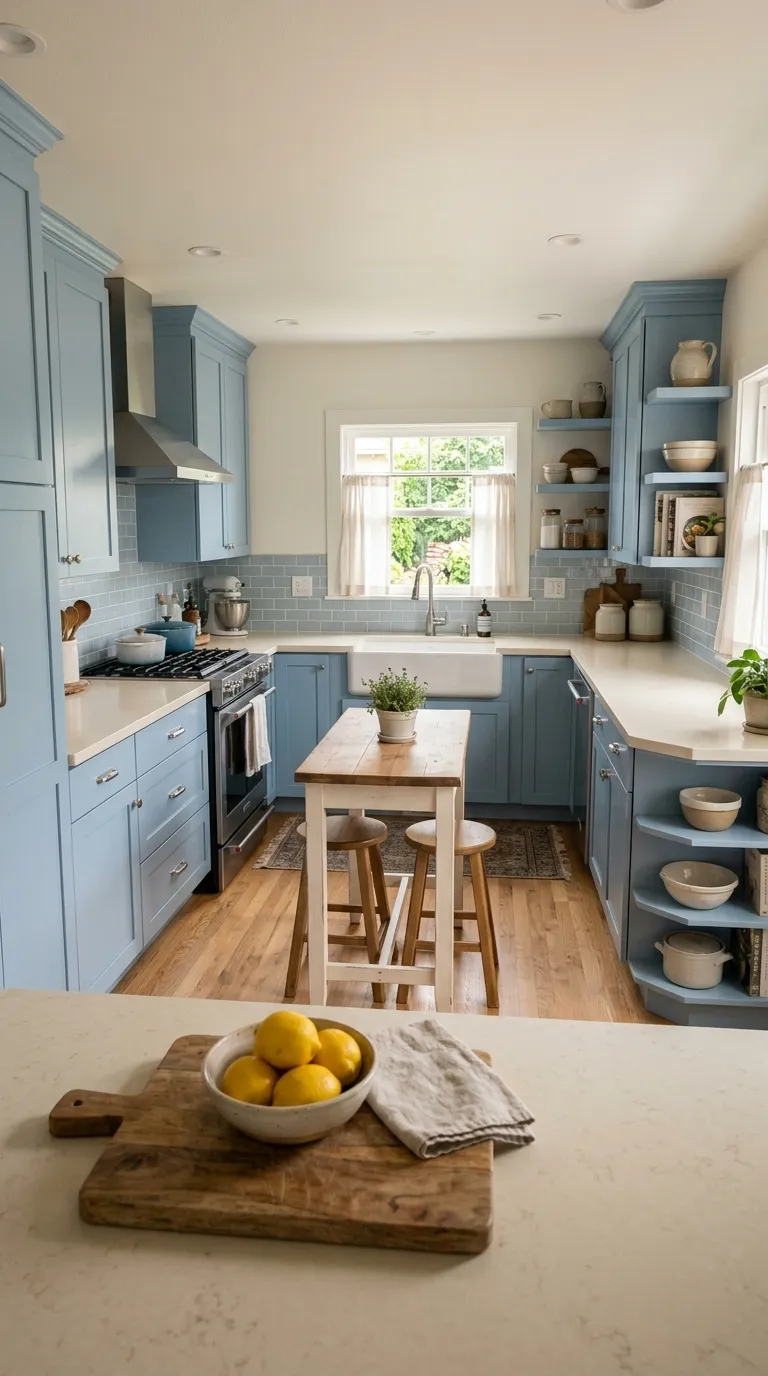
Soft blue cabinets work beautifully when you want color without a heavy look. Pair them with warm white walls and creamy counters to create a kitchen that feels bright while still having enough color to stand out.
This palette suits both small and medium kitchens. Add light oak flooring, simple ceramic pieces, and brushed nickel hardware for a relaxed finish that doesn’t compete with the blue.
Navy With Natural Wood
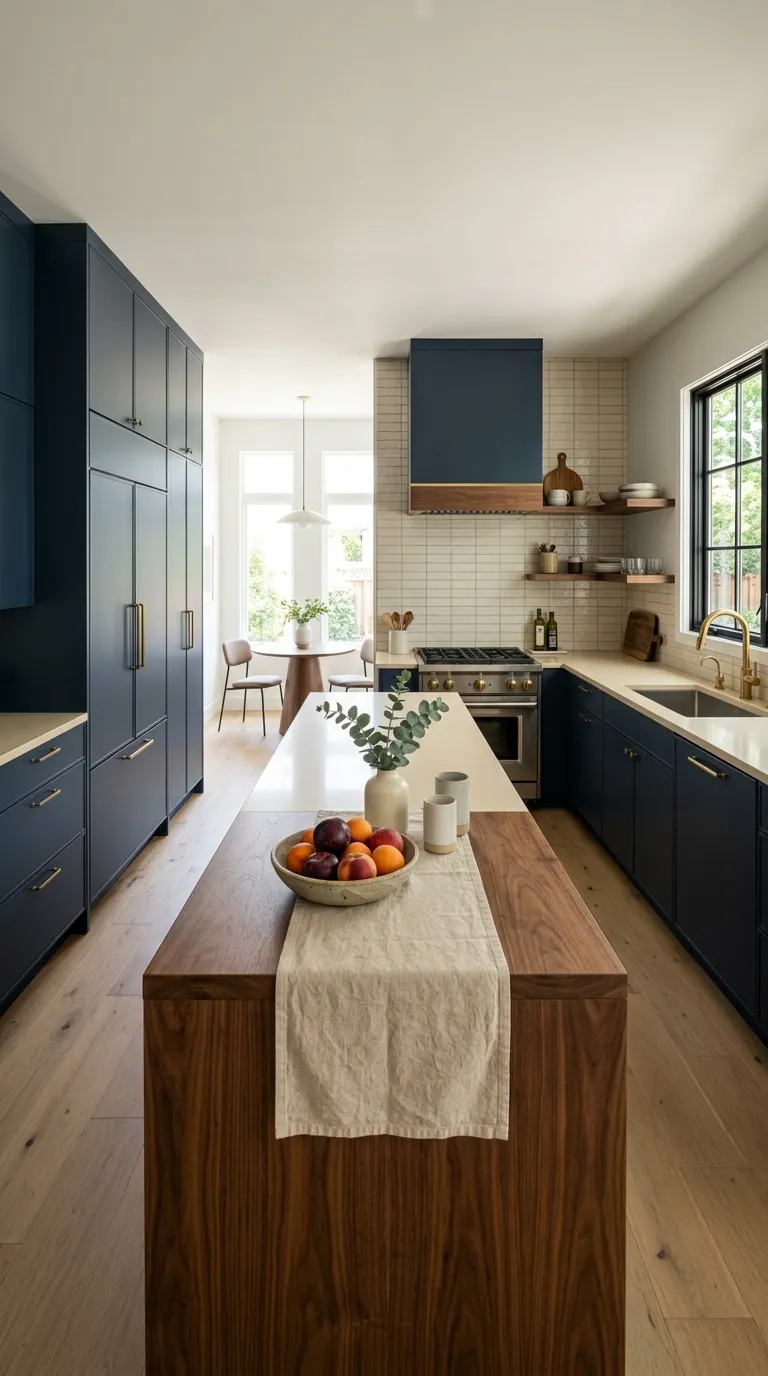
Navy brings depth to a kitchen, especially when you pair it with warm wood. Walnut or medium-toned oak keeps the darker blue from feeling too stark and gives the room a grounded, comfortable look.
For a balanced palette, keep the counters light and let the navy cabinets carry most of the color. Brass pulls can add a warm detail, while cream backsplash tile keeps the overall room soft.
Dusty Blue With Brass
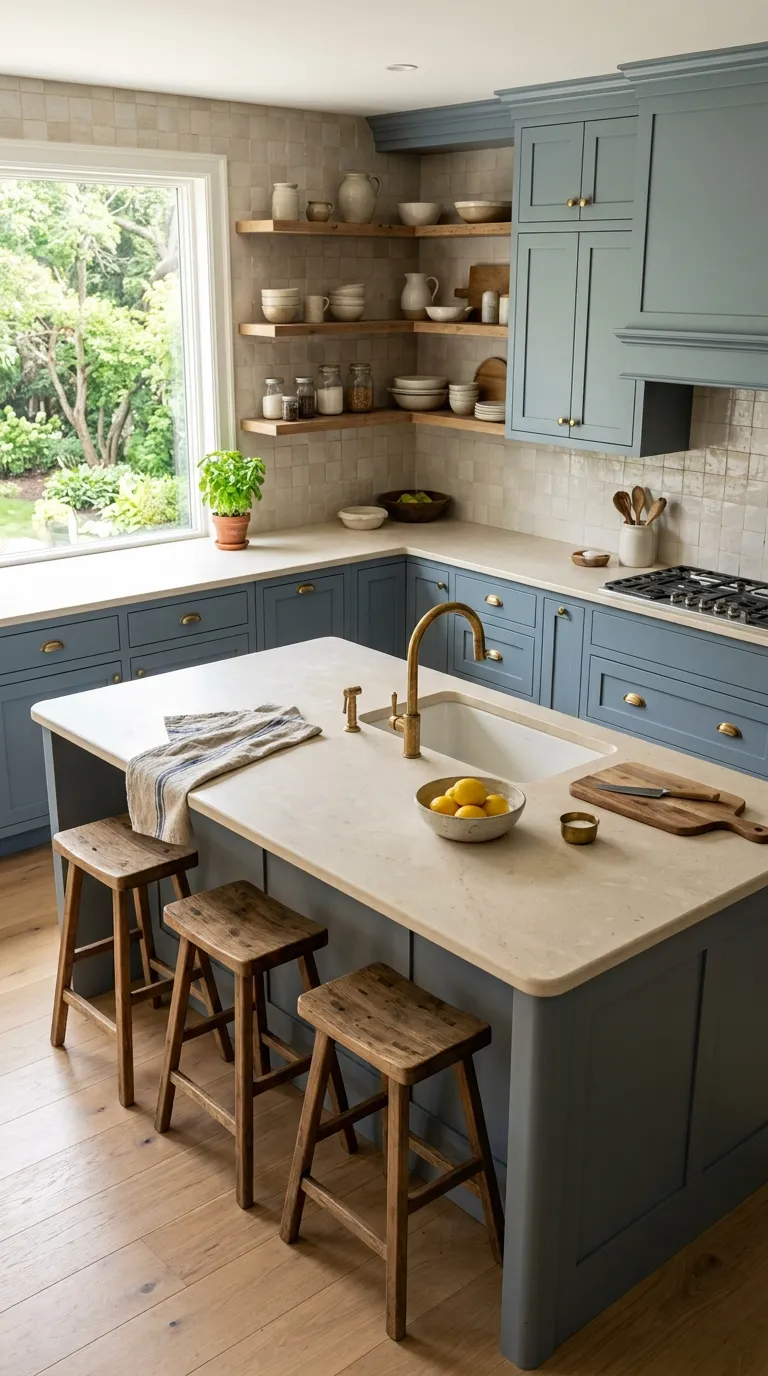
Dusty blue sits between soft blue and gray, making it easy to pair with warm finishes. Brass hardware adds a golden note that works especially well against the muted cabinet color.
Keep the rest of the palette simple with ivory stone, limestone, or warm beige tile. This approach lets the blue cabinetry stay noticeable while the brass details add small points of warmth throughout the room.
Coastal Blue With White Tile
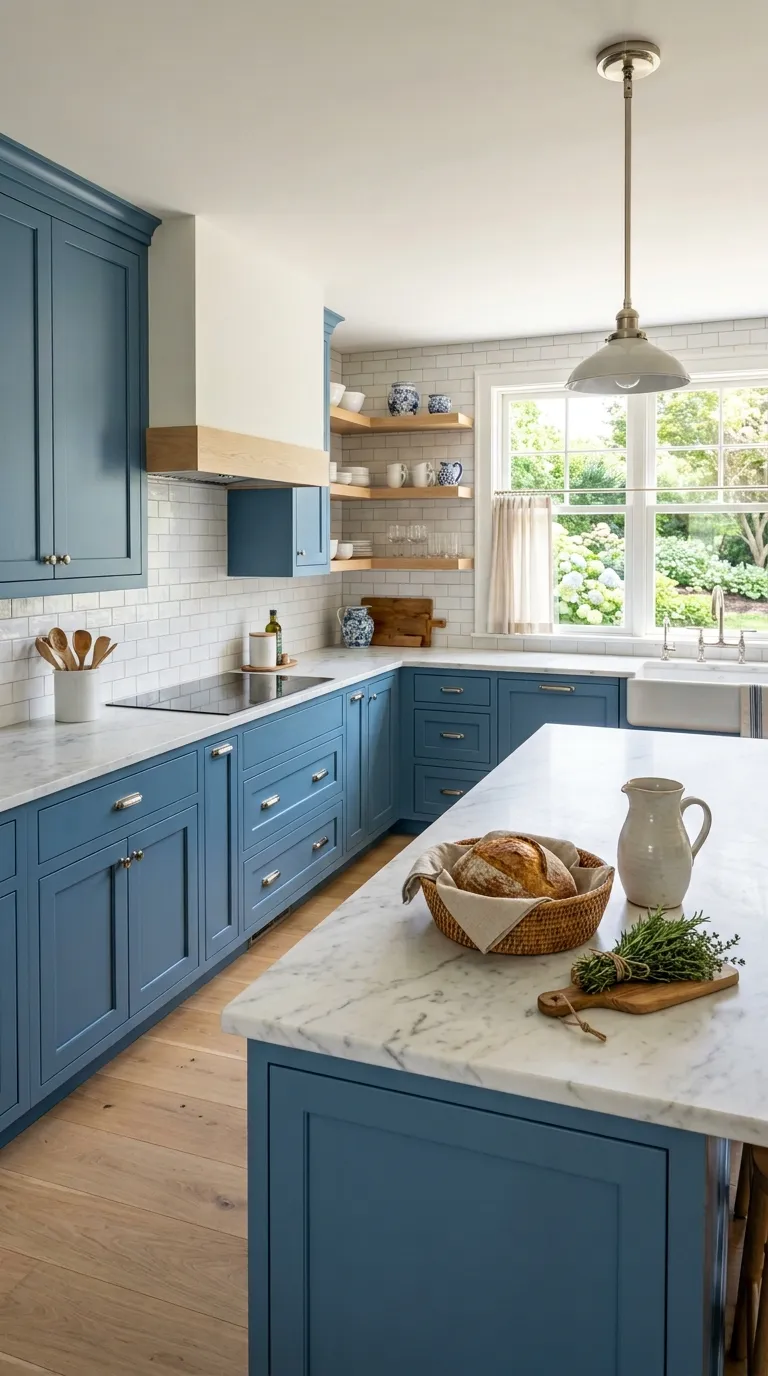
Coastal blue gives a kitchen a fresh look without relying on beach-themed decor. Pair it with white tile, pale wood, and simple stone surfaces for a clean palette that feels relaxed.
This combination works nicely in kitchens with plenty of natural light. Keep accessories restrained, using woven baskets, ceramic pieces, and fresh herbs to add texture without making the space feel themed.
Blue-Gray With Cream
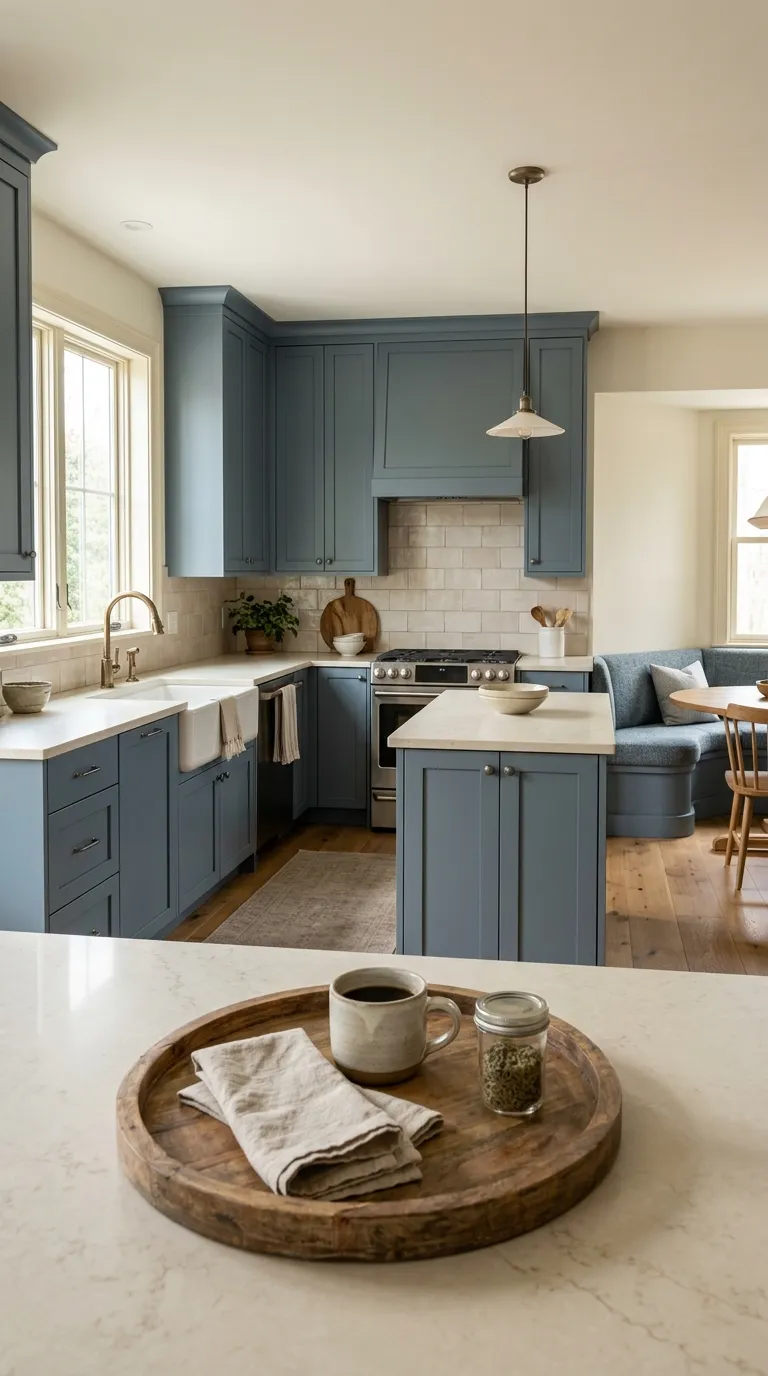
Blue-gray is a useful choice when pure blue feels too strong. Its muted quality pairs easily with cream, beige, ivory, and other warm neutrals.
Use cream on the walls or counters to keep the room soft. A few wood accents can add another warm layer, while pewter or brushed metal hardware keeps the palette understated.
Deep Blue With Marble
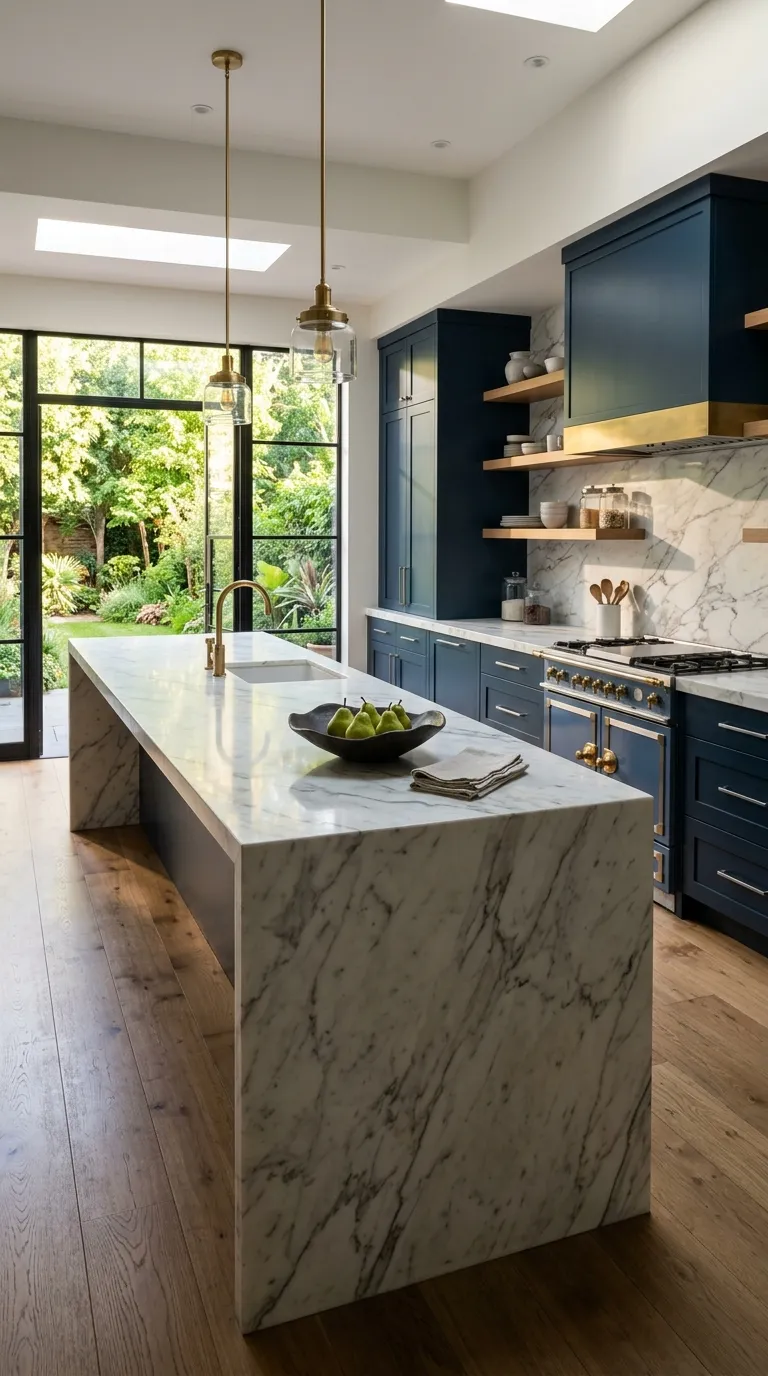
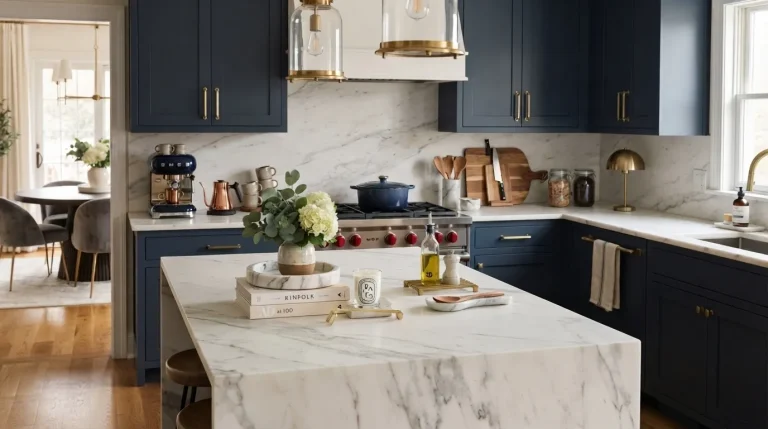
Deep blue cabinets create a strong focal point, and marble can keep that color from making the room feel too dark. White stone with soft gray veining gives the palette a clean counterpoint.
This pairing suits larger kitchens with good daylight. If the room is smaller, use the deep blue on an island or lower cabinets and keep upper surfaces light for a more open feel.
Powder Blue With Light Oak
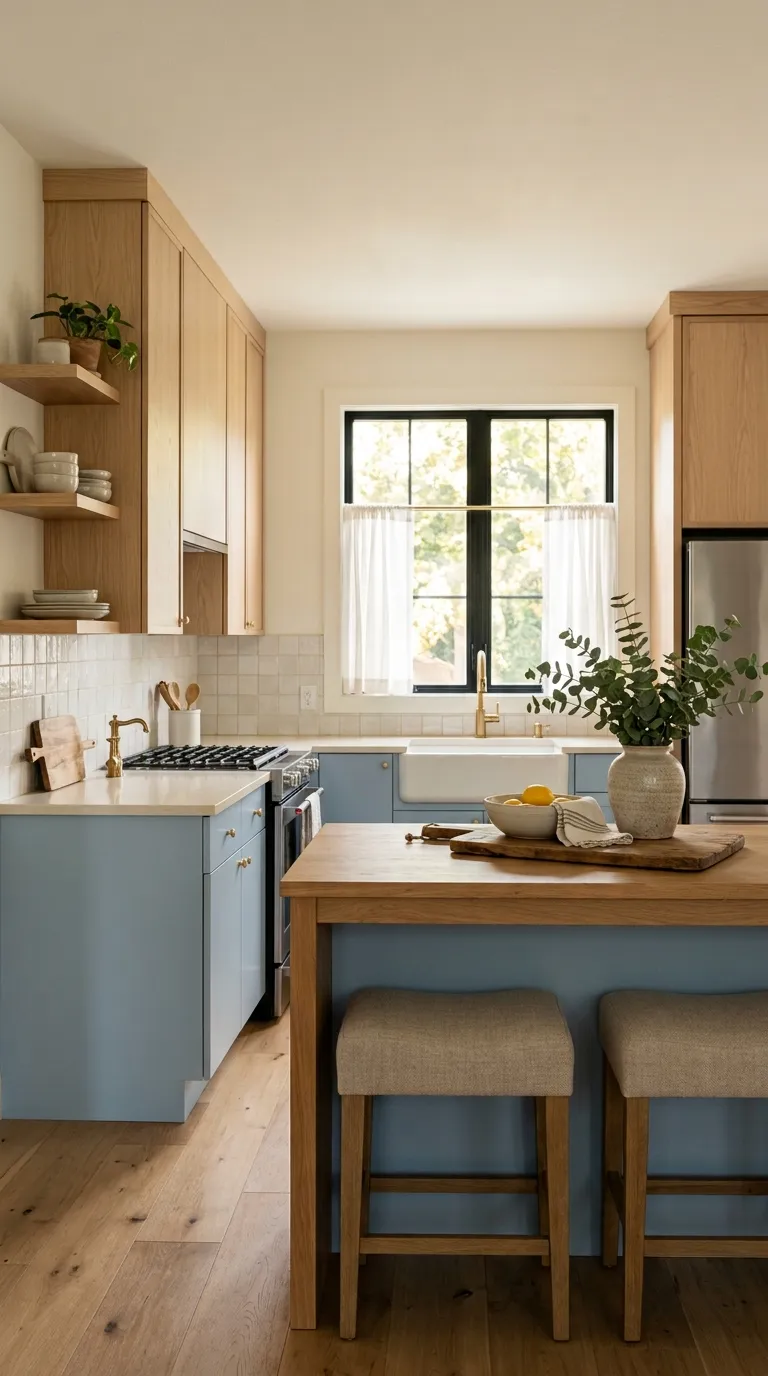
Powder blue and light oak create a gentle kitchen palette with plenty of warmth. The pale wood keeps the blue from feeling flat and adds natural texture across the room.
This pairing works especially well in smaller kitchens. Use blue on the lower cabinets and lighter wood above to keep the upper half visually open.
Cobalt Blue With Crisp White
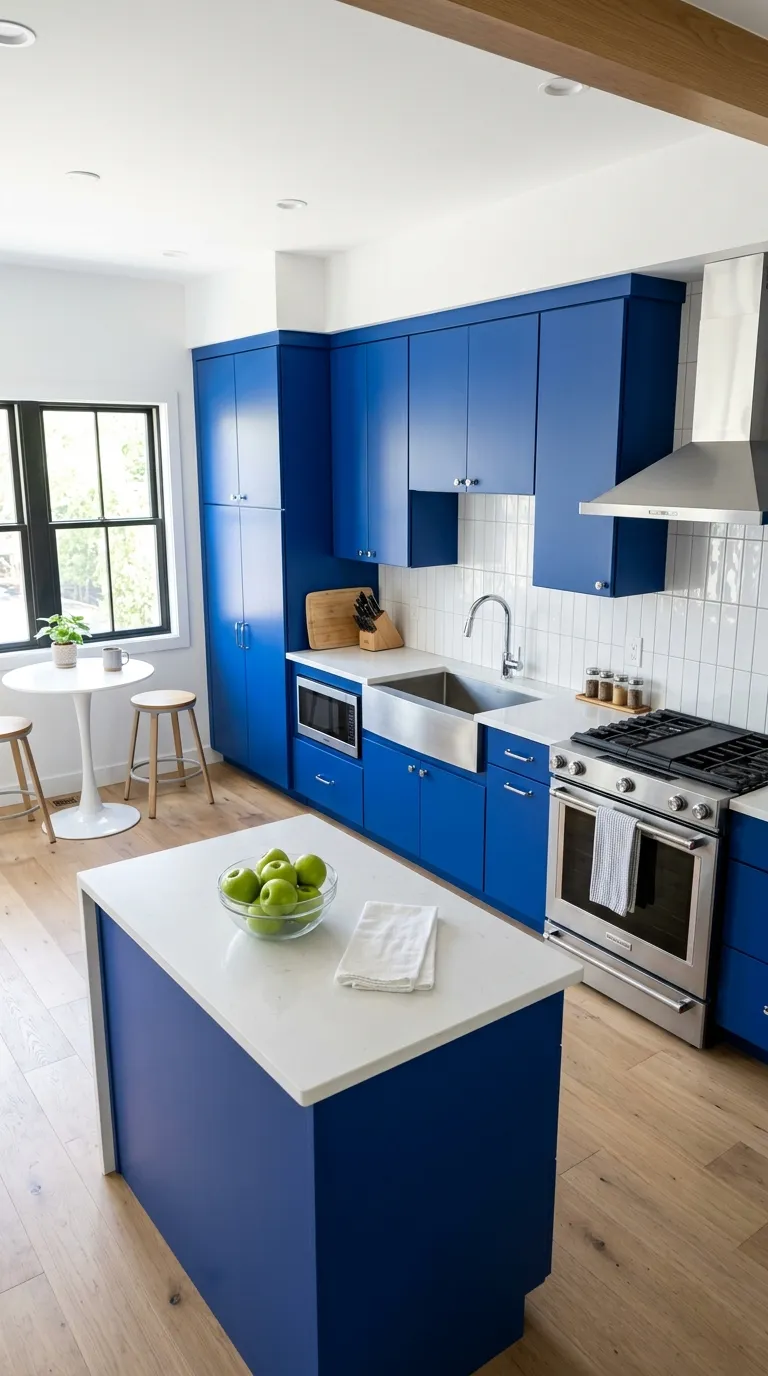
Cobalt blue makes a kitchen feel confident and colorful. Since the shade has strong visual weight, crisp white surfaces can give it enough breathing room.
Keep the hardware simple if the cabinets already make a statement. Chrome or polished nickel works well, while green fruit or a few small plants can add a natural touch.
Teal Blue With Warm Beige
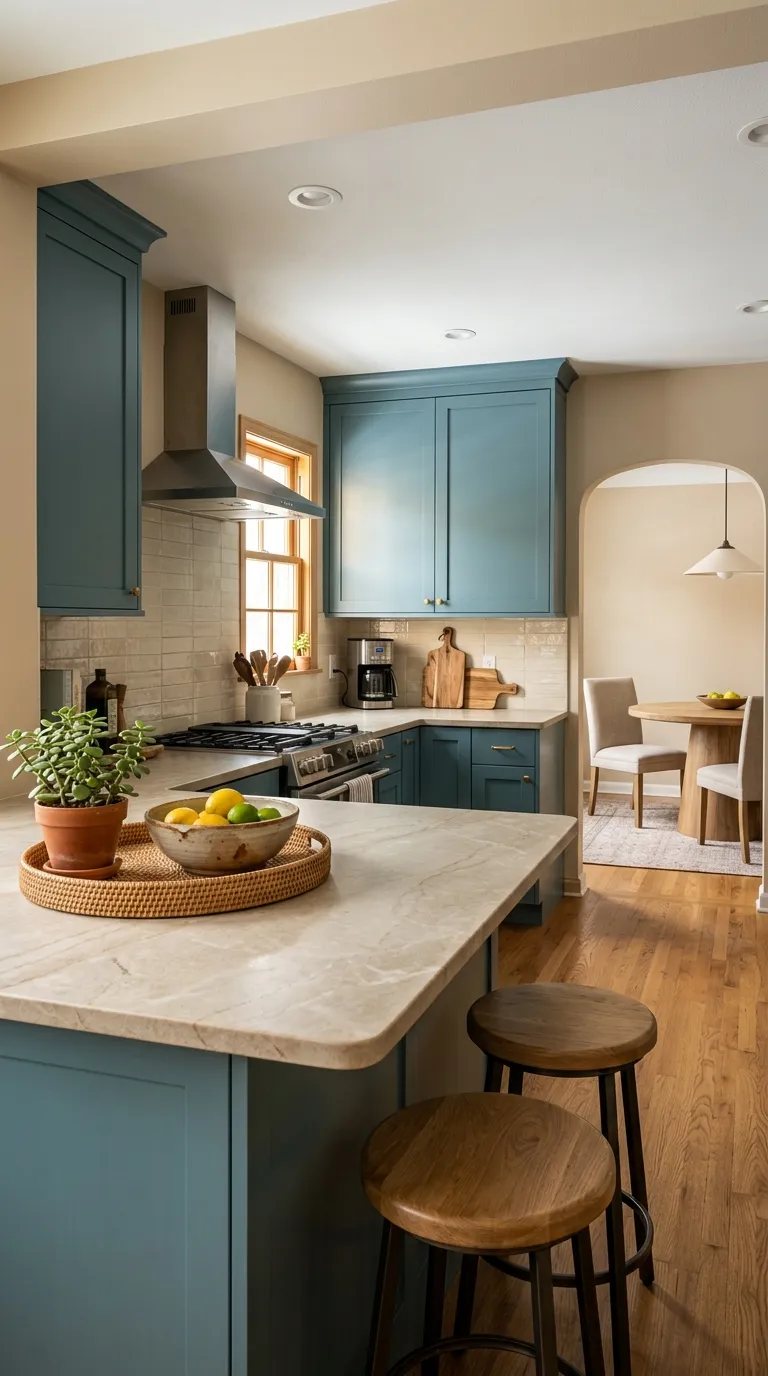
Teal blue adds more green than classic blue, making it a good fit for warm kitchens. Beige walls and sandy stone surfaces help keep the color grounded.
Try this palette with wood flooring and woven accessories for extra texture. A small terracotta accent can also bring out the warmer side of teal without taking attention away from the cabinets.
Blue Cabinets With Sage Green
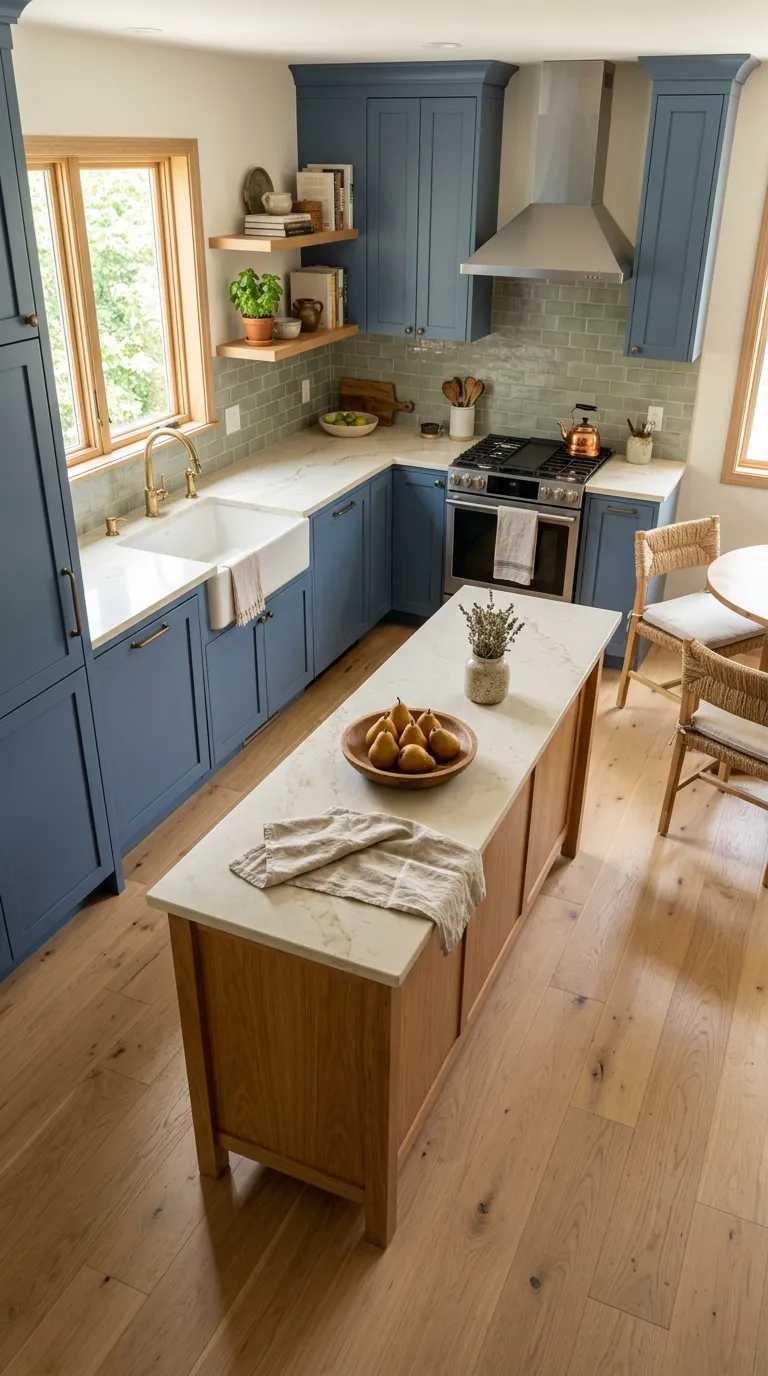
Blue and sage green create a soft nature-inspired palette that feels fresh without looking overly bright. The trick is to keep both shades muted so they complement rather than compete.
Use creamy counters and oak details to warm the cooler colors. This mix works particularly well when you want your kitchen to feel collected, relaxed, and connected to natural tones.
Navy and Soft Gray
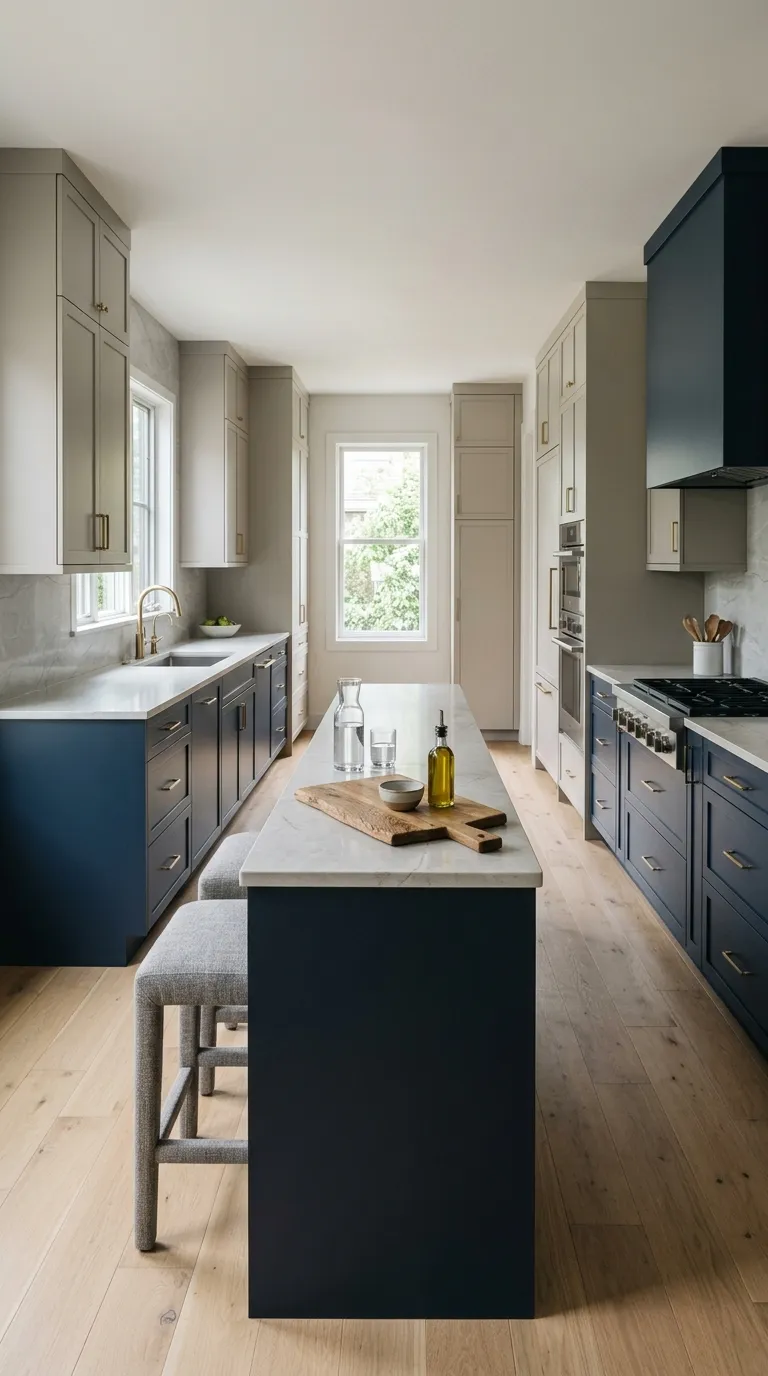
Navy and gray give you a polished two-tone kitchen without adding too many competing colors. Navy works well on lower cabinets because it gives the room a strong base.
Soft gray above keeps the upper half lighter and visually calm. Add pale stone counters and a few natural wood pieces to prevent the palette from feeling too cool.
Blue Island With White Cabinets
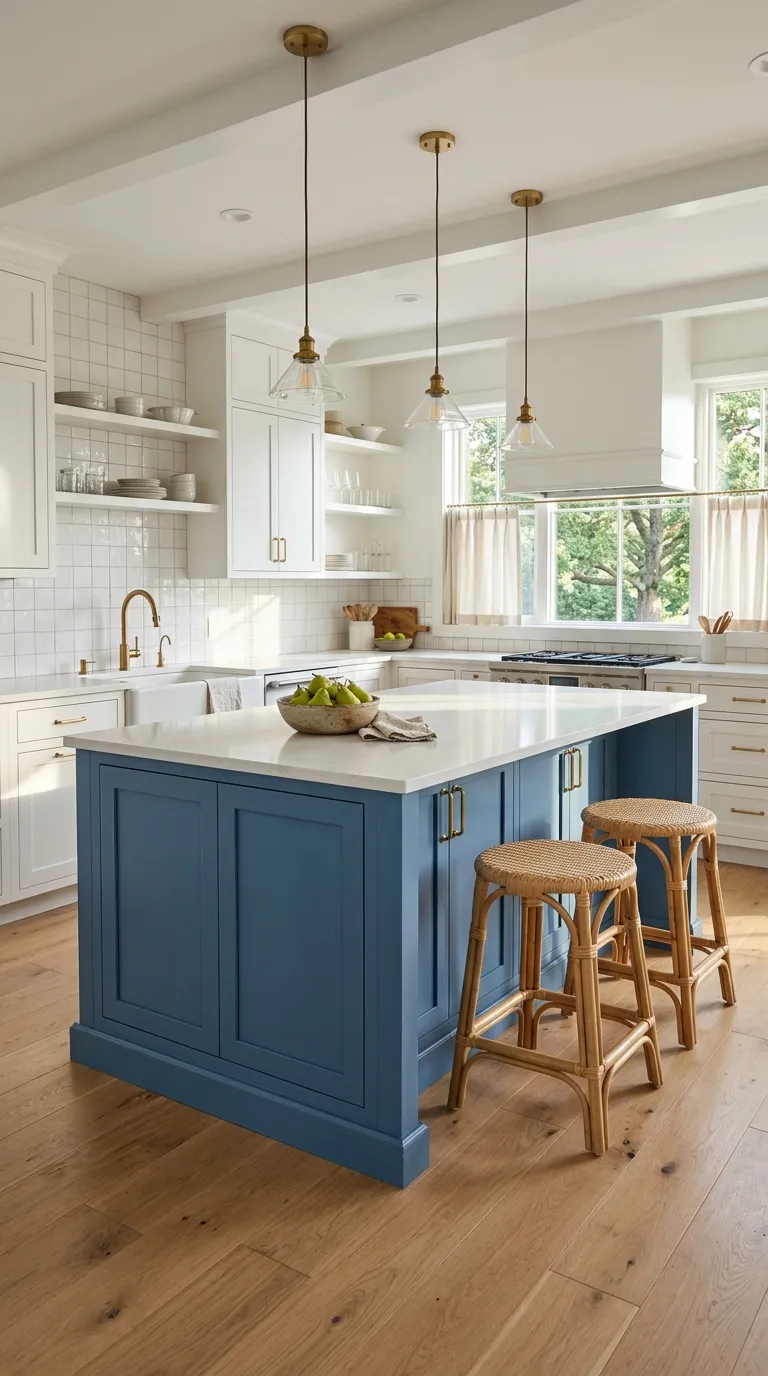
A blue island is an easy way to bring color into a mostly white kitchen. You get the character of blue without covering every cabinet in a darker shade.
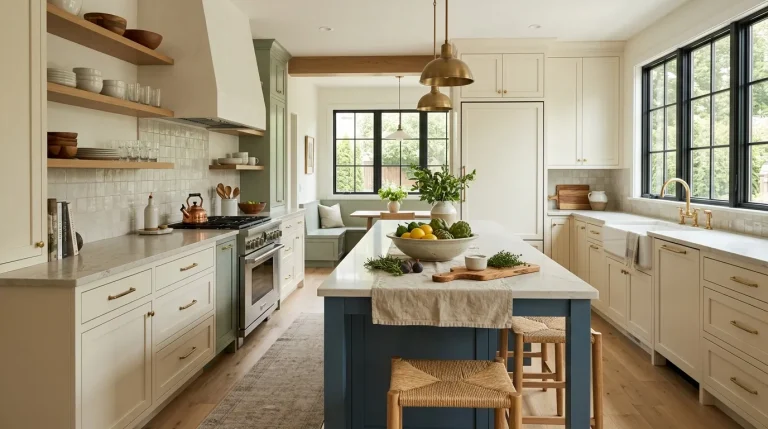
Choose a blue that connects with another small detail in the room, such as a runner or ceramic accent. White cabinets, light counters, and natural flooring keep the island as the main focal point.
Sky Blue With Natural Stone
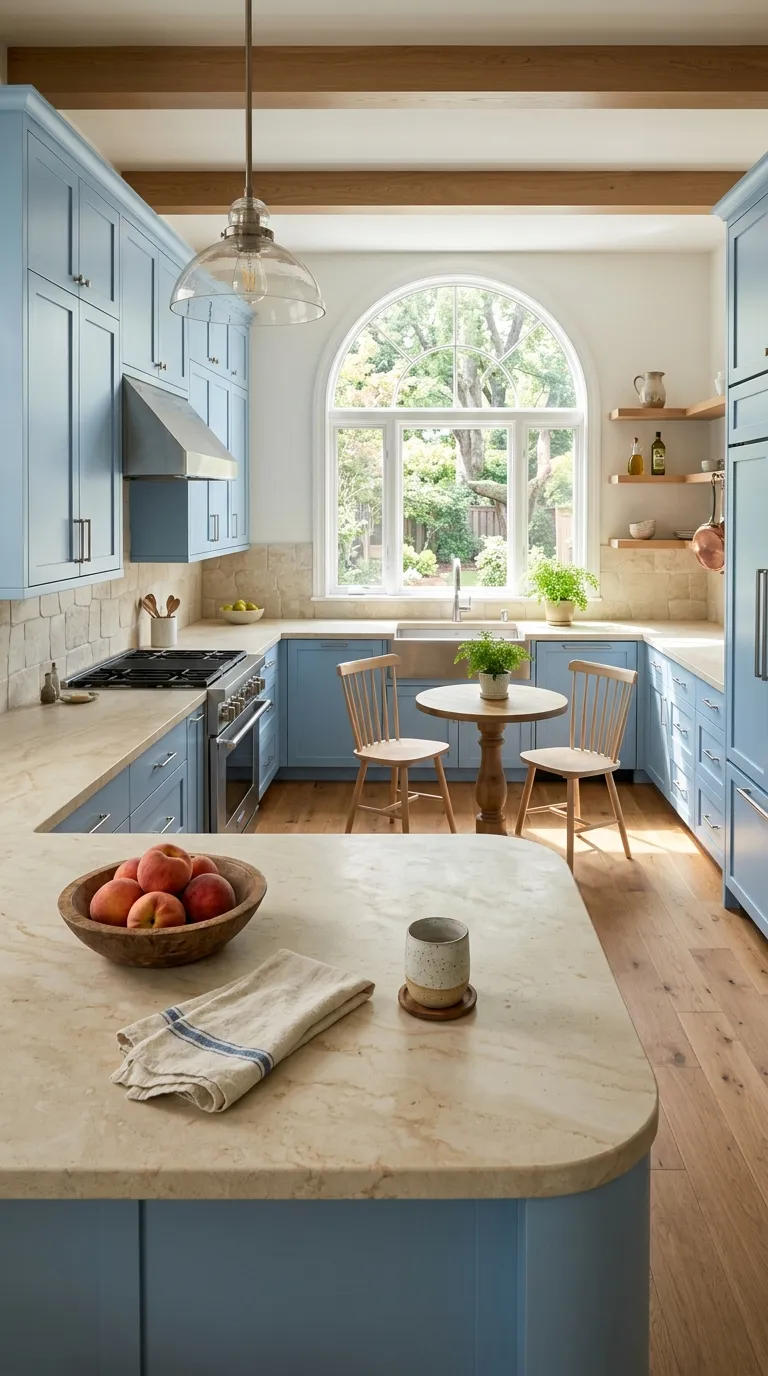
Sky blue keeps a kitchen feeling light and open, while natural stone adds enough warmth to balance the cooler cabinet color. This pairing feels especially fitting when you want an organic, relaxed room.
Choose stone with cream, beige, or soft gray notes rather than stark white. Wooden boards, ceramic dishes, and woven accents can add more natural texture without crowding the palette.
Royal Blue With Warm Brass
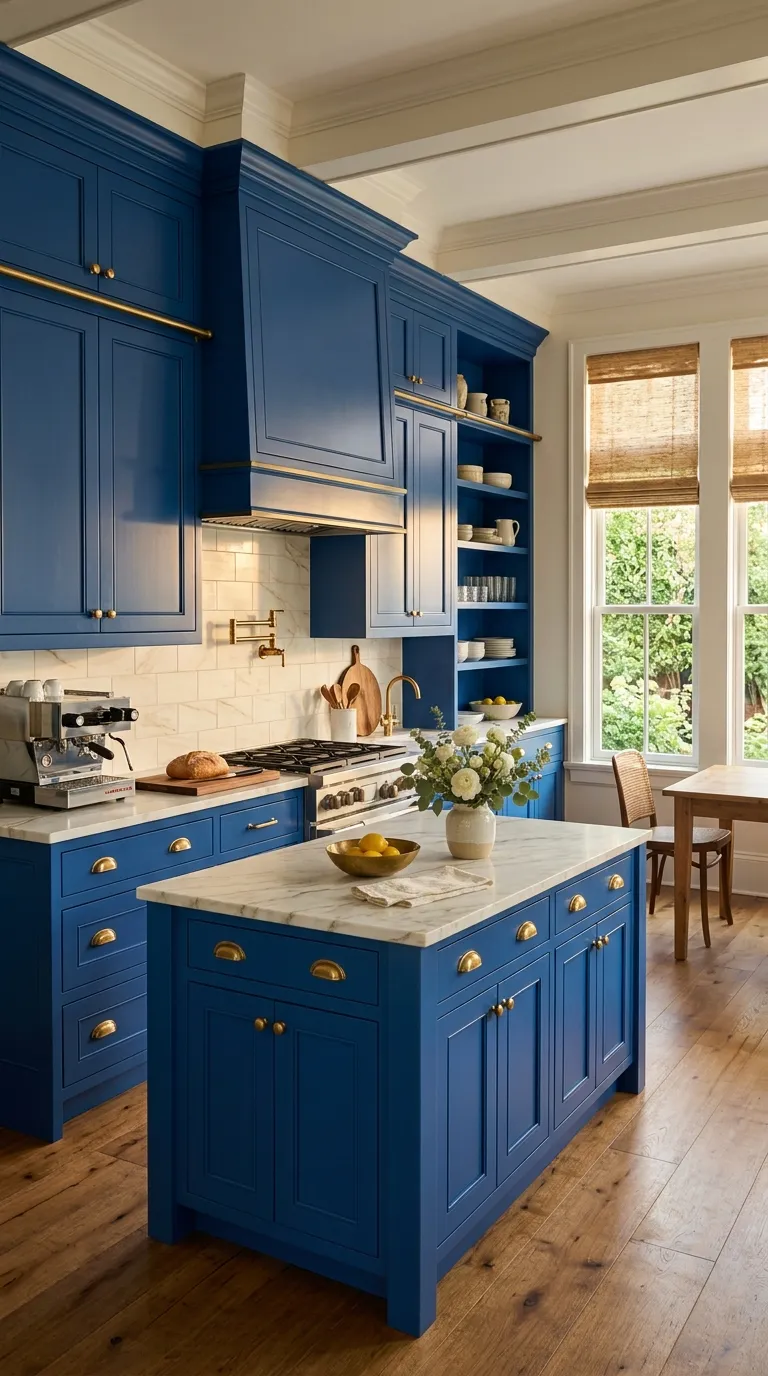
Royal blue brings a richer mood to kitchen cabinetry, so warm brass can help soften the overall look. Creamy counters keep the saturated color from dominating every surface.
This palette suits classic and transitional spaces. Use brass in small doses across cabinet hardware and faucets, then let the blue remain the main visual feature.
Muted Blue With Terracotta
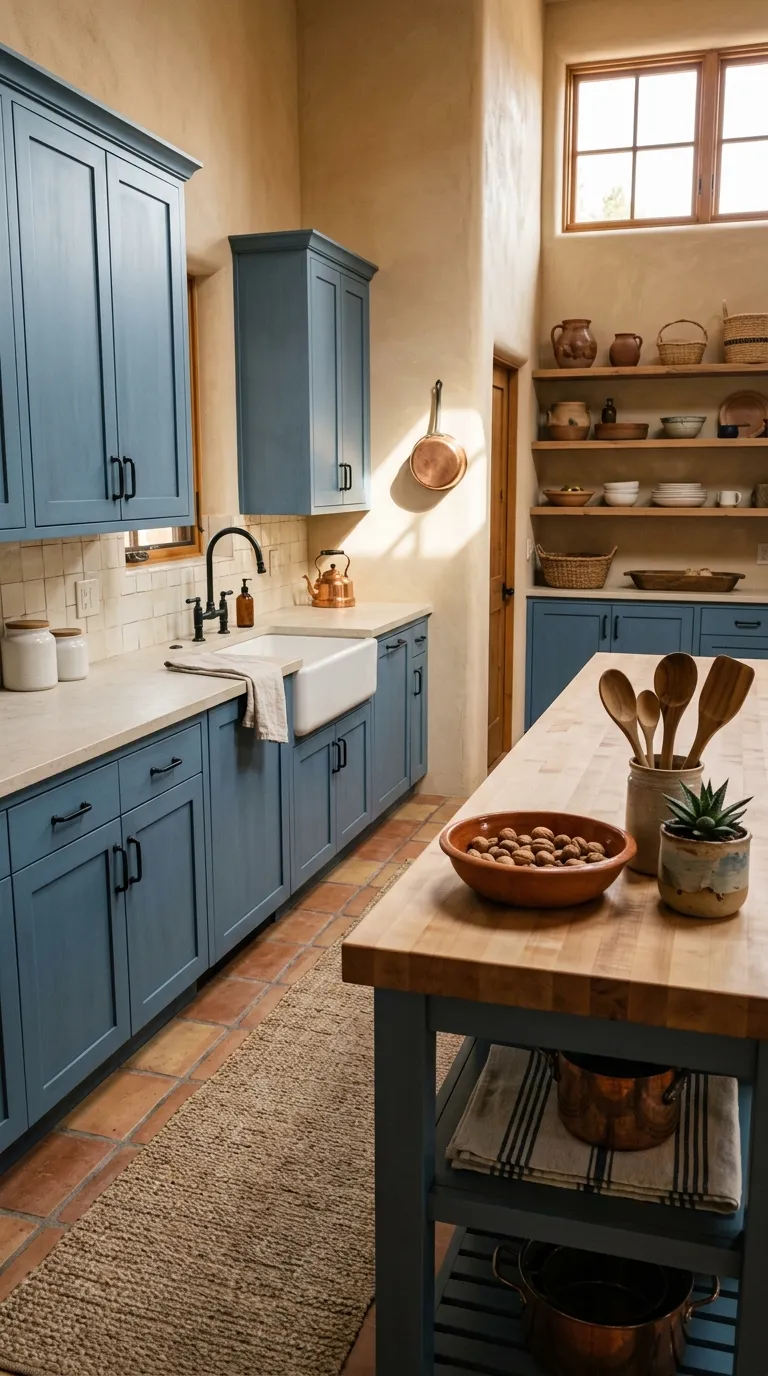
Muted blue can take on a warmer personality when you pair it with terracotta. The earthy orange tone creates a pleasing contrast while still feeling natural beside blue.
Keep terracotta accents small so they don’t overpower the cabinets. Clay bowls, planters, and pottery can bring this warm color into the kitchen without requiring a major design change.
Blue and Charcoal Contrast
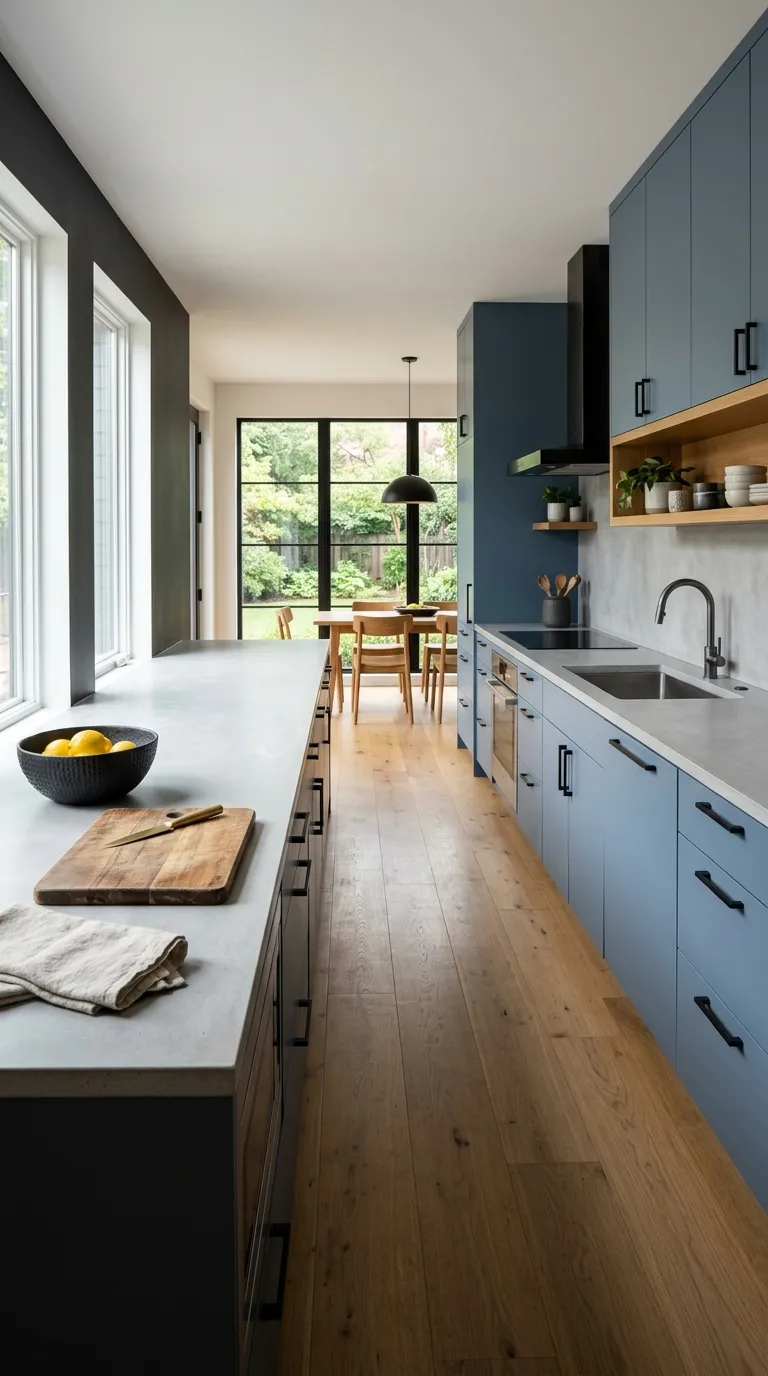
Blue and charcoal create a stronger kitchen palette with a modern edge. The key is to give the darker colors enough light surfaces so the room doesn’t feel heavy.
Use pale counters and warm oak flooring to break up the darker tones. Matte black hardware can tie the charcoal accents together without adding another strong color.
Pale Blue With Blush Accents
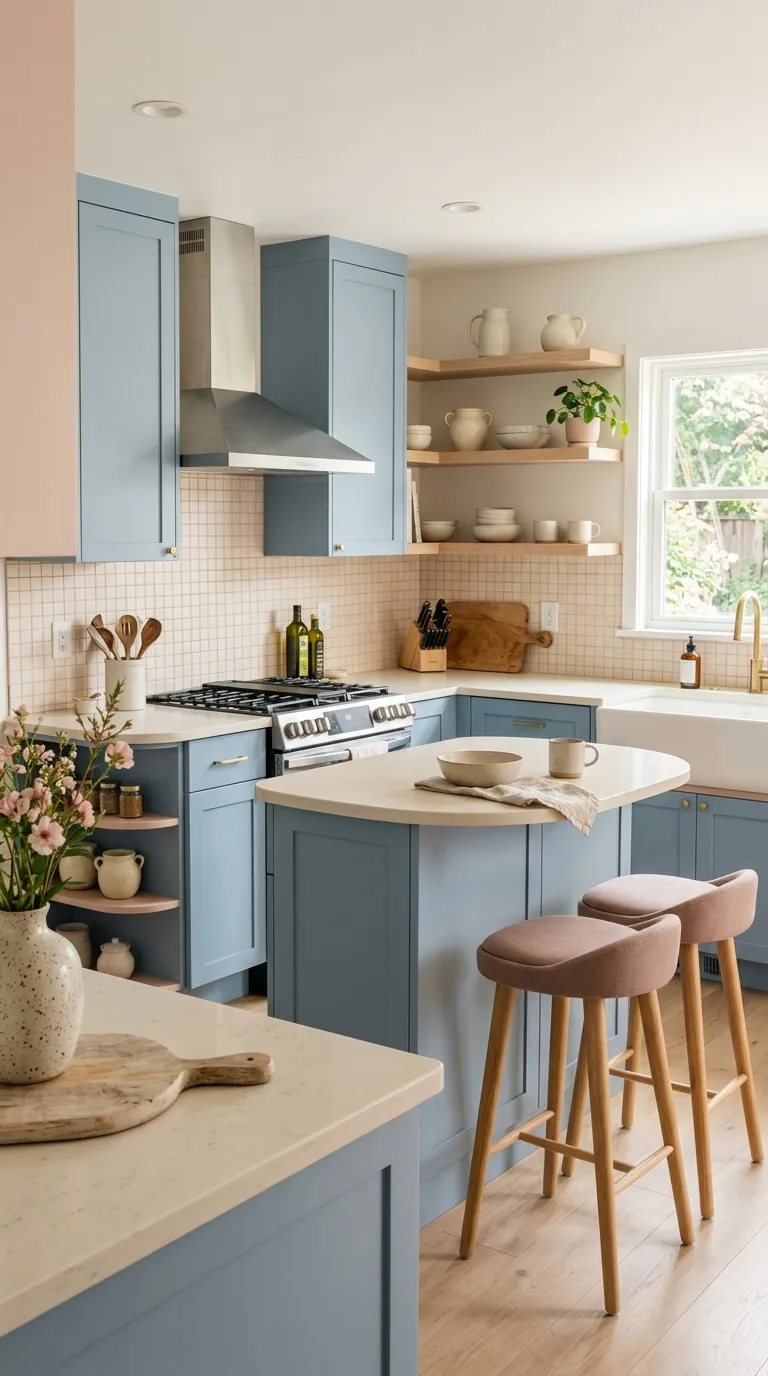
Pale blue can work with soft blush when both colors stay muted. The result feels gentle without turning the kitchen overly sweet.
Keep blush to small areas such as stools, flowers, towels, or ceramics. Cream counters and light wood give the two colors enough space to work together.
You’ll probably also want to check out Lovely Neutral Kitchen Color Palette.
Blue With Warm Greige
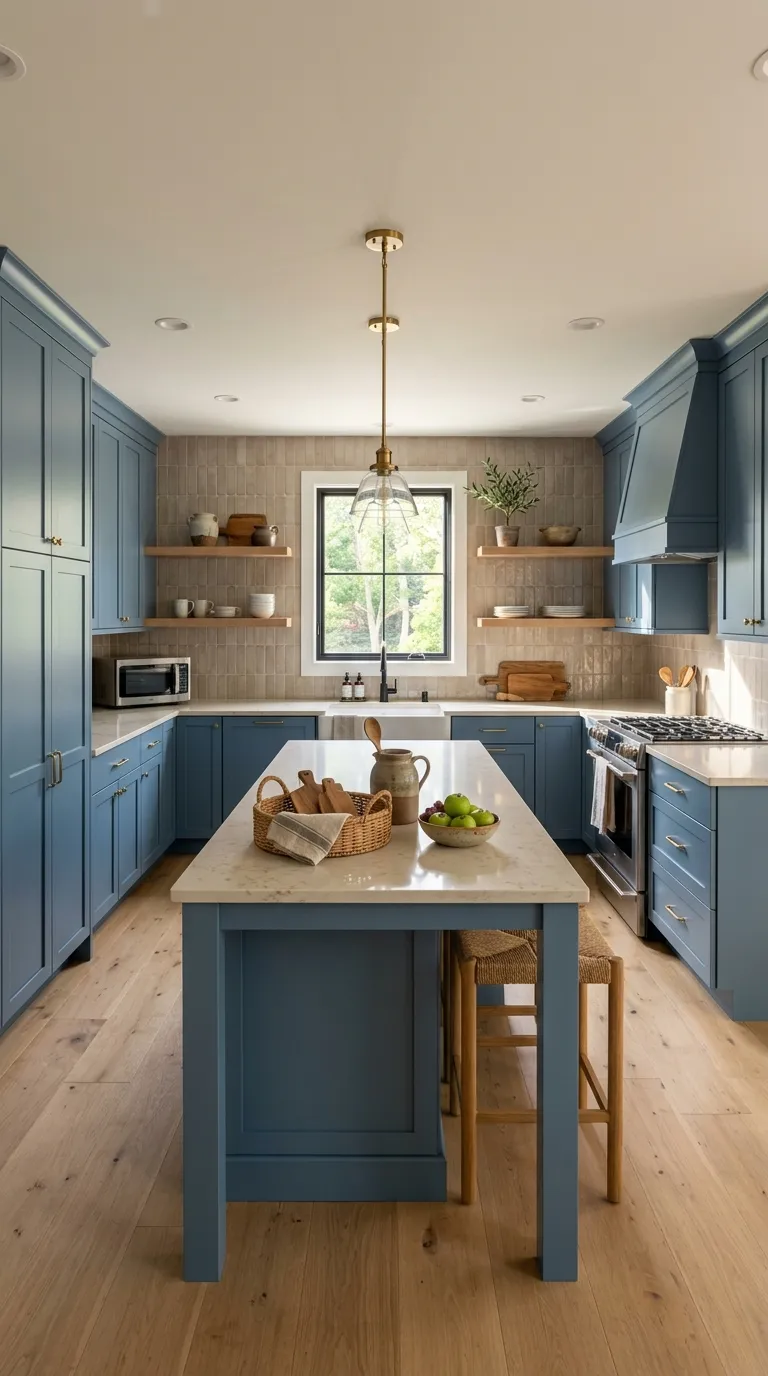
Greige sits between gray and beige, making it a useful companion for blue cabinetry. It adds warmth without pulling the palette toward a strong yellow or brown tone.
Try greige on walls or backsplash tile while keeping the counters light. Oak shelves, cutting boards, or stools can add another natural layer and make the palette feel more connected.
Denim Blue With Creamy Beige
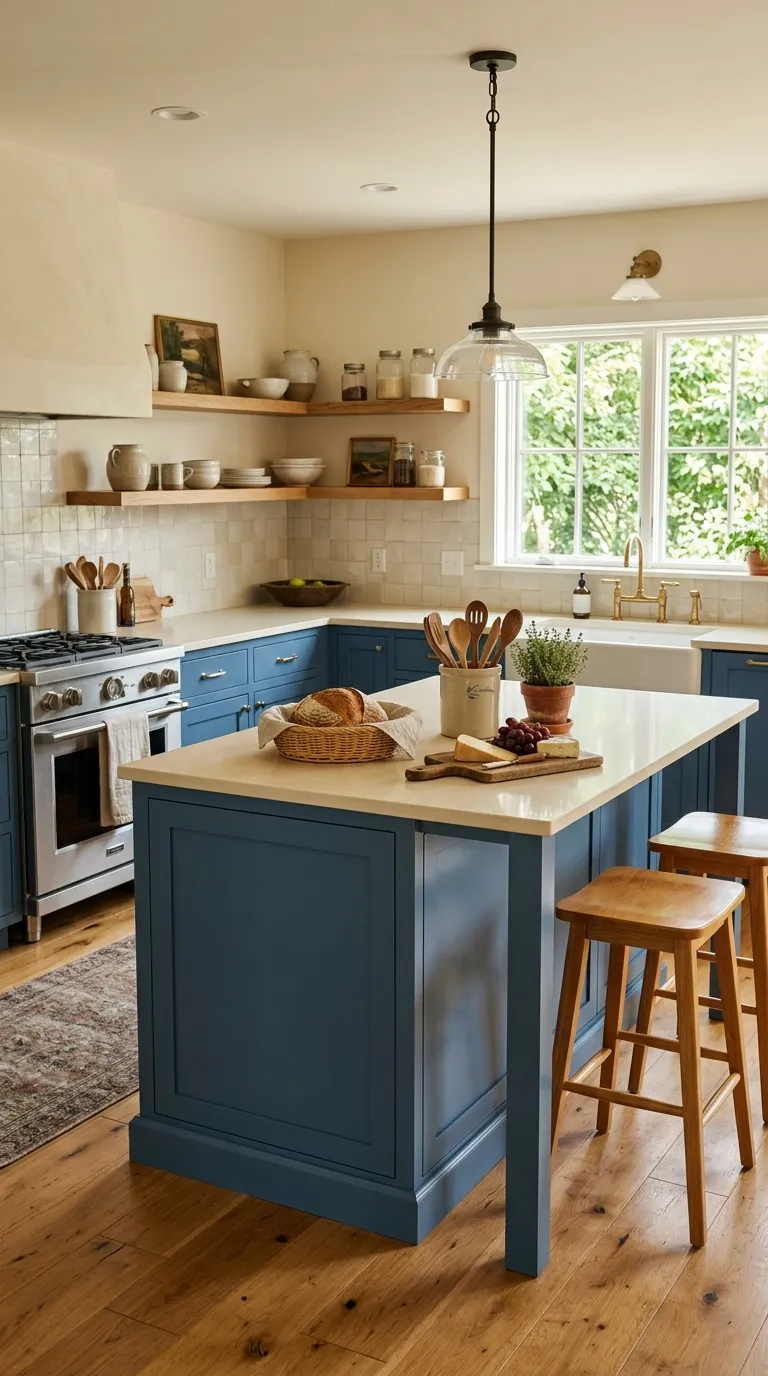
Denim blue has a familiar, lived-in feel that works well with creamy beige. The warm neutral keeps the blue from appearing too cool or formal.
Use this combination with oak flooring and simple farmhouse details. Woven baskets, pottery, and linen textiles add texture while keeping the palette relaxed.
Ice Blue With Silver Accents
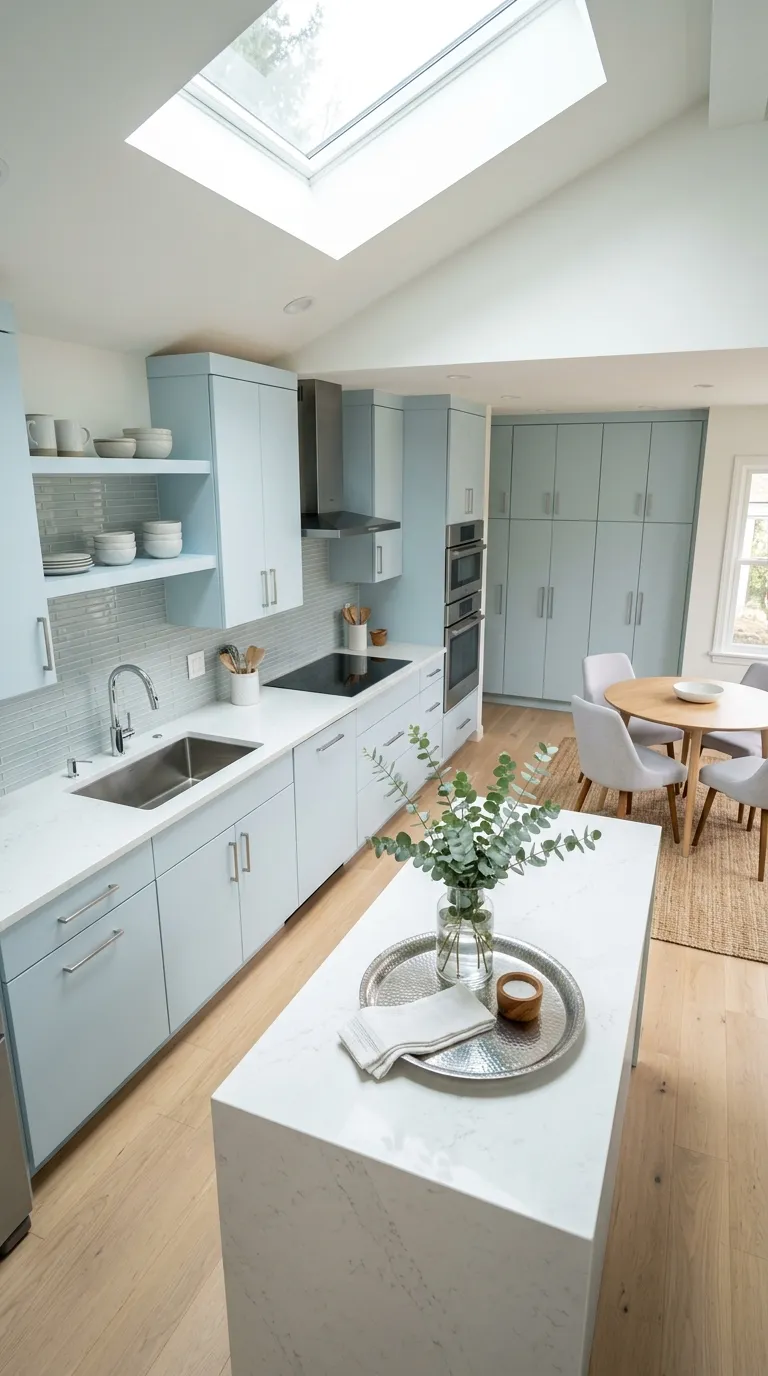
Ice blue is a smart pick for a bright, airy kitchen. Its cool undertone works naturally with silver, chrome, white quartz, and pale gray tile.
This palette fits contemporary spaces where you want a clean appearance. Add a little greenery or natural wood to keep the room from feeling too sleek.
Midnight Blue With Warm Oak
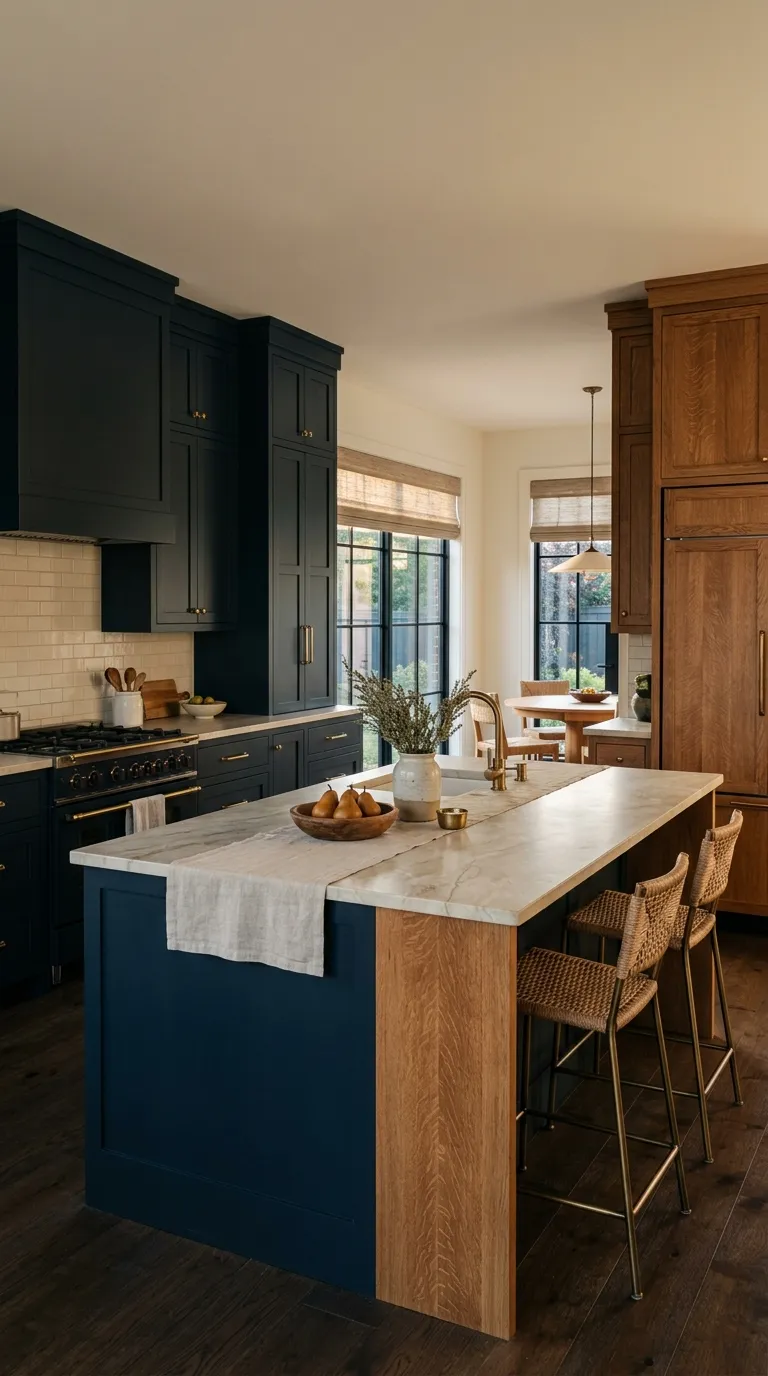
Midnight blue gives cabinetry a deep, dramatic presence while warm oak keeps the room inviting. The contrast is strongest when the wood has visible grain and the blue has a low-sheen finish.
Use creamy stone rather than stark white to soften the palette. Warm woven shades, linen, and natural wood accessories can add texture without taking attention from the cabinet color.
Cornflower Blue With White Oak
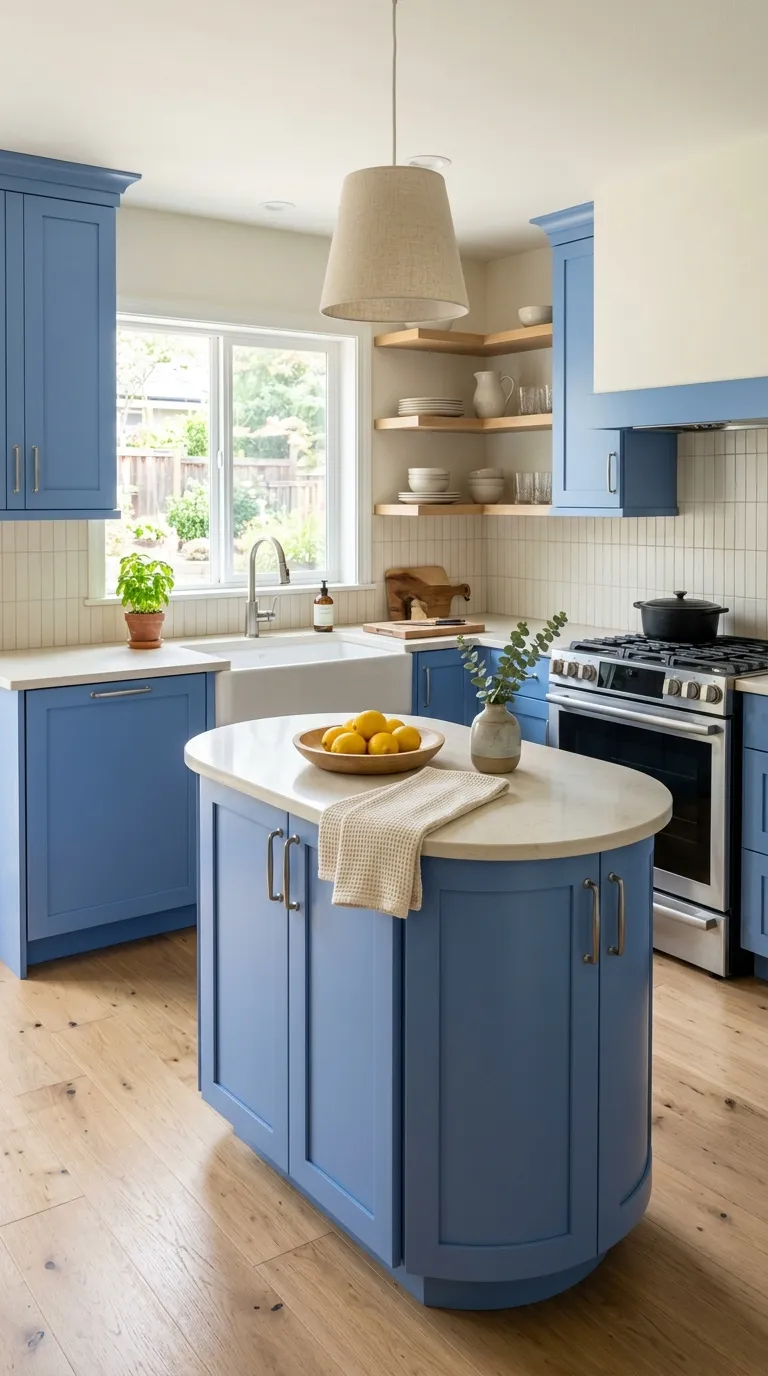
Cornflower blue brings a lively touch without feeling too intense. White oak adds a pale, natural finish that keeps the room feeling light and balanced.
Choose ivory walls and creamy counters to soften the contrast. A few yellow accents, such as lemons or small flowers, can bring out the cheerful side of this kitchen palette.
Blue With Black Hardware
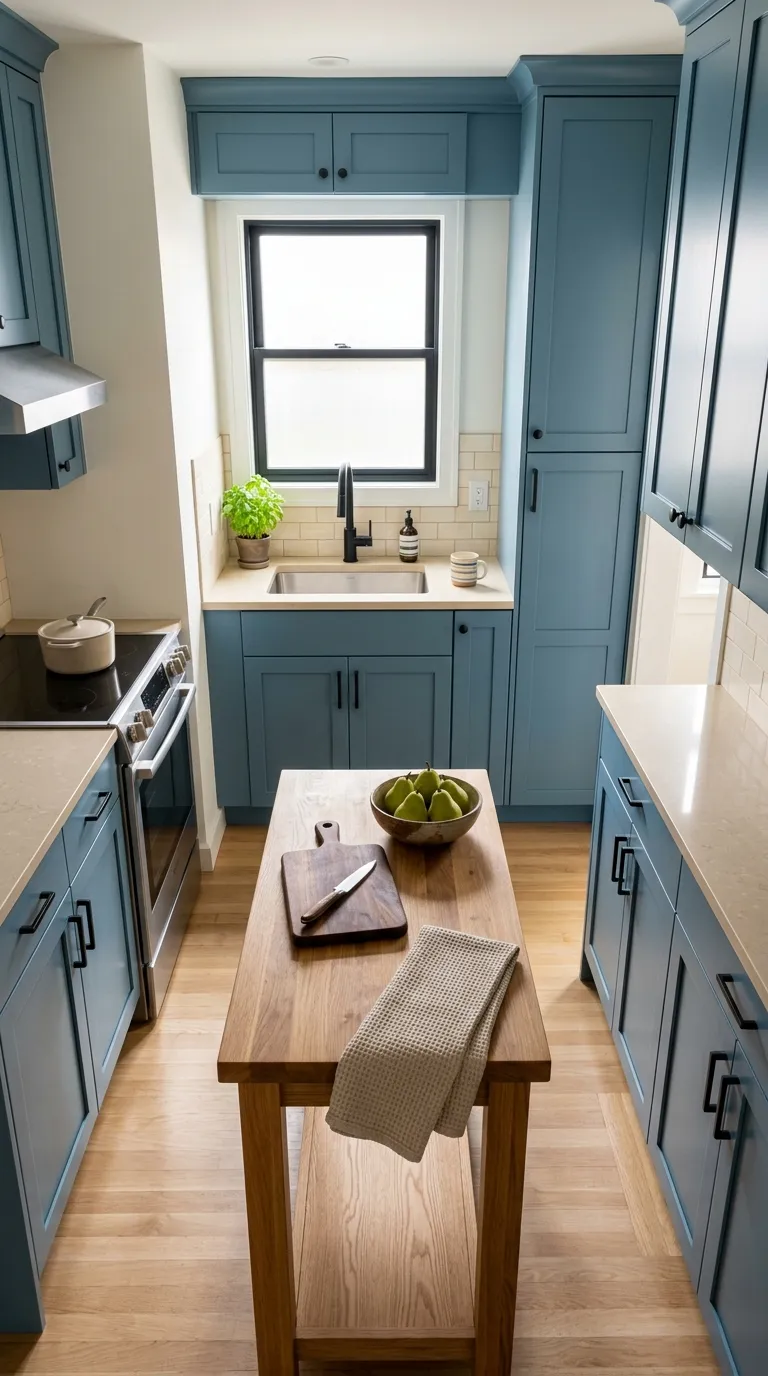
Black hardware gives blue cabinets a clean, defined outline. It works especially well when the blue has a muted or gray undertone.
Keep the counters and walls warm to balance the dark hardware. A wood island or cutting board can also bring a softer note into the room while keeping the look practical.
Blue With Warm White Walls
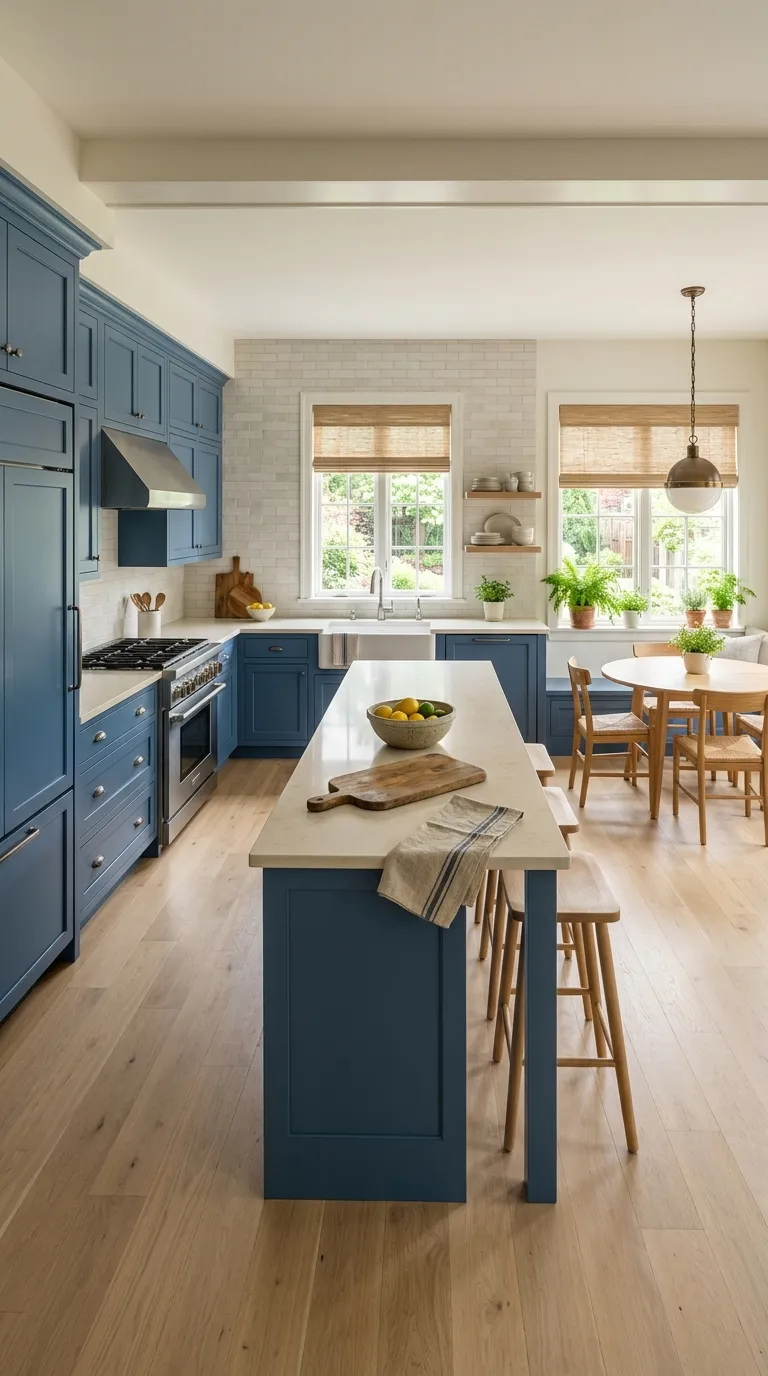
Warm white walls are one of the easiest partners for blue cabinets. They keep the kitchen bright while adding enough warmth to prevent the color from feeling icy.
This palette works across many kitchen styles, from classic shaker cabinetry to simpler modern doors. Add cream stone, natural wood, and understated metal hardware for a room that feels balanced from every angle.
Blue With Natural Greenery
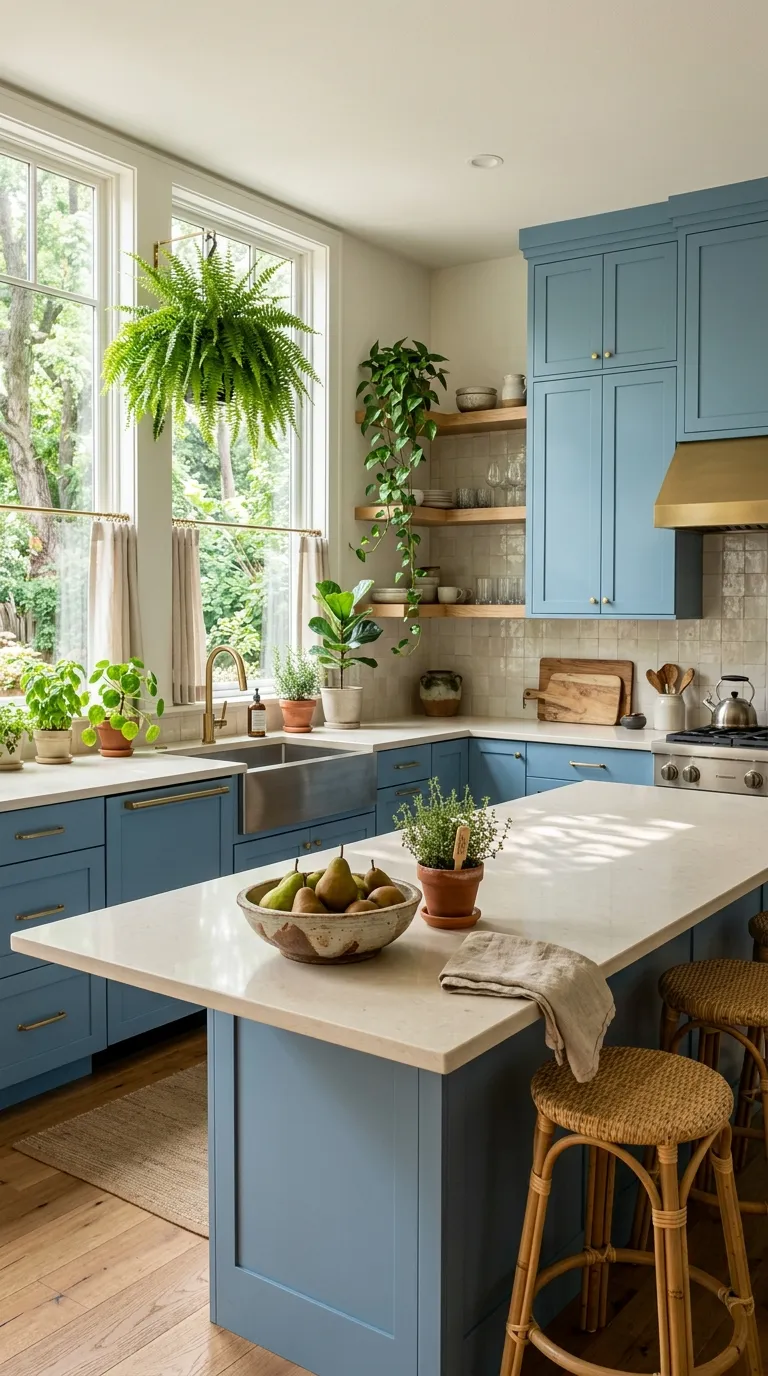
Blue and greenery make a natural pairing because both colors bring a calm, organic feel to the kitchen. You don’t need many plants to make the palette work.
Place herbs near a sunny window or add leafy branches to open shelving. Warm wood, woven baskets, and creamy counters can keep the blue and green combination feeling balanced.
Two-Tone Blue Cabinetry
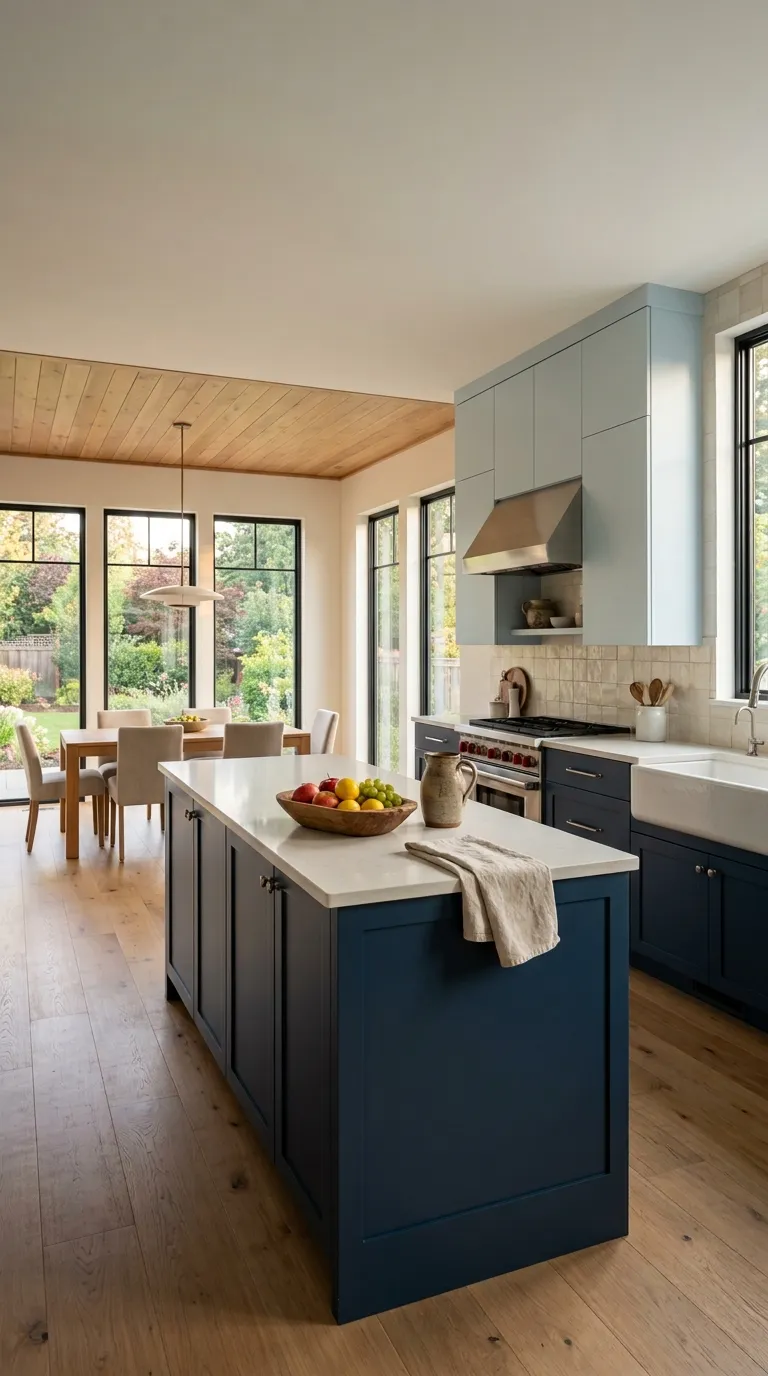
Two blue shades can give your kitchen more depth without adding several unrelated colors. A lighter blue above keeps the upper cabinets airy, while a deeper blue below creates a solid base.
Use warm white counters as the visual bridge between both shades. Natural wood, cream tile, and simple metal hardware can finish the room without taking attention away from the two-tone cabinetry.
Ready to Start?
The best blue kitchen palette starts with the mood you want and the finishes already in your room. Soft blues suit bright spaces, while navy, denim, and midnight shades create more depth when balanced with warm wood, cream stone, or white surfaces.
Before choosing paint, collect small samples of your cabinet color, counter, backsplash, flooring, and hardware. View them together in morning and afternoon light, then choose the blue that looks natural with the full mix. A thoughtful combination can give your kitchen a fresh look while still feeling comfortable for everyday life.
Olivia Carter
Olivia Carter is the founder of Lady Home Decor and a passionate home decor expert. She shares practical, stylish ideas to help homeowners create beautiful, comfortable, and welcoming spaces. Her expertise covers bedrooms, kitchens, living rooms, bathrooms, and small-space decorating.