20 Timeless Dining Room Decor Small Space Ideas That Shine

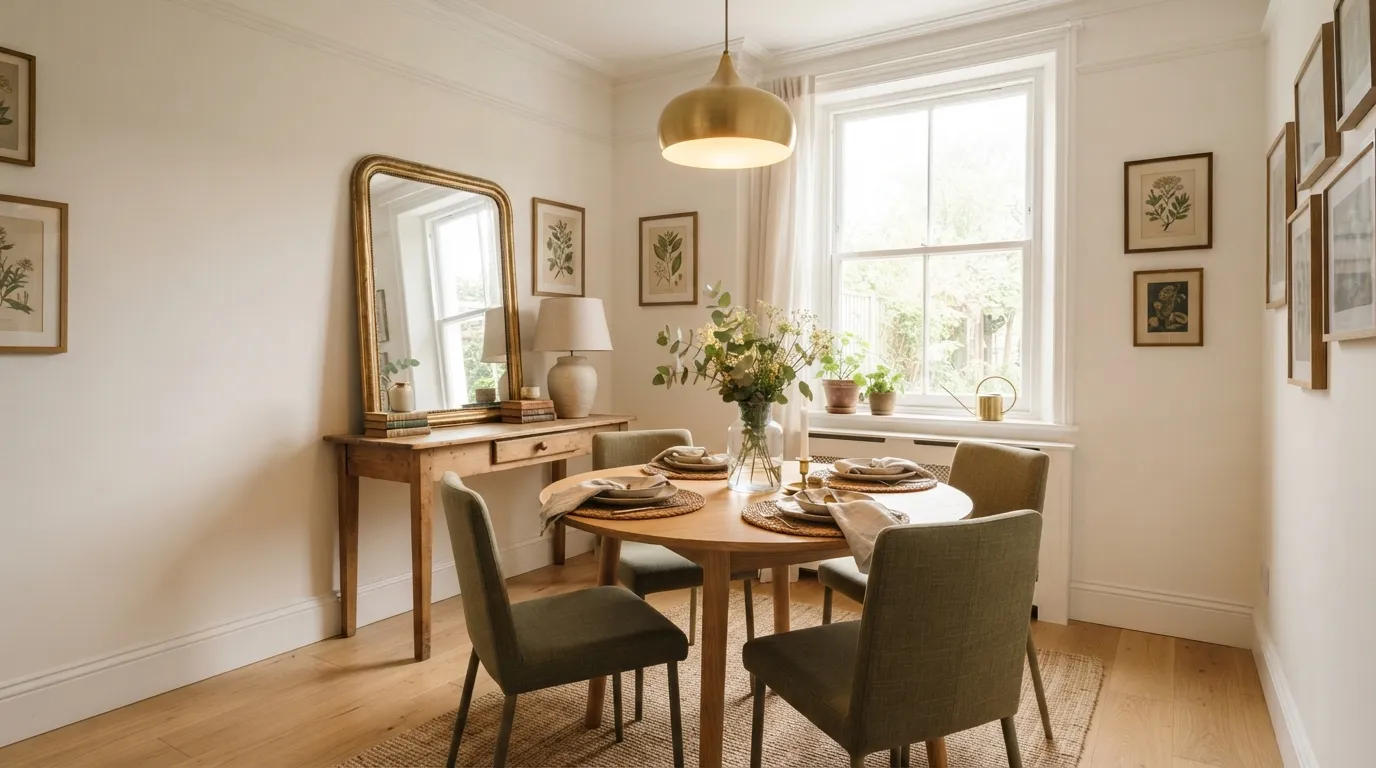
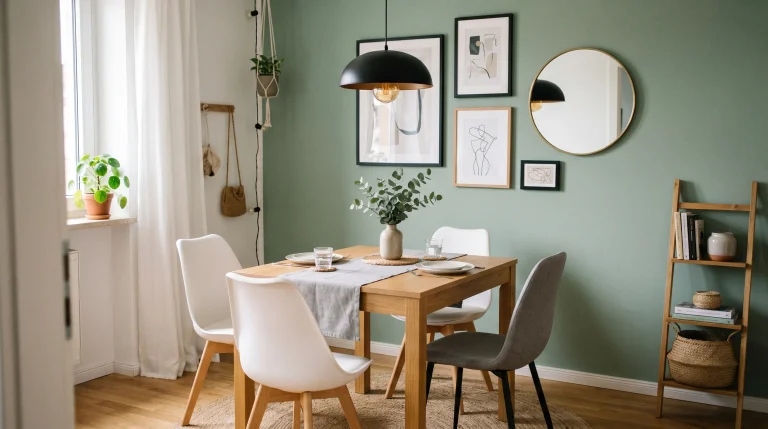
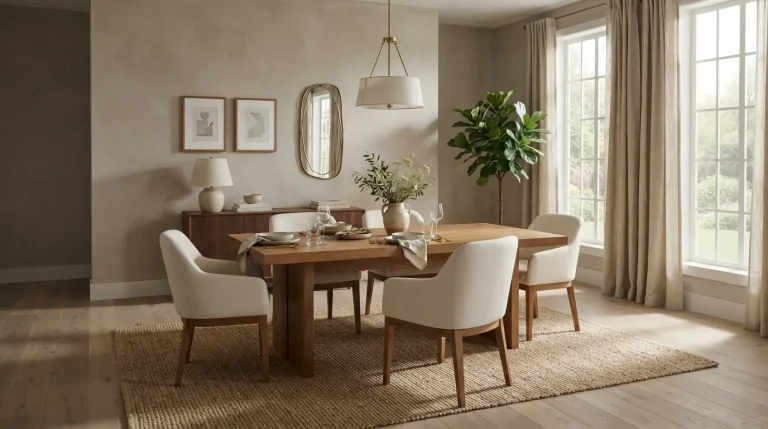
Small dining rooms can feel stylish without feeling crowded. With smart furniture choices, thoughtful wall decor, and a few well-placed details, dining room decor small space ideas can turn a tight corner into a welcoming place for everyday meals and weekend gatherings. The trick is to give every piece a clear purpose while keeping enough open space to move comfortably.
You don’t need a large table or a collection of bulky furniture. A round table, slim chairs, wall shelves, mirrors, warm lighting, and compact storage can work together beautifully. These ideas focus on timeless colors, practical layouts, and details that make a small dining area feel polished without making it look busy.
Round Oak Table
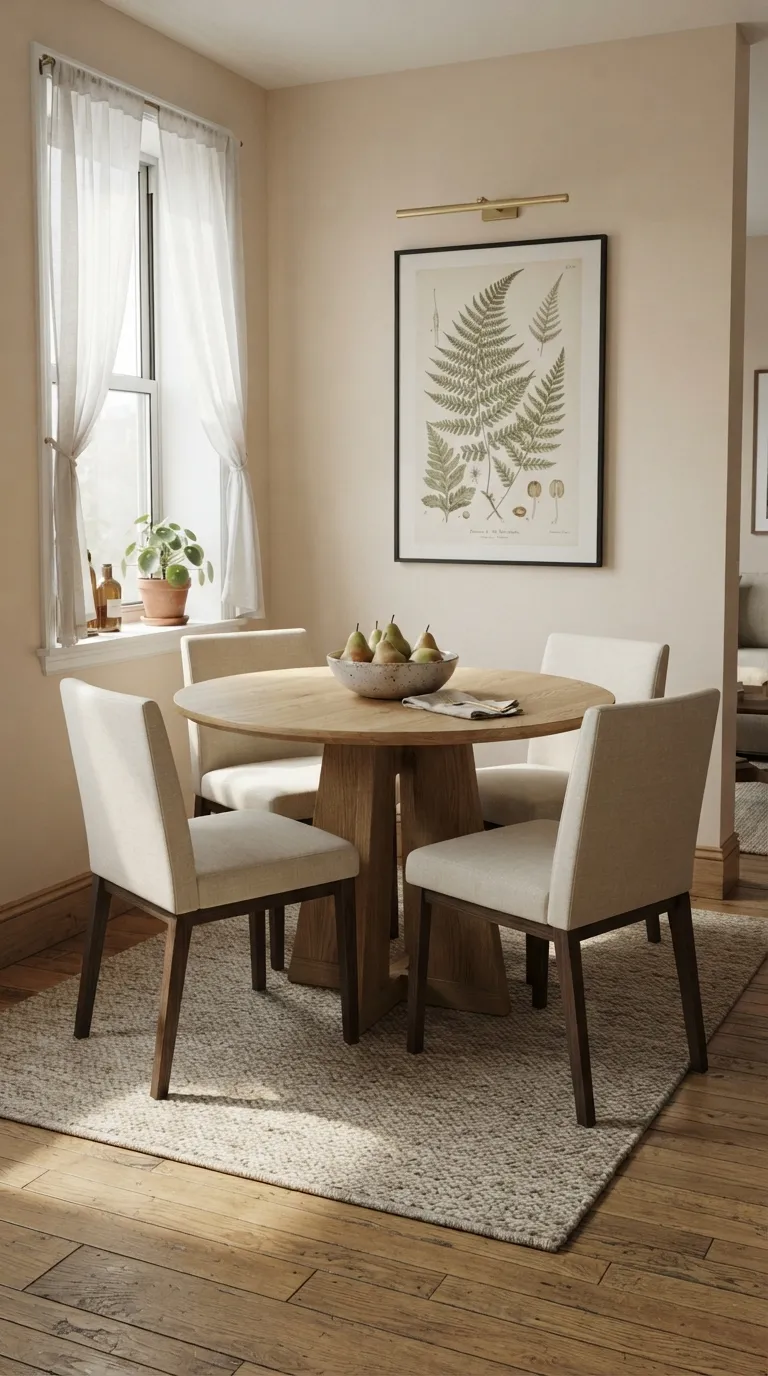
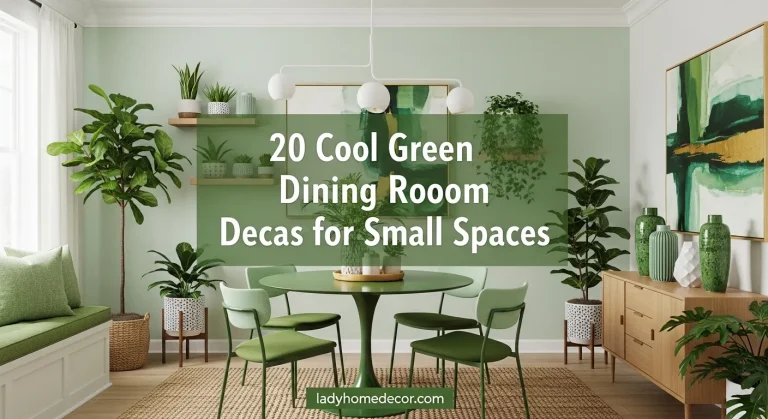
A round table makes tight floor plans easier to use. Its curved edge creates smoother walking paths and removes the sharp corners that can make a narrow room feel cramped.
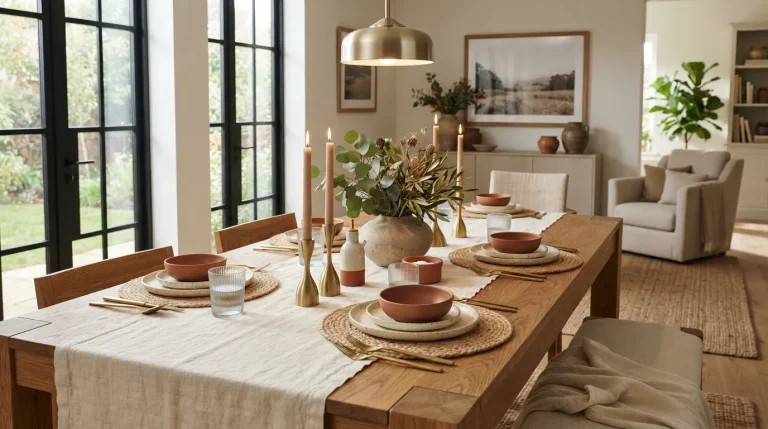
For a timeless look, choose natural oak or another warm wood tone. Pair it with slim dining chairs that slide completely beneath the tabletop when they’re not needed.
Built-In Banquette
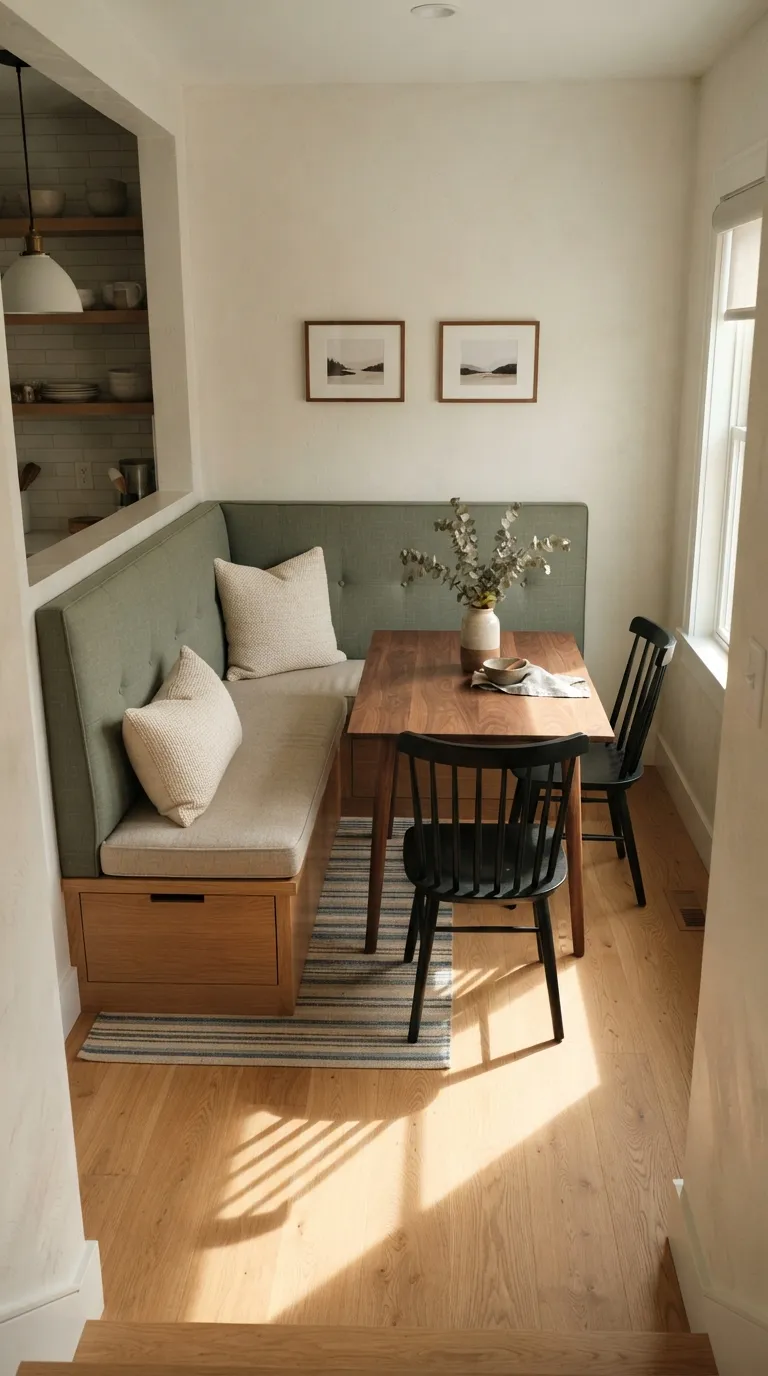
A built-in banquette can turn an awkward wall into useful seating. It also keeps the room visually tidy because the bench stays in place instead of needing extra clearance around it.
Choose upholstery in a calm shade such as sage, oatmeal, or warm gray. Storage drawers below the seat can hold placemats, napkins, and serving pieces without taking up another section of floor.
Large Wall Mirror
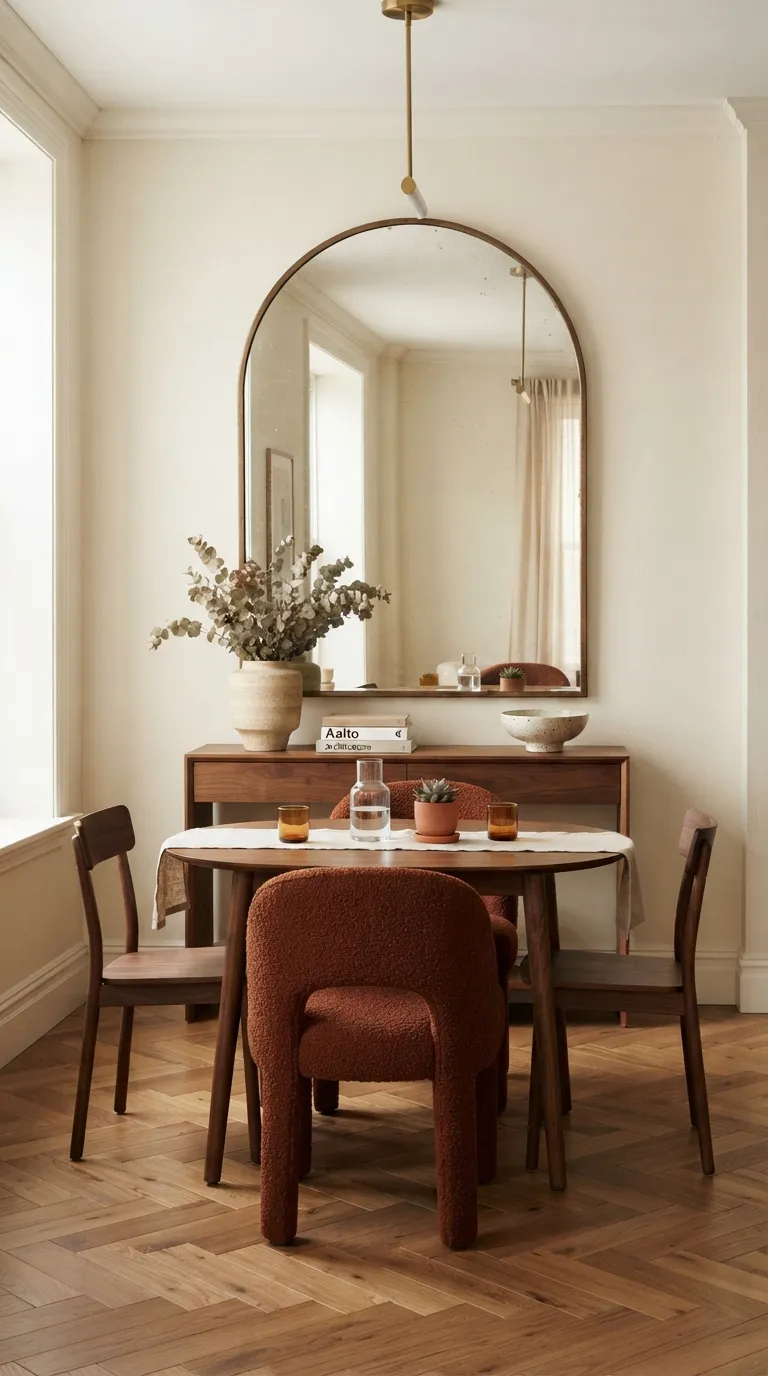
A large mirror can make a compact dining area feel more open. Place it where it can reflect a window, artwork, or another attractive part of the room.
An arched frame adds softness, while a thin metal frame keeps the wall from looking heavy. This is a simple way to add character without adding floor furniture.
Slim Wall Shelves
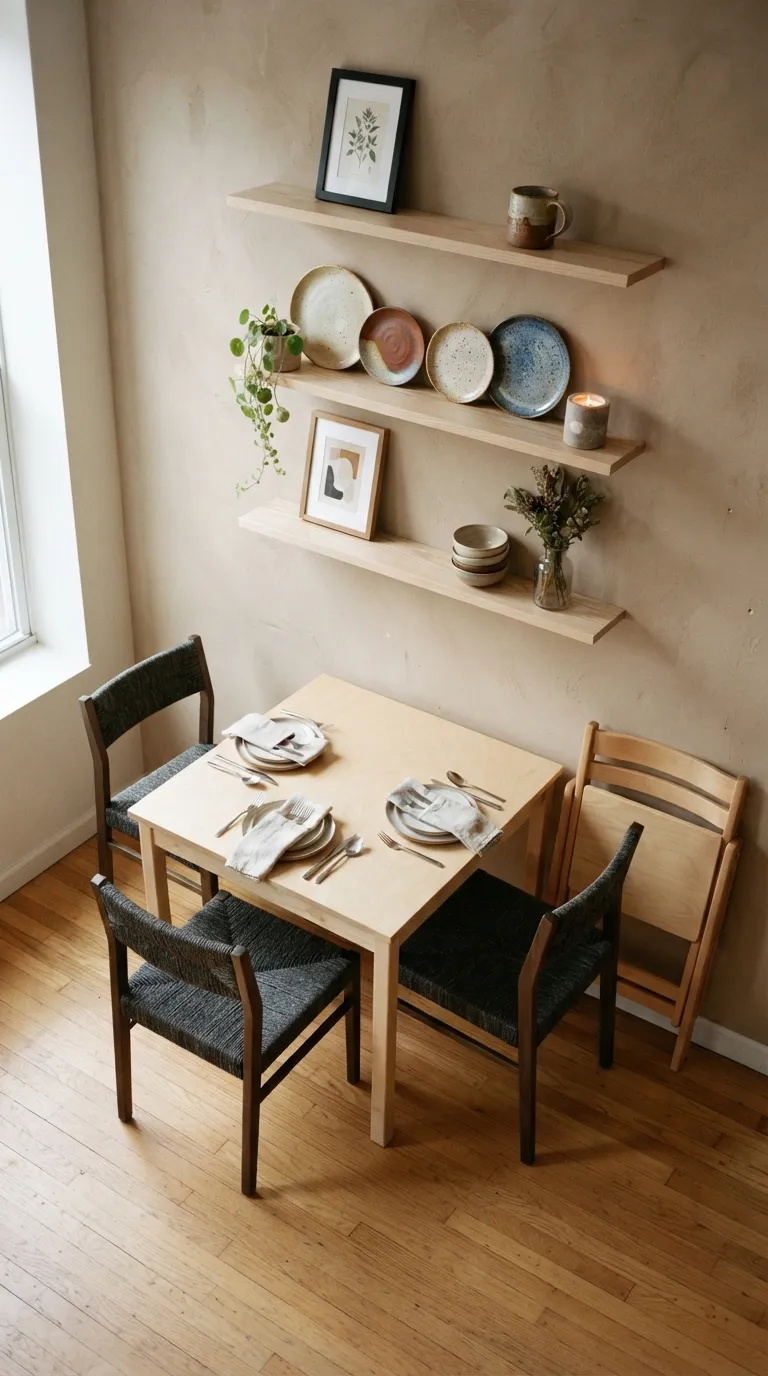
Floating shelves use vertical space instead of valuable floor area. They give you room for ceramics, art, and small decorative objects while keeping the table free.
Keep the display edited rather than crowded. Three shelves with a few larger pieces often look calmer than many tiny objects competing for attention.
Glass Dining Table
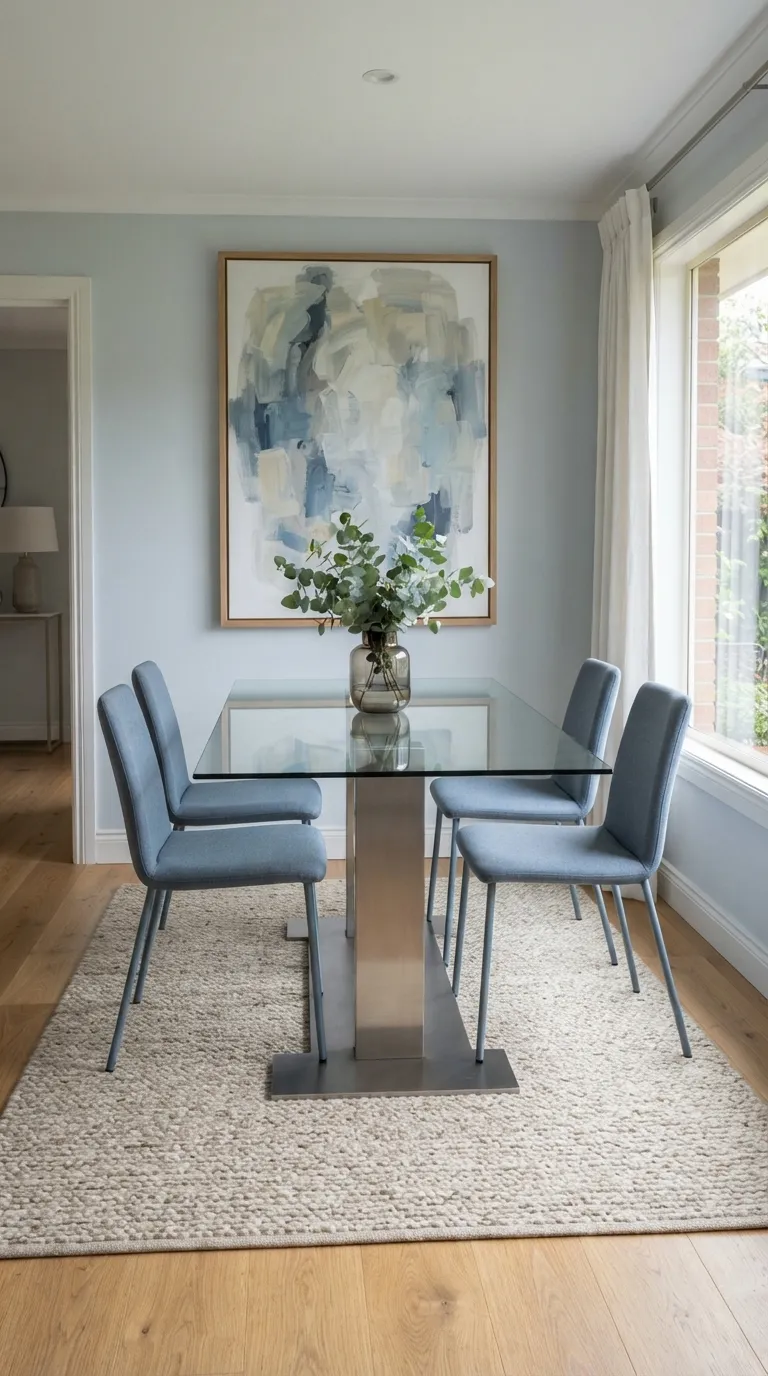
Glass furniture can visually disappear when space is tight. A transparent tabletop lets more of the floor remain visible, helping the dining zone feel less packed.
Choose a simple base and lightweight chairs to keep that open effect. Soft blue upholstery can add color without making the room feel dense.
Foldable Dining Chairs
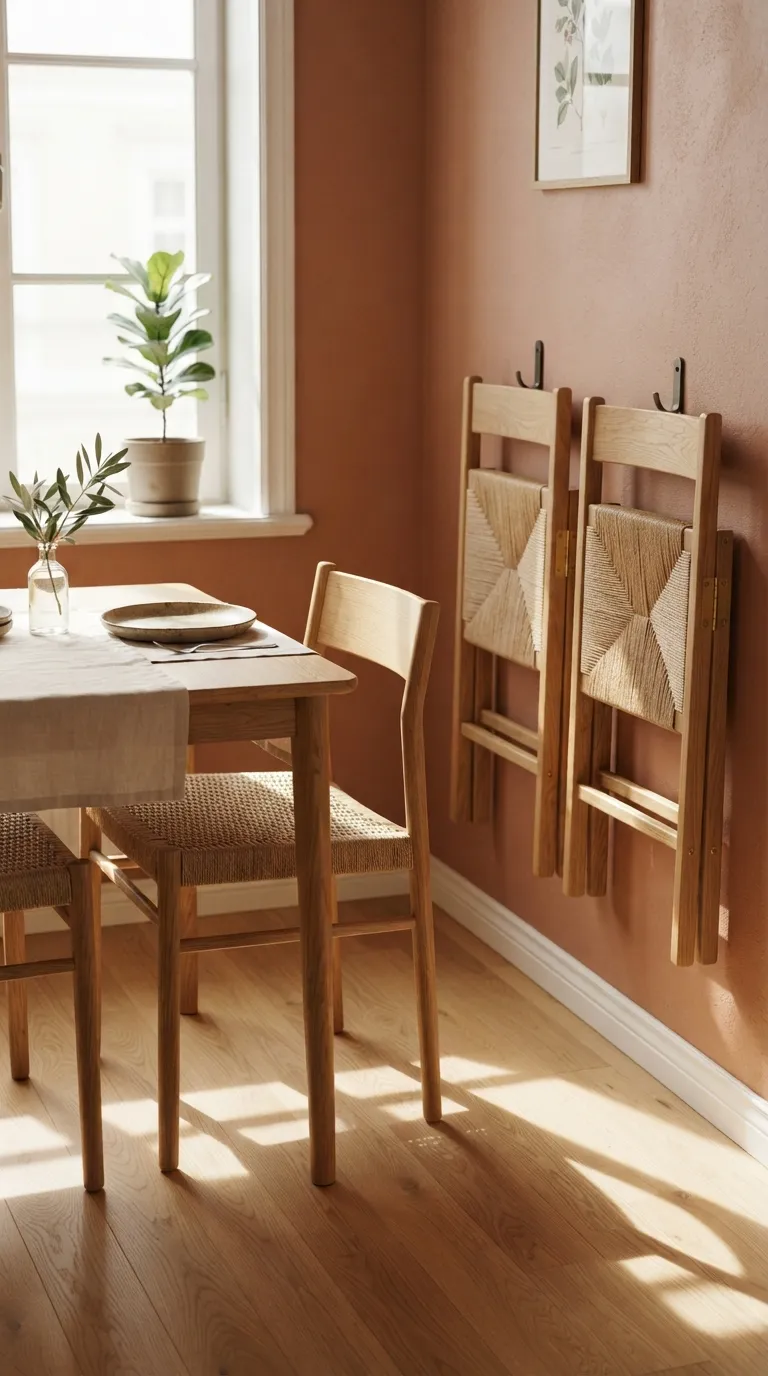
Extra seating doesn’t need to stay around the table all day. Foldable chairs can provide seats when guests arrive and disappear when the room returns to everyday use.
Store them on simple wall hooks or inside a nearby closet. This keeps walkways clear and gives your dining area a more relaxed appearance.
Wall-Mounted Lighting
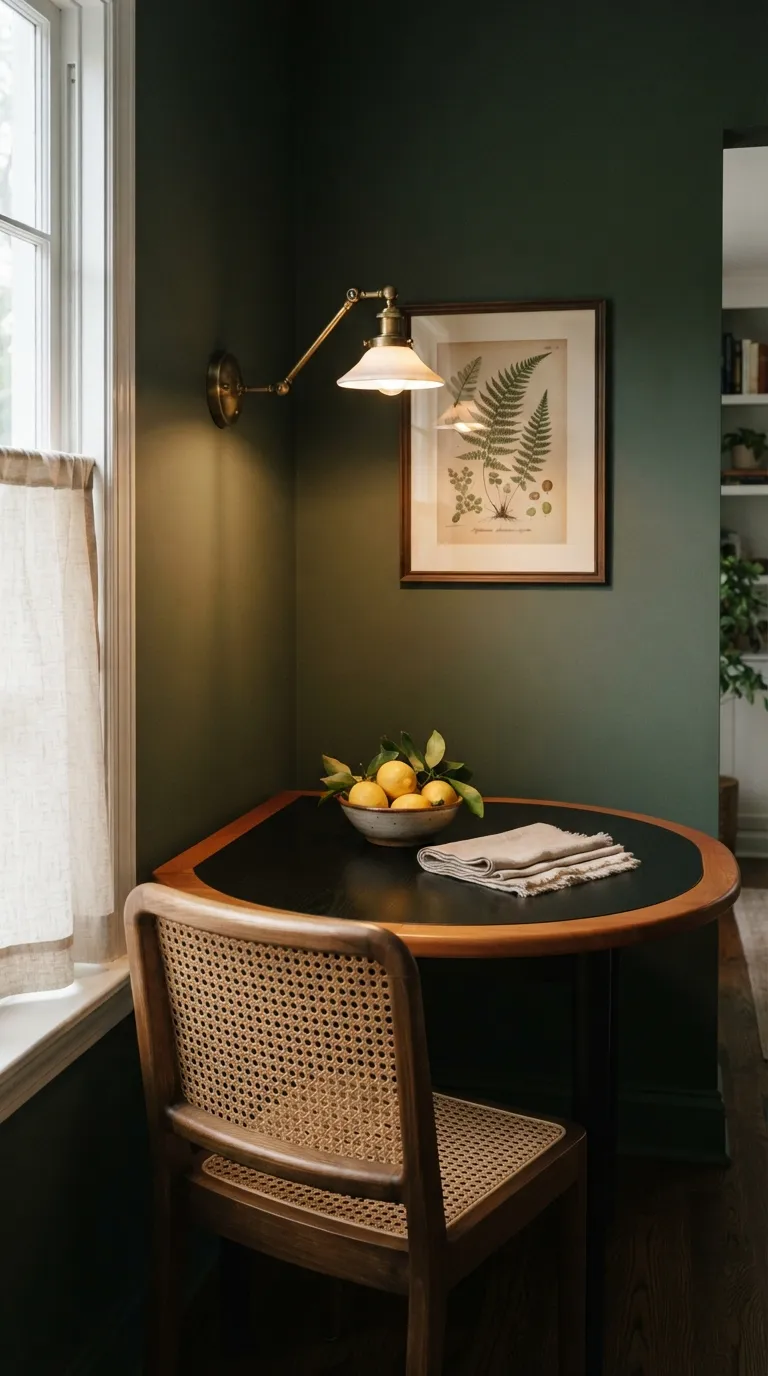
Wall-mounted lighting frees the ceiling and floor from extra fixtures. A swing-arm sconce can also direct light exactly where you need it during dinner.
Warm metal finishes work well with wood furniture. Keep the fixture visually slim so it adds function without becoming the main object in the room.
Narrow Sideboard
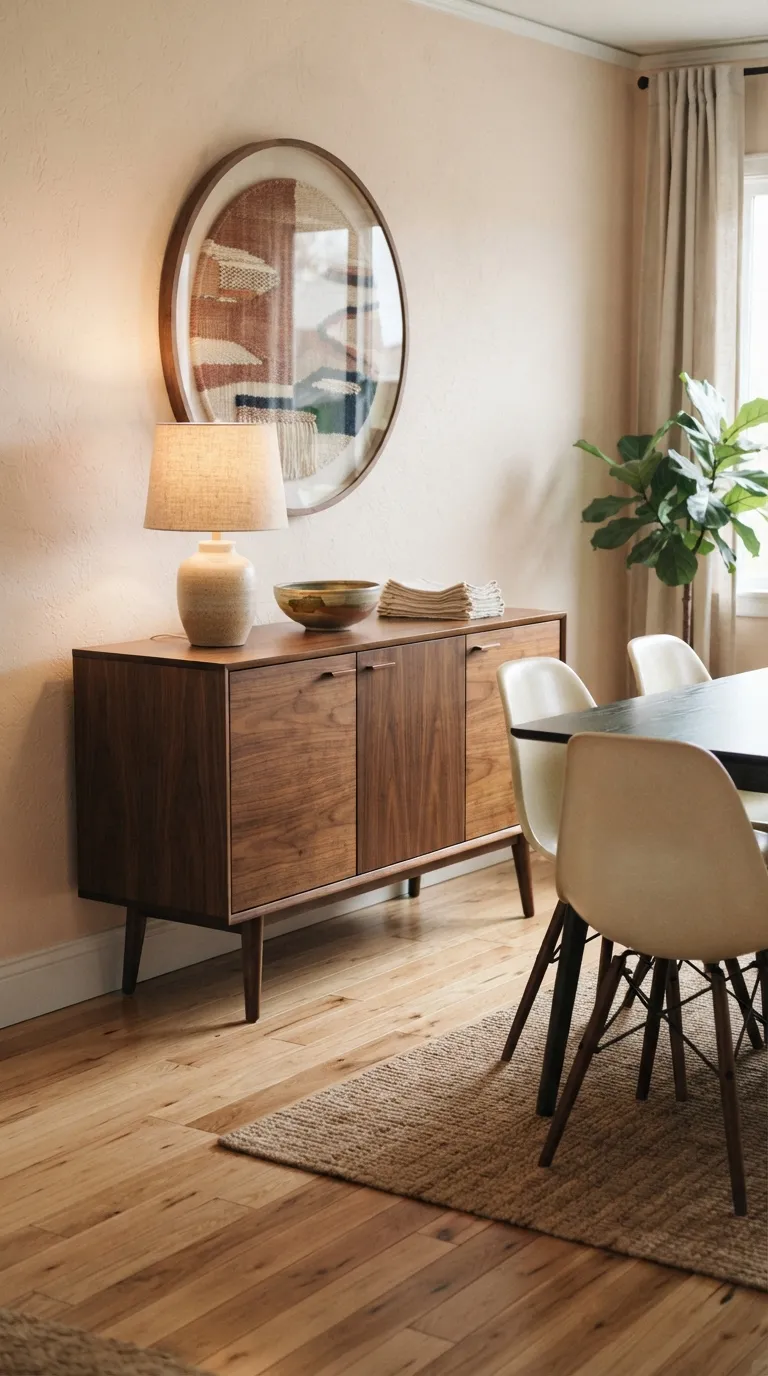
A narrow sideboard gives you hidden storage without demanding much depth. It can hold table linens, extra dishes, candles, and serving tools close to the dining area.
Look for doors rather than open shelving if you want a calmer room. Keep the top lightly styled with one lamp or vessel instead of filling every inch.
Pedestal Dining Table
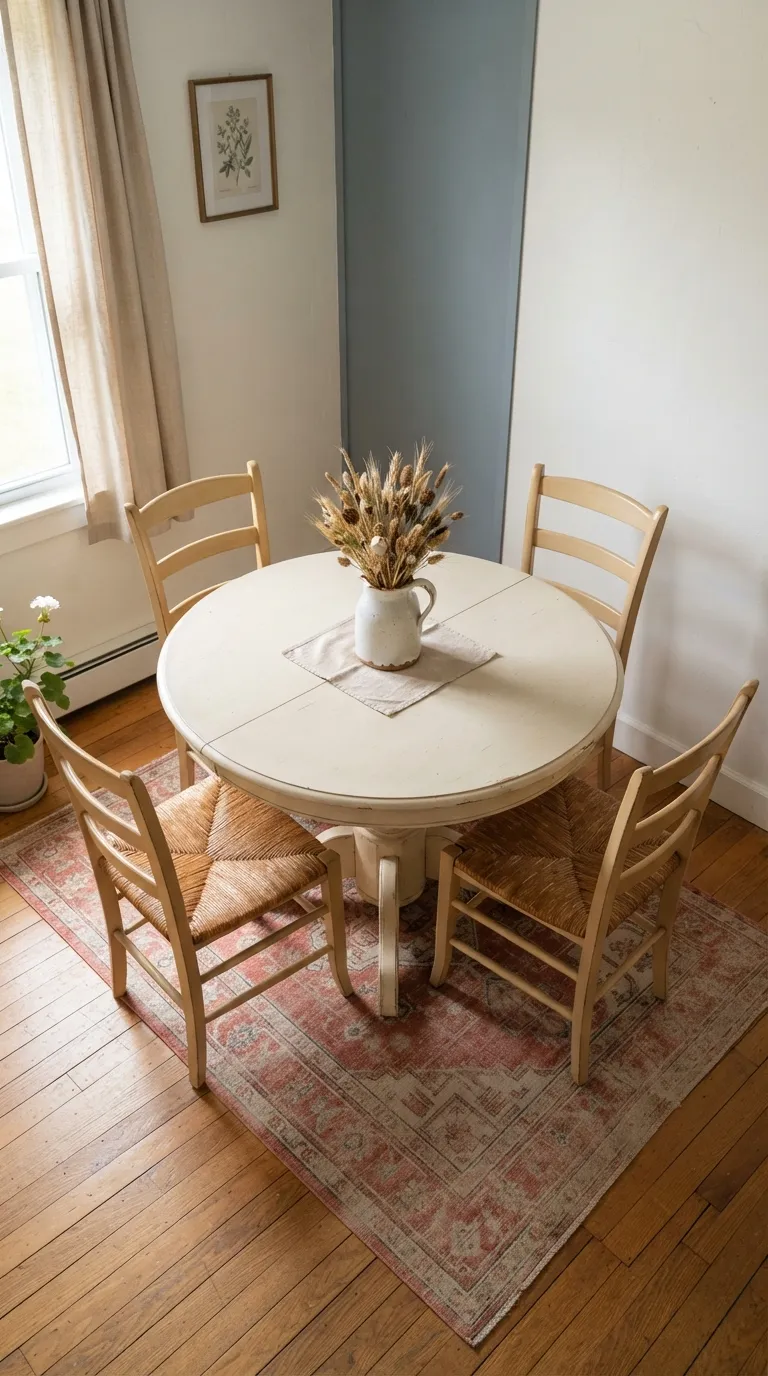
A pedestal base gives your legs more room beneath the table. That small detail can make a compact dining area feel easier to use.
Choose a finish that connects with your existing palette. Cream works with cottage interiors, while dark wood can suit a more traditional dining room.
Banquette Storage
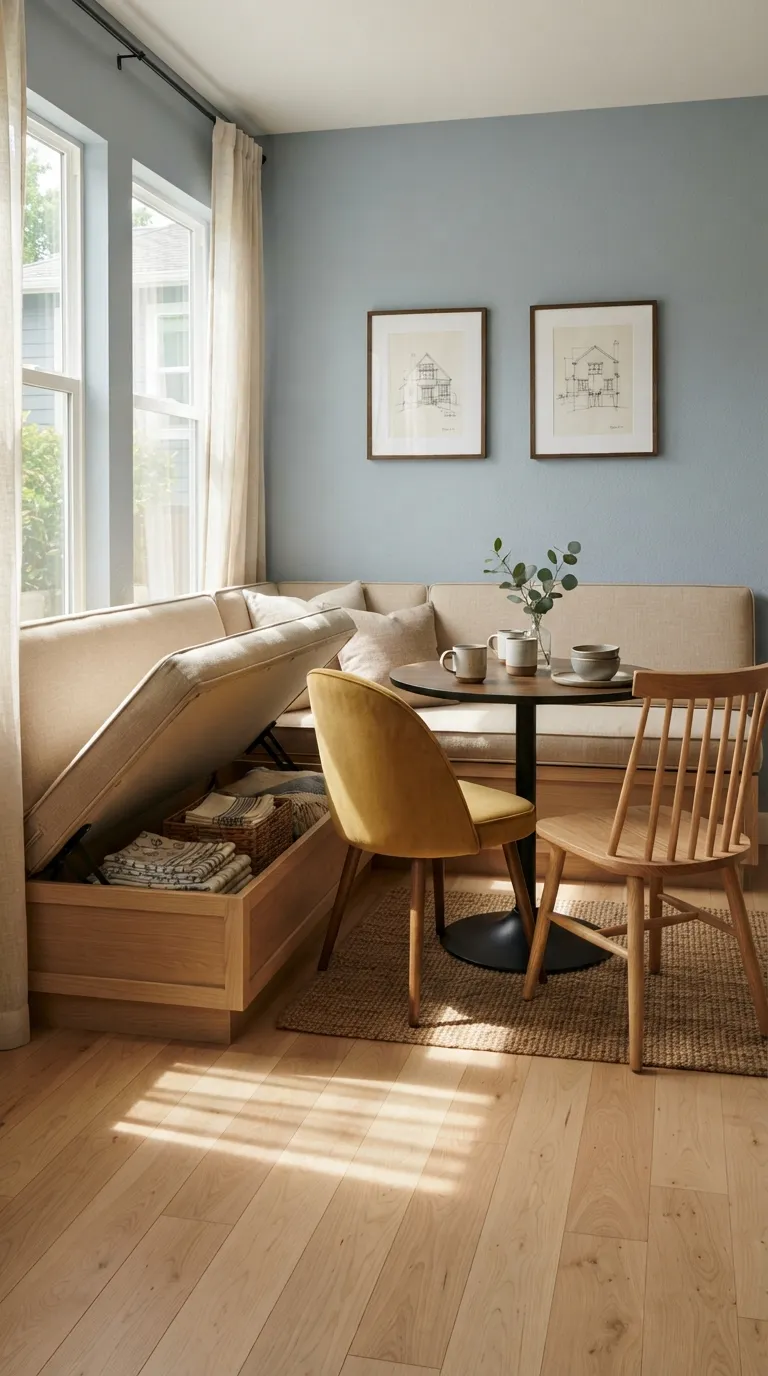
Storage seating earns its place twice. It provides a comfortable bench while giving you a hidden spot for items that don’t need to stay visible.
Use baskets or divided compartments to keep the interior organized. This approach works especially well when the dining room also serves as a breakfast nook or homework area.
Gallery Wall
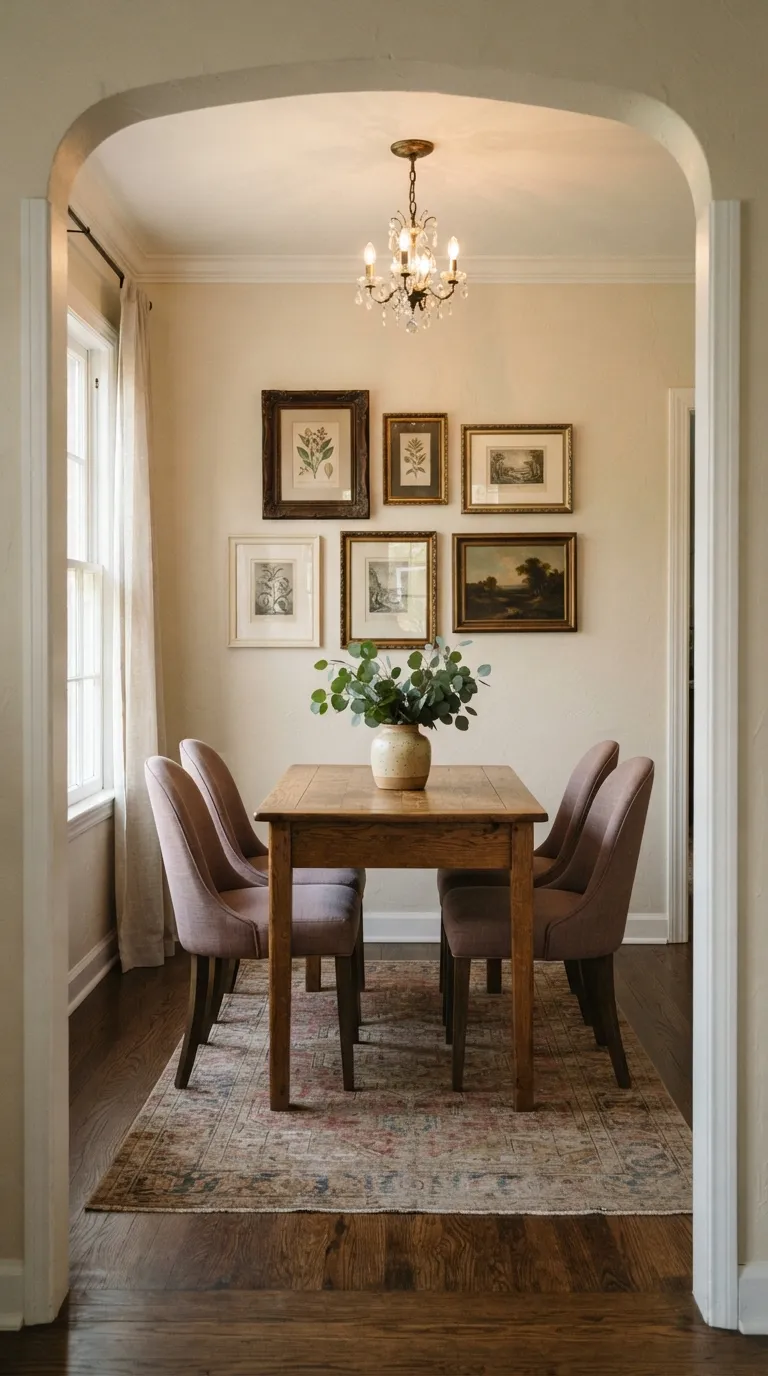
A gallery wall brings personality upward, where it doesn’t interfere with movement. It also gives a small dining room a collected look without adding bulky objects.
For a timeless arrangement, mix frame sizes but keep a shared color connection. Leave consistent gaps between pieces so the wall feels planned rather than crowded.
Extendable Table
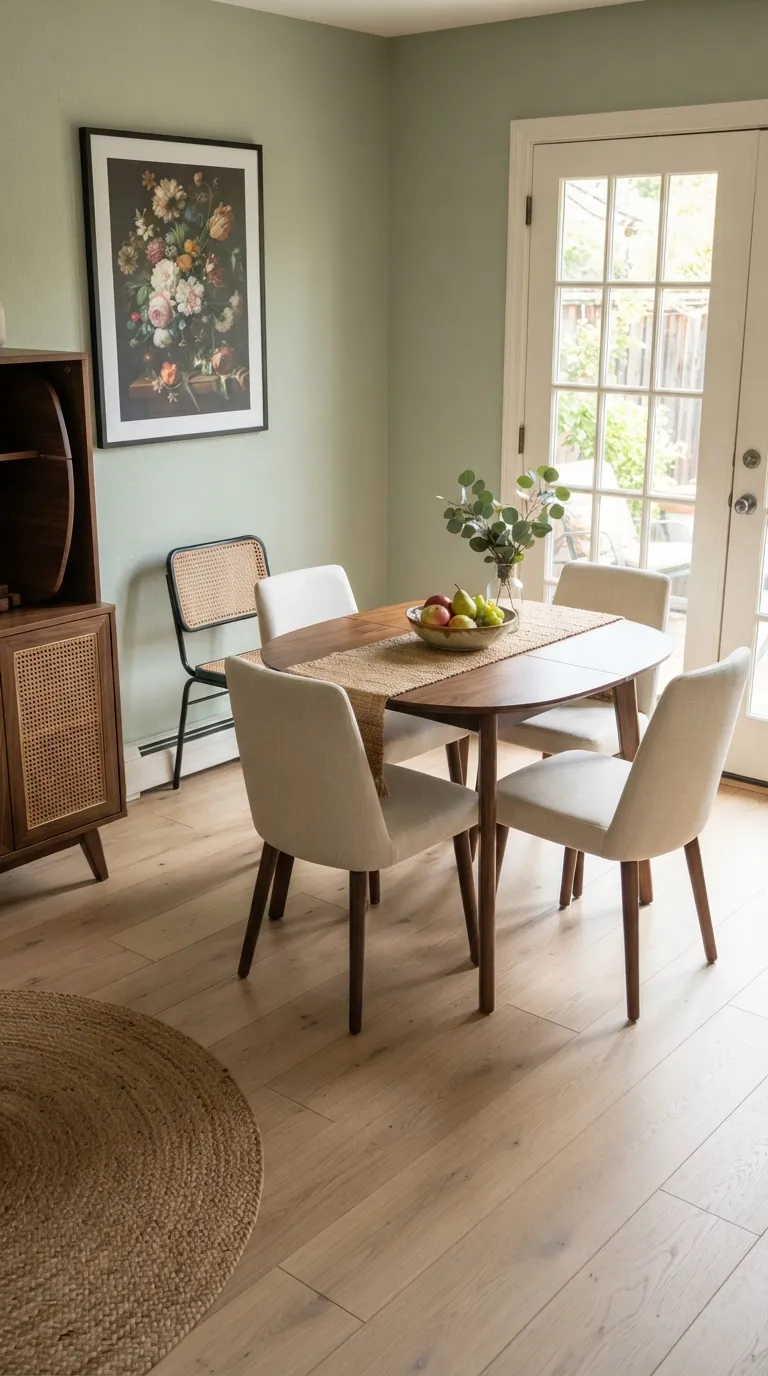
An extendable table gives you two layouts in one piece. Keep it compact during daily meals, then open it when extra guests need more elbow room.
Look for models with rounded edges and simple mechanisms. The best option is one that’s easy to adjust without requiring you to move half the room.
Vertical Plate Display
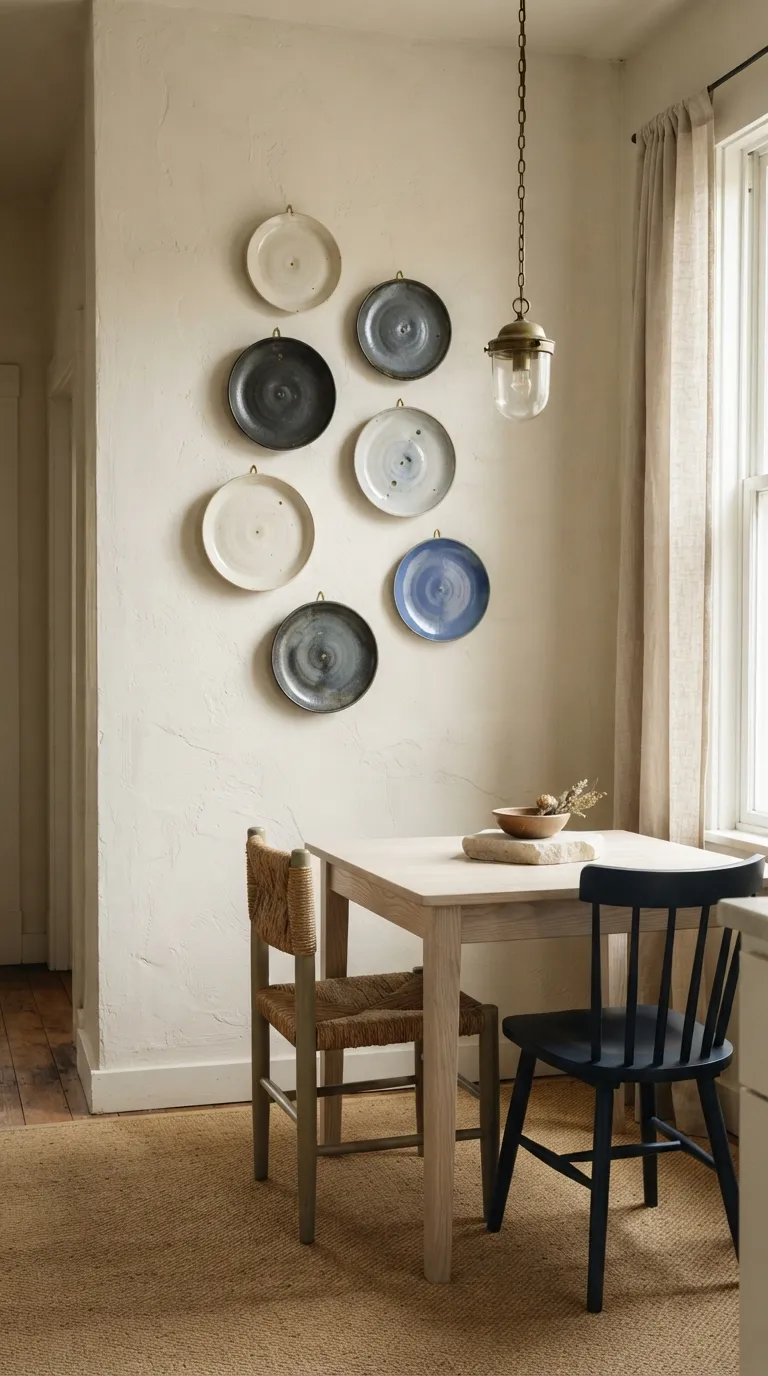
Plates can become wall art when floor space is limited. A vertical arrangement draws the eye upward while adding a practical dining reference.
Choose pieces with related colors but varied shapes. Leave enough wall between the display and furniture so the arrangement doesn’t feel squeezed.
Window Bench
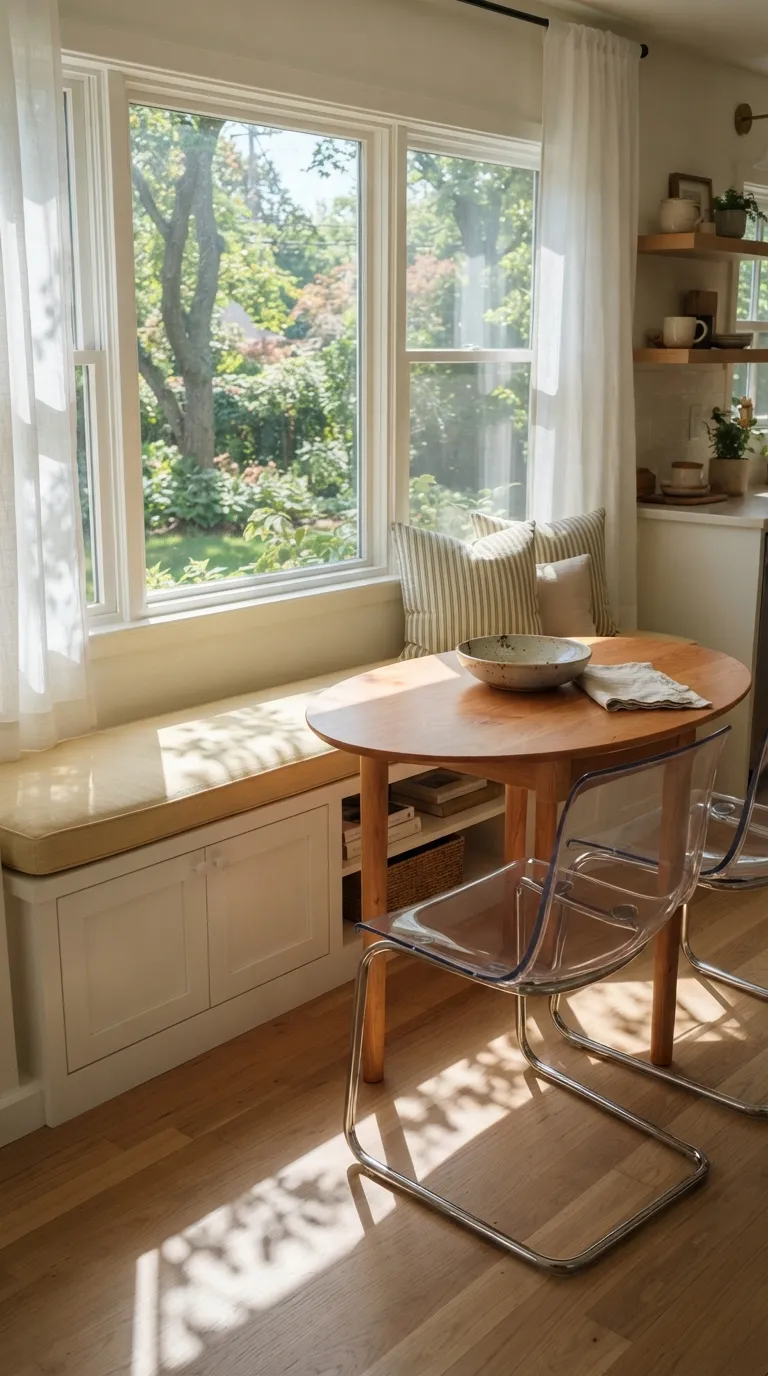
A window bench uses an area that might otherwise stay empty. It creates a comfortable seat while keeping the center of the room open.
Add a narrow oval table in front to soften the layout. Light fabrics and clear or slim chairs can keep the window as the visual focus.
Pedestal Storage Cabinet
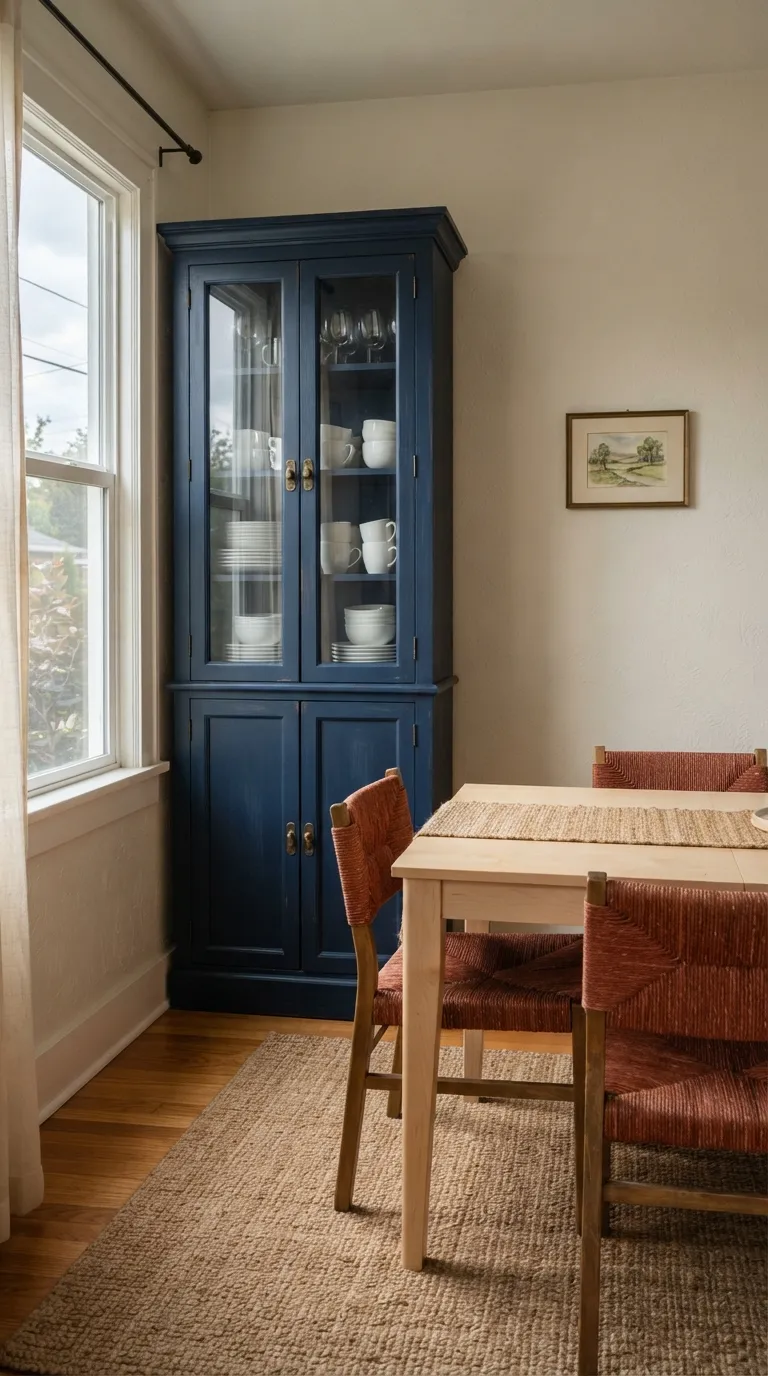
Tall storage makes use of vertical room rather than floor width. A narrow cabinet can store dishes and linens while adding architectural interest to a blank wall.
Glass doors work when you want favorite pieces on display. Keep the lower section closed so the overall look stays neat.
Wall-Mounted Drop Leaf
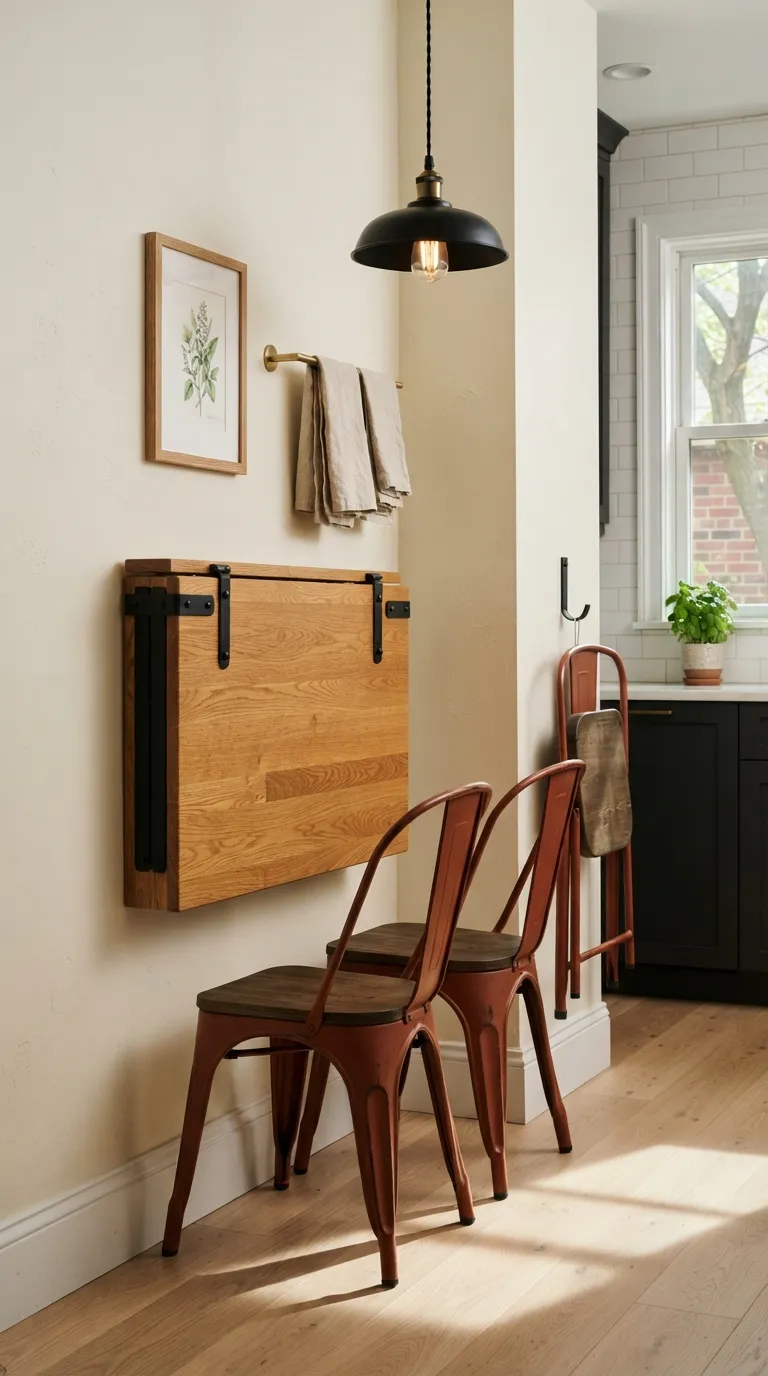
A drop-leaf table can disappear when you need the floor for another activity. Fold it down for meals, then close it when the room needs more breathing room.
Choose sturdy hardware and a finish that matches nearby cabinets or woodwork. A small wall rail can add useful storage without adding another cabinet.
Curved Dining Chairs
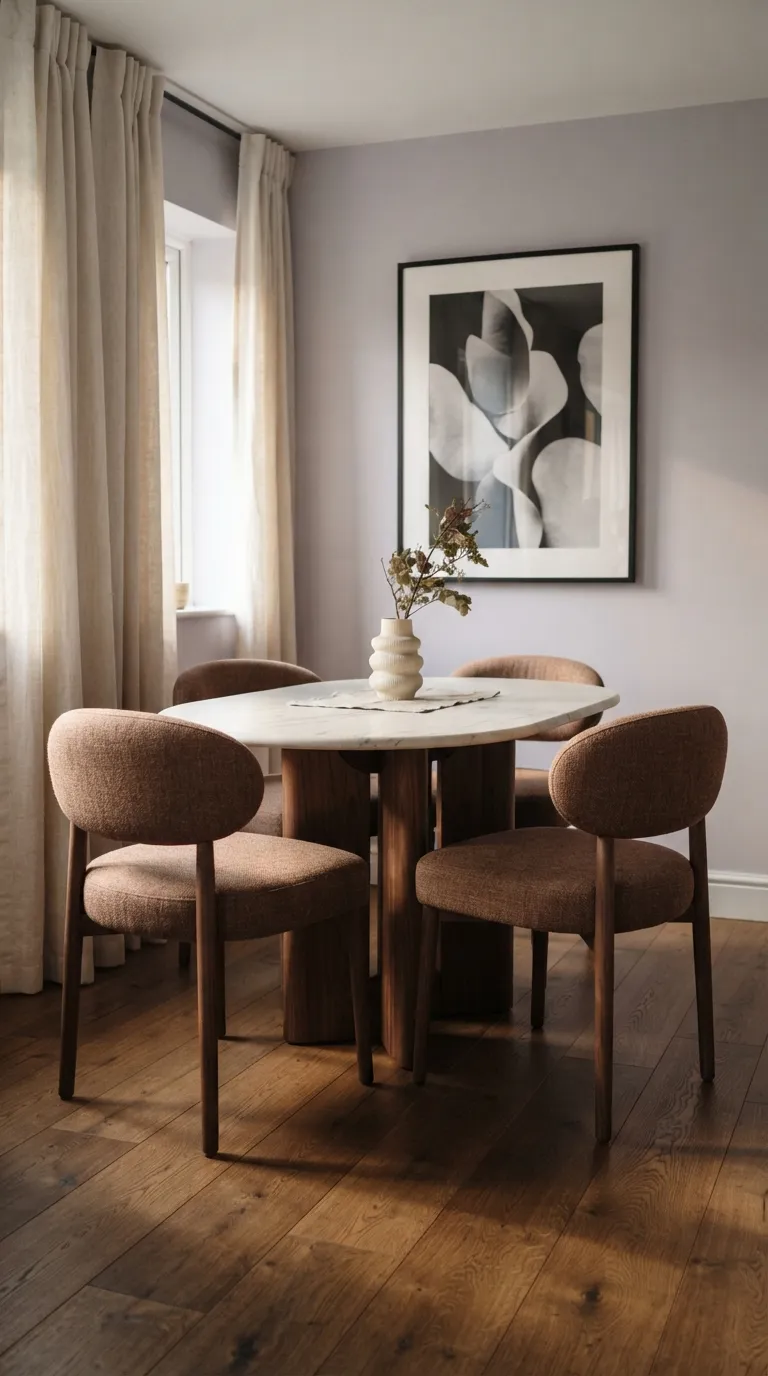
Curved chairs soften a room filled with straight walls and furniture. Their rounded backs also create a lighter visual outline than many bulky dining chairs.
Choose chairs with narrow legs and compact proportions. A warm cinnamon or muted clay fabric can add depth without requiring bold wall decor.
Built-In Wall Cabinet
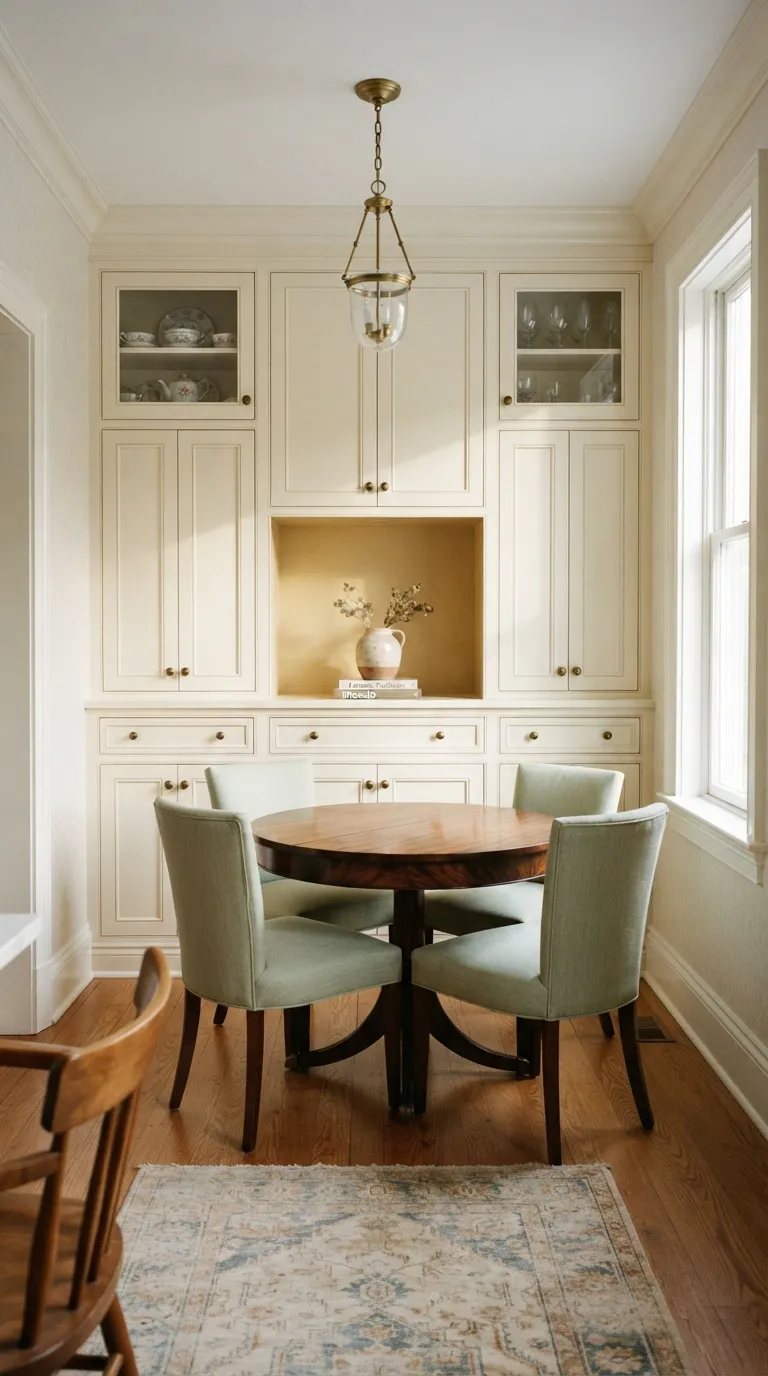
Built-in cabinetry can make a small dining room feel purposeful. It uses one wall for storage instead of scattering cabinets around the room.
If custom work isn’t possible, look for a tall cabinet with a similar footprint. Matching its color to the wall can make the storage feel visually quieter.
Two-Tone Dining Nook
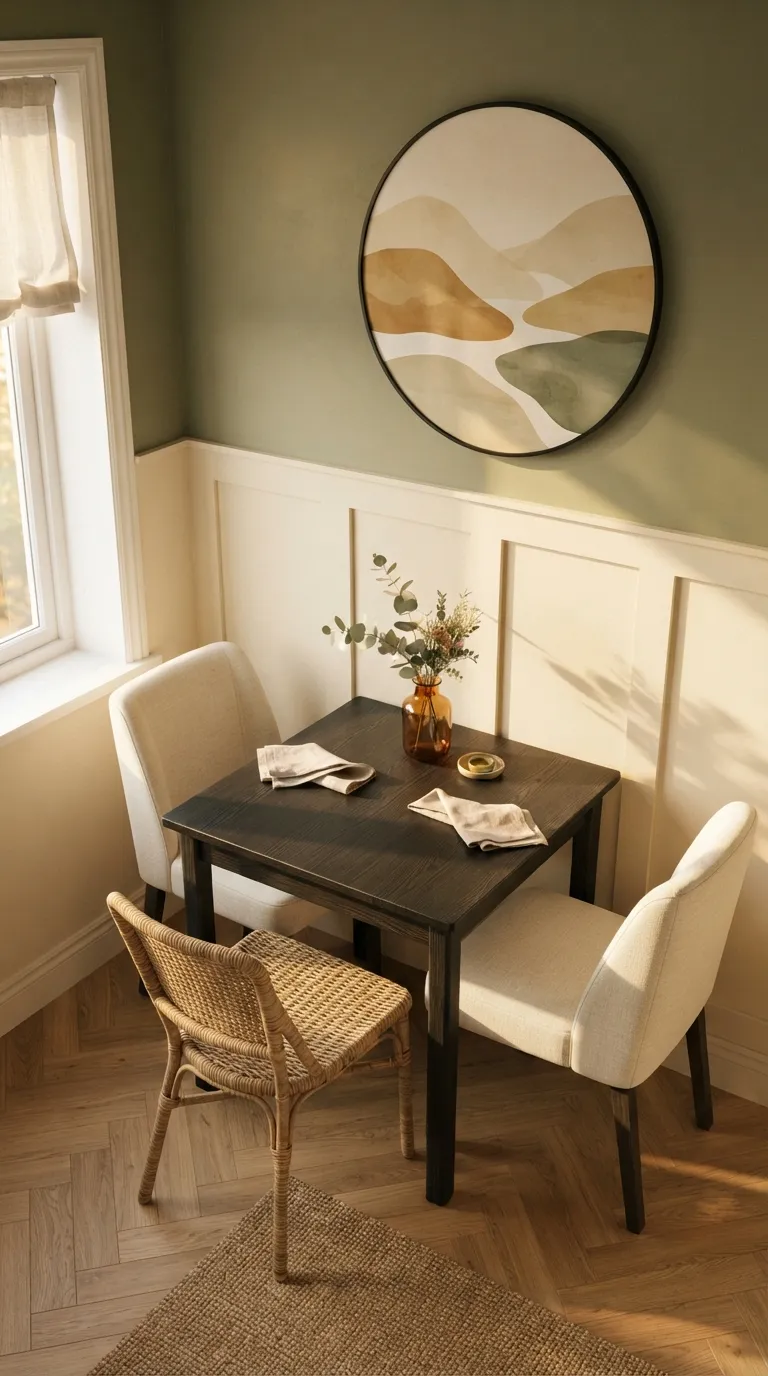
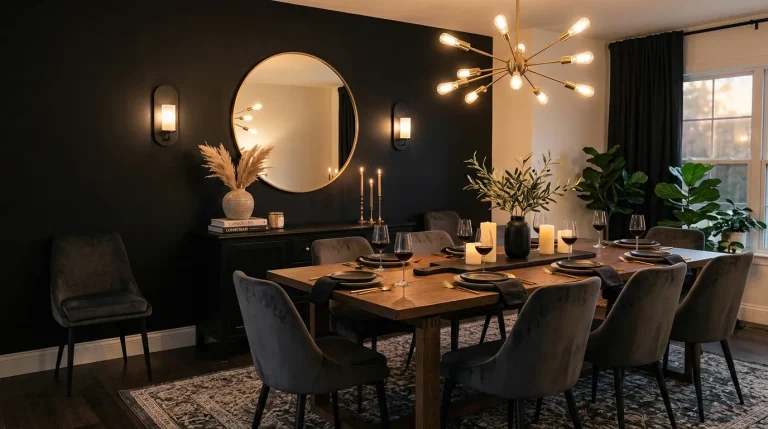
Two wall colors can define a dining zone without a bulky divider. Use the darker shade above or behind the table to create a clear focal area.
Keep the furniture simple when the wall carries more visual interest. Neutral chairs and natural accessories let the color treatment stay balanced.
Minimal Dining Nook
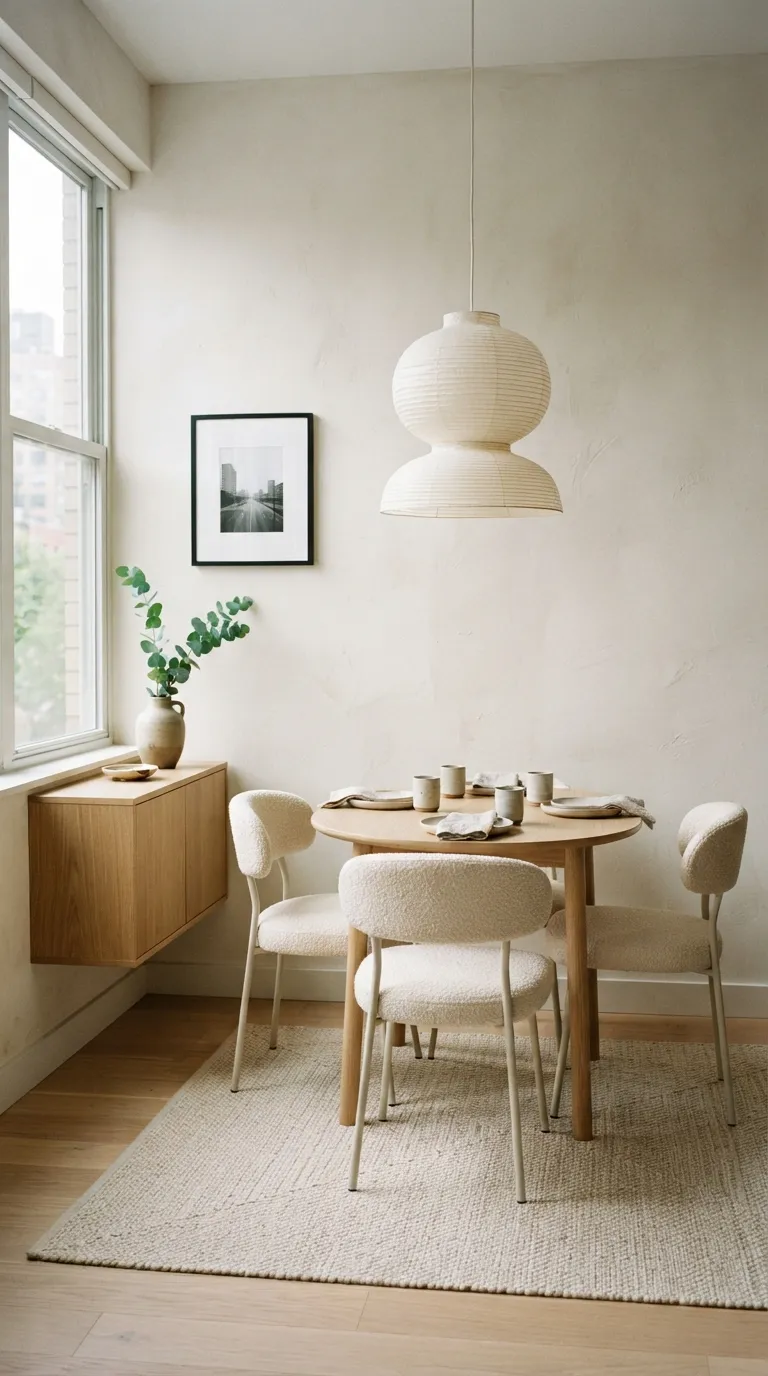
Minimal decor can make a small dining room feel calm and useful. Start with the table, chairs, and lighting, then add just enough art or texture to give the space personality.
Choose pieces with clean shapes and natural finishes. When every item has room around it, even a tiny dining nook can feel intentional and comfortable.
In the End
Small dining rooms work best when furniture, storage, lighting, and wall decor each have a clear role. A round table can improve movement, shelves can use vertical space, and benches can combine seating with storage.
Start with the layout before buying accessories. Measure the table, chairs, doorways, and walking paths, then add pieces that support how you actually use the room. With a few thoughtful choices, your dining room decor small space setup can feel inviting, practical, and timeless without looking overcrowded.
Olivia Carter
Olivia Carter is the founder of Lady Home Decor and a passionate home decor expert. She shares practical, stylish ideas to help homeowners create beautiful, comfortable, and welcoming spaces. Her expertise covers bedrooms, kitchens, living rooms, bathrooms, and small-space decorating.