21 Luxurious Outdoor Living Designs for Stylish Vibes

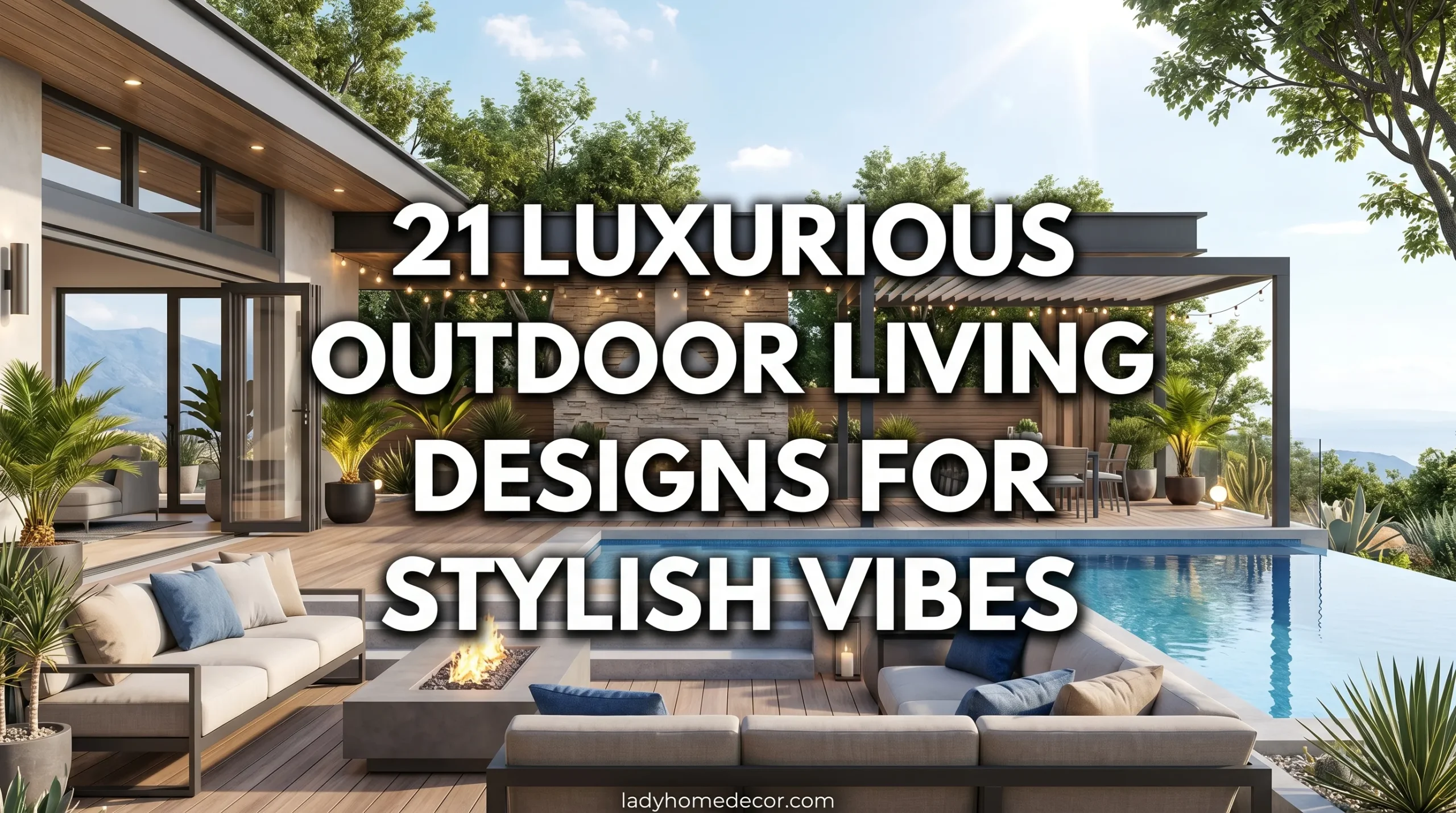
Your outdoor living space deserves more than a forgotten chair and some overgrown plants. It deserves to feel like an extension of your home beautiful, intentional, and genuinely enjoyable. Whether you have a sprawling backyard or a compact patio, the right design choices can turn any space into something that looks straight out of a luxury resort. In my experience, even small upgrades like the right lighting or a simple furniture arrangement can completely shift how a space feels. This article walks you through 21 elegant, Pinterest-worthy ideas that blend style with function, helping you build a space that is easy to love and even easier to spend time in.
Layered Stone Patios
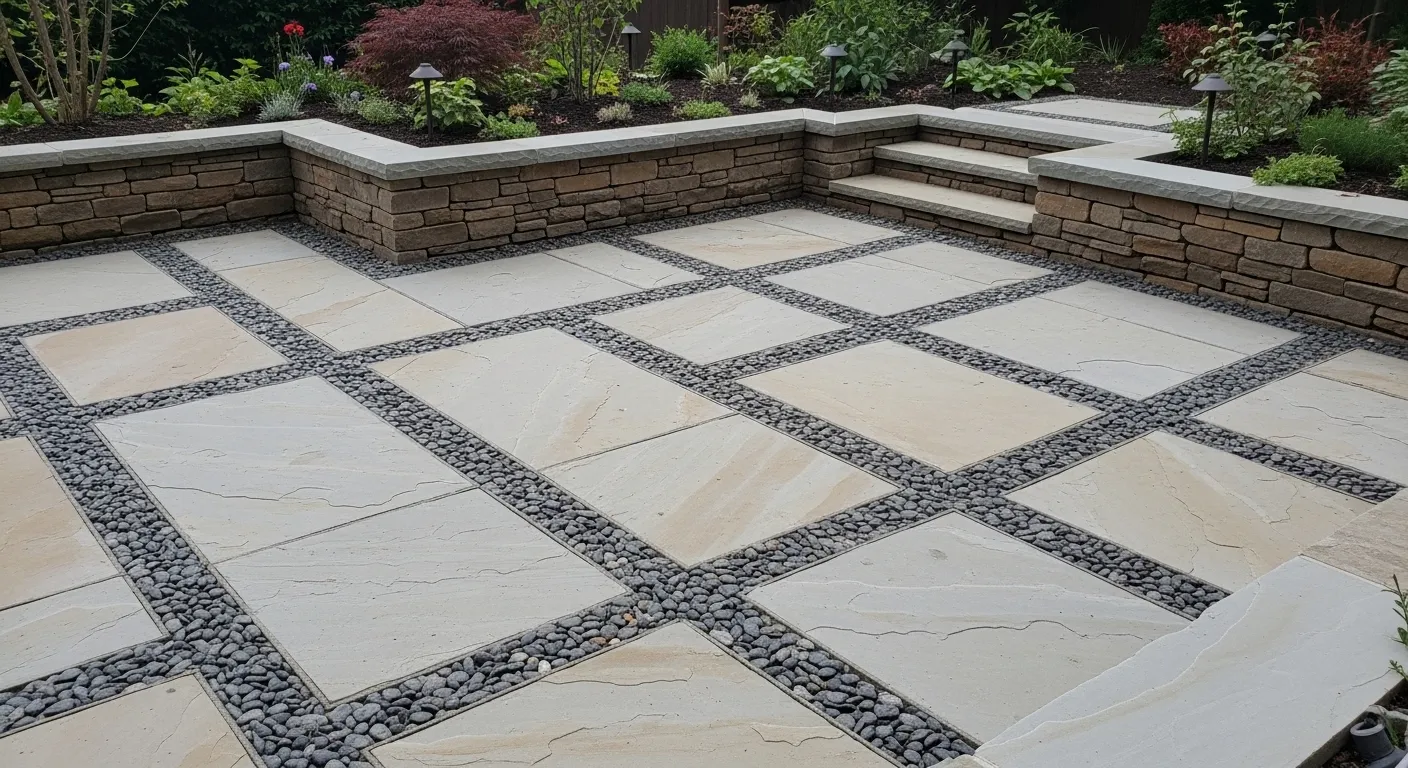
Few things elevate a backyard as effortlessly as a well-laid stone patio. The natural variation in color and texture gives the space an organic richness that no poured surface can replicate. When you layer stones of different sizes mixing large flat slabs with smaller filler pieces the result feels intentional and artisan-crafted. I’ve noticed that homeowners who invest in layered stone almost always wish they had done it sooner. The material is low-maintenance, ages gracefully, and holds its visual appeal across every season. It is the kind of design decision that adds long-term value with immediate visual reward.
The secret to making a layered stone patio truly shine is in the spacing and the edges. Tight, clean joints between stones create a polished, tailored look, while slightly wider gaps planted with low ground cover add softness and natural charm. Framing the patio with raised planters or simple border lighting completes the picture. Many designers recommend pairing warm-toned stone with cool metal or dark wood accents to create contrast that feels both modern and grounded. The finished result is a surface that looks like it belongs in a boutique garden hotel and that is exactly the impression you want your outdoor space to make.
Canopy Curtain Corners
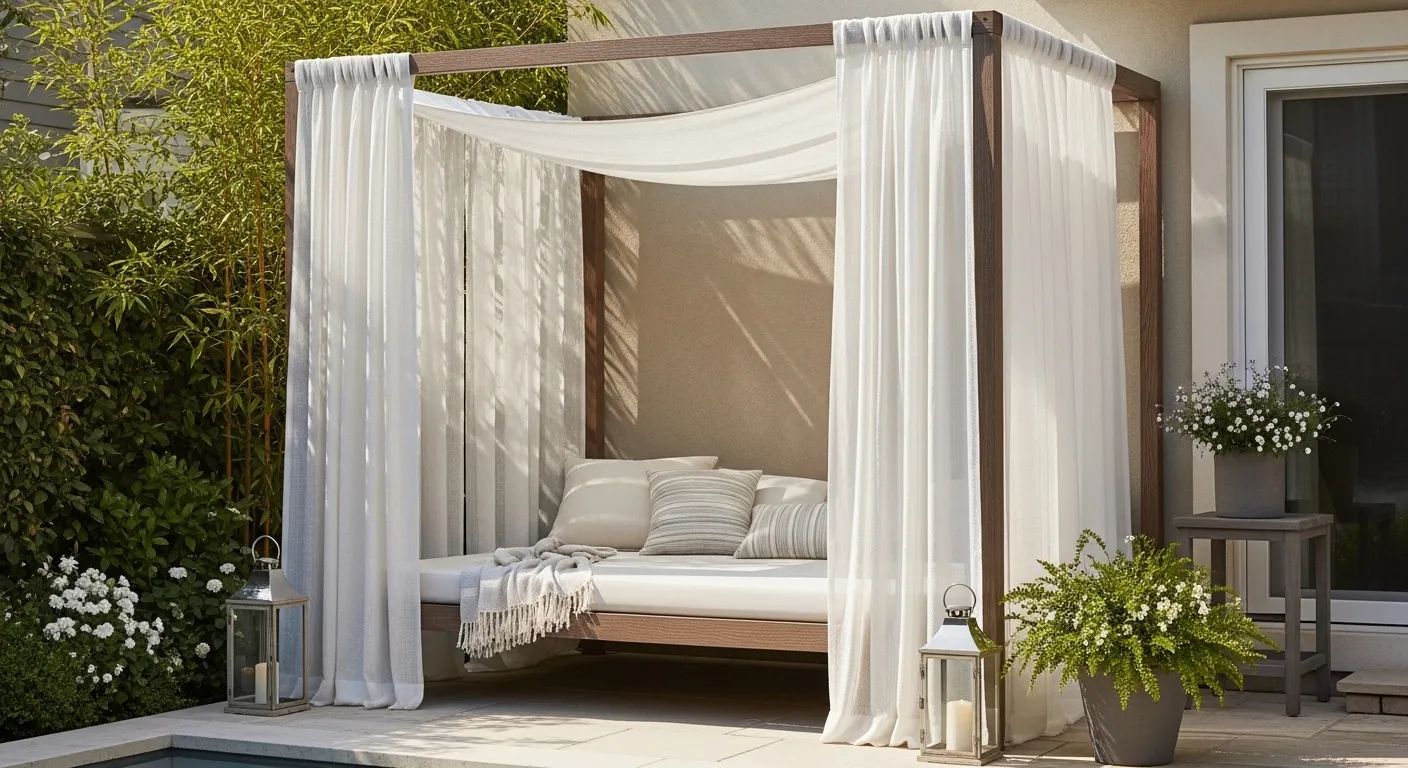
A canopy curtain corner transforms even the most ordinary patio into something that feels pulled from a luxury retreat. The trick is in using long, floor-grazing curtains that create a sense of enclosure without blocking airflow. Sheer white or linen-toned fabrics filter sunlight beautifully, softening the midday glare into something warm and inviting. I’ve tried this in compact outdoor spaces, and the result is always a dramatic improvement in how cozy and usable the area feels. Adding a daybed or oversized cushioned chair beneath the canopy makes the corner feel like a private escape rather than just another seat outside.
What makes this idea so effective is how it plays with perception. The curtains give vertical height to a space that might otherwise feel flat and open in all the wrong ways. Anchoring them to a simple wooden beam or pergola frame requires minimal investment but yields a high visual return. That is why many designers recommend this as a first step when staging or redesigning a patio. At night, when paired with a small lantern or string lights placed just behind the fabric, the glow that filters through creates a soft, candlelit mood that makes the space feel genuinely magical and far removed from everyday life.
Raised Garden Borders
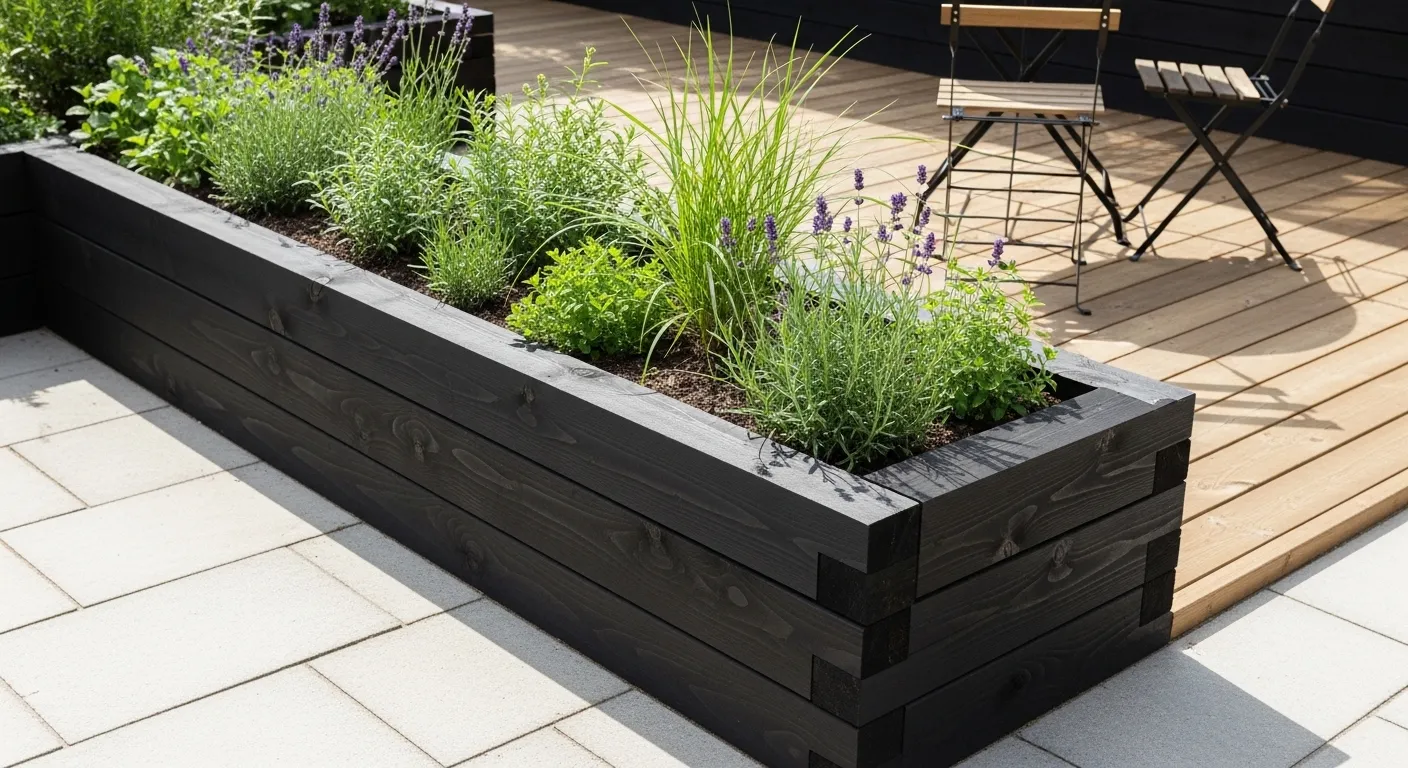
Raised garden borders are one of the smartest design tools in any backyard upgrade. They act as a natural frame around your seating area, clearly defining where the patio ends and the garden begins. This visual boundary does more than organize the space it gives the entire setup a sense of intention and design confidence. When the border is planted with a mix of heights, including low ground cover, mid-level herbs, and taller ornamental grasses, it creates a layered, lush effect that looks professionally designed. I’ve seen this simple addition completely transform a bare concrete patio into a space that feels like a curated garden room.
The choice of border material matters enormously. Dark-stained timber is a classic choice that pairs beautifully with both warm and cool paving tones. Corten steel is another option, offering a rust-toned industrial edge that develops character over time. For a softer look, whitewashed brick or natural stone blocks keep things timeless and elegant. Planting lavender or rosemary along the inside edge adds fragrance that wafts across the patio on warm evenings, making the sensory experience of sitting outside far more enjoyable. That combination of structure, greenery, and scent is what turns a backyard into a space people genuinely do not want to leave.
Woven Rattan Seating
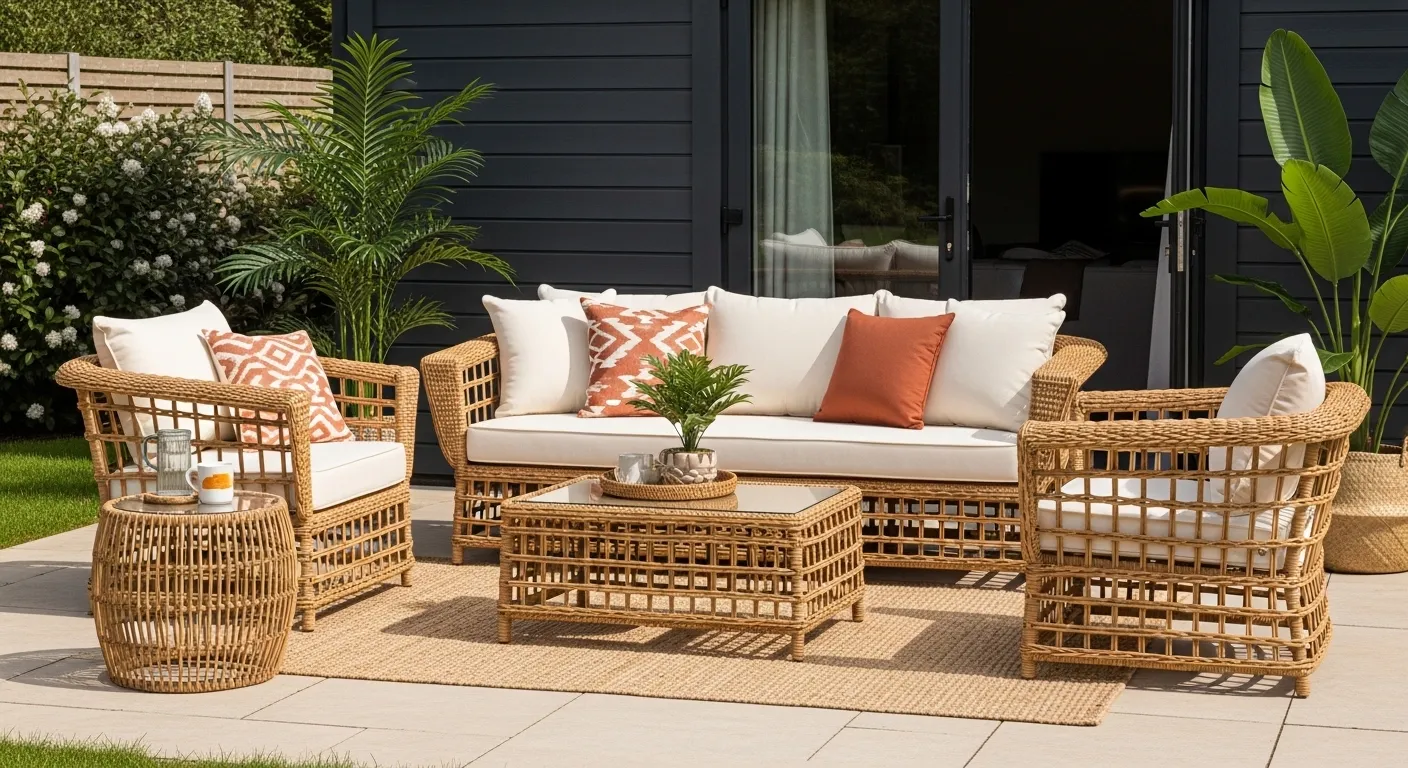
Woven rattan seating has long been associated with relaxed, warm-weather living and for good reason. The natural texture adds a layer of warmth and character that no synthetic material can fully replicate. When chosen in a full lounge set with generously cushioned seats, rattan creates a seating zone that looks as inviting as it feels. The weave pattern itself is visually interesting without being loud, which means it pairs beautifully with patterned cushions, layered rugs, and tropical or Mediterranean plant choices. I’ve noticed that homes featuring rattan furniture outdoors tend to feel more relaxed and approachable, even before you sit down.
One of the biggest advantages of rattan is its design versatility. It can anchor a bohemian-inspired garden just as confidently as it can sit within a clean, modern patio setup. The key is in the cushion choice and accompanying accessories. Ivory or cream cushions keep the palette light and airy, while terracotta or dusty sage tones add warmth and grounded comfort. A matching rattan coffee table or side table completes the arrangement and ties the zone together cohesively. Many designers recommend finishing the look with a flat-weave outdoor rug beneath the furniture this anchors the seating area visually and gives the space a clear sense of destination and purpose.
String Light Canopies
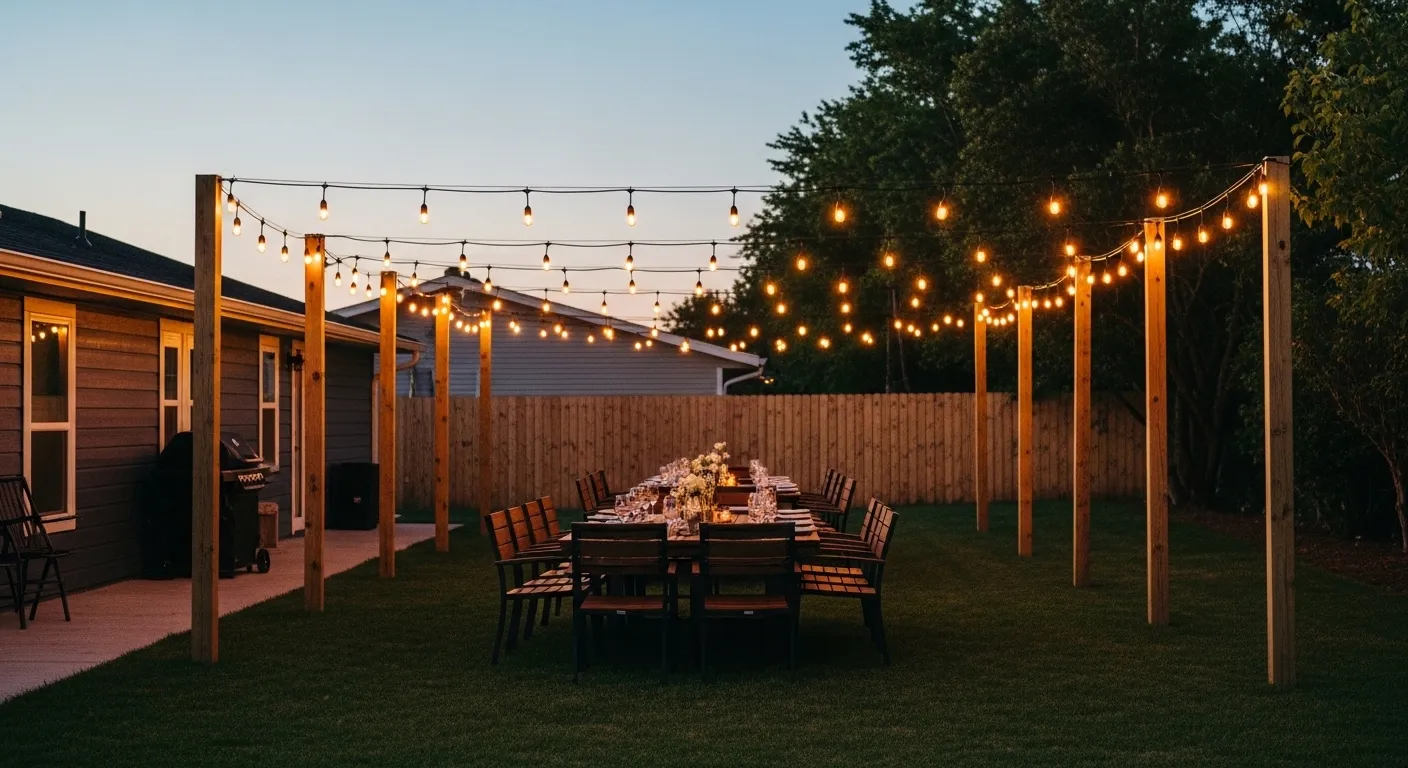
String light canopies are one of the most transformative outdoor design ideas available, and they work in virtually any space. The warm amber glow of Edison-style bulbs adds a festive, romantic quality to outdoor dining that no other lighting source can fully match. When strung in neat parallel rows overhead, they create a defined ceiling that gives the dining zone a sense of shelter and intimacy without blocking the open-air feel. I’ve seen even the most bare and unremarkable patio spaces completely change personality the moment a string light canopy is switched on at dusk. The transformation is immediate, dramatic, and deeply satisfying.
The beauty of this setup is that it works across all seasons and occasions. On a warm summer evening, dinner beneath a string light canopy feels effortlessly celebratory. On cooler nights, the warm glow adds psychological warmth that makes the space feel cozy rather than cold. The installation is surprisingly simple wooden posts or existing fence lines can serve as anchors, and the lights themselves are widely available and affordable. That said, choosing quality bulbs with the right warmth rating makes a significant difference in the final effect. Bulbs rated between 2200K and 2700K produce the richest, most flattering amber light, and that small detail is worth getting right.
Sunken Fire Pit Lounges
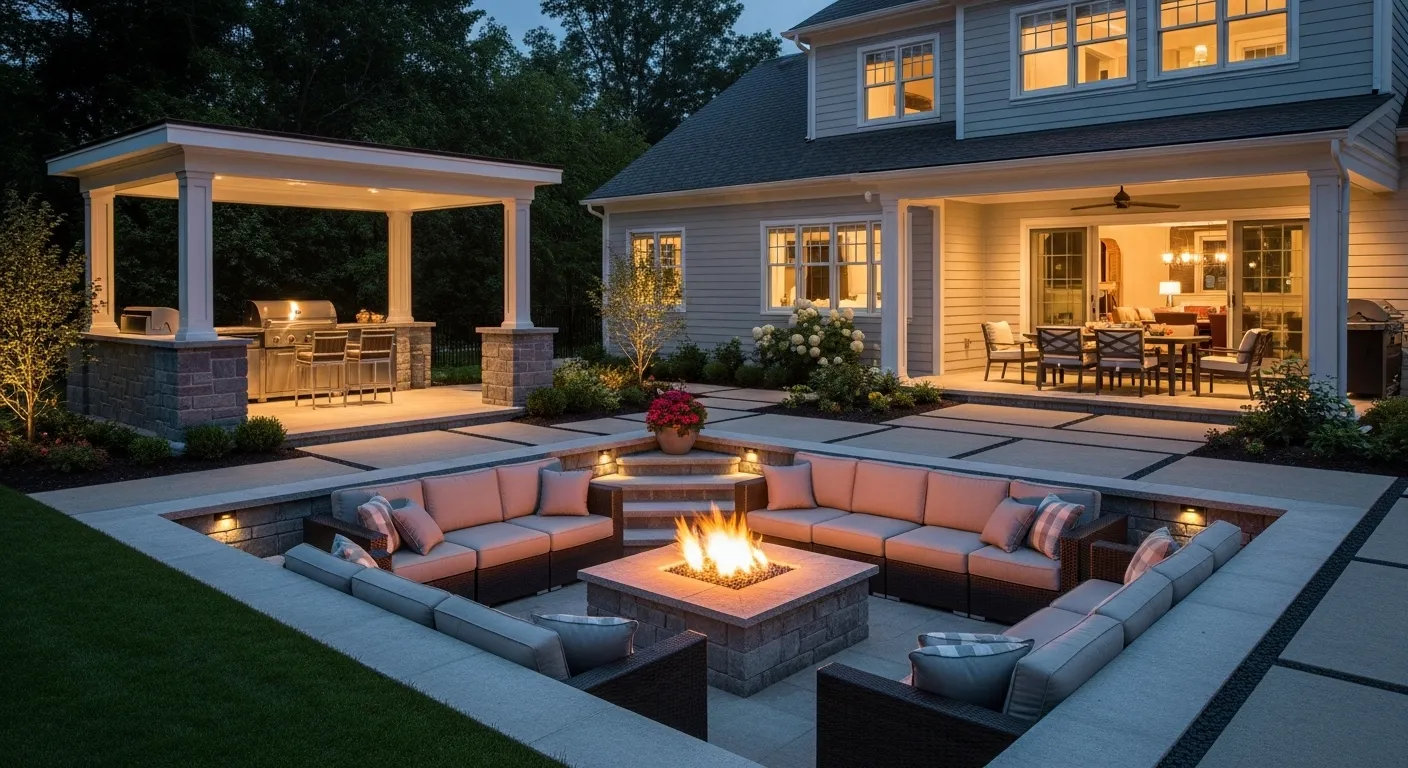
A sunken fire pit lounge is one of the most aspirational outdoor living upgrades available, and the reasons are immediately clear once you experience one. The lowered floor level creates a natural wind barrier while also giving the area a sense of private enclosure that encourages people to settle in and stay awhile. The fire pit at the center provides warmth, light, and something visually hypnotic to gather around. I’ve seen this setup work in large suburban backyards as well as in more compact spaces where just a shallow step down makes a surprisingly big difference in how enclosed and intentional the zone feels.
The design choices within the sunken area matter enormously. Deep, modular sofas upholstered in outdoor-grade fabric invite true relaxation rather than just casual sitting. Surrounding the space with smooth stone or concrete at the raised level gives it architectural definition and makes the transition between zones feel clean and deliberate. Many designers recommend installing low-level pathway lighting around the edges of the sunken perimeter for safety and visual drama at night. When the fire is lit, the combination of flickering flames, low lighting, and deep seating creates an atmosphere that is genuinely difficult to leave which is precisely the point of a space like this.
Pergola With Climbing Vines
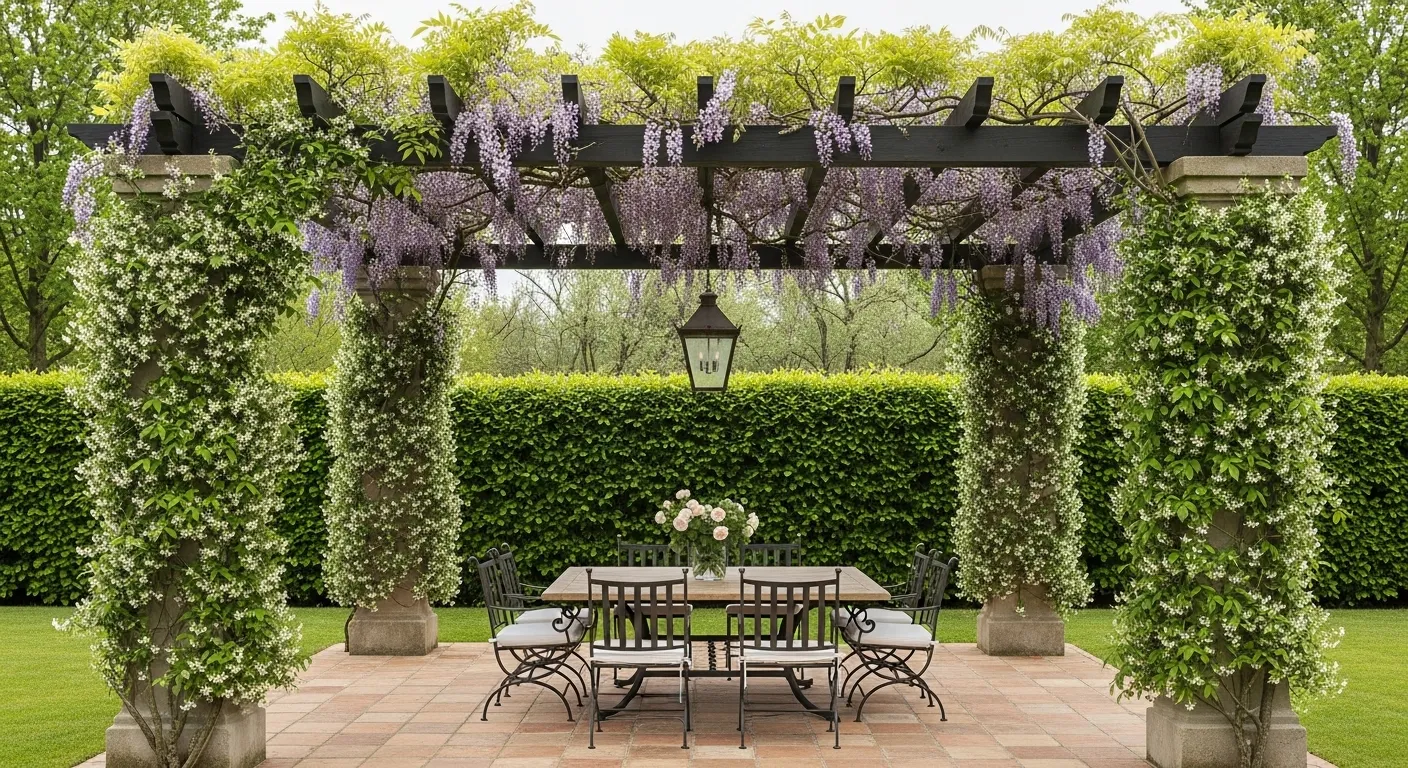
A pergola draped in climbing vines is one of those outdoor design ideas that feels equally at home in a European countryside garden and in a modern suburban backyard. The structure itself provides the bones of the space, but it is the vines that give it its soul. Wisteria is a perennial favorite for its cascading purple blooms and delicate fragrance, though jasmine, climbing roses, and star jasmine are all equally effective choices depending on your climate and color preferences. In my experience, allowing vines to grow in and over the pergola beams naturally, rather than training them too rigidly, produces the most beautiful and romantic visual result.
What makes the vine-covered pergola so effective as a design element is how it bridges the gap between built structure and living nature. The clean lines of the pergola frame create an architectural presence in the garden, while the organic growth of the vines softens those lines into something that feels less constructed and more evolved. This balance between the man-made and the natural is a hallmark of luxurious, well-considered garden design. Pairing the structure with terracotta tiles underfoot and wrought-iron or wooden furniture beneath it reinforces the organic, timeless aesthetic and ties the whole space together into a cohesive and deeply inviting outdoor destination.
Outdoor Kitchen Stations
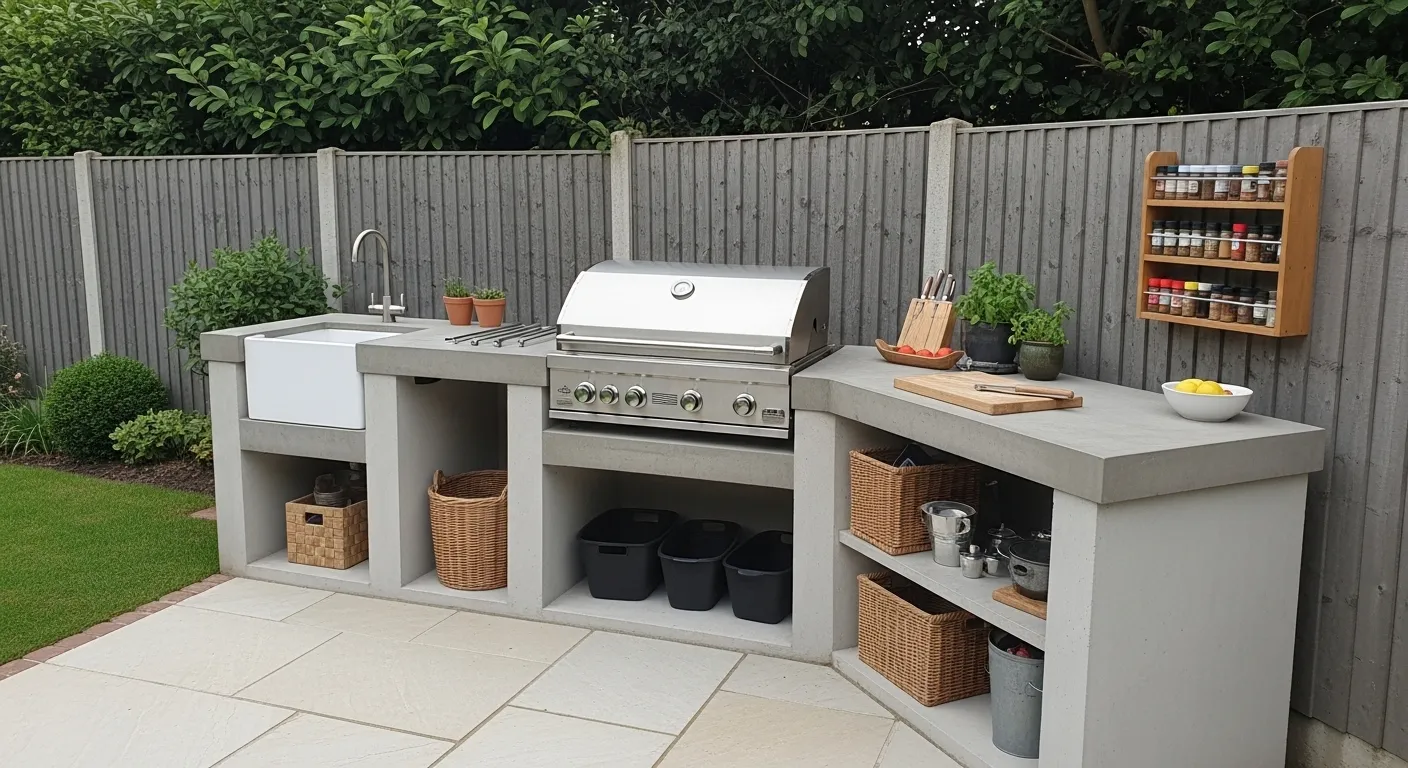
An outdoor kitchen station is no longer a luxury reserved for large estates and designer gardens. It has become one of the most practical upgrades a homeowner can make to their garden space, and the range of options now available from simple grilling stations to fully equipped prep-and-cook setups means there is a solution for nearly every budget and backyard size. A built-in station with a concrete or stone countertop immediately elevates the aesthetic from basic to genuinely high-end. The permanence of the material signals quality and commitment to the space, which makes the whole area feel more considered and valuable.
Beyond aesthetics, the practical value of an outdoor kitchen is hard to overstate. Having a dedicated prep area, storage for tools, and a reliable cooking surface turns outdoor entertaining from a logistical challenge into a smooth, enjoyable experience. Guests naturally gravitate toward a kitchen zone during parties, making it a social anchor as much as a functional one. That is why many designers recommend placing the kitchen station at the edge of the main patio, where the cook can remain part of the conversation rather than disappearing inside. Small additions like a herb planter on the countertop or a mounted spice rack on the fence wall make the setup feel personal, lived-in, and genuinely welcoming.
Poolside Cabana Style
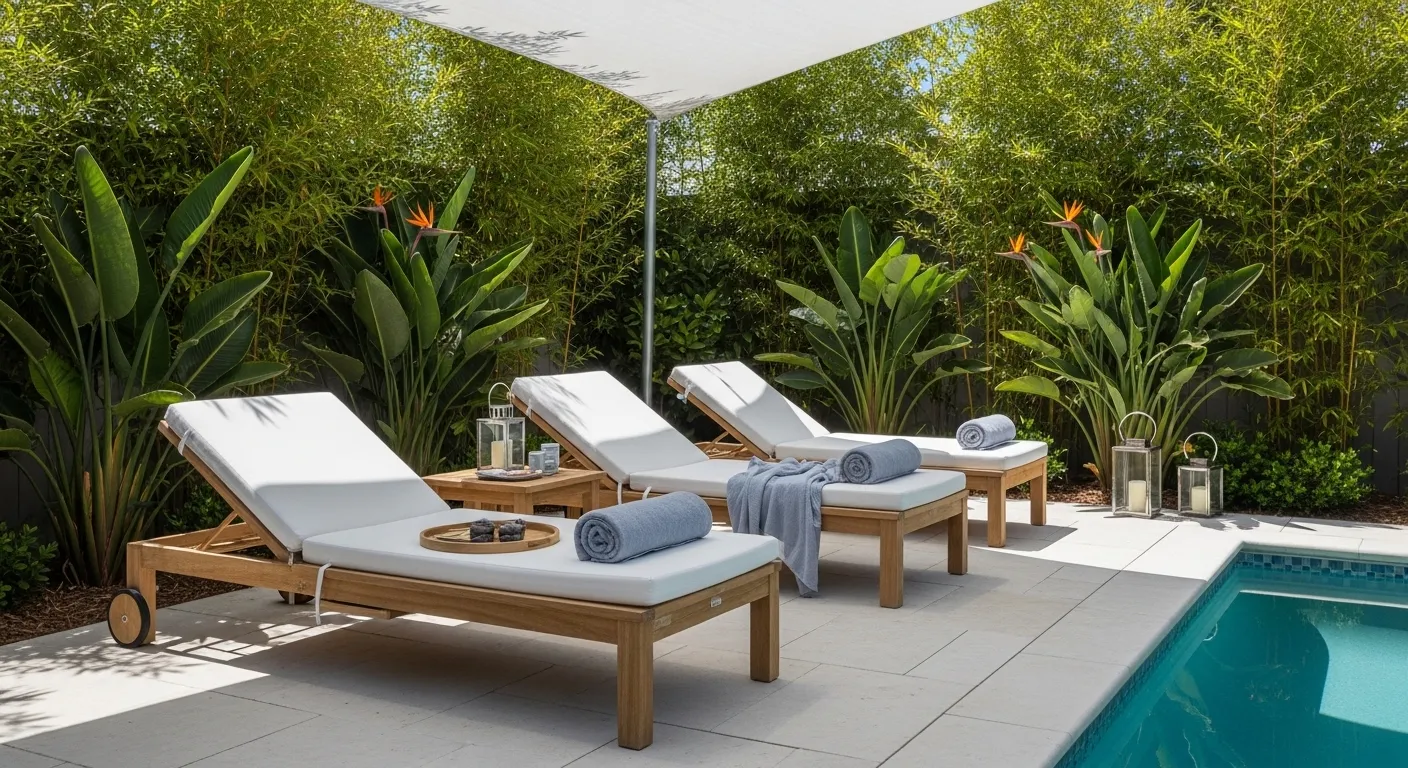
Creating a poolside cabana-style zone is one of the most effective ways to make a home pool area feel genuinely luxurious. The key elements are simple a good shade structure, quality loungers, and consistent use of one or two materials. Teak wood is a classic choice for poolside furniture because it weathers beautifully, resists moisture, and ages into a silvery grey that looks effortlessly elegant. Paired with thick white cushions and a shade sail overhead, the combination creates a look that reads as intentionally designed rather than simply functional. I’ve noticed that this setup consistently gets the most admiring comments from guests and visitors.
The surrounding planting choices play an enormous role in completing the cabana aesthetic. Tall bamboo, areca palms, or bird-of-paradise plants placed behind the lounger zone create a lush, living screen that adds privacy while contributing to the tropical-resort atmosphere. These plants grow relatively quickly and require minimal care once established, making them a practical as well as beautiful addition. Finishing the space with a few rolled towels, a ceramic tray, and a simple lantern on the side table brings in the kind of thoughtful detail that elevates the experience from nice to genuinely special. Small details at eye level are always noticed first, and they set the tone for the entire space.
Zen Garden Corners
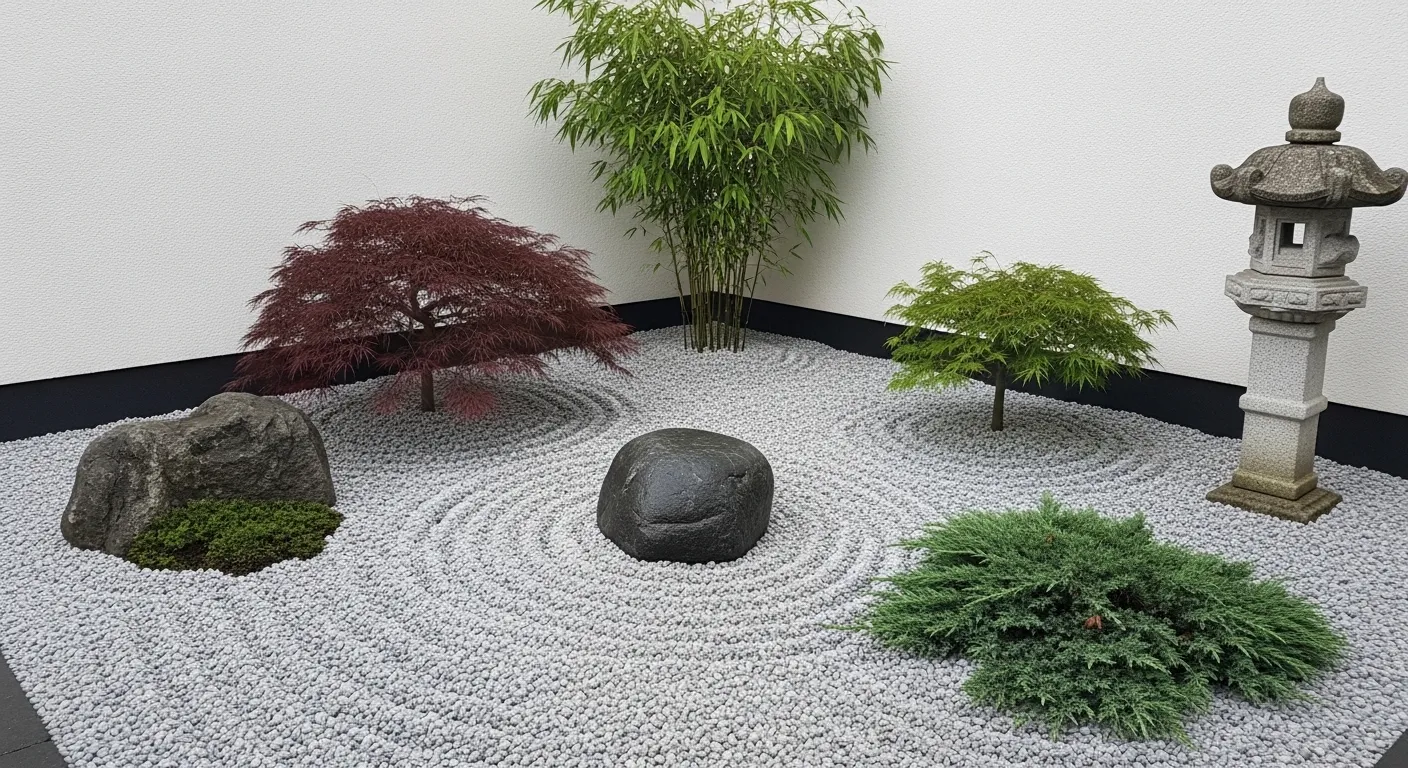
A zen garden corner is one of the most powerful design moves you can make in a small outdoor area. It requires very little space, but the visual and emotional impact is immediate. The combination of smooth raked gravel, a large anchor stone, and one or two carefully chosen plants creates a composition that feels complete and deeply intentional. The restraint is the point by removing excess elements and focusing on texture, form, and negative space, the corner becomes a visual rest for the eye and a genuine mental retreat. I’ve noticed that gardens with a zen corner tend to feel more sophisticated overall, even when the rest of the yard is quite simple.
The materials used in a zen corner are as important as the layout itself. Smooth grey or white gravel, raked in slow, deliberate circles, creates a texture that is visually dynamic without being busy. A dark river stone or smooth boulder placed at the center becomes the focal point around which everything else is organized. Japanese maples, ornamental bamboo, or low-spreading junipers are ideal plant choices that reinforce the aesthetic without overpowering it. A stone lantern positioned to one side adds a sculptural quality while providing soft light in the evenings. Together, these elements create a corner that feels crafted, mindful, and genuinely beautiful in every season.
Tropical Leaf Backdrops
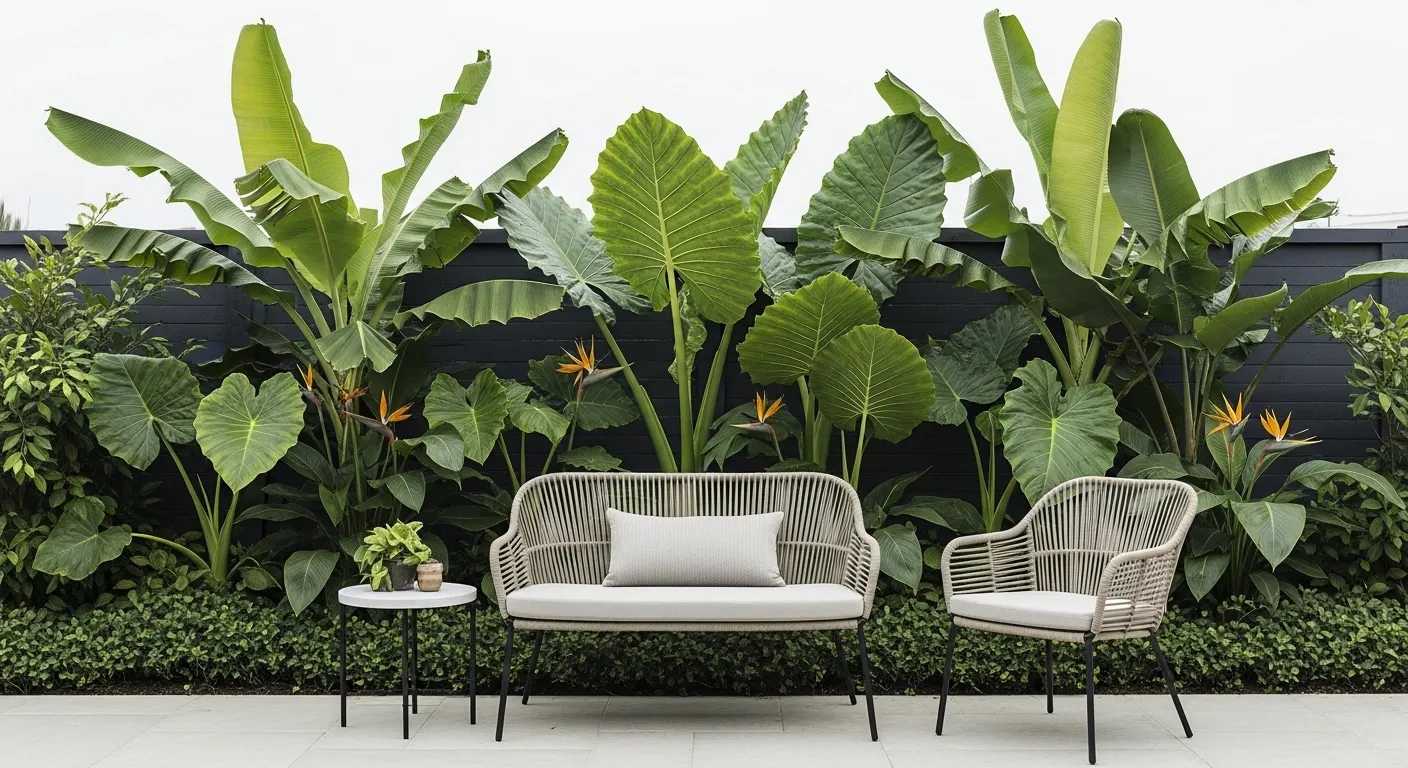
Nothing signals tropical luxury quite like a backdrop of oversized, lush leaves. Banana plants, elephant ears, and bird-of-paradise have an almost theatrical quality their bold shapes and deep greens command attention without any additional styling needed. Placed behind a simple seating arrangement, they transform what might otherwise be a plain fence or bare wall into something that looks like a curated piece of living art. The scale of these plants is key. When leaves are large and layered at different heights, the backdrop has real visual depth that makes the foreground furniture and accessories stand out beautifully by comparison.
The practical benefits of tropical planting match their visual appeal. These plants grow relatively quickly once established in the right conditions, and their dense foliage provides meaningful privacy screening without the permanence or cost of constructed walls. Many designers recommend placing the largest plants at the rear of the seating zone and layering smaller, finer-textured plants in front to create a gradual transition from bold backdrop to seating area. This layering technique creates the impression of a much larger and more complex garden than may actually exist. Combined with a simple chair and a small accent table in the foreground, the tropical leaf backdrop makes even a modest patio feel genuinely expansive and lush.
Bistro Table Setups
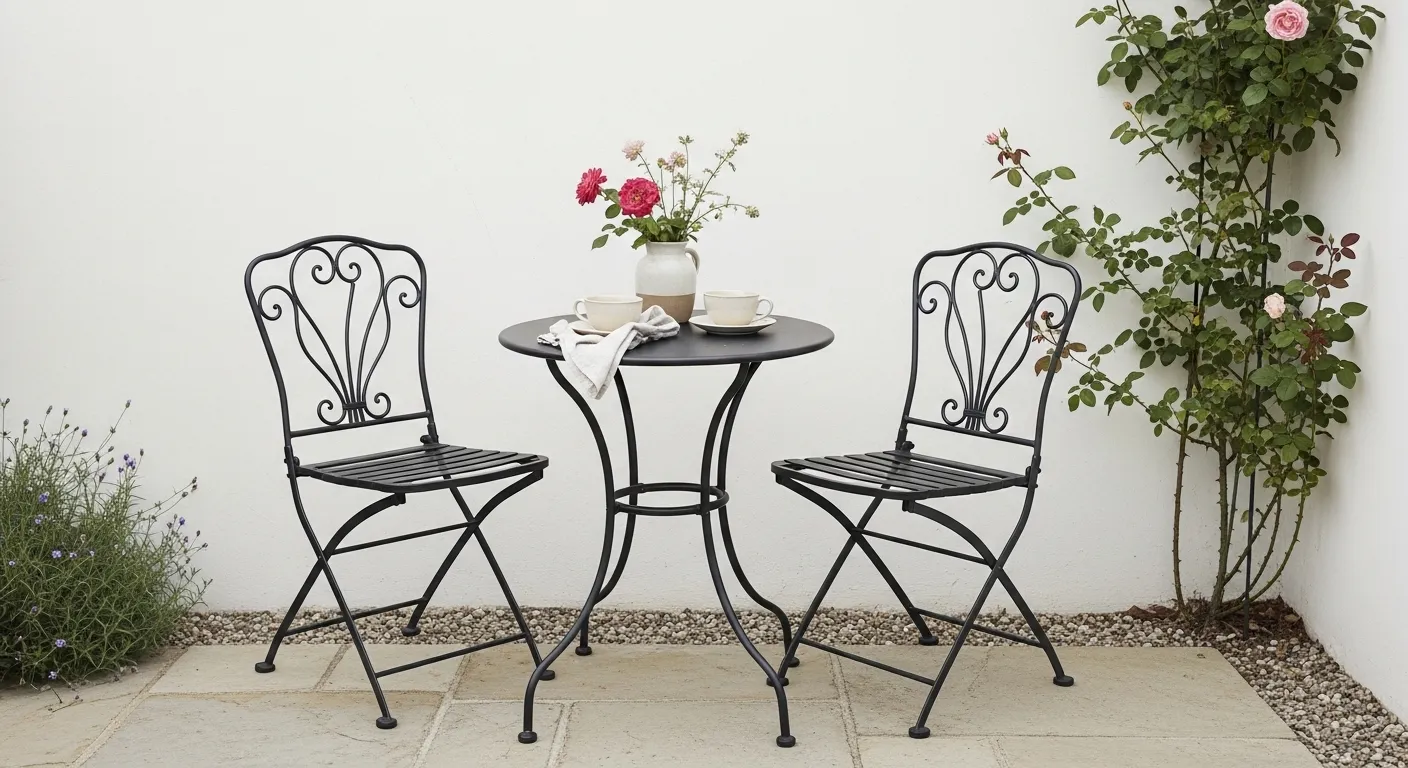
A well-styled bistro table setup has a particular magic that larger, more elaborate seating arrangements often struggle to match. Its intimacy is its strength. The compact size signals a space designed for slow mornings, quiet coffees, and unhurried conversations the kind of daily rituals that make home life genuinely enjoyable. When the table is paired with matching iron chairs and placed against a whitewashed wall with a climbing rose nearby, the effect is undeniably charming. I’ve tried this in small corner spaces that previously felt like wasted real estate, and the bistro setup consistently transforms them into the most-used spot in the entire outdoor area.
The styling details on and around the bistro table are what elevate it from functional to genuinely beautiful. A small ceramic vase with one or two stems of seasonal flowers on the tabletop is all that is needed to make the setup look curated rather than casual. Choosing a linen or cotton napkin in a coordinating tone adds texture and softness that balances the iron’s harder lines. Around the table, keeping the surrounding floor clean and uncluttered is essential the bistro setup works best when it stands clearly defined in its own small area. This disciplined simplicity is exactly what makes it feel so effortlessly refined and photogenic.
Lantern Pathway Lighting
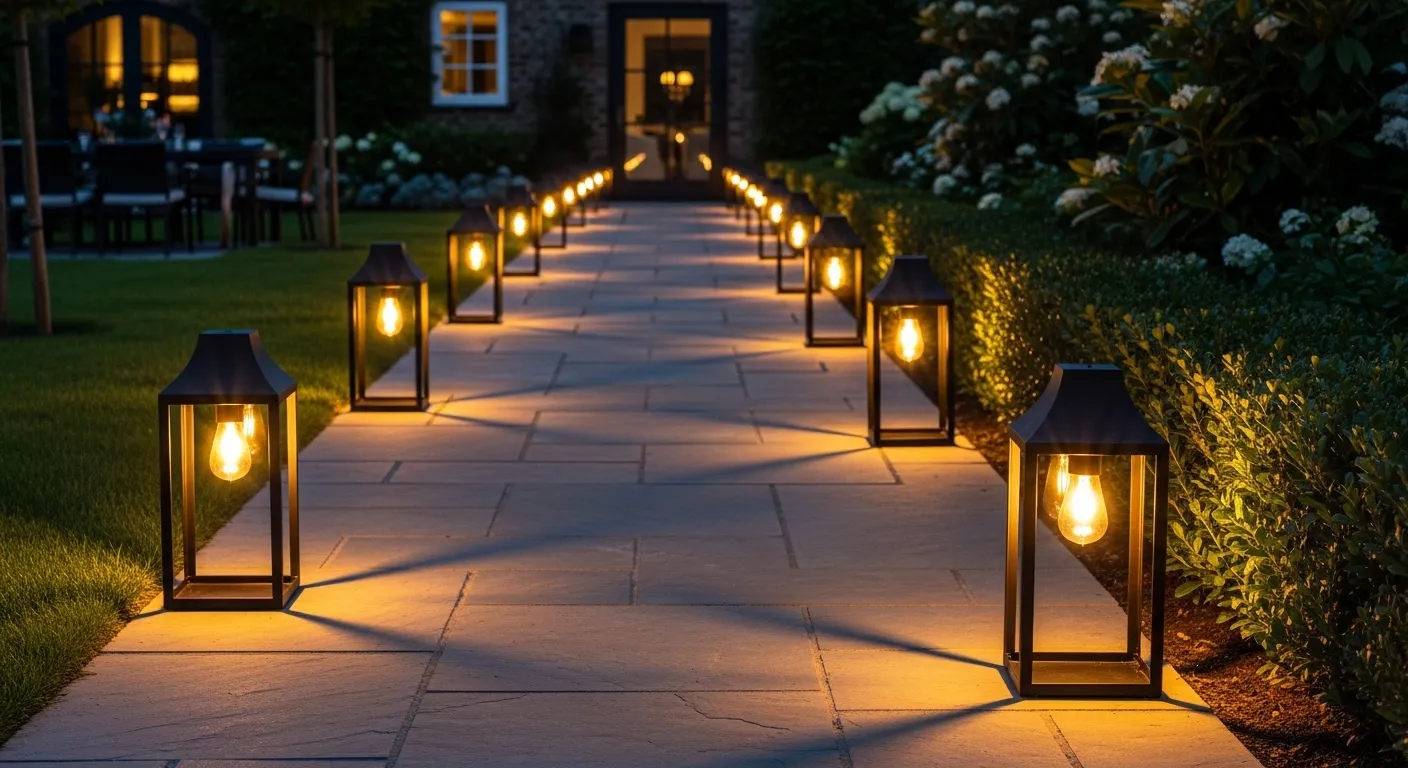
Pathway lanterns are one of the most underrated elements of a truly well-designed outdoor space. Most people think carefully about their main seating zone and dining area, but the path leading to those spaces is often overlooked entirely. When that path is lined with evenly spaced, warm-glowing lanterns, arriving at the garden after dark becomes a genuinely beautiful experience. The amber light warms the tones of everything around it the stone underfoot, the foliage on either side, and the faces of anyone walking along it. I’ve seen this simple addition make gardens feel at least twice as considered and intentional, especially on warm evenings when the space is most often enjoyed.
The choice of lantern style sets the tone for the entire garden. Traditional brushed copper or aged brass designs evoke a timeless, refined aesthetic that suits both contemporary and heritage garden styles. Sleek matte black lanterns with clean geometric lines suit more modern, minimalist layouts. Regardless of style, what matters most is consistency using the same lantern repeated at regular intervals creates the visual rhythm that makes the pathway feel designed rather than decorated. Many landscape designers recommend setting lanterns at ankle to knee height rather than waist height, as lower placement concentrates light on the path surface itself and creates a more intimate, atmospheric nighttime effect.
Privacy Hedge Walls
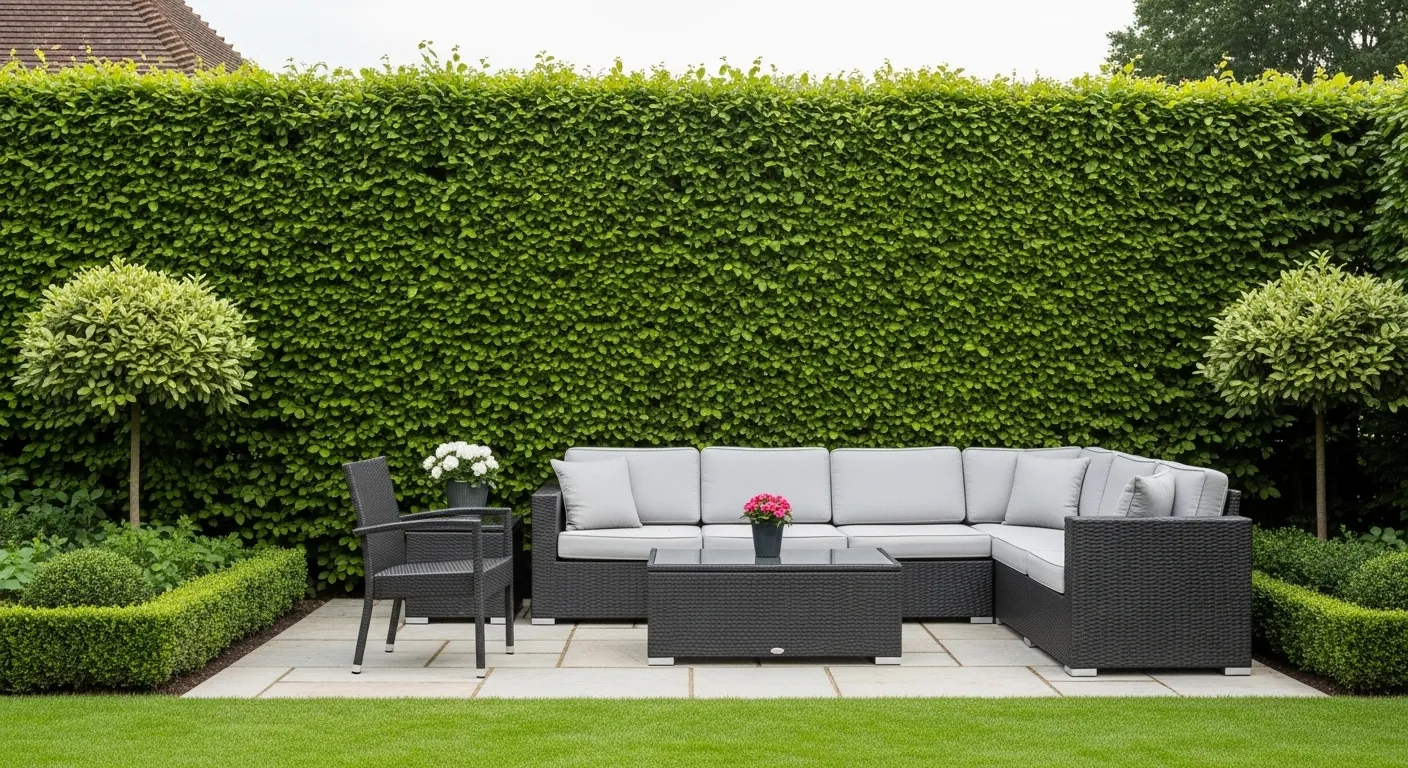
A tall, formally clipped hedge wall does something that almost no other garden feature can match it creates an outdoor room. By forming a solid green backdrop behind a seating area, the hedge instantly transforms what might be an open, exposed garden into a space that feels enclosed, private, and intentionally designed. The effect is architectural in quality, similar to what an interior wall does for a living room. When the hedge is kept neatly clipped and uniform in height, the visual result is clean, confident, and deeply elegant. I’ve noticed that gardens with a well-maintained hedge wall always photograph beautifully, which is a reliable sign of good design.
The practical benefits of a privacy hedge wall are significant alongside the visual ones. Dense hedging plants like hornbeam, yew, or Photinia absorb sound effectively, making the seating zone noticeably quieter than an open garden an important quality in suburban settings. They also create a microclimate that reduces wind, making outdoor spaces usable on days when open gardens would feel too exposed and uncomfortable. Choosing a fast-growing variety ensures that the hedge fills in within one to two seasons, while slow-growing options like yew maintain their shape with far less frequent cutting. Both have their merits depending on how quickly you want the privacy effect to be achieved.
Water Feature Walls
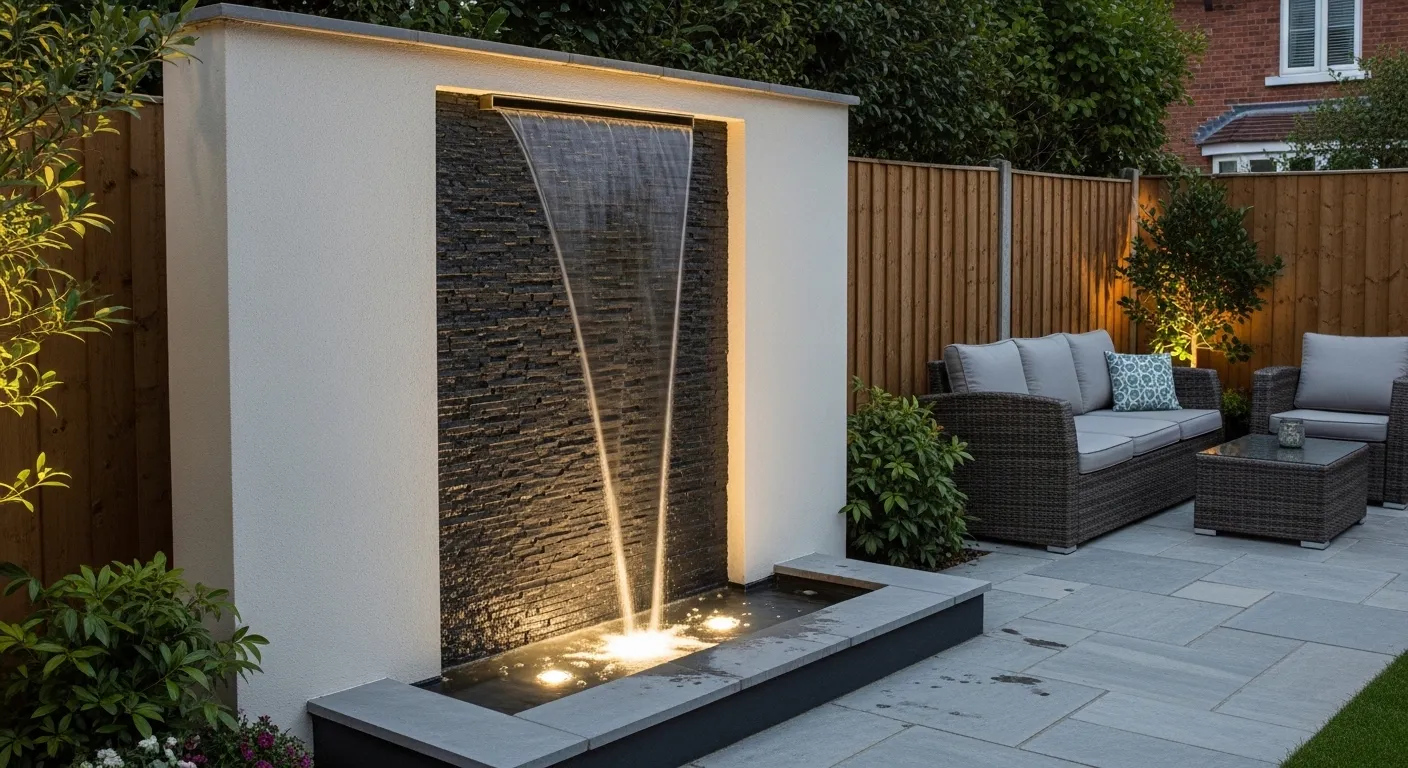
A water feature wall is one of the most sensory-rich additions possible in any garden or patio design. The sight of water moving smoothly down a dark stone surface is visually captivating, but it is the sound that makes the biggest difference to how the space feels. Even in a location close to street noise or a busy neighborhood, the gentle sound of flowing water creates a psychological buffer that makes the outdoor space feel removed from the chaos of daily life. That shift in atmosphere is exactly what elevates a garden from pleasant to genuinely restorative, and it explains why water features remain one of the most consistently popular garden design choices.
The design of the water feature itself should be clean and deliberate. A tall, flush slate panel with a thin, even flow of water down its surface reads as architectural rather than decorative, which is an important distinction. It integrates into the garden design rather than sitting apart from it. The shallow basin at the base keeps the water contained and makes maintenance straightforward. Positioning the feature where it can be seen and heard from the main seating zone maximizes its impact without requiring it to be directly adjacent to the furniture. Lighting the feature from below at night transforms it further, creating a subtle, shimmering glow that makes the garden feel active and alive even after dark.
Hammock Garden Nooks
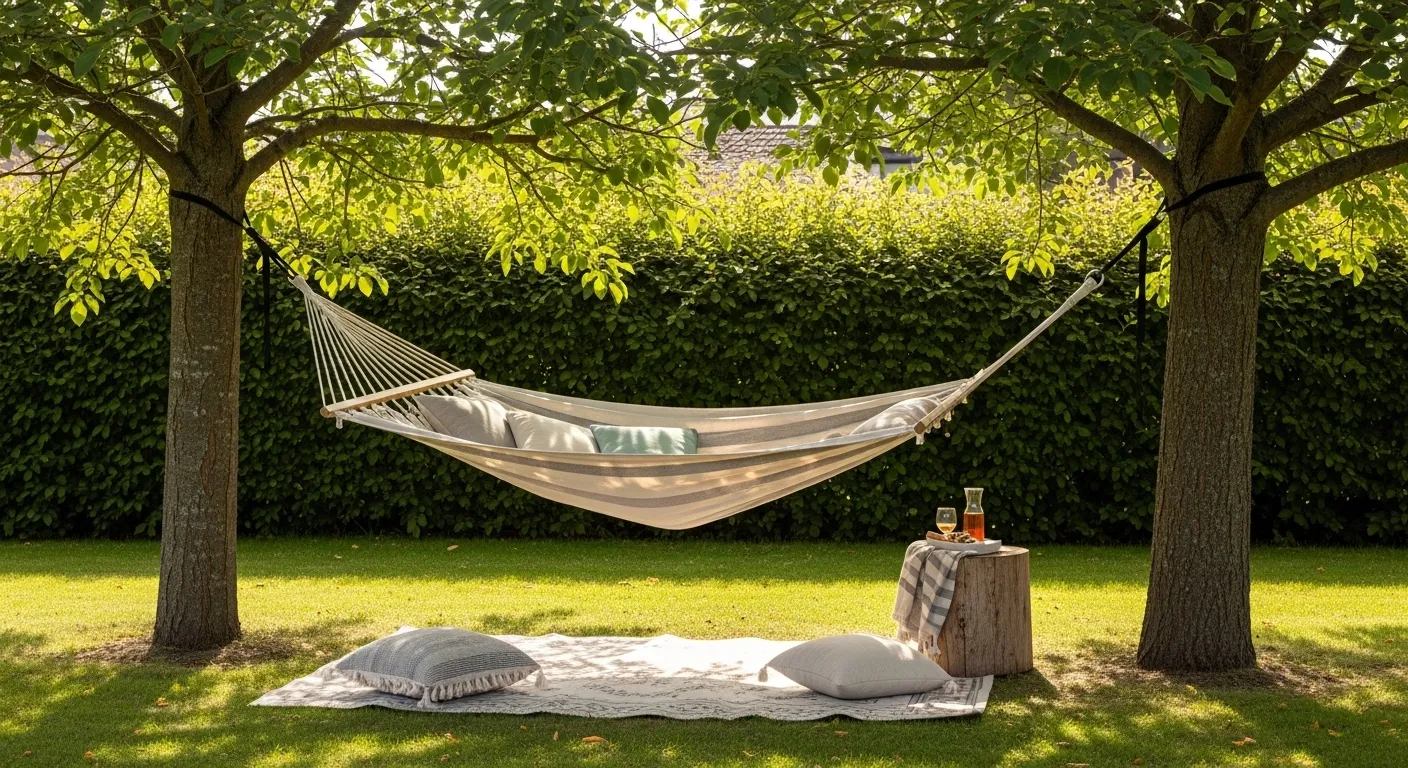
A hammock garden nook is one of the most beloved outdoor spaces you can create, and its appeal is almost universally understood. There is something deeply restorative about lying in a gently swaying hammock beneath a canopy of leaves, watching light move through branches overhead. When the hammock is wide, well-cushioned, and strung securely between two mature trees, it transitions from a simple piece of equipment into a genuine destination the kind of spot that appears in conversations about home long after a visit. I’ve seen this simple addition become the most-used feature in many gardens, ahead of far more expensive and elaborate setups.
Making the hammock nook feel truly special is mostly about the surrounding details. A soft outdoor rug placed beneath the hammock creates a visual frame around the space and makes it feel deliberately designed rather than casually arranged. A small side table or tree stump nearby to hold a drink or book adds practical comfort that encourages longer stays. The choice of hammock material also matters more than many people realize. Wide, tightly woven cotton hammocks provide the best full-body support and are the most comfortable for extended use. Linen or striped canvas options add a textured quality that photographs beautifully and reinforces the garden room aesthetic rather than suggesting a campsite.
Concrete Planter Clusters
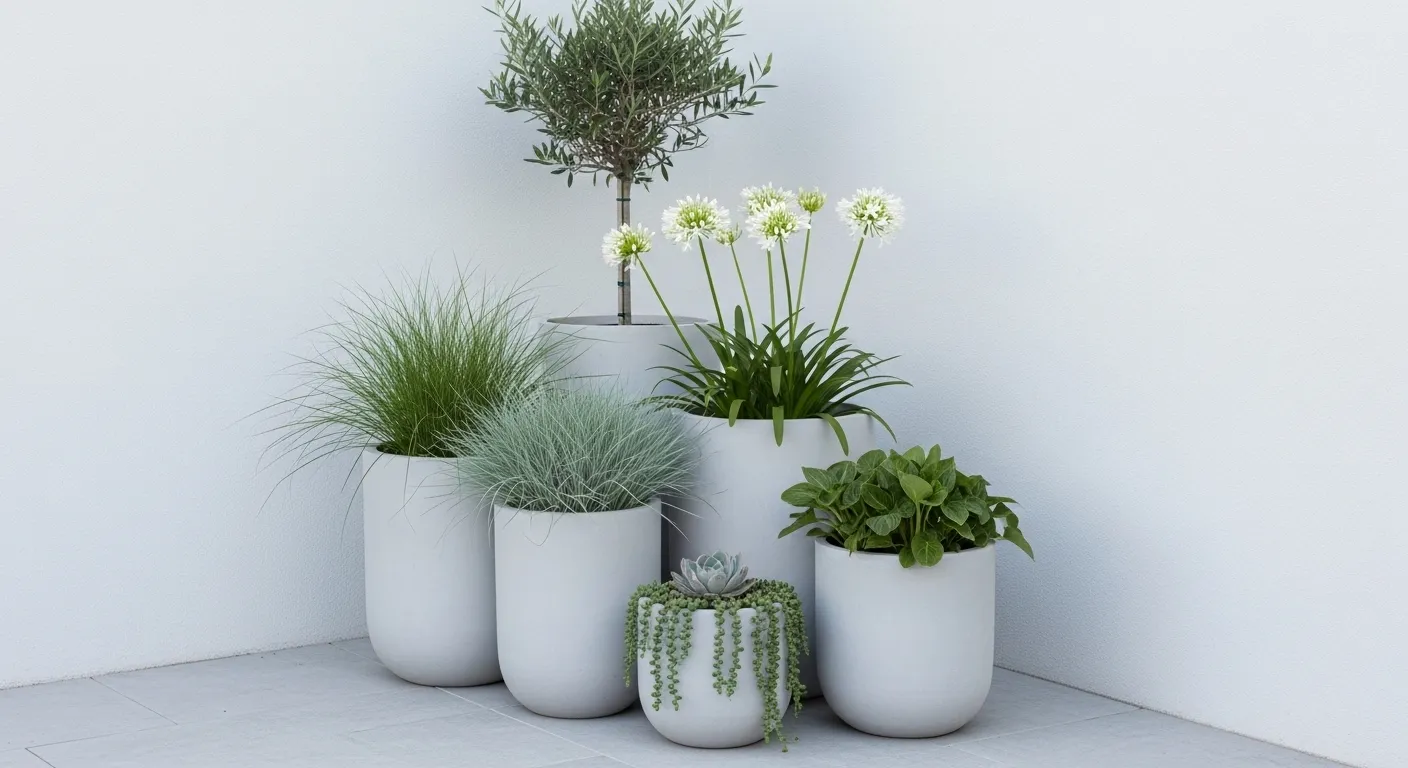
Concrete planters have moved far beyond their utilitarian origins to become one of the most stylish and versatile design elements in contemporary garden design. Their smooth, matte finish and cool neutral tone suit nearly every aesthetic direction, from minimalist Scandinavian to relaxed Mediterranean. When grouped in a cluster with plants of different heights, textures, and forms concrete planters create something that functions almost like outdoor sculpture. An olive tree in a tall, narrow planter surrounded by lower, broader vessels filled with grasses and succulents creates a composition that is as visually considered as anything hanging on an interior wall.
The key to making a concrete planter cluster work well is intentional variety. Choosing three to five planters that share the same material but differ in height and diameter creates cohesion with visual interest. Filling them with plants that contrast in texture something feathery and fine next to something broad and bold adds the kind of layered complexity that makes the cluster feel designed rather than random. Placing the arrangement against a plain white or light-toned rendered wall gives it a clean backdrop that lets the shapes and forms stand out clearly. That said, allowing some trailing plants to spill over the edges softens the edges and adds an organic quality that prevents the arrangement from feeling too rigid.
Teak Deck Extensions
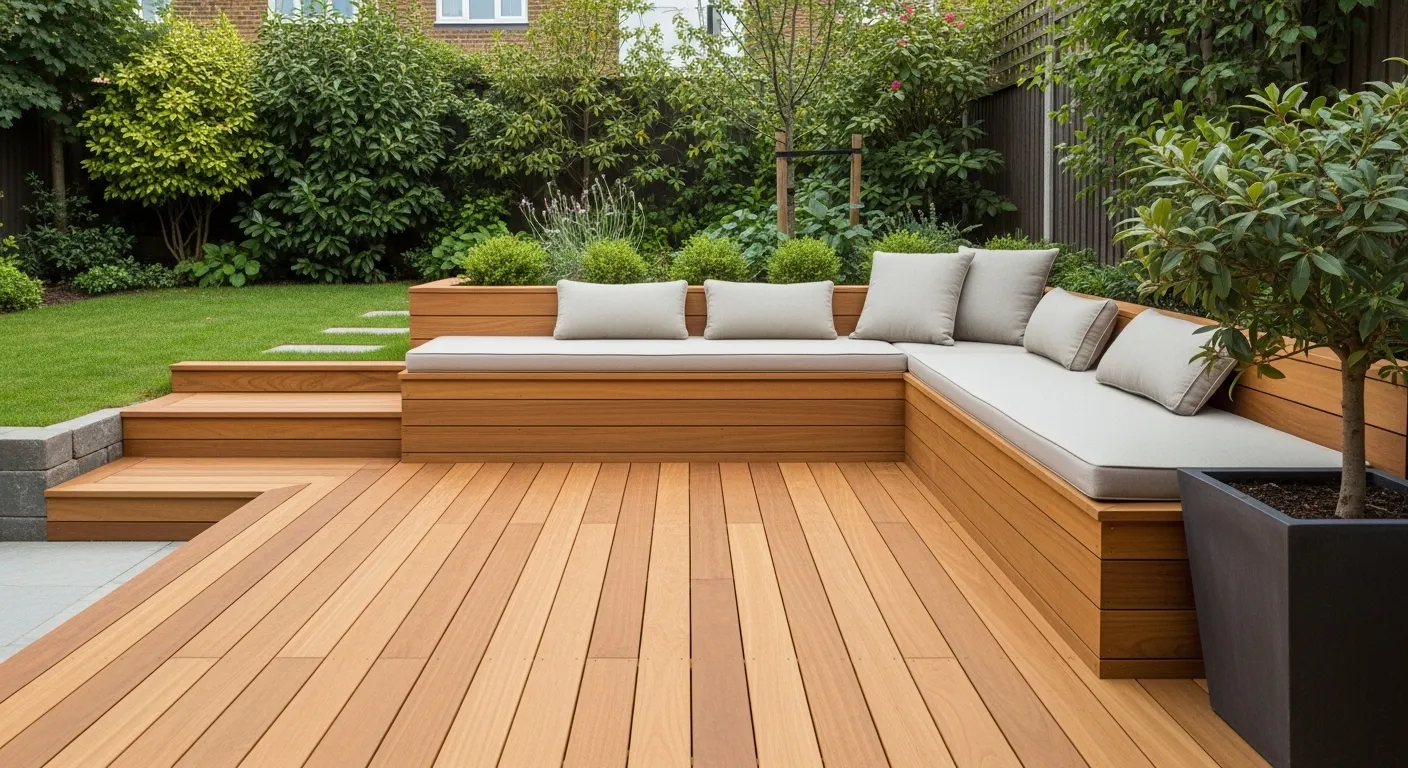
A teak deck extension is one of those outdoor upgrades that genuinely changes how a space is used from day to day. By adding a solid, attractive surface level with or slightly above the garden, it creates a defined zone that feels like a proper room rather than an afterthought. Teak is particularly well-suited to this purpose because its natural oils make it resistant to moisture, splitting, and the color degradation that affects lesser wood species. The warm honey tone of fresh teak, glowing in afternoon sunlight, gives the deck an immediate richness that makes the surrounding garden look greener and more lush by contrast a happy visual effect that requires no additional styling.
The addition of a built-in bench along one edge of the deck is a design decision that consistently earns its place in both practical and aesthetic terms. It provides seating for large gatherings without the need for extra furniture that might clutter the space, and it creates a clean, architectural line that gives the deck a finished quality. Topping the bench with flat cushions in a neutral tone adds comfort while keeping the look minimal and uncluttered. Many designers recommend running the deck boards in the direction that visually stretches the shorter dimension of the space usually horizontal which is a simple technique that can make a compact deck feel meaningfully more spacious without changing its actual size.
Outdoor Rug Anchoring
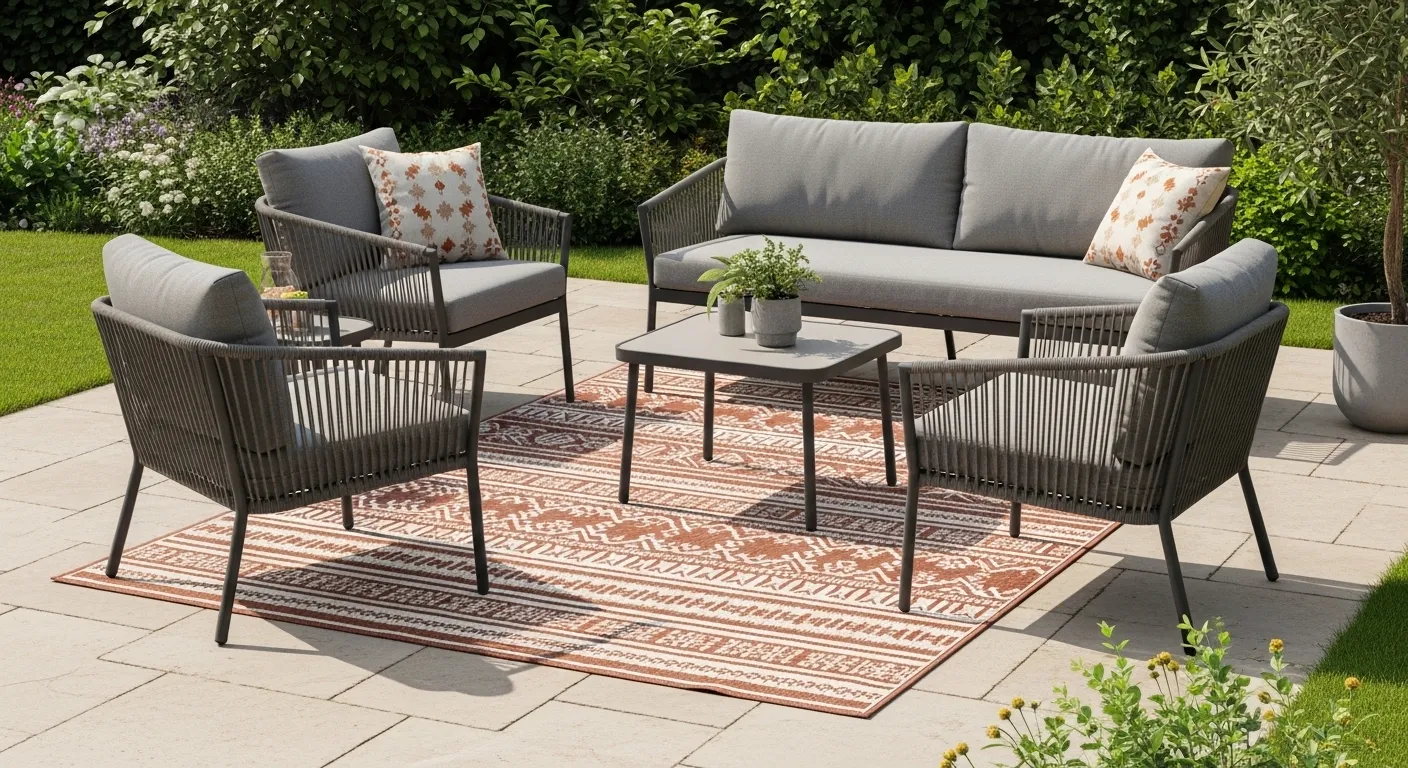
An outdoor rug is one of the most powerful anchoring tools in patio and garden design, yet it remains widely underused. Without a rug, even a well-chosen set of furniture can look like it has simply been placed outside rather than intentionally arranged. The rug creates a visual container for the seating zone, pulling all the individual furniture pieces into a single cohesive composition. When the rug is large enough to extend a few inches past the front legs of every chair and sofa, the seating area reads as spacious, generous, and deliberate the kind of layout that appears in high-end garden design publications and Pinterest boards alike.
The pattern and color of the outdoor rug also have a significant impact on how the entire patio is perceived. Warm rust and cream geometric patterns bring energy and personality to a neutral-toned patio without overwhelming the space. Stripe patterns create a relaxed, coastal quality, while solid tones in dusty sage or warm grey maintain a calm, contemporary feel. Flat-weave construction is always the best choice for outdoor use it drains quickly after rain, resists mold and mildew, and lies flat without curling at the edges. Choosing a UV-resistant material ensures the color stays vibrant through multiple seasons, making the rug a genuinely long-term investment in the look of the space.
Alfresco Dining Zones
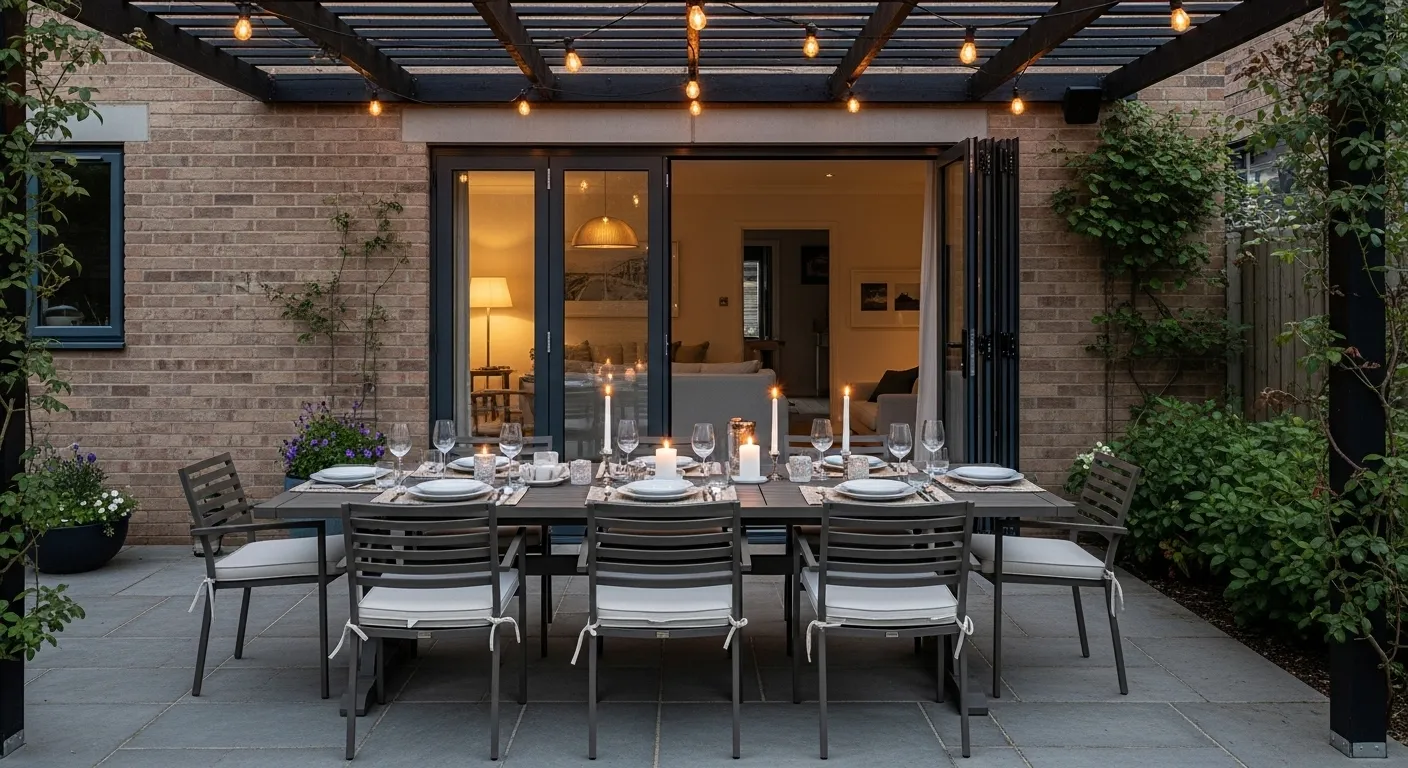
A properly designed alfresco dining zone does something remarkable it makes eating outside feel as comfortable and considered as dining indoors, without sacrificing any of the openness and pleasure of being in the fresh air. The key is in treating the outdoor dining space with the same intentionality you would bring to an interior dining room. A long table that comfortably seats the full household and a few guests, surrounded by matching chairs with weather-resistant cushions, signals that this is a space designed for lingering rather than just functional eating. When the table is set with real ceramic tableware and simple candles, the effect feels genuinely special even on an ordinary evening.
The overhead structure makes all the difference to how the alfresco dining zone functions and feels. A pergola or shade structure above the table defines the space from above, giving it a room-like quality that an uncovered table arrangement cannot achieve. When warm Edison string lights hang from the pergola beams, the evening dining experience becomes something guests remember and talk about long after the meal is finished. I’ve seen many beautiful gardens where the alfresco dining zone becomes the main reason the household spends so much time outside not just on special occasions, but as part of the daily rhythm of life at home, which is exactly what great outdoor space design should accomplish.
Balcony Garden Escapes
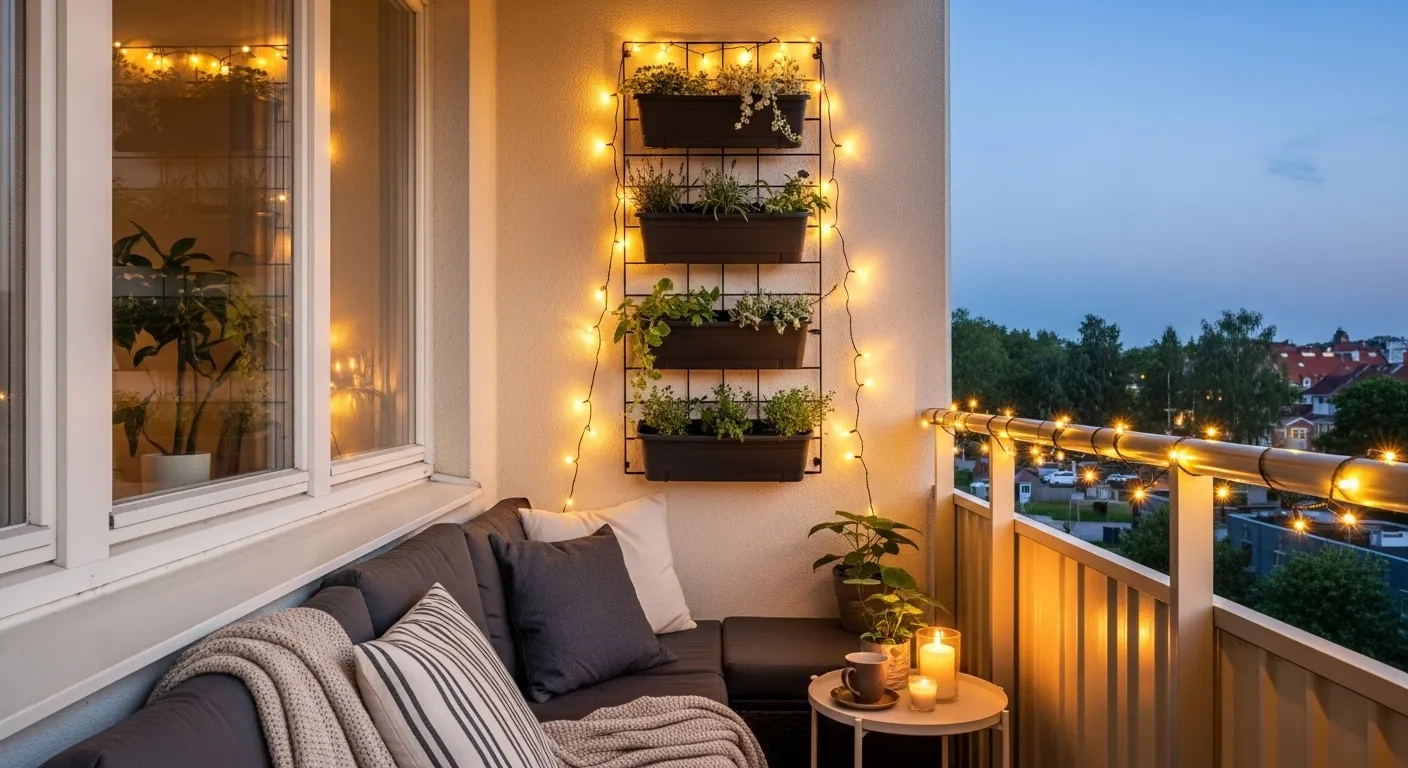
A balcony garden escape proves definitively that you do not need a large outdoor space to create something beautiful, private, and genuinely restorative. With the right approach, even the most compact balcony can become a space that feels like a true retreat from daily life. The key is vertical thinking. When floor space is limited, moving the greenery upward through a mounted wall planter or a trellis system fixed to the railing frees the floor for a proper seating arrangement without the crowding that typically makes small balconies feel cluttered and uncomfortable. A well-chosen vertical planter filled with trailing, climbing, and upright plants can make a plain balcony wall disappear entirely behind living green.
The lighting choice on a balcony has an outsized effect on how the space feels after dark, and fairy lights are consistently the most effective option for small outdoor areas. Their soft, distributed glow creates intimacy without requiring any overhead structure, and they can be wound around railings, tucked into planters, or draped across the back wall with equal success.
Adding a single candle and a warm ceramic mug to a small side table completes the picture making the balcony feel lived-in and loved rather than simply furnished. I’ve seen this transformation work on balconies of every size and orientation, and the principle is always the same: intentional layering of green, light, and texture turns a small outdoor space into a genuine personal sanctuary.
Conclusion
Your outdoor living space has the potential to be one of the most beautiful and meaningful parts of your home. These 21 ideas prove that elegance does not require a massive budget or a complete redesign it requires intention, thoughtful choices, and a willingness to treat the outdoors as a true extension of your interior world. I’ve seen how even one or two of these upgrades can completely shift the atmosphere of a space and the way people use it. Start with the idea that excites you most, try it, and let the transformation inspire the next step. Save this post on Pinterest, share it with someone who loves beautiful spaces, and go make something lovely.
Olivia Carter
Olivia Carter is the founder of Lady Home Decor and a passionate home decor expert. She shares practical, stylish ideas to help homeowners create beautiful, comfortable, and welcoming spaces. Her expertise covers bedrooms, kitchens, living rooms, bathrooms, and small-space decorating.