How to Decorate Shelves for a Stunning and Cozy Home

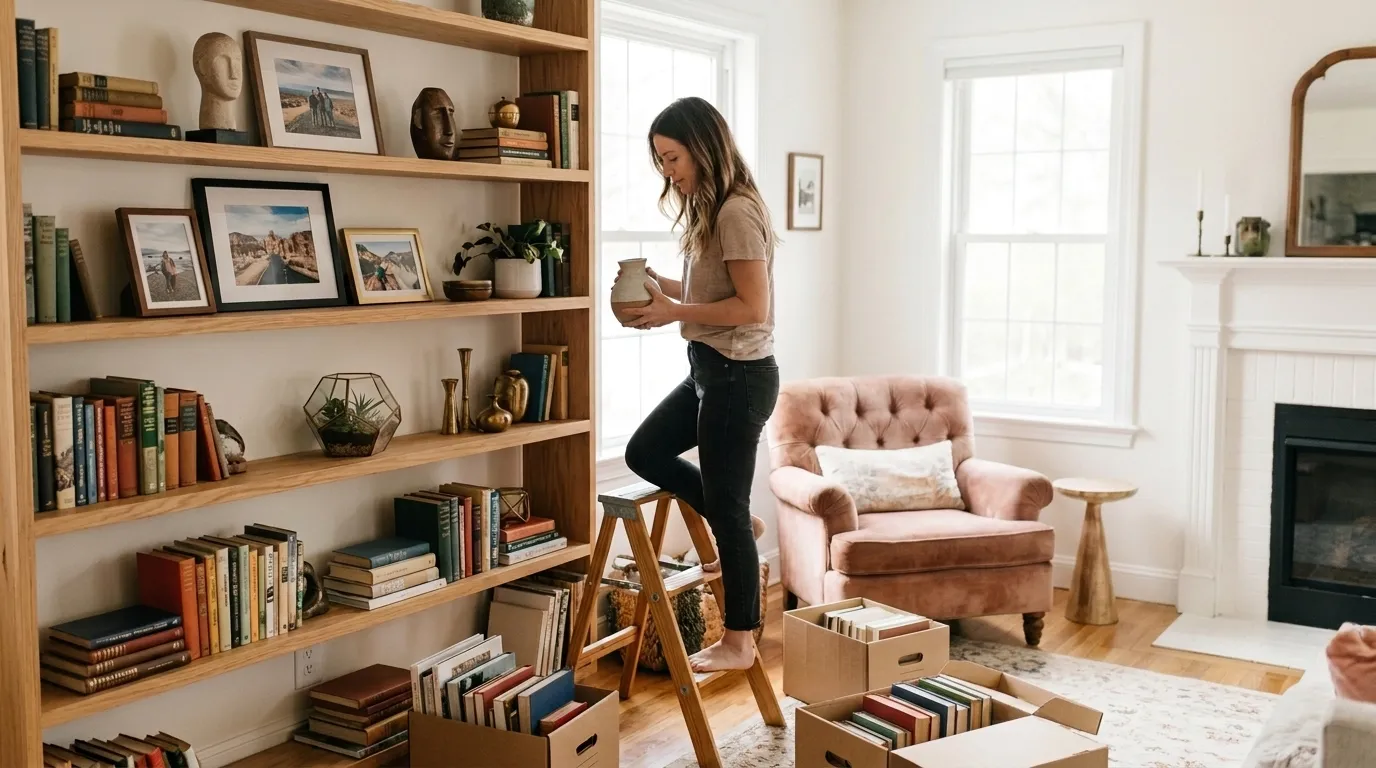
Wondering how to decorate shelves without making them look cluttered or unfinished? You’re not alone. Many people struggle to create displays that feel balanced, stylish, and personal while still fitting their everyday lifestyle.
This guide walks you through the essential principles of shelf styling, from choosing a clear purpose and arranging decorative pieces to using color, texture, lighting, and meaningful accessories effectively. Whether you’re updating living room shelves, built-ins, floating shelves, or bookcases, you’ll discover practical techniques that are easy to apply in any home. One common challenge is trying to fill every available space, but I’ve found that thoughtful placement often creates a stronger visual impact than adding more decorations. Throughout this article, you’ll learn how to build attractive displays, avoid common decorating mistakes, refresh your shelves throughout the year, and create arrangements that reflect your personality while remaining functional, organized, and welcoming.
Shelf Purpose
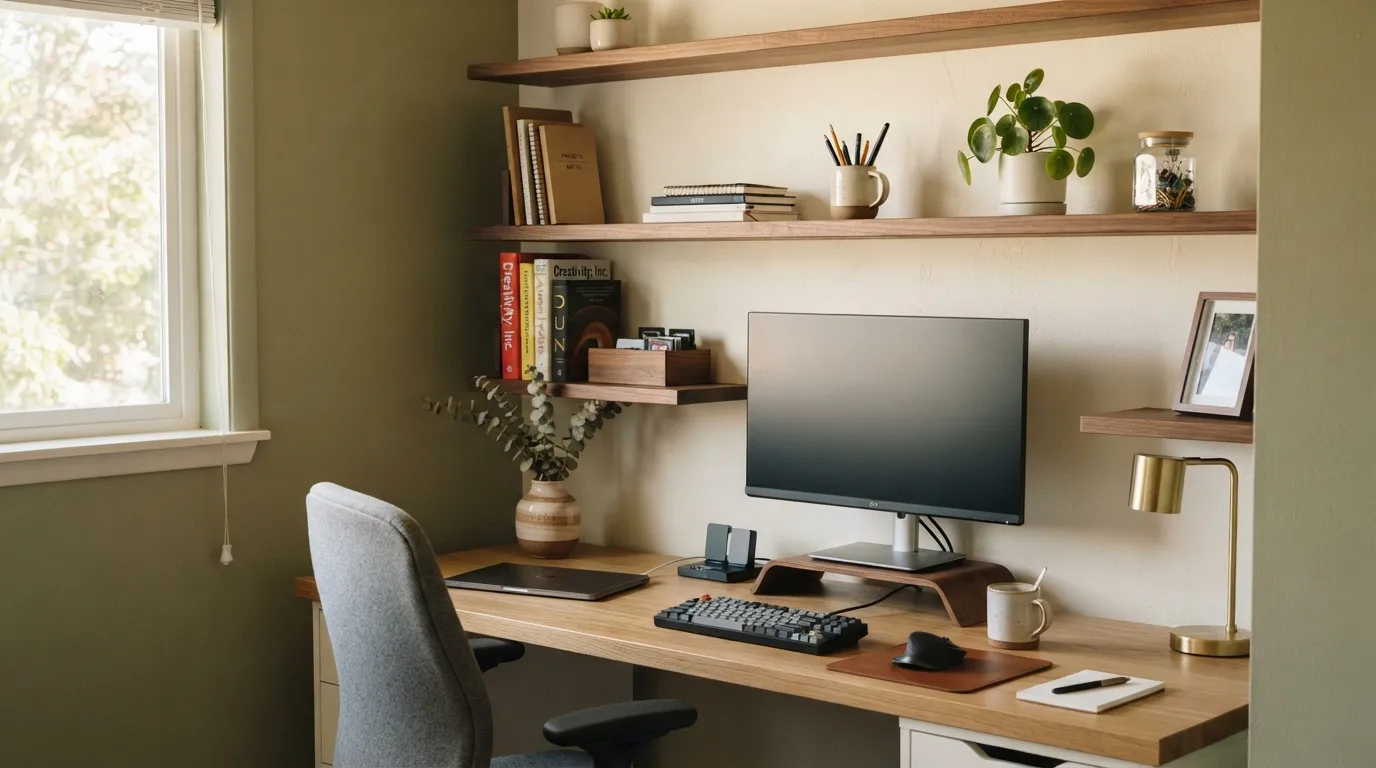
Every well-styled shelf starts with a clear purpose, making the decorating process much easier and more intentional. Before arranging books, plants, or decorative accents, think about whether the shelf should be practical, decorative, or a combination of both. Understanding its role helps you choose pieces that work together instead of competing for attention. A shelf in a living room often creates visual interest, while one in a kitchen may need to balance beauty with convenience, allowing frequently used items to remain accessible without sacrificing an attractive appearance.
Many professionals recommend beginning with function because it prevents overcrowding and creates a more natural arrangement over time. In my experience, shelves that reflect daily habits stay organized longer than displays created only for appearance. A common mistake people make is filling every empty space immediately, leaving little room for balance. Instead, select meaningful objects that support the room’s purpose and leave open areas that allow each item to stand out, creating a cleaner, calmer, and more welcoming atmosphere.
Balanced Arrangements
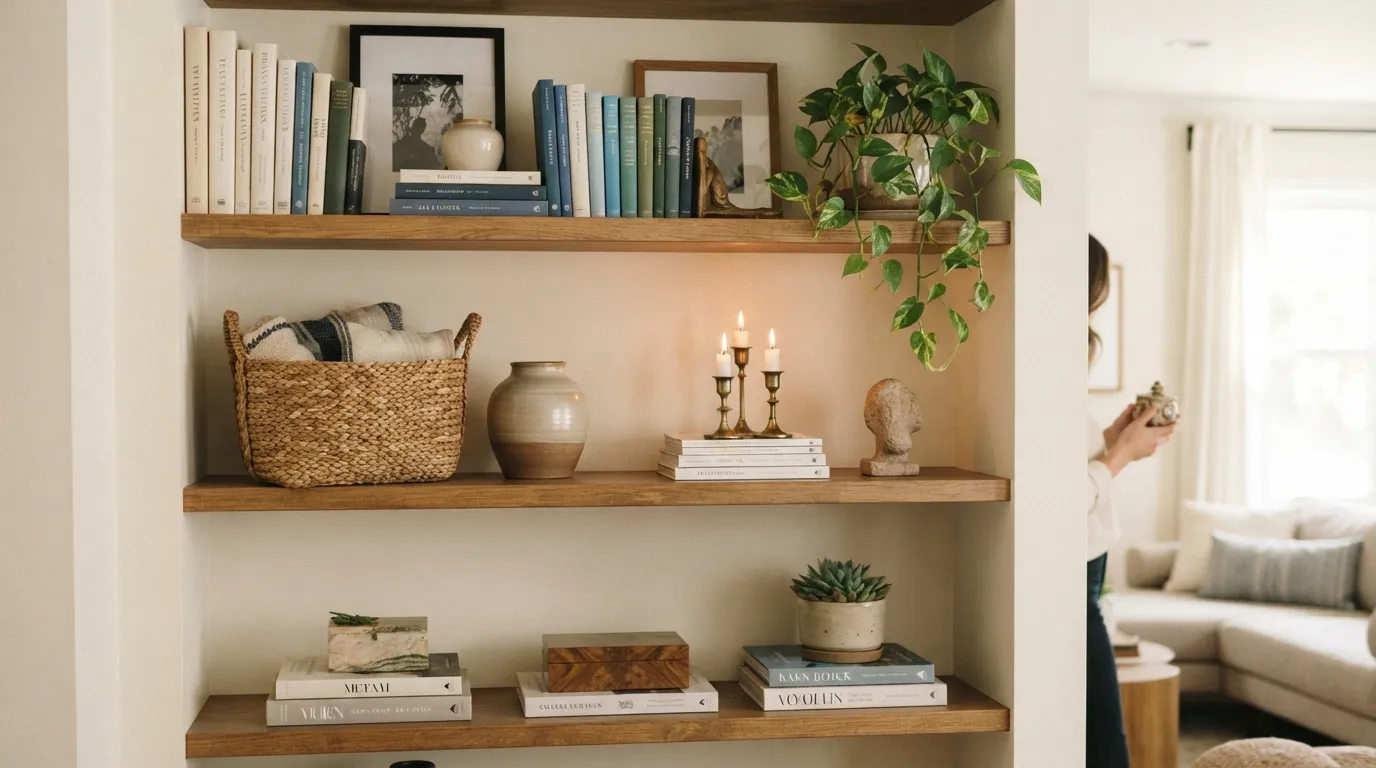
A balanced arrangement makes shelves feel inviting instead of crowded, even when displaying a variety of decorative pieces. Rather than lining everything in perfect rows, combine objects with different heights, shapes, and textures to create visual movement. Books, framed artwork, baskets, candles, and small plants work well together when thoughtfully spaced. If you are learning how to decorate shelves, focusing on balance instead of symmetry often produces a more relaxed and professionally styled appearance that feels comfortable in everyday living spaces.
One practical approach is arranging larger items first before filling remaining spaces with smaller accents. I’ve noticed this method helps prevent random placement and creates a stronger visual foundation. A common misconception is believing every shelf must look identical, but slight variation actually adds personality. Rotate decorative pieces occasionally to keep the display fresh without buying new items. Taking a few moments to view the arrangement from different angles can also reveal areas that need better spacing or improved proportion.
Layered Decor
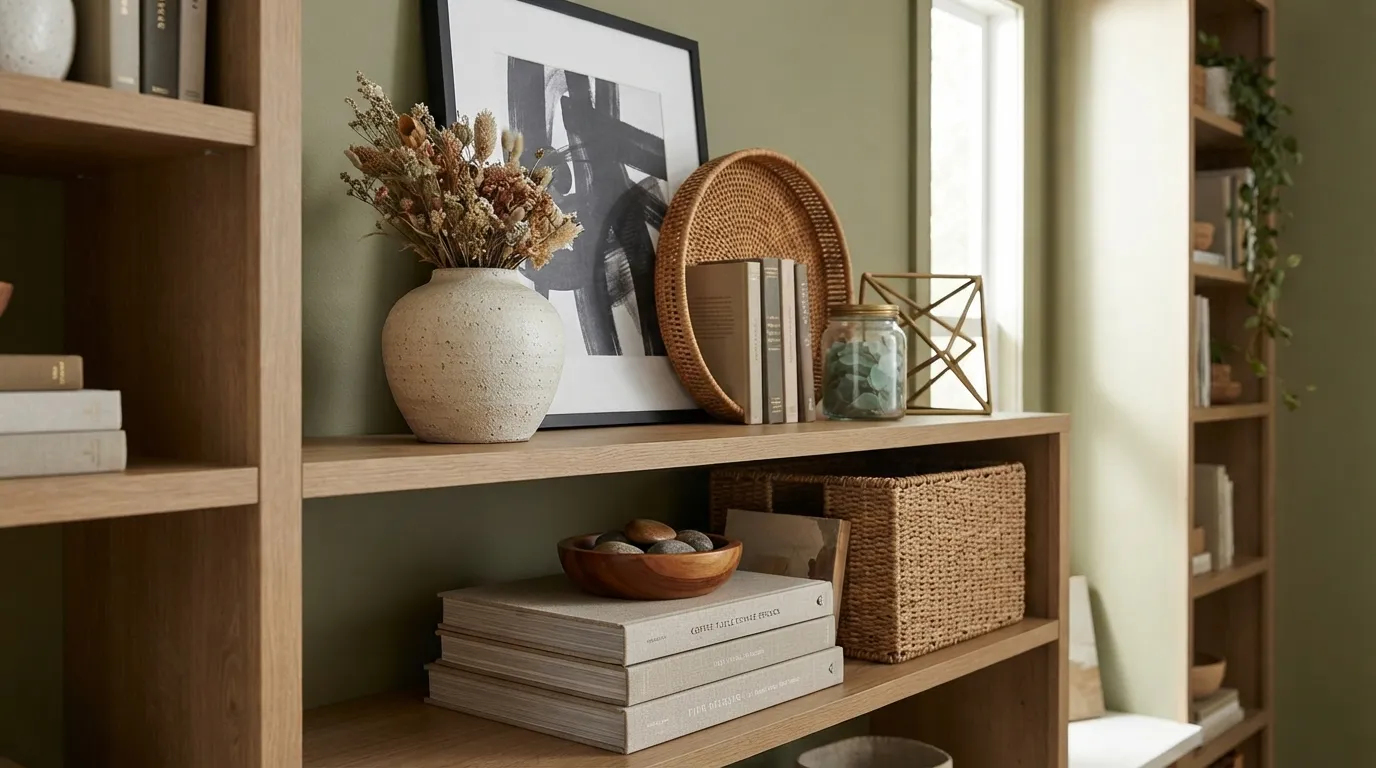
Layering transforms flat-looking shelves into displays with depth, making even simple decorations appear more interesting and thoughtfully arranged. Instead of placing every object in a single line, position artwork behind smaller accessories, stack books beneath decorative items, or place a vase slightly in front of a framed print. These overlapping elements create dimension without making the shelf feel messy. Mixing natural materials like wood, ceramic, glass, and woven baskets also introduces texture that makes the overall display feel warm and inviting.
Many professionals recommend limiting each shelf to a few layered focal points rather than filling every corner with decorations. I’ve found that combining contrasting textures often creates a richer look than relying on matching accessories alone. A common mistake people make is hiding beautiful items behind oversized decorations, reducing their impact. Leave enough visible space for each object to be appreciated while allowing the layers to guide the eye naturally across the arrangement, creating a comfortable and cohesive display.
Natural Elements
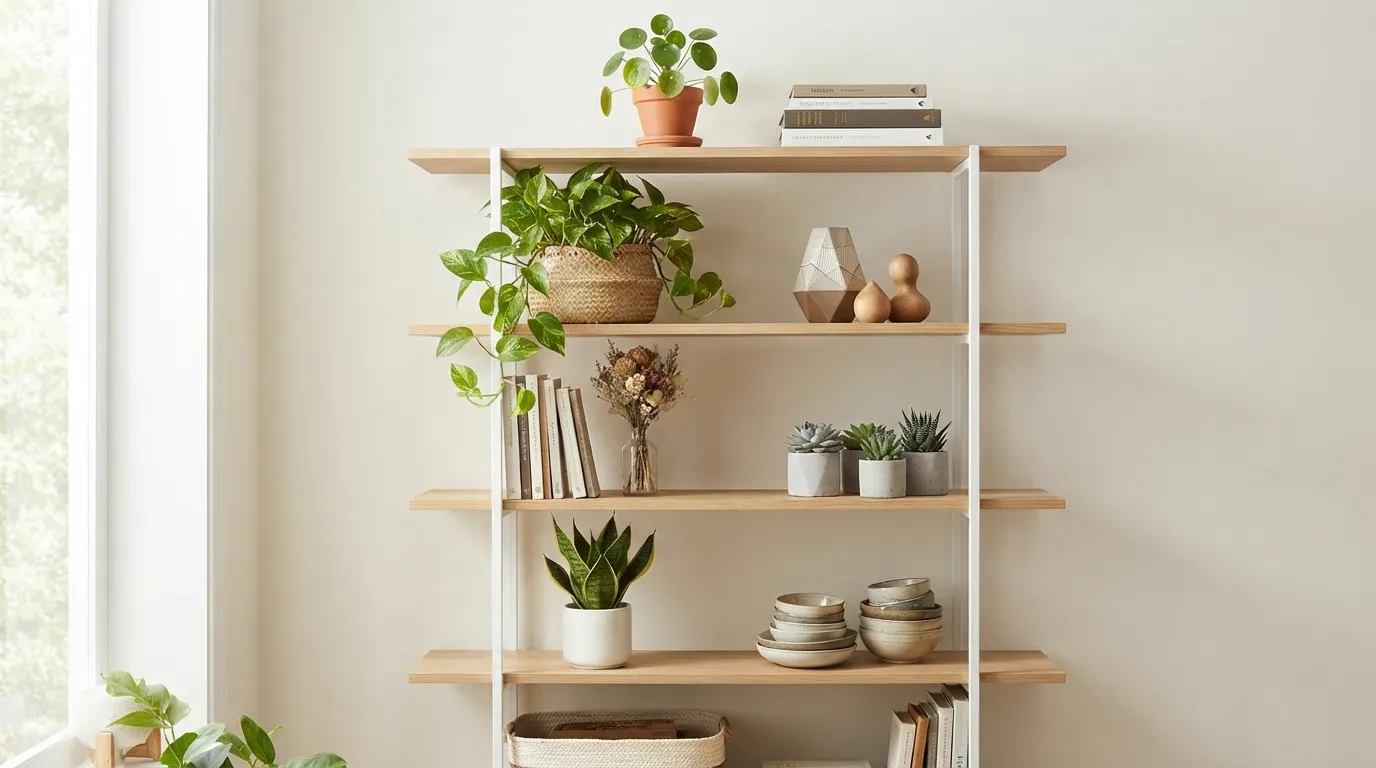
Natural elements bring warmth and life to shelves, making them feel more inviting and balanced. Small potted plants, dried flowers, branches, or natural wood accents introduce texture while creating a stronger connection to the outdoors. Even a single piece of greenery can soften shelves filled with books or decorative accessories. These organic touches work well in nearly every decorating style, from modern and minimalist to rustic and traditional, helping the overall display appear more relaxed and visually appealing without requiring major changes.
Many professionals recommend mixing living plants with natural materials instead of relying on artificial decorations alone. I’ve seen this method work well because varying textures create depth without adding unnecessary clutter. A common mistake people make is selecting oversized plants that overwhelm smaller shelves or block decorative items behind them. One practical approach is choosing compact varieties that thrive indoors, allowing you to enjoy fresh greenery while maintaining a balanced arrangement that remains easy to care for throughout the year.
Lighting Effects
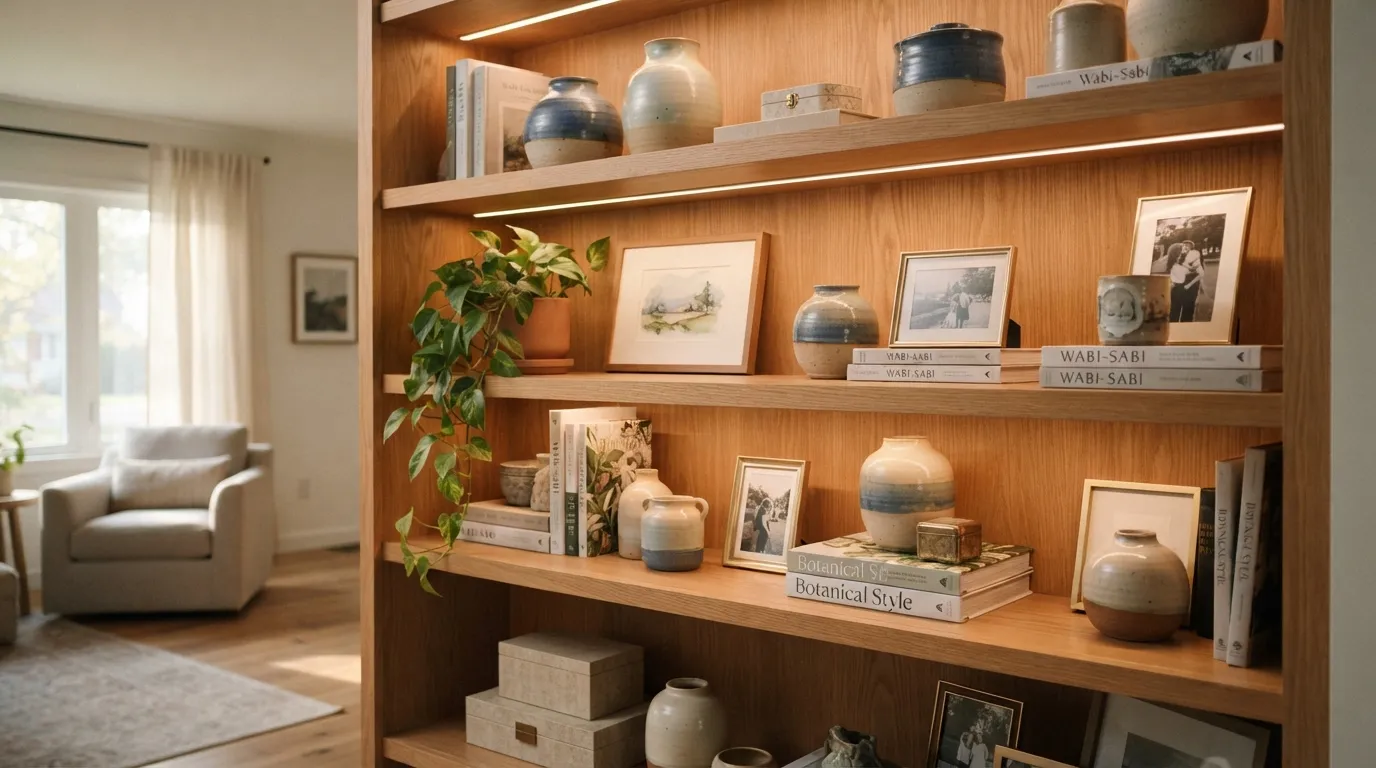
Lighting can completely change how shelves look, highlighting favorite objects while creating a cozy atmosphere throughout the room. Soft LED strip lights, rechargeable picture lights, or small table lamps draw attention to decorative displays without overpowering the space. Natural daylight also plays an important role by revealing colors and textures more accurately. Thoughtful lighting helps shelves become an attractive focal point during both daytime and evening hours, making decorative arrangements feel more dynamic and welcoming regardless of the room’s size.
One practical approach is testing lighting at different times of day before deciding on permanent placement. I’ve noticed that even subtle lighting adjustments can improve the overall appearance of a shelf display. A common misconception is believing brighter lighting always produces better results, but gentle illumination often creates a warmer and more comfortable atmosphere. Position lights to emphasize artwork, plants, or decorative collections while avoiding glare that distracts from the carefully arranged pieces and reduces their visual impact.
Maintenance Tips
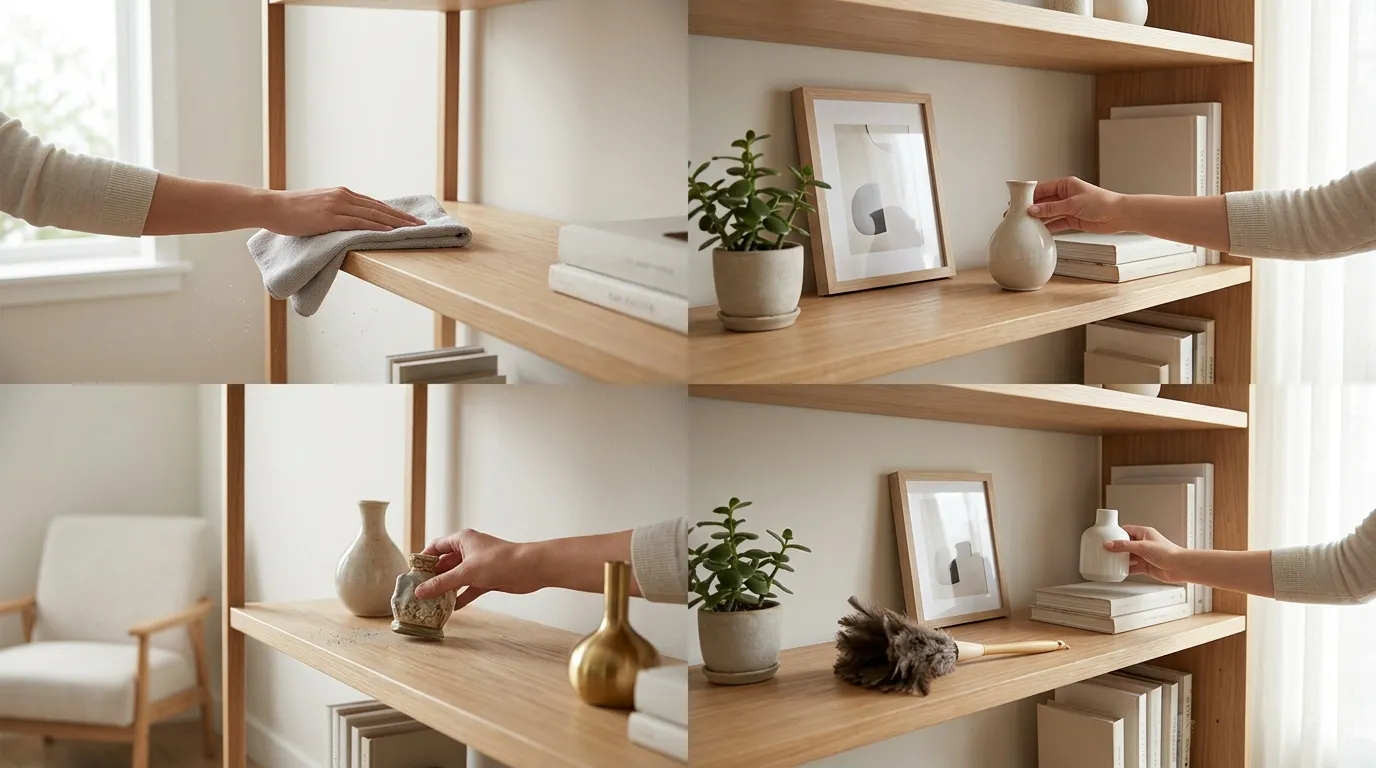
Beautiful shelves stay attractive when they receive consistent care instead of occasional major reorganizing. Dusting decorative items, wiping shelf surfaces, and removing objects that no longer fit the overall style help maintain a polished appearance. Small maintenance routines also prevent clutter from gradually building over time. Whether you are updating existing décor or learning how to decorate shelves for the first time, keeping displays organized ensures every decorative piece continues contributing to a clean and welcoming living space.
In my experience, setting aside just a few minutes each week makes shelf maintenance much easier than tackling months of accumulated clutter. Many professionals recommend following a simple rule: whenever a new decorative item is added, consider removing another to maintain balance. A common mistake people make is ignoring small adjustments until shelves become overcrowded. Regularly evaluating the arrangement allows you to keep displays functional, visually appealing, and aligned with your evolving decorating style without requiring a complete redesign.
Common Mistakes
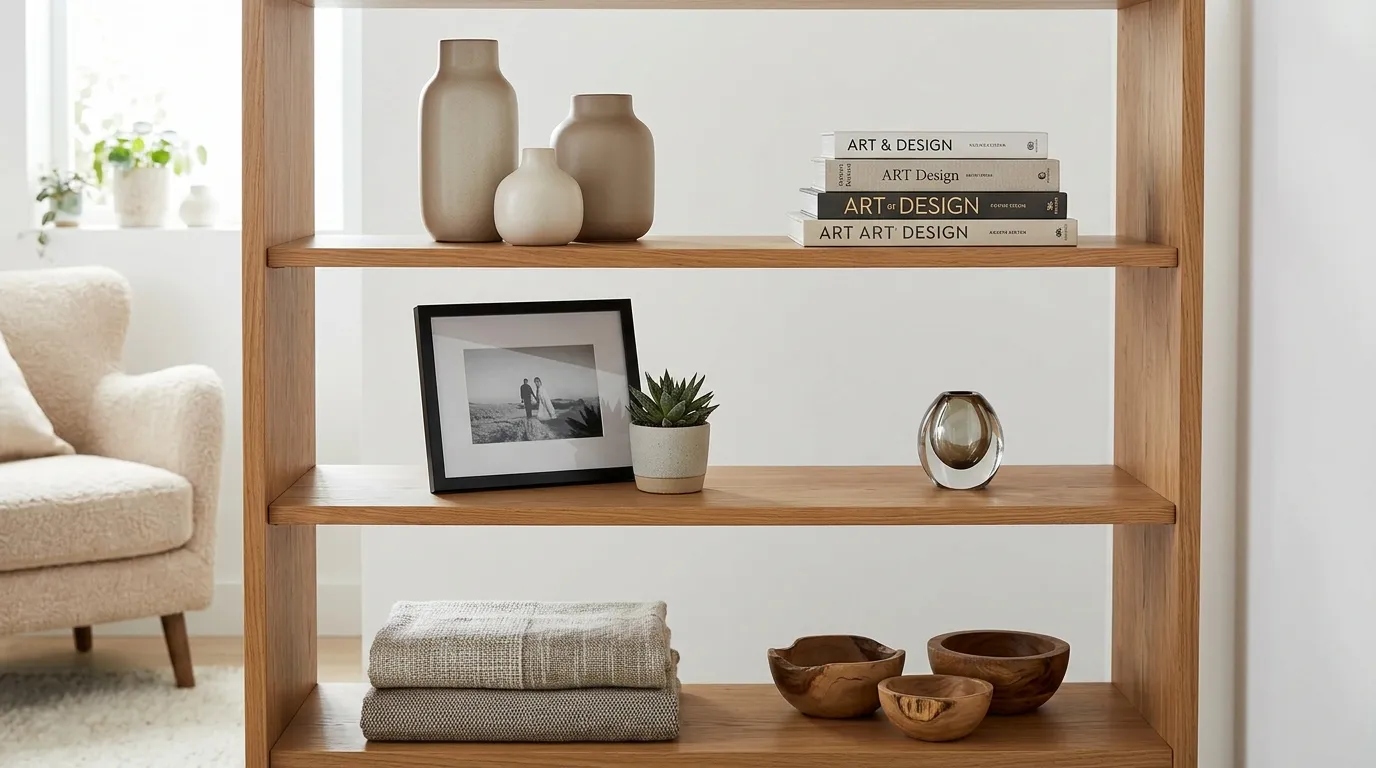
Even thoughtfully chosen decorations can lose their impact when common styling mistakes go unnoticed. Overcrowded shelves often make beautiful pieces blend together, while uneven spacing creates a cluttered appearance. Another frequent issue is displaying too many items of the same size, which reduces visual interest. Taking time to evaluate the arrangement from a distance helps reveal areas that need adjustment. Small changes in spacing, height, or grouping often improve the overall display more effectively than purchasing additional decorative accessories.
I’ve found that removing a few objects usually improves shelf styling faster than adding new ones. Many professionals recommend editing displays with fresh eyes after leaving the room for a while. A common misconception is believing every empty space must be filled, but negative space is an important design element. It allows favorite pieces to stand out while creating a calmer appearance. Regularly reviewing your shelves also helps identify decorations that no longer match your style or serve a meaningful purpose.
Budget-Friendly Ideas
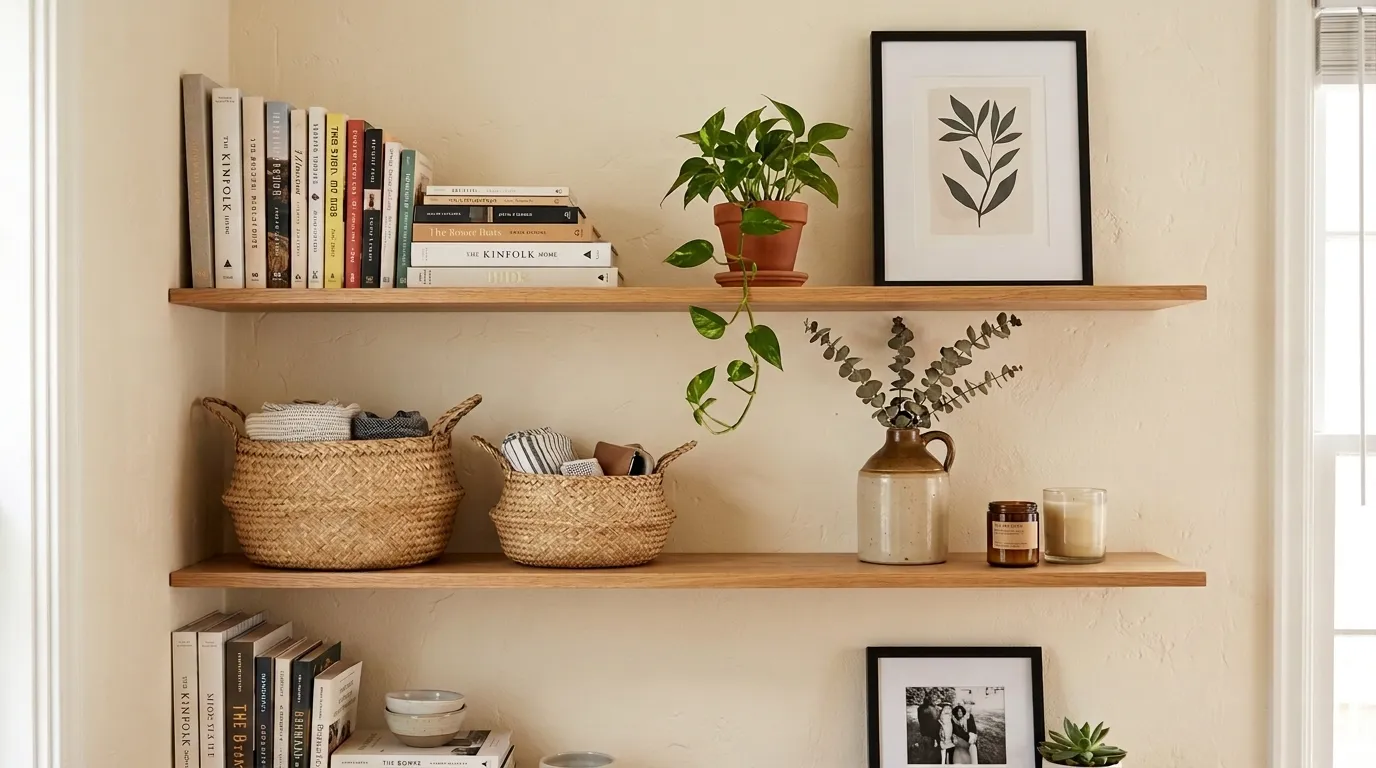
Creating attractive shelves does not require an expensive decorating budget. Many stylish arrangements combine everyday household items with a few carefully selected accents. Stacked books, woven baskets, candles, framed prints, and small plants can produce a polished appearance without significant cost. Rearranging existing décor from different rooms is another simple way to refresh shelves. This approach encourages creativity while helping homeowners discover new combinations that feel personal, balanced, and visually appealing without purchasing entirely new collections.
One practical approach is shopping your own home before visiting a store. I’ve noticed that objects often look completely different when displayed in a new setting or paired with different accessories. A common mistake people make is buying many inexpensive decorations without a clear plan, resulting in clutter rather than cohesion. Instead, invest gradually in versatile pieces that complement multiple decorating styles. Over time, this creates a collection that remains useful as your tastes and home décor evolve.
Personal Style
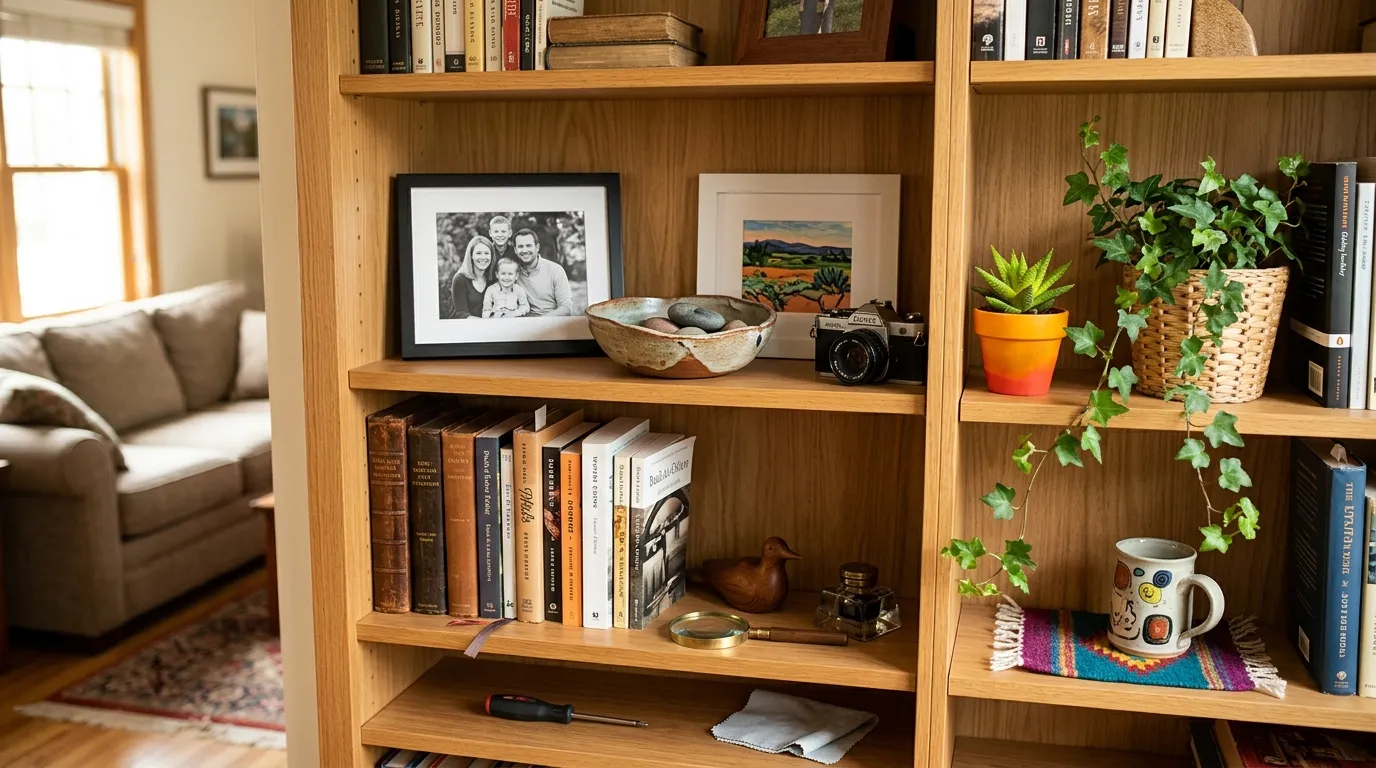
The most memorable shelf displays reflect the people who live in the home rather than copying a picture exactly. Design inspiration can provide helpful ideas, but adapting those concepts to fit your preferences creates a more authentic result. Whether your style is modern, farmhouse, coastal, traditional, or eclectic, consistency matters more than perfection. Choosing decorations that hold personal meaning ensures the arrangement remains enjoyable long after popular trends have changed, making the space feel comfortable and genuinely welcoming every day.
In my experience, the best decorating decisions come from experimenting with different layouts instead of expecting perfection on the first attempt. Many professionals recommend making gradual adjustments while living with the arrangement for a few days before changing it again. This process helps you notice what feels balanced and functional in everyday life. As your interests evolve, your shelves can evolve as well, creating displays that remain fresh, meaningful, and uniquely suited to your home.
Display Proportions
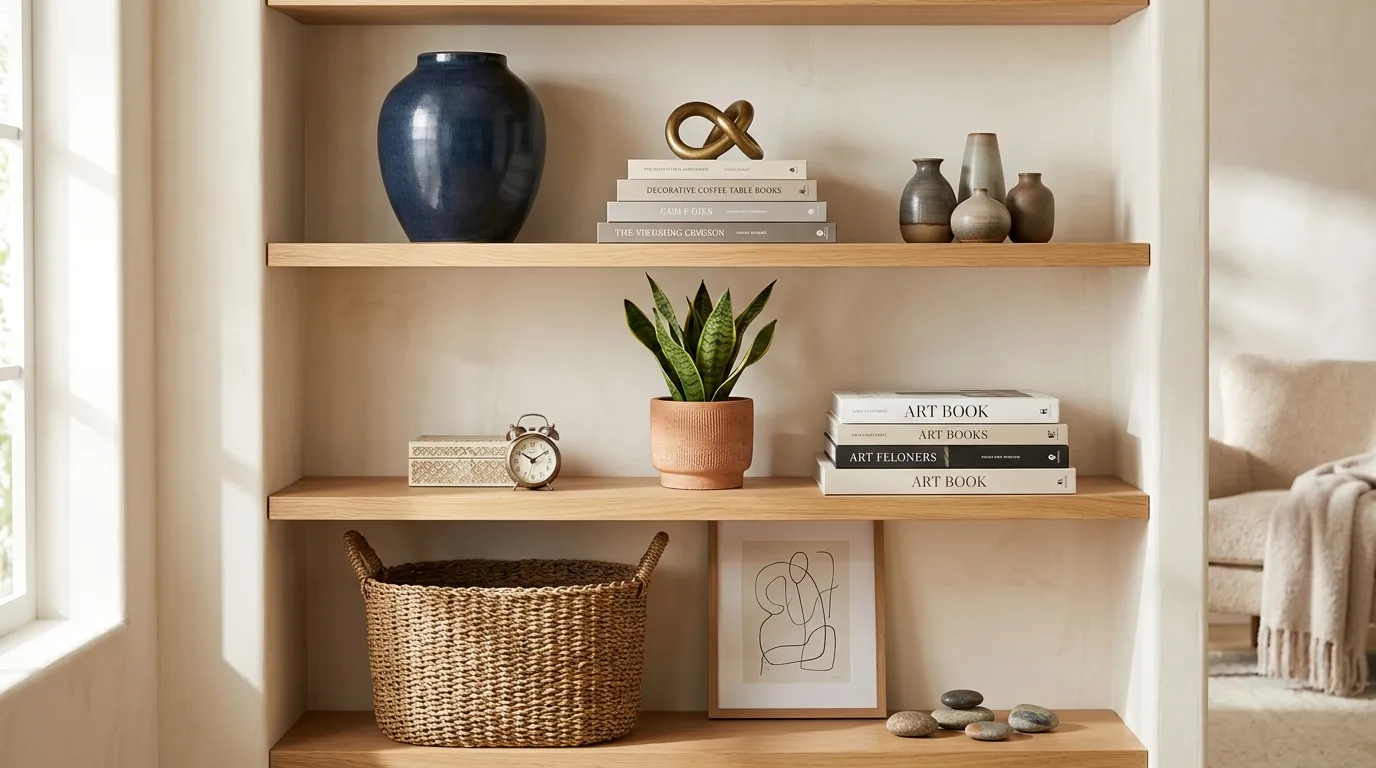
Proportion is one of the most important principles behind attractive shelf styling because it determines how each object relates to the others. Oversized decorations can overwhelm smaller accessories, while tiny pieces may disappear beside large books or baskets. Creating variety in scale keeps the arrangement visually engaging without feeling chaotic. Placing one or two larger items first establishes a strong foundation, making it easier to position medium and smaller decorations around them while maintaining a balanced and welcoming overall appearance.
Many professionals recommend stepping back several feet to evaluate proportions instead of making decisions from up close. I’ve found this simple habit quickly reveals whether certain pieces dominate the arrangement or seem lost among surrounding décor. A common mistake people make is displaying several objects with identical sizes, creating a flat appearance. Mixing heights, widths, and shapes introduces natural rhythm while allowing every decorative element to contribute to a cohesive and visually pleasing shelf display.
Open Space
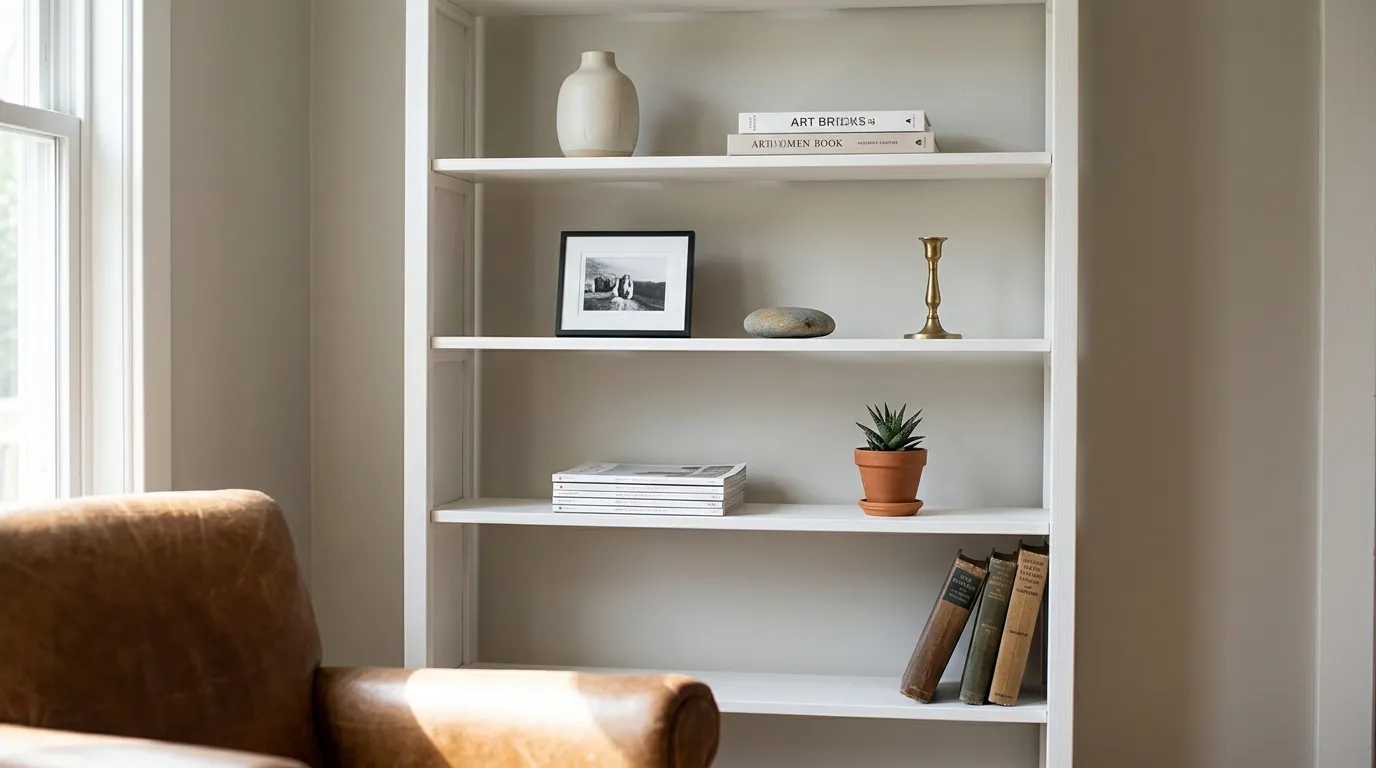
Open space is just as valuable as the decorative pieces themselves because it gives the eye a place to rest. Thoughtfully leaving areas empty helps prevent shelves from appearing crowded while drawing greater attention to meaningful objects. This design principle creates a calmer and more organized atmosphere, making individual decorations easier to appreciate. Instead of measuring success by how many accessories fit on a shelf, focus on creating comfortable spacing that supports both visual balance and everyday practicality.
One practical approach is removing one or two items whenever the arrangement begins to feel busy. I’ve noticed that displays often become stronger after a small amount of editing rather than additional decorating. A common misconception is that empty areas look unfinished, but intentional negative space actually improves the overall composition. Allowing breathing room between objects creates contrast, emphasizes focal points, and helps shelves maintain an elegant appearance even as decorative collections change over time.
Final Styling

The final styling stage brings every decorating decision together, ensuring the shelves look cohesive while remaining practical for daily use. Before considering the arrangement complete, examine it from different viewpoints and under various lighting conditions. Small adjustments to spacing, height, or object placement often create noticeable improvements without requiring new decorations. Taking a little extra time to refine the display helps achieve a polished result that complements the surrounding room while remaining comfortable and easy to maintain.
In my experience, the most successful shelf displays evolve gradually instead of being completed in a single afternoon. Many professionals recommend living with an arrangement for several days before making additional changes because fresh perspectives often reveal simple improvements. Rather than chasing perfection, focus on creating a display that reflects your lifestyle and feels enjoyable every day. Thoughtful refinement allows your shelves to remain attractive, functional, and adaptable as your decorating preferences naturally develop over time.
Your Next Step
Decorating shelves is about more than arranging attractive objects it’s about creating displays that combine function, balance, and personal style. By applying the techniques covered in this guide, you can confidently choose meaningful décor, improve proportions, use color and texture effectively, and maintain an organized display that complements your home. Whether you’re just starting or refining an existing arrangement, how to decorate shelves becomes much easier when you focus on thoughtful design instead of filling every space. I’ve found that even small adjustments can transform an entire room over time. Keep experimenting, trust your preferences, and continue exploring new decorating ideas to create a home that feels both stylish and uniquely yours.
Emma Williams
Emma Williams is an interior design expert and decor editor at Lady Home Decor. She specializes in modern, cozy, and functional home styling, helping readers discover inspiring decorating ideas that are easy to recreate. Her work focuses on timeless design, practical solutions, and the latest home decor trends.