21 Beautiful Ways to Decorate a Lantern with Fresh Greenery

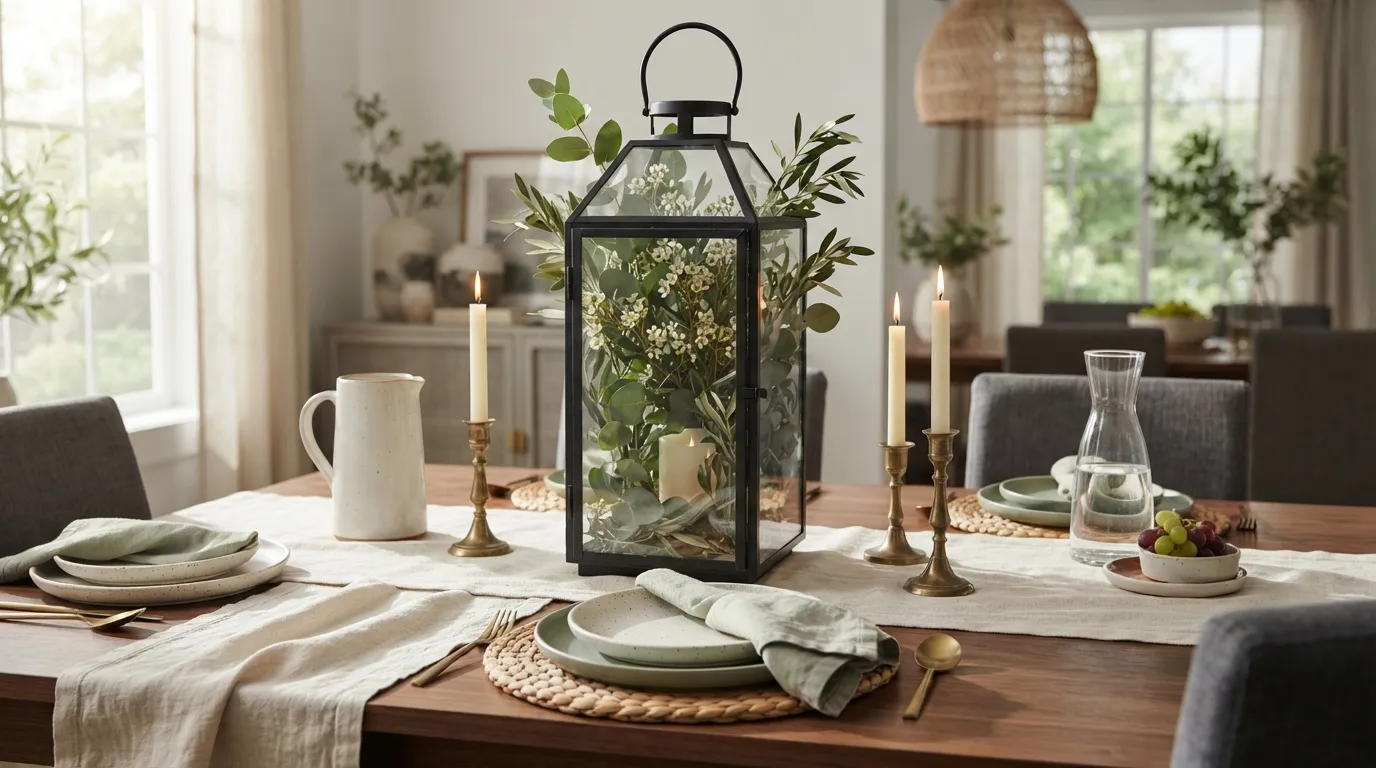
Fresh greenery can turn a simple lantern into a warm focal point for your table. If you’re wondering how to decorate a lantern with greenery, start with the lantern’s shape, then choose foliage that adds texture without hiding the glow. Eucalyptus, olive branches, fern fronds, herbs, and small leafy stems all work beautifully.
The best displays feel collected rather than crowded. You can create a relaxed centerpiece with a few branches, add flowers for softness, or keep the look green and simple for everyday meals. These ideas give you easy ways to style a lantern for family dinners, seasonal gatherings, brunch tables, and quiet evenings at home.
1. Frame a Lantern with Eucalyptus Branches
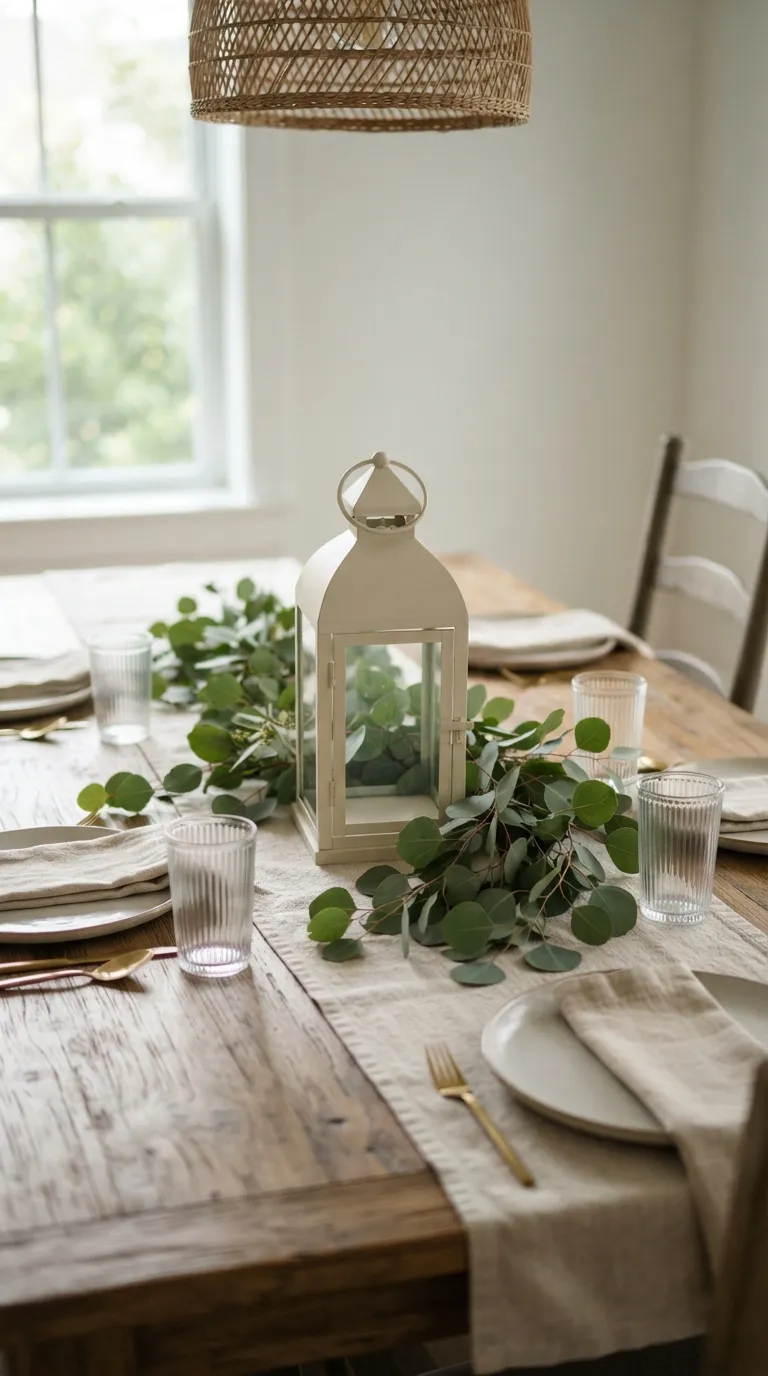
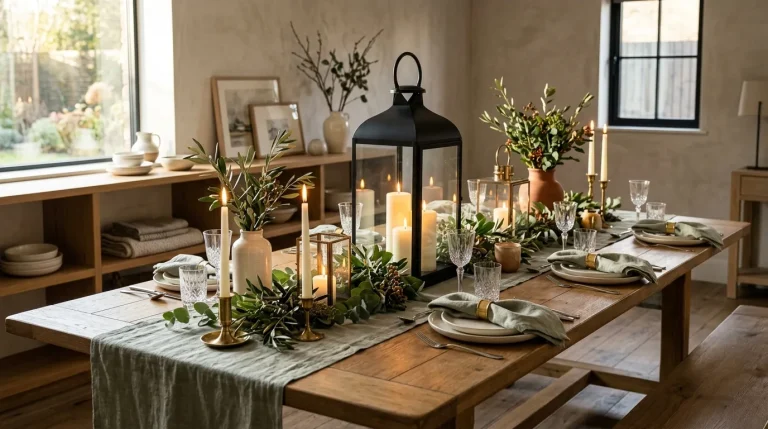
Eucalyptus makes an easy starting point when you want a fresh lantern centerpiece. Place a few longer branches around the lantern instead of stuffing foliage inside it, so the metal frame and warm candlelight stay visible. The loose shape gives the table a soft, organic feel.
For a fuller arrangement, mix rounded eucalyptus leaves with a few longer stems that trail across the runner. Keep the greenery low if your table is used for conversation, especially when several people sit across from one another. This simple approach works well for everyday dining and relaxed weekend hosting.
2. Tuck Olive Branches Around a Glass Lantern
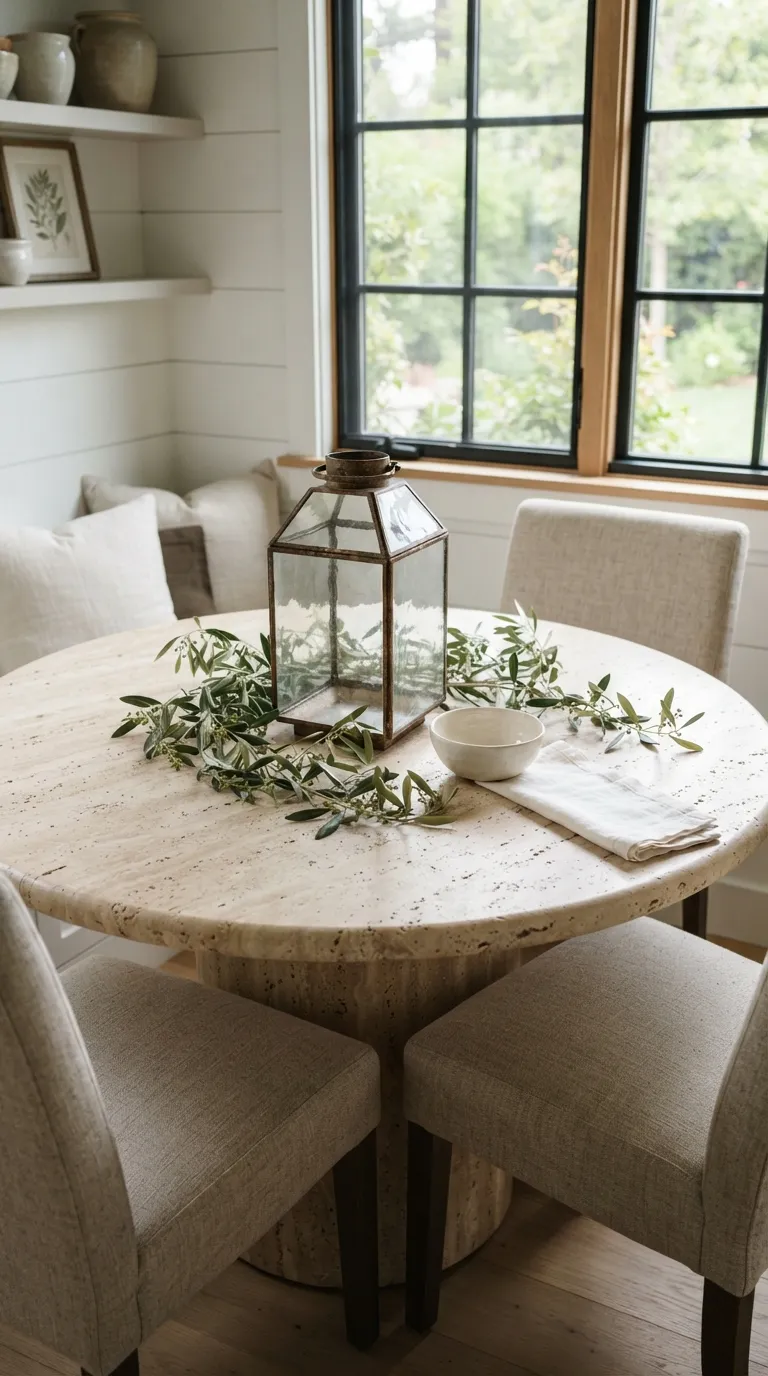
Olive branches bring a slightly Mediterranean look to lantern decorating. Their narrow leaves create a light, airy arrangement, so you don’t need many stems to make the centerpiece feel finished. Tuck the branches around the base and let a few leaves curve toward the table edge.
Try this idea with a glass lantern when you want the candle to remain the star. The transparent panels catch daylight beautifully, while the muted green foliage adds contrast against stone or light wood. A round table also benefits from the uneven branch shape because it keeps the centerpiece from feeling too formal.
3. Fill a Lantern with Fern Fronds
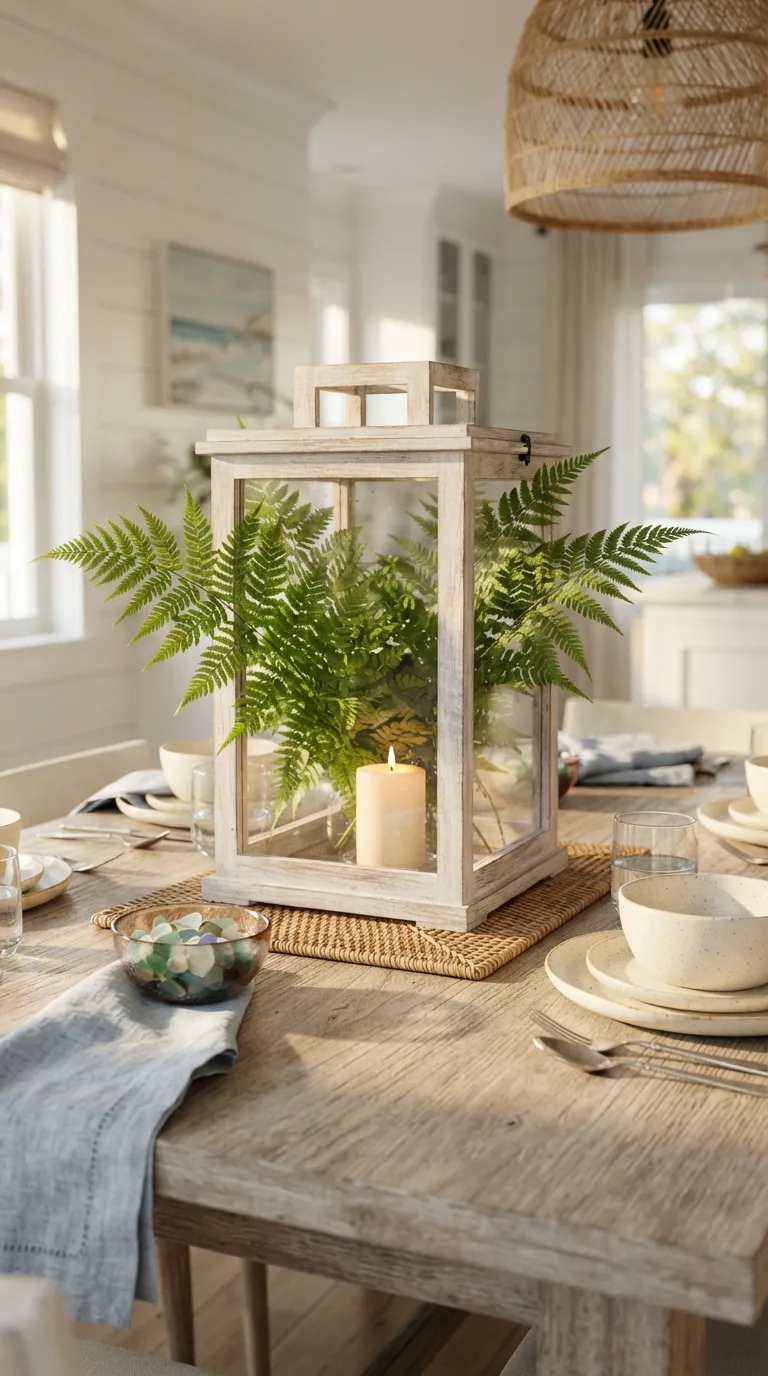
Fern fronds give a lantern a softer, more relaxed shape. Choose fresh, sturdy fronds and arrange them loosely inside a wide lantern, keeping the center open for a pillar candle or battery candle. The feathery leaves create plenty of texture without needing flowers.
This idea suits coastal, cottage, and casual dining rooms, especially when the table has pale wood or woven accents. Trim the stems so the foliage stays contained rather than pressing against the lantern roof. For a low-maintenance option, quality faux fern stems can give you a similar leafy shape without daily care.
4. Add Rosemary for a Fresh Kitchen Table Look
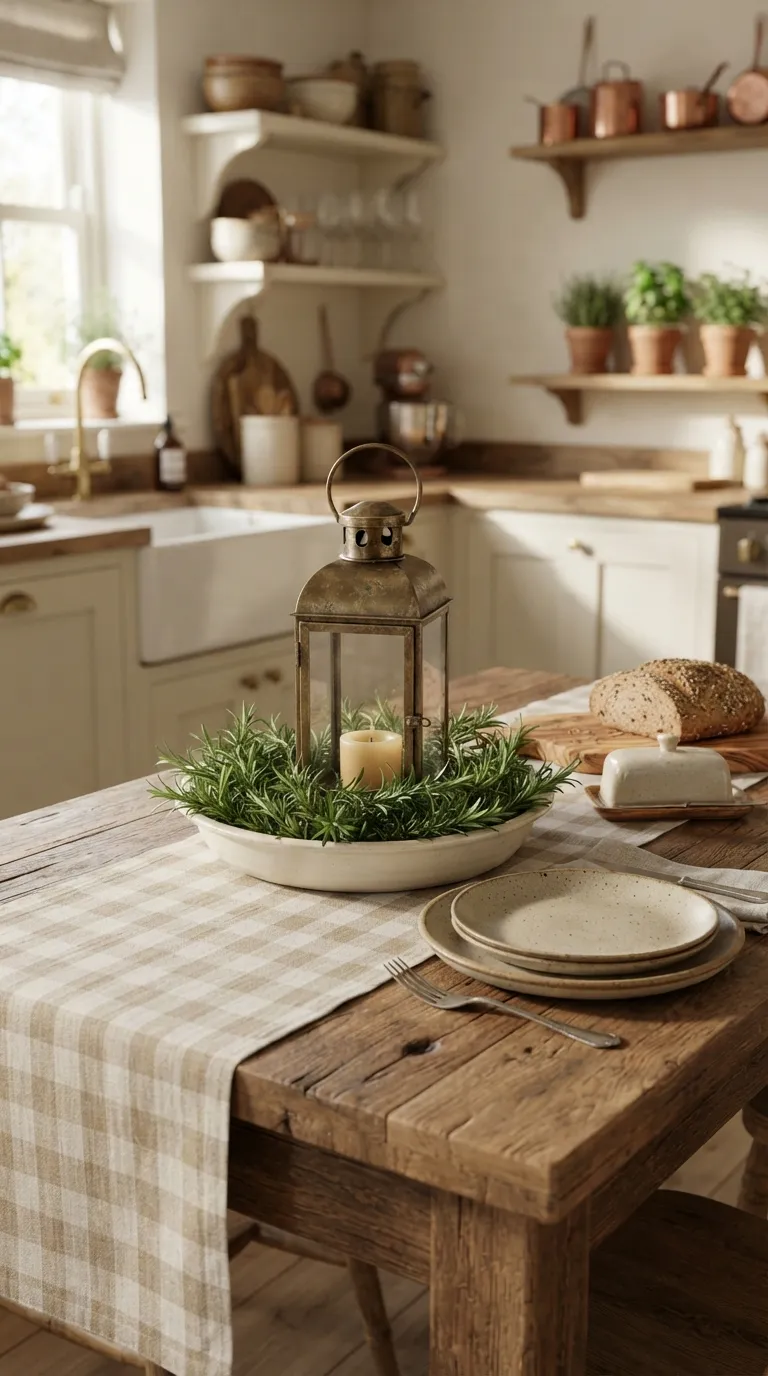
Rosemary adds a crisp herbal touch to a kitchen table. Arrange short sprigs around the base of a lantern, or place a few stems inside a small dish beneath the candle. Its fine leaves contrast nicely with chunky metal frames and rustic wood.
This idea works especially well for breakfast nooks and casual kitchen tables. The greenery feels useful and natural rather than overly decorative. Pair rosemary with cream ceramics and warm wood for a simple table setting that feels right at home.
5. Create a Cottage Lantern with Ivy
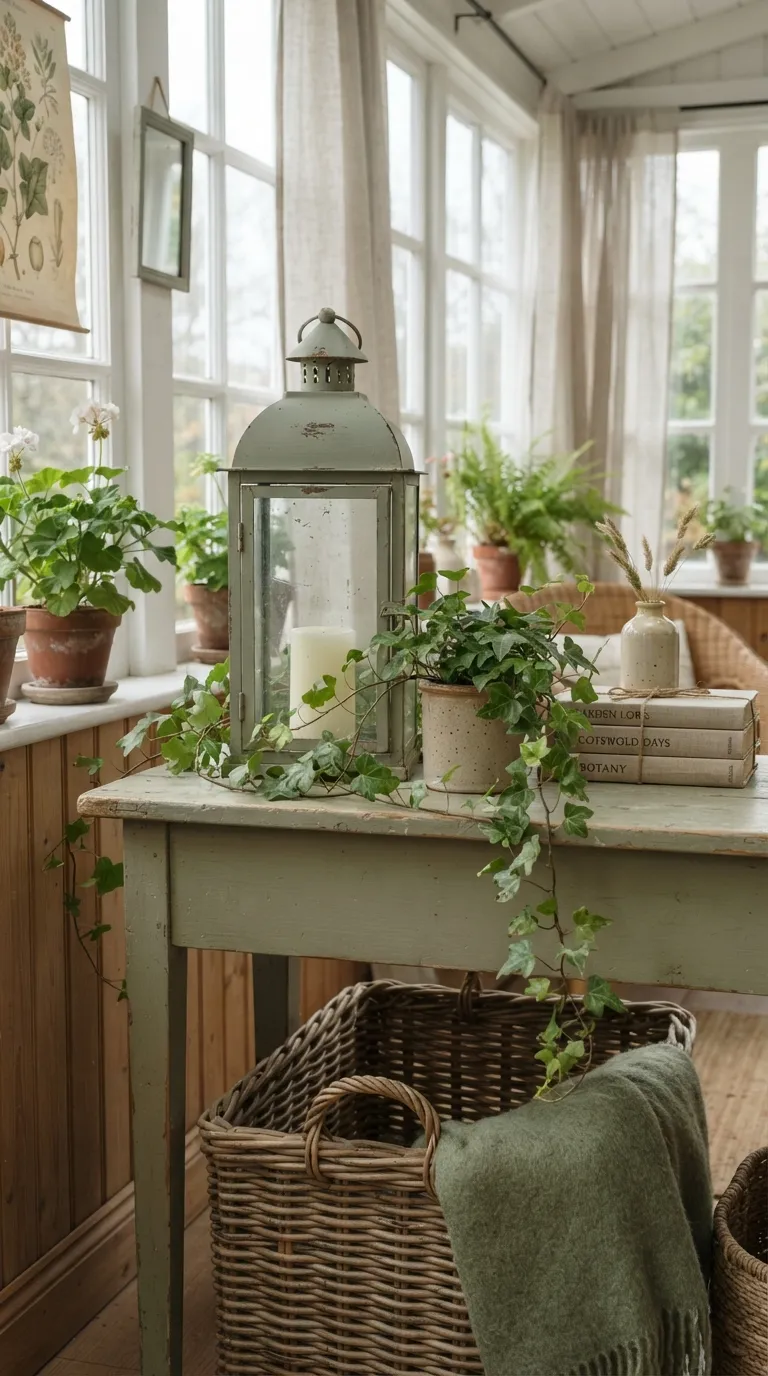
Ivy gives lantern decor a charming cottage feel because its stems naturally curve and trail. Place the lantern beside a small planter, then guide a few ivy stems around the base for a relaxed arrangement. Keep the foliage loose so the lantern still has plenty of visual space.
A console table, entryway shelf, or sunroom table makes a great home for this setup. Distressed finishes pair nicely with the soft green leaves, while a simple candle keeps the display from feeling busy. Trim the ivy regularly so its stems stay neat around the lantern.
6. Mix Greenery with Small White Flowers
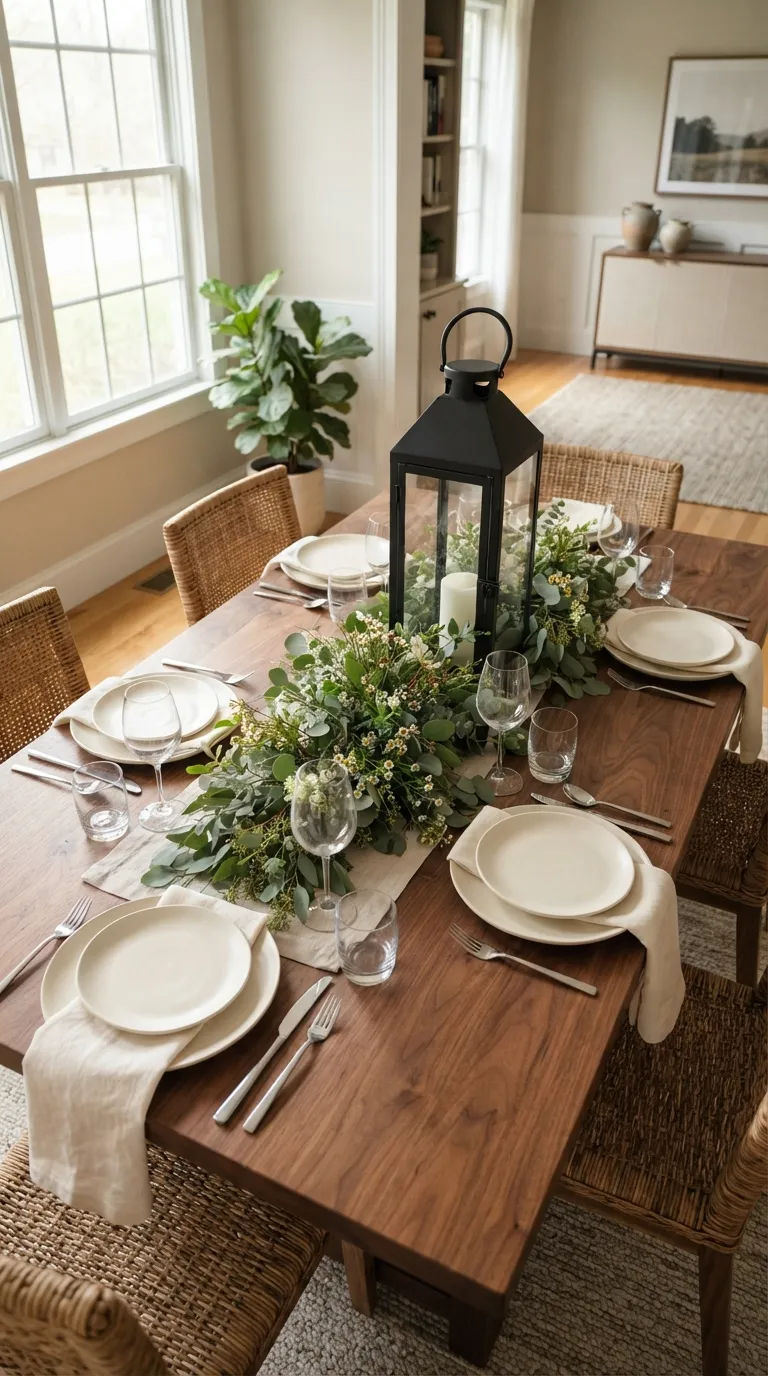
Small white flowers can soften a greenery-heavy lantern display without making it look like a formal bouquet. Tuck a few stems between eucalyptus, olive branches, or other leafy foliage. Keep the flowers scattered rather than grouped tightly for a natural garden effect.
This combination suits dining tables, sideboards, and coffee tables when you want a little extra color contrast. White blooms stand out against dark lantern frames and rich wood surfaces. For a dinner setting, keep the arrangement low enough that guests can see across the table comfortably.
7. Style a Lantern with Magnolia Leaves
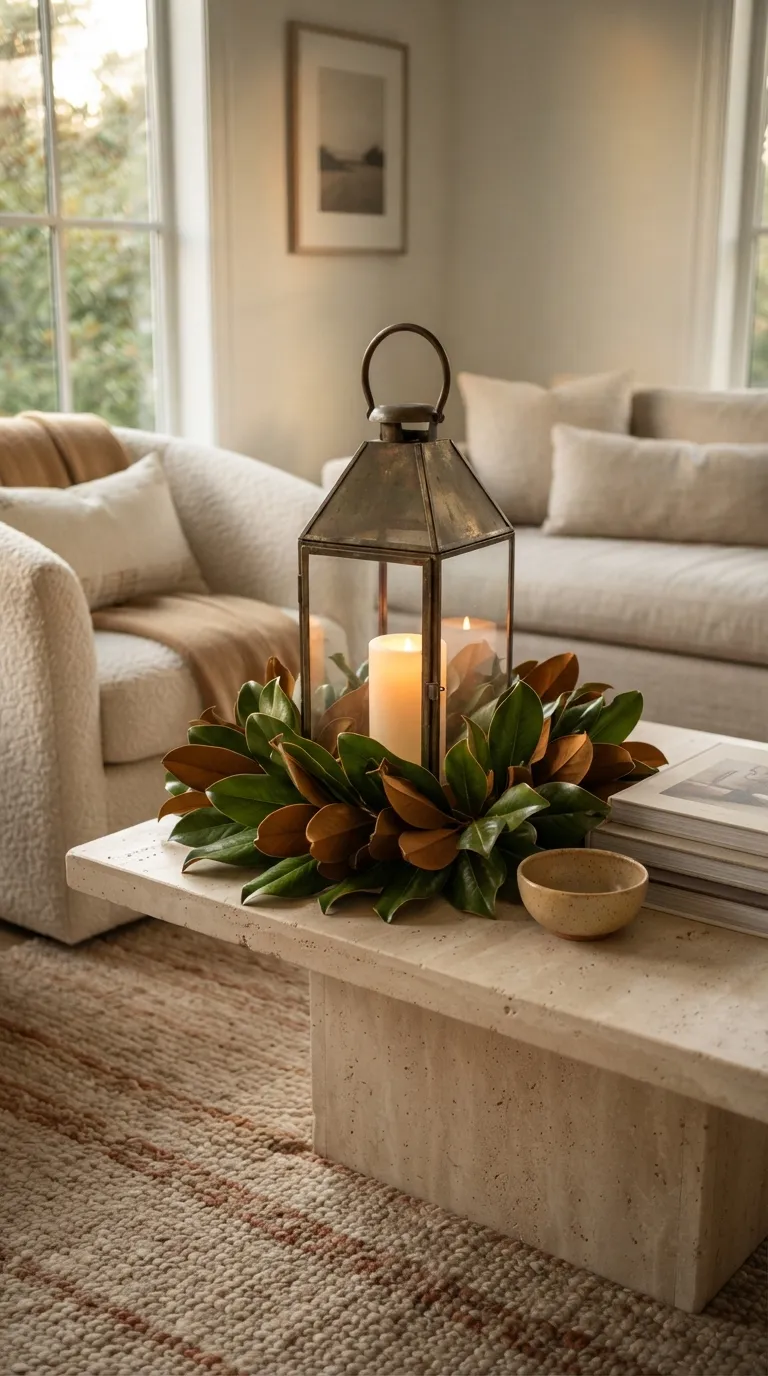
Magnolia leaves have a broad shape that gives lantern decor a fuller look with just a few stems. Arrange them around the lantern rather than packing every inch with foliage. The glossy leaves create a lovely contrast against matte metal and natural stone.
Use this idea when a room already has plenty of texture and you want the centerpiece to stay simple. The deep green leaves work especially well with bronze, cream, and warm brown finishes. Add one sturdy candle inside the lantern for a calm evening display.
8. Surround the Lantern with Fresh Boxwood
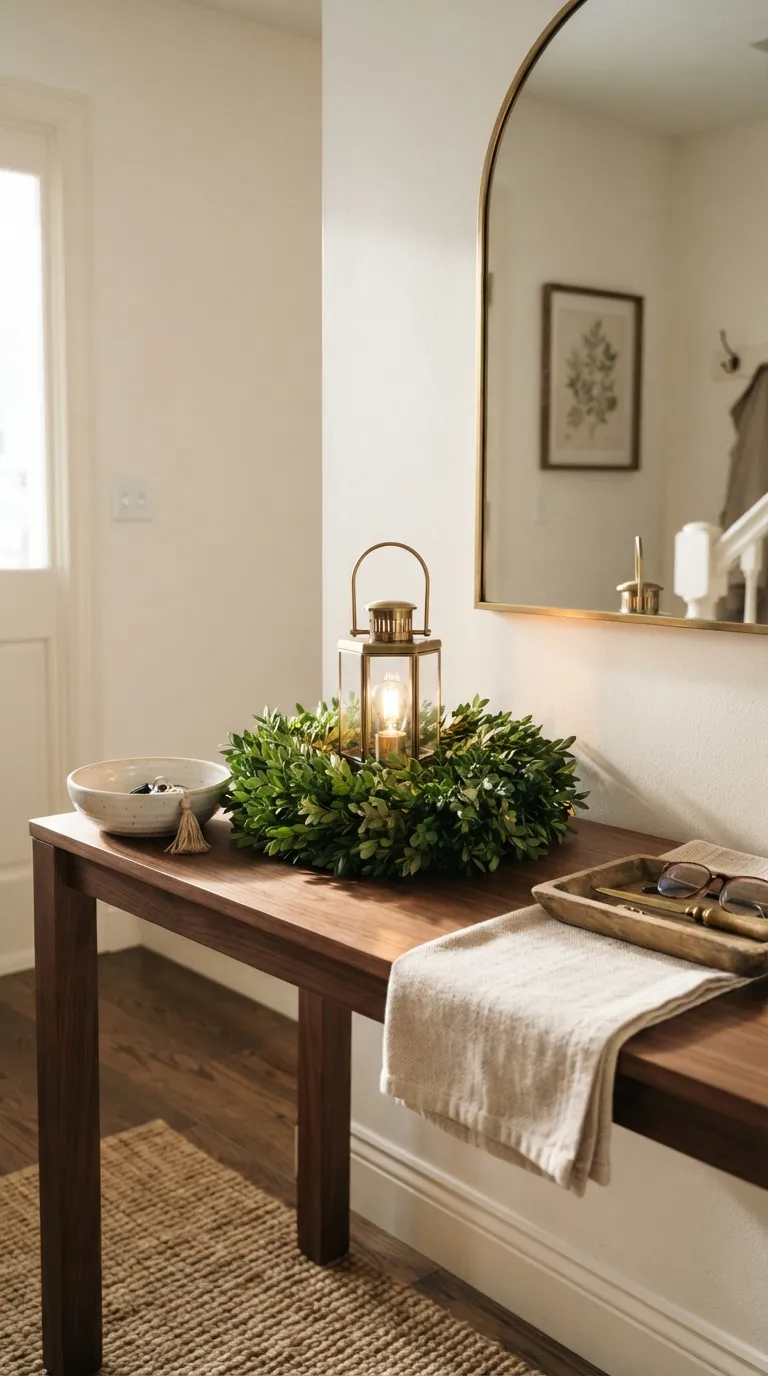
Boxwood is a good pick when you prefer tidy greenery around a lantern. Its small leaves create a dense shape that works nicely on narrow consoles and entryway tables. Gather several short sprigs into a low cluster, leaving the lantern’s front panel clear.
This style has a classic feel but can still suit a modern home. Pair boxwood with brass, walnut, or warm white finishes for a polished tabletop display. Because the foliage stays compact, it’s also useful when your surface has limited room.
9. Wrap a Lantern with Trailing Green Vines
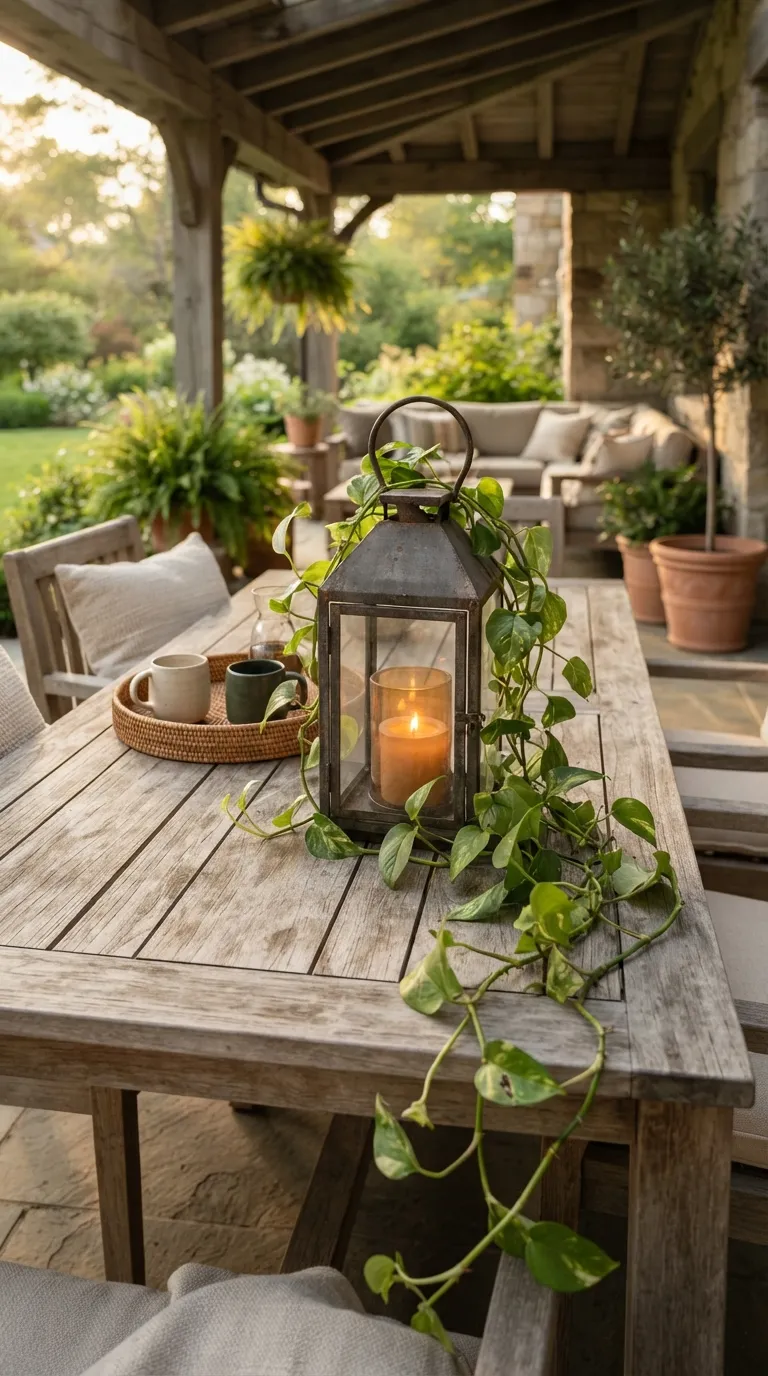
Trailing vines can make a lantern feel relaxed and slightly wild. Choose flexible stems and wind them gently around the outside frame, allowing a few leaves to fall toward the tabletop. Don’t pull the vines too tightly, or the display may look stiff.
This approach works beautifully on covered patios, porches, and garden tables. Use a weather-resistant lantern outdoors and keep fresh greenery away from any real flame. Battery candles make the display easier to maintain when vines sit close to the light source.
10. Pair Cedar Sprigs with a Rustic Lantern
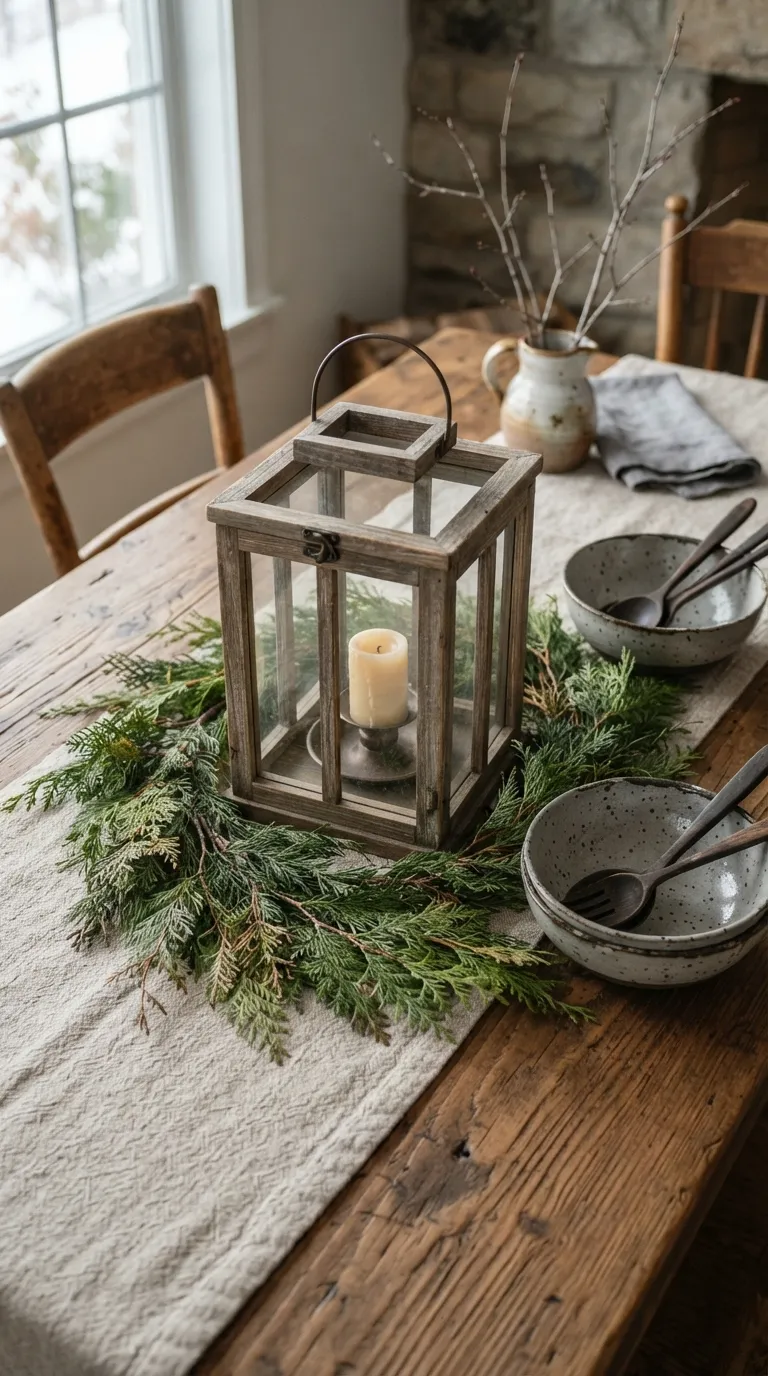
Cedar sprigs give a lantern a cozy woodland character without needing many extra pieces. Arrange the branches in a loose crescent around the base, then place a small candle inside the lantern. Keep some of the wood stems visible for a more natural look.
This setup fits farmhouse dining rooms, cabins, and rustic breakfast spaces. Combine cedar with pine wood, cream pottery, and aged metal for a warm table setting. Fresh branches may dry over time, so replace them when the needles become brittle.
11. Use Fern and Moss for a Woodland Display
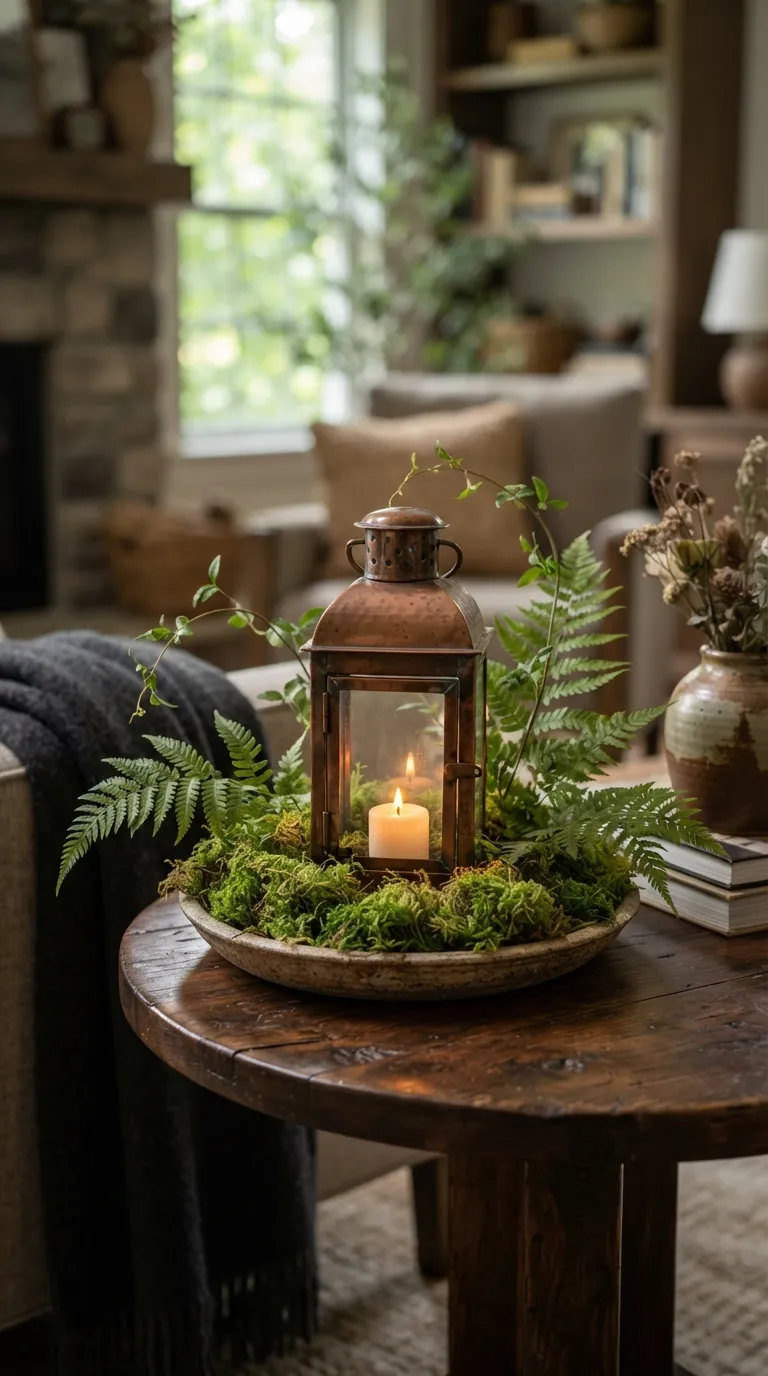
Fern and moss create a woodland-inspired lantern arrangement with plenty of natural texture. Place moss in a shallow dish beneath or beside the lantern, then add a few fern fronds that curve upward and outward. The low layers keep the display grounded without making it bulky.
Use this idea on a side table, bookshelf, or quiet living room corner. Dark wood and copper finishes give the greenery a rich backdrop. If you’re using real moss, keep it in a suitable container so moisture doesn’t reach the lantern or furniture.
12. Decorate a Lantern with Mint and Herb Sprigs
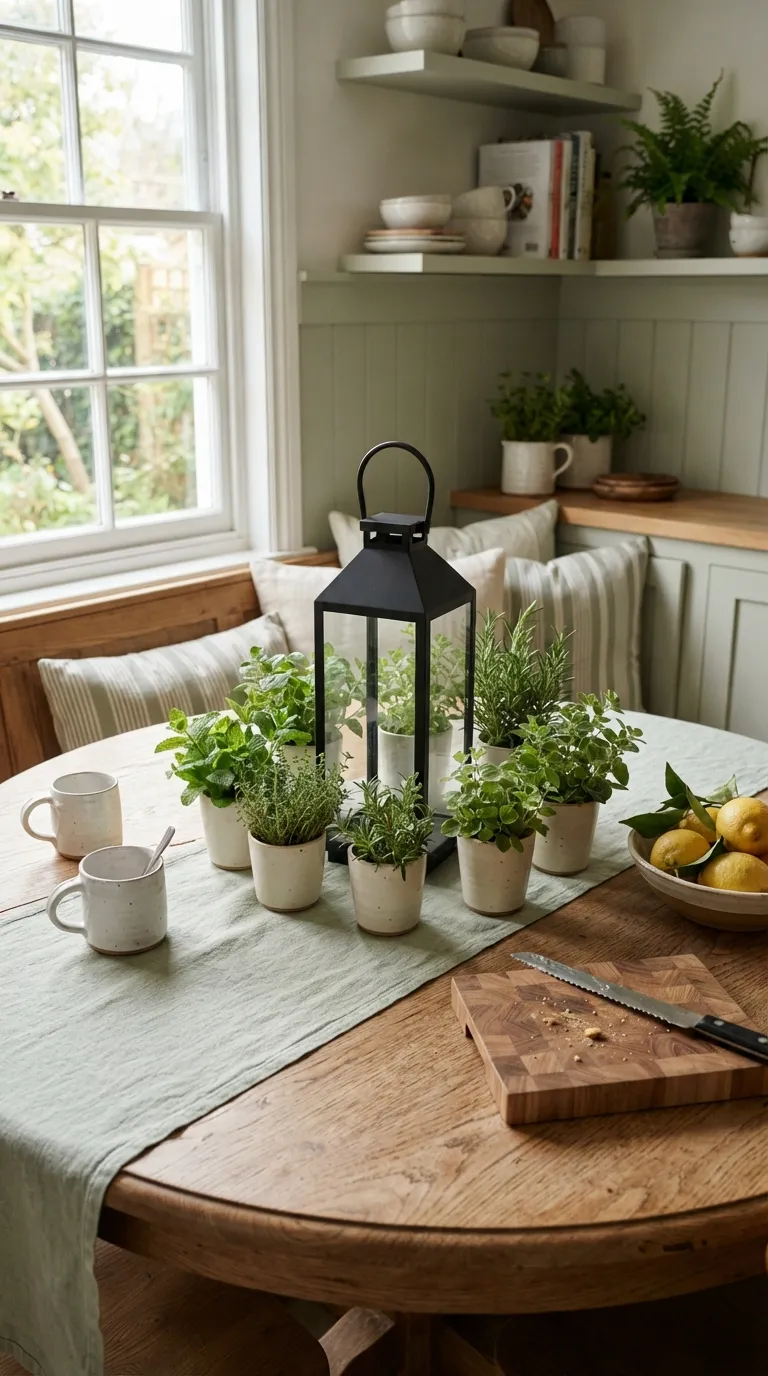
Fresh herbs bring a clean, kitchen-friendly look to lantern decor. Mint, thyme, and similar leafy stems can sit in tiny ceramic cups around the lantern, creating a layered centerpiece without crowding the table. Their different leaf shapes make the arrangement feel collected and casual.
This idea is especially useful for a breakfast nook or kitchen island. Choose containers that are heavy enough to stay steady, then leave clear space around the lantern. For a dinner setting, swap any real flame for a battery candle if the greenery sits close to the light.
13. Arrange Lemon Leaves Around a Lantern
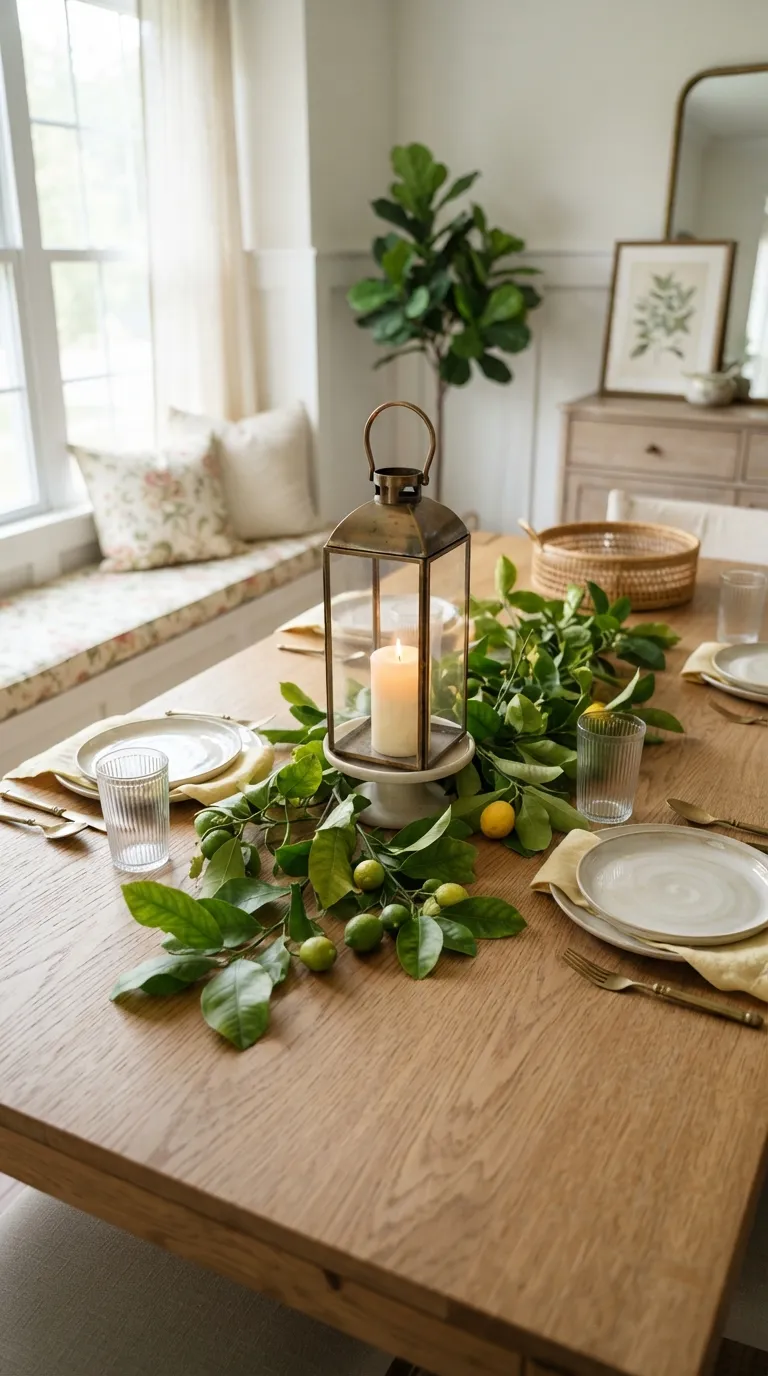
Lemon leaves bring a fresh garden feel to lantern decorating. Their firm, glossy foliage holds its shape well, making it easy to build a neat arrangement around the lantern base. Add a few small green citrus fruits if you want a gentle pop of color.
This look suits bright kitchens, breakfast rooms, and summer tables. Pair the greenery with pale wood, cream dishes, and yellow linen for a relaxed setting. Keep the branches short enough to preserve clear sightlines across the table.
14. Create a Simple Asymmetrical Greenery Display
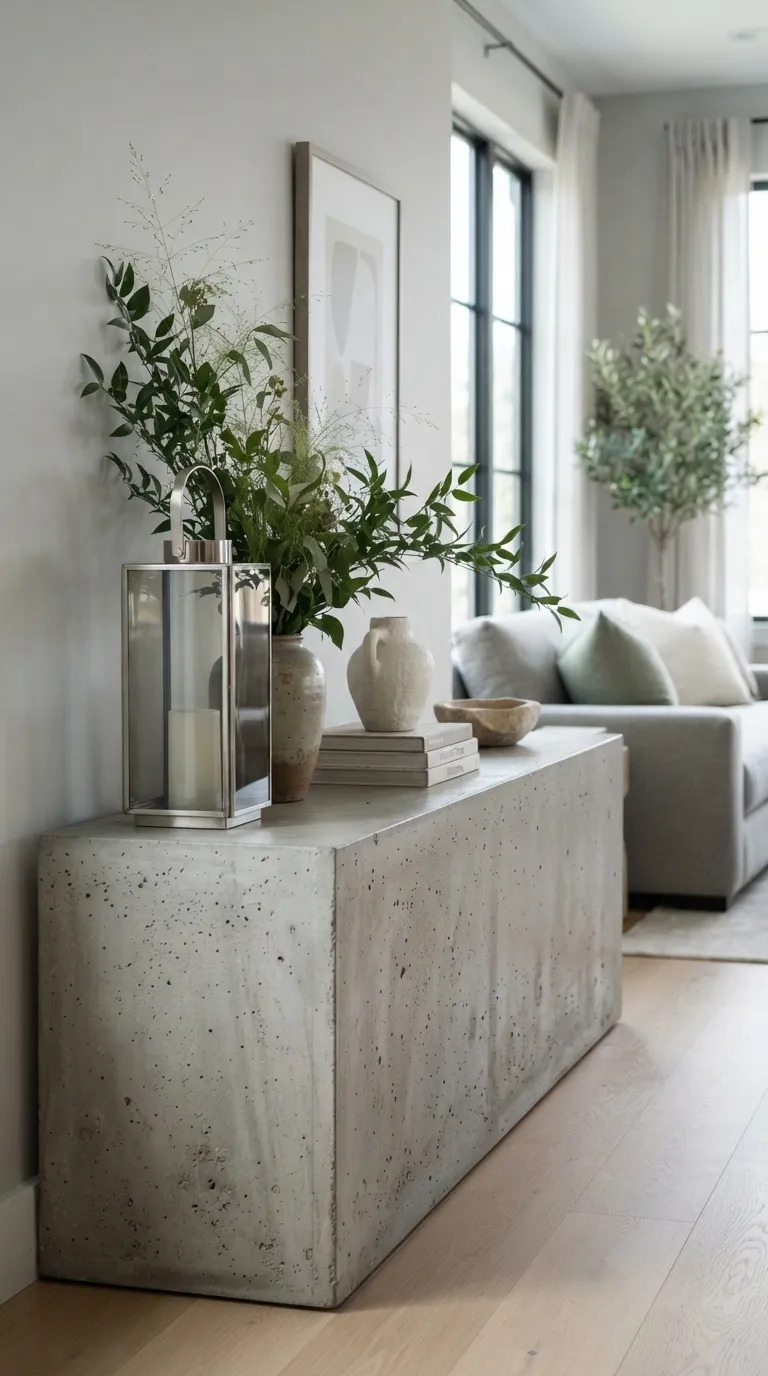
An asymmetrical arrangement can make a lantern feel relaxed while still looking polished. Place most of the greenery on one side, then let a few stems curve toward the other side. The uneven height gives the display a natural shape.
This method works especially well on consoles and sideboards where you don’t need a perfectly centered arrangement. Use fewer stems for a clean modern look, or add more leafy branches for a fuller display. The key is to leave enough open space around the lantern.
15. Add Fresh Greenery to a Lantern on the Porch
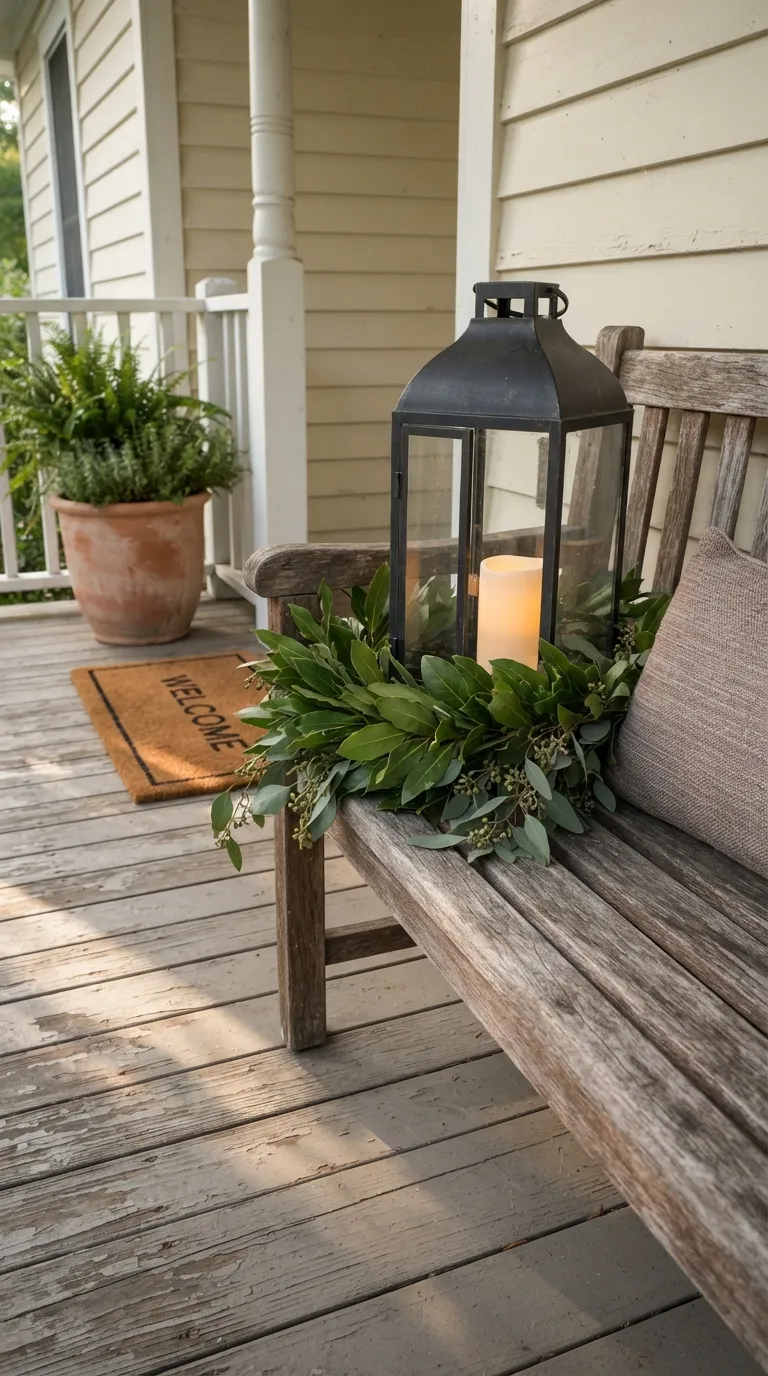
A porch lantern can feel more welcoming with a simple bundle of fresh leaves beside it. Bay leaves, eucalyptus, or sturdy garden stems work well because they add texture without taking up much room. Keep the greenery low so the lantern remains easy to move.
You may also want to try Lovely Ways.
Place the arrangement on a bench, porch step, or small outdoor table. A woven cushion and terracotta planter can tie the natural colors together without making the display feel busy. For outdoor use, choose a lantern designed for the conditions and use a battery candle around fresh foliage.
16. Layer Greenery Around a Lantern and Candle Trio
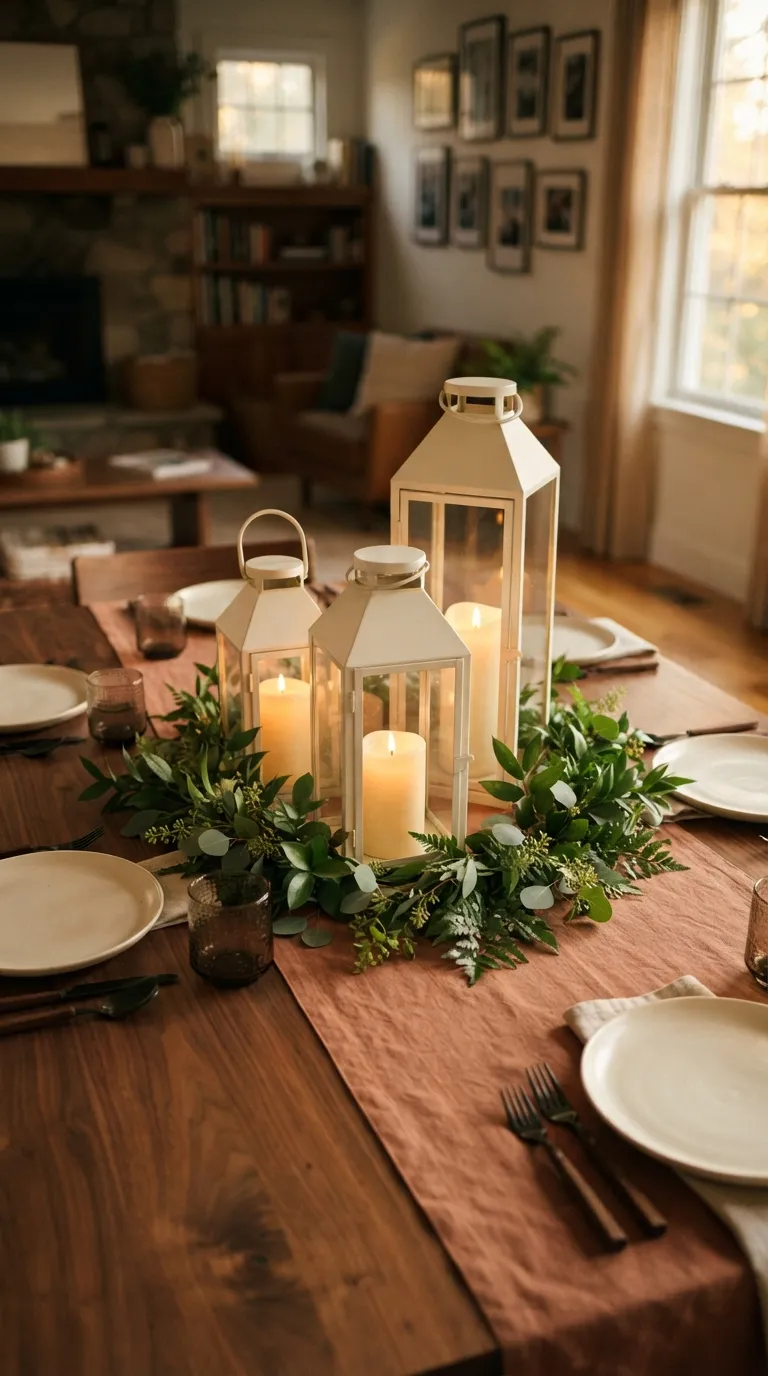
A group of lanterns can create a fuller centerpiece when one lantern feels too small on its own. Use three different heights and connect them visually with low greenery that runs between the bases. Keep each candle visible so the grouping doesn’t become one large block.
This setup suits a long dining table or spacious console. Choose lanterns with related finishes, then let the greenery provide the common thread. A few scattered stems are enough to connect the pieces without covering their details.
17. Tuck Greenery into a Lantern Basket Arrangement
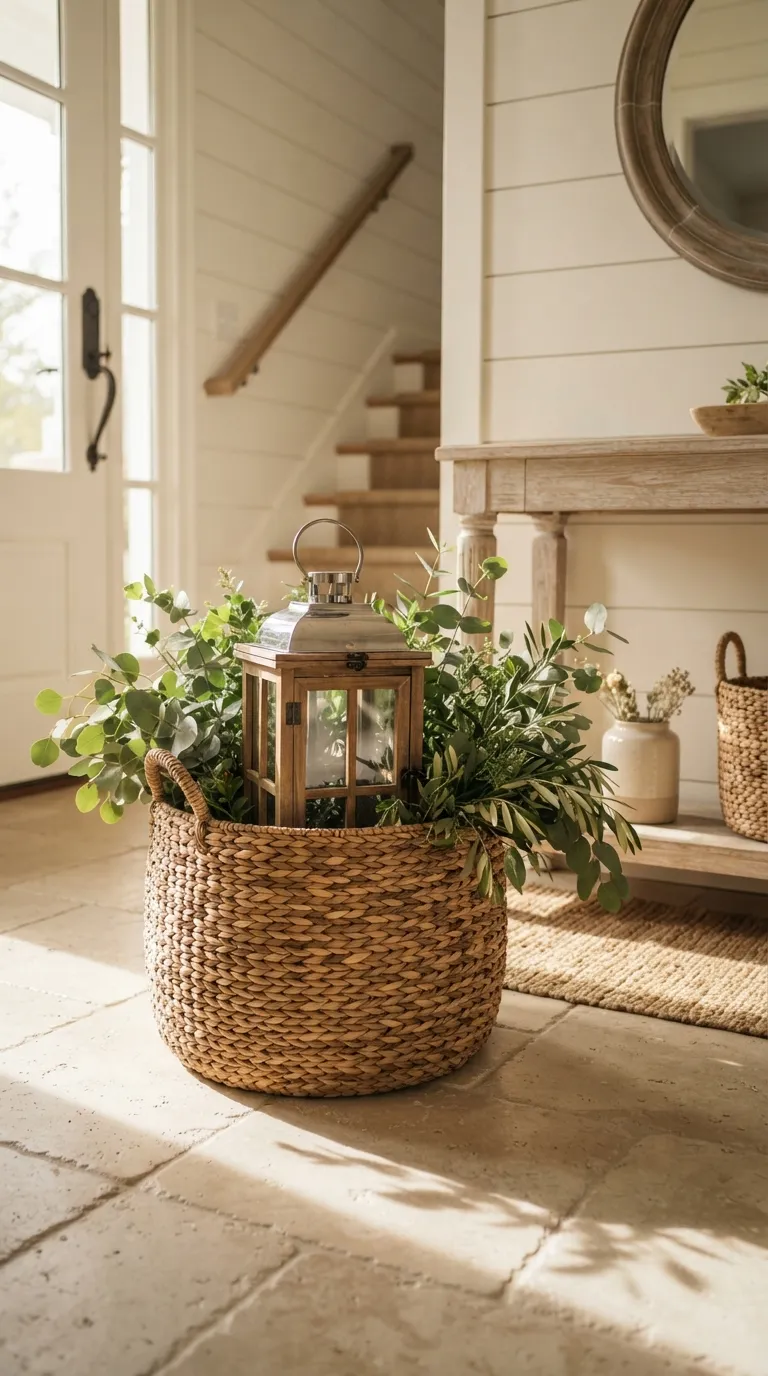
A woven basket gives a lantern display more height and texture. Set the lantern inside a sturdy basket, then tuck fresh greenery around its sides so the foliage feels naturally gathered. Let a few stems rise above the lantern for a loose garden look.
This arrangement works nicely in an entryway, mudroom, or covered porch. Seagrass and natural wood create a warm base, while green leaves add softness. If you’re using a real candle, keep all dry basket fibers and fresh stems safely away from the flame.
18. Use Long Palm Leaves for a Tropical Lantern Look
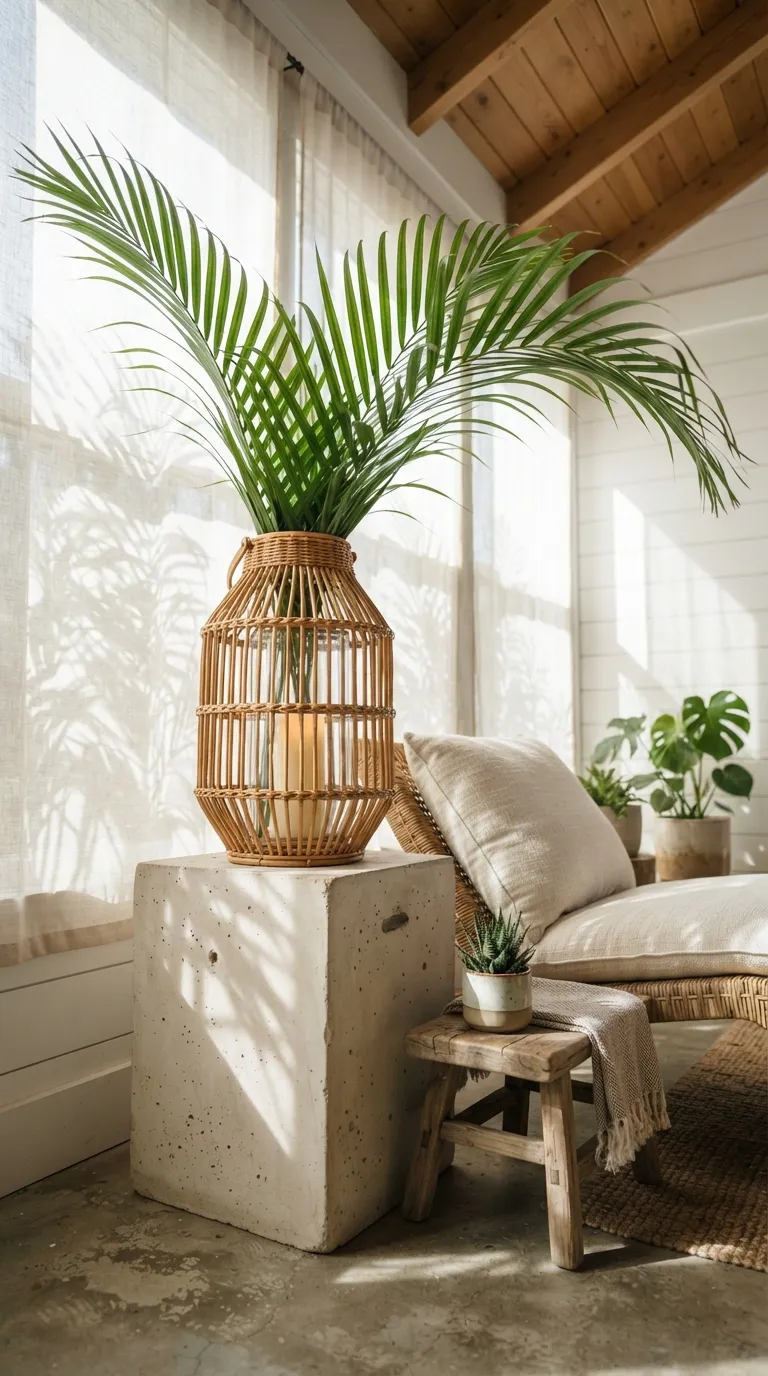
Long palm leaves give lantern decorating a bold tropical shape. Instead of placing the leaves inside the lantern, position them behind and beside it so their natural curves become part of the display. A few stems can create plenty of impact.
Try this look in a sunroom, covered patio, or bright living area. Rattan, teak, and pale concrete balance the broad green leaves with natural textures. Choose a smaller lantern if the leaves are tall, so the display still has a clear focal point.
19. Add Greenery and Pinecones for a Seasonal Display
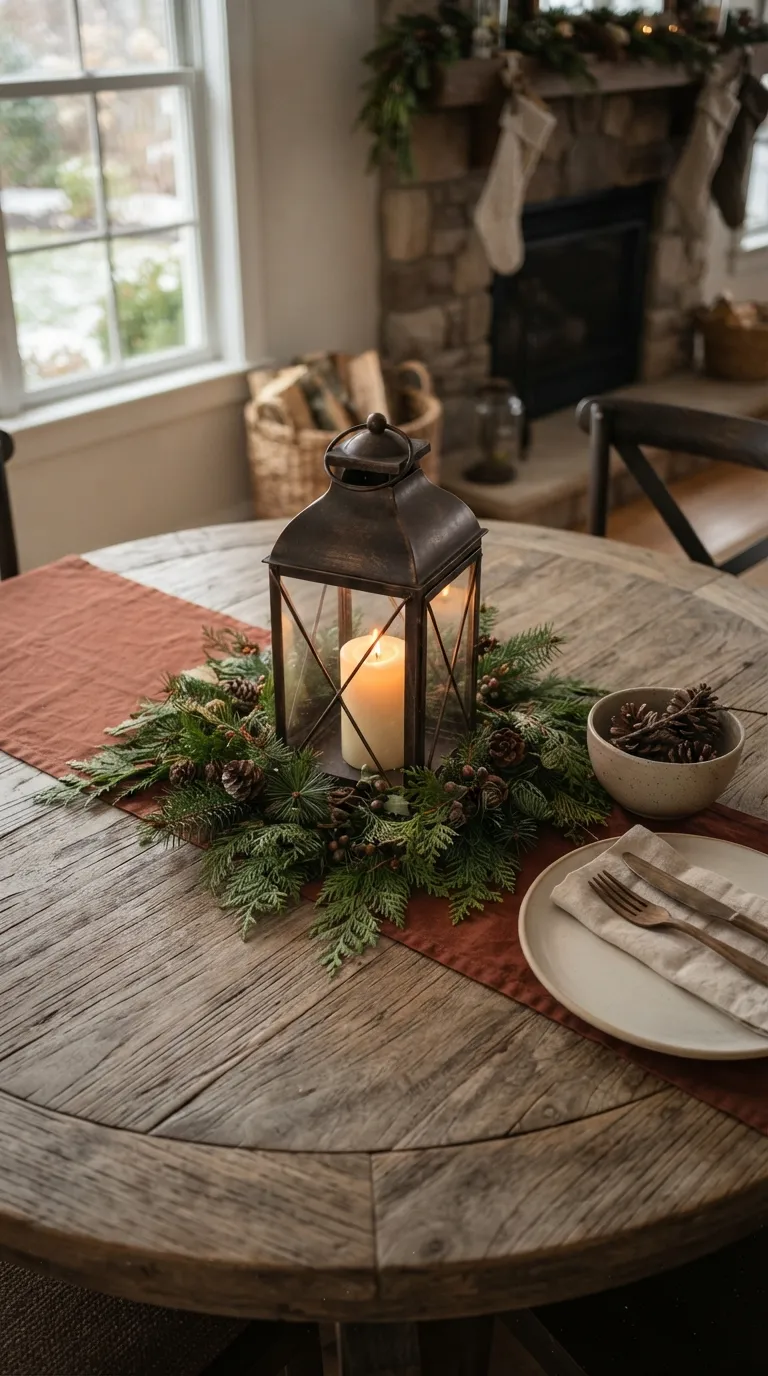
Evergreen sprigs and pinecones make a lantern feel ready for a winter table. Arrange the branches in a low ring, then scatter a few pinecones between them for extra texture. The warm candle creates a cozy contrast against the cooler greenery.
You can use this idea for holiday dinners or the rest of the cold-weather season. Cedar, pine, and fir all offer slightly different needle shapes, so mixing two types can make the display more interesting. Keep dry foliage away from open flames and use a battery candle when needed.
20. Combine Greenery with Soft Pink Blooms
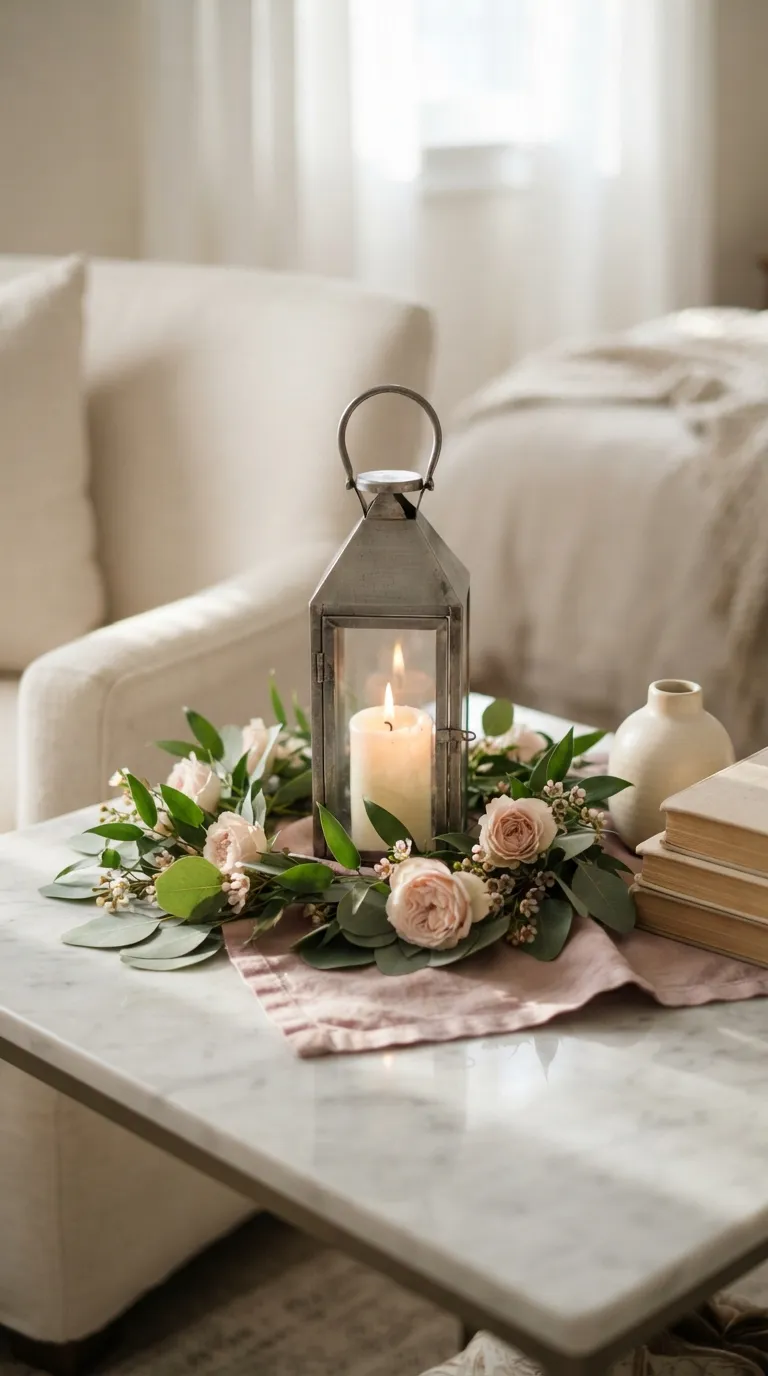
Greenery doesn’t have to stay entirely green. A few blush-pink blooms can add a soft accent while keeping the lantern arrangement natural. Use leafy stems as the base, then tuck two or three small flowers between them.
This combination works well when your room already uses soft pink, cream, or neutral accents. Keep the flowers sparse so the greenery remains the main frame. A small lantern on a side table can carry this look without taking over the room.
21. Nest a Lantern in Fresh Rosemary and Thyme
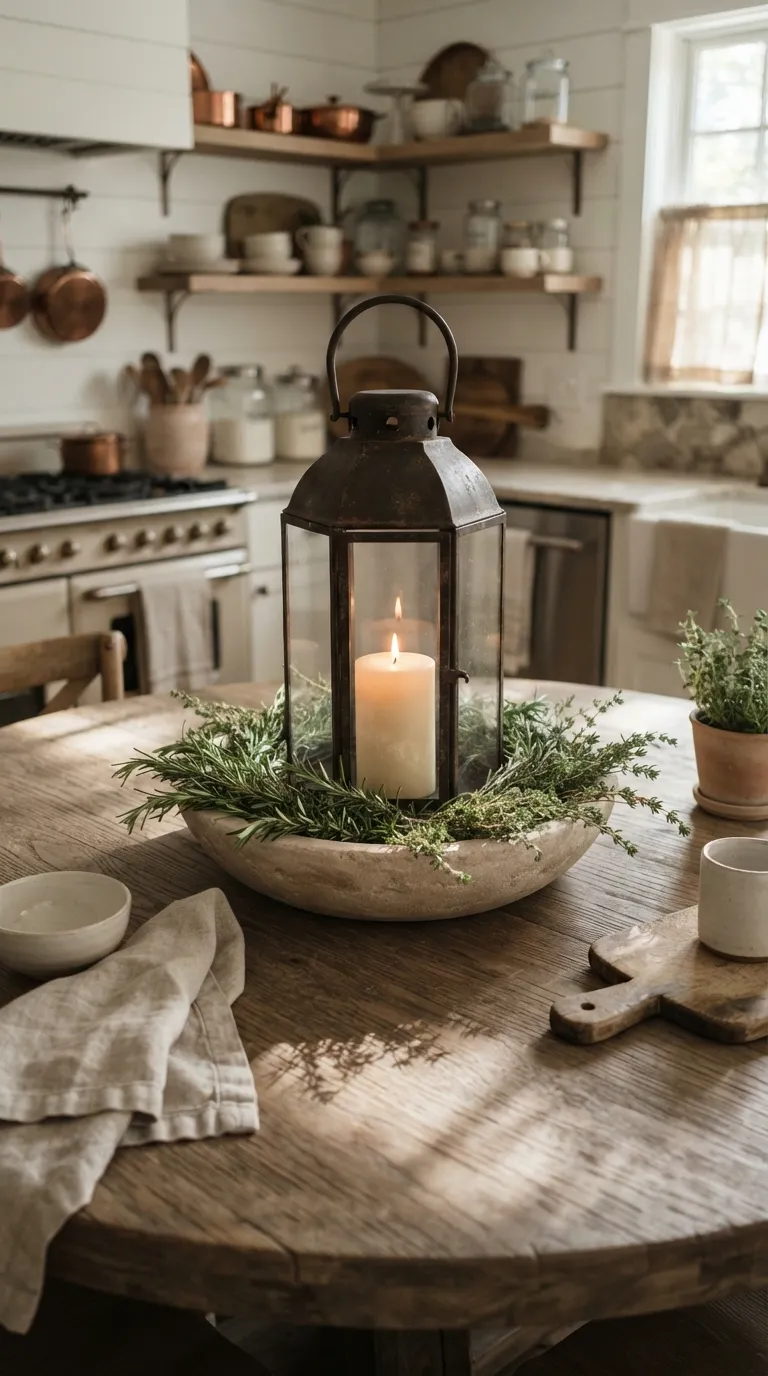
Rosemary and thyme give a lantern a fresh kitchen-inspired look. Place the herbs in a shallow bowl around the lantern, then let a few stems extend naturally toward the table edges. Their fine leaves create texture without making the centerpiece feel heavy.
This idea works especially well on a breakfast table, kitchen island, or rustic dining surface. Pair the herbs with wood, stone, cream ceramics, and aged metal for a relaxed farmhouse setting. Use a battery candle if the fresh herbs sit close to the light source.
The Bottom Line
A lantern gives you a simple frame, while greenery supplies shape, texture, and color. You can keep the display loose with eucalyptus, create a woodland feel with fern and moss, or add a few flowers when you want a softer table setting. The right choice depends on your room, surface, and the amount of care you’re willing to give fresh foliage.
Start with one lantern and a small handful of greenery. Place the foliage where it frames rather than hides the lantern, then step back and check the balance from across the room. Whether your style is farmhouse, coastal, modern, or cottage, a thoughtful arrangement can make the lantern feel like a natural part of your home.
Olivia Carter
Olivia Carter is the founder of Lady Home Decor and a passionate home decor expert. She shares practical, stylish ideas to help homeowners create beautiful, comfortable, and welcoming spaces. Her expertise covers bedrooms, kitchens, living rooms, bathrooms, and small-space decorating.