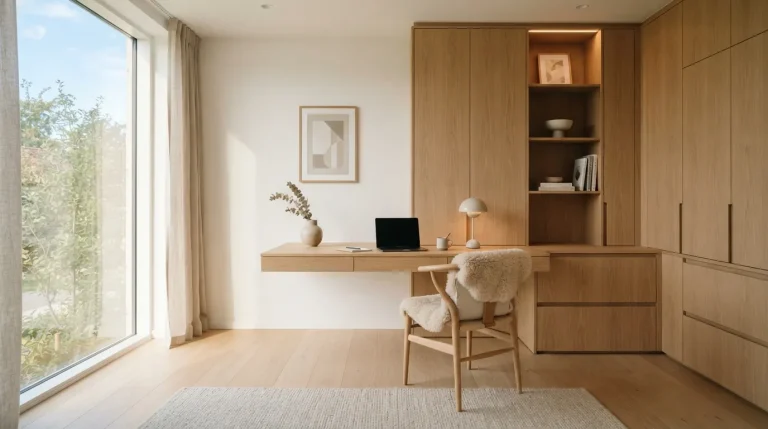
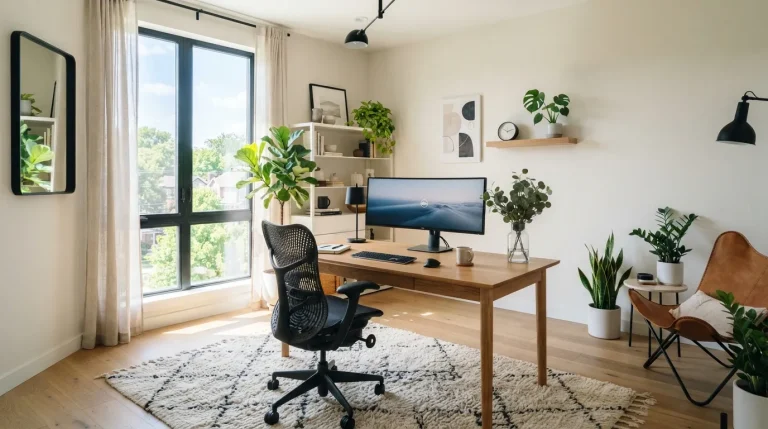
22 Smart Feng Shui Desk Placement Ideas for Your Home Office

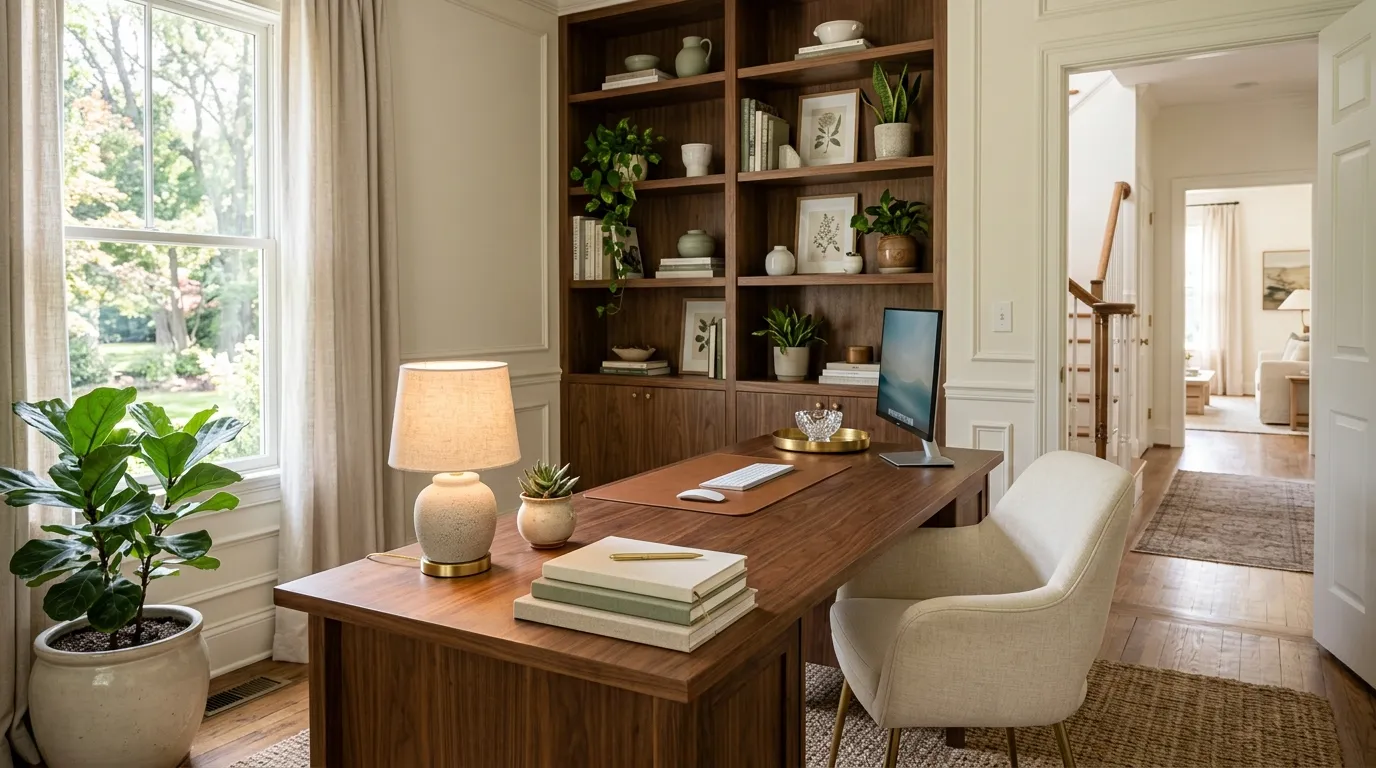
A well-placed desk can make your home office feel calmer, cleaner, and easier to use. These feng shui home office desk placement ideas focus on simple choices such as wall support, door visibility, natural light, open space, and balanced furniture. You don’t need a large room or a full makeover to create a better setup.
Think about how your desk feels when you sit down. If your back faces a busy doorway or your screen sits directly in harsh sunlight, work can feel distracting before you even begin. With a few thoughtful changes, your desk can become a comfortable anchor that supports focus while still looking stylish.
1. Place Your Desk Against a Solid Wall
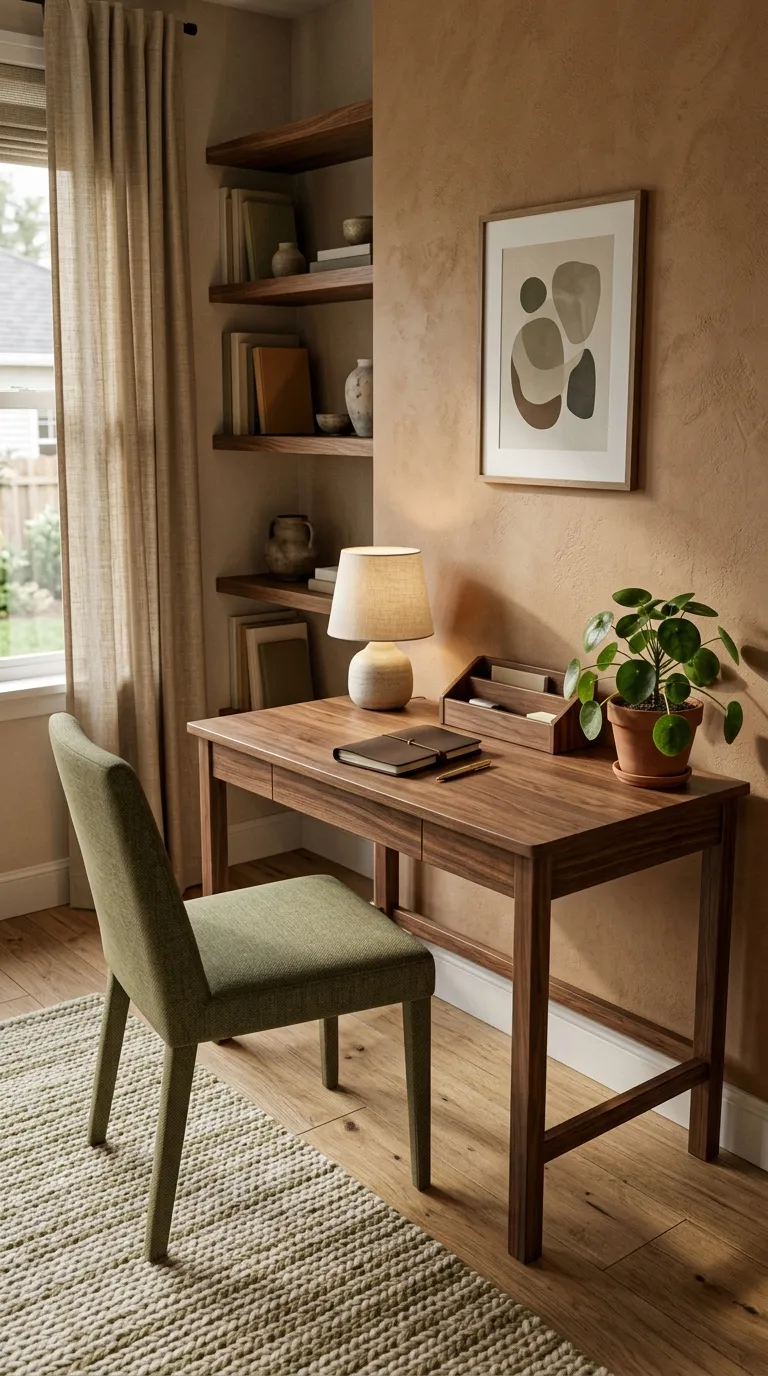
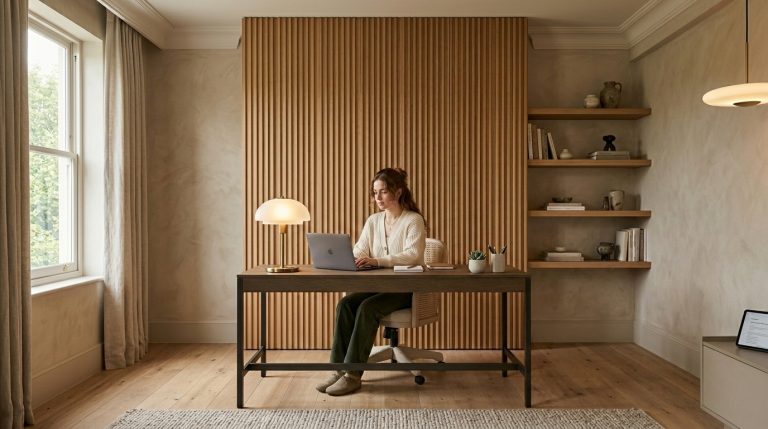
A solid wall behind your desk creates a visual sense of stability. In Feng Shui, this placement is often preferred because you aren’t sitting with an exposed space directly behind you. It also gives the office a neat, grounded look.
Keep a little breathing room around the chair so you can sit comfortably and move without bumping into furniture. Picture a small office with a desk tucked against the wall, a window to one side, and open floor space ahead. That simple layout can feel much more settled than placing the desk in the middle of a crowded room.
2. Keep a Clear View of the Door
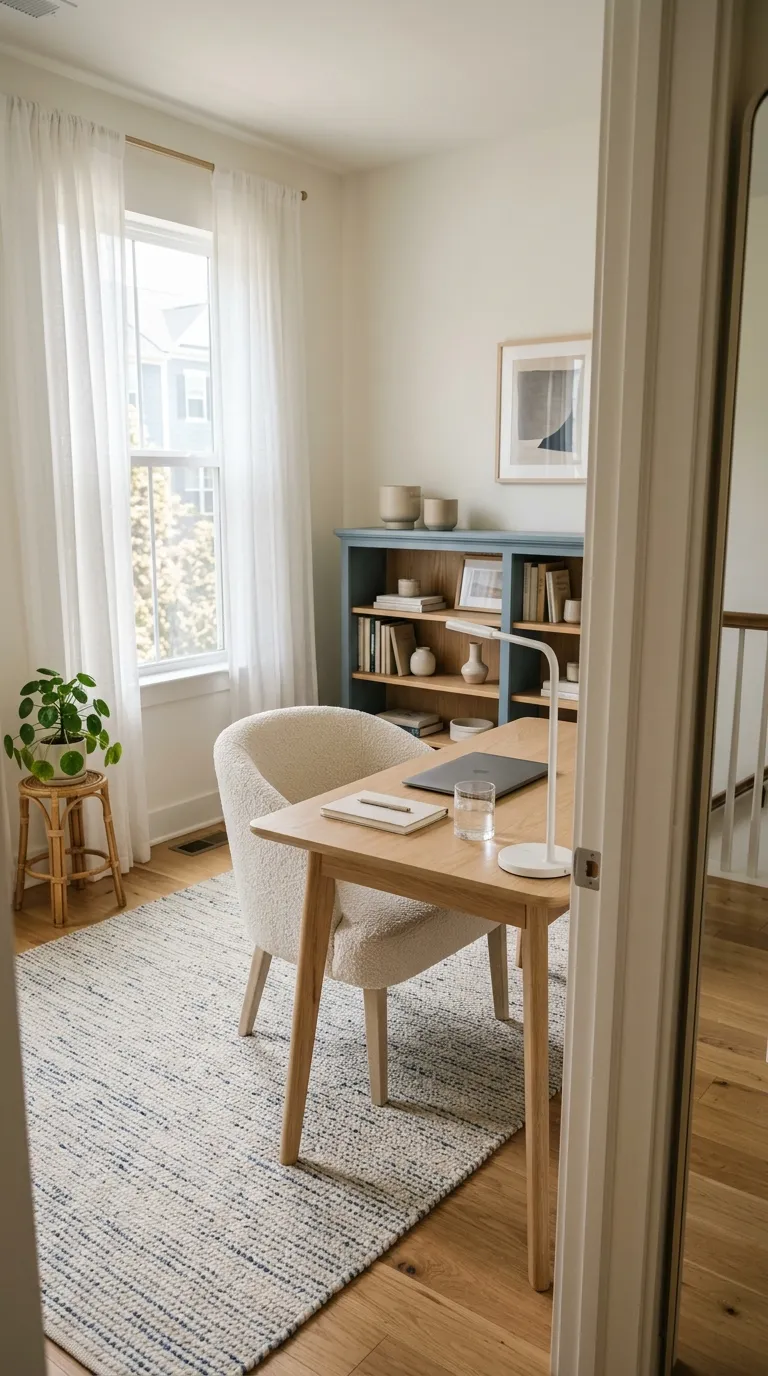
Your desk doesn’t have to face the doorway straight on. A diagonal position can give you a clear view of the entrance while keeping the workspace comfortable and visually balanced. This is one of the most useful Feng Shui desk placement choices for a home office.
Avoid placing the chair with its back directly toward the door when another layout is possible. Consider a narrow room where the desk sits against a side wall and faces across the room toward the entrance. You still get a clear sightline without losing valuable floor space.
3. Create a Commanding Desk Position
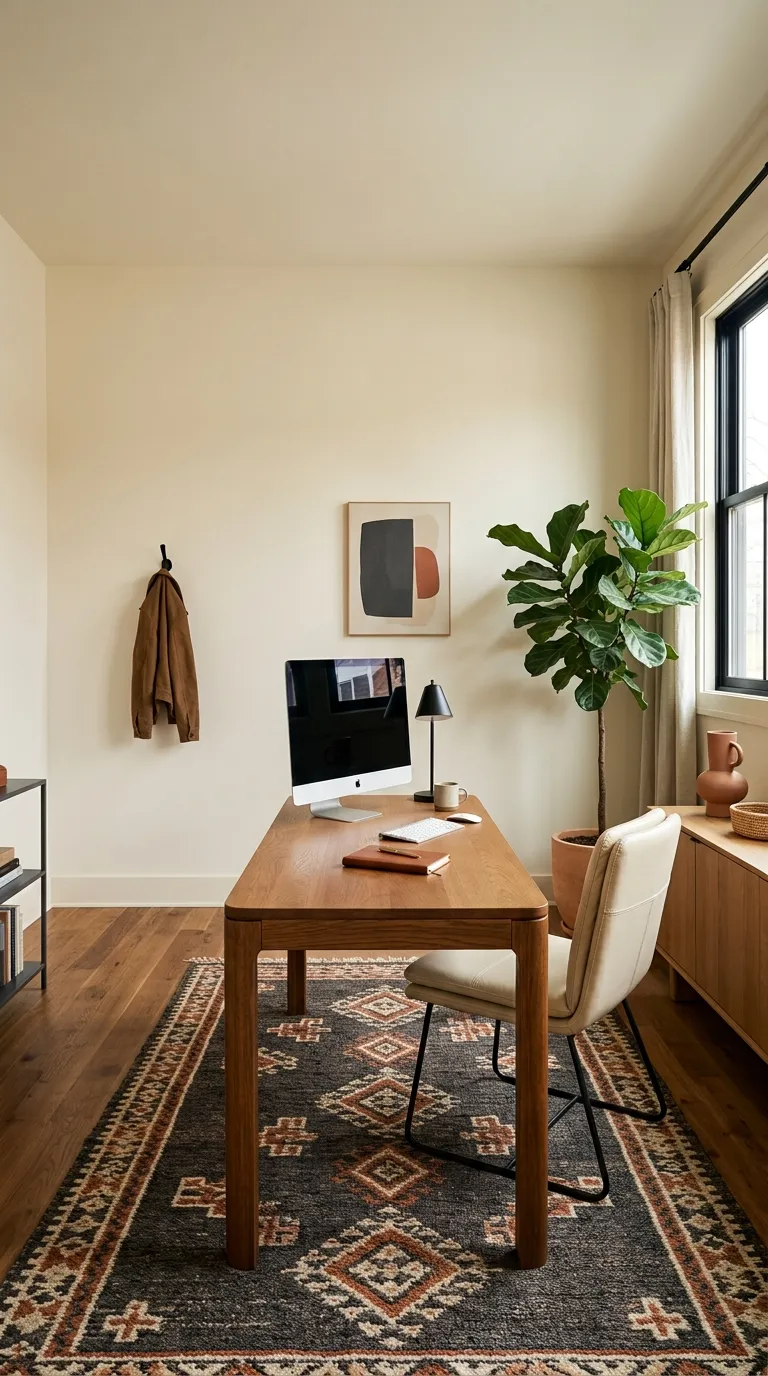
A commanding desk position combines several helpful features in one layout. Ideally, you can see the doorway, keep solid support behind you, and maintain enough open space in front of the desk. The result feels intentional without requiring a large office.
This setup works especially well when the desk isn’t pushed into a random corner. Picture a compact room with the desk slightly angled, a wall behind the chair, and a clear path between the entrance and window. The arrangement gives the workspace a natural focal point while keeping everyday movement easy.
4. Let Natural Light Fall From the Side
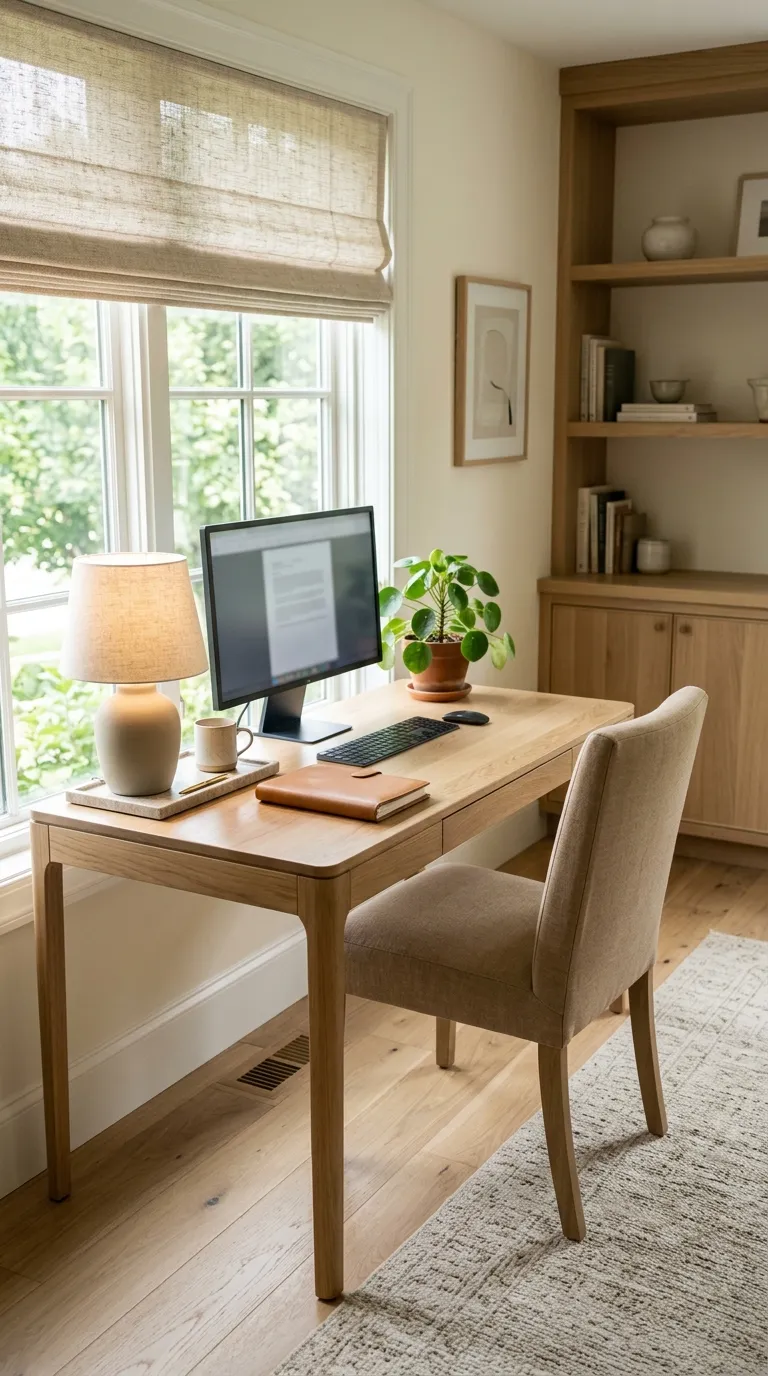
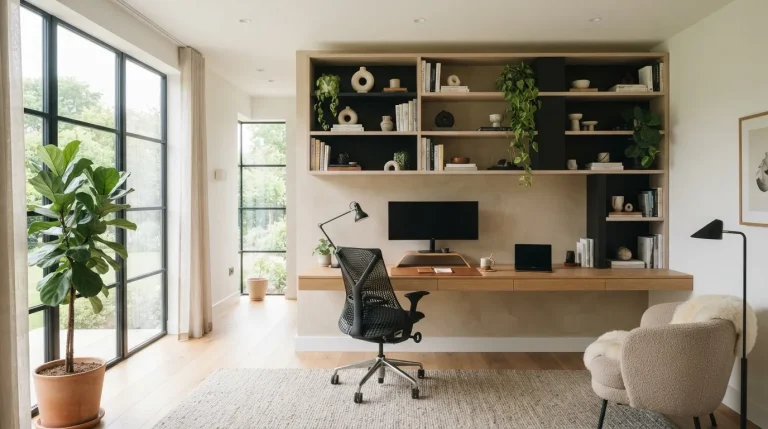
Side lighting can make your home office feel bright without putting glare across your screen. Place the desk beside a window when possible, letting daylight reach your workspace from the left or right. This approach supports a comfortable visual balance while keeping the room connected to the outdoors.
Watch how sunlight changes throughout the day before choosing the final spot. If afternoon rays become harsh, use sheer curtains or a simple shade. This small adjustment can keep your desk pleasant from morning emails through late-day tasks.
5. Keep the Space Behind Your Chair Open
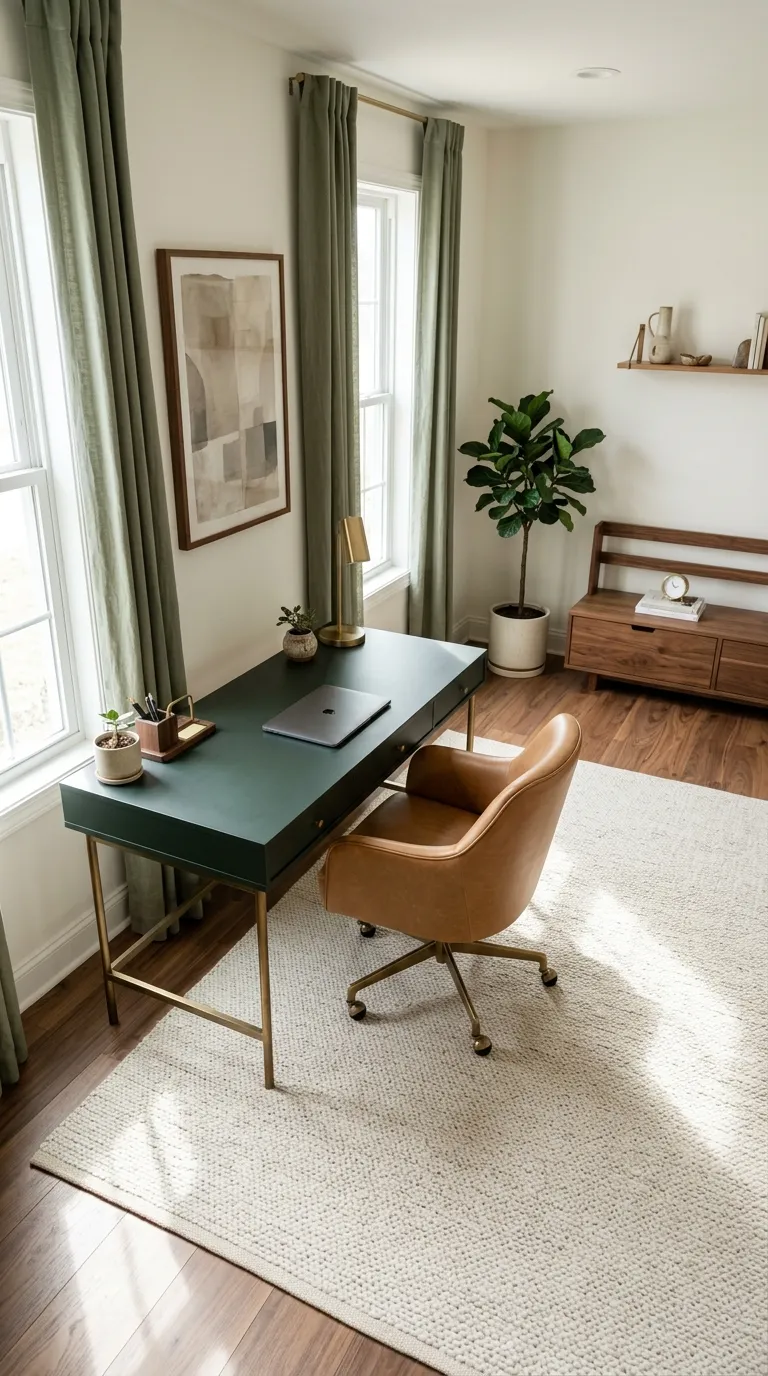
Your chair needs room to move freely. Avoid trapping it between the desk and a wall, cabinet, or bulky storage piece. A clear zone behind you can make the office feel less cramped and easier to use.
This idea also helps with practical movement. Picture stepping away from your desk during a busy afternoon without squeezing past a filing cabinet. Keeping that area open gives your Feng Shui home office a cleaner flow and a more comfortable daily rhythm.
6. Avoid Placing the Desk Directly Under a Window
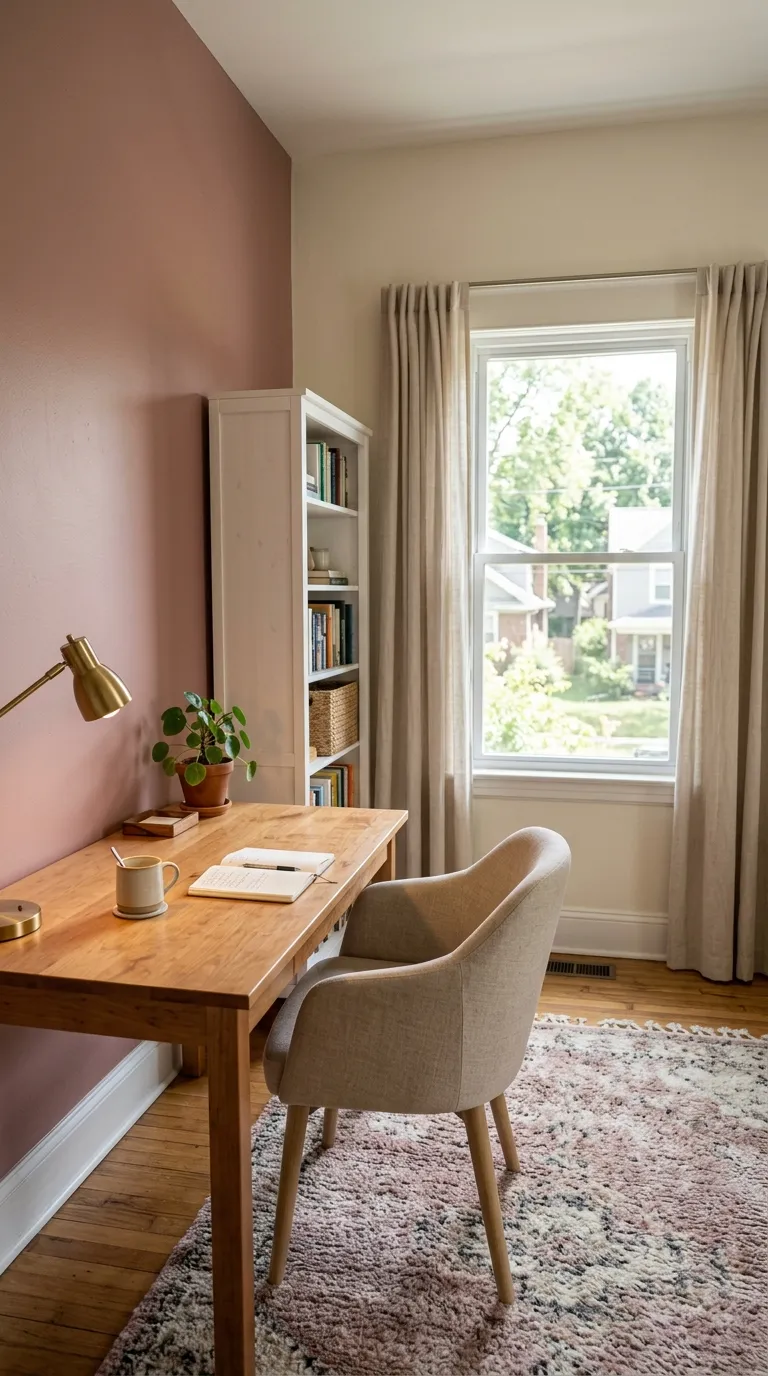
A window directly behind you can create glare, distractions, and a less supported feeling. When your room allows it, place the desk on a solid wall and keep the window to the side or in front of you. This creates a steadier backdrop while still giving you access to daylight.
Don’t treat this as a strict rule for every room. A tiny home office may have limited choices, so work with what you have. Curtains, blinds, or a slight desk angle can help when moving the desk isn’t practical.
7. Angle the Desk Toward the Room
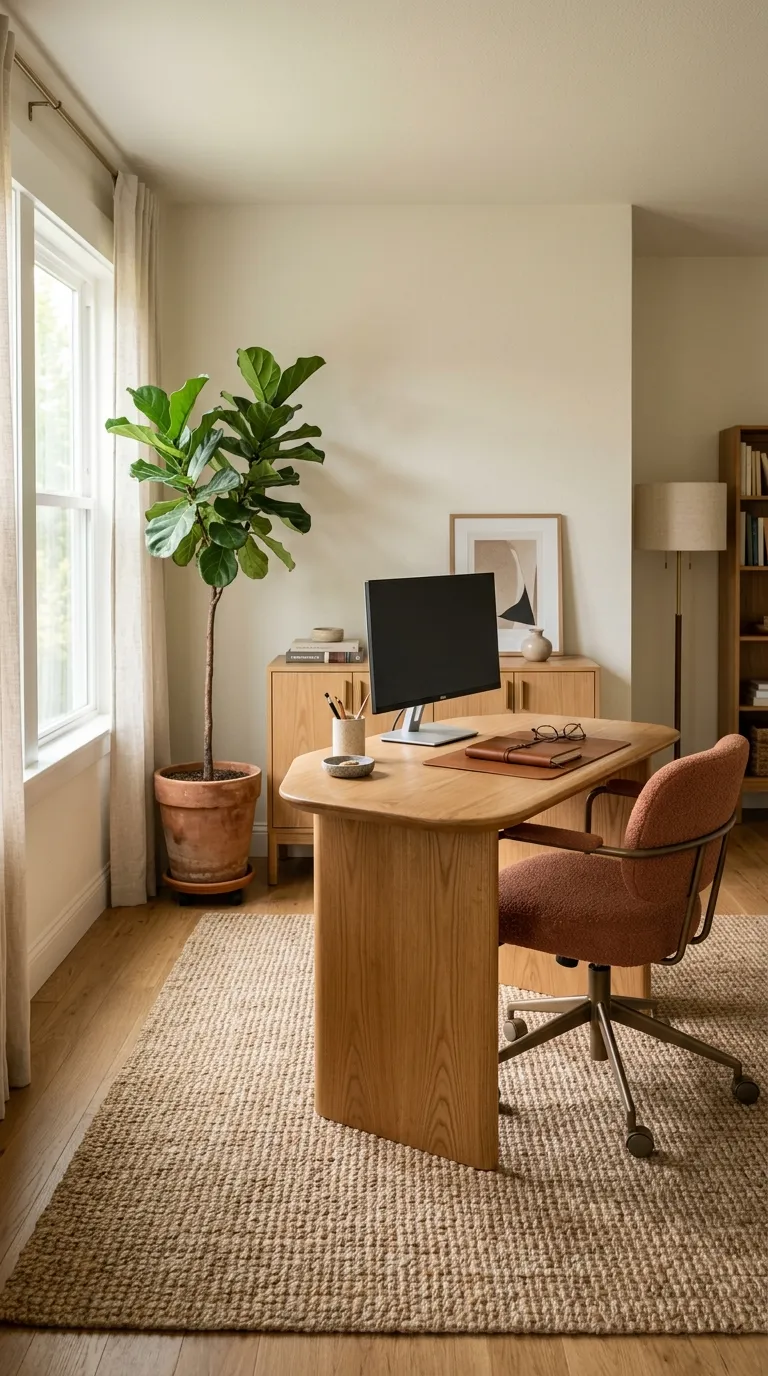
A slight desk angle can open the workspace toward the room. Instead of facing a blank wall, you get a broader view while keeping the desk connected to a stable backdrop. This is useful when you want your office to feel open without placing the desk in the middle of everything.
Try turning the desk just a few degrees before making a major change. Picture a narrow office where the desk sits near a wall but points toward the center of the room. That small adjustment can create a better sightline and leave the walking path clear.
8. Give Your Desk a Balanced Backdrop
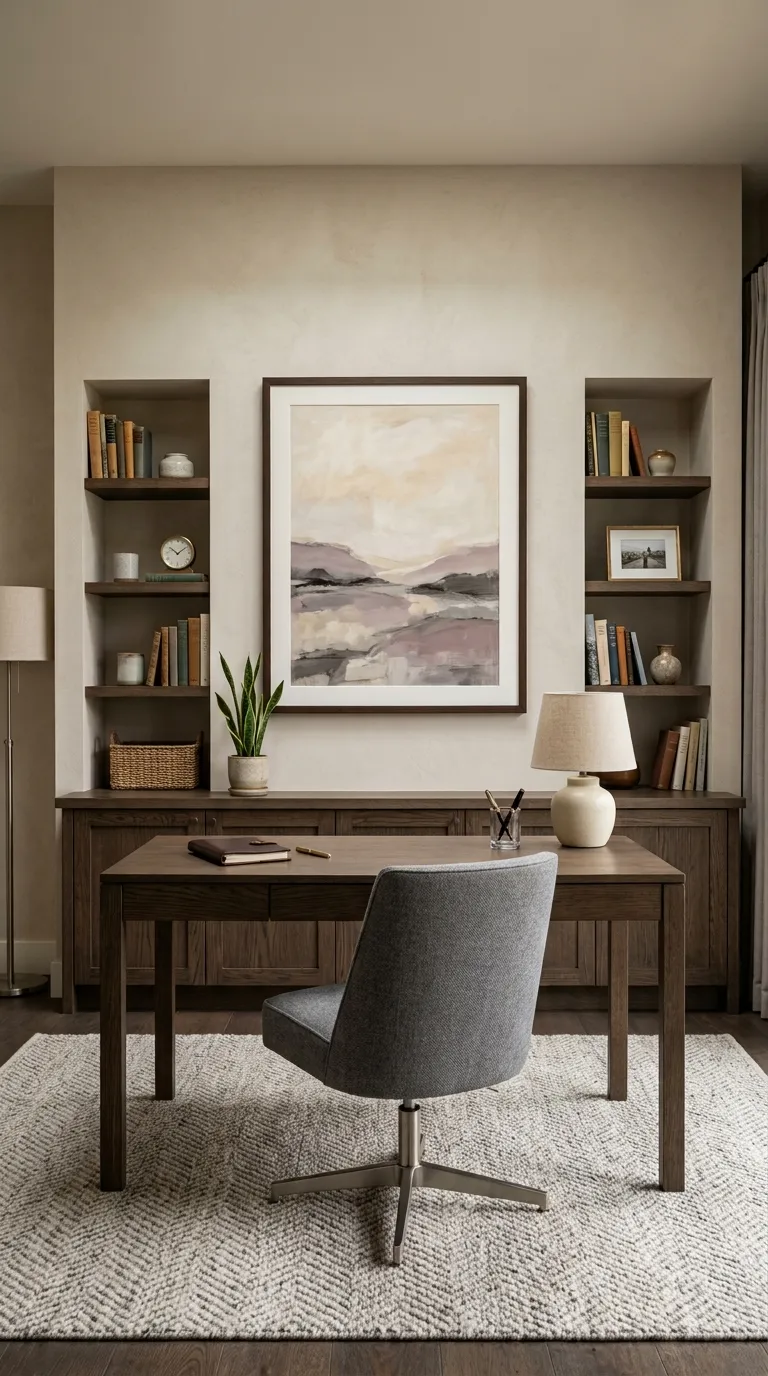
Your desk backdrop should feel calm rather than crowded. A simple wall, balanced storage, or carefully spaced decor can give your workspace a strong visual center. Too many objects behind you may make the office feel busy before the workday starts.
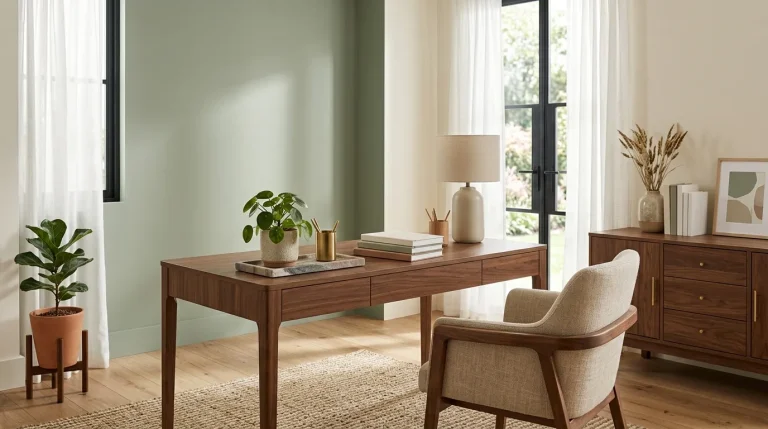
Keep the arrangement practical. A pair of low cabinets can frame a desk without making the room feel heavy, while one piece of artwork can add personality without taking over. The goal is a backdrop that feels steady, tidy, and easy on the eyes.
9. Keep the Doorway Path Unblocked
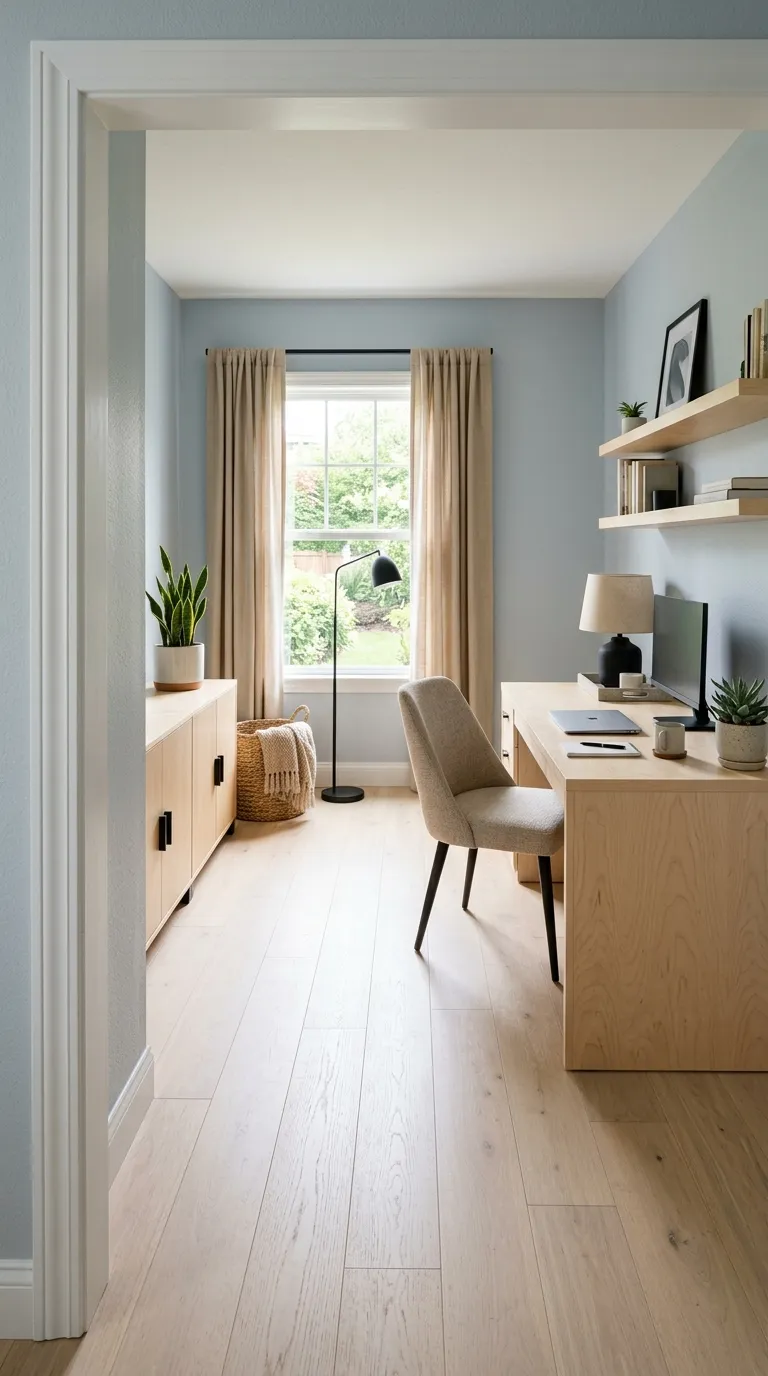
A clear doorway path makes the whole office easier to move through. Keep chairs, desk corners, baskets, and storage pieces out of the main entrance route. In Feng Shui, an open path supports a sense of easy movement through the room.
Check the space from the doorway before settling on your layout. If you have to weave around the desk to reach the chair, try moving the desk slightly or choosing a slimmer shape. A few extra inches can make a surprisingly big difference in a compact office.
10. Choose a Desk Shape With Soft Edges
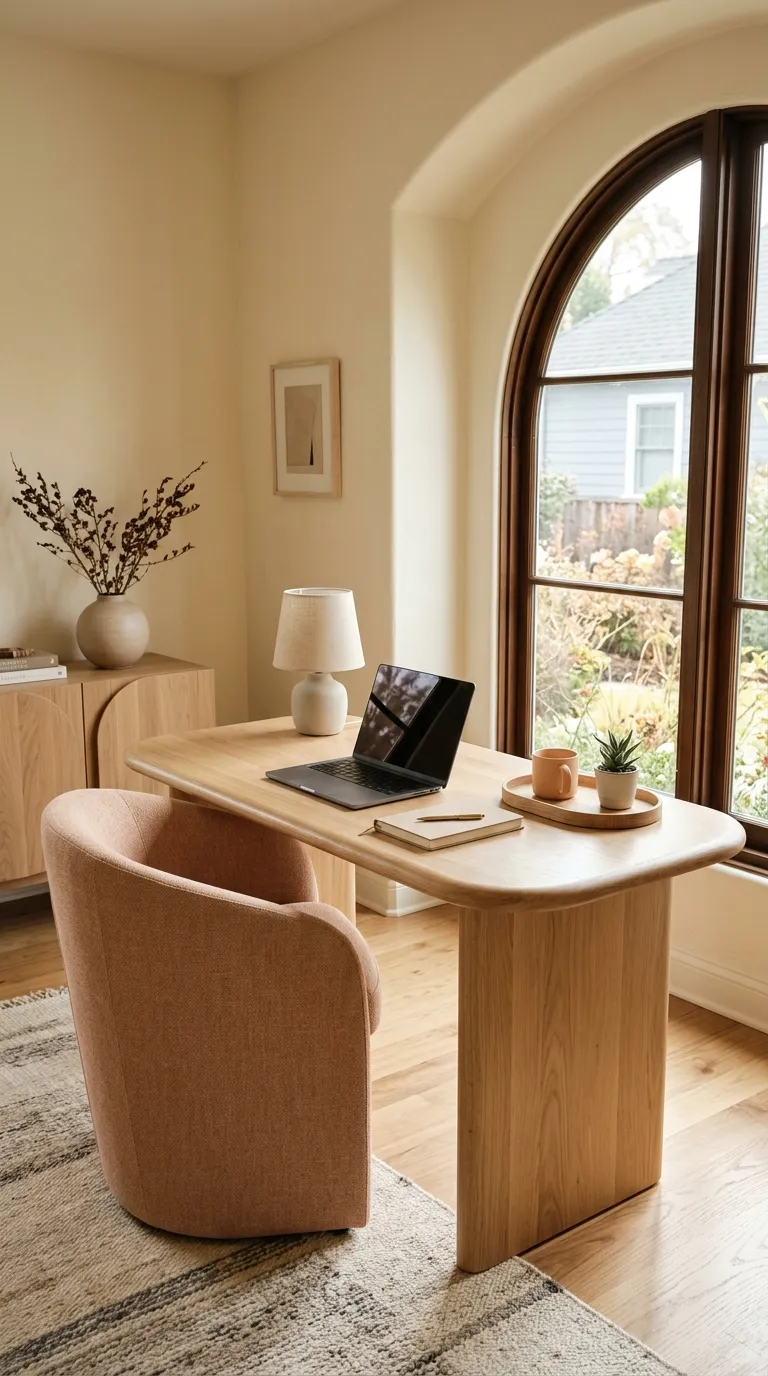
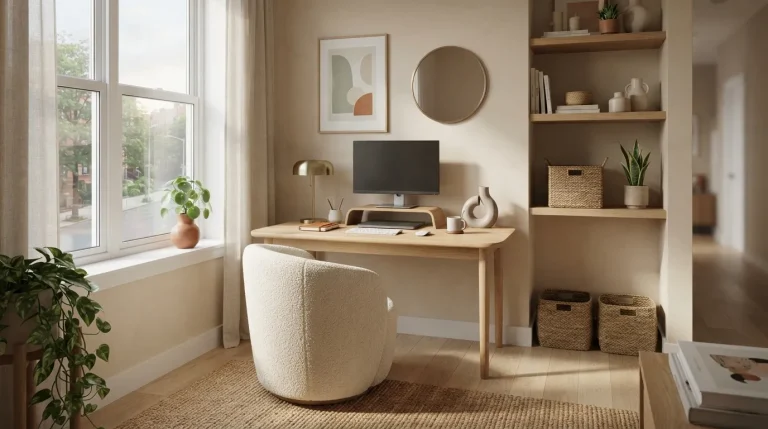
Rounded desk edges can make a workspace feel softer and easier to move around. They also work well in smaller rooms where sharp corners can interrupt walking paths. When choosing Feng Shui home office desk placement ideas, consider both the desk’s position and its shape.
A curved or rounded desk can sit neatly near a corner without creating a harsh visual stop. Picture a small office with a rounded oak surface, a curved chair, and open floor around both pieces. The room feels practical while keeping the overall look gentle and relaxed.
11. Keep Heavy Furniture Away From the Desk
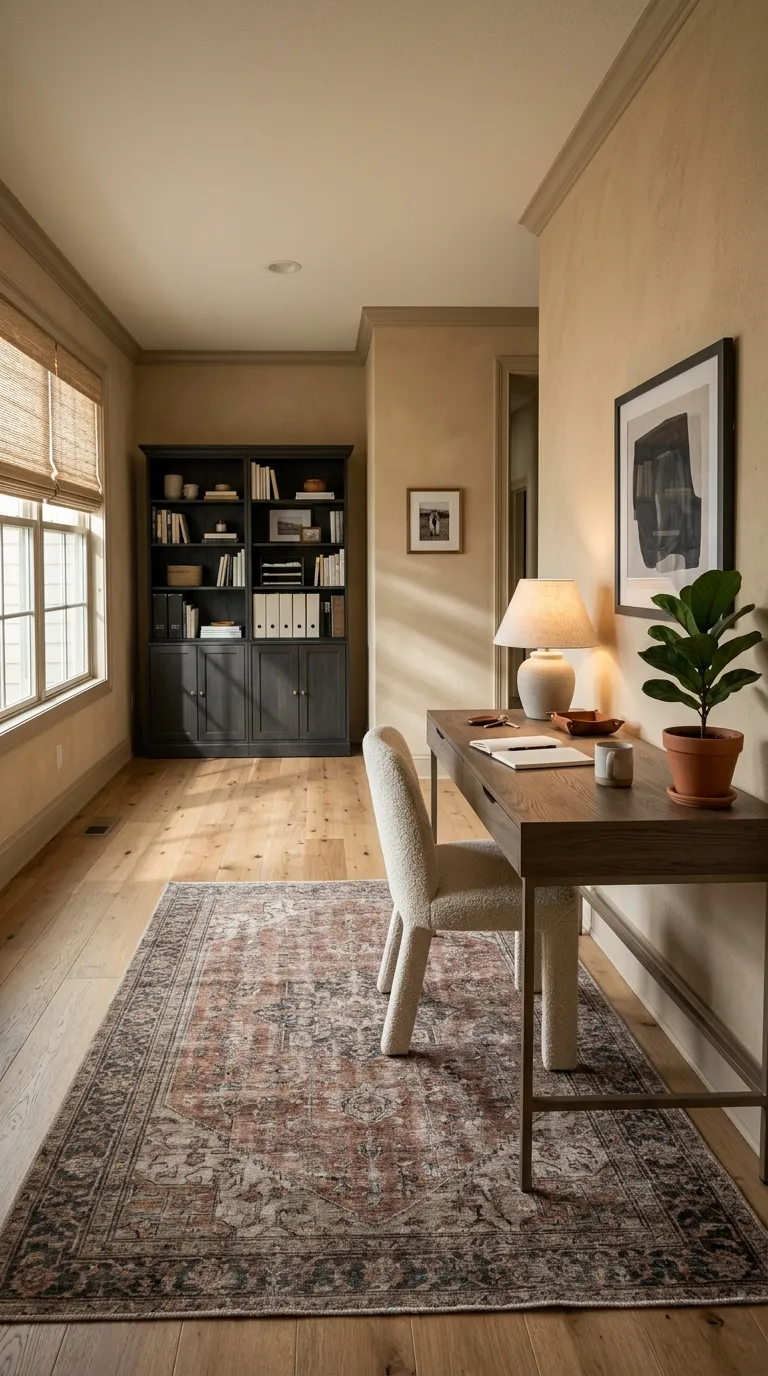
Large cabinets can make a desk area feel boxed in when they sit too close. Give your main workspace some breathing room by placing tall storage along another wall. This keeps the desk visually lighter and makes the room easier to move through.
Use low storage near the desk when you need quick access to supplies. Keep taller pieces farther away so they don’t dominate your immediate view. This simple furniture arrangement can make a small home office feel more open without removing useful storage.
12. Position Your Desk Away From Direct Traffic
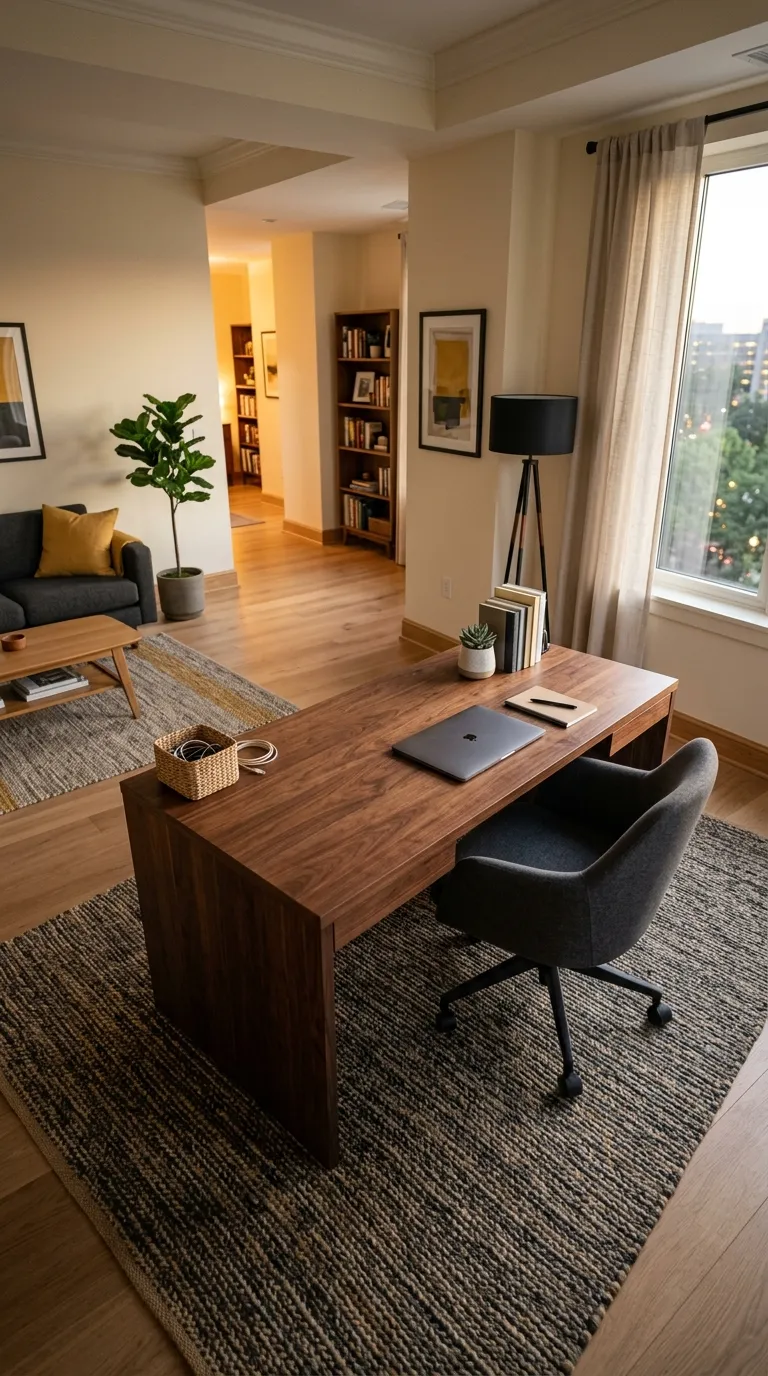
Your desk shouldn’t sit in the middle of a busy walking route. Constant movement behind your chair can make it harder to settle into focused work. Place the desk beside the traffic path while keeping the chair and workspace comfortably out of the way.
This matters even more in open-plan homes. Picture a workspace near the living room where family members regularly walk between the kitchen and hallway. A slight change in desk position can protect the work zone without making the office feel closed off.
13. Use a Window View Without Facing It Directly
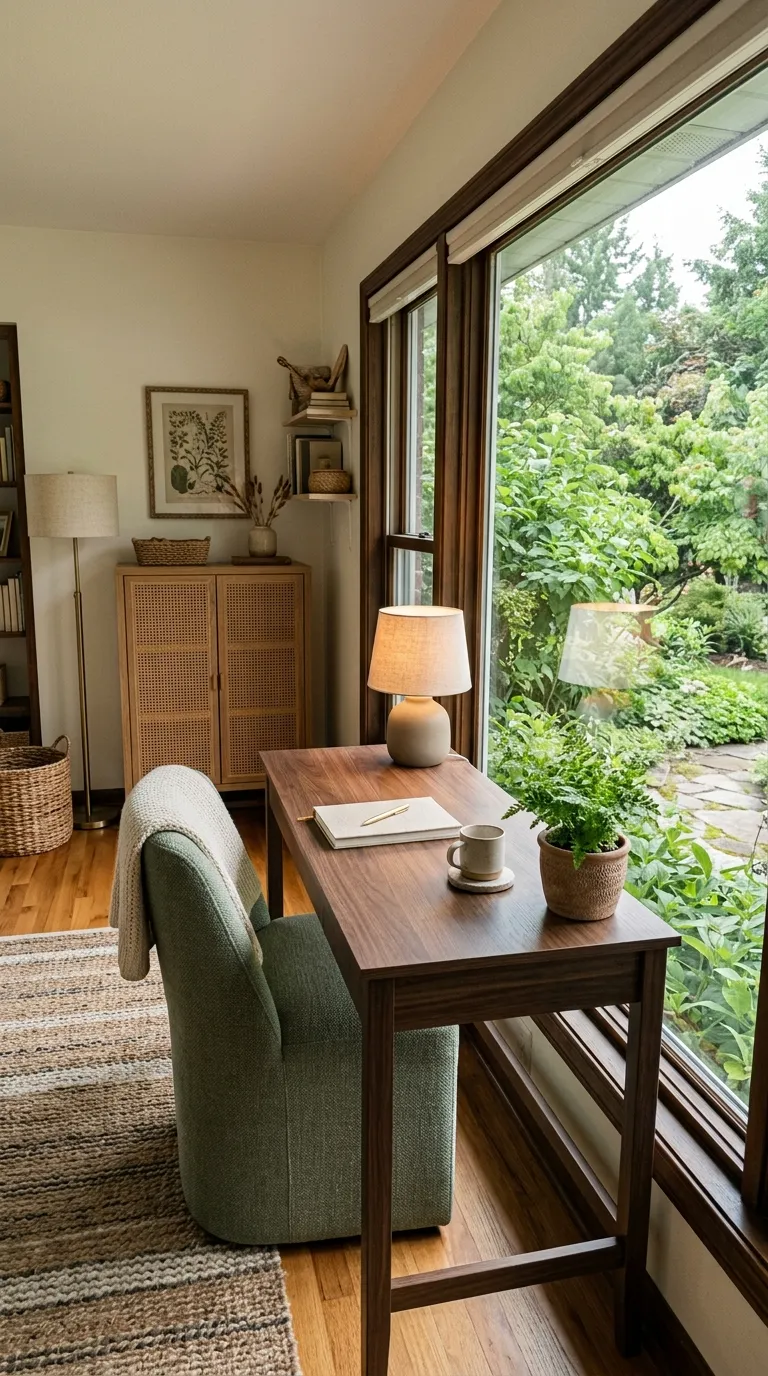
A beautiful window view can support a pleasant office atmosphere, but your desk doesn’t need to face the glass head-on. Place it perpendicular to the window so you can glance outside while keeping a stable wall or room feature behind you. This setup also reduces direct glare on screens.
Try this layout when your office has a garden, balcony, or tree-lined view. A side-facing position lets natural scenery become part of the room without making it the main focus. It can be a practical choice among Feng Shui home office desk placement ideas.
14. Keep Electronics From Taking Over the Desk
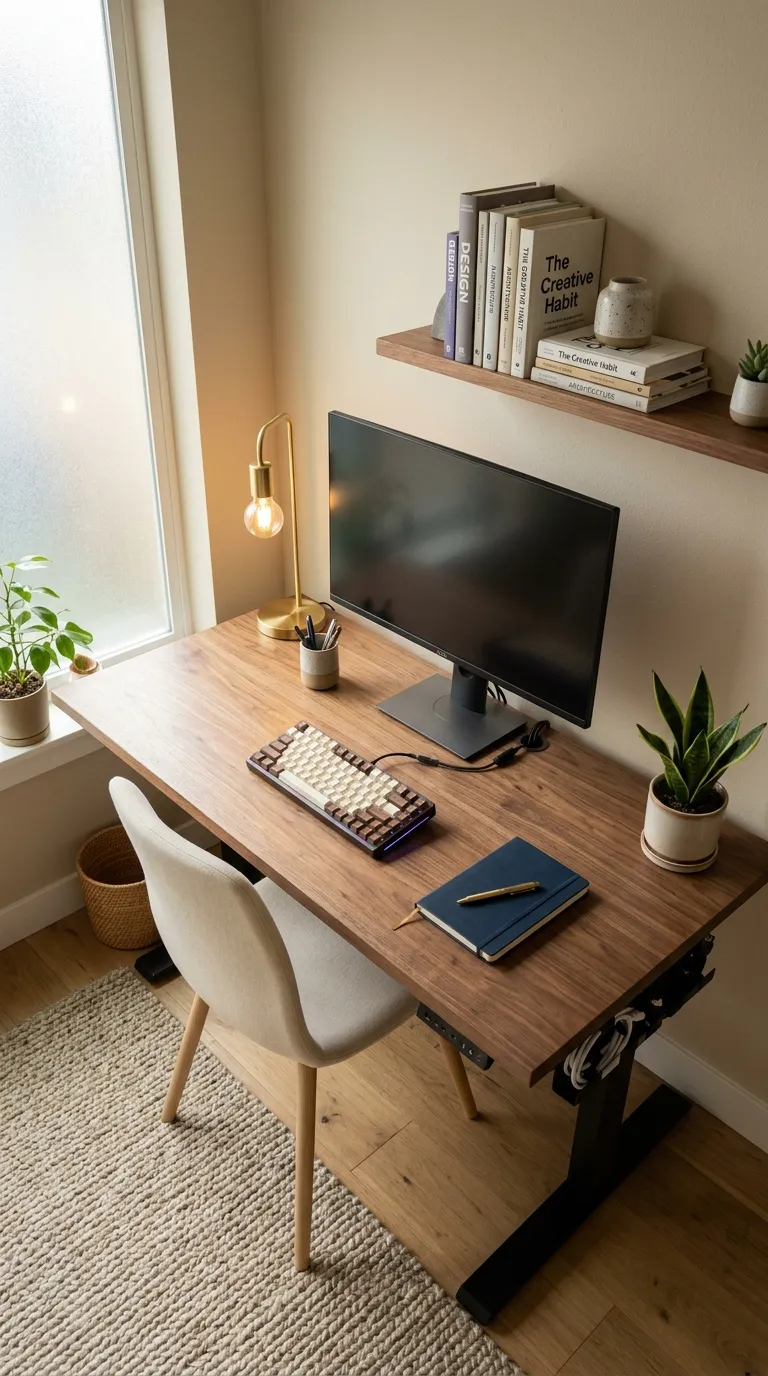
Too many screens, chargers, and loose cables can make even a beautiful desk feel chaotic. Keep essential electronics on the surface and move extra devices into drawers or nearby storage. Clean cable routing also keeps the area easier to maintain.
A simple desktop gives your eyes fewer things to process while you work. Picture one monitor, a small lamp, a notebook, and a plant instead of a pile of chargers and accessories. This restrained setup fits naturally with calm Feng Shui office principles.
15. Create Space Between Your Desk and Wall
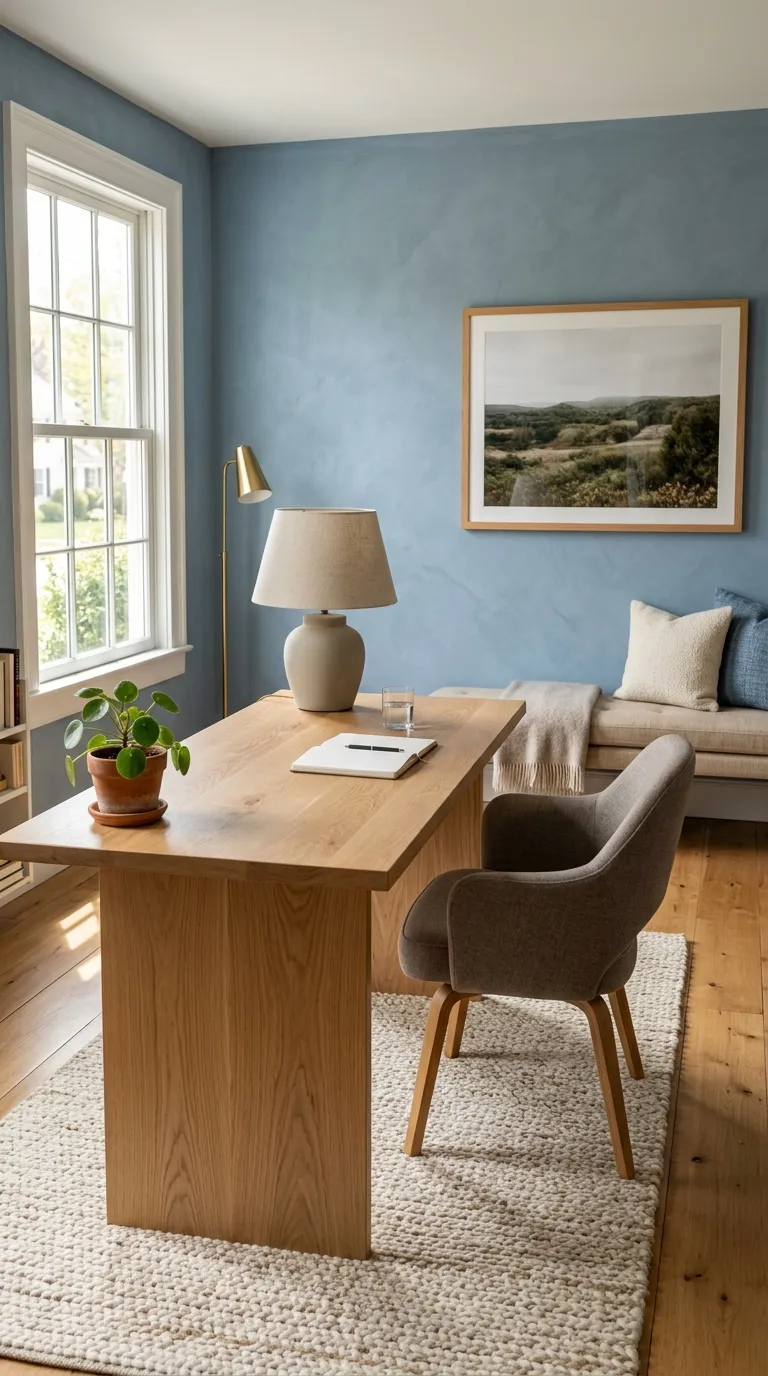
A small gap behind the desk can give the room a more open feel. If your floor plan allows it, leave enough room for comfortable movement and cleaning. The desk doesn’t always need to touch the wall to work well.
This approach can suit larger rooms where pushing every piece against a wall leaves the center empty. Place the desk slightly forward and keep the area behind it tidy. You can then use a low bench or console farther back without crowding the main work zone.
16. Position the Desk Near Useful Storage
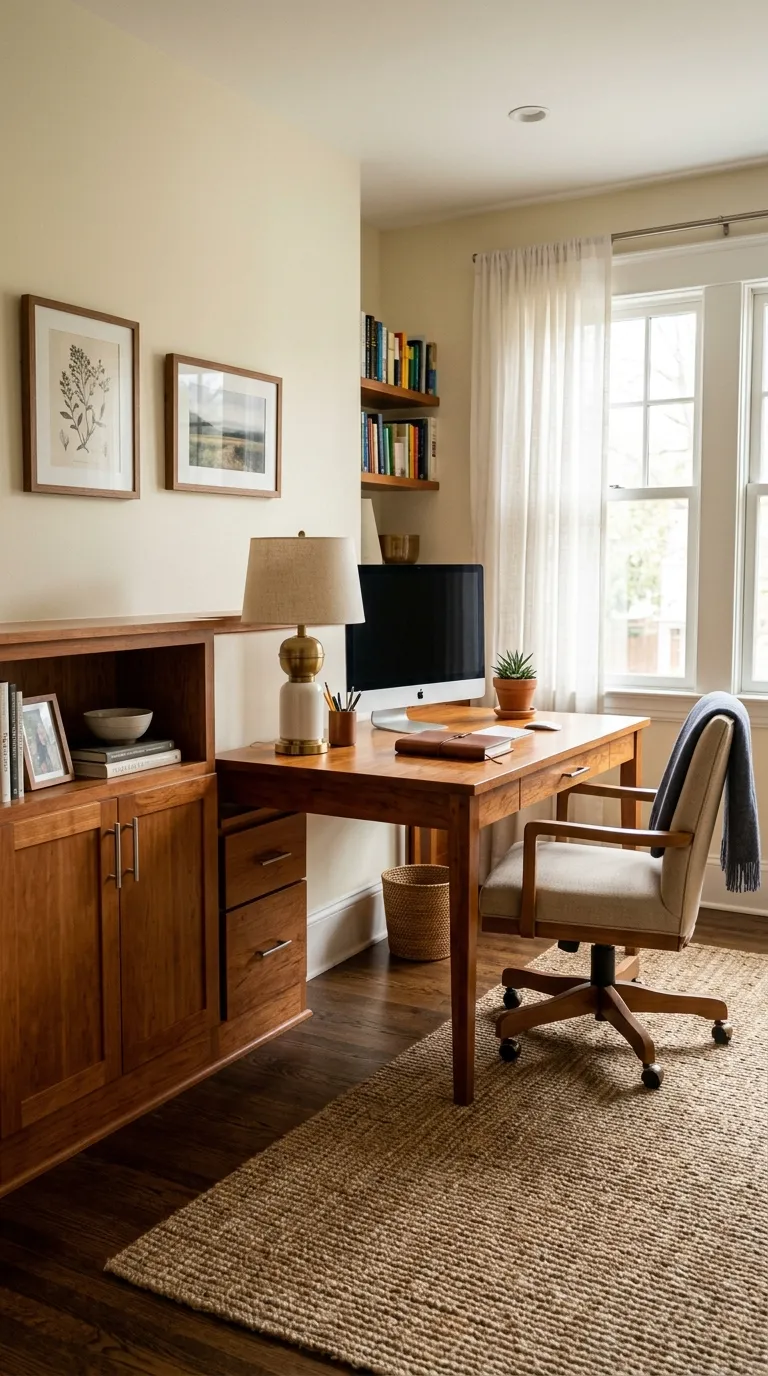
Useful storage should sit close enough to save steps but not so close that it crowds your chair. Low drawers or cabinets beside the desk make everyday supplies easy to reach. This keeps the main surface cleaner and supports a smoother work routine.
Think about what you use most often. Place notebooks, chargers, files, or stationery in nearby storage, while less-used items can go farther away. A smart Feng Shui desk layout should support real work, not just look good in a photograph.
17. Keep the Desk Out of the Bedroom When Possible
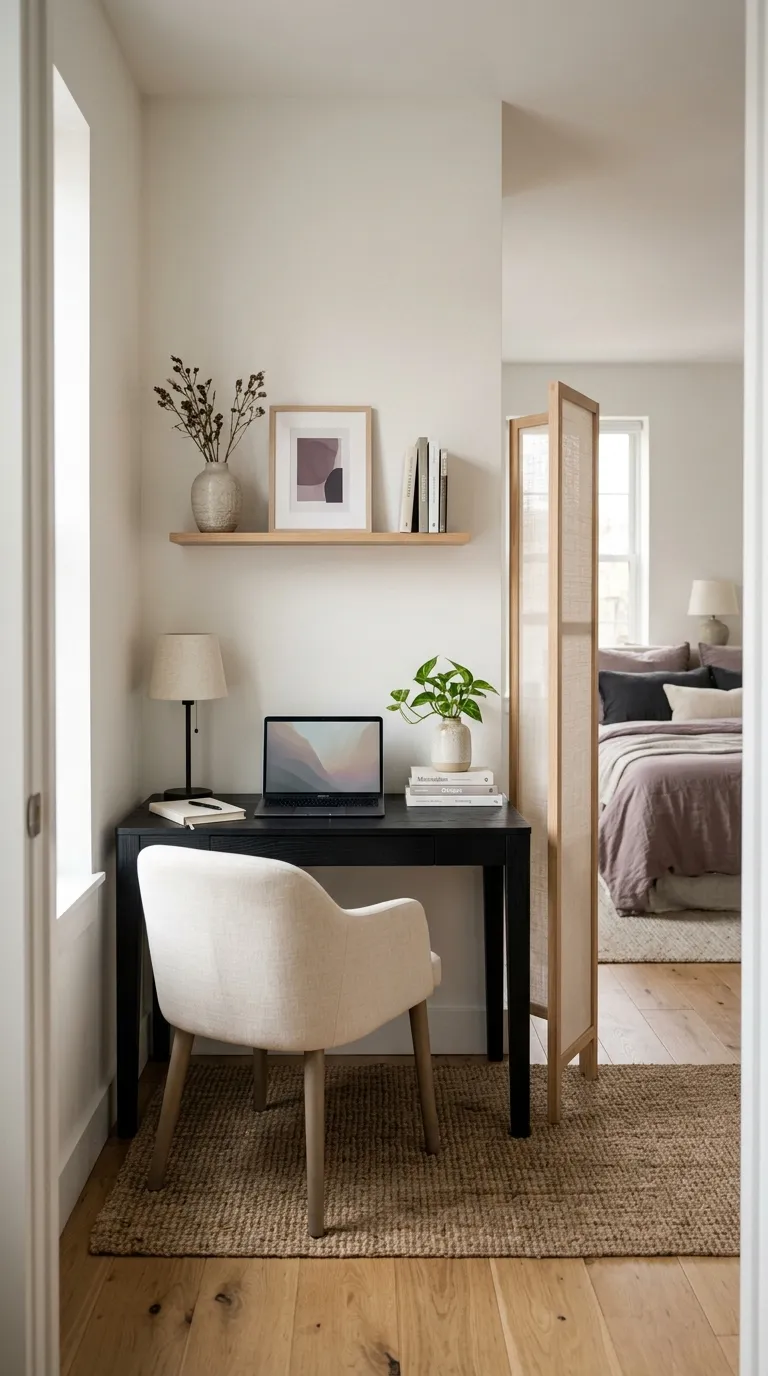
Your bedroom already has a strong resting purpose, so adding a full workstation can blur the boundary between work and sleep. When you have another option, place your desk in a separate room, alcove, hallway nook, or living area. Even a small dedicated corner can create useful separation.
If the bedroom is your only choice, don’t worry. Keep the desk visually compact and tidy, and avoid letting work equipment spread into the sleeping area. A screen, folding desk, or closed storage can help the two functions feel more distinct.
18. Place a Plant Beside the Desk
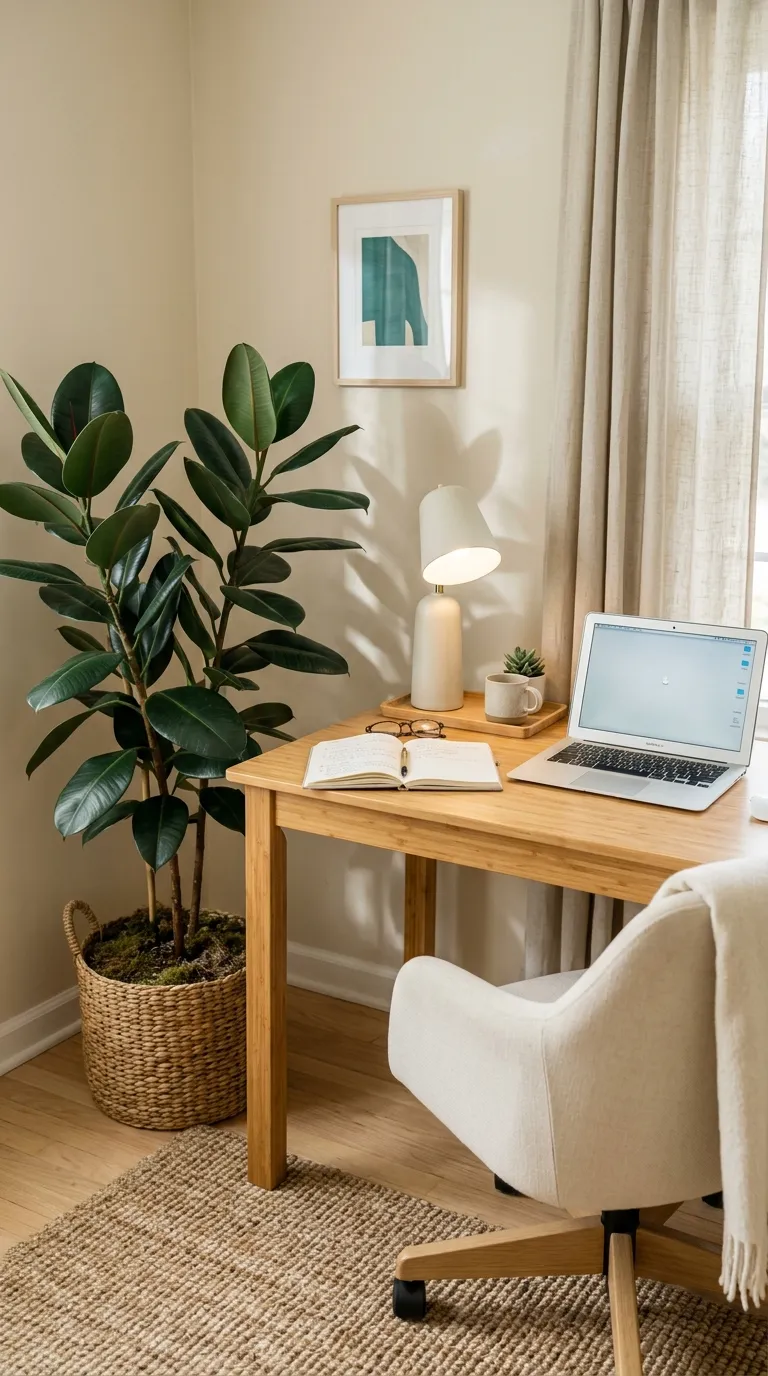
A healthy indoor plant can add a natural element to your workspace. Place one beside the desk rather than directly in front of your monitor or on an already crowded surface. In Feng Shui, living greenery is often used to bring a sense of freshness and balance to a room.
Choose a plant that suits the available light and your schedule. A rubber plant, pothos, or small leafy plant can work well when the conditions are right. Keep the leaves healthy and the pot area tidy so the feature feels intentional rather than cluttered.
19. Use a Corner Only When It Supports the Layout
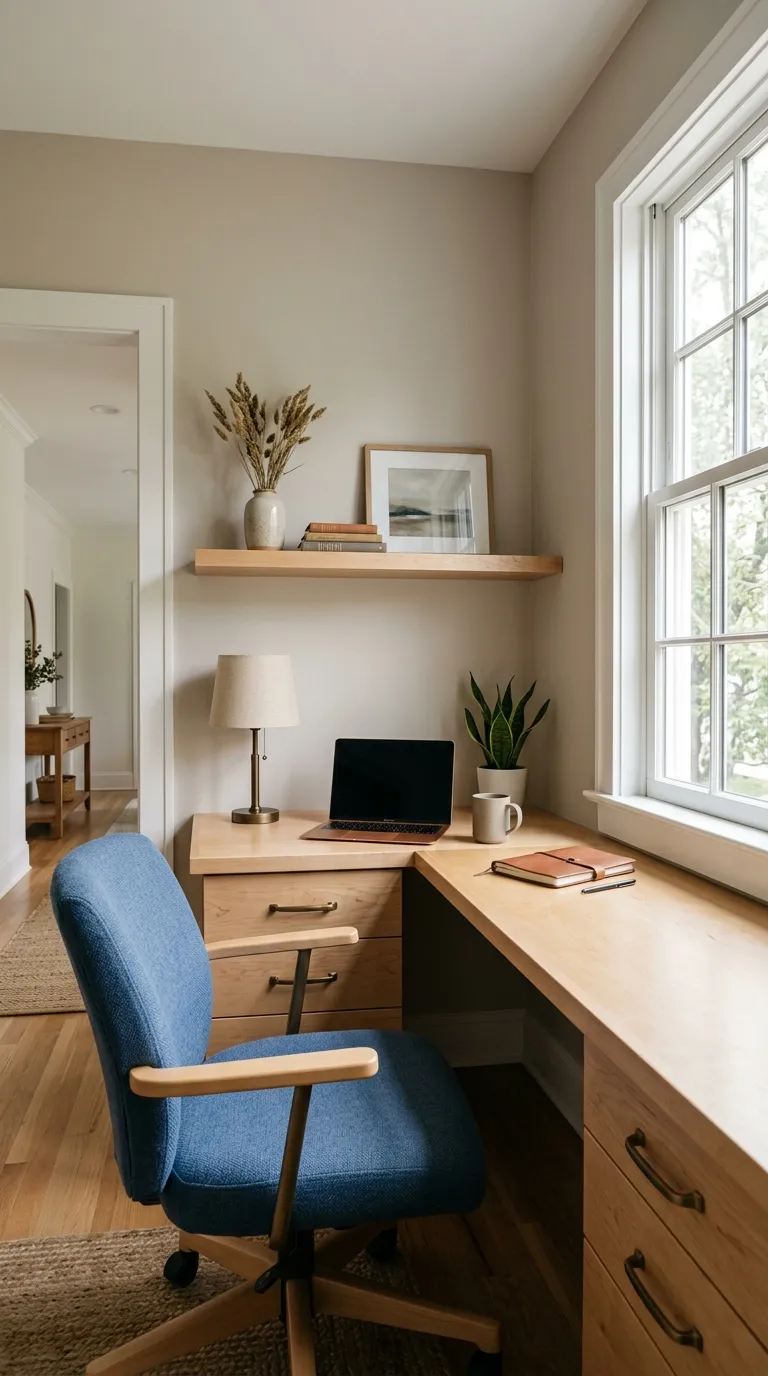
Corners can save valuable floor space, especially in a small home office. The key is making sure the corner doesn’t leave you staring into a tight pocket with poor movement around the chair. A corner desk works best when the open side still gives you a comfortable view into the room.
Before buying an L-shaped desk, measure the wall lengths and chair clearance. Leave enough room to sit, stand, and access drawers without obstruction. Good Feng Shui home office desk placement ideas should fit the room you actually have, not an imaginary floor plan.
20. Keep Clutter Away From the Desk Entrance
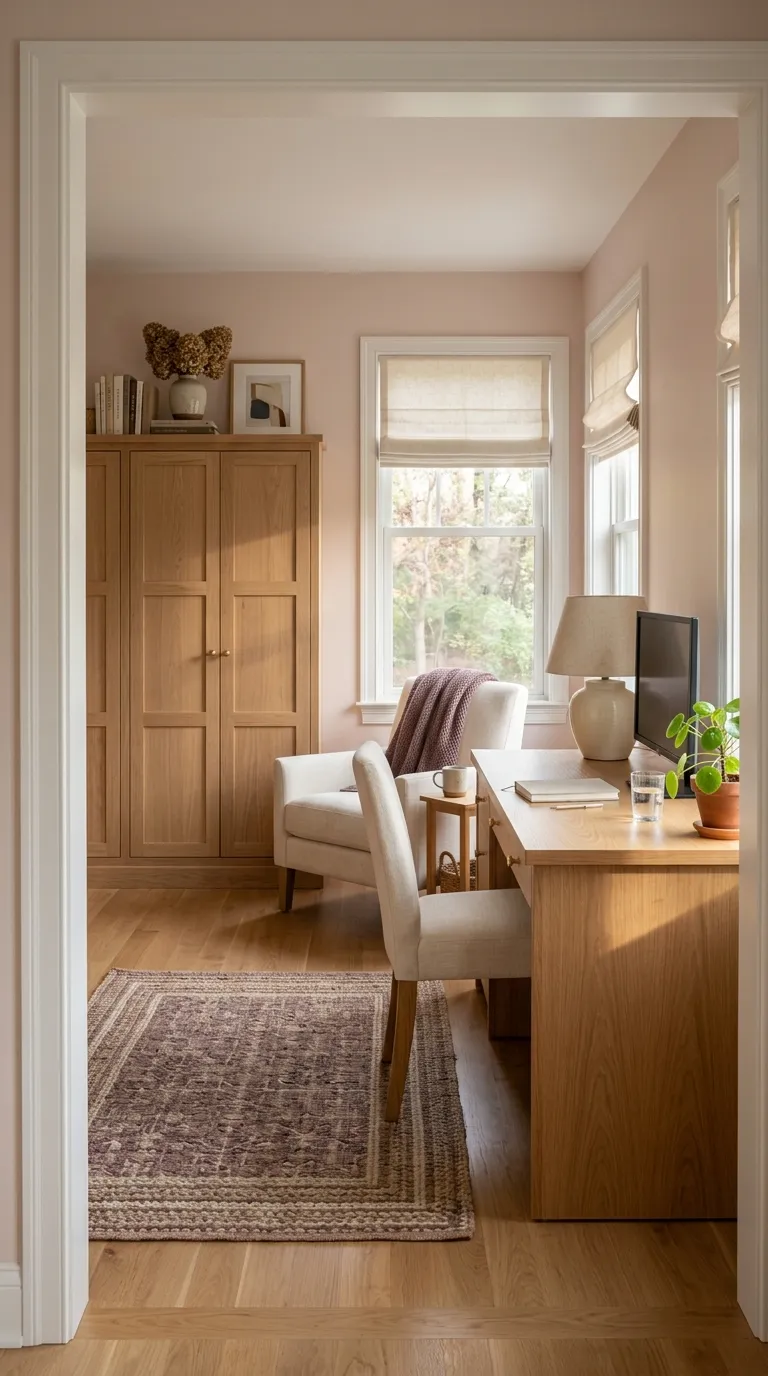
The area around your office entrance affects the first impression of the space. Keep bags, packages, paperwork, and random household items away from the desk zone. Closed storage works especially well when you need to control visual clutter quickly.
Start with the floor, then work upward. Clear the doorway, organize the desk surface, and give loose items a proper home. This simple reset can make your Feng Shui workspace feel calmer without adding another piece of furniture.
21. Give the Desk a Strong Visual Center
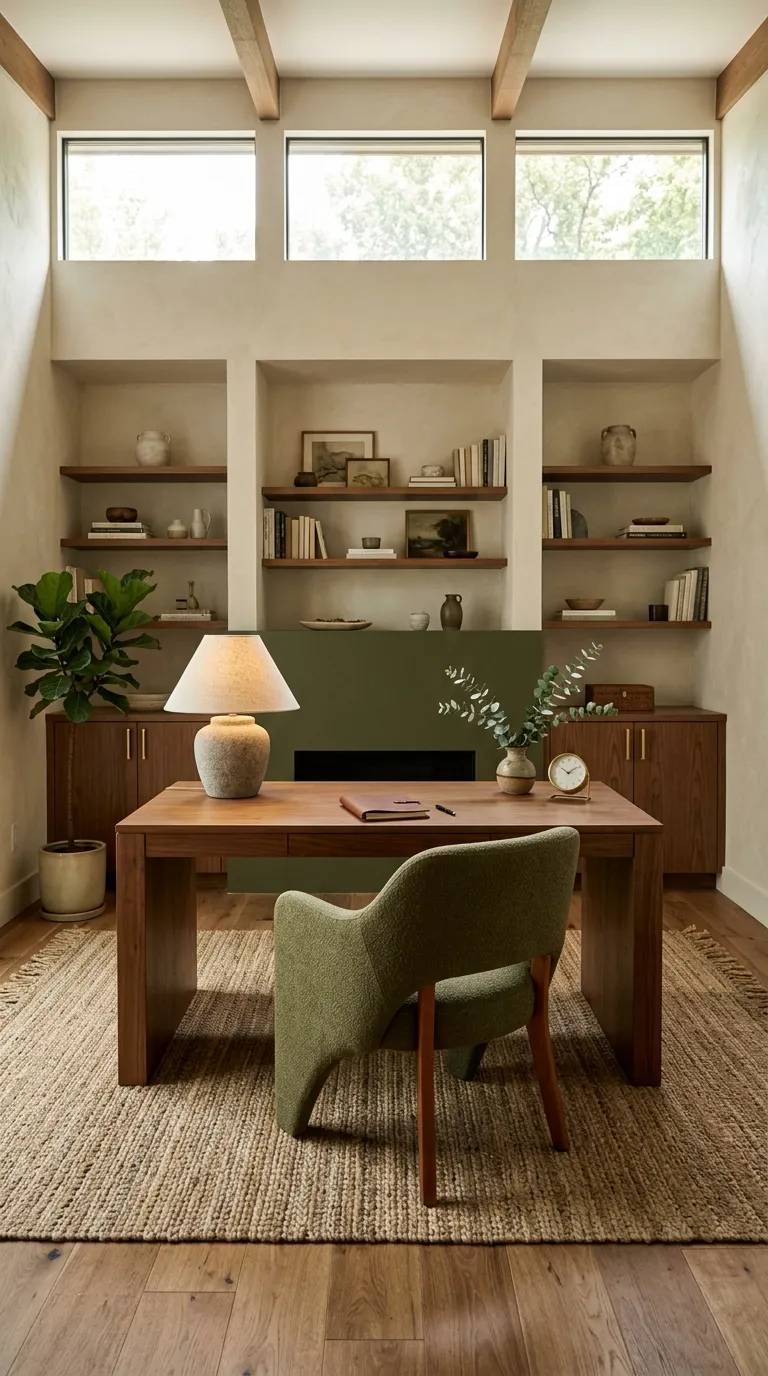
Your desk should feel like the main workspace, not another object squeezed into the room. Give it enough visual breathing room so your eye naturally settles there. A balanced desk position can make the office feel more organized even before you tidy the drawers.
Keep surrounding furniture quieter than the desk. Low cabinets, simple artwork, and restrained accessories can frame the workspace without competing with it. This approach works well when you want your office to feel polished but still practical.
22. Test the Layout Before Making It Permanent
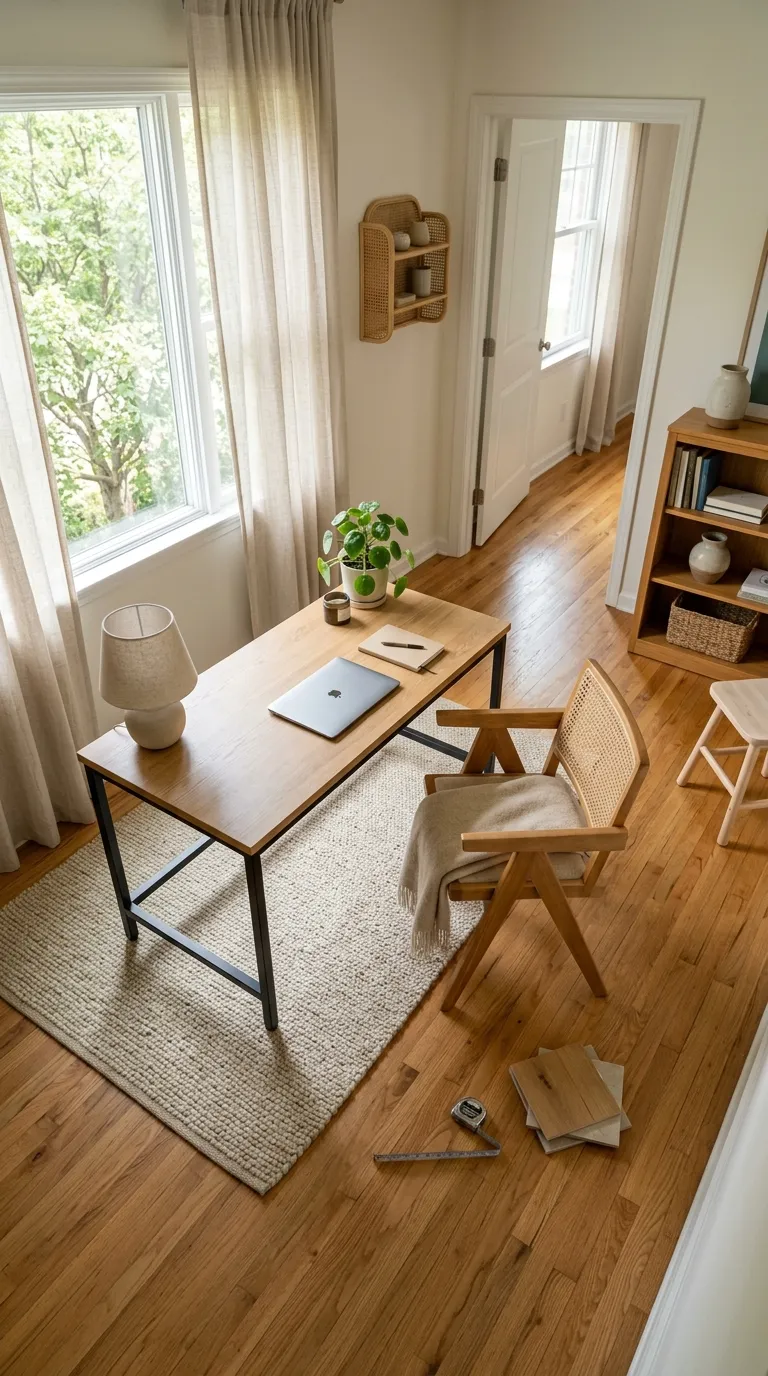
Don’t commit to a desk position just because it looks good on paper. Move the desk and sit in the chair for a few minutes to check the doorway view, window glare, chair clearance, and overall comfort. Real use will tell you more than a floor plan alone.
Try two or three positions before settling on one. Pay attention to how the room feels when you enter, sit down, stand up, and reach for storage. The best Feng Shui home office desk placement ideas are the ones that make your actual workday feel simple and comfortable.
In the End
Your desk placement can shape how your home office looks and functions every day. Start with the basics, solid support behind you, a clear doorway view, comfortable movement, useful natural light, and enough open space around the chair.
You don’t need to change everything at once. Test one position, clear the surrounding clutter, and see how the room works during your normal routine. With a few thoughtful adjustments, your home office can feel more settled, organized, and ready for focused work.
Emma Williams
Emma Williams is an interior design expert and decor editor at Lady Home Decor. She specializes in modern, cozy, and functional home styling, helping readers discover inspiring decorating ideas that are easy to recreate. Her work focuses on timeless design, practical solutions, and the latest home decor trends.