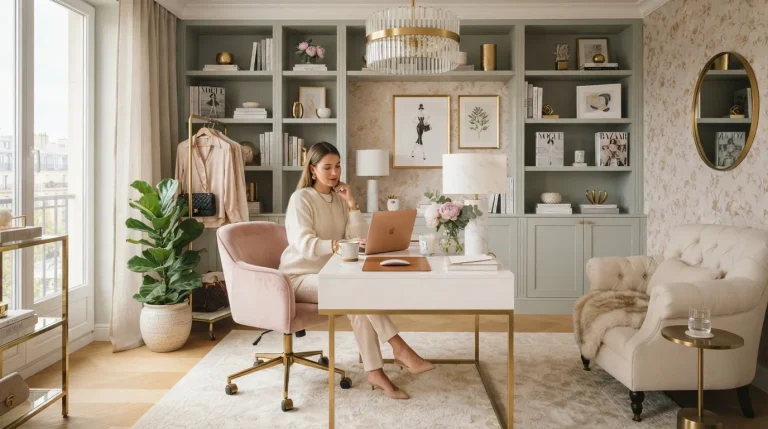
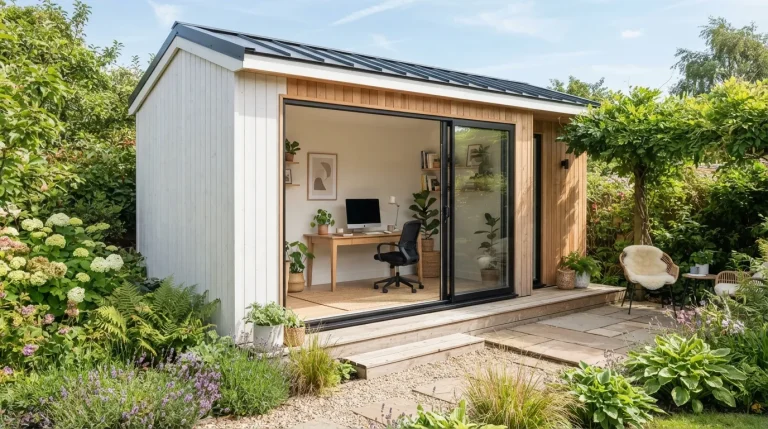
20 Genius Feng Shui Home Office Ideas for Even Tiny Spaces

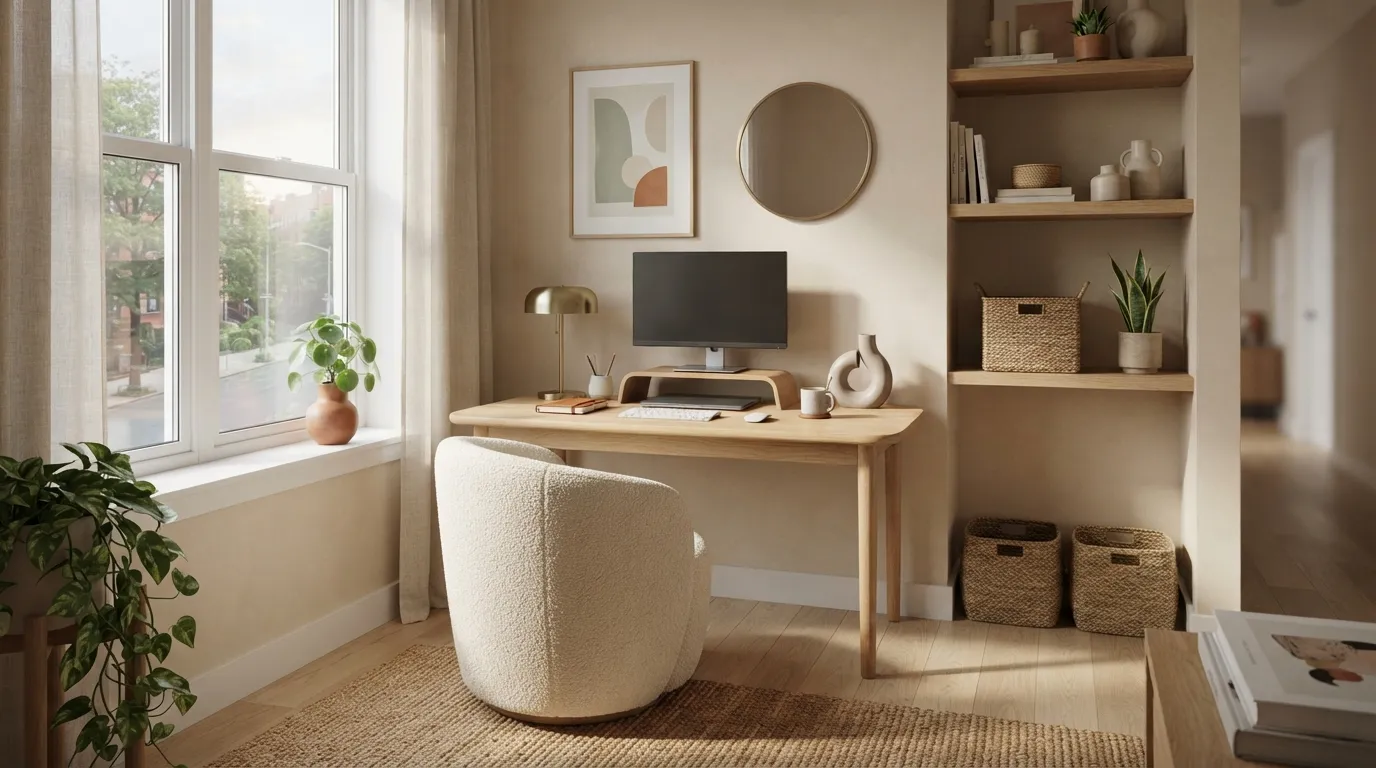
A tiny office can still feel calm, useful, and inviting. With the right layout, feng shui home office ideas for small spaces can help you create a work zone that feels open without needing a large room. Smart placement, natural materials, soft colors, and tidy surfaces can make a compact corner feel far more comfortable.
The key is to give every item a clear purpose. A narrow desk, good chair, gentle lighting, and a few thoughtful decor pieces can create a peaceful home office without crowding the room. Whether you’re working from a bedroom corner, hallway nook, or small apartment, these ideas can help you make the most of every inch.
1. Place Your Desk in a Commanding Position
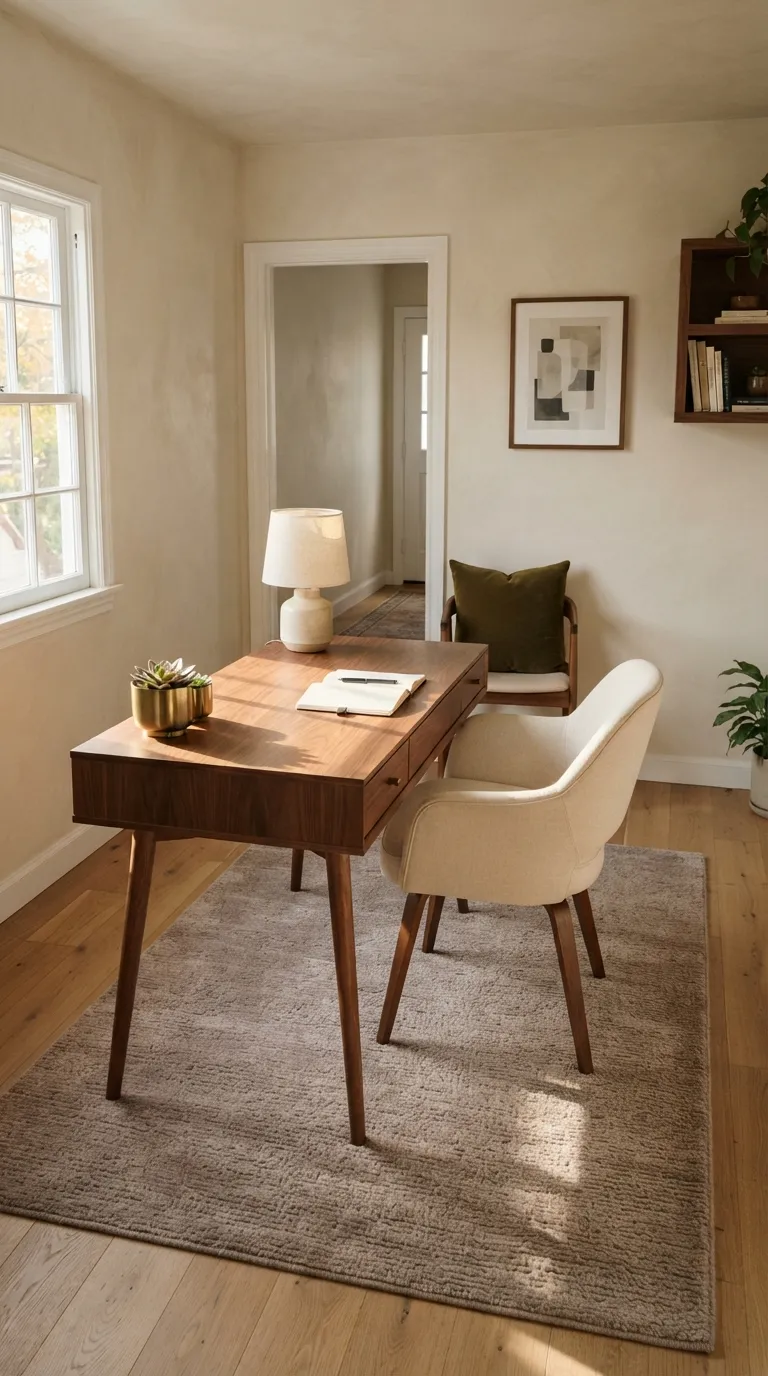
Your desk position matters when space is tight. Feng Shui often favors a spot where you can see the doorway while working, because it can make the room feel more secure and settled. In a small office, place the desk slightly off-center rather than forcing it against the busiest wall.
Avoid blocking the door or creating a cramped path around your chair. If the ideal position isn’t possible, use a small mirror that gives you a view of the entrance from your seat. This simple adjustment can work well in a bedroom office or narrow apartment nook.
2. Choose a Slim Desk With Open Leg Space
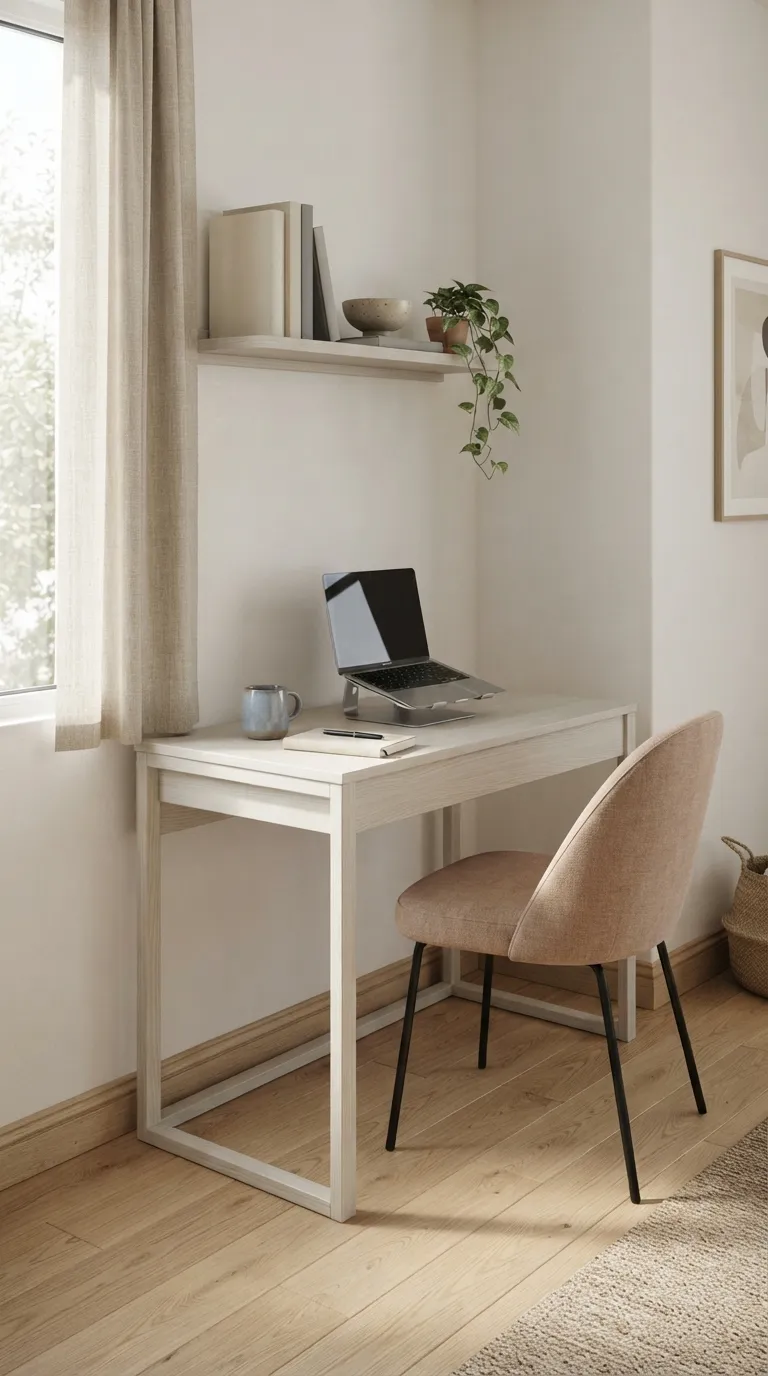
A bulky desk can make a tiny room feel packed before you even sit down. Choose a narrow design with clean lines and open space underneath, so your legs have room and the floor stays visually clear. Light wood can also make the workspace feel less heavy than a large dark workstation.
Look for a desk that’s deep enough for your laptop, lamp, and daily essentials without becoming a storage dump. A 36 to 48-inch-wide desk can work well in many compact setups. Keep the surface simple so your eyes have somewhere calm to rest between tasks.
3. Keep the Area Around Your Desk Clutter-Free
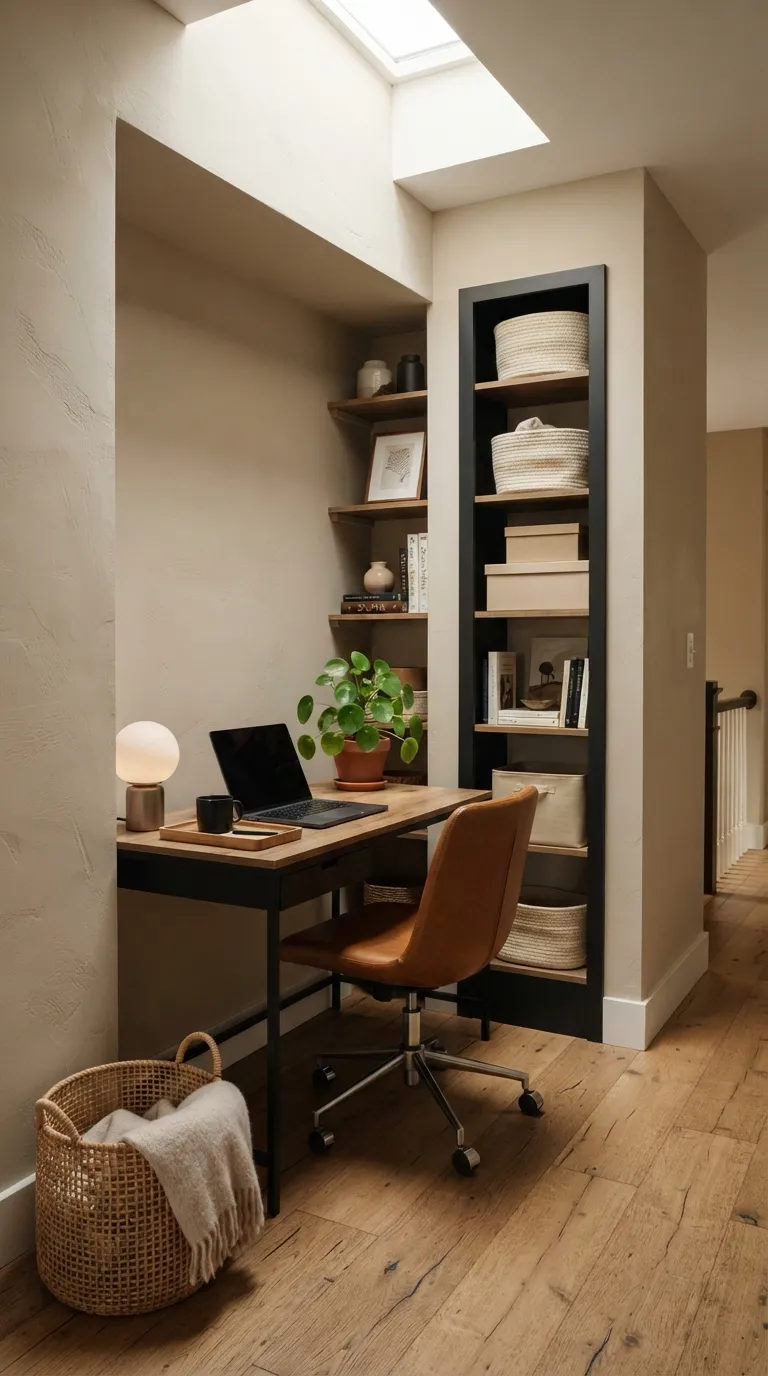
Clutter can make a small office feel even smaller. Keep paperwork, cables, mugs, and random items from spreading across the desk or floor. A clear workspace gives the room a lighter visual rhythm and makes daily work feel less chaotic.
Use drawers, boxes, or vertical shelves to store things you don’t need every hour. Keep only useful items within arm’s reach, such as your laptop, notebook, lamp, and one or two personal pieces. For feng shui home office ideas for small spaces, a tidy perimeter is one of the easiest places to start.
4. Add a Small Healthy Plant
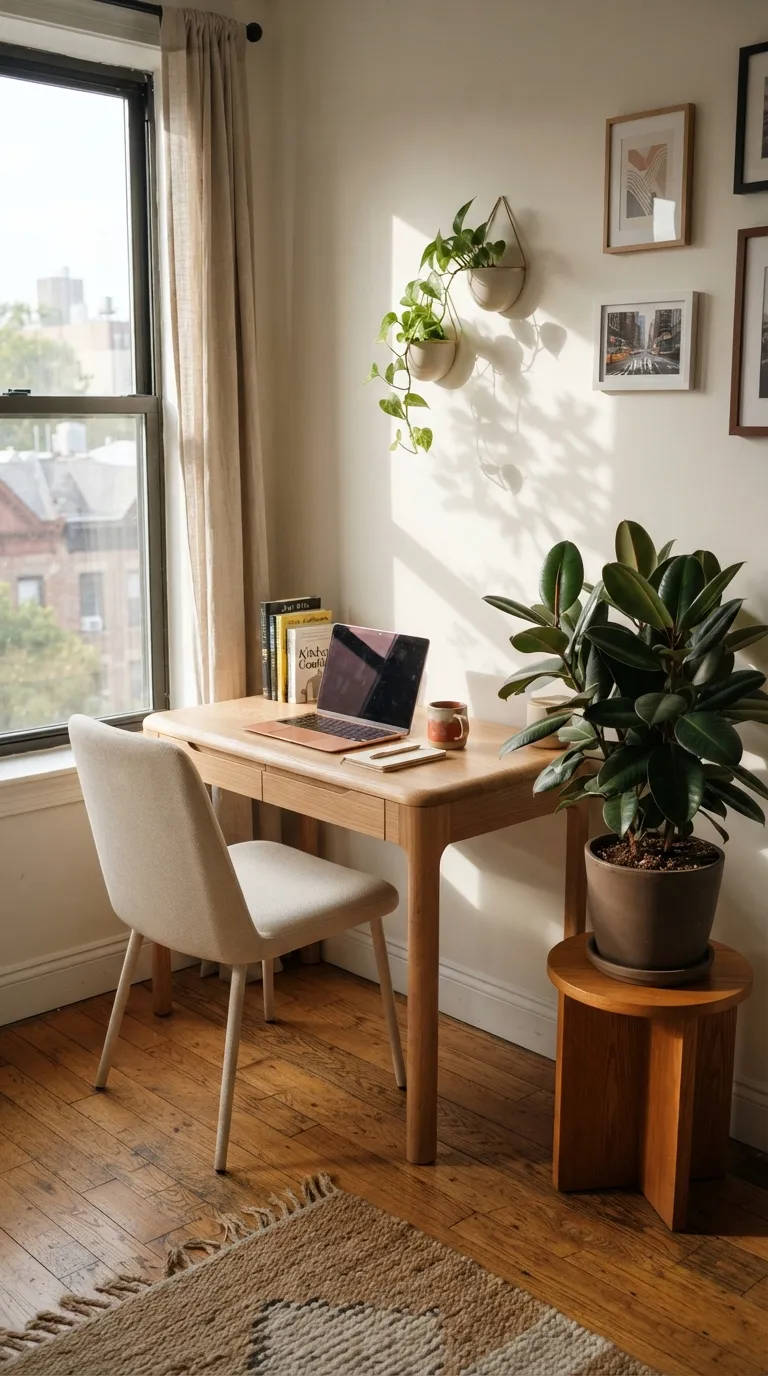
A small plant can bring a natural touch to your workspace without taking over the room. Choose one healthy plant with an upright shape, then place it where you can enjoy it without blocking your light or work area. A rubber plant, pothos, or compact jade plant can suit a small office nicely.
Don’t fill every corner with greenery. One well-placed plant often feels cleaner than several crowded pots. In a tiny workspace, use a narrow plant stand or a small shelf to keep the floor open.
5. Use Soft, Balanced Lighting
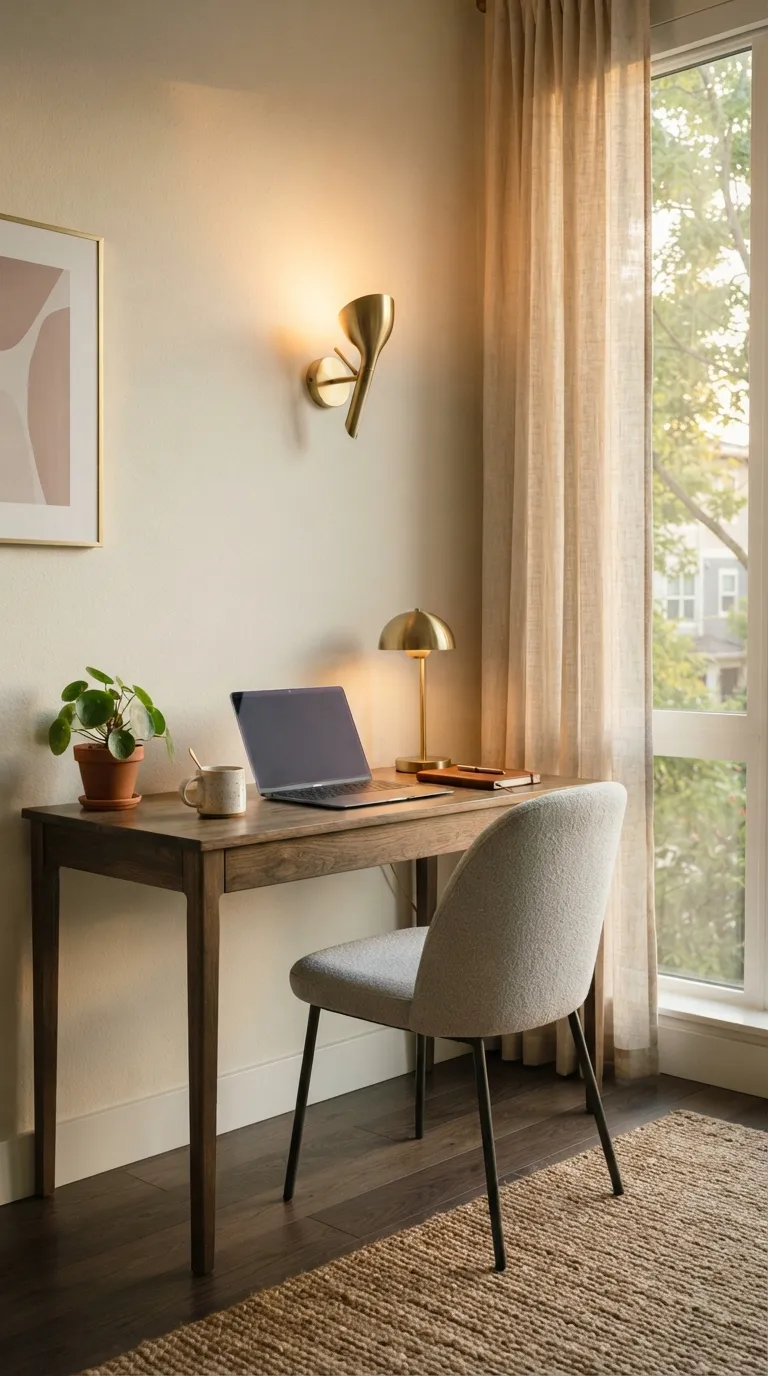
Good lighting keeps a small office comfortable throughout the day. Start with natural daylight, then add a warm desk lamp or wall sconce for darker hours. Avoid placing a harsh light directly behind your screen because glare can make the workspace feel uncomfortable.
Layered lighting also gives you more control over the mood. Use a focused lamp for paperwork and softer ambient light around the room. This approach works especially well when your office shares space with a bedroom or living room.
6. Bring in Natural Wood for Warmth
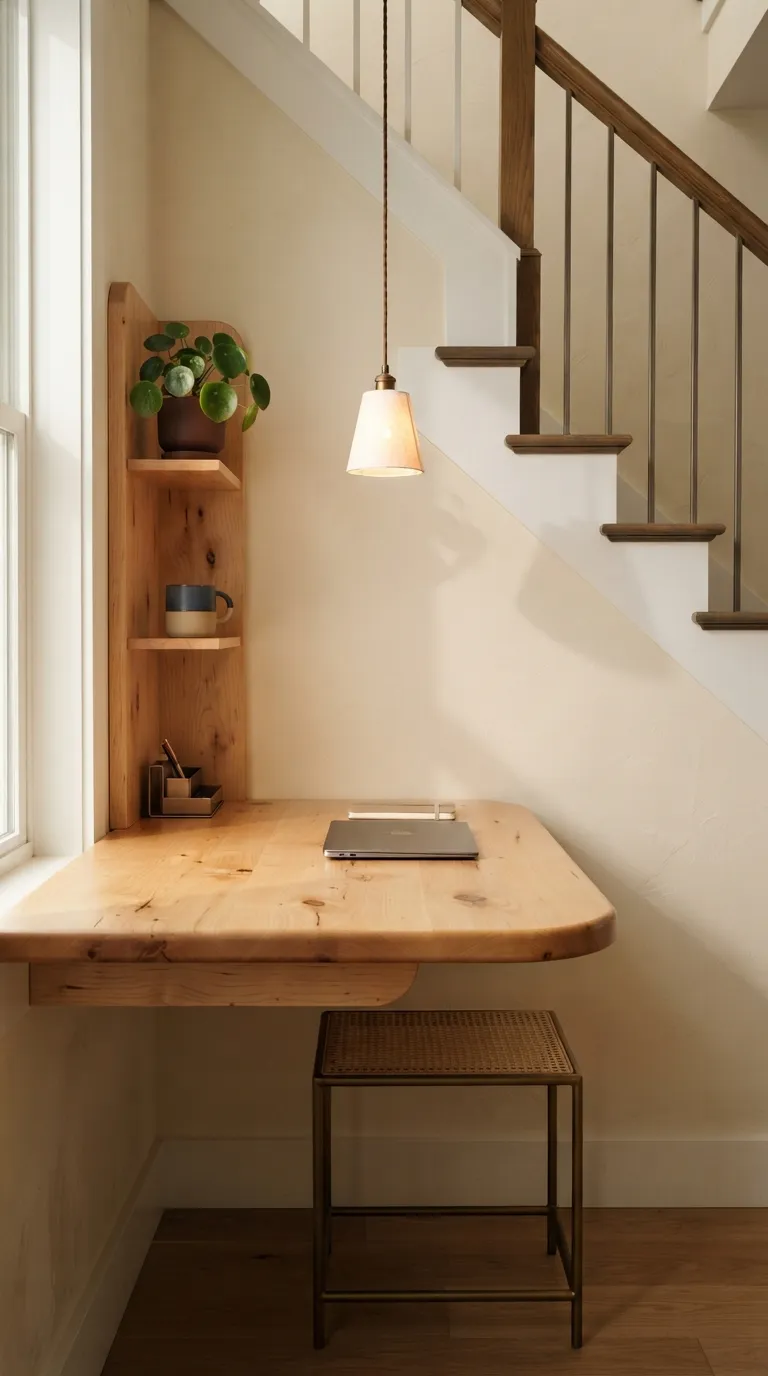
Natural wood can make a compact office feel warmer and more grounded. A small oak, maple, or walnut desk adds texture without requiring extra decor. Choose a finish that works with your existing floors and furniture so the room feels connected.
If a wooden desk isn’t practical, add smaller wood details instead. Try a floating shelf, wooden tray, cork organizer, or simple picture frame. These touches can bring warmth while keeping your limited desk and floor space clear.
7. Make Use of Vertical Wall Space
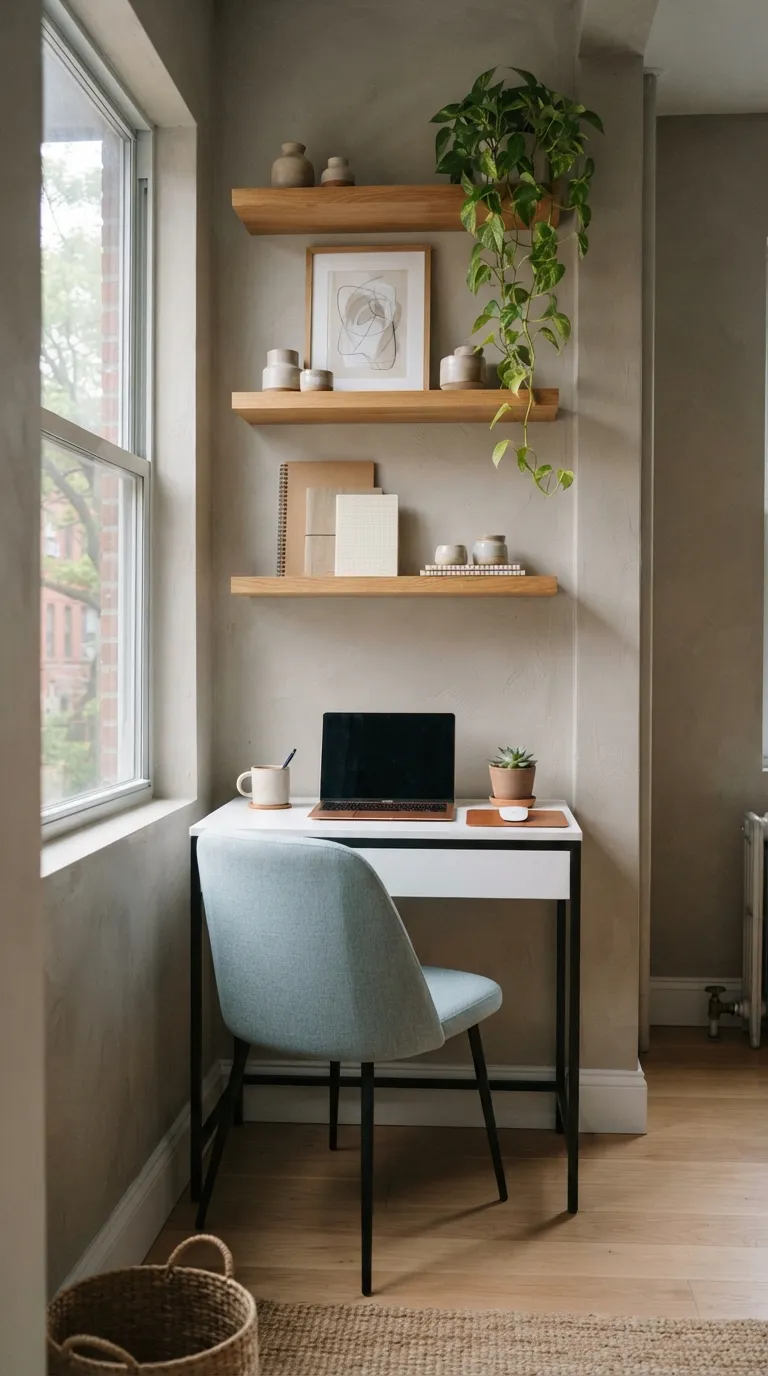
When floor space is scarce, look upward. Wall-mounted shelves can hold books, supplies, and a few meaningful objects without adding another piece of furniture. Keep the shelves tidy so they don’t become a wall of visual clutter.
Choose a narrow vertical arrangement rather than spreading storage across the entire wall. This keeps the desk area open and gives the room a taller appearance. For small home office design, vertical storage is a practical way to gain function without losing floor space.
8. Pick Rounded Furniture Edges
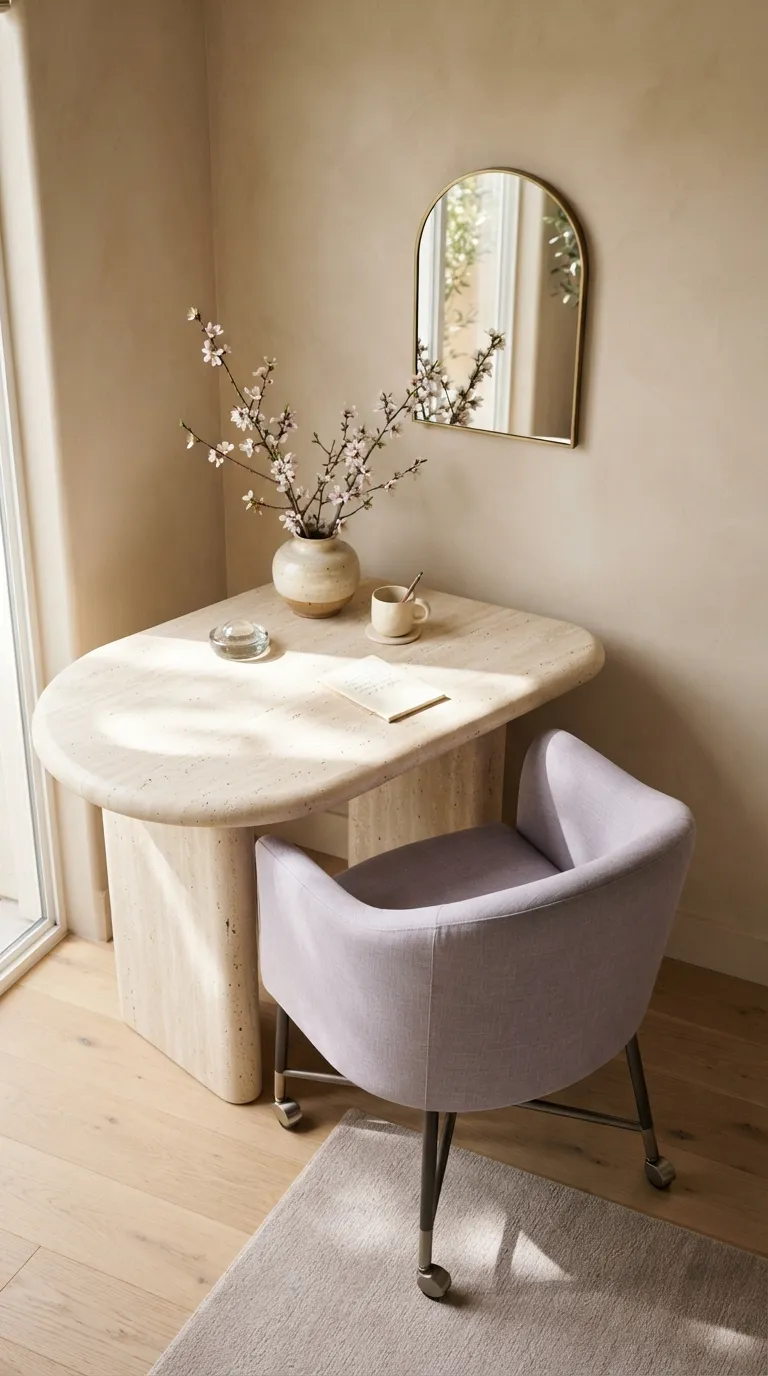
Sharp corners can feel awkward in a cramped workspace, especially when you’re moving around your desk several times a day. A rounded desk, curved chair, or circular side table can create softer visual lines and make tight paths easier to use.
You don’t need to replace every piece of furniture. Even one curved element can break up a boxy layout. A round lamp, arched mirror, or oval tray can bring the same softer look while taking almost no extra room.
9. Use a Light and Calm Color Palette
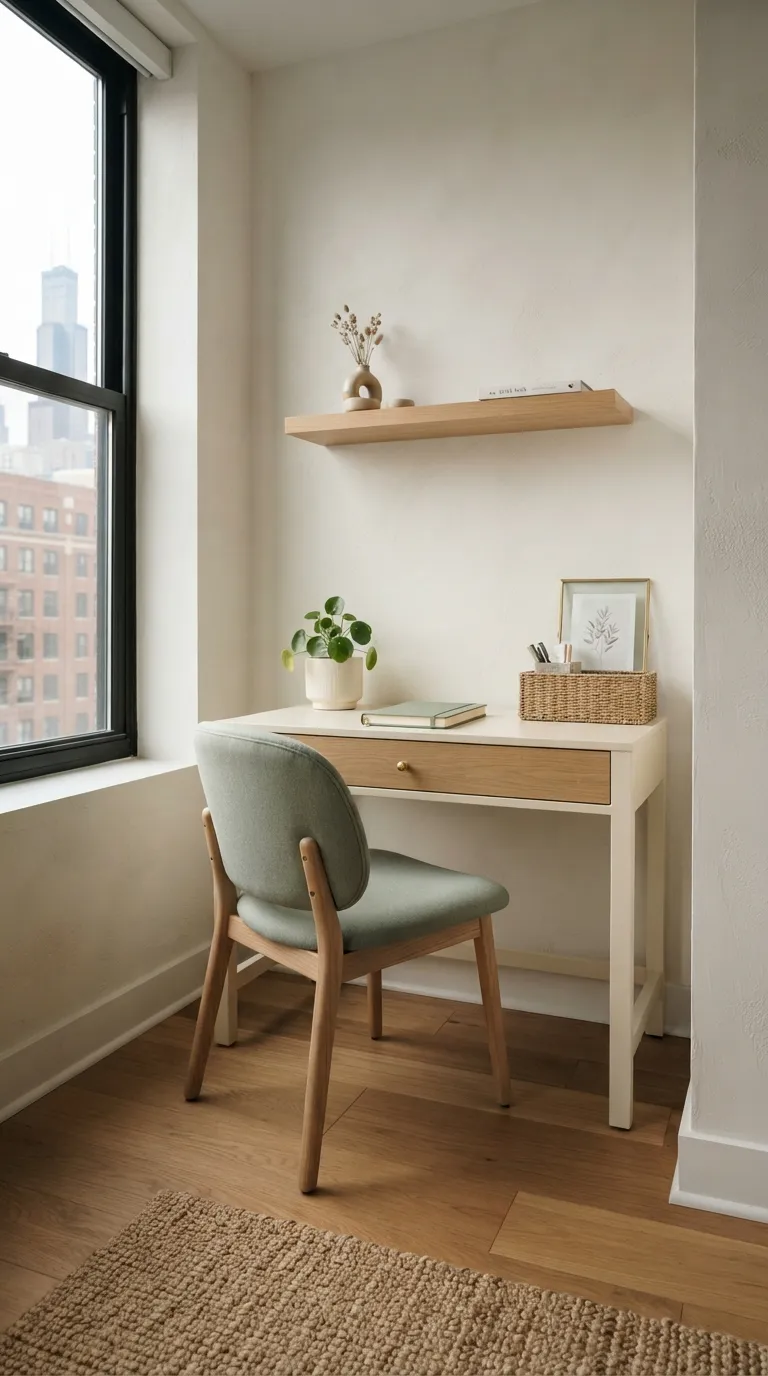
Light colors can make a compact office feel more open. Warm white, cream, pale beige, soft sage, and muted blue are easy choices for walls, furniture, and accessories. They also give you a quiet backdrop for focused work.
You don’t need an all-white room. Add one or two deeper accents through a chair cushion, artwork, or small storage box. The goal is a balanced palette that feels calm without making the space look flat.
10. Keep Your Computer Cables Hidden
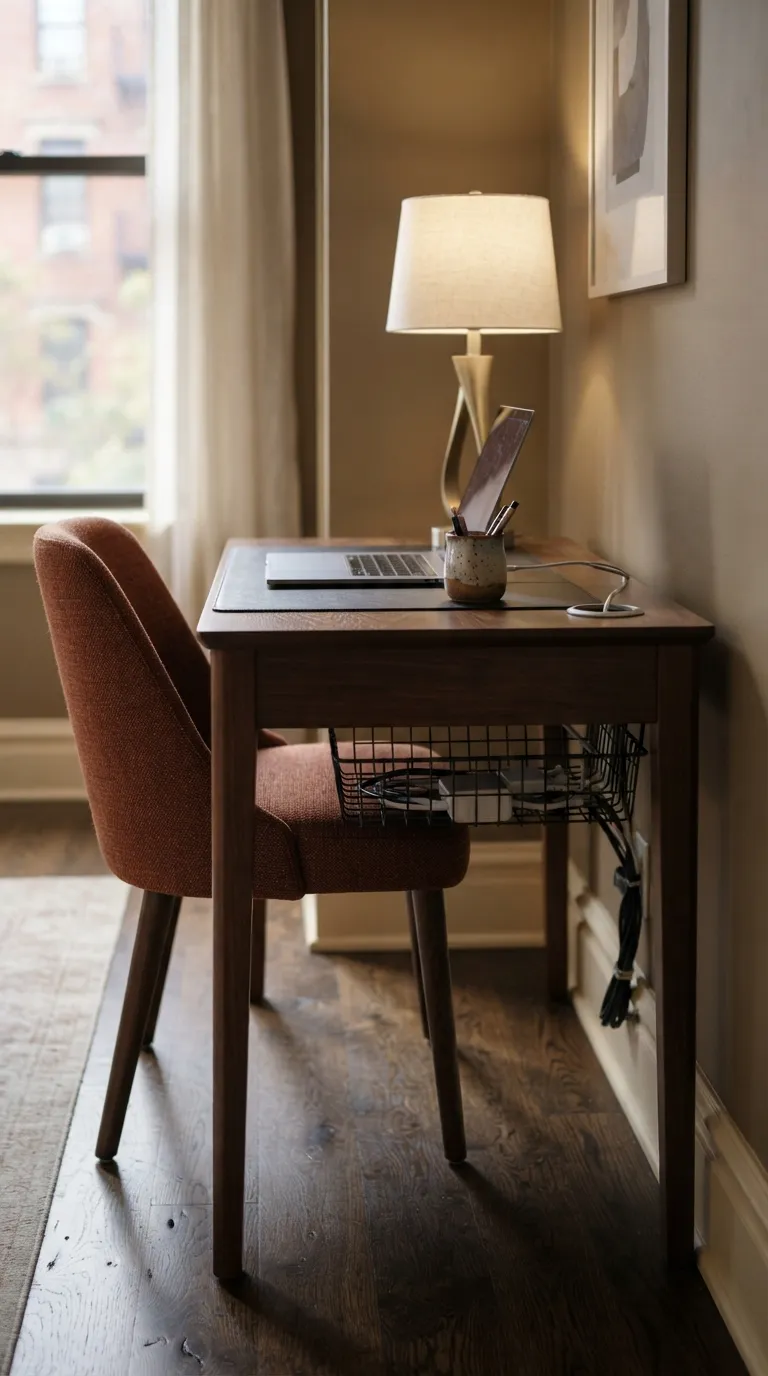
Loose cables can quickly make a tiny desk look messy. Route computer, monitor, and lamp cords through a cable tray or discreet clips beneath the desk. This small change keeps the work surface cleaner and the floor easier to walk around.
Choose cable organizers that match the furniture when possible. A dark tray can disappear beneath a walnut desk, while a white channel can blend into a pale workstation. Clean cable management is one of the simplest feng shui home office ideas for small spaces to apply.
11. Create a Dedicated Work Zone
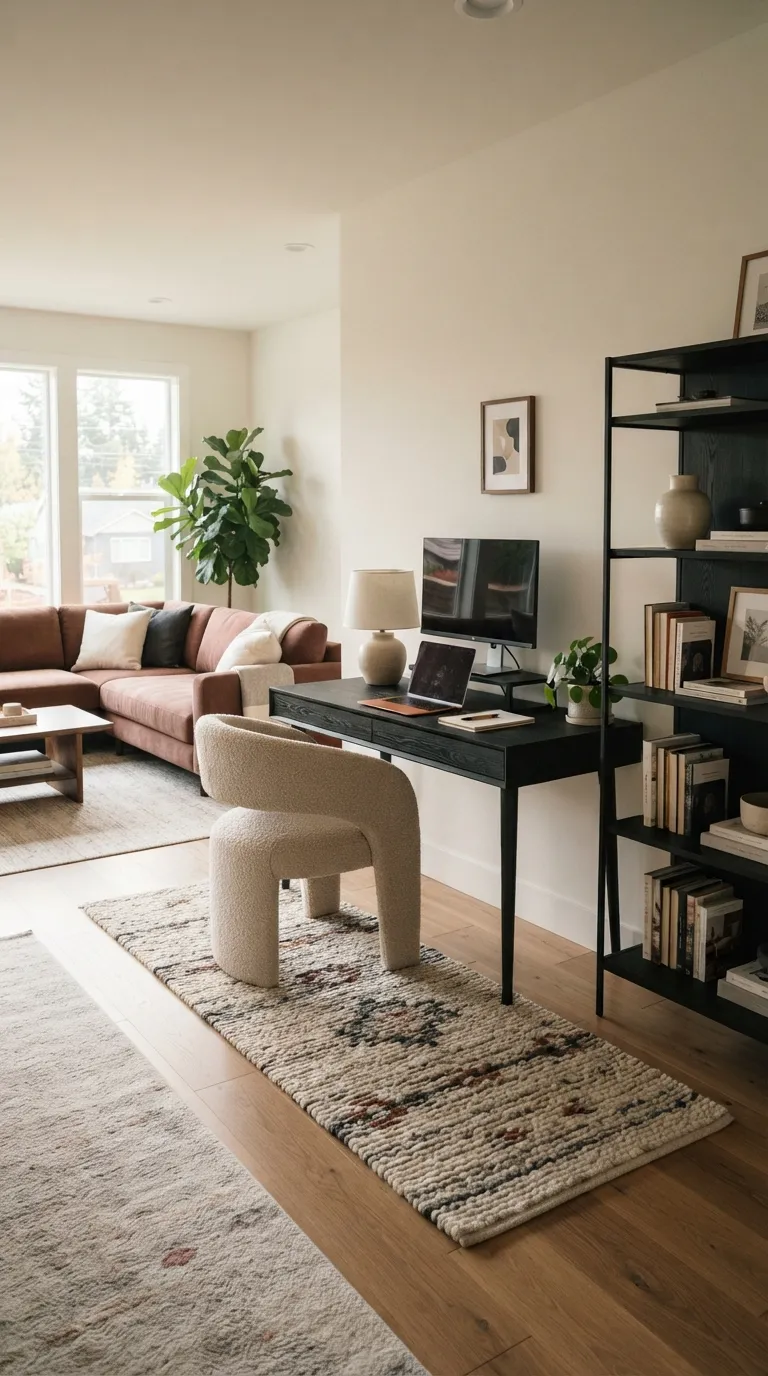
A tiny office doesn’t need a separate room. You can define your workspace with a small rug, a change in wall color, or a compact bookshelf. The visual boundary helps separate work from the rest of your home.
Keep the work zone consistent each day. Store your office supplies nearby and avoid letting household items spill into the area. This makes even a corner of a living room feel like a purposeful home office.
12. Add a Mirror for More Visual Space
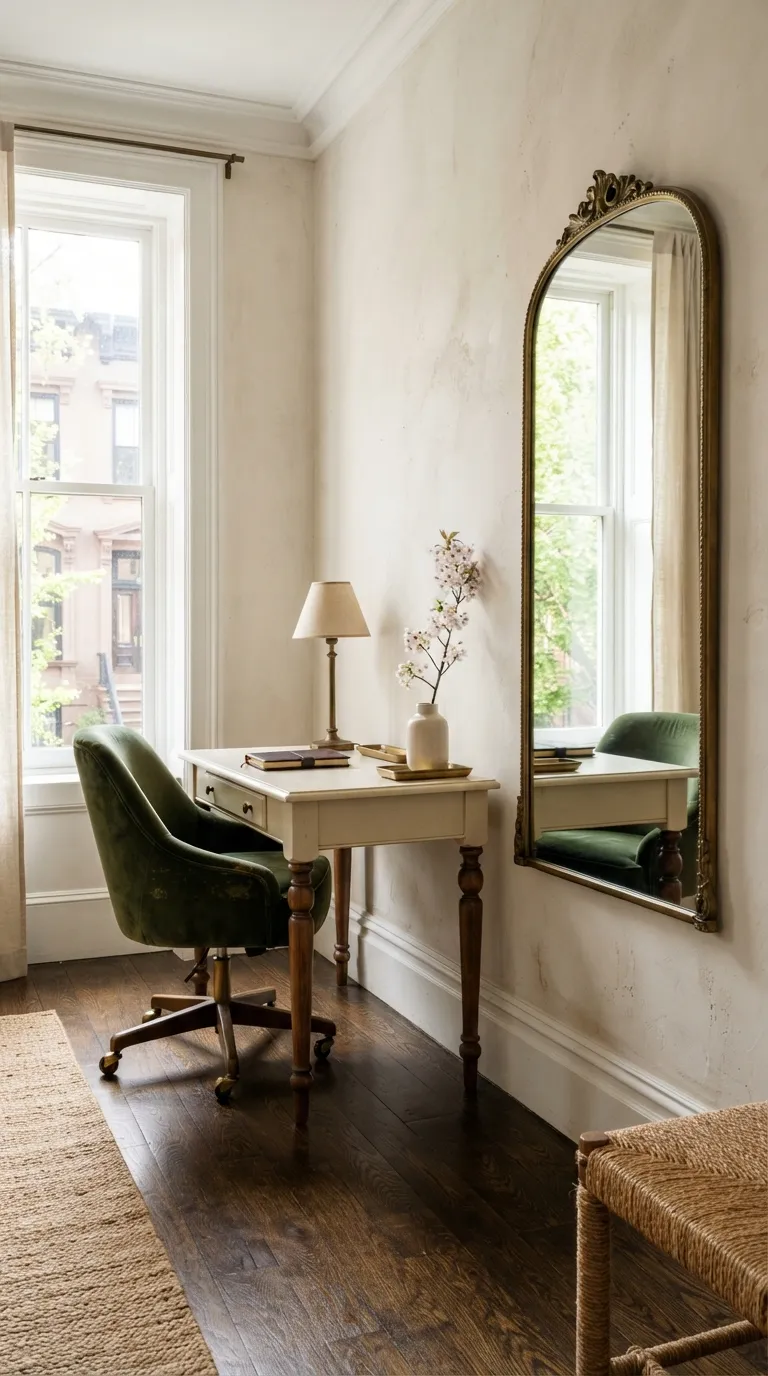
A well-placed mirror can make a small office appear brighter and more spacious. Position it where it reflects daylight, an attractive wall, or an open part of the room rather than a pile of paperwork. An arched or round frame can also soften a compact layout.
Keep the mirror at a useful viewing height and avoid covering too much wall space. In a small home office, one carefully chosen mirror is usually enough. It can add depth without taking any floor area.
13. Choose a Comfortable Chair That Fits
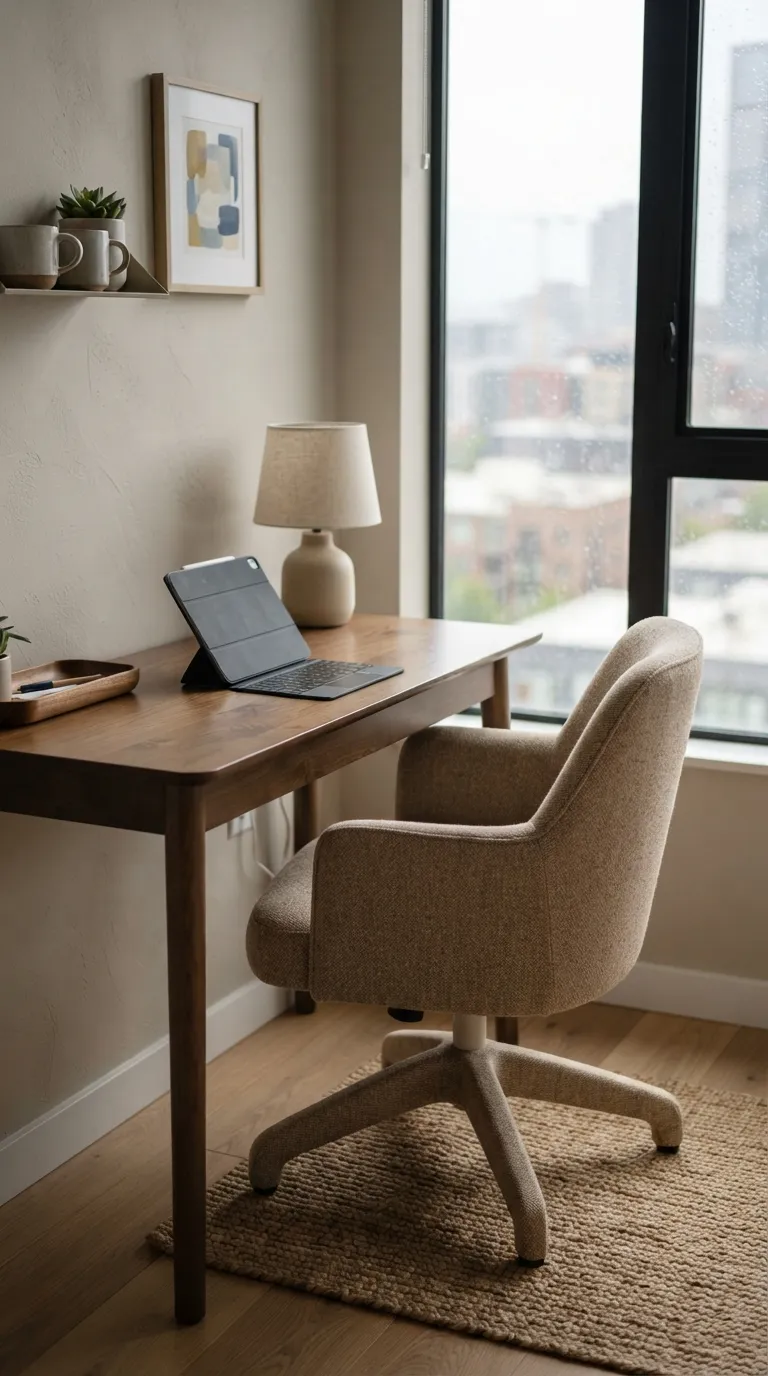
Your chair should support you without swallowing the room. Look for a compact design with a supportive back, comfortable seat, and enough clearance to move it in and out easily. A chair that fits fully beneath the desk can save valuable floor space.
Comfort also matters for a peaceful workspace. If you’re constantly adjusting your seat, the room won’t feel settled. Choose upholstery that suits your palette, then keep the area around the chair clear for easy movement.
14. Let Natural Light Lead the Workspace
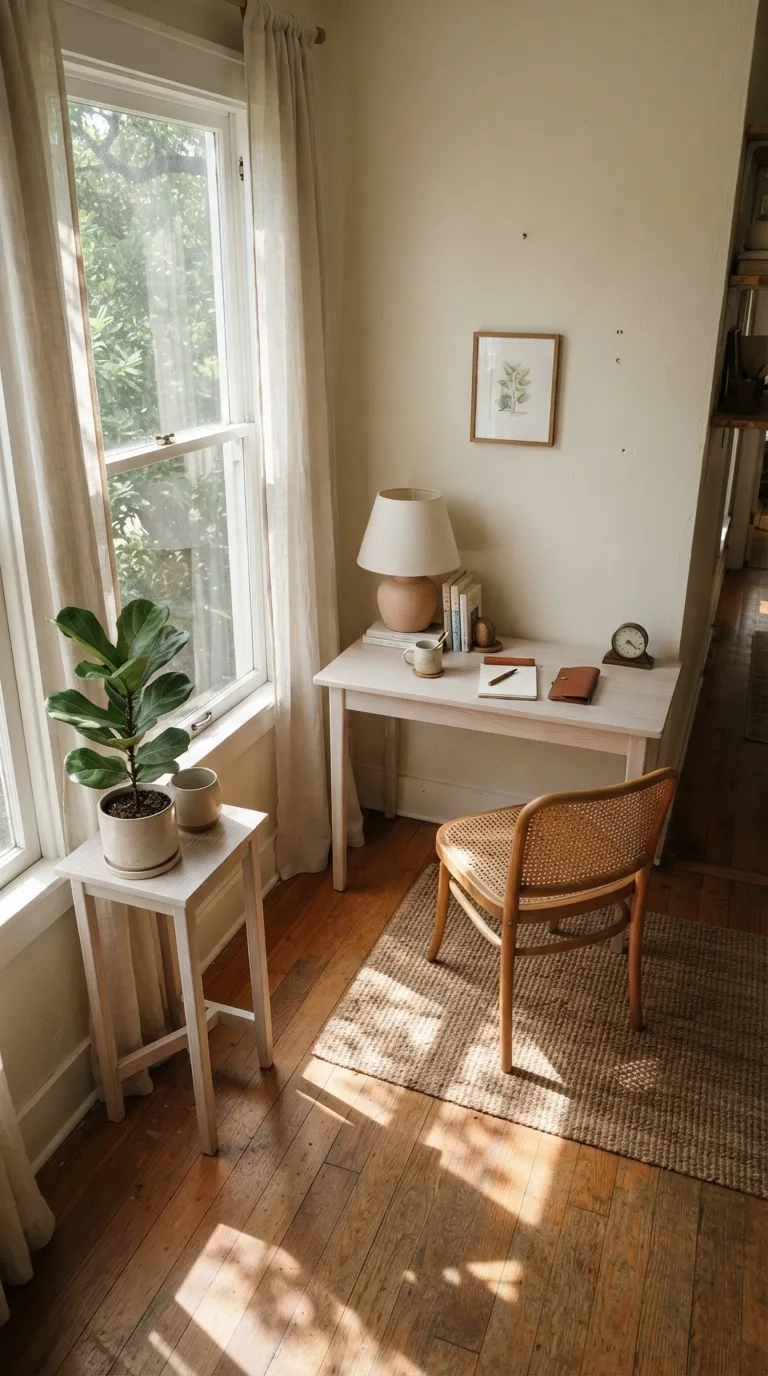
Natural light can make a small office feel less enclosed. Place your desk near a window when the layout allows, but avoid blocking the glass or making the workspace difficult to use. Sheer curtains can soften strong sunlight while keeping the room bright.
Think about how daylight changes during the day. If your screen faces a window, glare may become a problem. A side-facing setup often gives you useful light while keeping your monitor easier to view.
15. Keep a Clear Path Around the Workspace
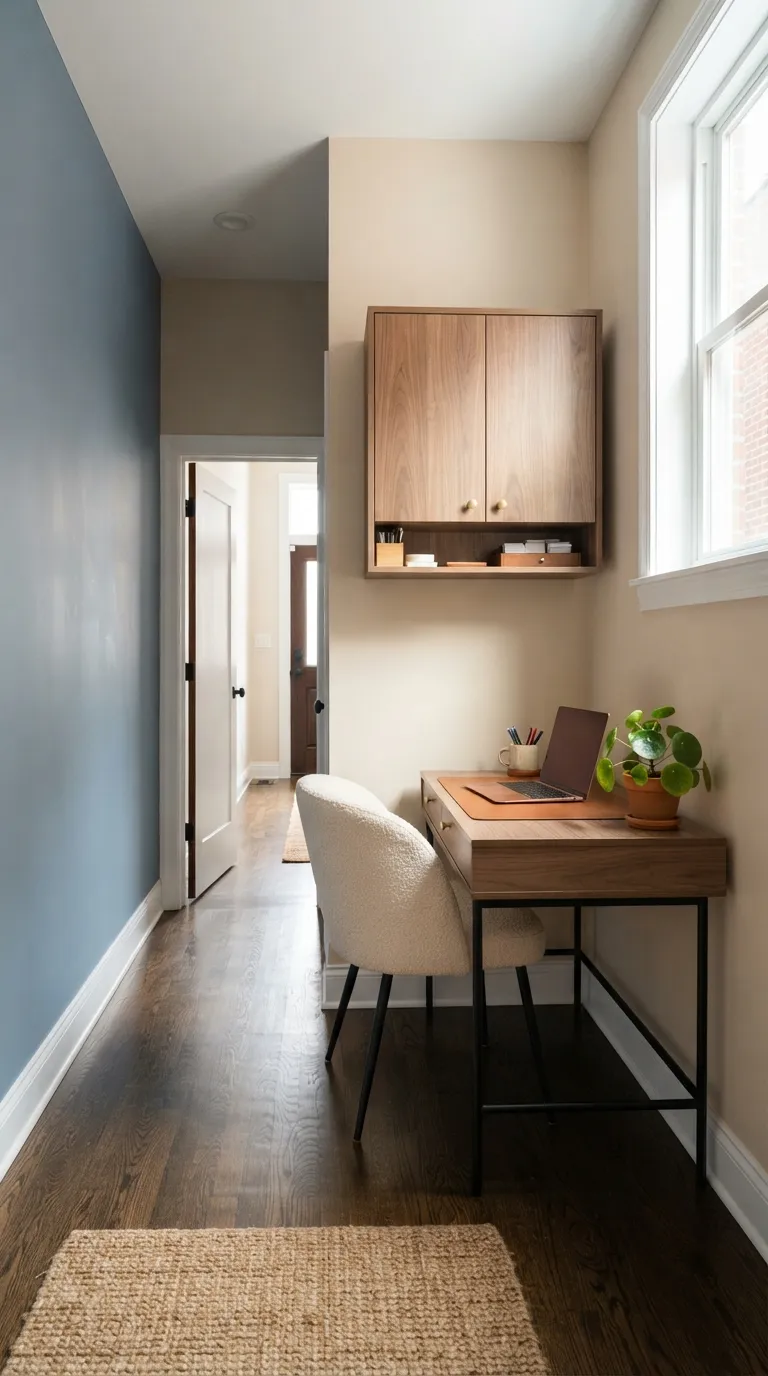
A clear walking path makes a tiny office easier to use. Before adding furniture, measure the space around your desk and chair so you know where you can comfortably move. Don’t let baskets, cords, stools, or storage boxes turn a useful passage into an obstacle course.
Keep the doorway and main route especially open. This supports the calm, orderly feel many people want from Feng Shui home office design. Even a few extra inches of open floor can make a compact workspace feel much easier to live with.
16. Add a Small Water-Inspired Accent
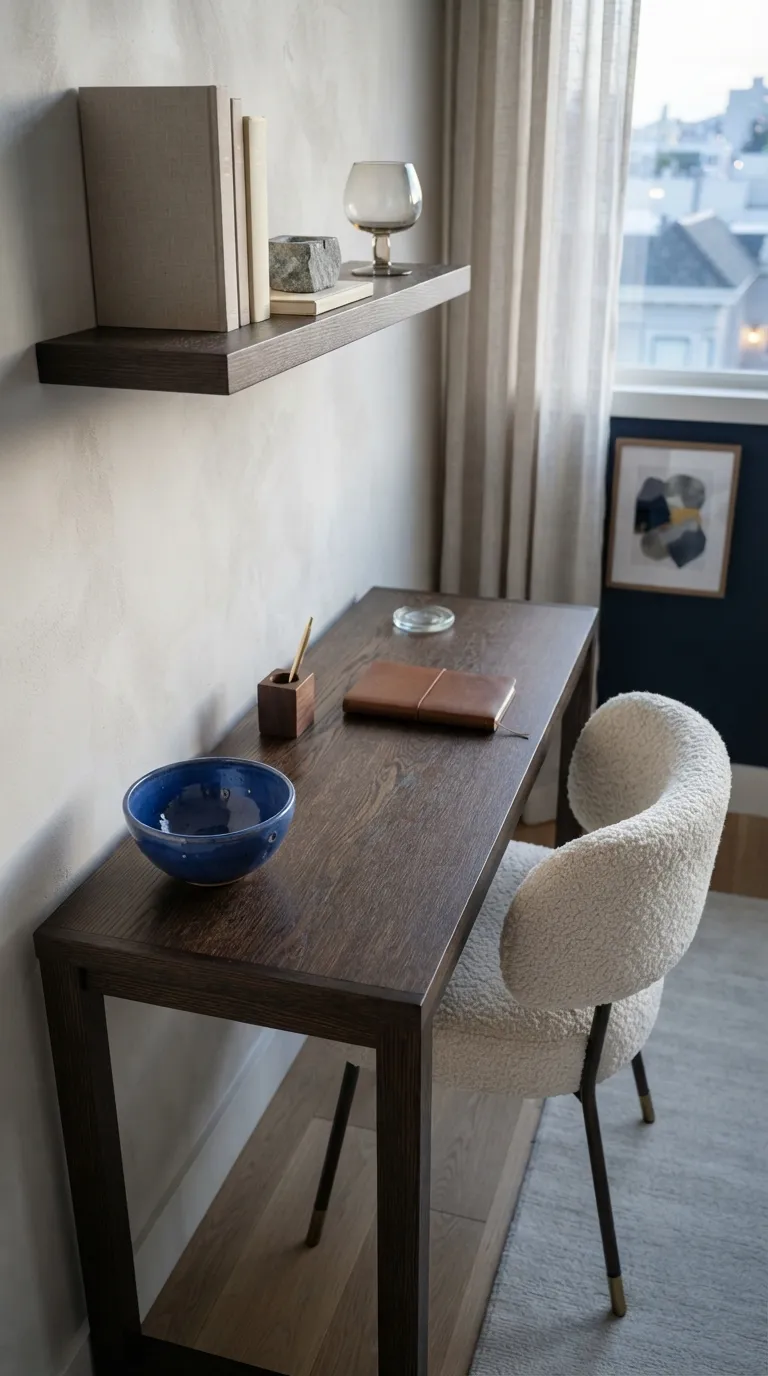
Water is one of the five elements often discussed in Feng Shui. In a small office, you don’t need a fountain or large display to suggest this element. A small blue ceramic piece, glass object, or artwork with gentle flowing forms can provide a subtle reference.
Keep the accent modest and intentional. Too many decorative objects can make a tiny desk feel busy. One blue bowl on a shelf or a small glass vessel near the workspace can add visual interest while preserving a clean surface.
17. Balance Wood, Metal, Earth, Fire, and Water
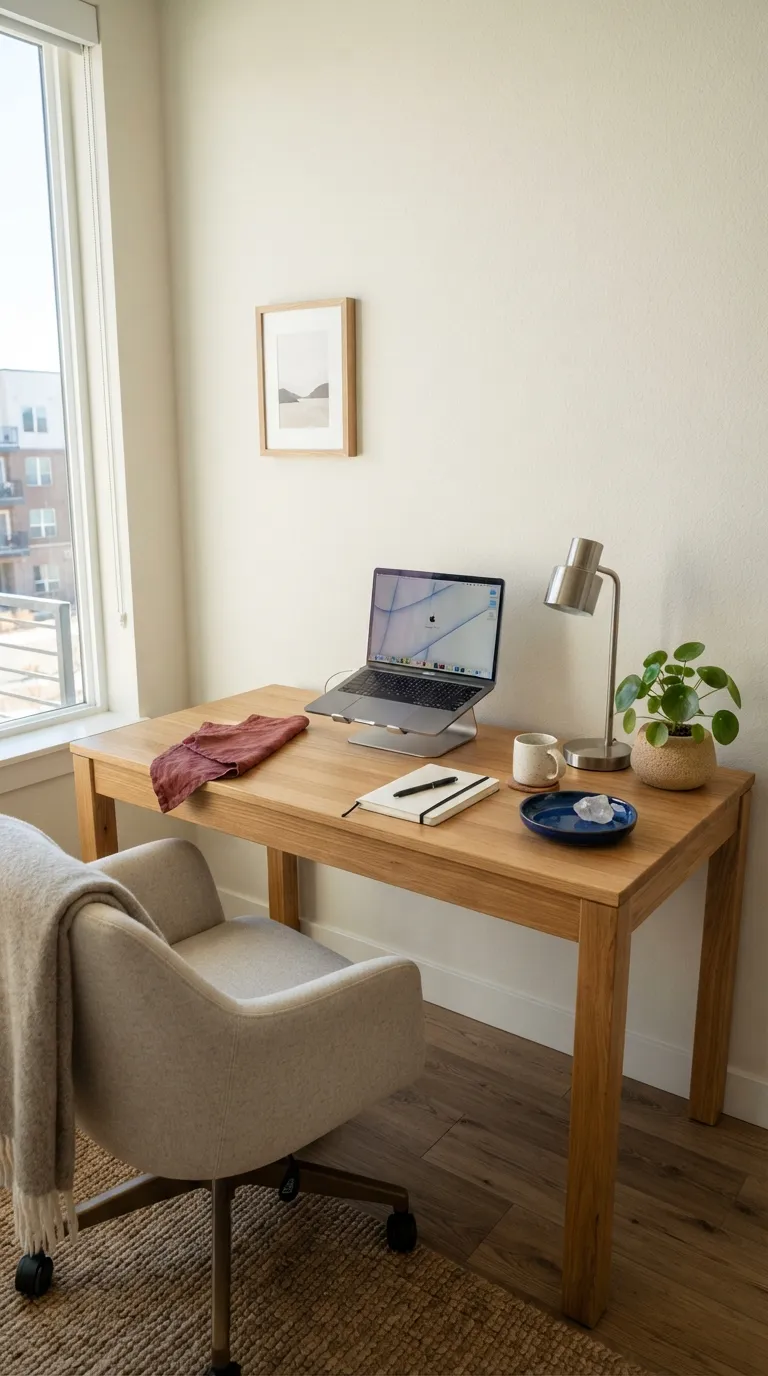
Feng Shui uses five elements as a way to think about balance in a room: wood, fire, earth, metal, and water. You can represent them through everyday materials and colors instead of adding large decorative pieces. This works especially well when every inch of your office matters.
For example, bring in wood through your desk, earth through a stone planter, metal through a lamp, fire through a warm red accent, and water through a blue ceramic object. Keep each element subtle so your workspace still feels simple and usable.
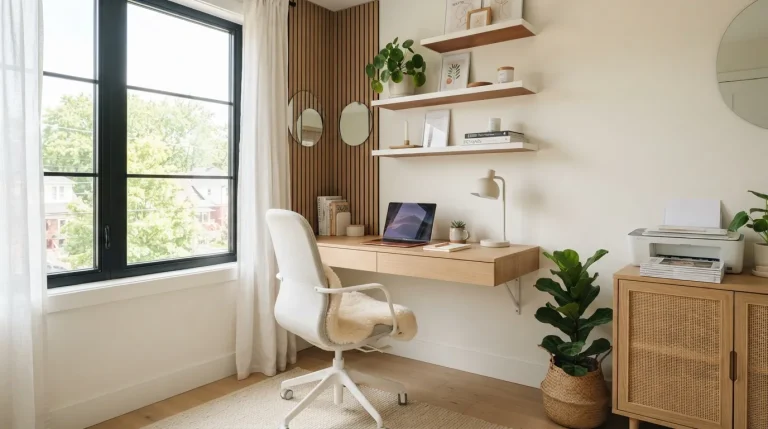
18. Use a Floating Desk to Save Floor Space
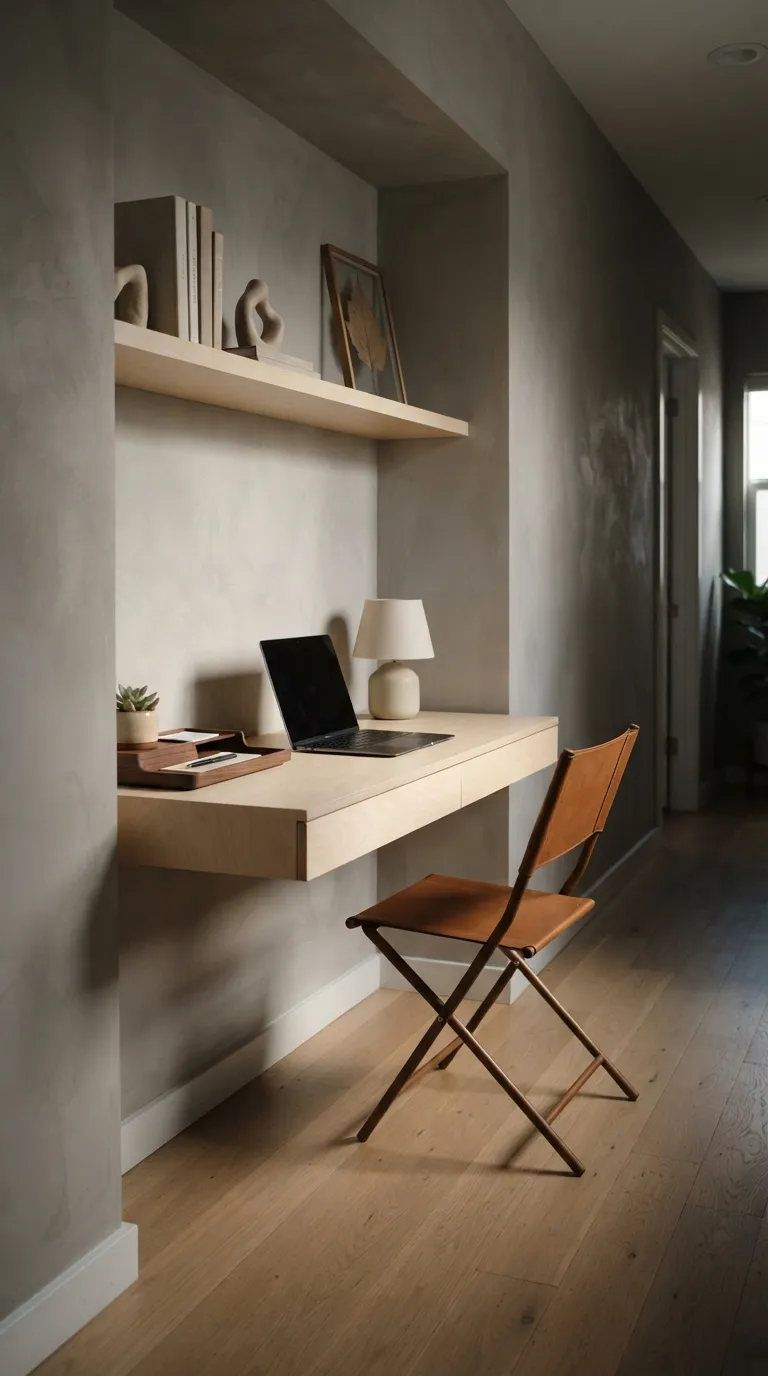
A floating desk can turn an unused wall into a practical work zone. Without legs underneath, the floor stays visible and cleaning becomes easier. This setup works well in a hallway, bedroom corner, or narrow alcove.
Choose a depth that gives your laptop and essential supplies enough room. Add a compact chair that can slide completely underneath when you’re finished. The result keeps your office footprint small without sacrificing a proper place to work.
19. Display Inspiring Nature Artwork
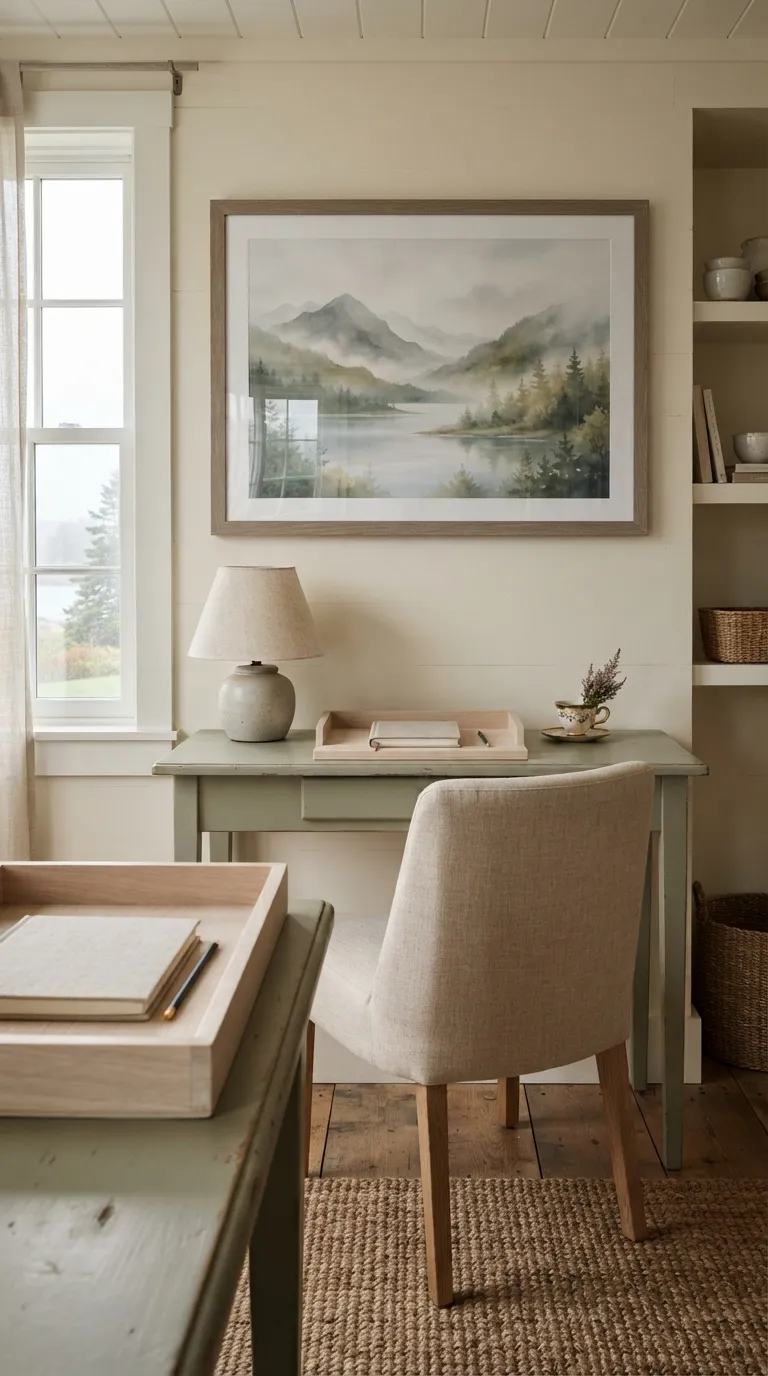
Nature-inspired artwork can give a small office a peaceful focal point. Look for images of mountains, trees, open landscapes, or calm water that make the room feel spacious rather than crowded. One larger piece can work better than a collection of tiny frames.
Place the artwork where you naturally look during breaks. Keep the colors connected to your office palette so the wall doesn’t feel disconnected from the rest of the space. This is an easy way to add personality while keeping your feng shui home office ideas for small spaces simple.
20. Keep Your Workspace Personal but Purposeful
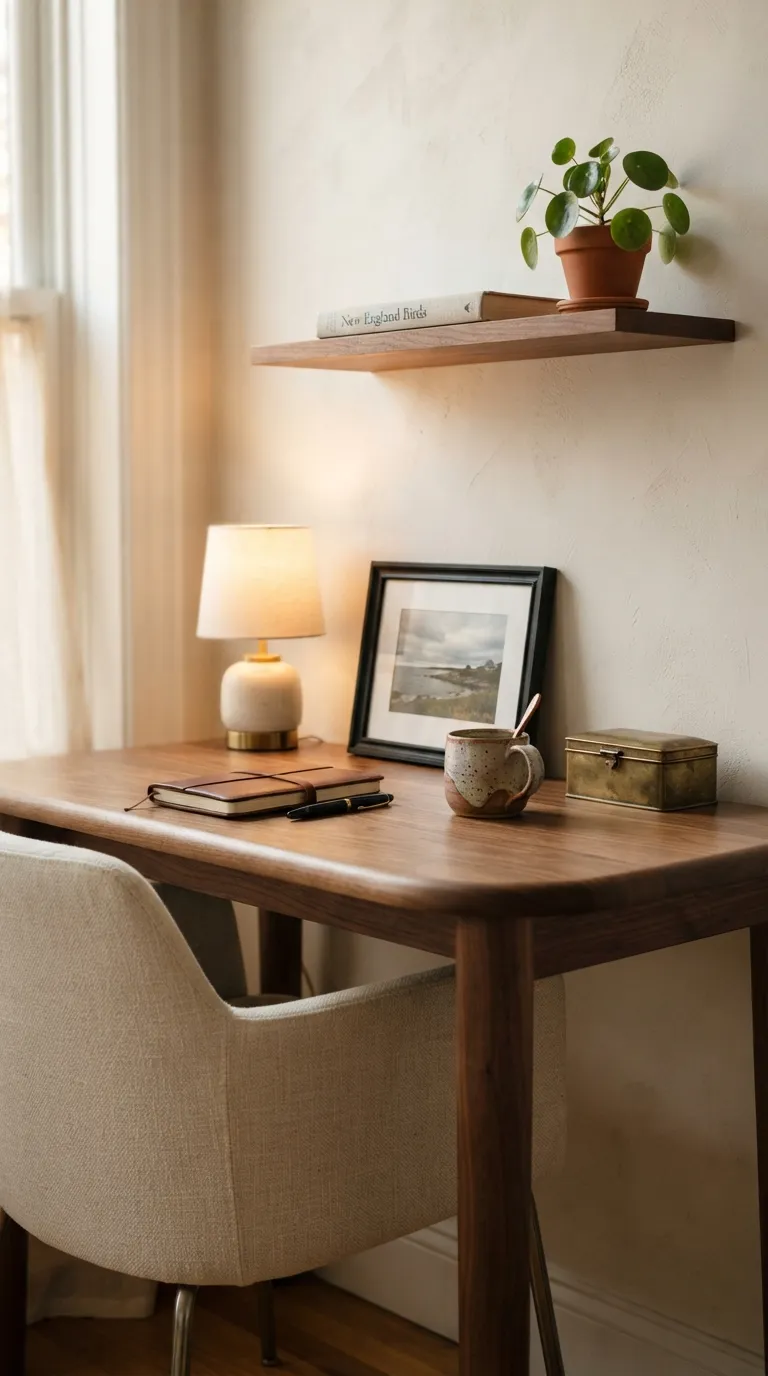
Your home office should still feel like yours. Add a few objects that have meaning, such as a favorite photograph, handmade ceramic piece, or small keepsake. The trick is choosing a few pieces instead of filling every available surface.
A purposeful workspace can feel both personal and calm. Keep sentimental items where you can see them, but give each one enough breathing room. With these feng shui home office ideas for small spaces, even a tiny corner can become a comfortable place to focus and create.
Ready to Start?
A small workspace doesn’t need a complicated makeover. Start with the desk position, clear clutter, improve the lighting, and add a few natural materials that make the room feel comfortable. Then build from there with storage, plants, rounded shapes, and meaningful decor.
The best feng shui home office ideas for small spaces are the ones that fit your actual home and daily routine. Pick two or three changes that solve your biggest space problems first. A few thoughtful choices can turn an awkward corner into a work area that feels organized, peaceful, and easy to use.
Olivia Carter
Olivia Carter is the founder of Lady Home Decor and a passionate home decor expert. She shares practical, stylish ideas to help homeowners create beautiful, comfortable, and welcoming spaces. Her expertise covers bedrooms, kitchens, living rooms, bathrooms, and small-space decorating.