29 Inspiring Mediterranean Homes That Feel Warm & Luxurious

Intro
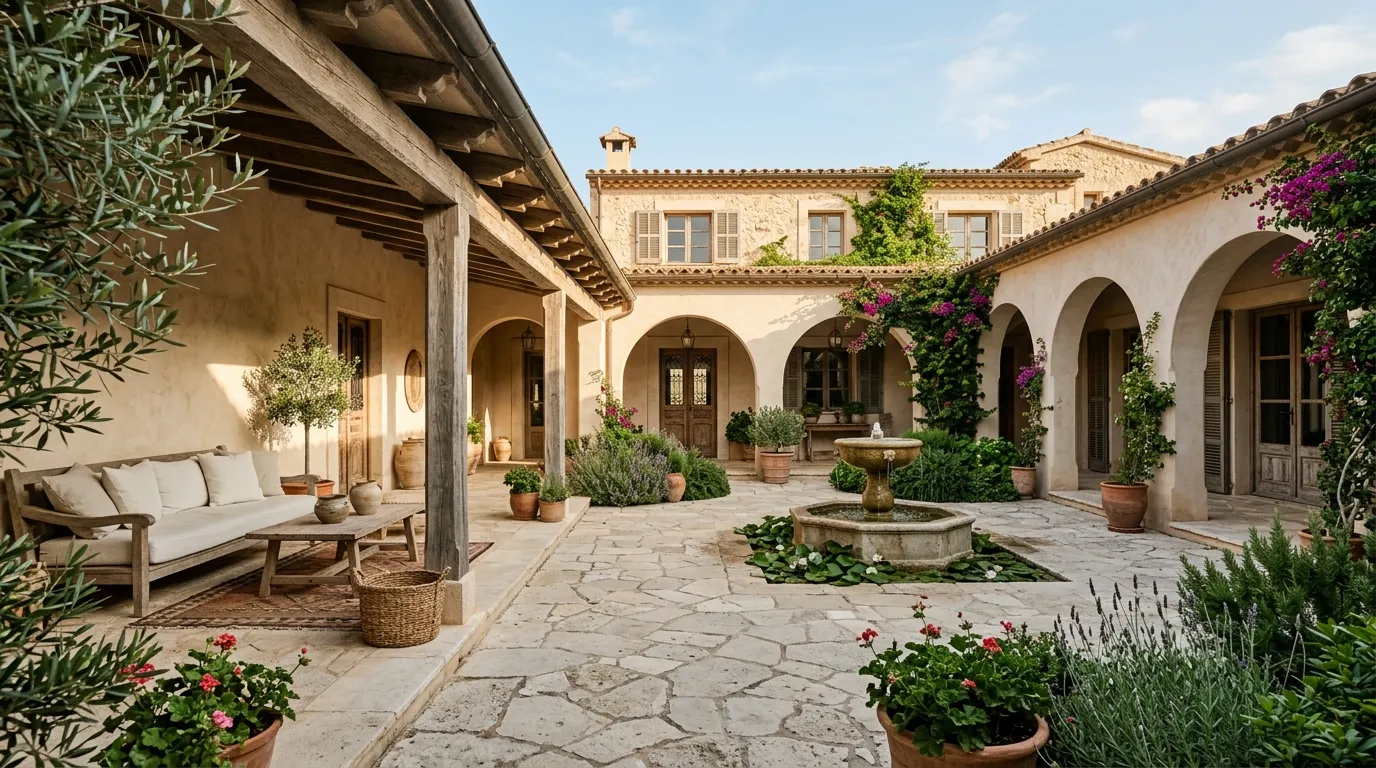
Warm walls, natural stone, and soft arches give mediterranean homes their inviting character. These spaces mix old-world details with clean furniture, calm colors, and practical layouts that feel easy to live in. Think limestone floors, terracotta accents, linen upholstery, exposed wood, and courtyards filled with greenery.
You don’t need a huge villa to capture this look. A small dining nook, sunlit kitchen, or quiet bedroom can carry the same relaxed mood through earthy materials and thoughtful details. The ideas below show how Mediterranean interior design can feel polished without becoming stiff, helping you create a home that feels warm, layered, and connected to nature.
Sunlit Stucco Villa
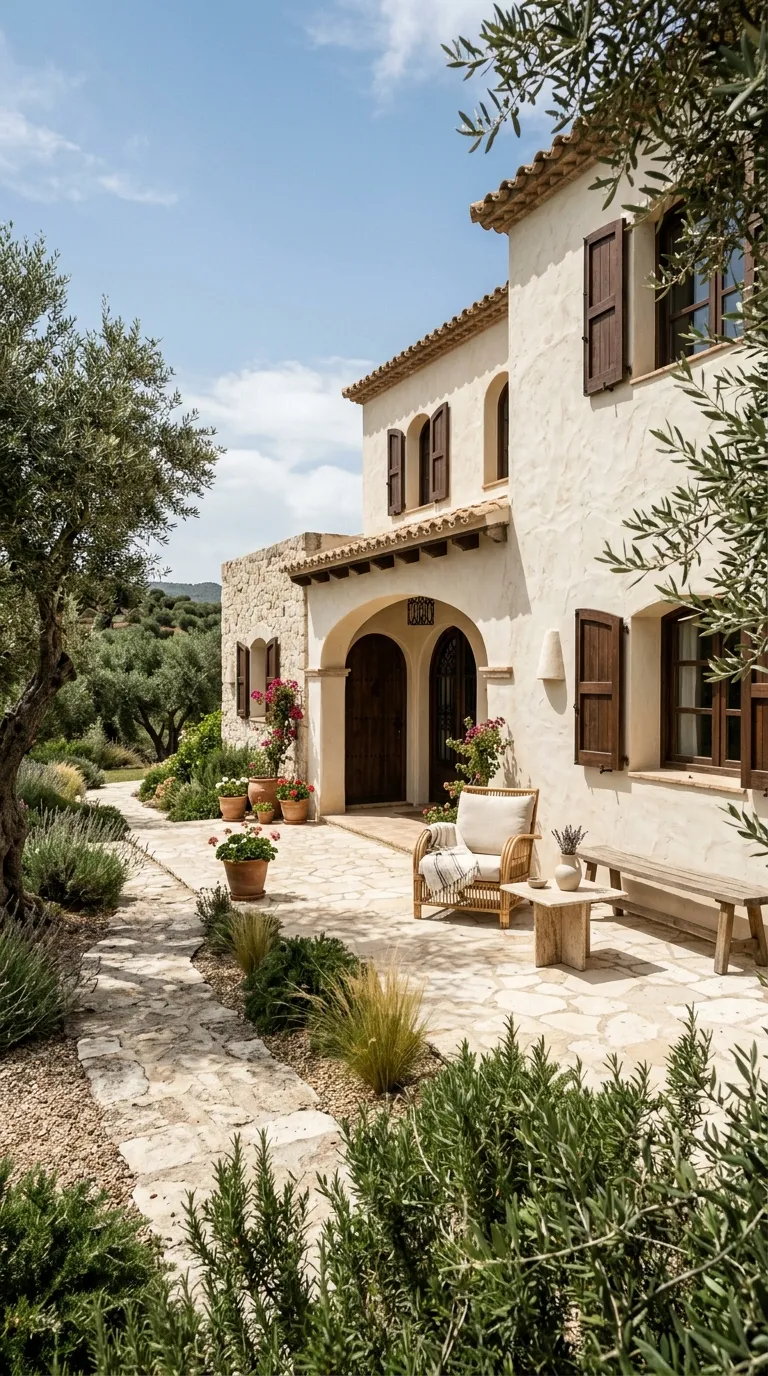
A stucco exterior gives a Mediterranean villa a soft, grounded look. Choose creamy white, warm beige, or pale sand instead of stark white to keep the facade welcoming. Rounded doorways and windows add shape without making the architecture feel busy.
For mediterranean homes, the surrounding landscape matters too. Olive trees, rosemary, lavender, and low grasses work beautifully beside limestone paths and simple terraces. Picture a shaded bench near the entrance where the morning light falls across textured plaster.
Arched Living Room
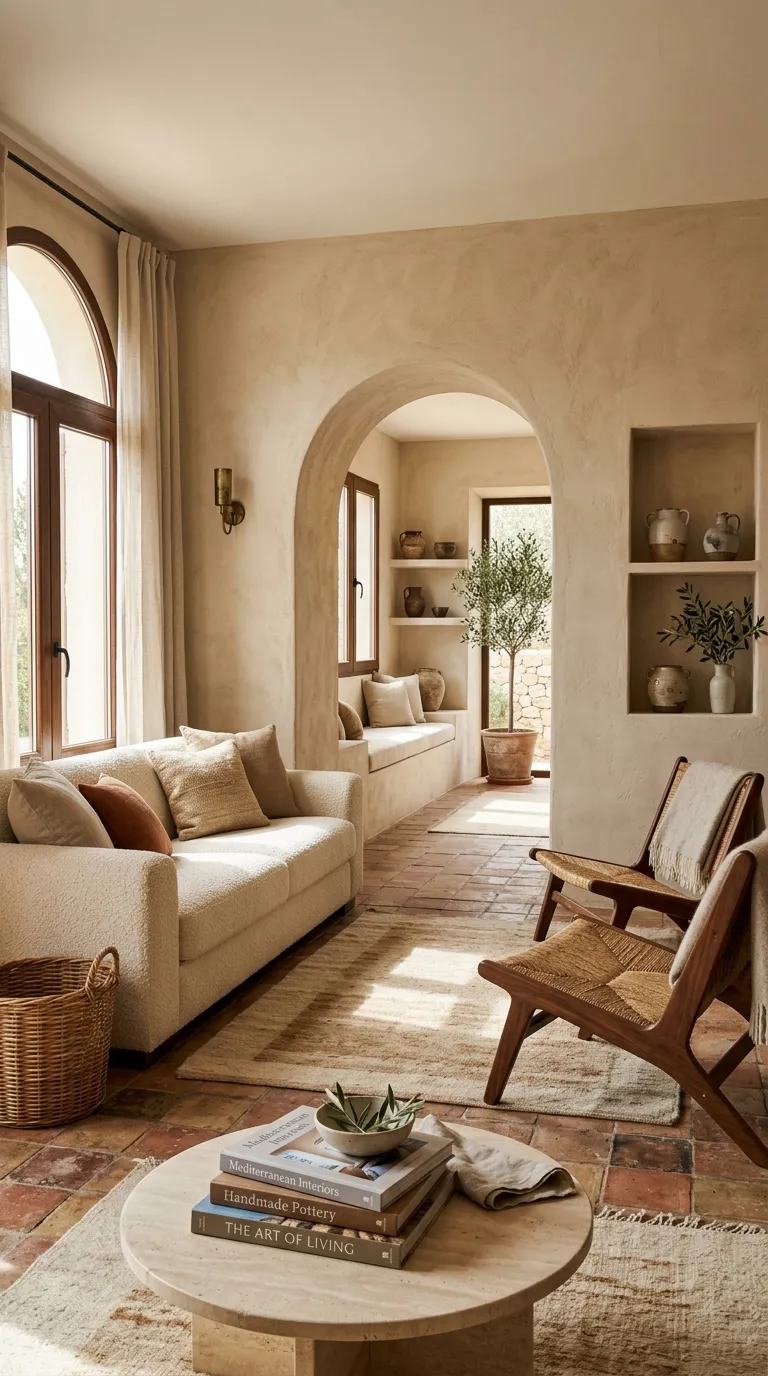
An arched living room can make everyday seating feel more architectural. Keep the furniture low and comfortable, then let the plaster, stone, and wood provide most of the visual interest. A rounded coffee table echoes the curves and keeps the layout feeling soft.
This approach works well when you want mediterranean homes to feel relaxed rather than formal. Linen cushions, woven rugs, ceramic accents, and warm wood create layers without crowding the room. If the space feels plain, add one textured wall niche instead of filling every surface with decor.
Rustic Limestone Kitchen
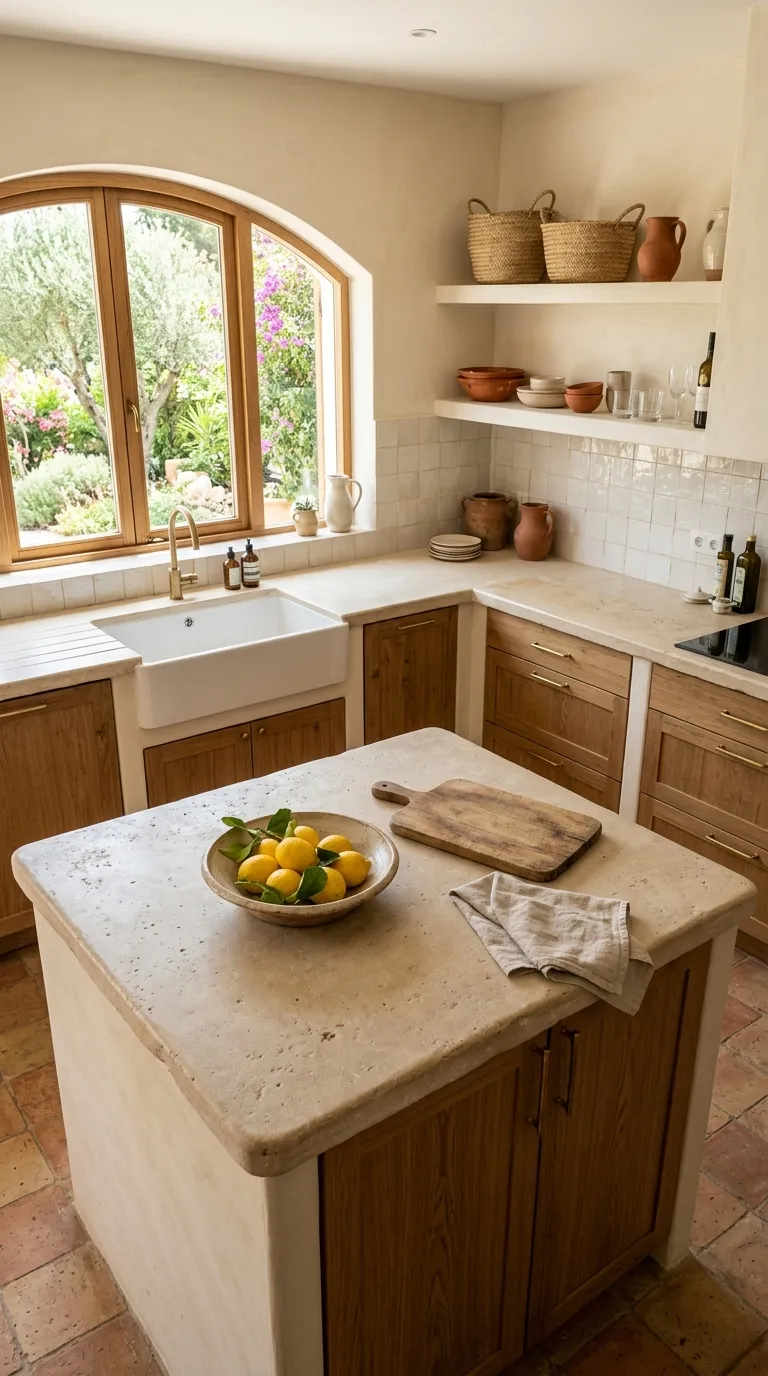
A limestone kitchen feels natural when the materials carry the room. Pair pale stone with oak cabinets, handmade tiles, and simple metal hardware for a balanced mix of rustic and refined details. Keep counters mostly clear so each material has room to stand out.
A warm kitchen also benefits from small signs of daily life. A bowl of lemons, linen towel, wooden board, or handmade pottery can soften the harder surfaces. In mediterranean homes, these modest touches help the kitchen feel useful, comfortable, and connected to the rest of the house.
Terracotta Dining Nook
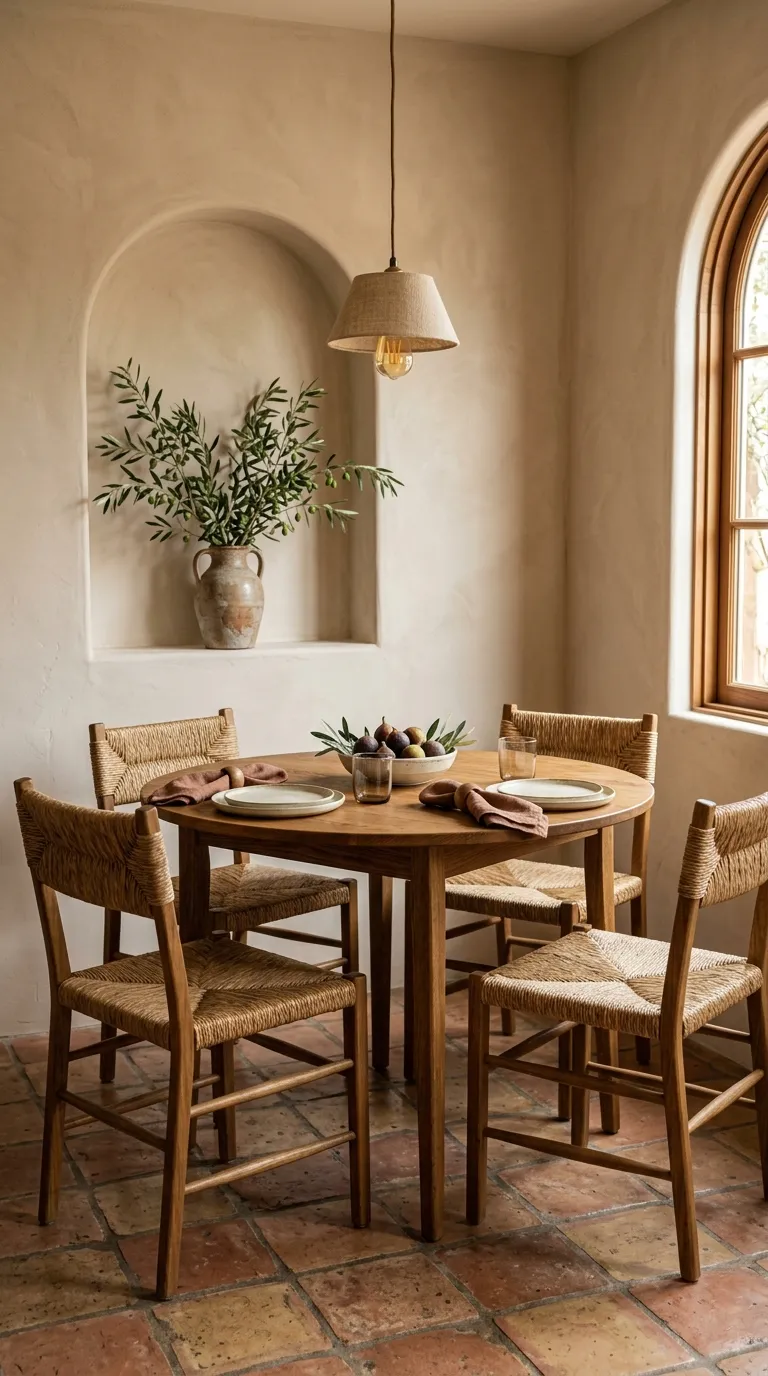
A small dining area can carry plenty of Mediterranean character. Start with a round wood table, woven chairs, and a clay-toned wall that gives the space a cozy backdrop. Keep the tabletop simple with handmade dishes and natural linens.
This style suits open-plan spaces because the earthy palette feels calm beside kitchens and living rooms. If you’re working with limited room, use a curved table to soften tight corners. A small arched niche can also add character without taking up floor space.
Coastal White Bedroom
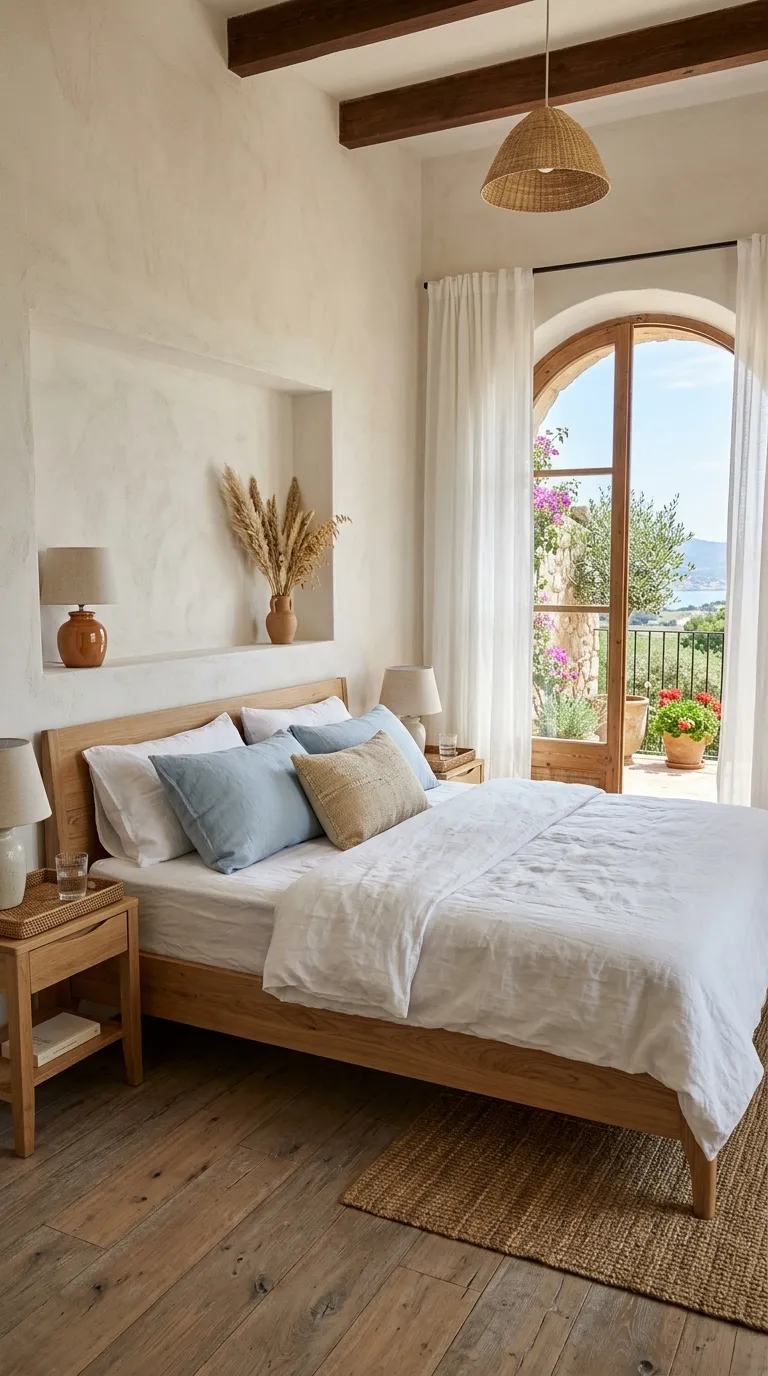
A Mediterranean bedroom doesn’t need heavy decoration to feel special. White linen, pale wood, textured plaster, and soft blue accents create a breezy retreat that still feels warm. Let natural light do much of the visual work.
For a more polished look, repeat one material across several details. Light oak on the bed and nightstands creates a quiet connection, while woven accessories add texture. A terrace door or arched opening can make the room feel even more open.
Courtyard Garden Retreat
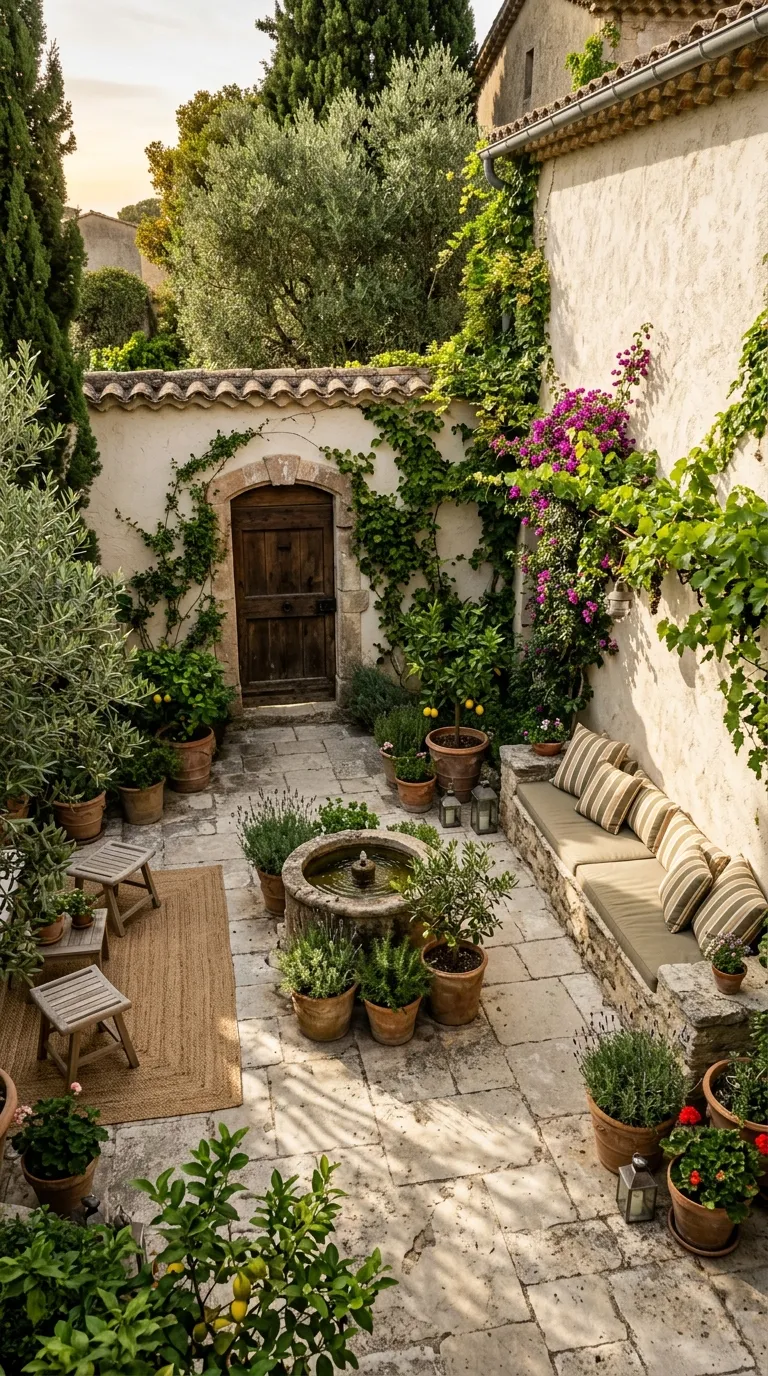
A courtyard gives Mediterranean architecture a natural outdoor room. Use stone paving, built-in seating, terracotta pots, and plants that can handle warm conditions. A fountain adds gentle movement and gives the space a clear focal point.
Keep the furniture low and uncomplicated so the garden remains the star. Olive trees, lavender, rosemary, citrus, and trailing vines bring color without making the courtyard feel crowded. In mediterranean homes, this kind of outdoor space can work as a dining area, reading spot, or quiet place for morning coffee.
Vaulted Plaster Ceiling
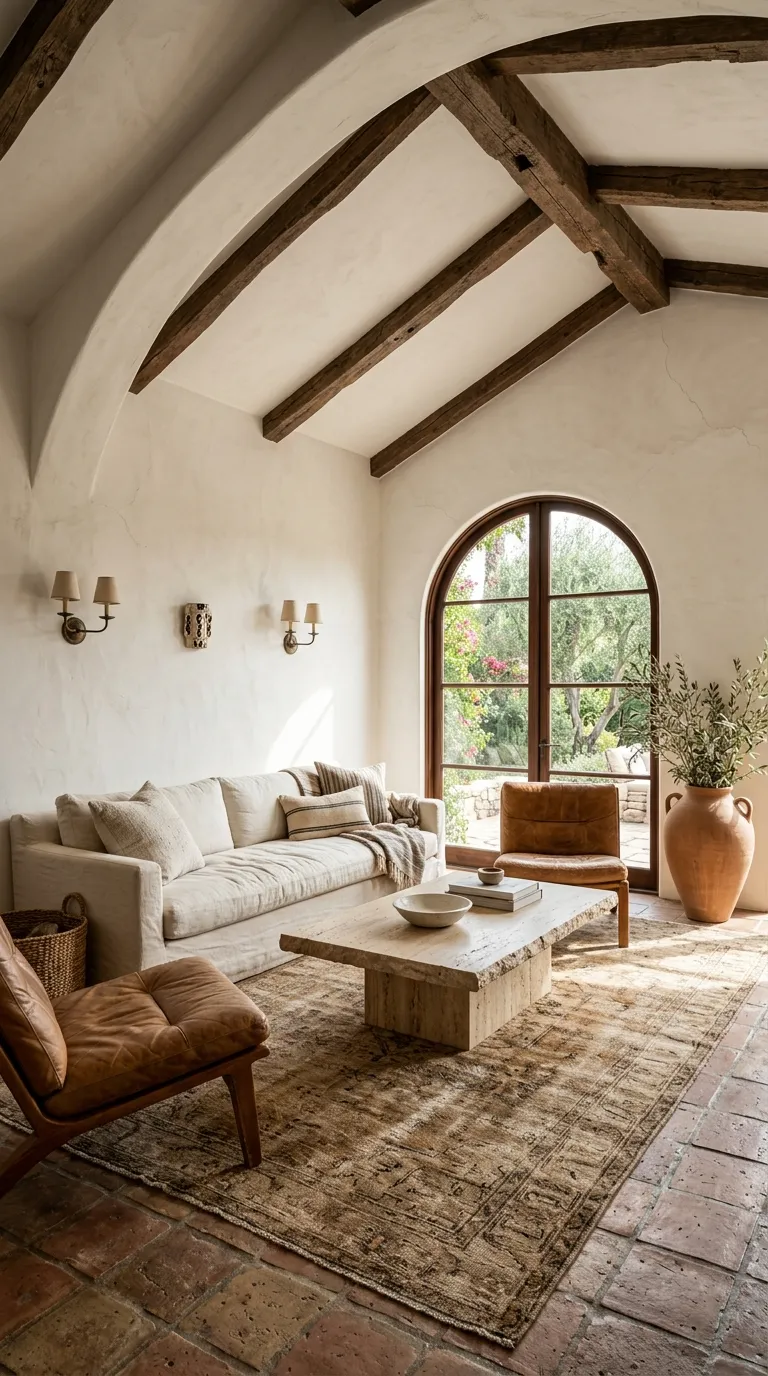
A vaulted ceiling gives a Mediterranean room a strong sense of height. Exposed beams add warmth against pale plaster, while low furniture keeps the architecture in focus. The result feels open without looking cold.
If your ceiling is already tall, keep the rest of the room visually grounded. Choose broad sofas, stone tables, woven rugs, and earthy leather rather than lots of small pieces. One large arched window can also draw attention upward and frame the greenery outside.
Warm Stone Entryway
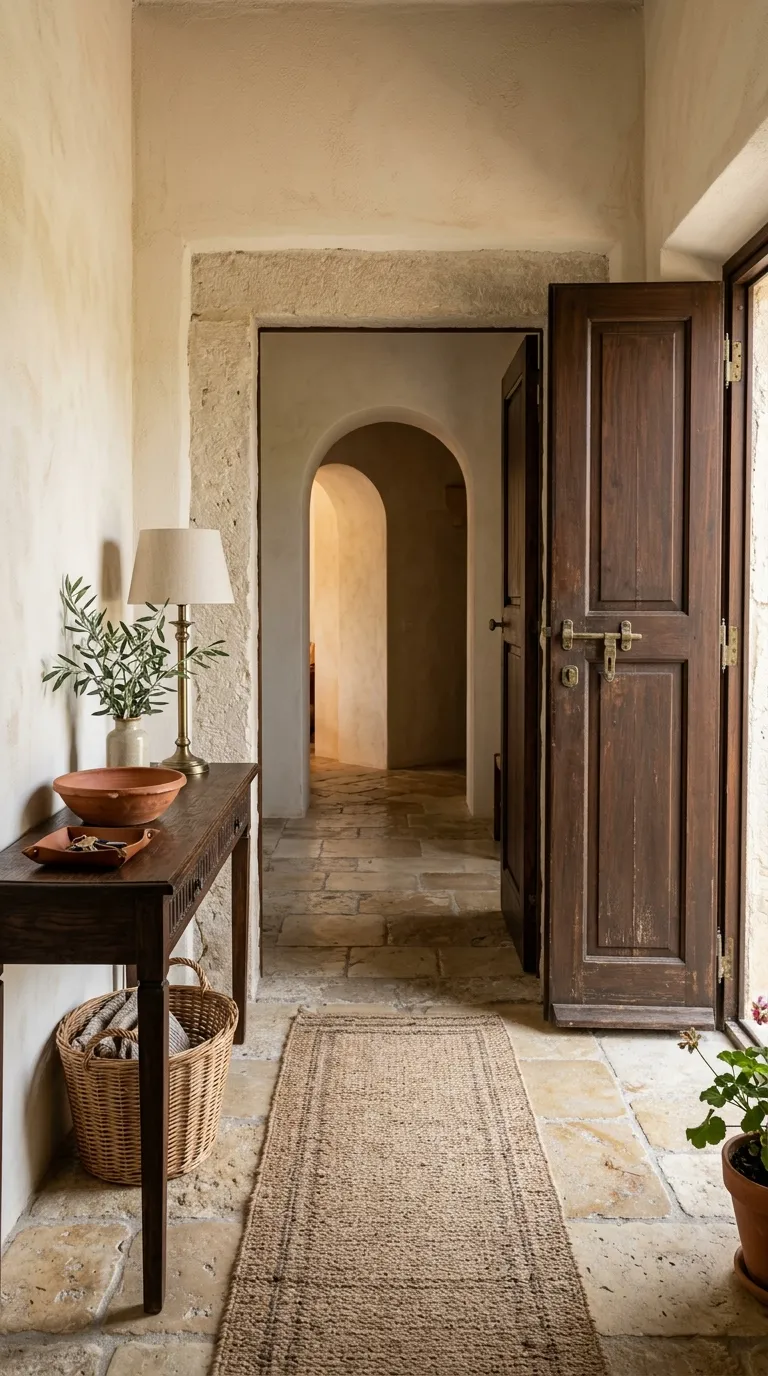
The entryway sets the mood before you reach the main rooms. Limestone, textured plaster, dark wood, and warm metal create a grounded first impression without needing much decor. A slim console gives you a useful landing spot for keys and everyday items.
You’ll probably also find Dreamy Cave Homes interesting.
Try mixing rough and smooth surfaces in this area. Pair irregular stone flooring with a polished wood door, then add one woven piece to soften the harder finishes. This simple mix works especially well in mediterranean homes with traditional architectural details.
Earthy Olive Kitchen
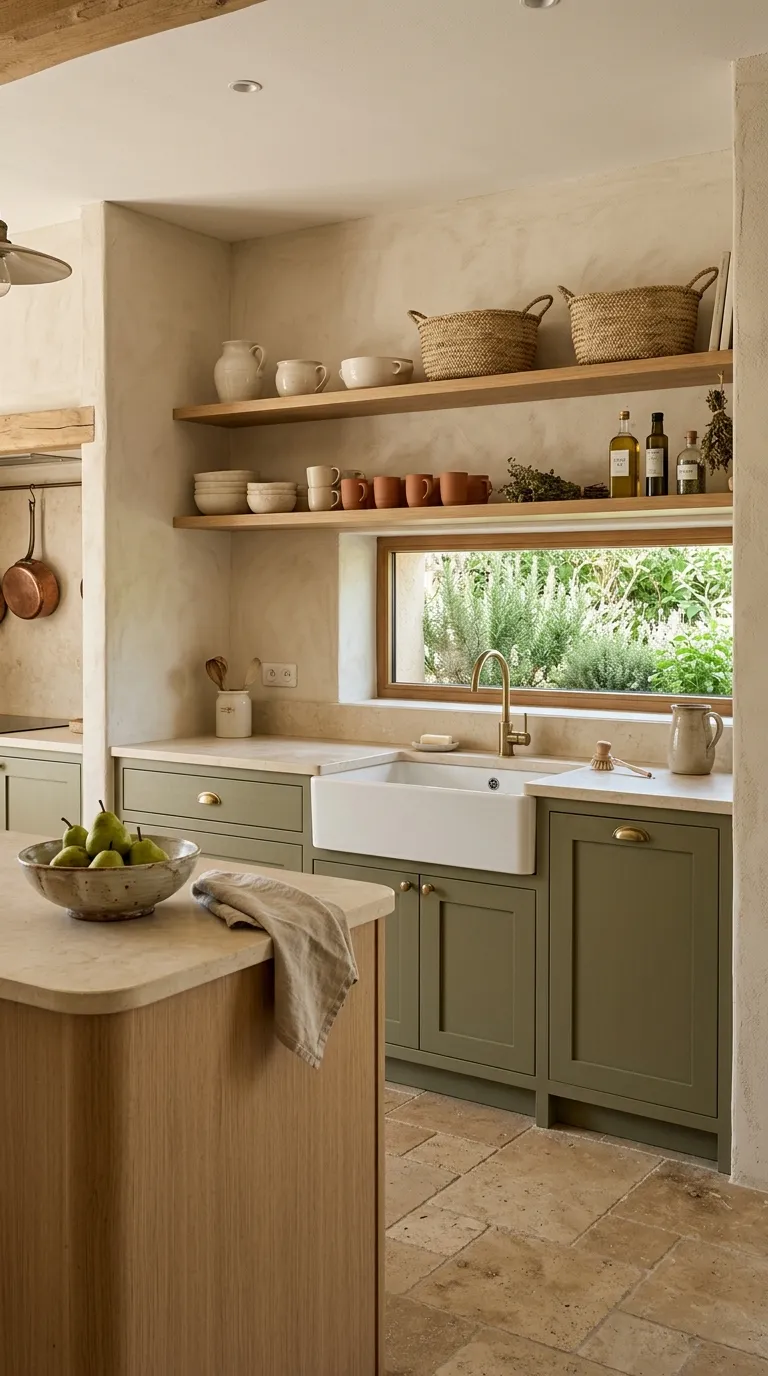
Olive cabinetry brings a richer color into a Mediterranean kitchen while staying close to nature. Pair it with limestone, pale oak, and creamy plaster so the green feels soft rather than heavy. Brass hardware adds a small warm note against the muted cabinets.
Keep the styling practical and sparse. Open shelves can hold everyday pottery, woven baskets, and a few cooking pieces instead of decorative clutter. For mediterranean homes, olive green works especially well when repeated through nearby herbs, garden views, or small ceramic accents.
Sunken Conversation Room
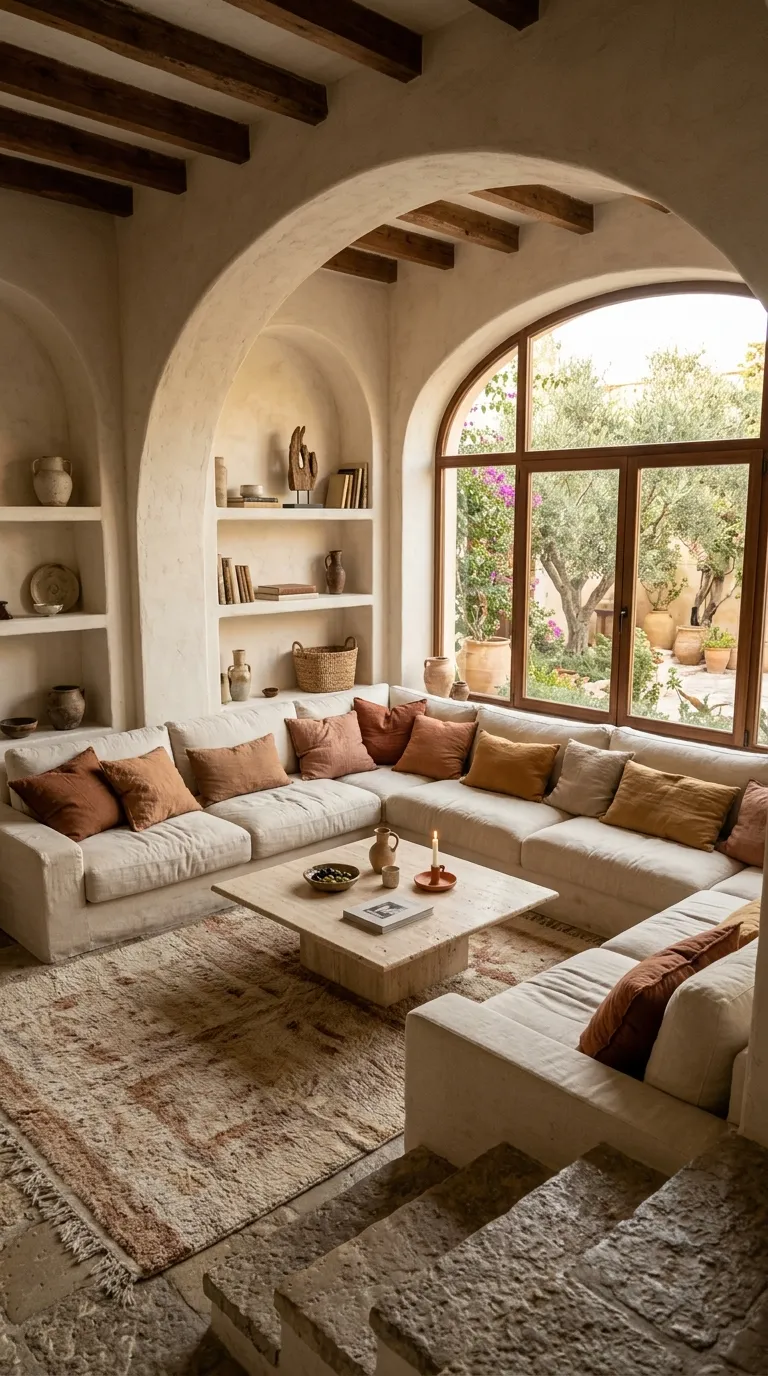
A sunken seating area gives a large room a clear social center. The lower floor creates separation without closing the space off, while built-in plaster shelves keep the architecture cohesive. Use soft upholstery and a low stone table to maintain the relaxed feel.
This layout suits homes with generous floor space and strong architectural features. Picture a family gathering around the table while the courtyard stays visible through the arches. In mediterranean homes, that connection between indoor seating and outdoor views can make the room feel naturally connected.
Blue Tile Bathroom
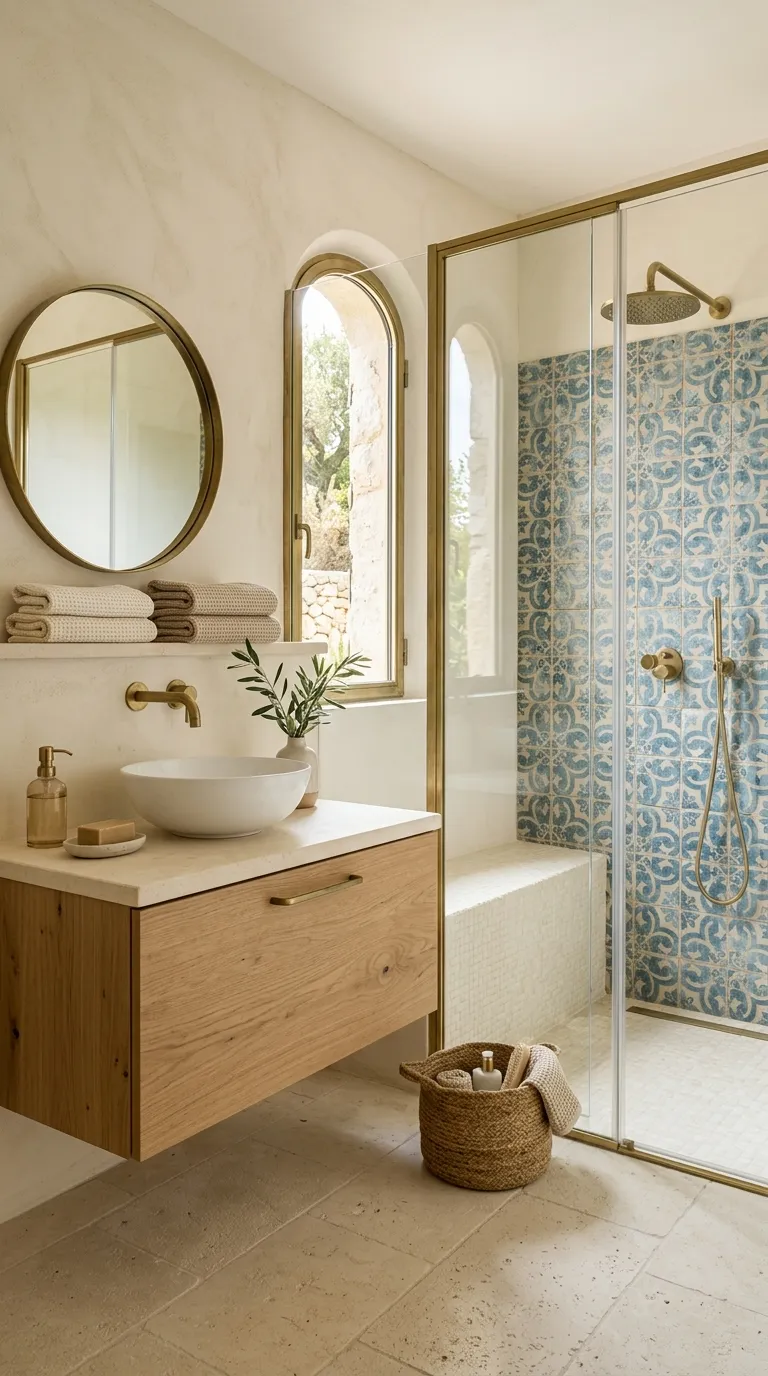
Blue tile can bring a coastal note into a warm Mediterranean bathroom. Choose handmade tiles with small color variations rather than perfectly uniform surfaces. Pair them with limestone, oak, and aged brass for a softer balance.
Keep the rest of the room quiet so the tile gets attention. A curved niche can hold bath products, while a wooden vanity adds warmth below the cooler blue tones. This combination works beautifully in both compact bathrooms and larger primary suites.
Rustic Wood Staircase
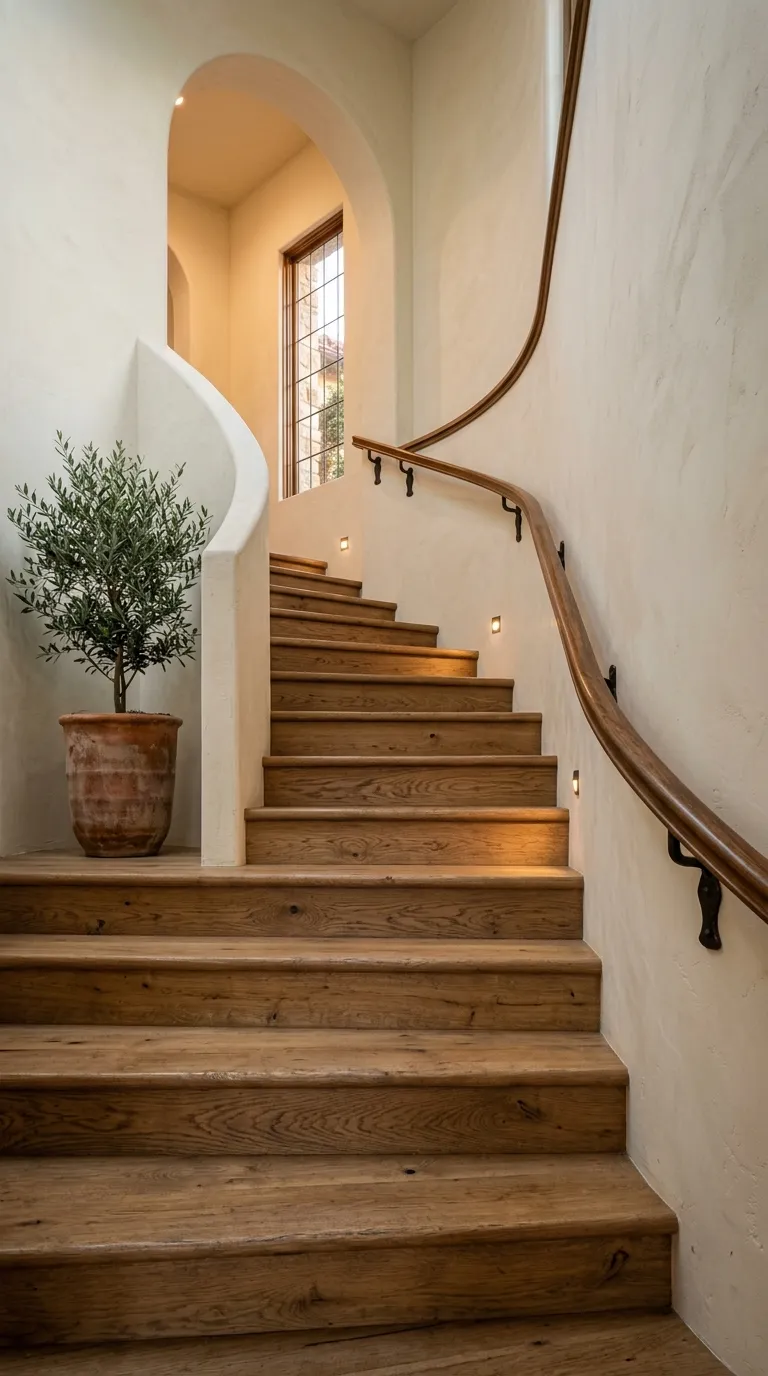
A wood staircase can become a design feature when its shape and materials stay simple. Natural oak steps bring warmth, while plaster walls keep the area bright and connected to the rest of the home. Dark iron details add a quiet contrast.
Curved stairs pair especially well with Mediterranean architecture because they echo rounded doors and windows. Keep the railing clean and let the wall texture provide most of the character. A single terracotta planter can soften the lower landing without crowding the walkway.
Indoor Outdoor Lounge
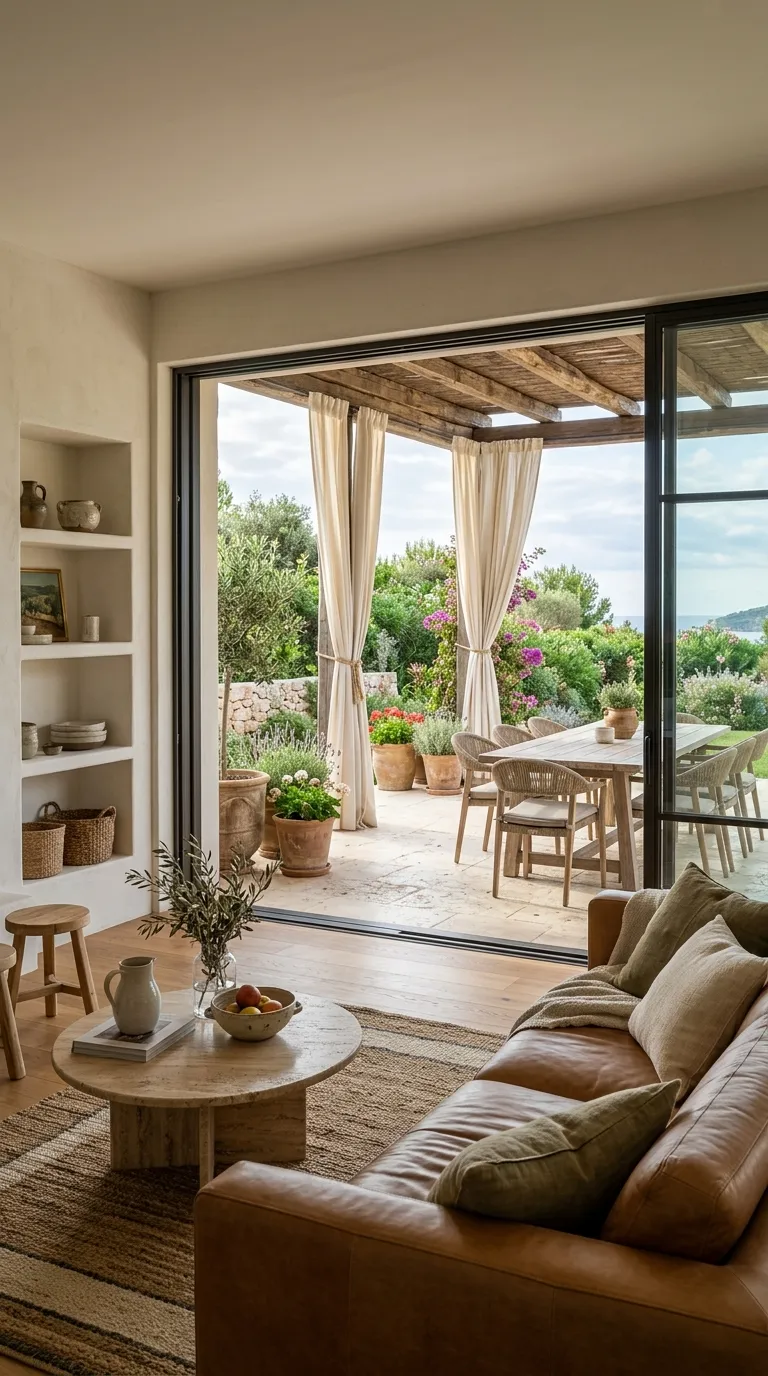
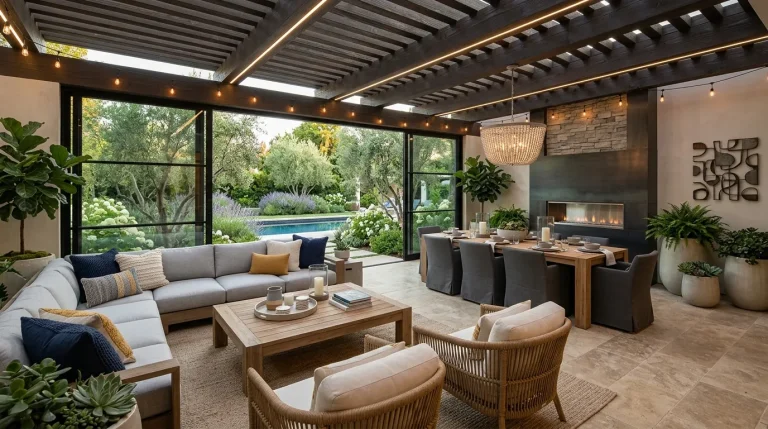
Open doors can make an indoor room feel much larger. Connect the two areas with similar materials, such as wood, linen, stone, and earthy pottery. The goal isn’t to make both spaces identical, but to help them feel like parts of one home.
A covered terrace works especially well for dining or relaxed seating. Keep outdoor furniture simple and choose fabrics made for exterior use. In mediterranean homes, wide openings, shaded patios, and garden views help daily life move naturally between inside and outside.
Sculptural Plaster Fireplace
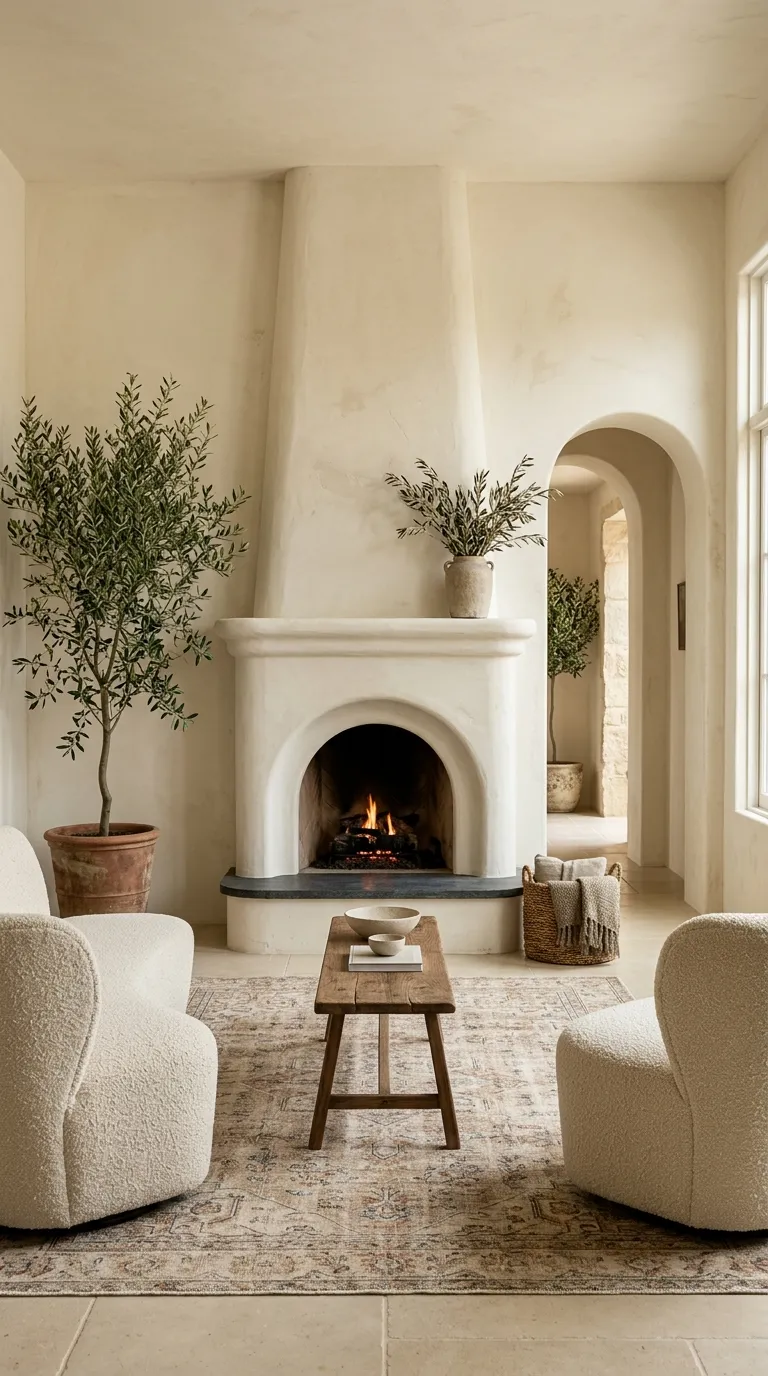
A plaster fireplace can give a living room a strong focal point without looking heavy. Rounded edges soften the structure, while a dark stone hearth creates enough contrast to define the opening. Keep the mantel mostly clear so its shape remains easy to notice.
This idea suits both traditional villas and newer Mediterranean interiors. Pair the fireplace with curved chairs, natural rugs, and warm wood for a relaxed arrangement. A single tree or branch beside the hearth can add height without filling the room with accessories.
Terracotta Floor Kitchen
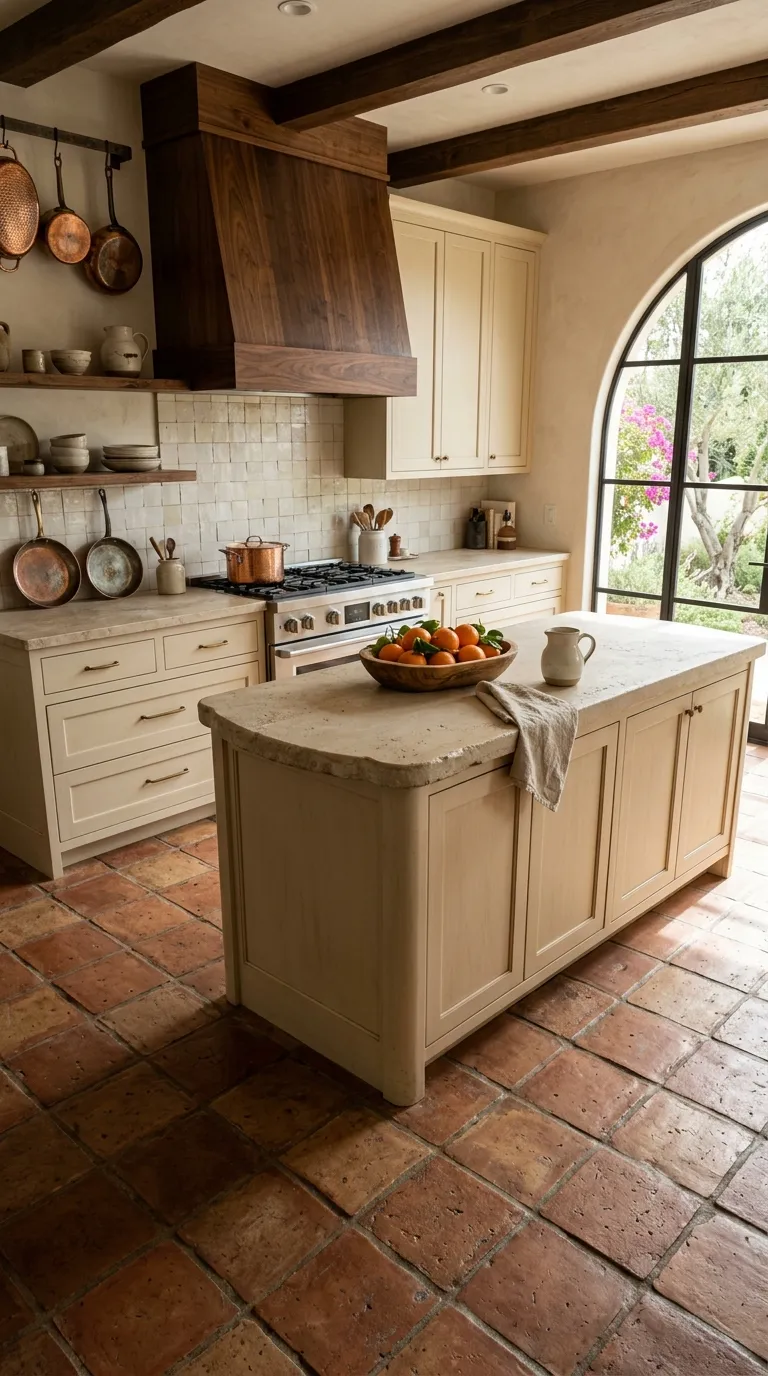
Terracotta flooring brings an earthy base to a Mediterranean kitchen. Its natural color works well with cream cabinets, pale stone, walnut, and handmade tile. Choose tiles with slight variation so the floor feels authentic rather than overly uniform.
Because terracotta has a strong visual presence, keep the upper half of the kitchen calm. Simple shelving, neutral pottery, and warm wood help balance the clay tones. This approach gives mediterranean homes a rustic foundation while keeping the kitchen practical and polished.
Natural Linen Bedroom
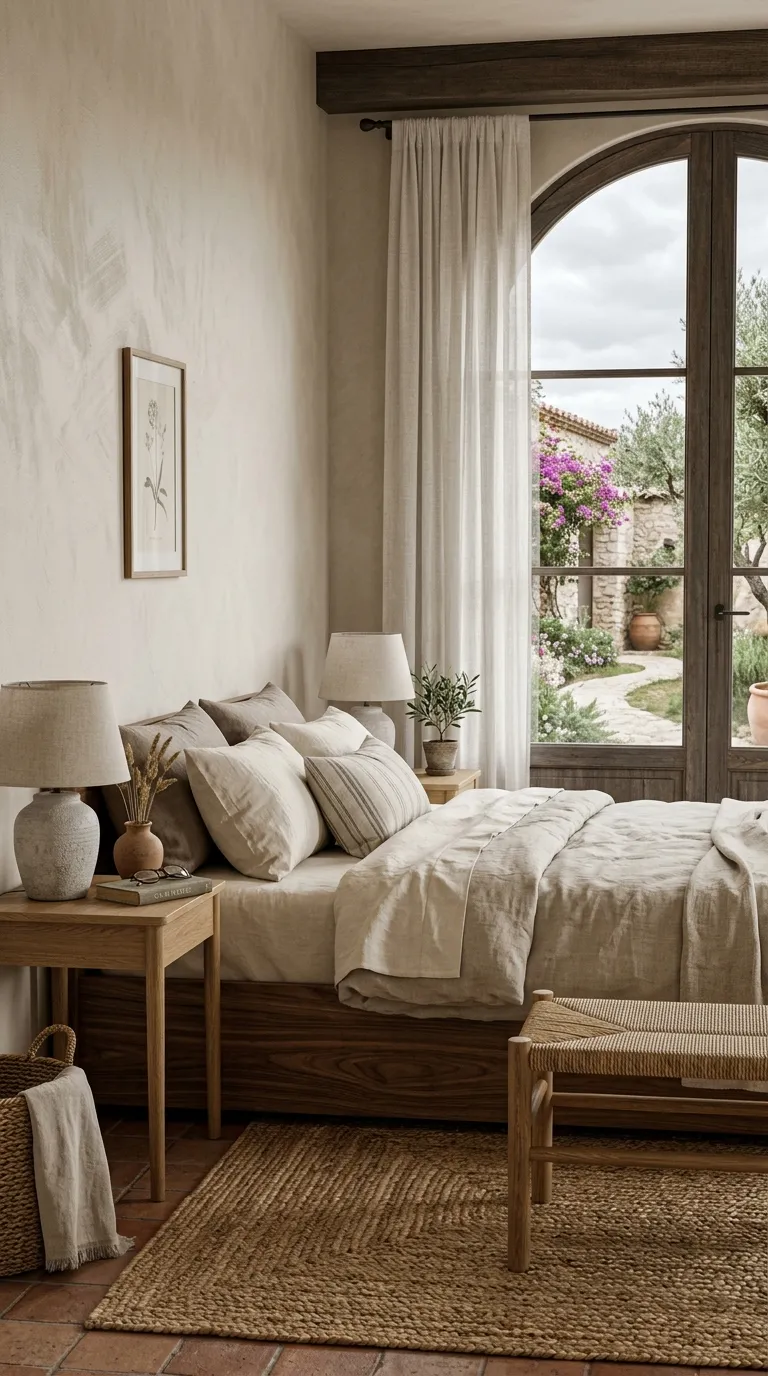
Natural linen gives a bedroom a soft, relaxed finish. Oatmeal, cream, and taupe bedding work beautifully against sandy plaster walls and warm wood. Let the fabric stay slightly rumpled so the room feels comfortable rather than staged.
Texture matters more than decoration here. Layer linen, jute, ceramic, and wood to create depth while keeping the color palette quiet. In mediterranean homes, this simple material mix can make a bedroom feel restful without relying on heavy furniture or ornate accessories.
Desert Inspired Patio
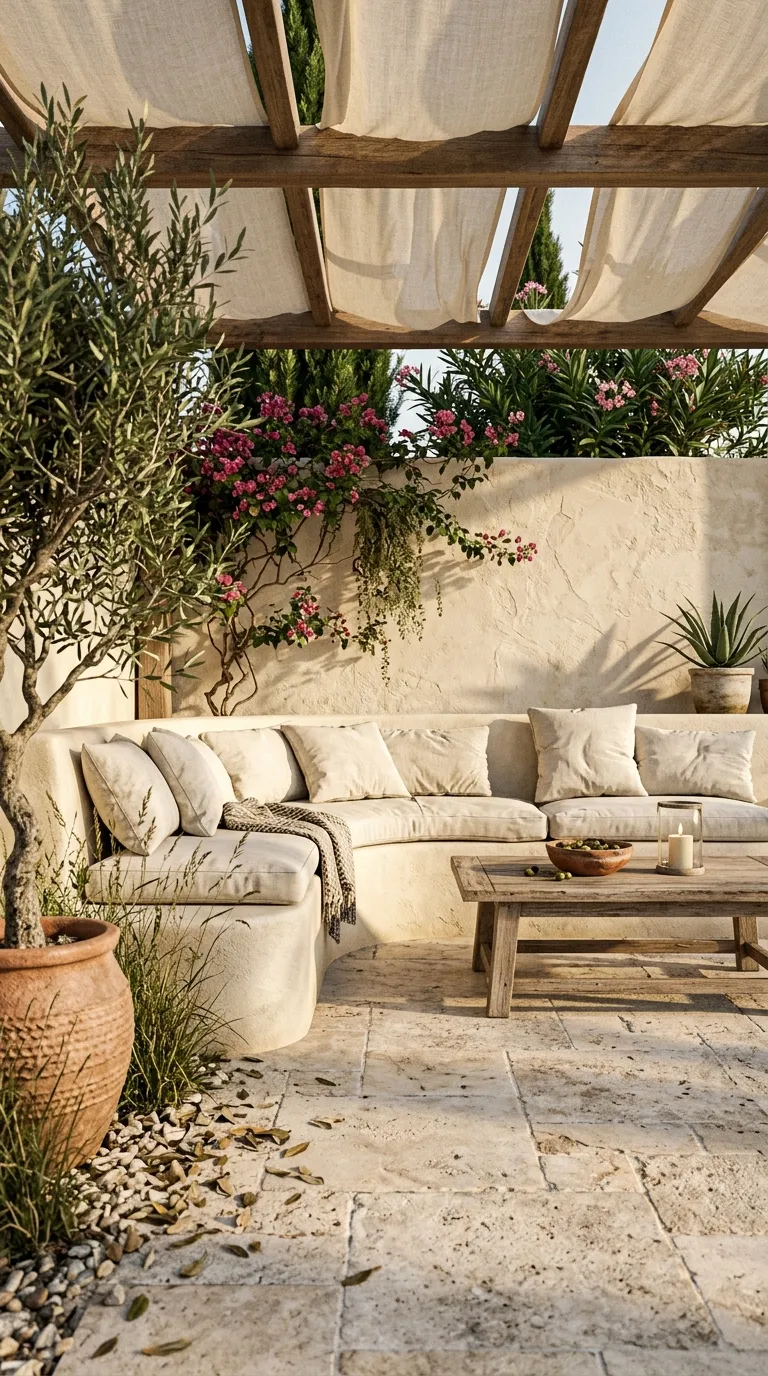
A desert-inspired patio pairs beautifully with Mediterranean architecture. Use sandstone, stucco, terracotta, and weathered wood to create a warm outdoor setting. Drought-friendly plants add texture while keeping the palette close to the surrounding landscape.
Built-in seating is especially useful when you want a clean layout. Add thick outdoor cushions in cream or sand, then place a low table within easy reach. For mediterranean homes, a shaded patio can become an extra living room during warm afternoons and evenings.
Modern Mediterranean Office
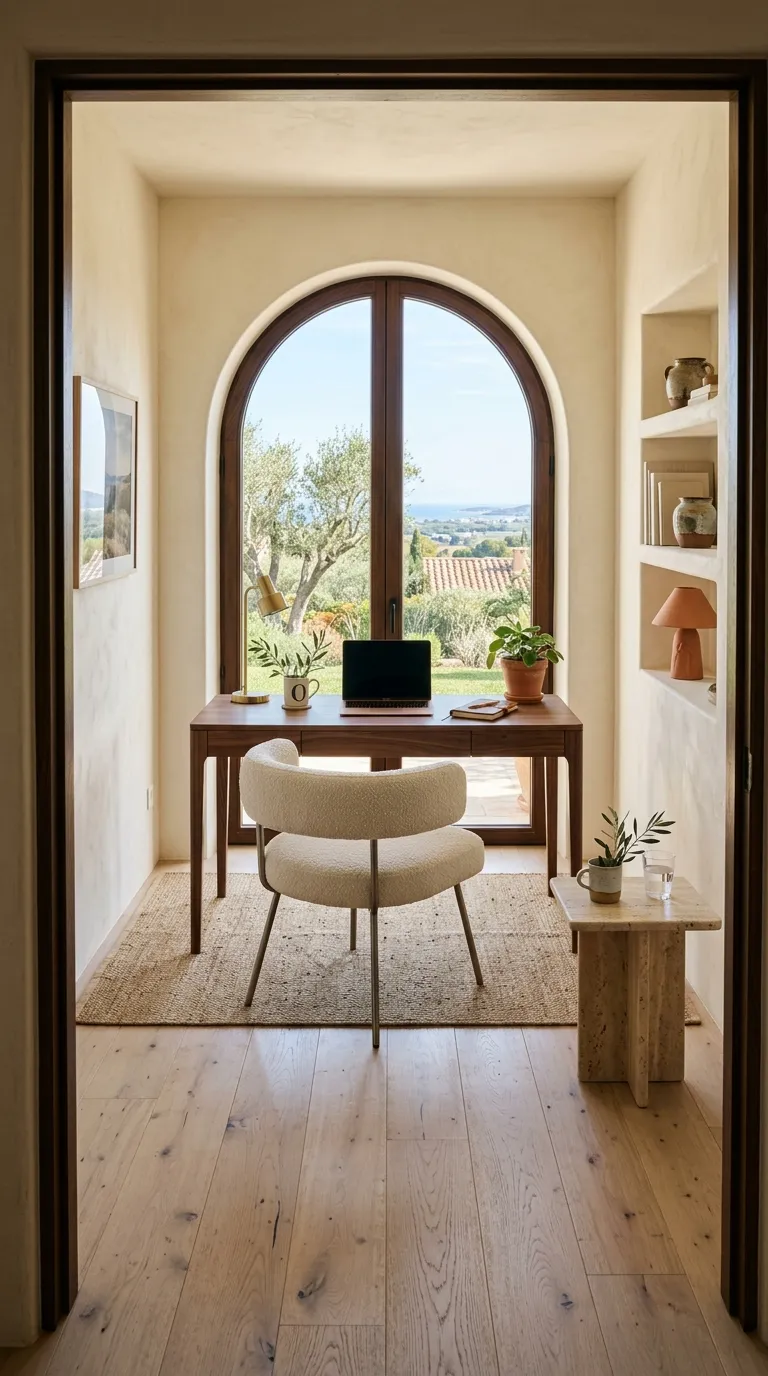
A home office can feel Mediterranean without becoming overly rustic. Combine a clean walnut desk with plaster walls, pale wood floors, and one strong architectural feature such as an arched window. The result feels warm enough for home life while remaining focused for work.
Keep the desk area free from unnecessary accessories. A ceramic cup, small lamp, and a few books can provide enough personality. Natural views are another useful touch, especially when a window brings greenery into the room.
Creamy Travertine Bathroom
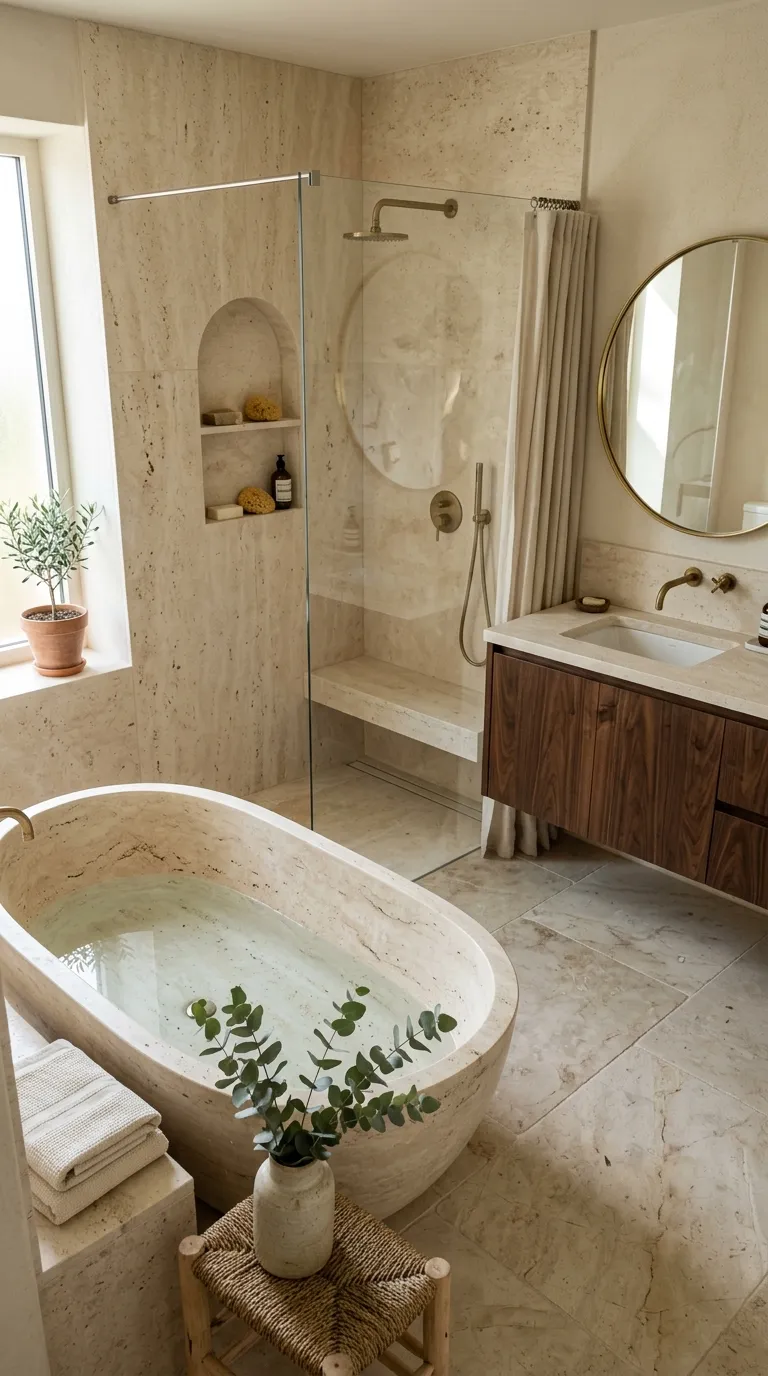
Travertine can give a bathroom a warm, natural finish from floor to wall. Its creamy color and organic veining pair well with walnut, linen, and aged metal. Keep the shapes simple so the stone remains the main feature.
A freestanding tub creates a calm center point when the room has enough space. For smaller bathrooms, use travertine on one feature wall or inside the shower instead. This material-led approach works beautifully with the quiet character found in mediterranean homes.
Rustic Arched Hallway
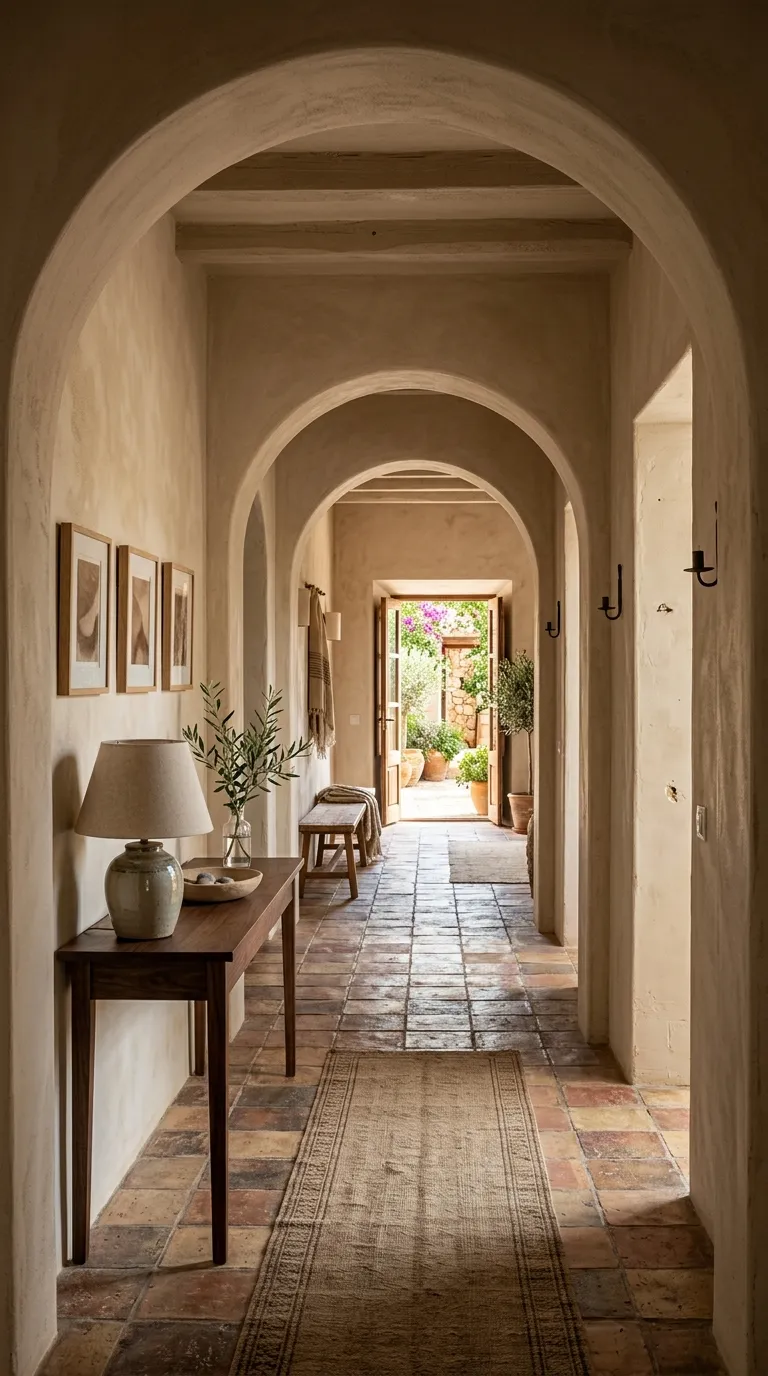
A hallway can carry the Mediterranean look through architecture alone. Repeated arches, lime plaster, and terracotta flooring create rhythm as you move from room to room. Keep the furniture narrow so the passage stays open and practical.
A long hallway also gives you a chance to frame another room at the end. An open courtyard door, garden view, or bright window can create a natural focal point. In mediterranean homes, these framed views help smaller spaces feel deeper and more connected.
Olive Green Sitting Room
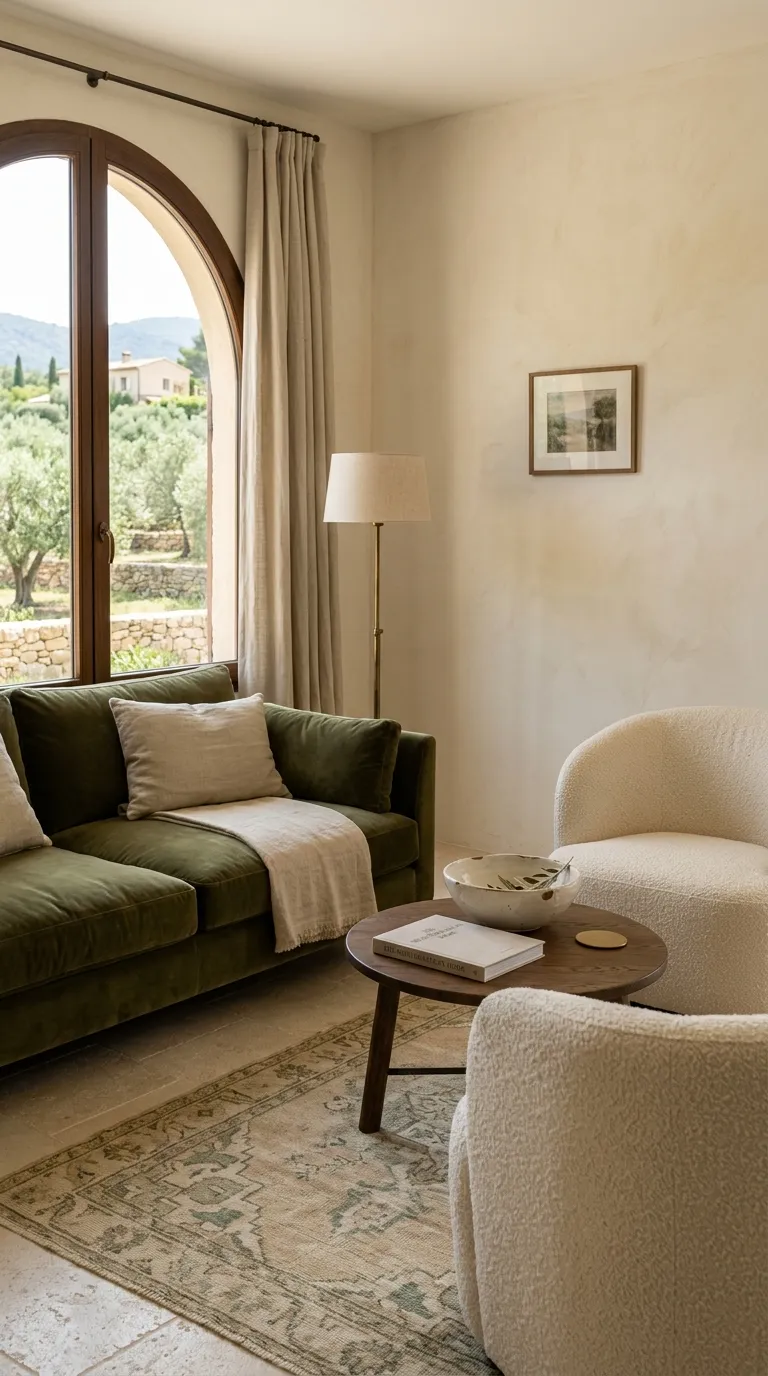
Olive green adds depth without losing the calm feel of Mediterranean interiors. Use it on one large piece, such as a sofa, while keeping walls and flooring light. Cream seating and natural oak prevent the darker shade from taking over.
This palette works well when you want a room to feel polished but relaxed. Add aged brass, handmade pottery, and leafy branches for small points of contrast. The mix gives mediterranean homes a richer color story while keeping the overall space grounded.
Arched Outdoor Kitchen
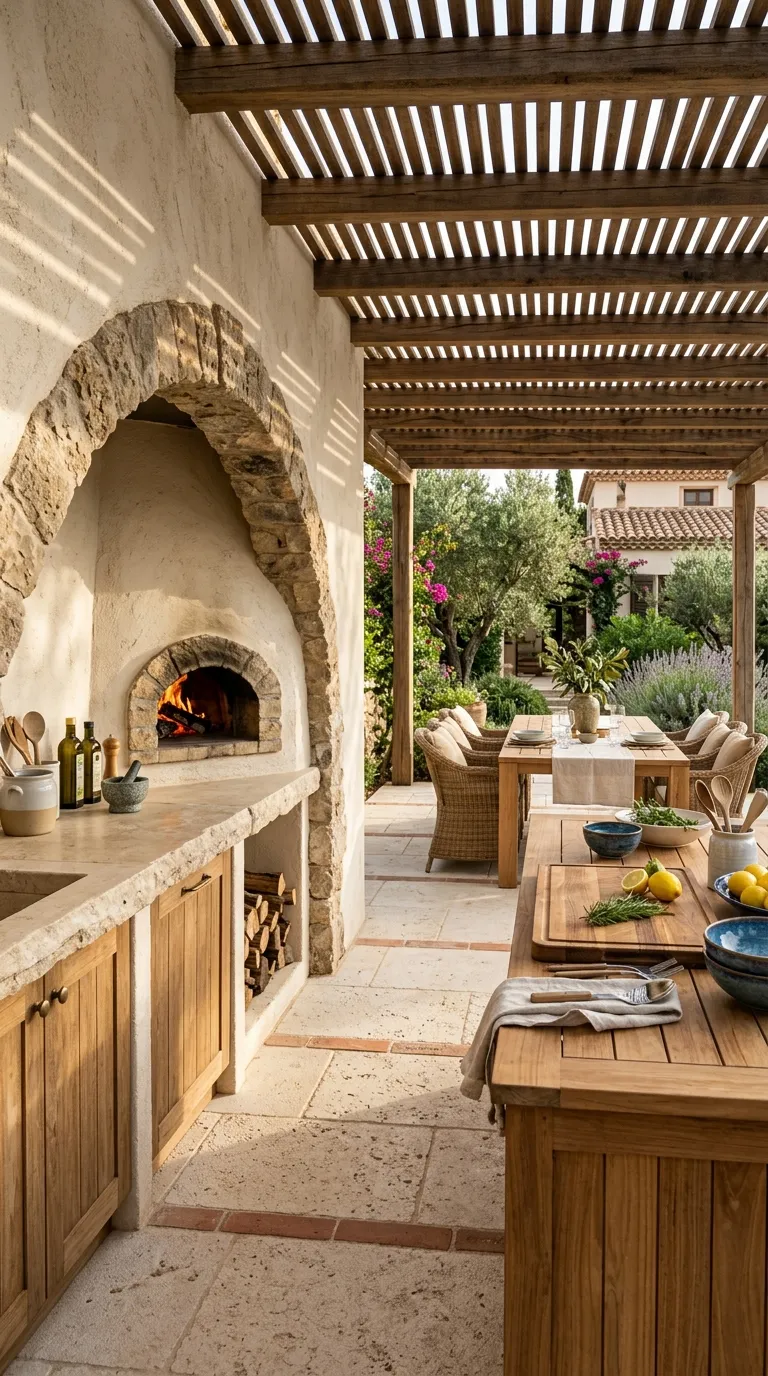
An outdoor kitchen can make warm-weather living much easier. Limestone counters, stucco walls, teak storage, and a built-in oven create a useful setup that still fits the architecture. Keep cooking tools close at hand while leaving the surfaces visually simple.
Add a dining table nearby so food can move straight from the kitchen to the table. Rosemary, citrus, and other herbs can soften the hard finishes while staying practical. For mediterranean homes, this setup turns a patio into a true extension of the kitchen.
Warm Minimalist Bedroom
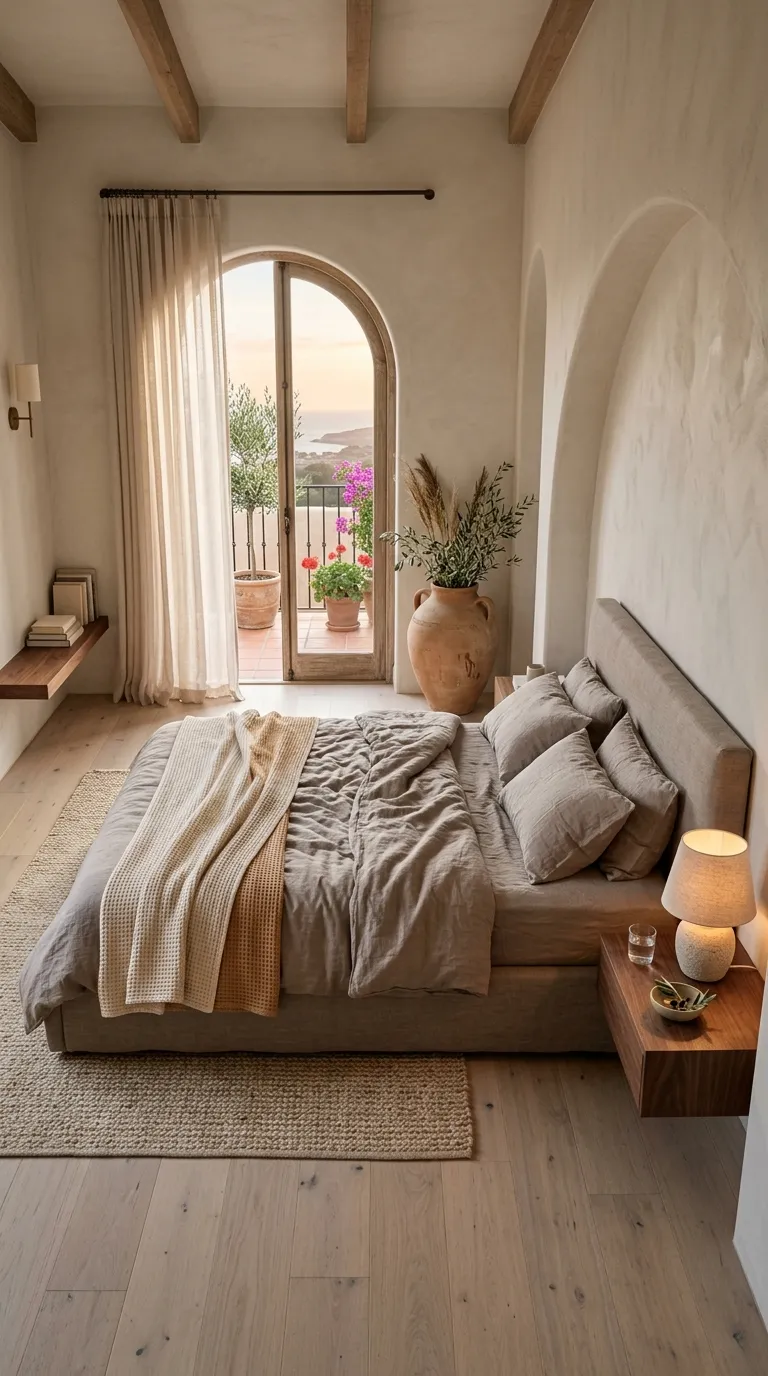
Warm minimalism keeps a bedroom simple without making it feel bare. Choose one curved architectural feature, soft bedding, natural wood, and a textured rug to build a calm setting. The fewer pieces you use, the more each material matters.
A muted palette also makes small rooms feel easier on the eyes. Mushroom, cream, beige, walnut, and clay tones work together without creating harsh contrast. This approach suits mediterranean homes where natural texture matters more than a crowded collection of decor.
Limestone Pool Terrace
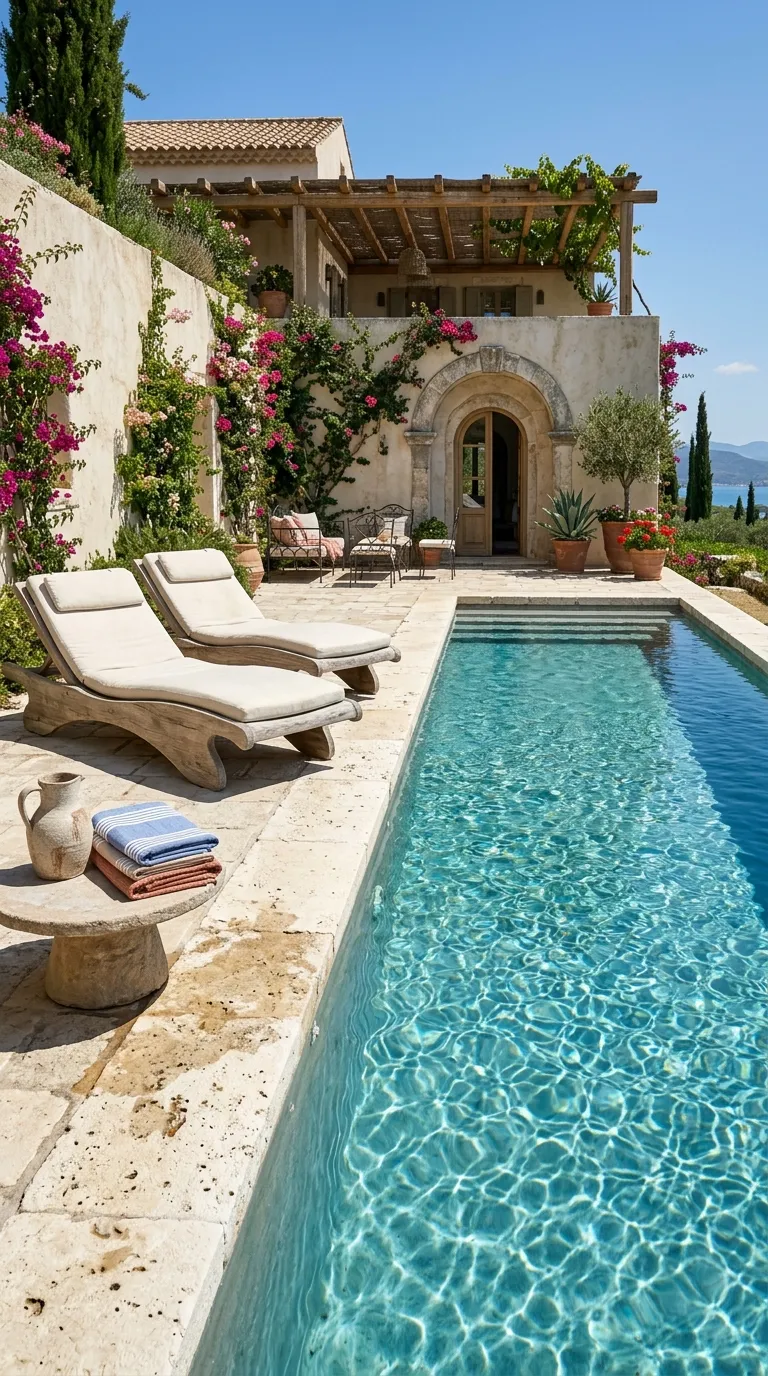
A limestone pool terrace gives an outdoor area a clean, natural foundation. Pale stone works beautifully beside creamy stucco, timber, and greenery, while the water adds a cool visual contrast. Keep the furniture simple so the architecture stays in focus.
Shade matters just as much as seating. A timber pergola or covered arch can create a comfortable spot beside the pool without closing off the view. In mediterranean homes, the best outdoor spaces often combine water, stone, planting, and shade in one easy layout.
Clay Toned Dining Room
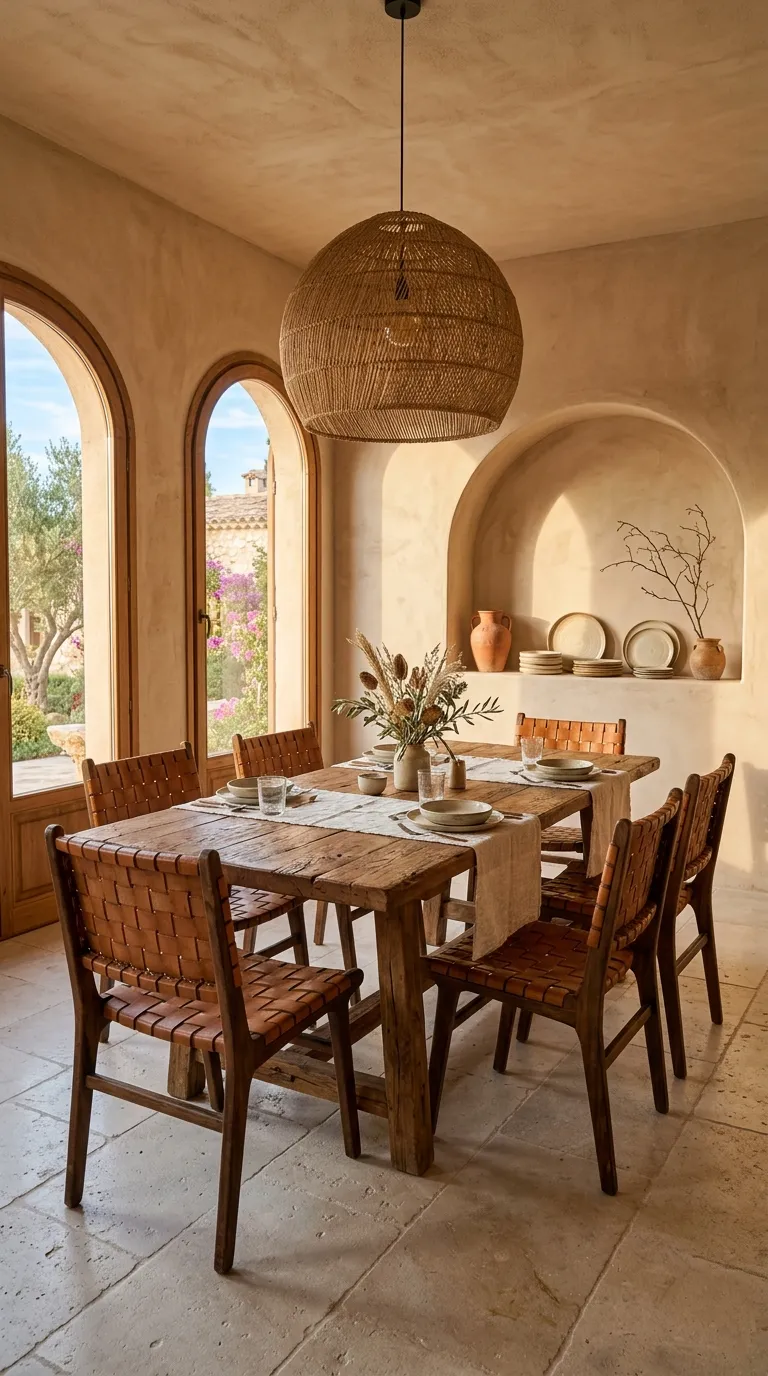
Clay walls bring a richer earth tone into the dining room without making it feel dark. Balance them with pale flooring, natural wood, and light textiles so the room still feels open. A large table creates a welcoming center for meals and gatherings.
Choose one strong pendant rather than several small fixtures. Handmade ceramics and woven seating add texture while keeping the room connected to Mediterranean craft traditions. If your dining room is narrow, a long table can still work when the surrounding furniture stays slim.
Arched Kitchen Pantry
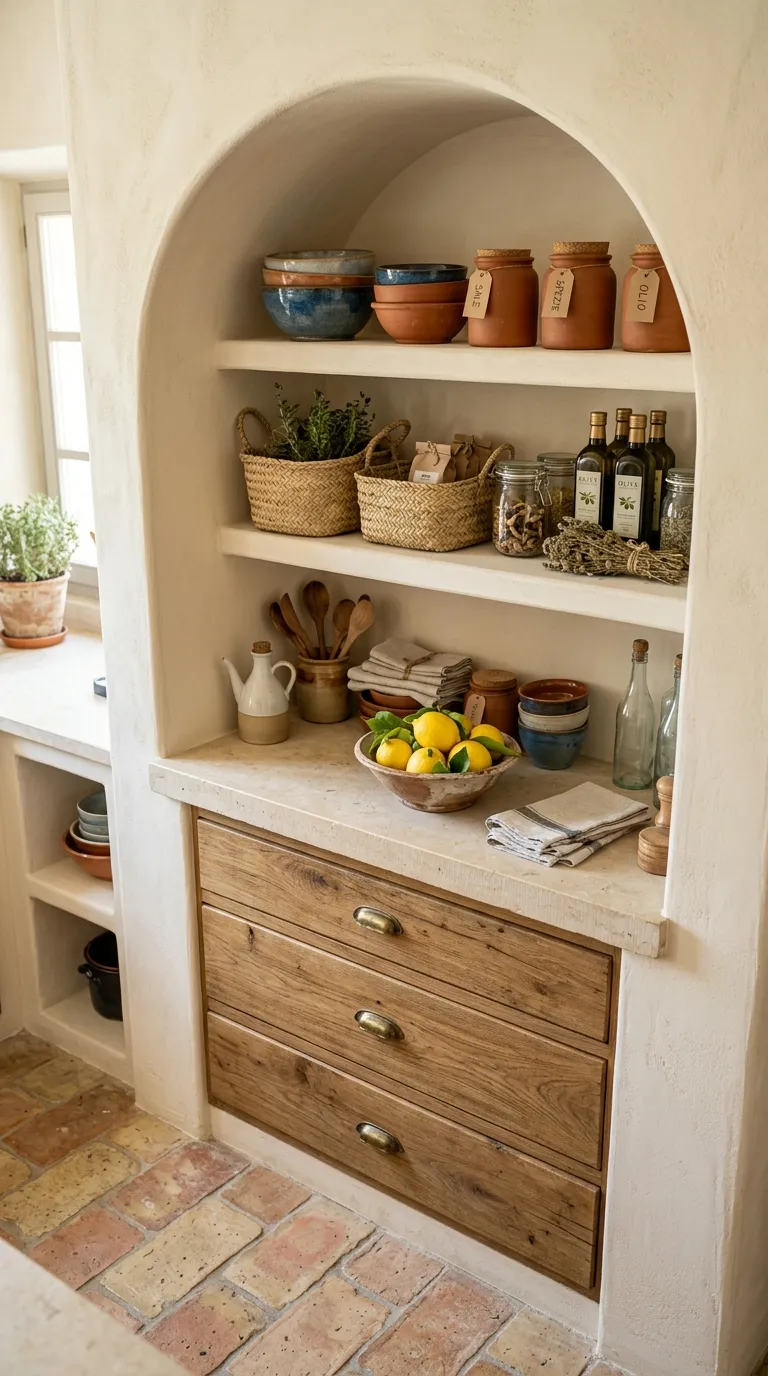
An arched pantry can turn storage into part of the kitchen design. Built-in plaster shelves give everyday dishes, jars, and baskets a natural home while keeping the floor clear. The curved opening adds architectural interest without needing extra decoration.
Use a limited range of containers so the shelves stay calm. Cream ceramics, terracotta, oak, and woven storage pieces create a cohesive look. This idea works especially well in mediterranean homes where open storage can display useful items as part of the decor.
Rustic Mediterranean Balcony
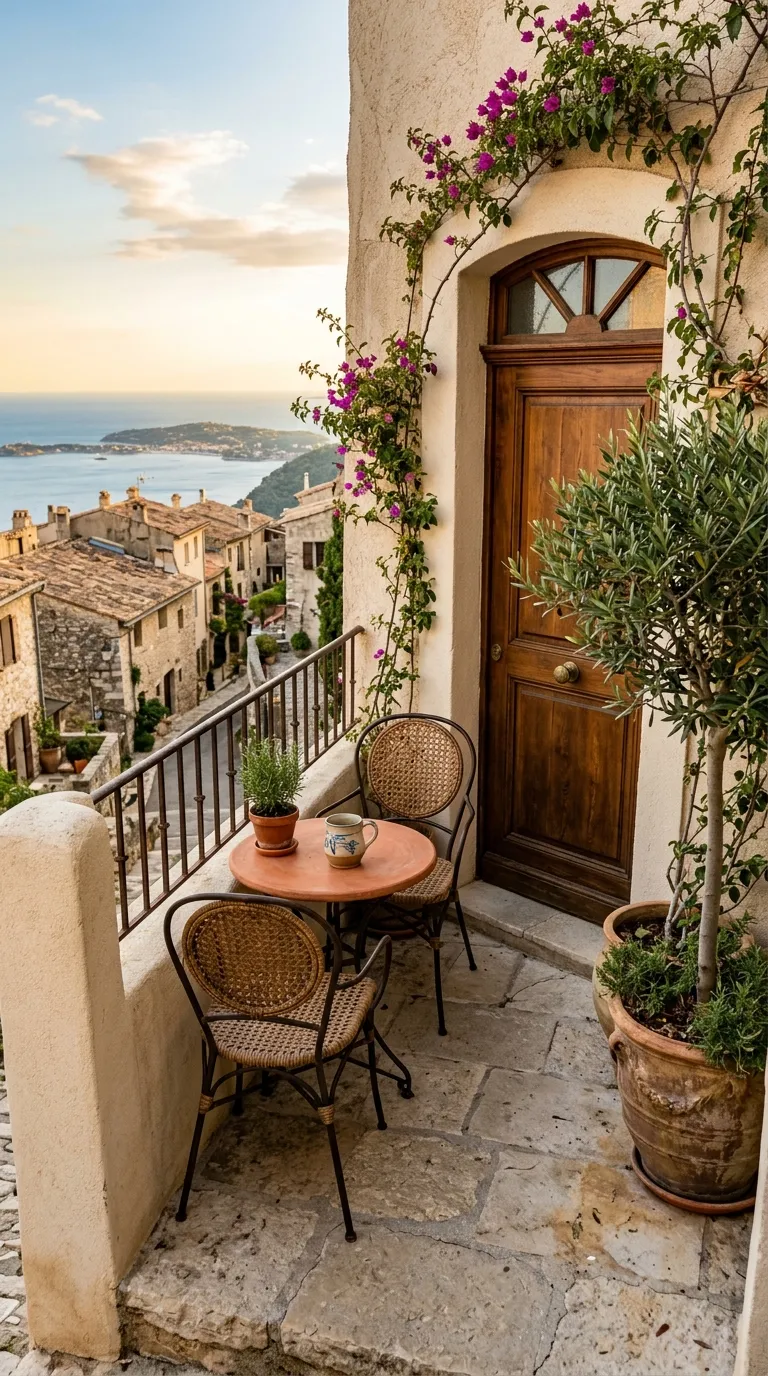
Even a narrow balcony can carry Mediterranean character. Start with natural stone flooring, compact seating, and one large planter rather than trying to fill every corner. Wrought iron and clay bring texture without taking up much space.
Choose plants that suit your light and climate, then let the greenery soften the hard edges. A small round table gives you just enough room for coffee or a book. This simple setup can bring the relaxed outdoor spirit of mediterranean homes to apartments and smaller houses.
Modern Villa Exterior
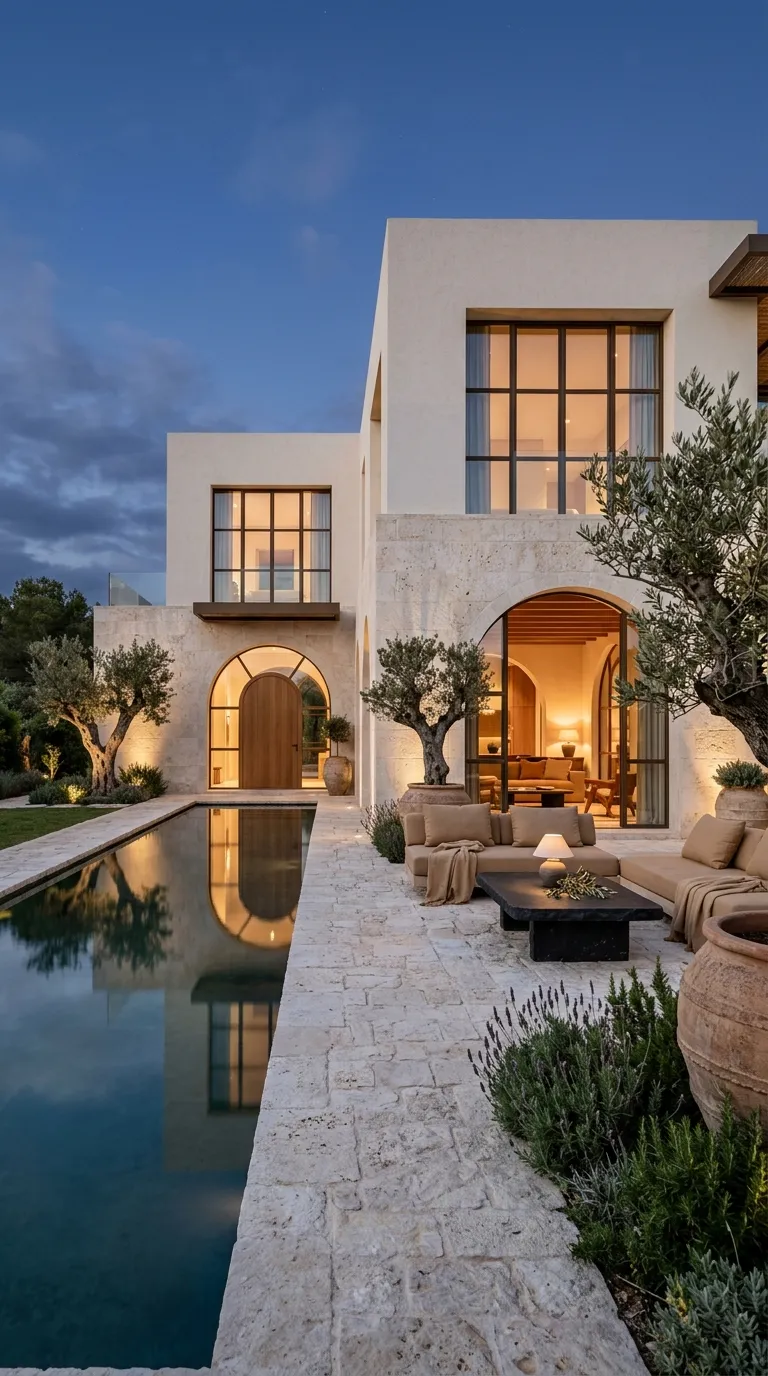
Modern Mediterranean design can use clean lines without losing warmth. Keep the main structure simple, then bring character through arches, limestone, stucco, olive trees, and terracotta. Dark bronze frames can give the pale exterior a sharper contemporary edge.
At dusk, warm interior lighting adds another layer to the facade. A reflecting pool or long stone path can guide the eye toward the entrance. This blend of modern geometry and traditional materials gives mediterranean homes a fresh look while keeping their familiar warmth.
Elegant Mediterranean Courtyard
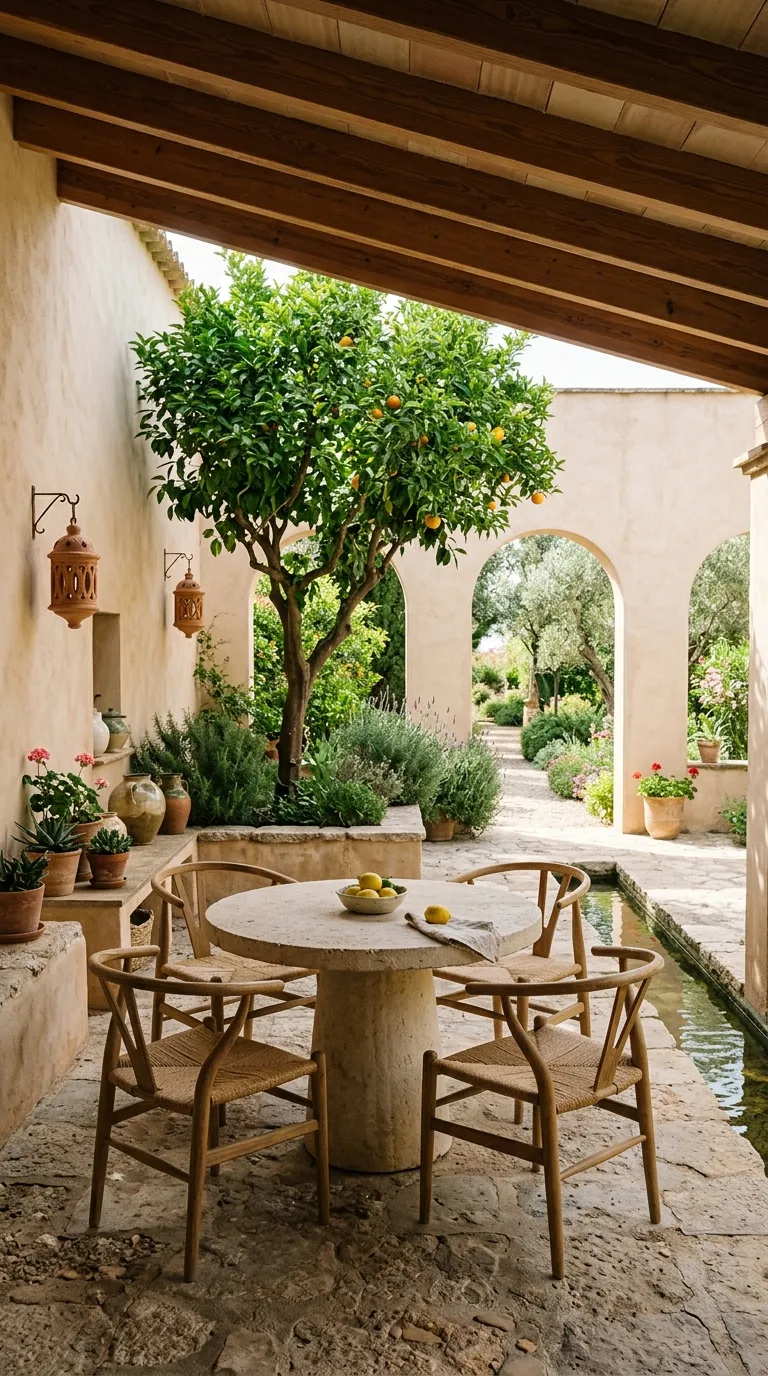
A courtyard becomes especially inviting when one central feature anchors the space. A citrus tree, round table, and stone flooring create a simple arrangement that feels natural and useful. Repeated arches add depth while keeping the architecture visually connected.
Use greenery to soften the walls rather than covering every surface. Rosemary, lavender, citrus, and climbing vines bring gentle color and fragrance to the setting. For mediterranean homes, a courtyard like this can serve as an outdoor dining room, quiet retreat, or gathering place.
Closing Thoughts
Mediterranean style works because it balances beauty with everyday comfort. Start with warm plaster, natural stone, wood, linen, terracotta, and a few curved architectural details, then build the room around how you actually use it.
You don’t need to copy an entire villa to get the look. Pick one idea that fits your space, such as an arched opening, limestone surface, olive-toned furniture, or a simple courtyard setup. With a thoughtful mix of earthy materials and relaxed furniture, mediterranean homes can inspire a space that feels personal, welcoming, and easy to live in.
Emma Williams
Emma Williams is an interior design expert and decor editor at Lady Home Decor. She specializes in modern, cozy, and functional home styling, helping readers discover inspiring decorating ideas that are easy to recreate. Her work focuses on timeless design, practical solutions, and the latest home decor trends.