24 Clever Dining Room Cabinet Decor Ideas That Actually Work

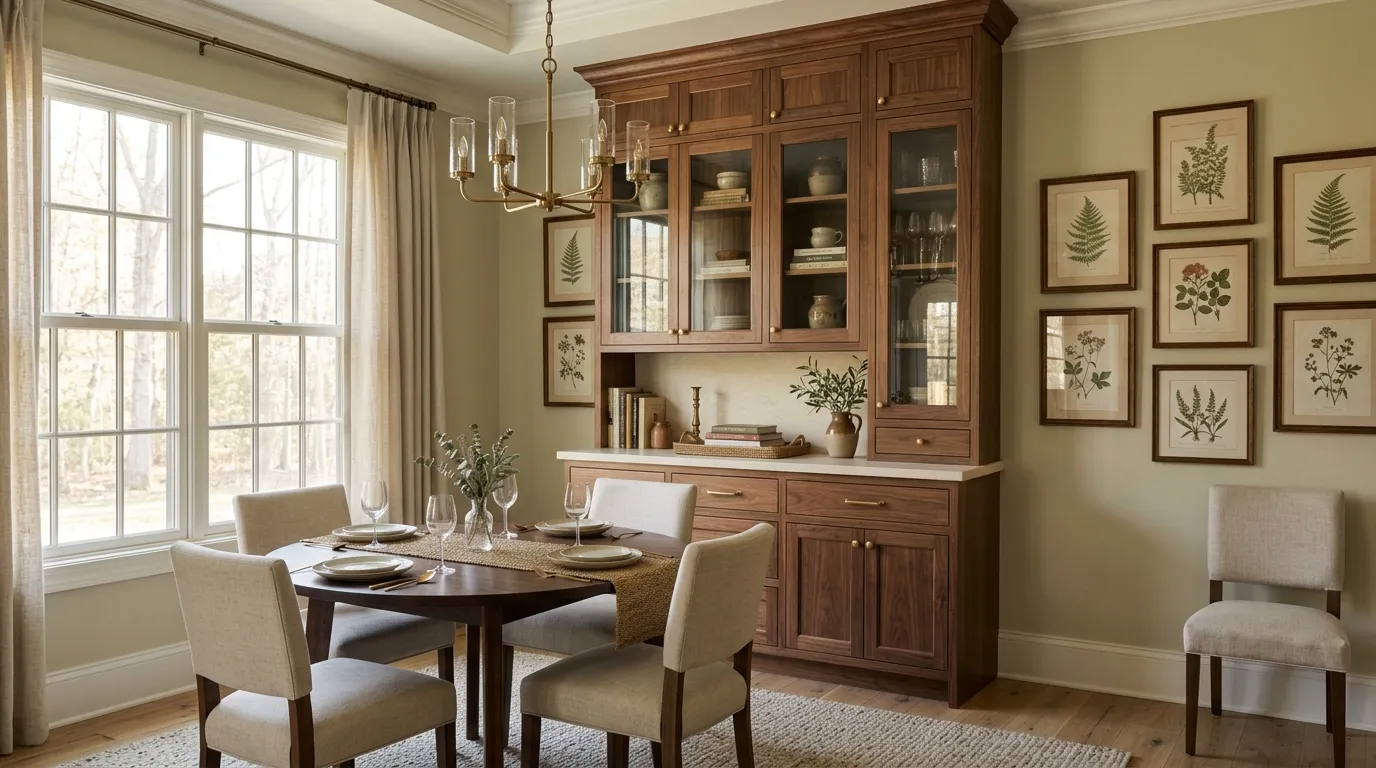
A well-styled cabinet can make a dining room feel finished without making it look crowded. The trick is choosing pieces that support the room instead of filling every shelf. These dining room cabinet decor ideas show how to mix storage, color, texture, and useful pieces while keeping the display easy to live with.
Picture a cabinet holding your favorite dishes, a few books, framed art, and collected pottery rather than a random pile of objects. You can create that look with open shelving, glass doors, closed storage, or even a simple freestanding sideboard. The ideas below give you practical ways to make each arrangement feel intentional and personal.
Warm Wood and Ceramic Layers
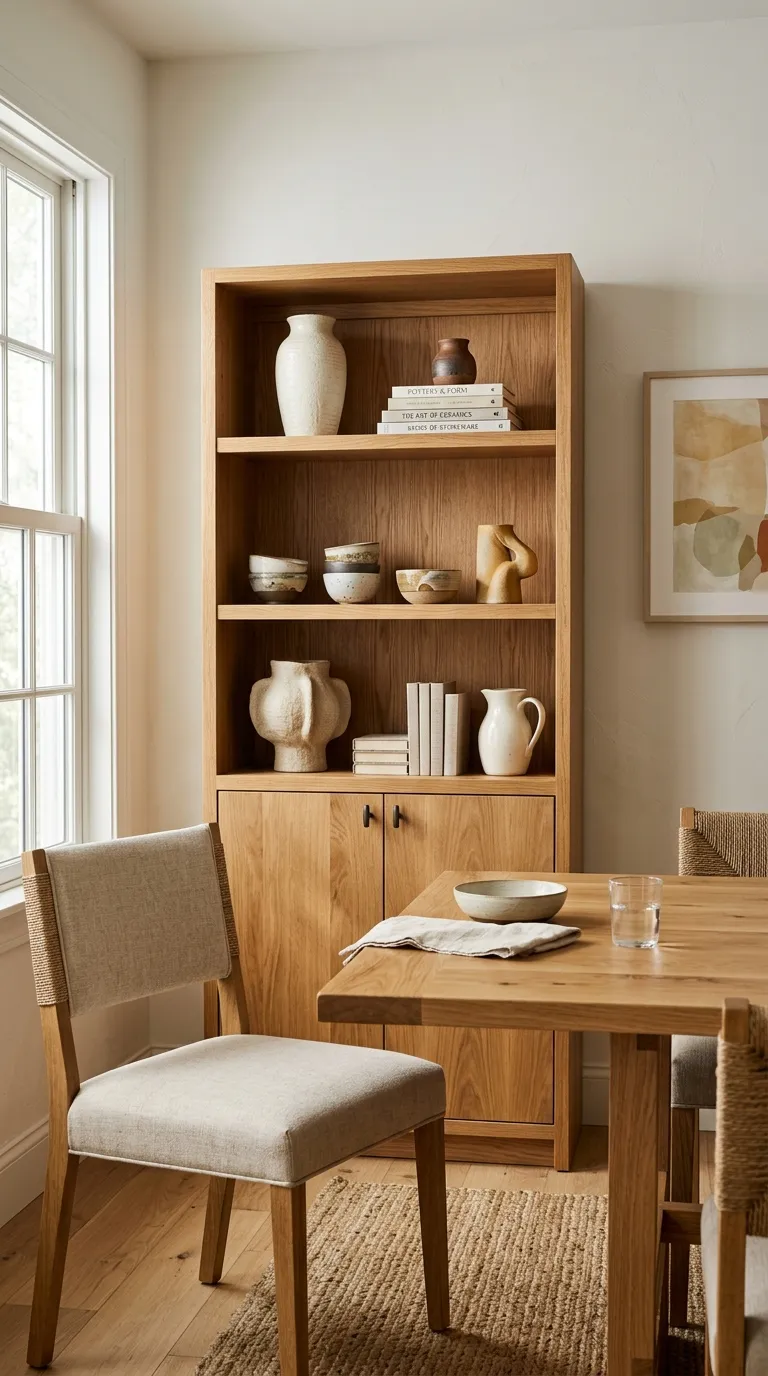
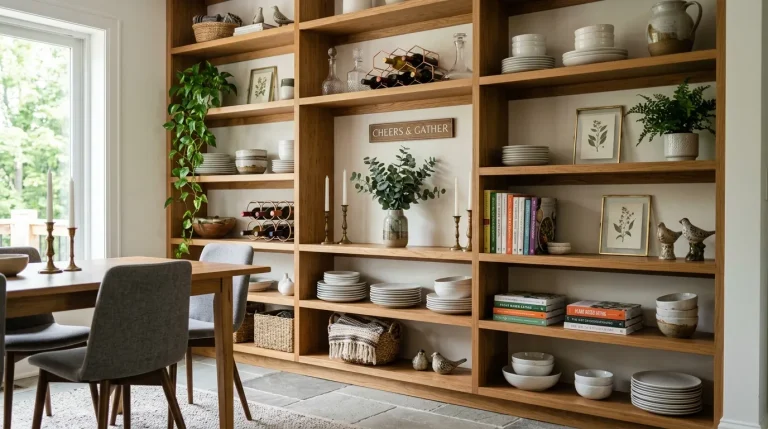
Warm wood already brings depth to a dining space, so you don’t need dozens of accessories. Use cream pottery to create a calm contrast against the cabinet finish.
For dining room cabinet decor, try grouping ceramics by shape instead of lining them up. A tall vase can anchor one side while bowls and shorter pieces fill the middle.
Glassware Behind Glass Doors
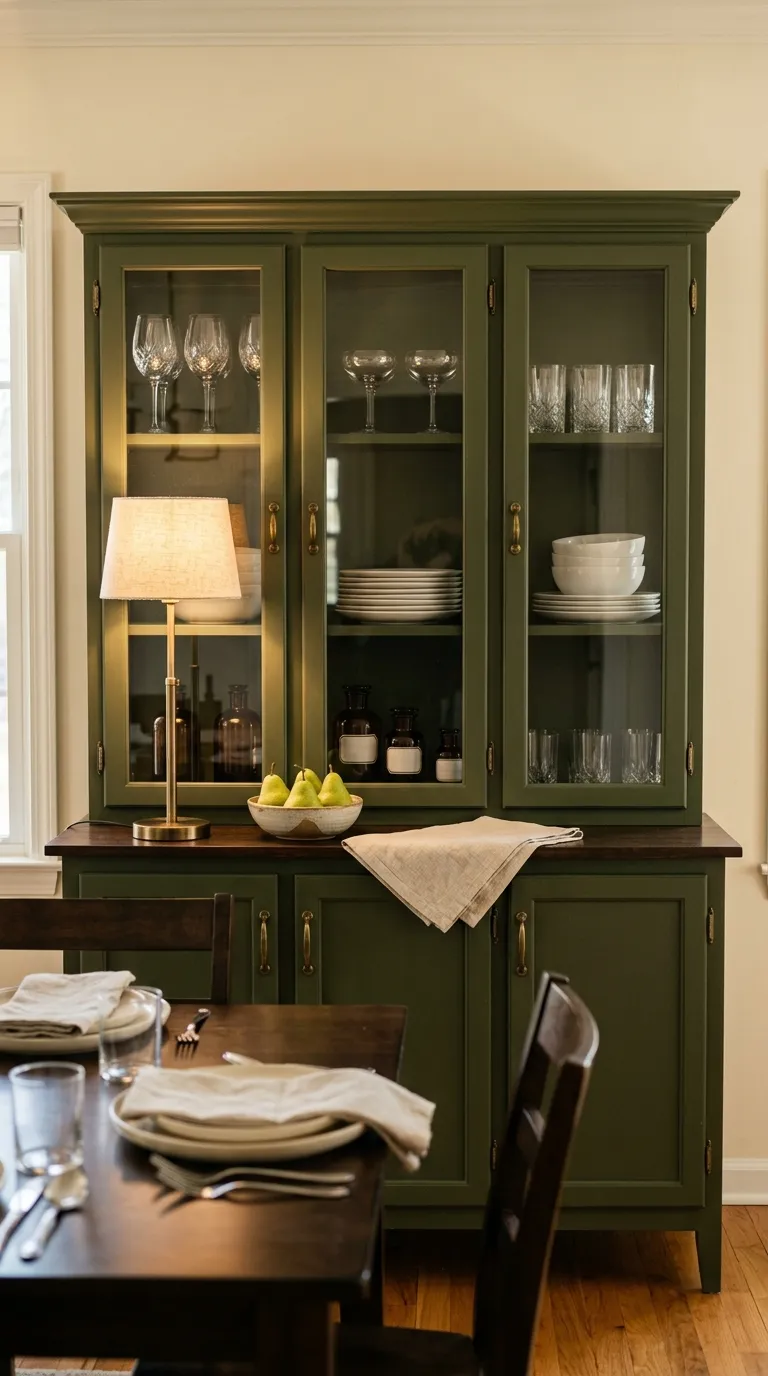
Glass doors make everyday dining pieces part of the room’s decoration. They also keep dust away while allowing you to see what you own.
Arrange glasses by height and shape, leaving small gaps between groups. This simple approach keeps cabinet styling practical and prevents the shelves from looking like a crowded bar.
Symmetrical Candle Styling
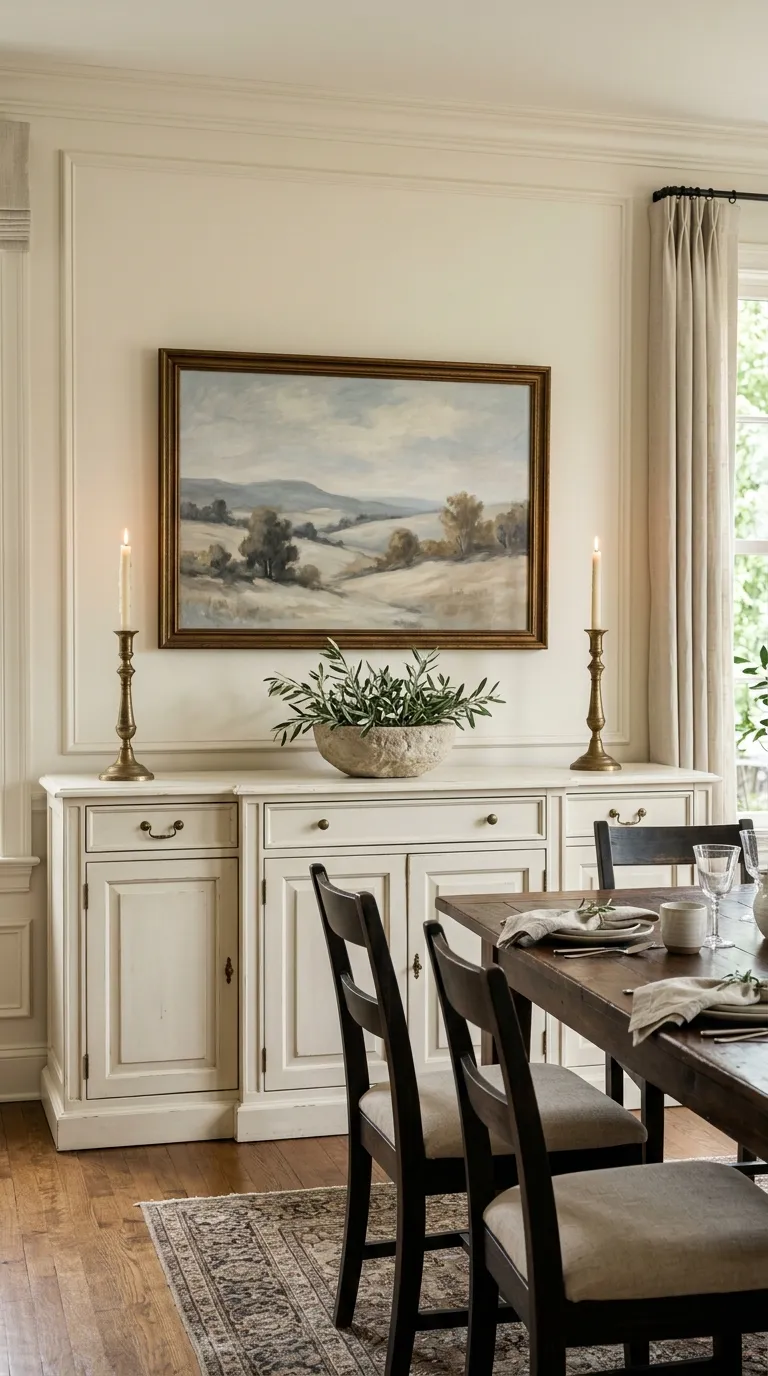
Symmetry works especially well when your cabinet has a wide, simple shape. Matching candleholders give both ends visual weight without requiring many accessories.
Keep the center lower and quieter. A stone bowl or shallow tray can bridge the two sides while leaving enough open surface for serving dishes when dinner arrives.
Collected Vintage Dishes
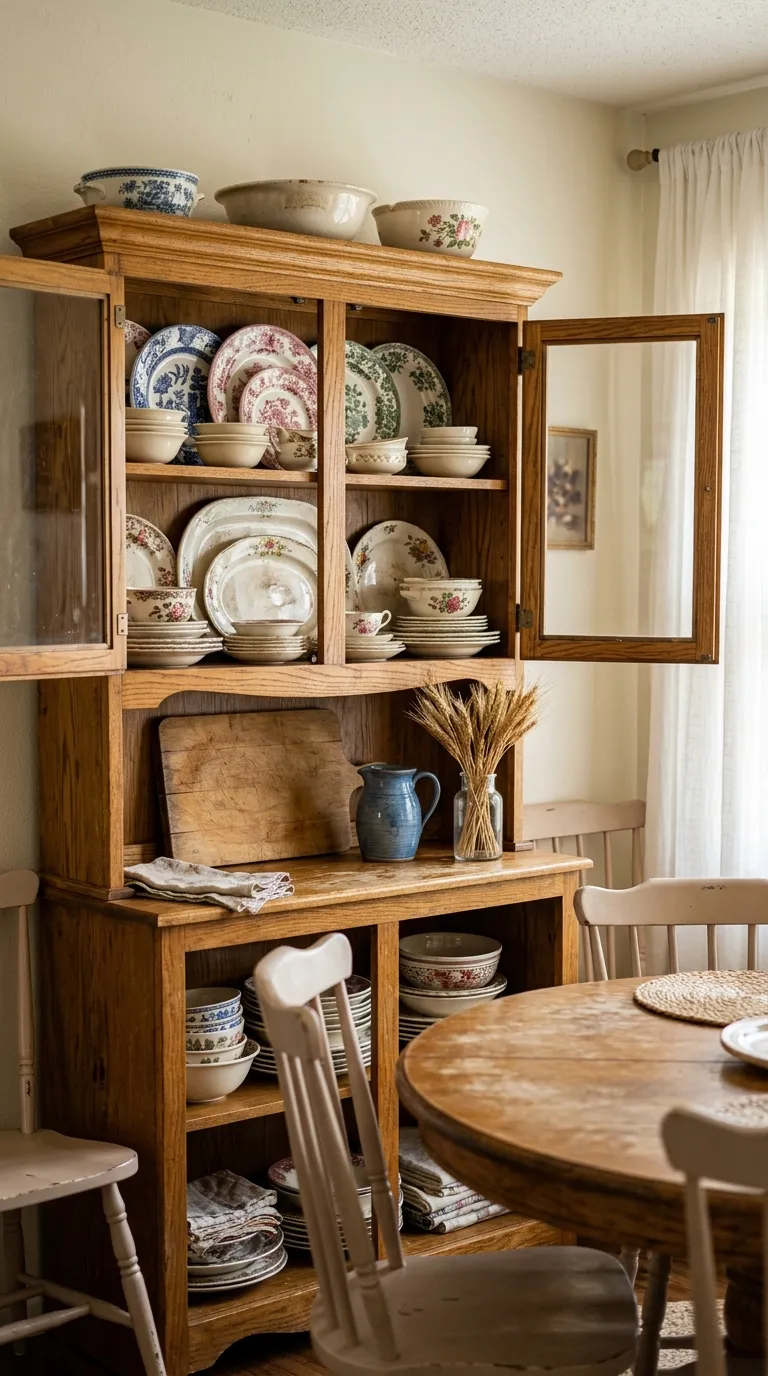
Vintage dishes can give a cabinet personality without making the room feel themed. The secret is repeating one or two colors across different patterns.
Try placing the largest plates at the back and smaller pieces in front. This creates depth and lets more of your collection remain visible.
Open Shelves With Greenery
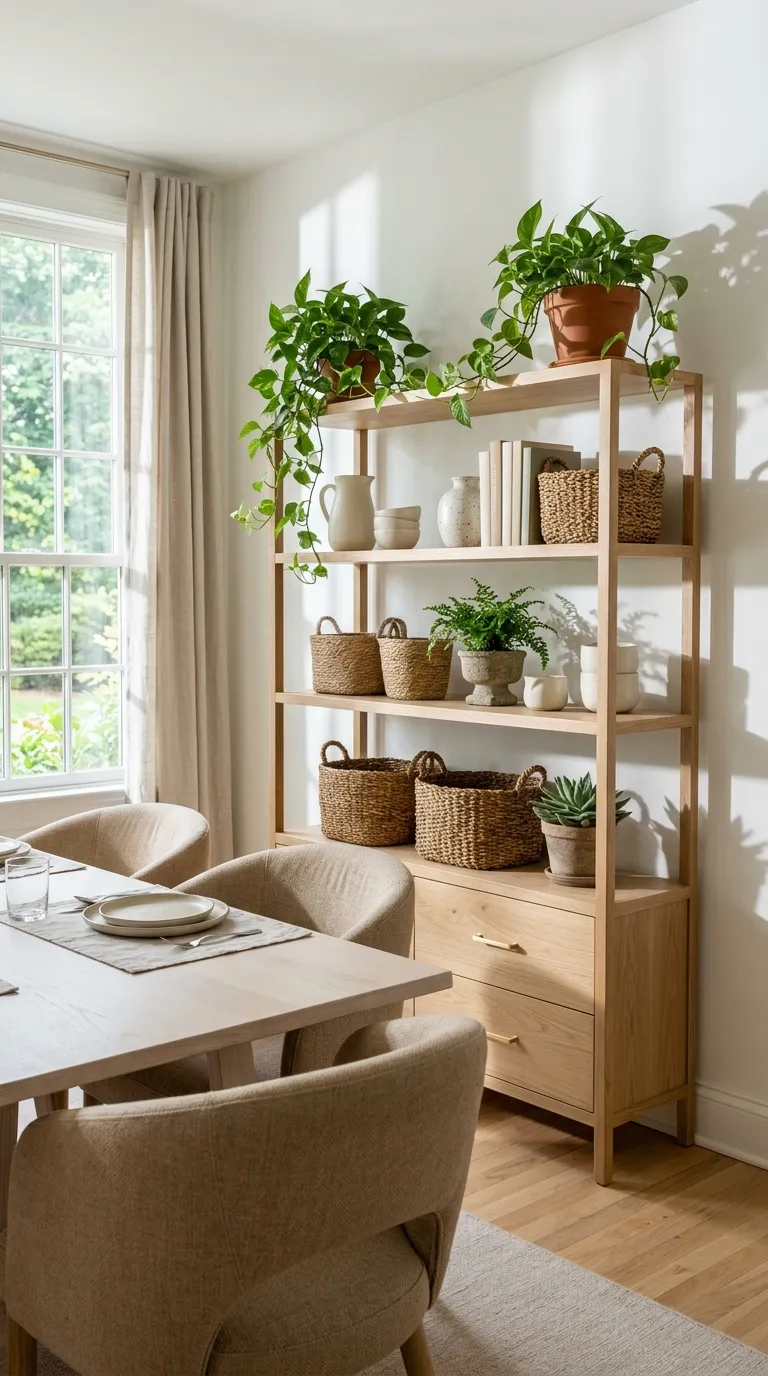
Greenery softens hard cabinet lines and adds a fresh note to open shelving. Choose plants that suit the available light rather than picking them for color alone.
For a tidy display, place greenery on different shelf levels. Let one plant trail slightly while keeping the remaining pieces lower and compact.
Layered Cutting Boards
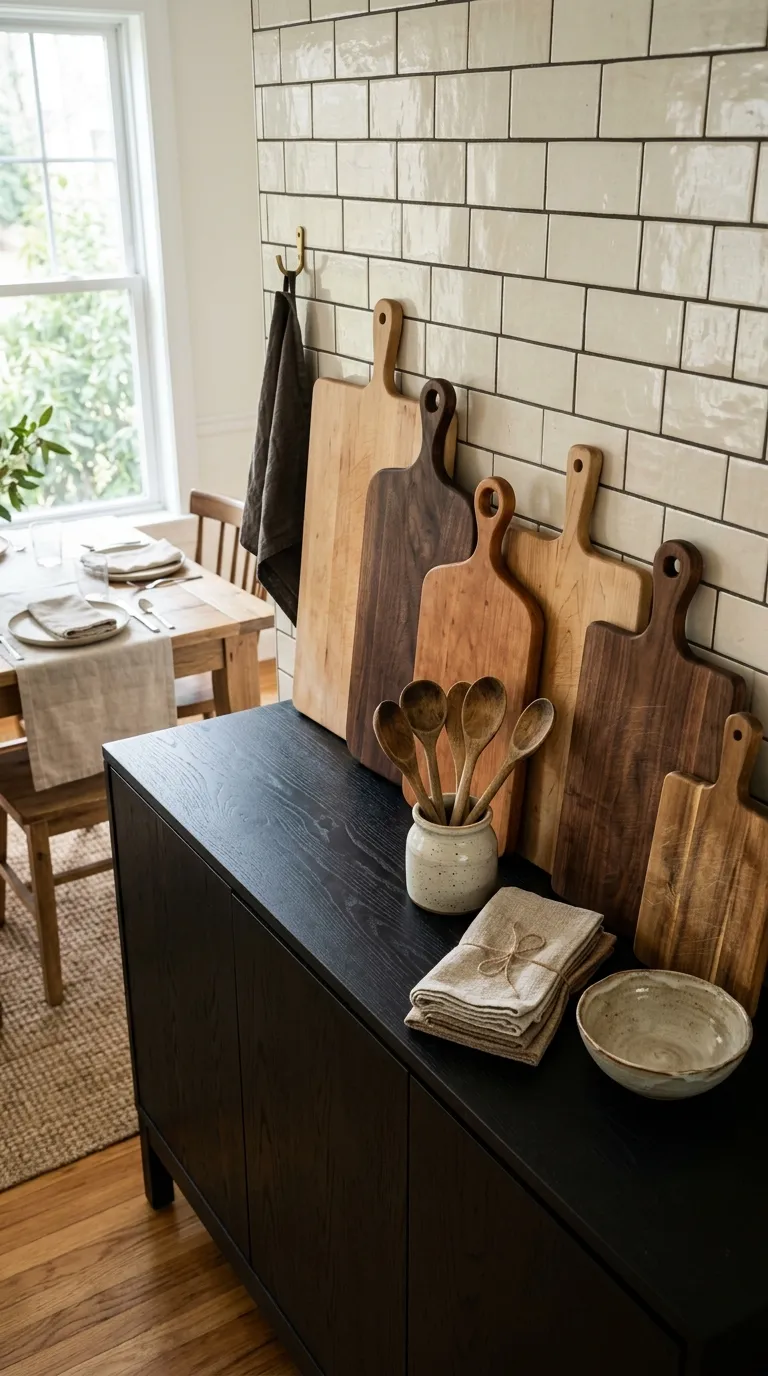
Wooden cutting boards can work as decorative pieces when they’re attractive enough to leave visible. Their different grains add warmth to cabinets with darker finishes.
Lean two or three boards together rather than displaying a large collection. Add a small bowl or utensil crock nearby to connect the display with dining use.
One Large Statement Vase
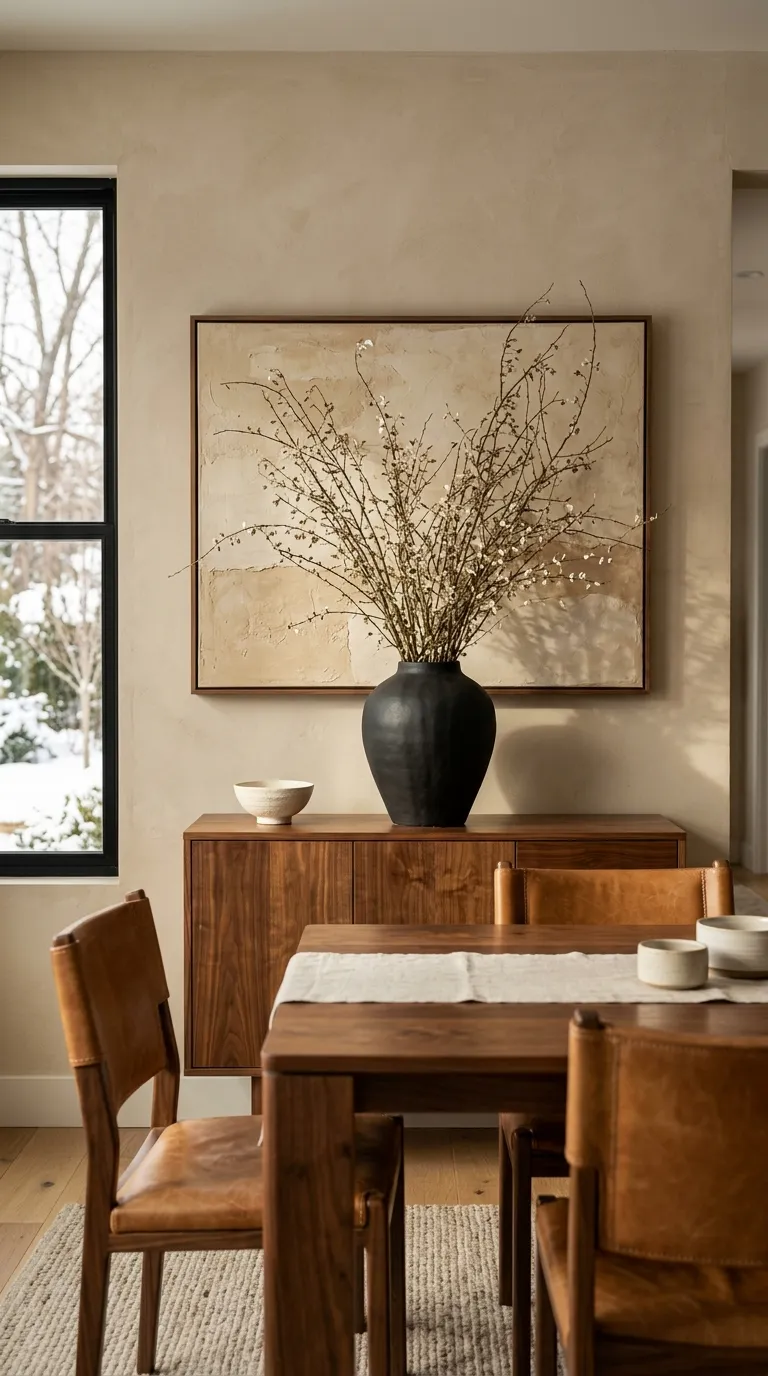
A single oversized vase can make a strong focal point without covering the whole cabinet. This works particularly well when the furniture has a beautiful finish worth showing.
Choose a vase with enough height to stand apart from the wall art. Keep the other accessories low so the display has breathing room.
Baskets for Useful Storage
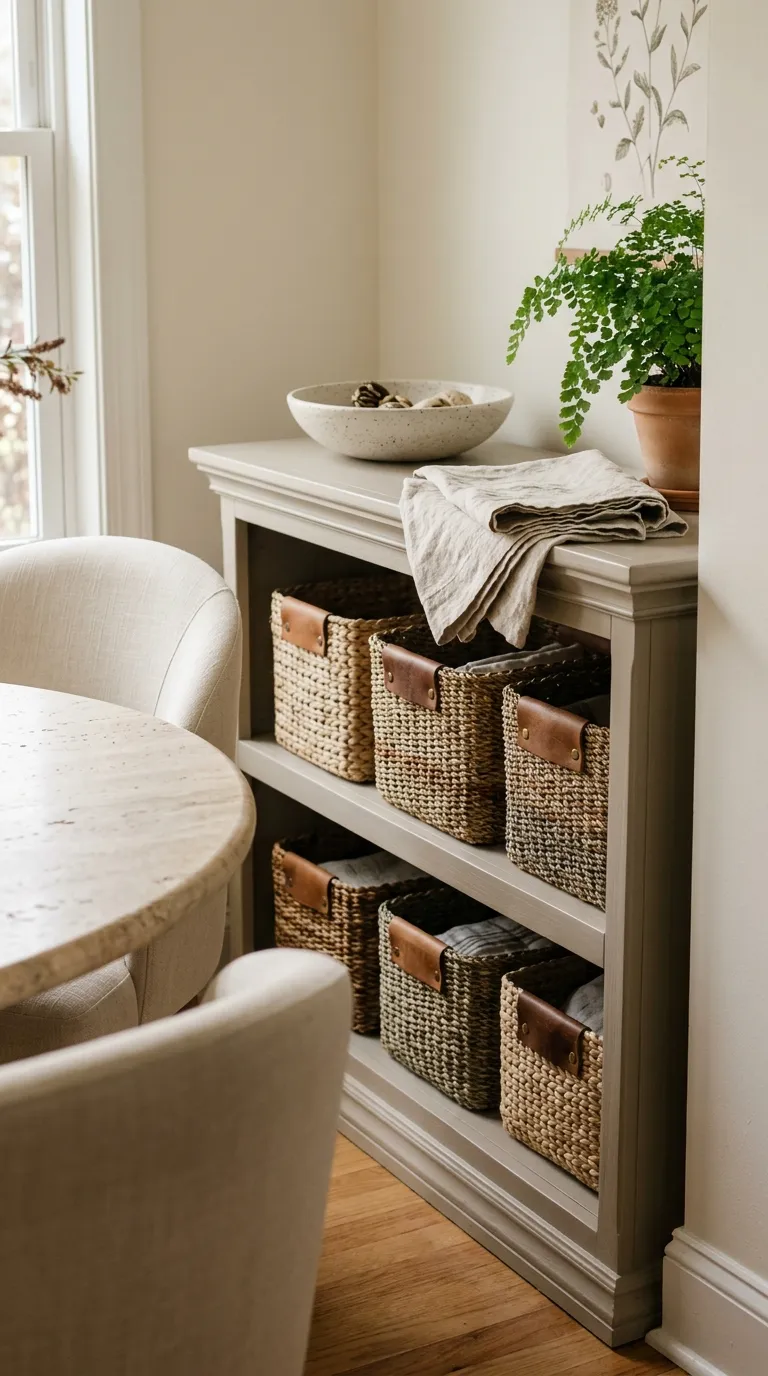
Baskets solve two problems at once. They hide smaller dining supplies while giving open shelving a softer texture.
Choose baskets that fit the shelf with a little space around each one. Matching materials create a cleaner look, while slightly different sizes keep the arrangement relaxed.
Framed Art on the Cabinet
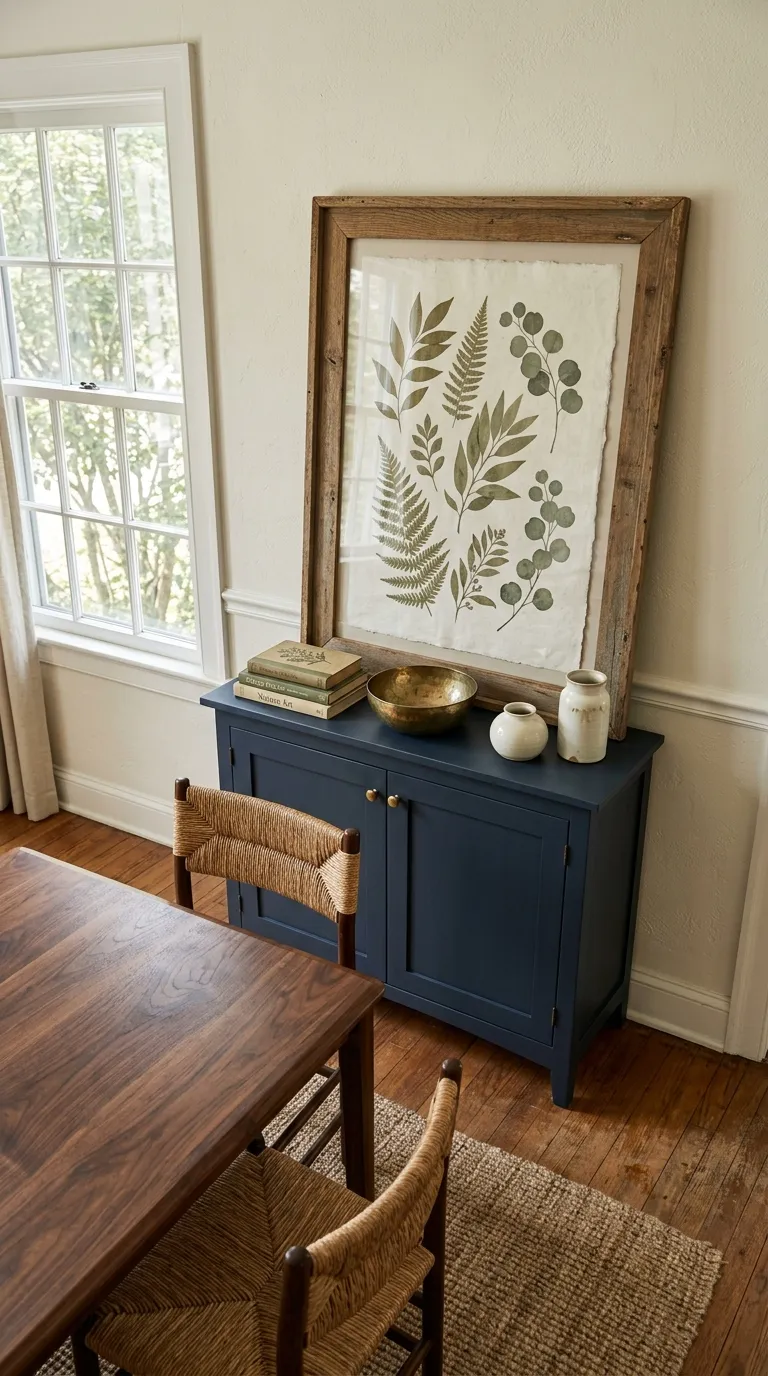
Leaning art gives a cabinet an informal, collected feel. It also lets you change the artwork later without creating new wall holes.
Use one large frame instead of several tiny pieces when the cabinet is narrow. The larger shape helps connect the cabinet with the dining table below.
Sculptural Objects
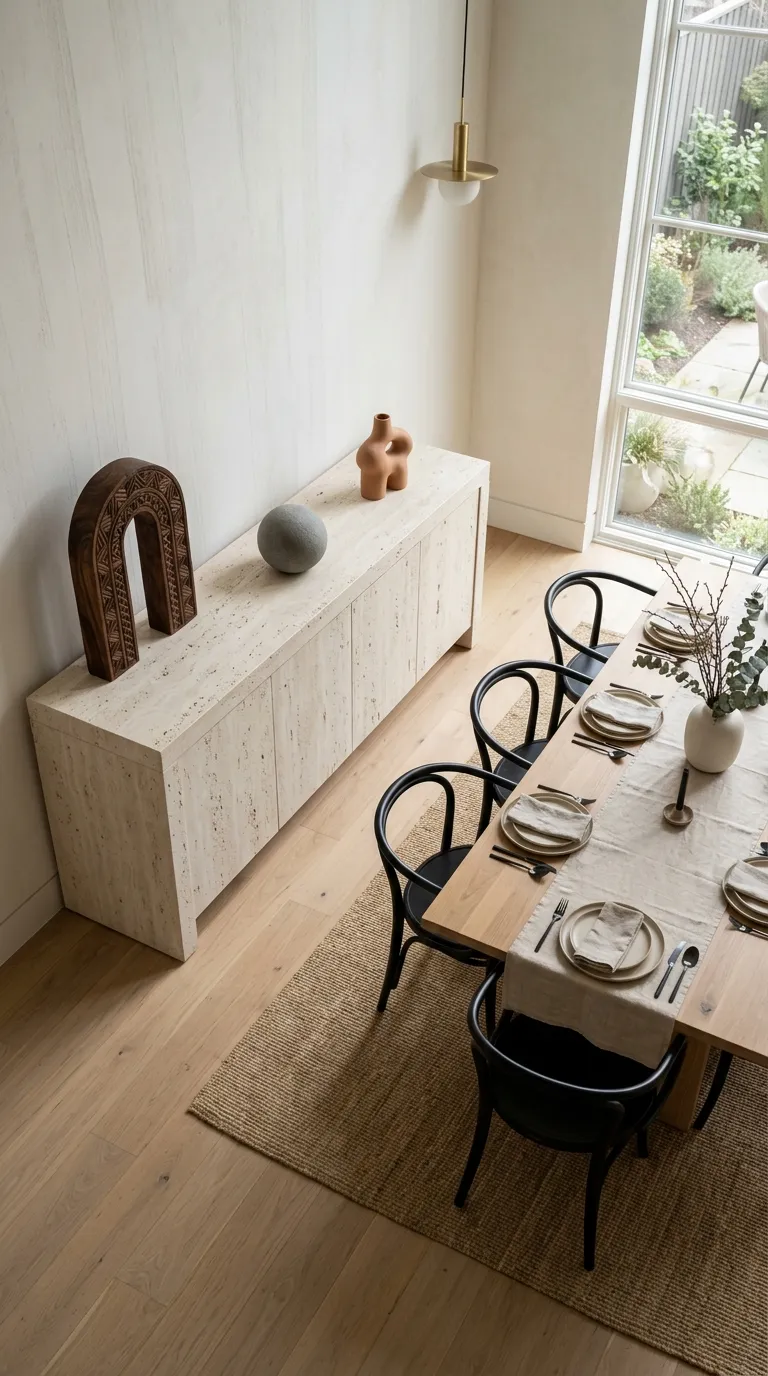
Sculptural objects give a cabinet shape without relying on lots of color. They work well when you prefer a quiet, modern dining room.
Mix different heights and forms, but keep the palette tight. Three carefully spaced pieces can look more polished than a shelf packed with small accessories.
Monochrome White Display
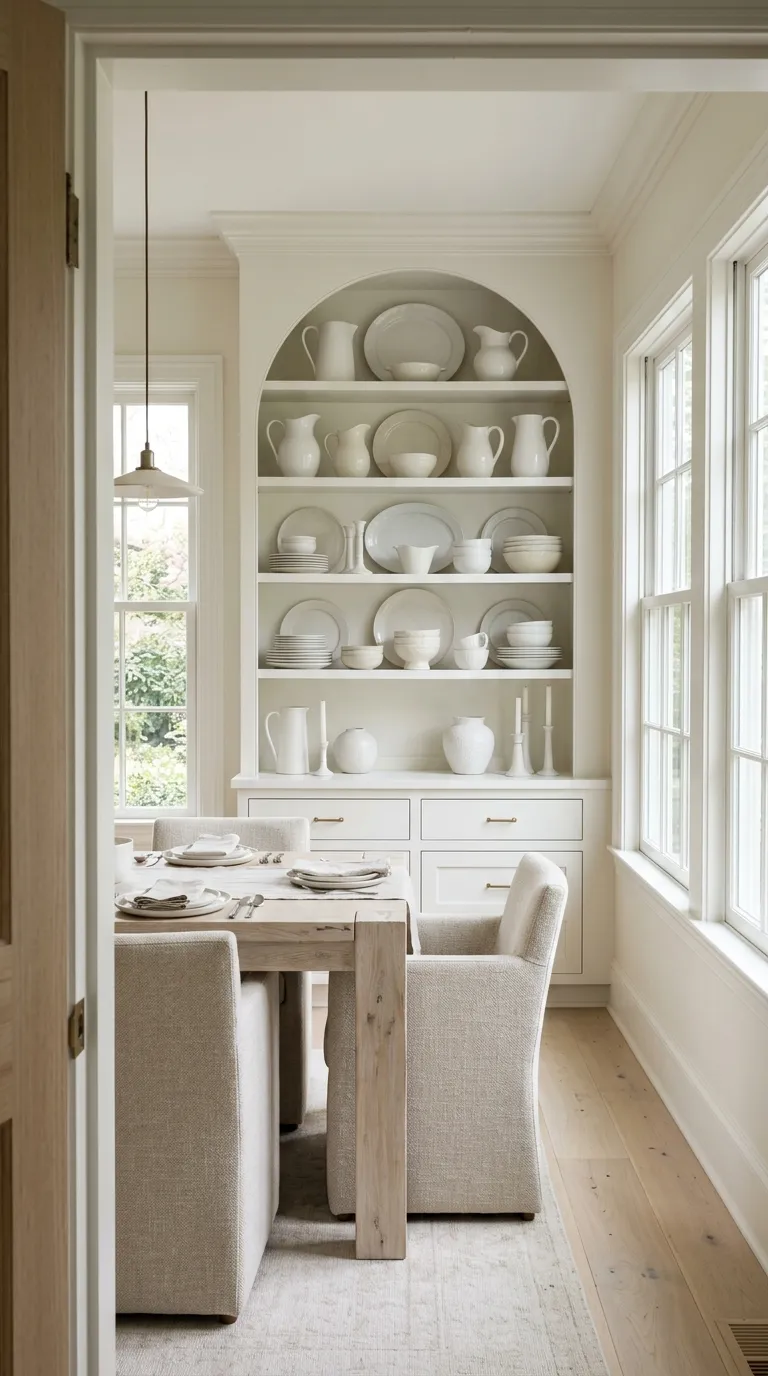
A white-on-white display can feel clean without looking flat when textures vary. Mix glossy plates with matte pottery and rougher stone pieces.
Use the cabinet’s empty spaces as part of the design. White displays need room around each group so individual pieces don’t disappear into one large block.
Brass Hardware and Warm Neutrals
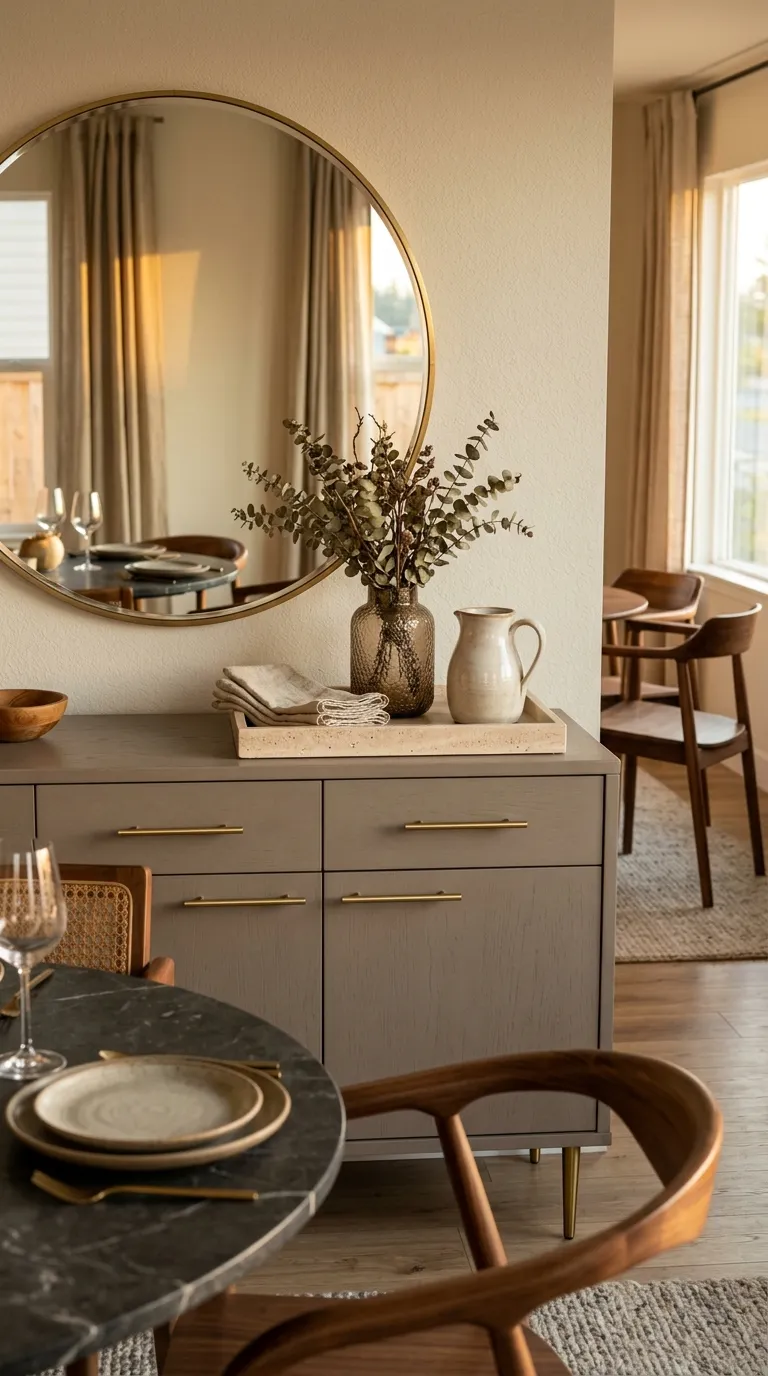
Small hardware details can change how a cabinet reads. Brass pulls add warmth, especially when the rest of the room uses soft neutrals.
Repeat the metal in one or two nearby accessories. A brass frame or tray creates a quiet connection without turning the room into a matching set.
Dark Cabinet With Light Ceramics
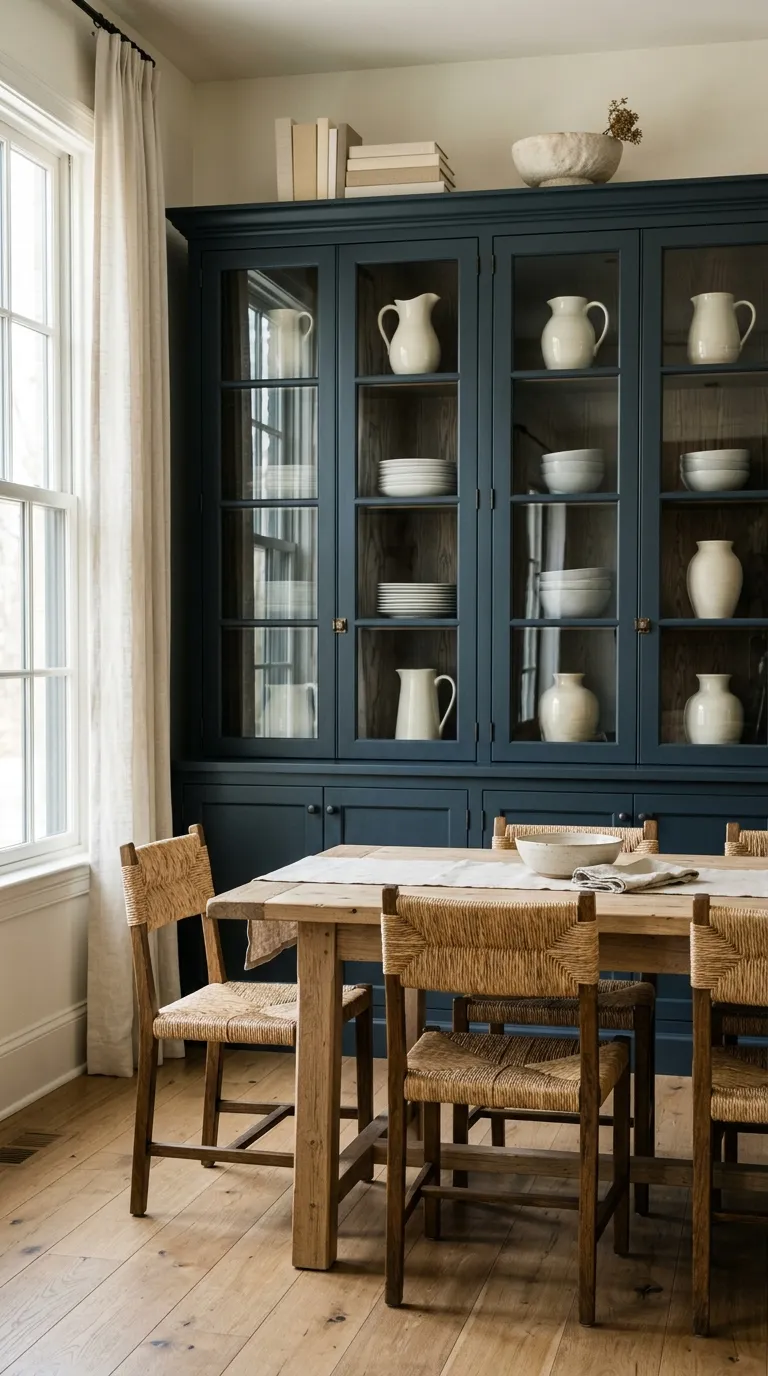
Dark cabinetry creates a strong backdrop for pale dining pieces. White and cream ceramics become easier to notice against deeper colors.
Keep the lighter pieces varied in size. Large plates, medium bowls, and small vessels create a natural rhythm without making the cabinet feel busy.
Dining Books and Small Objects
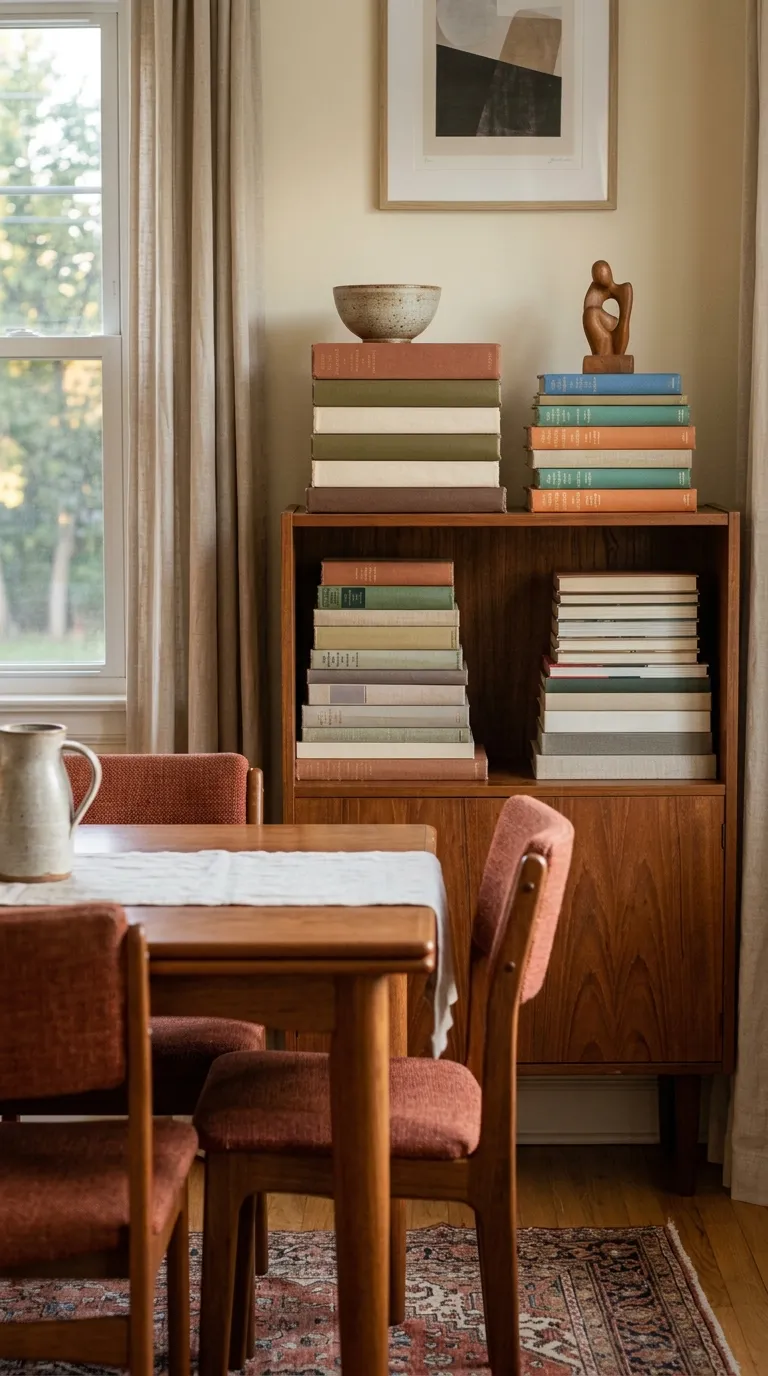
Books make a cabinet feel lived-in and useful. Choose titles related to food, interiors, art, or hosting when the display is in a dining room.
Stack books in groups of two or three. Add one object beside each stack instead of placing accessories across every inch of the cabinet.
Colorful Glass Accents
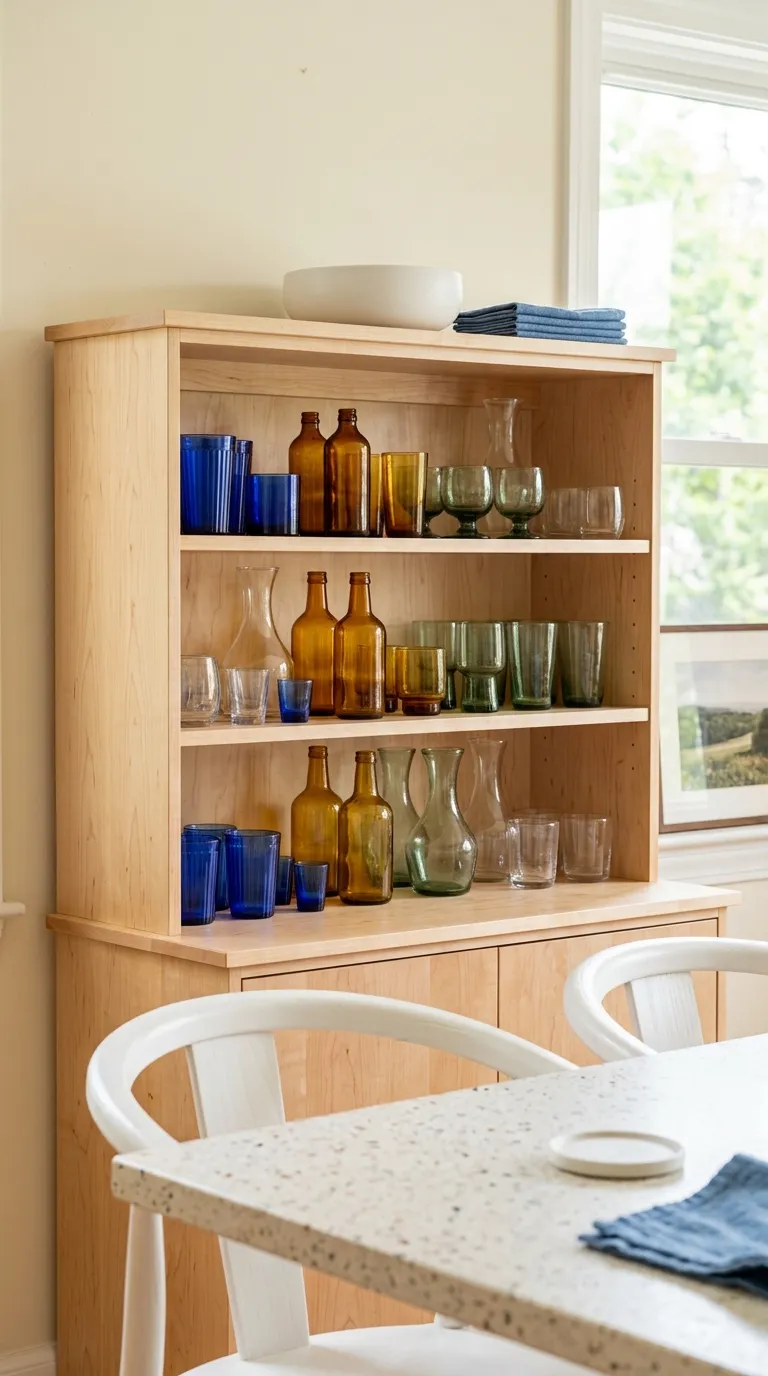
A few colorful glass pieces can give a neutral cabinet a cheerful note. You don’t need a rainbow collection to make the idea work.
Pick two or three related colors and repeat them across the shelves. Keep the surrounding dishes simple so the glass remains the visual focus.
Seasonal Cabinet Styling
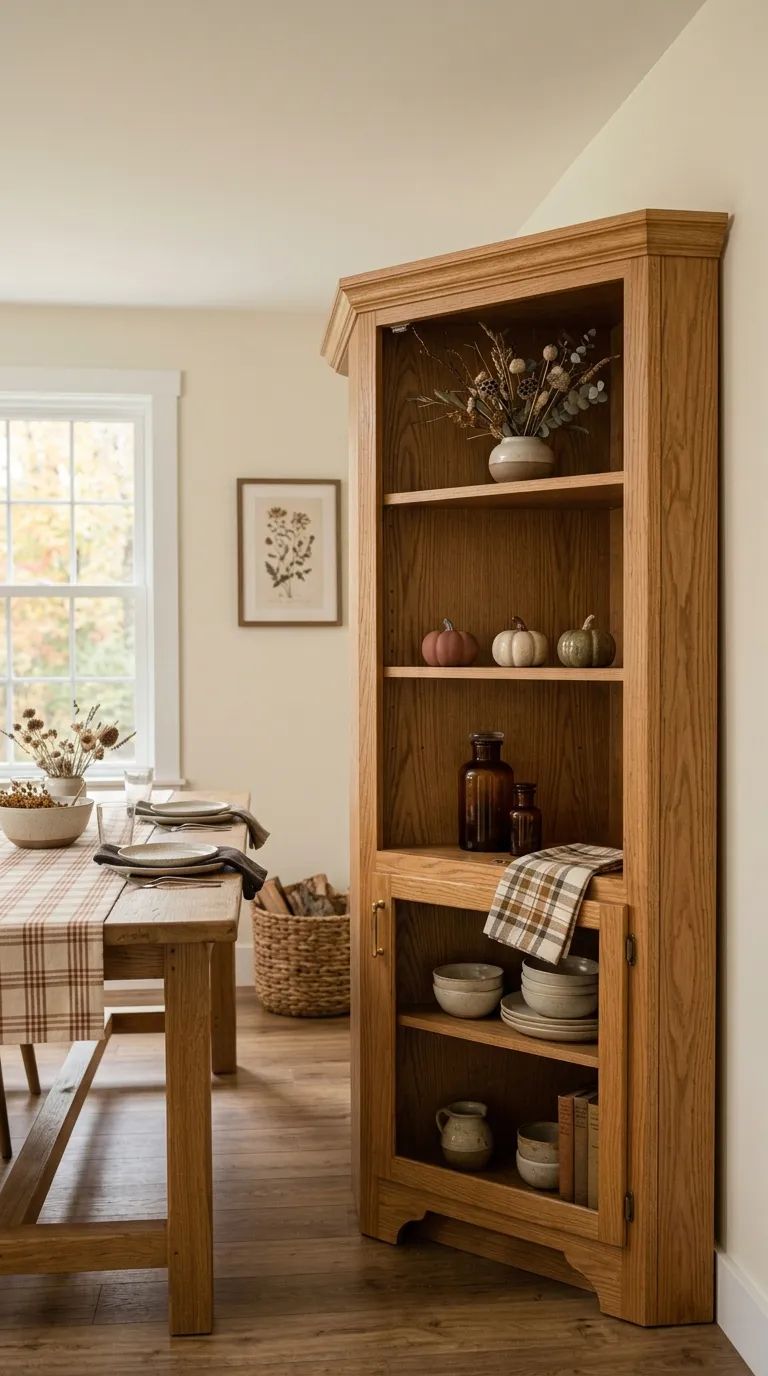
Seasonal decor works best when it joins pieces you already use. Add a few small accents instead of replacing the entire cabinet display every few months.
For autumn, try amber glass and muted foliage. For winter, swap in evergreen branches and cream ceramics while keeping the main cabinet arrangement intact.
Minimal Black and White Cabinet
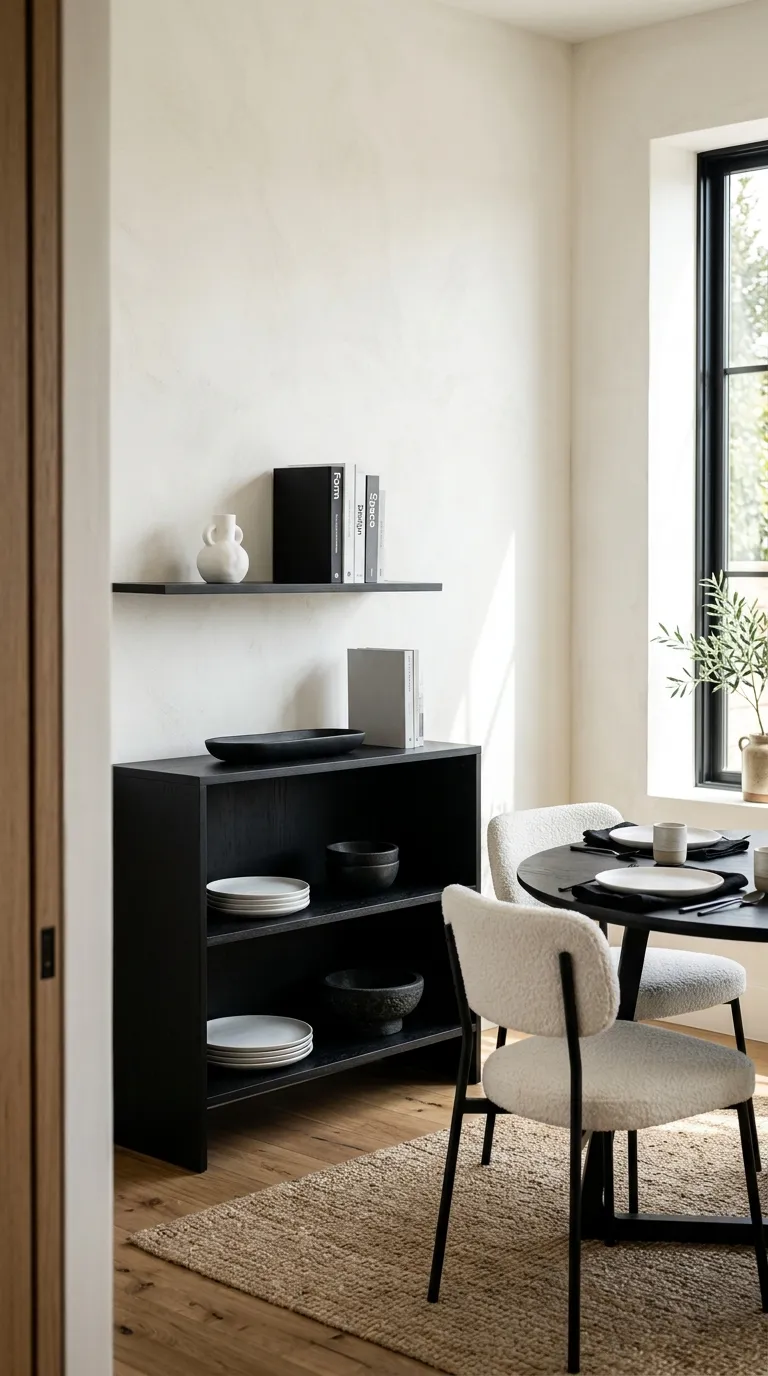
Black and white styling gives you a clear starting point when colorful displays aren’t your thing. Texture keeps the limited palette from feeling cold.
Mix shiny porcelain with matte stone and soft fabric nearby. The contrast adds interest while the colors stay simple.
Tray-Based Cabinet Arrangement
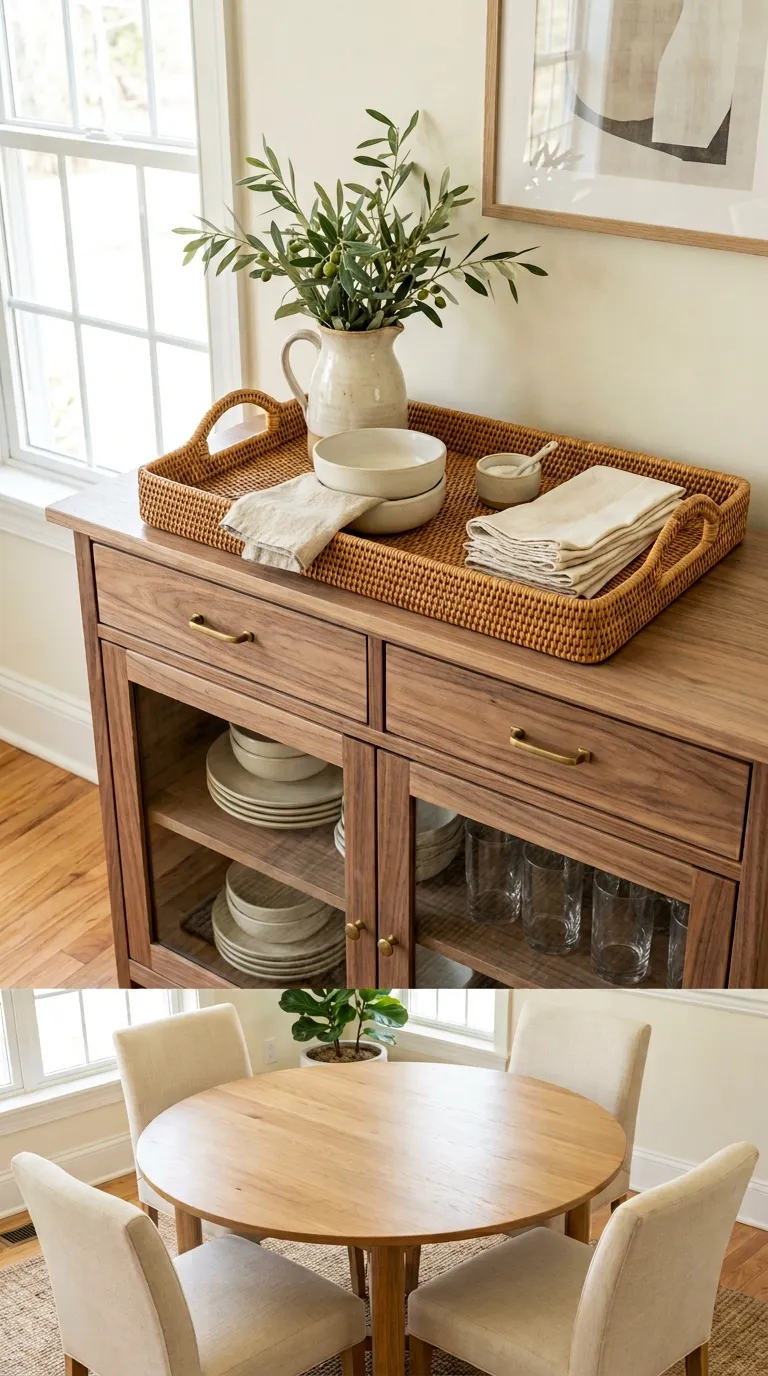
A tray gives loose accessories a visual home. It also makes the cabinet easier to clear when you need extra space for serving.
Choose a tray large enough for three to five useful pieces. Keep taller objects toward the back and low items toward the front for a balanced arrangement.
Plate Wall Inside Cabinet
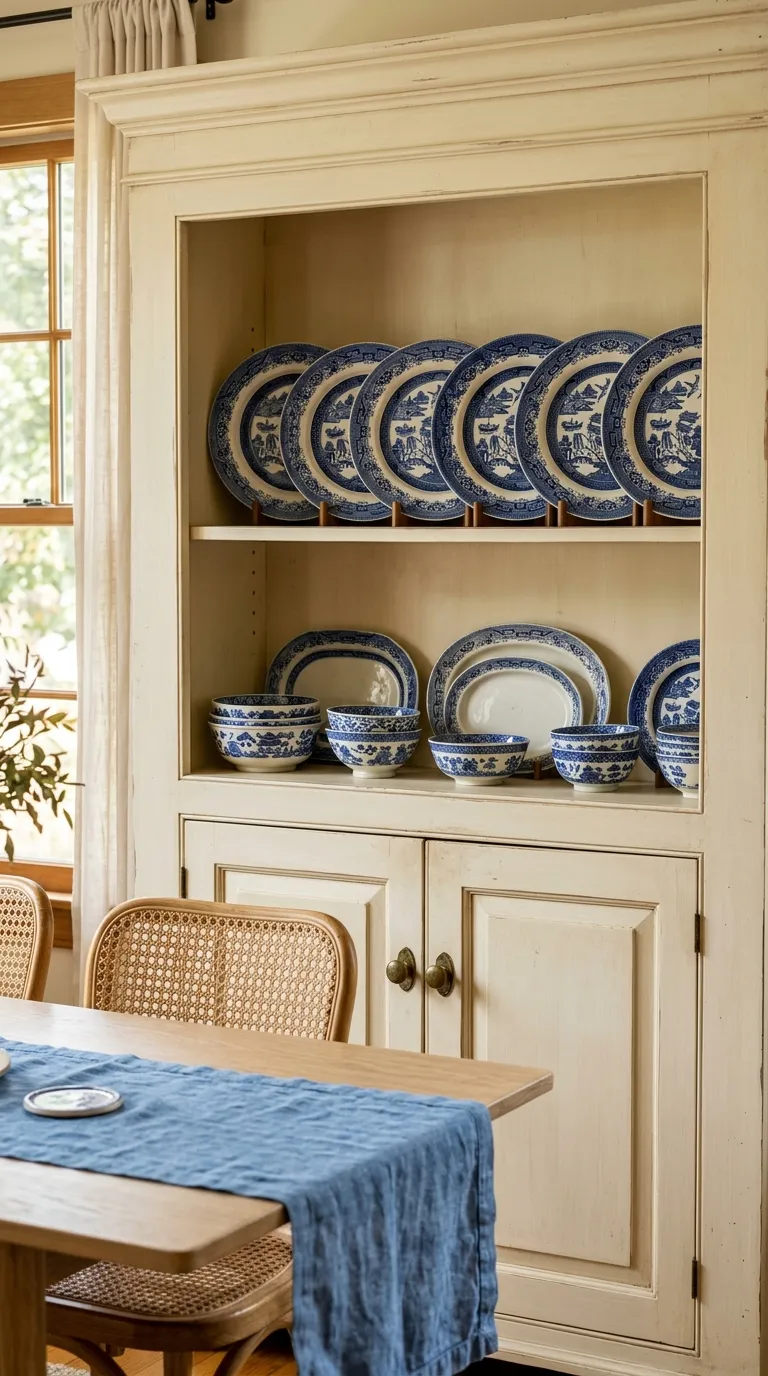
A plate display turns everyday dishes into wall decor while keeping them close at hand. This idea works especially well with open cabinet niches.
Use plates with one repeated color, even when their patterns differ. Layering a few smaller pieces in front adds depth without hiding the main collection.
Farmhouse Cabinet With Iron Details
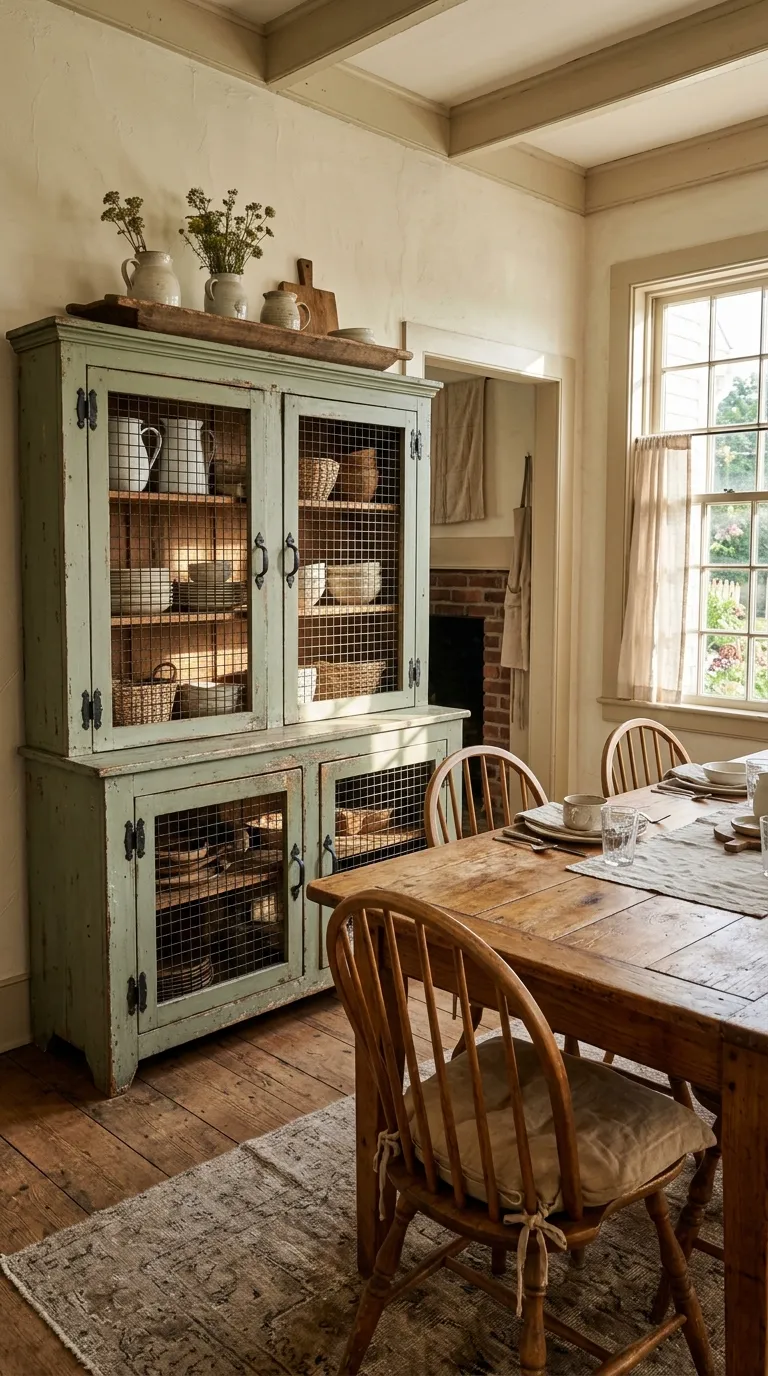
Farmhouse style doesn’t require a cabinet covered in rustic accessories. A few aged materials can create the right character while the room stays clean.
Pair iron hardware with cream dishes and natural wood. The contrast keeps the cabinet grounded without making the dining room feel heavy.
Floating Cabinet With Wall Art
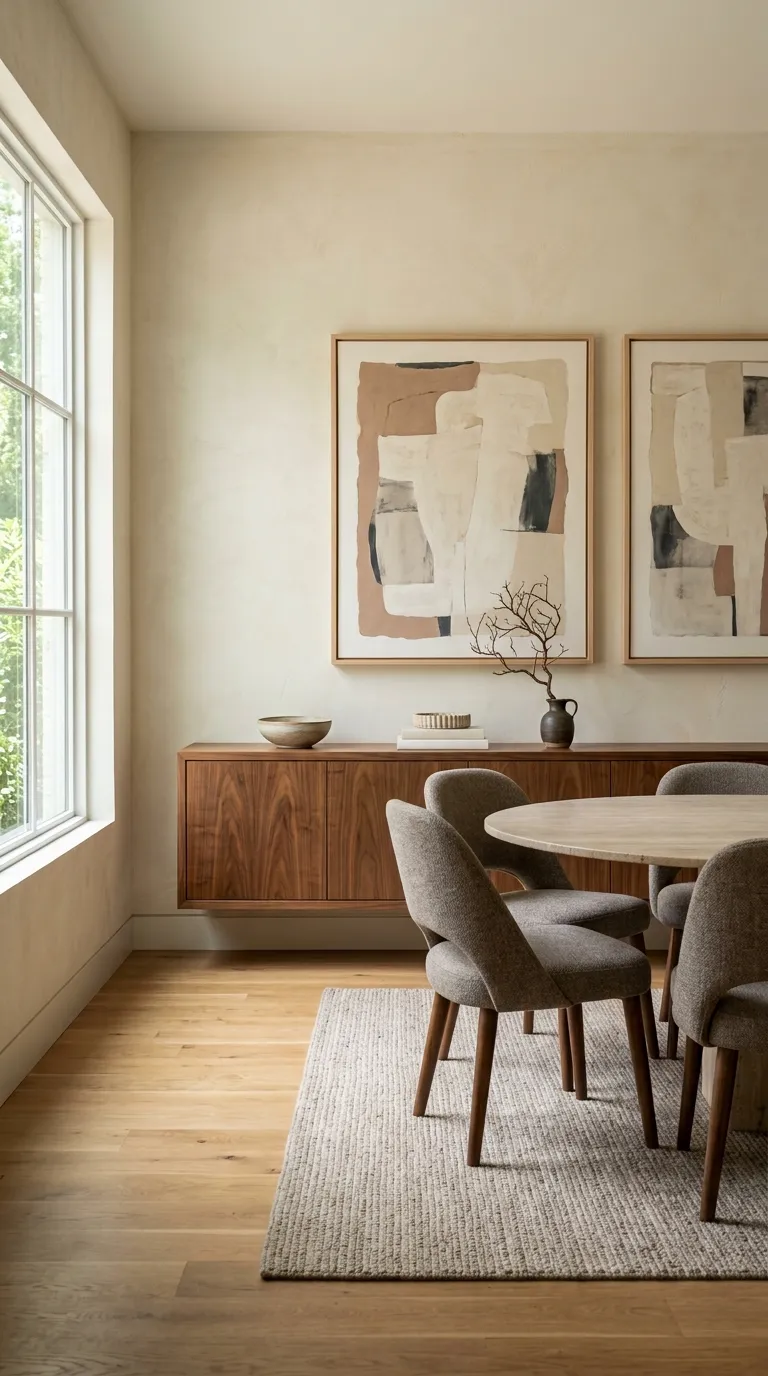
A floating cabinet can make a smaller dining room feel less crowded because more floor remains visible. Wall art helps fill the vertical space without adding bulky furniture.
Keep the cabinet styling low when the artwork is large. This creates a clear visual break between the furniture and the framed pieces above it.
Blue Cabinet With Natural Textures
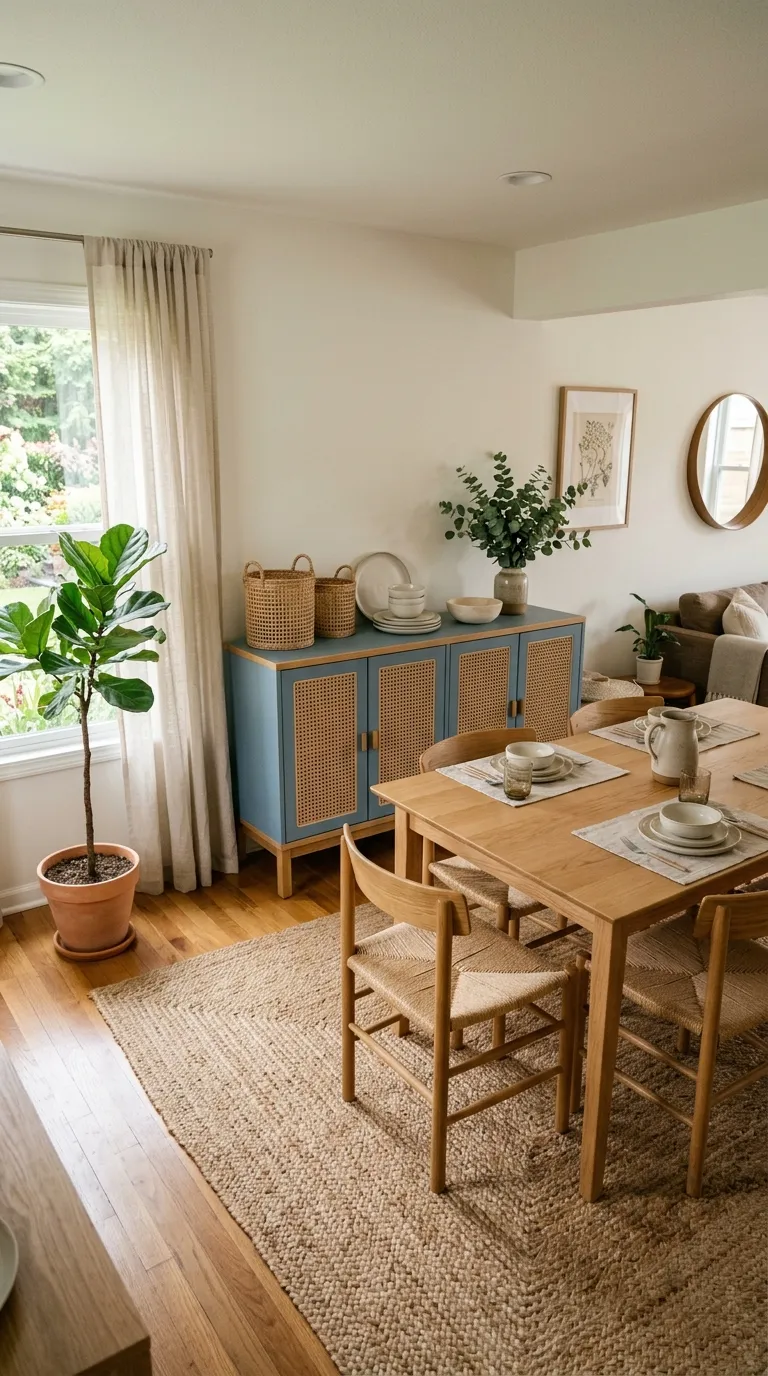
Blue cabinetry pairs naturally with warm materials such as oak, rattan, jute, and woven baskets. These textures keep the color from feeling too formal.
Use cream ceramics to soften the blue. Add greenery in small amounts so the display feels fresh without competing with the cabinet color.
Built-In Cabinet With Mixed Storage
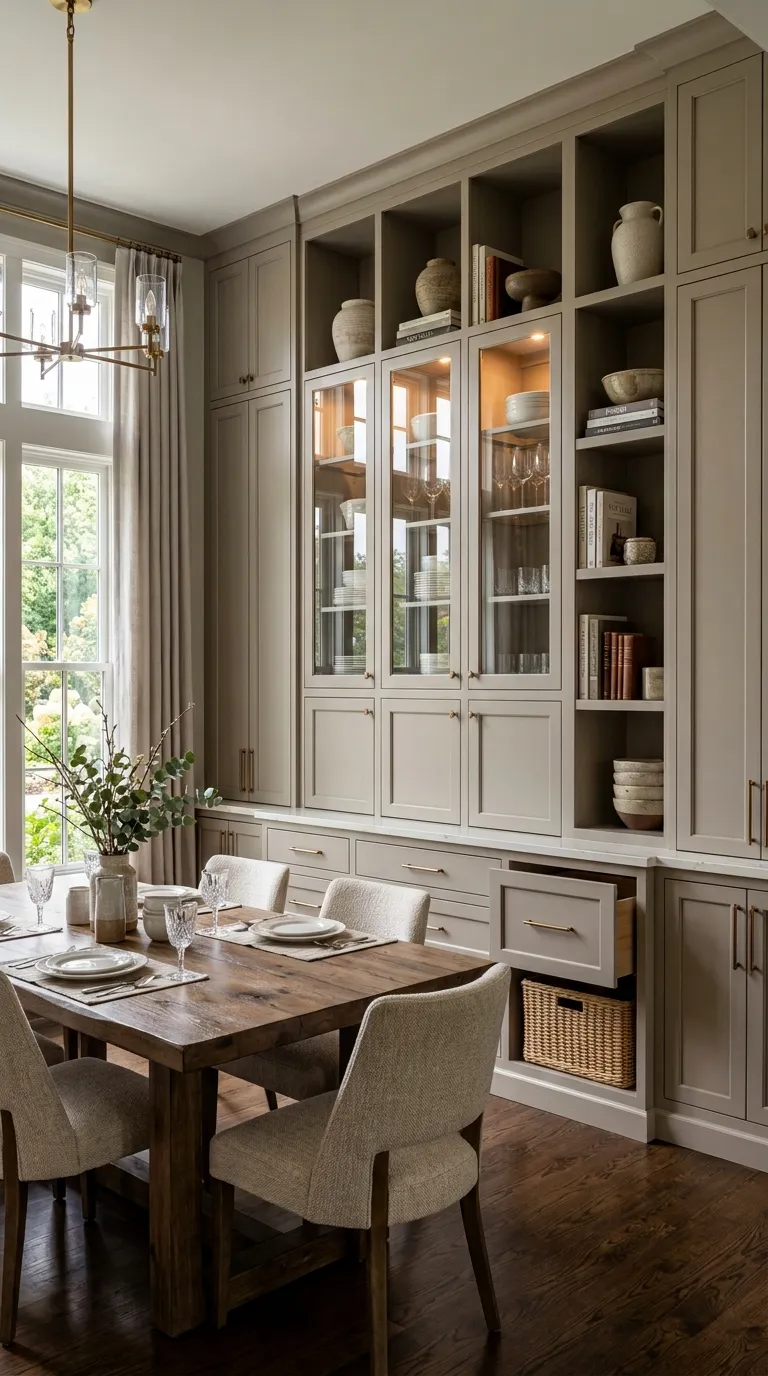
Mixed storage lets you separate display pieces from everyday supplies. Glass doors can hold dishes, open niches can show decor, and drawers can hide less attractive items.
Think about what you use most before assigning each area. Keeping serving pieces close to the dining table can make the cabinet as practical as it is attractive.
Small Cabinet With Big Personality
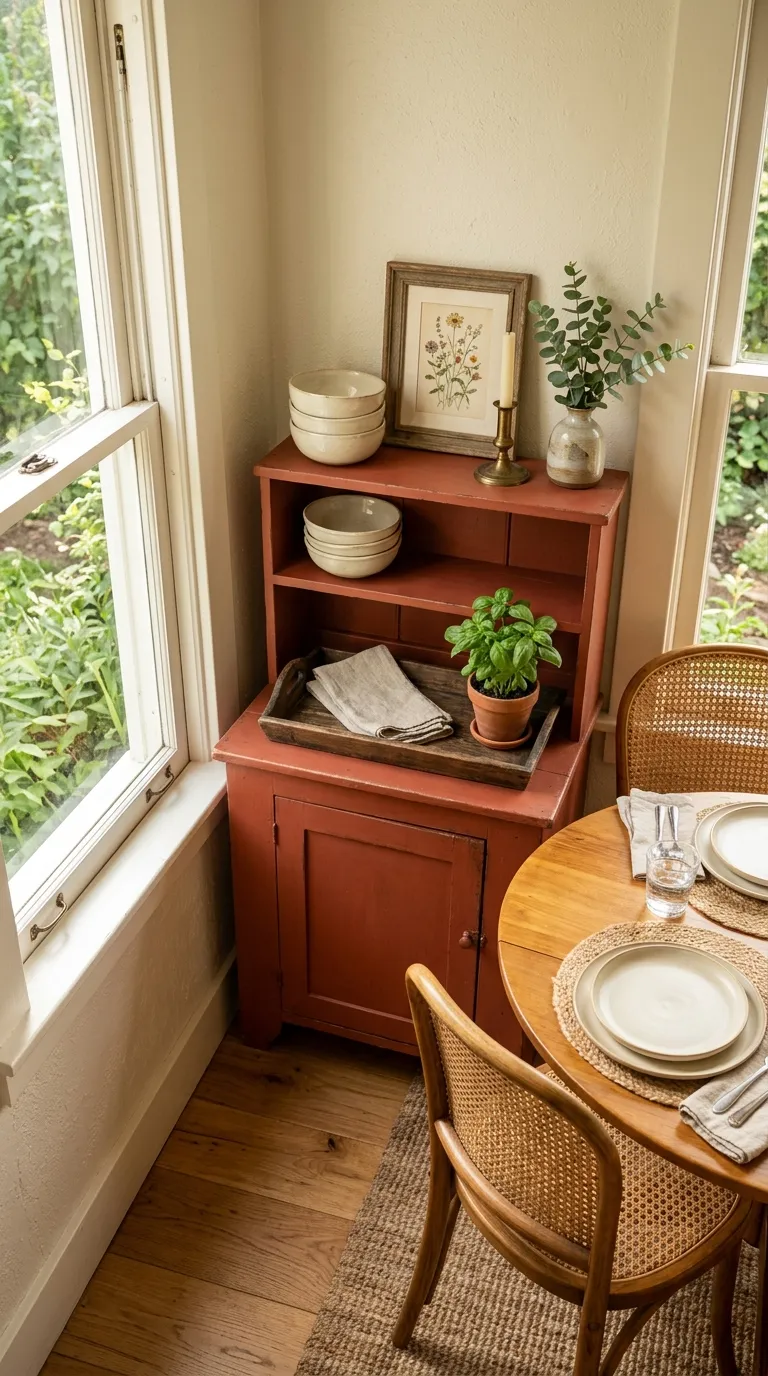
A small cabinet doesn’t need a large collection to feel special. One strong cabinet color and a handful of useful pieces can carry the entire display.
If your dining area is tight, choose compact accessories with varied heights. Keep the most-used items within easy reach and leave a little empty space around them.
A Dining Cabinet That Feels Finished
Your cabinet should work with the way you use the dining room, not fight against it. Start with the pieces you need most, then add a few decorative layers such as pottery, books, glassware, art, greenery, or woven storage.
The best dining room cabinet decor often comes from simple choices repeated with care. Pick a clear color palette, vary heights and textures, and leave some breathing room between groups. That approach gives you a display that’s useful today and easy to refresh when your room needs a new look.
Olivia Carter
Olivia Carter is the founder of Lady Home Decor and a passionate home decor expert. She shares practical, stylish ideas to help homeowners create beautiful, comfortable, and welcoming spaces. Her expertise covers bedrooms, kitchens, living rooms, bathrooms, and small-space decorating.