23 Bold Casual Dining Room Decor Ideas That Wow Every Guest

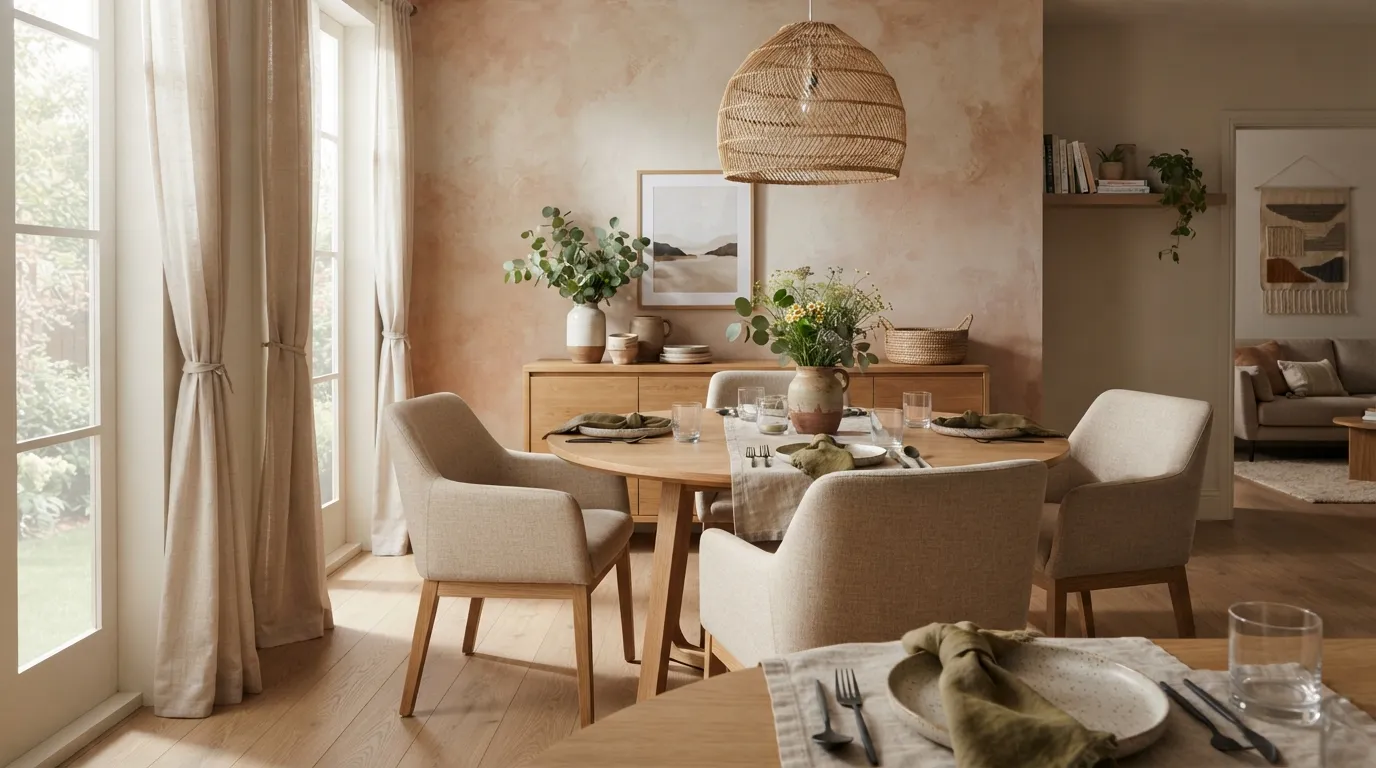
A casual dining room should feel easy to use, not like a showroom nobody wants to touch. These casual dining room decor ideas can help you create a space that feels warm, practical, and ready for everything from quick breakfasts to long weekend dinners.
The best look comes from mixing comfort with a few strong details. Think natural wood, soft fabrics, simple lighting, useful storage, and colors that make the room feel welcoming without making it feel busy.
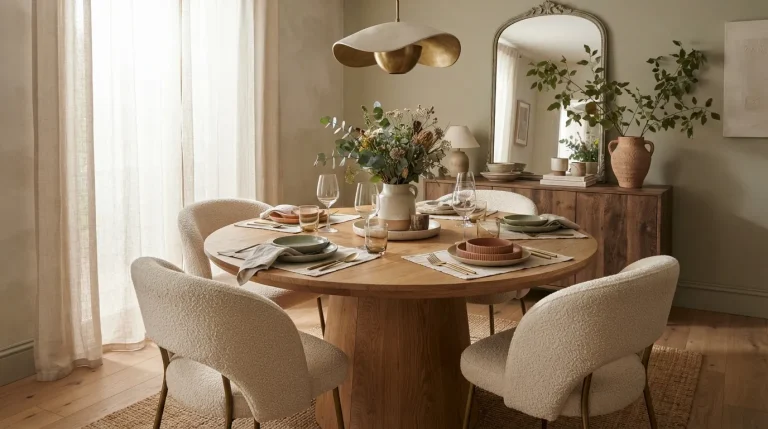
Warm Wood Dining Table
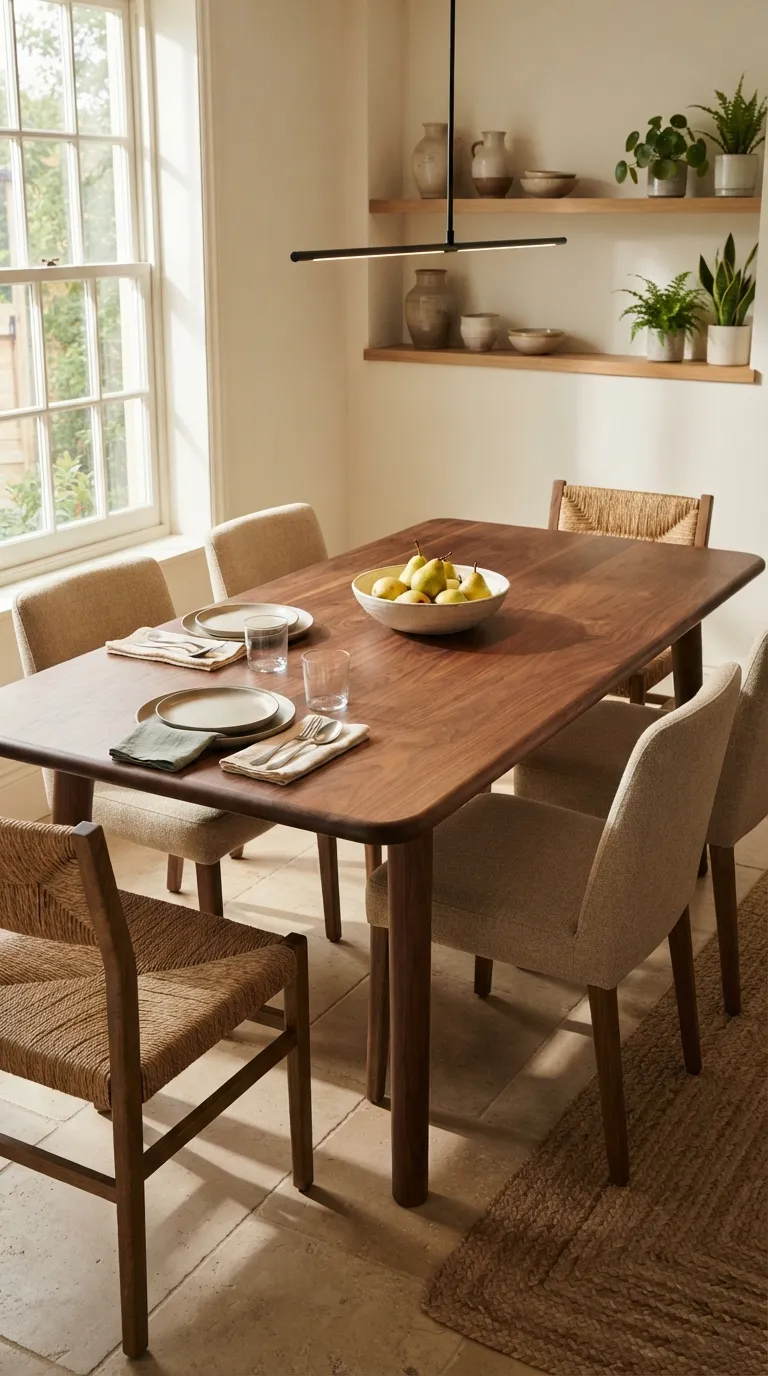
A warm wood table gives the room an instant sense of comfort. Walnut, oak, and reclaimed wood all work well because their natural grain adds character without needing lots of decoration.
Keep the tabletop fairly open for everyday use. A ceramic bowl, small vase, or stack of linen napkins is enough to make the setting feel finished while leaving plenty of space for meals, homework, or coffee.
Soft Linen Dining Chairs
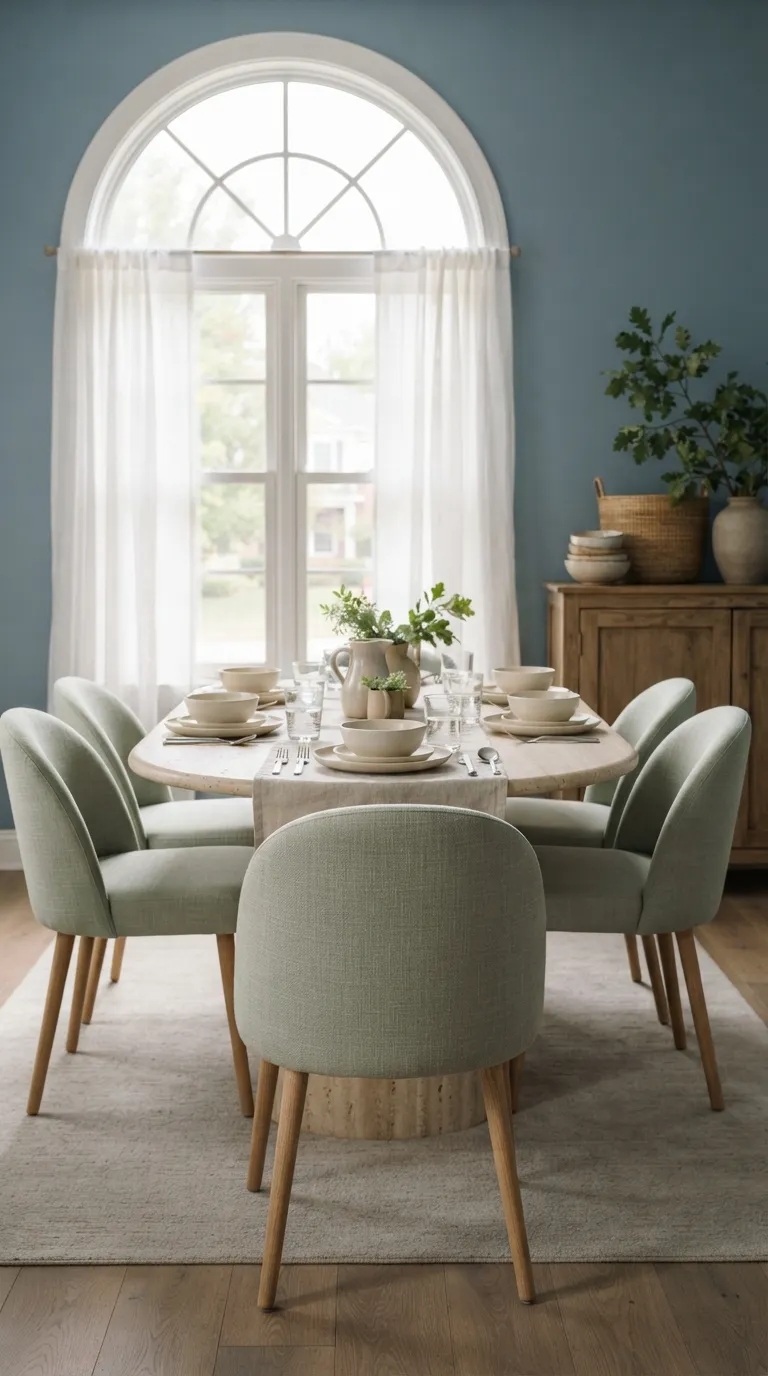
Comfort matters when you want a dining room that gets used often. Linen chairs bring softness to harder surfaces while keeping the space relaxed enough for daily meals.
Choose a fabric shade that works with the rest of your room. Sage, oatmeal, beige, and muted blue can pair nicely with wood tables, woven accents, and neutral walls without making the space feel overly styled.
Oversized Pendant Light
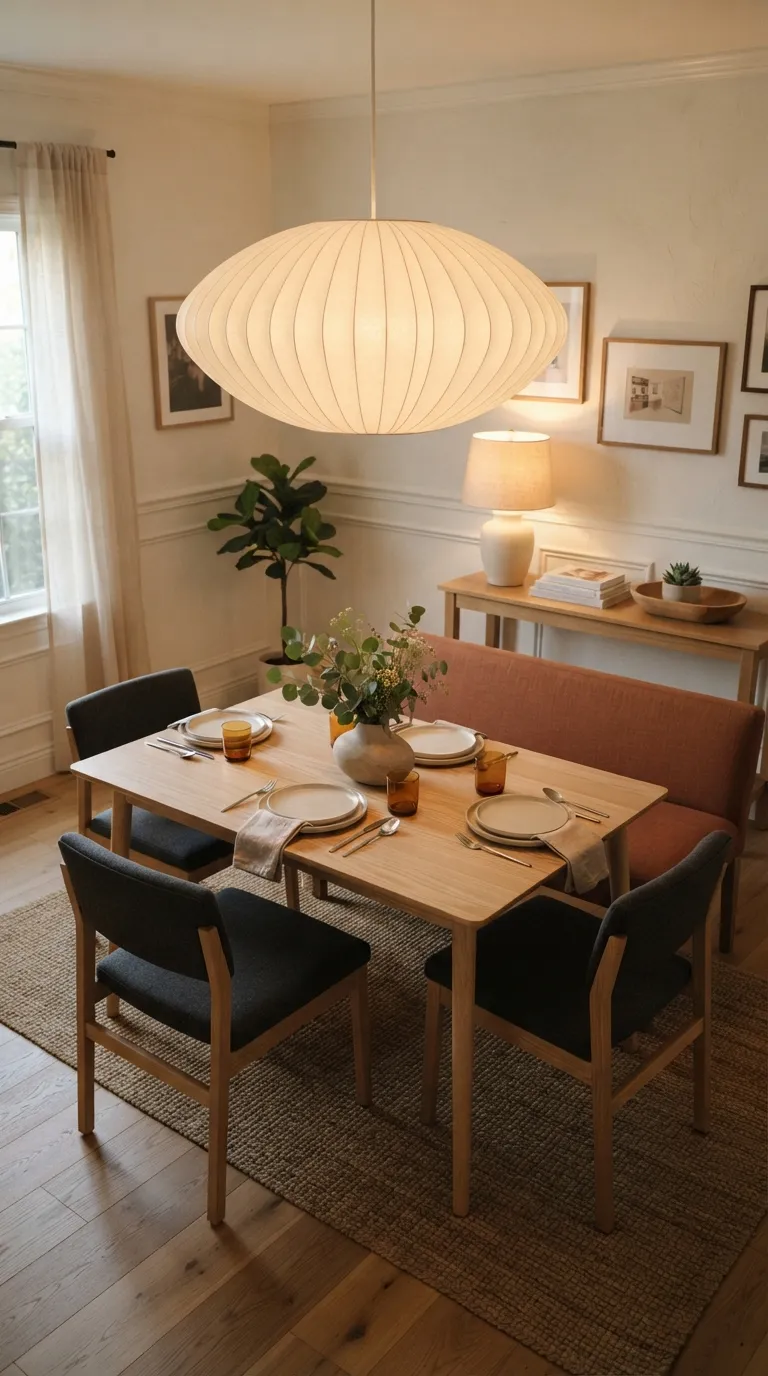
Lighting can change the mood of a dining room in seconds. An oversized pendant gives the table a clear focal point while making ordinary dinners feel a little more special.
Pick a shade with an interesting texture or shape, then keep the other lighting simple. Paper, woven fiber, linen, and frosted glass can soften the room and cast pleasant light across the table.
Natural Rattan Pendant
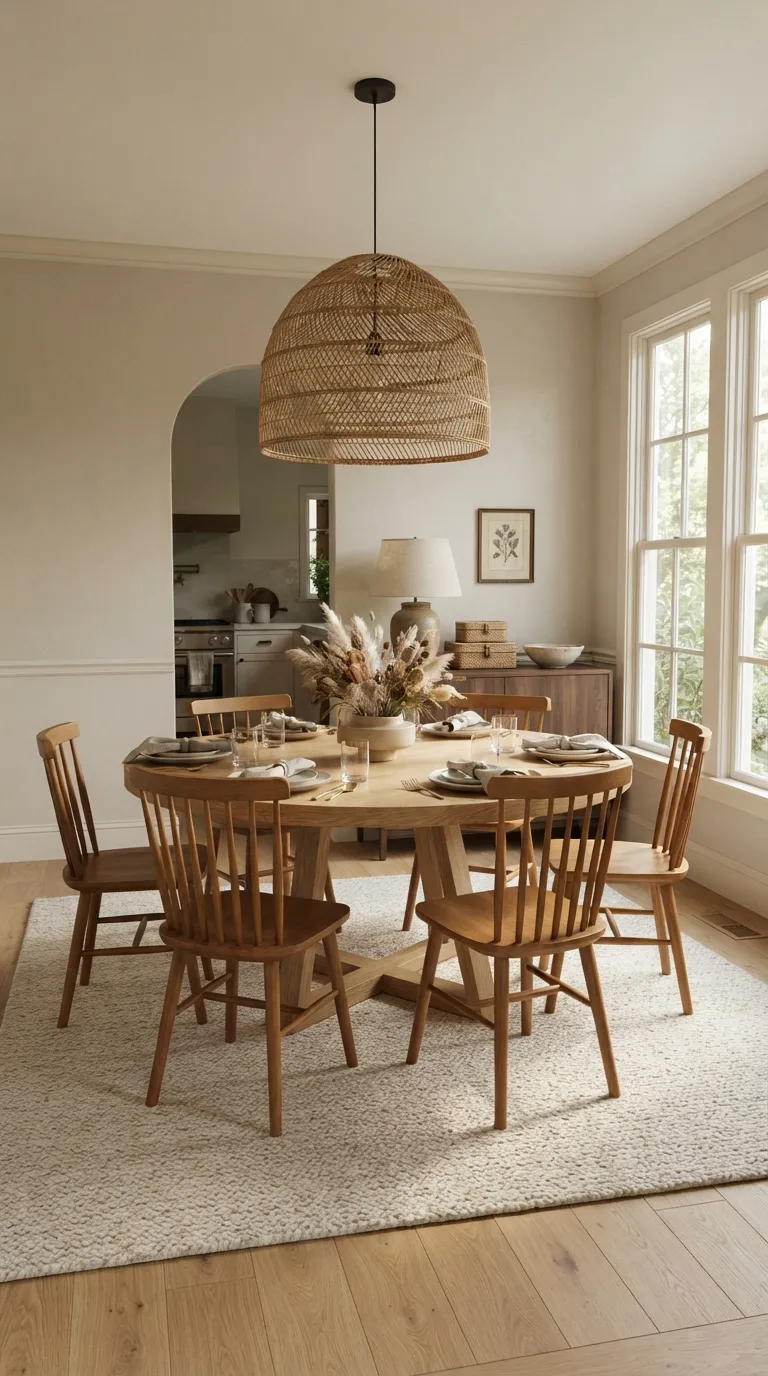
Rattan brings warmth without making the room feel heavy. Its open weave adds texture and works especially well with wood furniture, linen fabrics, and neutral walls.
Keep the rest of your casual dining room decor ideas simple around the pendant. A plain table setting and a few woven accents let the natural material take center stage.
Built-In Dining Bench
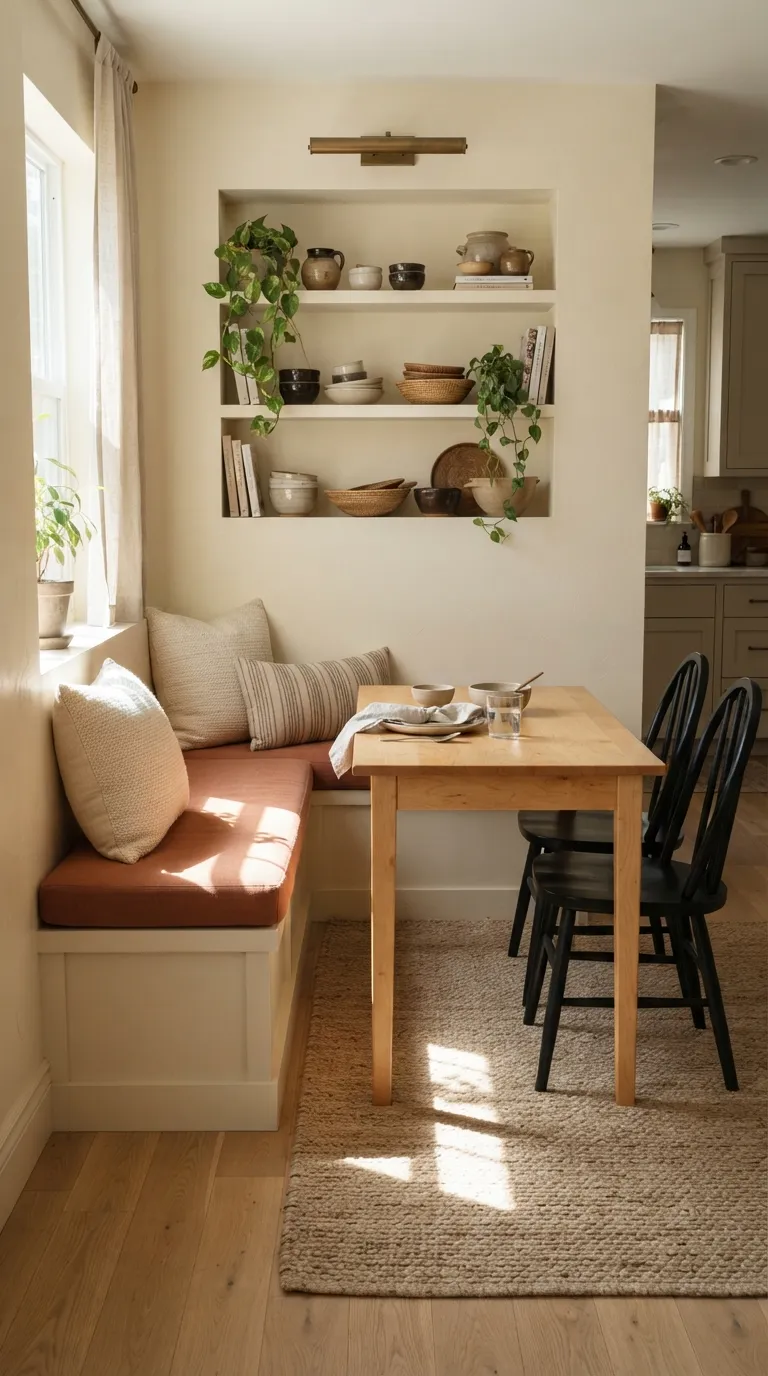
A built-in bench makes smart use of wall space. It can seat several people while leaving more walking room around the table.
Add a washable cushion for comfort and daily practicality. This setup works particularly well in breakfast corners, smaller dining areas, or open kitchens where every inch matters.
Colorful Dining Room Rug
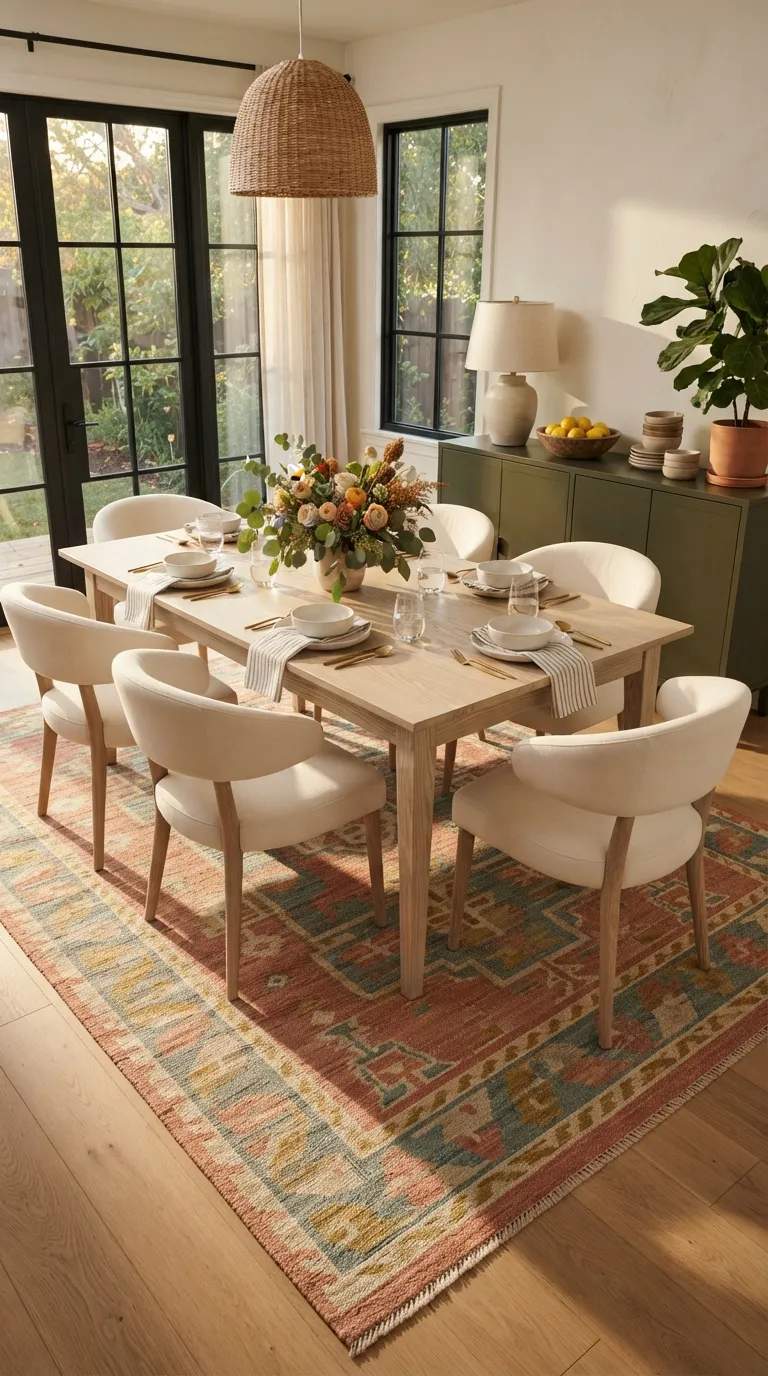
A patterned rug can bring color into a casual dining space without covering the walls or furniture. Choose a design with two or three shades that already appear elsewhere in the room.
Make sure the rug extends beyond the chairs when they’re pulled out. A low-pile or flatweave style is also easier to clean after everyday spills.
Open Shelving Display
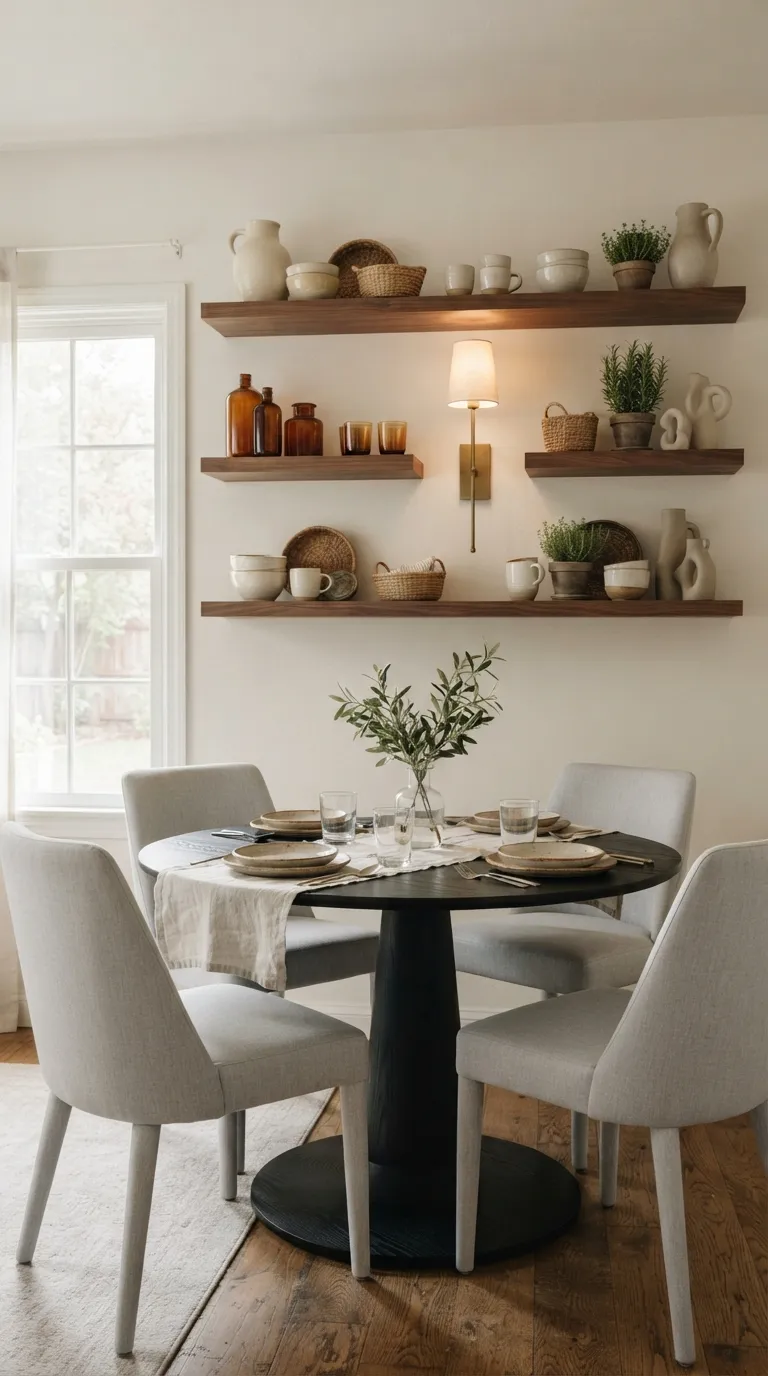
Open shelves give you a useful place for dishes and decorative pieces. They also keep the dining room feeling lighter than a large closed cabinet.
Group items by color and material instead of filling every inch. Leave visible gaps between bowls, glasses, plants, and pottery so the shelves look calm and easy to maintain.
Farmhouse Table Setting
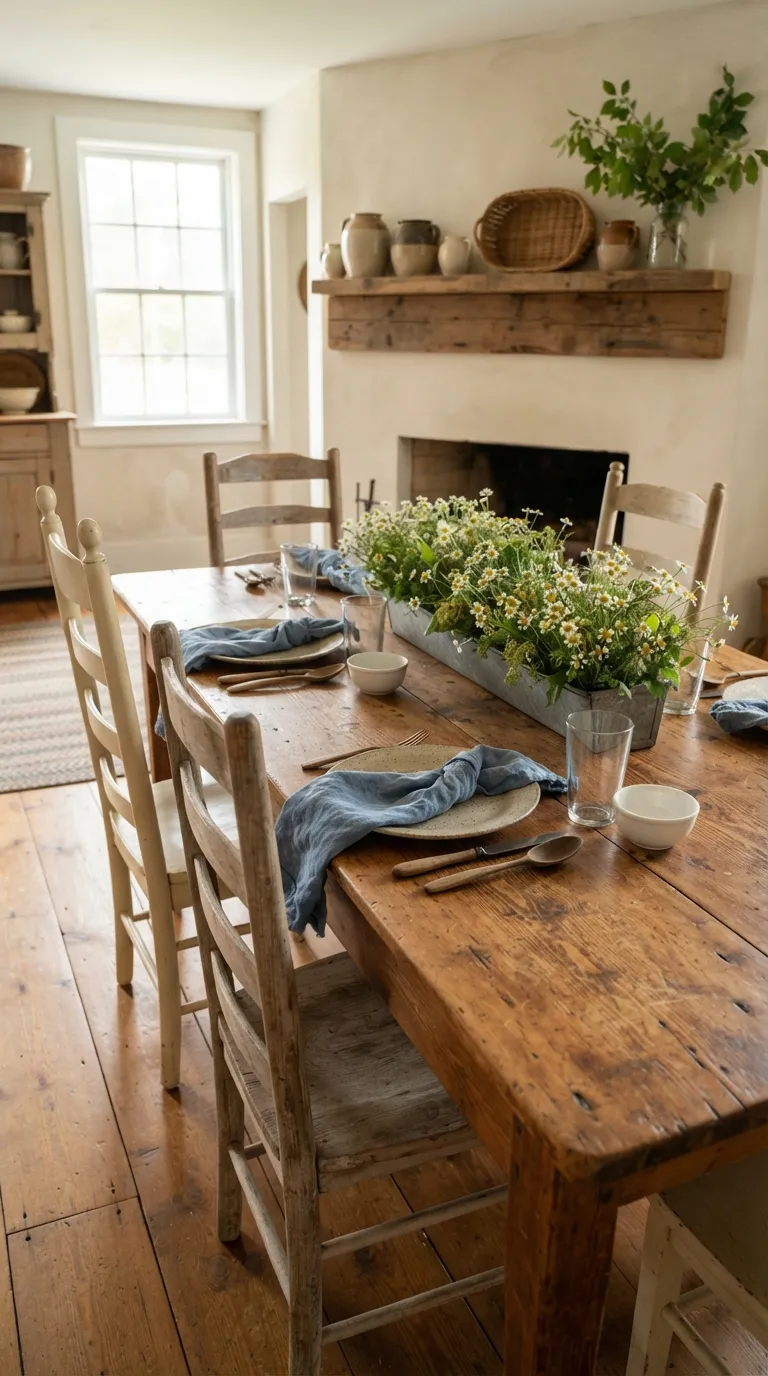
Farmhouse style feels natural when you mix old-looking finishes with useful pieces. A worn pine table, simple chairs, and everyday stoneware create that relaxed character.
Don’t make every item match perfectly. Slight differences in chair finishes, plates, or napkins can give the table a collected look while keeping the setting practical.
Black Accent Chairs
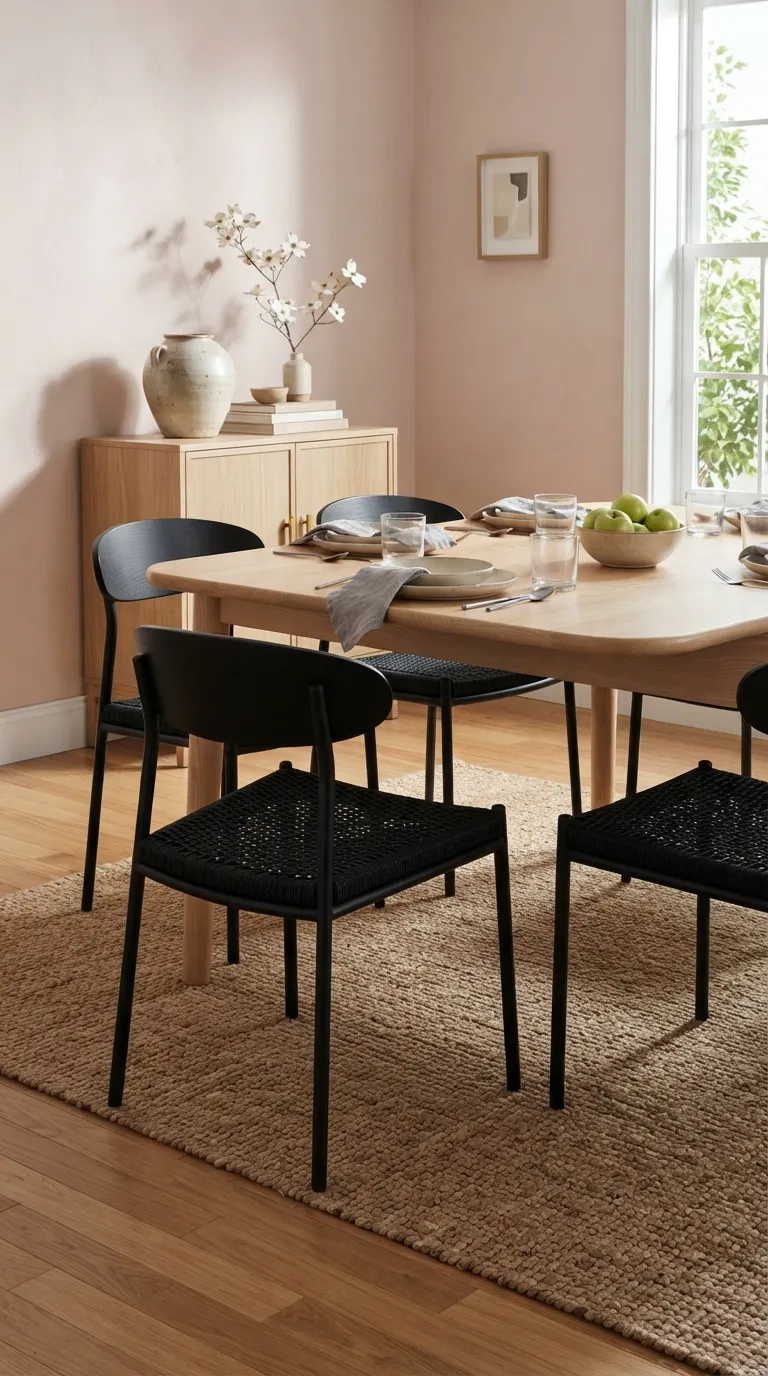
Black chairs can add definition when the room uses mostly pale finishes. They give the eye a darker anchor without requiring dark walls or a heavy table.
Look for curved backs, woven seats, or textured upholstery if you want the chairs to feel less formal. Pairing black with pale wood keeps the overall setting comfortable and approachable.
Compact Round Table
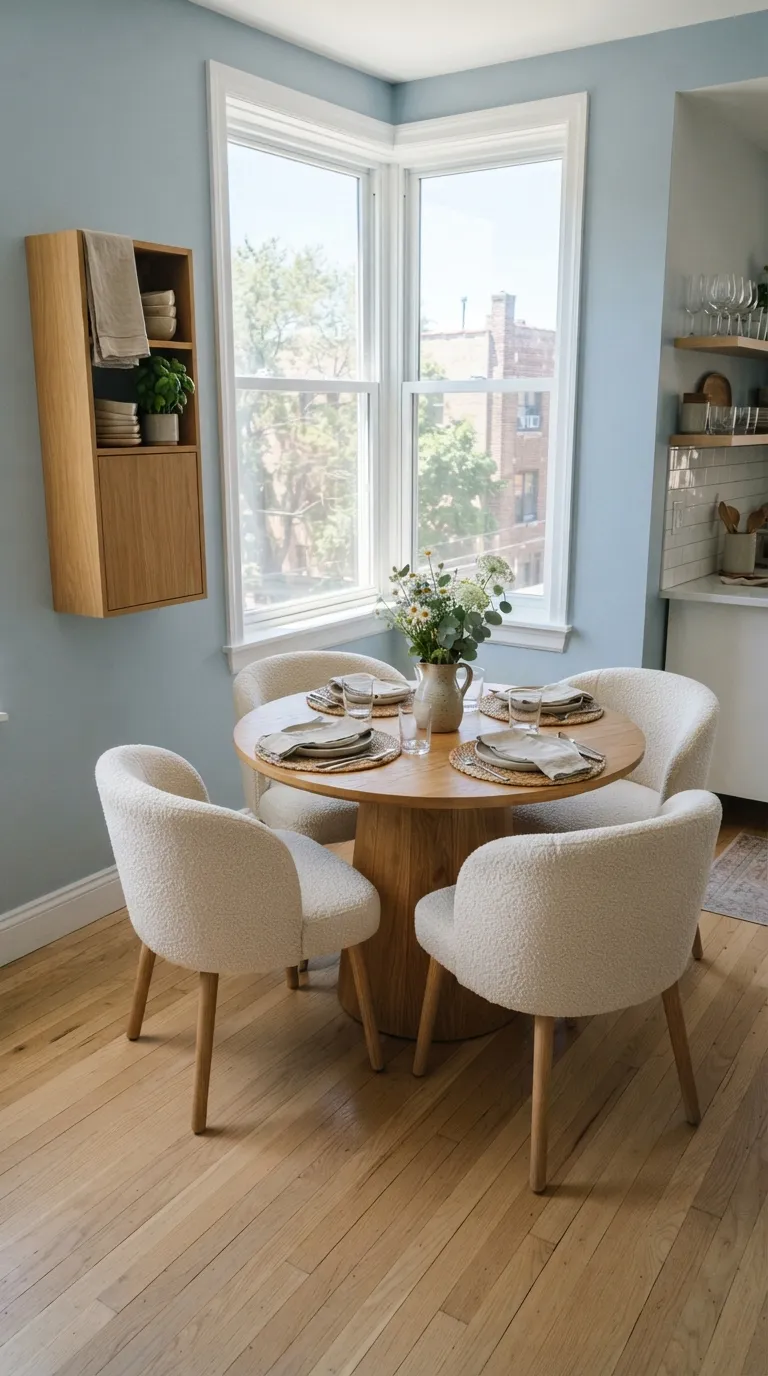
A compact round table makes tight dining areas easier to use. Its curved shape gives people more room to move around the edges.
Choose a pedestal base when possible because it reduces visual clutter beneath the tabletop. Keep chairs slim enough to slide comfortably under the table when the room needs extra floor space.
Gallery Wall Dining Nook
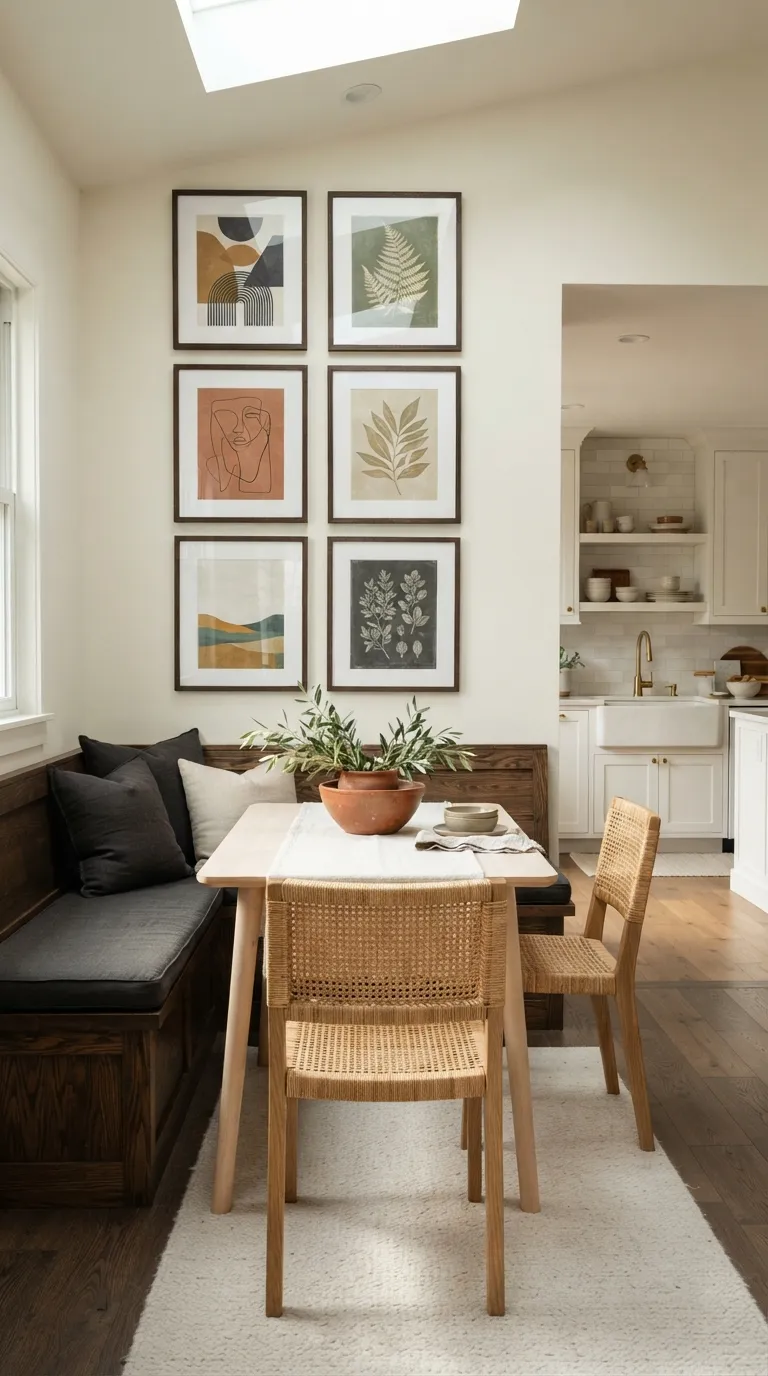
A gallery wall can give a dining nook personality without adding bulky furniture. Mix botanical prints, simple abstracts, and different frame finishes for a relaxed collection.
Keep the artwork connected through a shared color palette. Leave enough space around the frames so the wall feels intentional rather than crowded.
Earthy Green Walls
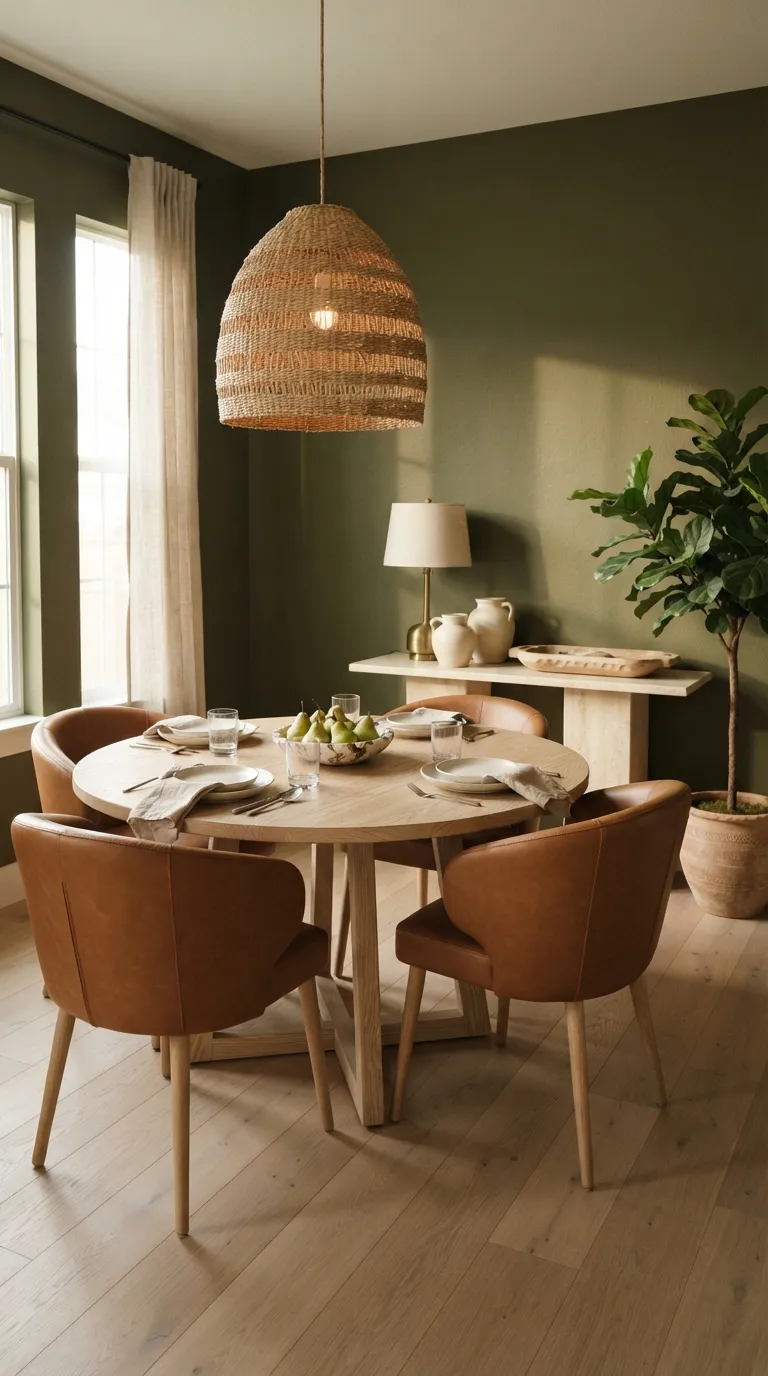
Earthy green can make a dining room feel grounded and cozy. It pairs naturally with oak, leather, brass, cream pottery, and leafy plants.
If a full green wall feels too strong, try it on one feature wall instead. Keep nearby furniture lighter so the color remains the main visual accent.
Casual Bench Seating
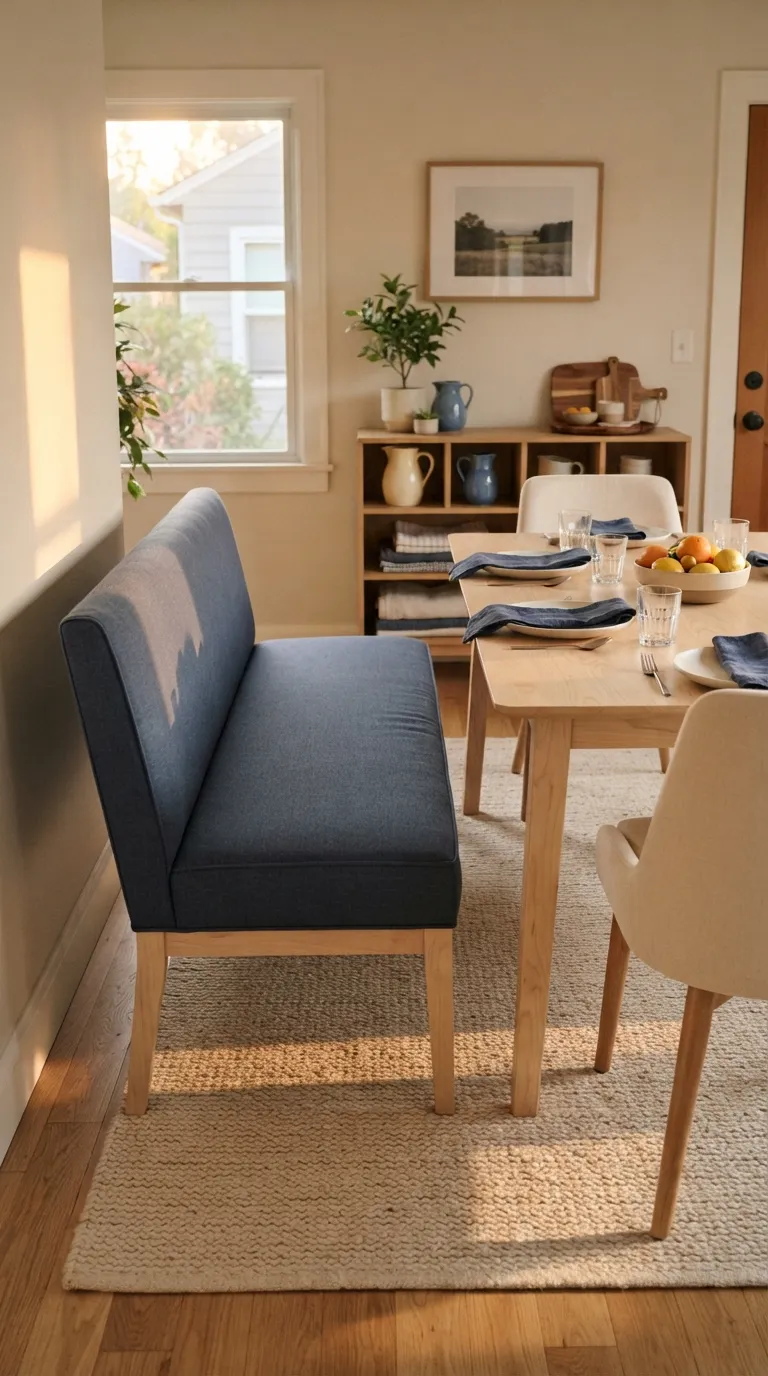
Bench seating makes it easier to fit several people around one table. It also gives the room a softer, less formal appearance than a matching set of chairs.
Use a bench on the wall side and chairs opposite it for a balanced layout. Choose upholstery that can handle daily use, especially if the dining area doubles as a family homework or craft spot.
Ceramic Centerpiece
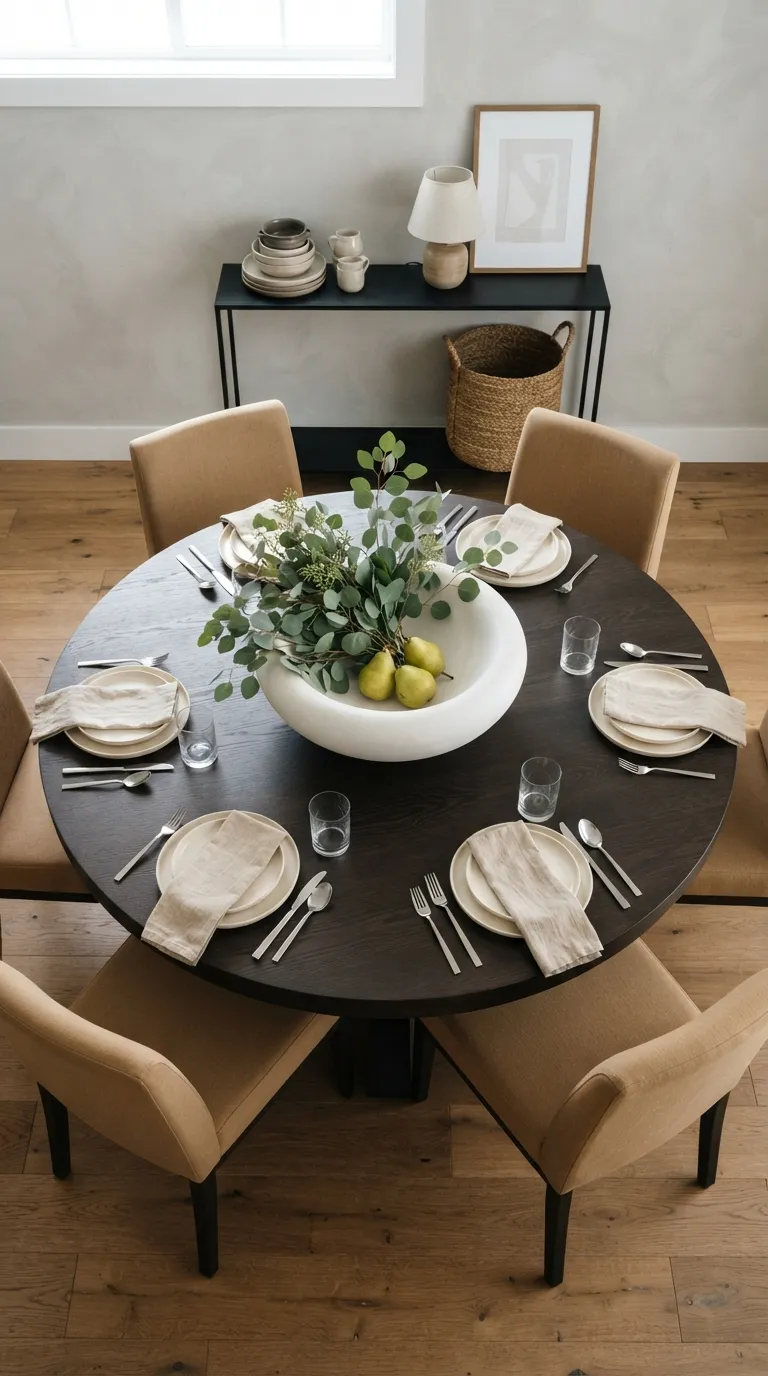
A ceramic centerpiece keeps the table looking finished without taking up too much space. Choose one large vessel instead of several small objects if you prefer a cleaner look.
Fill it with branches, seasonal fruit, or fresh greenery. A low profile works best when you want people to see across the table during meals.
Vintage Dining Cabinet
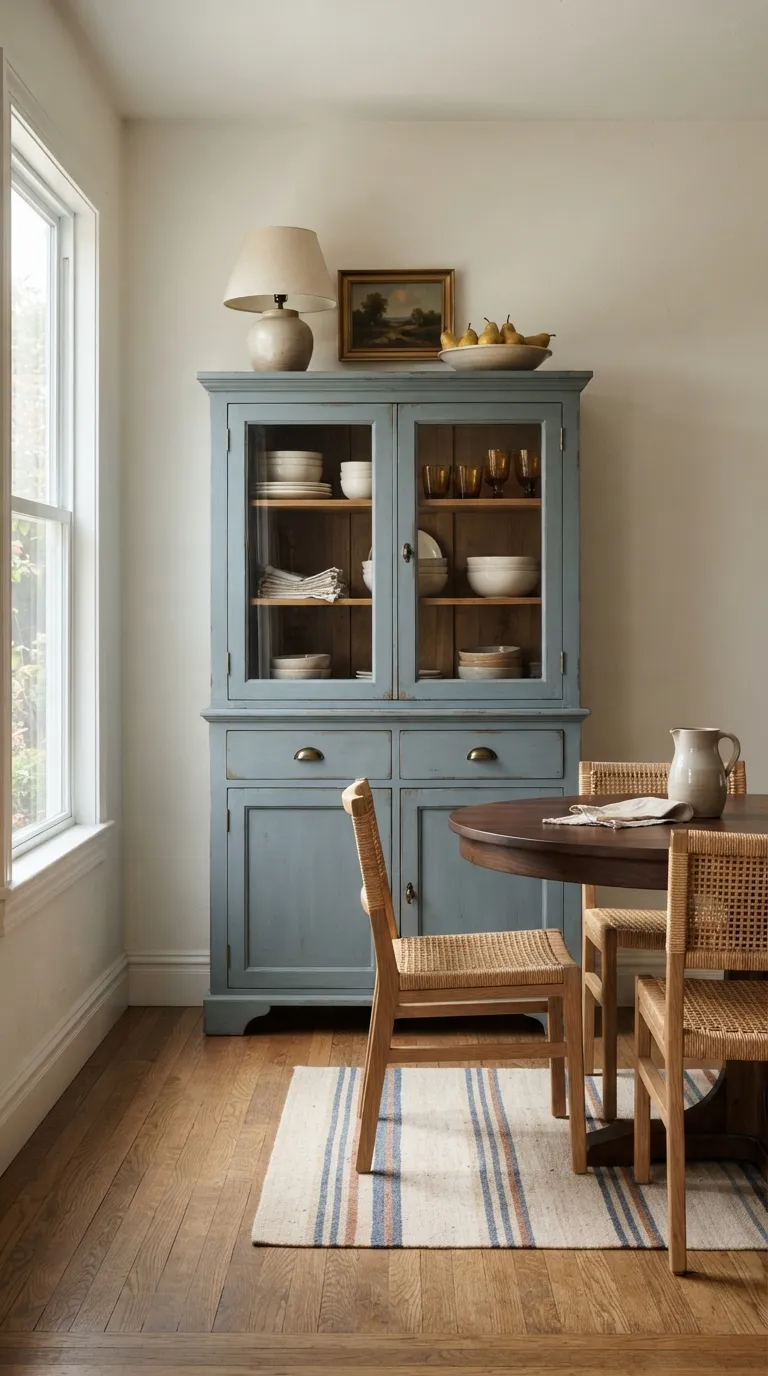
A vintage cabinet adds storage and personality in one piece. Use it for dishes, serving bowls, table linens, and glasses you want close at hand.
Don’t worry about finding an exact matching set. A slightly aged cabinet can sit comfortably beside newer furniture when you repeat one of its colors somewhere else in the room.
Coastal Blue Accents
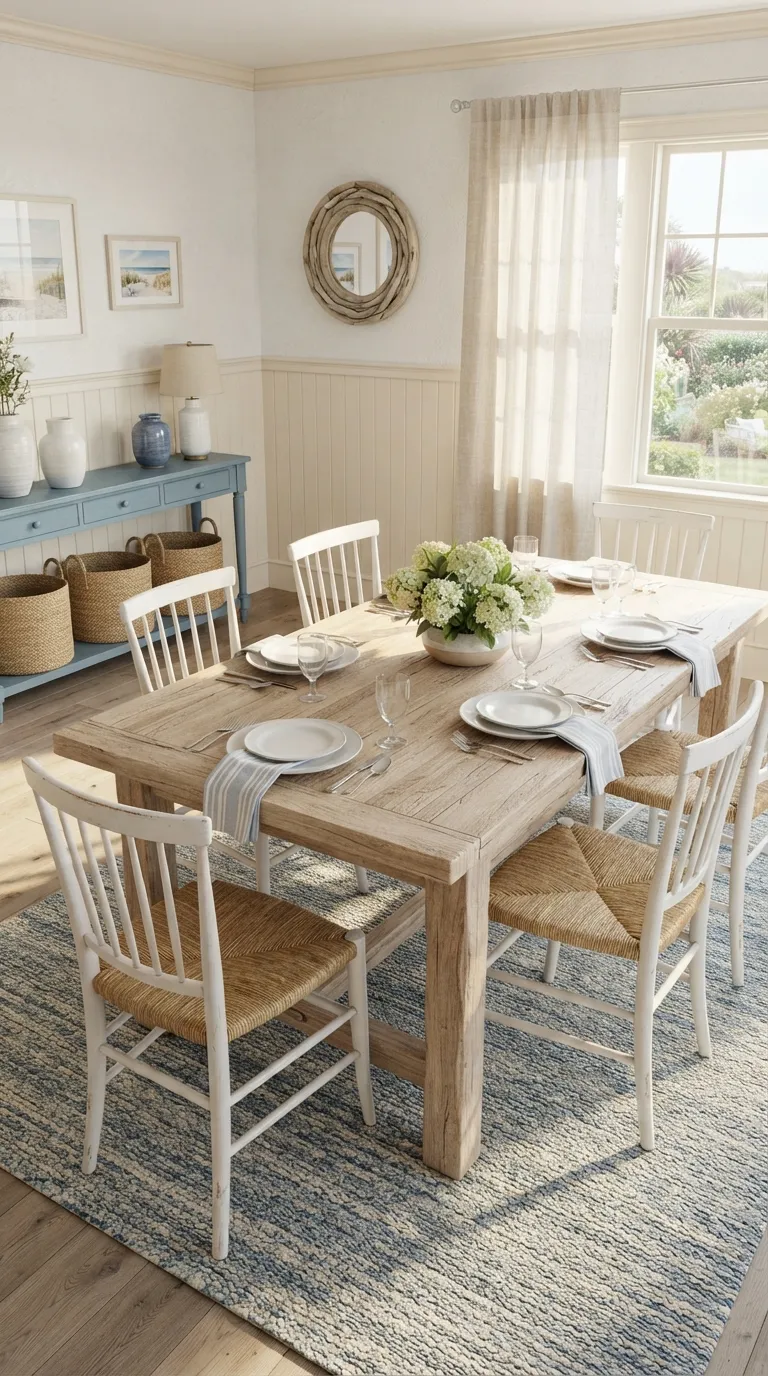
Coastal blue works well when you want color without a loud look. Use it in small doses through cushions, ceramics, artwork, napkins, or a painted cabinet.
Pair blue with white, pale wood, and woven materials. The mix creates a fresh dining room that still feels comfortable enough for everyday meals.
Mixed Wood Finishes
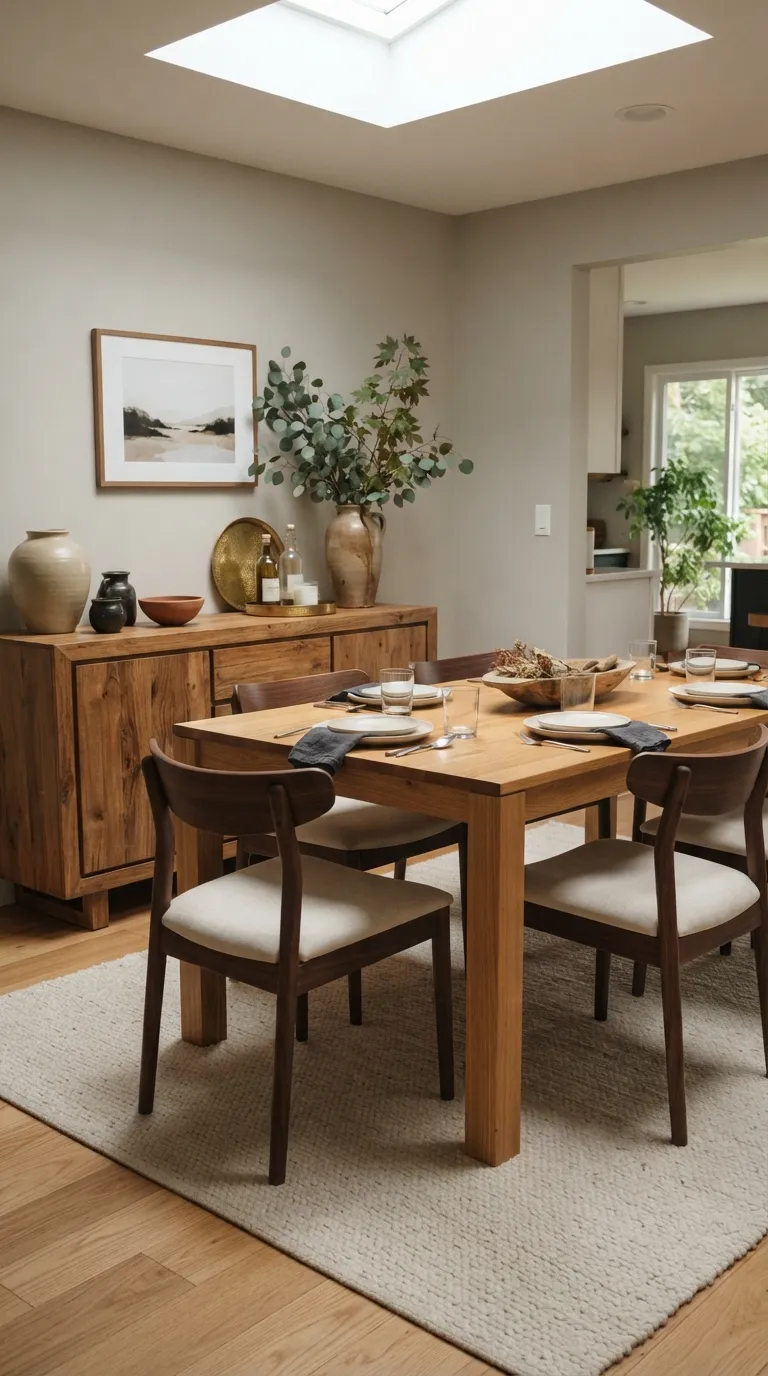
Different wood tones can make a dining room feel collected instead of overly matched. The key is to repeat each finish at least once or connect the pieces through similar shapes.
Start with one dominant wood tone, then add one or two supporting finishes. Keep the wall color and textiles quiet so the natural grain remains easy to appreciate.
Farmhouse Wall Sconces
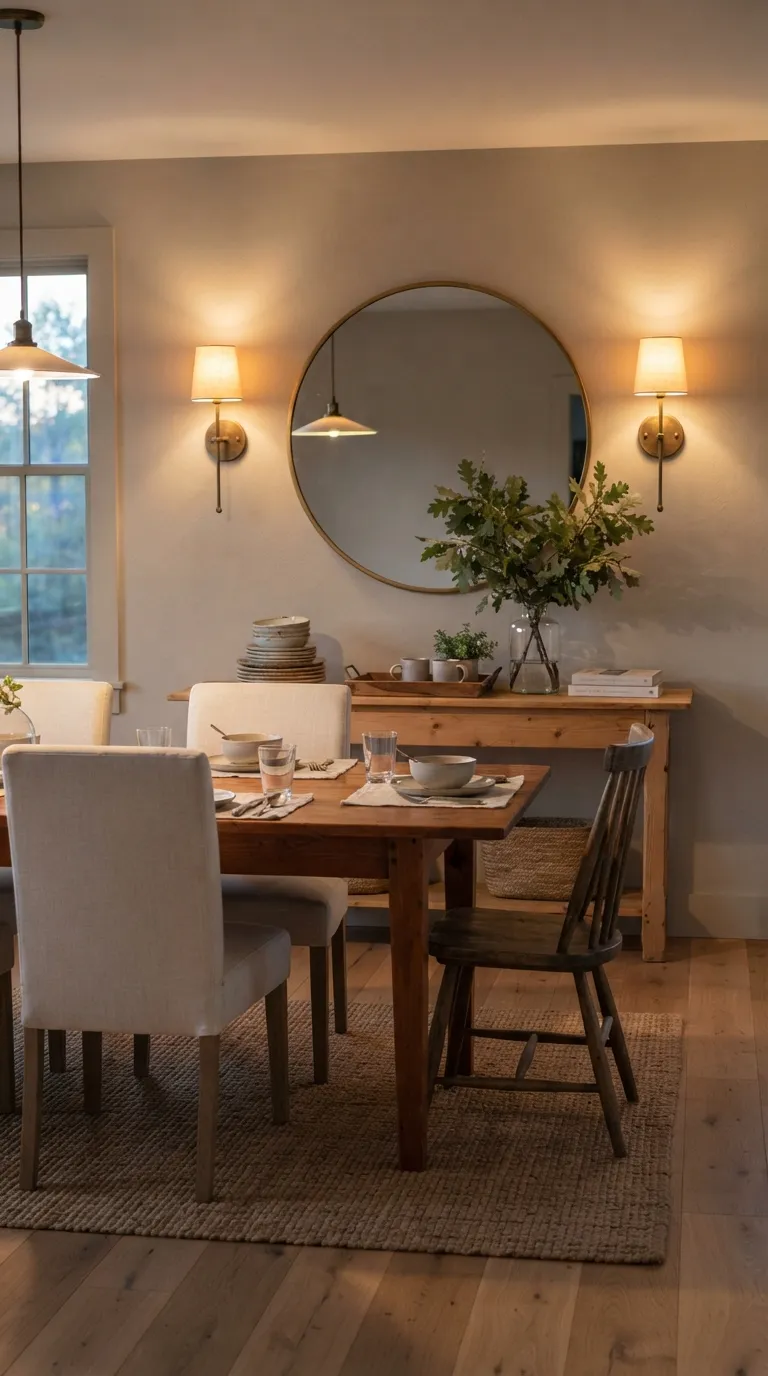
Wall sconces add useful light without taking table or floor space. They can also frame a mirror, artwork, or cabinet and give the dining wall a finished appearance.
Choose shades that soften the light rather than making the room feel bright and formal. Aged brass, bronze, or black finishes pair easily with farmhouse furniture.
Textured Plaster Wall
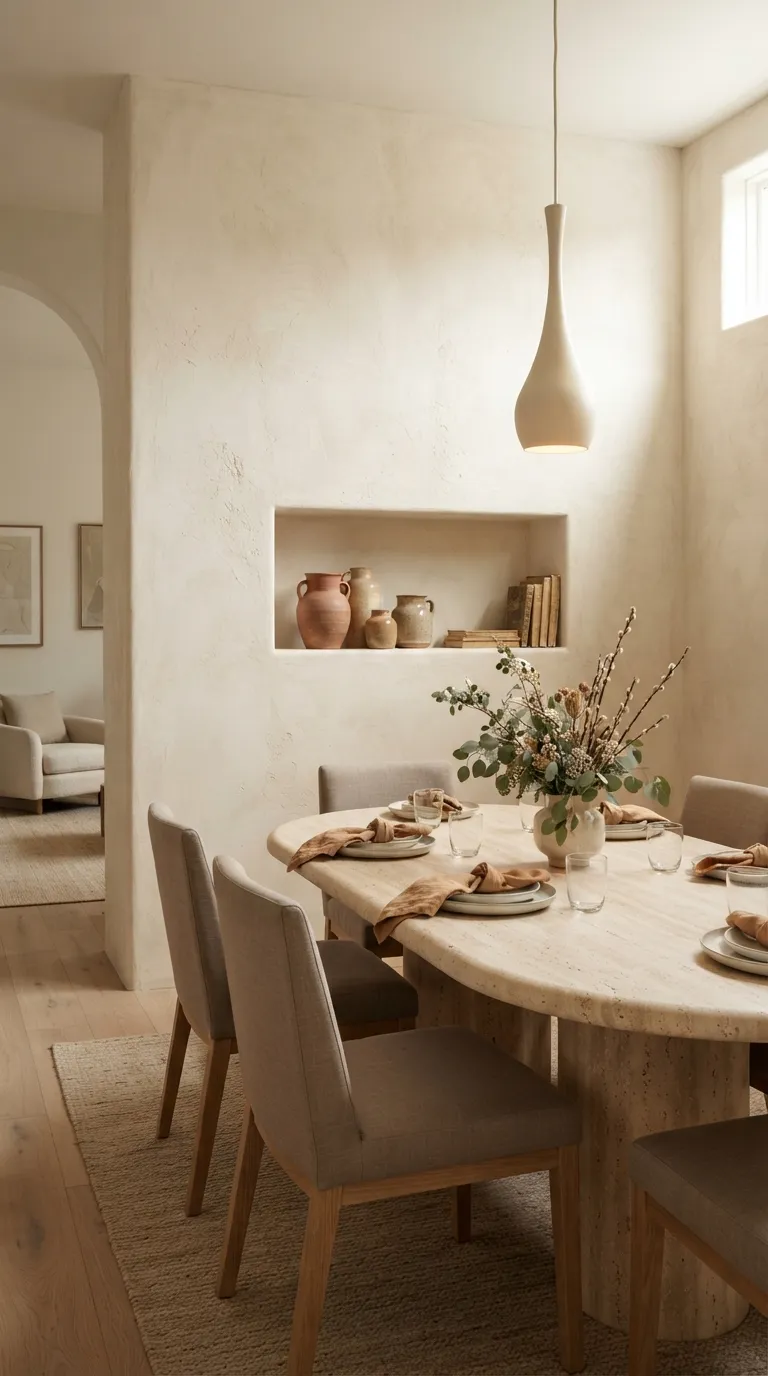
A textured wall can give the dining room character without filling it with decorations. Plaster finishes work especially well with natural stone, linen, wood, and handmade ceramics.
Keep the furniture shapes straightforward when the wall already has texture. The contrast creates visual interest while keeping the room comfortable and uncluttered.
Everyday Open Table
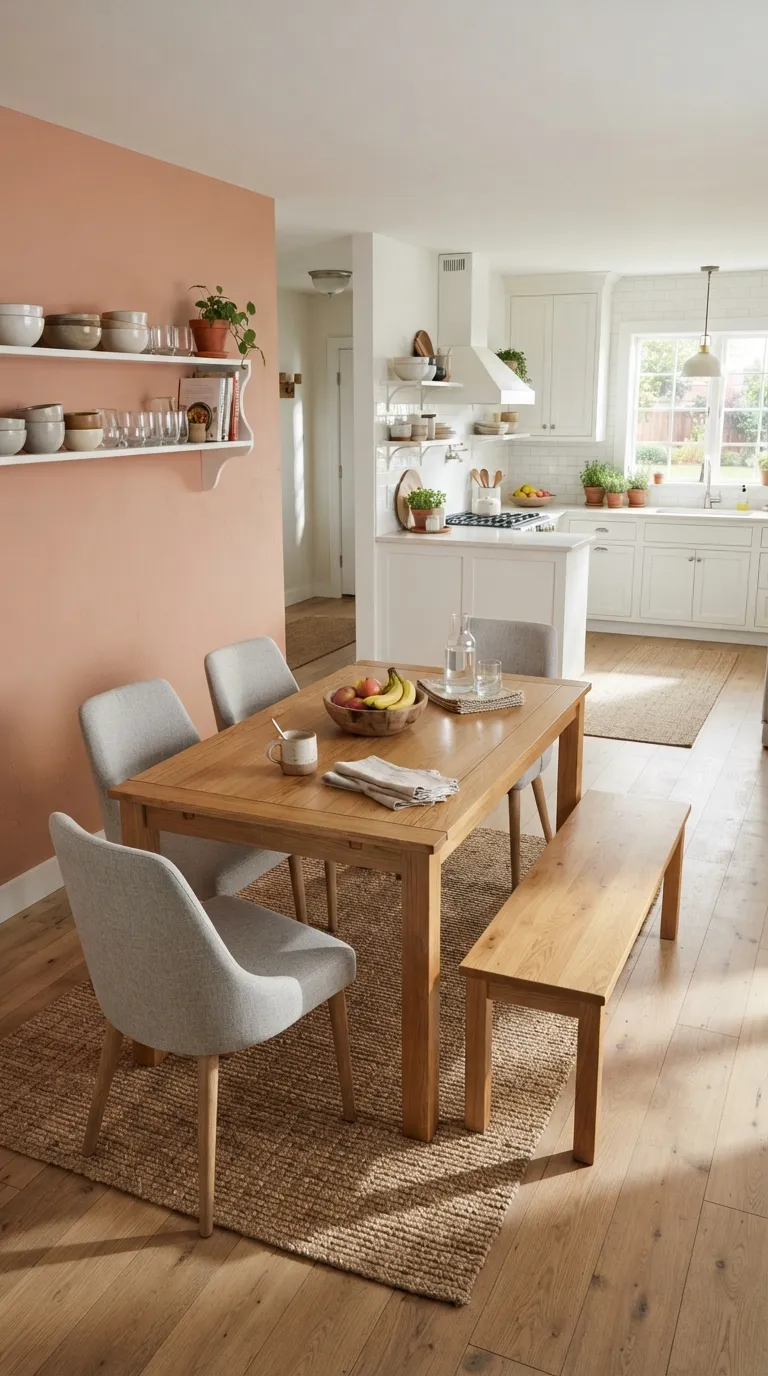
A casual dining room should support real life. Keep the table clear enough for meals, schoolwork, coffee, and whatever else happens there during the day.
Use nearby shelves or cabinets for the things you reach for often. When storage sits close to the table, the room stays easier to tidy without feeling too precious.
Warm Terracotta Details
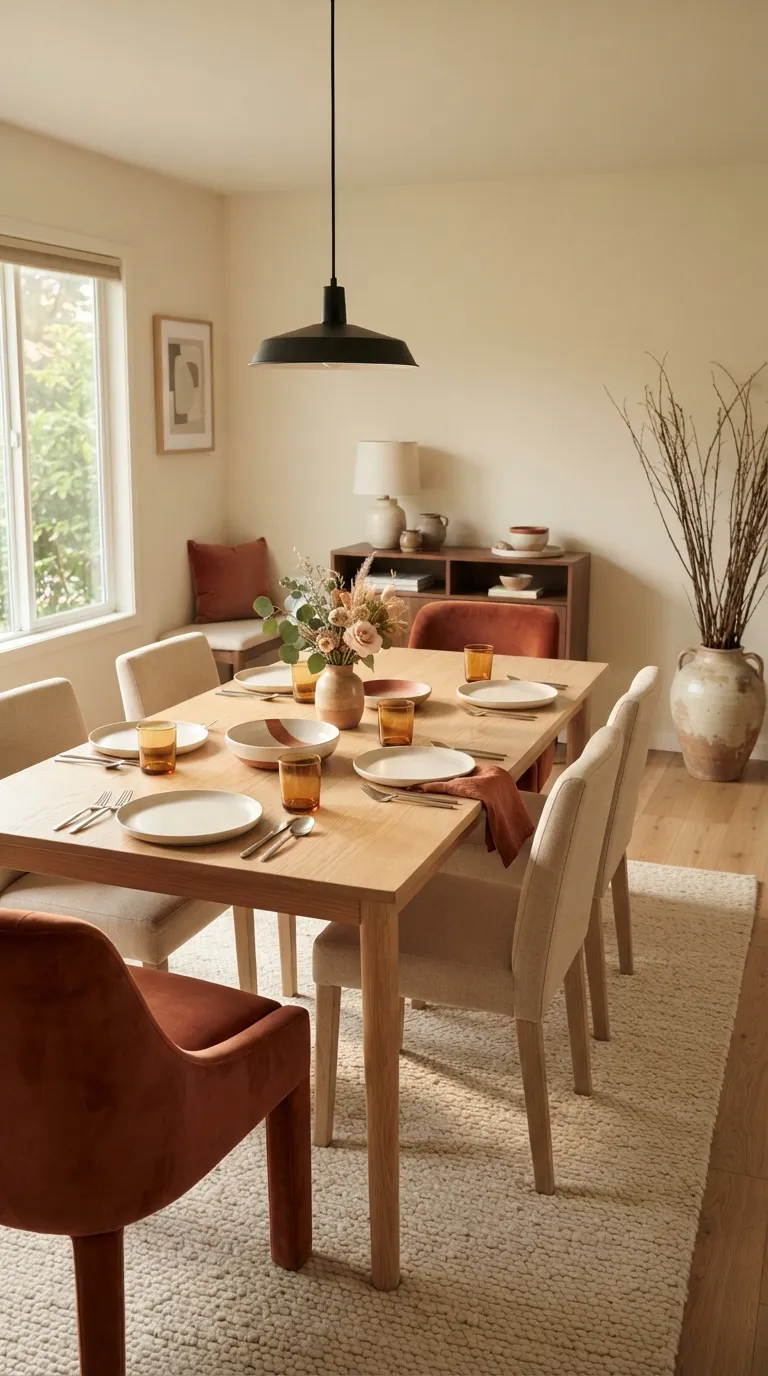
Terracotta adds warmth without requiring a major room makeover. Try it through pottery, cushions, napkins, artwork, or one upholstered chair.
Keep the base palette neutral so the earthy shade feels intentional. Cream, oak, walnut, and soft black all give terracotta a natural place in casual dining room decor ideas.
Minimal Dining Room Styling
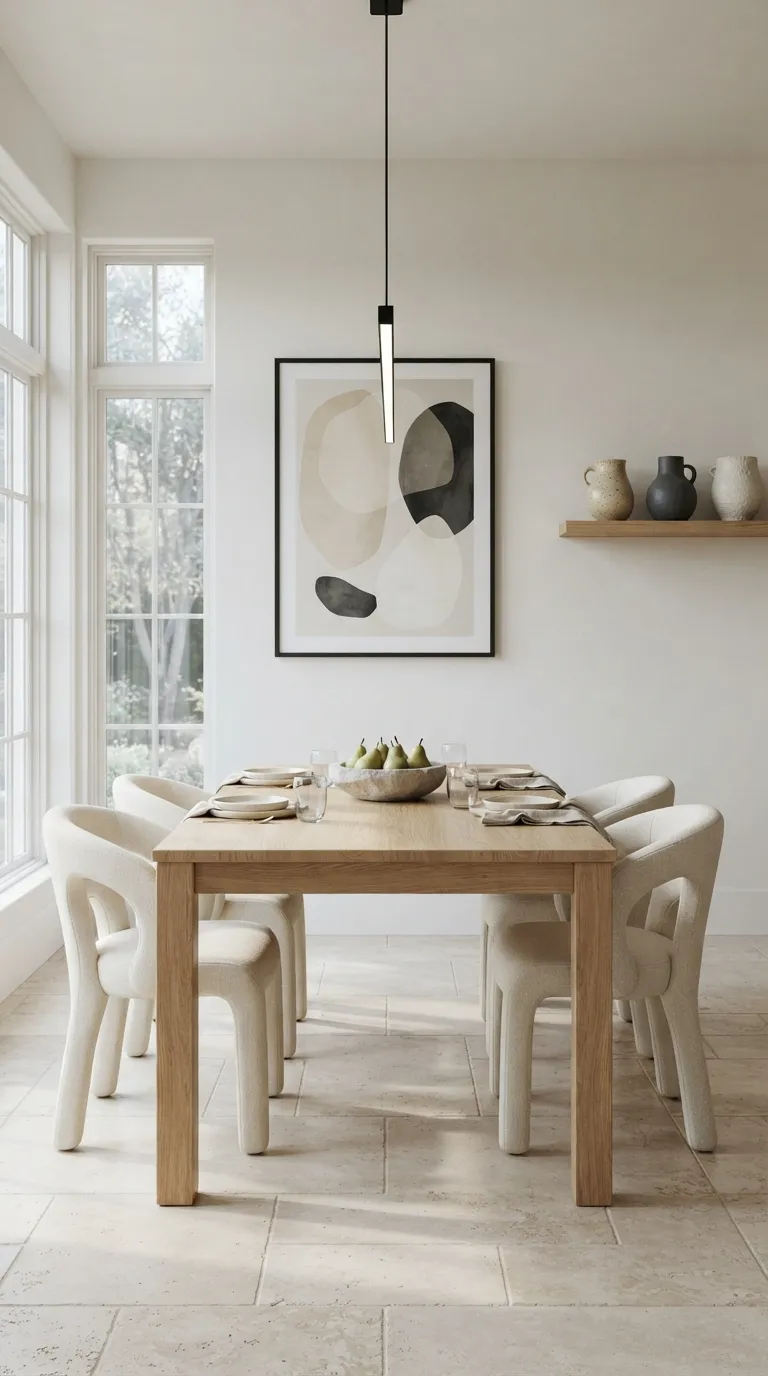
Minimal styling doesn’t mean the room has to feel bare. Focus on a few useful pieces with strong shapes, natural textures, and enough space around them.
Choose one centerpiece, one artwork, and a small group of tableware. This simple formula keeps the room easy to clean while still giving it personality.
Layered Neutral Textures
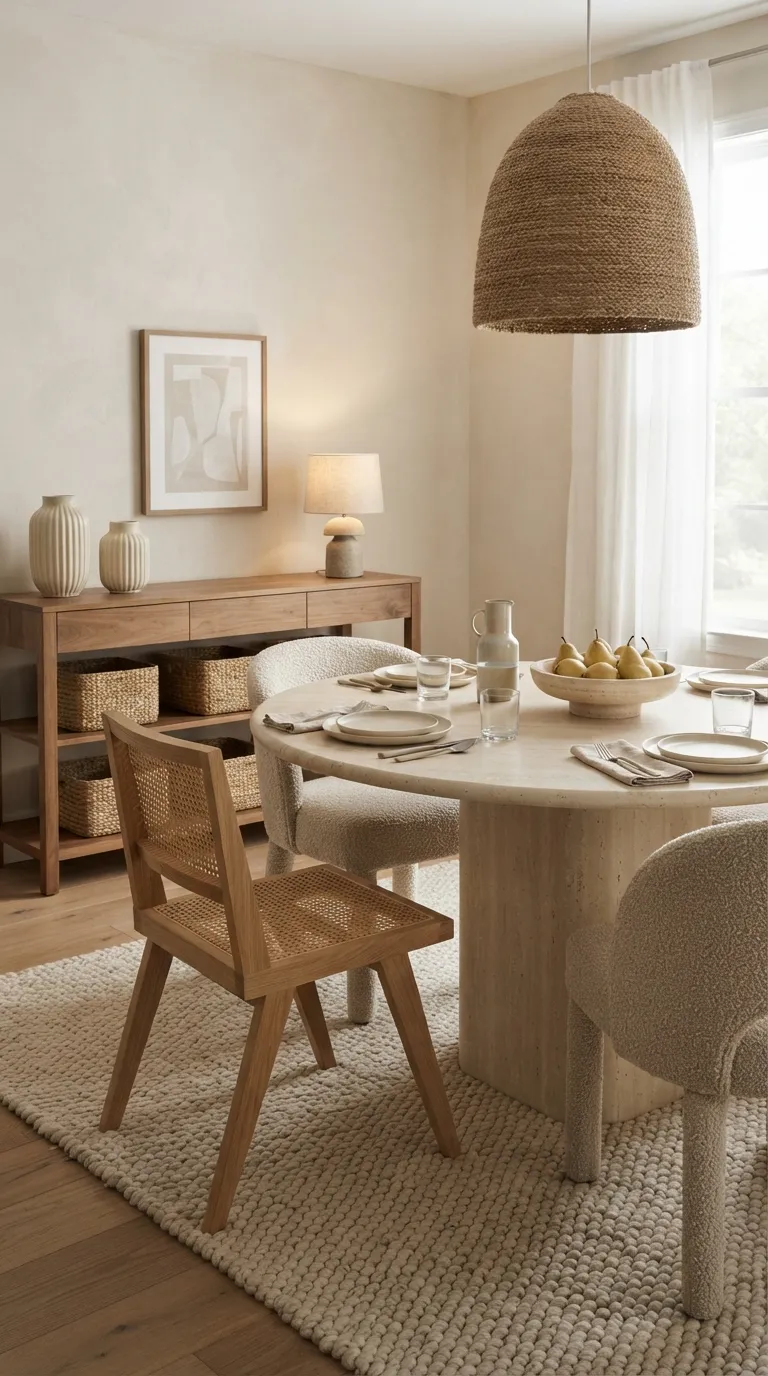
Neutral rooms become more interesting when texture does the work. Mix linen, boucle, wool, cane, stone, wood, and ceramics instead of adding lots of color.
Keep the shades within a close range, such as cream, oatmeal, beige, and warm taupe. The result feels relaxed but still has enough detail to make the dining room inviting.
The Bottom Line
Your dining room doesn’t need perfect symmetry or expensive pieces to feel welcoming. Start with the table and seating, then add lighting, storage, textiles, and a few personal details that suit how you actually use the space.
Try one change at a time. A new rug, warmer chairs, a ceramic centerpiece, or a fresh wall color can give your dining area a new look while keeping the room practical for everyday meals and guests.
Olivia Carter
Olivia Carter is the founder of Lady Home Decor and a passionate home decor expert. She shares practical, stylish ideas to help homeowners create beautiful, comfortable, and welcoming spaces. Her expertise covers bedrooms, kitchens, living rooms, bathrooms, and small-space decorating.