25 Stylish Industrial Living Ideas You’ll Absolutely Love

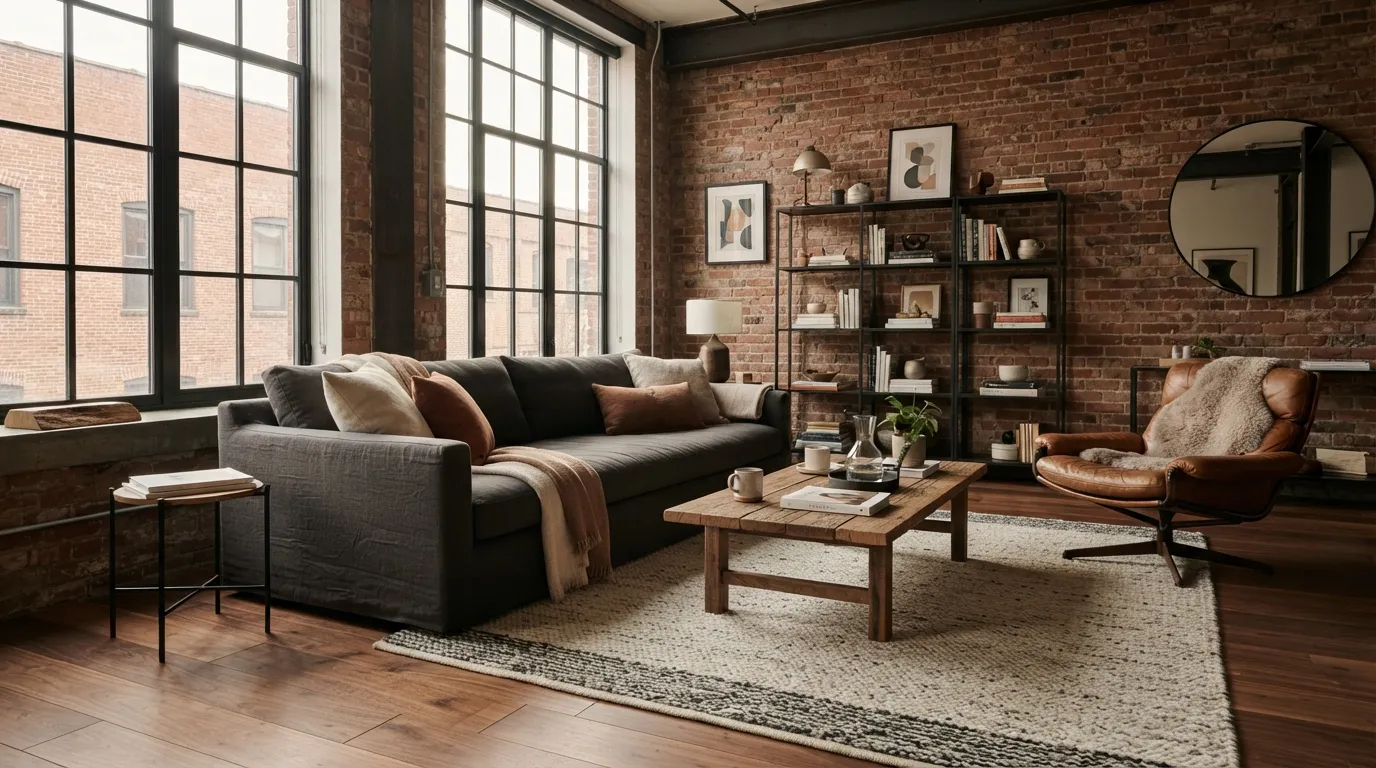
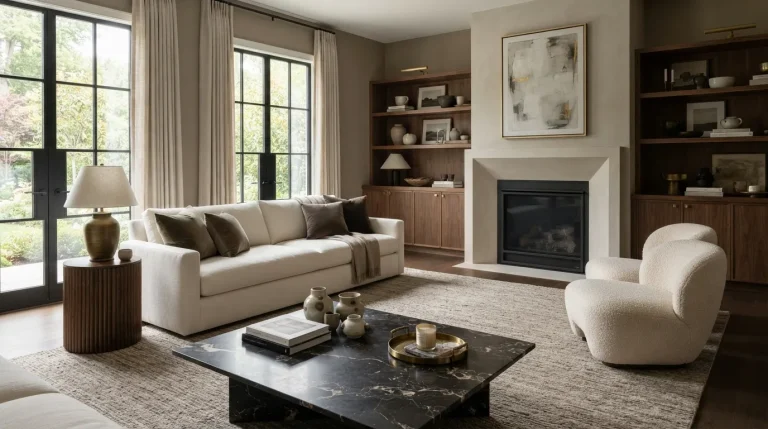
If you love raw textures, dark accents, and practical furniture, industrial living can give your home a strong look without making it feel cold. Think exposed brick, black steel, warm wood, leather seating, concrete surfaces, and soft textiles working together in one room. The best spaces mix rugged finishes with comfortable details, so the room still feels easy to live in.
You don’t need a huge loft to try this style. A small apartment, open-plan family room, or even one empty wall can become a great starting point. These ideas show how to use industrial decor with smart layouts, warm colors, and simple DIY touches that make the room feel personal rather than overly styled.
Exposed Brick Walls
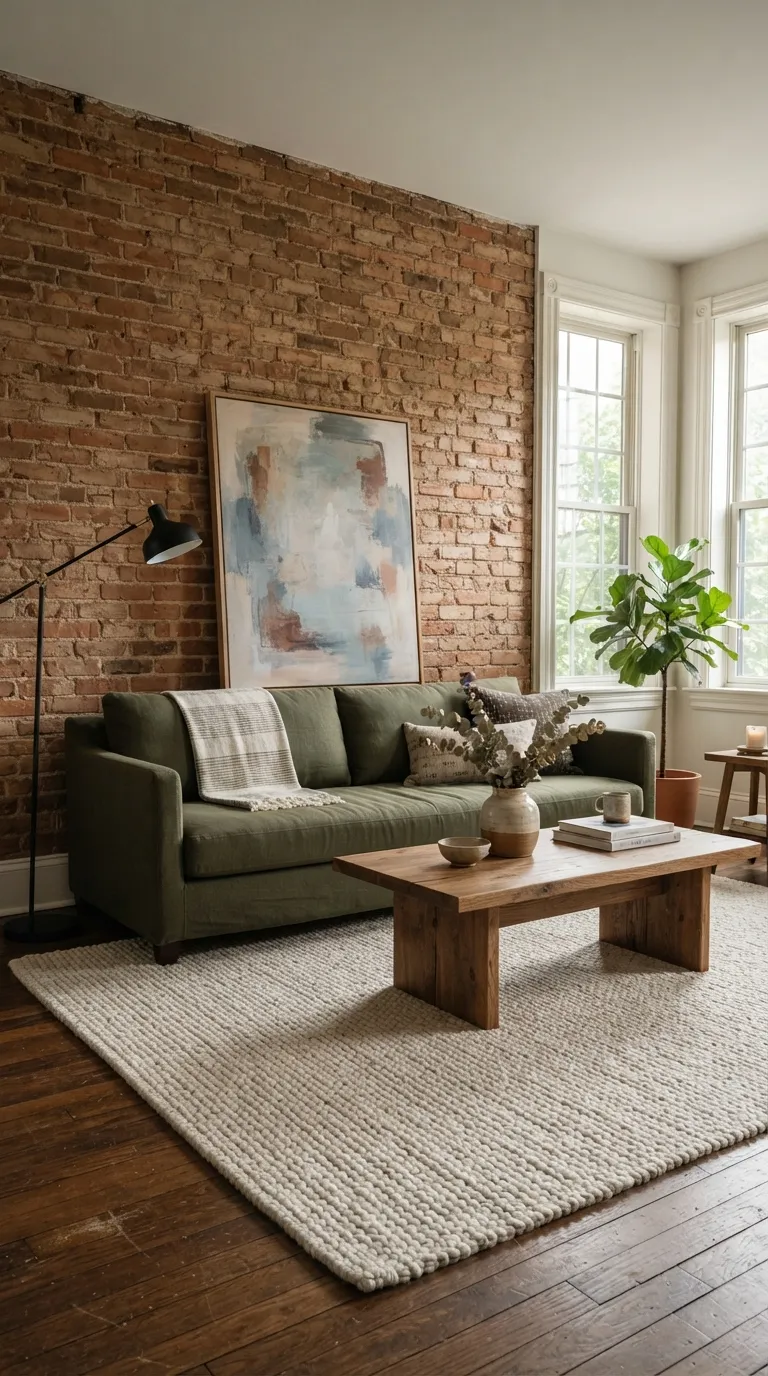
Exposed brick gives a room instant character and works especially well behind a sofa or media console. If your wall doesn’t have original brick, a realistic brick veneer can create a similar backdrop with less work.
Keep the rest of the room simple. Warm wood, soft upholstery, and a few black metal pieces will balance the hard brick surface without making the space feel too heavy.
Black Steel Details
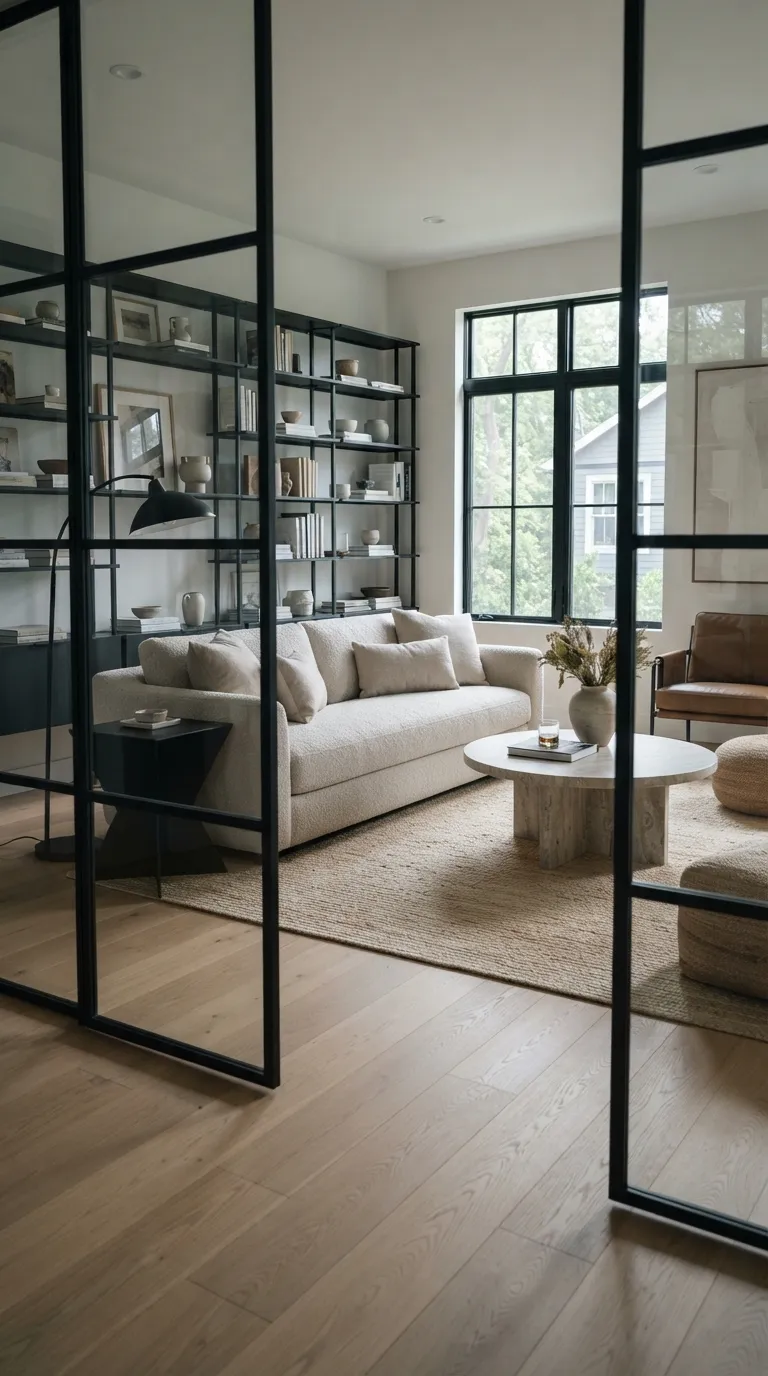
Black steel is an easy way to bring an industrial touch into a room without changing the whole space. Use it for shelving, window frames, table legs, lighting, or a glass divider between living and dining areas.
Pair dark metal with lighter fabrics to keep the room balanced. Picture an oatmeal sofa beside a black frame and a pale rug. The contrast gives the space structure while keeping it comfortable.
Warm Leather Seating
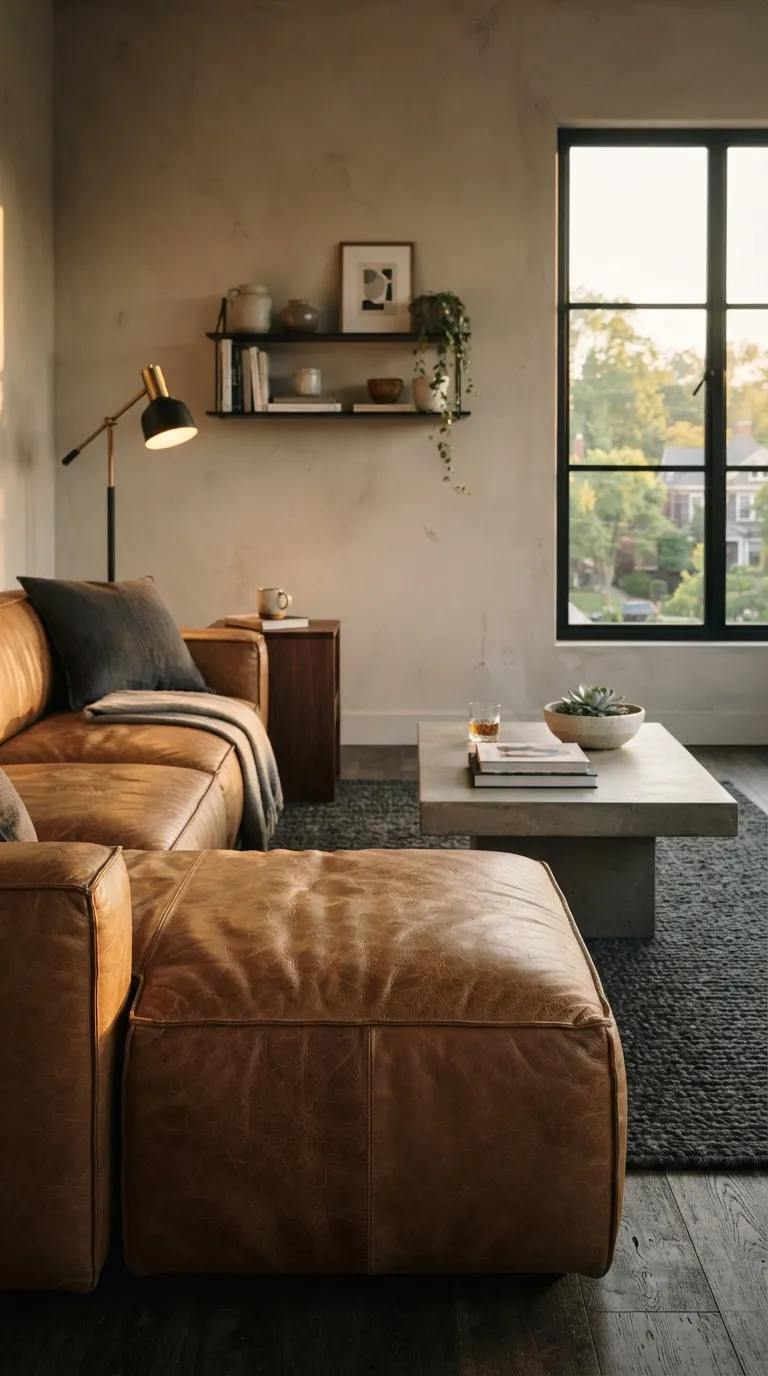
Leather seating brings warmth to industrial interiors and gets better-looking as natural creases develop. A caramel or tobacco finish works well when the room already has dark metal, concrete, or exposed brick.
For a softer setup, add a wool rug and textured cushions. The mix feels like a well-used studio apartment where every piece has a purpose, rather than a room filled with matching furniture.
Reclaimed Wood Shelving
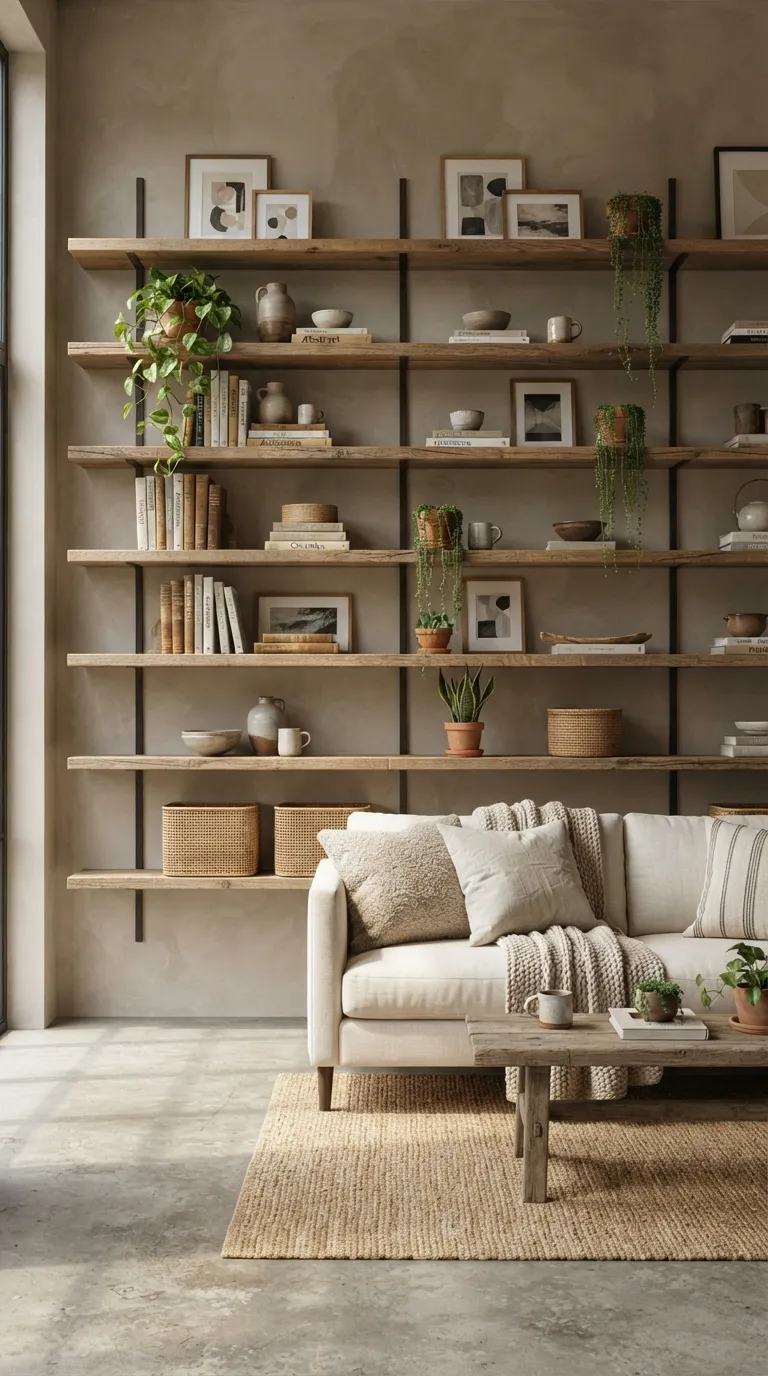
Reclaimed wood shelving gives you useful storage while adding the rough texture that industrial rooms need. Choose thick boards with visible grain, knots, and small marks for a lived-in look.
Keep the shelves from becoming crowded. Leave open spaces between books, ceramics, baskets, and plants so each material has room to stand out.
Concrete Coffee Tables
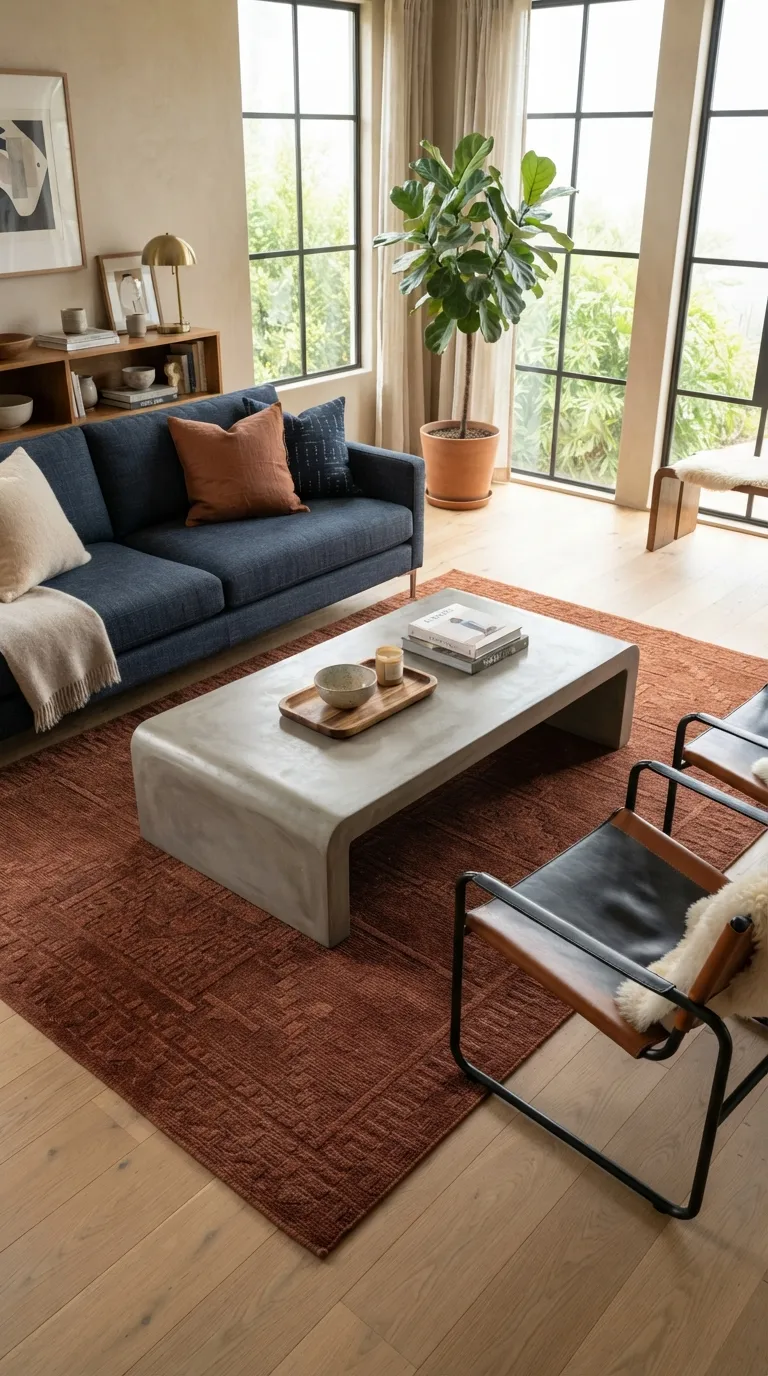
A concrete coffee table adds weight and texture without needing extra decoration. Look for a simple shape with softened edges if you want the piece to feel practical in a family room.
Balance the hard surface with fabric nearby. A navy sofa, rust rug, or woven accent chair can bring enough warmth to keep the space inviting.
Factory-Style Pendant Lights
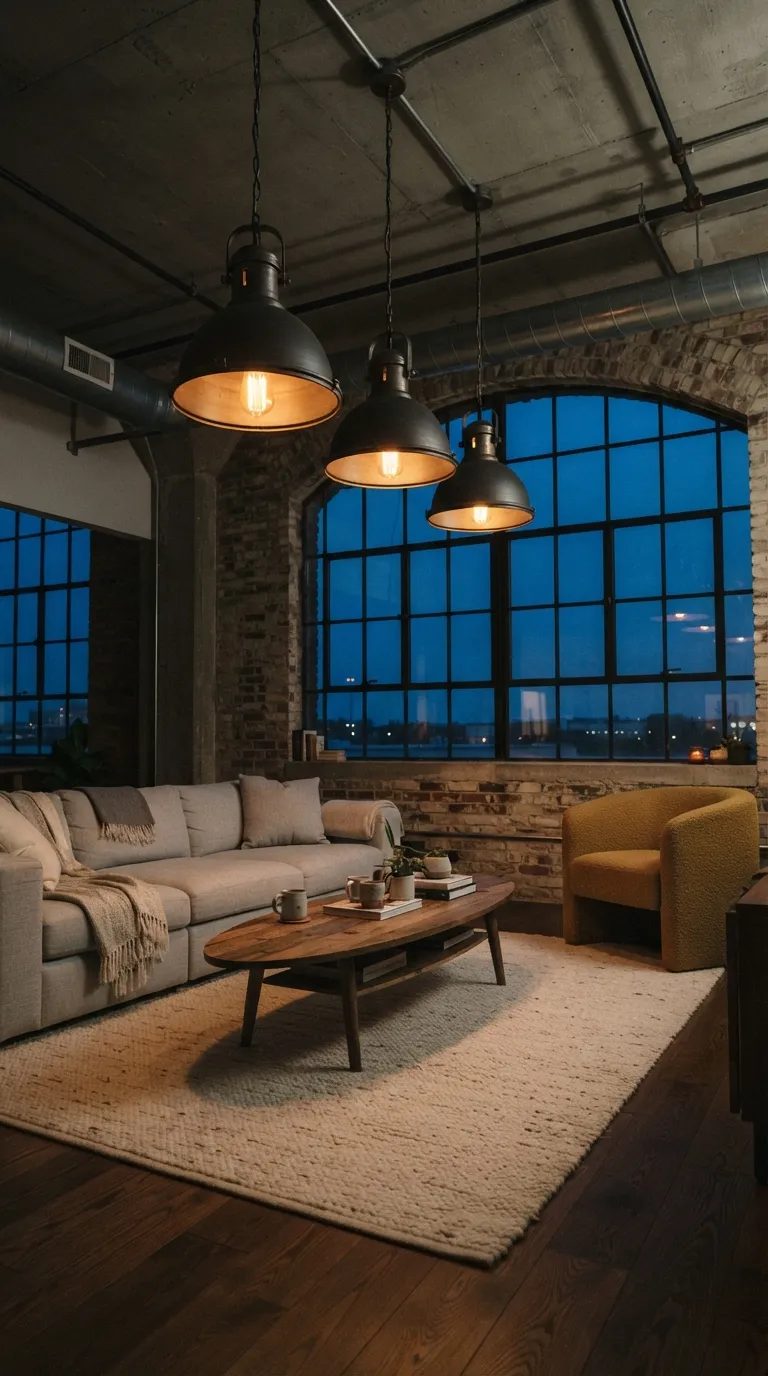
Factory-style pendant lights can make a plain ceiling feel intentional. Large metal shades work especially well above a seating area, reading corner, or open living space.
Try hanging several fixtures at slightly different heights for a relaxed studio feel. Keep the bulbs warm rather than harsh, especially when the room already has dark finishes.
Open Metal Staircase
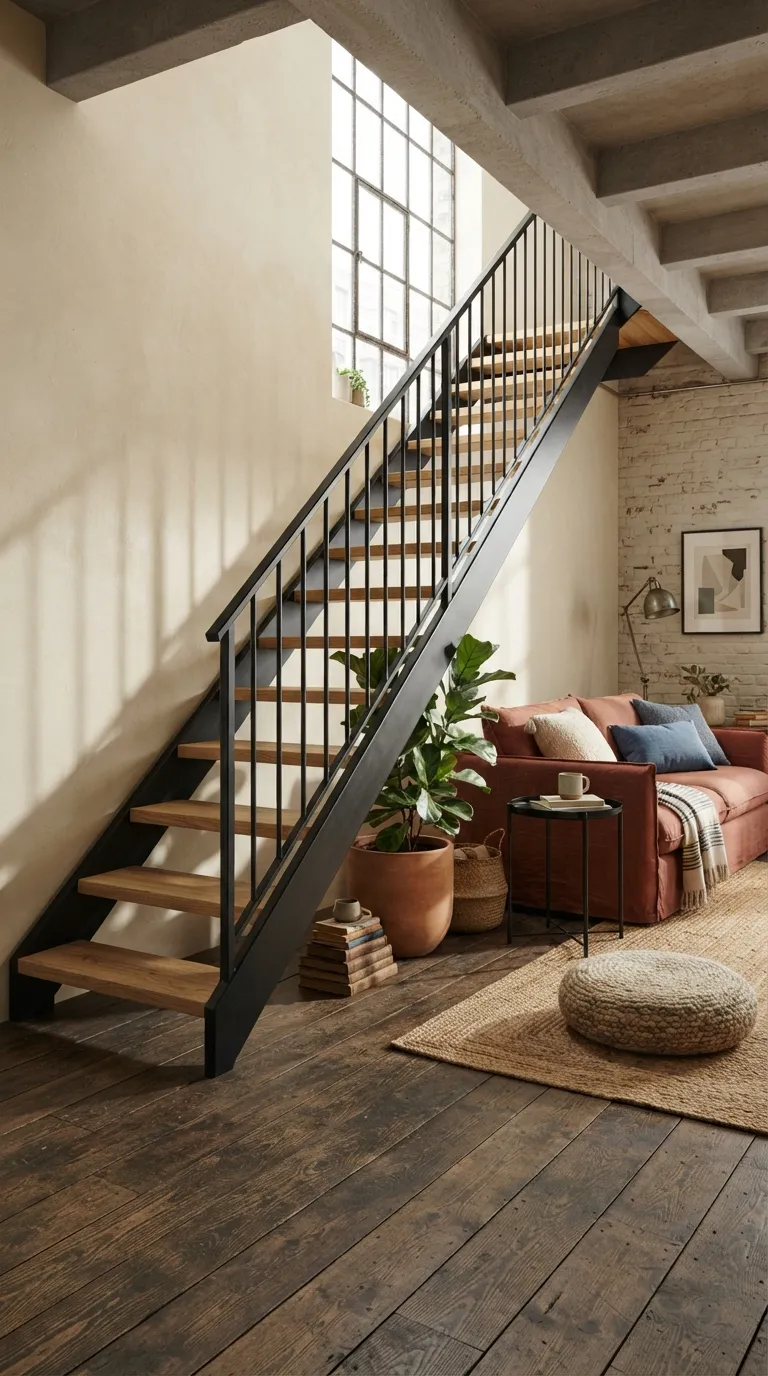
An open metal staircase gives industrial interiors a strong architectural feature. Black steel paired with natural oak keeps the design from feeling too stark.
If your staircase already exists, focus on simple updates around it. Add warm wood, soft textiles, and greenery underneath the stairs to make the area feel connected to the living room.
Oversized Factory Windows
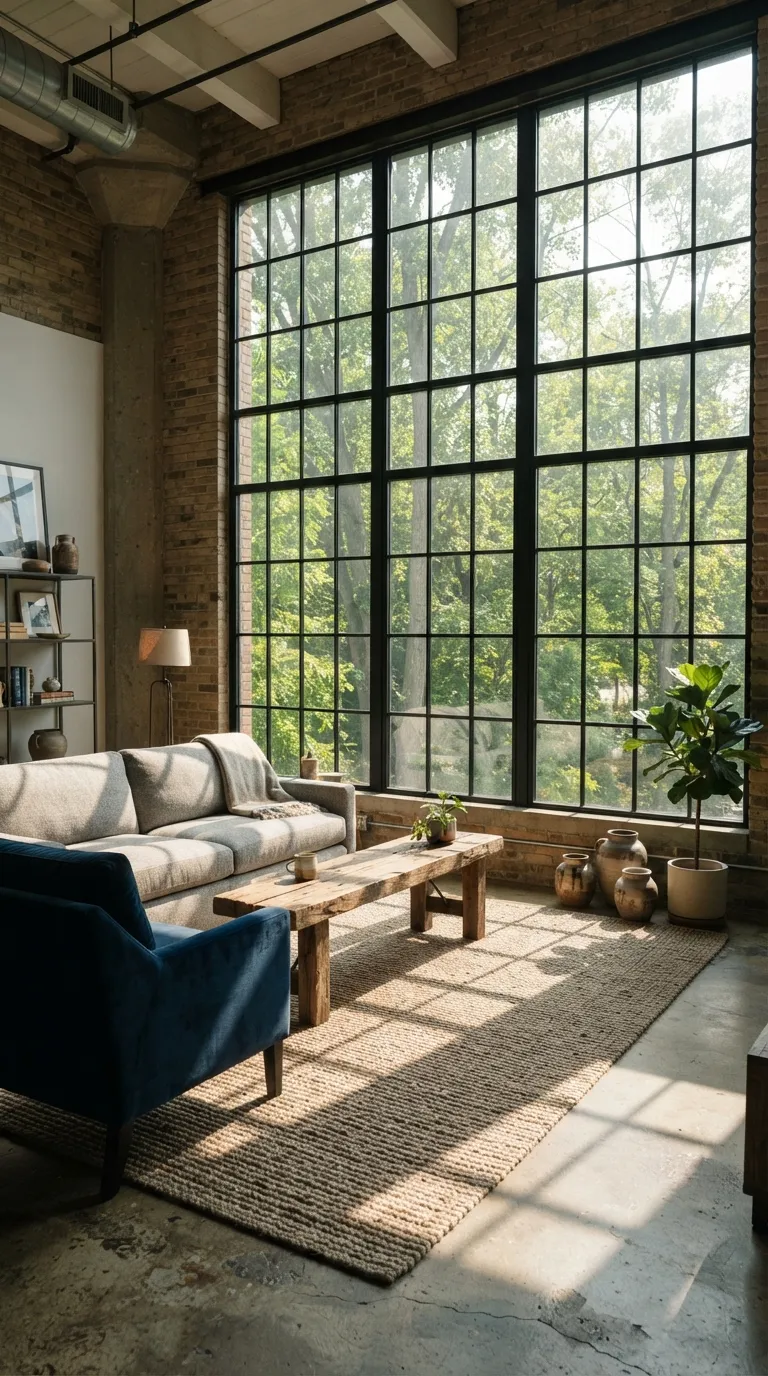
Large factory windows are a natural match for industrial decor. Their dark frames create clean lines while the glass keeps the room visually open and full of daylight.
If your windows are smaller, use black-framed mirrors nearby to echo the same grid pattern. Keep window treatments light so they don’t cover the architectural detail.
Mixed Metal Finishes
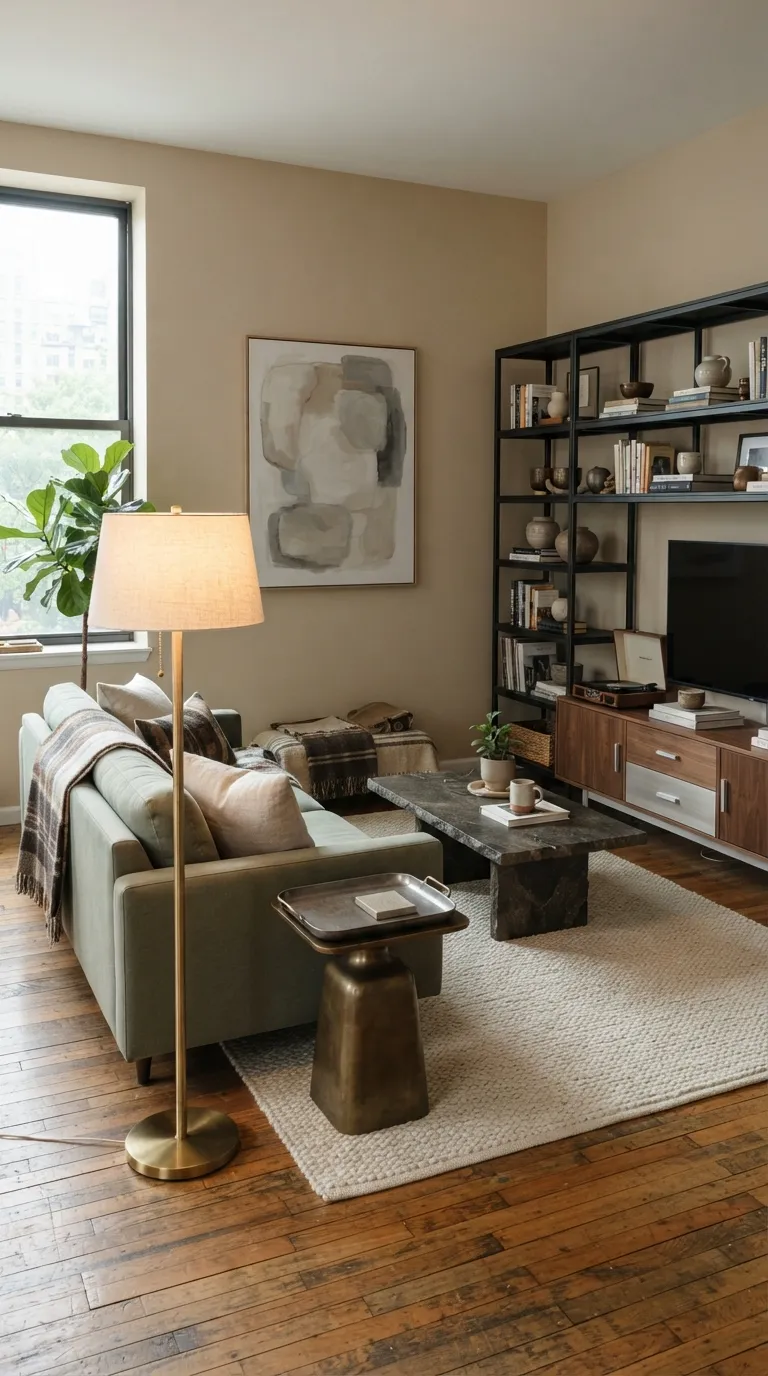
You don’t have to use one metal finish everywhere. Black steel, aged bronze, brushed brass, and muted silver can work together when each finish appears more than once.
Start with two dominant metals and add a third in small amounts. For example, black shelving and bronze lighting can work with a few brass accents on tables or cabinet hardware.
Dark Wood Accents
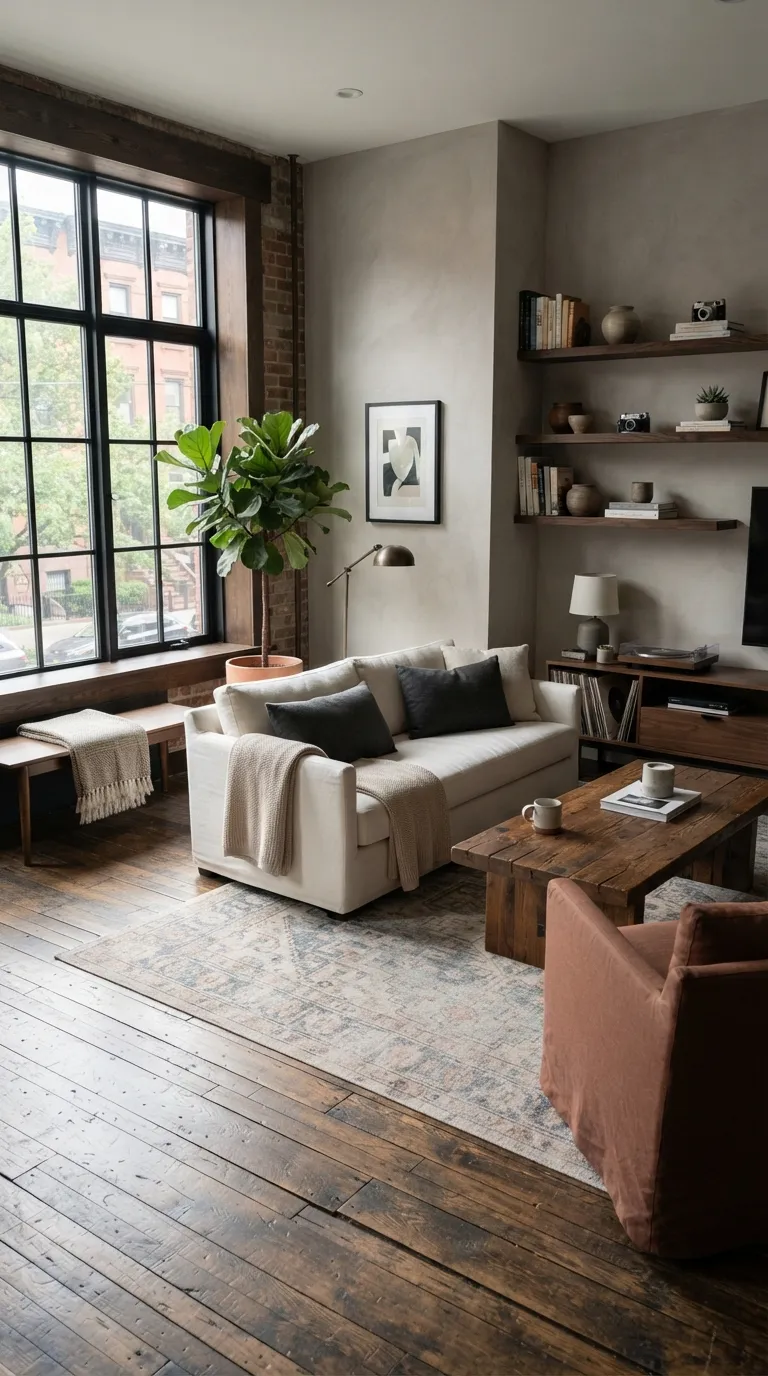
Dark wood gives industrial rooms a warmer, richer base. Walnut, smoked oak, and espresso finishes pair naturally with black metal and neutral fabrics.
Use wood across several small areas instead of putting everything in one matching set. A coffee table, media console, and floating shelf can create enough visual connection without making the room feel heavy.
Soft Neutral Rugs
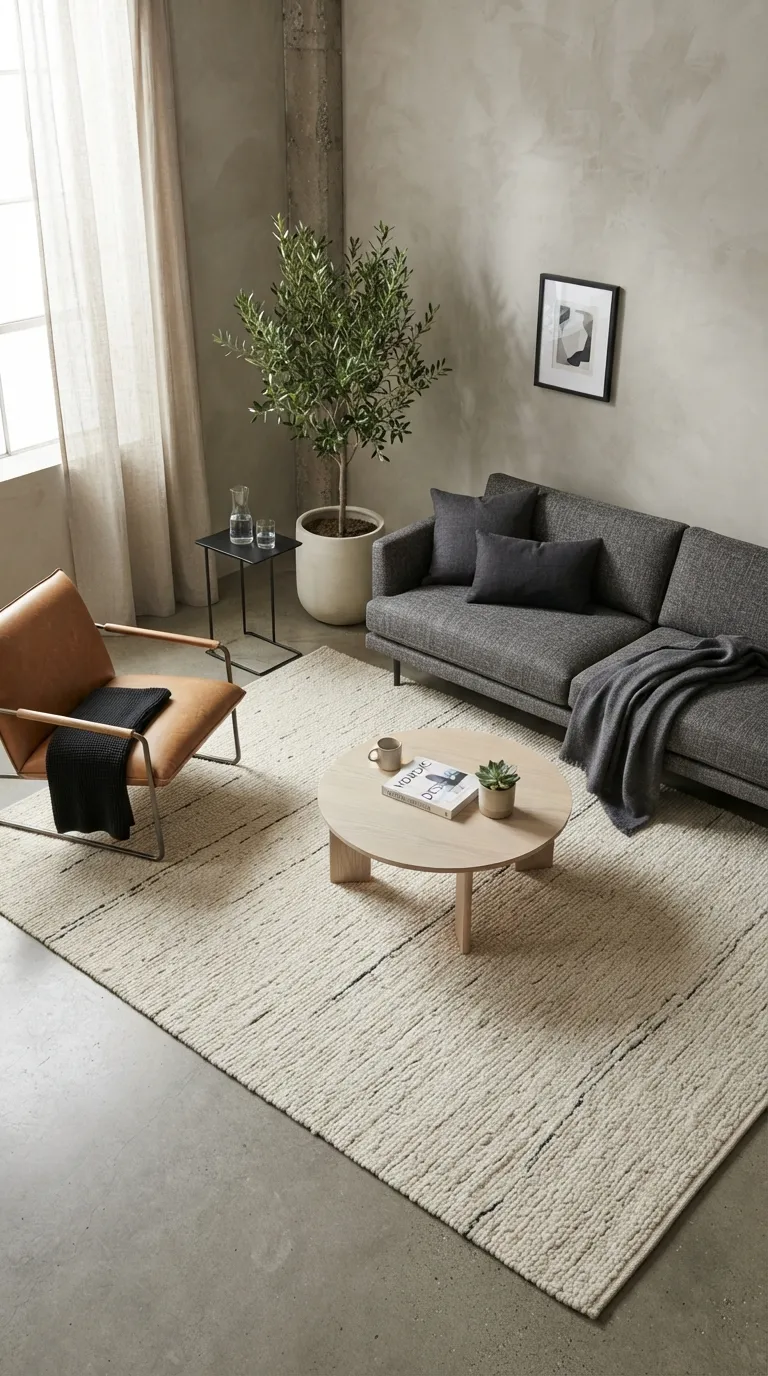
A soft rug can make hard industrial finishes feel more comfortable. Choose wool, jute, cotton, or another textured material with a simple pattern.
Neutral shades work well because they don’t compete with brick, concrete, or dark metal. A large rug also helps define the seating area in an open-plan room.
Industrial Gallery Walls
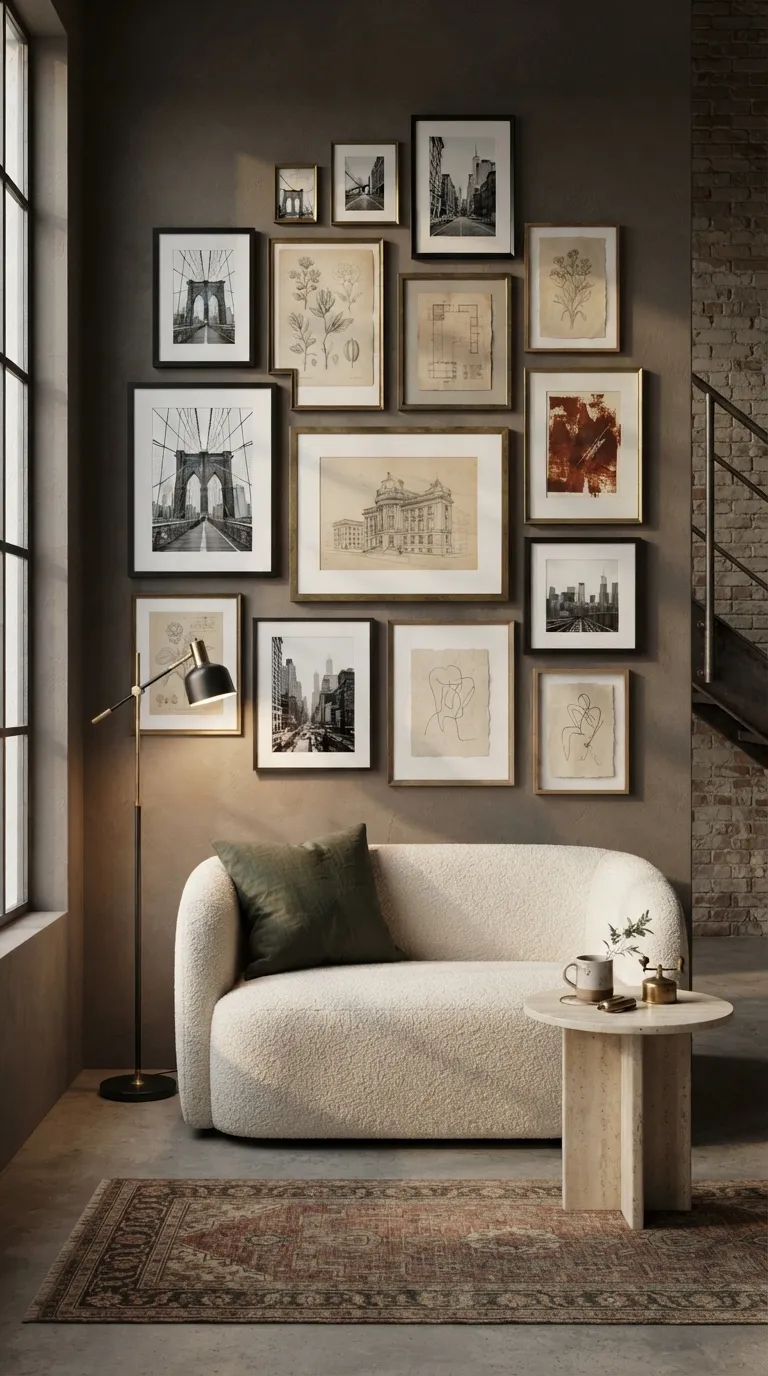
An industrial gallery wall gives blank space a personal touch. Mix architectural sketches, monochrome photographs, line art, and a few muted color pieces for variety.
Keep the frames related without making them identical. Black, aged brass, and natural wood frames can create a collected look that suits the raw character of industrial decor.
Concrete Accent Walls
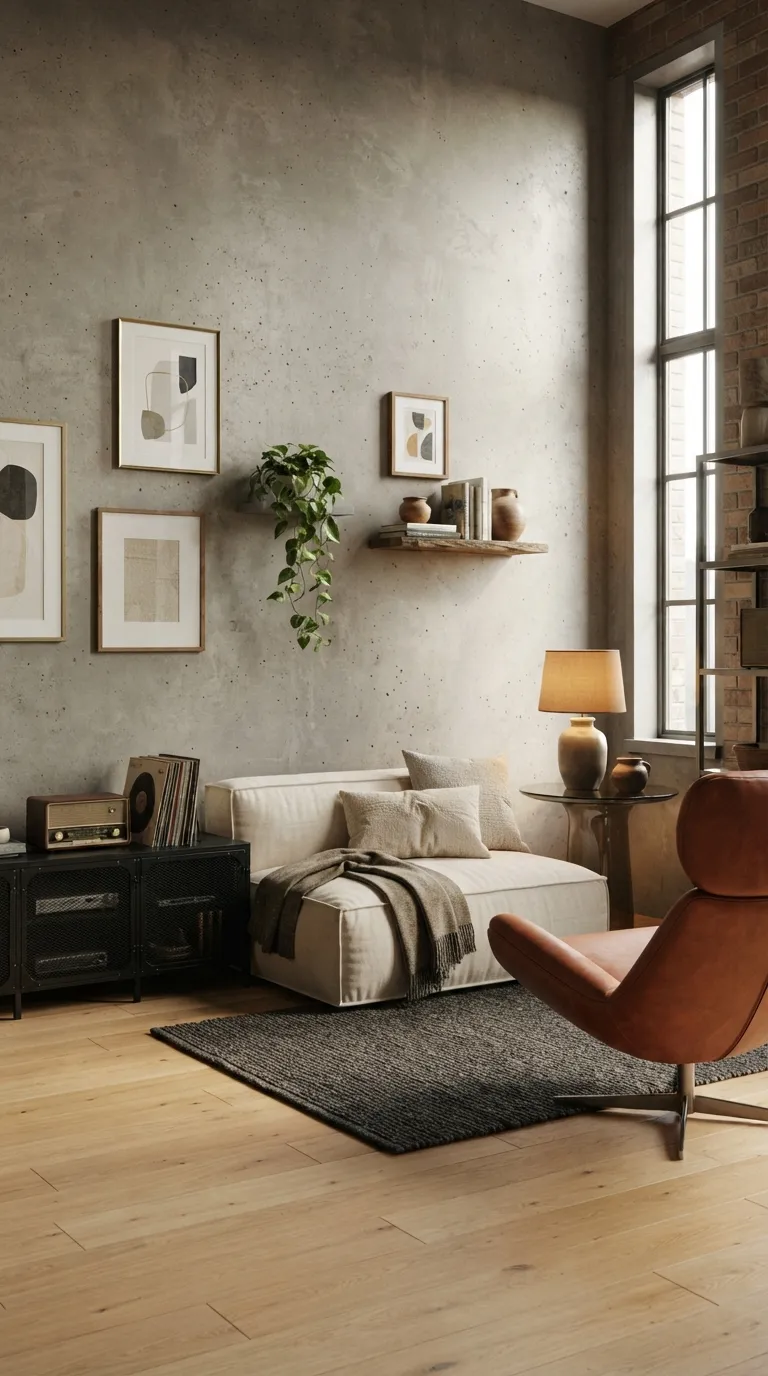
Concrete walls create a strong industrial backdrop without needing much decoration. Their muted gray tone works with both warm wood and colorful furniture.
If full concrete feels too stark, use it on one feature wall. Keep nearby surfaces warm with timber, woven textiles, or soft upholstery.
Vintage Industrial Furniture
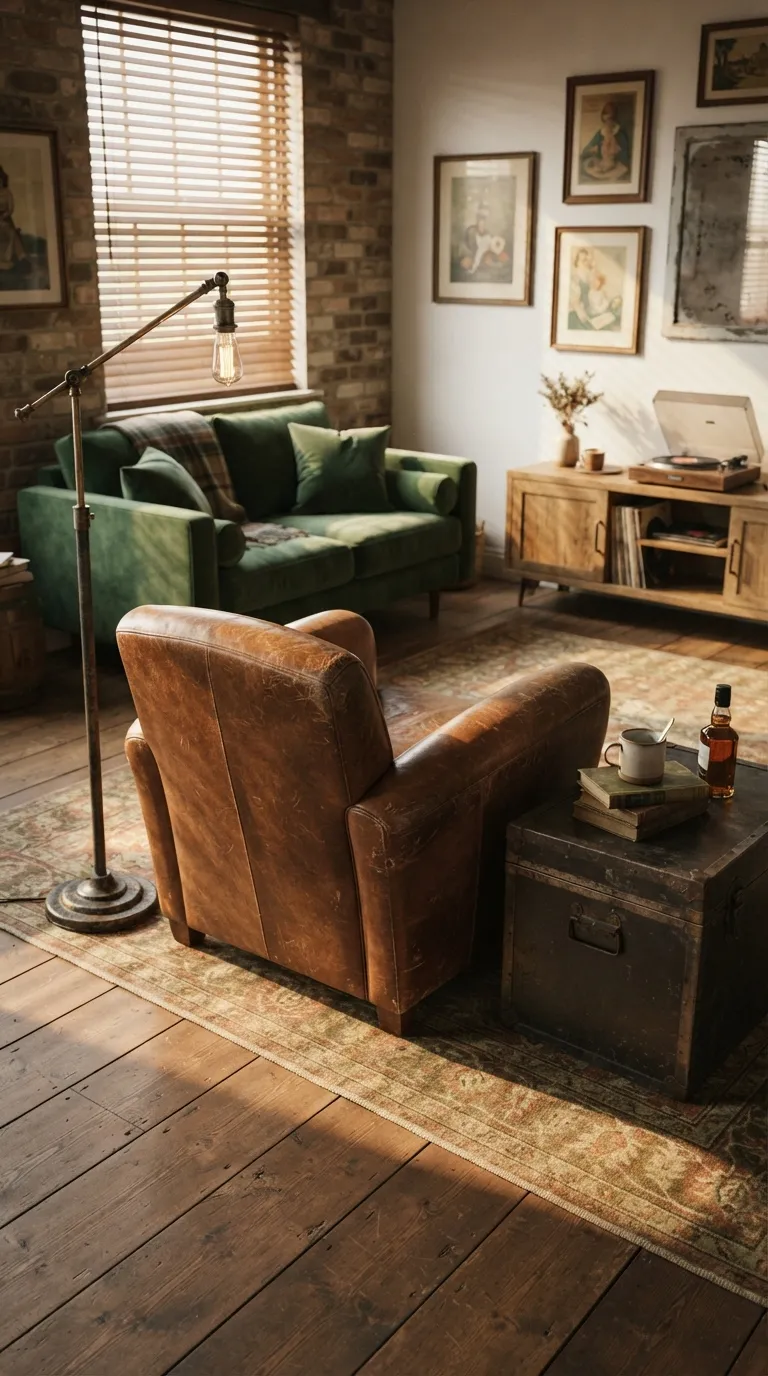
Vintage furniture can make industrial living spaces feel less predictable. Look for pieces with visible wood grain, aged metal, worn leather, or small signs of use.
If this was useful, you may also like Living Room Decor Ideas.
You don’t need a complete vintage set. One old trunk, metal cabinet, or leather chair can become the anchor while newer furniture keeps the room comfortable.
Open Pipe Shelving
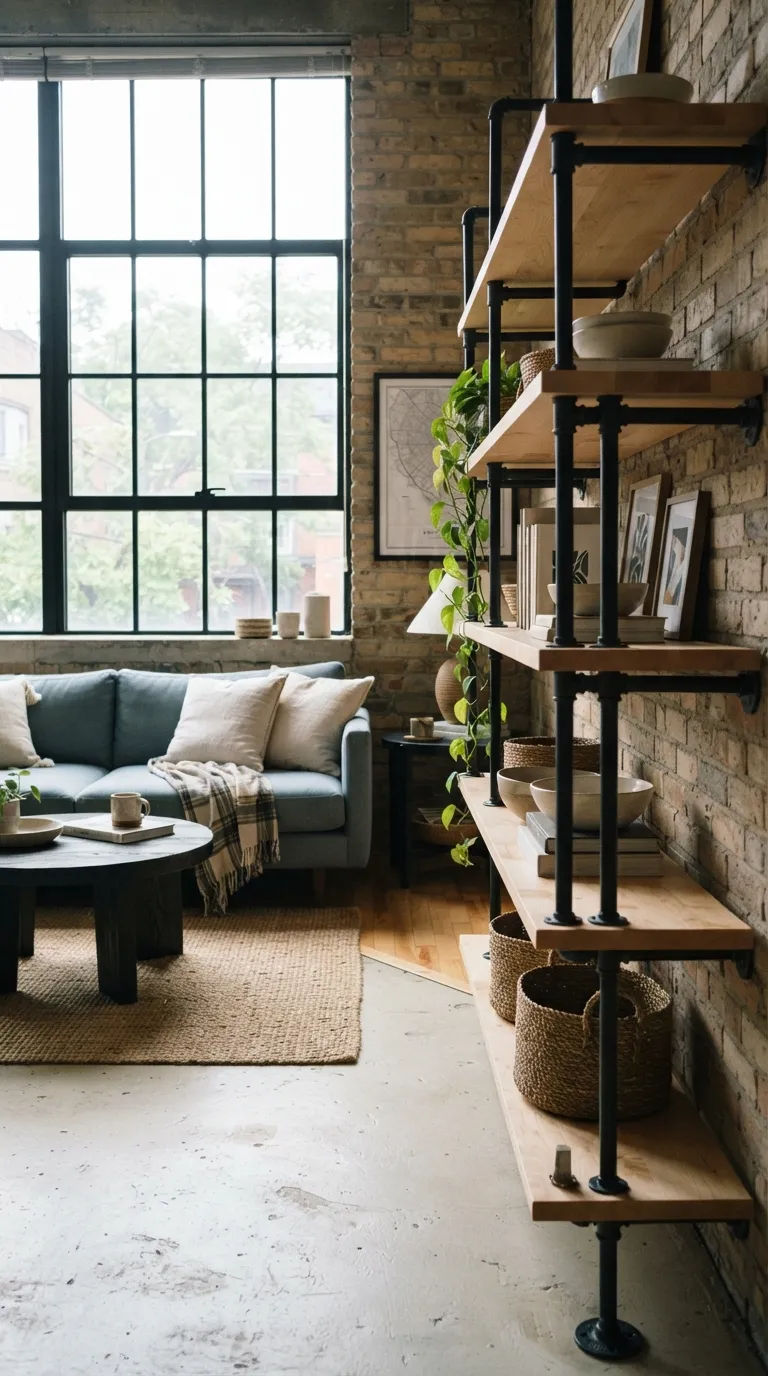
Pipe shelving has a workshop feel that fits industrial decor naturally. It also gives you useful storage without closing off the room.
For a DIY version, combine sturdy wood boards with properly secured pipe fittings. Keep the shelf styling simple with books, ceramics, baskets, and plants rather than filling every level.
Black Framed Glass Doors
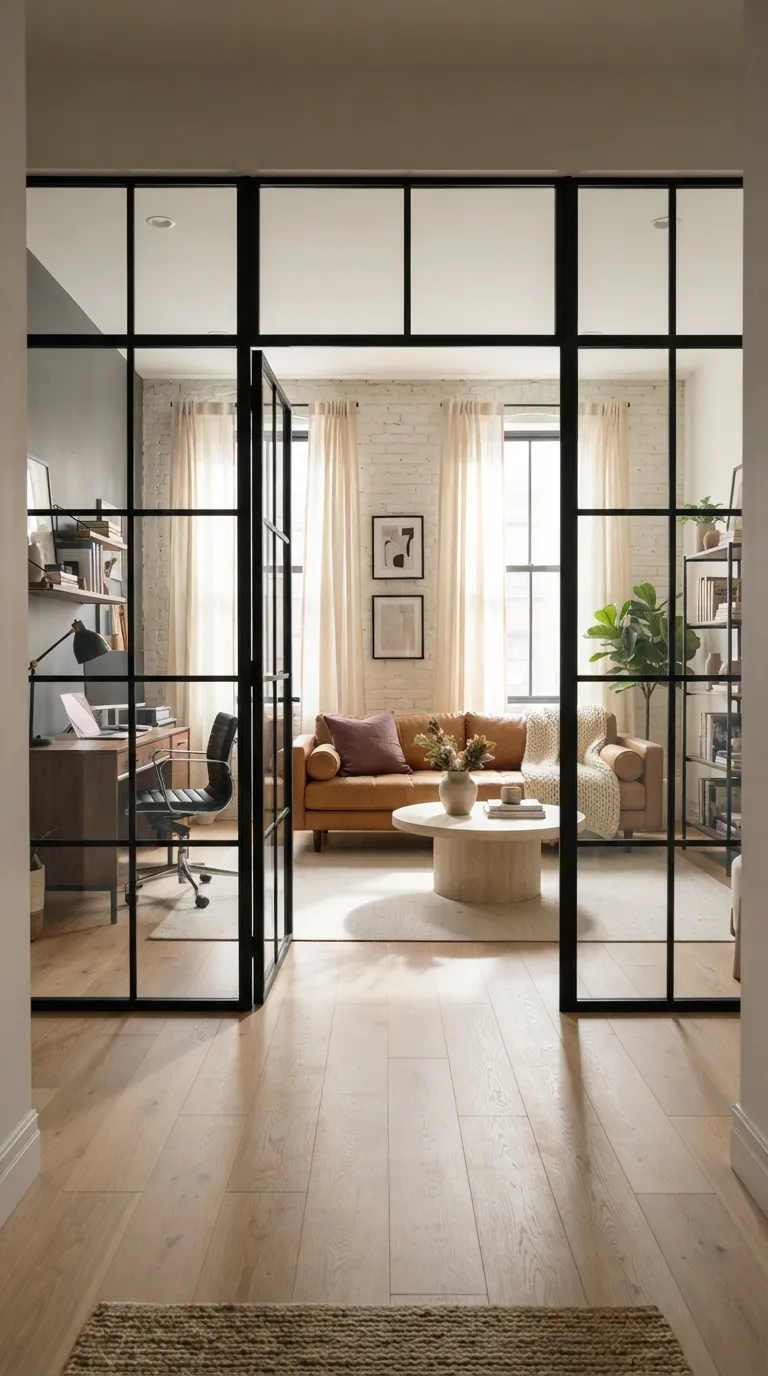
Black-framed glass doors are useful when you want separate zones without making the home feel closed in. They suit living rooms that share space with offices, dining areas, or entry halls.
Choose clear glass if daylight matters most. Slim black frames keep the look crisp and echo other dark metal details around the room.
Exposed Ceiling Beams
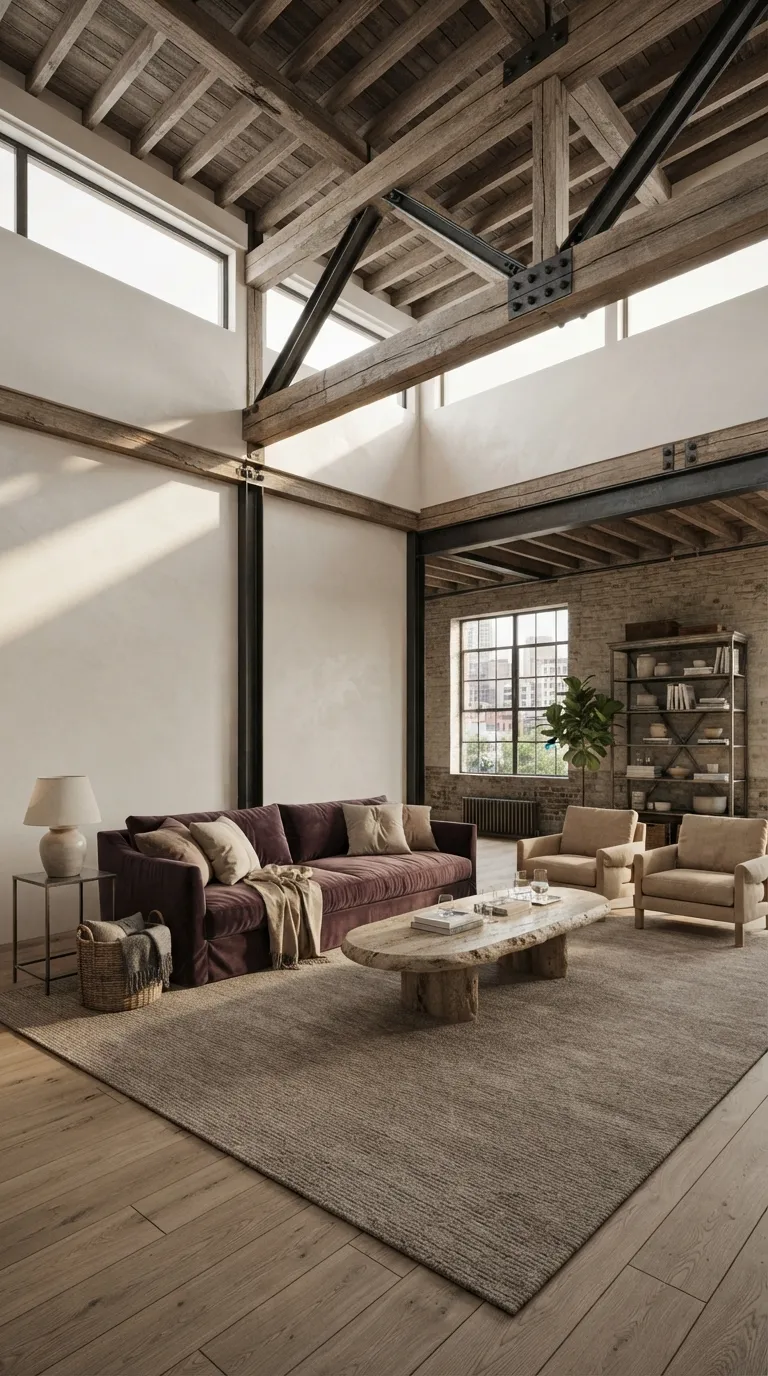
Exposed beams add character without taking up floor space. Timber works especially well when the room already includes steel, brick, or concrete.
Let the beams stay visible instead of covering them with heavy ceiling treatments. Keep the furniture lower and simple so the upper structure remains the main architectural feature.
Warm Edison Lighting
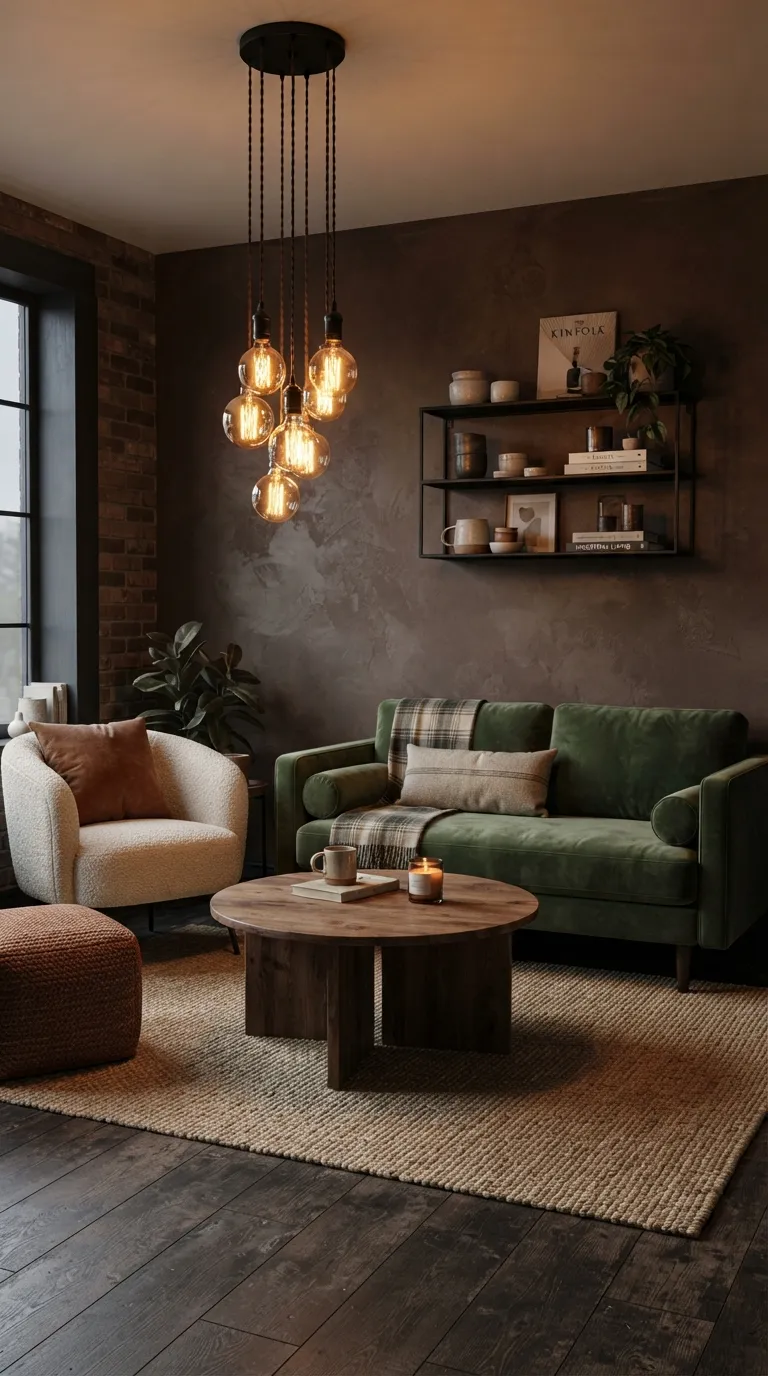
Warm bulbs soften the darker finishes common in industrial rooms. Edison-style bulbs work best when their glow adds atmosphere without becoming the only light source.
Use them with floor lamps, wall fixtures, or natural daylight. This layered approach keeps the room practical during the day and cozy after sunset.
Industrial Media Console
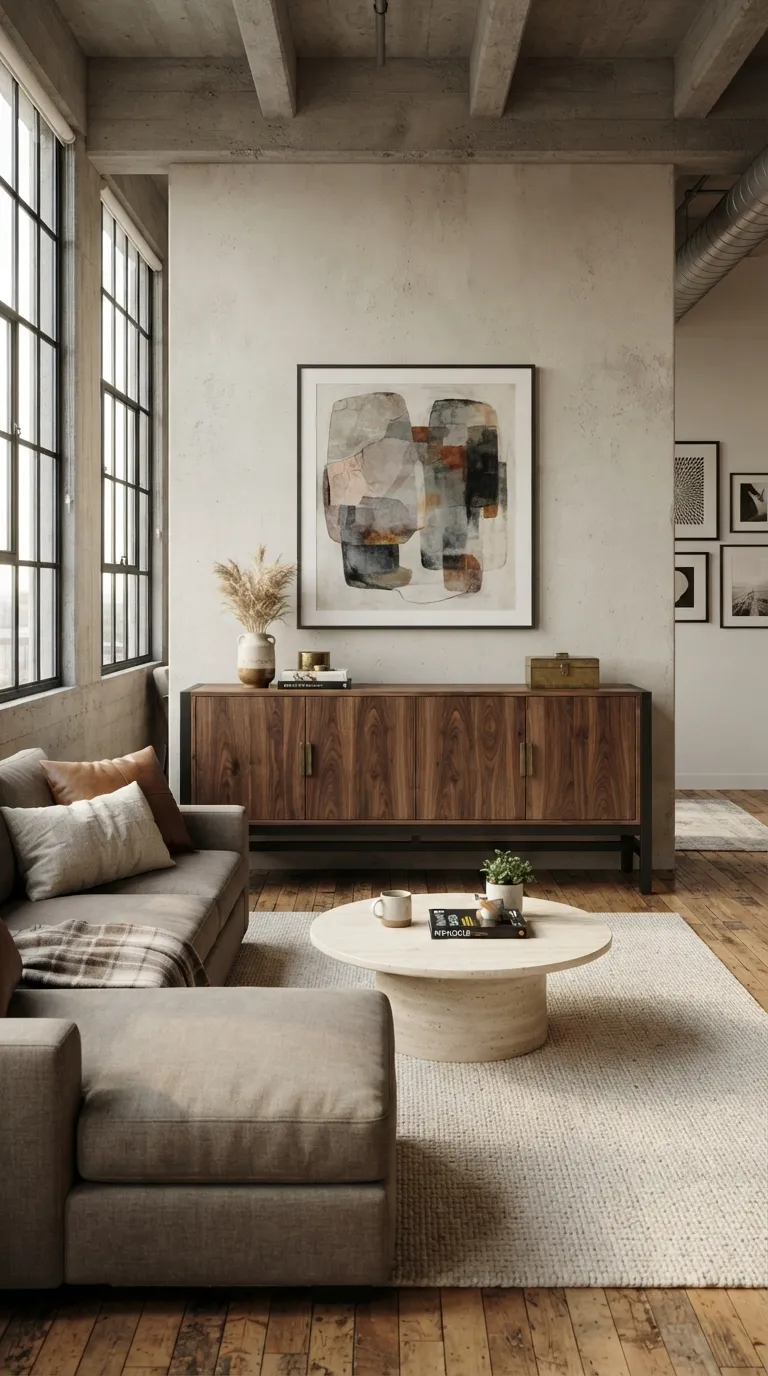
A media console can carry the industrial style without turning the television area into a cluttered wall. Choose a long, low design with wood, steel, or both.
Hide cables and keep accessories limited. A few books, ceramics, or one large artwork can give the console personality while leaving the main surface clean.
Leather And Metal Chairs
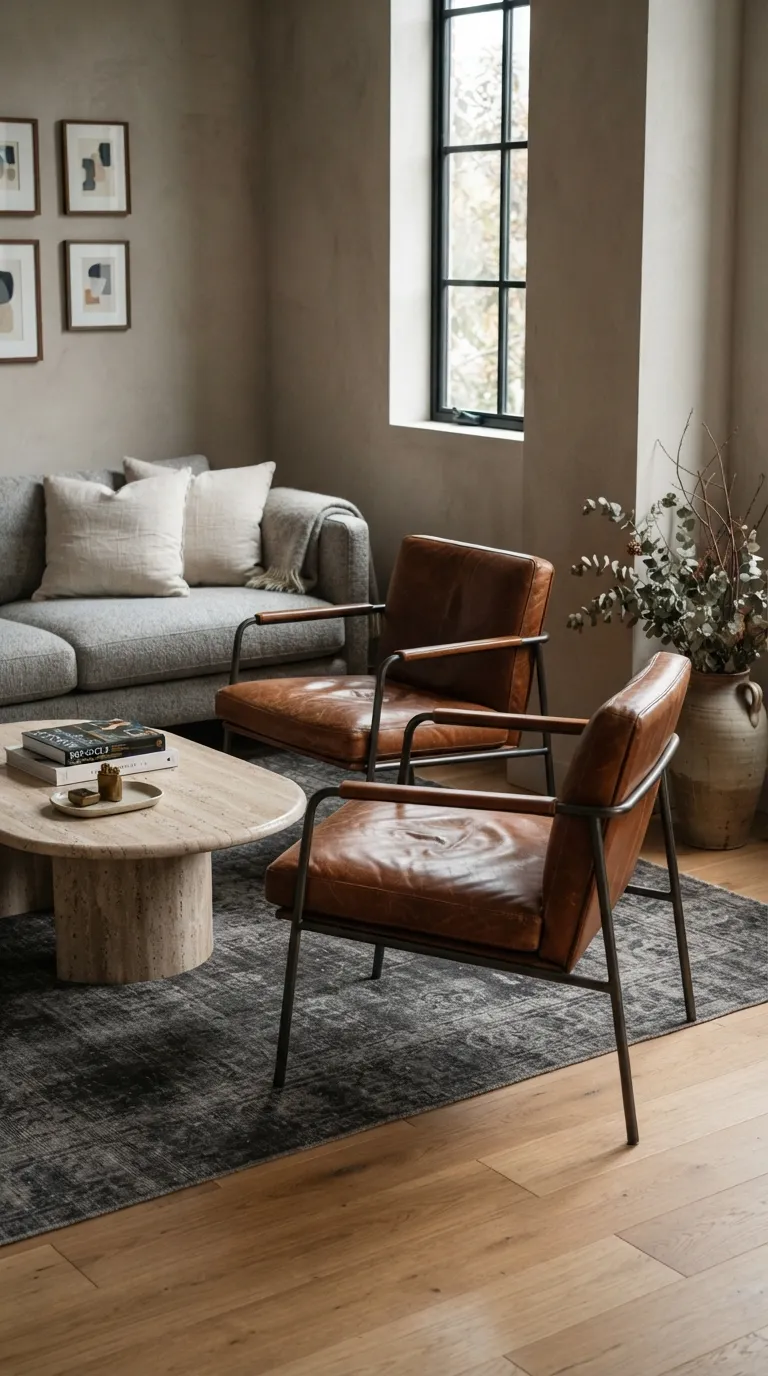
Leather and metal chairs make a strong pair for an industrial seating area. The leather adds warmth, while the slim steel frame keeps the furniture visually light.
Use two matching chairs across from a sofa or place one beside a reading lamp. A small side table between them gives you a useful spot for coffee, books, or a ceramic mug.
Industrial Greenery Corners
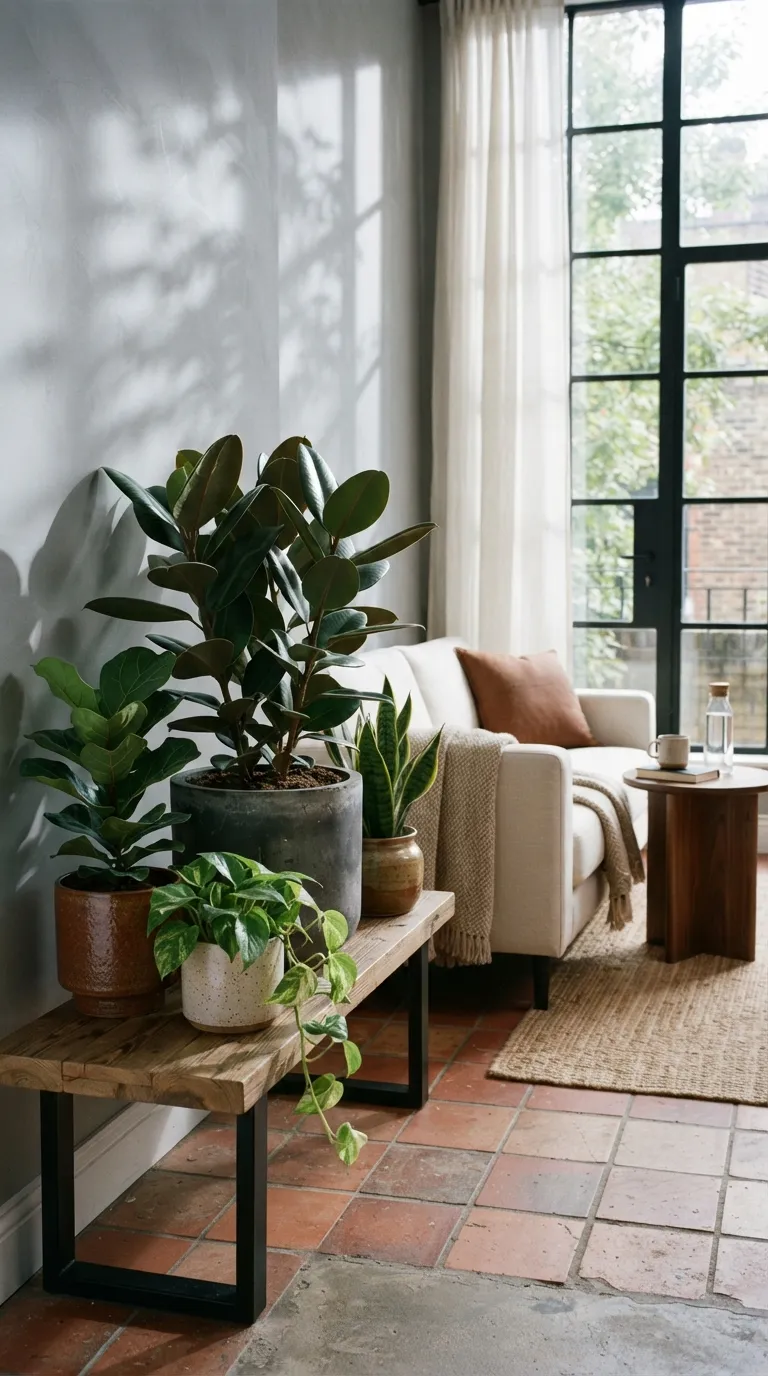
Plants can soften the harder materials found in industrial living spaces. Large leafy plants work well beside concrete, brick, steel, and dark wood.
Create one dedicated plant corner instead of scattering small pots everywhere. Use concrete planters, metal stands, or reclaimed wood benches to keep the greenery connected to the room’s style.
Moody Industrial Color Palette
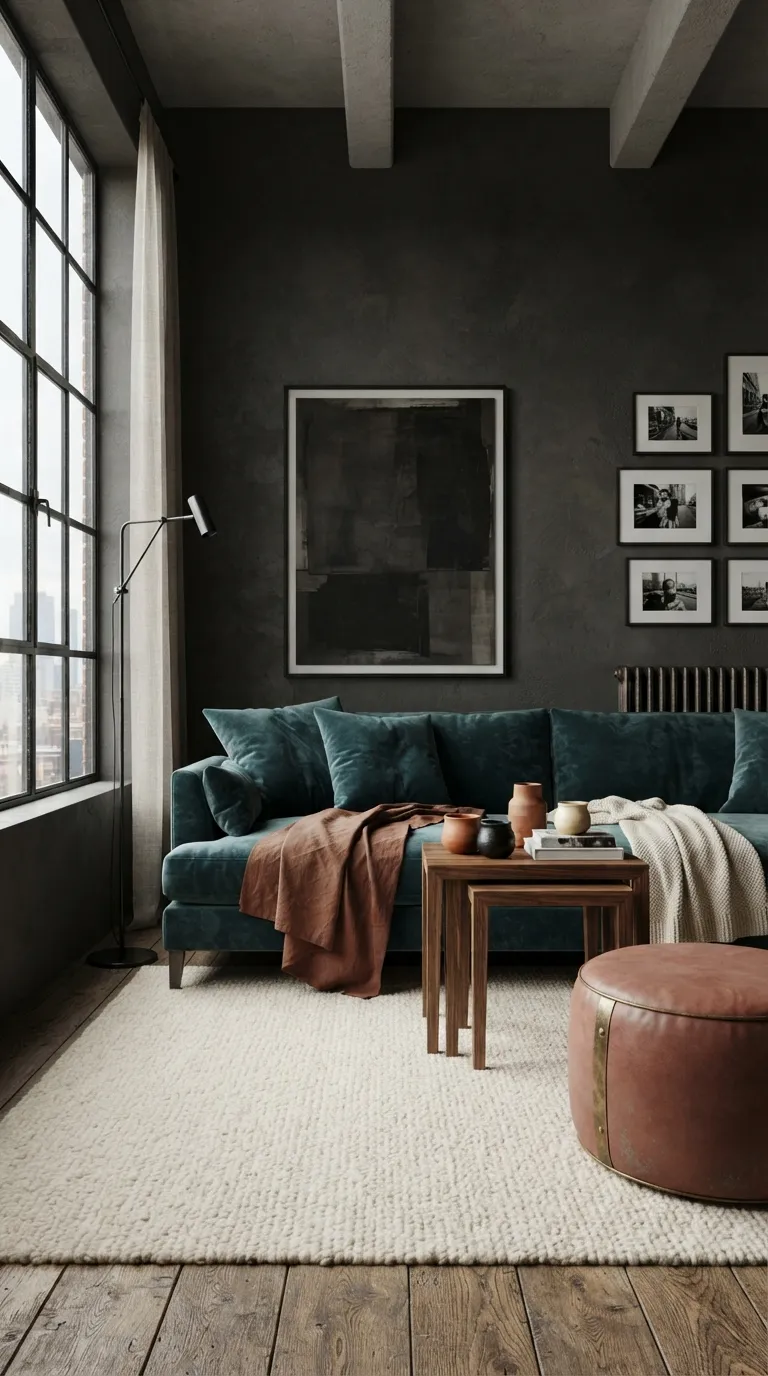
Dark colors can give an industrial room a cozy, grounded feel. Charcoal, deep teal, rust, olive, and warm brown all pair well with black metal and natural wood.
If you’re working with a small room, use darker shades on one wall or through furniture instead of covering every surface. Add cream, tan, or light wood nearby to keep the space visually balanced.
Industrial Fireplace Designs
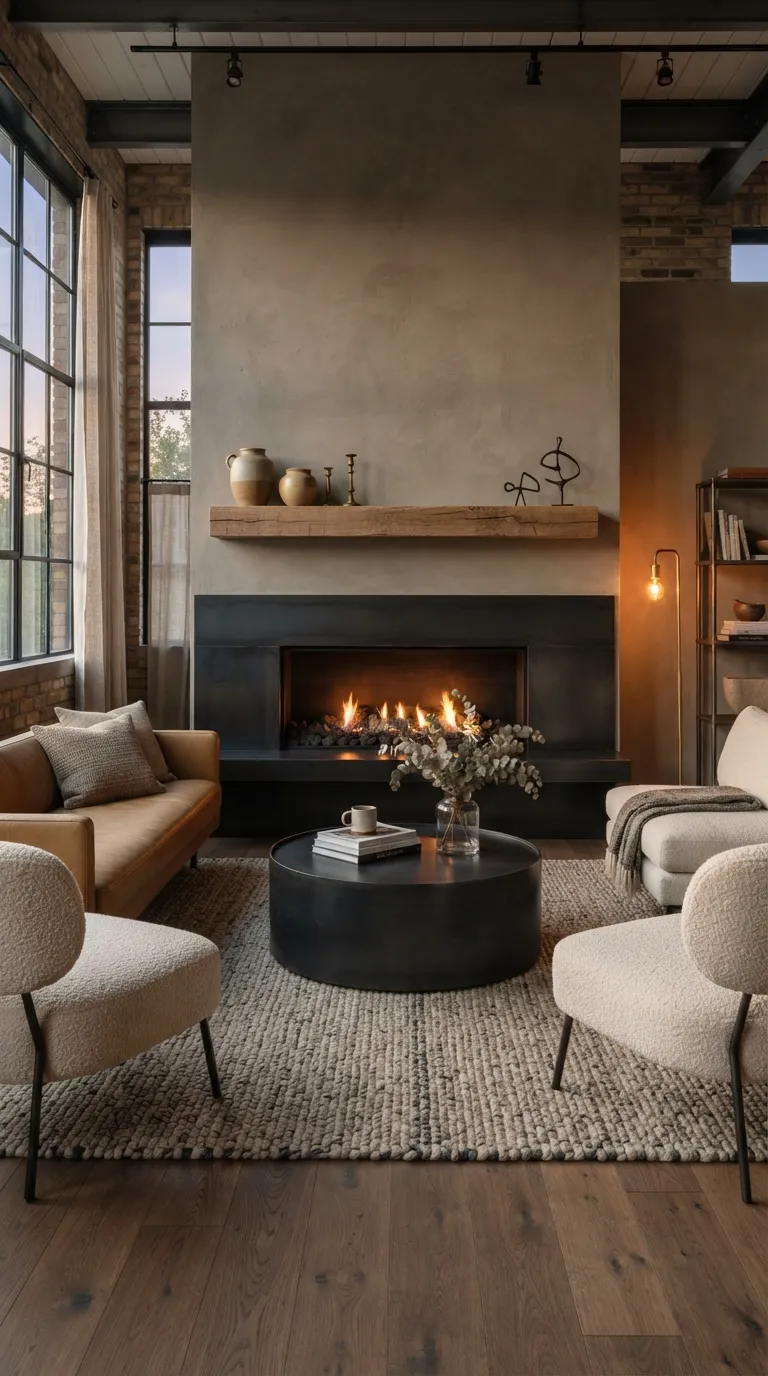
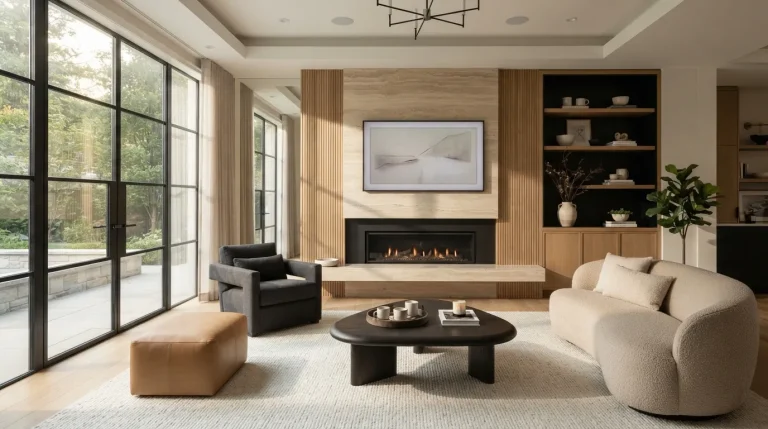
An industrial fireplace can become the main anchor of the living room. Steel, concrete, brick, and reclaimed wood all pair naturally with a simple fire feature.
Keep the mantel styling restrained. A few ceramics, stacked books, or one large object can add interest without taking attention away from the fireplace.
Open-Plan Industrial Layout
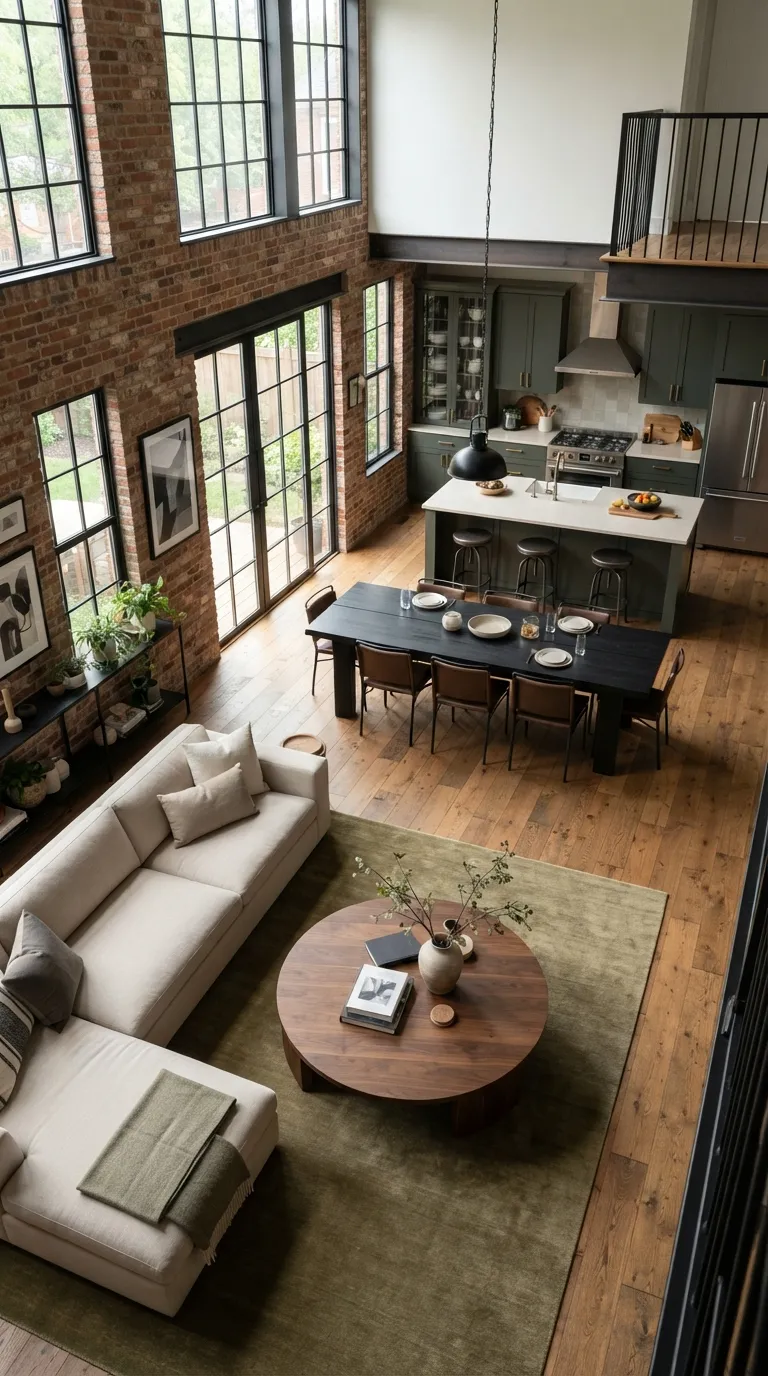
Open layouts suit industrial style because the materials can flow from one area to another. Use rugs, furniture placement, lighting, and islands to mark each zone without adding solid walls.
For a DIY-friendly update, start with the living area. A large rug and well-placed sofa can define the space while keeping sightlines open toward the dining and kitchen areas.
Cozy Industrial Reading Nook
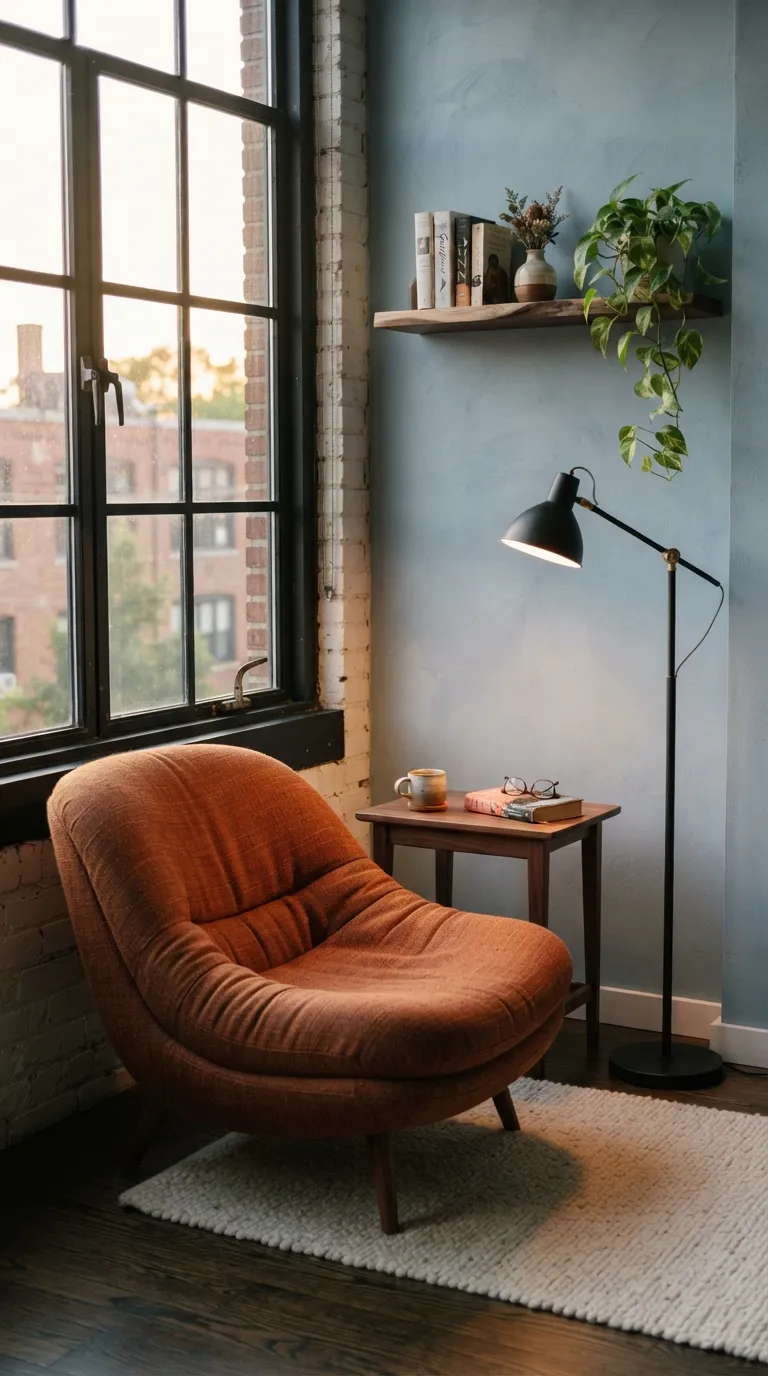
A reading nook is an easy way to add comfort to an industrial room. You only need one comfortable chair, a small table, good lighting, and a little storage.
Choose a warm fabric color such as rust, olive, camel, or muted blue. That small pocket of softness can balance nearby steel, concrete, and darker finishes.
Your Next Step
Industrial style works best when raw materials meet everyday comfort. Start with one feature you love, such as brick, steel shelving, leather seating, concrete, or dark wood, then build the room around it.
You don’t need to copy every idea at once. Pick two or three details that suit your home, add soft textiles and practical furniture, then let the space grow naturally as you find pieces you truly like.
Olivia Carter
Olivia Carter is the founder of Lady Home Decor and a passionate home decor expert. She shares practical, stylish ideas to help homeowners create beautiful, comfortable, and welcoming spaces. Her expertise covers bedrooms, kitchens, living rooms, bathrooms, and small-space decorating.