8 Therapy Office Design Ideas That Feel Relaxing

Introduction
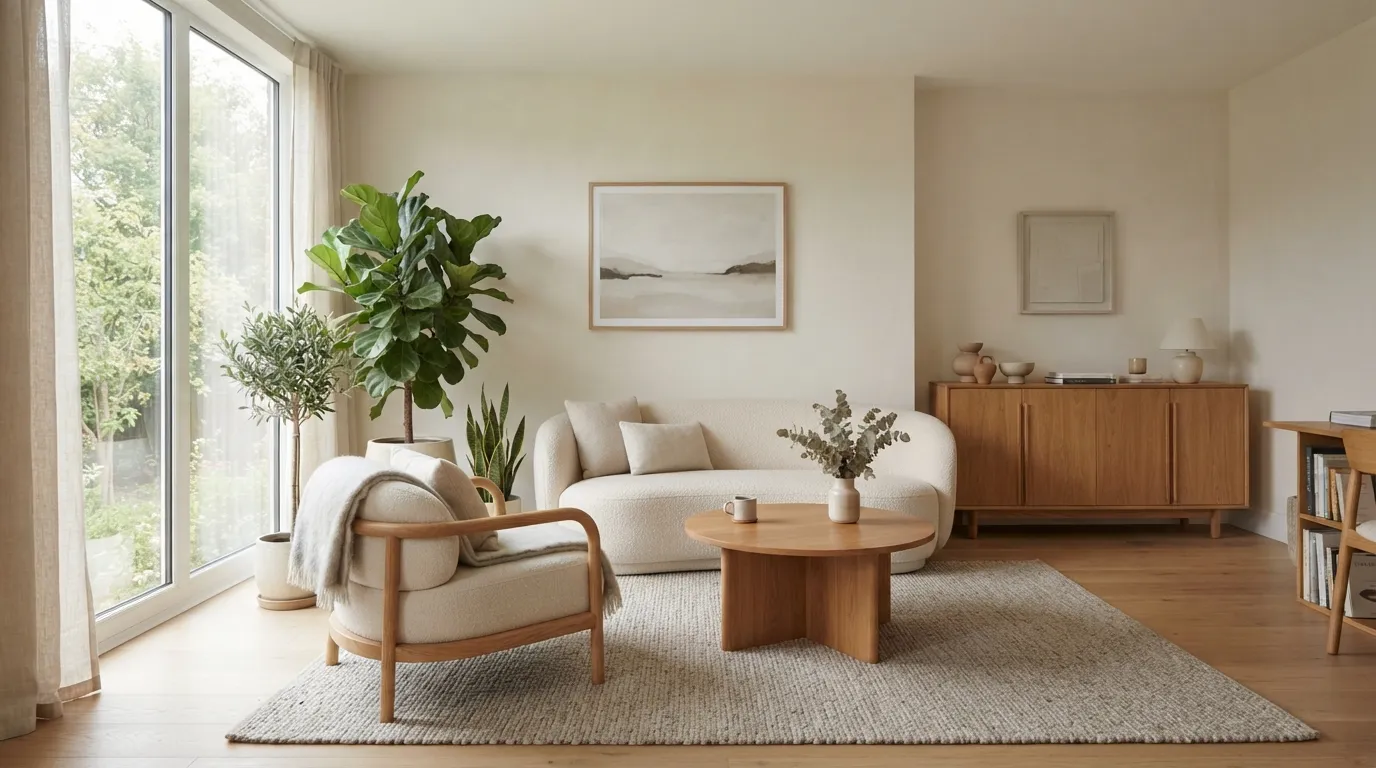
Looking for therapy office design ideas that instantly make a space feel calm, welcoming, and professional? The right design choices can transform an ordinary office into a peaceful environment where meaningful conversations happen more naturally. Whether you’re furnishing a brand-new practice or refreshing an existing space, thoughtful details can make a lasting impression on every client.
From soft color palettes and layered lighting to natural textures and cozy seating, each design element plays an important role in creating comfort and trust. I’ve noticed that even small updates, like adding greenery or improving lighting, can completely change the atmosphere without requiring a major renovation. In this article, you’ll discover inspiring ideas that combine modern style with practical functionality, helping you create a relaxing office that’s beautiful enough to save on Pinterest and welcoming enough to support real-life therapy sessions.
1. Soft Neutral Palette
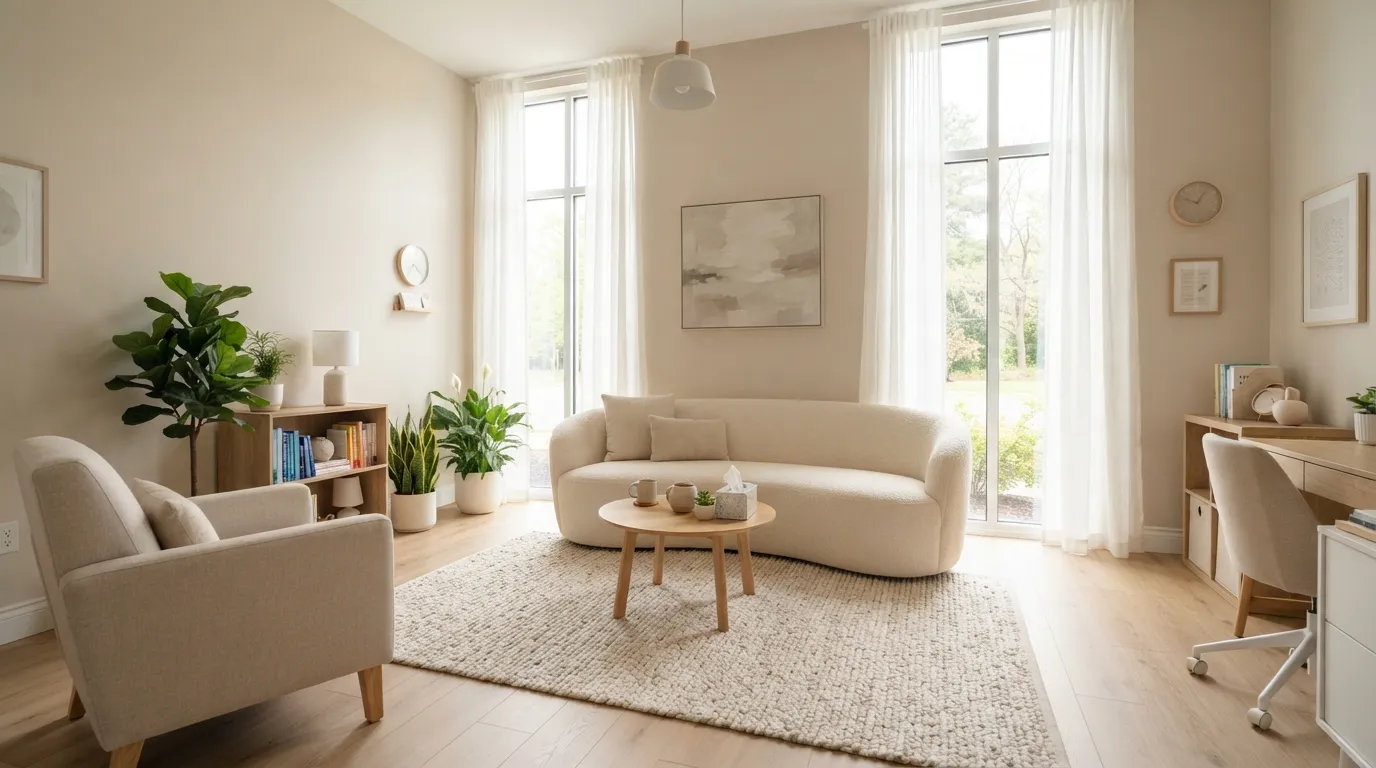
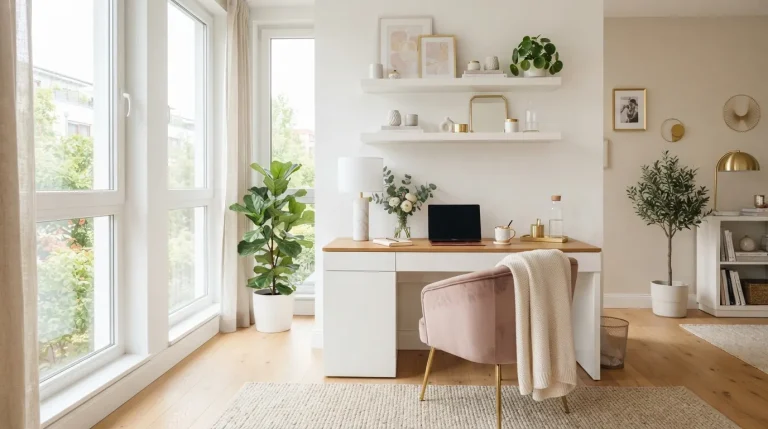
A calm color palette can completely change how people feel the moment they step inside. One of the most effective therapy office design ideas is choosing soft neutrals that encourage relaxation without feeling cold or empty. Shades of beige, warm white, and gentle taupe create a welcoming atmosphere that helps clients settle into the session naturally. That’s why many designers recommend avoiding overly bold colors in counseling spaces where comfort and trust are the main priorities.
The beauty of neutral tones is their flexibility. They pair effortlessly with wood textures, soft fabrics, and natural plants to create a balanced environment that feels both modern and inviting. In my experience, clients often describe these spaces as peaceful before a session even begins. That first impression matters because a thoughtfully designed room can help lower anxiety, encourage open conversation, and make every visit feel more comfortable and reassuring.
2. Curved Seating Layout
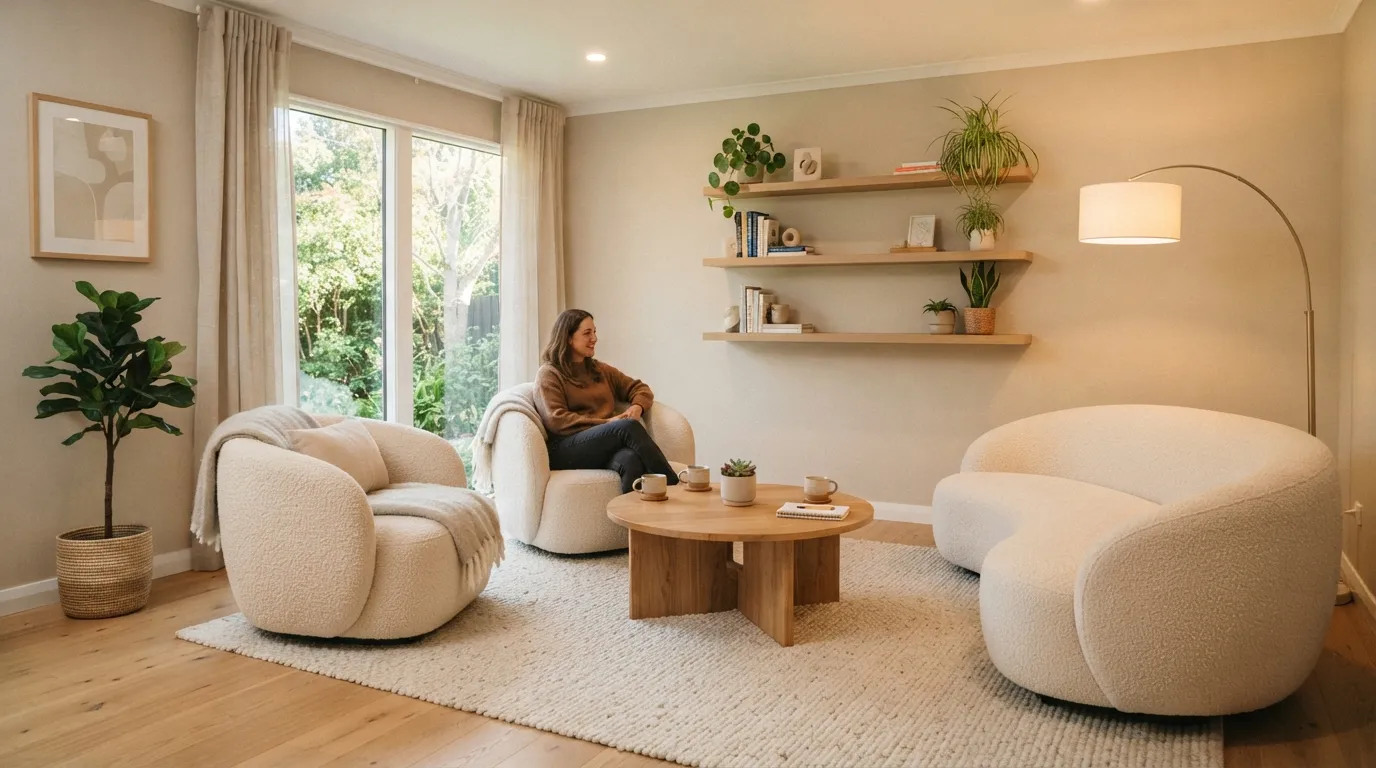
Furniture placement has a powerful influence on the overall experience. Rounded seating arrangements soften the appearance of the room while encouraging a more natural flow of conversation. Instead of placing chairs directly across from each other like an interview, slightly angled seating feels collaborative and supportive. This simple layout helps the environment feel less formal and allows clients to relax into meaningful discussions more comfortably.
Curved furniture also adds a sophisticated modern touch without sacrificing comfort. Soft silhouettes reduce the visual harshness that straight lines sometimes create, making the office appear gentler and more approachable. I’ve noticed this arrangement works especially well in smaller spaces because it opens the room visually while maintaining a cozy atmosphere. Combined with comfortable upholstery and warm textures, the layout feels intentionally designed for emotional ease.
3. Natural Wood Accents
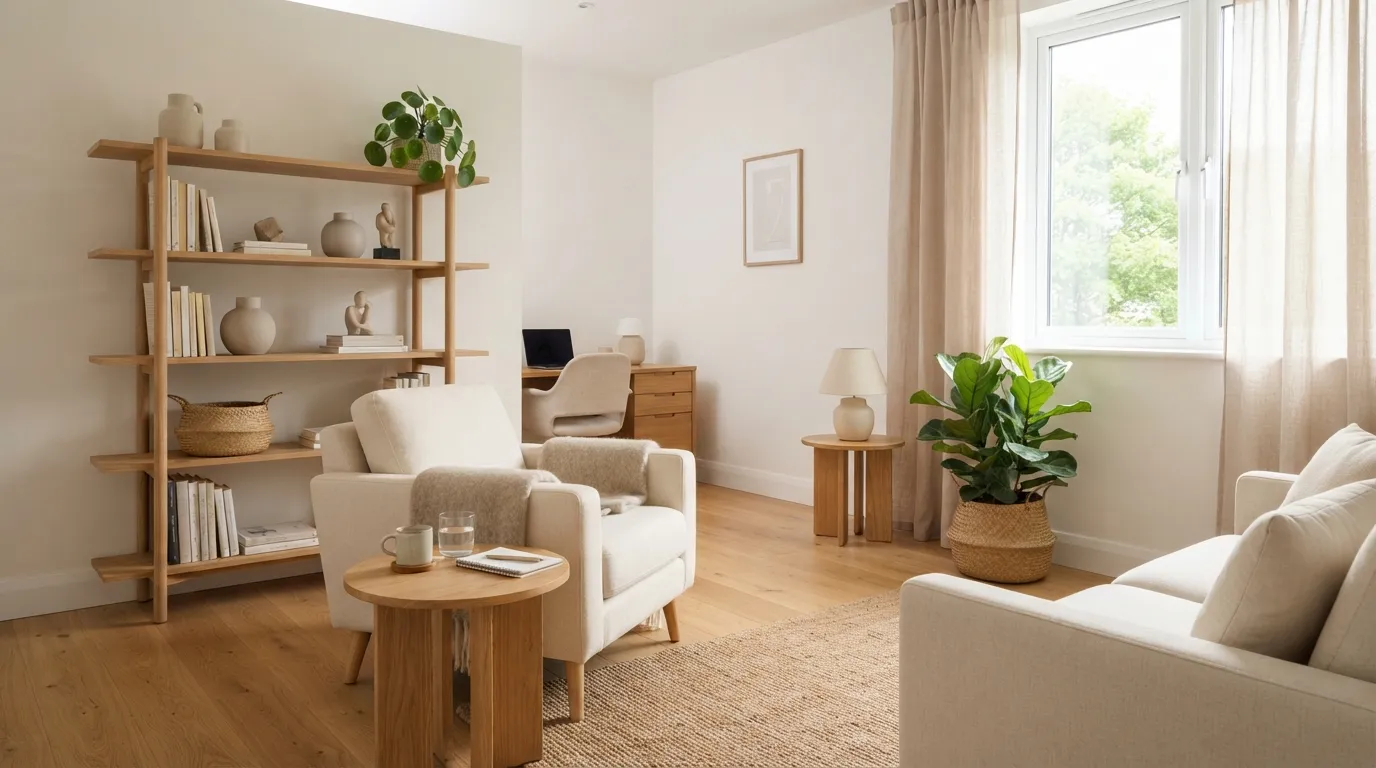
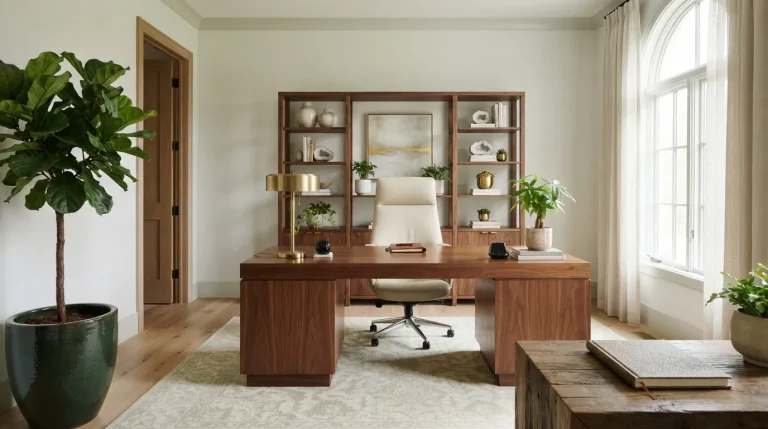
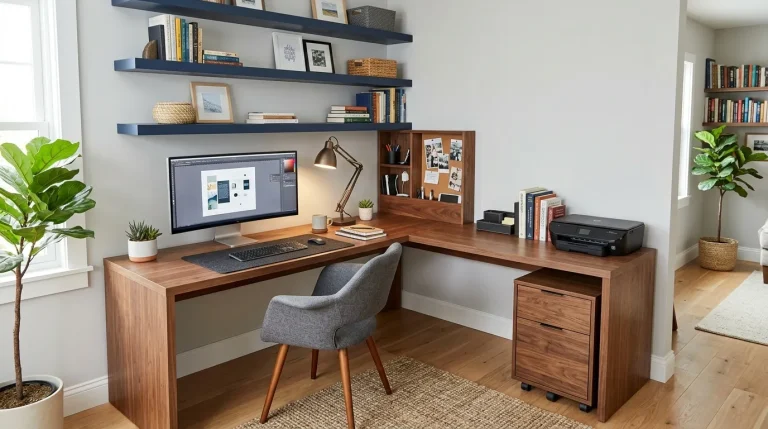
Natural wood introduces warmth that instantly makes a counseling space feel more comfortable and authentic. Light oak furniture, floating shelves, and wooden tables provide subtle texture without becoming distracting. These materials connect beautifully with calming interiors and help create a grounded atmosphere where clients feel welcomed. The combination of wood and neutral finishes keeps the room timeless while supporting a professional appearance.
Small wooden details often make the biggest difference. A simple oak bookshelf, wooden picture frames, or a natural coffee table can transform a clinical office into a comforting retreat. In my experience, these organic materials create a sense of familiarity that helps people feel more at ease. They also age gracefully, making them a practical long-term investment for anyone designing a relaxing therapy environment.
4. Layered Lighting
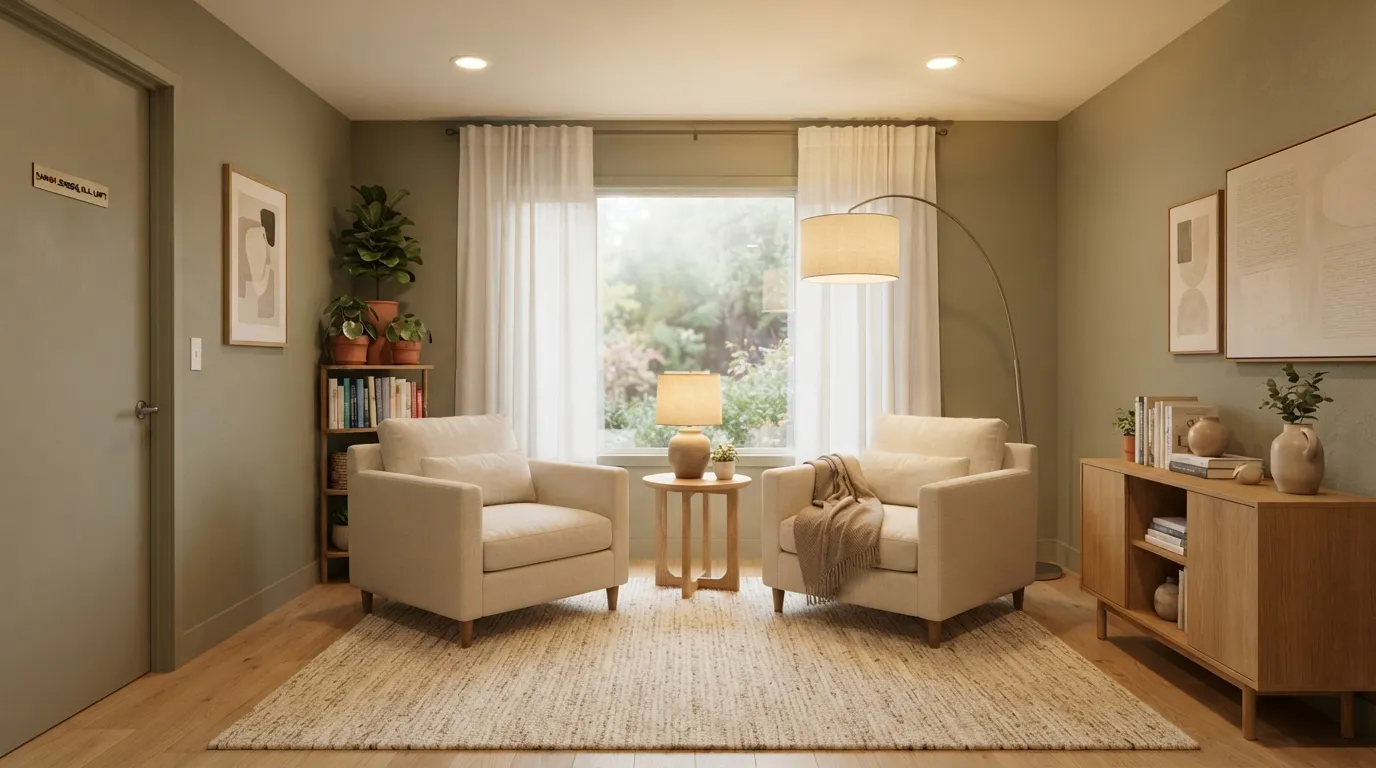
Lighting can completely change the emotional feel of a counseling room. Instead of relying on one bright ceiling fixture, combine natural daylight with floor lamps, table lamps, and soft overhead lighting. This layered approach creates depth while keeping the room gentle on the eyes. Clients often feel more comfortable in spaces where the lighting feels balanced rather than overly bright, making conversations easier and more natural from the beginning.
I’ve noticed that adjustable lighting is especially valuable because every session is different. A cloudy afternoon may need extra warmth, while sunny mornings benefit from filtered daylight through sheer curtains. Soft lighting highlights textures and décor without creating glare, helping the office feel calm, polished, and welcoming. Thoughtful lighting also improves the professional appearance of the space while maintaining a soothing environment.
5. Indoor Greenery
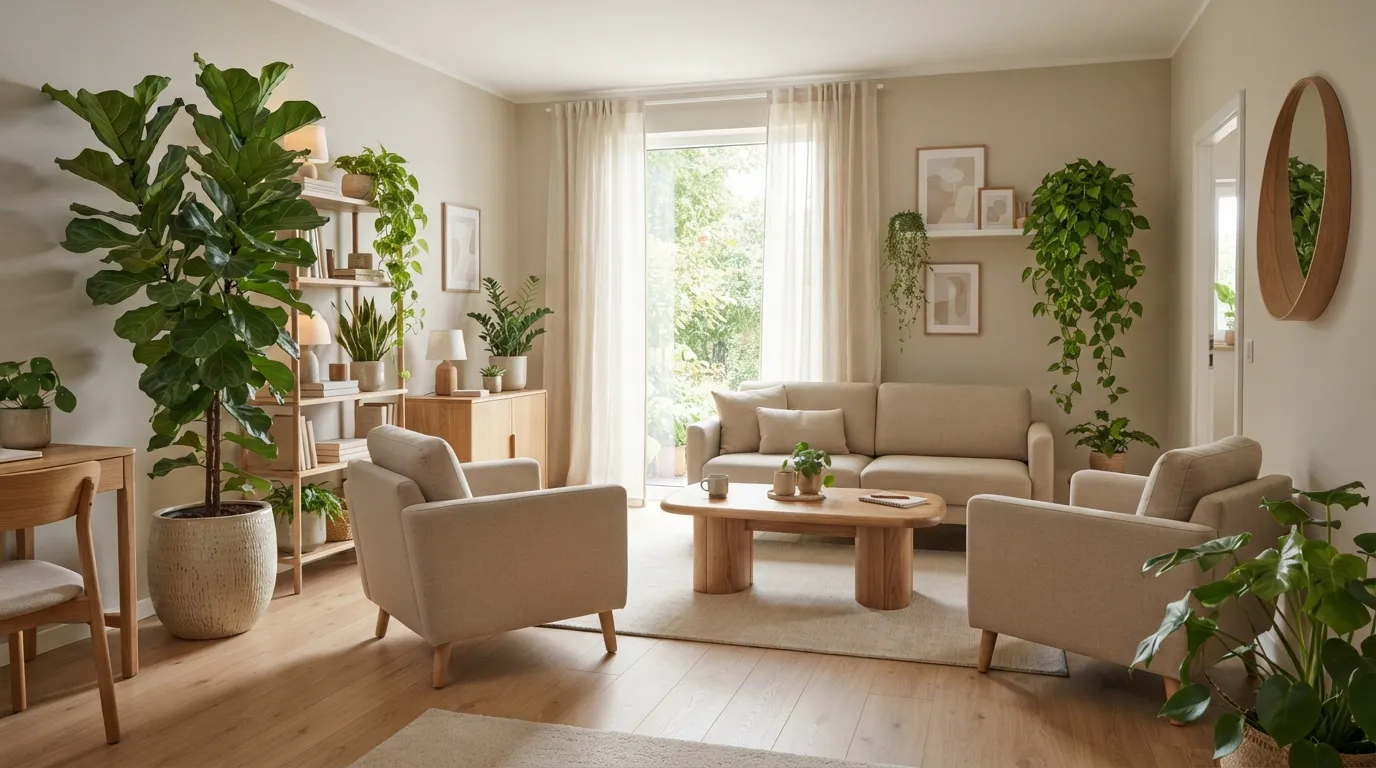
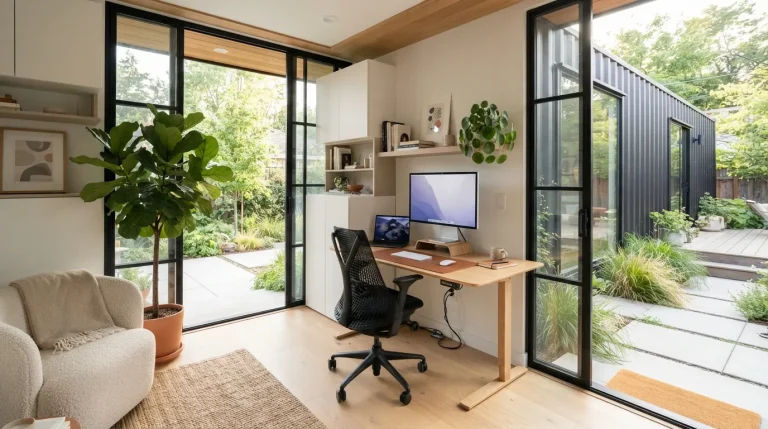
Plants are one of the easiest ways to make a therapy office feel alive and comforting. A tall statement plant in the corner or a few smaller varieties on shelves introduce natural color without making the room busy. Greenery softens clean lines and helps balance modern furniture, creating a setting that feels welcoming instead of clinical. Even simple arrangements can make the office appear brighter and more inviting.
In my experience, carefully selected low-maintenance plants offer lasting beauty with minimal effort. Species like snake plants, pothos, or fiddle leaf figs fit beautifully into contemporary interiors while keeping maintenance manageable. Their organic shapes pair naturally with neutral furnishings and wood finishes, creating a space that feels fresh every day. Clients often appreciate these subtle natural touches because they contribute to a peaceful atmosphere.
6. Textured Soft Furnishings
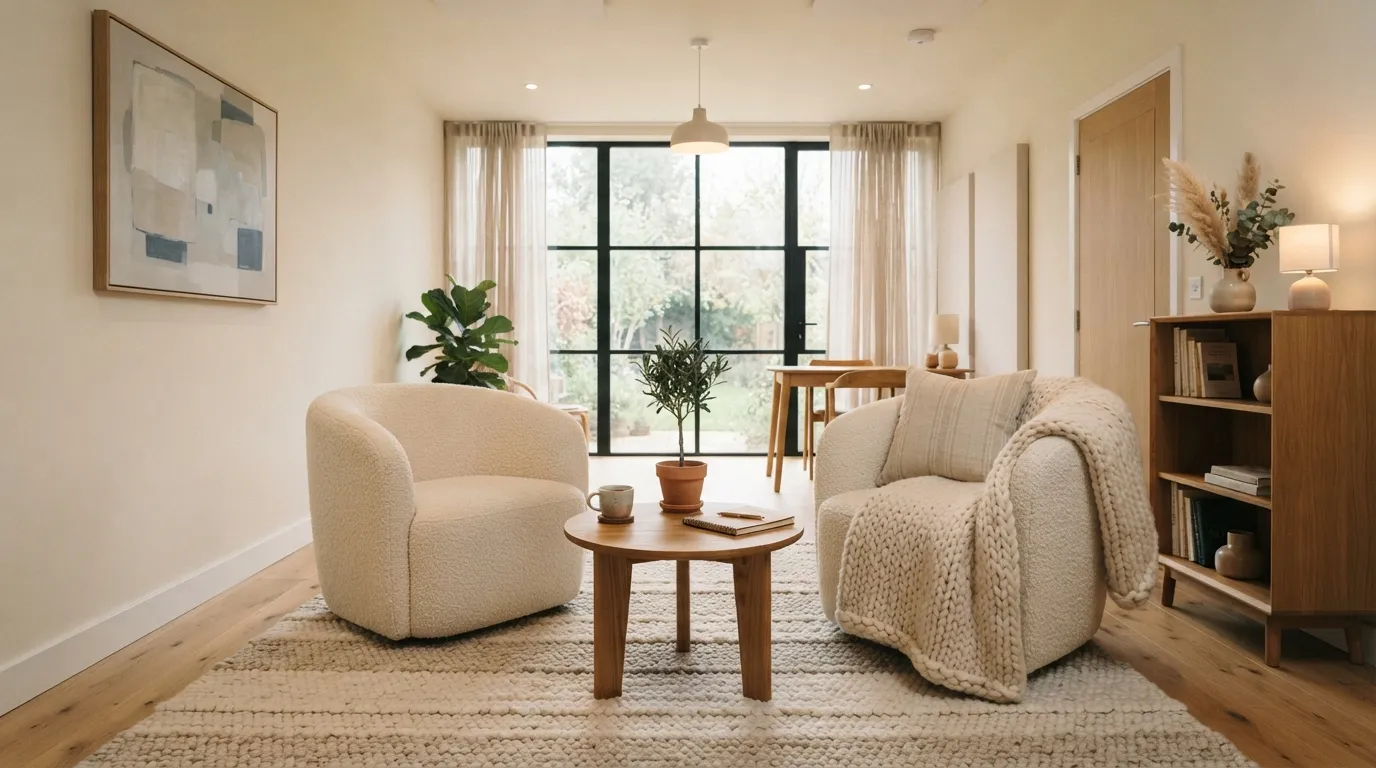
Texture is often what transforms a beautiful office into one that genuinely feels comfortable. Boucle chairs, linen cushions, woven rugs, and soft throws add warmth while maintaining a clean modern aesthetic. These materials make the room feel layered rather than flat, helping clients settle in more naturally. Comfortable surroundings can encourage longer, more relaxed conversations and contribute to an overall sense of emotional safety.
Many designers rely on layered textiles because they create visual richness without adding unnecessary decoration. I’ve seen this work consistently in modern counseling spaces where simplicity is important but warmth is equally essential. Mixing soft fabrics with wood, ceramic accents, and gentle lighting results in an environment that feels polished, calming, and thoughtfully designed. Small texture changes often deliver one of the biggest improvements in comfort.
7. Minimal Wall Art
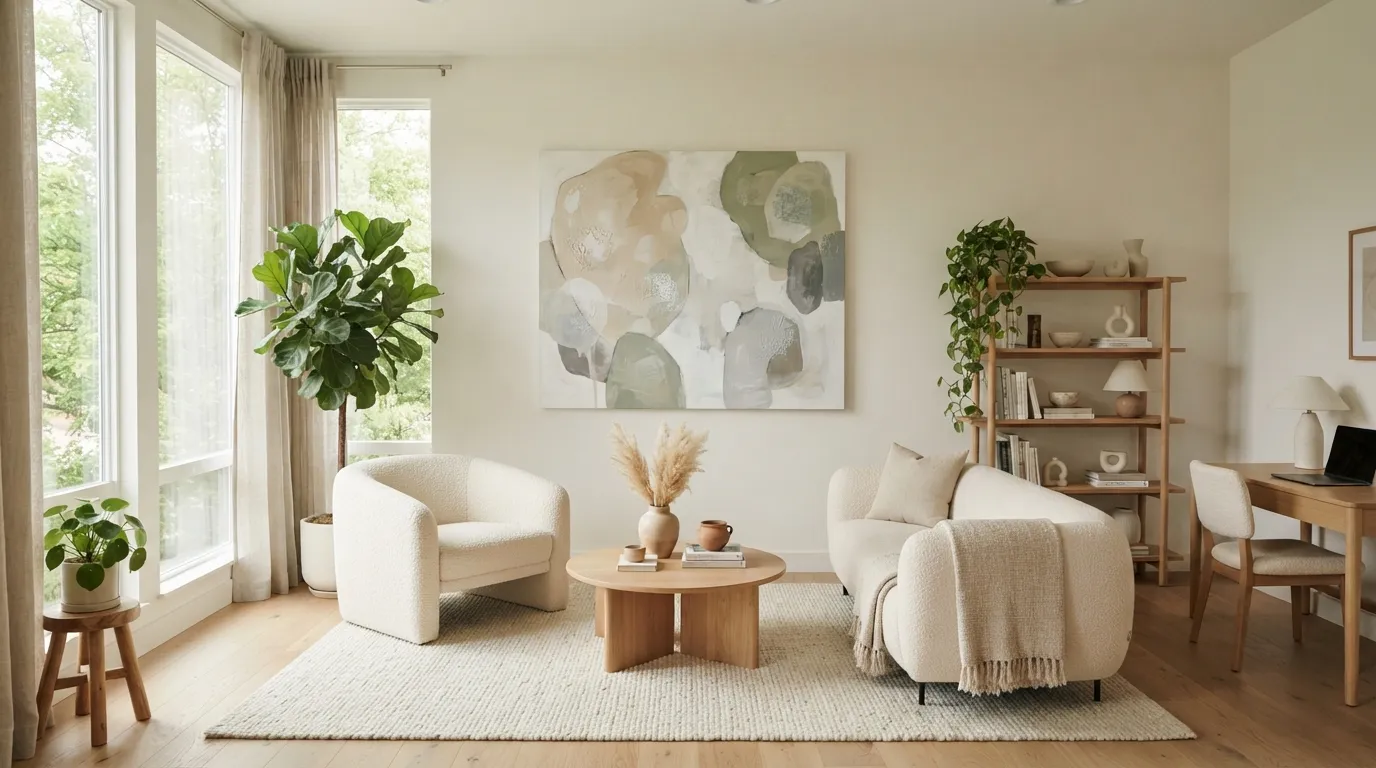
Wall décor has a subtle but meaningful impact on how a space feels. Large abstract artwork with gentle colors introduces character without overwhelming the room or pulling attention away from conversations. Soft shapes and muted palettes encourage a sense of calm while complementing modern furnishings. Instead of filling every wall, choosing one or two carefully placed pieces creates balance and keeps the office feeling open, fresh, and thoughtfully designed.
I’ve noticed that clients often respond better to artwork that feels open to interpretation rather than highly detailed scenes. Gentle abstract designs invite quiet reflection while avoiding unnecessary visual stimulation. Combined with neutral walls and natural materials, minimal artwork enhances the overall atmosphere without competing with the purpose of the room. This simple design choice helps create a space that feels professional, comforting, and timeless.
8. Cozy Reading Corner
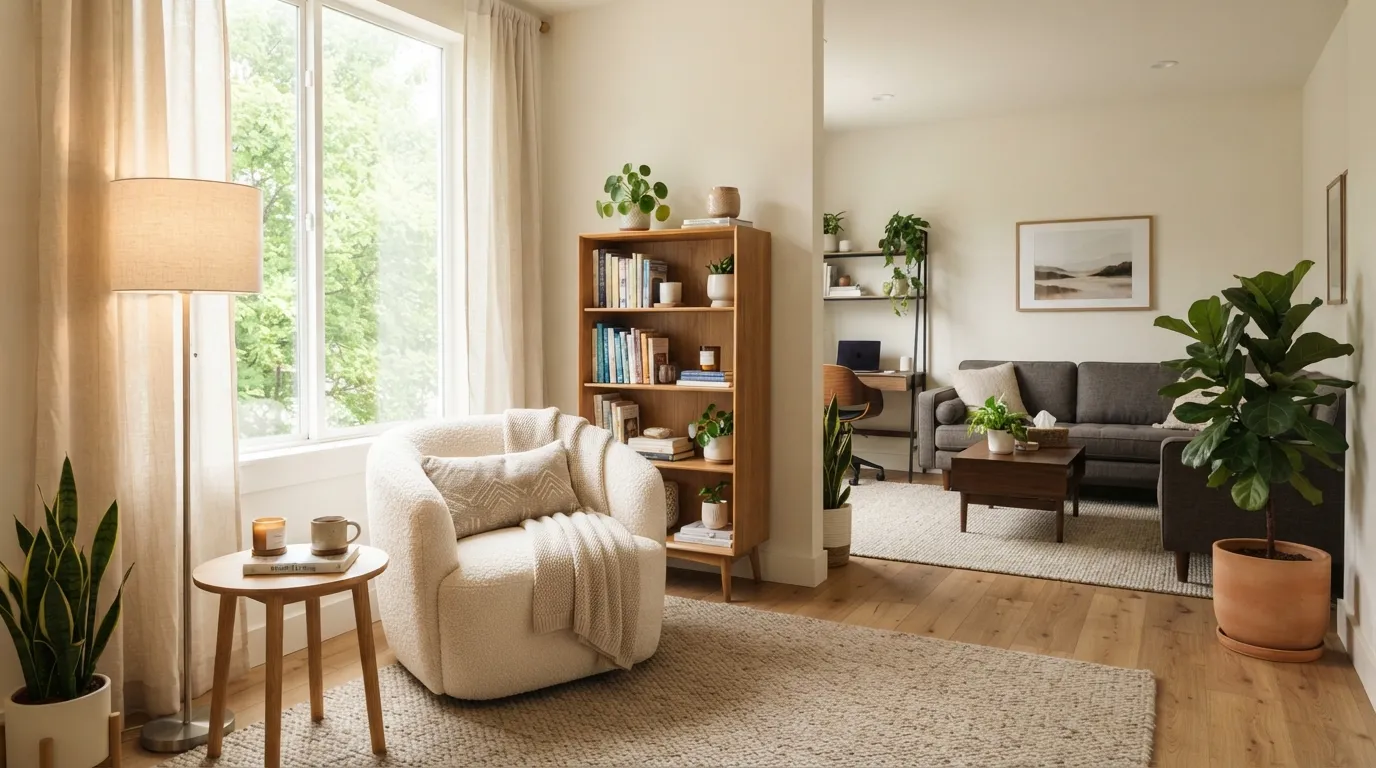
A dedicated reading corner brings warmth and purpose to a therapy office beyond the main seating area. A comfortable chair, a small bookshelf, and soft lighting create an inviting retreat where clients can browse helpful resources or simply relax before an appointment. Even in compact spaces, this thoughtful addition makes the office feel more personal while maintaining a clean, professional appearance that encourages comfort and ease.
In my experience, a reading nook often becomes one of the most appreciated features in a counseling space. It provides a gentle transition into or out of a session and helps the office feel less formal without sacrificing professionalism. Simple styling with neutral colors, natural textures, and a few carefully chosen books creates a calming corner that supports the overall atmosphere and leaves a lasting positive impression.
Conclusion
Creating a peaceful counseling environment doesn’t require a complete makeover. With these therapy office design ideas, you can combine calming colors, comfortable furniture, natural materials, and thoughtful lighting to build a space that helps clients feel at ease from the moment they arrive. I’ve seen how small, intentional design changes can completely transform both the appearance and the experience of a room. Save these ideas to Pinterest for future inspiration, try the ones that best fit your space, and share this article with others who want to create a modern, welcoming therapy office that truly supports comfort, connection, and well-being.
Emma Williams
Emma Williams is an interior design expert and decor editor at Lady Home Decor. She specializes in modern, cozy, and functional home styling, helping readers discover inspiring decorating ideas that are easy to recreate. Her work focuses on timeless design, practical solutions, and the latest home decor trends.