22 Refreshing Outdoor Shower Ideas That Feel Luxurious

What to Know First
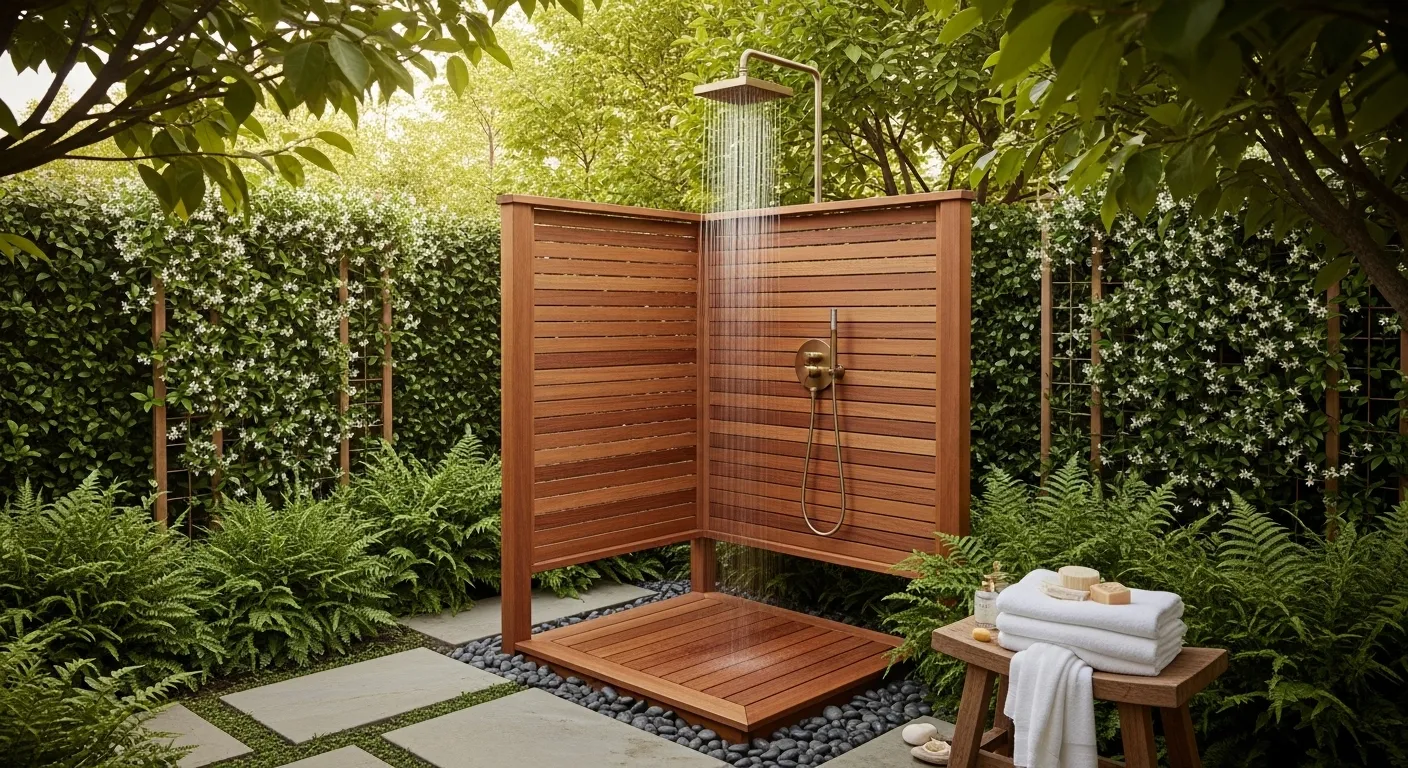
Imagine stepping outside after a swim, feeling the warm sun on your skin and cool water washing over you under the open sky that is exactly what the right outdoor shower delivers. Whether you have a sprawling backyard, a compact garden corner, or a beachside property, great outdoor shower ideas can turn a simple utility fixture into a genuine luxury experience. I’ve noticed that even a modest setup, when thoughtfully designed, feels more refreshing and indulgent than any indoor shower. From natural wood enclosures to sleek stone walls, this guide covers 22 beautiful, buildable ideas for every style and space.
1. Teak Wood Enclosure
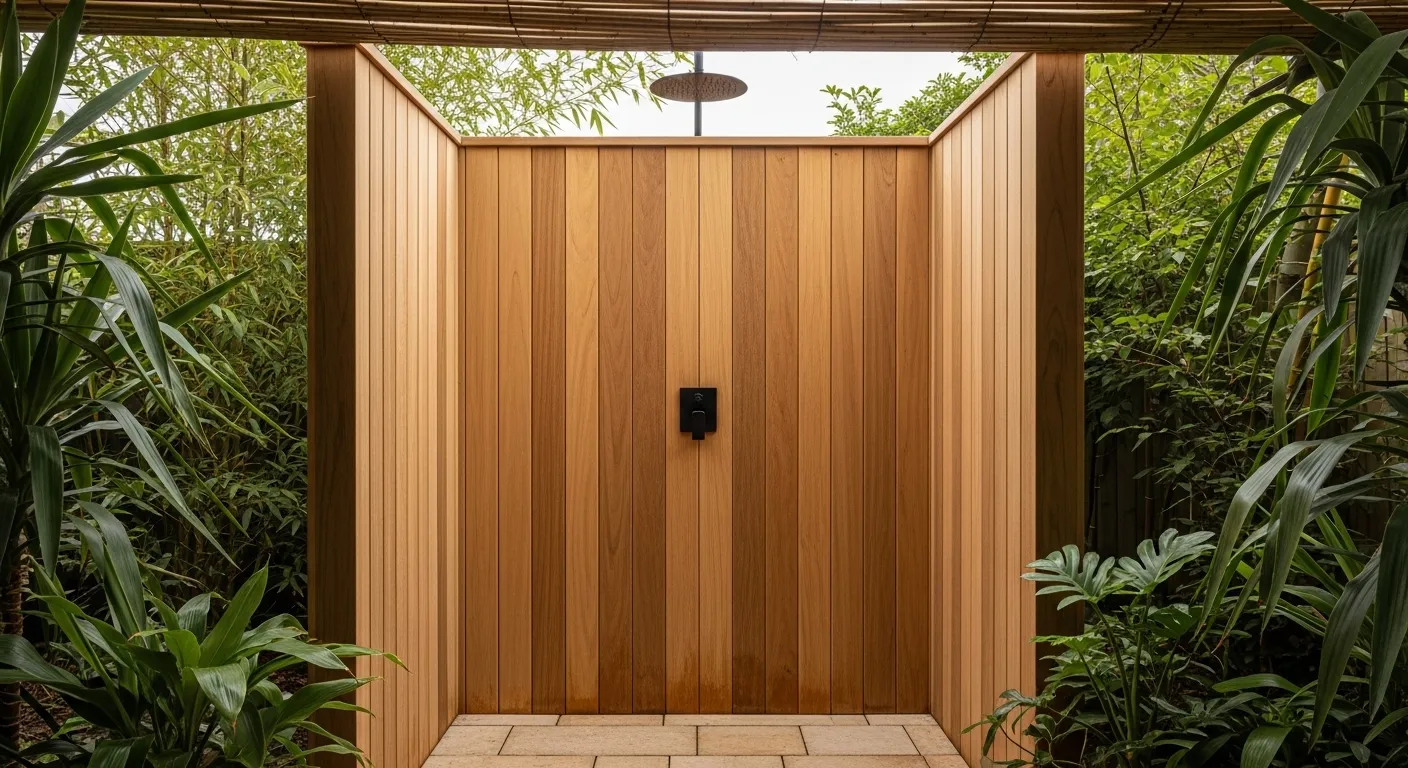
A teak wood enclosure instantly transforms an ordinary outdoor rinse-off point into something that feels genuinely luxurious and intentionally designed. The rich honey-warm tone of fresh teak against a backdrop of lush green plants creates a visual combination that is almost universally appealing it feels like a five-star resort setup achievable in your own backyard. Teak is one of the most practical timber choices for outdoor use, naturally resistant to moisture, insects, and rot without requiring constant sealing or maintenance. In my experience, the longer teak is left outdoors, the more beautiful and characterful it becomes as it develops a soft silver-grey patina.
From a design perspective, the vertical plank arrangement typical of teak shower enclosures adds a strong architectural quality to the outdoor space. The tall, linear form creates visual height and draws the eye upward, making even a compact garden corner feel more generous and considered. Slim gaps between planks allow for natural ventilation and a sense of connection to the surroundings while still providing genuine privacy during use. A matte black rain showerhead mounted at the top of the enclosure adds a modern contrast that keeps the overall look current without clashing with the natural warmth of the timber. This combination works in almost any outdoor setting.
2. Stone Wall Shower
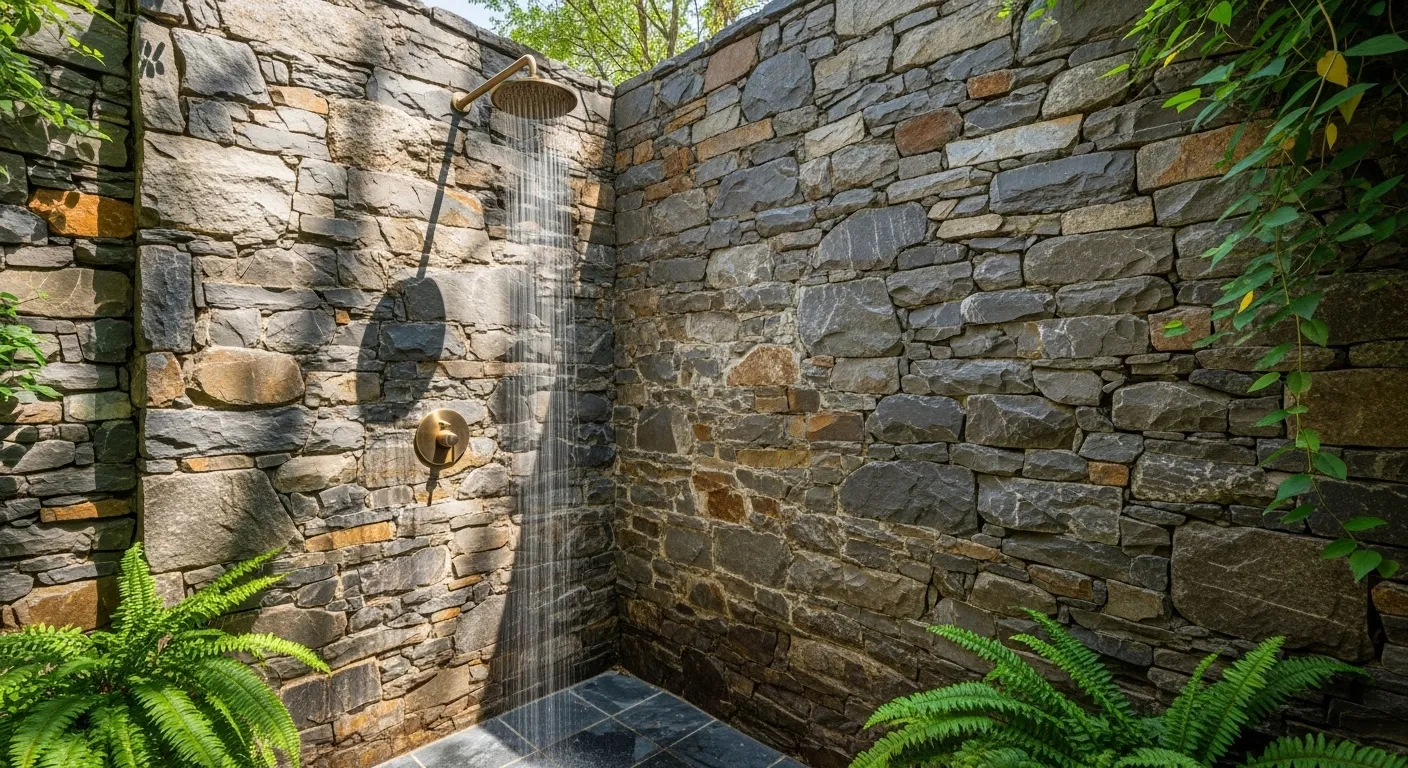
Building an outdoor shower against a natural stone wall is one of the most architecturally impressive choices available for anyone looking to create a truly high-end outdoor bathing experience. The rough, mineral texture of natural stone adds a depth and character that no tile or painted surface can replicate. Sunlight plays across the uneven surface in constantly shifting patterns, making the wall itself a visual feature rather than simply a functional backing. Stone also absorbs and retains heat throughout the day, which means the wall beside you feels comfortably warm during morning or evening showers when the air temperature has cooled.
The longevity and low maintenance of natural stone makes it one of the most practical long-term investments for an outdoor shower structure. Unlike timber that may eventually require treatment or replacement, a well-built stone wall improves visually over time as the surface weathers naturally and gathers a subtle moss or mineral patina that only enhances its organic beauty. That’s why many designers recommend stone as the primary structural element in outdoor shower builds for clients who want a feature that feels genuinely permanent and increasingly beautiful with each passing season. Paired with the right hardware and planting, a stone wall shower becomes the centerpiece of the entire garden.
3. Bamboo Privacy Screen
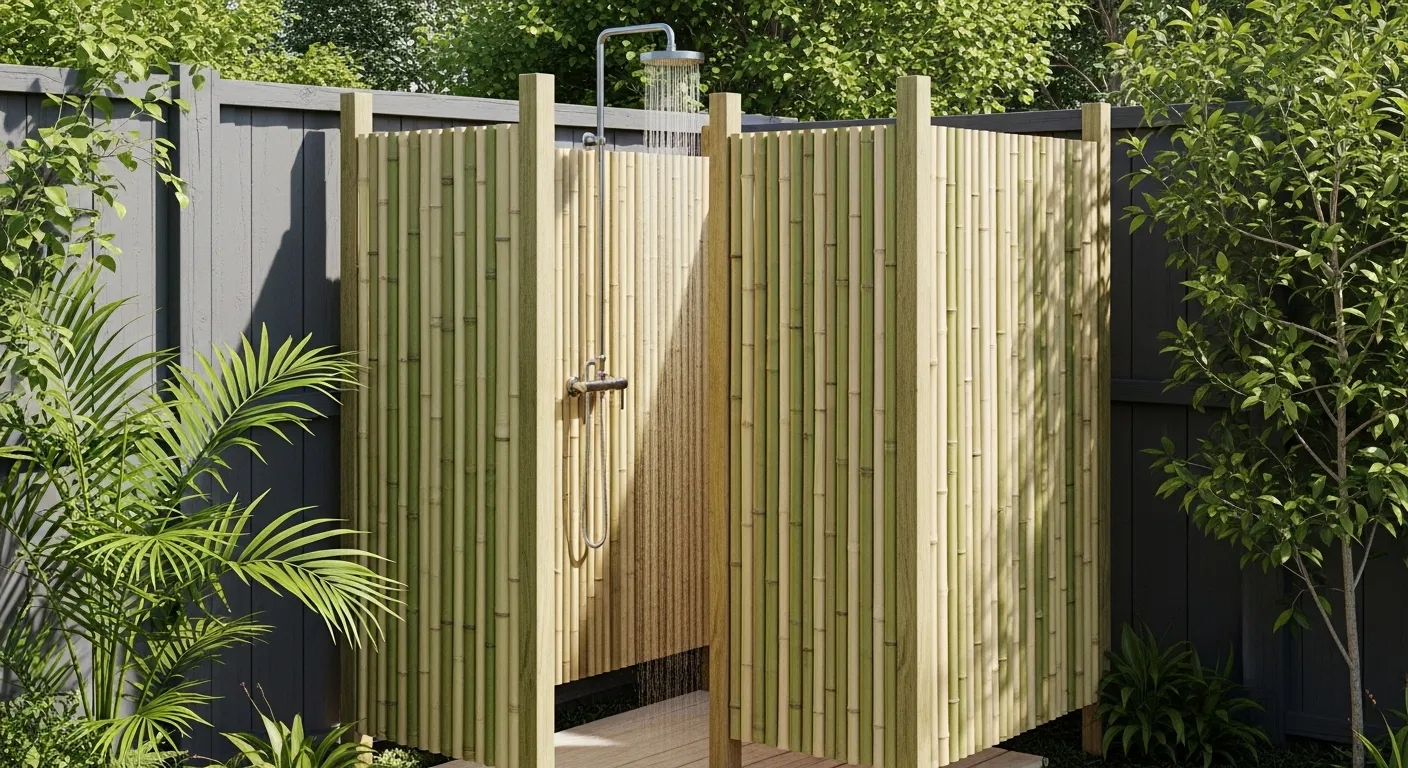
A bamboo privacy screen is one of the most creative and cost-effective ways to create a dedicated outdoor shower zone without committing to permanent construction. The vertical poles can be arranged in a simple three-sided enclosure that provides genuine privacy during use while still maintaining a sense of openness and fresh air above. The natural coloring of bamboo pale cream fading to soft green is one of the most universally flattering natural materials in garden design, working equally well with tropical planting, coastal landscapes, and even more temperate garden settings when paired with the right surrounding plants.
One of the most underappreciated advantages of a bamboo screen shower is its portability and adaptability. Unlike fixed stone or timber structures, a bamboo enclosure can be repositioned, expanded, or removed entirely as garden needs evolve. This makes it a particularly smart choice for renters, for seasonal outdoor shower setups, or for anyone who prefers to maintain flexibility in their garden layout. I’ve seen this type of setup work beautifully in small backyard spaces where a permanent enclosed structure would feel too heavy or dominant. The light, airy quality of bamboo keeps even a compact outdoor shower area feeling relaxed, natural, and genuinely inviting.
4. Pebble Mosaic Floor
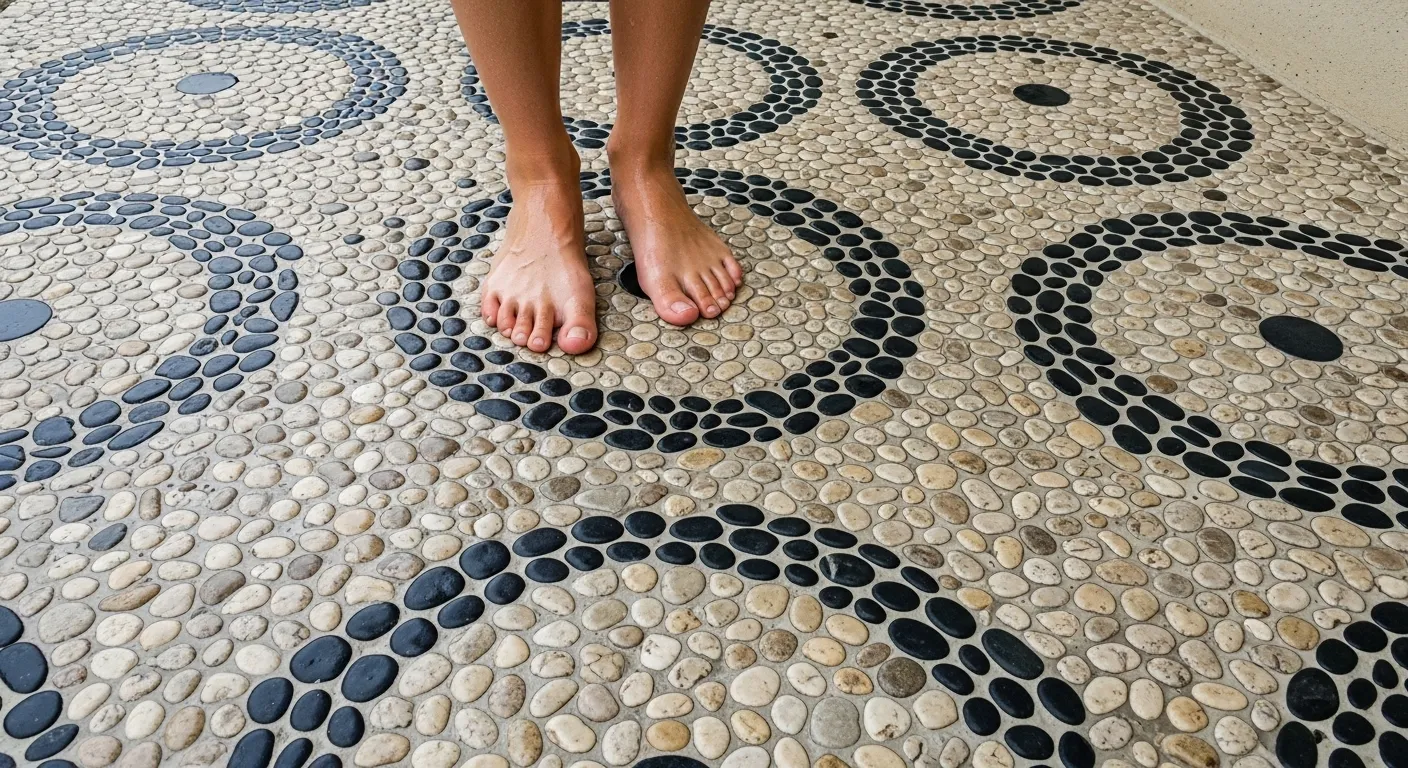
The floor beneath an outdoor shower is one of the most overlooked design opportunities in the entire setup, and a pebble mosaic transforms it into the most tactile and visually interesting element of the space. Walking barefoot across smooth river pebbles while water flows around and beneath you creates a genuinely therapeutic experience the uneven surface provides a gentle reflexology-style pressure that feels indulgent and intentional rather than simply functional. The visual richness of a well-designed pebble mosaic is also striking, particularly when pebbles are arranged in circular or geometric patterns that reward close looking and add genuine artisan quality to the outdoor area.
From a practical standpoint, pebble floors are among the most intelligent choices for outdoor wet areas because they drain inherently well and dry quickly between uses. The gaps between individual pebbles allow water to pass through into the substrate below, meaning there is no standing water or slippery pooled surface to worry about. The rough natural texture of rounded pebbles also provides excellent grip, making them safer underfoot when wet compared to smooth tile or polished stone. Setting the pebbles in a concrete or mortar base ensures they stay firmly in position over time while still allowing water to drain freely through the natural gaps between them.
5. Outdoor Rain Shower
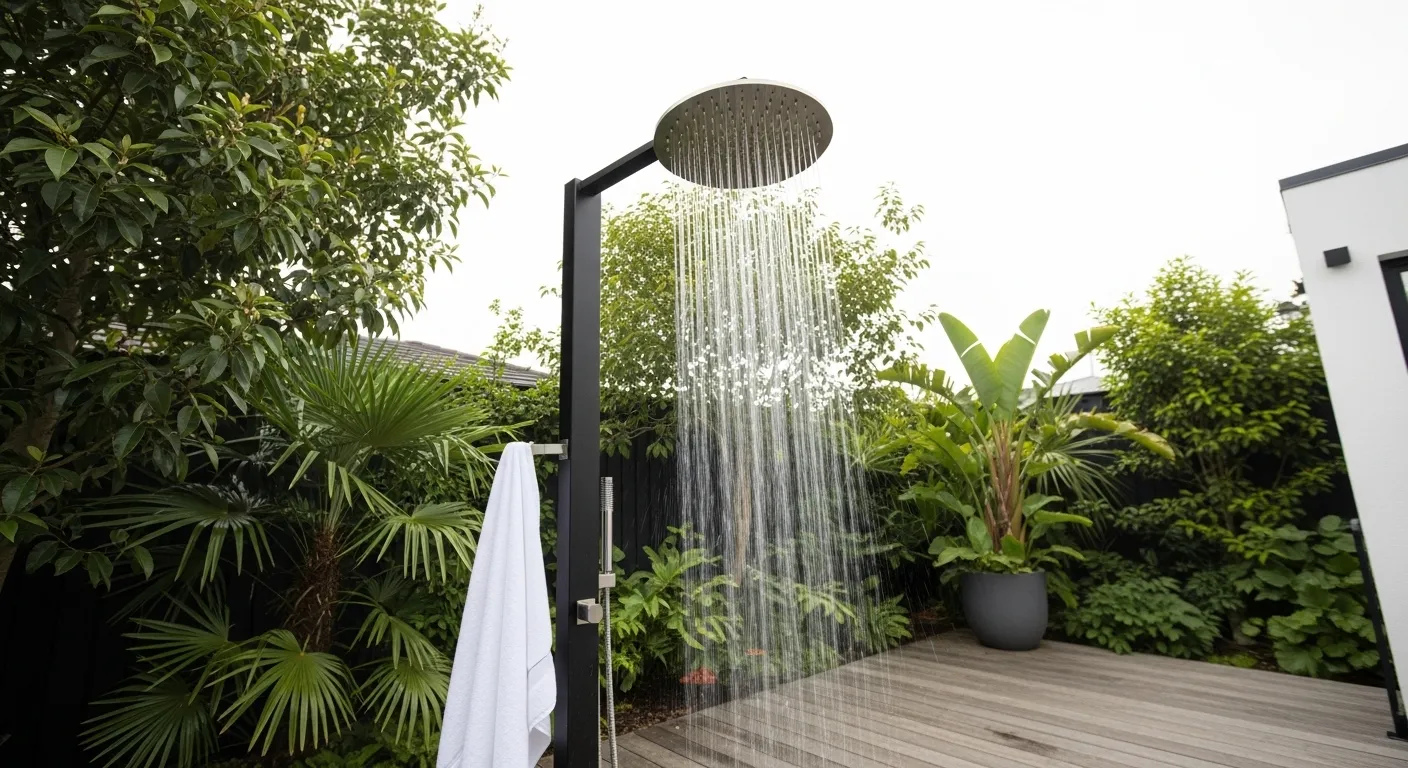
If there is one single hardware upgrade that most dramatically improves the experience of any outdoor shower setup, it is replacing a standard showerhead with an oversized rain shower version. The wide spray pattern typically 25 to 35 centimetres in diameter delivers a full, even cascade of water across the entire body simultaneously, creating a sensation that is genuinely closer to standing in warm rainfall than anything a narrow-stream showerhead can produce. This simple change shifts the entire functional and emotional experience of using an outdoor shower from a quick rinse to something that feels slow, deliberate, and genuinely indulgent on every single use.
Rain showerheads are also remarkably practical from an installation perspective. Most mount onto a standard threaded connection at the top of an existing pipe or post, requiring no specialist plumbing knowledge beyond basic pipe fitting. The weight of an oversized head may require a slightly more robust support post than a lightweight standard head, but this is easily managed with appropriate structural planning at the build stage. Choosing a finish that complements the surrounding materials is important matte black pairs powerfully with timber and natural stone, while brushed brass adds warmth against neutral concrete or white render. In my experience, the hardware finish choice has an outsized impact on the overall quality of the finished look.
6. Garden Hose Simplicity
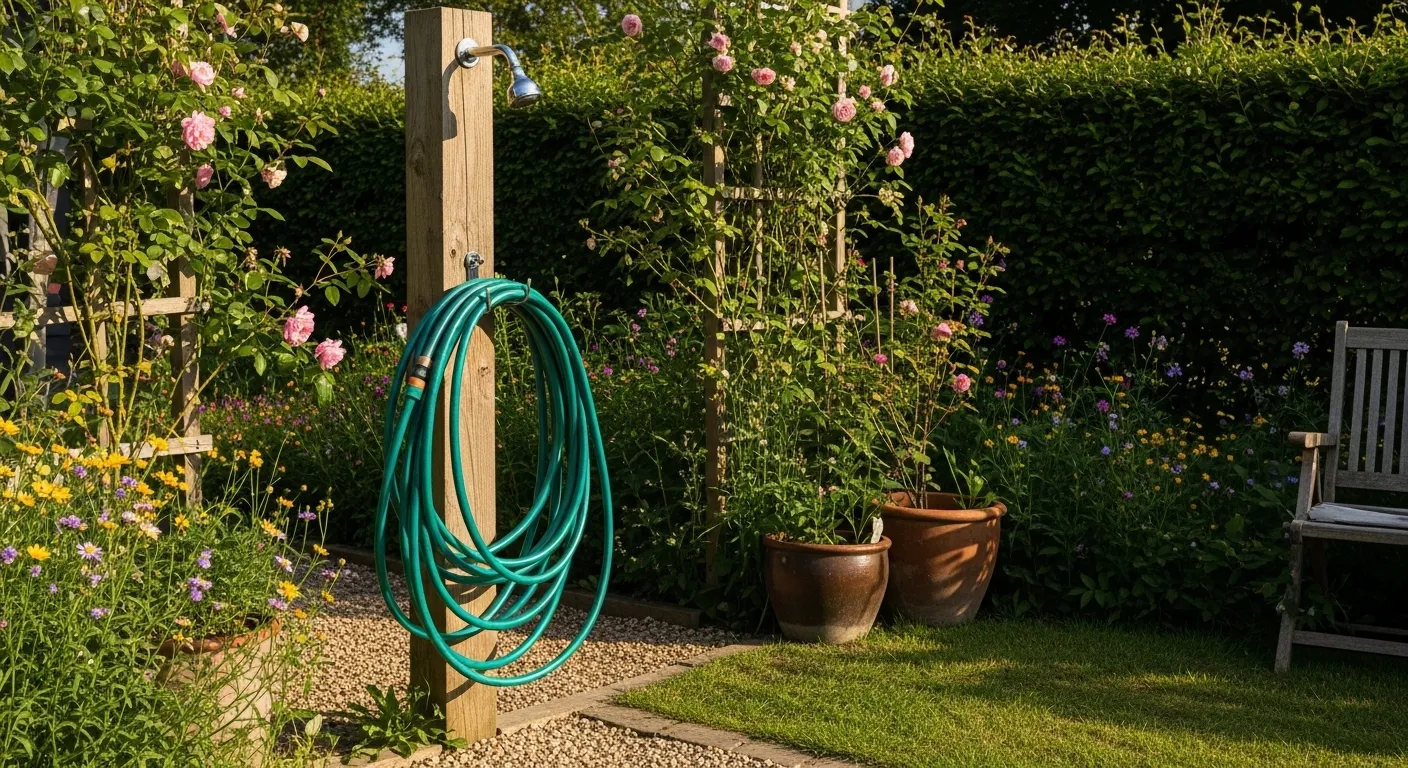
Not every outdoor shower needs to be a complex or expensive installation, and the garden hose approach proves that simplicity and charm can coexist beautifully. A good quality hose with a multi-setting nozzle attached to a well-positioned outdoor tap delivers a perfectly functional showering experience with zero construction required. The visual appeal of a neatly coiled hose on a rustic wooden post, surrounded by cottage garden planting, has its own relaxed, informal character that suits many homes far better than a more elaborate fixed structure would. This is the kind of outdoor shower setup that gets used every day rather than admired from a distance.
The practical advantages of the garden hose shower are significant, particularly for families with young children or pet owners who need a quick and convenient rinse-off solution. No special drainage planning is required, no building permits are needed in most areas, and the entire setup can be ready within an afternoon. Upgrading the experience slightly by adding a quality adjustable spray nozzle, a small wooden changing platform, and a dedicated hook for towels and beach bags creates a surprisingly complete outdoor bathing zone from the simplest of starting points. That’s why many designers recommend this approach as the first step for homeowners who want to try outdoor showering before committing to a more permanent installation.
7. Concrete Block Base
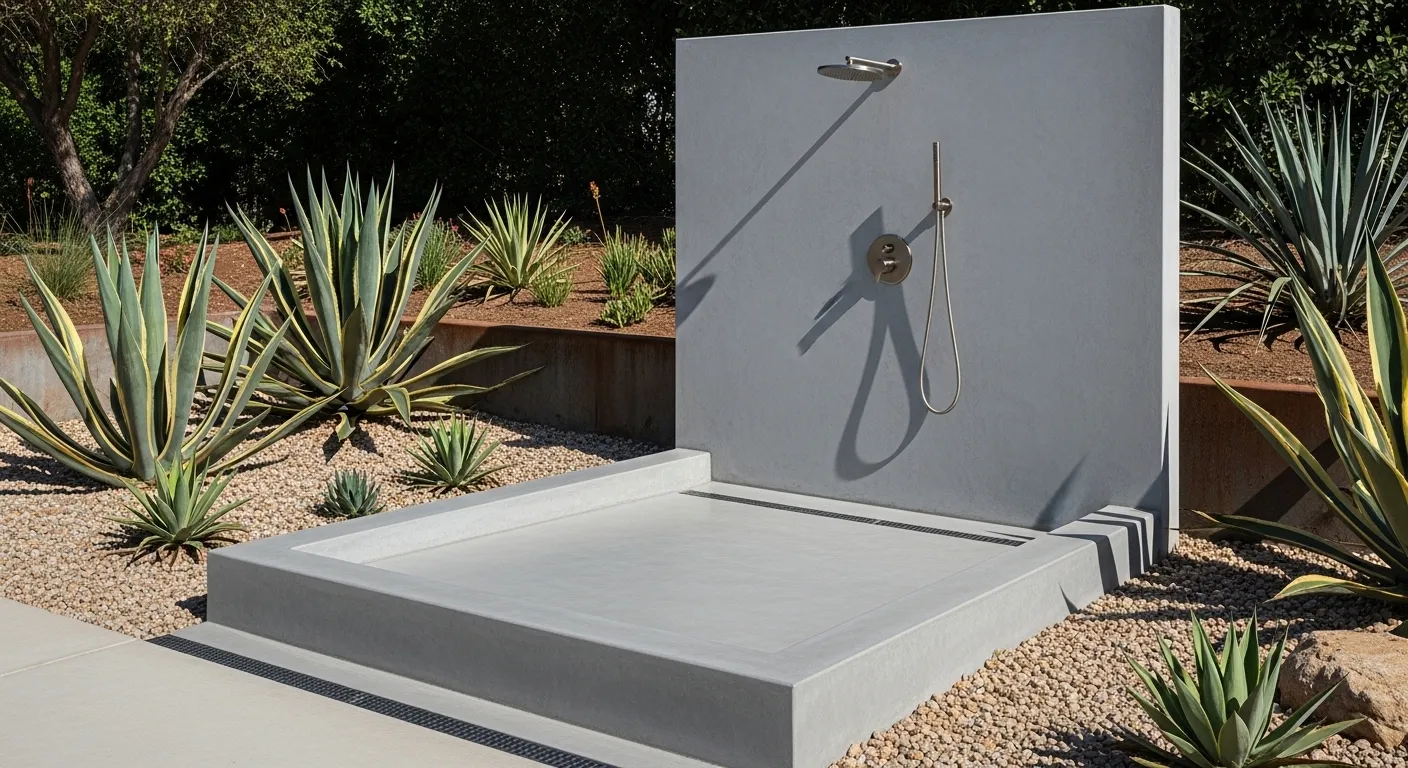
A cast concrete shower base is the architectural choice for homeowners who want their outdoor shower to feel as permanent, bold, and considered as any interior bathroom installation. The clean, flat plane of poured concrete creates a strong visual foundation that anchors the entire shower structure and communicates serious design intention from the moment it is seen. Smooth trowelled concrete has a refined, gallery-like quality, while exposed aggregate finishes introduce natural texture and visual warmth that softens the industrial material. Either approach produces a result that is genuinely impressive and that will outlast almost any alternative base material available for outdoor use.
Beyond aesthetics, a concrete base offers practical advantages that are hard to match with other materials. It is completely impervious to moisture when properly sealed, resistant to cracking under normal thermal expansion and contraction cycles, and requires minimal maintenance beyond an occasional clean. Linear drainage channels cast directly into the concrete surface before it sets create a seamless, flush drainage solution that looks clean and considered rather than retrofitted. For homes with a contemporary, minimalist, or desert-inspired aesthetic, a concrete base shower does not merely function well it actively contributes to the overall design language of the outdoor space in a way that feels coherent and architecturally intelligent.
8. Tropical Palm Surround
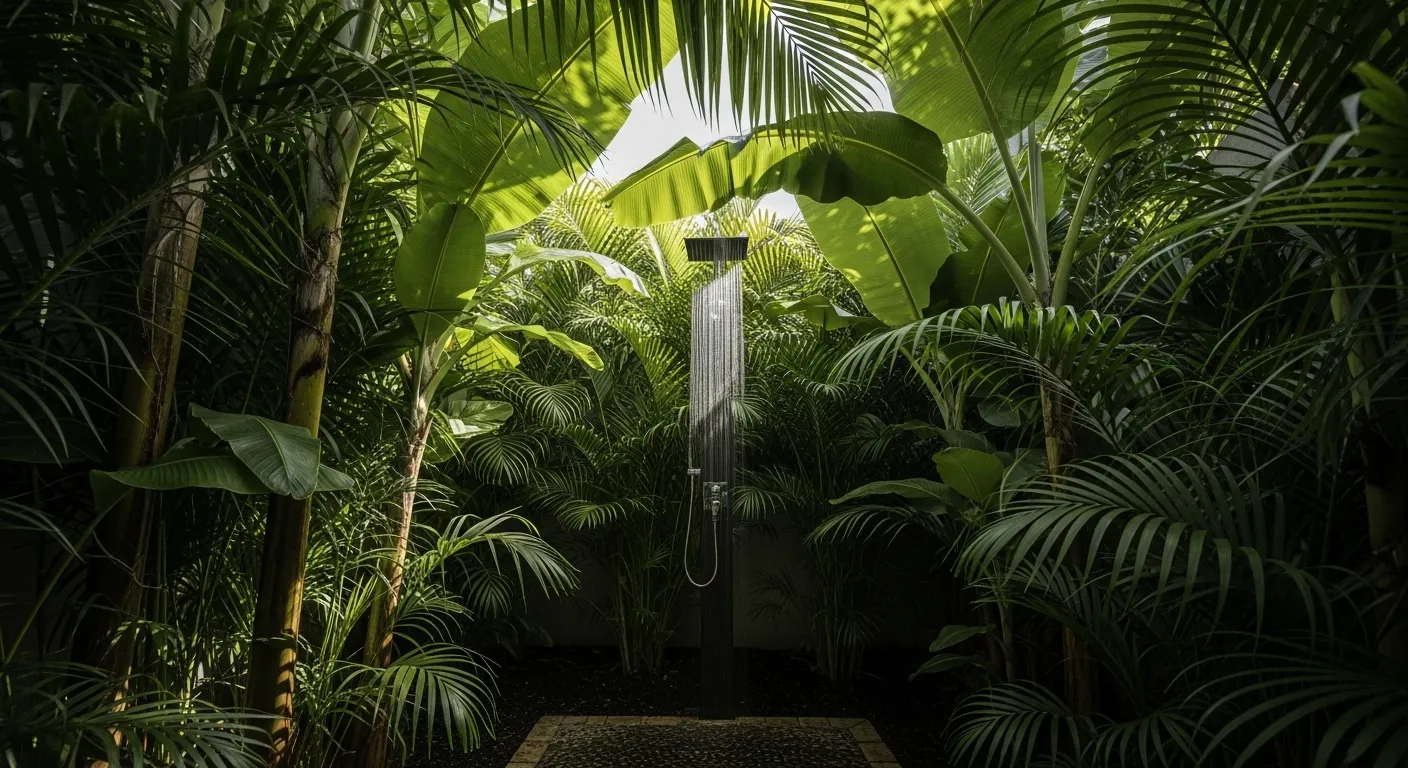
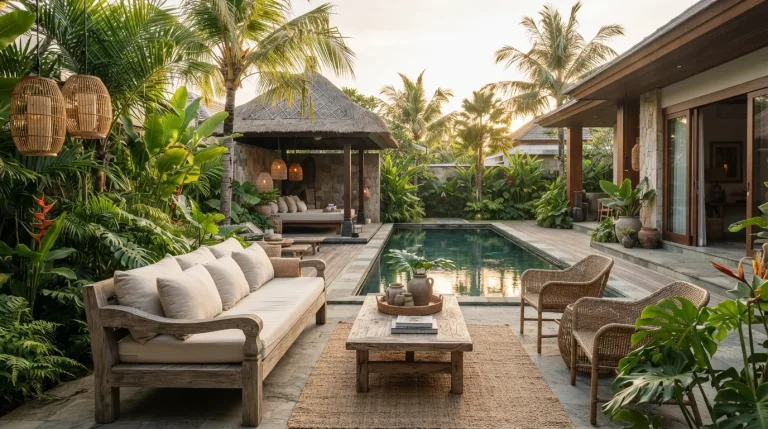
Placing an outdoor shower within a dense grouping of established tropical palms or large-leafed plants is one of the most immersive and genuinely magical approaches to outdoor bathing design. Rather than building a structure around the shower, the plants themselves serve as living walls that provide privacy, filtered shade, and a deeply sensory environment that no built enclosure can replicate. The combination of cool water, warm air, rustling palm fronds, and dappled green light filtering through the canopy above creates an experience that feels genuinely otherworldly closer to bathing in a jungle waterfall than using a backyard fixture.
This approach works best in warm climates where large tropical species grow reliably and densely, but it can be adapted in temperate gardens using large ornamental grasses, tall bamboo, or dense screening shrubs to achieve a similar enclosure effect. The practical side of this setup is remarkably simple a water supply line run to a central post within the planting, topped with a quality showerhead, is all that is structurally required. The garden itself does all the heavy design lifting. I’ve seen this setup used brilliantly in homes where an existing mature planting was simply too beautiful to cut back, and the shower was designed to celebrate and disappear into that planting rather than compete with it.
9. White Render Wall
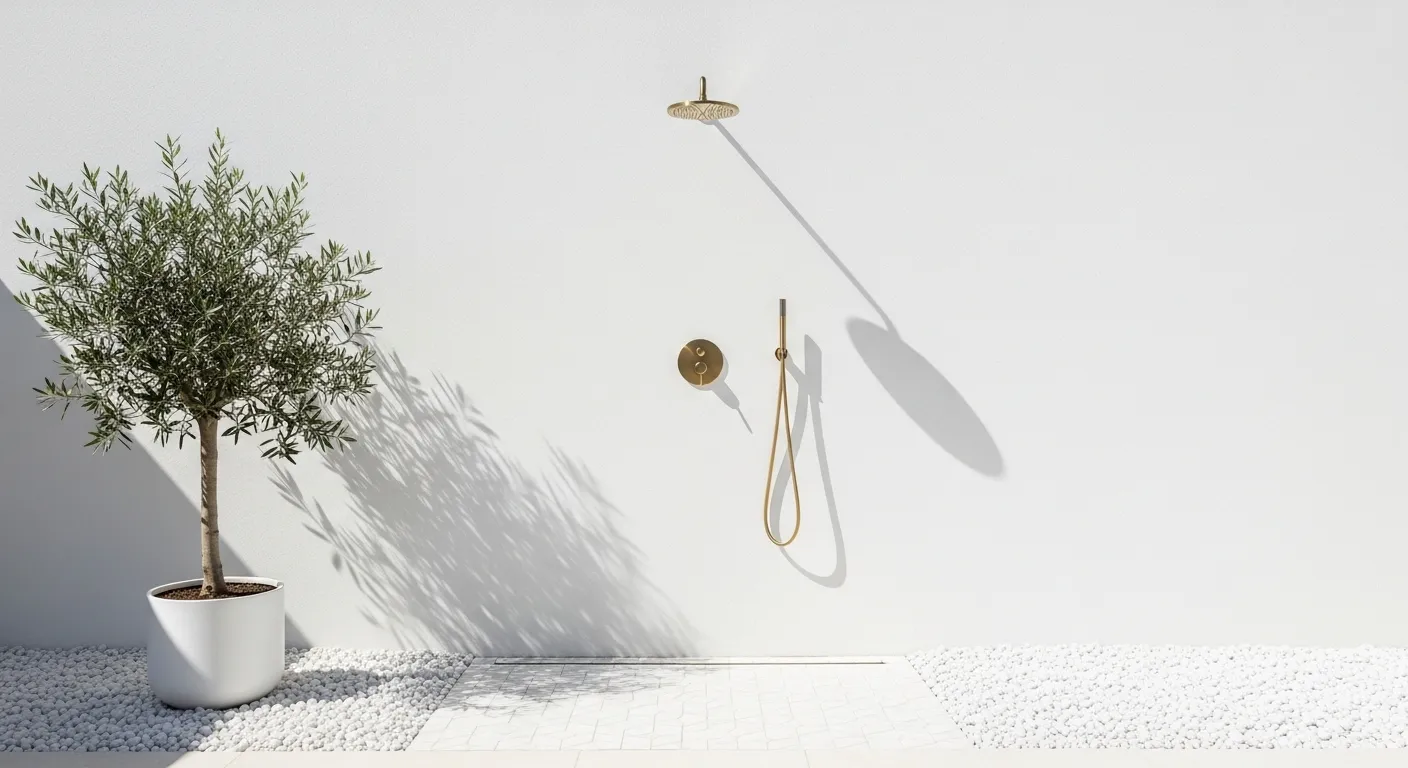
A smooth white rendered wall as the backdrop for an outdoor shower creates one of the cleanest and most timeless design combinations possible in outdoor living. The brilliant white surface reflects natural sunlight generously, filling the entire shower zone with warmth and brightness that makes every use feel energizing and positive. Against this pale, neutral canvas, the shower hardware becomes a deliberate design statement brushed gold fixtures glow richly against white, matte black creates a sharp contemporary contrast, and polished chrome reflects the surrounding garden elements with mirror-like clarity. The wall itself contributes as much to the overall aesthetic as any other design element in the space.
White render is also a highly practical surface choice for an outdoor shower wall. A quality exterior render mixed with a water-resistant additive creates a surface that is impervious to moisture penetration, resistant to mould when kept clean, and straightforward to repaint or refresh should any discolouration occur over time. The smooth finish has no grout lines to trap mildew, which is one of the most common maintenance challenges with tiled outdoor wet areas. For Mediterranean, Hamptons, or contemporary coastal home styles, a white rendered shower wall feels completely cohesive with the broader architectural language of the home and garden rather than looking like an afterthought addition.
10. Reclaimed Wood Post
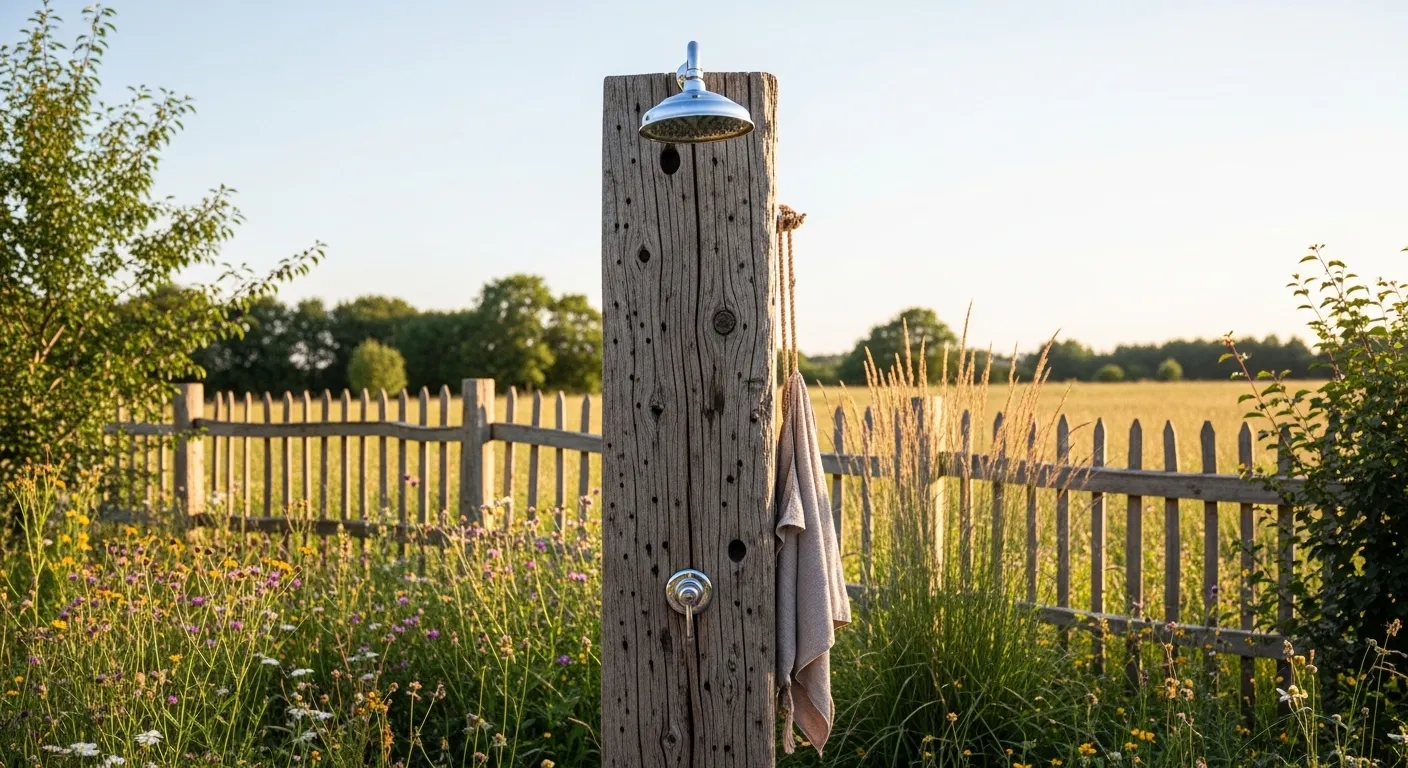
A reclaimed timber post used as the central structure for an outdoor shower brings an immediate sense of history, character, and authenticity to the space that no freshly milled timber can replicate. The weathered grey-brown tones, visible grain patterns, old nail holes, and natural surface imperfections of salvaged wood tell a story that makes the shower feel rooted in the landscape rather than recently installed. This is the outdoor shower design choice that feels most naturally at home in countryside gardens, converted barn properties, rural retreats, and any setting where the surrounding landscape is relaxed, organic, and unapologetically natural in character.
Working with reclaimed timber does require a small amount of additional preparation to ensure the post is structurally sound and free from rot before installation. Checking the grain tightness and moisture content of salvaged wood before committing it to a plumbing-attached outdoor structure is a sensible step that protects the investment. Once confirmed as sound, the post should be sealed with a penetrating timber treatment at the base where it contacts the ground to prevent future moisture damage. That’s why many designers recommend using a reclaimed post set in a metal ground sleeve rather than directly buried in soil this approach preserves the post from ground-level moisture while keeping the rustic visual character fully intact.
11. Poolside Shower Post
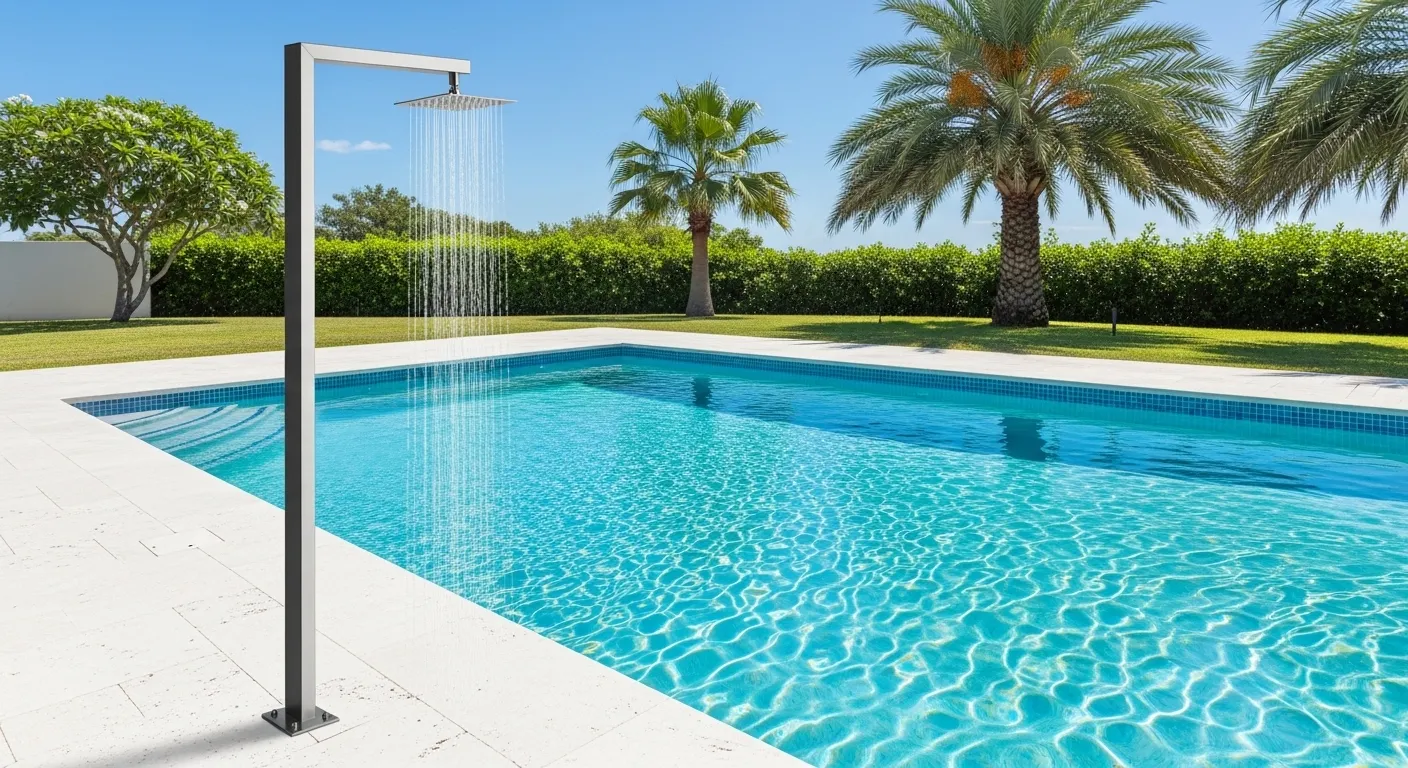
A dedicated shower post positioned beside a swimming pool is one of the most functionally valuable additions any pool-owning household can make. Beyond the obvious practical benefit of rinsing off chlorine or saltwater before entering the home, a well-designed poolside shower post contributes significantly to the overall resort-quality atmosphere of the pool area. Slim stainless steel or matte black posts are the most popular choice for pool environments because their minimal profile does not interrupt the view across the pool or clutter the surrounding deck space. A simple overhead rain head mounted at the top of the post delivers a thoroughly effective rinse in seconds without requiring the swimmer to leave the pool area.
From a pool maintenance perspective, having a convenient shower post directly at the pool edge actively encourages swimmers to rinse off sunscreen, lotions, and outdoor contaminants before entering the water, which directly reduces the chemical load on the pool filtration system. This means the pool stays cleaner for longer between chemical treatments, ultimately reducing ongoing maintenance costs. Connecting the shower post to an outdoor cold water supply is straightforward in most pool environments where supply lines are already present nearby. Adding a simple on-off lever valve at hand height rather than a full temperature control keeps the poolside setup practical, fast to use, and appropriately uncomplicated.
12. Copper Pipe Fixtures
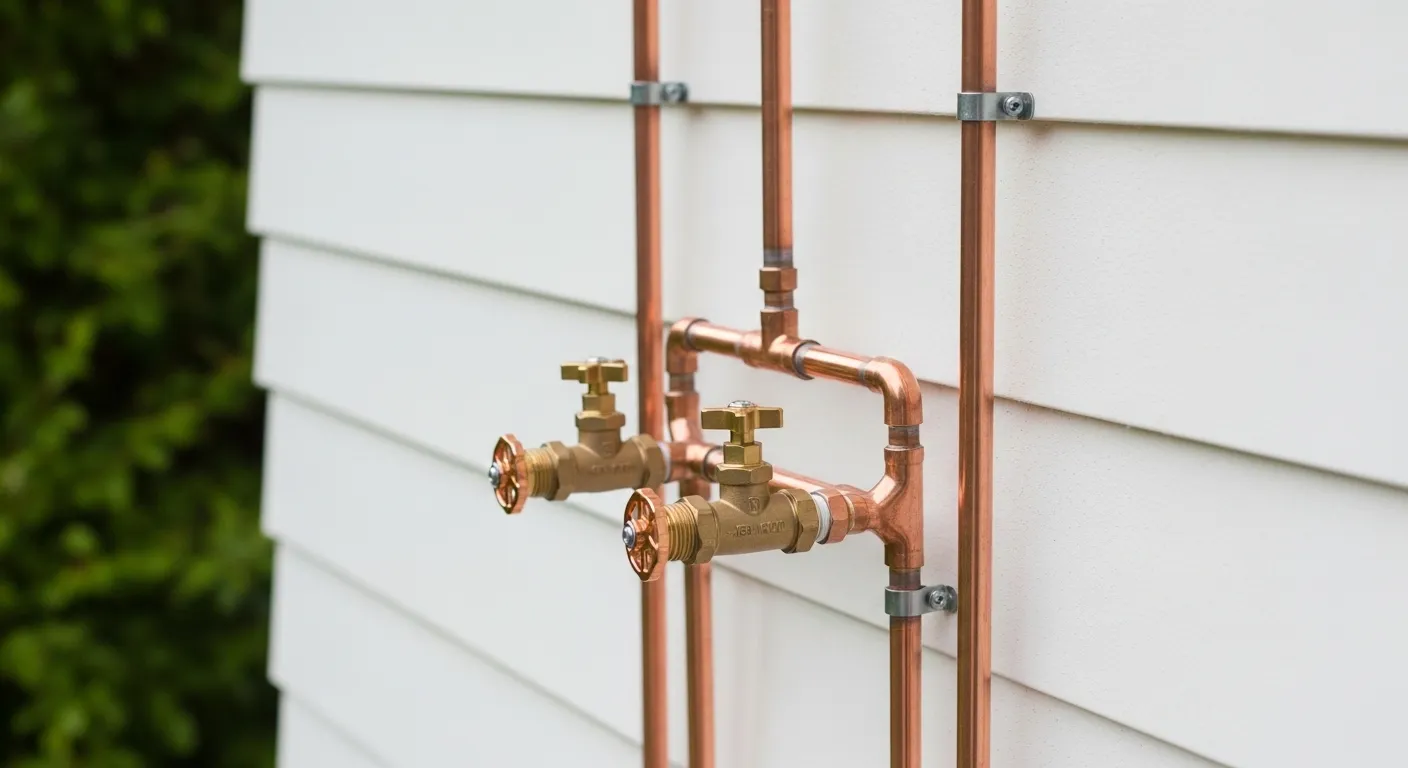
Using exposed copper pipe as the functional and aesthetic core of an outdoor shower design is a genuinely creative approach that transforms ordinary plumbing into deliberate art. The warm orange-red tones of fresh copper glow richly in natural sunlight, creating a visual warmth against white walls or green garden backdrops that no other pipe material can match. Over time, outdoor copper develops a natural verdigris patina the subtle blue-green oxidation layer that only deepens the character and visual interest of the installation. Rather than fighting this natural aging process, a copper shower design should embrace it as part of the long-term aesthetic evolution of the piece.
Beyond its striking visual qualities, copper brings genuine practical advantages to an outdoor shower installation. The metal is naturally antimicrobial, inhibiting the growth of bacteria and mould on its surface, which is a meaningful benefit in a wet outdoor environment. Copper is also highly durable and corrosion-resistant when properly supported and joined, making it a long-term investment rather than a short-term aesthetic choice. The visual complexity of an exposed copper pipe arrangement with visible elbow fittings, unions, and valves forming a geometric pattern on the wall rewards detailed looking and creates a conversation piece that guests always notice and comment on during outdoor gatherings.
13. Outdoor Clawfoot Tub
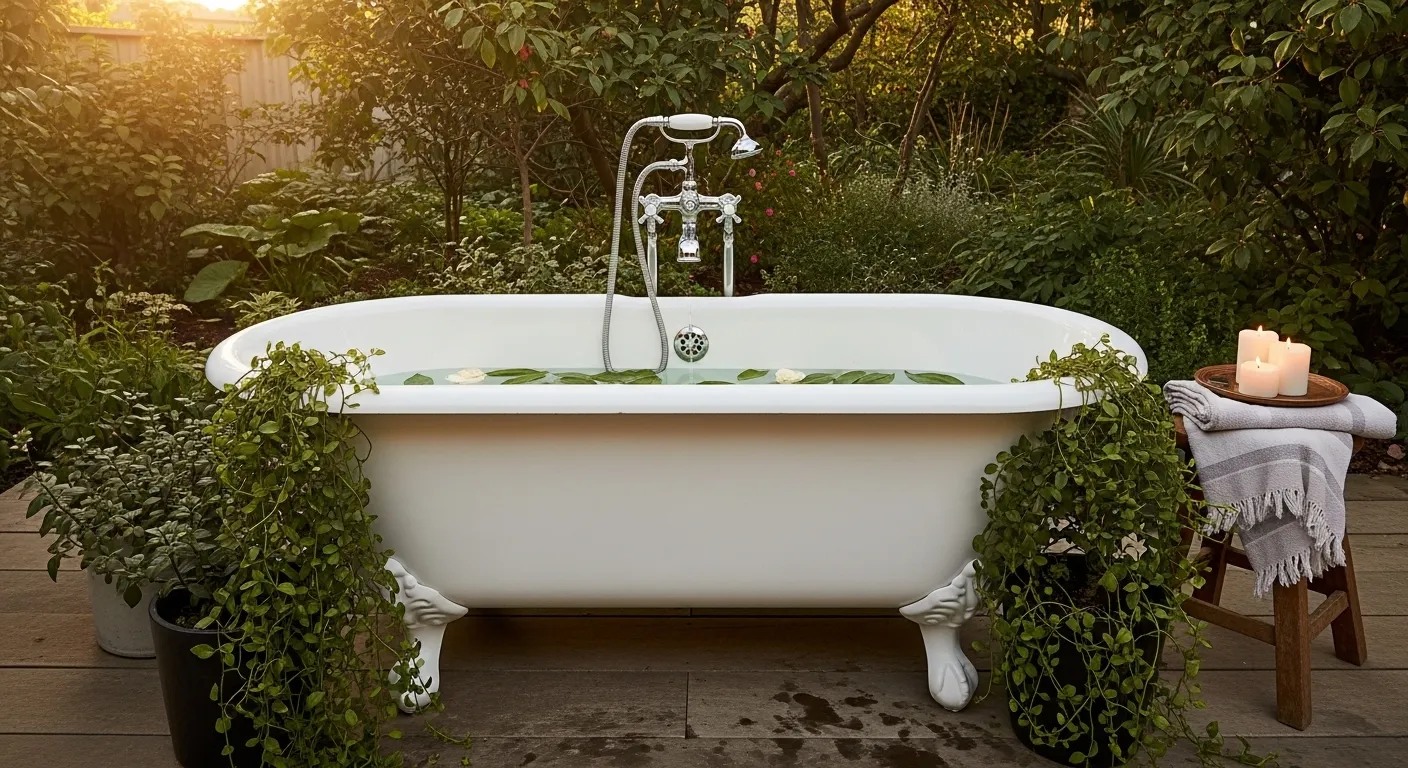
Placing a vintage clawfoot bathtub on an outdoor deck or garden patio is the most romantically indulgent interpretation of the outdoor shower concept a choice that transforms a practical bathing space into a genuinely extraordinary garden experience. The sight of a beautiful white porcelain tub sitting freely in a garden, surrounded by trailing vines and dappled afternoon light, is immediately and powerfully evocative of slow living, intentional pleasure, and deep relaxation. This is an outdoor bathing setup designed not for quick functional use but for long, unhurried soaks where the boundary between garden and bathroom dissolves completely.
The practical considerations of positioning a clawfoot tub outdoors are worth addressing thoughtfully. A solid, level base either a timber deck platform or a stone patio surface capable of bearing the considerable weight of a filled cast iron tub is essential. Water supply and drainage connections need to be routed to the tub position, which may require a plumber depending on the distance from the home’s supply and waste lines. That’s why many designers recommend positioning the outdoor tub as close to the home exterior as practically possible to minimize plumbing run distances and costs. Once installed correctly, the result is one of the most memorable and photographed garden features imaginable.
14. Solar Heated Shower
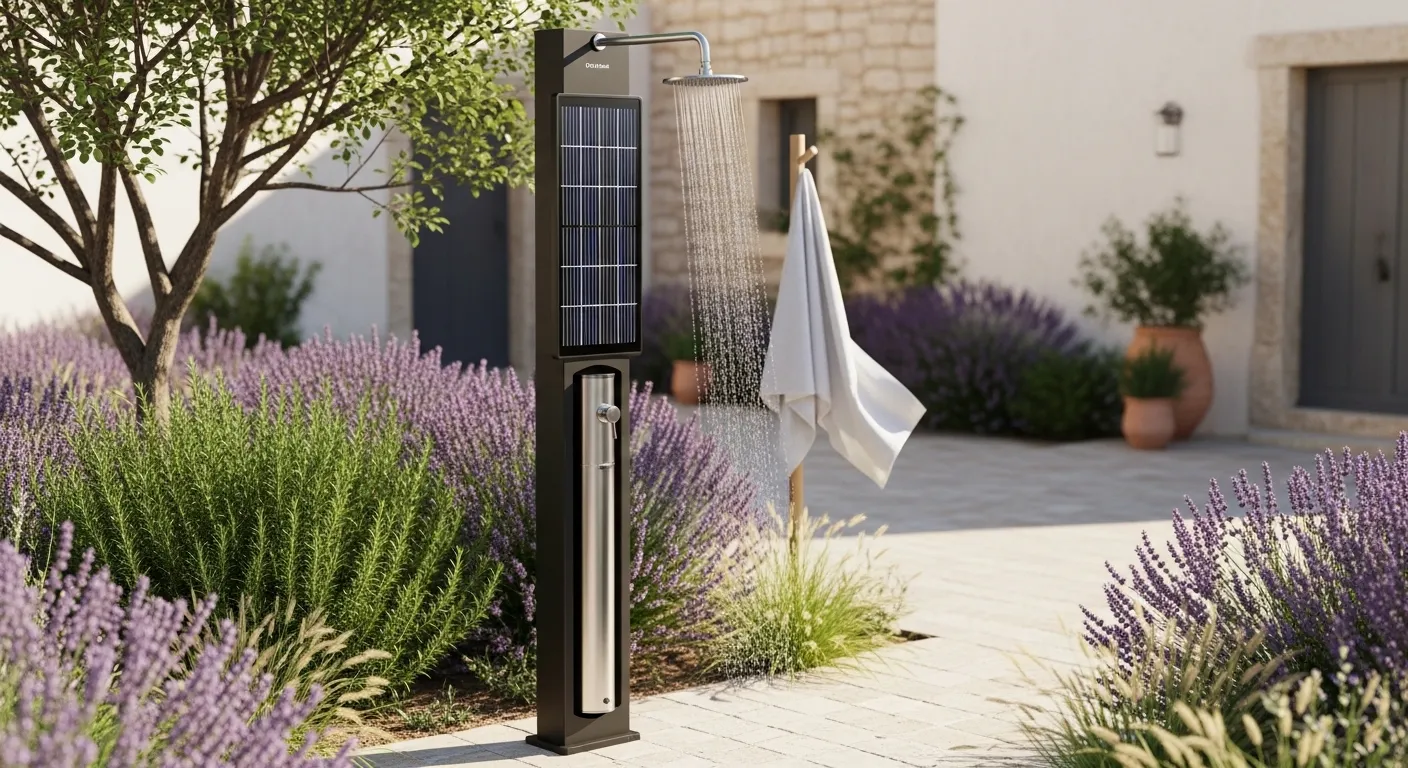
A solar-heated outdoor shower is the most environmentally thoughtful and self-sufficient approach to outdoor bathing available today. By using the sun’s natural energy to heat a collector tank directly above the showerhead, these systems deliver genuinely warm water often reaching very comfortable temperatures in sunny climates without any connection to electricity, gas, or the home’s hot water system. The dark-coloured solar collector panel absorbs sunlight efficiently and transfers that heat directly to the water stored in the tank, which is then released through the showerhead on demand. The entire system is self-contained, requiring only a cold water supply connection and a drain at the base.
For homeowners in consistently warm and sunny climates, solar shower systems represent an exceptionally practical and cost-effective outdoor bathing solution. Once installed, the ongoing running cost is essentially zero sunlight is free, and quality solar shower units require very little maintenance beyond an occasional check of the water connections and seal integrity. I’ve seen solar-heated outdoor showers perform brilliantly in Mediterranean, coastal Australian, and Southern European garden settings where they function as the primary post-beach or post-swim rinse station throughout the entire warm season. The sustainability credentials of these systems also align naturally with garden designs that already incorporate water-harvesting, composting, or solar energy elements.
15. Mosaic Tile Column
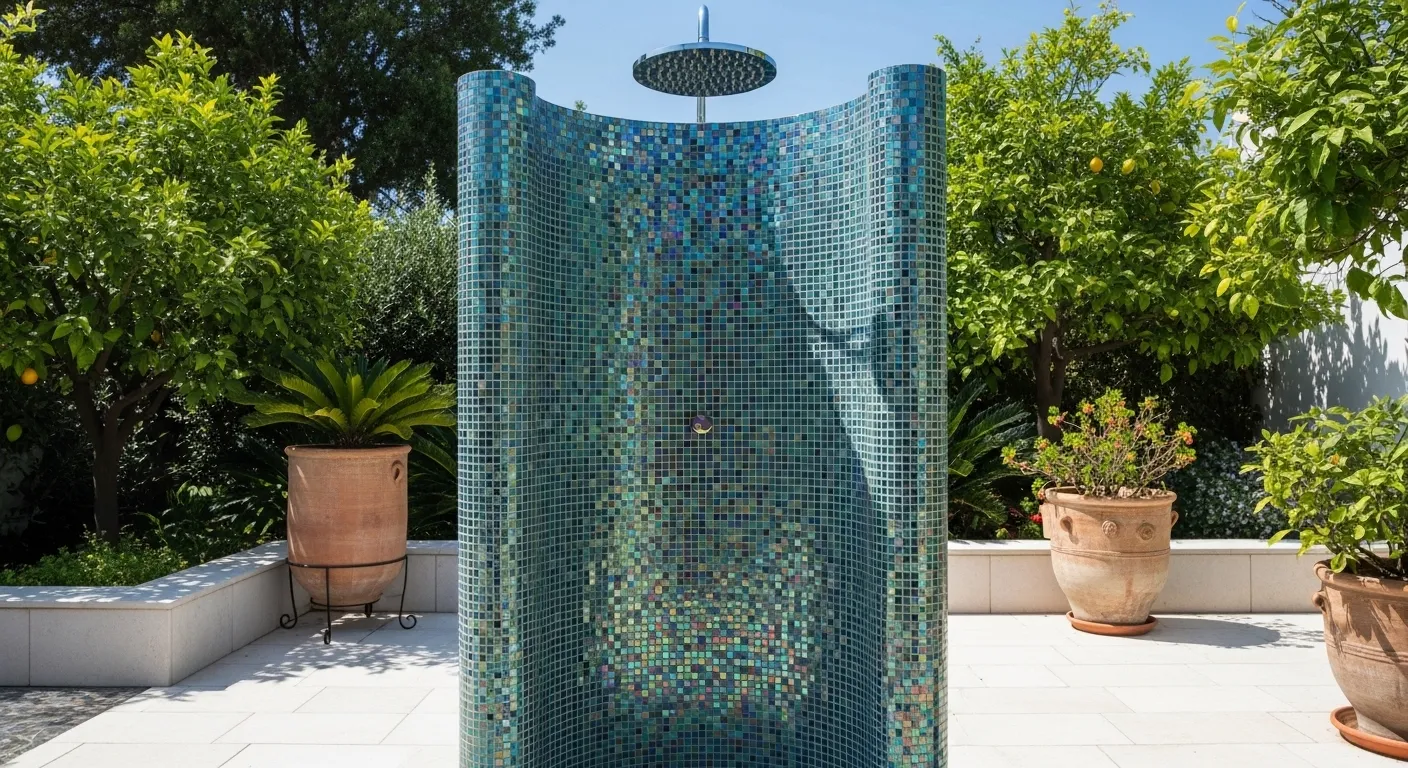
A mosaic tile shower column is among the most visually stunning and sculptural approaches to outdoor shower design, functioning simultaneously as a practical bathing fixture and a genuine garden art installation. When small iridescent glass or ceramic mosaic tiles cover the full cylindrical surface of a shower column, the changing angle of natural sunlight throughout the day creates a constantly shifting interplay of colour and reflection that makes the column appear almost alive. Blue-green glass mosaics evoke the feeling of water and ocean, which makes them particularly beautiful and contextually appropriate choices for a shower environment.
The construction of a mosaic tile column requires solid structural planning at its core. A reinforced concrete or steel pipe core provides the necessary structural strength and plumbing pathway, while the outer tile skin is applied onto a marine-grade substrate board capable of withstanding permanent outdoor wet conditions. Using epoxy grout rather than standard cement-based grout for the tile joints ensures resistance to water penetration and staining over time, which is critical in an always-wet outdoor shower application. The investment in correct substrate and grouting materials is modest compared to the overall project cost but has an enormous impact on how long the finished mosaic column looks beautiful and remains structurally sound.
16. Wooden Deck Platform
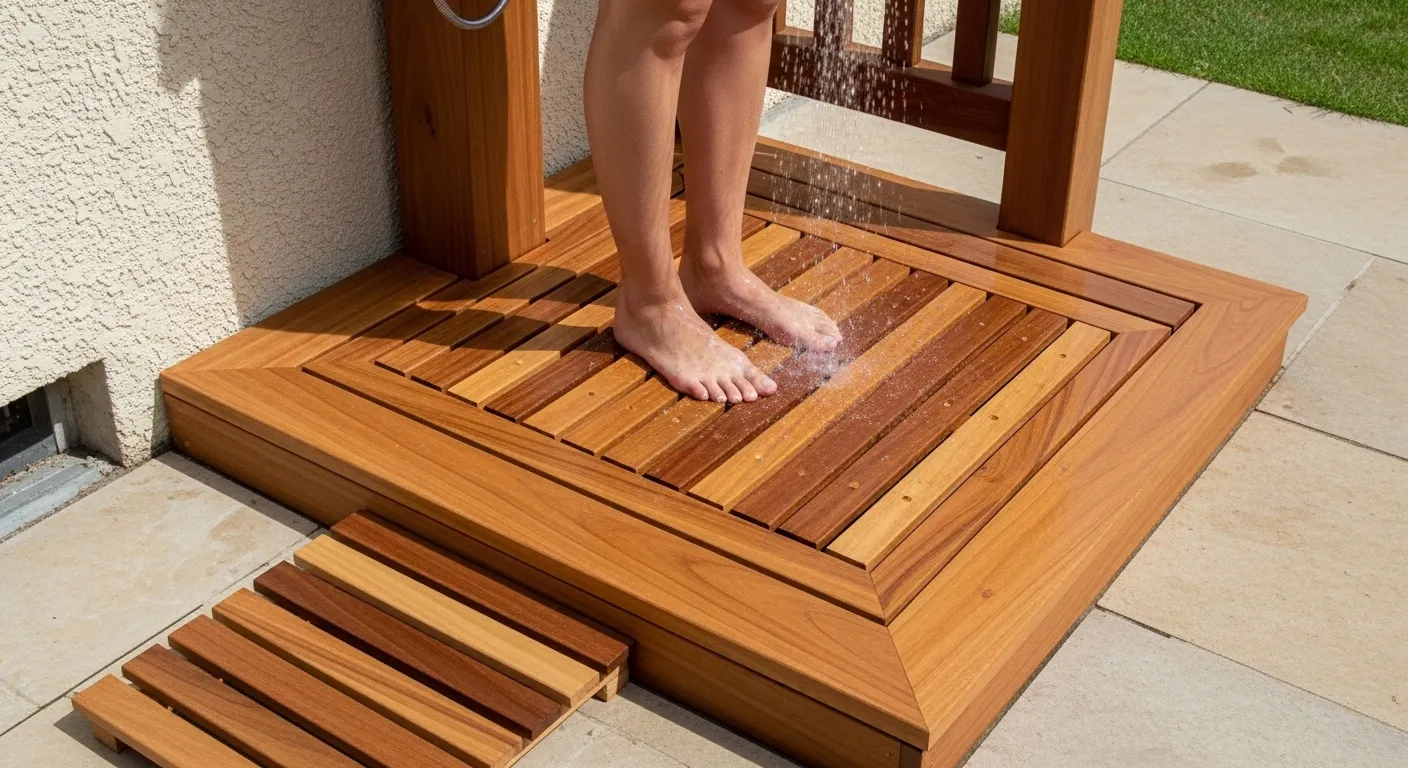
A raised slatted timber deck platform beneath an outdoor shower is one of the most tactilely satisfying and visually appealing underfoot solutions available. Standing on warm teak or hardwood slats with cool water flowing around and through them creates a sensory experience that genuinely rivals the most expensive spa installations. The natural warmth absorbed by the timber during a sunny day transfers pleasantly to bare feet, while the slatted gap construction ensures water drains immediately and completely without pooling or creating slip hazards. This combination of warmth, texture, and efficient drainage makes timber slatted platforms both the most beautiful and most practical choice for outdoor shower flooring.
Building a timber deck platform for an outdoor shower can be approached at almost any level of construction skill and budget. At the simplest end, pre-assembled teak shower mats essentially small sections of slatted timber in a rigid frame can be placed directly on any existing paved surface to instantly create the spa-platform effect without any construction at all. For a more permanent and custom solution, a built-in hardwood platform with concealed drainage beneath creates a beautifully finished result that is fully integrated into the surrounding garden or patio design. Using naturally durable timber species such as teak, ipe, or spotted gum for outdoor wet applications ensures the platform ages beautifully without requiring constant protective treatment.
17. Coastal Rope Details
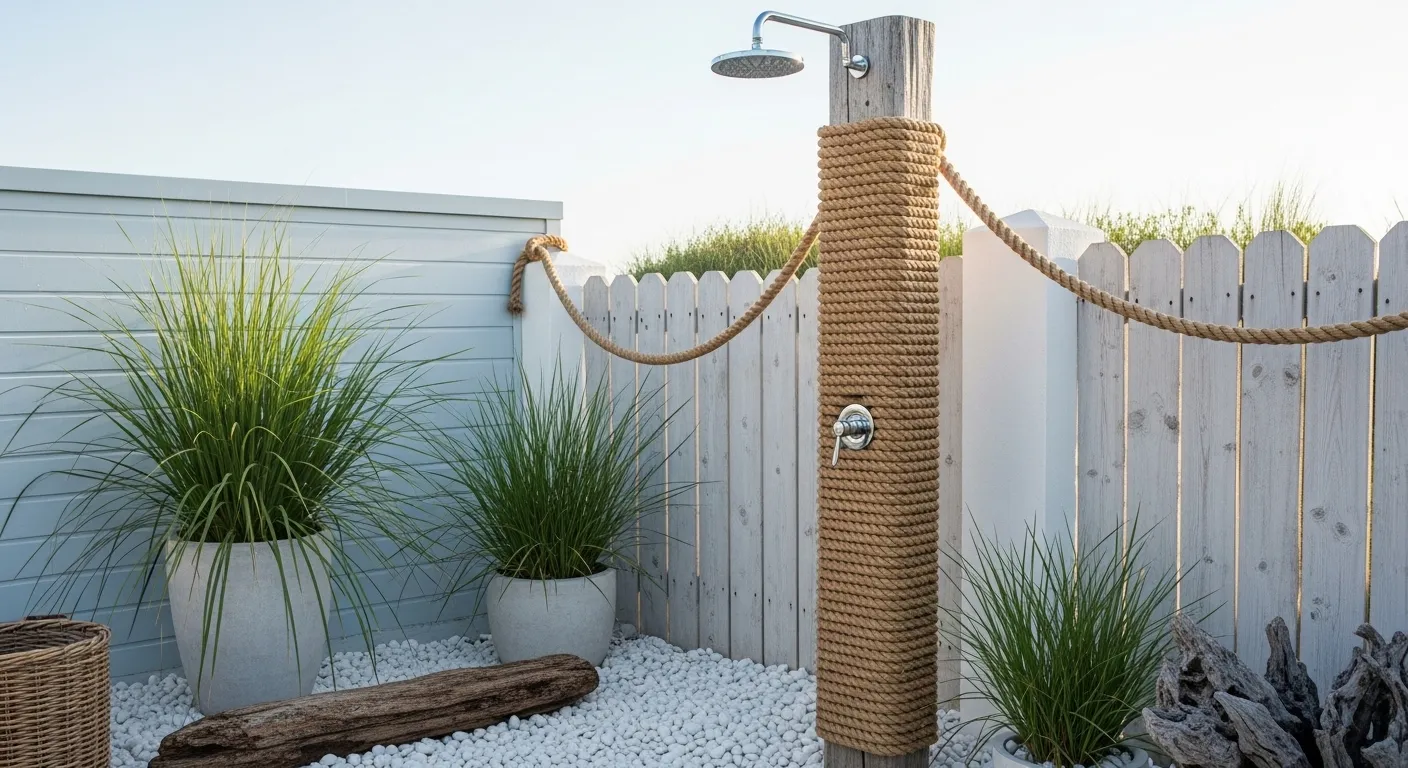
Adding natural rope details to an outdoor shower post or frame is one of the simplest and most cost-effective ways to introduce a strong coastal identity to an outdoor bathing area. The texture of thick jute or sisal rope wrapped tightly in coils around a weathered timber post creates an immediate visual and tactile richness that speaks clearly of the beach, the sea, and the relaxed pleasure of coastal living. This type of decorative detail does not require structural modification to the existing shower setup the rope is simply wrapped around and secured, transforming the appearance of an ordinary timber post into something that looks genuinely crafted and considered.
The surrounding design elements chosen to complement rope-wrapped shower posts matter enormously for the overall coherence of the coastal theme. White pebble ground cover, bleached timber fencing, sea grass plants in terracotta or woven pots, and pale blue accent paint on nearby walls all work together to reinforce a relaxed, beachside atmosphere. I’ve seen this approach work particularly well in suburban gardens that are not actually near the coast but aspire to that easy, sun-bleached, salt-kissed aesthetic. The rope detail acts as a strong visual cue that anchors the entire outdoor space within a coherent coastal design story, regardless of the actual geographic proximity to the sea.
18. Black Steel Frame
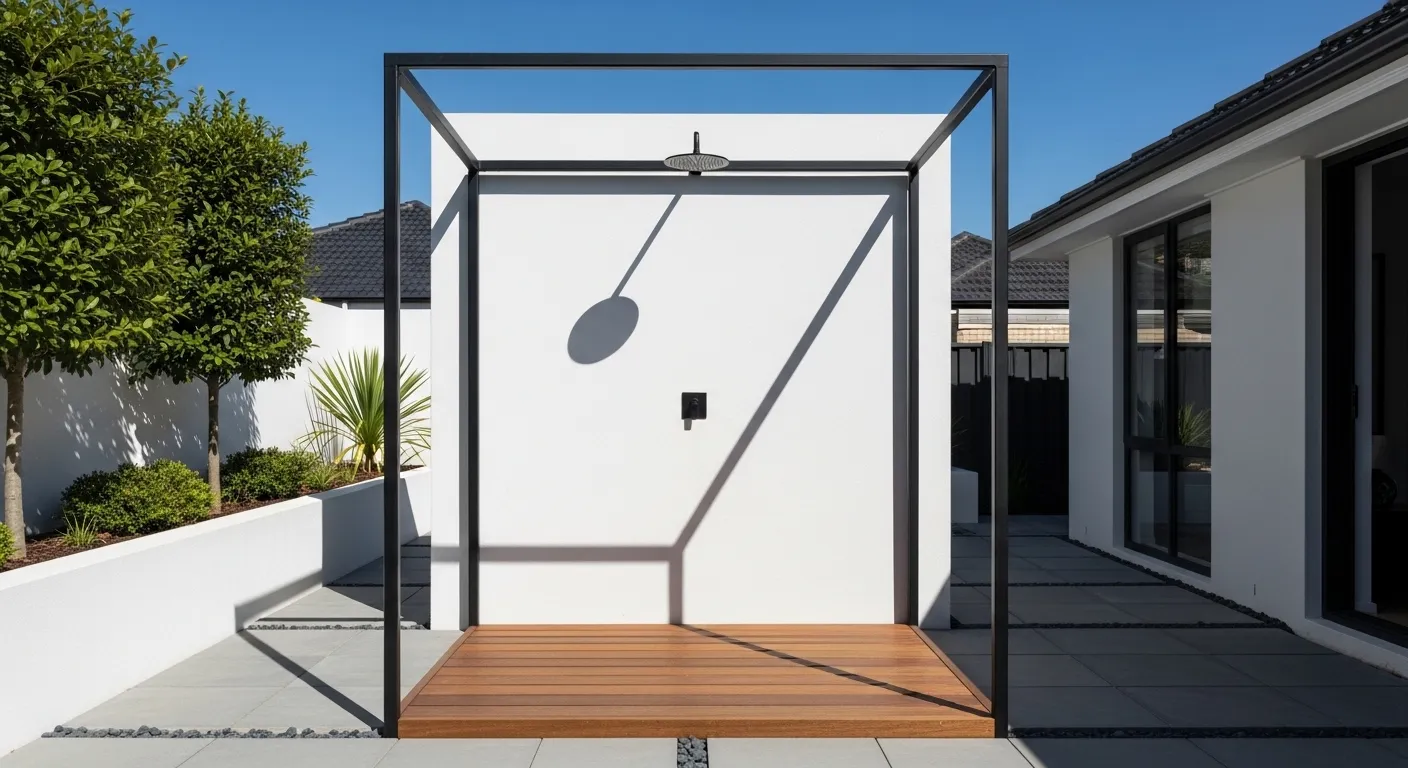
A powder-coated black steel frame outdoor shower is the choice for homeowners who love industrial minimalism and want their outdoor fixtures to read as deliberately architectural rather than decorative. The slim rectangular frame defines a clear spatial zone an outdoor room without walls while the open structure ensures no sense of claustrophobia or enclosure. The matte black finish absorbs rather than reflects light, creating a subdued, grounded presence in the garden that contrasts powerfully with surrounding pale materials. Geometric shadows cast by the frame rails onto the deck and surrounding paving at different times of day add a constantly shifting graphic quality that makes the entire setup feel dynamic and designed.
Steel frame outdoor showers are also among the most structurally robust options available. When fabricated from high-quality structural steel and finished with a quality powder coat, the frame will resist corrosion and maintain its appearance with minimal maintenance for many years. Welded or bolted joints between the frame members should be sealed with appropriate primer before the powder coat is applied to prevent rust infiltration at connection points. For coastal properties exposed to salt air which accelerates corrosion in lower-grade steel using a marine-grade stainless steel frame with a powder coat finish is the more appropriate and longer-lasting material specification to request from the fabricator.
19. Herb Garden Surround
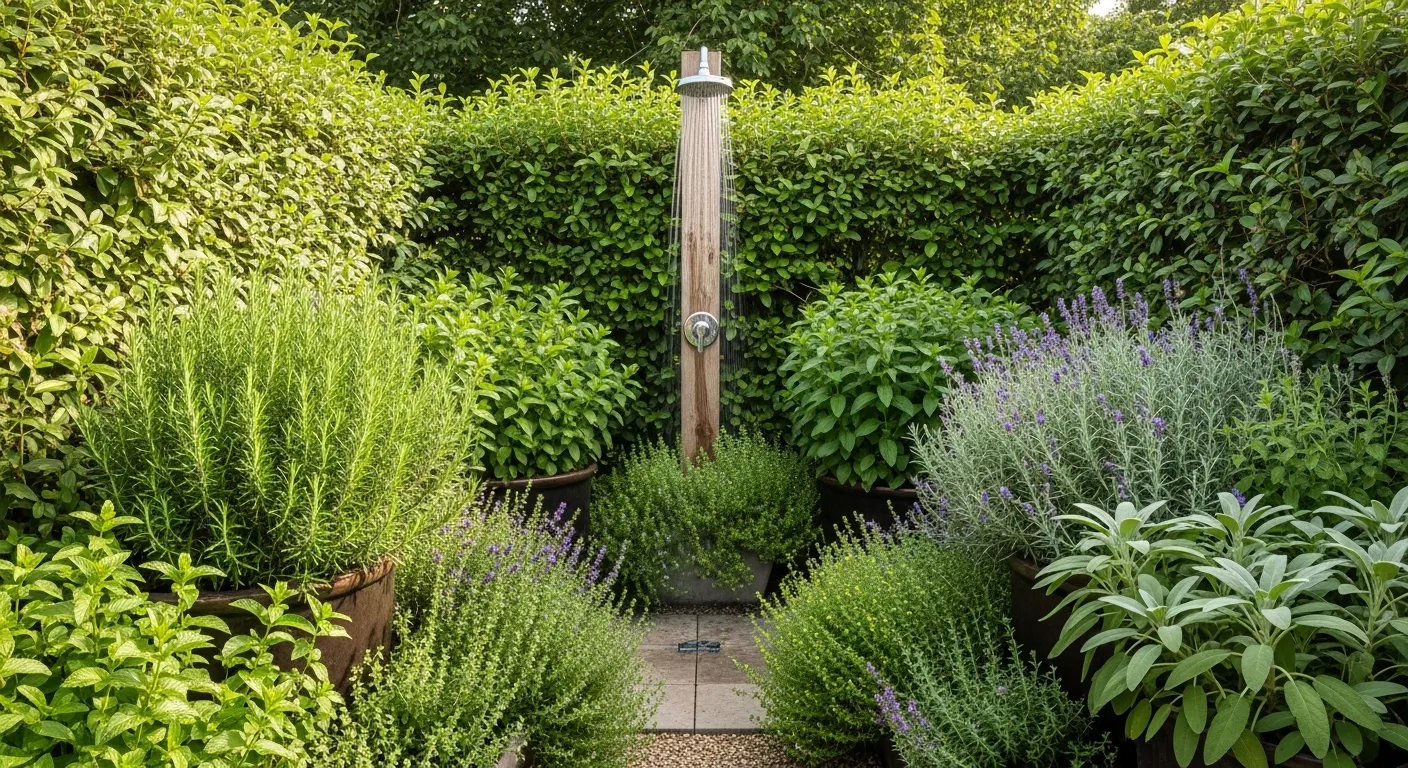
Positioning an outdoor shower within a dedicated herb garden surround is one of the most sensory-rich and genuinely indulgent approaches to outdoor bathing design. When water splashes onto the surrounding lavender, rosemary, and mint, it releases the plants’ essential oils into the immediate air, filling the shower zone with a natural, fragrant cloud that transforms a simple outdoor rinse into something genuinely therapeutic. The combination of cool water, warm sun, and natural aromatherapy from the living herb border creates a multi-sensory bathing experience that no product or scented soap could fully replicate. In my experience, guests who try this type of shower always immediately ask how to recreate it at home.
The herb garden surrounding an outdoor shower also serves a genuinely practical double purpose the same planting that enhances the bathing experience also provides fresh culinary herbs for kitchen use throughout the growing season. Lavender makes beautiful bundles and natural fragrances; rosemary and thyme are invaluable in cooking; mint keeps the space smelling fresh between shower uses. Positioning tall-growing herbs like rosemary hedging at the back of the shower area provides natural privacy screening as the plants mature, while lower-growing herbs like thyme and creeping oregano can be used as a living ground cover between paving stones around the shower base for a beautifully textured, fragrant underfoot surface.
20. Privacy Lattice Wall
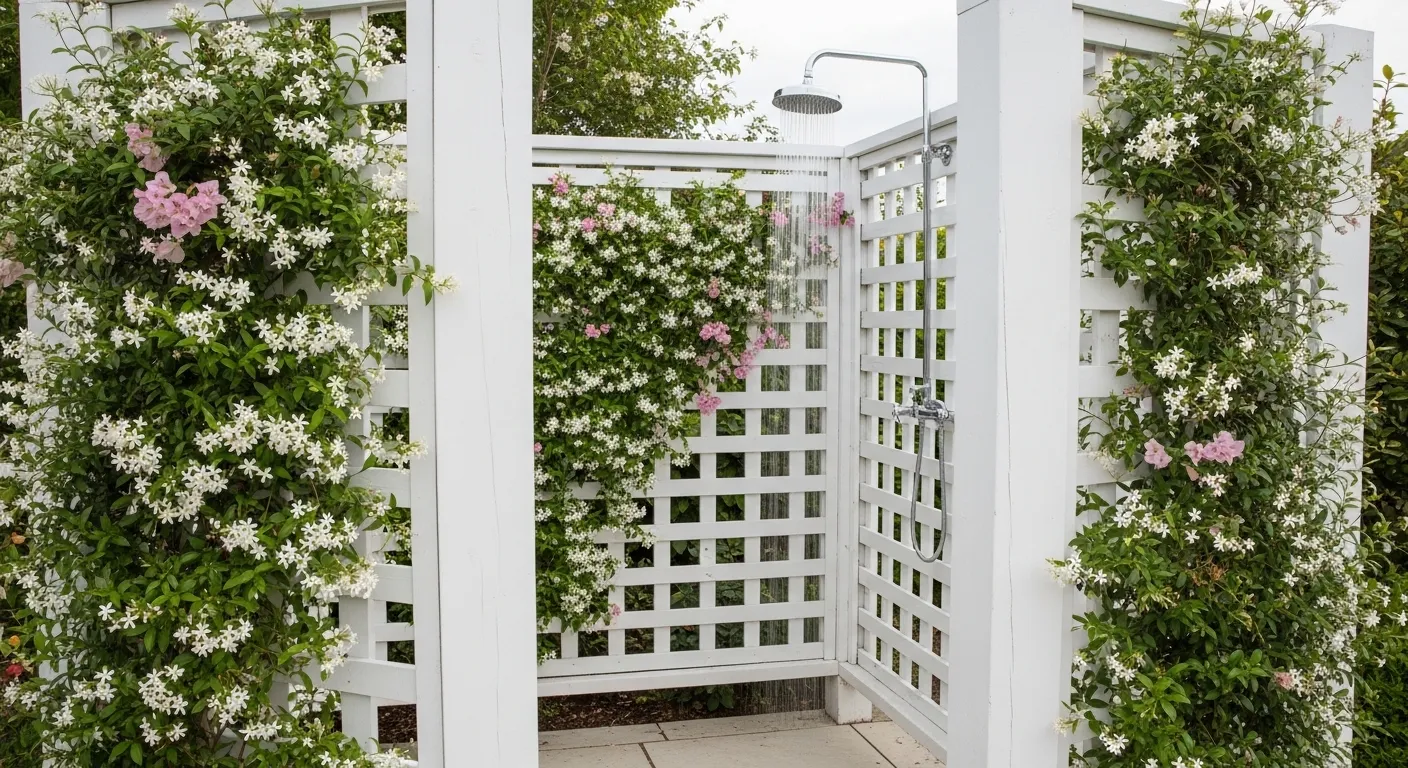
A timber lattice wall covered with climbing plants is one of the most romantic and garden-integrated approaches to outdoor shower privacy. Unlike a solid panel fence or a built enclosure wall, a lattice screen is inherently partial it suggests privacy rather than imposing it which keeps the shower area feeling connected to the surrounding garden while still providing effective visual screening during use.
As climbing jasmine, bougainvillea, or climbing roses grow through and over the lattice, they progressively soften and enrich the screen with colour, fragrance, and natural texture that a solid wall could never offer. The result is a living privacy wall that genuinely improves with each passing season. The practical construction of a lattice privacy screen for an outdoor shower is relatively straightforward and accessible for DIY builders.
Pre-made timber lattice panels in standard sizes are widely available and can be mounted between timber posts set in concrete footings to create a freestanding screen without requiring attachment to any existing structure. Painting the lattice white or a soft off-white before installation maximises light reflection and suits the widest range of garden styles. Once installed and planted with vigorous climbing species, minimal maintenance is required beyond an annual pruning to keep growth within the frame and encourage dense, even coverage. That’s why many designers recommend lattice as an ideal privacy solution for rental properties where permanent construction may not be permitted.
21. Minimalist Wall Mount
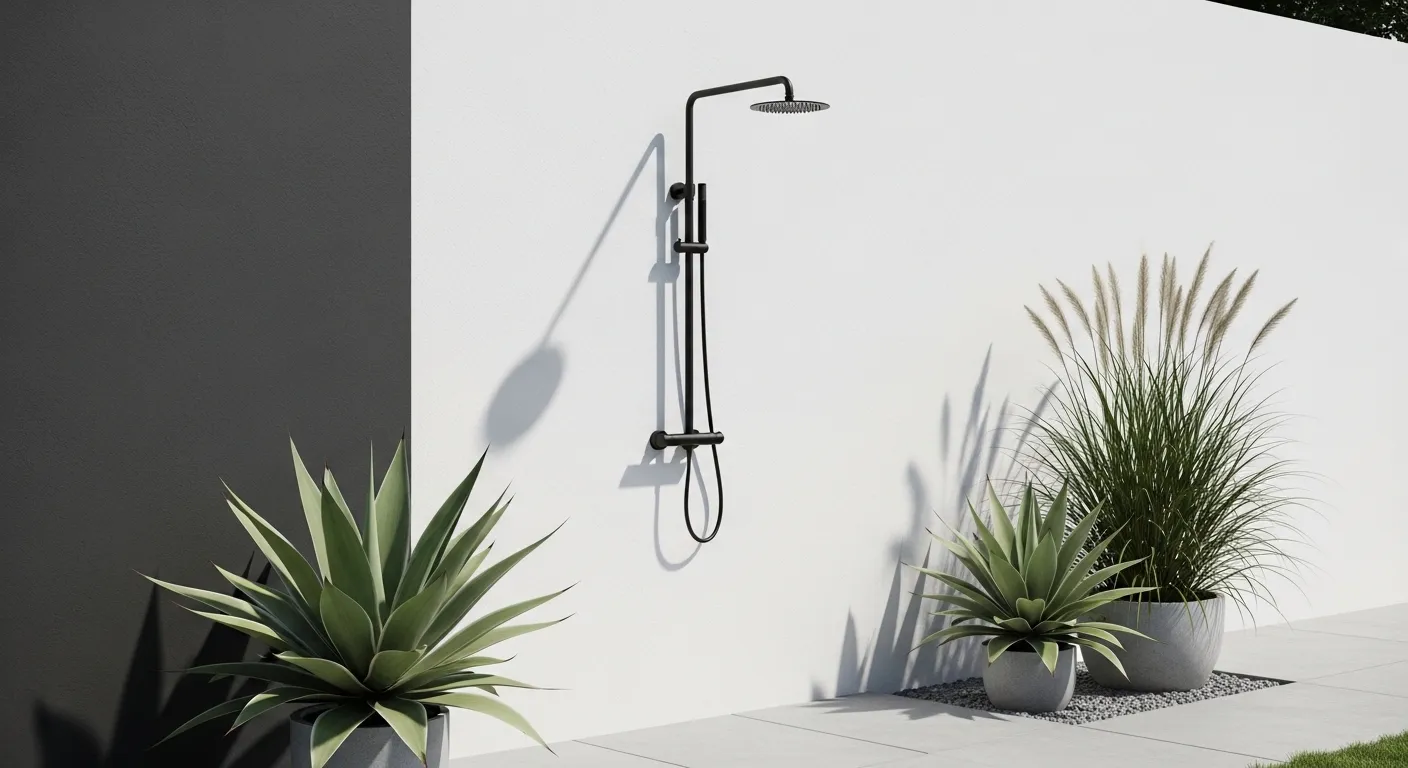
The most architecturally reduced outdoor shower idea is also one of the most powerful a single slim wall-mounted arm extending from a smooth wall surface, tipped with a small round rain showerhead, and nothing else. No visible pipes, no enclosure, no decorative additions just a pure, clean geometric form that says everything necessary in the simplest possible visual language. This approach requires concealing all plumbing within the wall cavity during the build phase, which necessitates planning from the outset rather than retrofitting. The investment in this preparation pays visual dividends that are entirely disproportionate to the cost, producing a result that looks profoundly considered and purposefully designed.
Against a smooth white or dark grey rendered wall, a matte black shower arm and head combination achieves a graphic, almost two-dimensional quality the dark line of the arm against the pale wall resembles an architectural drawing come to life. Cool white or charcoal walls amplify the impact of the minimal hardware silhouette, while warmer render colours soften the contrast for a slightly more approachable aesthetic. A single specimen plant nearby perhaps an architectural agave, a clump of black bamboo, or a tall ornamental grass provides just enough living counterpoint to balance the rigour of the minimal shower design without disrupting the deliberate simplicity that makes this approach so genuinely compelling and visually memorable.
22. Outdoor Shower Niche
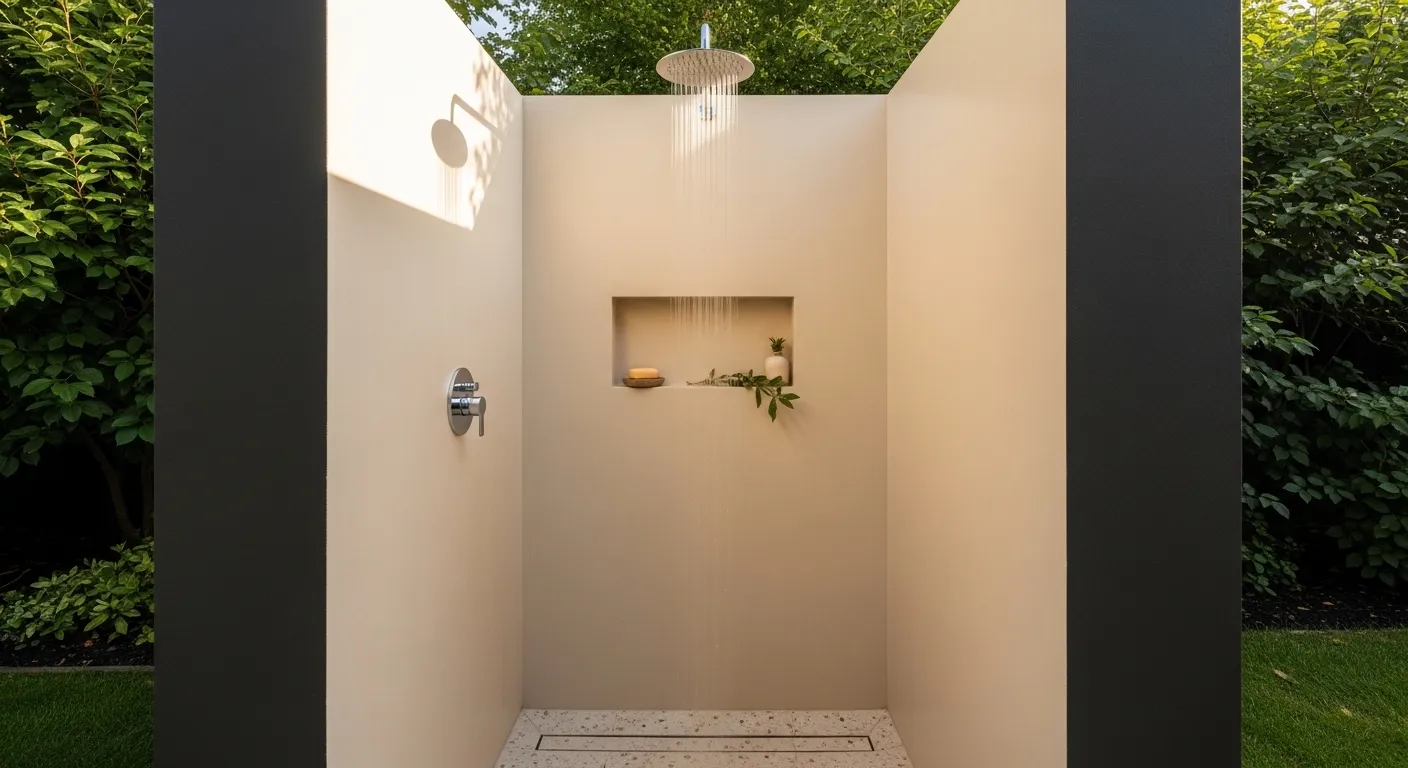
A recessed shower niche built into an existing garden wall represents one of the most architecturally integrated and permanently luxurious outdoor shower ideas available. The three enclosed sides of the niche create a naturally private, sheltered bathing space that feels entirely different from a freestanding shower structure more intimate, more defined, and more genuinely enclosed without the need for a separate enclosure panel or screen. The interior of the niche becomes its own mini design environment, where render colour, tile choice, and material finish can be entirely different from the exterior wall into which it is recessed, creating an element of surprise and discovery for the first-time visitor.
The practical advantages of a wall niche shower are significant. Wind protection from three sides makes the shower comfortable to use even in breezy outdoor conditions, which extends the usable season of an outdoor shower in cooler climates considerably. A small recessed shelf or ledge built into one interior side wall of the niche provides convenient storage for soap, shampoo, and a plant sprig without requiring any external storage solution. The niche design also conceals plumbing naturally within the wall structure, resulting in a completely clean, pipe-free appearance that looks fully resolved and professionally designed. This is the outdoor shower idea for those who want their backyard bathing space to feel genuinely architectural and enduringly beautiful.
In the End
Your backyard deserves to feel like a retreat and these outdoor shower ideas prove it is entirely possible. From a simple garden hose on a reclaimed timber post to a fully recessed wall niche with mosaic tile detailing, there is a setup here for every budget, every garden style, and every level of DIY ambition. I’ve seen how a single well-chosen outdoor shower transforms a space from purely functional into something genuinely beautiful and daily enjoyable. Pick one idea that excites you, save this post on Pinterest, share it with a friend planning a garden upgrade, and take that first step toward your own outdoor sanctuary today.
Emma Williams
Emma Williams is an interior design expert and decor editor at Lady Home Decor. She specializes in modern, cozy, and functional home styling, helping readers discover inspiring decorating ideas that are easy to recreate. Her work focuses on timeless design, practical solutions, and the latest home decor trends.