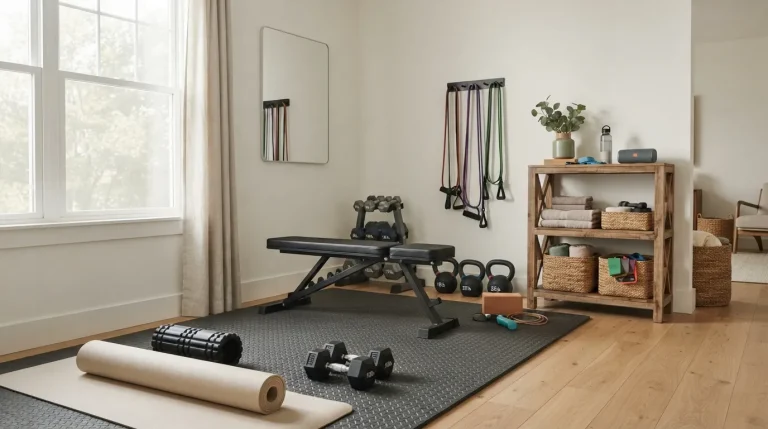
20 Modern Home Gym Ideas with Brilliant Extra Storage Solutions

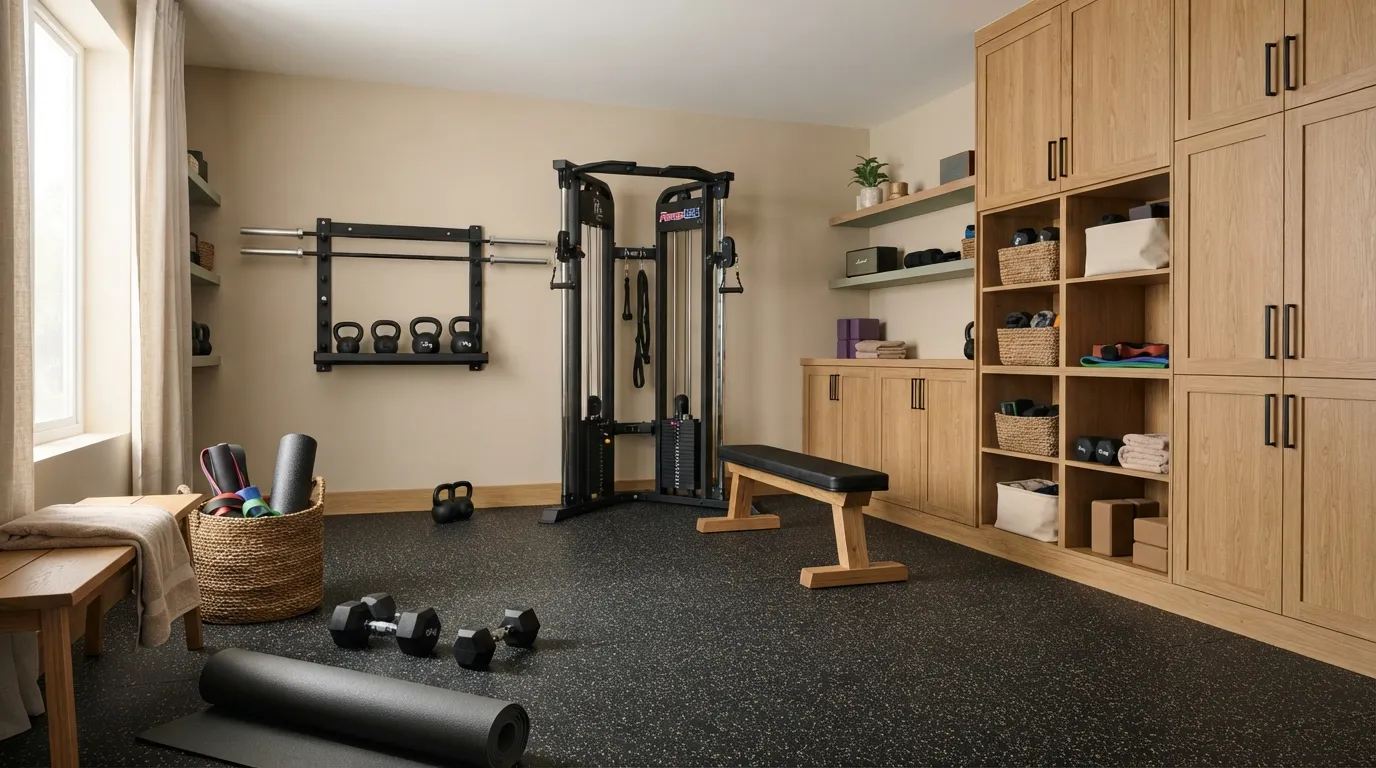
A home gym can look polished without taking over your room. The right storage keeps weights, mats, bands, and towels close by while leaving enough open floor for your workout. These modern home gym ideas with storage show how smart organization can make even a compact fitness space feel calm and useful.
Think beyond bulky shelves and scattered equipment. Built-in cabinets, floating shelves, wall racks, benches with hidden compartments, and tall storage units can turn unused corners into practical fitness zones. Whether you’re working with a spare bedroom, basement, garage, or narrow room, these ideas can help you create a gym that works hard without looking cluttered.
Built-In Oak Storage Wall
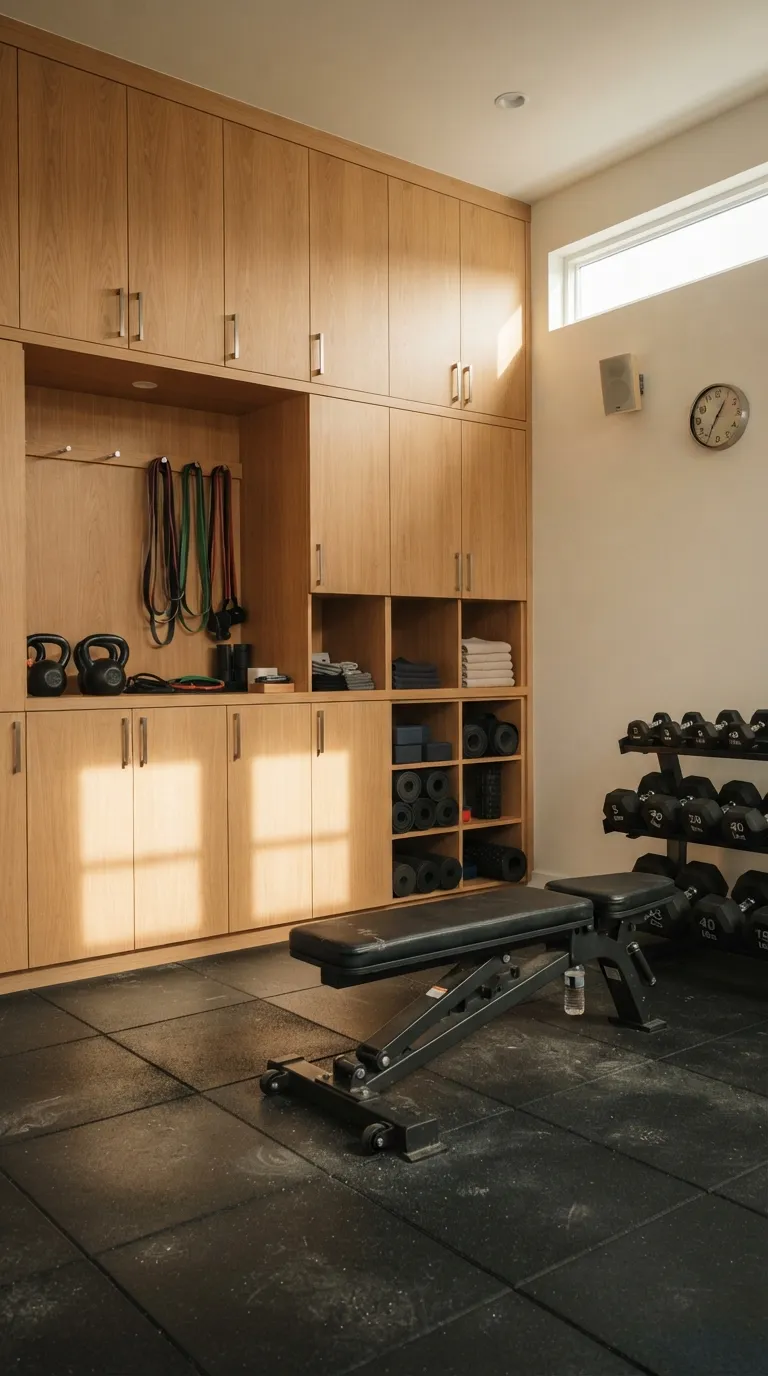
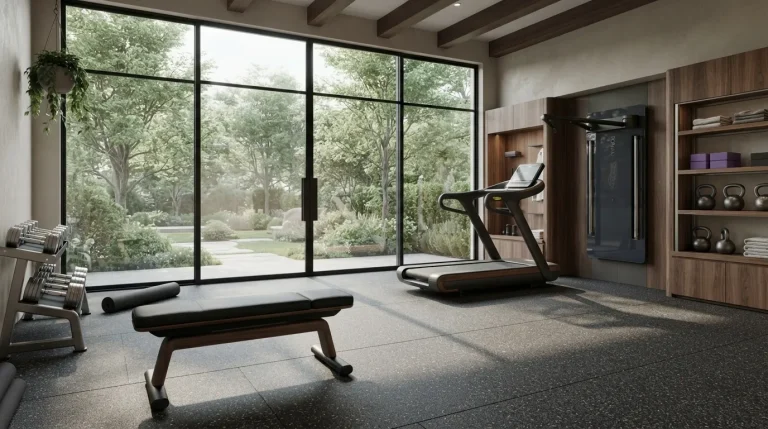
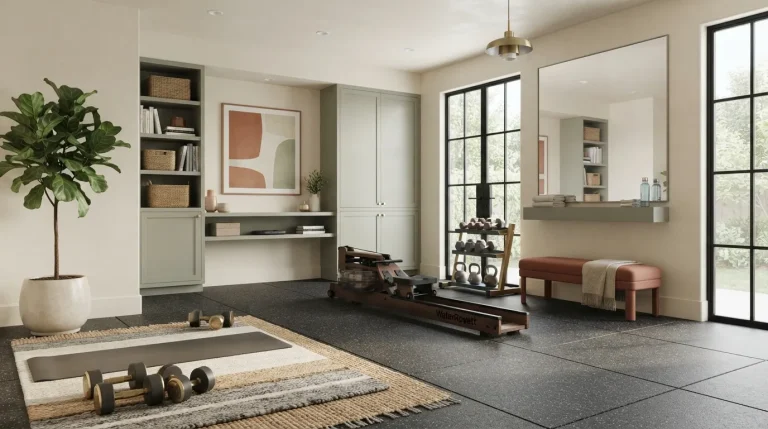
Built-in cabinets give your gym a clean visual anchor. Closed doors hide loose equipment, so the room can still feel like part of your home rather than a storage closet.
Use deep lower cabinets for heavier gear and slimmer sections for bands or towels. A few open niches break up the cabinetry and give you quick access to the items you use most often.
Floating Fitness Shelves
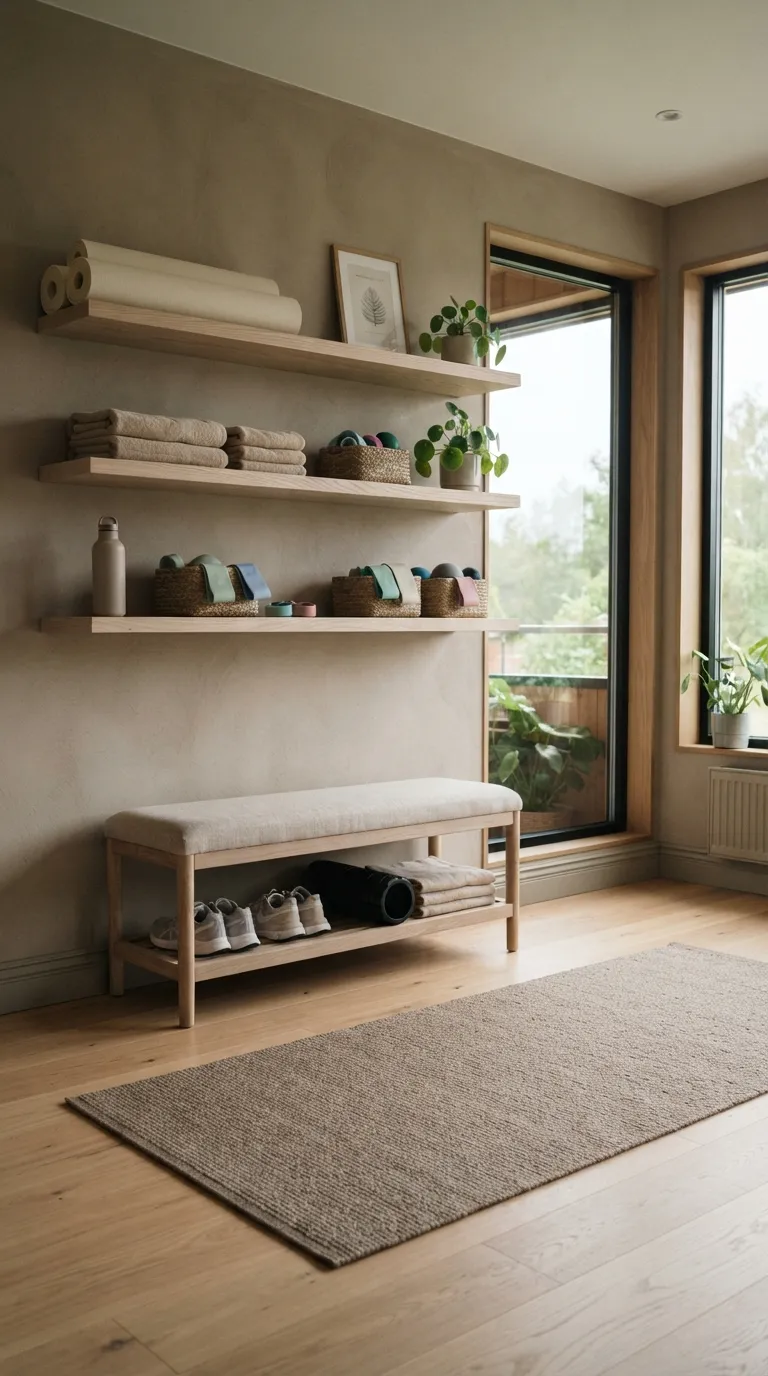
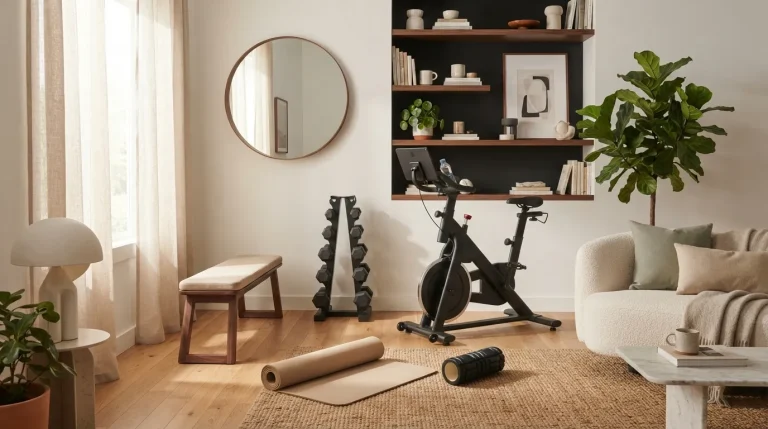
Floating shelves work well when floor space comes at a premium. They keep smaller workout items visible and off the floor while giving a blank wall a useful purpose.
Group similar gear in small baskets to keep the display tidy. Leave some shelf space open, too, so the wall doesn’t feel packed from edge to edge.
Hidden Bench Compartments
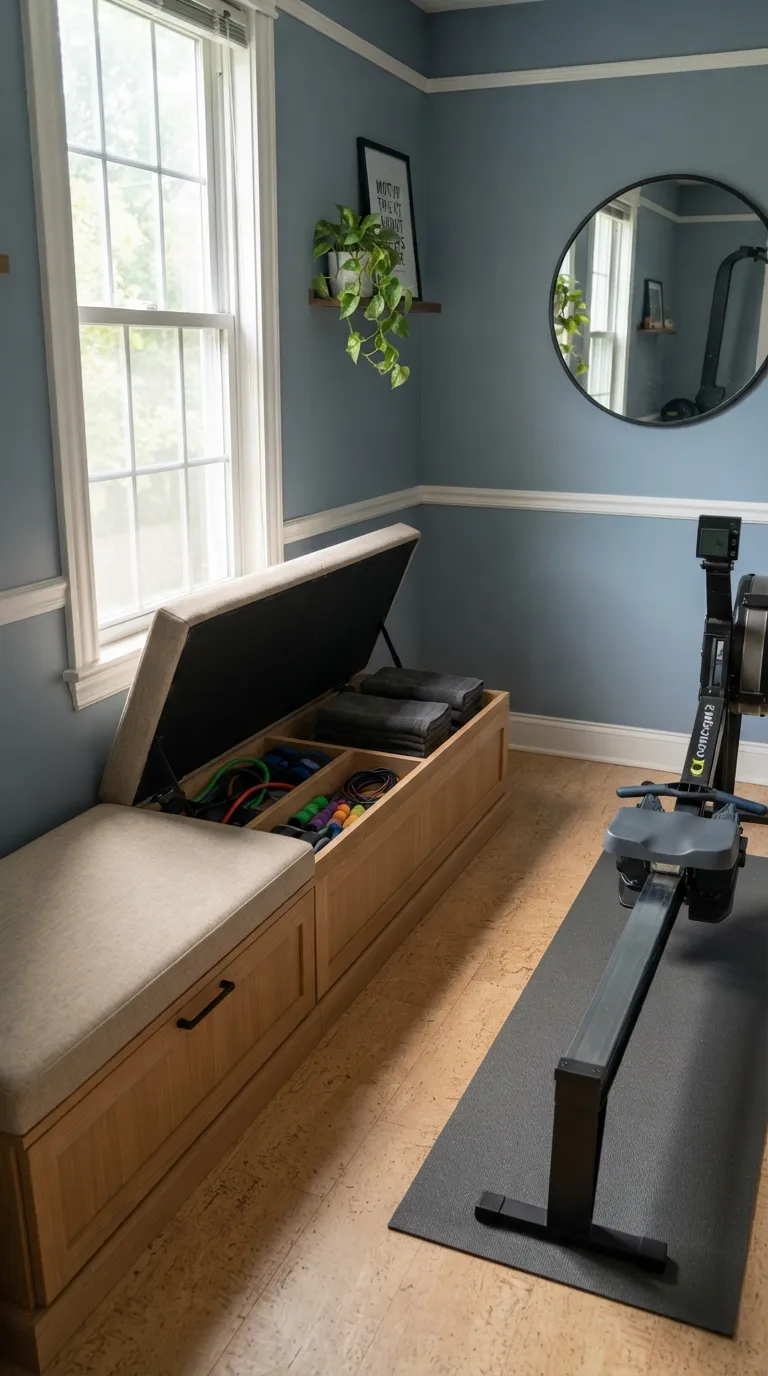
A storage bench gives you two useful features in one footprint. It offers a place to sit while also hiding smaller gym essentials beneath the seat.
This setup suits a spare bedroom or multipurpose room especially well. Keep everyday accessories inside the compartments and use the top surface for a towel, water bottle, or short recovery break.
Wall-Mounted Equipment Rack
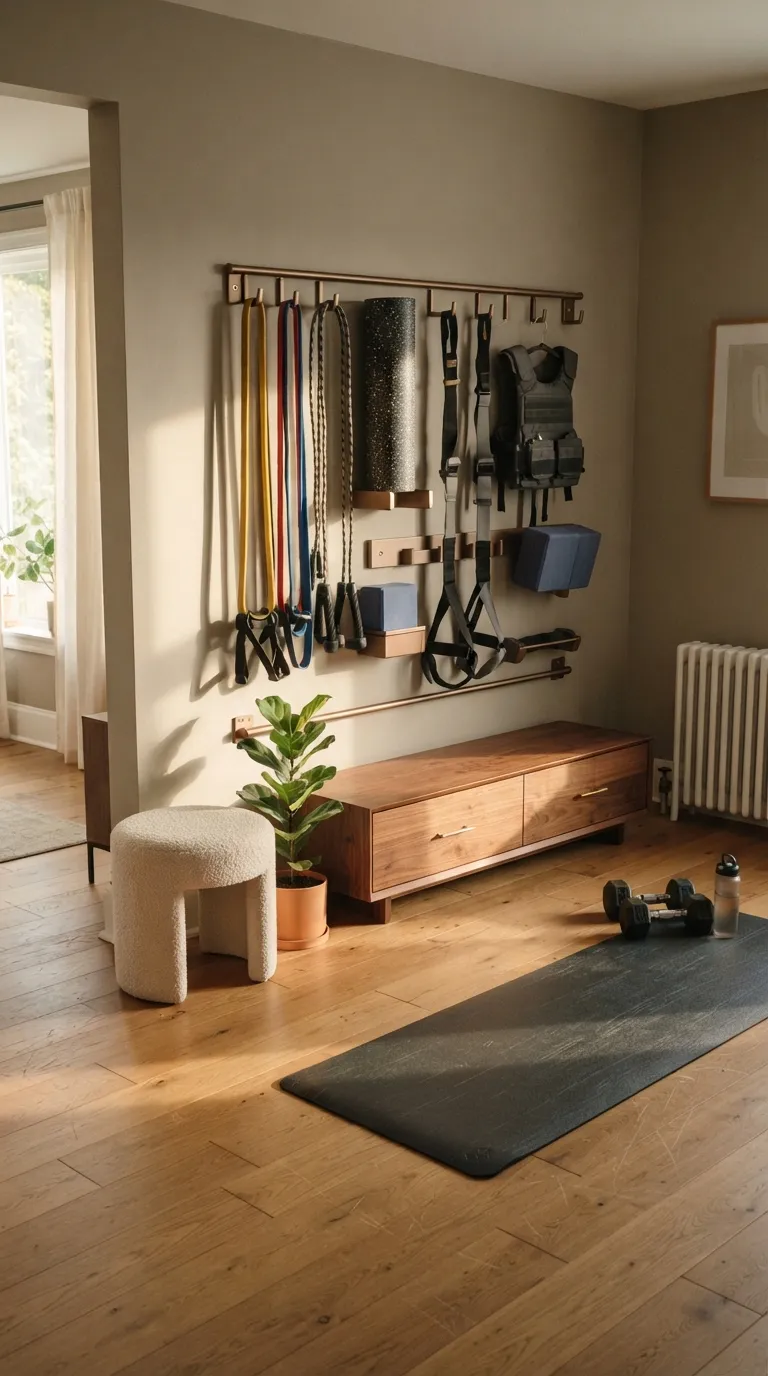
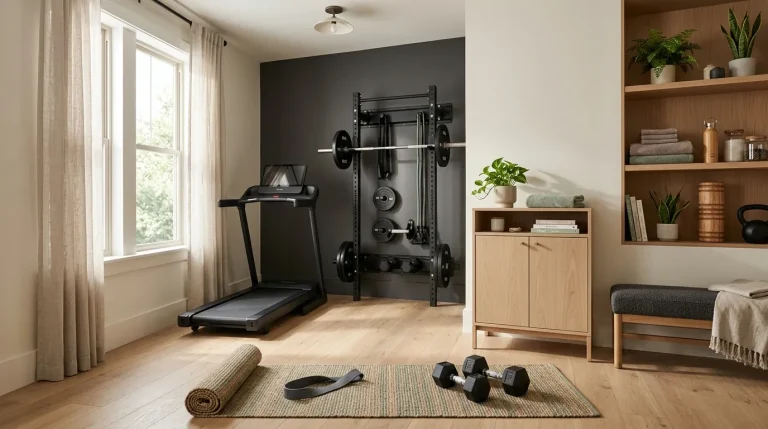
Wall-mounted storage makes use of vertical space without stealing valuable floor area. It’s a smart choice when your room needs to serve as both a workout spot and a regular living space.
Arrange gear by size and frequency of use. Keep bands and straps at arm height, while less-used accessories can sit higher on the rack.
Tall Slim Storage Cabinet
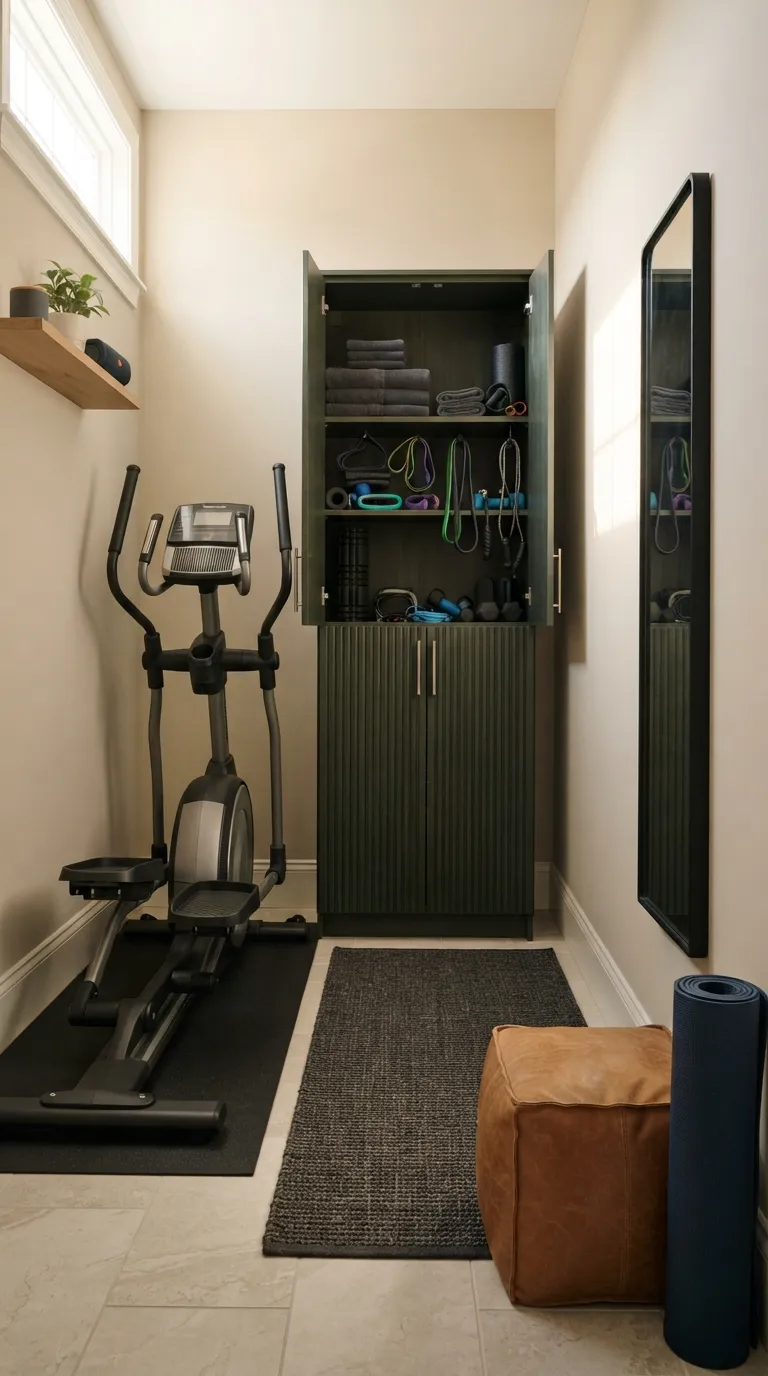
A tall cabinet can solve a storage problem in a surprisingly small footprint. Its narrow shape lets you use an unused wall section without making the room feel boxed in.
Choose adjustable shelves if your equipment collection changes often. Closed doors also keep visual clutter out of sight when the gym shares space with another part of the home.
Under-Stair Gym Storage
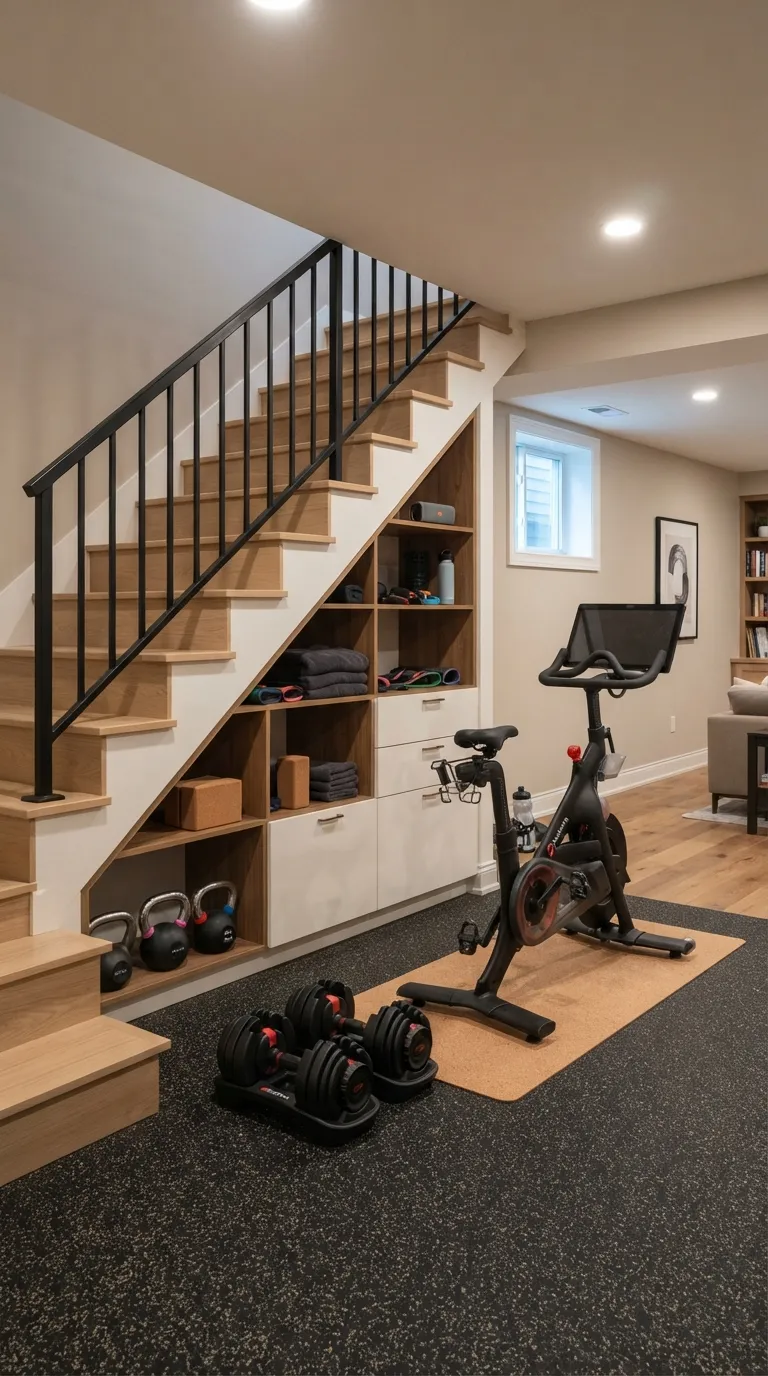
That awkward space beneath the stairs can become valuable gym storage. Custom drawers and cubbies follow the staircase shape, giving every small accessory a defined place.
Keep the heavier pieces in lower drawers for easy access. Use the upper cubbies for lightweight items such as blocks, towels, and stretching gear, leaving the workout floor clear.
Pegboard Gear Station
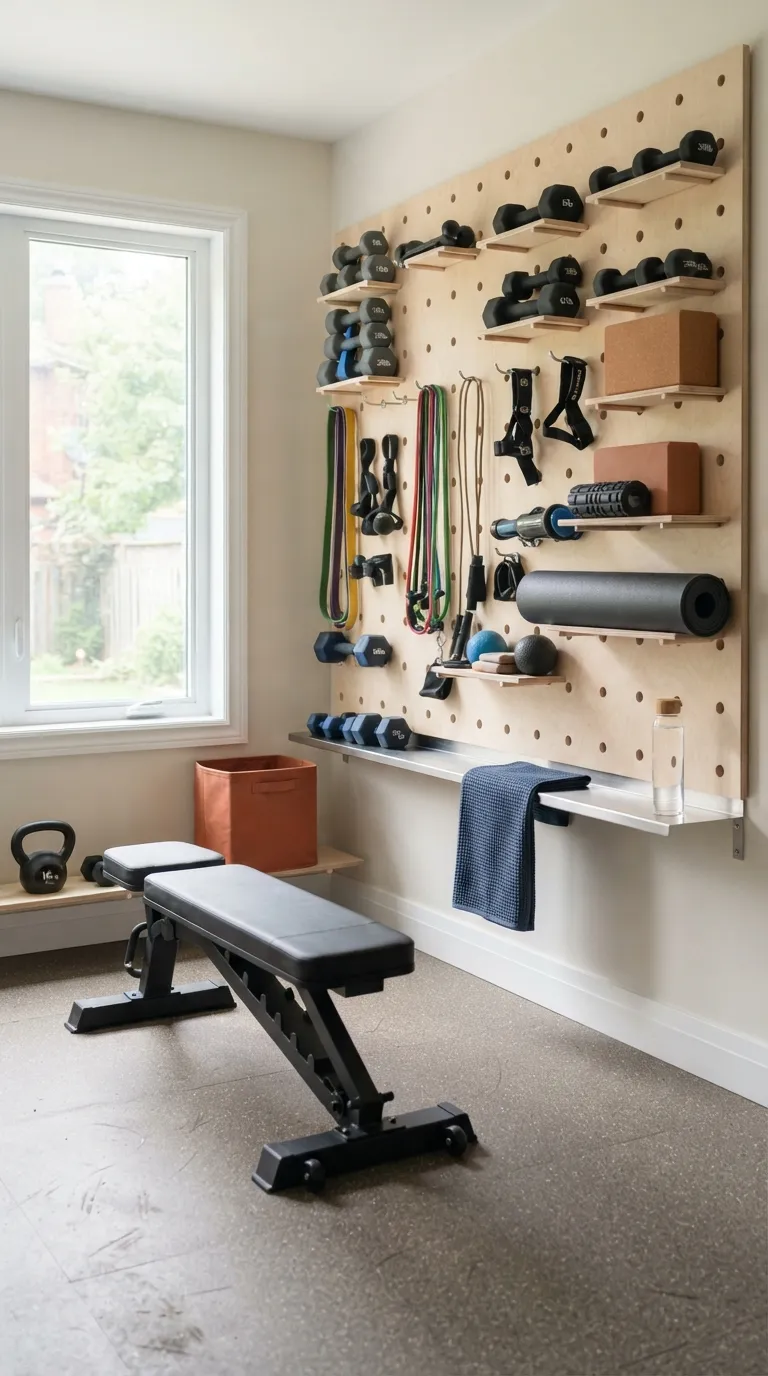
A pegboard gives you flexible storage without needing a large cabinet. You can move hooks and shelves as your collection of gym gear changes.
Place frequently used equipment between waist and shoulder height. Keep the layout visually balanced by grouping similar pieces together instead of filling every open peg.
Mirror Cabinet Storage
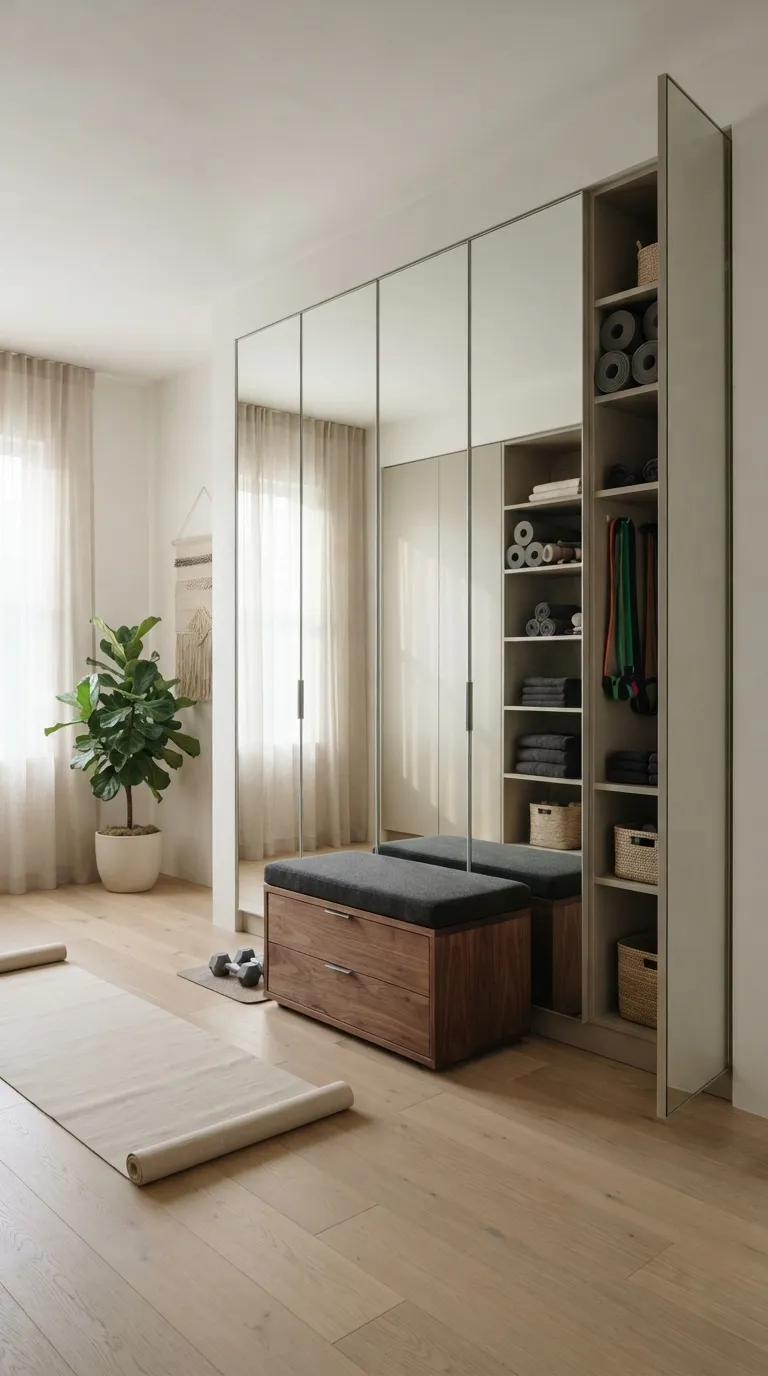
A mirrored cabinet can serve two jobs in a small gym. It stores your equipment behind closed doors while giving you a useful surface for checking exercise form.
Choose shallow cabinet depth when floor space is tight. The reflective front keeps the room visually open, while the storage inside keeps loose gear out of sight.
Open Cube Storage
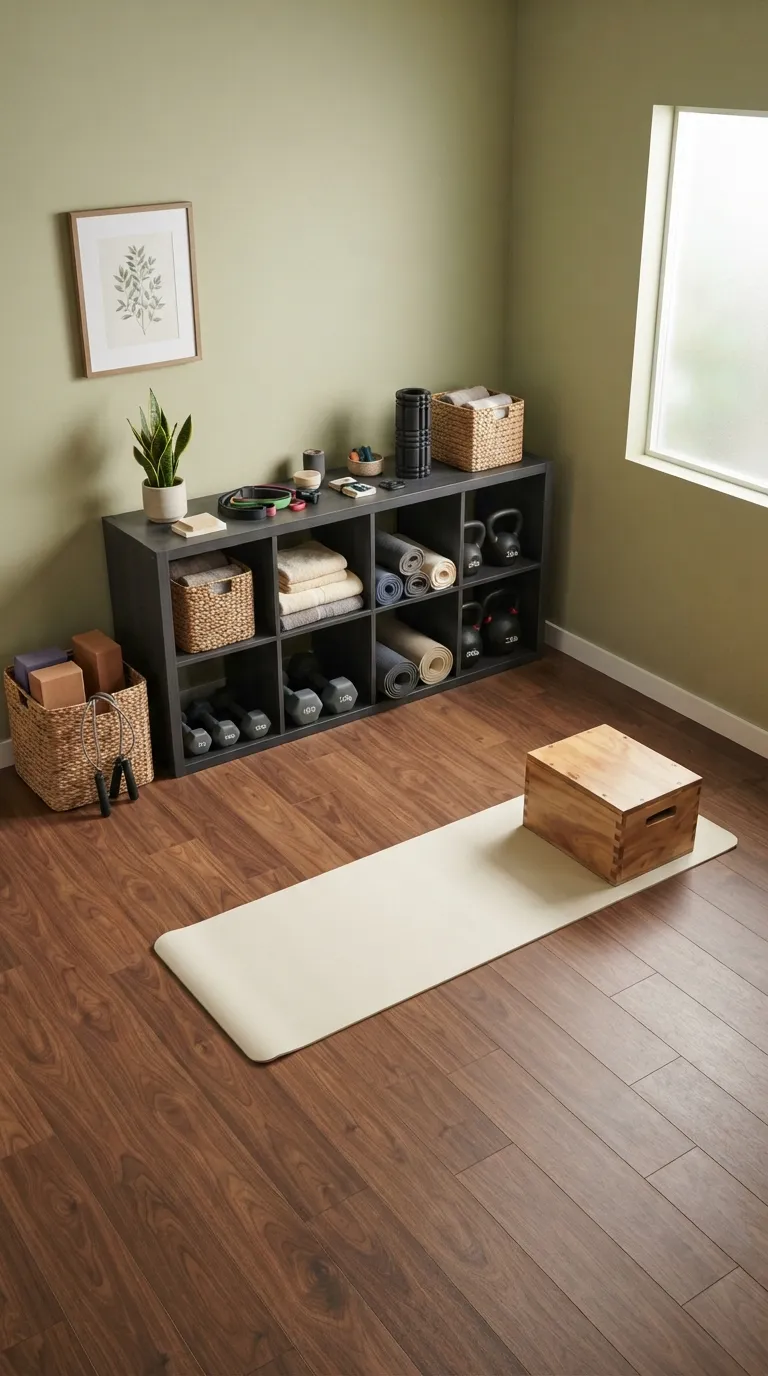
Cube storage gives you a simple way to separate different types of equipment. Baskets can hold small pieces, while open sections make heavier items easy to grab.
Keep the lowest cubes for weights and other dense gear. Add baskets in alternating sections to soften the look and stop the storage wall from becoming visually busy.
Rolling Storage Cart
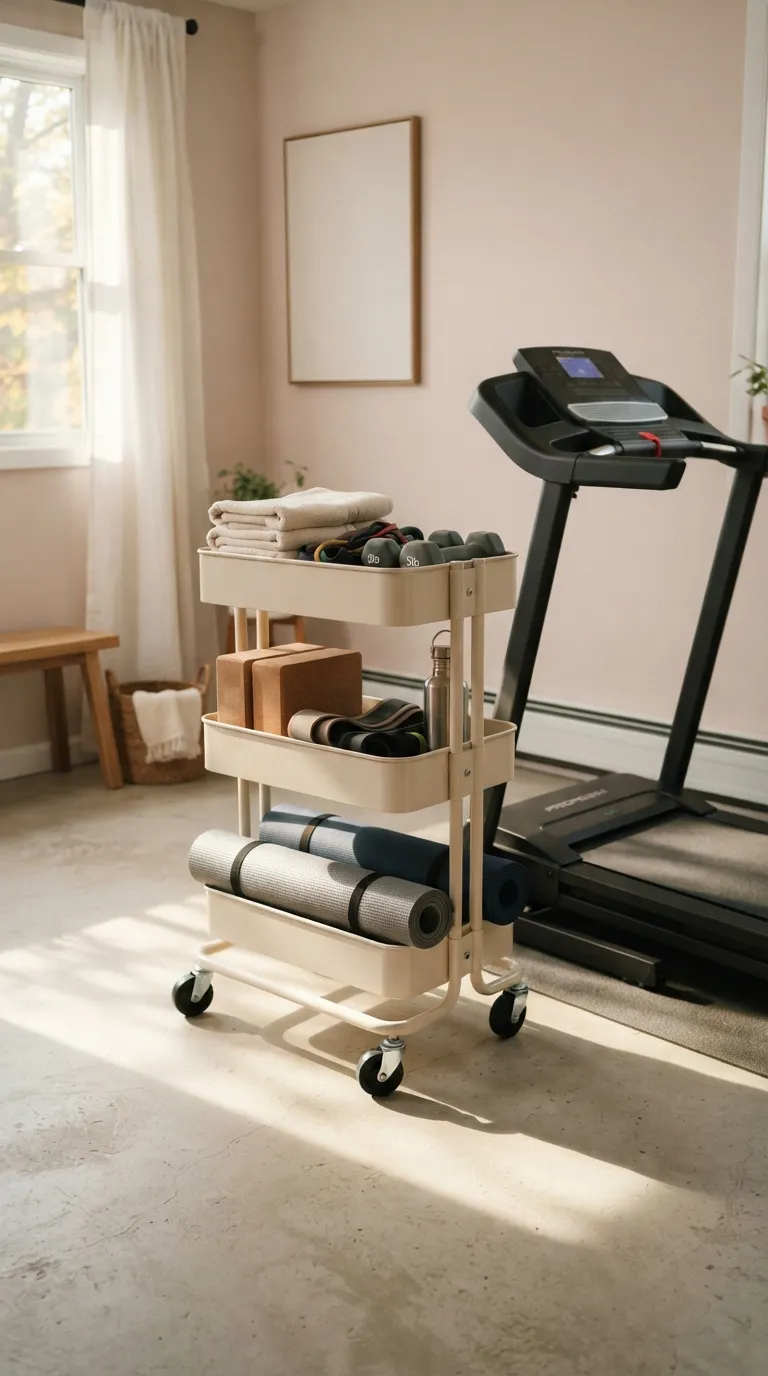
A rolling cart gives you portable storage for smaller gym essentials. You can move it beside your workout station and roll it away when you need more open floor.
Use one tier for bands and straps, another for towels and blocks, and the bottom tier for heavier accessories. Its small footprint makes it useful in rooms where permanent cabinets aren’t practical.
Storage Under Floating Bench
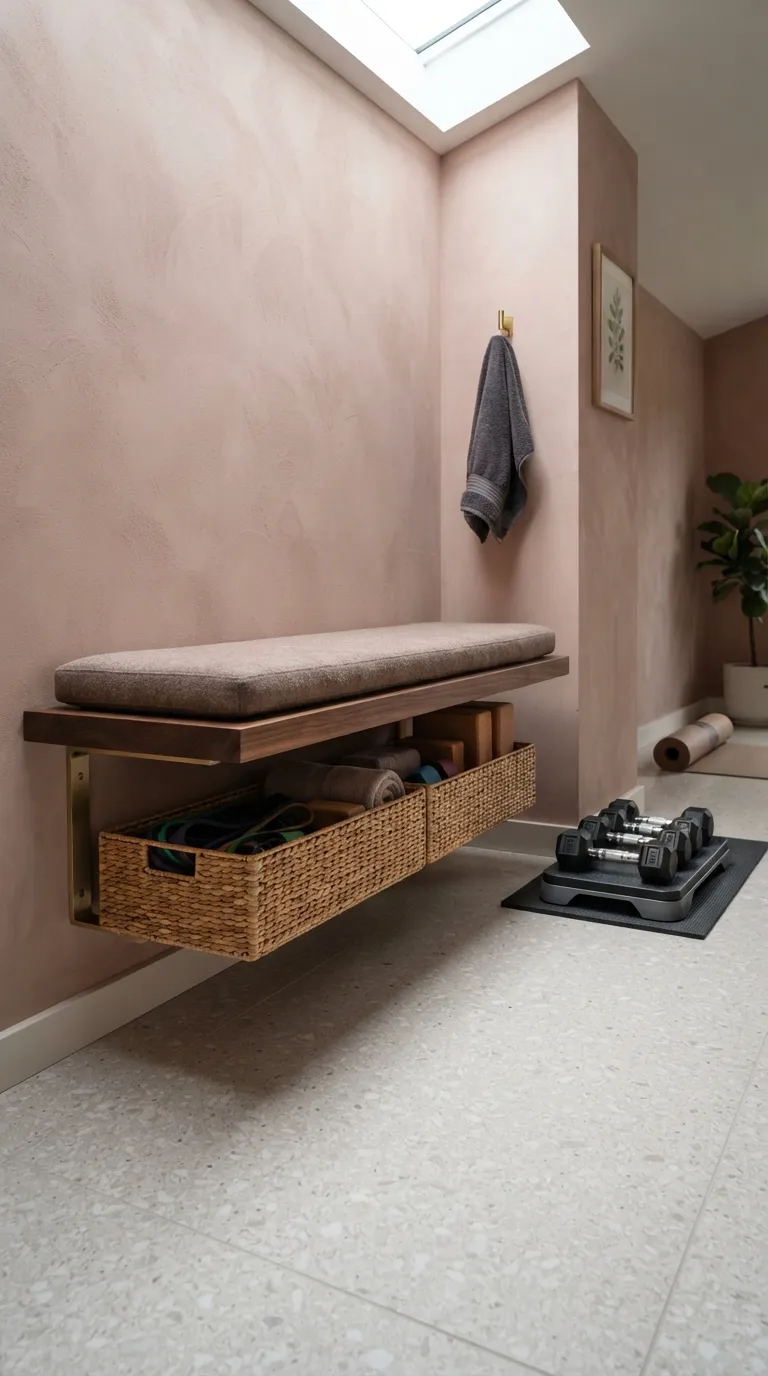
A floating bench can turn an overlooked gap into useful storage. The open space beneath it keeps baskets easy to reach without adding another large piece of furniture.
Choose baskets that slide smoothly under the bench. Use matching containers for smaller items so the storage area stays tidy while still feeling warm and residential.
Closed Storage Drawers
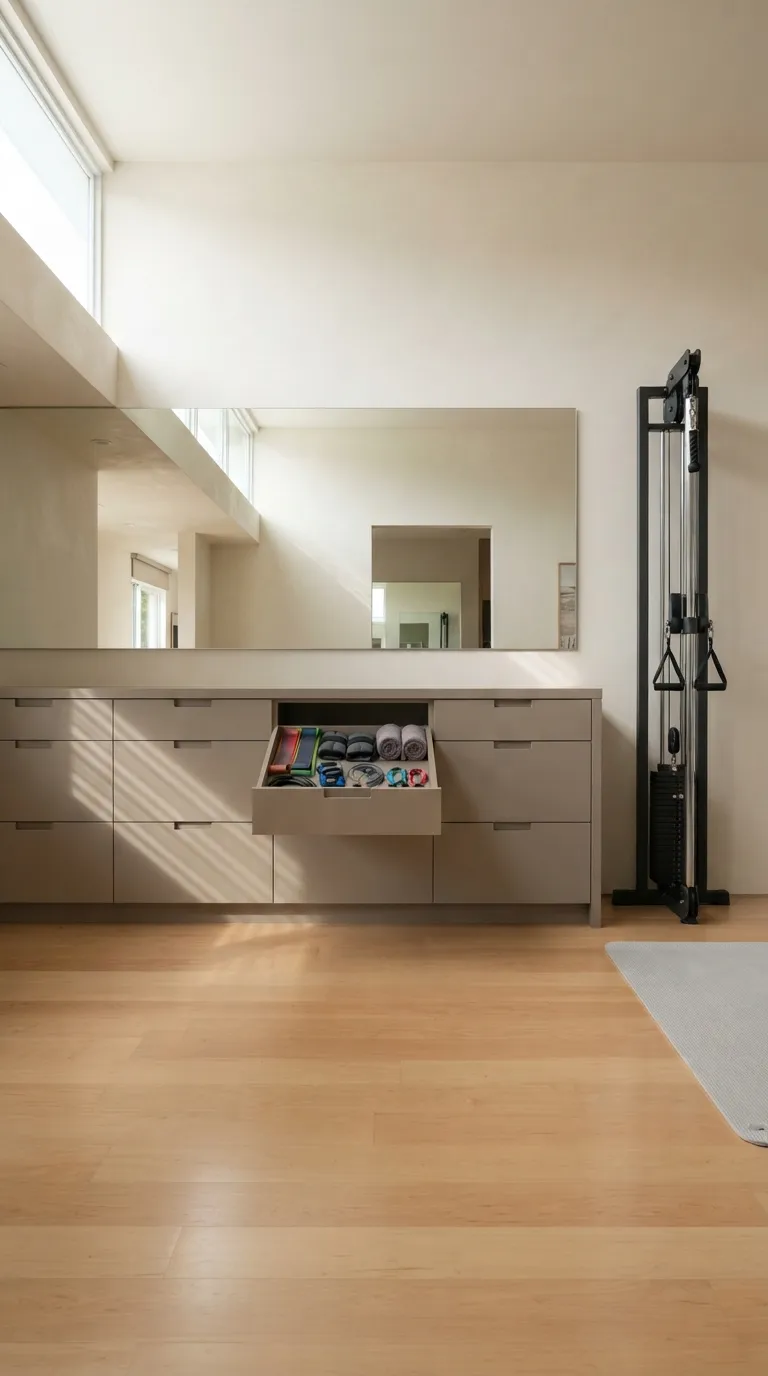
Closed drawers are useful when you want the room to look calm between workouts. They hide small pieces that tend to spread across shelves, benches, and corners.
Give each drawer a simple purpose. One can hold bands, another towels, and another smaller accessories, making it easier to put everything away after training.
Corner Shelf Tower
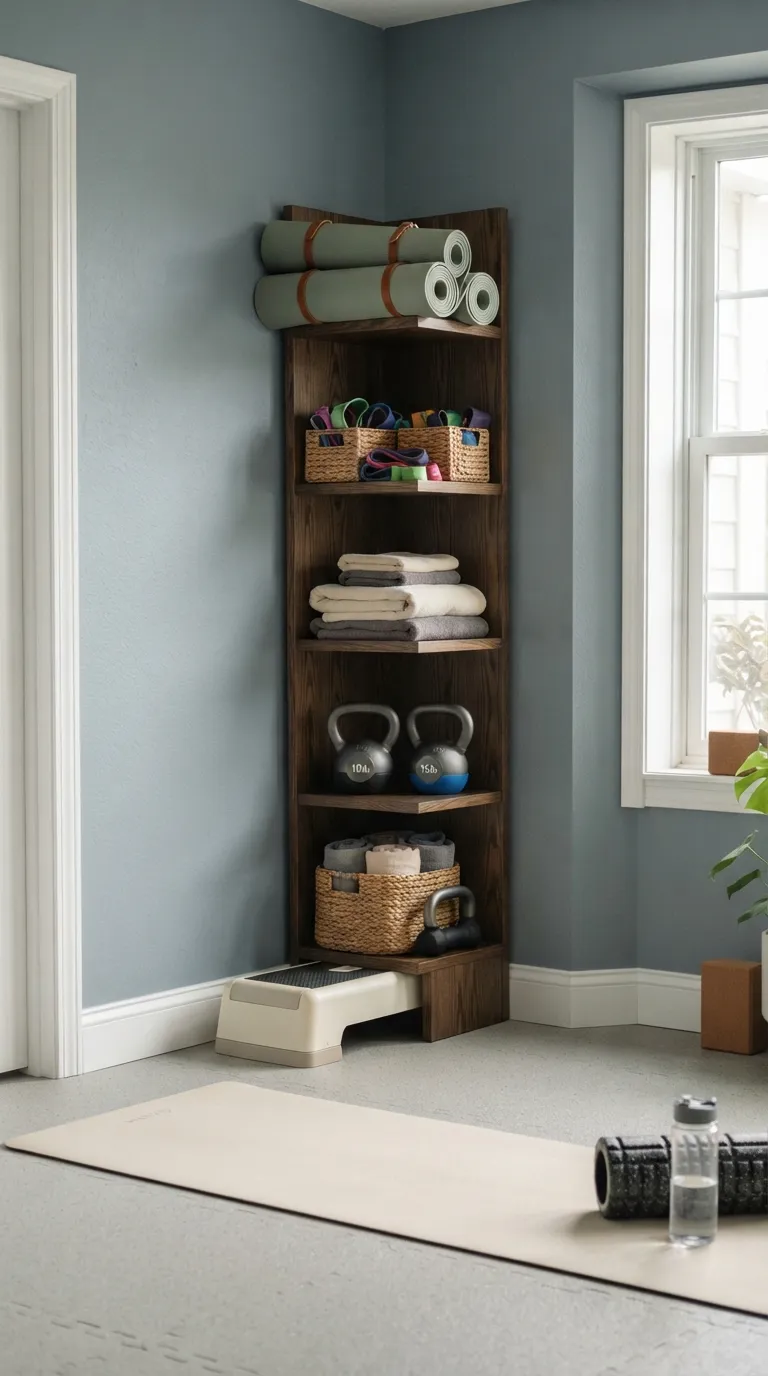
Corners often go unused in home gyms. A narrow shelf tower can turn that dead space into a compact station for mats, towels, bands, and lighter equipment.
Keep the shelf depth modest so it doesn’t interrupt movement around the room. Place larger pieces near the bottom and lighter accessories higher up for an easy-to-use setup.
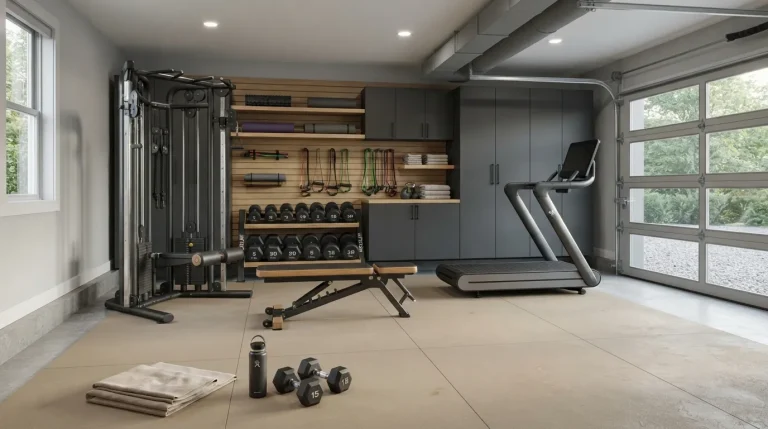
Garage Cabinet Wall
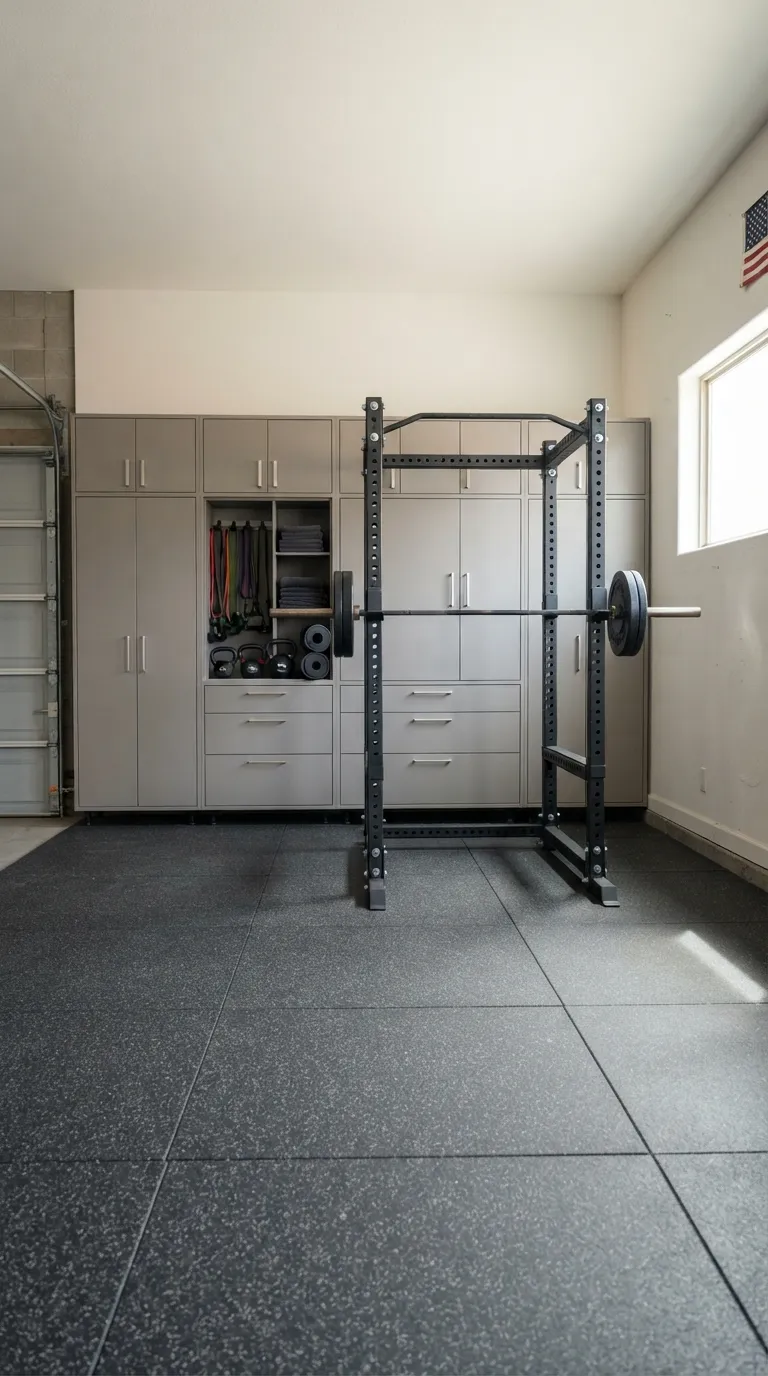
A garage gives you room for larger equipment, but loose gear can quickly make it feel crowded. A full cabinet wall keeps weights and accessories organized without blocking the main training zone.
Use tall cabinets for long equipment and lower drawers for smaller pieces. Keep the gear you reach for often in an open section so you don’t have to open several doors during a workout.
Ladder-Style Towel Rack
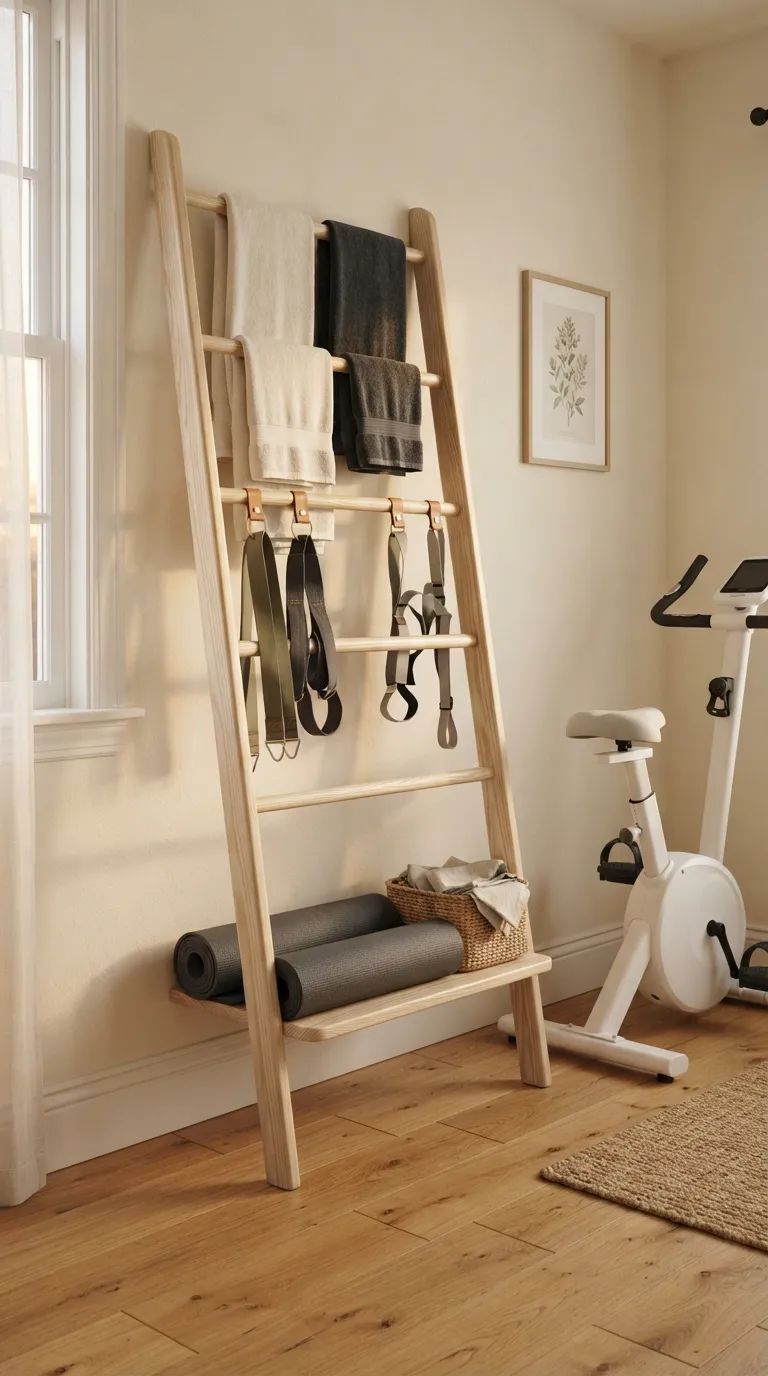
A ladder rack brings storage upward while taking very little floor space. It’s especially handy for towels, straps, mats, and other lightweight workout items.
Place it near the entrance or beside a stretching area. That way, clean towels and small accessories stay within reach without crowding your main exercise zone.
Pull-Out Mat Cabinet
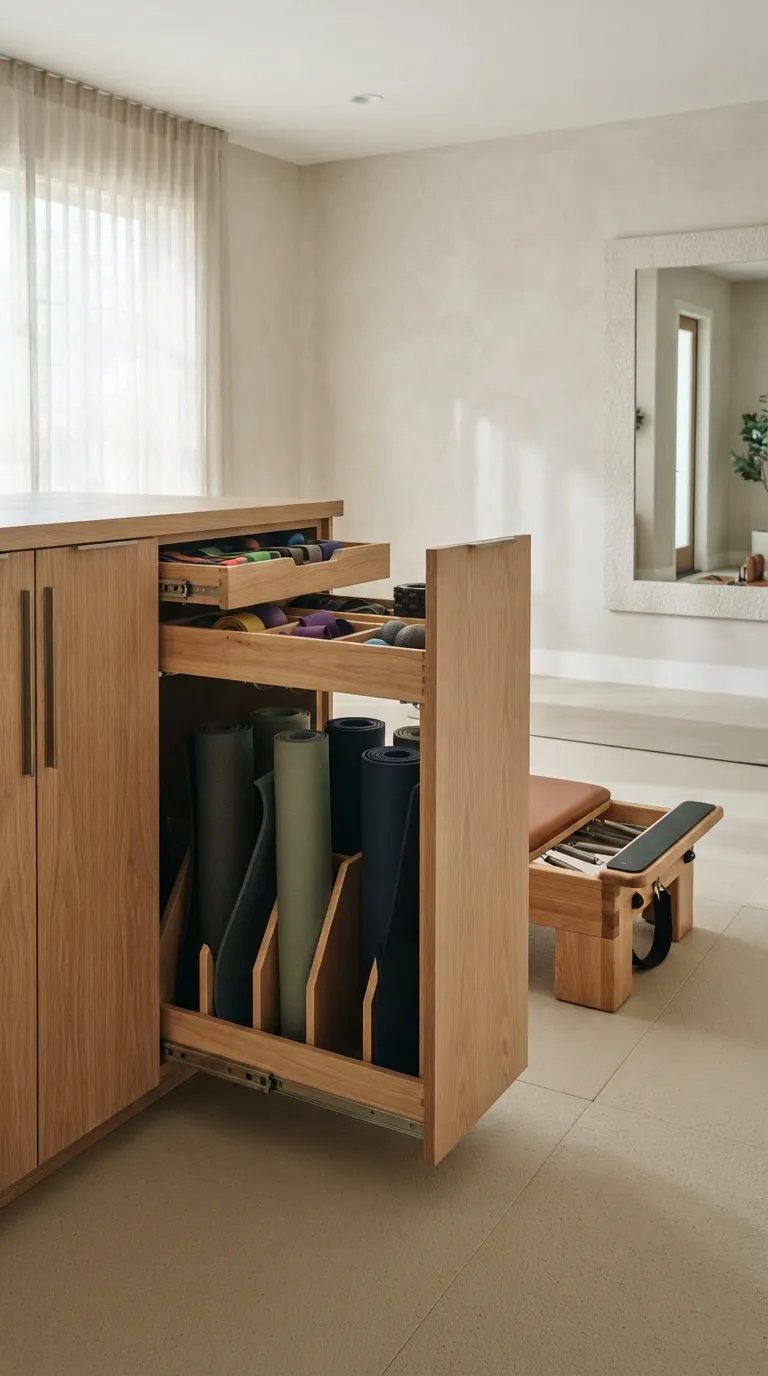
Rolled mats can take up more room than expected. A dedicated pull-out cabinet keeps them upright, protected, and easy to grab before stretching or floor work.
Use vertical dividers inside the cabinet to stop mats from leaning into one another. Add shallow drawers above for straps, blocks, and other small accessories that pair naturally with floor exercises.
Window Seat Storage
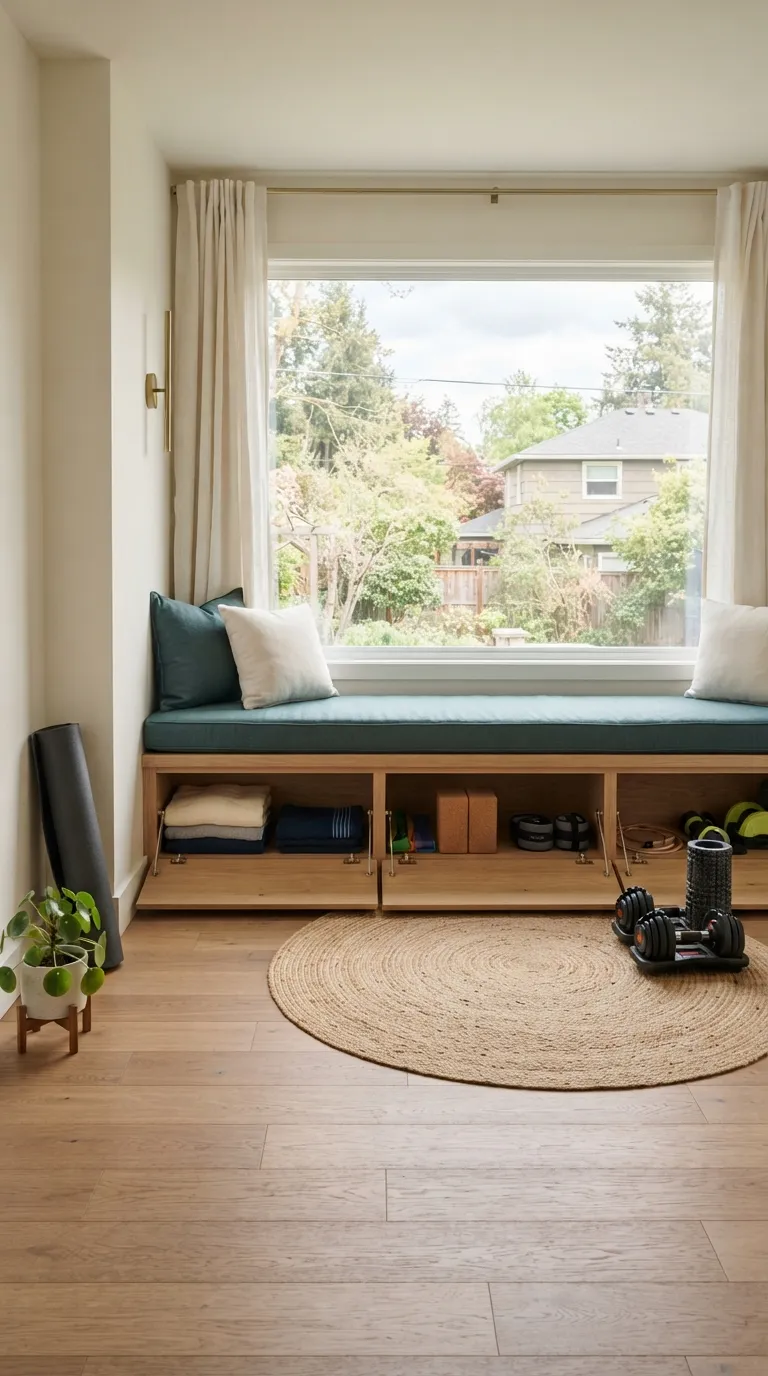
A window seat can add comfortable seating without giving up valuable storage. The space beneath the cushion is perfect for items you don’t need during every workout.
Keep softer accessories inside fabric bins or dividers. The seat can then stay neat enough to function as a quiet spot for stretching, cooling down, or taking a short break.
Built-In Niche Shelves
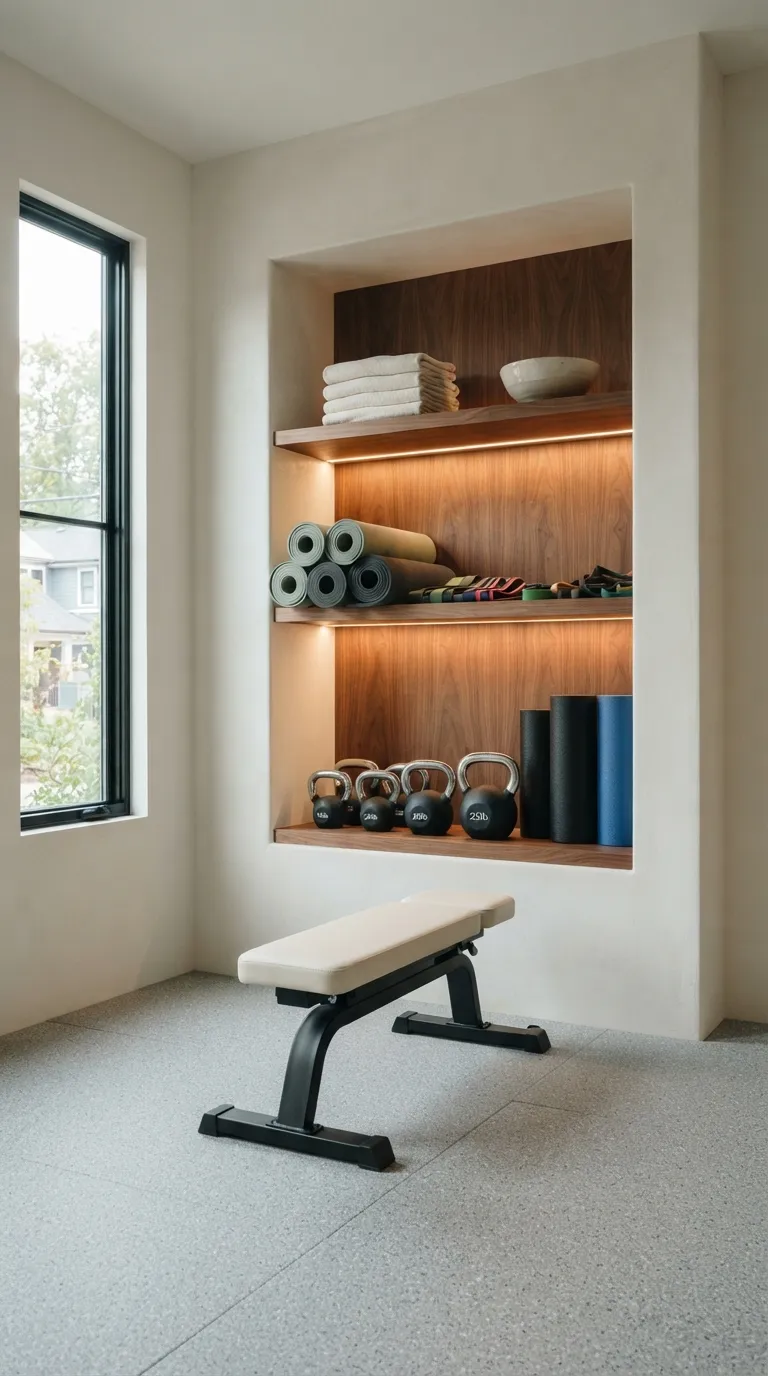
A recessed niche keeps storage flush with the wall. This works especially well when you want useful shelving without adding another freestanding piece.
Give each shelf a clear role based on equipment size. Heavier items belong low, while towels, bands, and other light pieces can sit higher where they’re easy to reach.
Storage Stair Platform
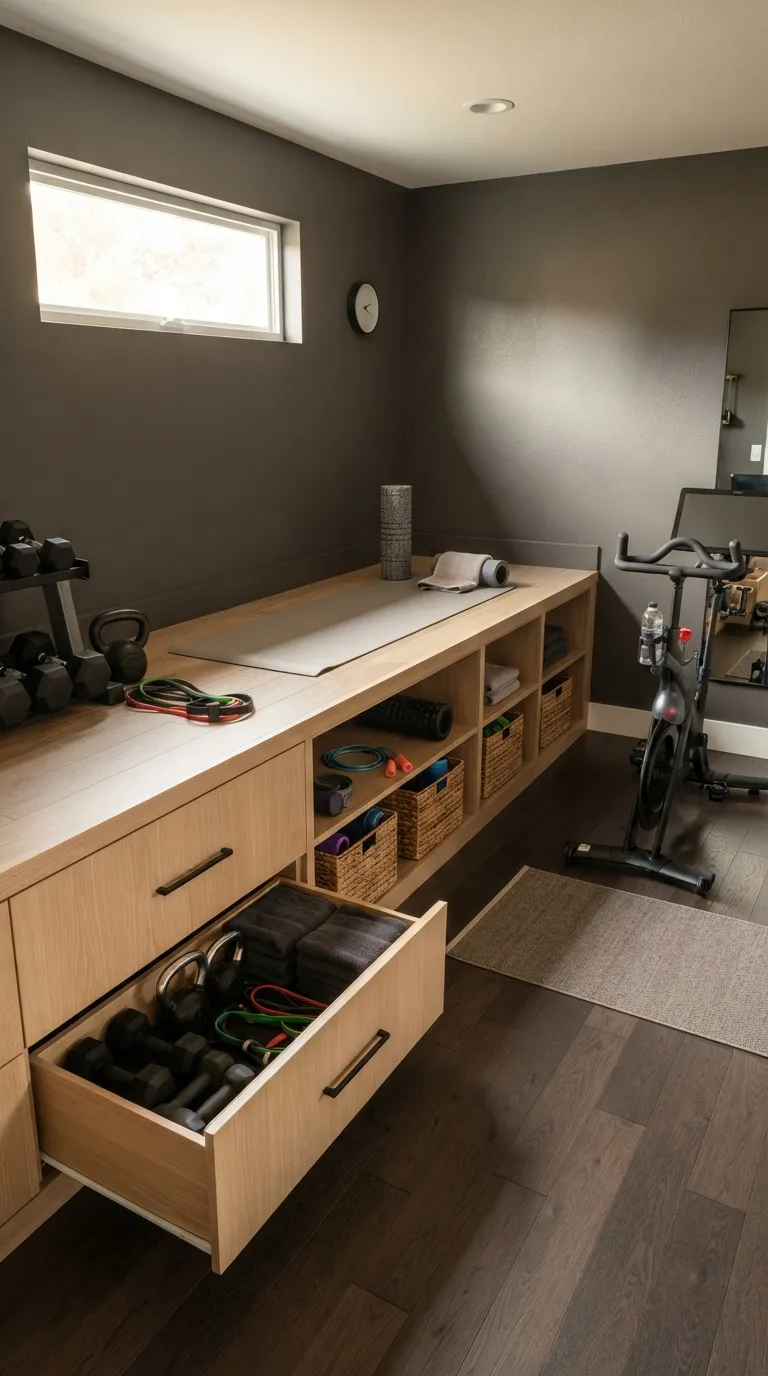
A raised platform can combine workout space and hidden storage in one structure. Deep drawers beneath the platform give bulky equipment a dedicated home while keeping the room visually open.
This idea suits larger basements and converted garages. Keep the platform edge clear and use sturdy drawer hardware designed to handle the weight of gym equipment.
Fold-Down Equipment Storage
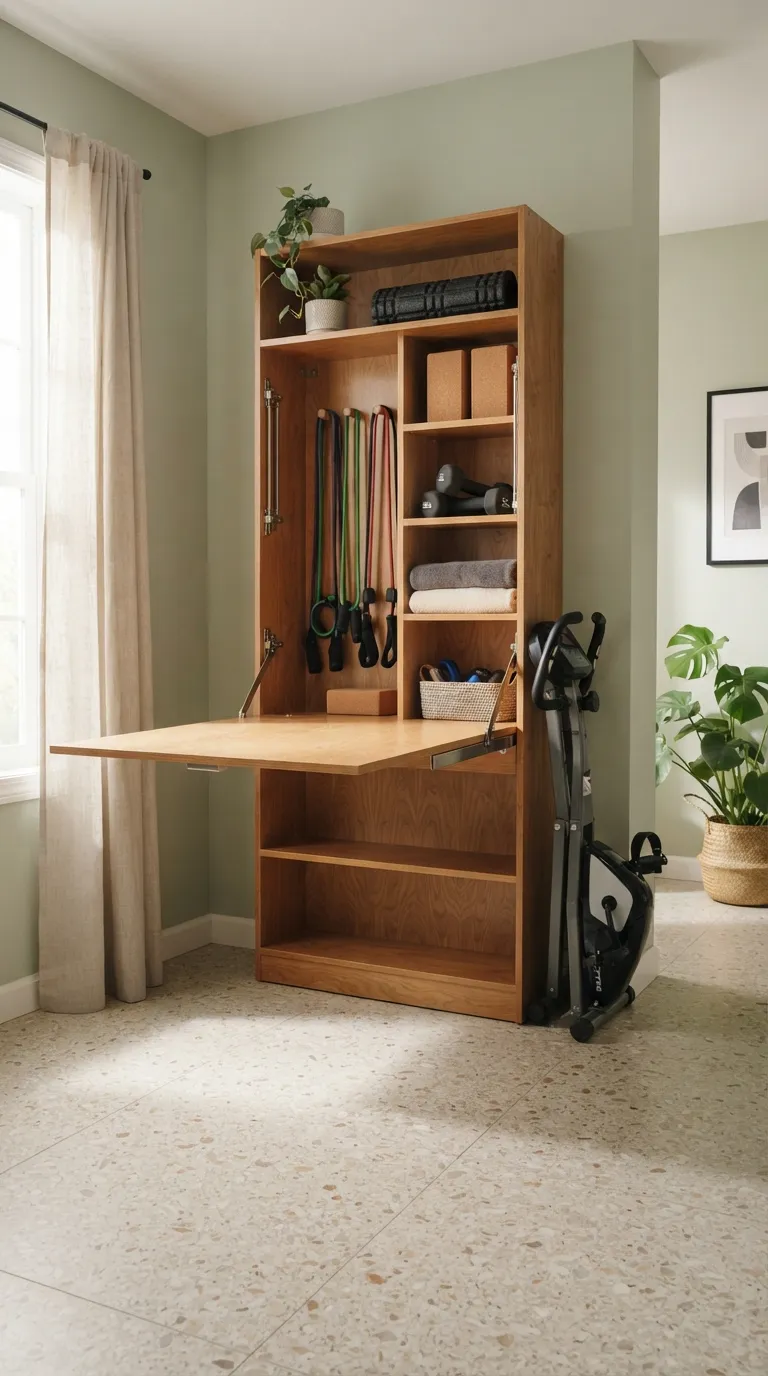
Fold-down storage makes sense when one room has more than one purpose. You can keep workout equipment available without leaving it spread across the floor all day.
Look for sturdy hinges and secure hardware when planning this type of setup. Keep the storage panel organized by category so opening the system gives you quick access to the gear you need.
Wrapping Up
The best modern home gym ideas with storage make organization part of the room’s design. Cabinets, shelves, benches, racks, and hidden compartments can keep equipment close while preserving open space for movement.
Start with the gear you use most, then choose storage around it. A small room may need vertical shelves or hidden drawers, while a garage can handle larger cabinets and deeper storage. Keep the floor clear, give every item a home, and your gym will feel easier to use from the moment you walk in.
Emma Williams
Emma Williams is an interior design expert and decor editor at Lady Home Decor. She specializes in modern, cozy, and functional home styling, helping readers discover inspiring decorating ideas that are easy to recreate. Her work focuses on timeless design, practical solutions, and the latest home decor trends.