12 Coworking Space Design Ideas for Modern Offices

Introduction
Looking for fresh coworking space design inspiration that makes every workday more productive and enjoyable? You’re in the right place. Whether you’re creating a brand-new shared office or updating an existing workspace, thoughtful design choices can completely transform how people collaborate, focus, and connect.
Modern coworking spaces are about much more than attractive furniture. They should support different work styles, encourage creativity, and provide comfortable areas for both teamwork and quiet concentration. I’ve noticed that even simple upgrades, like better lighting, flexible seating, or dedicated focus areas, can make a noticeable difference in how welcoming and functional an office feels. In this collection, you’ll discover practical ideas that combine beautiful aesthetics with everyday usability, helping you create a workspace people genuinely enjoy returning to while offering plenty of Pinterest-worthy inspiration.
1. Open Collaboration Zone
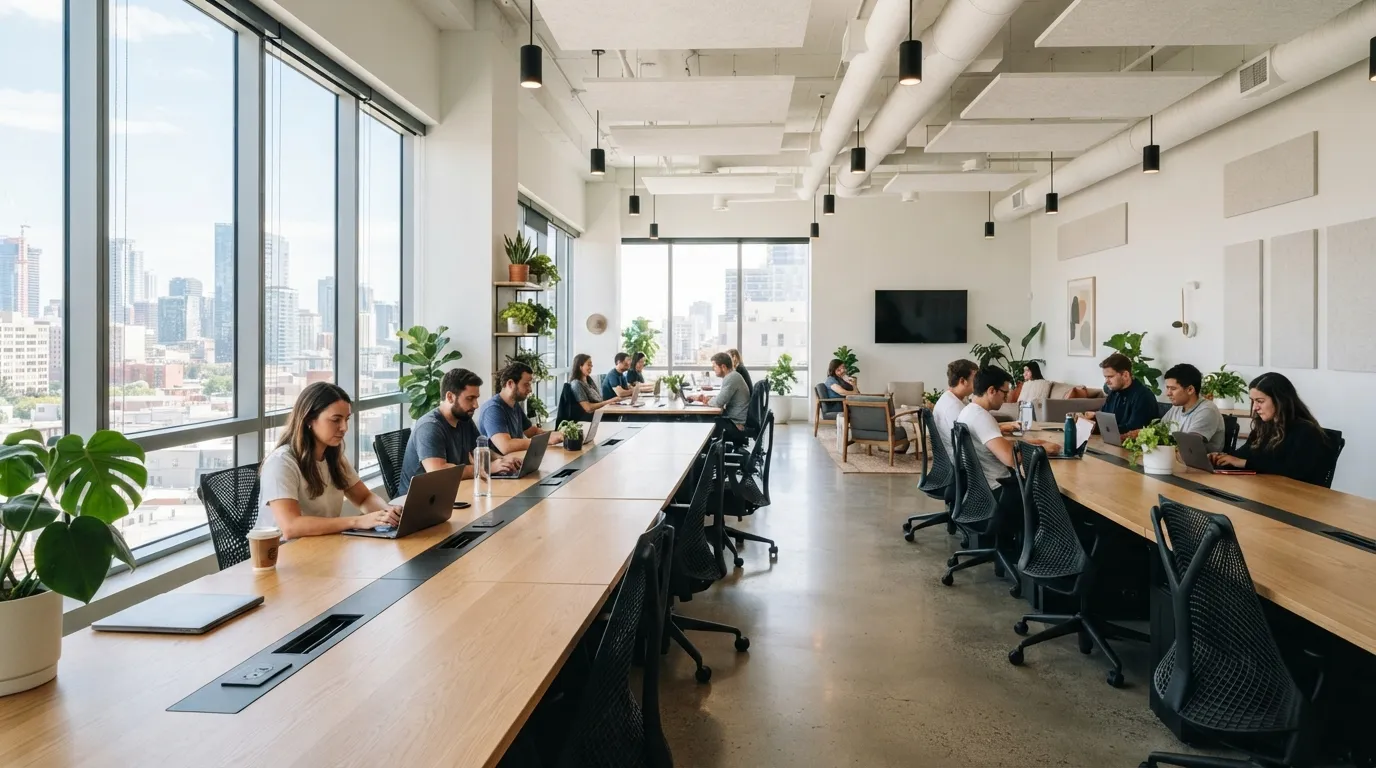
A well-planned open workspace instantly makes a shared office feel more connected and inviting. Instead of separating everyone with tall dividers, this layout keeps conversations flowing while still leaving enough personal space for focused work. In my experience, people naturally interact more when furniture placement encourages movement instead of creating barriers. That simple shift often leads to better collaboration, spontaneous brainstorming, and a workplace that feels energetic without becoming distracting or chaotic throughout the day.
Natural light, comfortable seating, and uncluttered desks make this arrangement even more effective. Adding greenery between workstations introduces subtle privacy while keeping the environment open and fresh. Many designers recommend balancing shared desks with small breakout areas so members can switch settings throughout the day. This flexible approach improves comfort, reduces visual clutter, and creates a coworking space design that supports creativity, productivity, and a welcoming community atmosphere for businesses of every size.
2. Glass Meeting Rooms
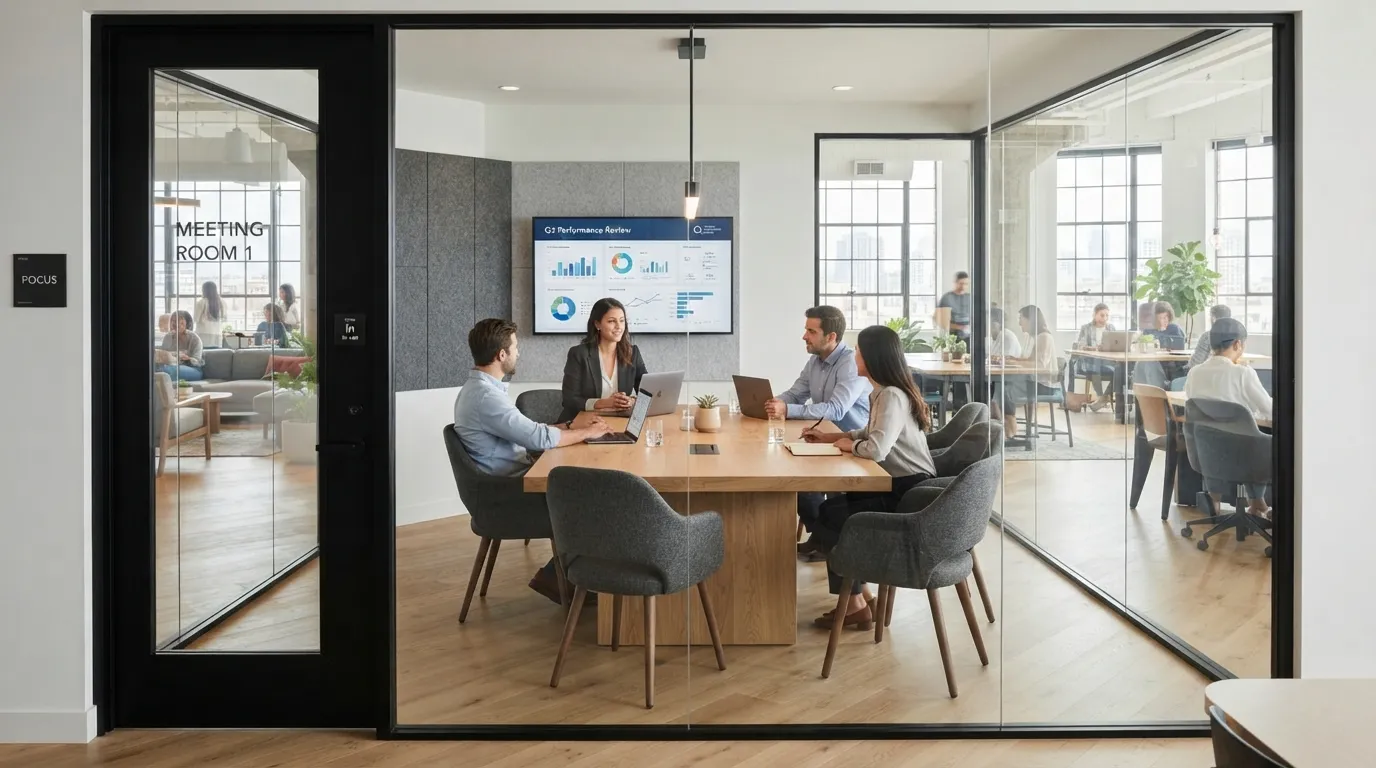
Glass meeting rooms offer the perfect balance between openness and privacy. They allow teams to hold discussions without making the office feel closed off or cramped. I’ve noticed that transparent partitions also encourage a more organized atmosphere because the entire workplace appears brighter and more connected. Frosted sections or subtle privacy films can still provide discretion while preserving the clean, modern appearance many businesses prefer today.
Acoustic wall panels, comfortable chairs, and simple décor make these rooms even more functional. Good lighting helps video calls look professional while creating a pleasant environment for brainstorming sessions. Choosing minimal furniture keeps the room versatile for presentations, workshops, or quick meetings. The result is a polished office feature that improves everyday workflow while adding a refined architectural element that complements contemporary shared work environments.
3. Lounge Work Corner
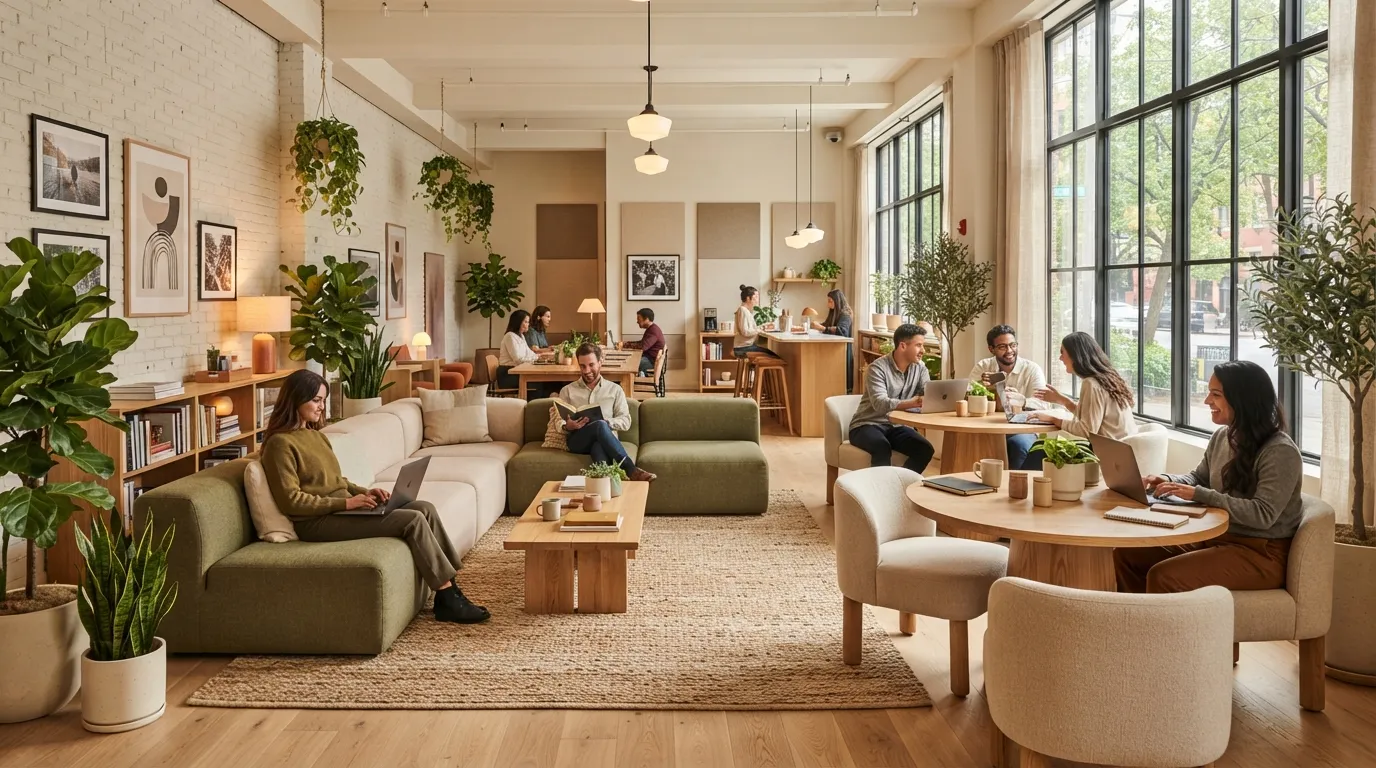
Not every task needs a formal desk, and that’s exactly why lounge areas have become so popular. Comfortable seating encourages informal conversations, creative thinking, and quick brainstorming sessions without the pressure of a conference room. I’ve seen this work especially well for freelancers and startups where flexibility is part of the company culture. A cozy corner often becomes one of the most frequently used spaces in the entire office.
Layering soft textures, neutral colors, and natural materials helps the lounge feel calm without sacrificing professionalism. Adding charging outlets, movable tables, and adjustable lighting makes the area practical for both solo work and collaborative discussions. Small details like plants, artwork, and textured rugs create an inviting atmosphere that encourages people to stay productive while enjoying a more relaxed work experience.
4. Private Focus Pods
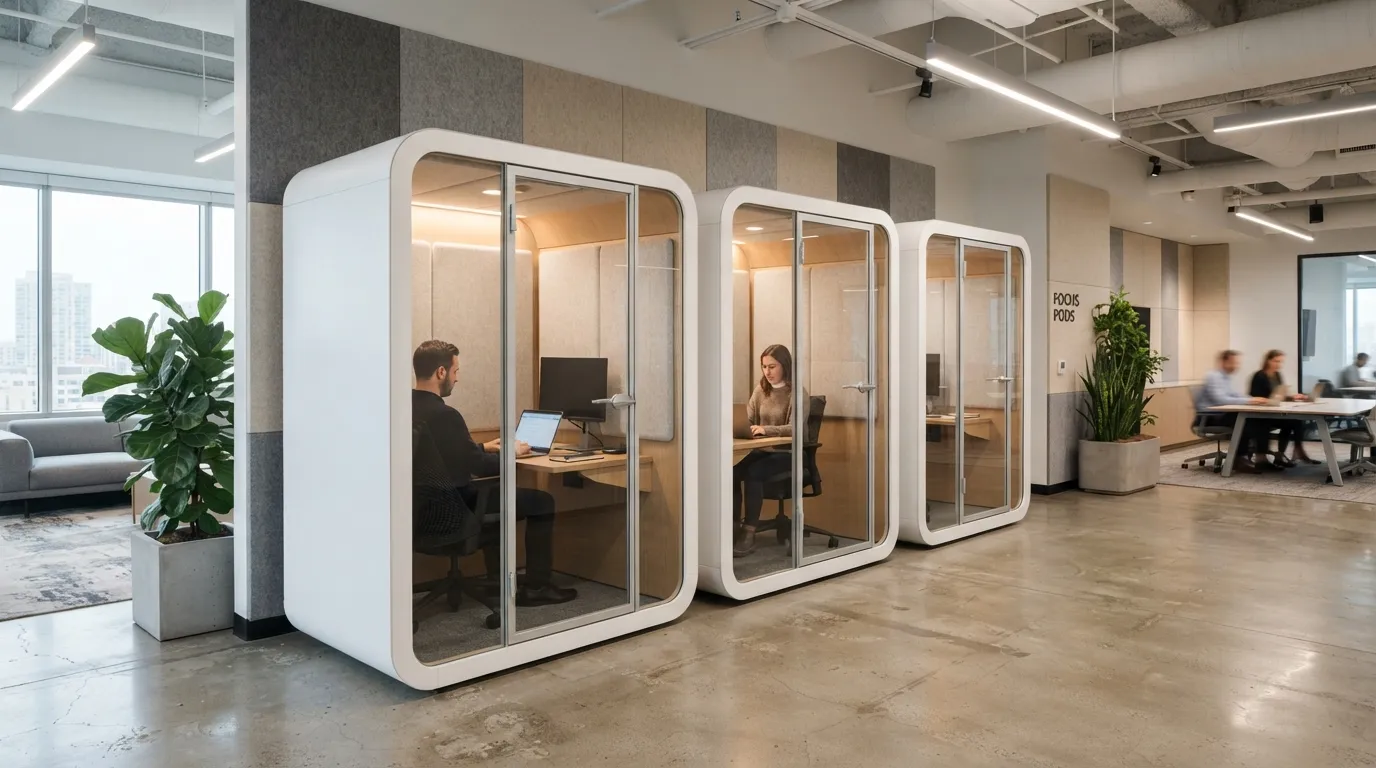
Busy offices thrive on collaboration, but everyone occasionally needs a quiet place to concentrate. Private focus pods solve that challenge by giving members an enclosed workspace without sacrificing the open atmosphere of the office. In my experience, these pods become some of the most appreciated features because they provide instant privacy whenever deadlines, video meetings, or detailed tasks require complete attention. They also reduce noise throughout the shared workspace by keeping conversations contained.
Choose pods with built-in ventilation, power outlets, and adjustable lighting to maximize comfort throughout the day. Soft acoustic materials improve sound quality while creating a peaceful environment for focused work. Many designers recommend placing pods near shared workstations so they remain convenient without interrupting office flow. This practical solution balances collaboration with quiet productivity, making the workspace more flexible for different working styles.
5. Café Style Seating
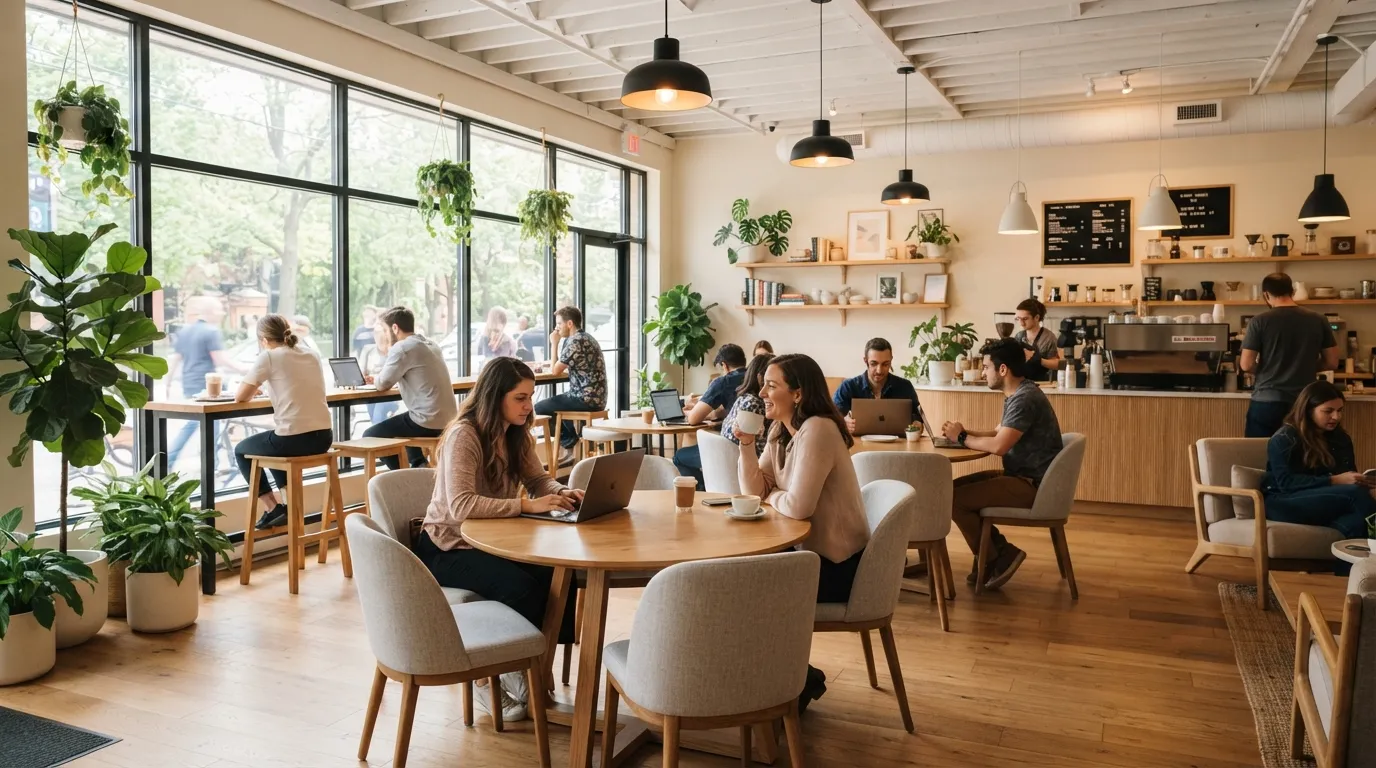
A café-inspired seating area adds energy and personality to any shared office. Instead of reserving every interaction for meeting rooms, members can gather over coffee for casual discussions or quick brainstorming sessions. I’ve noticed these relaxed spaces often lead to unexpected networking opportunities because people naturally connect in comfortable environments. That sense of community is one reason many professionals choose shared offices over traditional workplaces.
Simple furniture, warm finishes, and quality lighting make this area feel welcoming without becoming overly decorative. Offering a mix of small tables and larger communal seating gives visitors flexibility throughout the day. Adding greenery and subtle décor keeps the atmosphere fresh while maintaining a polished appearance. The result is a functional gathering spot that supports collaboration, creativity, and meaningful professional connections.
6. Flexible Modular Layout
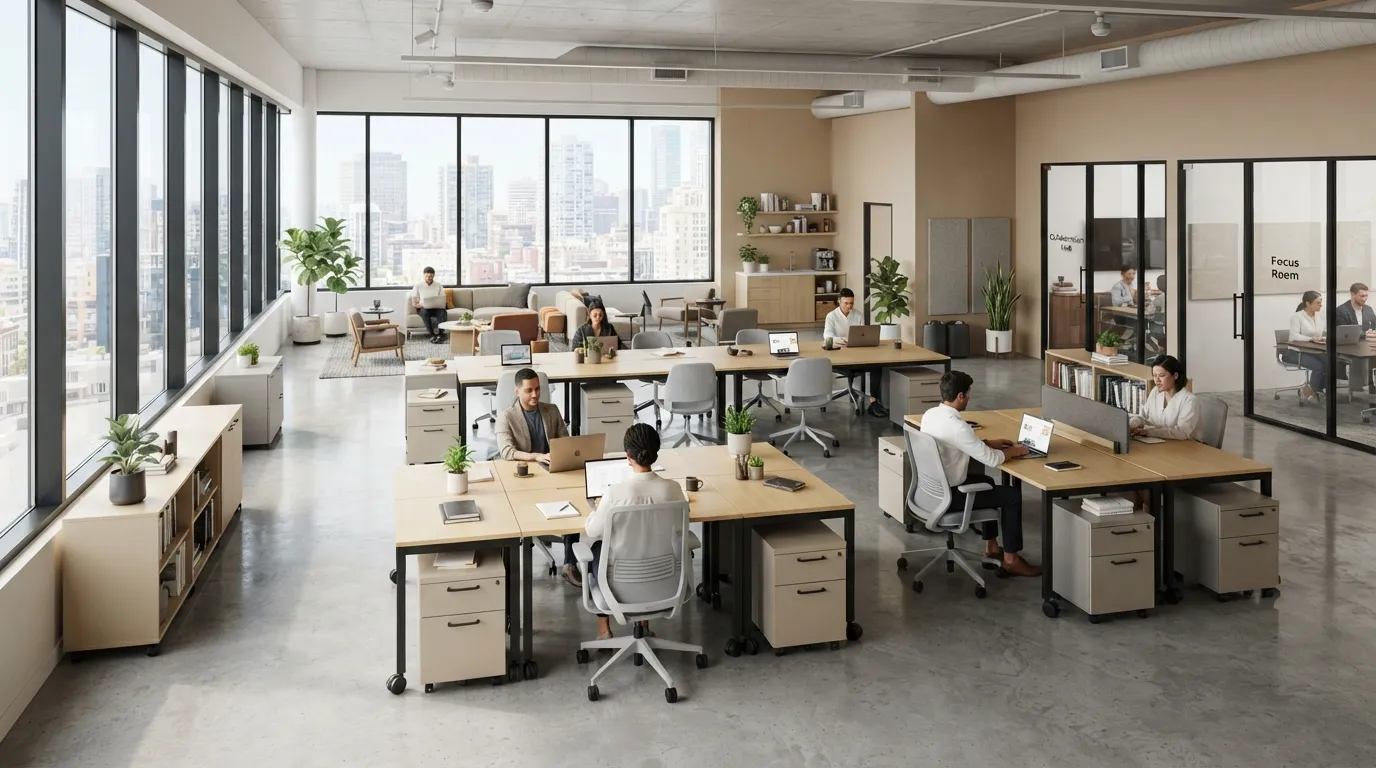
Today’s workplaces change constantly, so furniture should adapt just as easily. Modular layouts allow desks, storage, and seating to be rearranged whenever new teams arrive or events take place. I’ve seen this approach save both time and money because businesses can refresh the workspace without expensive renovations. The flexibility also helps growing companies adjust their environment as projects and staff evolve throughout the year.
You’ll probably also like Inspiring Design Ideas.
Lightweight furniture with hidden wheels, mobile partitions, and compact storage keeps the office functional while preserving a clean appearance. Neutral colors ensure every configuration looks cohesive regardless of how the furniture is arranged. Designers often recommend leaving generous walking paths between workstations to improve circulation and comfort. This adaptable setup creates a polished environment that remains practical, efficient, and ready for future growth.
7. Biophilic Green Walls
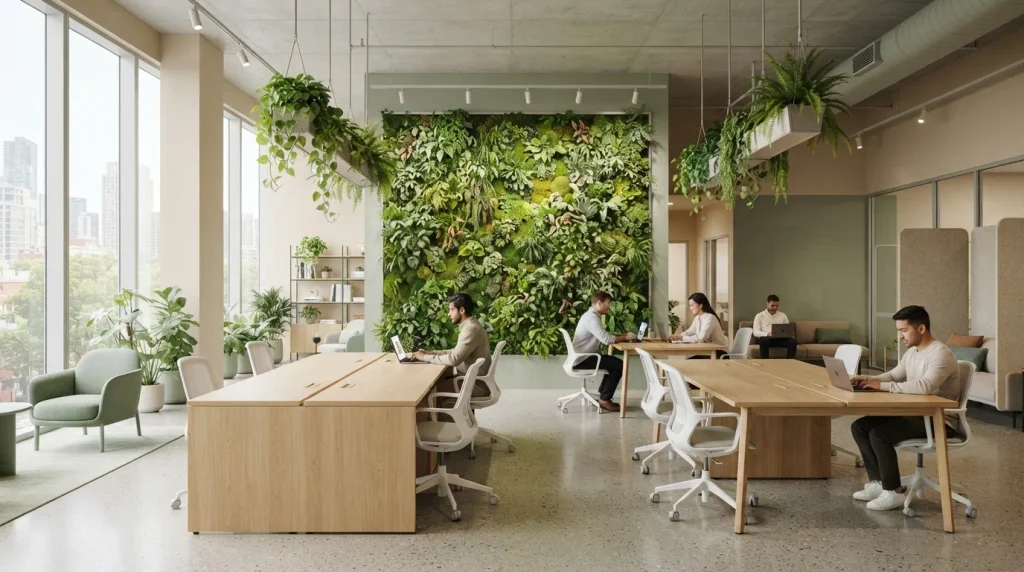
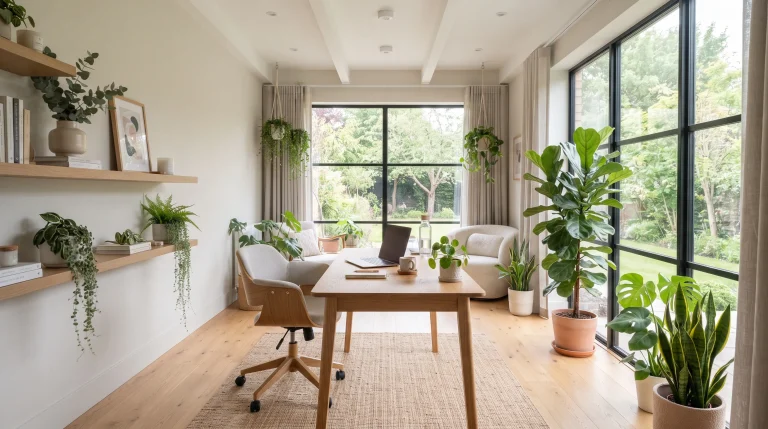
A living green wall instantly transforms a modern office into a more inviting and relaxing environment. Instead of relying only on decorative artwork, vertical gardens introduce texture, color, and a natural focal point that energizes the entire space. In my experience, employees often gravitate toward areas surrounded by plants because they simply feel more comfortable and balanced. Even a single green feature can make a large office feel warmer without adding unnecessary clutter.
Pairing greenery with neutral furniture and generous natural light keeps the design clean and sophisticated. Low-maintenance plant varieties make upkeep simple while preserving a consistently fresh appearance throughout the year. That’s why many designers recommend incorporating biophilic elements into shared workspaces whenever possible. The result is a healthier-looking office that encourages creativity, improves first impressions, and supports a more enjoyable work experience every day.
8. Standing Desk Stations
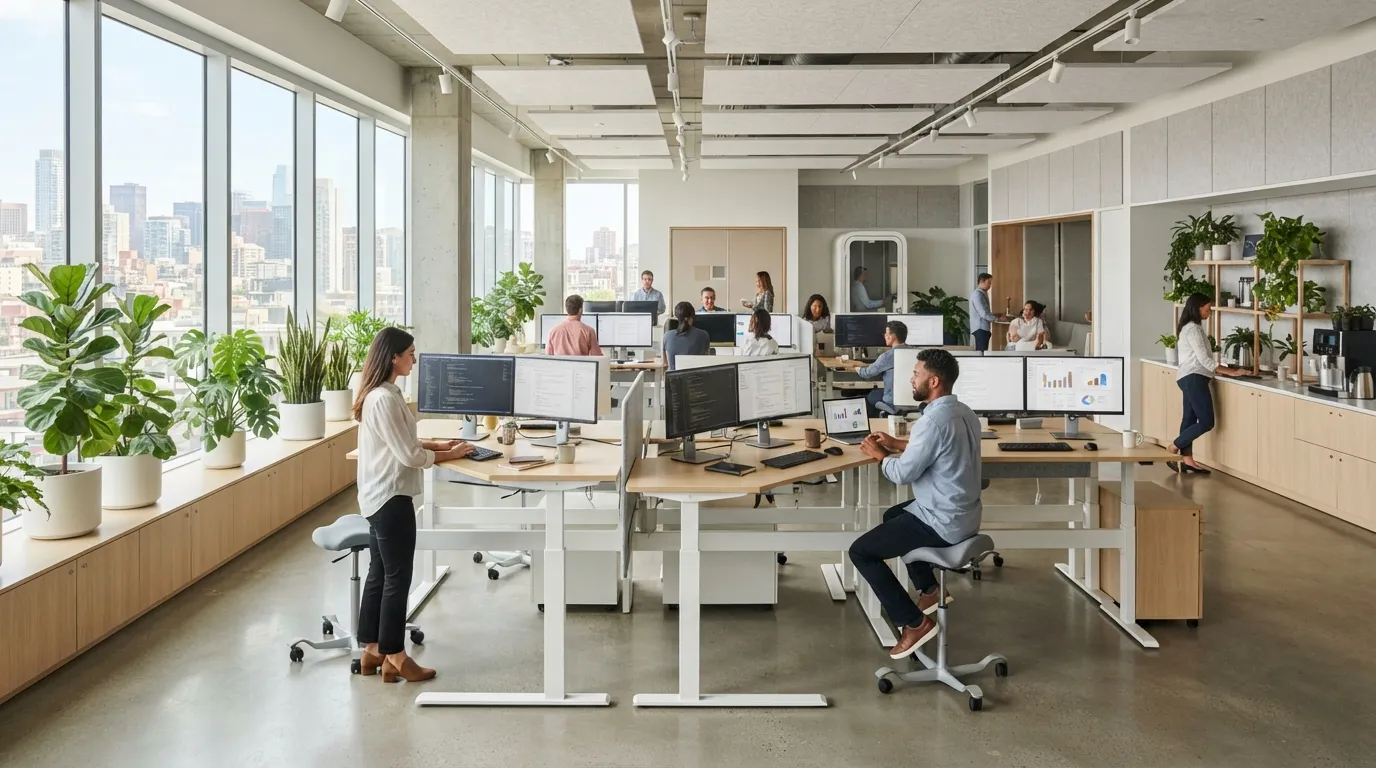
Standing desks have become one of the most requested features in modern shared offices because they offer greater flexibility during busy workdays. Members can easily switch between sitting and standing depending on the task, creating a more comfortable routine. I’ve noticed that adjustable workstations also appeal to a wider range of professionals since everyone has different comfort preferences. Providing options helps make the workspace feel more inclusive and adaptable.
Choose desks with smooth height adjustments and enough surface space for laptops, monitors, and accessories. Anti-fatigue mats and supportive stools further improve comfort during extended work sessions. Designers often recommend mixing adjustable desks with traditional seating to accommodate different working styles. This thoughtful combination keeps the office functional, visually balanced, and ready to support changing daily routines without sacrificing its clean contemporary appearance.
9. Phone Booth Nooks
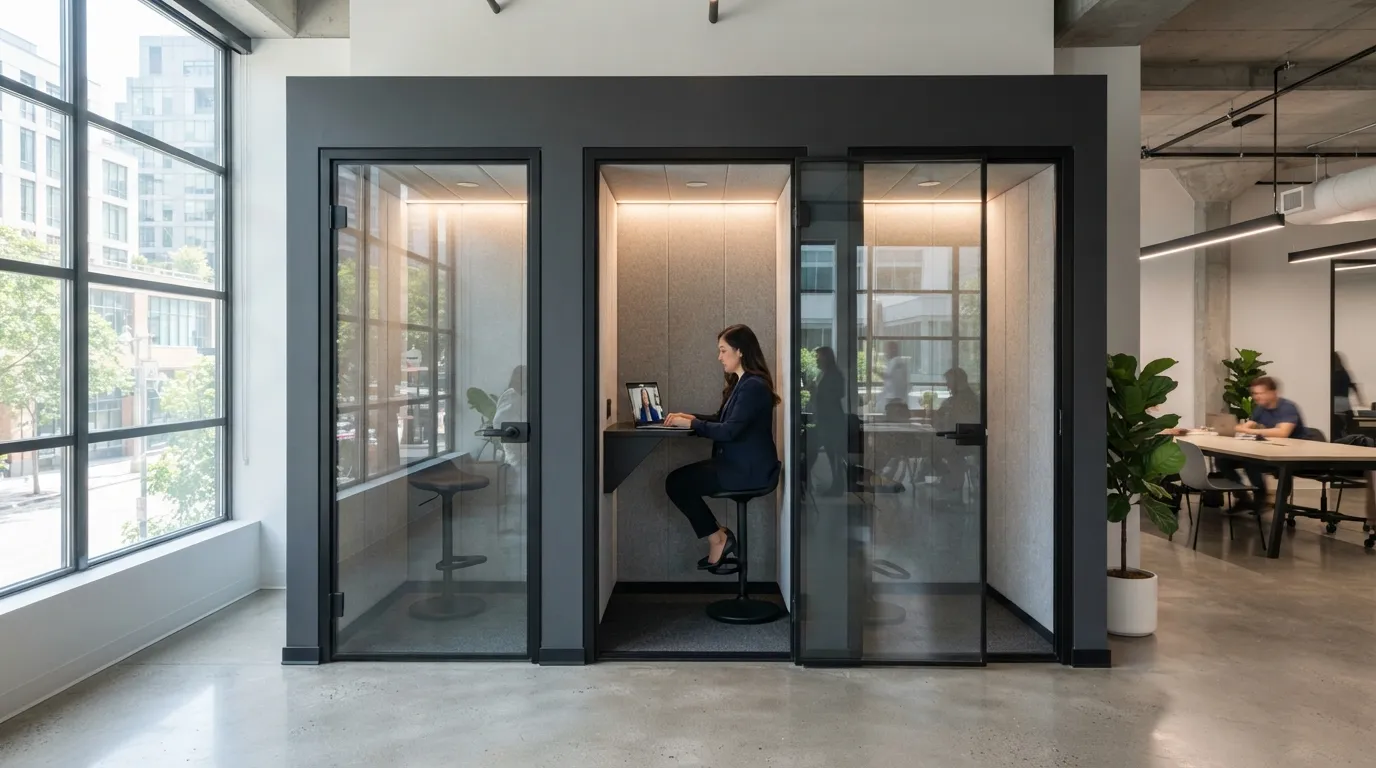
Video meetings and client calls are now part of everyday work, making private phone booths an essential feature in many shared offices. Rather than occupying large conference rooms, members can step into these compact spaces whenever they need a quiet conversation. I’ve seen this solution improve workflow because meetings stay organized while the rest of the office remains peaceful and productive throughout the day.
Acoustic insulation, comfortable seating, and quality ventilation make these booths pleasant for short meetings or focused conversations. Glass doors maintain visual openness while preserving privacy inside. Positioning several booths around the office ensures they remain easily accessible during busy periods. Small additions like built-in charging ports and adjustable lighting make these spaces even more practical, delivering convenience without interrupting the clean and modern office design.
10. Creative Brainstorm Hub
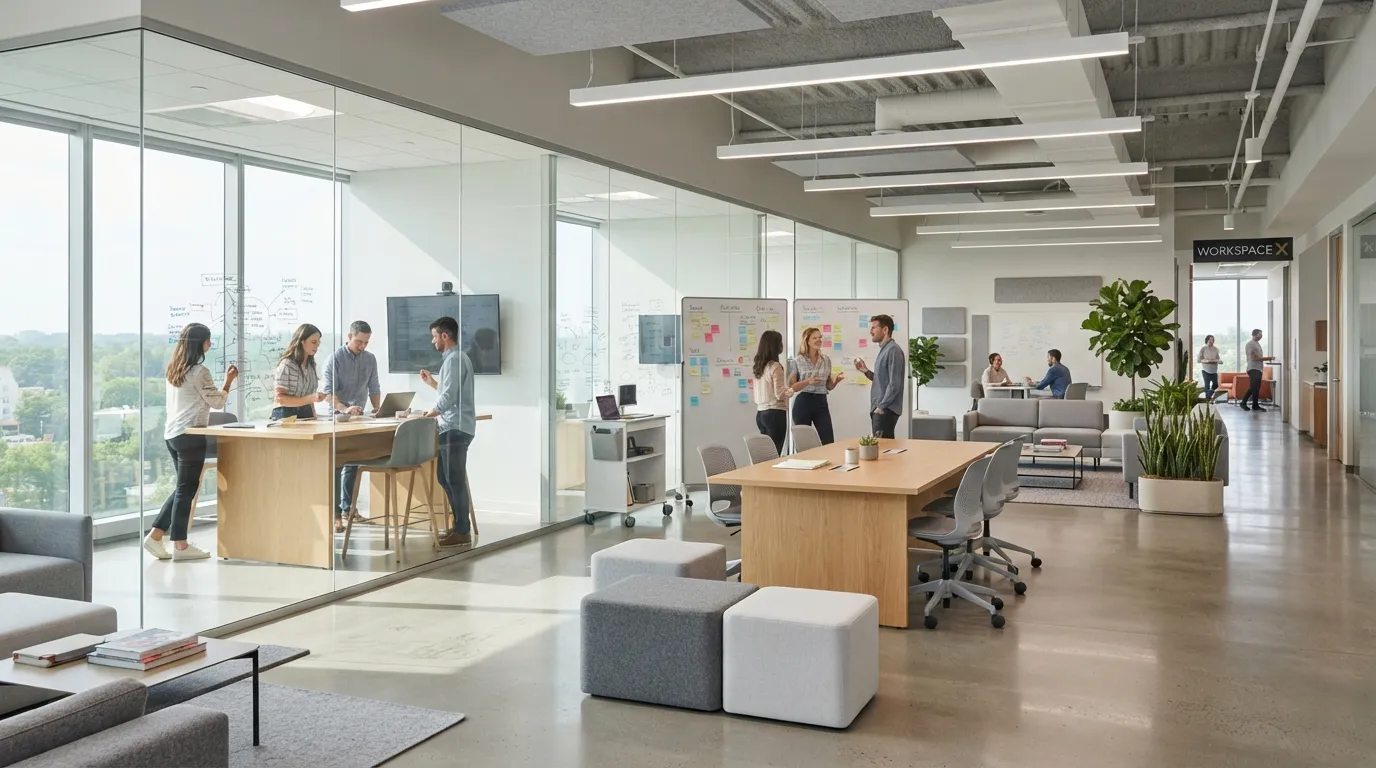
Every shared office benefits from a dedicated area where ideas can flow freely without disrupting focused work. A brainstorming hub gives teams the freedom to sketch concepts, organize projects, and solve challenges together in one flexible environment. In my experience, having a clearly defined creative zone encourages more participation because people naturally feel comfortable contributing when the space is designed specifically for collaboration and innovation.
Movable furniture, writable walls, and lightweight tables make it easy to adapt the room for different activities. Plenty of daylight combined with soft neutral finishes keeps the environment bright without becoming visually overwhelming. That’s why many designers recommend separating creative spaces from quiet work zones. This thoughtful layout supports productive teamwork while preserving balance throughout the rest of the office.
11. Quiet Reading Lounge
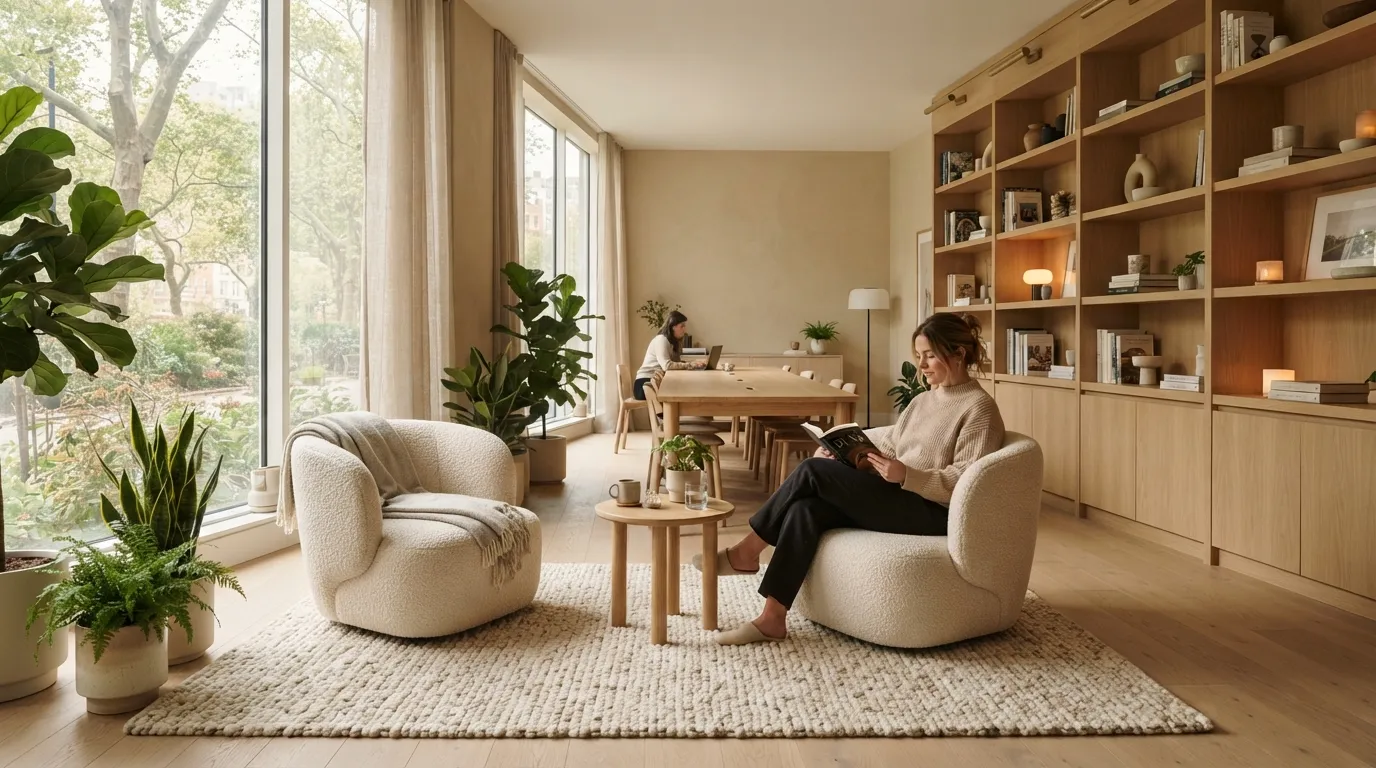
A quiet reading lounge introduces a slower pace within a busy office, giving members a place to recharge between meetings or projects. Instead of remaining at their desks all day, people can enjoy a comfortable environment that encourages reflection and focused reading. I’ve noticed that even short breaks in peaceful surroundings often help people return to work with renewed energy and clearer thinking.
Comfortable lounge chairs, layered lighting, and carefully selected books create an inviting atmosphere without feeling overly decorative. Neutral colors and natural textures reinforce a calm aesthetic while maintaining a polished professional appearance. Designers often suggest locating reading areas away from collaborative zones to minimize distractions. This simple addition creates a workplace that supports both productivity and personal well-being throughout the day.
12. Wellness Recharge Area
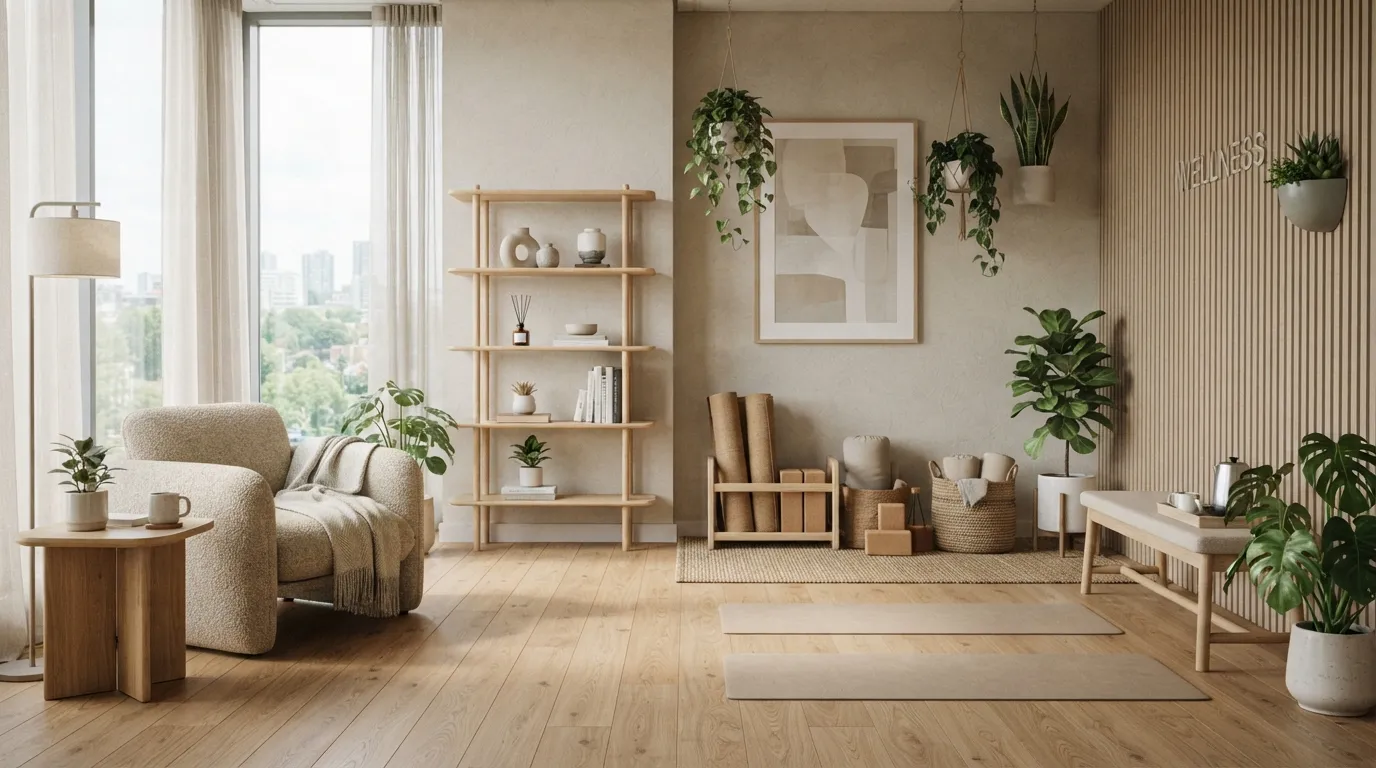
Modern workplaces recognize that productivity improves when people have opportunities to pause and recharge. A wellness area offers a peaceful retreat where members can stretch, meditate, or simply take a quiet break before returning to work. I’ve seen this work well in many offices because even a few minutes away from a screen can improve focus, reduce stress, and help people feel more refreshed throughout the day.
Soft seating, indoor plants, calming colors, and natural lighting create an environment that feels restorative without requiring a large footprint. Small additions like water stations, yoga mats, or mindfulness resources make the space even more practical. A thoughtfully designed wellness corner reflects a people-first approach, helping create a supportive workplace where comfort, creativity, and productivity naturally work together.
Conclusion
A well-designed shared office has the power to inspire creativity, strengthen collaboration, and make every workday more enjoyable. These ideas show that thoughtful planning, comfortable furniture, flexible layouts, and calming details can completely transform a workspace without making it feel complicated. Whether you try one idea or combine several, each improvement can help create a more welcoming environment. I’ve seen how small, intentional updates often make the biggest impact over time. Save these coworking space design ideas on Pinterest for future inspiration, share them with your team, and start creating a modern office that supports productivity, comfort, and lasting success.
Brooklyn Sanders
Brooklyn Sanders is an interior design expert and decor editor at Lady Home Decor. She specializes in modern, cozy, and functional home styling, helping readers discover inspiring decorating ideas that are easy to recreate. Her work focuses on timeless design, practical solutions, and the latest home decor trends.