23 Simple Tips on How to Keep Shower Plants Alive Longer

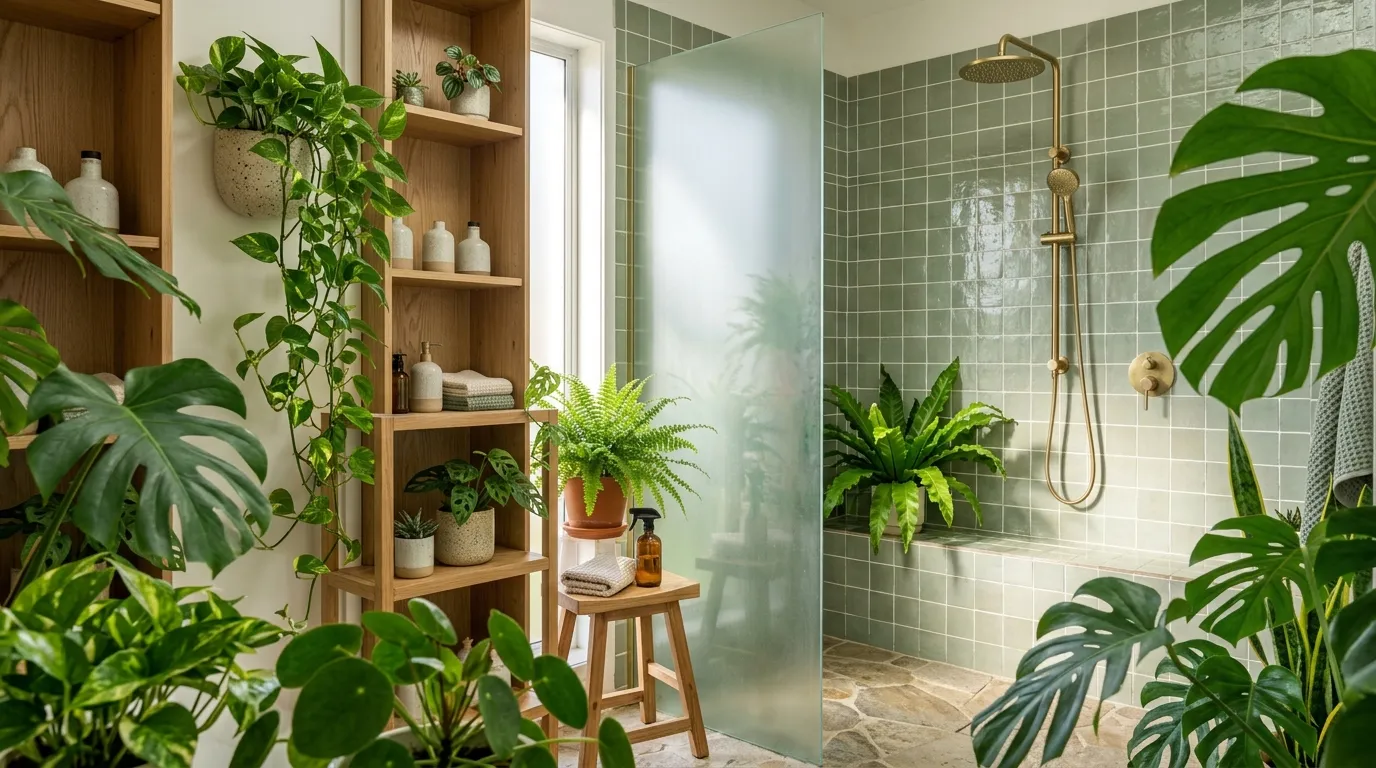
Your bathroom can feel much calmer with a little greenery nearby. But keeping plants happy beside a warm, steamy shower takes more than placing a pot on the nearest shelf. The right plant, light, airflow, and watering routine all matter. If you’re searching for how to keep shower plants alive, these simple ideas can help you create a greener bathroom without turning plant care into another chore.
Think of your shower area as a tiny indoor climate. Steam can provide useful humidity, while poor drainage, weak light, and constant moisture can cause trouble. These practical tips focus on easy bathroom plant care, smart placement, and simple DIY solutions that fit real homes.
1. Pick Humidity-Loving Plants
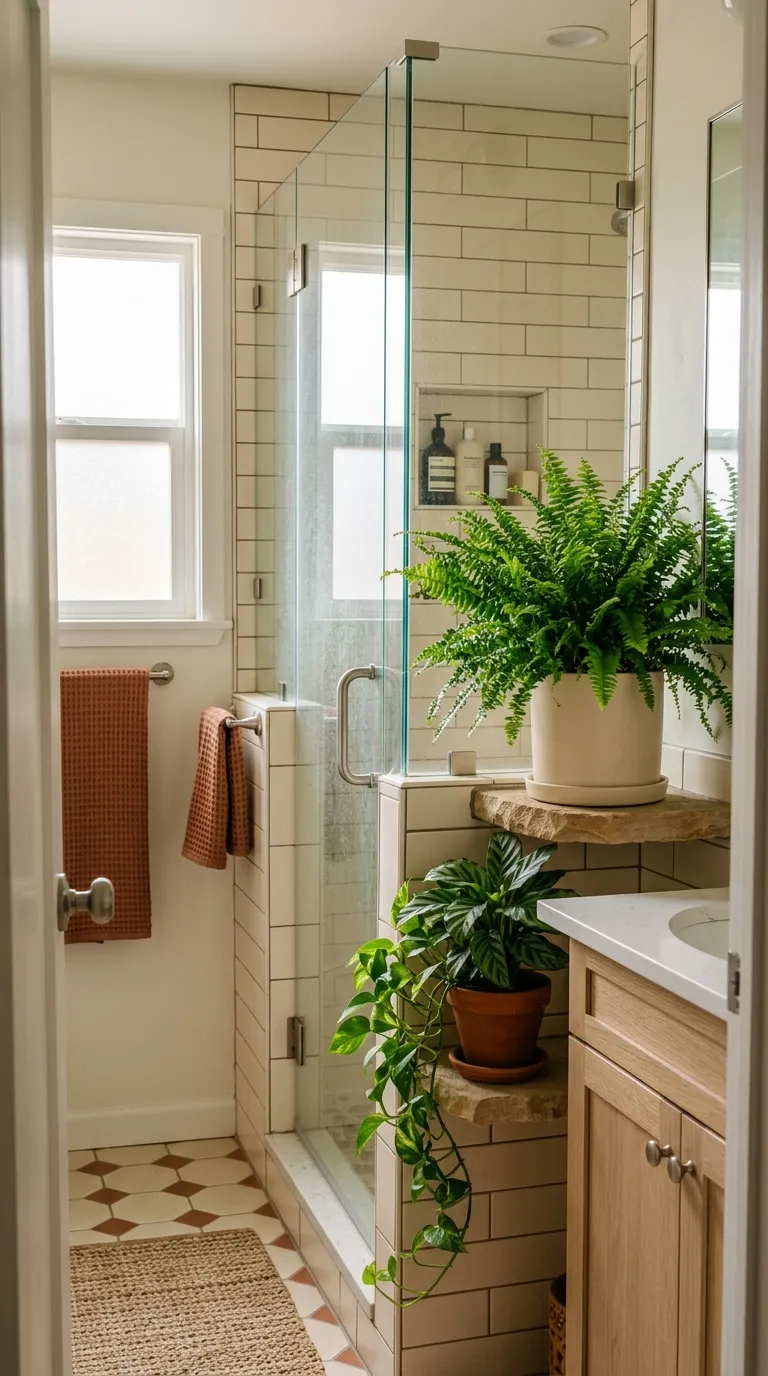
Start with plants that naturally enjoy moist air. Ferns, pothos, spider plants, orchids, and some calatheas can work well in bathrooms when their other needs are met.
A humidity-loving plant has a better chance near a shower than a plant that prefers dry air. Picture a small bathroom with a fern on a shelf where steam reaches it, but water never hits the leaves directly.
2. Check Your Bathroom Light
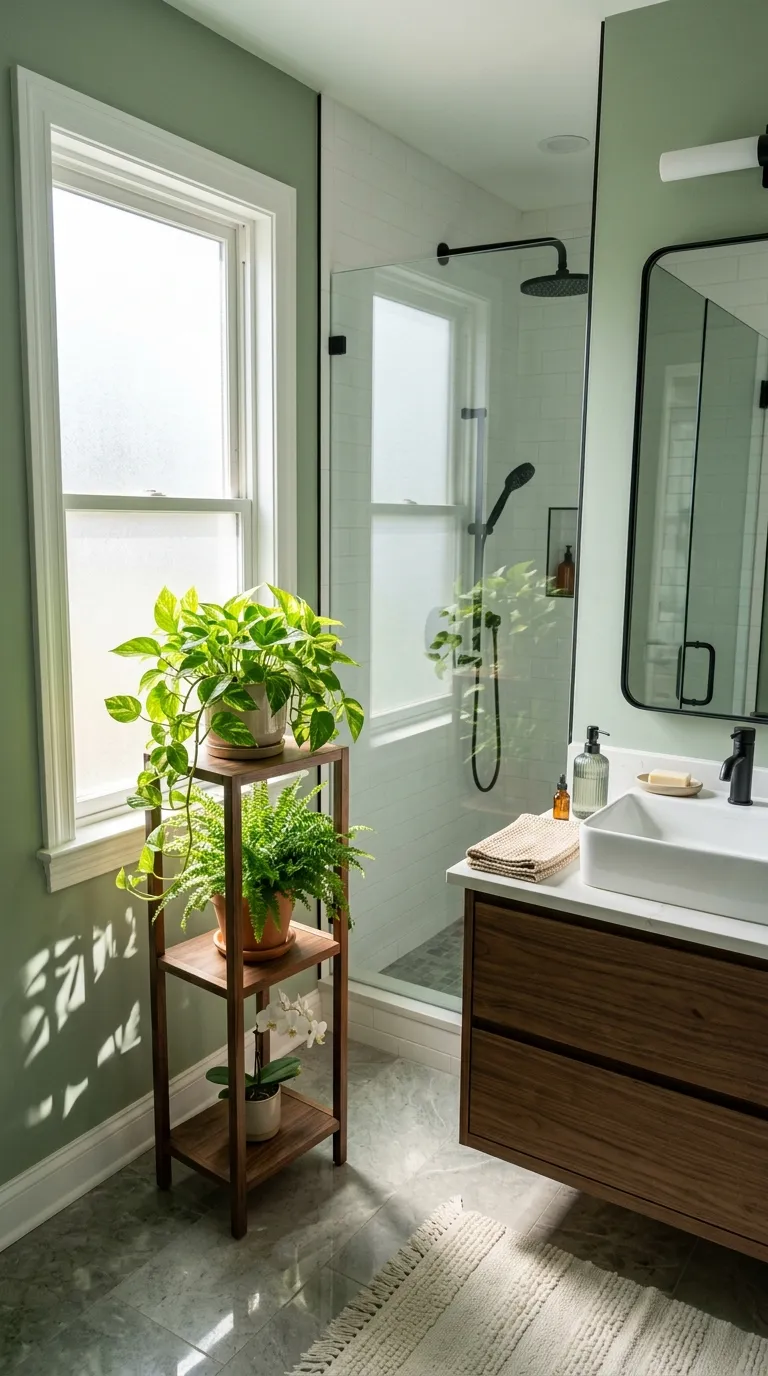
Humidity can’t make up for poor lighting. Most shower plants still need enough indirect light to produce healthy new growth and maintain strong leaves.
Check the bathroom at different times of day. If the room stays dim, place plants closer to a bright window or use a suitable grow light outside the wet zone.
3. Keep Pots Well Drained
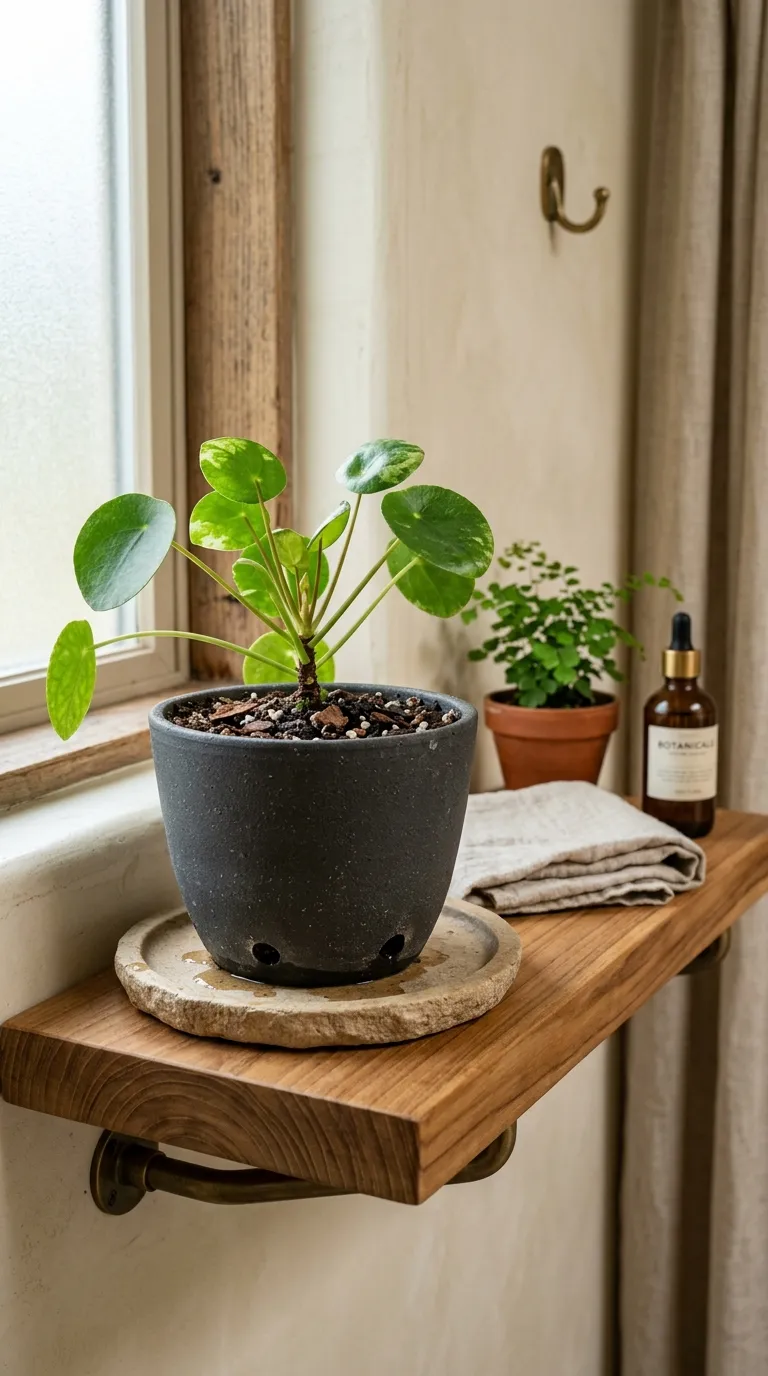
Good drainage is one of the easiest ways to protect a shower plant. Choose pots with drainage holes so extra water can leave the root area instead of sitting around the roots.
Use a saucer or waterproof tray to protect shelves and floors. If the soil stays soggy for days, the plant may need less water, faster drainage, or a better potting mix.
4. Keep Plants From Spray
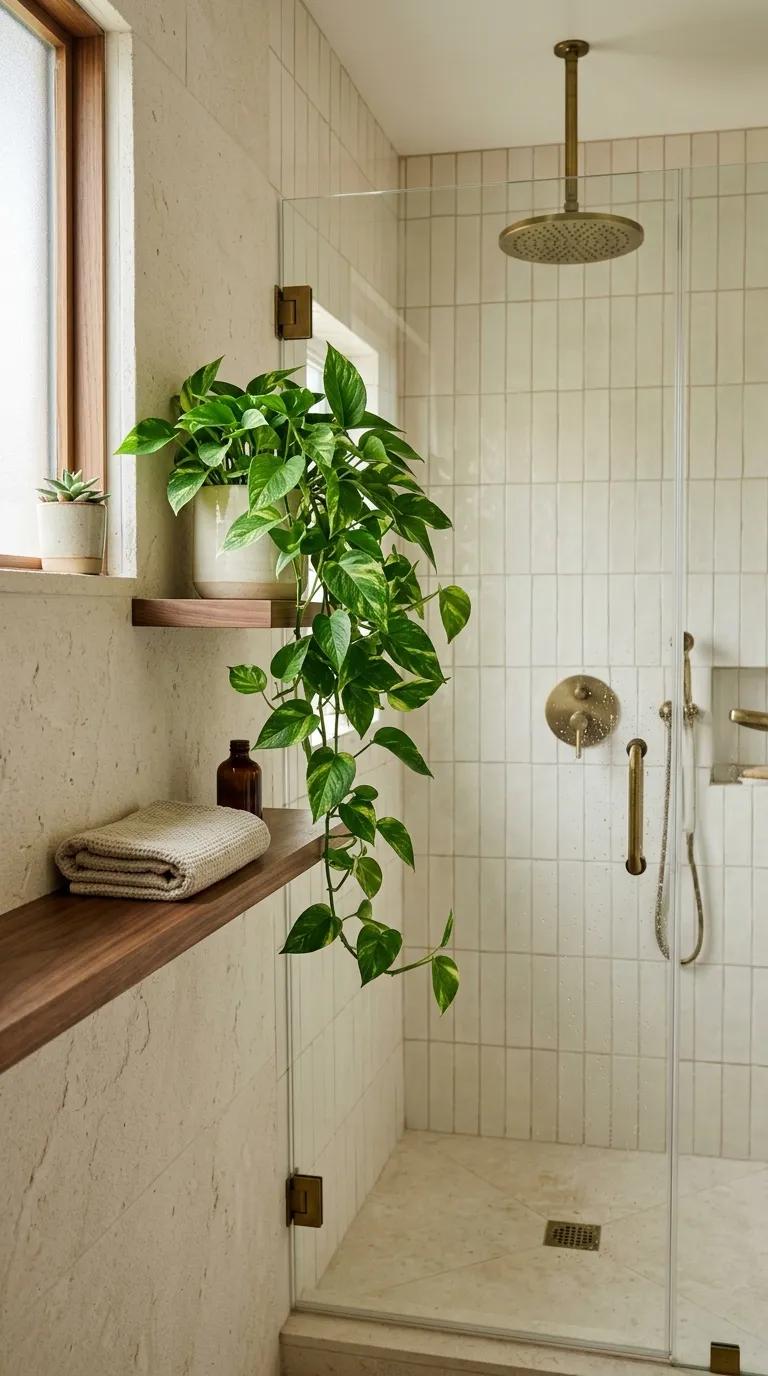
Keep your plant close to the shower without putting it under the water stream. Constant direct spray can leave leaves soaked and keep the potting mix wet for too long.
A shelf beside the shower works well for many plants. Picture a pothos hanging near the glass, catching warm steam while staying protected from the main stream of water.
5. Give Roots Fresh Air
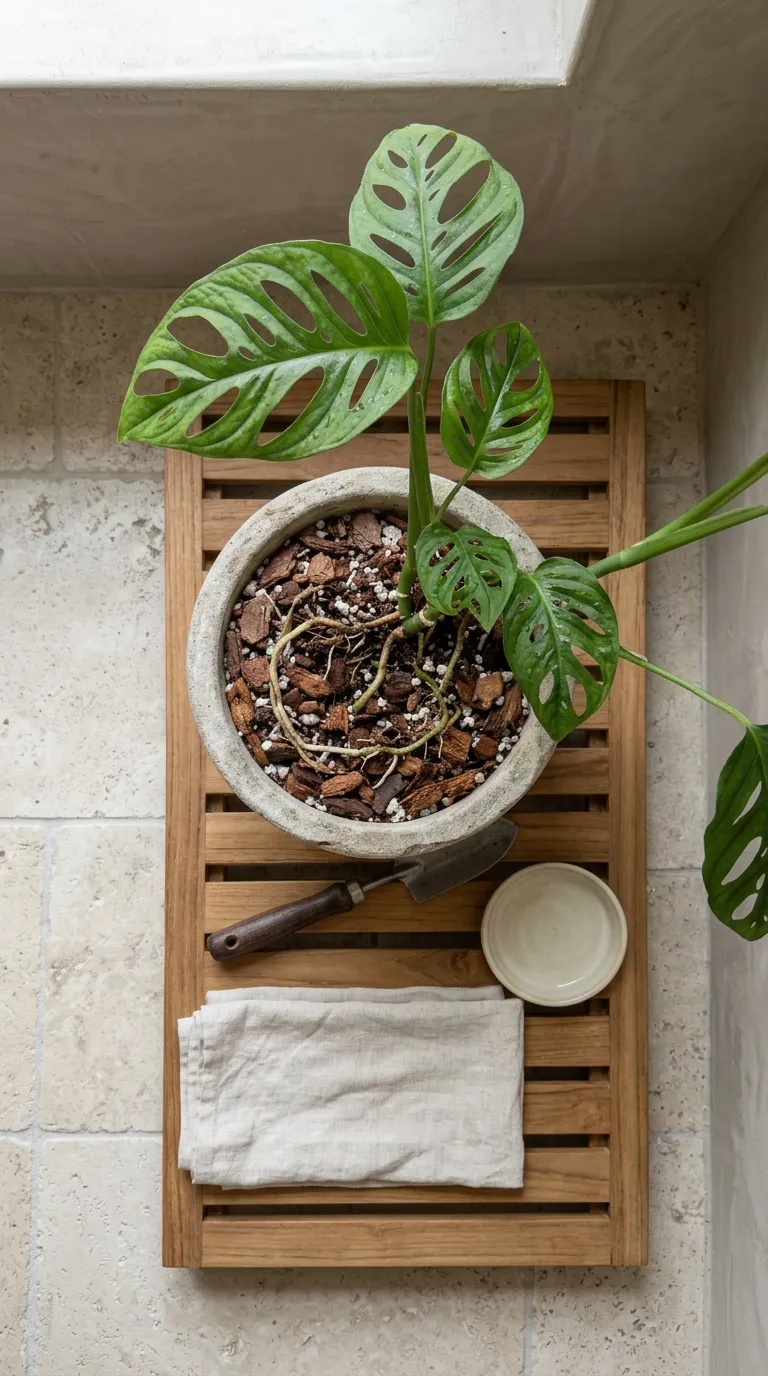
Roots need oxygen as well as water. Dense, constantly wet soil can make it hard for roots to breathe and may lead to root problems.
Choose a loose indoor potting mix with materials that create small air spaces. A pot with good drainage also helps the root area dry at a steady pace.
6. Watch for Root Rot
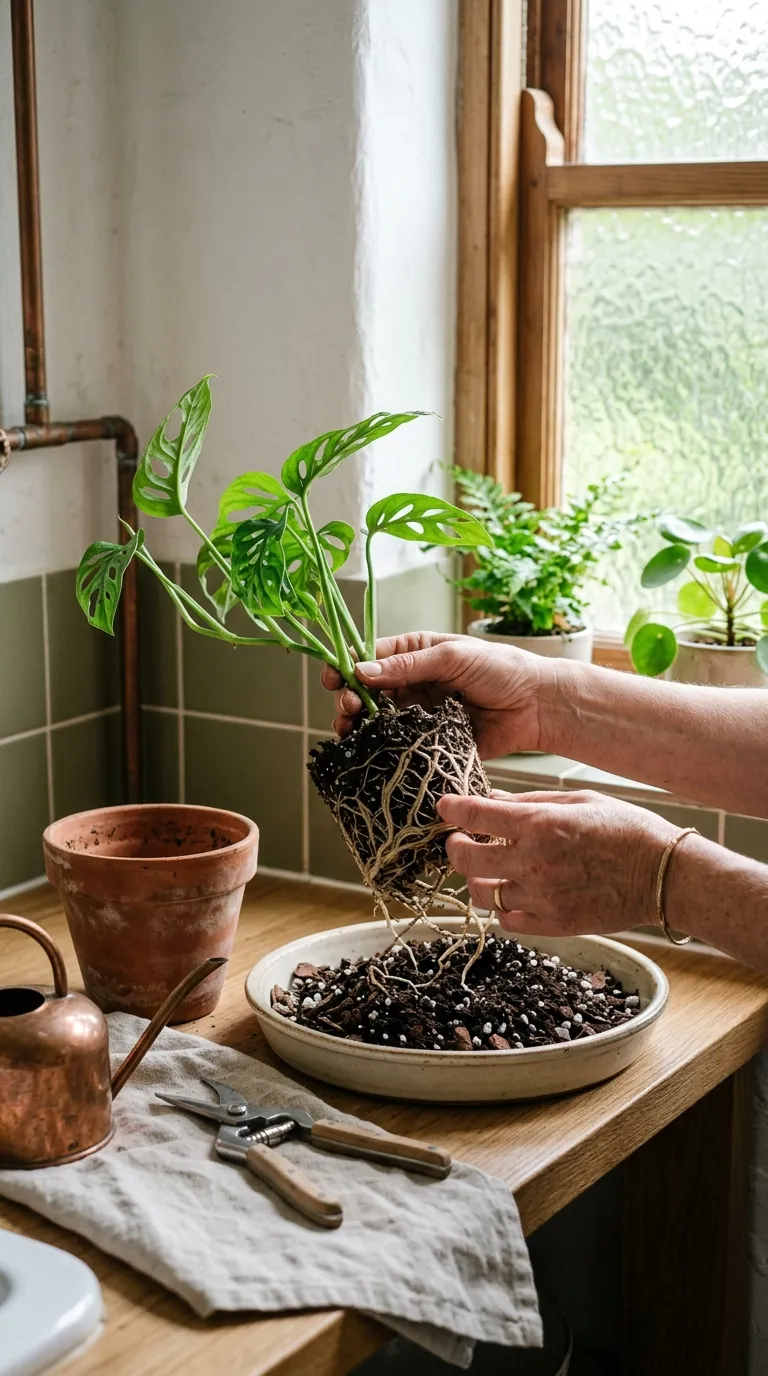
Root rot often starts when roots stay wet for too long. Yellowing leaves, soft stems, a sour soil smell, and slow growth can be signs that the roots need attention.
Check the soil before adding more water. If the lower part remains wet long after watering, move the plant to a pot with better drainage and a lighter mix.
7. Improve Bathroom Airflow
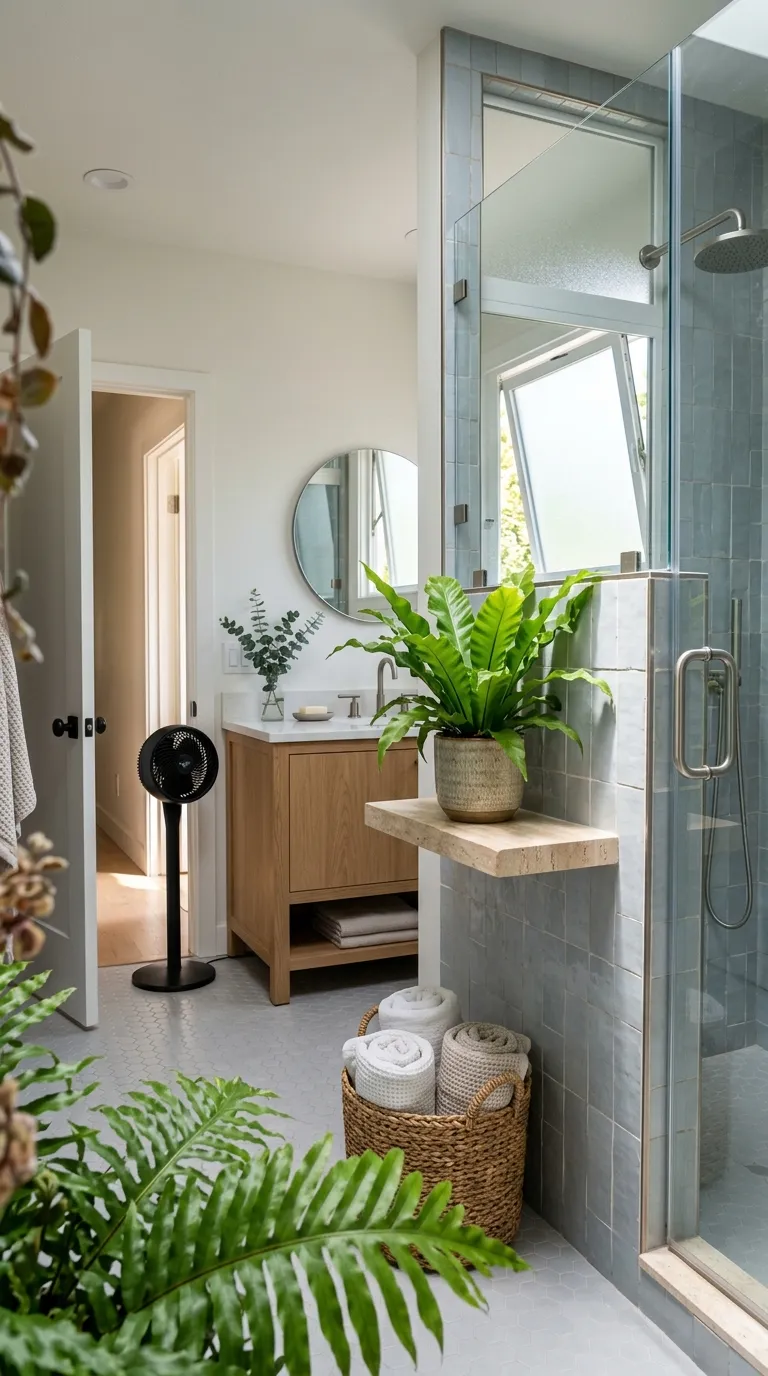
Good airflow helps wet leaves and damp soil dry at a healthy rate. It also keeps the bathroom from feeling constantly damp after every shower.
Open a window or bathroom door after showering when practical. If the room has an exhaust fan, run it during and after a shower to move moist air outside.
8. Use a Simple Watering Routine
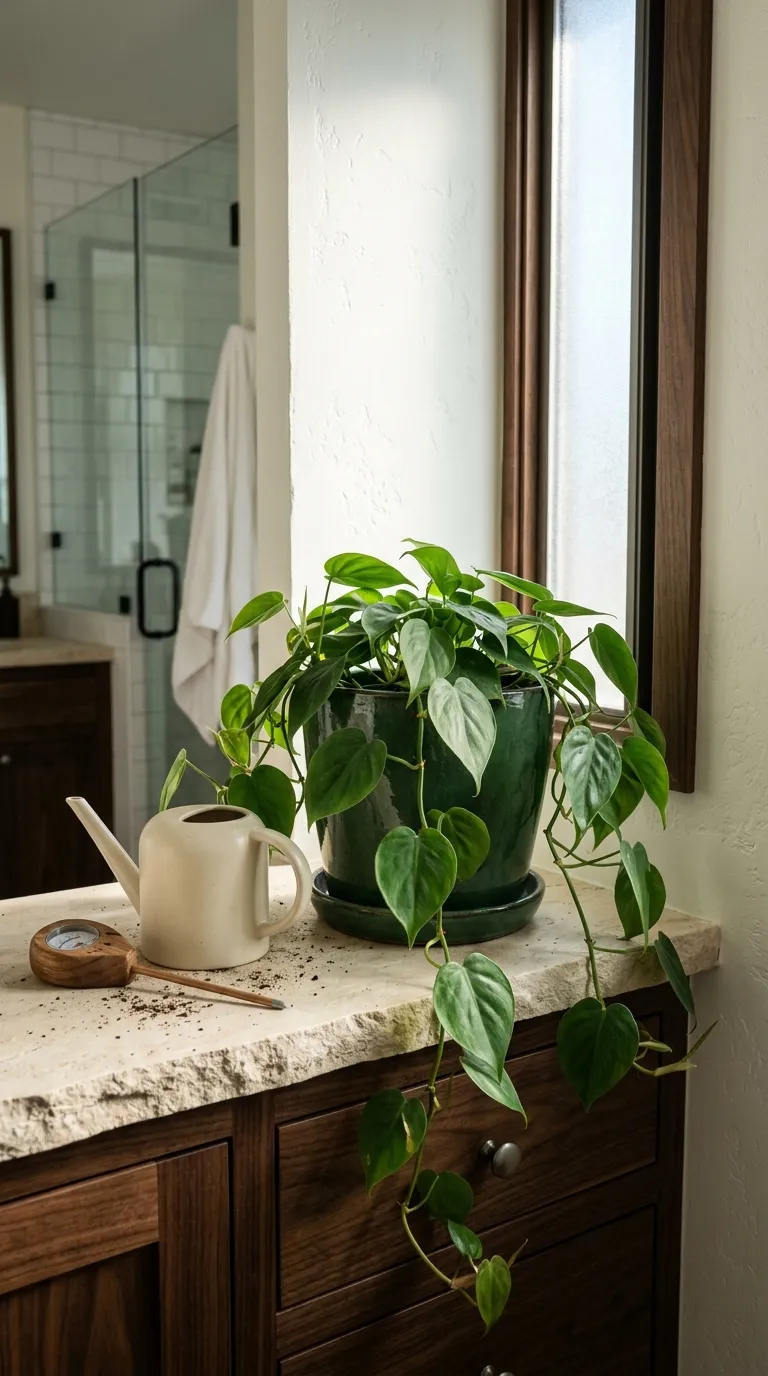
Don’t water a shower plant just because the bathroom feels humid. Humid air and wet soil aren’t the same thing.
Check the top layer of soil with your finger before watering. When the plant’s soil has dried to the level that suits its species, water thoroughly and let the excess drain away.
9. Clean Dust From Leaves
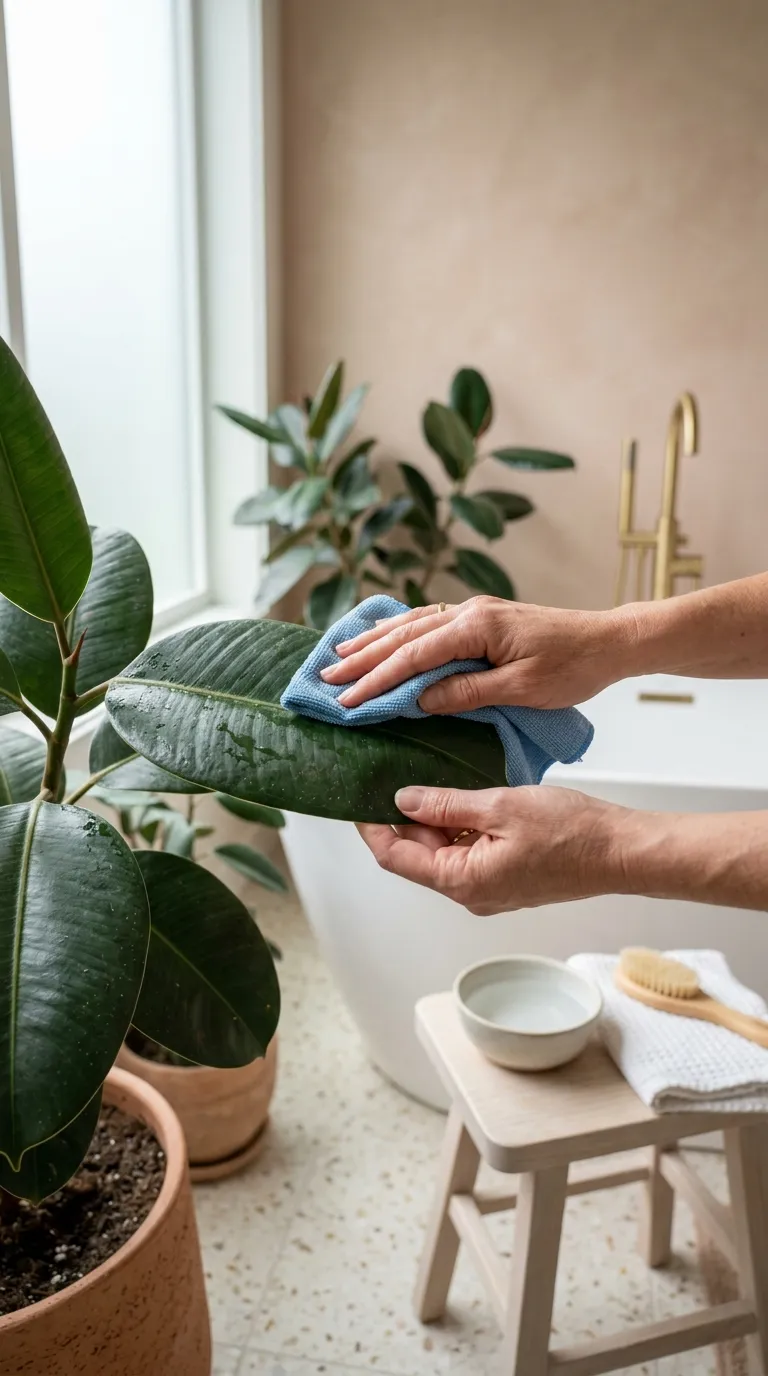
Dust can collect on broad leaves, even in a steamy bathroom. A light layer may block some of the light reaching the leaf surface.
Wipe large leaves gently with a soft damp cloth when they look dusty. Support the leaf with one hand while cleaning so you don’t bend or tear delicate growth.
10. Rotate Plants for Light
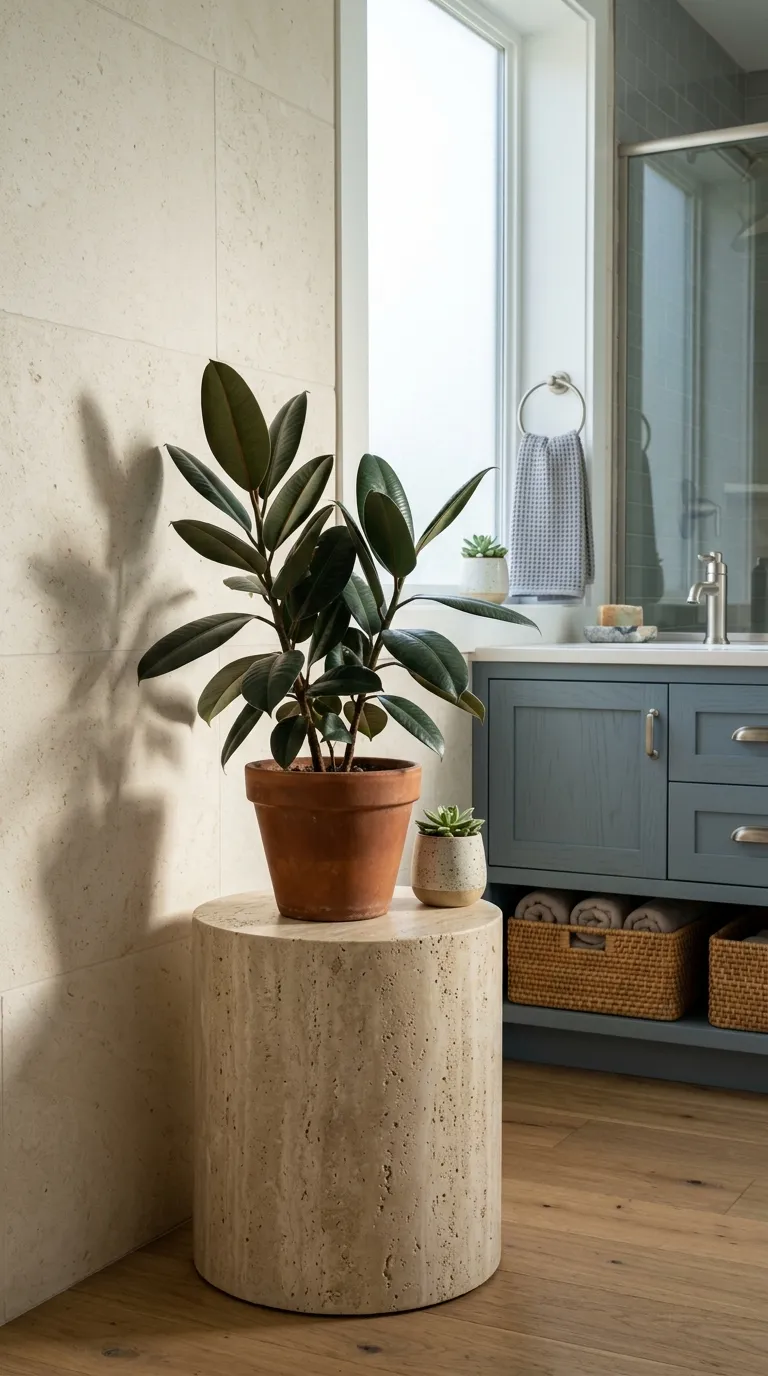
Plants often lean toward the brightest side of a room. That can make growth look uneven when one side gets more light than the other.
Turn your pots a quarter turn every week or two. This small habit gives different sides of the plant access to the available light and helps keep its shape balanced.
11. Choose a Safe Plant Shelf
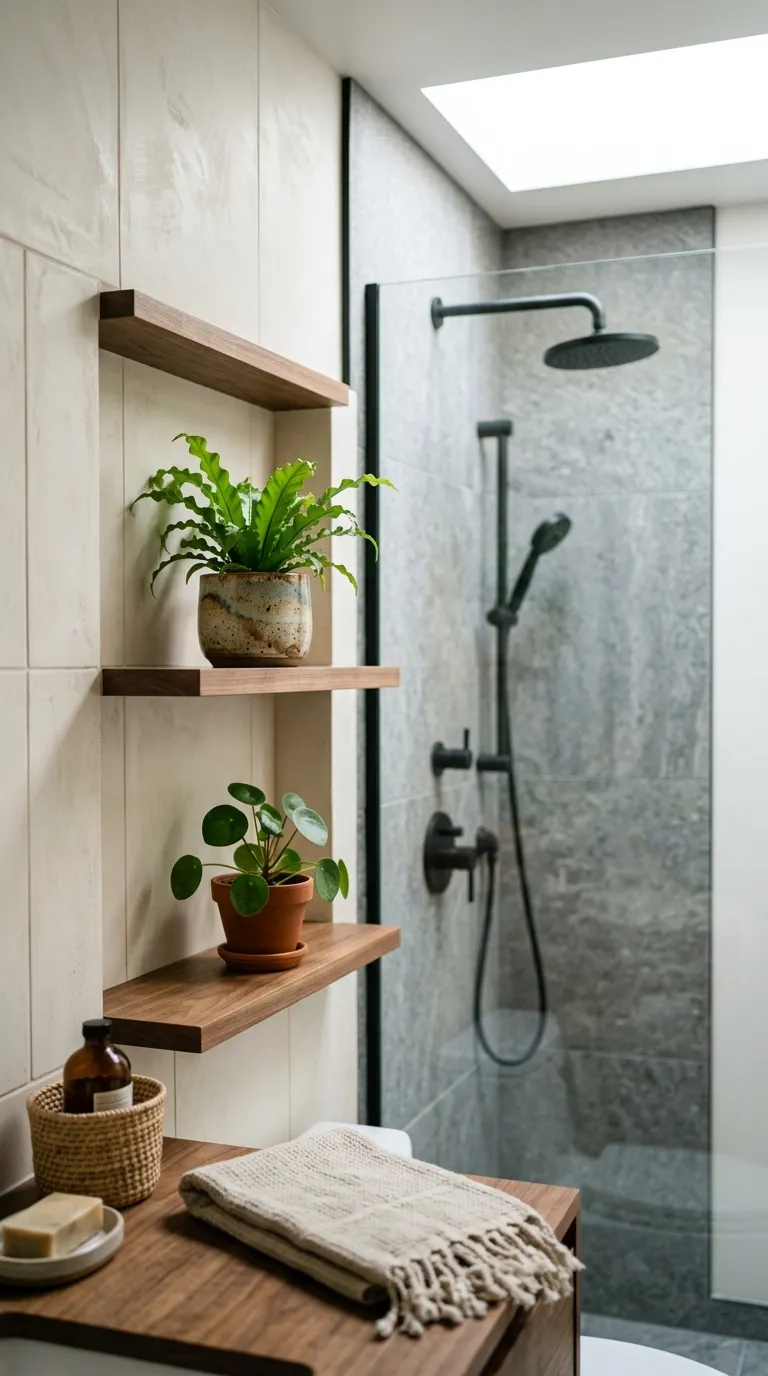
Your plant needs a stable home, especially in a busy bathroom. Avoid shelves that wobble, narrow ledges where pots can fall, or spots that get bumped by towels and toiletries.
A built-in shelf or sturdy wall-mounted ledge can work well. Leave enough room around each pot so leaves aren’t pressed against tile, glass, or other plants.
12. Use Humidity Trays
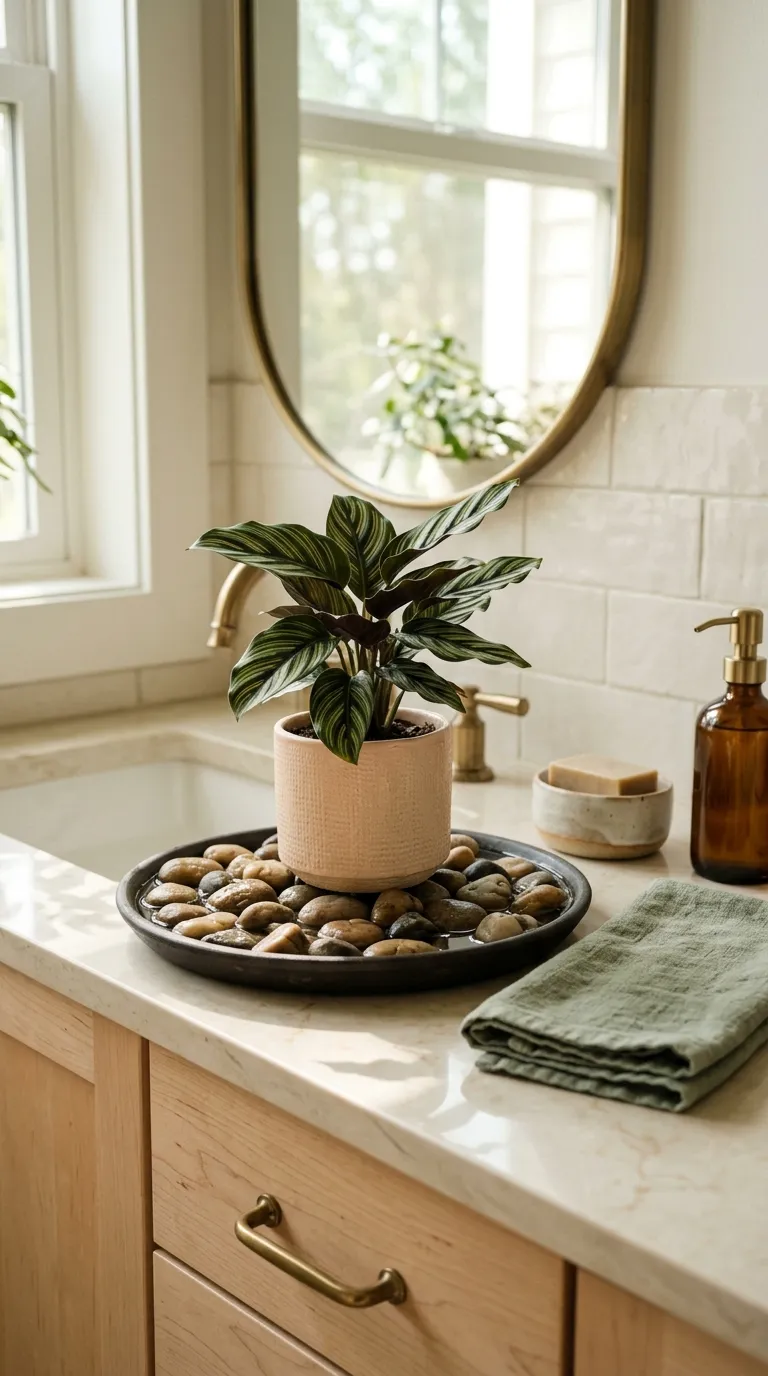
Some plants appreciate extra humidity beyond what the room provides. A humidity tray can add moisture to the air immediately around a plant without keeping its roots soaked.
Place smooth stones in a shallow tray and add water below the tops of the stones. Set the pot on the stones so its drainage holes stay above the water level.
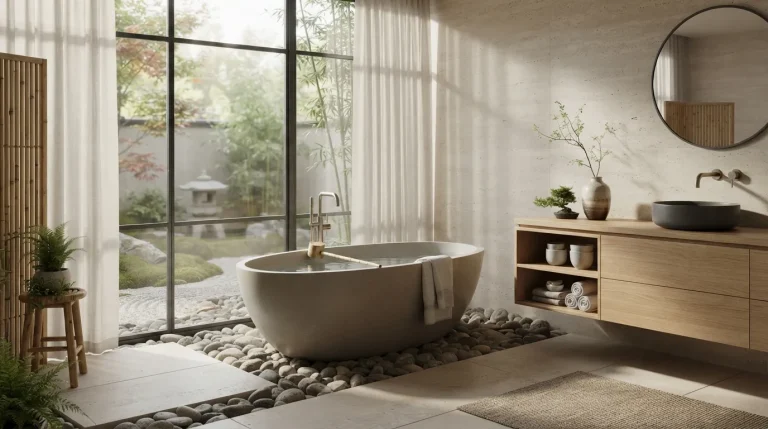
You’ll probably also find Elegant Zen Bathroom Concepts interesting.
13. Keep Leaves Dry
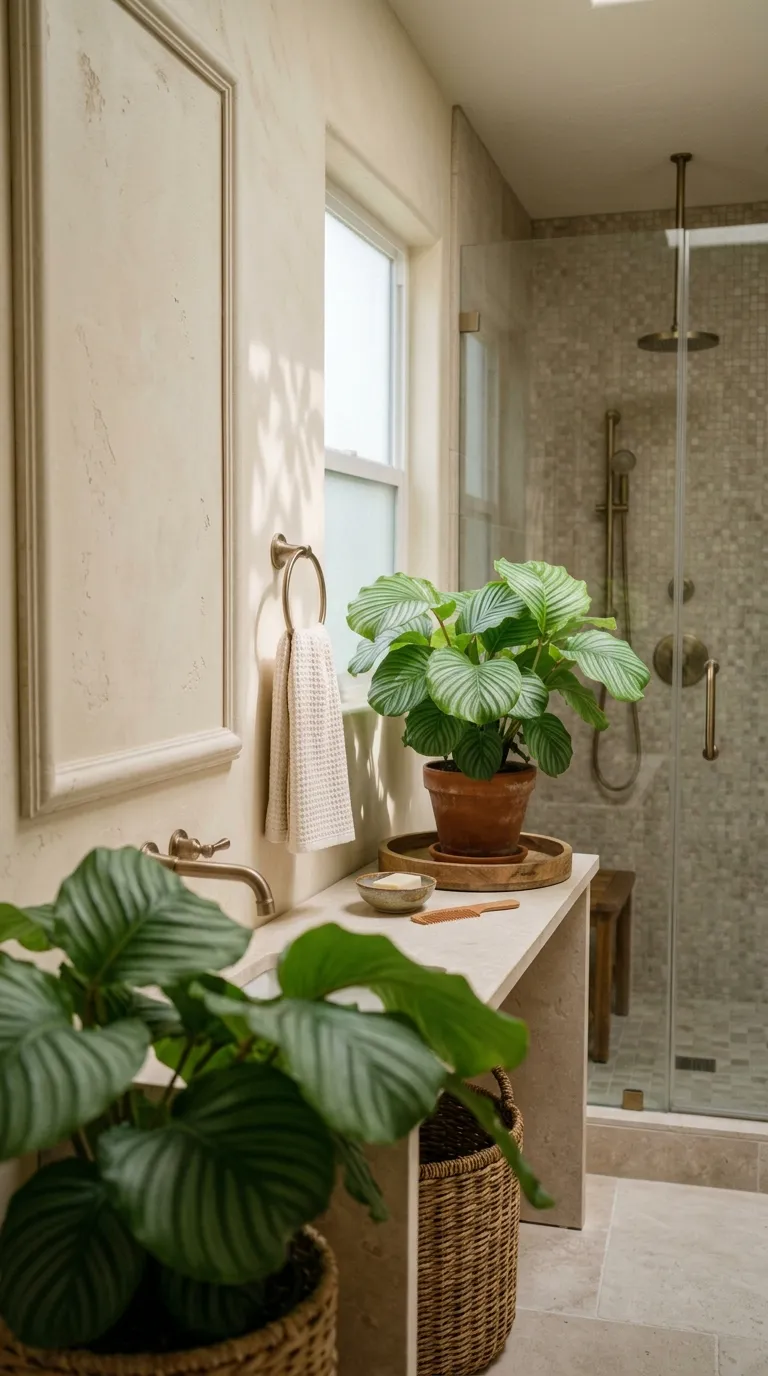
Steam is fine for many bathroom plants, but constantly wet foliage can cause problems. Leaves that stay damp for long periods may develop spots or other issues.
Keep plants outside the direct shower stream. If leaves become soaked, give the bathroom enough airflow afterward so moisture can dry naturally.
14. Trim Damaged Leaves
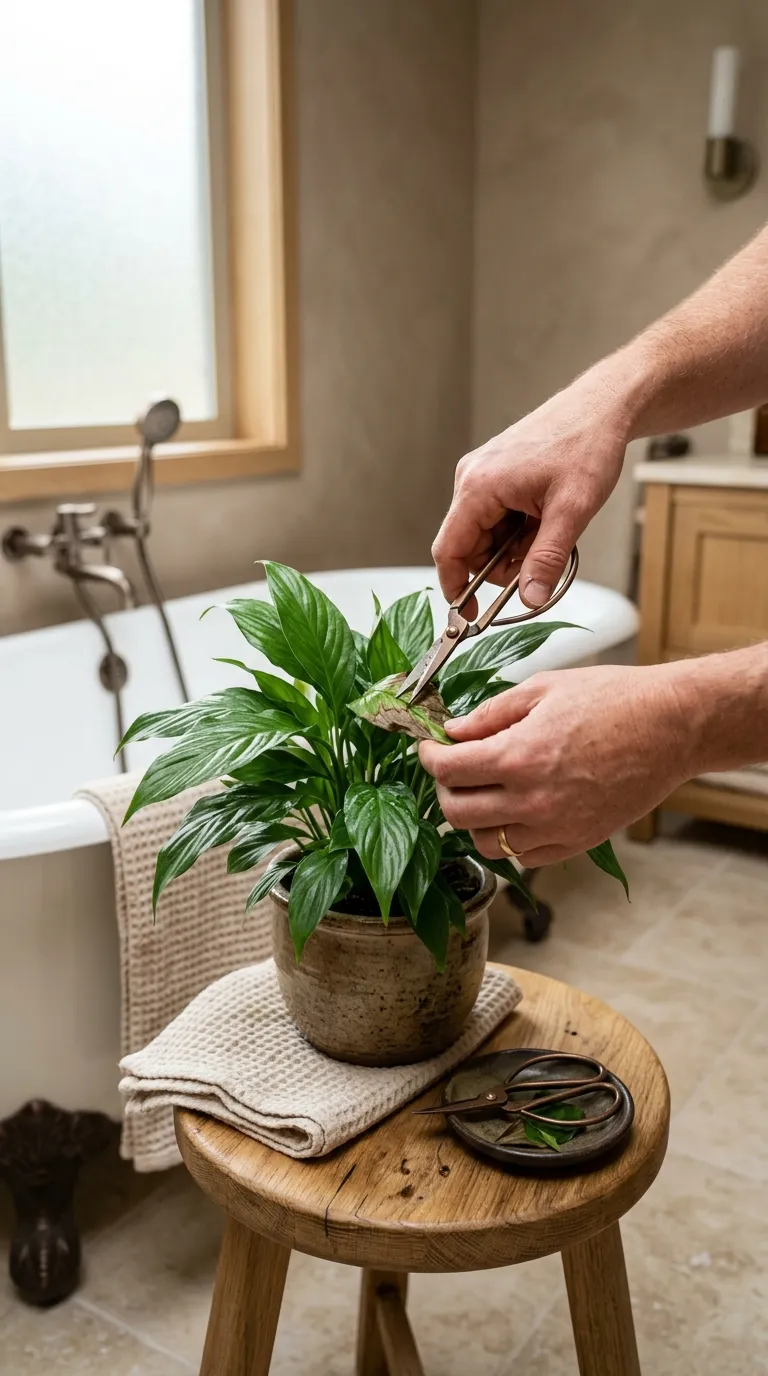
Damaged leaves won’t return to perfect condition. Removing badly damaged foliage lets you keep the plant tidy and makes it easier to spot new problems.
Use clean, sharp scissors and cut away yellow, brown, or badly torn leaves. Don’t remove healthy leaves just for the sake of shaping the plant.
15. Give Plants Room
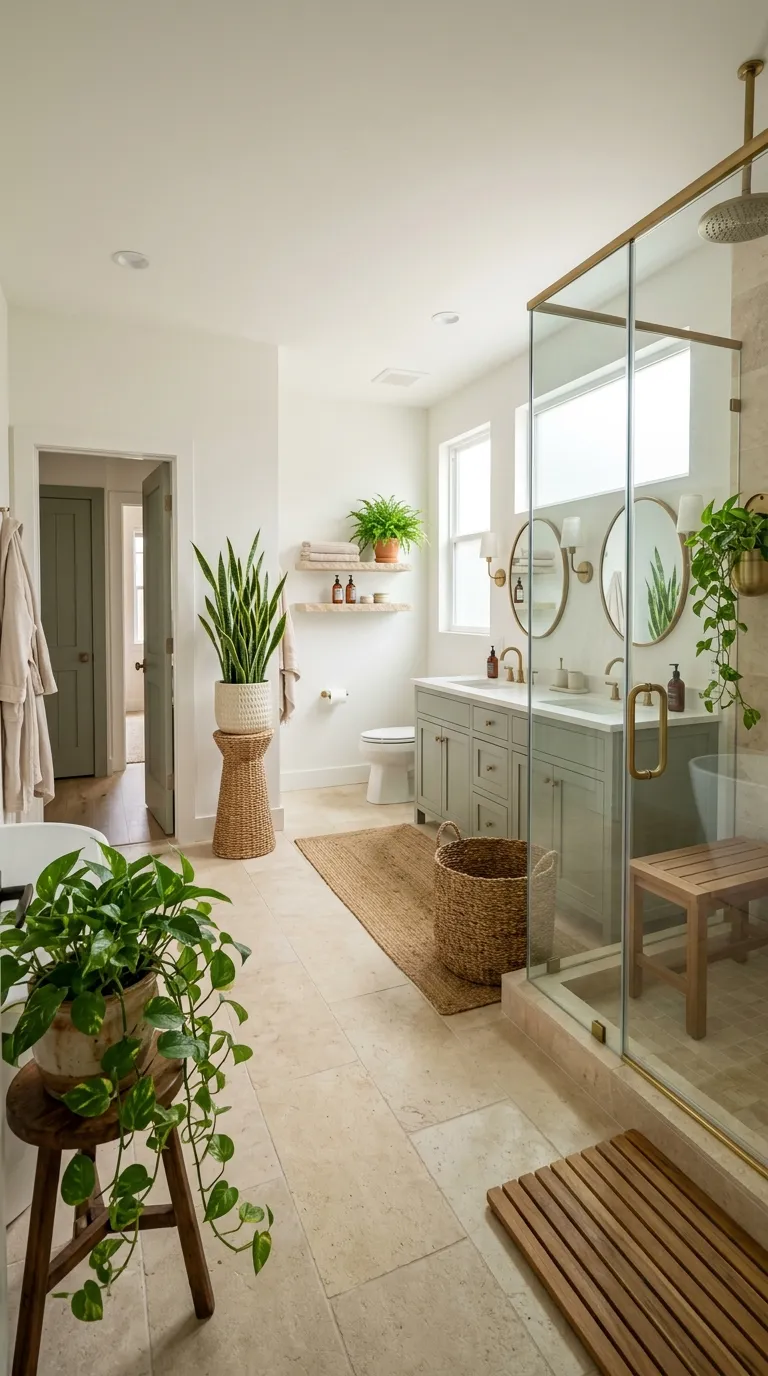
Crowding plants together can reduce airflow around their leaves. It can also make watering and checking the soil harder.
Leave breathing room between pots and foliage. A bathroom with three well-placed plants can work better than a crowded corner filled with containers.
16. Feed Plants Lightly
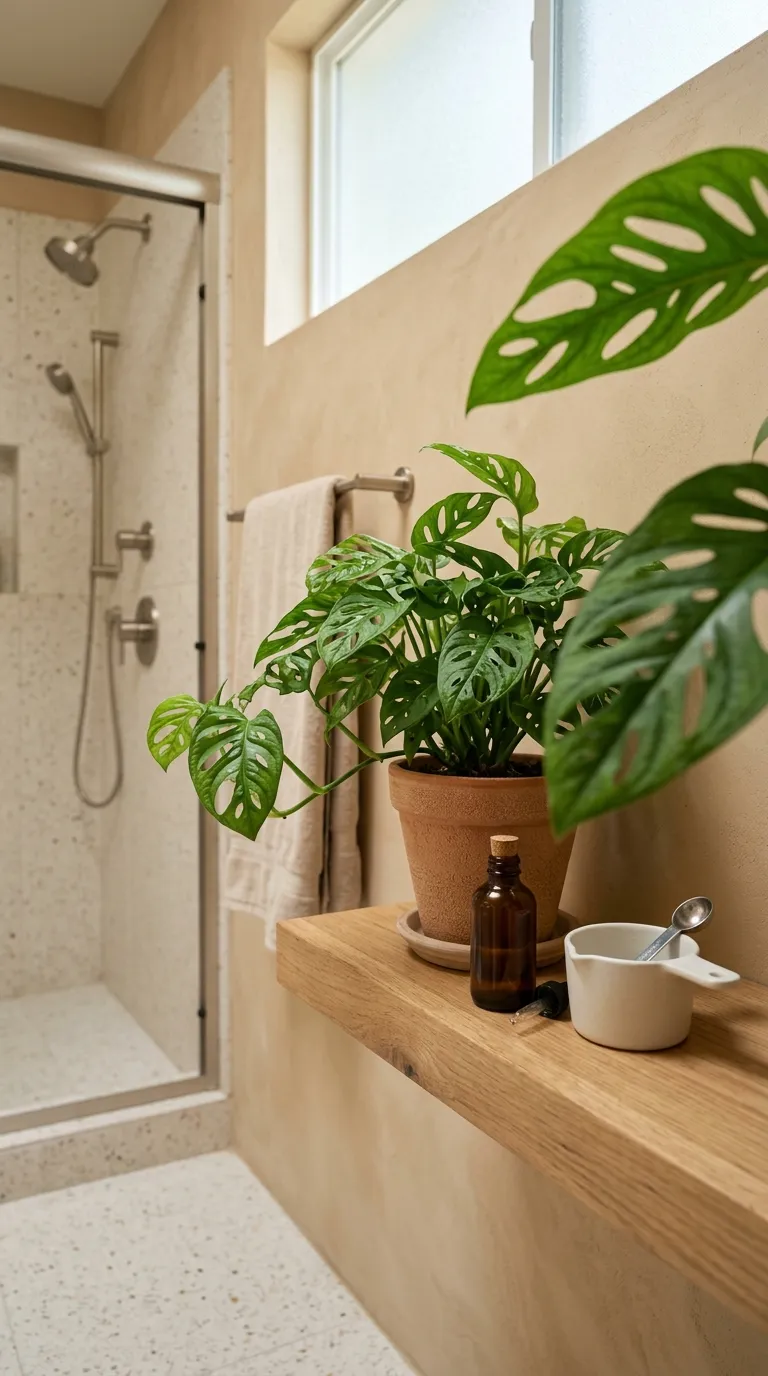
Bathroom plants still need nutrients, especially during active growth. Yet more fertilizer isn’t always better, and heavy feeding can damage sensitive roots.
Use a balanced indoor plant fertilizer according to the product directions. Feed less often during periods when the plant grows slowly, and avoid adding fertilizer to very dry soil.
17. Refresh Old Potting Soil
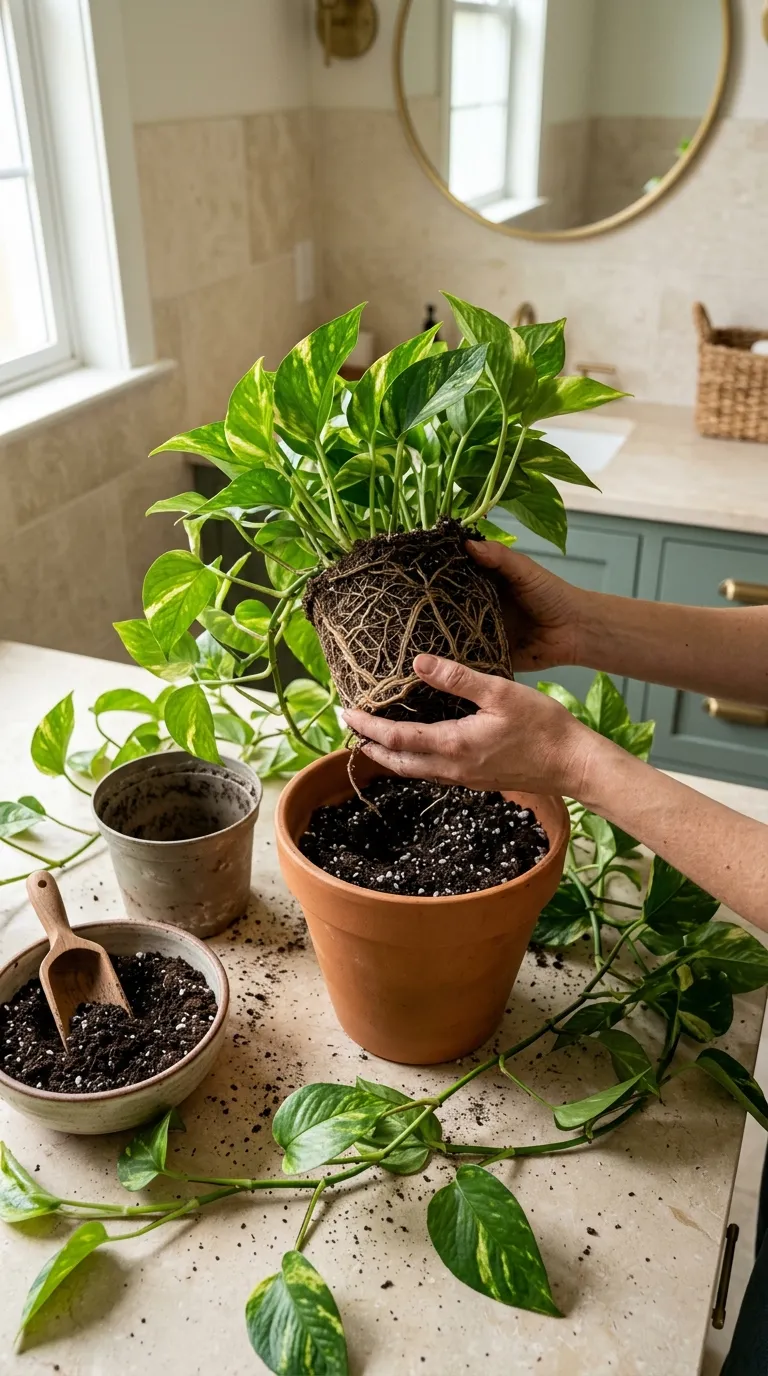
Old soil can become compacted and may drain less freely over time. If water runs through too slowly or the mix stays wet for days, a fresh potting mix may help.
Repot when the plant needs it rather than following a strict calendar. Choose a container only slightly larger than the current root ball and make sure it has drainage holes.
18. Clean the Shower Area
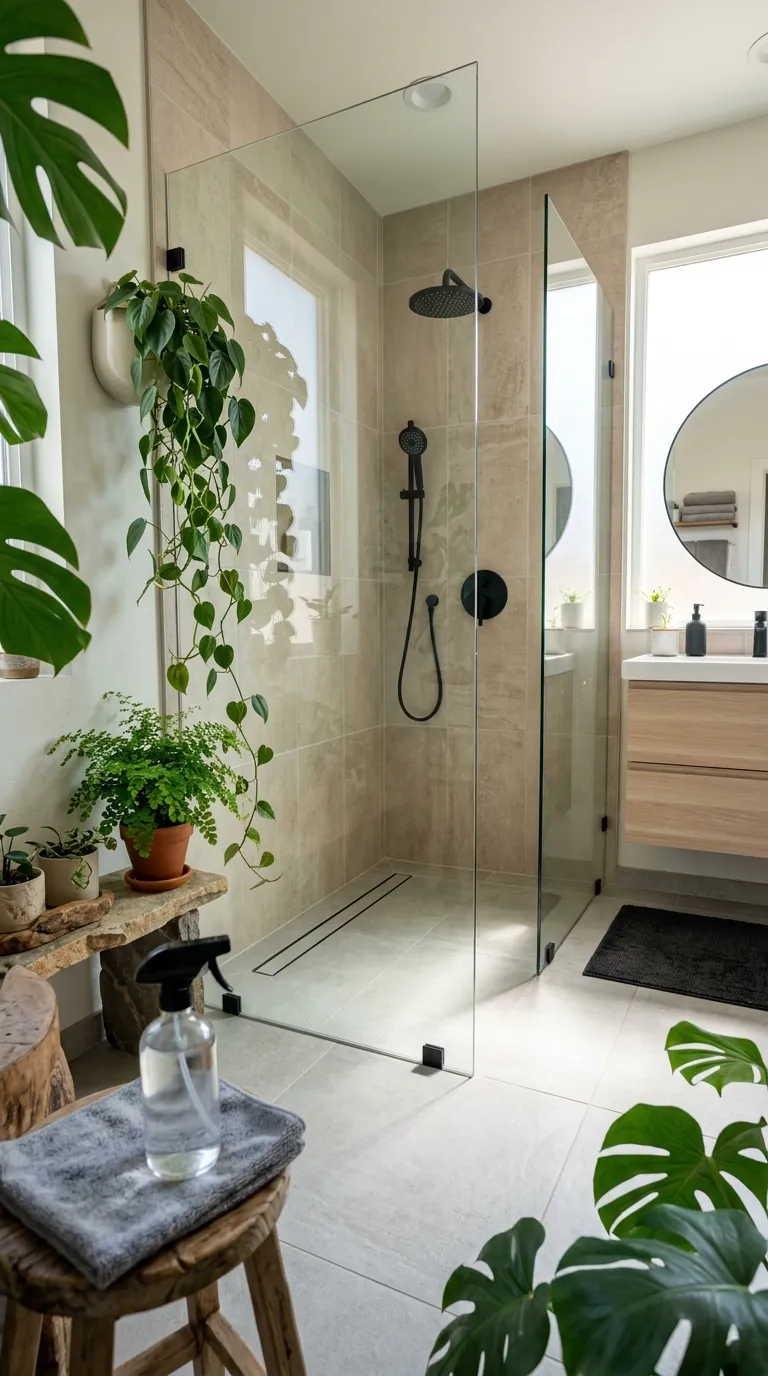
A clean bathroom gives your plants a better setting too. Soap buildup, standing water, and damp debris can collect around pots and shelves.
Wipe the area around your plants during regular bathroom cleaning. Keep drainage trays clear, remove fallen leaves, and make sure water isn’t pooling beneath containers.
19. Protect Plants From Heat
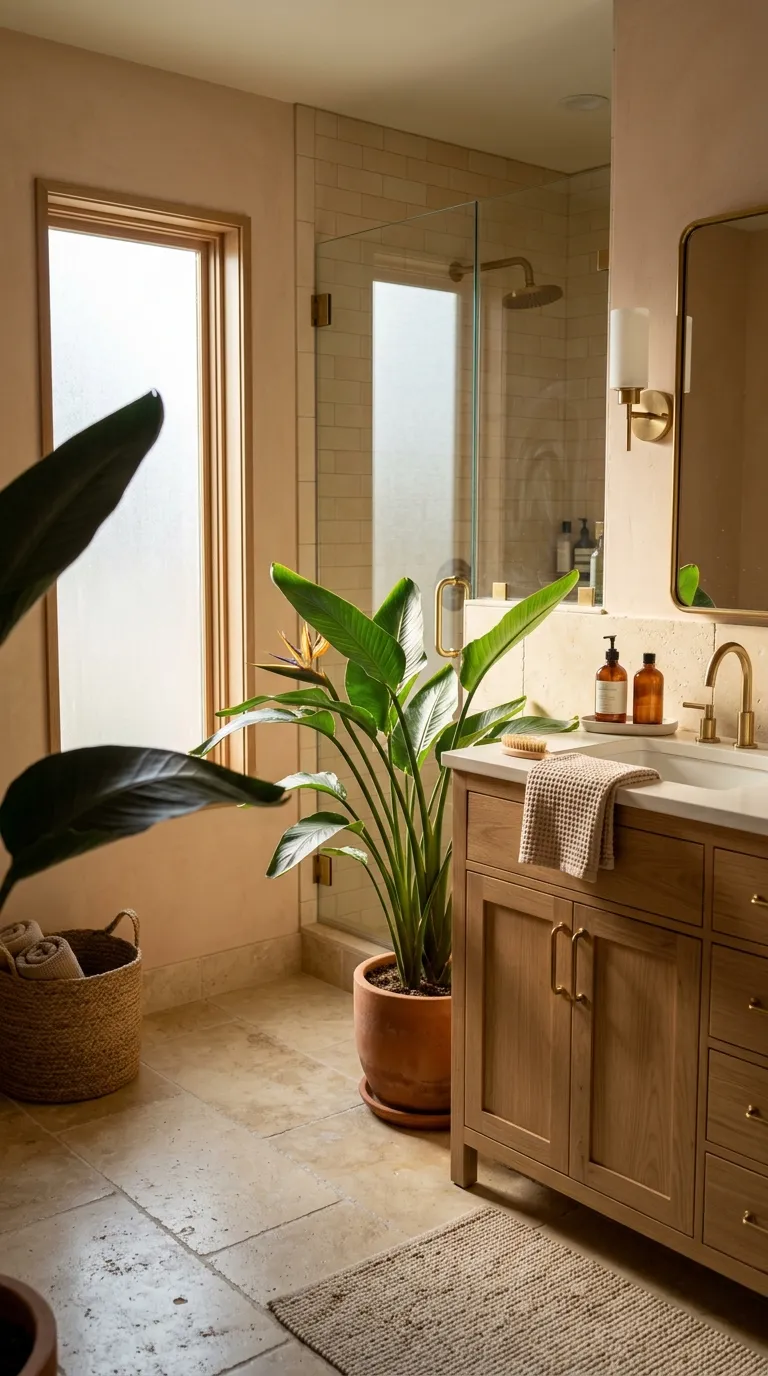
Hot air can stress some bathroom plants, especially when the leaves sit close to a warm shower wall or heating vent. A steamy room may feel comfortable, but constant heat isn’t ideal for every species.
Keep sensitive plants a little farther from heat sources. A vanity corner or side shelf can offer humidity without exposing foliage to intense warmth.
20. Inspect Leaves Weekly
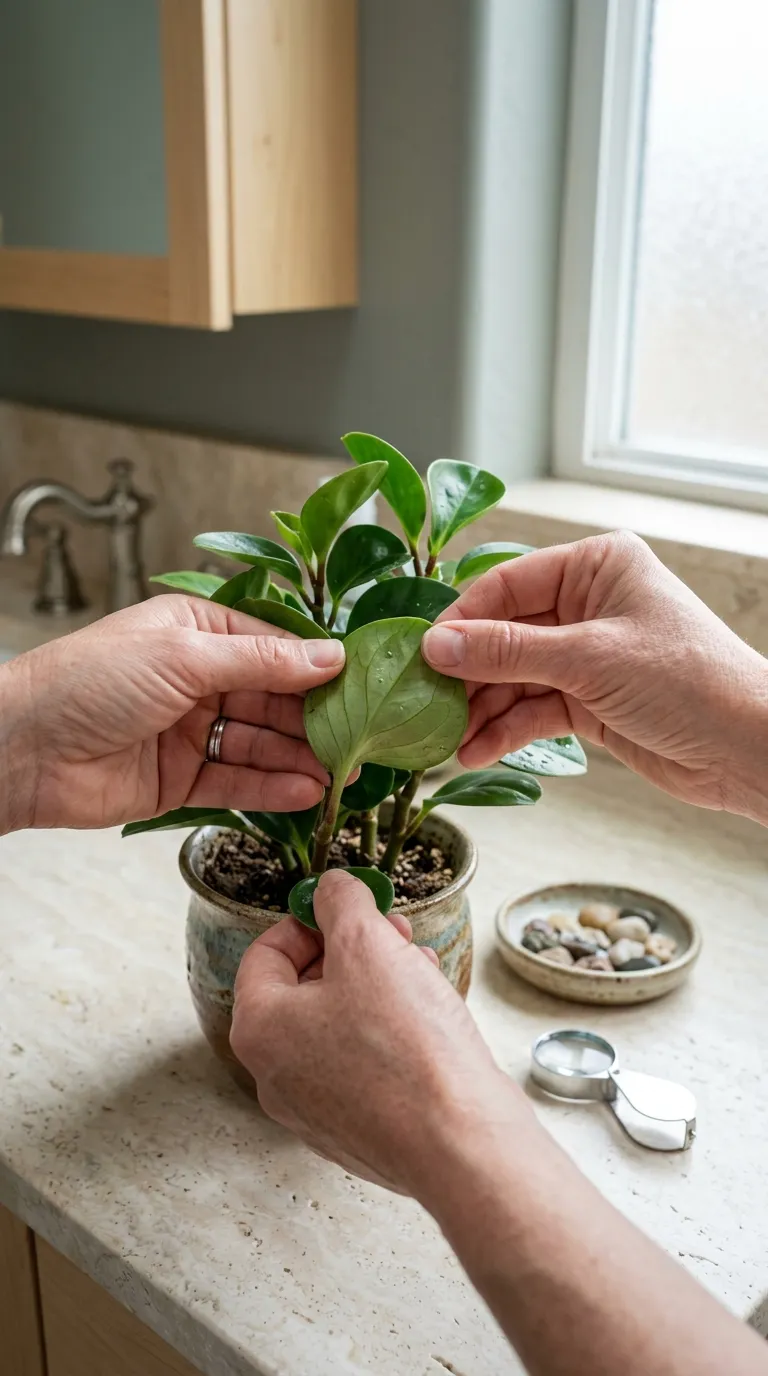
A quick leaf check can catch problems before they spread. Look at both sides of the leaves for spots, pests, sticky residue, curling, or unusual discoloration.
Make this part of your weekly plant care routine. If something looks different, check the plant’s soil, light, airflow, and watering pattern before changing several things at once.
21. Match Plants to Seasons
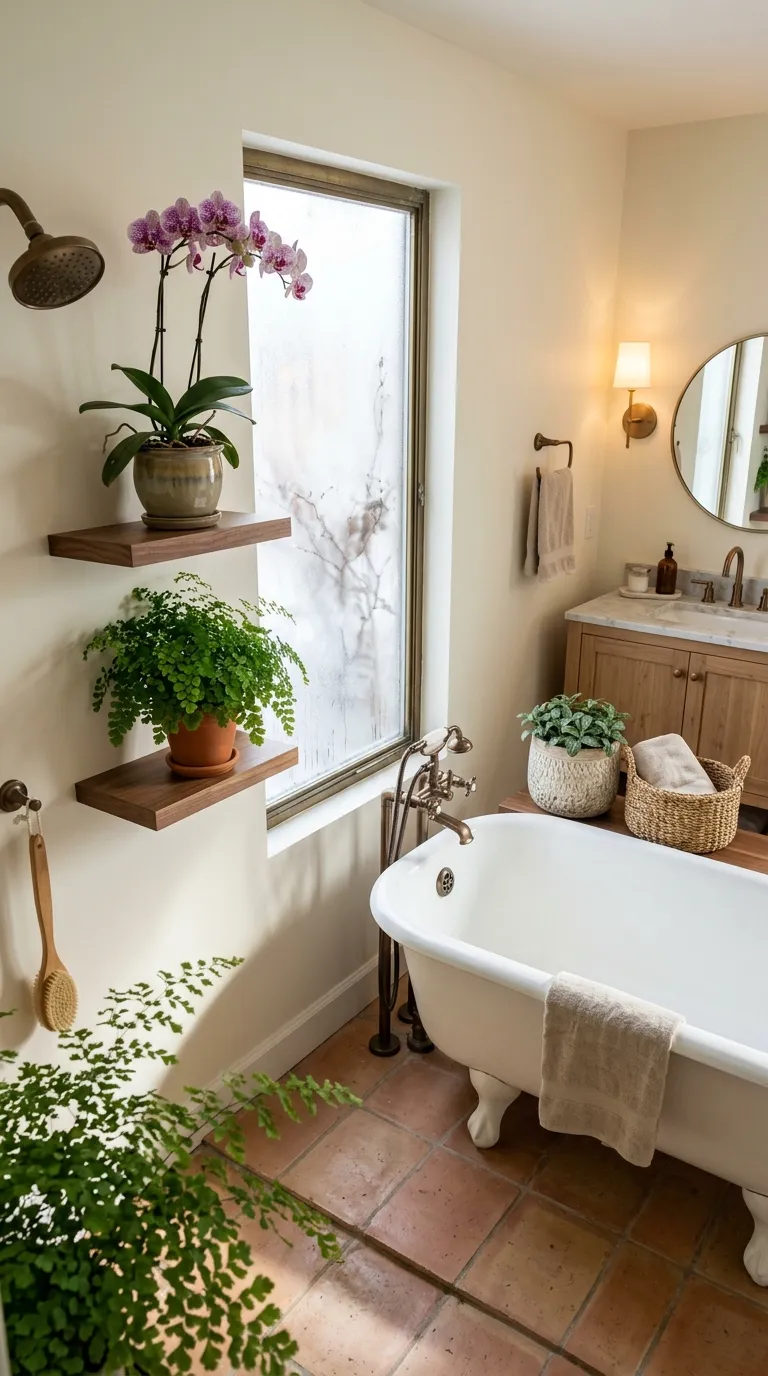
Your bathroom conditions can change throughout the year. Winter may bring cooler air and less daylight, while summer can bring stronger sun and faster soil drying.
Watch how your plants respond as the seasons change. You may need to move a pot closer to a window, water less often, or give it more space from a drafty window.
22. Move Plants When Needed
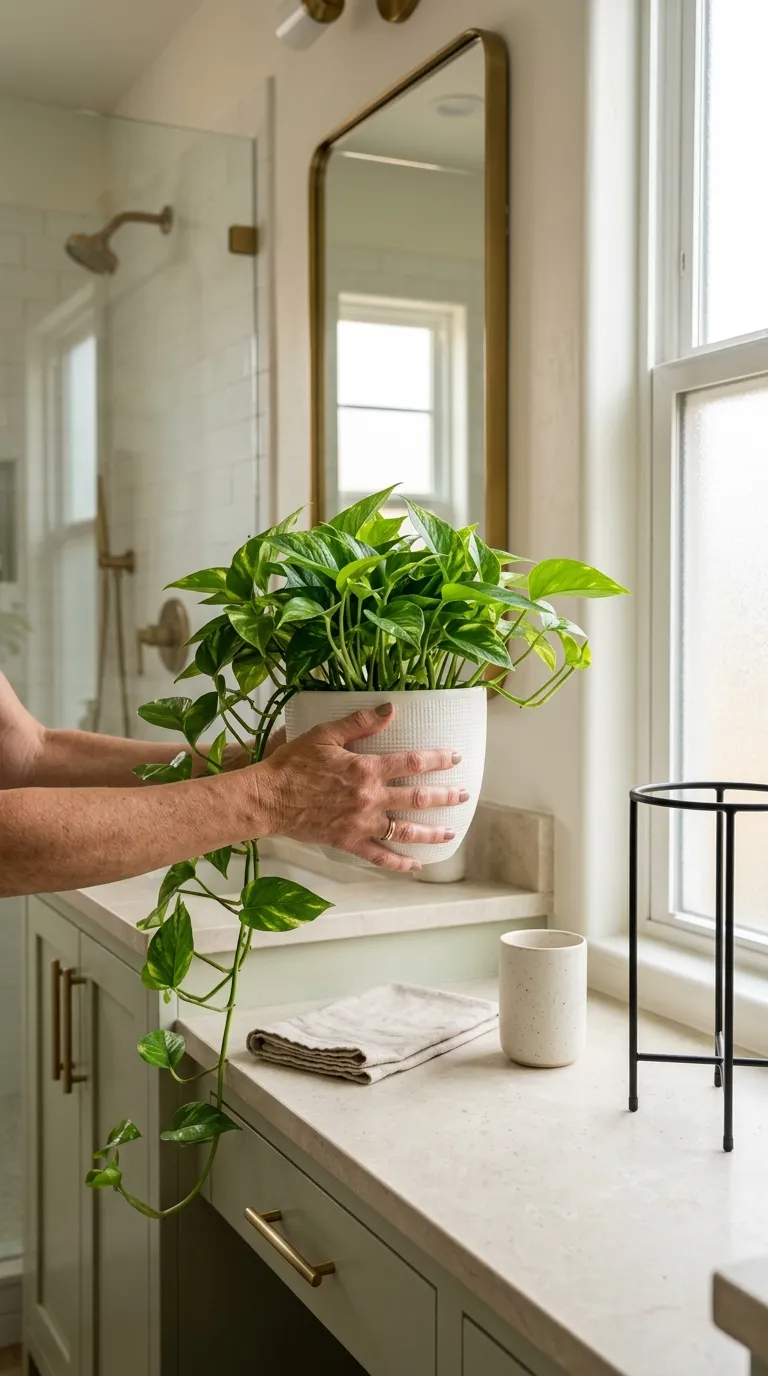
Don’t force a plant to stay in one spot. If the leaves become pale, growth slows, or the stems stretch toward a window, the location may not provide enough light.
Move the pot gradually when possible. A brighter spot with indirect light may suit it better, while a plant exposed to harsh direct sun may need a little more distance from the window.
23. Build a Simple Care Routine
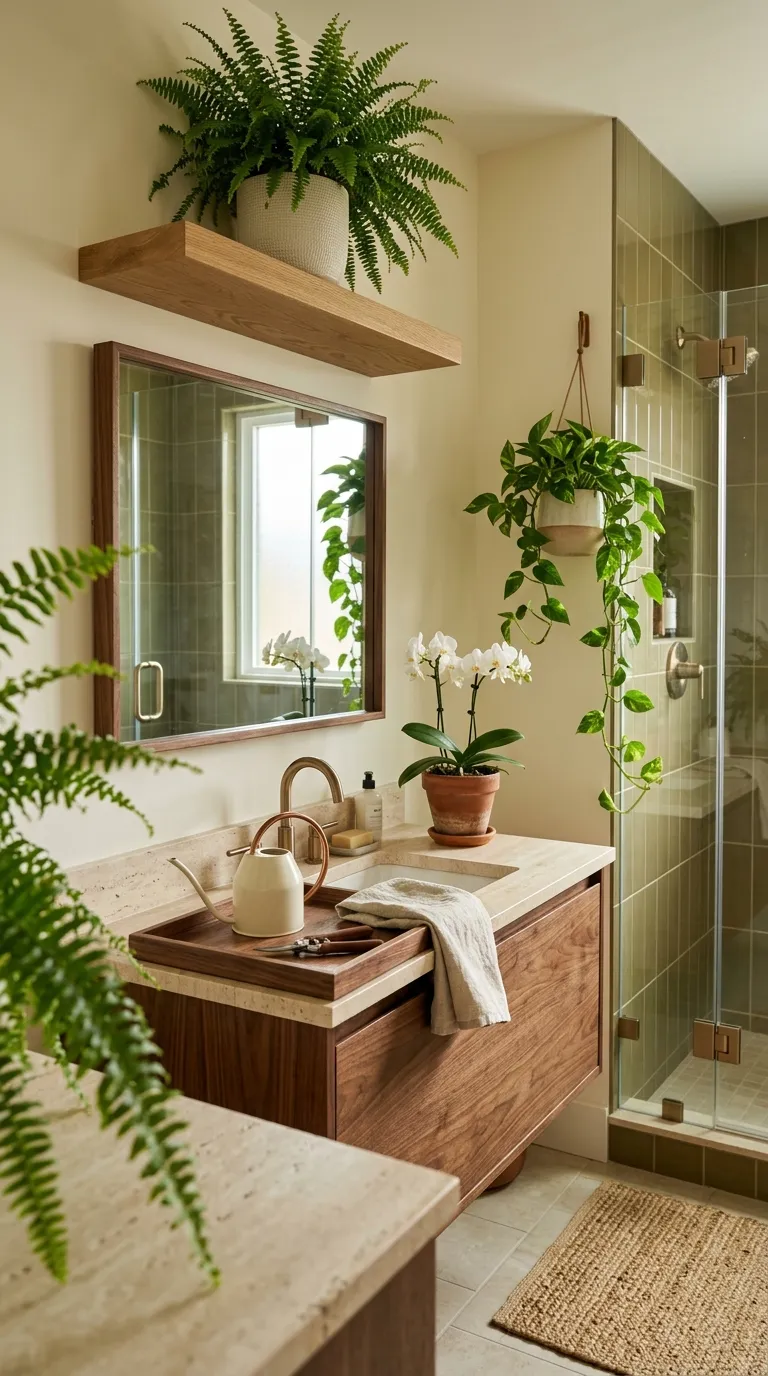
Plant care gets easier when you make it part of your normal bathroom routine. Check the soil, inspect the leaves, clear away fallen foliage, and look at the plant’s light every week.
You don’t need a complicated schedule. A few small habits can help you figure out how to keep shower plants alive while keeping your bathroom green, fresh, and easy to care for.
To Sum It Up
Start with plants that suit your bathroom’s humidity and light. Give them drainage, airflow, and enough space, then watch how each plant responds to its spot.
Small changes can make plant care much easier. Check your pots regularly, adjust their location when needed, and keep the routine simple enough to follow.
Emma Williams
Emma Williams is an interior design expert and decor editor at Lady Home Decor. She specializes in modern, cozy, and functional home styling, helping readers discover inspiring decorating ideas that are easy to recreate. Her work focuses on timeless design, practical solutions, and the latest home decor trends.