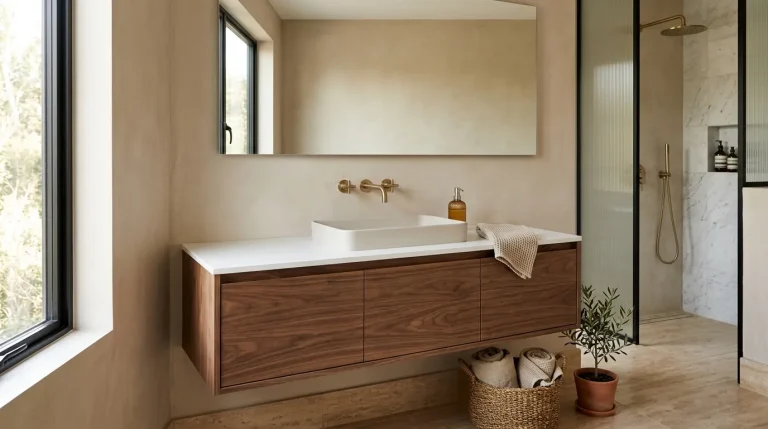
21 Stunning Luxury Bathroom Designs That Feel Relaxing

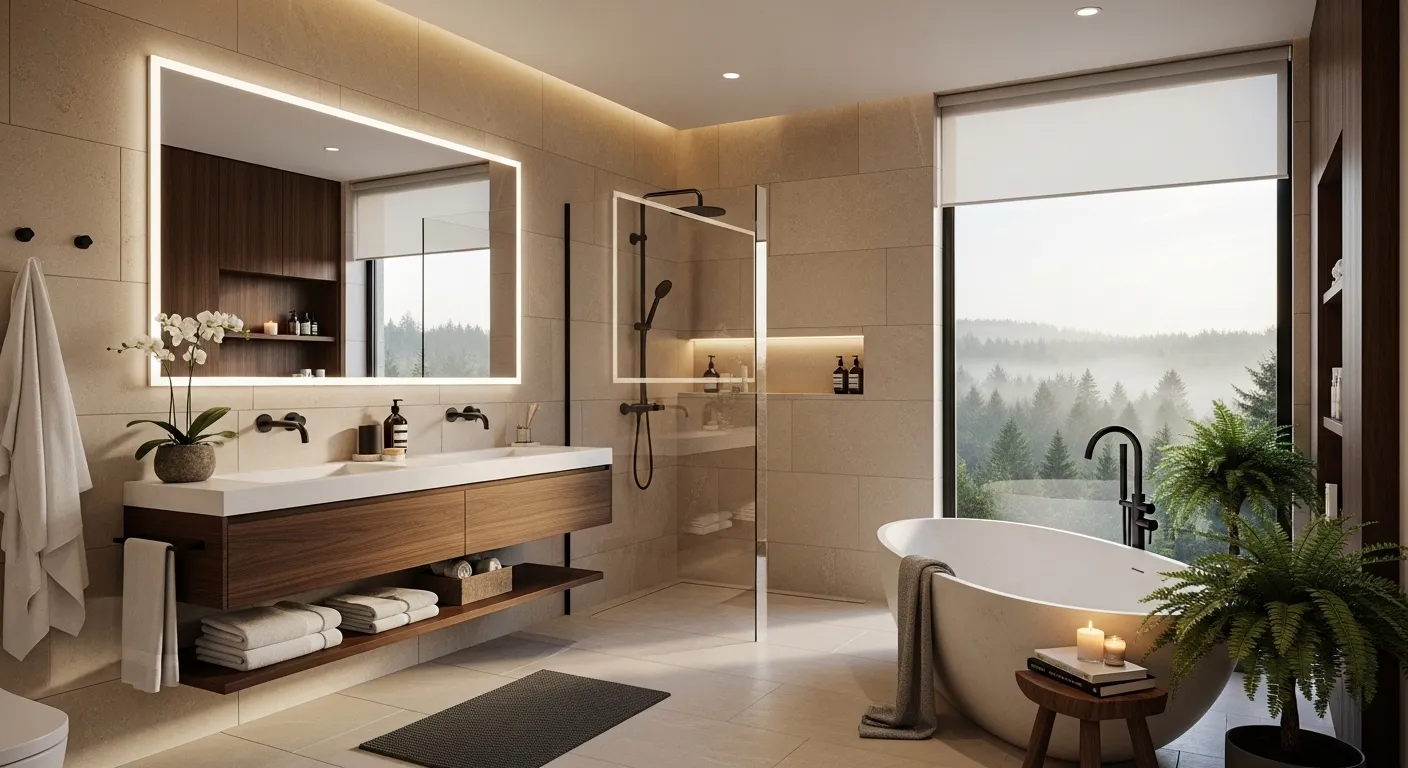
Your bathroom deserves to feel like a sanctuary not just a room you pass through. Luxury bathroom designs have the power to completely transform how you start and end every single day. I’ve noticed that even small, thoughtful upgrades can shift a bathroom from purely functional to genuinely beautiful and calming. Whether you’re planning a full renovation or simply looking for fresh inspiration, this article brings you 21 stunning design ideas that blend elegance, comfort, and real relaxation. From spa-style wet rooms to dramatic marble walls and soft ambient lighting, every idea here is carefully chosen to help you create a bathroom that feels like your own private retreat.
1. Freestanding Soaking Tub
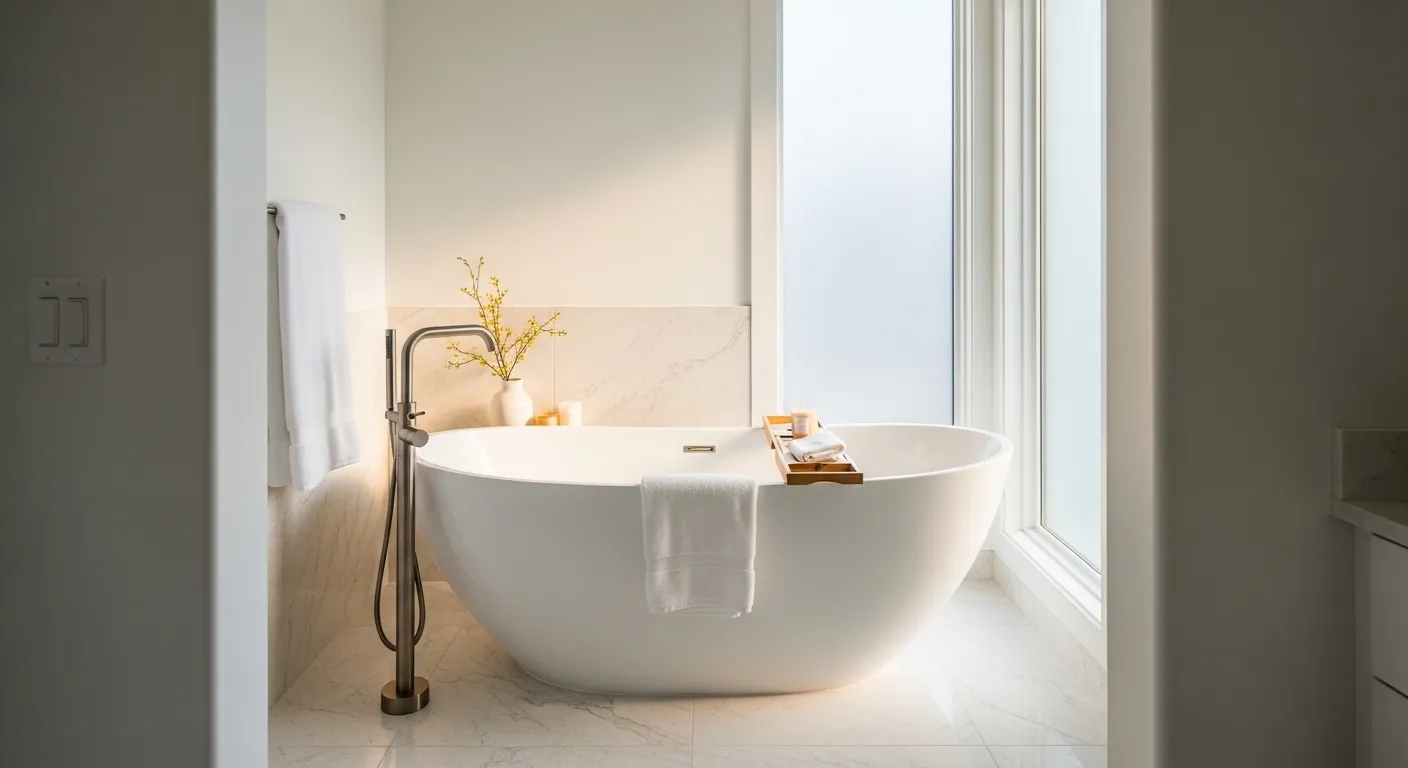
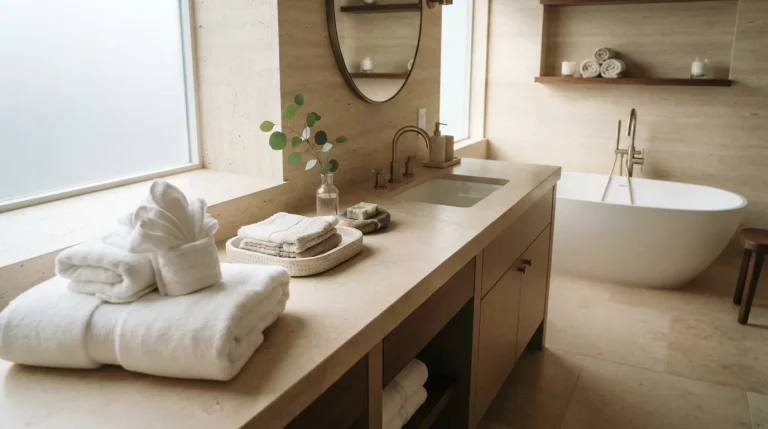
A freestanding soaking tub is one of the most instantly transformative elements in any bathroom upgrade. Unlike built-in tubs that disappear into the surrounding structure, a freestanding tub commands attention from every angle. It announces that this is a space designed not just for function but for genuine relaxation and indulgence. The silhouette of a well-chosen tub whether an oval, slipper, or Japanese-style design introduces a sculptural quality that makes the entire bathroom feel more elevated, considered, and distinctly personal. It is a single piece of hardware that shifts the entire character of the room permanently.
The placement of a freestanding tub matters as much as the tub itself. Positioning it beneath a window or skylight connects the bathing experience to natural light, which deepens the sense of calm and openness. Centering it within the room rather than pushing it against a wall makes the bathroom feel more like a spa suite. That’s why many designers recommend pairing the tub with a minimal surrounding aesthetic a clean floor, simple walls, and just a few carefully chosen accessories like a wooden tray or a single sculptural candle holder. The restraint around the tub allows it to breathe and remain the undisputed focal point.
2. Marble Accent Wall
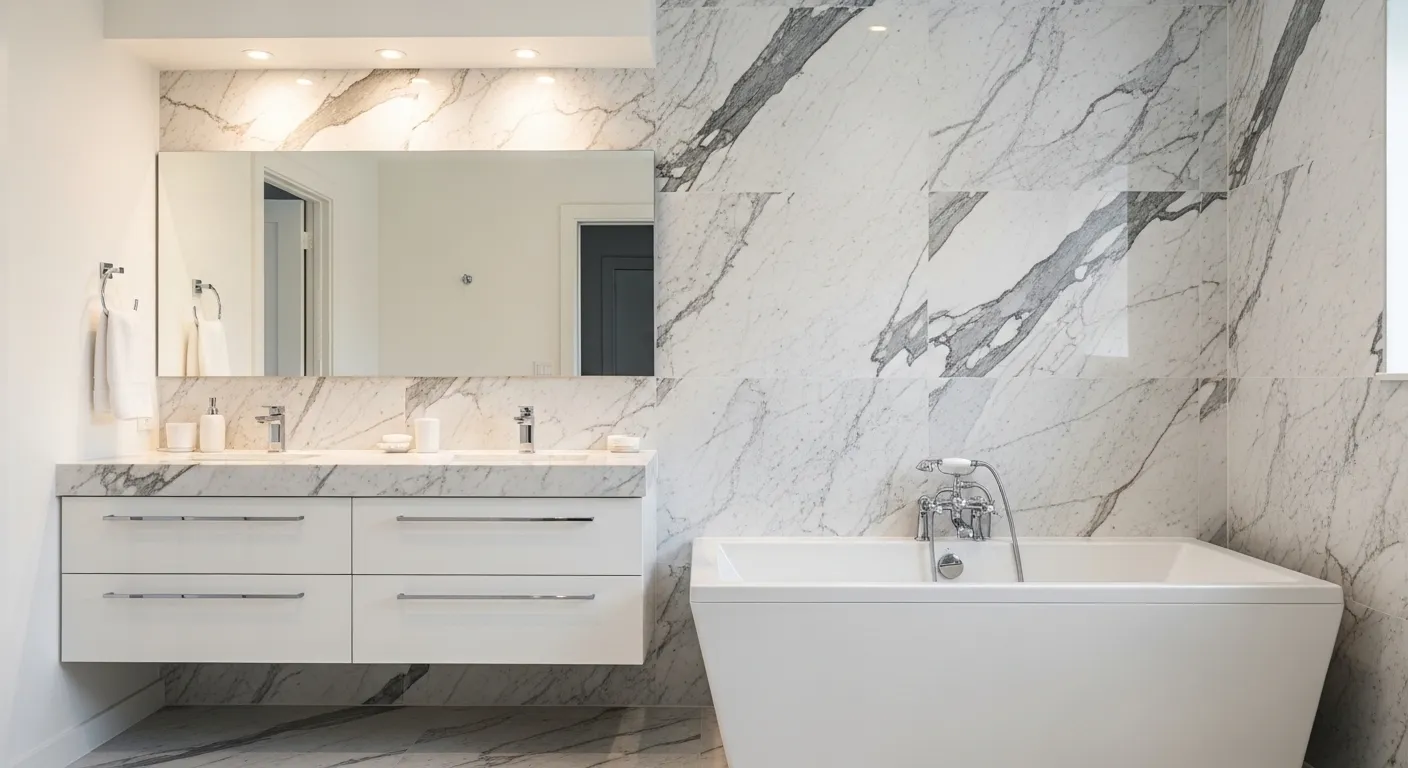
Few materials communicate luxury and refinement as effortlessly as marble. A marble accent wall behind a vanity or freestanding tub instantly raises the visual standard of the entire bathroom, creating a backdrop so compelling that very little else is needed to complete the design. The natural veining in marble those flowing lines of gray, gold, or charcoal against a white ground introduces organic movement and depth that no painted or tiled surface can replicate. I’ve noticed that once people experience this effect in person, they rarely want anything else for their primary bathroom. It is genuinely stunning in a way that photographs understate.
The scale of the marble wall matters enormously in achieving the right impact. For maximum drama, run the marble from floor to ceiling with no interruption, allowing the full slab or tile pattern to read as a continuous, unbroken surface. Book-matching two slabs so the veining mirrors itself creates a symmetrical, almost painterly effect that feels truly bespoke and architectural. If full marble installation exceeds the budget, large-format marble-effect porcelain tiles achieve a remarkably similar result at a fraction of the cost. Combine either option with warm recessed lighting above the vanity, and the marble will glow beautifully throughout the day and evening.
3. Rainfall Shower Ceiling
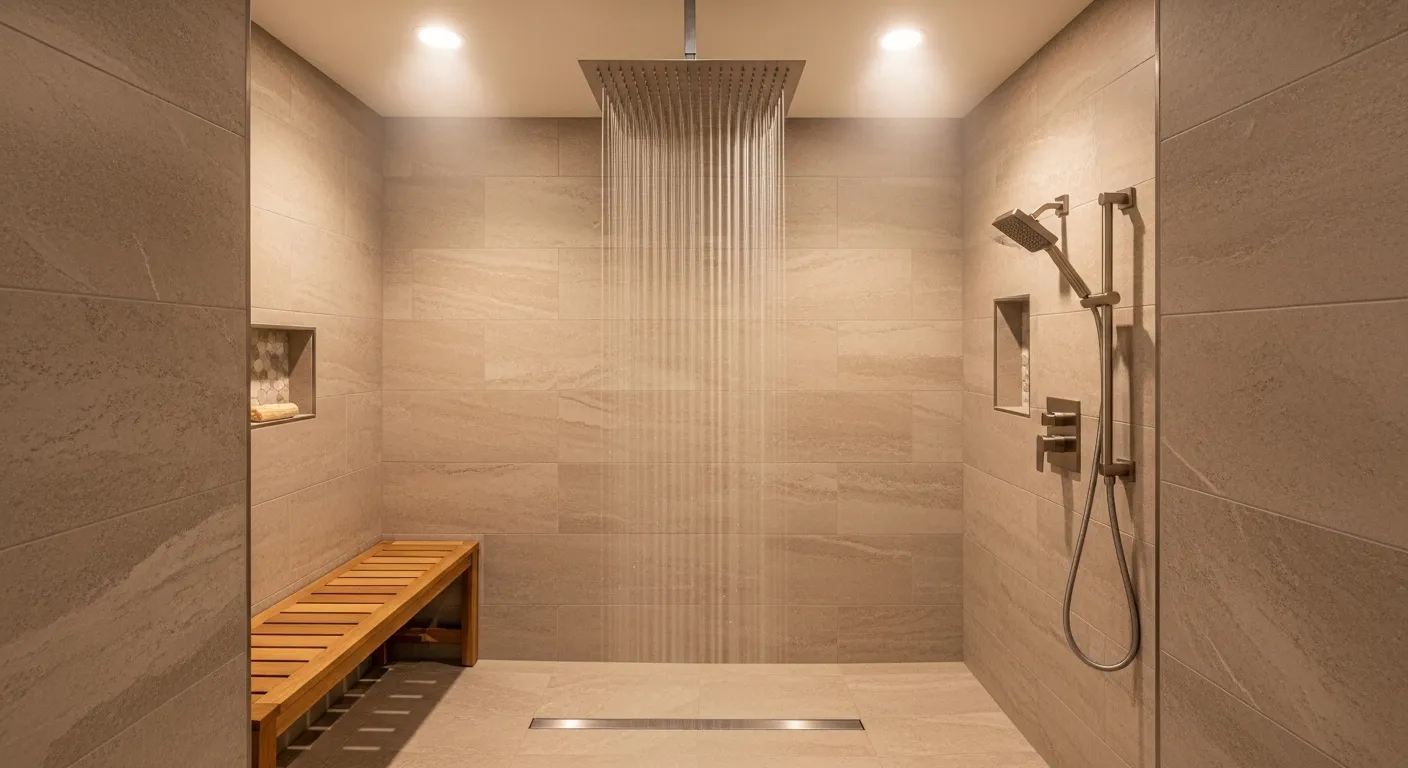
There is something almost meditative about standing beneath a rainfall showerhead. The water falls straight down from a wide overhead surface, mimicking the sensation of standing in warm summer rain, which is a deeply physical and calming experience that standard shower heads simply cannot replicate. This is why rainfall showers have become one of the most requested features in high-end bathroom renovations over the past decade. The upgrade is remarkably accessible compared to other luxury bathroom features. A quality ceiling-mounted rainfall head is a single plumbing fixture that transforms an ordinary shower into something that guests will notice and comment on every single time.
To achieve the most refined look with a rainfall shower, the installation should be flush with or recessed into the ceiling rather than sitting on an extended arm. This keeps the overhead surface clean, uncluttered, and architecturally integrated. Pair it with large-format stone or concrete-effect tiles on the walls and floor for a cohesive, spa-like surround. A linear drain along one wall further enhances the minimalist quality of the space. That’s why many designers also recommend a built-in teak or stone bench within the shower enclosure it invites lingering, adds warmth, and transforms the shower from a hurried routine into a genuinely restorative daily ritual.
4. Floating Double Vanity
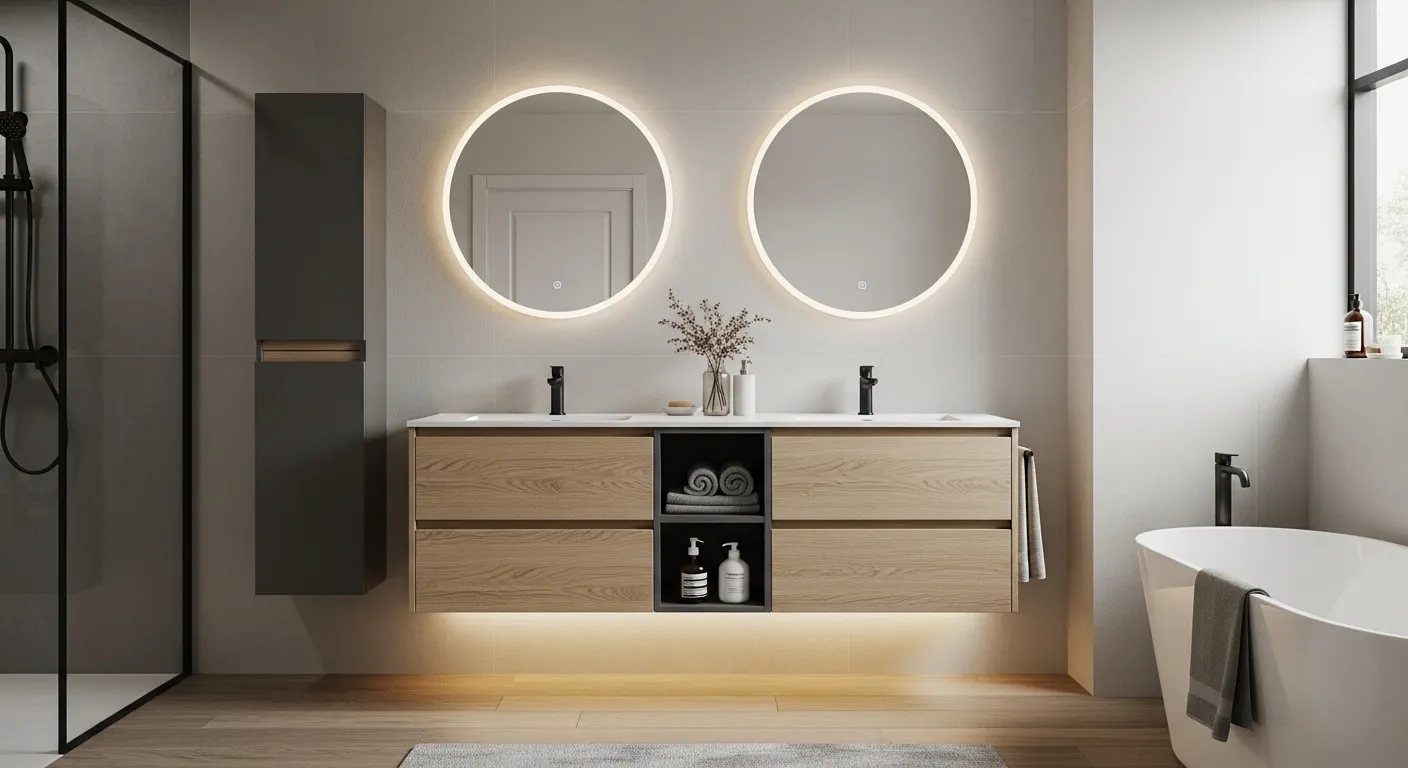
A floating double vanity changes how a bathroom feels the moment you walk in. By lifting the cabinet off the floor and wall-mounting it, the visual weight of the unit is dramatically reduced. The floor continues uninterrupted beneath it, creating a sense of space and airiness that a floor-standing vanity simply cannot achieve. Add LED strip lighting along the underside of the cabinet and the effect becomes even more striking the vanity appears to hover above a soft, warm glow that makes the entire bathroom feel like a curated boutique hotel suite. It is one of the highest-impact single upgrades in any bathroom renovation project.
The practical advantages of a floating double vanity are equally compelling. The accessible floor space beneath makes cleaning significantly faster and more thorough, as there are no base panels or legs to navigate around. The double basin layout, with each partner having a dedicated sink and storage zone, eliminates the morning congestion that a single basin creates in shared bathrooms. For the cabinetry finish, matte tones in charcoal, warm white, or natural timber resist fingerprints and maintain a consistently clean appearance throughout the day. Pair the vanity with two matching round or rectangular lit mirrors to complete the symmetrical, spa-inspired look that defines contemporary high-end bathroom design.
5. Spa Wet Room
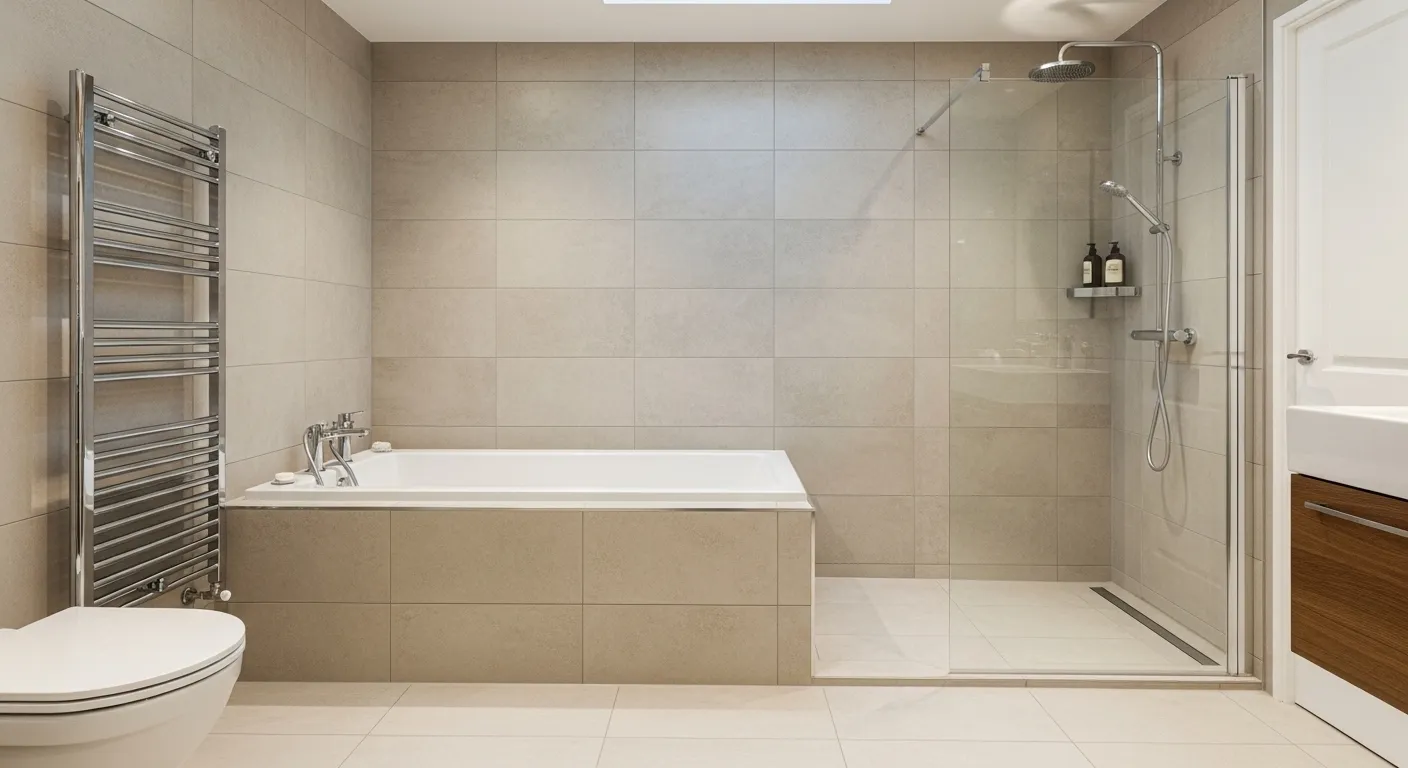
A spa wet room takes the bathroom beyond conventional design boundaries, removing the standard shower enclosure entirely and allowing the entire floor and wall space to become a unified, water-safe zone. The result is a bathroom that feels noticeably more open, more generous, and more intentionally designed than anything a standard shower tray and glass panel can achieve. I’ve seen wet rooms transform even mid-sized bathrooms into spaces that genuinely feel like private resort suites. The key lies in the continuity of materials the same tile running seamlessly from floor to ceiling across every surface creates a wraparound immersion that is extraordinarily calming.
The practical planning of a wet room requires slightly more investment upfront, as the entire floor must be properly waterproofed and graded to drain effectively. However, the long-term payoff in both daily experience and property value makes this one of the most worthwhile renovations available. That’s why many interior architects recommend wet rooms for anyone undergoing a full bathroom remodel rather than a partial update. Choose large-format tiles with minimal grout lines to maintain a clean, expansive look across all surfaces. Add underfloor heating beneath the tiles for warmth underfoot year-round, and the wet room becomes truly indistinguishable from the finest spa facilities.
6. Backlit Bathroom Mirror
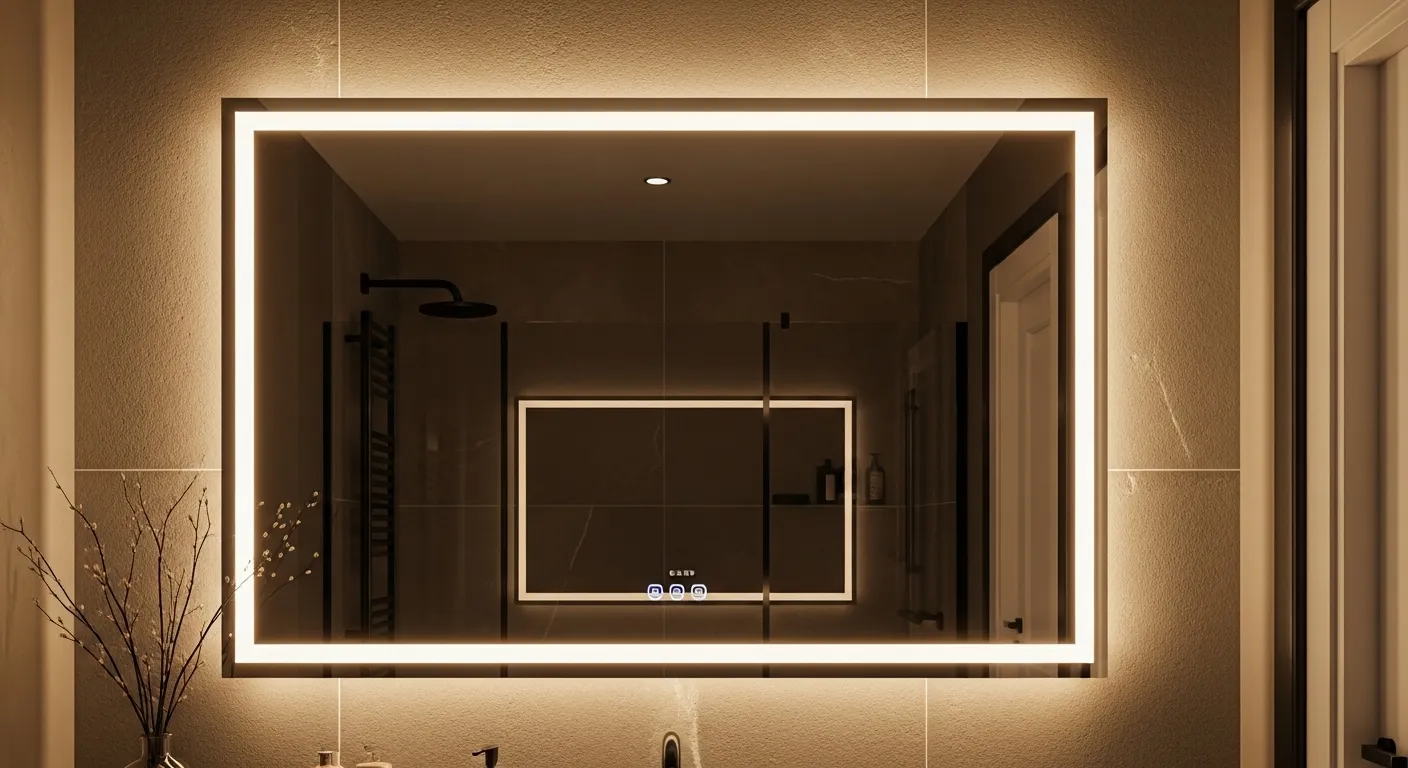
Lighting transforms a bathroom more than almost any other single element, and a backlit mirror sits at the absolute pinnacle of bathroom lighting design. The soft, even halo of warm LED light that emanates from behind the mirror’s perimeter eliminates the harsh shadows that overhead or side-mounted lighting creates on the face. The result is flattering, clear, and genuinely functional illumination for daily grooming routines, while simultaneously creating an ambient glow that makes the entire bathroom feel warm and inviting. It is one of those features that once experienced, makes returning to a standard mirror feel like a significant downgrade.
Beyond the lighting quality, a backlit mirror introduces a strong architectural element to the vanity wall. The glowing perimeter turns the mirror into a luminous frame almost like a piece of light art that catches the eye immediately upon entering the bathroom. Many high-end backlit mirrors also include integrated anti-fog heating elements, which eliminate the irritating wait for a steamed mirror to clear after a hot shower. Choose a color temperature between 2700K and 3000K for warm, flattering light that renders skin tones naturally. This small technical detail makes a noticeable difference in how pleasant and effective the mirror is during everyday use.
7. Natural Stone Basin
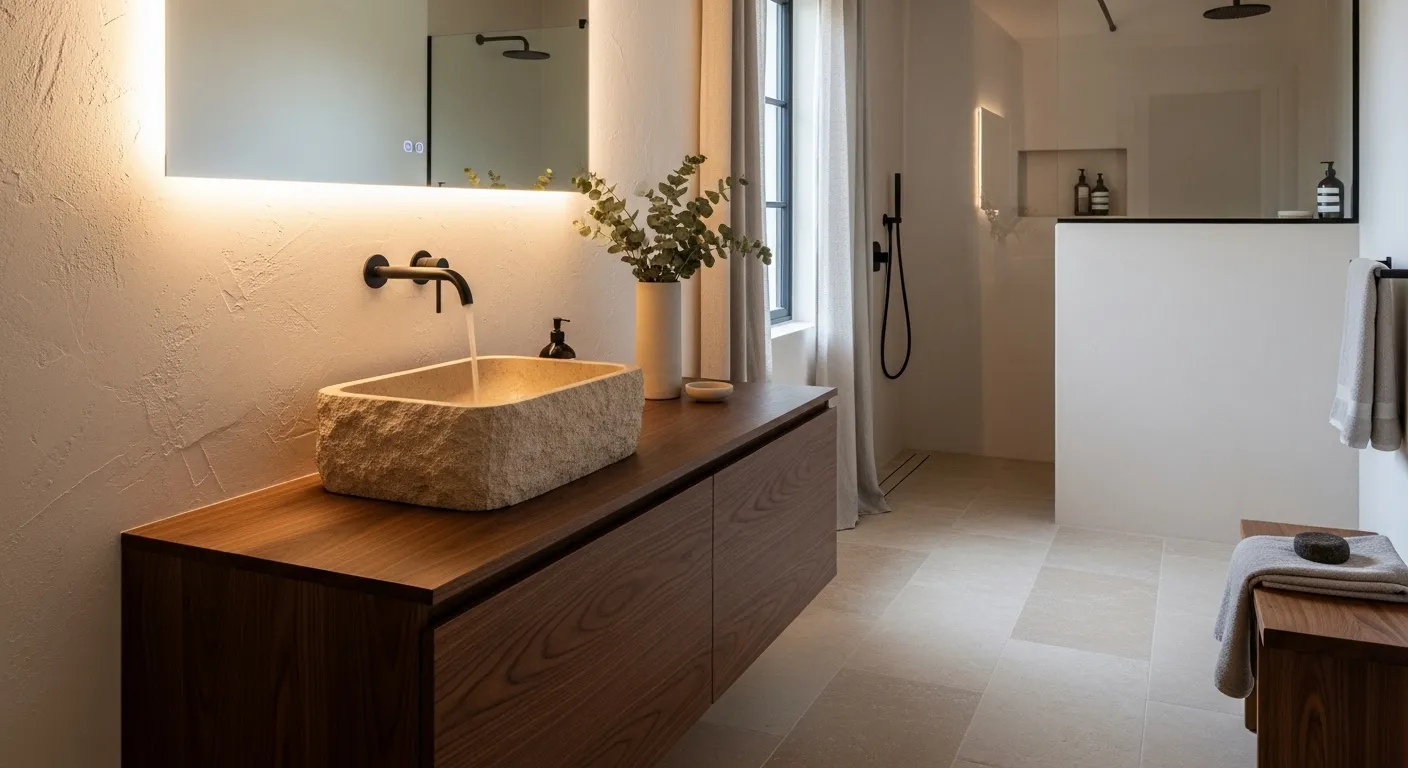
A natural stone vessel basin carries a weight and authenticity that no ceramic or acrylic basin can match. Carved from solid travertine, marble, onyx, or river stone, these basins are genuinely tactile objects that transform a basic vanity into something that feels like a considered piece of art. The rough exterior texture against the smooth polished interior bowl creates a material contrast that is both visually compelling and deeply satisfying to touch. In my experience, this is the kind of detail that guests notice and ask about immediately it adds a layer of craft and intention that signals a truly thoughtfully designed bathroom.
Practically speaking, natural stone basins are durable and long-lasting when properly sealed and maintained. The sealant prevents moisture from penetrating the stone’s surface, protecting against staining while preserving the natural character of the material. Clean them regularly with pH-neutral products to maintain their finish. Choose a complementary faucet style a slim wall-mounted spout in matte black or brushed bronze creates the cleanest and most refined pairing. Position the basin on a dark timber or stone vanity surface for maximum material contrast. This layering of natural materials stone, timber, and metal is the foundation of genuinely warm and organic luxury bathroom design.
8. Herringbone Tile Floor
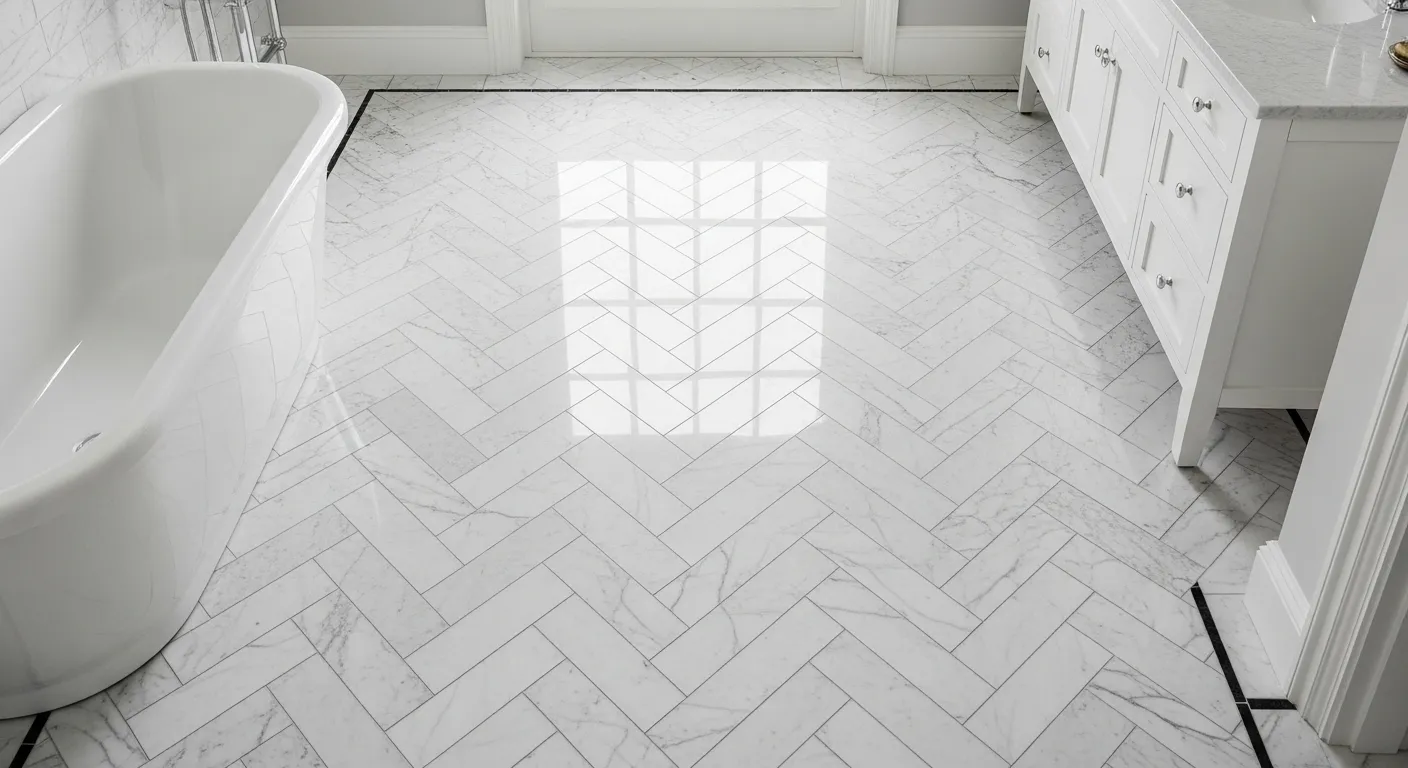
A herringbone tile floor introduces instant sophistication to any bathroom. The interlocking V-shaped pattern creates a visual rhythm and directional energy across the floor that a standard grid tile layout simply cannot produce. It guides the eye through the space, making rooms feel longer and more intentional. In marble or stone, the herringbone pattern becomes a classic luxury statement the kind of floor you find in boutique hotels and high-end residential renovations that people remember long after leaving the space. That’s why many designers consider herringbone one of the most reliably stunning tile choices available across any budget range.
The grout color chosen for a herringbone floor has a dramatic impact on the final result. A white or near-white grout blends the tiles together and creates a softer, more continuous surface, emphasizing the material over the pattern. A contrasting dark gray or charcoal grout defines every single tile clearly, sharpening the herringbone pattern and making it pop visually. The contrasting option tends to photograph better and shows off the geometric precision of the layout more dramatically. For practical maintenance, a mid-tone grout hides everyday dirt and grime more effectively than either extreme, making it the most forgiving choice for a high-traffic primary bathroom used daily.
9. Indoor Bathroom Plants
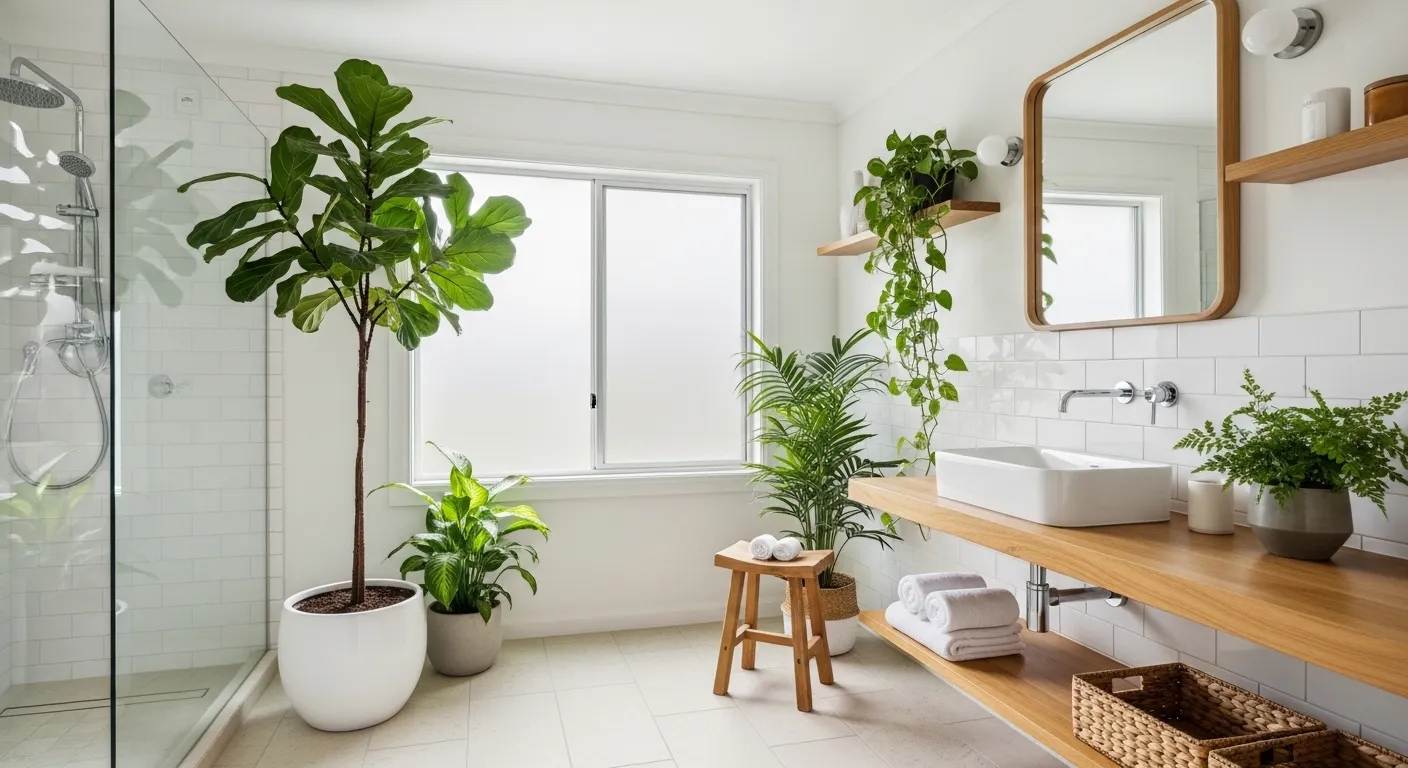
Indoor plants may be the single most underestimated element in bathroom design. They introduce color, texture, and organic life into a space that is typically dominated by hard, reflective surfaces. The contrast between lush green foliage and white tiles or stone is visually striking and immediately calming in a way that is deeply connected to nature and wellbeing. I’ve noticed that bathrooms with plants consistently feel more alive, more inviting, and more genuinely relaxing than identical spaces without them. The best news is that many tropical plants actually prefer the warm, humid bathroom environment, making them easier to keep healthy here than anywhere else in the home.
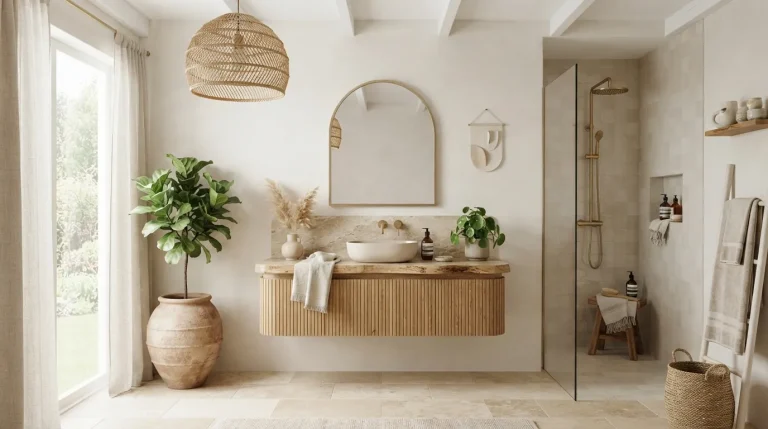
Choosing the right plants for bathroom conditions depends on the available light. For bathrooms with a generous window or skylight, fiddle-leaf figs, bird of paradise, and large-leafed philodendrons thrive and create dramatic, resort-like greenery. For lower-light bathrooms, peace lilies, cast iron plants, and ZZ plants manage beautifully without direct sunlight. Use pots in natural materials like terracotta, stone, or woven rattan to complement the organic quality of the plants. Position plants at varying heights a tall corner plant, a trailing shelf plant, and a small vanity specimen to create a layered, intentional arrangement that transforms the bathroom’s entire atmosphere.
10. Warm Timber Accents
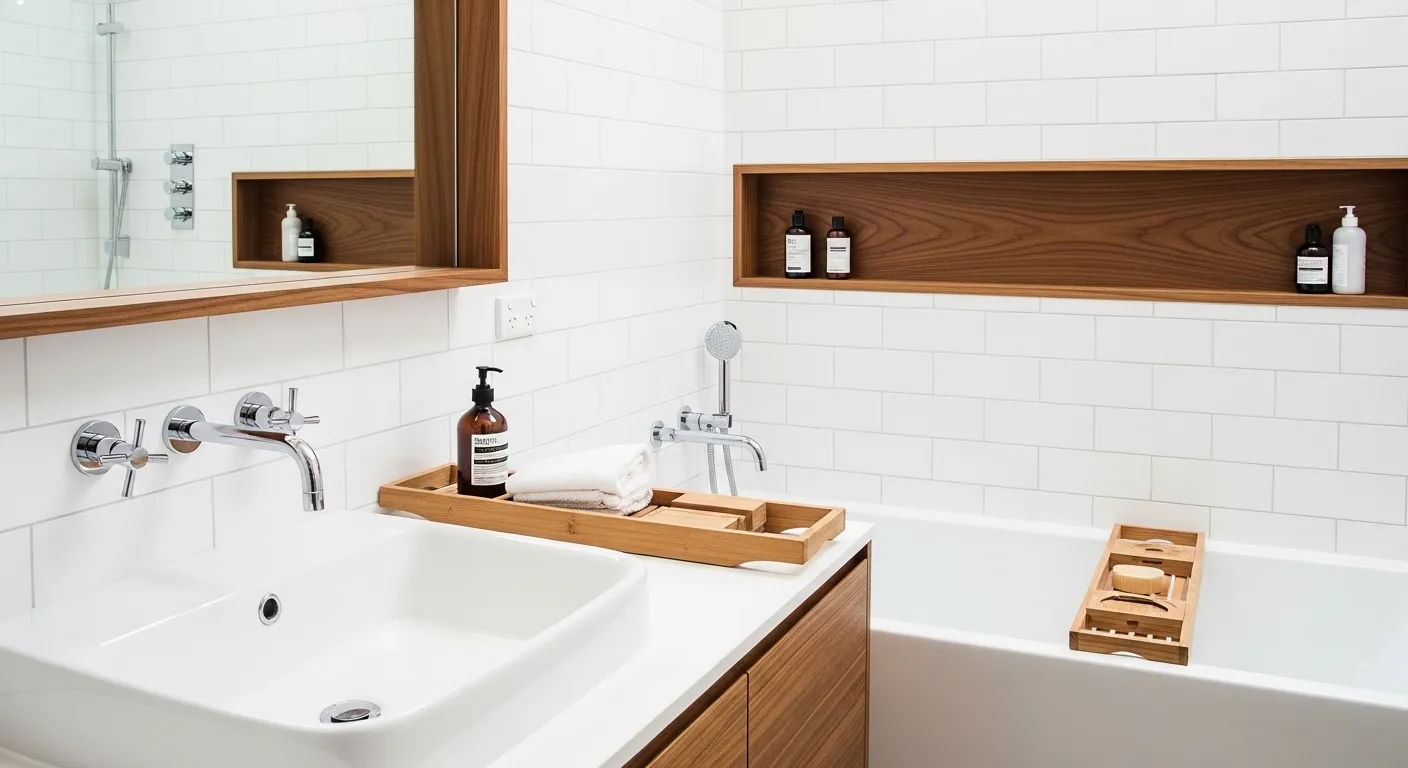
Timber is the element that stops a bathroom from feeling cold. White tiles, stone surfaces, and chrome fixtures are beautiful, but without the warmth of natural wood introducing contrast and organic texture, a bathroom can easily feel clinical and impersonal. Warm timber accents in walnut, oak, or teak whether on the vanity, as a bath caddy, or in a floating shelf instantly soften the space and introduce the kind of warmth that makes bathrooms feel genuinely comfortable to be in. I’ve seen this contrast work in nearly every bathroom style, from sleek contemporary to relaxed coastal to refined Scandinavian, because wood simply belongs in spaces designed for comfort.
When integrating timber into a bathroom, it is important to choose species and finishes that are appropriate for a high-humidity environment. Teak is the most naturally water-resistant hardwood available and performs beautifully without treatment in even the steamiest bathrooms. Treated oak and walnut are excellent choices for vanities and shelving where they will not be directly exposed to water. Seal any timber used in the bathroom environment regularly to preserve its finish and prevent warping. Position timber accents to contrast with the dominant tile or stone surfaces a warm walnut shelf against white subway tiles, for example, creates a material conversation that makes the design feel layered, considered, and genuinely human.
11. Statement Pendant Lighting
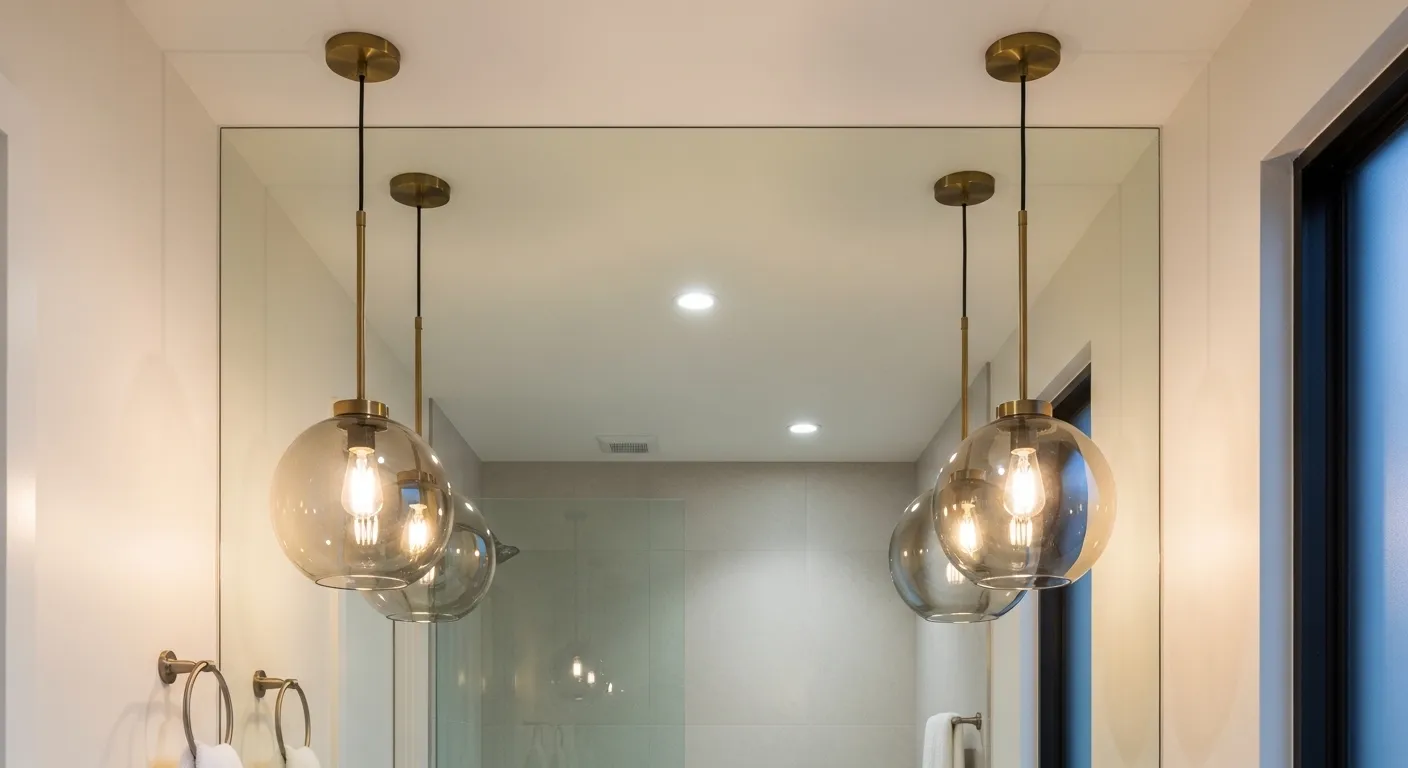
Pendant lights in a bathroom shift the entire atmosphere from functional to genuinely designed. While recessed ceiling lights deliver practical illumination, pendant lights deliver something far more valuable warmth, drama, and a sense of deliberate intention. Hanging a pair of sculptural pendants on either side of the vanity mirror frames the space like a dressing room in a boutique hotel, immediately elevating the perception of the entire bathroom. The pendant height matters enormously: positioned at roughly eye level, they eliminate the unflattering downward shadows that ceiling-only lighting casts and create a flattering, even, and genuinely pleasant light quality for daily use.
Choosing the right pendant style requires balancing decorative ambition with practical function. A blown glass globe pendant in amber or smoke tones creates a warm, artistic quality and diffuses light beautifully in all directions. A more industrial-style cage pendant in brushed brass or matte black suits contemporary or urban loft-style bathrooms. Ceramic pendants in earthy tones complement organic, spa-inspired design directions. Whatever the style, always use dimmable bulbs in bathroom pendants so the light level can be adjusted from bright and practical during morning routines to soft and ambient for evening baths. This single capability multiplies the utility and mood range of the bathroom significantly.
12. Black and White Palette
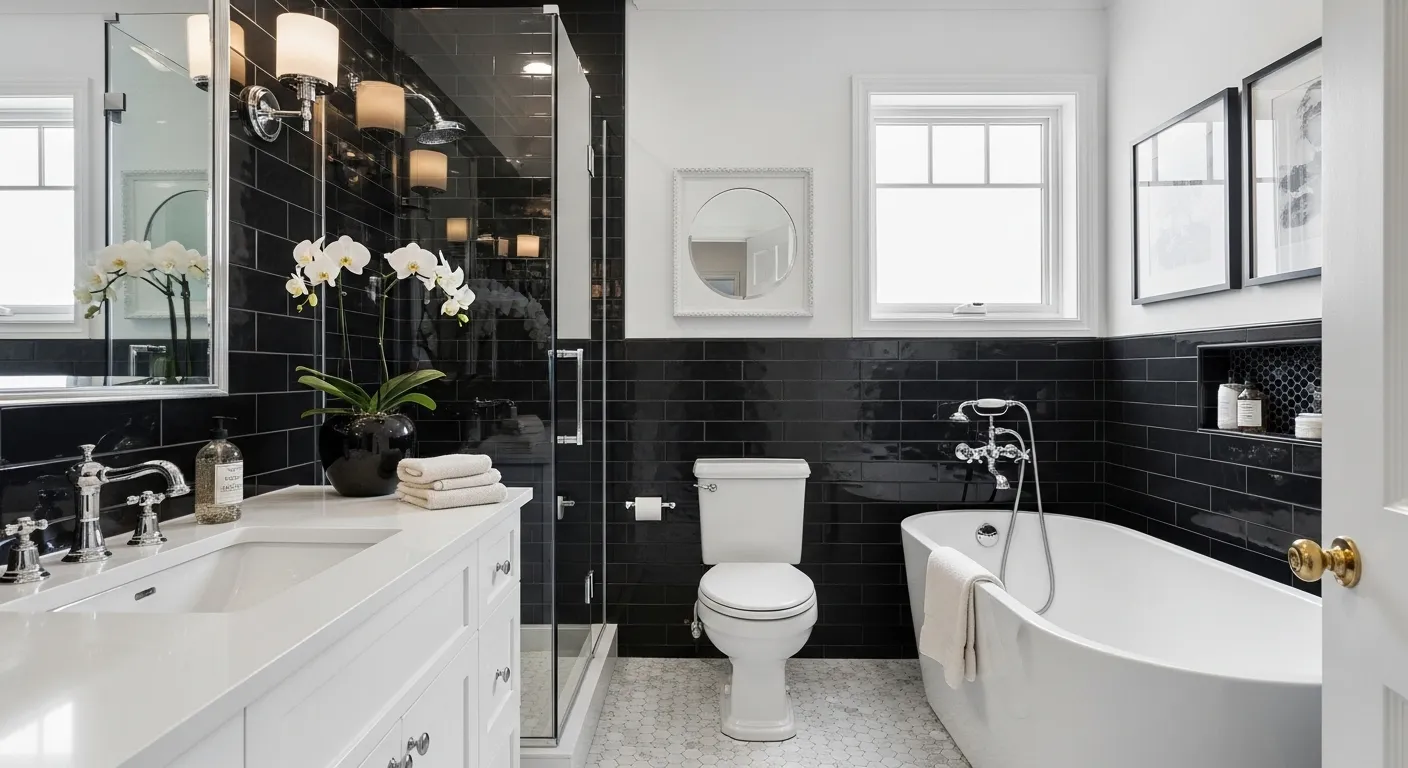
A black and white bathroom is one of the most confident and visually arresting design choices available. The high contrast between the two tones creates a bold graphic quality that immediately communicates sophistication and intention. What makes this palette feel genuinely luxurious rather than harsh is the interplay of materials and finishes matte black tiles absorbing light quietly, a white polished tub reflecting it, a frameless mirror amplifying both. The result is a space that feels dramatic and composed simultaneously. In luxury bathroom designs, this palette consistently performs at the very highest level of visual impact while remaining completely timeless.
The key to making a black and white bathroom feel rich rather than stark lies in texture and contrast management. Use matte finishes on darker surfaces to absorb rather than bounce light, which creates depth rather than harshness. Introduce glossy or polished finishes on white elements to keep them bright and fresh. Mix tile sizes large-format black on the walls and small hexagonal white on the floor, for example to create visual variety within the disciplined palette. A single carefully chosen accent, such as a white orchid in a black ceramic pot or a folded cream towel, provides just enough contrast to soften the composition without compromising the palette’s bold, graphic power.
13. Built-In Storage Niches
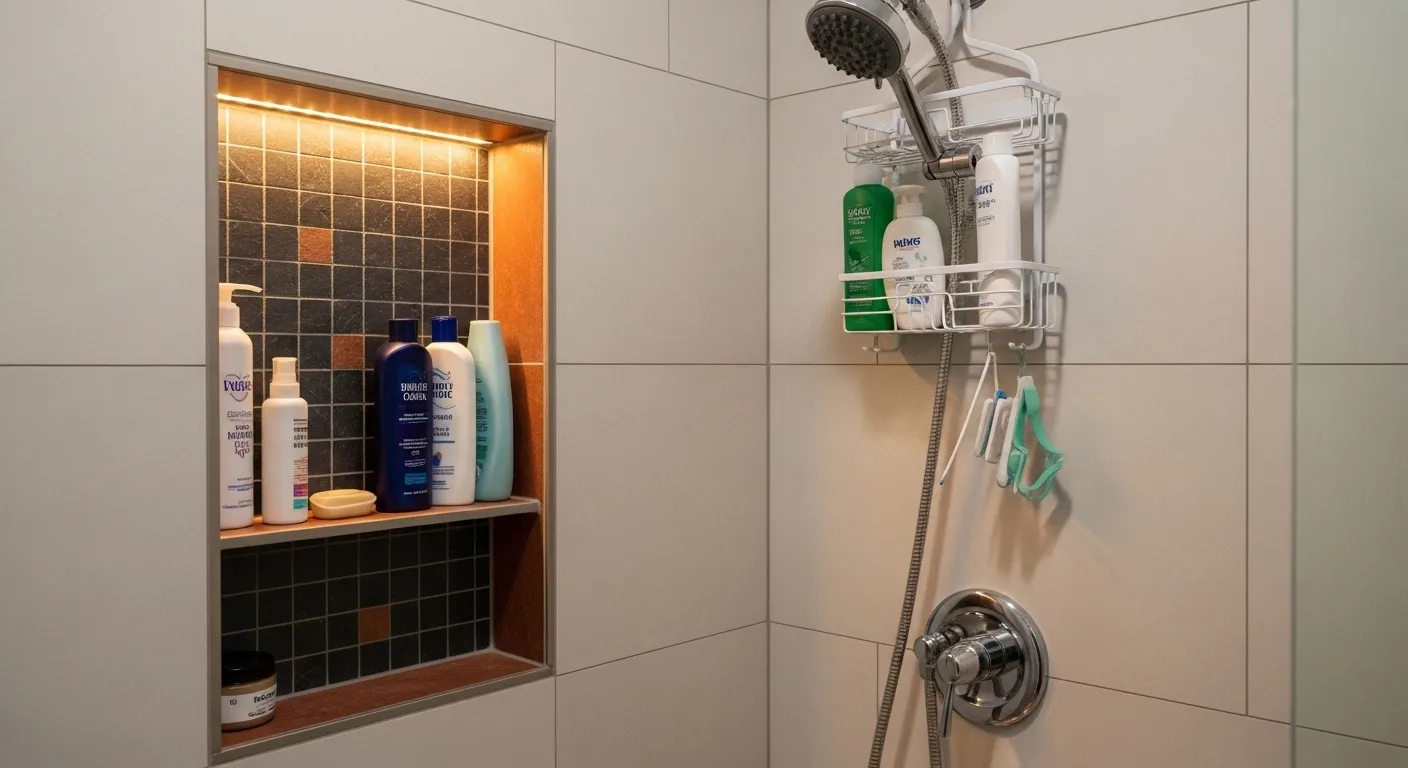
Built-in shower niches are one of the most practically impactful details in a well-designed bathroom. By carving storage directly into the wall, they eliminate the visual clutter of hanging caddies and plastic shelving units, creating a clean, architectural surface that stores everything needed within easy reach. The functional improvement is immediate shower products are organized, stable, and accessible without the irritation of a swinging caddy or overcrowded corner shelf. But the aesthetic improvement is equally significant. A well-proportioned, tiled niche with a contrasting interior finish becomes a genuine design feature rather than just a storage solution, enriching the entire shower wall composition.
Adding LED strip lighting inside a shower niche takes this detail from practical to genuinely luxurious. The warm glow emanating from within the niche creates a soft, layered light effect that makes the shower feel more like a spa treatment room than a domestic bathroom. Choose a waterproof LED strip rated for wet areas and ensure the transformer is housed outside the shower zone. For the niche interior, select a tile in a contrasting color or finish to the surrounding wall a deep charcoal, a warm terracotta, or a small mosaic pattern all work beautifully. This simple contrast signals craftsmanship and attention to detail that visitors and potential buyers will immediately recognize.
14. Frameless Glass Shower
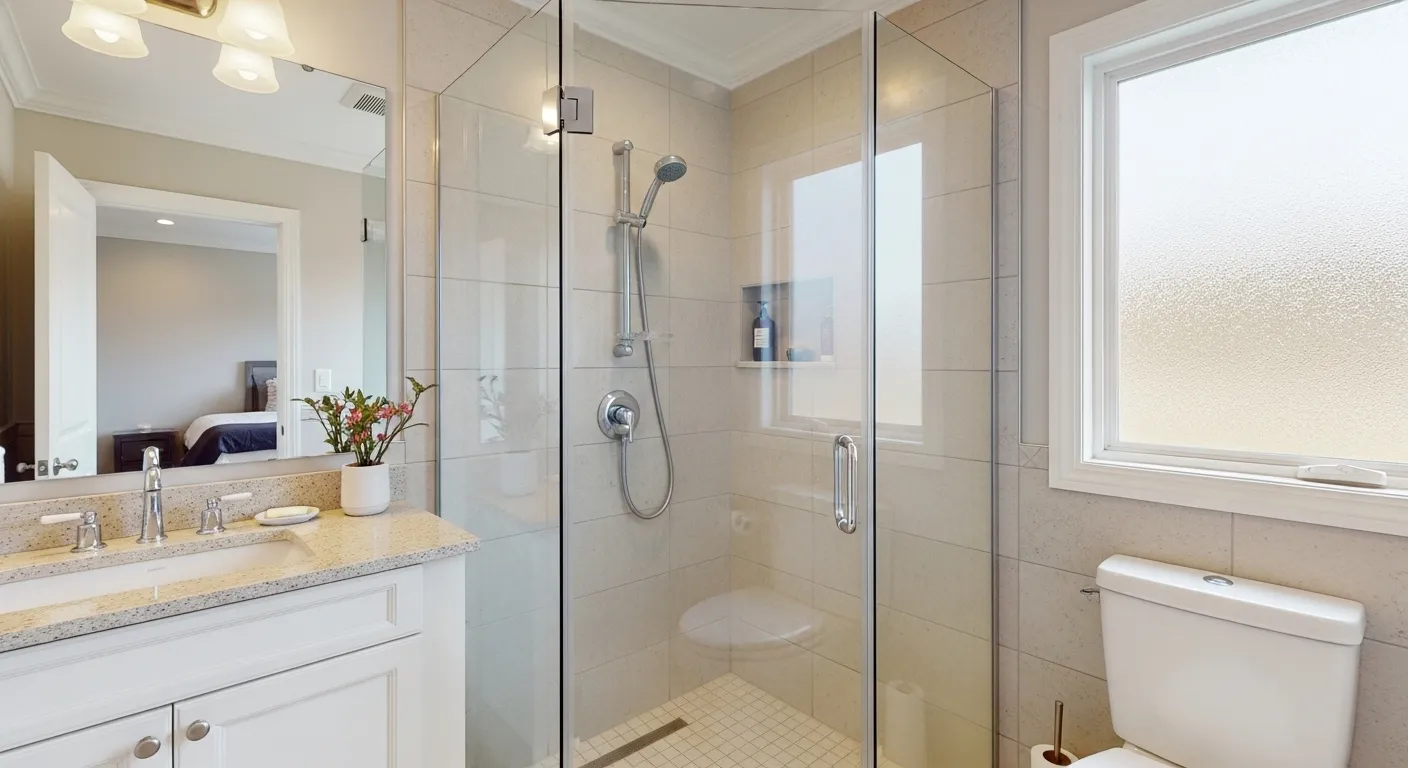
A frameless glass shower enclosure is one of the most effective single investments for making a bathroom feel more spacious and more elegantly designed. By removing the metal framework that standard shower screens rely on, the visual barrier between the shower zone and the rest of the bathroom disappears almost entirely. The eye travels straight through the clear glass to the tiling and fixtures beyond, maintaining a sense of depth and openness that dramatically benefits smaller bathroom layouts. The result is a bathroom that photographs beautifully, feels larger than it measures, and consistently earns the admiration of anyone who experiences it in person.
Beyond the aesthetic benefits, frameless glass is genuinely practical to maintain. The absence of metal extrusions means there are no channels, tracks, or joints where soap scum and mildew collect and become impossible to clean properly. A single squeegee after each shower keeps the glass surface consistently clear and spotless. Use a hydrophobic glass treatment on installation to repel water and reduce mineral deposit buildup even further. Ensure the glass thickness is a minimum of 10mm to guarantee stability in a frameless configuration. That’s why many bathroom designers consider this the definitive enclosure choice for anyone prioritizing both long-term beauty and day-to-day ease of maintenance.
15. Underfloor Heating System
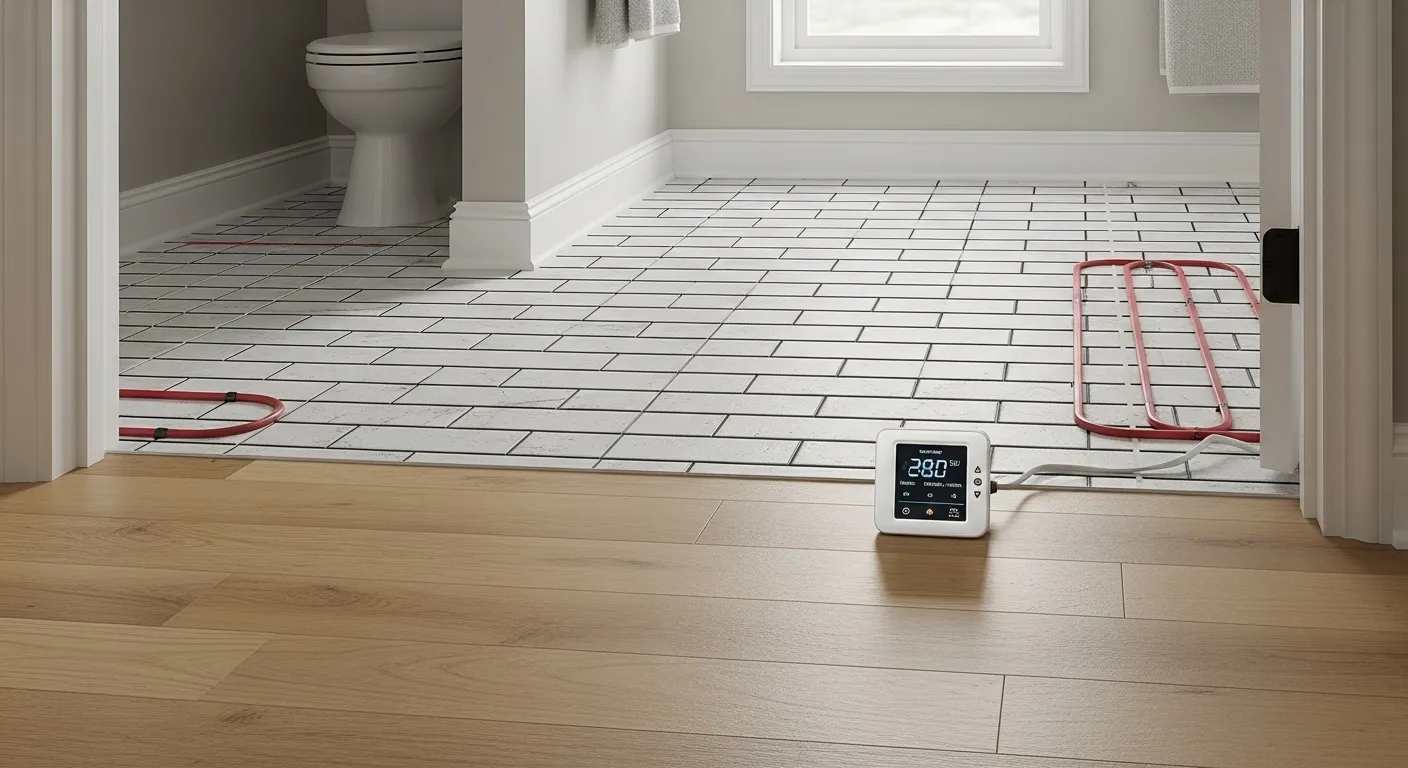
Stepping onto a warm floor in the morning is one of the most quietly luxurious experiences a bathroom can offer. Underfloor heating eliminates the cold tile shock that interrupts morning routines and makes the bathroom feel genuinely welcoming at any hour. The radiant heat rises evenly from beneath the floor surface, warming the lower part of the room where occupants actually spend their time which is significantly more comfortable and efficient than heat rising from high wall radiators. I’ve seen underfloor heating systems installed in both new builds and renovated bathrooms, and the response from homeowners is consistently the same: they wish they had done it sooner.
Electric underfloor heating systems are the most practical choice for bathroom installations during renovations, as they involve thin heating mats laid beneath the tile rather than the more complex hydronic pipe systems required for new construction. A programmable or smart thermostat allows the heating to be scheduled to warm the floor before the first person wakes, ensuring the bathroom is always at the perfect temperature when needed. Choose a thermostat with a floor temperature sensor rather than an air sensor for the most accurate and consistent result. The running costs of a well-insulated electric underfloor system in a standard bathroom are genuinely modest, making the daily comfort it provides excellent value over the lifetime of the system.
16. Vintage Clawfoot Tub
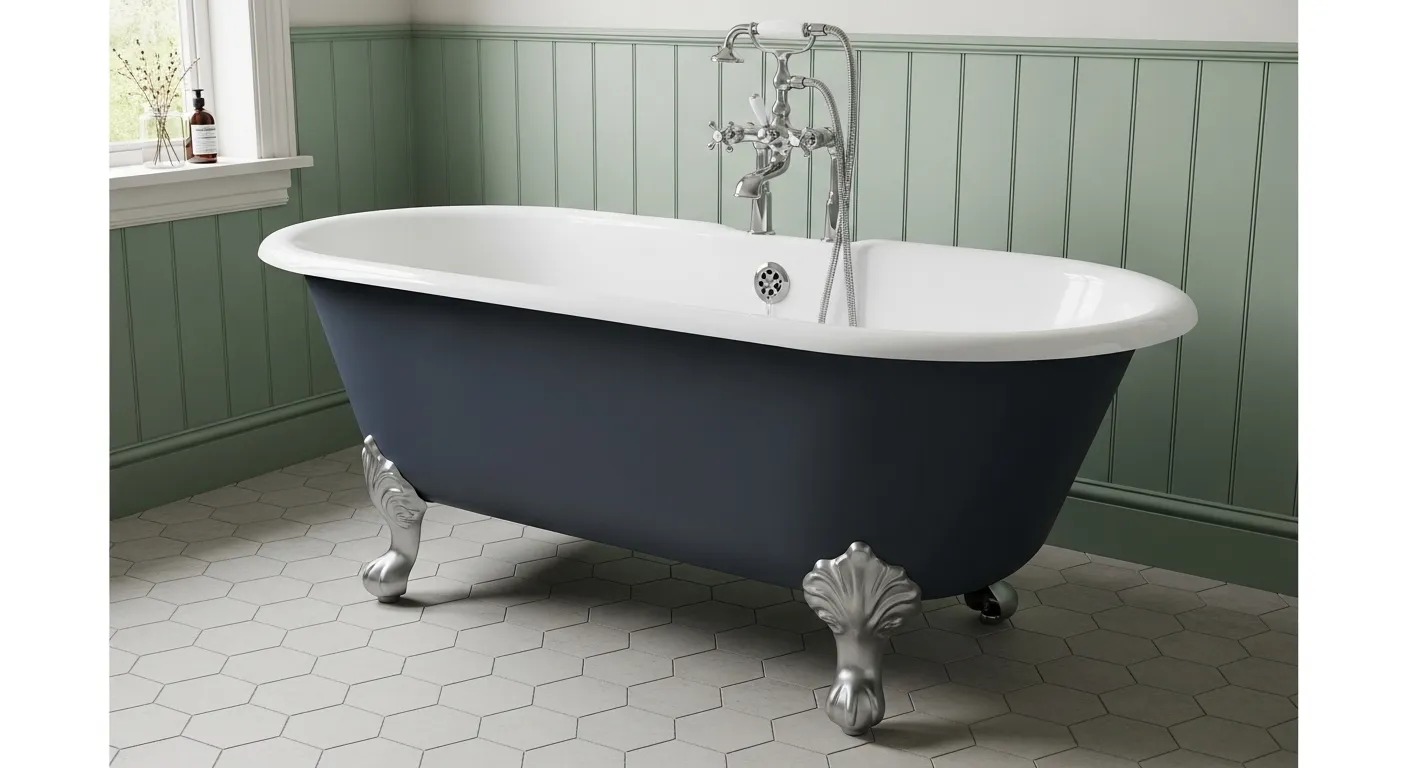
A clawfoot tub brings a sense of romance, history, and theatrical elegance to any bathroom it inhabits. The four ornate feet, the deep cast iron basin, and the graceful rolled rim create a profile that is immediately recognizable and endlessly admired. Unlike contemporary freestanding tubs that rely on clean lines and minimalism, the clawfoot makes no attempt at restraint it is a celebration of craft, character, and decorative intention. Painting the exterior in a soft accent color, such as sage green, dusty rose, or navy, gives the tub a personalized quality that makes the bathroom feel curated and unique rather than showroom-assembled.
Practically speaking, cast iron clawfoot tubs retain heat exceptionally well, meaning bath water stays warm significantly longer than in acrylic alternatives. This makes them not just beautiful but genuinely superior for long, relaxing soaks. Their weight does require a structurally sound floor, so a professional assessment before installation is recommended for upper-level bathrooms. Vintage floor-mounted faucets with exposed pipe work and cross handles complete the aesthetic coherently and are widely available in chrome, brushed nickel, and unlacquered brass. Surrounding the tub with period-appropriate flooring, such as encaustic hexagonal tiles, and half-height wall paneling creates a fully realized vintage aesthetic that feels genuinely lived-in rather than costumed.
17. Towel Warmer Rail
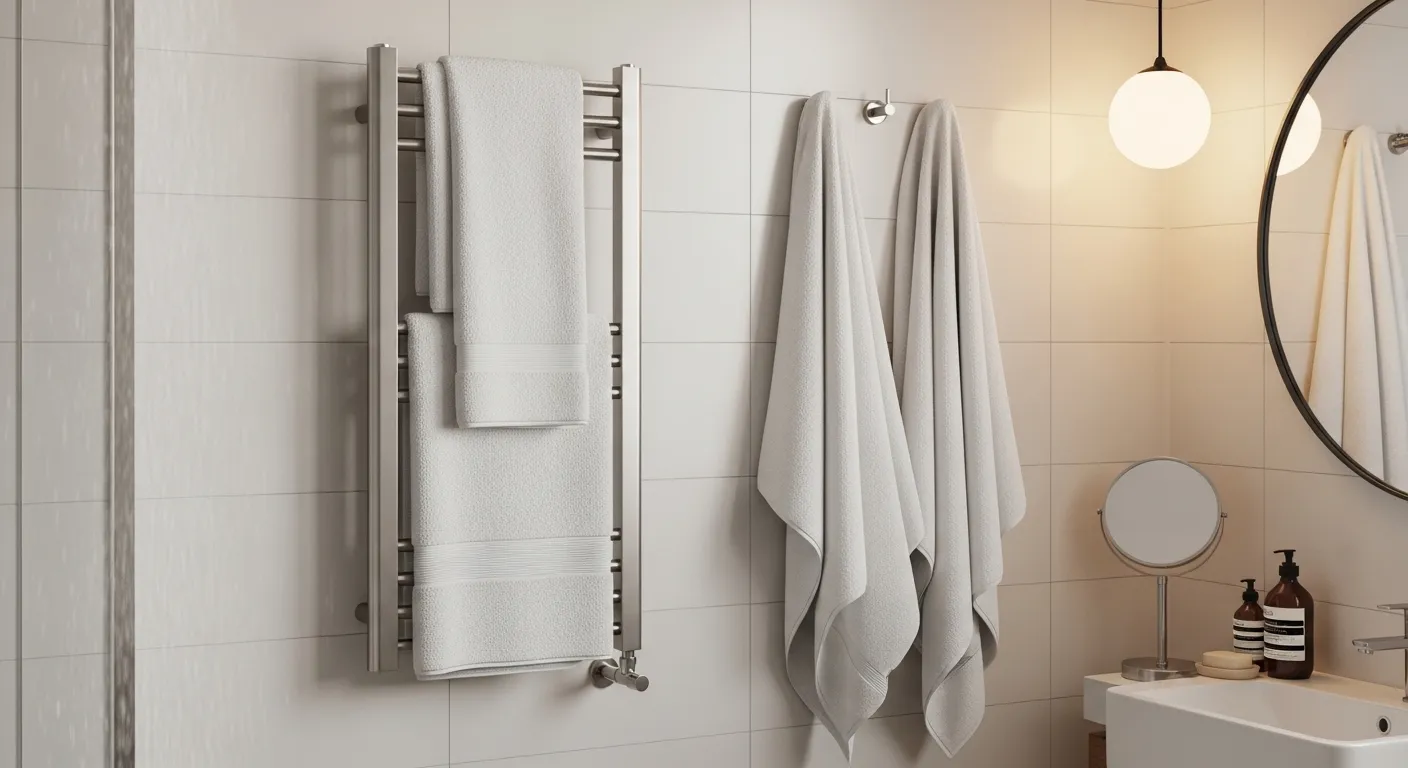
A heated towel rail is one of the most straightforward and universally satisfying upgrades available in any bathroom. The daily experience of wrapping yourself in a warm, dry towel after a shower is a small but genuinely meaningful luxury that makes the bathroom feel more like a spa than a domestic utility room. Beyond the comfort factor, a heated rail dries towels effectively between uses, preventing the damp, musty smell that towels develop in humid bathrooms when left folded on a standard hook or ring. It is a practical improvement and a comfort upgrade delivered simultaneously in a single sleek fixture that also contributes to the room’s aesthetic.
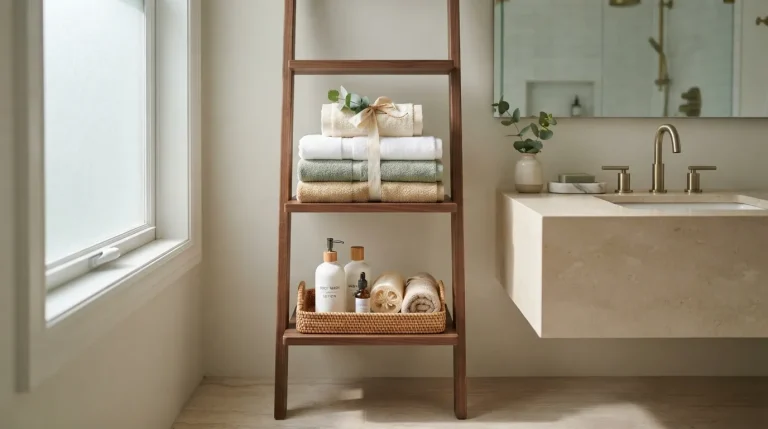
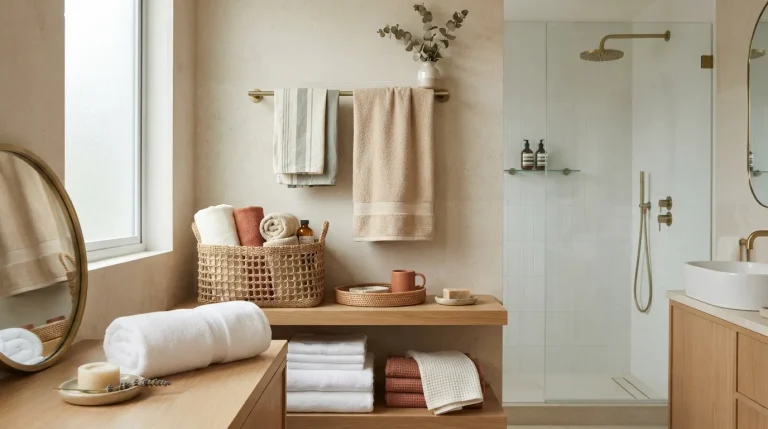
Choosing the right towel rail involves balancing scale with the available wall space and heating requirement for the number of towels used daily. A tall vertical rail maximizes hanging capacity in a narrow wall space, while a wider horizontal ladder rail suits broader wall panels. Electric models are the most flexible installation choice and can be placed on any suitable wall without plumbing integration. Choose a finish that coordinates with the rest of the bathroom’s hardware brushed brass, brushed nickel, or matte black all read as considered and intentional when paired consistently across tapware, mirror frames, and accessories. A programmable timer ensures the rail is warm when needed and off when the bathroom is not in use.
18. Wabi-Sabi Texture Walls
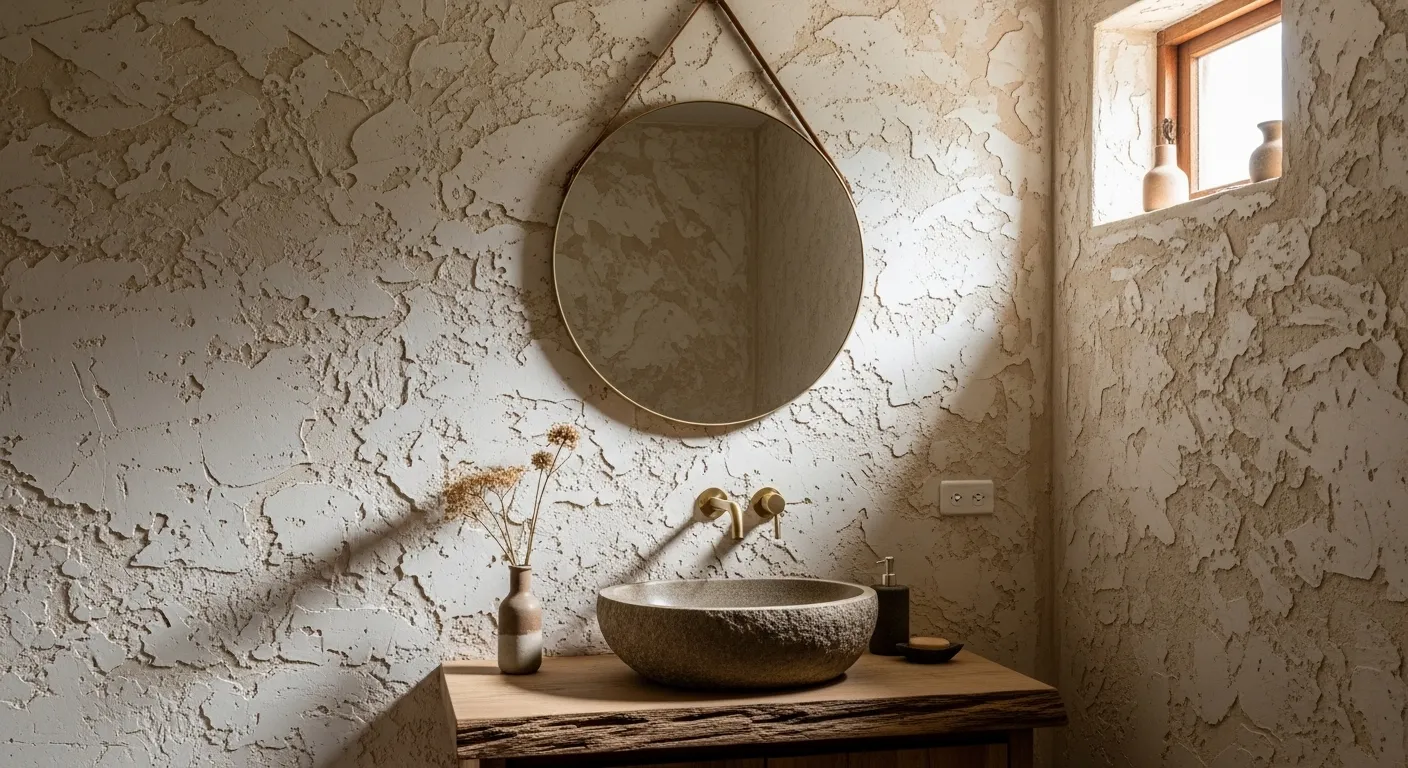
The wabi-sabi design philosophy finding beauty in imperfection, simplicity, and the natural passage of time translates with remarkable power into bathroom spaces. A wall finished in Venetian plaster, limewash, or natural clay creates a surface that is alive with depth, variation, and texture in a way that ceramic tile and standard paint simply cannot achieve. The finish catches light differently at different times of day, shifting in tone from warm cream in morning light to a deeper, golden amber in the soft evening glow of candles or warm LEDs. The result is a bathroom wall that feels genuinely artisanal and deeply calming to be surrounded by.
Applying a wabi-sabi plaster finish is a specialist task best left to an experienced plasterer familiar with the material, as the characteristic depth and texture require multiple carefully applied and partially burnished layers. However, the investment is a lasting one plaster walls are durable, breathable, and improve with age in a way that aligns perfectly with the wabi-sabi appreciation of time-worn beauty. Pair this wall treatment with complementary natural materials: raw timber, unglazed ceramic, undyed linen, and simple stone surfaces. Avoid polished chrome or hard geometric elements, which would work against the organic softness that makes a wabi-sabi bathroom feel genuinely restorative and meditative.
19. Double Shower Head Setup
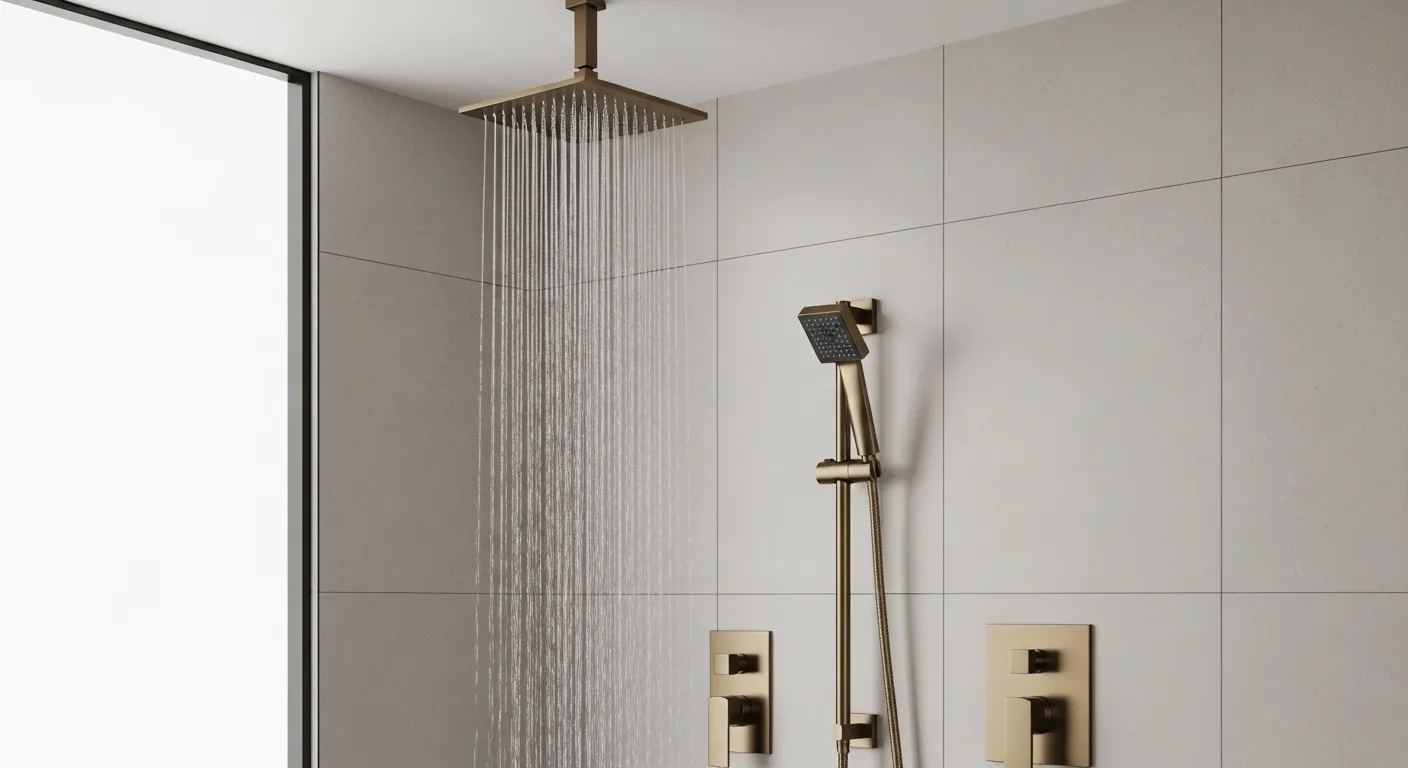
A double shower head system elevates the shower experience to a level that is genuinely difficult to walk away from in a hurry. The combination of a ceiling-mounted rainfall head delivering an enveloping downpour and a handheld wand or wall-mounted body spray offering targeted, directional flow creates a flexibility that a single showerhead can never match. Each shower becomes a multi-sensory experience start with the rainfall for an immersive, calming opening, then switch to the handheld for thorough rinsing or hair washing. I’ve noticed that households with this setup consistently report that shower time becomes one of the most valued parts of the daily routine rather than a rushed utility.
Installing a dual showerhead system requires slightly more planning than a single head replacement, primarily to ensure the household water pressure is sufficient to run both heads simultaneously without flow becoming disappointing. A pressure-balancing valve or a booster pump resolves this in most situations. Choose both heads from the same hardware family to ensure a cohesive finish brushed gold, chrome, or matte black throughout. A diverter or separate controls for each head give each user complete flexibility. Size the shower enclosure to accommodate the full reach of both water zones comfortably without overcrowding. The result is a shower configuration that genuinely defines the bathroom as a space for daily restorative experience.
20. Moody Dark Tile Bathroom
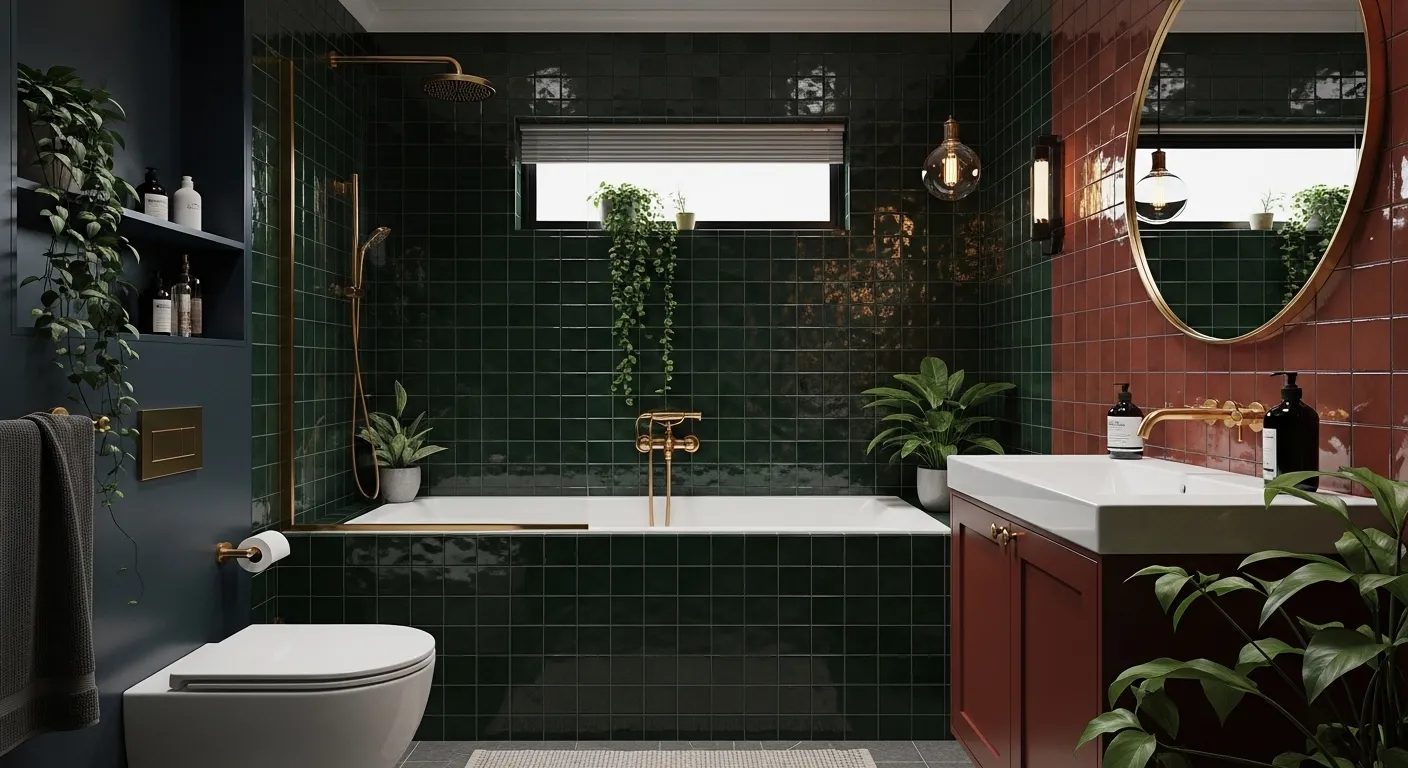
A bathroom built around dark, saturated tiles is one of the most boldly beautiful design choices in contemporary interiors. Forest green, deep navy, charcoal, and rich terracotta all create an enveloping, cocooning atmosphere that feels dramatically different from the standard white bathroom. The darkness does not diminish the space instead, it creates a depth and intimacy that makes the room feel like a private retreat from the world. When a glossy finish is chosen, the tiles reflect ambient light beautifully, maintaining brightness while holding the richness of the color. The effect is simultaneously moody and luminous, which is a genuinely sophisticated and rare quality in interior design.
The key to making a dark tile bathroom feel luxurious rather than oppressive is strategic contrast and considered lighting. A white or cream freestanding tub against dark green or navy walls creates an electrifying visual tension that anchors the room and draws the eye immediately. Brushed gold or unlacquered brass hardware reinforces the warmth of the palette and prevents the space from feeling cold. Warm pendant lights rather than cold white LEDs maintain the moody, amber quality of the environment. Adding living plants particularly trailing or tropical varieties softens the drama with natural organic texture and color, ensuring the space feels alive, welcoming, and deeply personal.
21. Scented Candle Styling
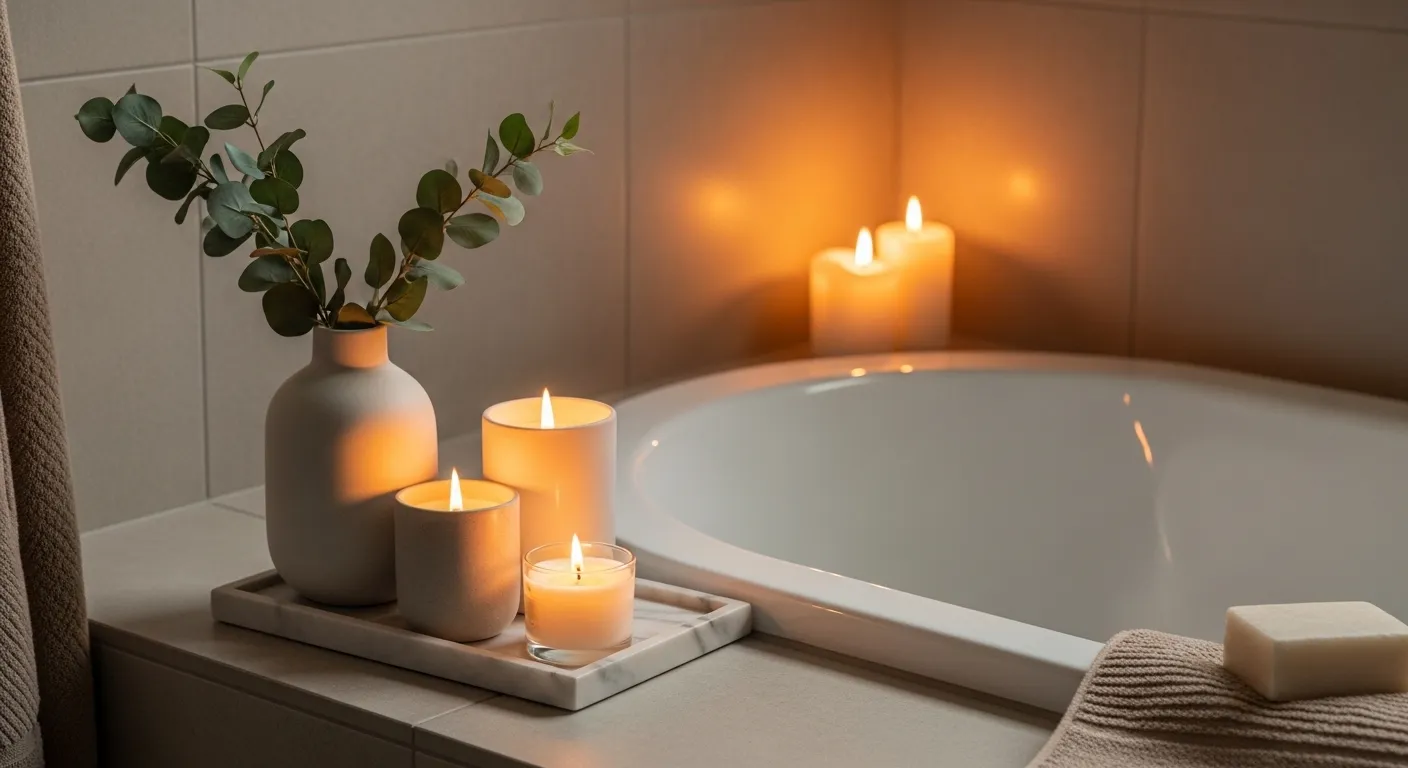
Scented candles are the single fastest way to transform a bathroom from a functional room into a genuine sensory sanctuary. The flickering warm light they produce is unlike any electric source it moves, breathes, and creates shadows that make every surface in the bathroom feel warmer and more beautiful. Paired with a carefully chosen fragrance, the effect becomes multi-sensory, engaging sight, smell, and even the subtle acoustic warmth of a quietly burning flame. I’ve tried many approaches to creating a relaxing bathroom atmosphere, and nothing delivers the shift from everyday to ceremonial as quickly and consistently as a cluster of well-chosen candles lit beside a warm bath.
The styling of candles within the bathroom matters as much as the candles themselves. Group three candles of varying heights on a marble or slate tray for a curated, editorial look rather than placing single candles in isolation across different surfaces. Choose vessels in natural materials matte ceramic, polished stone, or unbleached glass that complement the bathroom’s existing palette. For fragrance, eucalyptus and mint invigorate, lavender and chamomile calm, and sandalwood and cedarwood create a warm, grounding depth. Keep candles away from towels, curtains, and any flammable items, and never leave them burning unattended. Used thoughtfully, they elevate the bathroom into something truly experiential.
CONCLUSION
A beautiful bathroom is not a luxury reserved for five-star hotels. It is something you can create in your own home, one idea at a time. These luxury bathroom designs prove that elegance and relaxation can coexist at any scale and any budget level. I’ve seen how a single design change the right lighting, a freestanding tub, or a well-placed plant can completely shift how a space feels. Start with one idea that excites you most. Save this article on Pinterest so you can return to it whenever you’re ready. Share it with someone who deserves a beautiful bathroom upgrade too.
Olivia Carter
Olivia Carter is the founder of Lady Home Decor and a passionate home decor expert. She shares practical, stylish ideas to help homeowners create beautiful, comfortable, and welcoming spaces. Her expertise covers bedrooms, kitchens, living rooms, bathrooms, and small-space decorating.