22 Playful Formal Dining Room Decor Ideas to Try Right Now

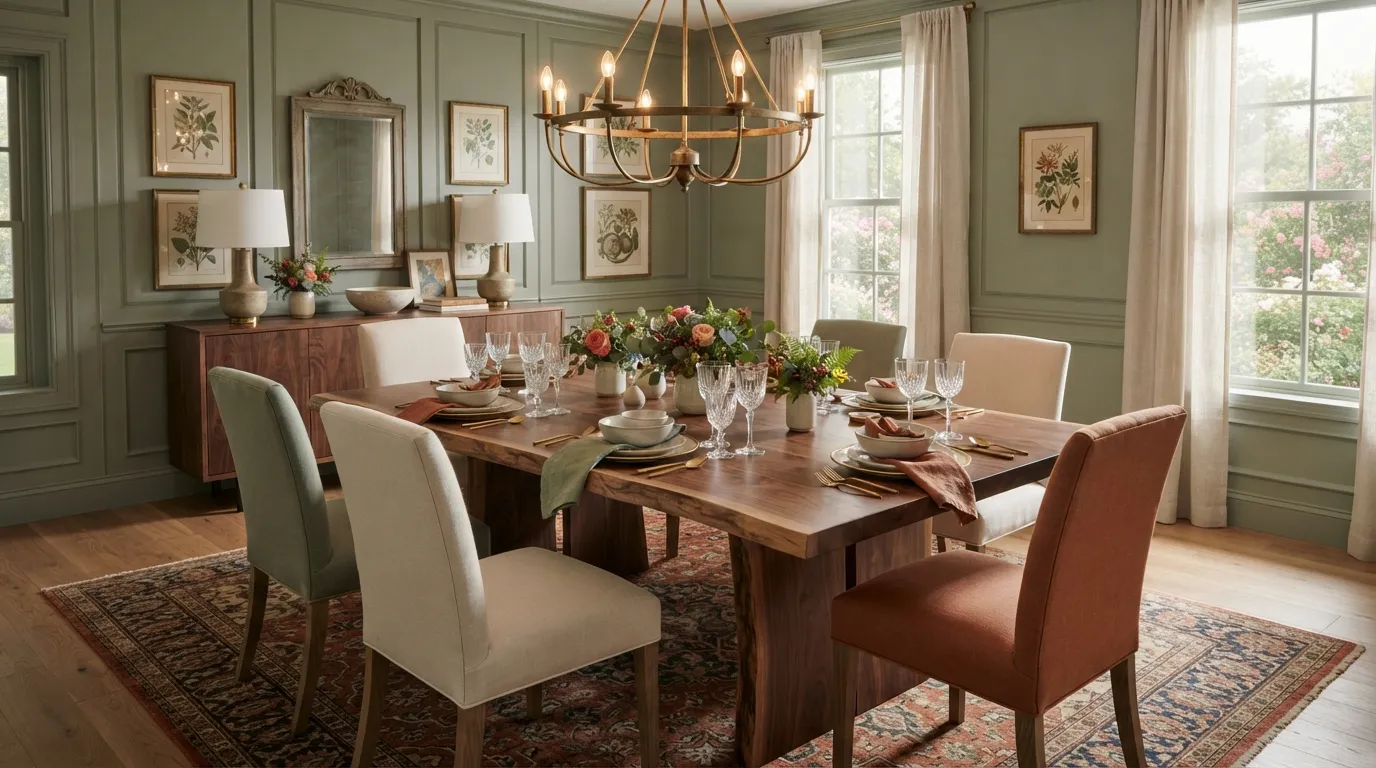
Formal dining rooms don’t have to feel stiff or overly serious. With the right colors, lighting, furniture, and small decorative touches, formal dining room decor can feel polished while still showing off your personality. A playful room gives you space to mix classic pieces with unexpected patterns, cheerful colors, and artistic details.
Think about how the room feels when guests walk in. A beautiful table may set the stage, but layered lighting, comfortable chairs, artwork, table settings, and a thoughtful centerpiece give the space its character. These ideas will help you create a dining room that feels special without becoming fussy.
Jewel-Tone Dining Chairs
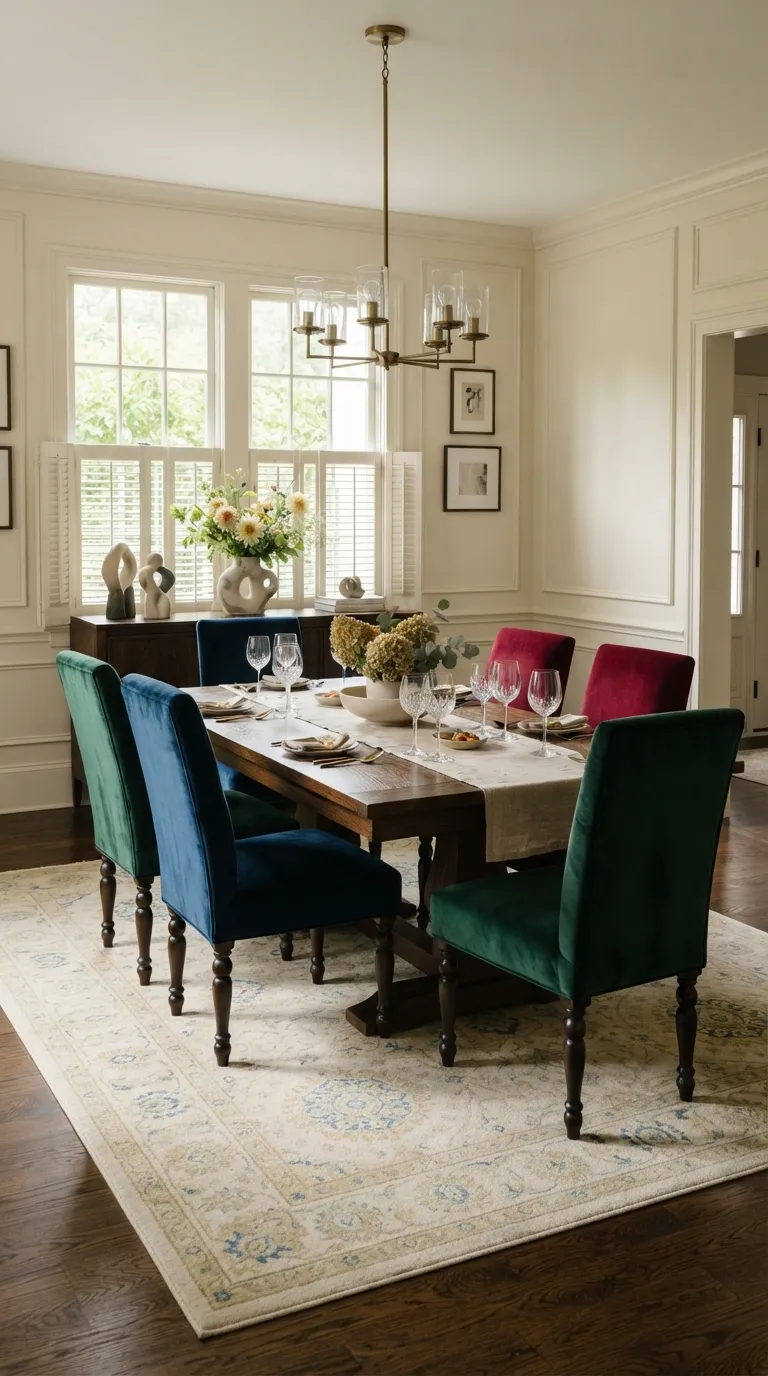
Jewel-tone chairs can give a traditional dining room a lively personality. Emerald, sapphire, ruby, or plum upholstery works especially well when the walls and table stay fairly calm.
For a balanced look, choose one dominant jewel tone and use smaller touches of the other colors. A simple cream rug and natural wood table keep the chairs from making the room feel too busy.
Striped Wallpaper
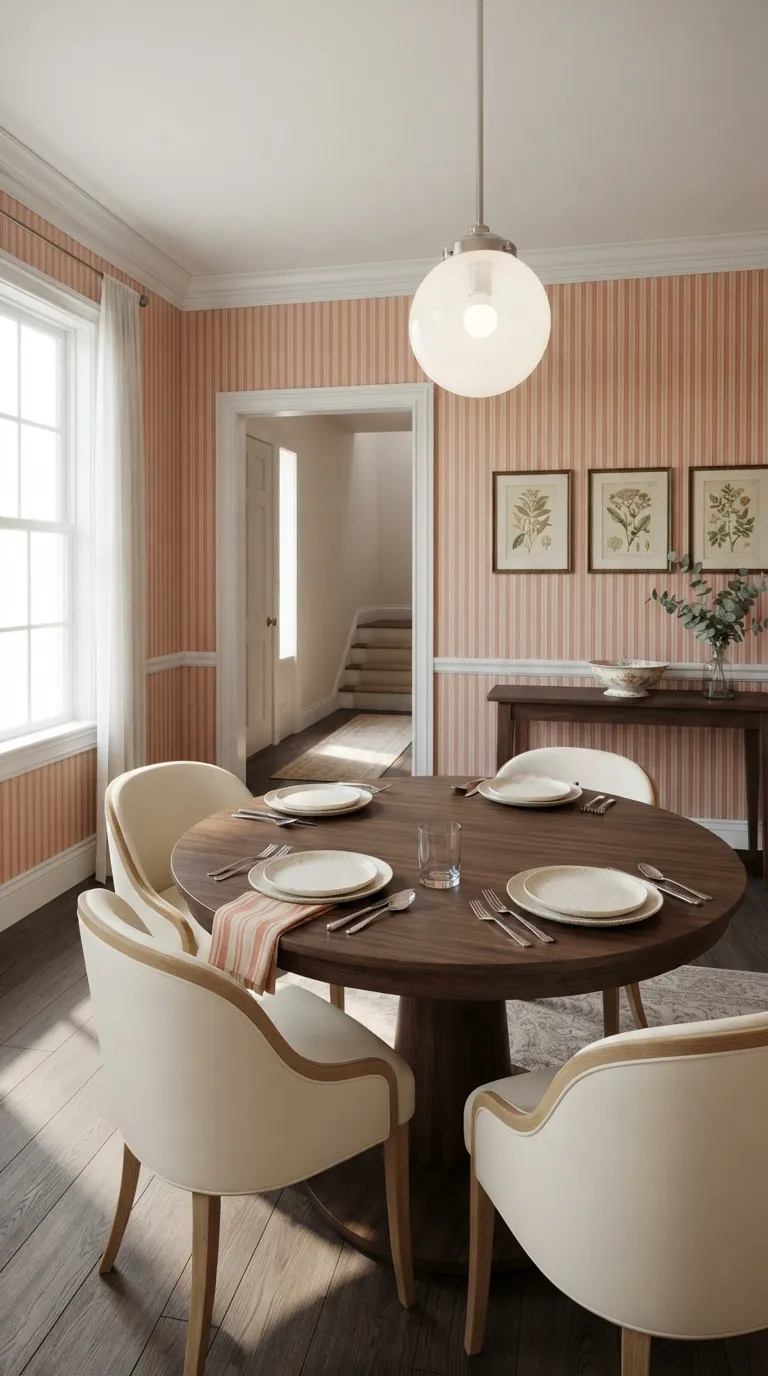
Striped wallpaper gives the walls a clear pattern without taking over the entire room. Vertical lines can also make the ceiling feel taller, which helps a dining room with limited height.
Try warm coral, dusty blue, olive, or soft taupe stripes. Keep the furniture shapes classic so the wallpaper becomes the playful detail that catches the eye.
Colorful Ceiling
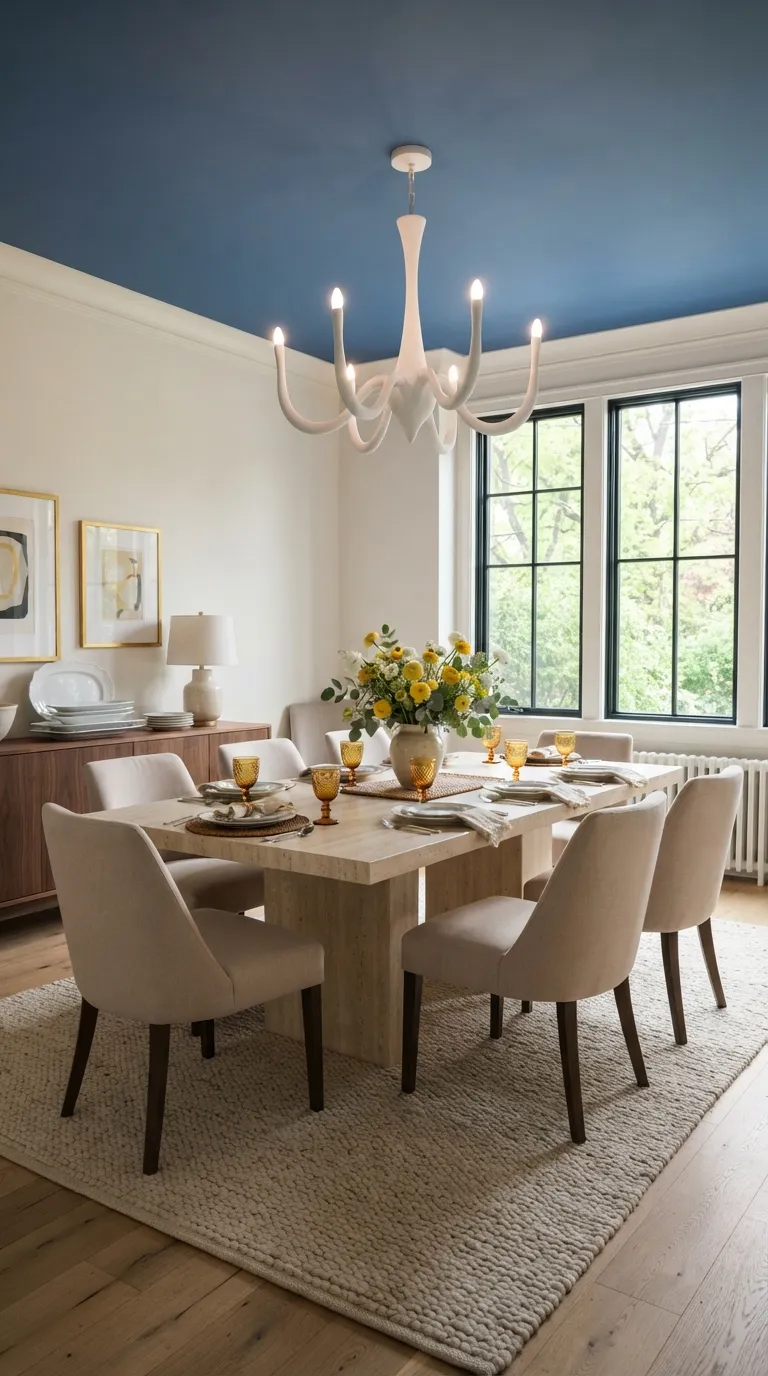
A colorful ceiling is a smart place to have fun because it keeps the walls quieter. A blue, green, clay, or soft yellow ceiling can make the room feel more custom without changing the furniture.
Choose a ceiling color that appears somewhere else in the room in a smaller amount. A matching vase, artwork detail, or napkin can make the color choice feel intentional.
Playful Gallery Wall
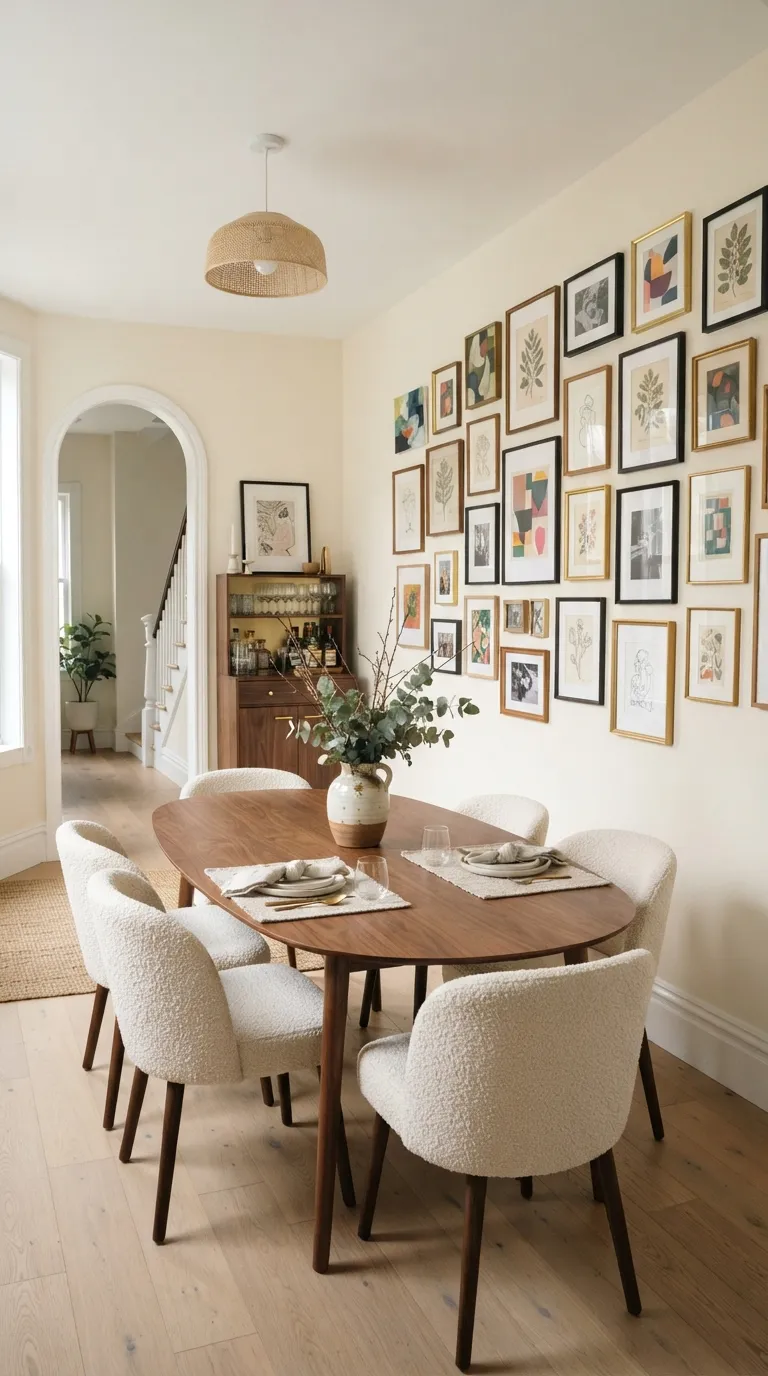
A gallery wall gives a formal room a more relaxed personality. Mix art sizes rather than placing every frame in a strict grid.
Keep one detail consistent, such as frame finish or background color. This simple connection helps different pieces look like a collection rather than a pile of separate decorations.
Sculptural Chandelier
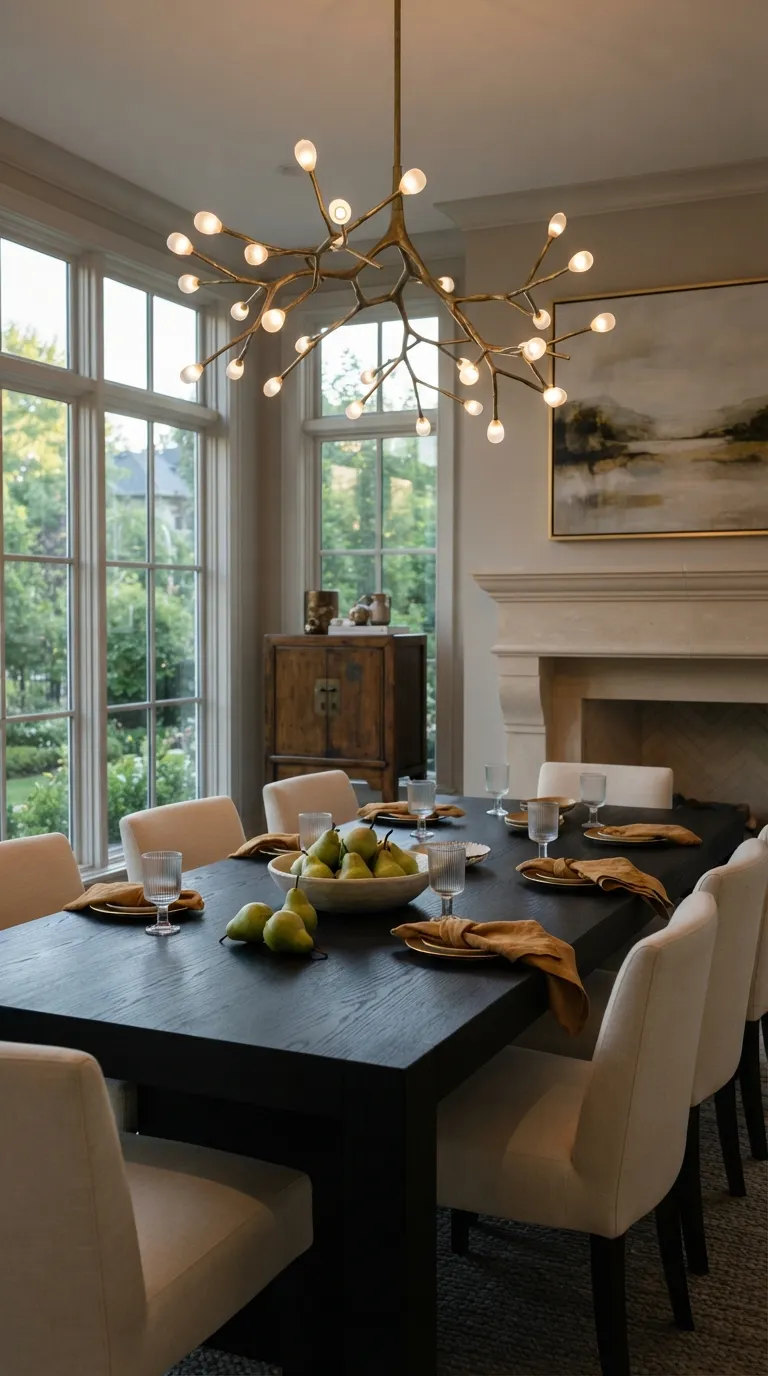
Lighting can become the room’s main piece of art. Look for a chandelier with an unusual silhouette, rounded arms, colorful shades, or a mix of metal and glass.
Keep the rest of the ceiling area simple. That gives the fixture room to stand out while still keeping the dining room refined.
Patterned Area Rug
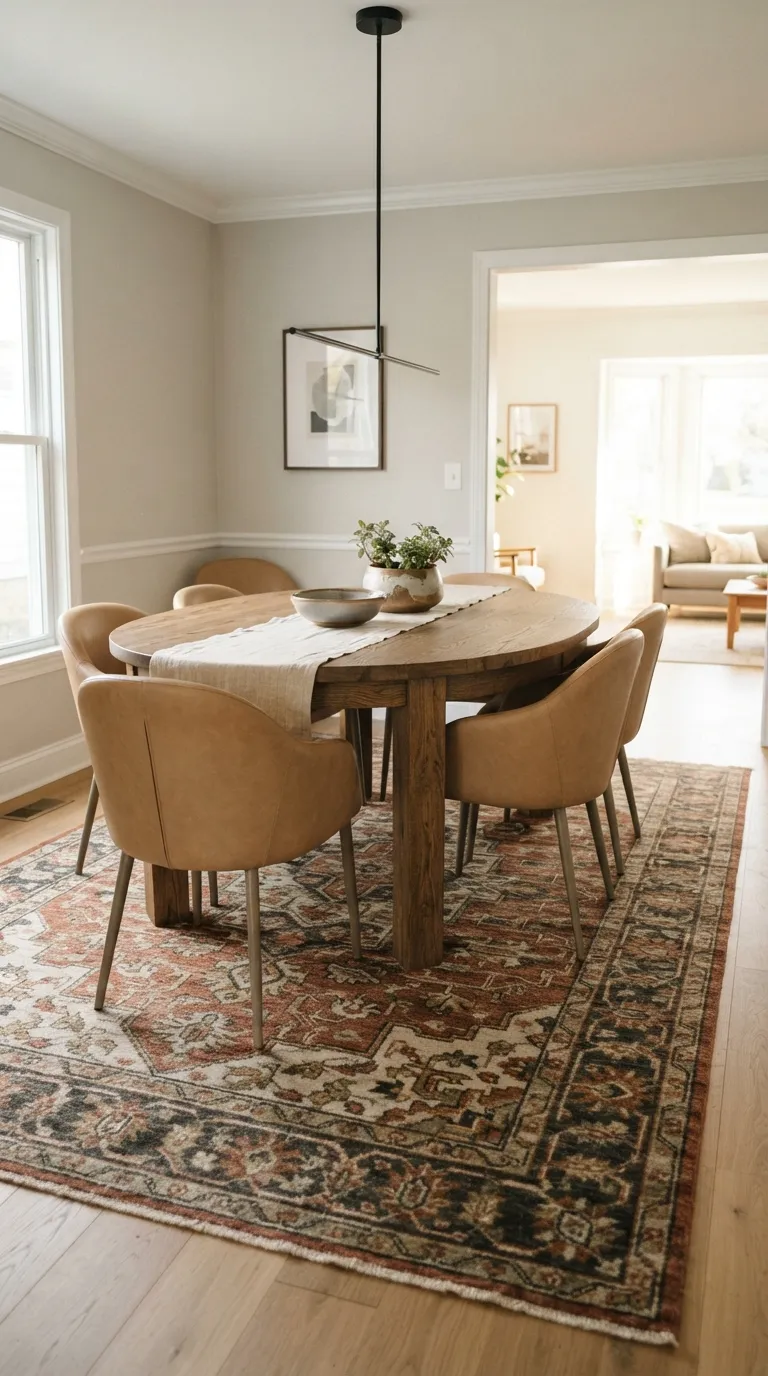
A patterned rug can bring several colors into the room at once. This makes it easier to decorate with playful accents without adding a different color to every surface.
Choose a rug large enough for chairs to stay on it when pulled away from the table. A low-pile wool or durable flatweave style also makes dining cleanup easier.
Two-Tone Wall Panels
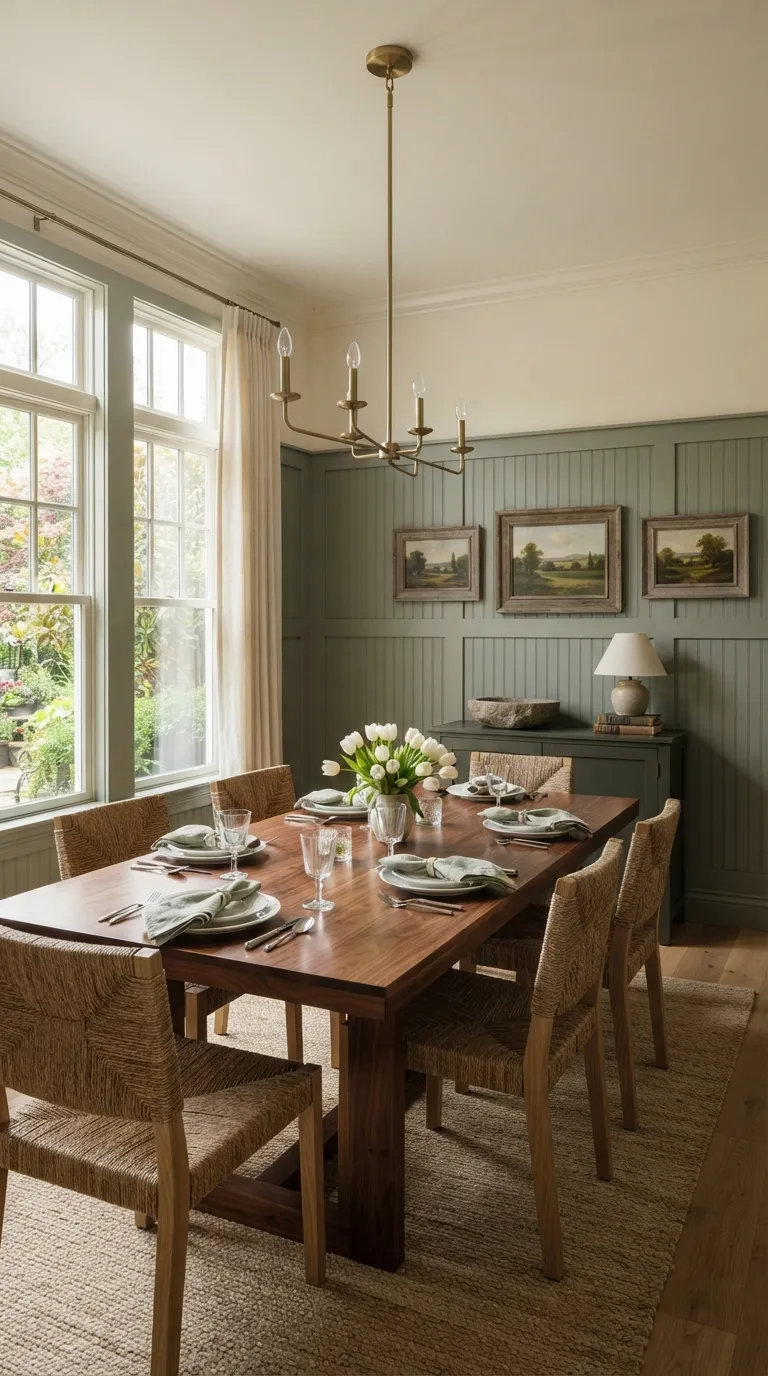
Two wall colors can make a traditional dining room feel much more playful. Use a darker shade on the lower panels and a lighter shade above to create a grounded look.
Muted green, blue, clay, and charcoal all pair nicely with natural wood. Keep the trim simple so the color contrast remains the main feature.
Curved Dining Table
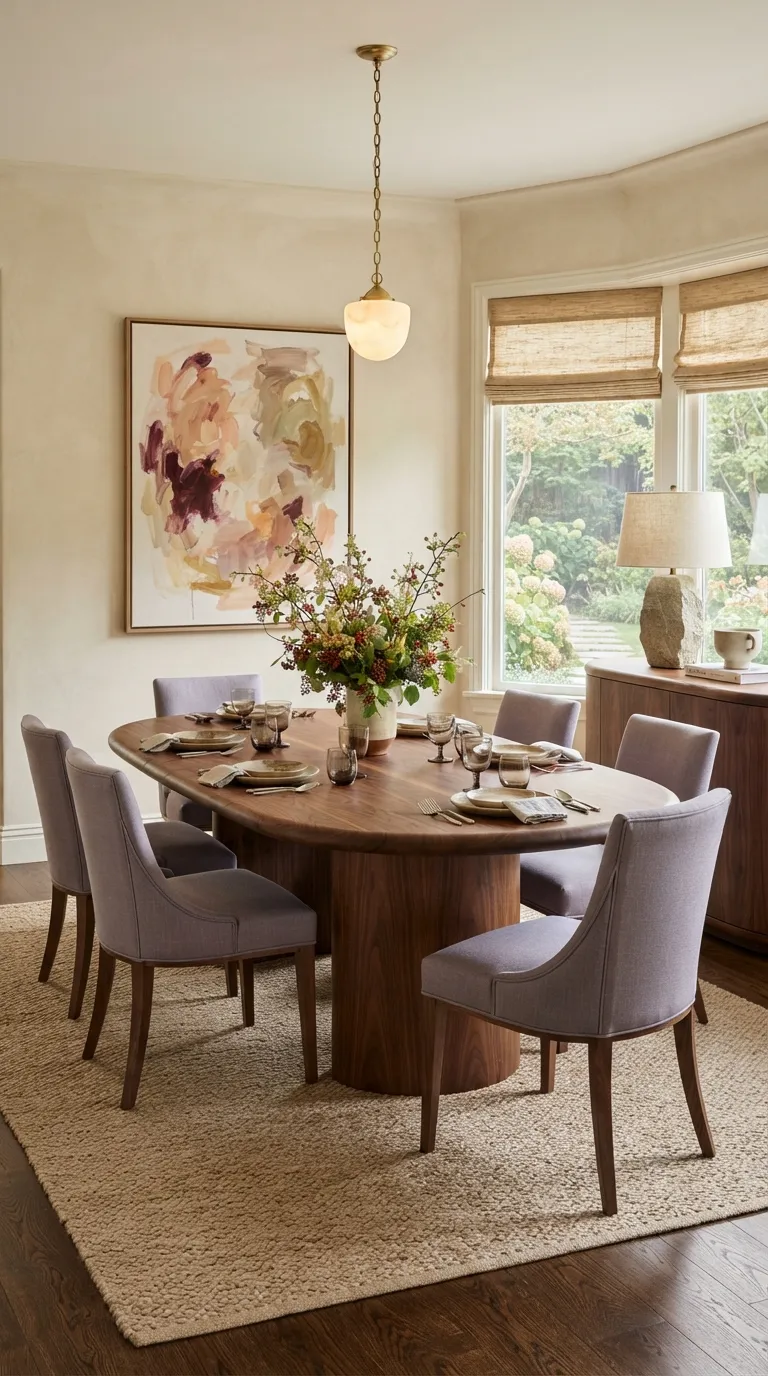
Curved furniture softens the formal lines found in many dining rooms. An oval or round table also creates a friendlier arrangement because nobody sits at a sharp corner.
Pair a curved table with chairs that have rounded backs. The repeated shapes create a gentle rhythm without needing lots of extra accessories.
Mismatched Dining Chairs
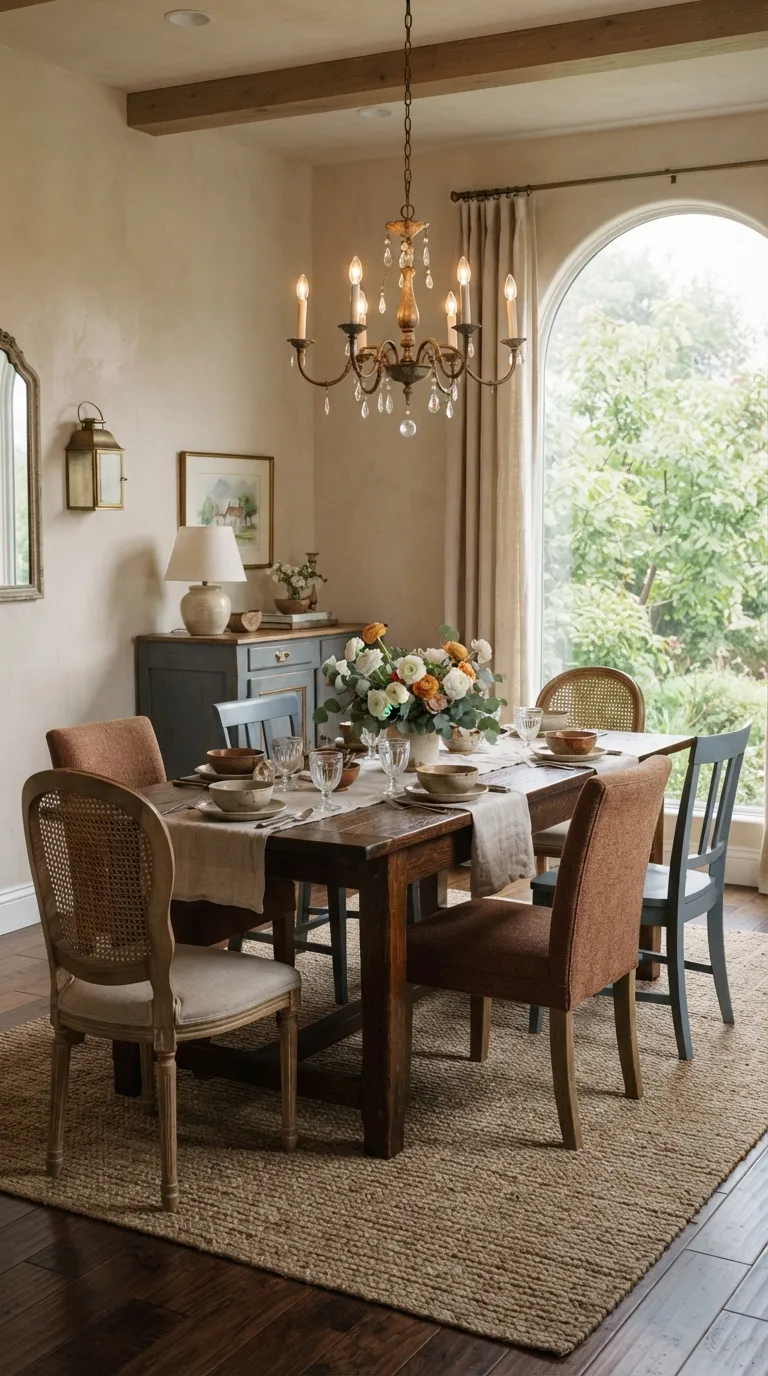
Matching chairs aren’t the only way to create a polished dining setup. Mismatched seats can look intentional when they share a similar scale or material.
Try pairing two statement chairs at the ends with simpler side chairs. This arrangement adds personality while keeping the table visually grounded.
Vintage Bar Cabinet
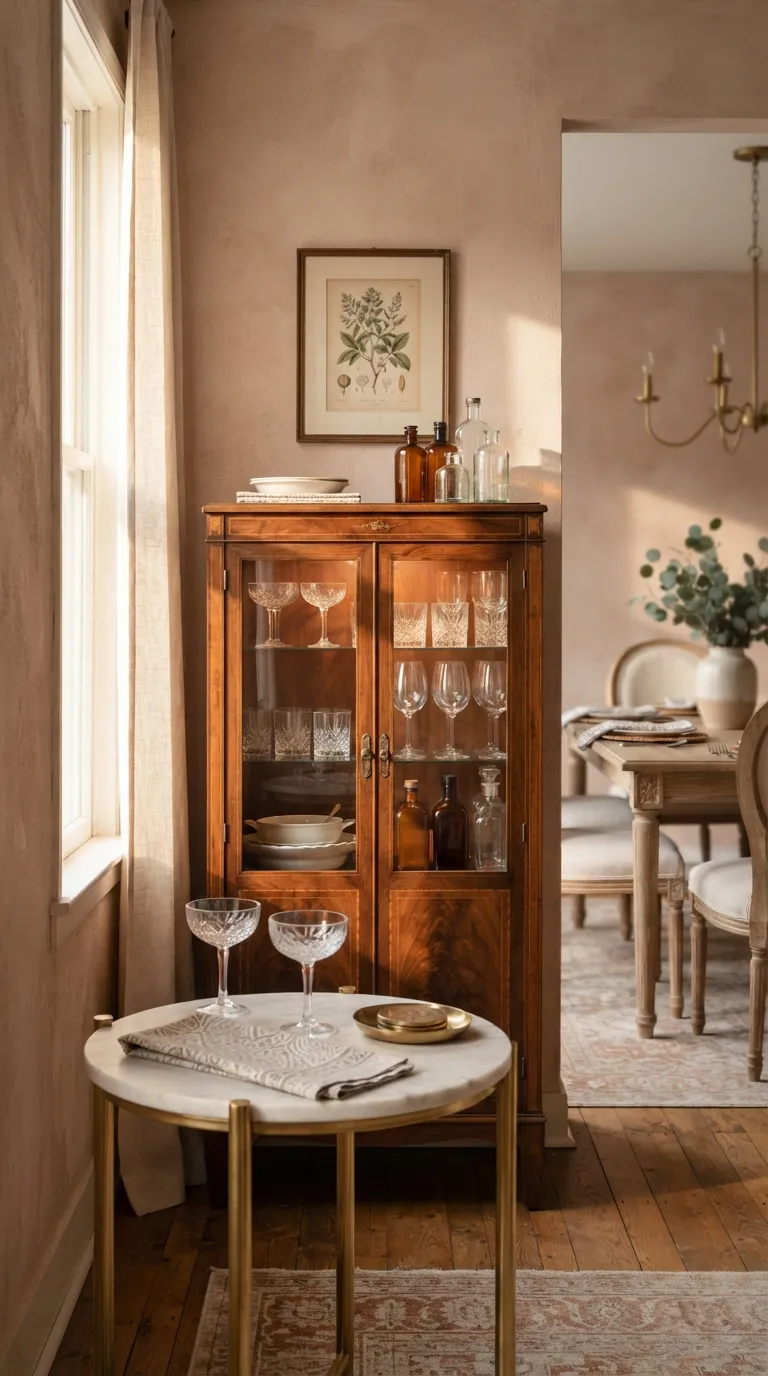
A vintage bar cabinet gives the dining room a useful storage point with plenty of character. Look for carved wood, glass doors, warm brass hardware, or an unusual silhouette.
Keep the top lightly styled. A ceramic bowl, small lamp, and one floral arrangement can make the cabinet feel finished without turning it into a display wall.
Oversized Floral Centerpiece
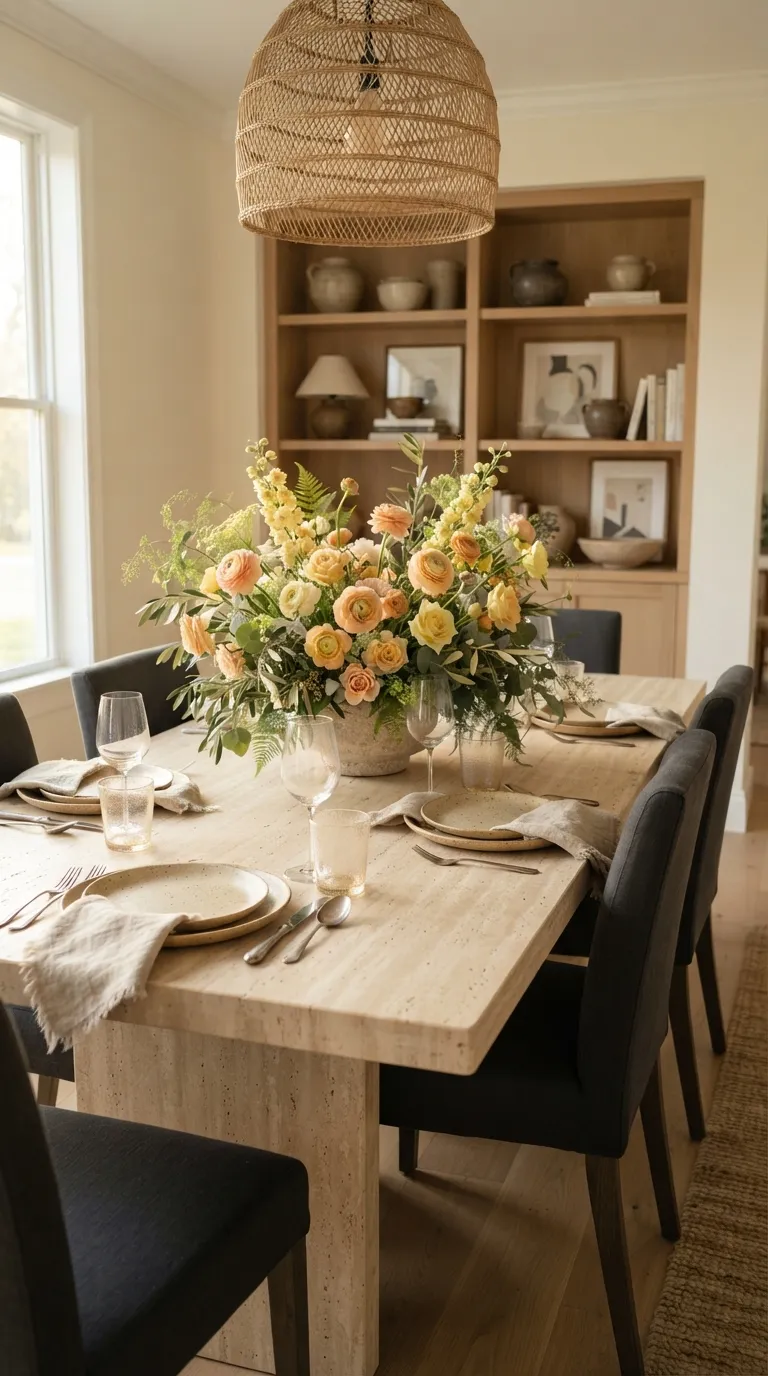
A large centerpiece can make a long table feel intentionally styled. Choose a low vessel so guests can still see across the table.
Mix flowers with branches or greenery for a less formal shape. Seasonal colors can change throughout the year without replacing the rest of your dining room decor.
Playful Window Treatments
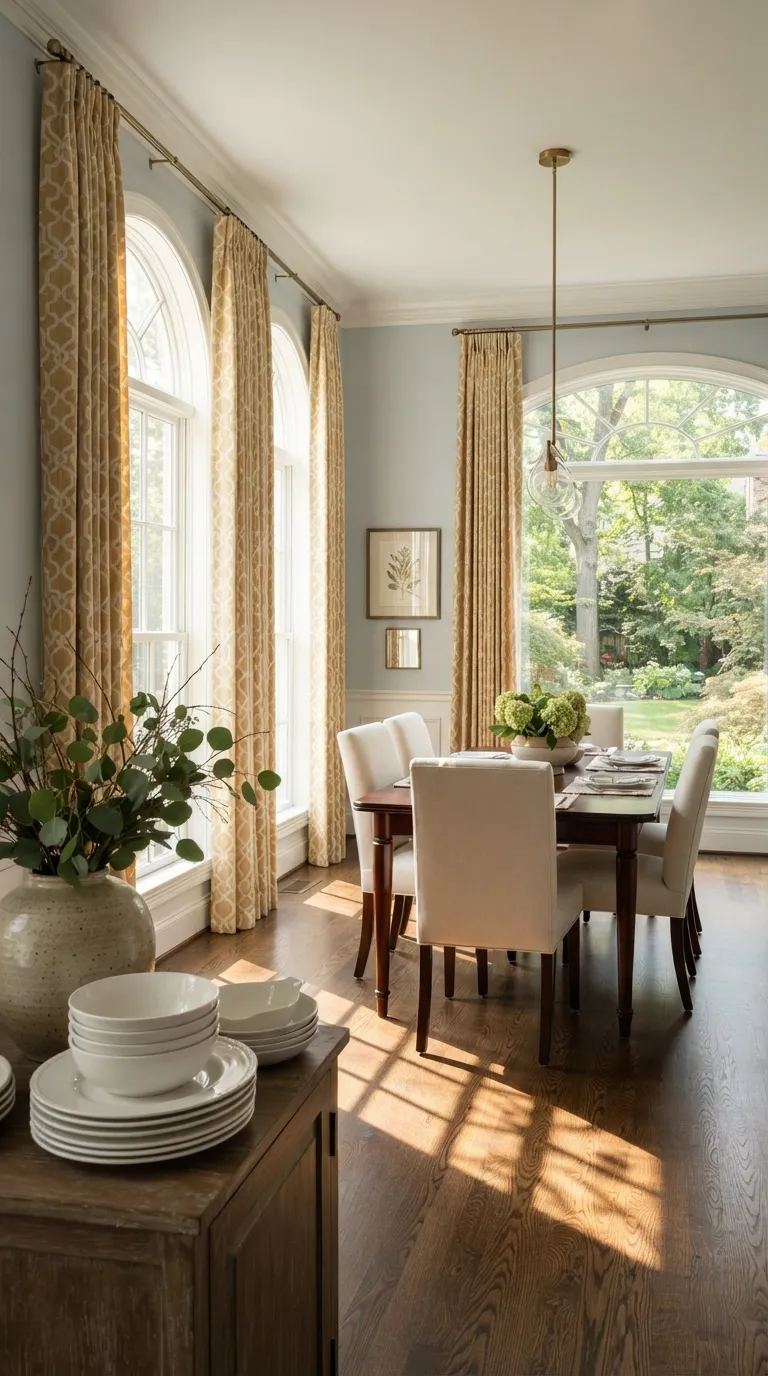
Window treatments are an easy place to introduce pattern. Geometric prints, small florals, or soft checks can add charm while also making tall windows feel more finished.
If your curtains have a strong pattern, keep the rug and upholstery calmer. This creates contrast without making the room feel crowded.
Bright Painted Sideboard
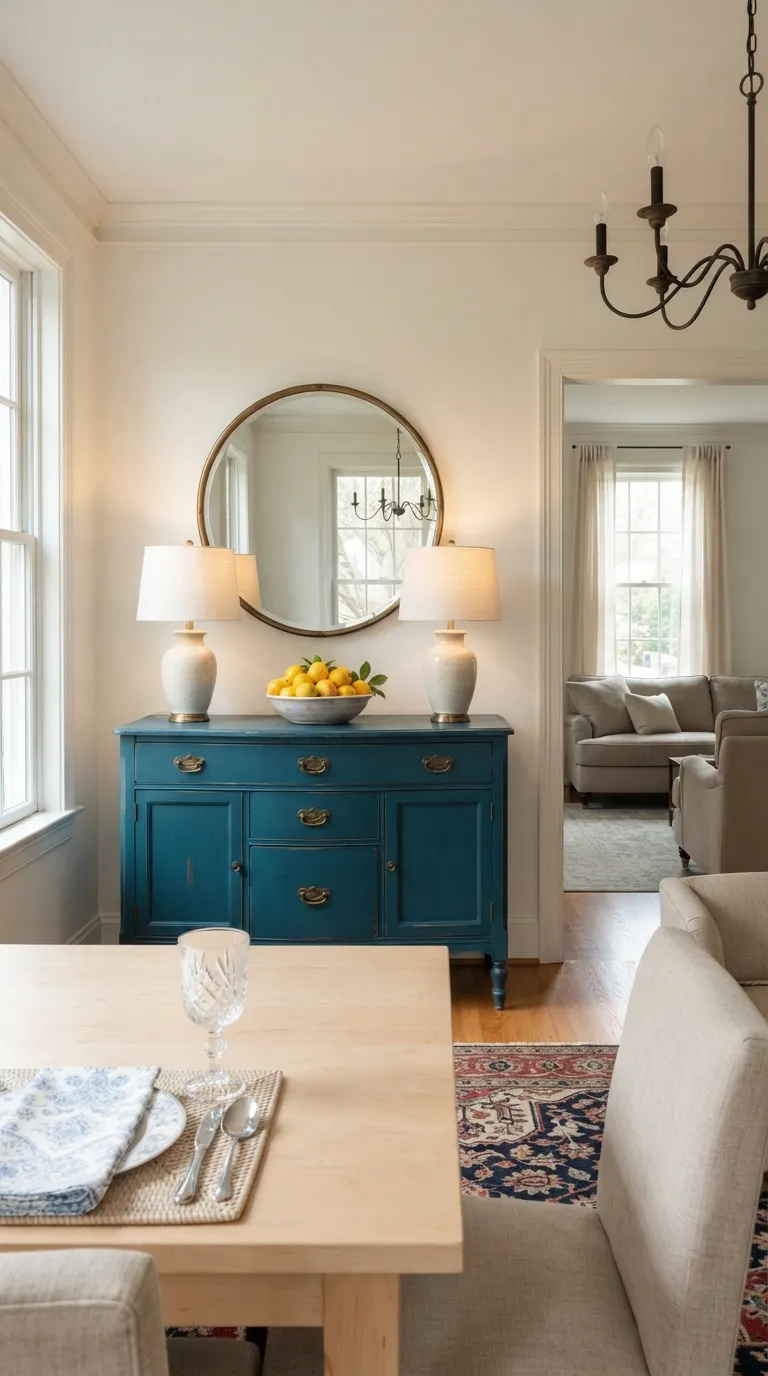
A painted sideboard can act like a colorful piece of furniture rather than simple storage. Deep blue, forest green, terracotta, or warm yellow can all work beautifully.
Let the cabinet carry most of the color. Style the top with neutral ceramics, a simple mirror, or natural greenery to keep the room balanced.
Playful Table Linens
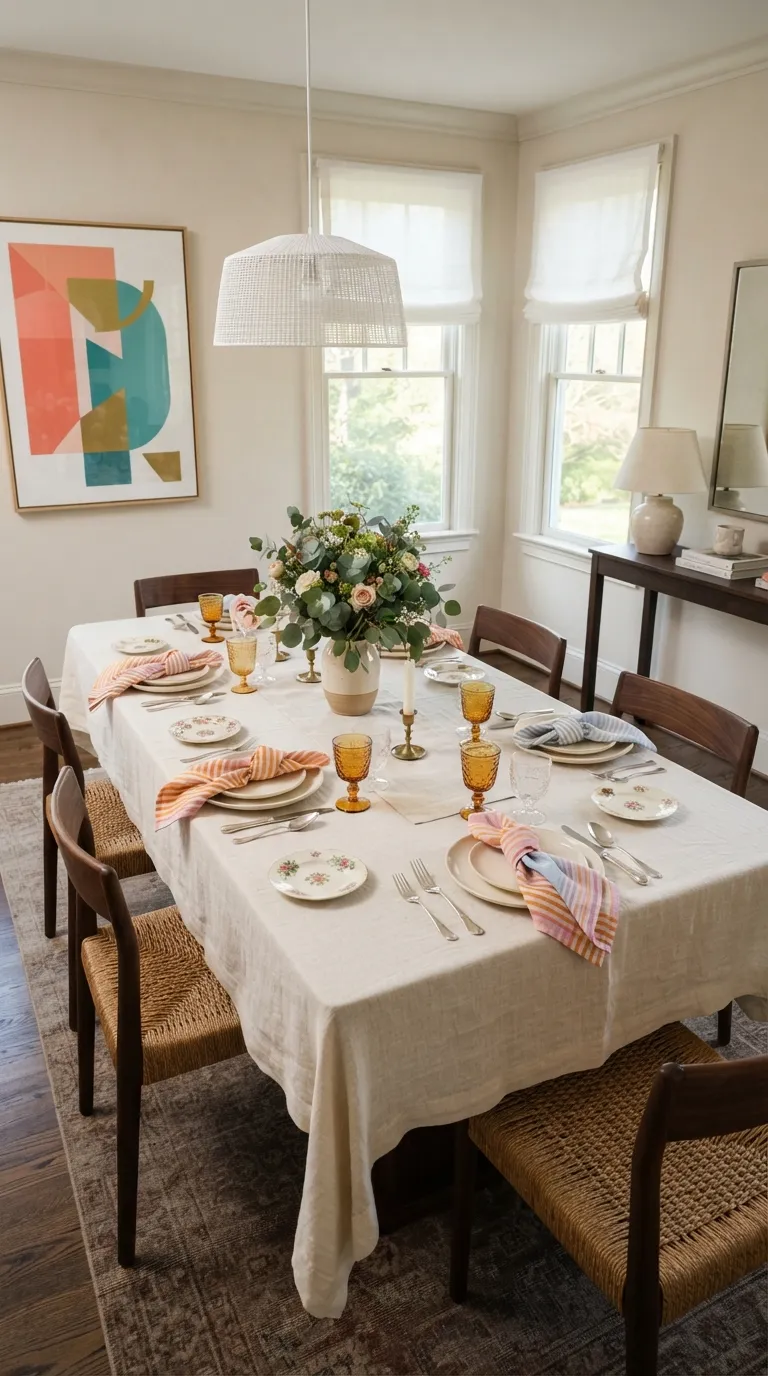
Table linens can change the mood of a dining room without a major purchase. Try patterned napkins, colored runners, scalloped edges, or contrasting placemats.
For a polished table, repeat one color from the room in your linens. The connection makes even playful patterns feel planned.
Arched Mirror Moment
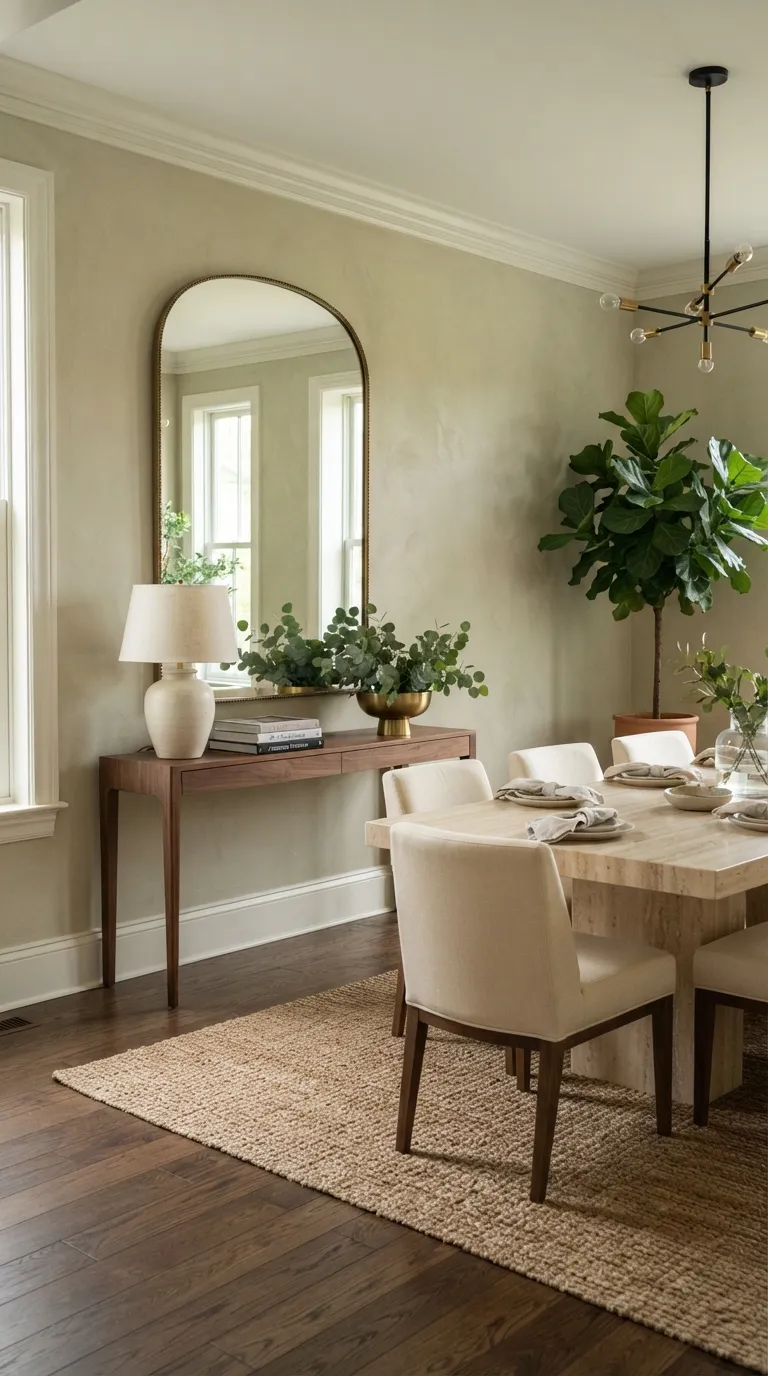
An arched mirror adds shape and makes the room feel more open. Place it above a sideboard or console where it can reflect natural light.
Choose a frame that relates to another finish in the room. Brass, dark wood, or aged bronze can connect the mirror to lighting and hardware.
Checkerboard Flooring
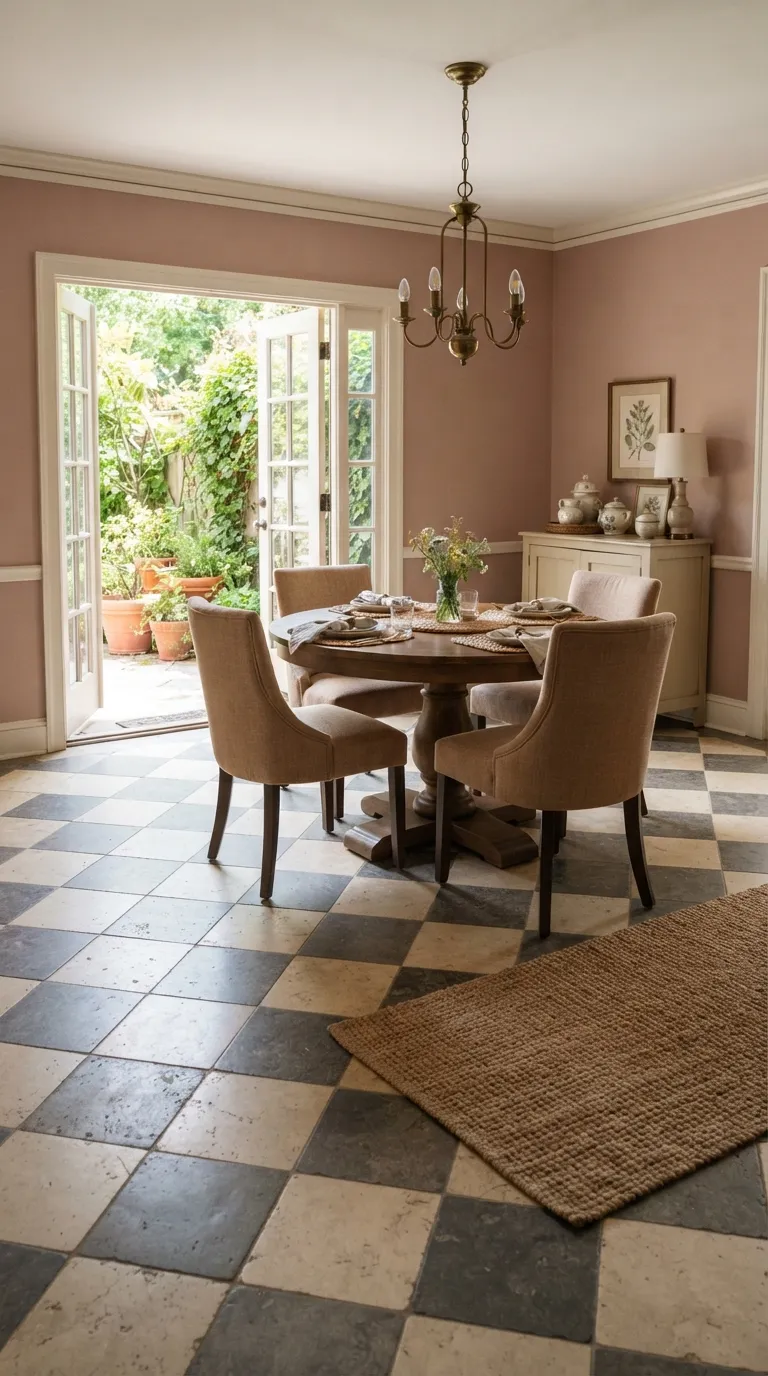
Checkerboard flooring gives a formal dining room a strong visual base. Cream and charcoal create a classic pairing, while softer colors such as taupe and ivory make the pattern gentler.
Because the floor already has a bold pattern, keep the furniture simple. A solid rug, calm upholstery, and clean table shape can keep the room from feeling overloaded.
Colorful Dining Room Art
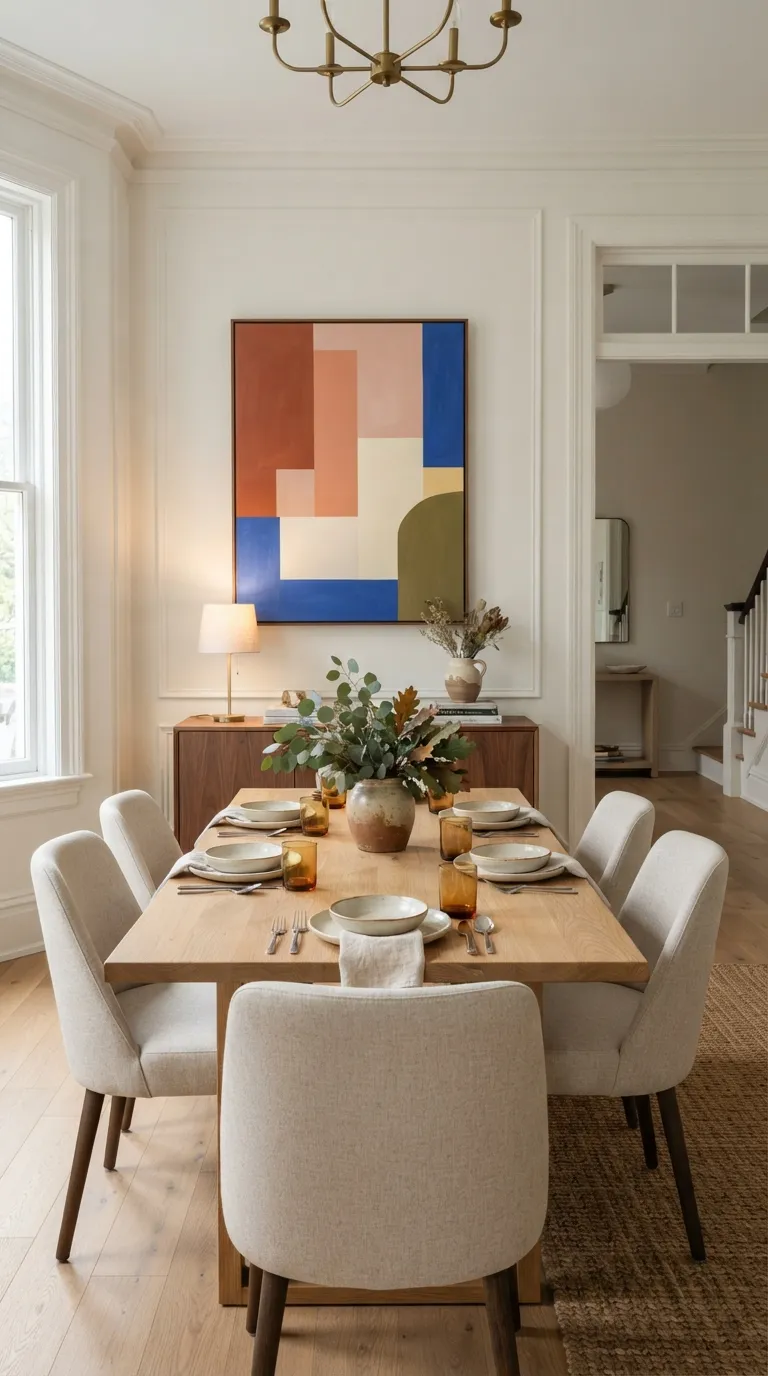
One large artwork can give the room a clear personality. Pick a piece with colors that already appear in your chairs, rug, curtains, or table accessories.
If you’re unsure about scale, choose artwork that feels generous against the wall. A piece that’s too small can look lost above a wide sideboard or long dining table.
Soft Pink Dining Room
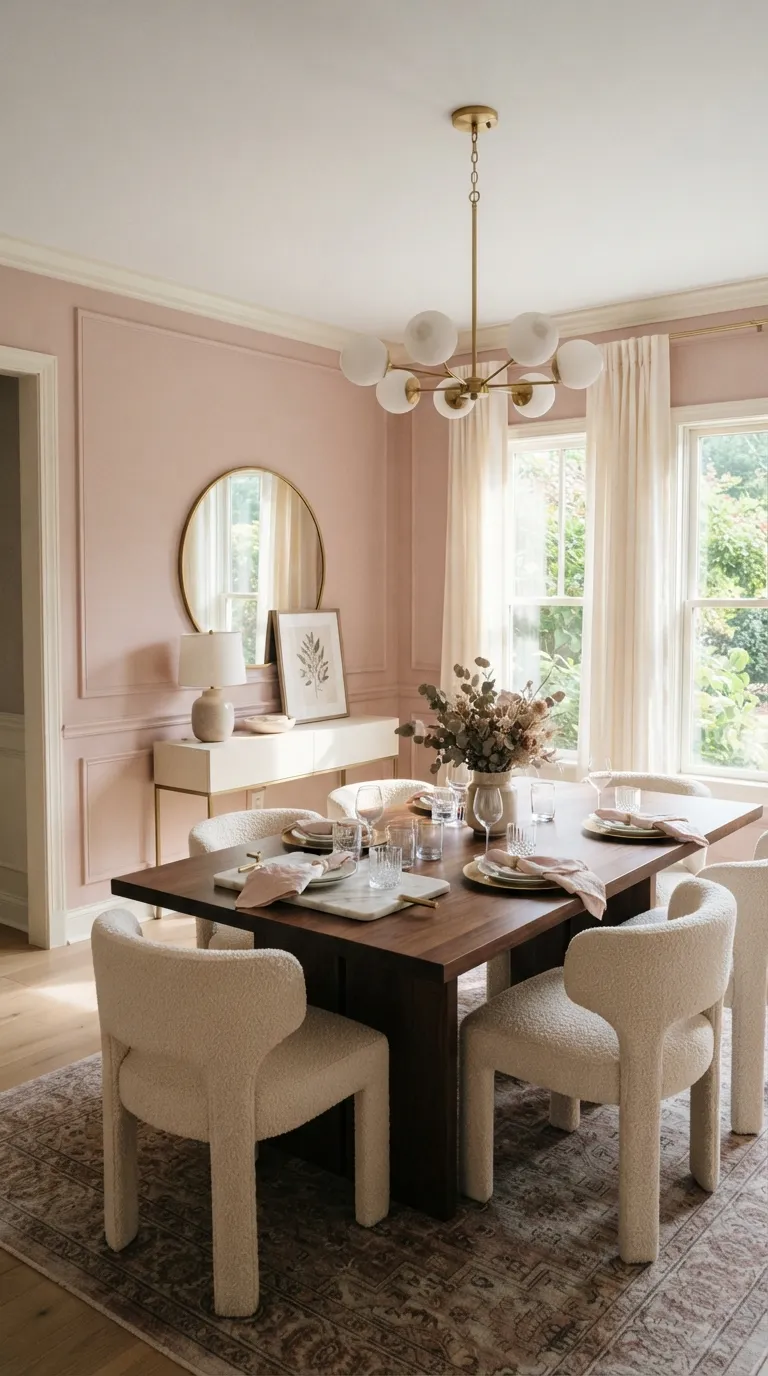
Soft pink can work beautifully in a formal dining room when you treat it as a muted neutral. Dusty rose and blush pair well with walnut, brass, ivory, and natural stone.
Use the color on the walls and keep the furniture more grounded. This lets the room feel warm and playful without becoming overly sweet.
Dark Walls With Bright Accents
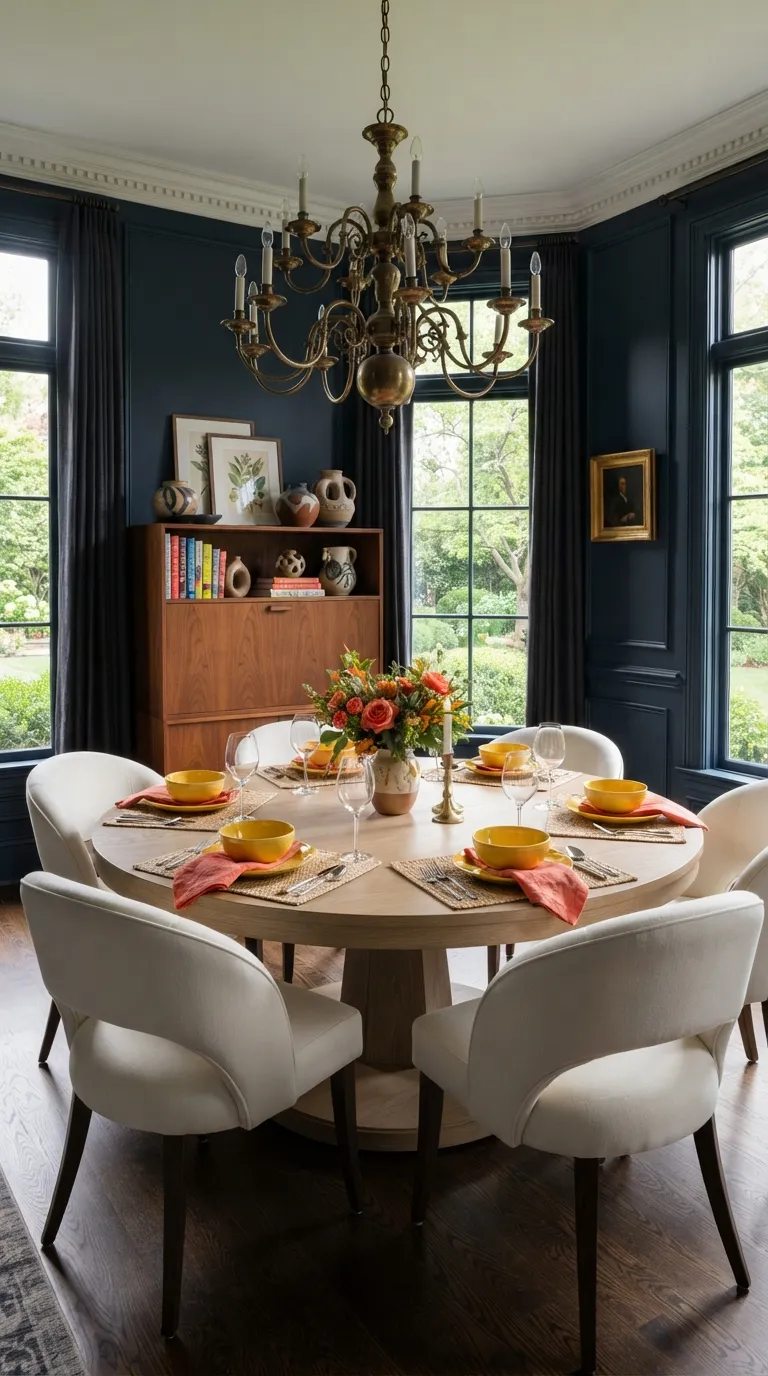
Dark walls create a cozy backdrop for brighter accessories. Navy, charcoal, forest green, and chocolate brown can all make colorful details stand out.
Keep the accent colors focused on a few pieces. Bright dishes, artwork, flowers, or napkins can provide enough contrast without filling every surface with color.
Playful Built-In Shelves
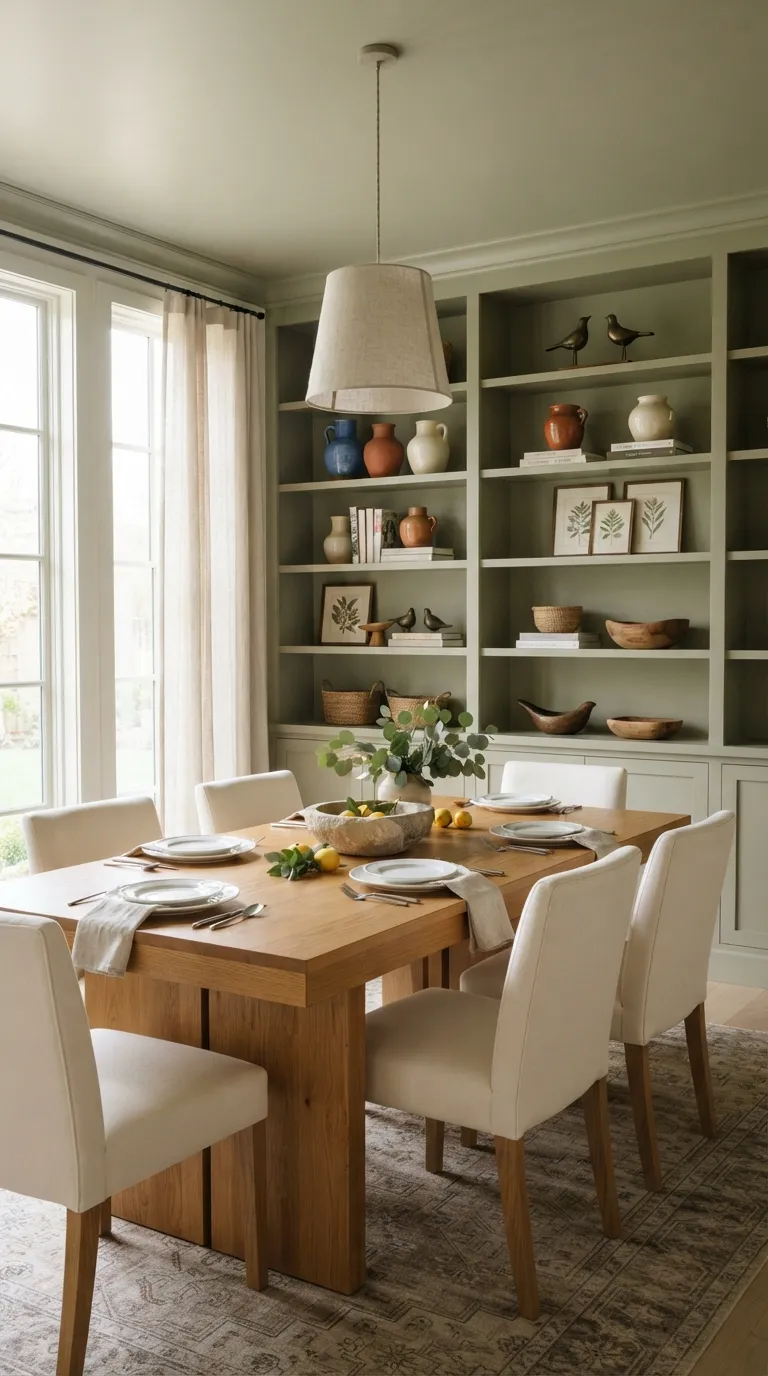
Open shelving gives you a place to show personality without filling the dining table with decorations. Mix practical serving pieces with artwork, books, and small collected objects.
Leave some shelf space empty. A little breathing room makes the display feel polished and keeps the room from looking cluttered.
Playful Metallic Details
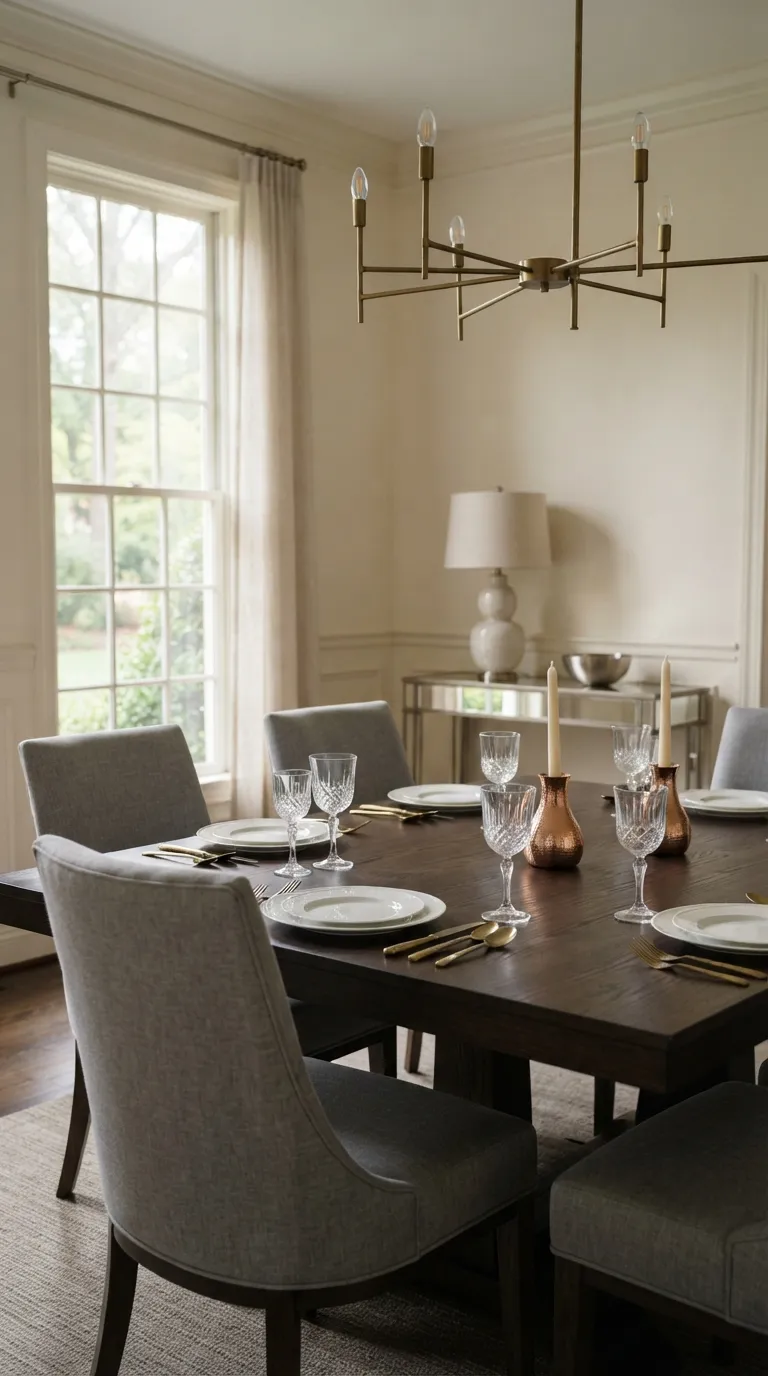
Metallic finishes can add a little sparkle without making the room feel flashy. Brass, copper, nickel, and aged bronze each bring a different mood.
Mixing two finishes can look natural when one clearly leads. For example, use brass for lighting and copper for small table accessories.
Bold Dining Room Trim
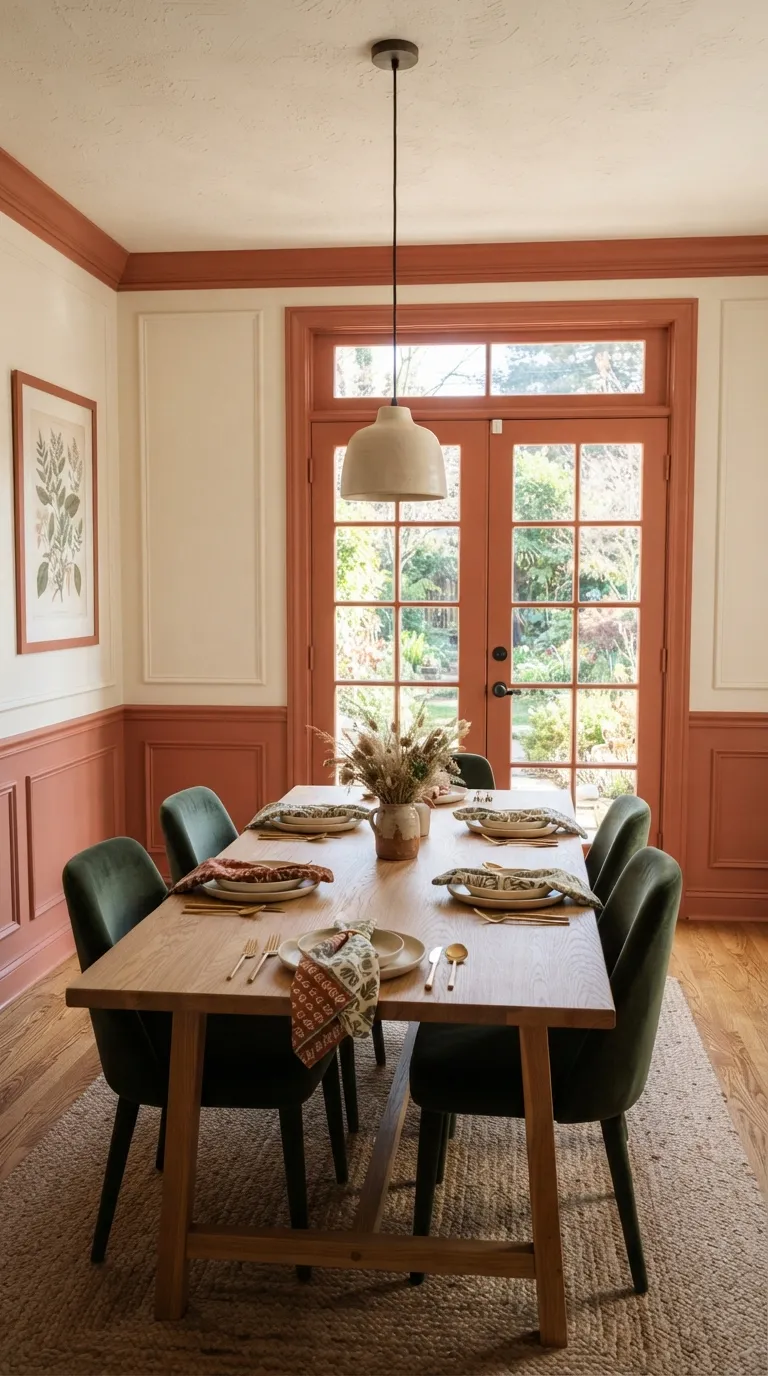
Bold trim is a subtle way to add color to a formal room. Paint door frames, window trim, or wall molding in a shade that contrasts with the main wall color.
Terracotta, olive, navy, and muted plum can all create a strong outline. Repeat the trim color in a small artwork detail or table accessory for a connected look.
Making Formal Dining Feel Like You
Your dining room doesn’t need to follow a single decorating formula. A classic table can sit beside playful chairs, patterned walls can share space with simple art, and colorful accessories can bring warmth to a room filled with traditional details.
Start with one feature that feels right for your space. It might be a colorful chair, bold wallpaper, unusual light fixture, or patterned rug, then build the rest of the room around that choice. The best formal dining room decor feels polished enough for special dinners but comfortable enough for everyday meals.
Olivia Carter
Olivia Carter is the founder of Lady Home Decor and a passionate home decor expert. She shares practical, stylish ideas to help homeowners create beautiful, comfortable, and welcoming spaces. Her expertise covers bedrooms, kitchens, living rooms, bathrooms, and small-space decorating.